
Robot vacuums have finally reached the point where they can replace a large percentage of manual floor cleaning for the average household. A few years ago, even expensive models still felt like gadgets. They bumped into chair legs, dragged dirty mops across floors, got tangled in cables, and constantly needed rescuing.
That is no longer the case.
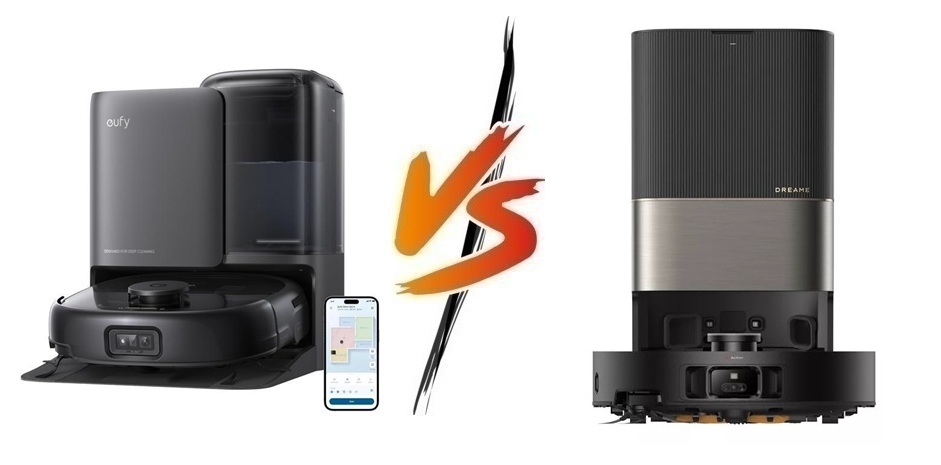
The flagship segment in 2025 and 2026 has become incredibly competitive, and two of the most interesting models in that category are the Eufy Omni E25 and the Dreame X50 Ultra. Both are premium all-in-one robot vacuum and mop systems designed to automate almost everything: vacuuming, mopping, self-emptying, mop washing, hot-air drying, and obstacle avoidance.
On paper, these two machines look very similar. Both advertise 20,000Pa suction. Both use advanced navigation systems with AI obstacle recognition. Both have self-cleaning docking stations. Both are marketed as nearly hands-free cleaning systems.
But after spending time examining their real-world behavior, their strengths become very different.
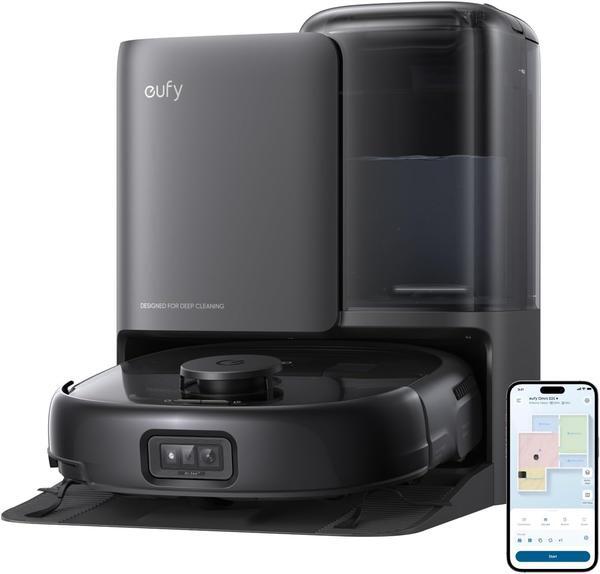
The Eufy Omni E25 focuses heavily on practical cleaning performance, especially mopping and edge cleaning. It feels like a machine designed to quietly and consistently keep a home clean without demanding much attention.
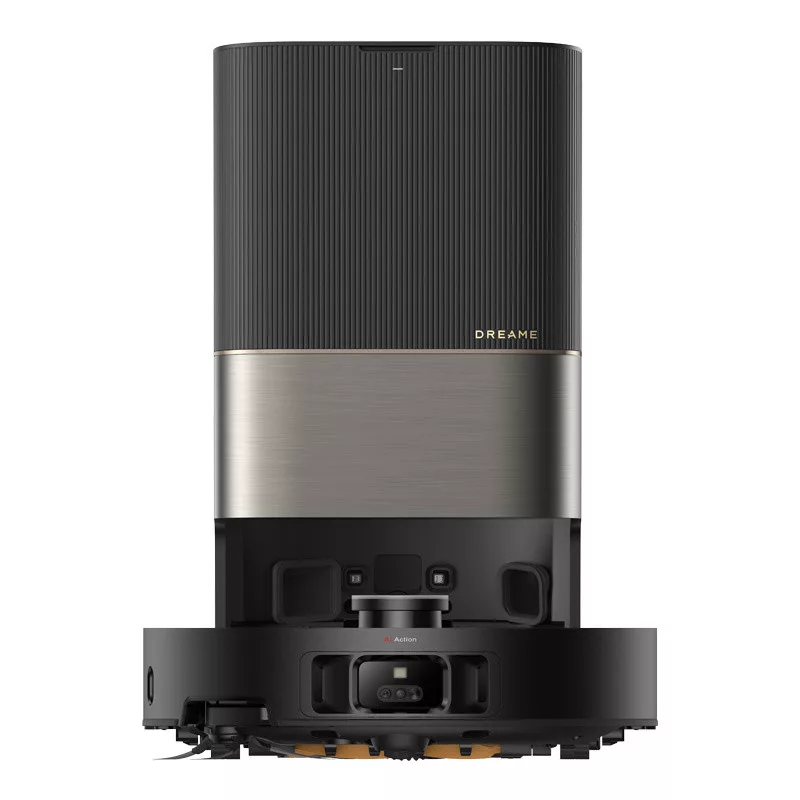
The Dreame X50 Ultra takes a more ambitious technological approach. It pushes innovation aggressively with retractable legs, lowering LiDAR systems, advanced obstacle crossing, and highly dynamic navigation behavior.
One feels refined and cleaning-focused.
The other feels futuristic and engineering-focused.
The question is which one actually performs better in a real home.
That answer depends heavily on the type of flooring you have, how cluttered your house is, whether you have pets, and how much patience you have for maintenance and software quirks.
Eufy Omni E25 vs Dreame X50 Ultra Comparison Chart
If you click the links below, under the product images, you will be redirected to Amazon.com. In case you then decide to buy anything, Amazon.com will pay me a commission. This doesn’t affect the honesty of this review in any way though.
| Feature | Eufy Omni E25 | Dreame X50 Ultra |
|---|---|---|
 |  | |
| Check the best price on Amazon | Check the best price on Amazon | |
| Product Type | Premium robot vacuum & mop combo | Premium robot vacuum & mop combo |
| Navigation System | LiDAR + AI obstacle avoidance | Retractable LiDAR + AI obstacle avoidance |
| Mapping Technology | Multi-floor smart mapping | Advanced multi-floor 3D mapping |
| Obstacle Recognition | AI-based object detection | Advanced AI object recognition |
| Suction Power | High flagship-level suction | Higher flagship-level suction |
| Brush System | DuoSpiral anti-tangle dual rollers | Multi-surface rubber brush system |
| Hair Tangle Prevention | Excellent | Very good |
| Edge Cleaning | Extending side brush | Extending side brush + adaptive edge cleaning |
| Mopping System | HydroJet self-cleaning roller mop | Dual rotating mop pads |
| Mop Cleaning | Continuous roller self-cleaning | Hot water automatic mop washing |
| Mop Drying | Warm air drying | Heated air drying |
| Carpet Detection | Yes | Yes |
| Mop Lift Over Carpet | Yes | Yes |
| Threshold Climbing | Standard | Advanced climbing suspension system |
| Under-Furniture Access | Standard low-profile design | Retractable LiDAR lowers robot height |
| Dock Type | Omni all-in-one cleaning station | Ultra all-in-one cleaning station |
| Self-Emptying Dustbin | Yes | Yes |
| Clean Water Tank | Yes | Yes |
| Dirty Water Tank | Yes | Yes |
| Automatic Detergent Dispensing | Limited/region dependent | Yes |
| Real-Time Dirt Detection | Basic | Advanced |
| Voice Assistant Support | Alexa & Google Assistant | Alexa & Google Assistant |
| Mobile App | Eufy Clean app | Dreamehome app |
| Multi-Floor Support | Yes | Yes |
| No-Go Zones | Yes | Yes |
| Room-Specific Cleaning | Yes | Yes |
| Pet Hair Performance | Excellent | Excellent |
| Pet Waste Avoidance | Good | Excellent |
| Hard Floor Cleaning | Excellent | Excellent |
| Carpet Deep Cleaning | Very good | Excellent |
| Edge & Corner Cleaning | Excellent | Very good |
| Maintenance Burden | Low | Moderate |
| Dock Maintenance | Easy | More complex |
| Noise Levels | Moderate and controlled | Slightly louder during high-power cleaning |
| Best For | Balanced daily cleaning and low-maintenance ownership | Advanced smart cleaning and difficult home layouts |
| Overall Personality | Refined and appliance-like | Technologically ambitious and adaptive |
| My individual reviews | Eufy Omni E25 review |
Design & Build Quality
The design of a robot vacuum matters more than most people initially expect. On paper, features like suction power, AI navigation, and mopping systems usually dominate the marketing. But after living with one for several months, physical design and build quality become incredibly important because these are machines that operate constantly in your home. You see them every day. You hear them moving around. You empty their tanks, clean their brushes, and occasionally rescue them from awkward situations under furniture.
That means the overall experience is shaped just as much by engineering refinement as raw cleaning power.
The Eufy Omni E25 and Dreame X50 Ultra take very different approaches in this category. One emphasizes refinement and practical usability. The other pushes engineering ambition to the edge of what consumer robotics can currently do.
Neither approach is wrong, but they create very different ownership experiences.
Eufy Omni E25 Design Philosophy
The Eufy Omni E25 feels like a product designed around everyday living rather than technological spectacle. Its design is understated, balanced, and practical. It does not try too hard to look futuristic, and that actually works in its favor.
The robot itself maintains a fairly traditional circular profile, but Eufy has cleaned up the visual details enough that it still feels modern. The matte finish helps reduce fingerprints and dust visibility, which sounds minor until you realize how quickly glossy robot vacuums start looking dirty. Since these machines constantly move through dusty environments, a finish that hides wear and smudges makes a real difference long term.
The top housing feels solid and tightly assembled. There are no creaking panels or loose-fitting sections when you pick the robot up. Even the removable dustbin and water system feel sturdy rather than fragile. Some robot vacuums give the impression that their removable parts will eventually weaken or crack after repeated use. The E25 avoids that feeling.
The bumper system is also well-tuned. It has enough flexibility to absorb light impacts without feeling flimsy. This matters because even advanced AI robots still make physical contact with furniture occasionally. Overly rigid bumpers can create loud impacts, while overly soft bumpers can feel cheap. Eufy found a good middle ground here.
One of the most impressive aspects of the E25’s physical design is how cohesive everything feels. Nothing seems over-engineered for the sake of marketing. Every component appears to serve a practical purpose.
That becomes especially obvious when looking at the brush system.
The DuoSpiral anti-tangle rollers are thoughtfully integrated into the body design, and the internal airflow routing feels optimized for real-world debris collection rather than laboratory conditions. Hair handling is clearly a major focus. Long hair, pet fur, and fibers are some of the biggest frustrations with robot vacuums because wrapped brushes create constant maintenance. Eufy’s approach dramatically reduces that annoyance.
The side brush extension system is another genuinely useful design feature. Many manufacturers advertise edge-cleaning extensions, but some implementations feel awkward or inconsistent. On the E25, the extending arm behaves naturally and retracts smoothly without looking mechanically stressed.
There is also something to be said for the emotional feel of the product.
The E25 behaves like an appliance.
That may not sound exciting, but it is actually a compliment. It feels dependable. Predictable. Calm. It gives the impression that the engineers prioritized daily usability over flashy demonstrations.
Dreame X50 Ultra Design Philosophy
The Dreame X50 Ultra takes the exact opposite approach.
This robot feels like a statement piece for robotics engineering.
The first thing you notice is that the X50 Ultra appears more aggressive and more technologically dense. Its lines are sharper, its dock is larger, and its overall aesthetic feels intentionally futuristic.
Then you discover the mobility systems.
This is where the X50 Ultra separates itself from almost every competitor on the market.
The retractable climbing legs are genuinely remarkable from an engineering perspective. Watching the robot physically lift itself over thresholds and uneven flooring almost feels unnatural the first time you see it happen. Most robot vacuums still struggle with even modest transitions between rooms, especially raised floor strips or thick rug edges. The X50 Ultra attacks those obstacles in a completely different way by mechanically adapting its body height and wheel positioning.
That capability dramatically changes how the robot interacts with complicated homes.
If you live in an older house with uneven floors, sliding door rails, elevated room transitions, or layered carpets, the X50 Ultra instantly becomes more appealing because it can physically access areas that defeat many competitors.
The retractable LiDAR tower is equally impressive.
Traditional LiDAR robot vacuums usually have a permanent sensor hump on top, which increases navigation quality but limits furniture clearance. Dreame’s lowering sensor system allows the robot to reduce its overall height when needed, helping it access tighter spaces under beds, sofas, and cabinets.
From a pure engineering standpoint, it is one of the most ambitious robot vacuum designs currently available.
But there is a tradeoff.
Complexity.
The more moving systems you introduce, the more potential failure points you create. The X50 Ultra contains significantly more mechanical sophistication than the E25. That sophistication creates amazing capabilities, but it also introduces more opportunities for maintenance issues, software inconsistencies, or wear over time.
You can actually feel this philosophical difference when handling both robots side by side.
The E25 feels grounded and appliance-focused.
The X50 Ultra feels experimental and robotics-focused.
That difference extends into the docking stations as well.
Dock Design and Presence in the Home
Robot vacuum docks are becoming increasingly important because modern premium systems now function as complete cleaning stations rather than simple charging bases.
The Eufy Omni E25 dock is relatively restrained in appearance. It is still large compared to older robot vacuum docks, but it does not dominate a room visually. The proportions feel balanced, and the overall design blends into modern homes fairly well.
Its water tanks are easy to remove and refill, and the overall shape feels practical for everyday maintenance. Even the lid placement and access panels seem designed around convenience.
The Dreame X50 Ultra dock feels more luxurious and more visually aggressive. It looks high-tech immediately. Depending on your taste, that can either feel premium or excessive.
There is no denying that the dock makes an impression.
Its larger size reflects the complexity of the cleaning systems inside, but it also requires more visual space in a room. This is one of those things that does not matter in product photos but becomes very noticeable in smaller apartments or minimalist homes.
The X50 Ultra dock feels like a smart-home device.
The E25 dock feels like part of the home itself.
Material Quality and Long-Term Durability
Both robots feel premium overall, but they express quality differently.
The E25 emphasizes structural consistency. Panels fit tightly. Components feel stable. The water tanks and removable sections feel durable enough for years of repeated use.
The Dreame X50 Ultra emphasizes technological sophistication. Its moving systems, retractable mechanisms, and dynamic body adjustments are visually impressive and mechanically advanced.
But complexity always introduces long-term questions.
Historically, simpler mechanical systems tend to age more gracefully than highly dynamic ones. That does not necessarily mean the X50 Ultra is unreliable, but it does mean its long-term durability will depend heavily on software support and component resilience.
The E25 inspires confidence through simplicity.
The X50 Ultra inspires excitement through innovation.
Which Design Is Better?
That depends entirely on what kind of user you are.
If you want a robot vacuum that quietly integrates into your daily life, feels refined, and minimizes friction, the Eufy Omni E25 has the stronger overall design philosophy. It feels polished, intentional, and mature.
If you love cutting-edge engineering and want the most technologically ambitious robot vacuum currently available, the Dreame X50 Ultra is difficult not to admire. Its mobility systems and adaptive hardware genuinely push the category forward.
Personally, I think the E25 has the more livable design.
The X50 Ultra is more impressive.
The E25 is more comfortable.
And for a machine that spends every day moving around your home, comfort and consistency matter more than most people realize.
Navigation Intelligence and Mapping
Navigation is the category that separates modern flagship robot vacuums from the frustrating machines people used to joke about a few years ago. Early robot vacuums mostly wandered around randomly, bounced off furniture, missed huge sections of rooms, and regularly trapped themselves under chairs or behind table legs. They cleaned eventually, but they did it inefficiently and often badly.
Today, navigation systems are arguably more important than suction power.
A robot vacuum with incredible suction but poor navigation still performs poorly in the real world because it cannot consistently place itself where cleaning actually needs to happen. Meanwhile, a slightly weaker vacuum with excellent mapping and intelligent movement often leaves floors cleaner overall simply because it covers spaces more effectively.
This is one of the most fascinating parts of the comparison between the Eufy Omni E25 and the Dreame X50 Ultra because both machines are extremely advanced, but they approach navigation intelligence in very different ways.
The Eufy Omni E25 prioritizes stability, consistency, and calm efficiency.
The Dreame X50 Ultra prioritizes dynamic adaptation and advanced robotics behavior.
Those differences become obvious almost immediately during daily use.
Eufy Omni E25 Navigation Experience
The Eufy Omni E25 feels confident from the moment it begins mapping a home. Its LiDAR-based system creates accurate room layouts quickly, and unlike older robot vacuums, it rarely gives the impression that it is “searching” for orientation.
The first thing that stands out is how deliberate its movement patterns are.
The robot moves with purpose.
It does not wander aimlessly or constantly make unnecessary directional corrections. Instead, it follows logical cleaning lines, navigates around obstacles smoothly, and transitions between rooms in a way that feels efficient rather than robotic.
That sounds like a small thing, but it dramatically affects how trustworthy the machine feels.
Some robot vacuums, even expensive ones, behave nervously. They stop frequently, spin in place, reposition themselves repeatedly, and sometimes look confused in cluttered environments. That behavior creates the impression that the robot is struggling to interpret its surroundings.
The E25 avoids most of that.
It behaves more like a mature appliance than an experimental robot.
The mapping itself is highly accurate in normal homes. Rooms are identified correctly most of the time, furniture placement is represented clearly in the app, and no-go zones are easy to establish.
One of Eufy’s biggest strengths is map stability.
Some robot vacuums create excellent initial maps but slowly corrupt them over time. Rooms shift slightly, walls become distorted, or furniture placement changes unexpectedly after repeated cleaning runs. The E25 generally maintains stable layouts once the initial mapping process is complete.
That reliability matters more than flashy AI demonstrations.
You notice it every day because you stop worrying about whether the robot will suddenly decide your hallway is part of the kitchen.
Obstacle avoidance is another strong area.
The E25 handles everyday clutter very well, especially compared to mid-range models. Shoes, cables, chair legs, pet bowls, and scattered household objects are usually detected early enough to avoid collisions.
What I appreciate most is the robot’s balanced behavior around obstacles.
Some robots are too aggressive and hit objects constantly.
Others become overly cautious and leave huge uncleaned zones around anything remotely suspicious.
The E25 finds a solid middle ground. It approaches objects confidently without acting reckless.
In real homes, that balance is extremely important because nobody lives in perfectly staged showroom conditions.
Homes are messy.
There are backpacks near walls, socks under chairs, charging cables near furniture, and random objects that appear throughout the day. A robot vacuum that requires perfectly clean floors before every run defeats much of the purpose of automation.
The E25 adapts well to lived-in environments.
Navigation Behavior in Tight Spaces
Another area where the E25 performs impressively is spatial judgment.
It handles dining chairs, table legs, and tighter furniture arrangements more gracefully than many competitors. The robot rarely gets trapped in awkward loops or repeatedly attempts impossible routes.
This contributes heavily to the feeling of refinement.
The robot seems to “understand” when an area is inaccessible rather than repeatedly attacking the same impossible angle for several minutes.
Its wall-following behavior is also smooth and controlled. Edge cleaning patterns feel intentional, especially when the CornerRover extension arm activates near baseboards and corners.
The robot transitions naturally from open-room cleaning to perimeter cleaning without awkward pauses.
That consistency creates a subtle but important psychological effect.
You trust the robot more.
And when people trust their robot vacuum, they use it more often.
Dreame X50 Ultra Navigation Experience
The Dreame X50 Ultra approaches navigation from a completely different direction.
If the E25 feels calm and appliance-like, the X50 Ultra feels highly active and intensely robotic.
Watching it navigate is genuinely impressive.
The robot constantly analyzes its surroundings using a dense combination of sensors, AI systems, structured light detection, cameras, and adaptive movement systems. Unlike traditional robot vacuums that mostly move across flat surfaces, the X50 Ultra actively changes how it physically interacts with the environment.
This is where the retractable climbing system completely changes the experience.
Most robot vacuums treat thresholds and obstacles as barriers to avoid.
The X50 Ultra treats them as problems to solve.
That distinction is huge.
When approaching raised transitions, thick rugs, sliding door tracks, or uneven flooring, the robot physically adjusts its wheel positioning and body movement to climb over obstacles that would stop many competitors entirely.
The first time you watch it successfully navigate a difficult transition, it honestly feels like the category has evolved.
This capability gives the X50 Ultra a major advantage in complicated homes.
If your house has multiple flooring types, elevated room separators, or difficult architectural transitions, the Dreame can access spaces that many other robot vacuums simply cannot reach consistently.
The lowering LiDAR tower is equally important.
Traditional LiDAR robots often struggle with low furniture because the navigation turret adds extra height. The X50 Ultra dynamically lowers its sensor housing to fit underneath tighter spaces.
This dramatically improves under-furniture coverage.
Beds, sofas, media consoles, and cabinets that normally block robot vacuums suddenly become accessible.
From a technical standpoint, it is one of the most sophisticated navigation systems currently available in a consumer robot vacuum.
The Difference Between Intelligence and Refinement
However, there is an important distinction between technological intelligence and behavioral refinement.
The X50 Ultra is incredibly intelligent.
But it is not always predictable.
Its navigation sometimes feels experimental because the robot is constantly making dynamic decisions in real time. Occasionally those decisions are brilliant. Occasionally they feel strange.
You may notice the robot hesitating unexpectedly, rerouting itself inefficiently, or making cleaning passes that seem inconsistent with the room layout.
Part of this comes from the sheer complexity of the system.
The robot is processing enormous amounts of environmental information simultaneously while also adapting its physical movement behavior. That creates incredible flexibility, but it also creates more opportunities for odd edge-case behavior.
In comparison, the E25 feels simpler but more polished.
The X50 Ultra feels more advanced but slightly less disciplined.
Neither approach is objectively wrong.
It depends on what kind of ownership experience you prefer.
AI Recognition and Object Avoidance
The Dreame X50 Ultra is particularly strong in AI object recognition.
It can identify and avoid many household obstacles with impressive accuracy. Cables, slippers, pet bowls, toys, and even pet waste are handled more intelligently than on most competing systems.
This is especially valuable for pet owners.
Few robot vacuum failures are worse than spreading pet accidents across an entire floor. The X50 Ultra’s advanced recognition systems significantly reduce that risk.
The robot also behaves more dynamically around temporary obstacles.
If furniture shifts slightly or new objects appear, the X50 Ultra adapts quickly without requiring remapping.
The E25 also handles dynamic environments well, but it does so with simpler and more conservative movement behavior.
Again, the difference comes down to philosophy.
The E25 tries to clean efficiently and reliably.
The X50 Ultra tries to actively interpret and adapt to the environment in real time.
Multi-Floor Mapping and Smart Features
Both robots handle multi-floor mapping effectively, but their implementations feel different.
The E25 keeps things simple and user-friendly. Maps are easy to edit, room labels are straightforward, and custom cleaning zones are intuitive to create.
The Dreame system offers deeper customization and more advanced controls, but it also introduces more complexity. Power users will appreciate the flexibility. Casual users may find it overwhelming.
The same pattern repeats across the entire navigation experience.
Eufy prioritizes refinement.
Dreame prioritizes capability.
Which Navigation System Is Better?
This is honestly one of the hardest categories to declare a winner in because the answer depends heavily on the home itself.
For normal homes with standard layouts, predictable flooring, and moderate clutter, I believe the Eufy Omni E25 delivers the more satisfying day-to-day navigation experience.
It feels polished, calm, and reliable.
You stop thinking about it because it simply works.
The Dreame X50 Ultra, however, is arguably the more technologically impressive robot.
Its ability to physically adapt to difficult spaces is genuinely groundbreaking. In homes with thick thresholds, uneven surfaces, low-clearance furniture, or complicated transitions, the X50 Ultra can accomplish things that most competitors simply cannot.
But it also occasionally feels like a machine operating at the edge of current robotics capability.
The E25 feels finished.
The X50 Ultra feels ambitious.
And depending on your personality, you will probably prefer one approach very strongly over the other.
Vacuuming Performance
Vacuuming performance is still the core reason people buy robot vacuums, even though modern flagship models now focus heavily on mopping and automation features. At the end of the day, these machines are supposed to keep floors visibly clean with as little intervention as possible. That means picking up dust you cannot see, crumbs you forgot were there, pet hair hiding along walls, and debris trapped deep inside carpets.
This is where the comparison between the Eufy Omni E25 and the Dreame X50 Ultra becomes especially interesting because both robots are extremely powerful on paper. Both advertise flagship-level suction figures that place them near the top of the current robot vacuum market.
But suction numbers alone do not tell the full story.
Real-world vacuuming performance depends on several factors working together:
- Brush design
- Airflow consistency
- Floor contact
- Navigation behavior
- Debris containment
- Edge cleaning
- Carpet adaptation
- Hair management
- Dirt detection
And most importantly, it depends on how the robot behaves in an actual lived-in home rather than a perfectly controlled test environment.
The difference between “good” and “great” robot vacuuming performance often comes down to consistency.
That is where these two machines begin to separate themselves.
Eufy Omni E25 Vacuuming Performance
The Eufy Omni E25 feels tuned for practical cleaning rather than aggressive demonstrations of power. Its suction is extremely strong, but more importantly, the robot maintains stable floor contact and predictable cleaning behavior across different surfaces.
That consistency gives it a very dependable feel in daily use.
On hard floors, the E25 performs exceptionally well. Dust, crumbs, food particles, pet hair, and fine debris are collected confidently in a single pass most of the time. One thing that stands out immediately is how clean the floors actually look after the robot finishes.
Some robot vacuums technically remove debris but still leave a faint layer of dust or scattered particles along edges. The E25 leaves floors looking polished and genuinely maintained.
Part of this comes from airflow tuning, but a large part also comes from the brush system.
The DuoSpiral anti-tangle rollers are excellent.
They maintain consistent contact with the floor while also minimizing hair wrapping, which is one of the biggest long-term frustrations with robot vacuums. Long human hair and pet fur are usually the first things that expose weaknesses in brush design because tangled rollers quickly reduce cleaning efficiency over time.
The E25 handles this surprisingly well.
Hair still accumulates occasionally, especially with extremely long strands, but the amount of manual brush cleaning required is dramatically lower than many competing models.
That matters because a robot vacuum that performs well for two weeks but degrades quickly from hair buildup becomes annoying to maintain.
The E25 keeps its performance stable over longer cleaning cycles.
Hard Floor Cleaning
Hard floor cleaning is where the E25 arguably feels strongest overall.
Kitchen debris is handled especially well. Crumbs, coffee grounds, rice, dry cereal, flour dust, and tracked-in dirt are removed effectively without excessive scattering.
This is important because some high-suction robot vacuums actually create a new problem on hard floors: they push lightweight debris around before collecting it. You end up with particles scattered into corners or along edges.
The E25 avoids most of that behavior.
Its brush and airflow combination feels controlled rather than overly aggressive.
Another thing I noticed is how smooth the robot transitions between cleaning patterns. It does not repeatedly pass over already-clean areas unnecessarily, and it rarely leaves obvious missed strips behind.
Coverage feels intentional.
The side brush extension system also helps significantly here. Corners and wall edges are cleaner than what you typically see from circular robot vacuums. Since round robots naturally struggle with square room geometry, edge cleaning is often a weak point across the category.
The E25 reduces that weakness better than most.
You especially notice this in kitchens, bathrooms, and dining areas where dust and crumbs collect against baseboards.
Carpet Performance
Carpet cleaning on the E25 is strong, although it is clear the robot was designed primarily around mixed-floor homes rather than carpet-dominant environments.
On low-pile and medium-pile carpets, the E25 performs very well. Surface debris disappears quickly, and pet hair pickup is impressive. Daily maintenance cleaning is excellent.
However, the robot behaves more conservatively on carpets compared to the Dreame X50 Ultra.
The E25 prioritizes balanced cleaning rather than maximum aggression.
That means it avoids excessive noise, harsh brush behavior, and overly forceful suction surges. For many people, that actually creates a more pleasant ownership experience.
But if you have extremely dense carpeting or deeply embedded debris, the E25 does not feel quite as intense as the Dreame.
Still, for regular household maintenance, it performs confidently.
One of the E25’s biggest advantages is reliability over time.
Some robot vacuums clean carpets well initially but gradually lose effectiveness as hair wraps around rollers and airflow weakens. The E25’s anti-tangle system helps preserve consistent performance over longer ownership periods.
That makes a larger difference than people expect.
Dreame X50 Ultra Vacuuming Performance
The Dreame X50 Ultra approaches vacuuming performance differently.
Where the E25 feels balanced and controlled, the X50 Ultra feels aggressive and adaptive.
This robot attacks floors with more intensity.
Its suction feels especially strong on carpets, and its dynamic cleaning behavior creates the impression that it is constantly optimizing itself in real time.
In some situations, that works brilliantly.
The X50 Ultra is extremely impressive on medium and high-pile carpets. Deep debris extraction feels stronger than the E25, especially when dealing with embedded dirt, dense pet fur, or fibers trapped below the carpet surface.
You can hear and feel the robot increasing effort when it detects carpeted areas.
For homes with lots of carpeting, that matters enormously.
The X50 Ultra also handles rug transitions exceptionally well thanks to its advanced mobility systems. Many robot vacuums struggle with thicker rugs because they either lose traction or become partially stuck near edges.
The X50 Ultra climbs and stabilizes itself more effectively than almost any competitor.
This creates more reliable carpet coverage overall.
Aggression vs Refinement
However, the Dreame’s stronger vacuuming behavior also introduces some tradeoffs.
The robot feels busier during operation.
Its cleaning patterns are more dynamic, and it occasionally behaves in ways that seem overly complicated for simple cleaning tasks. You may notice more repositioning, more directional adjustments, and more reactive movement patterns compared to the calmer E25.
Some users will interpret this as intelligence.
Others may interpret it as inconsistency.
On hard floors, the X50 Ultra is still extremely powerful, but it occasionally feels slightly less controlled than the E25. Lightweight debris can sometimes scatter before pickup, especially near edges or during aggressive turns.
The robot is optimized heavily for adaptive performance, but that sometimes comes at the expense of smoothness.
In perfectly clean testing environments, the X50 Ultra can produce incredible numbers.
In messy real homes, the E25 often feels more naturally effective.
That distinction is important.
Pet Hair Pickup
Both robots are excellent for pet owners, but again, they succeed differently.
The E25 excels at ongoing maintenance.
Its anti-tangle system keeps fur accumulation manageable, and its calmer movement behavior makes it ideal for frequent daily cleaning. If you run the robot regularly, pet hair rarely becomes a visible issue.
The Dreame X50 Ultra feels more powerful when attacking heavy fur accumulation, especially on carpets.
If you have multiple shedding dogs or thick carpeted rooms, the Dreame’s aggressive suction behavior gives it an advantage in raw extraction capability.
However, that performance also comes with slightly more noise and a more energetic cleaning style.
Edge Cleaning and Debris Along Walls
Edge cleaning is another area where the E25 feels more refined.
Its extension arm reaches corners more consistently, and the robot follows wall lines with smoother precision. Dust along baseboards is removed more effectively, especially in kitchens and hallways.
The Dreame also includes advanced edge-cleaning systems, but its dynamic navigation occasionally leads to less consistent wall coverage.
You may notice small patches of debris left behind in certain corners after a cleaning run.
Not constantly, but often enough to notice in direct comparisons.
The E25 simply feels more disciplined near edges.
Real-World Cleaning Consistency
This is ultimately the category that matters most.
Not peak suction.
Not laboratory testing.
Consistency.
The Eufy Omni E25 consistently leaves homes looking clean with minimal drama. It handles everyday debris gracefully, maintains stable performance over time, and rarely creates new cleaning problems while solving old ones.
The Dreame X50 Ultra delivers moments of brilliance.
Its carpet extraction, adaptive suction behavior, and mobility systems are genuinely impressive. In difficult environments, it can outperform almost anything else currently available.
But it also feels more experimental.
The E25 behaves like a refined cleaning appliance.
The X50 Ultra behaves like a highly intelligent cleaning robot.
Personally, I think the E25 delivers the more satisfying overall vacuuming experience for most homes because it combines strong suction with predictability, stability, and excellent floor coverage.
The Dreame is more technically ambitious.
The Eufy is more consistently clean.
And after months of daily use, consistency usually matters more than raw power alone.
Mopping Capability
Mopping has become the feature that truly defines modern flagship robot vacuums. A few years ago, robot mops felt more like marketing extras than serious cleaning systems. Most simply dragged a damp cloth behind the vacuum and spread light moisture across the floor. They helped with dust, but they did not actually clean in a meaningful way.
That has changed dramatically.
The latest generation of premium robot vacuums now treats mopping as a primary function rather than an afterthought. Heated water systems, self-cleaning docks, pressure-controlled pads, roller mechanisms, and intelligent dirt detection have transformed these machines into legitimate floor-maintenance tools.
This is also the category where the Eufy Omni E25 and Dreame X50 Ultra diverge most clearly in philosophy.
The Eufy Omni E25 focuses heavily on active floor cleaning and practical stain removal.
The Dreame X50 Ultra focuses on advanced automation, intelligent mop management, and adaptive behavior.
Both are impressive.
But they create very different results in daily life.
Why Mopping Design Matters
Most people underestimate how difficult robot mopping actually is.
Vacuuming is relatively straightforward. You remove dry debris using suction and airflow.
Mopping is far more complicated because liquids, pressure, dirt transfer, surface friction, and contamination management all become major factors.
A poor robot mopping system creates several problems:
- Dirty water streaking
- Smearing residue across floors
- Wet carpets
- Uneven water distribution
- Dirty mop contamination
- Odor buildup
- Sticky residue left behind
This is why mopping systems are judged less by marketing claims and more by how floors actually feel after repeated daily use.
Do they feel genuinely clean?
Or do they simply feel slightly damp?
That distinction matters enormously.
Eufy Omni E25 Mopping Performance
The Eufy Omni E25 is one of the few robot vacuums currently available that genuinely feels designed around real mopping performance rather than simple floor maintenance.
Its biggest advantage is the HydroJet roller system.
Instead of relying on dual spinning mop pads like most competitors, the E25 uses a continuously rotating roller mop that maintains direct contact with the floor while simultaneously cleaning itself during operation.
That changes everything.
The difference becomes obvious the first time the robot encounters dried stains, kitchen residue, muddy paw prints, or sticky spills.
Most spinning-pad systems wipe across dirt repeatedly until the contamination eventually lifts. The problem is that the pads themselves gradually become dirty during cleaning, which means they often spread grime around before returning to the dock for washing.
The E25 behaves differently.
Because the roller continuously cycles through a self-cleaning process while operating, the mop surface stays significantly fresher throughout the cleaning session.
This creates a much more convincing cleaning result.
Floors do not just look wiped.
They actually feel cleaned.
Real-World Kitchen Cleaning
Kitchens are where the E25’s mopping system becomes especially impressive.
This is one of the hardest environments for robot mops because kitchens contain:
- Sticky food residue
- Cooking oils
- Fine dust
- Dried spills
- Coffee drips
- Sauce splatter
- Foot traffic grime
Most robot mops struggle badly with these conditions because spinning pads lose effectiveness once they become saturated with dirt.
The E25’s roller system handles these situations much more naturally.
Sticky spots that would normally require manual scrubbing are often removed during standard cleaning passes. Even dried footprints and light grease buildup are noticeably reduced after routine runs.
This does not mean the robot replaces deep manual mopping entirely.
No robot vacuum currently does.
But the E25 comes closer than most.
The practical result is that floors stay consistently cleaner between manual cleanings. Instead of waiting until the house feels dirty enough to require a full mop session, the E25 quietly maintains cleanliness in the background.
That changes how the home feels overall.
Water Management and Floor Safety
Another major strength of the E25 is water control.
Many robot mops either under-wet floors or over-saturate them. Too little water results in poor cleaning. Too much creates streaking, slippery surfaces, and potential flooring damage.
The E25 manages moisture exceptionally well.
Floors feel slightly damp immediately after cleaning but dry relatively quickly. There is very little standing moisture left behind, even during heavier cleaning modes.
This is especially important for homes with:
- Hardwood flooring
- Laminate surfaces
- Pets
- Small children
- Elderly residents
Overly wet floors are not just annoying. They can become a genuine safety issue.
The E25 strikes an excellent balance between effective moisture and controlled drying.
Continuous Mop Cleaning
One of the smartest aspects of the E25’s design is how aggressively it prioritizes mop cleanliness.
The dock continuously supports the robot through:
- Roller rinsing
- Dirty water extraction
- Debris scraping
- Warm air drying
This dramatically reduces odor buildup.
Traditional spinning-pad systems often develop unpleasant smells because damp pads sit contaminated between cleaning sessions. The E25’s roller stays much cleaner over time, and the warm-air drying system prevents mildew surprisingly well.
That contributes heavily to the low-maintenance ownership experience.
You spend less time thinking about the mop system because it largely manages itself.
Dreame X50 Ultra Mopping Performance
The Dreame X50 Ultra approaches mopping differently.
Rather than reinventing the mop mechanism itself, Dreame focuses on maximizing the intelligence and adaptability of dual spinning mop pads.
And to be fair, this is one of the best implementations of spinning-pad mopping currently available.
The X50 Ultra includes:
- High-speed rotating mop pads
- Mop lifting
- Intelligent dirt detection
- Hot water mop washing
- Automatic rewashing
- Edge-reaching mop extensions
- Surface-adaptive cleaning behavior
The overall system feels highly advanced.
For daily maintenance cleaning, it performs extremely well.
Dust films, light footprints, and routine grime are handled effectively, especially on hard floors like tile and laminate.
The rotating pads create stronger friction than older drag-style mop systems, which improves stain removal considerably.
But in direct comparison to the E25’s roller design, the Dreame still behaves more like a highly sophisticated wiping system rather than an active scrubbing system.
That distinction matters in tougher cleaning scenarios.
Deep Cleaning vs Maintenance Cleaning
This is probably the clearest difference between the two robots.
The E25 feels optimized for active cleaning.
The X50 Ultra feels optimized for intelligent maintenance.
If your floors are already reasonably clean and you want them maintained automatically every day, the Dreame performs beautifully. The mop lifting system works reliably around carpets, the dock cleaning routines are excellent, and the overall automation experience feels premium.
But when dealing with stubborn residue, sticky spots, or heavier grime, the E25 generally feels more effective.
The roller system simply maintains stronger and more consistent pressure against the floor surface.
You notice this most in:
- Kitchens
- Entryways
- Dining rooms
- Pet zones
- High-traffic hallways
The E25 attacks dirt more aggressively.
The Dreame manages cleanliness more elegantly.
Edge Mopping and Corners
Both robots include advanced edge-cleaning systems, but again, the E25 feels slightly more refined in practice.
Its edge extension behavior is smoother and more reliable near baseboards and corners. The roller design also allows more consistent cleaning pressure near walls.
The Dreame’s extending mop systems are impressive technologically, but their effectiveness varies slightly depending on room geometry and obstacle placement.
Sometimes the X50 Ultra cleans edges perfectly.
Other times small strips remain near corners or furniture legs.
The E25 behaves more predictably.
Carpet Protection During Mopping
The X50 Ultra deserves significant praise here.
Its carpet detection and mop lifting behavior are excellent. The robot transitions intelligently between hard floors and carpeted zones without dragging wet pads across rugs.
This is especially useful in mixed-floor homes where hard flooring transitions directly into carpets or rugs.
The E25 also handles carpet avoidance effectively, but the Dreame feels slightly more advanced in dynamic floor adaptation.
Which Mopping System Is Better?
For pure mopping performance, I would personally choose the Eufy Omni E25.
Its roller-based HydroJet system simply cleans floors more convincingly in real-world conditions. Sticky residue removal, stain management, edge consistency, and overall floor feel are all exceptionally strong.
It behaves less like a robot mop and more like an automated floor-cleaning appliance.
The Dreame X50 Ultra is still extremely impressive.
Its automation systems, adaptive behavior, and intelligent mop management are among the most advanced currently available. For households focused on daily maintenance and smart-home integration, it performs beautifully.
But the E25 feels more physically effective at actual floor cleaning.
And when evaluating mopping systems, that ultimately matters most.
The Dreame feels smarter.
The E25 feels cleaner.
And after long-term use, that difference becomes very noticeable.
Maintenance and Cleaning Experience
Maintenance is the category most people underestimate when buying a robot vacuum. Marketing usually focuses on suction power, AI navigation, obstacle avoidance, and mopping systems because those features sound exciting. But after several months of ownership, daily maintenance becomes one of the biggest factors determining whether you actually continue using the robot regularly.
A robot vacuum can clean beautifully, but if it constantly demands attention, people eventually become frustrated with it.
That frustration usually comes from small repetitive annoyances:
- Hair tangled around brushes
- Smelly mop pads
- Dirty docks
- Constant error messages
- Water tank leaks
- Difficult-to-clean filters
- Dustbin jams
- Poor self-emptying performance
- Frequent rescue situations
The best robot vacuums reduce friction. They disappear into the background and quietly maintain your home without demanding too much involvement.
This is one of the biggest differences between the Eufy Omni E25 and the Dreame X50 Ultra.
The Eufy Omni E25 feels heavily optimized around reducing maintenance stress.
The Dreame X50 Ultra focuses more on advanced automation systems and engineering capability, but that complexity occasionally creates a more demanding ownership experience.
Both are premium machines.
But they feel very different after several weeks of real-world use.
The Reality of “Hands-Free” Cleaning
Every premium robot vacuum now advertises some version of “fully automated” cleaning.
In reality, no robot vacuum is truly maintenance-free.
You still need to:
- Empty dirty water tanks
- Refill clean water
- Replace dust bags
- Clean filters
- Remove trapped debris
- Wipe sensors
- Occasionally clean the dock
- Replace brushes and consumables
The difference is how often those tasks become necessary and how annoying they are to perform.
That is where the E25 and X50 Ultra separate themselves.
Eufy Omni E25 Maintenance Experience
The Eufy Omni E25 is one of the easiest flagship robot vacuums to live with on a daily basis.
Almost every part of its system feels designed around minimizing friction.
The biggest reason for this is the anti-tangle brush system.
Hair wrapping is one of the most common maintenance problems in robot vacuums. Long hair, pet fur, carpet fibers, and threads eventually collect around rollers and brush axles, reducing performance and forcing manual cleaning.
The E25 handles this extremely well.
Its DuoSpiral roller system dramatically reduces hair accumulation compared to many competing models. Even in homes with pets or long human hair, the brushes stay cleaner for much longer.
This creates a surprisingly large difference in ownership experience.
Instead of pulling tangled hair from rollers every few days, you can often go weeks with minimal intervention.
That alone makes the robot feel more automated.
Self-Cleaning Mop System
The HydroJet roller mop system also contributes heavily to the low-maintenance experience.
Traditional spinning mop pads eventually become dirty, damp, and unpleasant if not cleaned properly. Many robot docks now include washing functions, but some systems still leave pads smelling musty after repeated use.
The E25 avoids most of this problem because the roller cleans itself continuously during operation.
The dock then reinforces this process through:
- Water flushing
- Scraping systems
- Dirty water extraction
- Warm air drying
The result is a mop system that stays noticeably fresher over time.
Odor buildup is minimal compared to older robot mopping systems, and mildew becomes far less of a concern.
This matters more than most people expect because smelly mop systems quickly make a robot vacuum feel unpleasant to own.
The E25’s maintenance routine feels hygienic rather than messy.
Dock Maintenance
The docking station itself is also relatively easy to maintain.
This may sound minor, but premium robot docks can become surprisingly dirty over time. Water splashes, dust buildup, detergent residue, and grime accumulation eventually require manual cleaning.
The E25 dock feels thoughtfully organized.
The water tanks are easy to remove, carry, and rinse. Internal surfaces are relatively accessible, and the cleaning tray design reduces standing dirty water effectively.
The overall experience feels appliance-like.
You are maintaining a cleaning machine, not servicing a complicated robot.
That distinction matters psychologically.
The E25 rarely creates the feeling that you are managing technology.
Instead, it quietly handles its responsibilities with minimal drama.
Dust Emptying Performance
Self-emptying systems are another area where real-world reliability matters more than marketing claims.
A robot vacuum that frequently clogs during emptying defeats much of the purpose of automation.
The E25 performs very well here.
Its dust evacuation system is strong enough to handle fine dust, pet hair, and everyday debris without frequent jams. Emptying cycles are relatively quick, and the dock generally clears the onboard dustbin effectively.
One thing I appreciate is that the emptying process feels efficient without sounding excessively violent.
Some robot docks are incredibly loud during self-emptying, almost like industrial shop vacuums. The E25 is still noisy during evacuation, but it feels shorter and slightly more controlled than many competitors.
Dreame X50 Ultra Maintenance Experience
The Dreame X50 Ultra is highly automated, but it is also significantly more complex.
That complexity creates both advantages and disadvantages.
On one hand, the X50 Ultra includes some of the most advanced self-maintenance systems currently available in a consumer robot vacuum.
The dock handles:
- Hot water mop washing
- Auto-emptying
- Water management
- Mop drying
- Intelligent rewashing
- Dirt detection
- Detergent dispensing
The robot itself also uses advanced brush systems and adaptive cleaning routines that reduce manual intervention significantly.
When everything works properly, the experience feels incredibly futuristic.
The robot actively manages itself in ways that genuinely reduce daily cleaning involvement.
But the increased complexity also creates more opportunities for edge-case frustrations.
Complexity vs Simplicity
This is one of the defining themes of the entire comparison between these two robots.
The X50 Ultra constantly feels like it is pushing technological boundaries.
The E25 feels like it is refining practical ownership.
The Dreame’s advanced mobility systems, retractable components, adaptive sensors, and dynamic cleaning logic create more moving parts and more operational variables.
That does not necessarily mean the robot is unreliable.
But it does mean the ownership experience can occasionally feel more technical.
You may encounter:
- More firmware updates
- More experimental behaviors
- More detailed troubleshooting
- More complex app settings
- More occasional inconsistencies
Some people love that.
Tech enthusiasts may genuinely enjoy owning a robot that feels highly intelligent and constantly evolving.
But casual users who simply want clean floors may prefer the calmer consistency of the E25.
Hair Management
The Dreame X50 Ultra also performs very well with hair management overall.
Its brush systems are aggressive and highly effective at pulling debris from carpets and hard floors.
However, because the robot behaves more aggressively during cleaning, hair accumulation can sometimes feel slightly heavier compared to the E25’s more controlled anti-tangle design.
This is especially noticeable in homes with multiple pets or very long hair.
The difference is not massive, but the E25 feels more optimized specifically around minimizing manual brush cleaning.
Dock Cleaning and Internal Hygiene
The X50 Ultra dock is impressive technologically, but it also feels more demanding physically.
Its larger footprint, more complex internals, and advanced washing systems create more surfaces that eventually require cleaning.
Again, this is not necessarily a flaw.
Advanced systems naturally involve more maintenance complexity.
But compared side-by-side, the E25 feels cleaner and simpler to manage over long-term use.
The Dreame dock feels like maintaining a sophisticated smart-home appliance.
The E25 dock feels like maintaining a practical cleaning station.
Error Recovery and Rescue Situations
Another major factor in maintenance experience is how often the robot requires rescuing.
This is where navigation refinement matters enormously.
The E25 rarely creates stressful situations. It behaves predictably, avoids most common traps, and generally finishes cleaning sessions without intervention.
The X50 Ultra is more adventurous.
Its climbing systems and adaptive navigation sometimes allow it to access places other robots cannot reach, which is impressive.
But that same ambition occasionally creates strange edge cases where the robot becomes confused or attempts routes that lead to awkward situations.
In some homes, this will be rare.
In highly cluttered or unusual layouts, it may happen more often.
Consumables and Long-Term Ownership
Both robots require ongoing consumables:
- Dust bags
- Filters
- Brushes
- Mop components
- Cleaning solutions
The E25’s consumable ecosystem feels slightly more straightforward overall.
The X50 Ultra’s advanced systems may require more specialized maintenance parts over time, especially if long-term mechanical wear affects the adaptive mobility systems.
Again, this is the price of innovation.
Which Robot Is Easier to Live With?
This category comes down to a simple question:
Do you want a robot that feels technologically impressive, or one that feels effortless?
The Dreame X50 Ultra is fascinating.
Its automation systems, adaptive cleaning behavior, and advanced engineering are genuinely remarkable.
But it also feels more demanding.
The Eufy Omni E25 feels calmer, simpler, and more refined in daily ownership.
It minimizes the little frustrations that slowly wear people down over time.
And honestly, that matters enormously.
Because the best robot vacuum is not necessarily the one with the most advanced features.
It is the one you forget about because it quietly keeps your home clean without creating new problems in the process.
In that respect, the E25 delivers one of the smoothest maintenance experiences currently available in a flagship robot vacuum.
Ergonomics and Usability
Ergonomics is one of the least discussed but most important aspects of owning a robot vacuum. Most reviews focus heavily on cleaning performance, suction power, navigation intelligence, and automation features because those are easy to market and compare. But once the novelty wears off, usability becomes the thing you notice every single day.
How easy is the robot to set up?
How intuitive is the app?
How annoying is maintenance?
Does the robot behave predictably?
Can family members use it without asking for help?
Does it quietly fit into daily life, or does it constantly demand attention?
These are the questions that determine whether a robot vacuum becomes a genuinely useful household appliance or just an expensive gadget that slowly becomes frustrating over time.
The Eufy Omni E25 and Dreame X50 Ultra approach ergonomics from very different perspectives.
The Eufy Omni E25 focuses heavily on reducing friction and simplifying the ownership experience.
The Dreame X50 Ultra prioritizes flexibility, advanced customization, and technological capability, sometimes at the expense of simplicity.
Neither philosophy is objectively wrong.
But they create very different relationships between the user and the machine.
First-Time Setup Experience
The setup process tells you a lot about a product’s overall philosophy.
The Eufy Omni E25 is refreshingly straightforward from the beginning. The app guides the user through setup in a calm and intuitive way, and the robot generally behaves predictably during its first mapping run.
The instructions are clear.
The interface is clean.
Menus are logically organized.
Even people who have never owned a robot vacuum before can usually get the system running without confusion.
That simplicity matters more than enthusiasts sometimes realize.
Most buyers are not robotics hobbyists. They want something that works quickly and does not require studying a manual for an hour before cleaning the floor.
The E25 understands this.
The robot also gives immediate feedback in ways that feel reassuring rather than technical. Voice prompts are easy to understand, the app communicates clearly, and basic functions are accessible without digging through endless menus.
The Dreame X50 Ultra feels more advanced immediately, but also more demanding.
Setup is still manageable, but the system introduces more complexity early in the process. There are more options, more customization layers, and more settings to explore.
For experienced smart-home users, this feels exciting.
For casual users, it can feel slightly overwhelming.
The X50 Ultra behaves less like a simple appliance and more like a sophisticated robotics platform.
That difference shapes the entire ownership experience.
App Design and Daily Control
The app is effectively the control center for modern robot vacuums, so usability here matters enormously.
The Eufy app feels intentionally streamlined.
Most common functions are accessible within seconds:
- Room selection
- Cleaning schedules
- Suction levels
- Water flow adjustments
- No-go zones
- Spot cleaning
- Multi-floor management
Nothing feels buried unnecessarily.
The app avoids overwhelming the user with excessive data or overly technical terminology. Instead, it focuses on practical control.
This creates a very relaxed ownership experience.
You do not feel like you are operating a complicated machine. You simply tell the robot what you want cleaned, and it handles the rest.
The Dreame app is significantly more advanced, but also more complicated.
It offers deeper customization and more granular control over cleaning behavior. Power users can fine-tune navigation settings, obstacle responses, cleaning intensity, and room-specific behaviors in impressive detail.
For some people, this level of control is fantastic.
For others, it becomes exhausting.
The app occasionally feels like it expects the user to actively manage and optimize the robot rather than simply use it.
That is not inherently bad, but it changes the emotional feel of ownership.
The E25 feels supportive.
The X50 Ultra feels demanding.
Day-to-Day Interaction
One of the biggest ergonomic differences between these robots is how they behave emotionally in the home.
That may sound strange for appliances, but it matters.
The E25 behaves calmly.
Its movement patterns are smooth, its decisions feel predictable, and its overall operation creates very little stress. You quickly learn what to expect from it.
That predictability builds trust.
You become comfortable scheduling automatic cleaning runs because the robot rarely surprises you with strange behavior.
It also integrates naturally into daily routines.
You can run it while working from home without constantly noticing it. It moves quietly enough to avoid becoming distracting, and its cleaning behavior feels controlled rather than frantic.
The Dreame X50 Ultra feels much more active and dynamic.
Watching it clean is often impressive because the robot constantly adapts itself to the environment. It climbs thresholds, lowers itself under furniture, repositions around obstacles, and behaves more aggressively overall.
At times, it feels incredibly intelligent.
But it can also feel slightly unpredictable.
The robot sometimes makes navigation choices that seem overly complicated or inconsistent. You may find yourself watching it more often simply because its behavior is less immediately understandable.
Some users will love this because it feels futuristic.
Others may prefer the calmer confidence of the E25.
Physical Ergonomics and Maintenance Access
Ergonomics also includes the physical interaction points people often forget about in reviews.
How easy are the water tanks to carry?
Can the dustbin be removed comfortably?
Are maintenance components accessible?
Does cleaning the dock feel annoying?
The E25 performs very well here.
The water tanks are lightweight and easy to grip. The dock panels open smoothly, and the removable components feel sturdy without requiring excessive force.
Even small details like handle placement and tank balance seem thoughtfully designed.
This contributes heavily to the feeling that the E25 was designed around daily use rather than showroom demonstrations.
The Dreame X50 Ultra also feels premium physically, but its complexity introduces slightly more friction.
The dock is larger and denser, which can make cleaning and maintenance feel more involved. The advanced systems create more internal surfaces, more moving parts, and more maintenance zones overall.
Again, this is the tradeoff of sophistication.
The X50 Ultra is trying to accomplish more mechanically, so naturally it demands slightly more involvement from the user.
Accessibility for Different Users
One area where the E25 clearly excels is accessibility.
This is the robot I would recommend more confidently to:
- Older users
- Busy families
- First-time robot vacuum owners
- People who dislike technical troubleshooting
- Users who want minimal interaction
The learning curve is low.
The robot rarely creates confusion.
It behaves like a polished household appliance.
The Dreame X50 Ultra is better suited for users who enjoy technology and customization.
If you love tweaking settings, optimizing routines, and exploring advanced smart-home features, the X50 Ultra can feel incredibly rewarding.
But less technical users may occasionally feel intimidated by the depth of functionality.
This distinction matters because many flagship robot vacuums accidentally become products designed mainly for enthusiasts rather than ordinary households.
The E25 avoids that trap better.
Voice Control and Smart Home Integration
Both robots integrate well into modern smart-home ecosystems, but again, their usability philosophies differ.
The E25 keeps voice interactions simple and reliable.
Commands are straightforward, integrations are stable, and the overall experience feels predictable. Most users can immediately understand how to use the robot with Alexa or Google Assistant without additional setup complexity.
The Dreame ecosystem is more ambitious.
It includes more advanced smart features, deeper automation potential, and more intelligent interaction systems overall.
But those features also create more opportunities for software inconsistencies and setup friction.
The pattern repeats throughout the entire product.
Eufy emphasizes smoothness.
Dreame emphasizes capability.
Error Handling and Problem Recovery
This is one of the most underrated aspects of usability.
How does the robot behave when something goes wrong?
The E25 handles errors gracefully.
Notifications are clear, instructions are easy to follow, and the robot rarely enters confusing failure states. Most issues can be resolved quickly without technical troubleshooting.
The Dreame X50 Ultra occasionally feels more experimental.
Because the system is more advanced, edge-case problems can sometimes feel more complex to diagnose. Firmware behavior also plays a larger role in overall usability.
This does not mean the robot is unreliable.
But it does mean ownership occasionally feels more like managing a sophisticated technology product.
Which Robot Is More User-Friendly?
For most people, the Eufy Omni E25 delivers the stronger ergonomics and usability experience.
It feels calmer, simpler, and more approachable without sacrificing premium functionality.
Everything about the robot seems designed around reducing user frustration.
The Dreame X50 Ultra is more technologically ambitious.
Its advanced mobility systems, customization depth, and adaptive behavior are genuinely impressive. For smart-home enthusiasts and tech-focused users, it can feel incredibly rewarding.
But it also demands more engagement.
Personally, I think the E25 understands something very important about home appliances:
The best technology often disappears into the background.
You stop thinking about it because it simply works.
And in daily life, that kind of effortless usability is often more valuable than having the most advanced feature list on the market.
Pet-Friendliness
Pet owners are arguably the people who benefit most from premium robot vacuums. If you live with dogs or cats, especially indoors, floor cleanliness becomes a constant battle. Fur collects under furniture, dust builds up faster, paw prints appear daily, litter spreads across rooms, and carpets trap odors and hair surprisingly quickly.
Even homes that look clean at first glance often contain an incredible amount of hidden pet debris.
That is why pet-friendliness is about far more than simple suction power.
A truly pet-friendly robot vacuum needs to handle several challenges simultaneously:
- Long hair and fur pickup
- Hair tangle prevention
- Paw print cleanup
- Litter collection
- Odor management
- Quiet operation around animals
- Obstacle avoidance
- Pet waste recognition
- Daily maintenance cleaning
- Carpet deep cleaning
- Corner and edge fur removal
The Eufy Omni E25 and Dreame X50 Ultra are both excellent machines for pet households, but they solve these problems differently.
The Eufy Omni E25 focuses on consistency, hygiene, and low-maintenance daily cleaning.
The Dreame X50 Ultra focuses on advanced AI detection, aggressive extraction, and adaptive cleaning behavior.
Depending on your pets and your home, one approach may fit your lifestyle much better than the other.
Hair Pickup Performance
Pet hair is the first challenge most robot vacuums struggle with over time.
It is not just about picking fur up from the floor. The real problem is what happens afterward.
Hair wraps around brushes.
It clogs rollers.
It jams axles.
It reduces suction efficiency.
It creates maintenance headaches.
A robot vacuum can perform beautifully during the first few days of testing, then gradually become frustrating as hair accumulation builds inside the system.
This is where the Eufy Omni E25 performs exceptionally well.
Its DuoSpiral anti-tangle brush design feels genuinely optimized for long-term pet ownership. Fur still accumulates occasionally, especially with heavy shedders, but the amount of manual brush cleaning required is dramatically reduced compared to many competing models.
That difference becomes obvious after several weeks.
Instead of stopping to untangle hair every few cleaning cycles, the E25 continues operating with relatively little intervention.
This matters enormously because pet owners usually run robot vacuums more frequently than non-pet households. A machine that requires constant maintenance quickly becomes exhausting.
The E25’s brush system allows it to maintain stable performance over time.
The Dreame X50 Ultra is also excellent at pet hair pickup, especially on carpets.
In fact, on thick carpeted surfaces, the Dreame may actually feel slightly more aggressive and powerful overall. Its suction behavior is stronger during deep carpet cleaning, and it pulls embedded fur from carpet fibers extremely effectively.
If you own large dogs that shed heavily onto carpets, the X50 Ultra is genuinely impressive.
But the tradeoff is that the system feels slightly more aggressive mechanically. Hair management remains good overall, but the E25 still feels more optimized specifically around reducing maintenance burden.
Pet Hair on Hard Floors
Hard floors create a different type of challenge.
Pet fur tends to collect in corners, under furniture, and along baseboards where airflow patterns naturally push lightweight hair. Many robot vacuums struggle here because side brushes simply scatter fur around before collecting it.
The E25 handles this particularly well.
Its edge-cleaning system and controlled airflow allow it to collect fur along walls more consistently than many competing robots. Hair tumbleweeds near corners are noticeably reduced after regular cleaning runs.
This contributes heavily to the feeling of daily cleanliness.
You stop noticing fur buildup entirely because the robot quietly handles it before accumulation becomes visible.
The Dreame X50 Ultra also performs strongly on hard floors, but its more aggressive movement patterns occasionally scatter lightweight fur slightly before pickup.
Again, the difference is subtle, but the E25 feels more controlled and disciplined during everyday cleaning.
Paw Prints and Floor Hygiene
This is where mopping performance becomes critically important for pet owners.
Dogs especially create constant floor contamination through:
- Muddy paws
- Water drips
- Slobber
- Outdoor debris
- Food residue
A robot vacuum with weak mopping performance quickly becomes inadequate in active pet households.
The Eufy Omni E25 excels here.
Its roller-based HydroJet mopping system is one of the best available for maintaining floor hygiene in pet homes. Paw prints, drool marks, dirt smears, and light mud residue are handled extremely well during routine cleaning cycles.
The continuous mop-cleaning behavior also prevents the robot from simply spreading dirty water around the house.
That is a major advantage.
Some spinning-pad systems gradually smear pet grime across floors once the pads become saturated. The E25’s continuously refreshed roller stays cleaner during operation, producing noticeably fresher floors afterward.
For pet owners, this creates one of the biggest real-world differences between average robot mops and genuinely good ones.
Floors feel cleaner under bare feet.
That sounds simple, but it matters.
Odor Management
Pet homes naturally create more odor challenges than non-pet households.
Wet fur, litter dust, food residue, and tracked dirt all contribute to subtle smells over time. Robot vacuums can either help manage this problem or accidentally make it worse.
The E25 performs particularly well because its mop-cleaning and drying systems reduce stagnant moisture buildup significantly. The roller mop dries efficiently, and the dock remains relatively hygienic even with frequent use.
This prevents the unpleasant “wet mop smell” that some robot vacuum systems develop after repeated cleaning sessions.
The Dreame X50 Ultra also handles odor control well thanks to its hot-water washing and advanced dock management systems. However, its more complex dock design occasionally feels slightly harder to keep pristine over long-term ownership.
The E25 feels cleaner and simpler overall.
Noise Around Pets
This category matters more than many people expect.
Some pets adapt easily to robot vacuums.
Others absolutely hate them.
Loud motors, sudden movements, and aggressive navigation behavior can create anxiety for nervous dogs and cats.
The E25’s calmer personality helps significantly here.
Its movement patterns are smoother, quieter, and less abrupt overall. The robot feels less intrusive moving through the home, and many pets gradually learn to ignore it entirely.
Cats especially tend to tolerate the E25 relatively well after repeated exposure.
The Dreame X50 Ultra is more energetic.
Its adaptive mobility systems, threshold climbing behavior, and stronger carpet cleaning modes create a more noticeable physical presence in the home.
Some pets will not care.
Others may remain more alert around it.
This is not necessarily a flaw, but it does affect daily usability in sensitive animal households.
Pet Waste Avoidance
This is one of the most important categories for serious pet owners.
Robot vacuum horror stories involving pet accidents are legendary for a reason. A robot that drives through pet waste can spread contamination across entire rooms within minutes.
Modern flagship robots now use advanced AI systems specifically to prevent this.
The Dreame X50 Ultra is especially strong here.
Its object recognition system is highly advanced and capable of identifying and avoiding many household hazards with impressive accuracy. Pet waste detection is one of its biggest practical strengths.
This gives the robot a genuine advantage for households with puppies, elderly pets, or animals prone to accidents.
The E25 also handles obstacle detection well, but the Dreame feels slightly more advanced in AI-based object classification overall.
This is one area where technological sophistication directly improves real-world peace of mind.
Litter and Small Debris
Cat owners create another unique challenge: litter tracking.
Fine litter particles are difficult for many robot vacuums because they spread easily and often collect along edges.
Both robots perform very well here.
The E25 feels slightly more controlled on hard floors and edges, making it excellent for daily litter maintenance around litter boxes.
The Dreame’s stronger carpet performance helps more if litter frequently spreads onto rugs or carpeted areas.
Again, the better choice depends heavily on your home layout.
Daily Automation for Pet Homes
The real advantage of premium robot vacuums in pet households is not deep cleaning.
It is consistency.
Pet messes happen every day.
Fur accumulates constantly.
Dust builds continuously.
Paw prints reappear endlessly.
The best robot vacuums interrupt that cycle before the home ever feels dirty.
The E25 excels at this.
Its calm behavior, low maintenance burden, excellent mopping, and strong edge cleaning create a system that quietly maintains cleanliness with very little effort from the owner.
The Dreame X50 Ultra is more technologically impressive and more powerful in certain scenarios, especially carpet extraction and AI detection.
But the E25 feels more naturally integrated into everyday pet ownership.
Which Robot Is Better for Pet Owners?
This depends heavily on the type of pets and flooring in your home.
If you have:
- Mostly hard flooring
- Frequent paw prints
- Daily fur accumulation
- Long-haired pets
- A need for quiet operation
- A desire for low maintenance
…the Eufy Omni E25 is probably the better overall fit.
Its mopping system, anti-tangle brushes, and calmer personality make it incredibly effective for routine pet-home maintenance.
If you have:
- Thick carpeting
- Heavy shedding dogs
- Complex room layouts
- Strong concern about pet waste avoidance
- A desire for cutting-edge AI navigation
…the Dreame X50 Ultra becomes very compelling.
Its carpet extraction and object recognition systems are genuinely impressive.
Personally, I think the E25 delivers the more satisfying long-term experience for most pet owners because it focuses heavily on the everyday realities of living with animals.
It keeps floors cleaner more consistently.
It requires less maintenance.
It feels calmer in the home.
And when you are already managing the chaos that pets naturally bring into a house, those qualities become incredibly valuable.
Conclusion
The Eufy Omni E25 and Dreame X50 Ultra are two of the most advanced robot vacuum systems currently available, but what makes this comparison interesting is that they aim for excellence in very different ways.
The Dreame X50 Ultra feels like the future of consumer robotics. Its adaptive suspension system, retractable LiDAR tower, advanced AI obstacle recognition, and aggressive carpet-cleaning behavior make it one of the most technologically ambitious robot vacuums ever released. In difficult homes with thick thresholds, uneven flooring, dense carpets, or complicated layouts, it can accomplish things that many competing robots simply cannot. For tech enthusiasts and users who want the most advanced engineering available, the X50 Ultra is deeply impressive.
But living with a robot vacuum is not only about innovation.
It is about consistency, comfort, reliability, and how naturally the machine fits into your daily life.
That is where the Eufy Omni E25 stands out.
The E25 feels more refined as an everyday home appliance. Its navigation behavior is calmer, its maintenance demands are lower, its anti-tangle system works exceptionally well, and its HydroJet roller mopping system delivers some of the best real-world floor cleaning currently available in a robot vacuum. Instead of constantly reminding you how advanced it is, the E25 quietly integrates into the background and keeps the house consistently clean with minimal effort from the user.
And honestly, that matters more than most people expect.
After weeks or months of ownership, the robot you appreciate most is usually not the one with the most dramatic feature demonstrations. It is the one that causes the fewest frustrations while reliably handling the messes of everyday life.
For most households, I believe the Eufy Omni E25 delivers the more balanced and livable experience overall.
The Dreame X50 Ultra is more ambitious.
The Eufy Omni E25 is more polished.
And depending on what you value most, either one could absolutely feel like the right flagship robot vacuum for your home.