
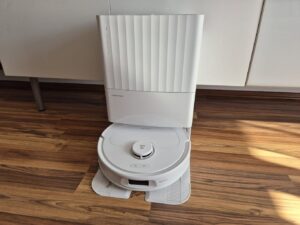
The robot vacuum market has become crowded with products that promise hands-free cleaning, intelligent navigation, and self-maintenance. In reality, many models excel in one area while compromising in another. Some offer strong vacuuming but mediocre mopping. Others feature advanced navigation but struggle with pet hair. A few attempt to do everything and end up feeling unfinished.
The Roborock Qrevo S Pro enters this competitive landscape with a different approach. Rather than introducing radically new technologies, it refines many of the features that have made Roborock one of the most respected names in robotic cleaning. The result is a robot vacuum and mop combination that aims to deliver a genuinely low-maintenance ownership experience while maintaining strong cleaning performance.
After spending considerable time evaluating the Qrevo S Pro from multiple angles, it becomes clear that this robot is not merely another iteration of an existing platform. It is one of the most balanced robot vacuums currently available, particularly for households seeking a premium experience without stepping into the highest price brackets occupied by flagship models.
This review examines every important aspect of the Roborock Qrevo S Pro, including design, navigation, cleaning performance, mopping effectiveness, maintenance requirements, usability, pet-friendliness, and several additional categories that help determine whether it deserves a place in your home.
If you click the button above you will be redirected to Amazon.com. In case you then decide to buy anything, Amazon.com will pay me a commission. This doesn’t affect the honesty of this review in any way though.
Design & Build Quality
The design of a robot vacuum cleaner is about far more than appearance. While aesthetics certainly matter, especially for a device that spends much of its life visible in kitchens, living rooms, hallways, and other high-traffic areas, the true measure of design quality lies in how effectively every component contributes to the overall user experience. In the case of the Roborock Qrevo S Pro, it becomes clear almost immediately that considerable thought has gone into both the visual presentation and the practical engineering of the product.
At first glance, the Qrevo S Pro follows the familiar design language that has become associated with Roborock’s premium models. The robot itself features a clean, understated appearance that avoids unnecessary visual flourishes. Rather than trying to stand out with aggressive styling or futuristic gimmicks, it presents itself as a sophisticated household appliance designed to blend naturally into modern homes. This approach works particularly well because robot vacuums are often permanent fixtures within living spaces. A design that feels subtle and refined tends to age much better than one built around trends that may quickly feel outdated.
The circular body maintains a relatively low profile, allowing the robot to navigate beneath many pieces of furniture where dust and debris commonly accumulate. While there are physical limitations imposed by the LiDAR navigation tower mounted on top of the unit, the overall height remains manageable and suitable for most homes. In practical use, the robot is able to access areas beneath beds, sofas, cabinets, and tables that are difficult to clean manually.
Material quality is impressive throughout. The plastic surfaces feel dense and durable rather than thin or hollow. Many robot vacuums, even expensive ones, can occasionally feel somewhat fragile when handled directly. The Qrevo S Pro largely avoids this impression. The body panels fit together tightly with consistent gaps, creating a product that feels cohesive and well assembled. Nothing rattles during operation, and there is little indication of cost-cutting in the areas users interact with most frequently.
The top cover deserves particular praise. It opens smoothly and provides easy access to internal components without feeling flimsy. The hinges appear robust enough to withstand years of repeated use. This may seem like a minor detail, but daily interaction with a robot vacuum often reveals weaknesses in moving parts. Here, Roborock has clearly paid attention to long-term durability.
The front bumper assembly also reflects thoughtful engineering. It responds smoothly when encountering obstacles and provides a reassuring degree of protection for both the robot and household furniture. During operation, the bumper mechanism feels responsive without appearing overly sensitive. The robot maintains confidence while navigating around chair legs, walls, and various obstacles without giving the impression that it is constantly colliding with its surroundings.
The wheels are another highlight. Large, well-designed drive wheels help the robot traverse a variety of surfaces with ease. Hardwood flooring, laminate, tile, rugs, and low-to-medium pile carpets all present little challenge. Transition thresholds that might stop weaker robots are generally handled without issue. The suspension system also contributes to stable movement across uneven surfaces, helping maintain cleaning effectiveness as the robot moves throughout the home.
The underside layout demonstrates practical engineering. The main brush is positioned effectively to maximize debris collection, while the side brush extends reach toward edges and corners. Access to these components is straightforward, making routine maintenance significantly easier. Users can remove tangled hair, inspect brushes, and perform basic cleaning without needing specialized tools or complicated disassembly procedures.
Arguably the most important aspect of the Qrevo S Pro’s design is the multifunction docking station. In many ways, the dock has become just as important as the robot itself in modern premium robotic cleaning systems. A robot vacuum may perform exceptionally well on floors, but if the dock is poorly designed, the ownership experience suffers.
Fortunately, the docking station included with the Qrevo S Pro is among its strongest design achievements.
Unlike some self-emptying systems that appear bulky or industrial, the dock strikes a reasonable balance between functionality and visual appeal. While it is certainly larger than a traditional charging base, it avoids dominating the room. The proportions feel balanced, and the overall appearance remains relatively elegant considering the number of tasks the station performs.
The dock houses clean water storage, dirty water collection, dust collection, charging functions, mop washing systems, and mop drying mechanisms. Integrating all these capabilities into a single unit inevitably creates complexity, yet Roborock has managed to organize the components in a way that remains intuitive for users.
The water tanks are particularly well designed. Both the clean and dirty water containers are easy to identify, remove, carry, and reinstall. The handles feel secure and comfortable, reducing the likelihood of spills during transport. The tanks themselves appear durable and capable of handling years of repeated use without developing cracks or leaks.
The dust collection compartment is equally accessible. Replacing collection bags requires minimal effort, and the compartment design helps keep contact with collected debris to a minimum. This may not sound glamorous, but reducing exposure to dust is one of the primary benefits of investing in a self-emptying robot vacuum system.
Another area where the design excels is maintenance accessibility. Many advanced robotic cleaning systems become frustrating because routine upkeep requires awkward access to hidden components. The Qrevo S Pro generally avoids these issues. Most maintenance points are easy to reach, clearly organized, and logically positioned. This significantly reduces the friction associated with long-term ownership.
Visual indicators and status lighting are also implemented tastefully. The robot communicates important information without becoming distracting. Indicator lights are bright enough to remain visible but not so aggressive that they draw unnecessary attention during normal operation. The overall aesthetic remains clean and uncluttered.
From a durability perspective, the design inspires confidence. The robot feels capable of handling daily operation over an extended period. The wheels, brushes, bumper, docking components, and water tanks all appear engineered with longevity in mind. While only long-term ownership can fully confirm reliability, initial impressions suggest a product built to withstand regular use.
One of the most impressive aspects of the design is how successfully it balances complexity and simplicity. The Qrevo S Pro is an extremely sophisticated appliance. It vacuums, mops, maps entire homes, empties its dustbin, washes its mop pads, dries them automatically, and manages a wide range of automated cleaning tasks. Yet despite all this complexity, interacting with the product feels remarkably straightforward.
Good design often goes unnoticed because everything simply works as expected. That is ultimately the strongest compliment that can be paid to the Roborock Qrevo S Pro. Its design rarely calls attention to itself. Instead, it quietly supports the cleaning experience through thoughtful engineering, durable construction, and practical functionality. Combined with excellent material quality and one of the better-designed multifunction docks currently available, the Qrevo S Pro delivers a premium build that consistently reinforces the impression of a mature and highly refined product.
Navigation Intelligence & Mapping
Navigation is arguably the single most important aspect of any robot vacuum cleaner. Suction power can be impressive, mopping systems can be sophisticated, and self-maintenance features can reduce daily effort, but none of those advantages matter if the robot cannot move intelligently through a home. A robot that repeatedly misses rooms, becomes trapped under furniture, or cleans inefficiently will quickly become frustrating regardless of how advanced its cleaning hardware may be.
The Roborock Qrevo S Pro excels in this area. In fact, its navigation and mapping capabilities are among its strongest attributes and play a major role in creating the polished user experience that separates premium robot vacuums from more basic alternatives.
The foundation of the Qrevo S Pro’s navigation system is its LiDAR-based mapping technology. Unlike simpler robot vacuums that rely primarily on bump-and-turn navigation, LiDAR allows the robot to actively scan its surroundings and build a detailed digital representation of the environment. This gives the robot an awareness of room layouts, furniture placement, walls, hallways, and obstacles before it physically reaches them.
The difference becomes apparent during the very first cleaning session.
Many entry-level robots spend their initial run wandering through the home in seemingly random patterns. They may repeatedly clean the same area while completely missing others. The Qrevo S Pro behaves very differently. From the beginning, its movements appear deliberate and organized. Rather than relying on trial and error, it systematically explores the environment while simultaneously constructing a detailed map.
The initial mapping process is remarkably fast. Within a relatively short period, the robot can create a surprisingly accurate floor plan of an entire level. Rooms are identified correctly, walls are placed accurately, and furniture is represented in a way that closely resembles the actual environment. Even homes with more complex layouts, multiple hallways, or irregular room shapes are generally mapped with impressive precision.
One of the biggest advantages of LiDAR technology is consistency. Camera-based navigation systems can sometimes struggle in low-light conditions or during nighttime operation. Since LiDAR relies on laser measurements rather than visual image recognition alone, the Qrevo S Pro maintains dependable navigation regardless of lighting conditions. Whether cleaning in bright daylight or complete darkness, its performance remains largely unchanged.
Once the initial map has been generated, users gain access to one of the most refined mapping systems currently available in a consumer robot vacuum.
The companion app allows extensive customization of the generated floor plan. Rooms can be renamed, merged, divided, and organized according to personal preferences. This flexibility becomes particularly useful in homes where the automatic room detection may not perfectly match the owner’s intended room boundaries.
For example, a large open-plan living area can be separated into multiple cleaning zones if desired. Conversely, smaller spaces can be merged into a single cleaning area. These adjustments are intuitive and easy to perform, making the map feel like a genuinely useful management tool rather than a static representation of the home.
The multi-floor mapping functionality further enhances versatility. For households with multiple levels, the Qrevo S Pro can store separate maps and automatically recognize which floor it is currently cleaning. This eliminates the need to generate new maps each time the robot is moved between floors. The process feels seamless and significantly improves convenience for owners of larger homes.
One of the most impressive aspects of the Qrevo S Pro’s navigation system is its route planning efficiency.
Rather than moving randomly across the floor, the robot follows structured cleaning patterns designed to maximize coverage while minimizing wasted movement. The cleaning path typically consists of straight, organized rows that resemble the pattern a person might use when vacuuming manually. This approach not only improves cleaning efficiency but also creates confidence that the robot is thoroughly covering the intended area.
Watching the robot work reinforces the impression that it understands the environment rather than merely reacting to it.
Coverage consistency is excellent. During routine cleaning sessions, missed areas are rare. The robot methodically works through each room before transitioning to the next, reducing the likelihood that sections of the home will be overlooked. This reliability becomes particularly valuable in larger homes where manually verifying coverage would otherwise become necessary.
Obstacle handling is another area where navigation intelligence plays a crucial role.
Modern homes contain countless objects that can challenge robot vacuums. Shoes, power cords, pet bowls, chair legs, table supports, floor lamps, toys, and various household items all create potential navigation hazards. The Qrevo S Pro performs admirably when dealing with these everyday obstacles.
Rather than repeatedly colliding with furniture, the robot typically slows as it approaches objects and adjusts its path accordingly. Furniture legs are navigated with precision, and movement around obstacles appears smooth and controlled. This contributes not only to cleaning efficiency but also to reduced wear on both the robot and household furnishings.
The robot’s ability to recover from complex situations is equally impressive.
Many robot vacuums occasionally become confused in cluttered environments or after encountering unusual furniture arrangements. They may spin in circles, repeatedly attempt the same failed maneuver, or become trapped in locations that require manual intervention. During normal operation, the Qrevo S Pro demonstrates strong spatial awareness and generally resolves navigation challenges independently.
Its escape behavior is particularly effective. When approaching tight spaces or partially obstructed pathways, the robot often evaluates alternative routes rather than stubbornly forcing its way through. This reduces the number of situations where users need to rescue the machine from difficult positions.
The implementation of no-go zones and virtual barriers further strengthens the overall navigation experience.
Not every area of a home is suitable for robotic cleaning. Pet feeding stations, delicate decorative items, exercise equipment, and areas containing loose cables may require avoidance. The app allows users to create invisible boundaries directly on the map. Once configured, these restrictions are respected consistently and accurately.
The ability to customize navigation behavior in this way greatly increases flexibility. Rather than physically blocking areas with barriers, owners can simply define digital boundaries and allow the robot to work around them.
Room-specific cleaning adds another layer of intelligence. Instead of cleaning the entire home every time, users can direct the robot to clean selected rooms or zones. This proves extremely useful for handling localized messes. If crumbs accumulate in the kitchen or dirt is tracked into an entryway, targeted cleaning can be initiated without requiring a full-house cleaning cycle.
The navigation system also integrates effectively with the robot’s mopping functions. Carpet detection allows the robot to modify its behavior depending on the surface it encounters. The transition between hard flooring and carpeted areas feels smooth and well managed, ensuring that cleaning performance remains appropriate for each environment.
Long-term mapping stability is another strength. Some robot vacuums require frequent remapping due to navigation drift or map corruption. The Qrevo S Pro generally maintains map accuracy over time, even as furniture arrangements undergo minor changes. The system adapts intelligently without forcing users to repeatedly rebuild floor plans.
Perhaps the most impressive aspect of the entire navigation experience is how little attention it demands from the user. After the initial setup and occasional map adjustments, the robot largely operates independently. It understands where it is, where it needs to go, and how to return to its dock efficiently when cleaning is complete.
That level of autonomy is what many consumers expect when investing in a premium robot vacuum, and the Qrevo S Pro largely delivers on that expectation. Its navigation system combines accurate mapping, intelligent route planning, reliable obstacle handling, strong customization options, and consistent real-world performance into a package that feels mature, refined, and highly dependable. For many users, the intelligence displayed during everyday operation may ultimately prove just as valuable as the vacuuming and mopping capabilities themselves.
Vacuuming Performance
When evaluating any robot vacuum cleaner, vacuuming performance remains the category that matters most. Advanced navigation, intelligent automation, self-emptying docks, and sophisticated mobile apps can certainly improve the ownership experience, but at the end of the day, a robot vacuum exists for one primary reason: to keep floors clean. If it cannot consistently remove dirt, dust, hair, and debris from a variety of surfaces, every other feature becomes far less important.
The Roborock Qrevo S Pro performs exceptionally well in this regard. While robot vacuums have traditionally been viewed as supplementary cleaning tools rather than true replacements for conventional vacuum cleaners, the Qrevo S Pro demonstrates just how far the category has evolved. It delivers a level of cleaning performance that allows it to handle the vast majority of routine floor maintenance with very little user intervention.
One of the first things that becomes apparent during daily use is the robot’s ability to maintain consistently clean floors over time. This distinction is important because robot vacuums operate differently from traditional vacuums. A powerful upright vacuum may be capable of removing a tremendous amount of dirt in a single session, but if it is only used once every week or two, debris has ample opportunity to accumulate between cleaning sessions. The Qrevo S Pro approaches the problem from a different angle. By cleaning frequently and automatically, it prevents dirt buildup before it becomes noticeable.
This daily maintenance approach creates floors that simply stay cleaner on a consistent basis.
On hard flooring surfaces, the Qrevo S Pro is particularly impressive. Hardwood, laminate, vinyl, tile, and stone floors all benefit from its strong pickup performance. Fine dust, one of the most common household contaminants, is collected effectively. This may not sound especially exciting, but dust often presents one of the biggest challenges for robotic cleaners because it can settle into corners, along edges, and in microscopic grooves within flooring materials.
The Qrevo S Pro handles these particles remarkably well. After a complete cleaning cycle, floors often feel noticeably cleaner underfoot, with significantly less residual dust compared to many lower-tier robot vacuums.
Larger debris is equally well managed. Crumbs, cereal pieces, dried food fragments, small leaves tracked indoors, and everyday household dirt are collected efficiently during normal operation. The combination of strong suction and an effective brush system allows the robot to capture a wide variety of debris sizes without simply pushing material around the floor.
Kitchen environments provide a particularly demanding test for robot vacuums because they often contain mixed debris types. Fine dust, crumbs, food particles, and small granular materials may all exist within the same area. The Qrevo S Pro performs well under these conditions, maintaining a high level of pickup consistency across different debris categories.
The main brush design contributes significantly to this performance. Rather than relying solely on suction, the brush actively agitates debris and guides it toward the intake system. This helps improve collection efficiency while reducing the likelihood that dirt will remain embedded in surface textures.
Hair pickup is another area where the robot performs strongly. Human hair can be surprisingly difficult for vacuum cleaners to manage because long strands often wrap around brushes and moving components. The Qrevo S Pro does a commendable job of collecting hair while minimizing tangling. While no brush system is completely immune to hair accumulation, maintenance requirements are relatively low compared to many competing products.
Pet hair presents an even greater challenge, particularly in households with shedding dogs or cats. Daily cleaning sessions allow the robot to continuously remove fur before it accumulates into visible clumps. Over time, this can dramatically reduce the amount of pet hair found throughout the home. Furniture may still require separate attention, but floor surfaces remain noticeably cleaner.
The robot’s performance on carpets is equally important because carpeting often reveals the limitations of robotic cleaning systems. Hard floors generally allow debris to remain exposed and accessible, whereas carpets can trap dirt deep within their fibers.
On low-pile carpets, the Qrevo S Pro performs extremely well. Everyday dirt, dust, pet hair, and loose debris are removed effectively during routine cleaning cycles. The robot maintains good contact with the carpet surface and demonstrates enough suction power to extract material that has settled beneath the upper fibers.
Medium-pile carpets also produce strong results. While deeper carpet structures naturally create greater resistance and make debris extraction more difficult, the Qrevo S Pro still delivers impressive cleaning performance. The robot’s automatic carpet detection system plays an important role here. Upon recognizing carpeted surfaces, suction power increases automatically, helping maximize dirt removal without requiring manual intervention.
This automatic adjustment contributes significantly to overall convenience. Users do not need to create separate cleaning profiles or manually switch between floor types. The robot adapts on its own, making intelligent decisions based on the surface it encounters.
Of course, it is important to maintain realistic expectations. No robot vacuum, including the Qrevo S Pro, can completely replicate the deep-cleaning capability of a premium upright vacuum equipped with a powerful motor and aggressive carpet agitation system. Deeply embedded dirt within thick carpeting remains a challenge for all robotic cleaners.
However, comparing a robot vacuum directly to a full-size upright vacuum is not always the most useful benchmark.
The more relevant question is whether the Qrevo S Pro can maintain carpets at a high level of cleanliness between occasional deep-cleaning sessions. In this regard, it succeeds admirably. Many users may find themselves needing manual vacuuming far less frequently after incorporating the robot into their cleaning routine.
Edge cleaning is another aspect worth examining. Circular robot vacuums inherently face certain limitations when cleaning along walls and within corners. The shape that allows efficient movement throughout a room also creates challenges when reaching into ninety-degree angles.
Despite these physical constraints, the Qrevo S Pro performs well along edges. The side brush extends the robot’s cleaning reach and helps sweep debris toward the primary suction pathway. Dust accumulation along baseboards is reduced effectively, and the robot demonstrates good coverage when navigating around room perimeters.
Corners remain one of the few areas where occasional manual cleaning may still be necessary. This is not unique to the Qrevo S Pro but rather a limitation shared by virtually all circular robot vacuum designs. Nevertheless, its performance in these difficult areas remains better than many competitors.
Another notable strength is consistency across multiple cleaning sessions. Some robot vacuums perform well during isolated tests but struggle to maintain the same effectiveness over weeks and months of regular use. The Qrevo S Pro benefits from its self-emptying dock, which helps maintain strong suction performance by reducing dustbin-related airflow restrictions. Because debris is regularly removed from the onboard bin, cleaning effectiveness remains more stable over time.
The robot also demonstrates strong debris transport efficiency. Material collected by the brush system generally moves successfully into the dustbin rather than accumulating within internal pathways. This contributes to reliable performance and reduces maintenance frequency.
Perhaps the most impressive aspect of the Qrevo S Pro’s vacuuming performance is how little attention it requires from the user. Once cleaning schedules are established, the robot simply performs its task day after day. Floors remain cleaner, dust accumulation decreases, pet hair becomes less noticeable, and routine maintenance demands are minimal.
That level of consistency is ultimately what makes the vacuuming system so effective. Rather than delivering dramatic one-time cleaning results, the Qrevo S Pro excels by maintaining cleanliness continuously. Its combination of strong hard-floor performance, capable carpet cleaning, effective hair pickup, intelligent suction management, and reliable day-to-day operation makes it one of the more accomplished robotic vacuuming systems currently available. For most households, it provides a cleaning experience that feels both genuinely useful and impressively dependable.
Mopping Capability
For many years, mopping was the weak point of robot vacuum cleaners. Manufacturers frequently advertised vacuum-and-mop combinations as complete floor-care solutions, but the reality often fell short of expectations. Most systems consisted of little more than a damp cloth dragged behind the robot while gravity provided the only cleaning force. While these basic mopping systems could remove some loose dust, they rarely delivered the kind of floor-cleaning performance most people associate with actual mopping.
The Roborock Qrevo S Pro represents a significant step beyond those earlier designs. Rather than treating mopping as an afterthought, it incorporates a sophisticated floor-washing system that plays a central role in the overall cleaning experience. While it still cannot entirely replace the occasional deep manual scrubbing required in certain situations, it comes closer to that goal than many competing robot vacuums.
The most important factor behind the Qrevo S Pro’s mopping performance is its dual rotating mop system. Unlike passive mop pads that simply slide across the floor, the rotating pads actively scrub surfaces during operation. This seemingly simple difference dramatically changes the robot’s ability to remove dirt and stains.
As the mop pads rotate, they generate friction against the floor surface. This mechanical action helps loosen debris, break down residue, and lift grime that would otherwise remain attached to the floor. The result is a much more convincing cleaning experience that feels far closer to genuine mopping rather than simple damp dusting.
The benefits become especially noticeable in kitchens, dining areas, entryways, and other spaces where hard floors experience regular foot traffic. These areas often develop a thin layer of residue that can be difficult to remove through vacuuming alone. Dust, cooking oils, tracked-in dirt, and everyday grime gradually accumulate over time, creating floors that may appear clean at a glance but feel less clean upon closer inspection.
The Qrevo S Pro performs particularly well against this type of buildup. Regular mopping sessions help restore a cleaner appearance while also improving how floors feel underfoot. Surfaces often emerge with a noticeably fresher finish compared to vacuum-only cleaning.
One of the robot’s greatest strengths is its ability to maintain floor cleanliness consistently. Traditional mopping tends to be performed infrequently because it requires considerable effort. Many homeowners may vacuum several times per week but only mop every few weeks. During that time, residue continues to accumulate.
The Qrevo S Pro changes this equation by making frequent mopping practical. Because the process is automated, users can schedule regular floor washing without dedicating additional time or effort. This allows floors to remain cleaner on a continuous basis rather than alternating between clean and dirty states.
Water management is another area where the system performs impressively.
A common concern among homeowners is whether robot mops leave excessive moisture behind. This is particularly important for households with hardwood, engineered wood, laminate, or other moisture-sensitive flooring materials. Excess water can potentially cause damage if not properly controlled.
The Qrevo S Pro demonstrates careful water application throughout the cleaning process. Floors emerge damp enough to facilitate effective cleaning but not excessively wet. Moisture levels generally dissipate quickly after the robot passes, reducing concerns about prolonged water exposure.
The ability to adjust water flow settings further improves versatility. Different floor types and cleaning situations may benefit from varying moisture levels. Light maintenance cleaning may require only minimal water usage, while dirtier areas can benefit from increased moisture application. The robot accommodates these different scenarios effectively.
Another major advantage is the consistency of pressure applied by the rotating mop system. Manual mopping often produces uneven results because pressure varies naturally as a person moves across the floor. The Qrevo S Pro maintains relatively uniform contact throughout the cleaning process. This consistency helps ensure that cleaning performance remains predictable across different rooms and flooring types.
When dealing with everyday spills, the robot generally performs well. Dried beverage residue, light food stains, muddy footprints, and similar household messes can often be removed successfully during normal cleaning cycles. Areas that might otherwise require spot cleaning are frequently addressed without direct user involvement.
Of course, expectations should remain realistic. Extremely stubborn stains that have been left untouched for extended periods may still require manual intervention. Sticky substances, heavily dried spills, or deeply embedded grime can exceed the capabilities of any robotic mopping system. Nevertheless, the Qrevo S Pro handles a surprisingly wide range of common household cleaning challenges.
One feature that significantly enhances long-term mopping effectiveness is the automatic mop washing system integrated into the dock.
This feature addresses one of the most overlooked problems in robotic mopping.
Many robot vacuums clean large areas using the same mop pad from beginning to end. As dirt accumulates on the pad, cleaning effectiveness gradually decreases. In some cases, the robot may simply redistribute dirty water across the floor rather than actively cleaning it.
The Qrevo S Pro approaches the issue differently. During operation, the robot periodically returns to its dock to wash the mop pads. This process removes accumulated dirt and refreshes the cleaning surfaces before the robot resumes its task.
The difference becomes particularly valuable in larger homes. Instead of cleaning multiple rooms with increasingly dirty mop pads, the robot maintains a higher level of cleaning consistency throughout the entire session.
The washing process itself appears thorough and effective. After cleaning cycles, the mop pads generally emerge in significantly better condition than systems that rely solely on manual maintenance. This contributes directly to better floor-cleaning performance over time.
Equally important is the automatic drying function.
Anyone who has left a damp mop in a utility closet understands how quickly moisture can create unpleasant odors. Wet cleaning pads provide an ideal environment for bacterial growth and mildew development if left unattended.
The Qrevo S Pro addresses this concern by automatically drying the mop pads after use. This not only improves hygiene but also reduces the likelihood of unpleasant smells developing within the system. For users who run the robot frequently, this feature adds substantial convenience and helps maintain a fresher overall experience.
The integration between vacuuming and mopping functions is also handled intelligently.
Hard-floor cleaning benefits from vacuuming before mopping because loose debris can interfere with effective floor washing. The robot coordinates these tasks efficiently, ensuring that floors are properly prepared before the mopping process begins. This sequential approach improves final results and helps prevent debris from being pushed around by wet mop pads.
Carpet handling deserves mention as well. One of the historical problems with combination vacuum-and-mop robots involved accidental wetting of carpets. The Qrevo S Pro incorporates intelligent surface recognition that allows it to adapt its behavior when transitioning between flooring types. This greatly reduces concerns about moisture reaching carpeted areas where it does not belong.
Another strength is the overall user experience surrounding the mopping system. Many advanced features work quietly in the background without requiring constant attention. Water management, pad cleaning, pad drying, and cleaning schedules all operate with minimal intervention. This automation is a major reason why the system feels genuinely useful rather than merely impressive on paper.
Perhaps the greatest compliment that can be given to the Qrevo S Pro’s mopping performance is that it changes user expectations. Instead of viewing robotic mopping as a secondary bonus feature, owners may begin to rely on it as a core part of their household cleaning routine. Floors remain cleaner, sticky residue becomes less common, footprints disappear more quickly, and routine maintenance becomes largely automated.
While manual mopping still has a place for deep cleaning and particularly stubborn messes, the Qrevo S Pro narrows the gap considerably. Its rotating mop technology, intelligent water management, automatic pad washing, automated drying system, and strong everyday cleaning performance combine to create one of the most capable robotic mopping experiences currently available. For households with significant hard-floor coverage, it may prove just as valuable as the vacuuming system itself.
Maintenance & Cleaning Requirements
One of the biggest promises of modern robot vacuum cleaners is convenience. Manufacturers frequently advertise these products as hands-free cleaning solutions capable of reducing household chores and saving valuable time. However, anyone who has owned a robot vacuum for an extended period understands that no cleaning machine is truly maintenance-free. Dustbins fill up, filters require cleaning, brushes accumulate hair, water tanks need refilling, and various components eventually need attention.
The real question is not whether maintenance exists, but rather how much maintenance is required and how easy it is to perform. In this regard, the Roborock Qrevo S Pro distinguishes itself as one of the more user-friendly robotic cleaning systems currently available. While it still requires periodic upkeep, the amount of effort demanded from the owner is dramatically lower than what earlier generations of robot vacuums required.
In many ways, the Qrevo S Pro’s maintenance system represents one of its greatest strengths. The robot is designed not only to clean floors but also to reduce the amount of cleaning required for the cleaning machine itself.
The most significant contributor to this convenience is the multifunction docking station.
Traditionally, one of the most frequent maintenance tasks associated with robot vacuums involved emptying the onboard dustbin. Depending on home size, flooring types, and the presence of pets, some robots required emptying after every cleaning session. While the task itself was relatively simple, having to constantly monitor the dustbin undermined the sense of automation that robot vacuums were supposed to provide.
The Qrevo S Pro addresses this issue through its self-emptying system. After completing a cleaning cycle, the robot returns to the dock, where collected debris is automatically transferred from the onboard dustbin into a larger collection bag housed within the station.
The practical impact of this feature is substantial.
Instead of thinking about dustbin maintenance every day, users may only need to replace the collection bag every few weeks or even months, depending on cleaning frequency and household conditions. For homes with moderate dirt levels, the difference in convenience can be dramatic.
The collection bag system also offers hygiene benefits. Because debris remains sealed inside the bag, users experience less direct exposure to dust during disposal. This can be particularly valuable for allergy sufferers or anyone sensitive to airborne particles.
The process itself is largely automatic and requires virtually no user involvement. The robot empties itself, returns to charging mode, and prepares for the next cleaning cycle without additional assistance.
Water management is another area where maintenance requirements have been significantly reduced.
Traditional robot mops often required users to manually remove mop pads, rinse them, wash them, and reinstall them after every cleaning session. While manageable in theory, these repeated tasks often became inconvenient in practice.
The Qrevo S Pro’s automatic mop washing system changes the equation considerably.
During cleaning operations, the robot periodically returns to the dock, where the mop pads are actively washed. This process removes accumulated dirt and refreshes the cleaning surfaces before the robot resumes its work. Not only does this improve cleaning performance, but it also eliminates one of the most tedious maintenance responsibilities associated with robotic mopping systems.
The benefit becomes even more noticeable over time. Because the pads are cleaned automatically throughout each session, users spend far less time dealing with dirty mop materials manually. Routine ownership becomes simpler and less demanding.
Equally important is the mop drying system.
Damp cleaning pads can quickly become problematic if left unattended. Moisture trapped within fabric materials creates conditions that encourage unpleasant odors, bacterial growth, and mildew development. Older robotic mopping systems often required owners to remove wet pads manually after every cleaning cycle to prevent these issues.
The Qrevo S Pro eliminates much of that burden.
After cleaning is complete, the dock automatically dries the mop pads. This process helps maintain freshness, reduces odor development, and significantly improves overall hygiene. The system effectively performs a maintenance task that owners previously had to remember themselves.
The clean-water and dirty-water tanks remain among the few components requiring regular user attention. Fortunately, their design makes this process relatively painless.
Refilling the clean-water tank is straightforward. The tank is easy to remove, transport, refill, and reinstall. The handles feel secure, and the overall process takes only a few moments. Depending on cleaning frequency and home size, refills may only be required periodically rather than daily.
The dirty-water tank requires similar attention. Since it collects water used during mop washing, it must eventually be emptied and rinsed. While this task cannot be fully automated, the tank’s design minimizes inconvenience. Access is easy, removal is smooth, and cleaning requires little effort.
Compared to manually washing mop pads after every use, periodic water tank maintenance feels like a reasonable tradeoff.
Brush maintenance remains an unavoidable aspect of robot vacuum ownership, but the Qrevo S Pro handles it well.
Hair accumulation is one of the most common maintenance concerns for robotic cleaners. Human hair, pet fur, threads, and fibers naturally wrap around rotating brush systems over time. Left unchecked, these tangles can reduce cleaning performance and place additional strain on motors.
Fortunately, the brush assembly is easy to access.
Removing the main brush takes only a few seconds, making routine inspections quick and convenient. The design helps minimize tangling compared to some older systems, although households with long-haired residents or multiple pets will still encounter occasional buildup.
The side brush similarly benefits from straightforward maintenance access. Cleaning trapped hair or debris is simple and rarely requires specialized tools.
Filter maintenance is another area where the Qrevo S Pro performs well.
Vacuum filters naturally accumulate fine dust particles during operation. Over time, this buildup can restrict airflow and reduce suction efficiency. Regular cleaning helps maintain optimal performance while extending filter lifespan.
Accessing the filter is easy, and routine cleaning takes very little time. Most users will find the process simple enough to incorporate into their occasional maintenance routine without difficulty.
One of the most helpful aspects of the ownership experience is the software’s maintenance management system.
Rather than forcing users to remember service intervals manually, the companion app tracks component usage and provides reminders when maintenance is recommended. This includes notifications related to filters, brushes, sensors, mop pads, and other consumable parts.
These reminders reduce guesswork and help ensure that the robot continues operating at peak efficiency. For users unfamiliar with robotic cleaning systems, this guidance can be particularly valuable.
Sensor maintenance is often overlooked but remains important for long-term performance.
The Qrevo S Pro relies on numerous sensors for navigation, obstacle detection, docking, and safety functions. Dust accumulation on these sensors can potentially affect accuracy if left unaddressed.
Fortunately, cleaning the sensors requires little effort. A quick wipe with a soft cloth is generally sufficient to maintain proper operation. Because the sensors are accessible and clearly positioned, the task feels simple rather than burdensome.
The docking station itself also benefits from self-cleaning features that reduce maintenance requirements.
In many robotic mopping systems, the dock eventually accumulates dirt, residue, and moisture that require frequent manual scrubbing. The Qrevo S Pro’s dock is designed to minimize this issue through automated cleaning processes. While occasional cleaning remains necessary, the frequency and intensity of manual intervention are significantly reduced.
Long-term consumable costs are another important consideration.
Replacement dust bags, filters, mop pads, and brushes will eventually need to be purchased. This is true of virtually every robot vacuum. Fortunately, the replacement schedule for most components is relatively reasonable. Regular maintenance helps maximize component lifespan, reducing ongoing ownership expenses.
Perhaps the most impressive aspect of the Qrevo S Pro’s maintenance design is how effectively it shifts ownership from active management to periodic supervision. Instead of constantly tending to the robot, users primarily monitor consumables, refill water when necessary, and perform occasional inspections.
The machine handles much of the repetitive work on its own.
This distinction is important because convenience ultimately defines the success of any robot vacuum. A highly capable cleaning system loses much of its appeal if maintaining it becomes a chore in itself. The Qrevo S Pro succeeds because it automates not only cleaning but also many of the maintenance tasks that historically frustrated robot vacuum owners.
While no robotic cleaning system can completely eliminate upkeep, the Qrevo S Pro comes remarkably close. Its self-emptying functionality, automatic mop washing, automated mop drying, accessible components, intelligent maintenance reminders, and thoughtfully designed dock combine to create one of the lowest-maintenance ownership experiences currently available. For busy households seeking genuine automation rather than merely assisted cleaning, this may prove to be one of the product’s most valuable strengths.
Ergonomics & Usability
A robot vacuum can have impressive specifications, powerful suction, advanced navigation technology, and a sophisticated docking station, but if it is difficult to use, much of that value is diminished. Ergonomics and usability are often overlooked when discussing robotic cleaners because they do not appear prominently on specification sheets. However, these factors play a major role in determining whether a product becomes a genuinely useful household appliance or simply an expensive gadget that gradually sees less use over time.
The Roborock Qrevo S Pro performs exceptionally well in this category because it has clearly been designed with the everyday user in mind. Rather than focusing exclusively on technical capabilities, the overall experience emphasizes simplicity, convenience, and accessibility. From initial setup to daily operation and long-term ownership, the robot consistently feels polished and thoughtfully engineered.
One of the most important aspects of usability is the setup process. Many smart home devices create frustration before they are even used because installation is overly complicated. Wi-Fi pairing issues, confusing instructions, software glitches, and unintuitive interfaces can quickly undermine first impressions.
Fortunately, the Qrevo S Pro avoids most of these pitfalls.
The setup procedure is straightforward and generally easy to follow. Users are guided through connecting the robot to their home network, configuring basic settings, and initiating the first mapping run. Even individuals with limited experience using smart home devices should find the process manageable.
This ease of setup is significant because it establishes confidence early in the ownership experience. Rather than feeling like a complex technological project, the robot feels approachable from the beginning.
Once the robot is connected, the mobile application becomes the primary control center. The quality of a robot vacuum’s app can often determine whether ownership feels enjoyable or frustrating. A poorly designed app can make even advanced hardware feel cumbersome, while a well-designed interface can make sophisticated features feel simple and intuitive.
Roborock’s software ecosystem remains one of the strongest in the industry, and the Qrevo S Pro benefits tremendously from this mature platform.
The application is organized logically, allowing users to quickly locate essential controls without navigating through endless menus. The home screen provides a clear overview of the robot’s status, battery level, cleaning history, and current map. Important information is presented cleanly without overwhelming the user.
One of the most impressive aspects of the interface is how effectively it balances simplicity and depth.
New users can perform basic tasks almost immediately. Starting a cleaning cycle, sending the robot back to its dock, viewing maps, and checking maintenance status require little effort. At the same time, advanced users gain access to extensive customization options that allow highly detailed control over cleaning behavior.
This layered design approach is one of the application’s greatest strengths. Beginners are not overwhelmed by complexity, while experienced users are not restricted by overly simplified controls.
Map management is particularly well executed.
Once the robot has completed its initial mapping process, the generated floor plan becomes an interactive tool that greatly enhances usability. Rooms can be named, divided, merged, and organized according to personal preferences. Creating custom cleaning zones is straightforward, and modifications can usually be completed in seconds.
The ability to visualize the home within the application makes the entire cleaning process feel more intuitive. Rather than issuing vague commands, users interact directly with a representation of their living space.
For example, if crumbs accumulate in the kitchen, there is no need to clean the entire house. The kitchen can simply be selected on the map, and the robot will focus exclusively on that area. This targeted cleaning capability significantly improves convenience and encourages more frequent use.
Scheduling functionality is another area where usability shines.
One of the primary reasons people purchase robot vacuums is to automate routine cleaning. The Qrevo S Pro makes this process exceptionally easy. Users can create schedules based on specific rooms, times, cleaning intensities, and mopping preferences.
The flexibility available here is impressive.
A household might schedule daily kitchen cleaning, alternate-day living room maintenance, and weekly deep cleaning throughout the entire home. These routines can operate automatically without requiring ongoing attention from the owner.
The scheduling interface remains easy to understand despite the extensive customization options available. This balance between flexibility and accessibility is a recurring theme throughout the product.
Voice assistant integration adds another layer of convenience.
For users who already utilize smart home ecosystems, voice control can simplify everyday interactions. Starting a cleaning cycle, sending the robot back to its dock, or initiating room-specific cleaning can often be accomplished through simple voice commands.
While voice control is not essential, it contributes to the overall feeling that the robot integrates naturally into modern households.
The physical ergonomics of the hardware are equally important.
The robot itself is easy to handle when necessary. Although most interactions occur through the application, situations occasionally arise where the unit must be lifted, relocated, or inspected manually. The weight feels manageable, and the overall shape allows for secure handling.
Accessing maintenance components is similarly straightforward. The dustbin, filters, brushes, and water-related components can all be reached without complicated disassembly procedures. This reduces frustration during routine maintenance and encourages users to keep the machine operating at peak efficiency.
The docking station also benefits from thoughtful ergonomic design.
The clean-water and dirty-water tanks are easy to remove and carry. Their handles feel comfortable and secure, reducing the likelihood of accidental spills. Replacing dust collection bags is equally uncomplicated, requiring minimal effort and little direct contact with collected debris.
These small details may not seem particularly important individually, but together they contribute significantly to the overall ownership experience.
Another major usability advantage is the robot’s ability to operate independently once configured.
Many smart devices require constant monitoring or frequent intervention. The Qrevo S Pro generally avoids this issue. After initial setup and schedule creation, the robot largely manages itself. It cleans according to plan, returns to the dock automatically, empties its dustbin, washes its mop pads, dries them, and prepares for the next cleaning session.
This level of automation is central to good usability because it minimizes the cognitive burden placed on the owner.
Instead of managing a cleaning machine, users simply enjoy cleaner floors.
The notification system is also implemented thoughtfully.
The robot provides useful information when necessary without becoming excessively intrusive. Maintenance reminders, cleaning completion notifications, and occasional alerts help keep users informed while avoiding unnecessary interruptions.
Error handling is another area where the software demonstrates maturity.
If the robot encounters a problem, the application generally provides clear explanations and actionable guidance. Rather than presenting vague error codes, the system communicates issues in a way that most users can easily understand.
Accessibility for multiple household members is another positive aspect.
The interface is intuitive enough that different family members can quickly learn how to operate the robot without extensive instruction. This may seem minor, but products that are easy for everyone in the household to use tend to deliver greater long-term value.
One often-overlooked aspect of usability is reliability. A system can be feature-rich and visually appealing, but if those features work inconsistently, the experience suffers. The Qrevo S Pro benefits from a mature software platform that generally behaves predictably. Commands are executed reliably, schedules operate as expected, and maps remain stable over time.
This consistency builds trust.
Owners become comfortable allowing the robot to operate unattended because they gain confidence that it will perform as intended.
Perhaps the strongest indication of excellent usability is how quickly the technology fades into the background. After a relatively short adjustment period, interacting with the Qrevo S Pro becomes second nature. The robot simply becomes part of the household routine, quietly maintaining cleanliness with minimal effort required from the user.
That seamless integration is ultimately what good ergonomics and usability should achieve. Rather than forcing users to adapt to the product, the product adapts to the user. Through intuitive software, thoughtful hardware design, strong automation, accessible maintenance procedures, flexible scheduling, and dependable operation, the Roborock Qrevo S Pro delivers one of the most user-friendly robotic cleaning experiences currently available. It succeeds not only because of what it can do, but because of how effortlessly it allows owners to benefit from those capabilities.
Pet-Friendliness
Pet owners often evaluate robot vacuums differently from other consumers, and for good reason. A home with one or more pets presents cleaning challenges that simply do not exist in households without animals. Fur accumulates daily, litter gets tracked across floors, muddy paw prints appear unexpectedly, food spills become routine, and toys can end up scattered throughout living spaces. Even the most capable robot vacuum can struggle in these environments if it has not been designed with pet-related challenges in mind.
The Roborock Qrevo S Pro is one of the more pet-friendly robot vacuum and mop systems currently available. While no robotic cleaner can completely eliminate every cleaning task associated with pet ownership, this model addresses many of the most common pain points exceptionally well. In fact, households with dogs and cats may benefit more from the Qrevo S Pro than almost any other type of user because the robot’s strengths align closely with the cleaning demands that pets create.
Perhaps the most obvious challenge in pet-owning households is hair.
Pet hair has a unique ability to spread throughout an entire home. Even short-haired animals can produce surprising amounts of fur, while long-haired breeds can leave visible accumulations on floors within a matter of days. Traditional cleaning approaches often involve frequent vacuuming simply to keep up with the constant shedding cycle.
The Qrevo S Pro performs very well in this area.
On hard floors, pet hair pickup is consistently strong. Fur is collected efficiently before it has an opportunity to accumulate in corners, under furniture, or along baseboards. Because the robot can operate daily, it prevents many of the visible hair buildups that typically occur between manual cleaning sessions.
This consistency is one of the biggest advantages of robotic cleaning in pet households.
A conventional vacuum may offer more raw power, but it is unlikely to be used every day. The Qrevo S Pro, by contrast, can maintain a regular cleaning schedule that continuously removes fur before it becomes noticeable. Over time, this creates a cleaner living environment with significantly less visible pet hair.
Carpeted surfaces present a more difficult challenge because pet hair tends to embed itself within carpet fibers. Here, the robot still performs admirably. The combination of suction power and brush agitation allows it to remove a substantial amount of fur during routine cleaning cycles.
While deeply embedded hair may occasionally require a more powerful upright vacuum for complete removal, the Qrevo S Pro dramatically reduces the frequency with which such deep-cleaning sessions become necessary.
The brush design also deserves attention from a pet-owner perspective.
One of the most frustrating aspects of owning a vacuum cleaner in a pet household is dealing with tangled hair wrapped around brushes and rollers. Over time, these tangles can reduce performance and increase maintenance requirements.
The Qrevo S Pro’s brush system does a good job of minimizing excessive tangling. Hair still accumulates occasionally, particularly in homes with long-haired pets or multiple animals, but maintenance demands remain relatively manageable. Regular inspections and quick cleaning sessions are generally sufficient to keep the brush operating effectively.
For households with cats, litter management is another critical consideration.
Cat litter has a remarkable tendency to spread far beyond the immediate area surrounding the litter box. Small granules become trapped in paws and are tracked throughout the home, creating both visual mess and uncomfortable floor surfaces.
The Qrevo S Pro handles litter surprisingly well.
Most common litter types are collected effectively during normal vacuuming operations. Daily cleaning helps prevent granules from spreading to distant areas of the home and significantly reduces the amount of litter that accumulates around walkways, hallways, and living spaces.
This may seem like a small benefit, but for cat owners, it can dramatically improve everyday cleanliness.
The robot’s ability to clean around litter box areas also contributes to a more hygienic environment. Instead of waiting until litter becomes visibly scattered, the robot can address the problem proactively through scheduled cleaning routines.
Food-related messes are another common reality of pet ownership.
Dogs and cats frequently spill kibble, scatter food fragments, or leave small crumbs around feeding stations. The Qrevo S Pro is well suited to managing these everyday messes. Dry food pieces, crumbs, and similar debris are typically collected without difficulty.
The ability to create room-specific cleaning schedules is particularly useful in this context. Pet feeding areas can receive more frequent cleaning attention than other parts of the home, ensuring that food-related debris does not accumulate over time.
Mopping performance adds another layer of value for pet owners.
Vacuuming alone addresses loose debris, but pets also introduce a variety of residues that require wet cleaning. Paw prints, dirt tracked in from outdoors, water splashes near drinking bowls, and minor accidents can all leave marks on hard flooring.
The Qrevo S Pro’s rotating mop system helps address these challenges effectively.
Regular mopping sessions remove many of the footprints and smudges that pets naturally create. Entryways, kitchens, and areas near outdoor access points particularly benefit from frequent automated mopping.
For dog owners, this capability can be especially valuable during rainy seasons when muddy paws become a recurring issue. While heavily soiled floors may still require occasional manual attention, routine mopping significantly reduces the visible impact of daily pet activity.
The automatic mop washing and drying system also contributes to pet-friendliness in an indirect but important way.
Homes with pets often generate more dirt than pet-free households. As a result, mop pads become dirty more quickly. The Qrevo S Pro’s ability to wash and refresh its mop pads throughout cleaning sessions helps maintain cleaning effectiveness even when dealing with increased contamination levels.
Odor control is another consideration that deserves attention.
While a robot vacuum cannot directly eliminate pet odors, maintaining cleaner floors can contribute to a fresher overall environment. Removing fur, dust, tracked dirt, and organic debris on a regular basis helps reduce some of the sources that contribute to household odors.
The automatic mop drying function further supports cleanliness by preventing damp pads from developing unpleasant smells between cleaning sessions.
Navigation intelligence plays a surprisingly important role in pet households as well.
Pets introduce a variety of obstacles that may not exist in other homes. Toys, food bowls, water dishes, scratching posts, pet beds, and other accessories can complicate navigation.
The Qrevo S Pro generally handles these obstacles intelligently.
Rather than repeatedly colliding with pet-related objects, the robot navigates around them with a reasonable degree of caution. This helps protect both the robot and the household environment while reducing the likelihood of accidental disruptions.
Pet toys scattered throughout the floor remain a challenge for any robot vacuum, but the Qrevo S Pro’s obstacle awareness significantly improves its ability to operate successfully in active pet households.
One subject that inevitably arises when discussing robot vacuums and pets is accident avoidance.
Pet accidents represent one of the most difficult scenarios for any robotic cleaner. While obstacle recognition technology has improved substantially in recent years, no system should be considered completely foolproof under every circumstance.
Responsible pet owners should still inspect floors before scheduled cleaning sessions whenever accidents are a possibility. However, the Qrevo S Pro’s navigation and obstacle detection systems provide a greater degree of confidence than many older robotic models.
The self-emptying system offers another important advantage for pet owners.
Because pet households typically generate larger amounts of debris, onboard dustbins can fill quickly. The automatic emptying process allows the robot to continue operating effectively without requiring constant user intervention. This becomes particularly valuable during seasonal shedding periods when fur production increases dramatically.
Perhaps the most compelling aspect of the Qrevo S Pro’s pet-friendliness is the cumulative effect of all these features working together. Individually, strong hair pickup, effective mopping, obstacle avoidance, self-emptying functionality, and intelligent scheduling are useful. Combined, they create a cleaning system that feels genuinely tailored to the realities of living with animals.
The robot does not eliminate every cleaning responsibility associated with pet ownership, nor should anyone expect it to. However, it significantly reduces the daily workload required to maintain a clean home. Floors remain cleaner, pet hair becomes less noticeable, litter spread decreases, paw prints are addressed more quickly, and routine maintenance becomes far less demanding.
For households with dogs, cats, or multiple pets, the Roborock Qrevo S Pro may ultimately deliver even greater value than it does in pet-free homes. Its ability to address the specific cleaning challenges created by animals makes it one of the more capable and practical robotic cleaning solutions currently available for pet owners seeking a cleaner home with less effort.
Conclusion
The Roborock Qrevo S Pro is a product that understands what most people actually want from a robot vacuum cleaner. Rather than chasing headline-grabbing features that offer little real-world value, it focuses on delivering a balanced and highly refined cleaning experience. After evaluating its design, navigation, vacuuming performance, mopping capabilities, maintenance requirements, usability, and pet-friendliness, the overall impression is overwhelmingly positive.
What stands out most is the lack of major weaknesses. Many robot vacuums excel in one area while making noticeable compromises in another. Some offer powerful suction but weak navigation. Others provide advanced mapping but disappointing mopping performance. The Qrevo S Pro avoids most of these trade-offs by performing consistently well across virtually every category that matters.
Its navigation system is intelligent and dependable, allowing the robot to clean efficiently with minimal supervision. Vacuuming performance is strong enough to maintain hard floors and carpets at a high standard of cleanliness, while the rotating mop system delivers genuinely useful floor-washing results rather than merely acting as a supplementary feature. The multifunction dock further enhances the experience by reducing maintenance through automatic dust collection, mop washing, and mop drying.
The robot is particularly appealing for busy households. Once schedules are configured, it can handle the majority of routine floor cleaning with very little user involvement. Pet owners, in particular, are likely to appreciate its ability to manage fur, litter, tracked dirt, and everyday messes before they become noticeable problems.
No robot vacuum is perfect, and the Qrevo S Pro cannot completely replace a powerful upright vacuum for deep carpet cleaning or eliminate every manual cleaning task. Occasional maintenance and periodic deep cleaning will still be necessary. However, those limitations are common to virtually all robotic cleaning systems currently available.
For anyone seeking a premium robot vacuum and mop combination that delivers excellent everyday performance without requiring constant attention, the Roborock Qrevo S Pro is an easy recommendation. It combines intelligent automation, strong cleaning capabilities, and a polished user experience into a package that feels mature, dependable, and exceptionally well-rounded.