
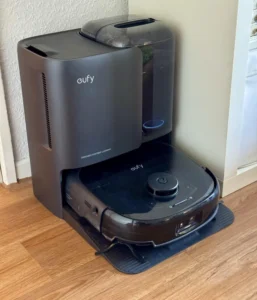
The Eufy Robot Vacuum Omni E25 enters a crowded market where robot vacuums promise convenience but often fall short of being truly hands-off. Most models can handle light daily cleaning, but they still leave users dealing with clogged brushes, dirty mop pads, or inconsistent navigation. The E25 is clearly designed to push past those limitations. It combines high suction power, an advanced roller-based mopping system, and a fully automated dock that manages much of the routine maintenance on its own. On paper, it aims to replace not just your old robot vacuum, but also reduce the need for manual vacuuming and mopping altogether. The real question is whether it delivers that level of independence in everyday use. This review takes a close, practical look at how it performs across different scenarios, and where it genuinely improves the experience or still falls short.
If you click the button above you will be redirected to Amazon.com. In case you then decide to buy anything, Amazon.com will pay me a commission. This doesn’t affect the honesty of this review in any way though.
Design & Build Quality
The Eufy Robot Vacuum Omni E25 makes a strong first impression before you even turn it on. It looks and feels like a product that’s been designed with a clear purpose, not just styled to blend into a room. That distinction matters more than it sounds. Many robot vacuums aim for a minimalist, almost invisible look, but end up sacrificing practical details. The E25 leans the other way. It accepts that it’s a functional appliance first and refines that idea rather than hiding it.
Overall form and materials
The robot itself has a solid, slightly weighty feel in hand. There’s no creaking or flex when you press down on the top shell, and the plastic used doesn’t feel thin or hollow. It has a matte finish that resists fingerprints reasonably well, which is a small but welcome detail if it’s sitting in a visible part of your home.
Its shape follows the standard circular robot vacuum design, but the edges are subtly beveled rather than sharply defined. That helps it glide along furniture without catching as often. The top panel is clean, with minimal buttons, which reinforces the idea that most interaction happens through the app rather than directly on the unit.
Height is one of the more noticeable design choices. The E25 is not particularly low-profile, and that’s clearly a trade-off. The added internal components, especially those related to navigation and the mopping system, require space. In practice, this means it won’t fit under every sofa or cabinet. If your home has a lot of low-clearance furniture, that’s something to think about early.
That said, the added height doesn’t feel like poor design. It feels intentional. The unit prioritizes performance and capability over squeezing into tight gaps, which aligns with its overall positioning.
Dock design and footprint
The dock is where the design becomes more divisive. It is large, and there’s no way to downplay that. This is not a small charging pad you can tuck into a corner and forget about. It’s a full station that demands a dedicated space.
But once you understand what it does, the size makes sense.
The dock houses:
- A dust collection system
- Clean and dirty water tanks
- Mop washing and drying components
- Internal plumbing for water circulation
All of this is enclosed in a vertical structure that looks more like a compact appliance than an accessory. The layout is well organized, with clearly labeled compartments and easy access to the tanks. Removing and refilling them feels straightforward, without awkward angles or fragile connectors.
The water tanks themselves are sturdy and well-sealed. There’s no sense that they’ll crack or leak with regular use. The handles feel secure, and the lids snap into place with a reassuring firmness.
Visually, the dock is neutral but not particularly decorative. It won’t disappear into your interior design, but it also doesn’t look cheap or out of place. It has a practical, almost utilitarian aesthetic that fits its role.
One thing that stands out is how stable the dock feels. Once placed, it doesn’t shift or wobble, even when the robot is docking or undocking. That stability contributes to the overall impression of reliability.
Underside engineering and brush system
Turning the robot over reveals where a lot of the engineering effort has gone. The brush system is thoughtfully arranged, and it’s clear that Eufy focused on reducing one of the most common annoyances: hair tangling.
The main brushes use a dual-roller setup designed to pull debris inward efficiently. The bristle and rubber combination strikes a balance between agitation and smooth operation. Hair doesn’t wrap around them as aggressively as it does on older designs, which reduces how often you need to stop and clean them manually.
The side brush is positioned to sweep debris toward the center, and while this is standard, the execution here feels slightly more refined. It doesn’t fling debris outward as much, which can happen with cheaper models.
The wheels are large enough to handle small thresholds and uneven surfaces without struggling. They have a textured grip that helps maintain traction on both hard floors and carpets. Suspension is modest but effective, allowing the robot to adjust slightly when moving over transitions.
The roller mop assembly is integrated into the underside in a way that doesn’t feel like an afterthought. It sits securely and aligns cleanly with the rest of the system. Importantly, it doesn’t interfere with vacuuming components when not in use, which suggests careful internal layout planning.
Mop system integration
One of the defining design features of the E25 is how the mopping system is built into the robot rather than attached as a simple accessory.
The roller mop is housed in a dedicated section that allows it to apply consistent pressure to the floor. This is different from flat mop pads that just drag behind the robot. The structure supporting the roller feels solid, and there’s no looseness or wobble when you handle it.
The water delivery system is also neatly integrated. There are no exposed tubes or fragile connectors visible from the outside. Everything is enclosed, which reduces the risk of leaks or accidental damage during cleaning or maintenance.
Another detail worth noting is how the robot manages transitions between surfaces. The mop lifting mechanism is built into the chassis, and while you don’t see it working directly, the design supports that functionality without adding visible bulk or awkward protrusions.
Fit and finish
Across the entire unit, the fit and finish are consistent. Panels align properly, seams are tight, and there are no obvious gaps or misalignments. That might sound basic, but it’s not always guaranteed in this category.
Buttons have a firm, tactile response, even if you rarely use them. The dustbin compartment opens smoothly and closes securely, without feeling flimsy. Small touches like these contribute to the overall sense that the product is built to last.
The color scheme is understated, typically leaning toward neutral tones that won’t clash with most interiors. It’s not trying to stand out, but it doesn’t look generic either.
Durability considerations
Long-term durability is always harder to judge upfront, but the design gives some clues.
The use of thicker plastics and reinforced connection points suggests that the robot can handle regular use without developing rattles or loose parts. The moving components, such as wheels and brushes, feel robust enough to withstand repeated cycles.
The dock, despite its complexity, is built with a similar level of care. The internal mechanisms are not exposed, which helps protect them from dust and accidental damage. The areas you interact with regularly, like the water tanks and dust bag compartment, are clearly designed for repeated use.
That said, complexity can be a double-edged sword. More moving parts mean more potential points of failure over time. The design does a good job of minimizing risk, but it can’t eliminate it entirely.
Practical design trade-offs
No design is perfect, and the E25 makes a few clear trade-offs.
The size of the dock is the most obvious one. You gain automation, but you lose compactness. For smaller homes or apartments, finding space for it might be a challenge.
The robot’s height is another compromise. It enables better internal systems but limits access to low spaces. Depending on your furniture layout, that could mean certain areas remain untouched.
Weight is also slightly higher than average. While this contributes to a premium feel, it makes the unit a bit less convenient to carry between floors if needed.
Everyday interaction
In daily use, the design choices start to make sense. You don’t interact with the robot constantly, so the focus shifts to how easily it integrates into your routine.
The dock reduces how often you need to intervene. The robot handles most cleaning tasks without needing attention, and when you do need to step in, the components are accessible and easy to manage.
Even small details, like how the robot aligns itself when docking or how smoothly the compartments open, contribute to a frictionless experience. It feels like a product that’s been tested in real-world scenarios, not just designed on paper.
Final thoughts on design
The design and build quality of the E25 reflect a clear set of priorities. It’s not trying to be the smallest or the most discreet robot vacuum. Instead, it focuses on delivering a robust, capable system that minimizes manual effort.
The materials, construction, and overall layout support that goal effectively. While there are compromises, particularly in size and height, they feel like deliberate decisions rather than oversights.
In the end, the E25 comes across as a well-engineered appliance that values function just as much as form. It doesn’t try to hide what it is, and that honesty in design works in its favor.
Navigation Intelligence & Mapping
Navigation is one of the most important aspects of any robot vacuum, and it’s also where expectations have risen the most in recent years. People don’t just want a machine that wanders around randomly anymore. They expect something that understands the layout of their home, moves with purpose, and avoids problems before they happen. The Eufy Robot Vacuum Omni E25 aims to meet those expectations with a combination of structured mapping, sensor-based awareness, and software-driven decision making.
First-time mapping and setup experience
The initial mapping process is usually the first real test of a robot vacuum’s intelligence. With the E25, this process is relatively quick and mostly smooth. Once started, the robot moves through the space in a deliberate pattern, scanning and building a digital map as it goes.
What stands out is the speed. It doesn’t take multiple long cleaning cycles to produce a usable map. Within a short time, you get a layout that reflects the general structure of your home, including walls, rooms, and major obstacles.
That said, the first map isn’t always perfect. You may notice slightly skewed room boundaries or areas that are merged or split incorrectly. This is fairly common in robot vacuums, and the E25 is no exception. The good news is that the app allows you to adjust room divisions, rename spaces, and refine the map manually.
Once the initial mapping is complete, the system becomes much more reliable. Subsequent runs tend to improve accuracy as the robot refines its understanding of the environment.
Navigation style and movement logic
The E25 follows a structured navigation pattern rather than a random or semi-random approach. It typically cleans in straight lines, moving back and forth across a room before shifting to the next section. This method ensures more consistent coverage and reduces missed spots.
Movement feels intentional. The robot doesn’t wander aimlessly or repeat the same area unnecessarily. Instead, it progresses through the space in a way that resembles how a person might vacuum manually, just with more consistency.
When transitioning between rooms, it navigates through doorways with reasonable accuracy. It doesn’t hesitate excessively or get stuck trying to reorient itself, which is a common issue in less advanced models.
However, the system isn’t flawless. In more complex layouts, especially those with narrow passages or irregular shapes, it can occasionally take inefficient paths or revisit areas more than necessary. These moments are not constant, but they do happen.
Obstacle detection and avoidance
Obstacle avoidance is where real-world performance can vary the most. The E25 uses a combination of sensors to detect objects in its path and decide how to respond.
In everyday scenarios, it handles common obstacles reasonably well:
- Furniture legs
- Walls and baseboards
- Larger objects like chairs or tables
It slows down as it approaches these objects and adjusts its path to avoid direct collisions. When it does make contact, it’s usually gentle rather than forceful.
Smaller or less predictable obstacles are more challenging. Items like cables, socks, or low-profile objects can still cause problems. The robot may:
- Nudge them out of the way
- Get briefly stuck
- Fail to recognize them entirely
This is not unique to the E25, but it’s worth noting if your home has a lot of clutter or loose items on the floor.
One area where it performs better than average is consistency. It doesn’t behave unpredictably from one run to the next. If it struggles with a particular object or area, it tends to do so in a similar way each time, which makes it easier to adjust your environment accordingly.
Edge detection and wall tracking
Cleaning along edges and walls is another important aspect of navigation. The E25 uses sensors to detect boundaries and follow them closely.
In practice, it tracks walls with reasonable precision. It doesn’t drift too far away or leave large gaps, and it maintains a steady path along baseboards.
Corners are more difficult. While the robot attempts to reach into them using its side brush and movement pattern, it can’t fully replicate the precision of manual cleaning. It may leave small amounts of debris in tight corners, especially if the geometry is complex.
The navigation system supports this behavior by recognizing where edges are and prioritizing them during cleaning cycles. It doesn’t ignore these areas, even if it can’t clean them perfectly.
Multi-floor mapping and memory
For homes with multiple levels, the E25 supports storing separate maps. This feature works well in practice and adds a lot of flexibility.
You can carry the robot to a different floor, and it will either:
- Recognize the layout if it has been mapped before
- Create a new map if it’s a new environment
Switching between maps is straightforward within the app. Each floor can have its own room divisions, cleaning schedules, and settings.
The system remembers these layouts reliably. It doesn’t frequently confuse one floor with another, which can happen in some models.
The main limitation is that the robot doesn’t move between floors on its own. You still need to carry it manually, which is expected but worth mentioning.
App integration and map control
The app is a central part of the navigation experience. It’s where you see the map, adjust settings, and control how the robot behaves.
The map interface is clear and functional. You can:
- Divide or merge rooms
- Set no-go zones
- Create virtual boundaries
- Assign cleaning priorities
These tools give you a good level of control over how the robot navigates your home.
No-go zones are particularly useful. If there are areas where the robot struggles or where you don’t want it to go, you can block them off digitally. This reduces the chances of it getting stuck or interfering with certain objects.
Zone cleaning is another helpful feature. You can select a specific area on the map and send the robot there directly. This is useful for quick cleanups without running a full cycle.
While the app is generally responsive, it’s not completely free of issues. Occasionally, you might experience:
- Delays in map updates
- Minor glitches in room boundaries
- Temporary inconsistencies in displayed paths
These are not constant problems, but they do remind you that the system relies heavily on software.
Adaptability to changing environments
Homes are not static environments. Furniture moves, objects get left on the floor, and layouts change over time. A good navigation system needs to adapt to these changes without requiring constant remapping.
The E25 handles gradual changes fairly well. If you move a chair or add a new piece of furniture, it can usually adjust its path without confusion. It treats these changes as obstacles rather than redefining the entire map.
More significant changes, like rearranging a room or adding large objects, may require a remap to maintain accuracy. This process is simple enough, but it’s something to keep in mind.
Dynamic obstacles, like people or pets, are handled in a reactive way. The robot slows down, adjusts its path, or pauses briefly if needed. It doesn’t panic or lose its sense of direction, which helps maintain consistent cleaning.
Carpet detection and behavior shifts
The navigation system is closely tied to how the robot handles different surfaces. When it detects carpet, it adjusts its behavior automatically.
This includes:
- Increasing suction power
- Lifting the mop to avoid wetting the carpet
These transitions happen smoothly and without user input. The robot doesn’t need to stop and recalibrate. It simply adapts as it moves across the floor.
Detection is generally accurate, though not perfect. Very thin rugs or unusual textures can sometimes confuse the system, but this is relatively rare.
Limitations and real-world quirks
Despite its strengths, the navigation system has a few limitations that show up in real-world use.
It can occasionally:
- Misjudge distances in tight spaces
- Take slightly inefficient routes in complex layouts
- Struggle with very small or low-profile obstacles
There are also moments where it behaves in ways that feel slightly inconsistent, such as revisiting a cleaned area or pausing briefly without an obvious reason.
These quirks don’t usually disrupt the overall cleaning process, but they can be noticeable if you watch it closely.
Overall assessment
The navigation and mapping system of the E25 is solid and dependable, even if it’s not the absolute best available. It strikes a balance between intelligence and practicality.
It excels in:
- Structured, efficient cleaning patterns
- Reliable multi-room and multi-floor mapping
- Useful app-based controls
It falls slightly short in:
- Handling very cluttered environments
- Perfect obstacle avoidance
- Absolute precision in complex layouts
In everyday use, it feels competent and predictable. You can trust it to clean your home without constant supervision, even if it occasionally makes small mistakes.
That reliability is what matters most. It may not be flawless, but it’s consistent enough to fit naturally into a regular cleaning routine without becoming a source of frustration.
Cleaning Performance
Cleaning performance is where a robot vacuum either proves its worth or quietly becomes something you stop relying on. The Eufy Robot Vacuum Omni E25 is clearly built to compete at a higher level in this area, and for the most part, it delivers. But like any cleaning device, how well it performs depends heavily on the type of flooring, the kind of debris, and the expectations you bring to it.
Suction power and real-world impact
On paper, the E25 offers very high suction power compared to most robot vacuums. In practice, that translates into strong pickup performance across common household messes.
On hard floors like tile, laminate, or wood, the effect is immediate. Fine dust, crumbs, and everyday debris are picked up efficiently, often in a single pass. There’s less of that familiar issue where a robot vacuum pushes debris around before eventually collecting it. Instead, it tends to capture particles directly as it passes over them.
This is especially noticeable with lighter debris like flour, sand, or dust. These materials can be tricky because they spread easily, but the E25 handles them with minimal scattering.
On carpets, suction plays a slightly different role. The robot increases power automatically when it detects carpet, which helps lift dirt from fibers. On low-pile carpets and rugs, the results are very good. It removes visible debris and a fair amount of embedded dust without needing multiple passes.
Thicker carpets are more challenging. While the suction is strong, the lack of deep mechanical agitation means it can’t fully replicate the performance of an upright vacuum. It does a solid job of maintenance cleaning, but if you’re expecting deep extraction, especially in high-traffic areas, it may fall short.
Brush system effectiveness
The brush system works closely with the suction to determine overall performance. The E25 uses a dual-roller setup designed to guide debris toward the suction inlet efficiently.
In practice, this system performs well across a range of materials. Larger particles like cereal or small debris are generally pulled in without much trouble. The rollers help prevent items from being pushed forward, which is a common issue with weaker designs.
Hair handling is one of the more important tests, especially for households with pets or long hair. The E25 does a good job here. Hair is lifted from both hard floors and carpets and directed into the dustbin with relatively little tangling around the brushes.
This doesn’t mean it’s completely maintenance-free. Over time, some hair will still wrap around the rollers, but the amount is noticeably reduced compared to older or simpler designs. This directly affects long-term usability, as it reduces how often you need to manually clean the brushes.
Performance across different floor types
The E25 adapts its behavior depending on the surface, and this adaptability is key to its performance.
On hard floors, it focuses on efficient coverage and consistent suction. It moves smoothly and maintains steady contact with the surface, which helps ensure even cleaning.
On mixed flooring, such as homes with both hard floors and rugs, the transitions are handled well. The robot adjusts suction and movement without needing to pause or recalibrate. This makes it suitable for spaces where different surfaces are connected rather than separated.
On carpets, the increase in suction helps compensate for the lack of deep agitation. It performs best on low to medium pile carpets, where it can reach deeper into the fibers without struggling.
High-pile carpets present more of a challenge. The robot can move over them, but cleaning effectiveness drops slightly. It may also take longer to complete cleaning cycles in these areas.
Edge and corner cleaning performance
Edge cleaning is an area where robot vacuums often struggle, and the E25 makes a clear effort to improve this.
It uses a side brush to sweep debris toward the center, combined with navigation patterns that follow walls and edges. In many cases, this works well enough to keep edges reasonably clean.
However, it’s not perfect. Corners, in particular, remain a weak point. The circular shape of the robot limits how precisely it can reach into tight angles. It may leave small amounts of debris in these areas, especially if they’re deep or sharply angled.
Along baseboards, performance is better. The robot tracks edges closely and picks up most visible debris, though very fine dust can sometimes remain.
This is one of those areas where expectations matter. For general maintenance, the results are acceptable. For spotless corners, occasional manual cleaning is still needed.
Handling of different debris types
A strong vacuum needs to handle a variety of debris, and the E25 performs well across most categories.
Fine dust and powder are handled effectively, with minimal redistribution. This is important for maintaining air quality and overall cleanliness.
Medium-sized debris, like crumbs or small food particles, is also collected efficiently. The combination of suction and brush action helps guide these items into the dustbin rather than pushing them around.
Larger debris presents a mixed result. While the robot can handle some larger particles, very bulky items may be pushed or partially picked up. This is typical for robot vacuums, which are designed more for maintenance cleaning than heavy-duty pickup.
Sticky or slightly damp debris is less consistent. While the vacuum function may struggle with these, the mopping system can compensate to some extent, depending on the situation.
Consistency over time
One of the more important aspects of cleaning performance is consistency. A robot vacuum that performs well once but declines quickly isn’t very useful.
The E25 maintains its performance reasonably well over time, especially when the maintenance system is used as intended. The automatic dustbin emptying helps prevent loss of suction due to a full bin, and the brush design reduces buildup.
However, performance can still decline if maintenance is neglected. Filters can clog, and internal pathways can accumulate debris. Regular checks and occasional cleaning are still necessary to keep it operating at its best.
The good news is that the design makes these maintenance tasks relatively straightforward, so it’s easier to stay on top of them.
Multi-pass and targeted cleaning
The E25 supports multiple cleaning modes, including options for repeated passes over the same area. This can significantly improve performance in high-traffic zones or areas with heavier dirt buildup.
In single-pass mode, it provides solid everyday cleaning. In multi-pass mode, it becomes much more thorough, especially on carpets and in larger rooms.
Targeted cleaning through the app also adds flexibility. If a specific area needs extra attention, you can direct the robot to clean just that zone. This is useful for kitchens, entryways, or areas where spills are more likely.
Interaction with the mopping system
While this section focuses on vacuuming, it’s worth noting how it interacts with the mopping system. The two functions are designed to complement each other rather than operate in isolation.
When both are active, the vacuum picks up loose debris before the mop engages more directly with the floor. This sequence helps prevent spreading dirt around and improves overall cleaning results.
The integration feels natural, and the robot doesn’t struggle to balance the two tasks. Instead, it uses them together to create a more complete cleaning process.
Limitations and expectations
Despite its strengths, the E25 is not a replacement for all types of cleaning. It excels at maintaining cleanliness but has limits.
It’s less effective at:
- Deep carpet cleaning
- Removing heavily embedded dirt
- Handling very large debris
These limitations are not unique to this model, but they are worth keeping in mind. It’s best viewed as a tool for regular upkeep rather than occasional deep cleaning.
Overall performance assessment
The cleaning performance of the E25 is strong, especially when viewed in the context of robot vacuums as a category. It handles everyday messes with confidence and reduces the need for frequent manual cleaning.
Its strengths lie in:
- Excellent hard floor cleaning
- Very good low-pile carpet performance
- Effective hair and dust pickup
- Consistent results over time
Its weaknesses are:
- Limited deep carpet extraction
- Imperfect edge and corner cleaning
- Occasional difficulty with large debris
In daily use, it feels dependable. You can run it regularly and expect your floors to stay clean without much effort. That reliability is what ultimately defines its performance, more than any single specification or feature.
Mopping Capability
Mopping is where many robot vacuums promise more than they deliver. In most cases, you’re getting a damp cloth dragged across the floor with minimal pressure and limited cleaning effect. The Eufy Robot Vacuum Omni E25 takes a very different approach, and that difference is immediately noticeable in both design and real-world results.
Roller-based mopping system
The core of the E25’s mopping capability is its roller-based system. Instead of using a flat pad, it relies on a rotating roller that actively scrubs the floor. This might sound like a small change, but it fundamentally alters how the robot cleans.
A flat mop pad tends to:
- Glide over dirt rather than remove it
- Lose effectiveness as it gets dirty
- Spread moisture unevenly
The roller system, by contrast:
- Applies consistent pressure
- Rotates continuously to lift dirt
- Maintains a cleaner contact surface
In practice, this results in a more active cleaning motion. You can think of it less as “wiping” and more as “scrubbing,” even if the intensity is still controlled to avoid damaging floors.
The roller itself feels well-built and securely mounted. It doesn’t wobble or feel loosely attached, which is important for maintaining even pressure across the surface.
Water management and distribution
A key part of effective mopping is how water is applied. Too little, and you’re just moving dust around. Too much, and you risk streaks or damage to sensitive flooring.
The E25 manages water flow in a controlled way. It dispenses water gradually and evenly, ensuring the roller stays damp without becoming saturated. This balance helps prevent puddling while still providing enough moisture to loosen dirt.
The system also adapts water usage depending on the selected cleaning mode. You can adjust water levels through the app, which is useful for different floor types:
- Lower settings for wood or laminate
- Higher settings for tile or stone
The consistency of water distribution is one of the more impressive aspects. It avoids the uneven patches that are common with simpler mopping systems.
Continuous cleaning and self-washing
One of the biggest limitations of traditional robot mops is that they get dirty quickly and then continue cleaning with that same dirty pad. The E25 addresses this with a system that continuously refreshes the roller.
During operation, the roller is:
- Rinsed internally
- Supplied with clean water
- Kept in a usable condition for longer
When the robot returns to the dock, the process becomes more thorough. The dock:
- Washes the roller with clean water
- Removes accumulated dirt
- Dries it using warm air
This reduces odor, prevents bacterial buildup, and ensures the mop is ready for the next cleaning cycle.
In practical terms, this means you’re not manually washing mop pads or dealing with unpleasant smells. It also means the robot maintains consistent performance across longer cleaning sessions.
Performance on everyday messes
In daily use, the E25’s mopping system performs well on common types of dirt and spills.
Light dirt, dust residue, and footprints are handled easily. The roller lifts these without much effort, leaving floors looking noticeably cleaner.
For kitchen areas, where you might have:
- Dried water spots
- Small food stains
- Slightly sticky residue
…the system is effective enough to reduce or remove most of these in a single pass. It doesn’t just smear the dirt around, which is a common issue with weaker systems.
The result is a floor that looks and feels cleaner, not just dampened.
Handling dried and stubborn stains
More stubborn stains are where the roller system shows its advantage. Because it applies pressure and movement, it can break down dirt that a static pad would struggle with.
Dried spills, such as:
- Juice or coffee marks
- Muddy footprints
- Light grease spots
can often be reduced significantly with one or two passes.
However, expectations need to be realistic. This is still a robot vacuum, not a manual scrub brush. Very tough or deeply set stains may require:
- Multiple cleaning cycles
- Pre-treatment
- Occasional manual intervention
The E25 narrows the gap, but it doesn’t eliminate it completely.
Interaction with different floor types
The mopping system adapts well to a range of hard floor surfaces.
On tile, it performs particularly well. The roller can reach into slight surface textures and grout lines more effectively than a flat pad.
On laminate and sealed wood, the controlled water usage helps prevent over-wetting. The robot leaves behind a lightly damp surface that dries quickly, which is important for protecting these materials.
On more delicate flooring, using lower water settings is advisable. The system gives you enough control to avoid potential issues, but it relies on the user to select appropriate settings.
Carpet detection plays an important role here. When the robot detects carpet, it lifts the mop to avoid contact. This transition is smooth and usually reliable, preventing accidental wetting of rugs.
Coverage and cleaning patterns
The effectiveness of mopping is also influenced by how the robot moves across the floor. The E25 uses structured patterns that ensure consistent coverage.
It typically:
- Moves in straight lines across open areas
- Follows edges and walls
- Returns to missed spots when necessary
This systematic approach helps ensure that the mop passes over each area evenly. It doesn’t leave large untreated sections, which can happen with less organized navigation.
That said, coverage is still influenced by the robot’s shape. Corners and tight spaces remain harder to reach, and while the robot makes an effort, it can’t fully replicate the precision of manual mopping in these areas.
Drying performance and post-cleaning condition
After mopping, the condition of the floor matters just as much as how clean it is. Excess moisture can leave streaks or even damage certain surfaces.
The E25 does a good job of leaving floors evenly damp rather than wet. Drying time is relatively short, especially on lower water settings.
The dock’s drying function also ensures that the mop itself doesn’t remain wet between uses. This is important for hygiene and helps prevent unpleasant odors.
In everyday use, you don’t have to worry about returning to a damp, musty mop. The system takes care of that automatically.
Maintenance implications
The advanced mopping system reduces some types of maintenance while introducing others.
You don’t need to:
- Manually wash mop pads
- Replace them as frequently
- Deal with dirty water buildup on the robot itself
However, you still need to:
- Refill the clean water tank
- Empty the dirty water tank
- Occasionally clean internal components
These tasks are straightforward, but they’re part of the overall ownership experience.
The benefit is that the maintenance is less frequent and less unpleasant than traditional mopping systems.
Limitations and real-world quirks
Despite its strengths, the mopping system has a few limitations.
It can:
- Struggle with very sticky or heavy residues
- Leave slight streaks if water settings are too high
- Miss tight corners or edges
There are also occasional quirks, such as:
- Slight inconsistencies in water distribution during long runs
- The need to adjust settings depending on floor type
These issues are not constant, but they remind you that the system is still an automated approximation of manual cleaning.
Overall assessment
The mopping capability of the E25 is one of its strongest features and a clear step above typical robot vacuum systems.
It excels in:
- Active scrubbing rather than passive wiping
- Consistent water management
- Reduced manual maintenance
- Effective handling of everyday dirt and light stains
Its limitations are:
- Not a full replacement for deep manual scrubbing
- Imperfect edge and corner coverage
- Some reliance on user settings for best results
In everyday use, it transforms mopping from a chore into a background task. Floors stay consistently clean with minimal effort, and the system handles most of the work on its own.
That shift in experience is what makes it stand out. It doesn’t just add mopping as a feature. It makes it genuinely useful.
Maintenance & Cleaning
Maintenance is the part of owning a robot vacuum that people tend to underestimate. It’s easy to focus on suction power or smart features, but over time, how much effort a device requires to keep running well becomes just as important. The Eufy Robot Vacuum Omni E25 is designed to reduce that effort as much as possible, and in many ways, it succeeds. But it doesn’t eliminate maintenance entirely. It shifts it, simplifies it, and makes it less frequent.
The idea of “hands-off” cleaning
The E25 is built around the concept of automation. The goal is not just to clean your floors, but to minimize how often you need to interact with the machine.
In traditional robot vacuums, you typically have to:
- Empty the dustbin after every few runs
- Wash or replace mop pads
- Clean brushes regularly
- Deal with clogged filters
The E25 reduces the frequency of all of these tasks. It does this through its dock, which acts as a central maintenance hub rather than just a charging station.
That shift changes the ownership experience. Instead of small, frequent tasks, you’re dealing with fewer but slightly larger ones.
Automatic dustbin emptying
One of the most noticeable features is the automatic dustbin emptying system. After a cleaning cycle, the robot returns to the dock, where its internal dustbin is emptied into a larger dust bag.
This process is quick and mostly self-contained. You don’t need to handle loose debris or open the robot itself. The dock does the work for you.
The dust bag can hold multiple cleaning cycles’ worth of dirt, depending on how often you run the robot and how dirty your floors are. For many households, this means emptying it every few weeks rather than every few days.
Replacing the dust bag is simple. It slides out easily, and a new one can be inserted without much effort. The design minimizes exposure to dust, which is helpful if you have allergies.
However, this convenience comes with an ongoing cost. Dust bags are consumables, and you’ll need to replace them periodically. It’s not a major expense, but it’s something to factor into long-term ownership.
Mop cleaning and water system maintenance
The mopping system adds another layer of maintenance, but it’s also where the E25 does the most to automate the process.
After mopping, the robot returns to the dock, where the roller is:
- Washed with clean water
- Cleared of dirt and residue
- Dried using warm air
This means you don’t have to manually remove and wash mop pads, which is one of the more unpleasant aspects of traditional systems.
The dock uses separate tanks for clean and dirty water. This separation is important because it ensures that the mop is always cleaned with fresh water rather than recirculated dirty water.
Maintaining this system involves:
- Refilling the clean water tank
- Emptying the dirty water tank
These tasks are straightforward but need to be done regularly, especially if you use the mopping function frequently. The tanks are easy to remove and carry, and their design reduces the risk of spills.
Over time, you may also need to clean the internal components of the dock, particularly if residue builds up. This isn’t something you do every week, but it’s part of long-term upkeep.
Brush and roller maintenance
Even with advanced brush designs, some manual cleaning is still necessary.
Hair, threads, and fibers can wrap around the rollers and side brush. The E25 reduces this problem compared to many other models, but it doesn’t eliminate it completely.
Checking the brushes periodically is a good habit. Removing tangled hair is usually quick and doesn’t require tools. The brushes are designed to be accessible, which makes this process easier.
The frequency of this task depends on your environment:
- Homes with pets or long hair may need more frequent checks
- Cleaner environments may require less attention
The key difference with the E25 is that maintenance feels manageable rather than constant. You’re not dealing with heavy buildup after every run.
Filter care and airflow maintenance
Filters play a crucial role in maintaining suction and air quality. Over time, they can become clogged with fine dust, which reduces performance.
The E25’s system helps delay this by emptying the dustbin regularly, but filters still need attention.
Cleaning the filter involves:
- Removing it from the dustbin
- Tapping out loose dust
- Occasionally rinsing it (if the design allows)
It’s important to let the filter dry completely before reinstalling it. This prevents moisture from affecting performance or causing damage.
Filter replacement is also part of long-term maintenance. Even with cleaning, filters degrade over time and need to be replaced to maintain optimal performance.
Dock maintenance and internal cleaning
The dock is the most complex part of the system, and while it automates many tasks, it also requires occasional maintenance.
Areas that may need attention include:
- The dust collection pathway
- The mop washing area
- Internal surfaces where residue can accumulate
Cleaning these areas is not difficult, but it does require some effort. The design provides access to key components, which helps simplify the process.
The frequency of dock maintenance depends on usage. Heavy use, especially with mopping, may require more frequent checks.
Despite its complexity, the dock is designed to be user-serviceable to a reasonable extent. You don’t feel like you’re dealing with a sealed system that you can’t touch.
Software and maintenance alerts
One helpful aspect of the E25 is how it uses software to support maintenance.
The app provides reminders for:
- Emptying the dust bag
- Refilling water tanks
- Cleaning brushes and filters
These alerts help you stay on top of maintenance without having to guess when something needs attention.
The system tracks usage and adjusts recommendations accordingly. This makes maintenance feel more predictable and less like a chore you might forget.
Long-term wear and replacement parts
Like any appliance, the E25 has components that will wear out over time.
These include:
- Brushes
- Filters
- Mop roller
- Dust bags
The design makes these parts relatively easy to replace. You don’t need specialized tools or technical knowledge to swap them out.
Availability of replacement parts is an important factor. As long as these parts remain accessible, maintaining the robot over the long term should be manageable.
The cost of replacements adds up over time, but it’s in line with what you’d expect for a device in this category.
Real-world maintenance experience
In everyday use, the maintenance experience is noticeably different from simpler robot vacuums.
Instead of:
- Frequent small tasks
- Constant manual cleaning
you get:
- Infrequent but structured maintenance
- Automated handling of the messiest parts
This shift makes the device feel less demanding. You’re not constantly reminded that it needs attention.
That said, it’s not completely hands-off. You still need to interact with it regularly, just not as often or as intensively.
Limitations and trade-offs
The advanced maintenance system introduces a few trade-offs.
The dock’s complexity means:
- More components that could require attention
- Slightly more involved cleaning when needed
The use of consumables like dust bags adds ongoing cost.
And while automation reduces effort, it can also create a sense of distance from the cleaning process. If something goes wrong, you may need to spend more time understanding the system.
These are not major drawbacks, but they are part of the overall experience.
Overall assessment
The maintenance and cleaning system of the E25 is one of its strongest advantages. It transforms what is usually a tedious part of owning a robot vacuum into something far more manageable.
It excels in:
- Automating dustbin emptying
- Simplifying mop cleaning
- Reducing the frequency of manual tasks
- Providing clear maintenance guidance through the app
Its limitations include:
- Ongoing cost of consumables
- Occasional need for deeper cleaning of the dock
- Some manual upkeep still required
In daily life, the system does what it’s supposed to do. It stays out of your way most of the time and only asks for attention when it actually needs it.
That balance is what makes it effective. It doesn’t promise zero maintenance, but it delivers a version of it that feels realistic and sustainable.
Ergonomics & Usability
Ergonomics and usability are where a robot vacuum either becomes part of your routine or slowly turns into something you avoid using. The Eufy Robot Vacuum Omni E25 is clearly designed to reduce friction in everyday use, but how well it succeeds depends on how all its parts work together: the app, the hardware, and the small interactions you repeat over time.
Setup and first-time use
Getting started with the E25 is relatively straightforward. The process follows a familiar pattern:
- Place the dock
- Connect the robot to the app
- Run the initial mapping cycle
The instructions are clear enough that most users won’t struggle, even without prior experience with robot vacuums. Pairing the device with Wi-Fi is usually smooth, though like most smart devices, it can take a bit longer depending on your network.
Once connected, the app guides you through the initial steps, including mapping and basic configuration. There’s no steep learning curve here. You don’t need to understand every feature upfront to get it running.
The overall first impression is that the system is approachable. It doesn’t overwhelm you with complexity right away, even though it offers a lot of control later on.
App interface and control system
The app is the main control center for the E25, and its design plays a big role in usability.
The interface is clean and functional. The home screen typically shows:
- The current map of your space
- The robot’s status
- Quick access to cleaning modes
From there, you can dive into more detailed settings without feeling lost.
Room-based cleaning is one of the most useful features. You can tap on specific rooms and send the robot there directly. This is much faster than setting up a full cleaning cycle when you only need a small area cleaned.
Zone cleaning adds another layer of flexibility. You can draw a box on the map and tell the robot to focus on that space. This is especially useful for:
- Spills
- High-traffic areas
- Quick cleanups before guests arrive
The controls for suction power, water level, and cleaning intensity are easy to access. You don’t have to dig through menus to adjust them, which makes it more likely that you’ll actually use these options.
That said, the app is not perfect. Occasionally, you may notice:
- Slight delays in updating the robot’s position
- Minor glitches in map editing
- Inconsistent behavior when switching modes
These issues are not constant, but they remind you that the experience depends heavily on software.
Scheduling and automation
One of the biggest usability advantages of a robot vacuum is the ability to automate cleaning, and the E25 handles this well.
You can create schedules based on:
- Time of day
- Specific rooms
- Cleaning modes
For example, you might set it to:
- Clean the kitchen every morning
- Vacuum the living room in the evening
- Run a full cleaning cycle on weekends
These schedules can be customized in detail, allowing you to tailor the robot’s behavior to your routine.
Once set up, the system runs in the background without requiring much attention. This is where the E25 starts to feel less like a gadget and more like a household appliance.
However, the level of customization can feel slightly overwhelming at first. There are many options, and while they’re useful, it may take some time to fully understand how to use them effectively.
Physical interaction with the robot
Even though most control happens through the app, you still interact with the robot physically from time to time.
The buttons on the top of the unit are minimal but functional. They allow you to:
- Start or pause cleaning
- Send the robot back to the dock
The tactile feedback is solid, and the buttons don’t feel cheap or overly sensitive.
Lifting the robot is something you may need to do occasionally, especially if you have multiple floors. The weight is noticeable but manageable. It feels sturdy rather than cumbersome.
There’s no dedicated handle, which might have improved ergonomics slightly, but the shape makes it easy enough to grip securely.
Accessing internal components, such as the dustbin or brushes, is straightforward. Panels open smoothly, and nothing feels like it’s going to break if you apply normal pressure.
Dock interaction and daily use
The dock plays a central role in usability, and interacting with it is generally simple.
Tasks like:
- Removing and refilling water tanks
- Replacing the dust bag
- Checking the system status
are all designed to be intuitive.
The tanks slide in and out easily, and their handles make them comfortable to carry. The layout is logical, so you don’t have to guess where things go.
One thing you notice over time is how infrequently you need to interact with the dock. It handles most routine maintenance automatically, which reduces the number of small tasks you have to think about.
However, when you do need to interact with it, the size of the dock becomes more apparent. It’s not difficult to use, but it does require space to access comfortably.
Feedback and notifications
Good usability depends on clear feedback, and the E25 provides this through both the app and the robot itself.
The app sends notifications for:
- Completed cleaning cycles
- Maintenance reminders
- Errors or issues
These alerts are useful without being overly intrusive. You’re kept informed, but not constantly interrupted.
The robot also uses voice prompts or sound cues to communicate its status. These are clear enough to understand without needing to check the app every time.
In most cases, you know what the robot is doing and whether it needs attention. That clarity reduces frustration and makes the system feel more reliable.
Learning curve and adaptability
The E25 is not the simplest robot vacuum on the market, but it’s also not the most complicated.
For basic use, the learning curve is minimal. You can:
- Start cleaning
- Set schedules
- Perform simple tasks
without much effort.
As you explore more advanced features, such as:
- Multi-room scheduling
- Custom cleaning modes
- Map editing
the system becomes more complex. However, this complexity is optional. You can ignore advanced features if you don’t need them.
Over time, most users will naturally learn how to use more of the system. The design encourages gradual discovery rather than forcing you to understand everything at once.
Voice control and smart home integration
The E25 supports voice control through common smart home systems. This adds another layer of convenience.
You can use voice commands to:
- Start or stop cleaning
- Send the robot to the dock
- Trigger specific routines
In practice, this is useful for quick actions when you don’t want to open the app. It’s not essential, but it fits well into a smart home setup.
Integration is generally smooth, though it depends on how your existing system is configured.
Real-world usability over time
The true test of ergonomics is how the product feels after weeks or months of use.
With the E25, the experience tends to improve over time. As you:
- Fine-tune schedules
- Adjust settings
- Learn its behavior
the system becomes more predictable and easier to manage.
The combination of automation and control means you can strike a balance between:
- Letting it run independently
- Stepping in when needed
This flexibility is one of its strongest points.
However, occasional software quirks or navigation inconsistencies can interrupt that smooth experience. They’re not constant, but they can be noticeable.
Limitations and areas for improvement
Despite its strengths, there are a few areas where usability could be better.
The app, while functional, could be more polished in terms of:
- Speed
- Responsiveness
- Visual clarity in complex maps
The lack of a dedicated carrying handle is a small but noticeable omission, especially for multi-floor homes.
And while automation reduces effort, it also means that when something goes wrong, troubleshooting can take a bit more time.
Overall usability assessment
The ergonomics and usability of the E25 are well thought out and largely effective. It’s a system designed to reduce effort without removing control.
It excels in:
- Clear and functional app design
- Flexible scheduling and automation
- Easy interaction with physical components
- Reduced need for daily attention
Its weaknesses include:
- Occasional software inconsistencies
- Slight complexity in advanced features
- Minor physical design limitations
In everyday use, it feels like a tool that adapts to you rather than forcing you to adapt to it. That balance is what makes it practical, not just impressive on paper.
Pet-Friendliness
If you have pets, a robot vacuum stops being a convenience and starts becoming a necessity. Fur, tracked-in dirt, scattered kibble, and the occasional accident all add up quickly. The Eufy Robot Vacuum Omni E25 is clearly designed with these realities in mind, and in many ways, it performs well in a pet-heavy environment. Still, there are a few nuances that only show up after living with it day to day.
Handling pet hair on hard floors
Hard floors are where pet hair tends to collect the most visibly, especially along walls and under furniture. The E25 handles this scenario very well.
The combination of strong suction and its brush system allows it to pick up loose fur efficiently without pushing it around. This is important because pet hair is lightweight and tends to scatter easily if airflow isn’t controlled properly.
In everyday use, you’ll notice that:
- Hair is collected in a single pass in most cases
- There’s minimal “snowplowing” of fur into corners
- Fine strands don’t cling to the floor after cleaning
This makes a noticeable difference if you have shedding pets like dogs or long-haired cats. Running the robot regularly can keep floors looking consistently clean rather than letting hair build up between manual cleanings.
Performance on carpets with pet hair
Carpet is more challenging, especially when it comes to embedded fur. Pet hair tends to cling to fibers and can be difficult to remove without strong agitation.
The E25 performs well on low to medium pile carpets. It lifts a significant amount of hair, particularly if you run it frequently. Regular cleaning prevents buildup, which is key in pet households.
However, on thicker carpets:
- Some hair may remain embedded
- Multiple passes may be needed
- Deep cleaning performance is more limited
This is where the difference between a robot vacuum and a full upright becomes clear. The E25 is excellent for maintenance, but it doesn’t completely replace deeper, occasional cleaning.
Anti-tangle brush design
One of the most important features for pet owners is how well the vacuum handles hair wrapping around its brushes.
The E25’s brush system is designed to reduce tangling, and it does make a difference. Hair still wraps around the rollers over time, but:
- It accumulates more slowly
- It’s easier to remove
- It doesn’t immediately impact performance
This reduces one of the most frustrating maintenance tasks. Instead of having to cut hair off the brush every few days, you can go longer between cleanings.
For homes with heavy shedders, this is a practical improvement that you’ll notice quickly.
Dealing with tracked dirt and debris
Pets don’t just shed hair. They also bring in dirt, especially if they spend time outdoors.
The E25 handles this well on hard floors. Muddy paw prints, dried dirt, and small debris are picked up or reduced effectively, especially when both vacuuming and mopping are used together.
In entryways or near doors, where dirt tends to accumulate, the robot can:
- Remove loose debris with suction
- Break down light residue with the mop
This combination helps maintain cleaner floors without constant manual effort.
However, for heavier dirt or wet mud, you may still need to intervene manually. The robot is best suited for ongoing maintenance rather than initial cleanup after a particularly messy situation.
Mopping performance for pet-related messes
The mopping system adds another layer of usefulness in pet households.
It’s particularly helpful for:
- Paw prints
- Drool marks
- Light stains from food or water spills
The roller-based system applies enough pressure to clean these effectively, which is something many robot mops struggle with.
For minor accidents or sticky spots, the E25 can reduce or remove them with one or two passes. It doesn’t just spread the mess around, which is a common issue with simpler systems.
That said, it’s not designed to handle:
- Large liquid spills
- Serious accidents
- Strong odors
Those situations still require manual cleaning. The robot is a maintenance tool, not an emergency response solution.
Noise and pet reactions
Noise levels matter more in homes with pets than you might expect. Some animals are sensitive to sound, and a loud vacuum can cause stress or avoidance behavior.
The E25 is relatively quiet for its performance level. In lower suction modes, it produces a steady hum rather than a sharp or high-pitched noise.
Most pets will:
- Notice it initially
- Keep their distance
- Gradually become accustomed to it
Cats may ignore it entirely after a while, while dogs may remain cautious but tolerant.
At higher suction levels, the noise becomes more noticeable, but it’s still not overly aggressive. Compared to traditional vacuums, it’s much less disruptive.
This makes it easier to run the robot regularly without causing unnecessary stress for your pets.
Obstacle avoidance with pet-related items
Pet households often have additional obstacles:
- Food and water bowls
- Toys
- Beds
- Random items left on the floor
The E25’s navigation system handles larger objects like bowls and beds reasonably well. It slows down and avoids them rather than pushing them around.
Smaller items, like toys, are less predictable. The robot may:
- Push them aside
- Get briefly stuck
- Avoid them inconsistently
This means you may still need to do a quick check of the floor before running it, especially if your pets tend to leave things scattered.
One area where improvement would be helpful is recognizing and avoiding small, irregular objects more reliably. For now, it’s a mix of success and occasional mishaps.
Handling pet accidents (limitations)
This is an important topic, even if it’s not pleasant.
The E25 is not equipped to detect or avoid pet waste. If it encounters something like this, it can:
- Spread the mess
- Contaminate the brush system
- Require significant cleaning afterward
This is a limitation shared by most robot vacuums. It’s something to be aware of if you have pets that are not fully house-trained or prone to accidents.
In practice, this means:
- Checking the floor before running the robot
- Using no-go zones in high-risk areas
It’s not a flaw specific to this model, but it’s an important part of real-world use.
Air quality and filtration
Pet owners often care about air quality as much as visible cleanliness. Hair, dander, and dust can affect allergies and overall comfort.
The E25’s filtration system captures fine particles effectively, helping reduce airborne allergens. Combined with regular cleaning, this can make a noticeable difference in how clean your home feels.
The automatic dustbin emptying also helps by:
- Reducing direct contact with dust
- Keeping the system sealed during disposal
This is especially useful if you’re sensitive to allergens.
Frequency of cleaning and routine benefits
One of the biggest advantages of using the E25 in a pet household is how it supports frequent cleaning.
Instead of:
- Waiting for hair to build up
- Doing occasional deep cleans
you can:
- Run the robot daily or every other day
- Maintain a consistent level of cleanliness
This approach is more effective for managing pet-related messes. It prevents problems rather than reacting to them.
Over time, this reduces the overall effort required to keep your home clean.
Maintenance in pet-heavy homes
Pet hair increases the maintenance load, even with a well-designed system.
You’ll likely need to:
- Check brushes more often
- Clean filters regularly
- Monitor the dock for buildup
The E25 reduces the effort involved, but it doesn’t eliminate it.
The key difference is that maintenance feels manageable. You’re not constantly dealing with tangled brushes or clogged systems, which makes a big difference in long-term usability.
Overall pet-friendliness assessment
The E25 is well-suited for homes with pets, especially when used as part of a regular cleaning routine.
It performs best in:
- Removing hair from hard floors
- Maintaining low to medium pile carpets
- Handling everyday dirt and light messes
- Supporting frequent, automated cleaning
Its limitations include:
- Less effective deep carpet cleaning
- Inconsistent handling of small pet items
- No detection of pet accidents
In daily life, it makes managing pet-related cleaning much easier. It doesn’t eliminate every challenge, but it reduces the workload enough to feel like a meaningful upgrade.
For most pet owners, that’s exactly what matters.
Conclusion
The Eufy Robot Vacuum Omni E25 is one of those products that gets a lot right without pretending to be perfect. After looking at it from every angle, what stands out most is how well it balances automation with actual cleaning performance. It’s not just a smart device that looks good in an app. It genuinely reduces the amount of work you have to do to keep your floors clean.
Its strongest areas are clear. Vacuuming on hard floors is excellent, mopping is far more effective than most robot systems, and the dock removes a lot of the routine maintenance that usually comes with these devices. Over time, that convenience adds up. You stop thinking about cleaning as a task and start treating it as something that just happens in the background.
That said, it still has limits. Navigation is reliable but not flawless. Deep carpet cleaning doesn’t fully replace a traditional vacuum. And like any automated system, it occasionally needs attention or adjustment.
The key question is whether it improves daily life. For most homes, especially those with hard flooring or pets, the answer is yes. It won’t eliminate manual cleaning entirely, but it significantly reduces how often you need to step in.
In the end, the E25 feels less like a gadget and more like a practical household tool. It’s not trying to do everything perfectly. It focuses on doing the most important things well, and that makes it a solid, realistic choice for everyday use.