
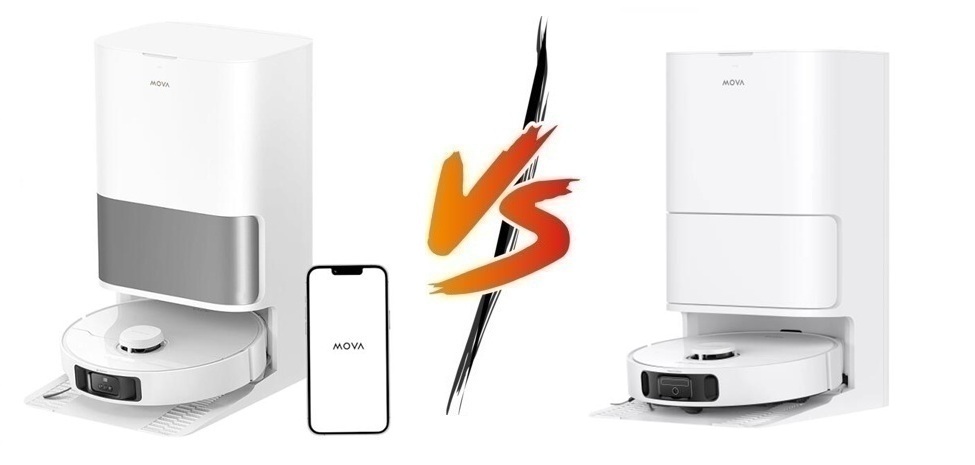
The robot vacuum market has become crowded with products that all promise the same thing: stronger suction, smarter navigation, better mopping, and less maintenance. On paper, the MOVA P10 Pro Ultra and MOVA E40 Ultra appear very similar. Both are positioned as premium all-in-one robot vacuum and mop systems, both include self-emptying stations, automatic mop washing, and advanced navigation systems, and both target users who want a mostly hands-off cleaning experience.
After digging into their specifications, real-world reports, and feature sets, the reality is that these two machines occupy slightly different positions in the market. The E40 Ultra aims to deliver flagship-level features at a more aggressive price point, while the P10 Pro Ultra pushes closer toward premium territory with higher-end hardware and more advanced automation.
Mova P10 Pro Ultra vs Mova E40 Ultra Comparison Chart
If you click the links below, under the product images, you will be redirected to Amazon.com. In case you then decide to buy anything, Amazon.com will pay me a commission. This doesn’t affect the honesty of this review in any way though.
| Specification | MOVA P10 Pro Ultra | MOVA E40 Ultra |
|---|---|---|
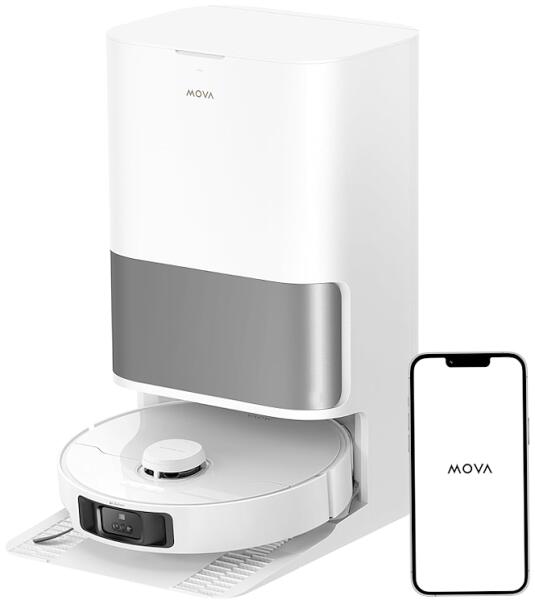 | 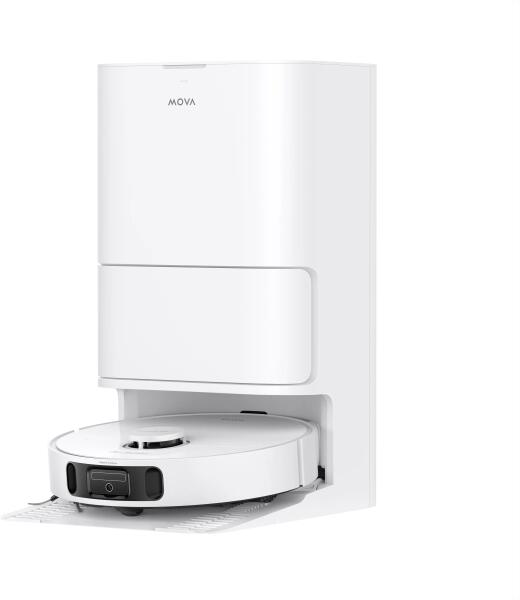 | |
| Check the best price on Amazon | Check the best price on Amazon | |
| Product Type | Robot Vacuum & Mop with All-in-One Dock | Robot Vacuum & Mop with All-in-One Dock |
| Navigation System | Advanced LiDAR Navigation with Intelligent Obstacle Recognition | LDS LiDAR Navigation with Laser Obstacle Avoidance |
| Mapping | Multi-Level Mapping | Multi-Level Mapping |
| Suction Power | Up to 26,000 Pa | Up to 19,000 Pa |
| Vacuuming Performance | Flagship-Class | High-End |
| Main Brush | Anti-Tangle Brush System | Anti-Tangle Brush System |
| Side Brush | Edge-Cleaning Side Brush | Anti-Tangle Side Brush |
| Mopping System | Dual Rotating Mop Pads | Dual Rotating Mop Pads |
| Mop Extension | Yes | Yes |
| Edge Mopping | Yes | Yes |
| Carpet Detection | Yes | Yes (Ultrasonic Detection) |
| Mop Lift Function | Yes | Up to 10.5 mm Lift |
| Automatic Mop Washing | Yes | Yes |
| Heated Mop Washing | Yes | No |
| Hot-Air Mop Drying | Yes | Yes |
| Automatic Dust Collection | Yes | Yes |
| Dust Bag System | Integrated Self-Emptying Dock | Integrated Self-Emptying Dock |
| Clean Water Tank | Large Capacity | Large Capacity |
| Dirty Water Tank | Large Capacity | Large Capacity |
| Self-Cleaning Dock | Yes | Yes |
| Automatic Water Management | Yes | Yes |
| Obstacle Avoidance Intelligence | More Advanced | Standard Advanced Avoidance |
| Room Recognition | Yes | Yes |
| No-Go Zones | Yes | Yes |
| Room-Specific Cleaning | Yes | Yes |
| Custom Cleaning Schedules | Yes | Yes |
| Voice Assistant Support | Yes | Yes |
| Smartphone App Control | Yes | Yes |
| Battery Capacity | High-Capacity Battery | 5,200 mAh |
| Maximum Runtime | Long Runtime for Large Homes | Up to 260 Minutes |
| Recharge & Resume | Yes | Yes |
| Pet Hair Performance | Excellent | Excellent |
| Anti-Hair Tangle Features | Yes | Yes |
| Suitable for Hard Floors | Excellent | Excellent |
| Suitable for Low-Pile Carpet | Excellent | Excellent |
| Suitable for Medium-Pile Carpet | Excellent | Very Good |
| Suitable for Large Homes | Excellent | Excellent |
| Suitable for Apartments | Very Good | Excellent |
| Maintenance Automation | Extensive | Extensive |
| Dock Size | Larger Premium Dock | More Compact Dock |
| Build Quality | Premium Flagship Construction | High-Quality Mid-Premium Construction |
| Noise Level | Moderate for Performance Class | Slightly Lower in Standard Modes |
| Value for Money | Good | Excellent |
| Position in MOVA Lineup | Premium Flagship | Upper Midrange / Value Flagship |
| My individual reviews | Mova P10 Pro Ultra review |
Category Winners
| Category | Winner |
|---|---|
| Design & Build Quality | P10 Pro Ultra |
| Navigation & Mapping | P10 Pro Ultra |
| Obstacle Avoidance | P10 Pro Ultra |
| Vacuuming Performance | P10 Pro Ultra |
| Deep Carpet Cleaning | P10 Pro Ultra |
| Mopping Performance | P10 Pro Ultra |
| Dock Functionality | P10 Pro Ultra |
| Maintenance Automation | Tie |
| Battery Efficiency | E40 Ultra |
| Noise Levels | E40 Ultra |
| Apartment Friendliness | E40 Ultra |
| Pet Friendliness | Slight Edge: P10 Pro Ultra |
| Ease of Use | P10 Pro Ultra |
| Value for Money | E40 Ultra |
| Overall Performance | P10 Pro Ultra |
At a Glance
| Buyer Type | Recommended Model |
|---|---|
| Best Overall Performance | MOVA P10 Pro Ultra |
| Best Value | MOVA E40 Ultra |
| Mostly Hard Floors | MOVA E40 Ultra |
| Lots of Carpeting | MOVA P10 Pro Ultra |
| Large Home | MOVA P10 Pro Ultra |
| Apartment or Small Home | MOVA E40 Ultra |
| Multiple Pets | MOVA P10 Pro Ultra |
| Budget-Conscious Buyer | MOVA E40 Ultra |
| Buyer Wanting Maximum Automation | MOVA P10 Pro Ultra |
| Buyer Wanting the Best Balance of Features and Price | MOVA E40 Ultra |
Bottom line: The MOVA P10 Pro Ultra is the technically superior robot vacuum with stronger suction, more advanced navigation, and a more sophisticated cleaning system. The MOVA E40 Ultra delivers most of the same premium experience at a lower price, making it the stronger value proposition for many households.
Design & Build Quality
Design is often underestimated when evaluating robot vacuum cleaners. Most buyers focus on suction power, mopping performance, or navigation technology, but the physical design of a robot vacuum influences almost every aspect of ownership. A well-designed robot not only looks better in the home, it also tends to navigate more effectively, require less maintenance, withstand years of use, and integrate more naturally into daily life.
When comparing the MOVA P10 Pro Ultra and MOVA E40 Ultra, both products demonstrate a level of design maturity that reflects how far the robot vacuum category has evolved. Neither model feels like an experimental gadget. Instead, both are clearly designed as long-term household appliances intended to operate autonomously with minimal intervention. Despite this shared philosophy, there are noticeable differences in how each model approaches premium design, material quality, and overall construction.
MOVA P10 Pro Ultra
The P10 Pro Ultra immediately presents itself as the more ambitious and premium product. From the moment it is unboxed, there is a clear emphasis on creating a flagship experience. The robot itself feels substantial without being excessively heavy, and the overall construction inspires confidence.
The first thing many users will notice is the docking station. Unlike basic charging docks that simply provide power, the P10 Pro Ultra’s station serves as the operational hub of the entire cleaning system. It is physically larger than the dock included with the E40 Ultra, but that additional size serves a purpose. The station houses multiple cleaning functions and incorporates separate systems for dust collection, water management, mop washing, and drying.
Visually, the dock has a clean and sophisticated appearance. The surfaces are smooth, the lines are modern, and the overall aesthetic feels more like a premium home appliance than a piece of cleaning equipment. It would not look out of place alongside high-end kitchen appliances or smart home devices.
The robot itself follows the familiar circular form factor that has become standard in the industry. However, the proportions feel carefully considered. The housing appears sturdy, with minimal panel flex and tightly fitted components. This may sound like a minor detail, but loose panels, creaking plastics, and inconsistent assembly are often indicators of lower manufacturing standards. The P10 Pro Ultra largely avoids those concerns.
One area where the P10 particularly impresses is overall refinement. Every component feels intentionally designed. The dustbin slides smoothly into place, water tanks feel secure when removed and reinstalled, and the access points are easy to locate. Small details like these rarely appear in specification sheets, yet they significantly affect the day-to-day ownership experience.
The top cover sits flush with the body, creating a clean appearance while also helping protect internal components from dust accumulation. The sensor housing feels well integrated into the overall design rather than appearing as an afterthought attached to the top of the machine.
Durability also appears to be a priority. The bumpers feel resilient enough to absorb years of minor impacts against furniture, walls, and chair legs. Since robot vacuums inevitably experience thousands of small collisions throughout their lifespan, robust bumper construction is an important but often overlooked element of design quality.
The side brushes and primary roller assembly are also engineered with maintenance in mind. Components can be removed without excessive force, and replacement procedures appear straightforward for most users. This may not seem particularly exciting, but serviceability becomes increasingly important as the vacuum ages.
Overall, the P10 Pro Ultra feels like a product designed to compete directly with premium offerings from established industry leaders. It prioritizes refinement, polish, and long-term ownership satisfaction.
MOVA E40 Ultra
The E40 Ultra takes a slightly different approach.
Rather than focusing on luxury or flagship presentation, the E40 Ultra emphasizes practicality and value. It is still a well-designed product, but its priorities are clearly centered around efficiency rather than visual prestige.
The docking station is more compact than the one included with the P10 Pro Ultra. For many households, this may actually be an advantage. Space can be limited, particularly in apartments or smaller homes, and a smaller dock is easier to place without disrupting room layouts.
The station maintains a clean appearance and integrates well into most modern interiors. While it lacks some of the visual sophistication of the P10’s dock, it remains attractive and functional. More importantly, it avoids looking bulky or industrial.
The robot itself feels lighter and slightly less premium in hand, though not dramatically so. The materials are still solid and durable. The difference is primarily one of refinement rather than quality. The plastics used throughout the E40 Ultra feel dependable, but they do not create quite the same high-end impression as the materials used in the P10.
That said, the E40 Ultra deserves considerable credit for avoiding many of the compromises typically found in midrange robot vacuums. The chassis remains sturdy, panel fitment is generally excellent, and the machine feels capable of handling years of daily cleaning cycles.
One strength of the E40’s design is its simplicity. There are fewer decorative elements and fewer visually complex design features. Everything feels purposeful. Water tanks are easy to access, dust collection systems are straightforward, and routine maintenance tasks can be completed quickly.
The compact nature of the robot also contributes positively to usability. It can maneuver effectively around furniture and fit comfortably beneath many tables, cabinets, and beds. While the overall dimensions are not dramatically different from the P10, the E40 often feels slightly more agile in tighter spaces.
Another positive aspect is the station’s accessibility. Components are clearly organized, making refilling water tanks and performing routine maintenance relatively intuitive even for first-time robot vacuum owners.
The E40’s design philosophy can best be described as practical efficiency. It may not have the same flagship presence as the P10 Pro Ultra, but it accomplishes its objectives effectively without introducing unnecessary complexity.
Materials and Long-Term Durability
Both robots appear well constructed, but the P10 Pro Ultra has a slight advantage when it comes to perceived durability.
The materials used throughout the P10 feel more premium, particularly in high-contact areas such as tank handles, access panels, and maintenance components. The entire system gives the impression of being engineered for heavier long-term use.
The E40 Ultra is certainly not fragile. In fact, compared with many competitors in its price category, it feels remarkably solid. However, side-by-side comparisons reveal subtle differences in material quality and overall refinement.
The distinction is similar to comparing a well-equipped midrange vehicle with a luxury vehicle. Both may be reliable, both may perform their intended functions effectively, but one simply feels more substantial and carefully finished.
Dock Design and Home Integration
The dock plays a major role in how these products fit into everyday living spaces.
The P10’s larger station creates a stronger visual presence. In dedicated utility areas or larger homes, this is unlikely to be an issue. In fact, some users may appreciate the premium appearance. However, the larger footprint does require more planning when selecting a permanent location.
The E40’s smaller station is easier to accommodate. It integrates naturally into apartments, hallways, laundry rooms, and compact living spaces where floor space is limited.
This ultimately becomes a matter of priorities. Users seeking maximum functionality may prefer the P10’s larger and more sophisticated station. Users prioritizing flexibility and compactness may find the E40’s design more practical.
Verdict
Both robots demonstrate strong design and build quality, but they achieve this through different approaches.
The MOVA P10 Pro Ultra feels like a true flagship product. Its construction is more refined, its dock is more sophisticated, and the entire system communicates premium quality from the moment it is installed. Every aspect of the design appears focused on creating a high-end ownership experience.
The MOVA E40 Ultra focuses on practicality, efficiency, and value. While it lacks some of the luxury touches found on the P10, it remains exceptionally well built and thoughtfully designed. It delivers impressive quality without unnecessary extravagance.
For buyers seeking the most premium design and construction, the P10 Pro Ultra earns the edge. For those prioritizing functionality and space efficiency, the E40 Ultra remains an excellent alternative that sacrifices surprisingly little despite its more affordable positioning.
Navigation Intelligence & Mapping
If suction power is the engine of a robot vacuum, navigation is its brain. No matter how powerful a robot may be, its cleaning performance ultimately depends on its ability to understand the home, move efficiently, avoid obstacles, and consistently reach every area that requires cleaning. A robot that gets stuck under furniture, misses entire sections of a room, or repeatedly bumps into obstacles can quickly become frustrating, regardless of how impressive its specifications appear on paper.
This is why navigation technology has become one of the most important battlegrounds in the robot vacuum industry. Modern premium robots are no longer random cleaning devices wandering around the floor until their batteries run low. They are sophisticated mapping systems capable of building detailed digital representations of entire homes and using those maps to make intelligent cleaning decisions.
When comparing the MOVA P10 Pro Ultra and MOVA E40 Ultra, both robots demonstrate navigation capabilities that are significantly more advanced than what consumers would have considered premium just a few years ago. However, they approach the challenge in slightly different ways, and those differences become noticeable during everyday use.
Why Navigation Matters More Than Most Buyers Realize
Many first-time robot vacuum buyers focus heavily on suction power ratings because those figures are easy to compare. However, navigation often has a greater impact on real-world cleaning effectiveness.
Consider two robots cleaning the same house. One has extremely powerful suction but misses corners, skips sections of rooms, and spends time repeatedly cleaning the same areas. The other has slightly lower suction but follows an efficient cleaning pattern and reaches nearly every accessible surface.
In many situations, the second robot will deliver better overall results.
Effective navigation improves:
- Cleaning coverage
- Cleaning speed
- Battery efficiency
- Obstacle avoidance
- Multi-room performance
- User convenience
- Long-term reliability
For this reason, navigation technology deserves just as much attention as raw cleaning performance.
MOVA P10 Pro Ultra
The P10 Pro Ultra is clearly designed to be the more advanced navigation platform within MOVA’s lineup. From the beginning, it gives the impression of a robot intended to compete with flagship models from established premium brands.
During initial setup, the robot creates a detailed map remarkably quickly. The mapping process feels confident and systematic rather than exploratory or uncertain. It moves through rooms with purpose, identifying walls, furniture, and open spaces while constructing a surprisingly accurate floor plan.
One of the most impressive aspects of the P10’s navigation system is its ability to interpret complex environments. Homes are rarely composed of large empty rooms. Most contain dining chairs, coffee tables, pet bowls, charging cables, floor lamps, toys, and countless other obstacles that create navigation challenges.
The P10 generally handles these situations well.
Instead of relying solely on physical contact with objects, it attempts to recognize and avoid obstacles before reaching them. This creates a smoother cleaning experience and reduces the number of collisions throughout the home.
The difference becomes particularly noticeable in cluttered environments. Homes with children, pets, or frequently moved furniture benefit from the robot’s ability to adapt to changing conditions.
The path planning itself is highly efficient. Once a room has been mapped, the robot typically follows organized cleaning patterns rather than wandering randomly. It cleans in straight, logical lines and minimizes unnecessary overlap.
This efficiency has several benefits.
First, cleaning cycles tend to finish faster.
Second, battery usage becomes more predictable.
Third, cleaning coverage is generally more consistent.
Watching the P10 work often creates the impression that it understands the structure of the home rather than merely reacting to obstacles as they appear.
Multi-Room and Multi-Floor Performance
The P10 performs particularly well in larger homes where multiple rooms and floor levels are involved.
Once maps have been created, room recognition is fast and reliable. Users can easily assign room names, establish cleaning schedules, create restricted zones, and customize cleaning settings for specific areas.
For example, a kitchen can be assigned higher suction and more aggressive mopping settings, while bedrooms can receive quieter cleaning profiles.
This level of customization becomes increasingly valuable in larger households where different rooms have different cleaning requirements.
The transition between rooms also feels smooth and deliberate. The robot rarely appears confused when crossing thresholds or moving between distinct spaces.
Obstacle Avoidance and Intelligence
Perhaps the most significant advantage of the P10 lies in its obstacle recognition capabilities.
Modern homes contain numerous objects that traditional robot vacuums struggle to handle. Phone chargers, pet toys, socks, cables, and shoes are all common examples.
The P10 is designed to identify many of these objects and adjust its route accordingly.
In practice, this usually works very well. The robot often slows down before approaching obstacles, evaluates the available space, and chooses an alternative path when necessary.
This reduces the likelihood of entanglements and decreases the need for users to prepare rooms before cleaning cycles begin.
However, advanced obstacle recognition systems occasionally introduce their own challenges. Because the robot attempts to interpret objects rather than simply avoid them, there can be situations where it behaves overly cautiously.
Certain dark patterns, unusual floor designs, reflective surfaces, or complex furniture arrangements may occasionally cause hesitation.
These situations are relatively uncommon, but they highlight an important reality of advanced navigation systems: increased intelligence sometimes introduces additional complexity.
MOVA E40 Ultra
The E40 Ultra approaches navigation from a more straightforward perspective.
While it lacks some of the advanced object recognition capabilities found in the P10, it remains an impressively capable navigator in its own right.
Initial mapping is quick and efficient. The robot moves confidently throughout the home, creating accurate floor plans with minimal user involvement.
The resulting maps are clear, detailed, and easy to manage within the companion application.
One of the E40’s strengths is consistency.
Rather than attempting to classify every object it encounters, the robot focuses on efficient route planning and reliable obstacle avoidance. This simpler approach often results in highly predictable behavior.
In daily use, the E40 follows organized cleaning paths and demonstrates excellent room coverage. It rarely appears lost or confused, even in moderately complex environments.
The robot’s navigation style feels practical and dependable.
Many users may actually appreciate this simplicity. Instead of constantly analyzing and interpreting objects, the E40 focuses on accomplishing its primary task as efficiently as possible.
Everyday Navigation Performance
In typical households, the difference between the two robots is often smaller than buyers might expect.
Both robots:
- Create accurate maps
- Support room-specific cleaning
- Handle multiple rooms effectively
- Navigate around furniture
- Resume cleaning after recharging
- Support no-go zones and virtual boundaries
For homes with relatively open floor plans and moderate levels of clutter, the E40’s navigation performance is more than sufficient.
The P10’s additional intelligence becomes most noticeable in challenging environments where obstacle density is high and adaptability becomes increasingly important.
Mapping Accuracy
Both robots perform impressively when generating digital floor plans.
Walls are identified accurately, room boundaries are typically detected correctly, and furniture placement is represented with reasonable precision.
The maps generated by both systems allow users to:
- Divide rooms
- Merge rooms
- Rename areas
- Create cleaning schedules
- Establish restricted zones
- Customize cleaning preferences
The user experience in both cases feels polished and mature.
The P10’s maps tend to feel slightly more detailed and dynamic, while the E40 emphasizes simplicity and reliability.
Battery Efficiency and Route Optimization
Efficient navigation directly influences battery performance.
A robot that wastes time revisiting the same areas consumes more power and requires more charging interruptions.
Both models perform well here, but the P10’s advanced route planning gives it a slight advantage in larger homes.
The robot often selects highly efficient cleaning paths that minimize wasted movement.
The E40 remains impressive, however, and most users are unlikely to notice substantial differences unless cleaning very large floor plans.
Verdict
Both the MOVA P10 Pro Ultra and MOVA E40 Ultra deliver navigation systems that rank among the strongest features of their respective designs.
The E40 Ultra provides dependable, efficient, and highly consistent navigation that will satisfy the vast majority of users. It maps accurately, cleans systematically, and handles everyday household environments with confidence.
The P10 Pro Ultra takes navigation a step further. Its enhanced obstacle recognition, more advanced environmental awareness, and sophisticated route planning create a smarter overall experience. In cluttered homes, pet-friendly environments, and larger living spaces, its additional intelligence becomes increasingly valuable.
For buyers seeking maximum automation and the most advanced navigation technology available within the MOVA lineup, the P10 Pro Ultra earns the advantage. For those prioritizing reliability, simplicity, and value, the E40 Ultra remains an exceptionally capable alternative that delivers excellent navigation performance in nearly every real-world scenario.
Vacuuming Performance
For most buyers, vacuuming performance remains the single most important factor when choosing a robot vacuum. Features such as self-emptying docks, advanced mapping systems, and intelligent obstacle avoidance certainly improve the ownership experience, but ultimately a robot vacuum exists for one primary purpose: removing dirt from floors.
This is where the comparison between the MOVA P10 Pro Ultra and MOVA E40 Ultra becomes particularly interesting. On paper, both robots belong to the upper tier of the market and offer suction figures that would have been considered extraordinary only a few years ago. However, raw suction numbers only tell part of the story. True cleaning performance depends on a combination of factors including airflow, brush design, debris handling, carpet agitation, edge cleaning effectiveness, sensor intelligence, and overall cleaning strategy.
After examining both machines closely, it becomes clear that while both are excellent performers, they target slightly different expectations. The E40 Ultra focuses on delivering outstanding cleaning performance for its class, while the P10 Pro Ultra aims to push closer to flagship-level vacuuming capabilities.
Understanding Vacuuming Performance Beyond Suction Numbers
One of the most common mistakes consumers make is assuming that suction power alone determines cleaning effectiveness.
In reality, vacuuming performance is influenced by several interconnected systems.
These include:
- Main brush effectiveness
- Side brush design
- Airflow efficiency
- Dustbin design
- Surface detection
- Carpet recognition
- Edge cleaning capability
- Debris extraction consistency
- Navigation efficiency
A robot with enormous suction can still perform poorly if its brush design fails to lift debris from carpet fibers. Likewise, a robot with moderate suction can outperform competitors if its cleaning path and airflow system are exceptionally well engineered.
Both MOVA models benefit from modern engineering that focuses on total cleaning effectiveness rather than simply maximizing power figures.
MOVA P10 Pro Ultra
The P10 Pro Ultra is clearly positioned as the stronger cleaning machine of the two.
From the moment it begins cleaning, there is a noticeable sense of confidence in how it approaches dirt removal. The robot combines powerful suction with aggressive debris extraction, creating a cleaning experience that feels closer to premium flagship models than many competitors in its category.
What stands out most is consistency.
Many robot vacuums perform well on hard floors but struggle when confronted with more challenging surfaces. The P10 maintains strong performance across a wide variety of floor types, including hardwood, laminate, vinyl, tile, low-pile carpet, and medium-pile carpet.
This versatility is one of its greatest strengths.
Hard Floor Cleaning
On hard surfaces, the P10 performs exceptionally well.
Dust, sand, crumbs, pet hair, food particles, and everyday debris are collected efficiently during a single cleaning pass in most situations.
The side brush effectively guides debris toward the main intake path, reducing the amount of material left behind near walls and furniture legs.
One area where the P10 particularly excels is fine particle pickup.
Many robot vacuums can handle visible debris but leave behind microscopic dust that gradually accumulates over time. The P10’s powerful airflow allows it to capture fine particles more effectively, contributing to cleaner floors and potentially improved indoor air quality.
Kitchen environments provide a good example. Small food particles, flour residue, sugar granules, and similar debris can be surprisingly difficult for robot vacuums to remove completely. The P10 handles these challenges with impressive consistency.
Carpet Performance
Carpet cleaning is often the true test of a robot vacuum.
Hard floors generally require debris collection. Carpets require extraction.
Dirt settles deep within carpet fibers and becomes trapped beneath the surface. Effective carpet cleaning requires a combination of strong suction and mechanical agitation.
The P10 performs extremely well in this area.
On low-pile carpeting, cleaning performance is excellent. Dust, hair, and embedded particles are removed efficiently, often requiring only a single cleaning cycle.
Medium-pile carpets highlight the robot’s strengths even more clearly. The suction system has enough power to pull debris from deeper within carpet fibers, producing noticeably cleaner results over time.
This advantage becomes particularly important in households with children or pets where dirt is frequently tracked indoors.
Pet Hair Removal
Pet owners often have different cleaning requirements than other households.
Hair accumulation can overwhelm weaker robot vacuums, especially during seasonal shedding periods.
The P10 handles pet hair remarkably well.
Long hair, short hair, fur clumps, and dander are collected efficiently from both hard floors and carpets. The robot’s strong airflow helps prevent hair from being left behind during cleaning passes.
For homes with multiple pets, the additional suction capacity can make a meaningful difference over time.
Areas around pet beds, feeding stations, and common resting locations are cleaned effectively, reducing the need for frequent manual vacuuming.
Large Debris Pickup
Not all robot vacuums handle larger debris equally well.
Items such as cereal pieces, dry pet food, popcorn kernels, or larger crumbs can challenge some machines.
The P10 generally performs well with larger debris because of its strong suction and efficient intake design.
Rather than pushing debris across the floor before collecting it, the robot typically captures larger particles with relatively little effort.
This contributes to a more polished cleaning experience and reduces the need for repeated cleaning cycles.
MOVA E40 Ultra
The E40 Ultra enters this comparison with a difficult challenge because it follows a robot that delivers flagship-level cleaning performance.
However, the E40 remains an impressively capable vacuum in its own right.
In fact, many users would likely be surprised by how small the practical performance gap can be in everyday situations.
The E40 demonstrates strong cleaning fundamentals and delivers results that exceed expectations for its price category.
Hard Floor Cleaning
On hard flooring, the E40 is genuinely excellent.
Dust, dirt, pet hair, and common household debris are collected efficiently and consistently.
In many homes, particularly those dominated by tile, hardwood, laminate, or vinyl flooring, the difference between the E40 and P10 may be difficult to detect without side-by-side testing.
The E40 follows organized cleaning patterns and covers floors thoroughly. Its side brush effectively pulls debris from edges and directs it toward the primary suction channel.
Daily maintenance cleaning is where the robot shines.
When operated regularly, it keeps floors remarkably clean with minimal user intervention.
Carpet Cleaning
Carpet performance remains very strong, though this is where the P10 begins to establish a more noticeable advantage.
The E40 performs extremely well on low-pile carpeting. Dust, crumbs, hair, and general debris are removed effectively, leaving carpets visibly cleaner after each cycle.
As carpet thickness increases, the performance difference gradually becomes more apparent.
The E40 still cleans medium-pile carpets competently, but it lacks some of the deep extraction capability demonstrated by the P10.
This does not mean it performs poorly. Far from it.
Rather, it means that households with extensive carpeting may notice that the P10 extracts slightly more embedded dirt over the long term.
Pet Hair Performance
Pet owners should not overlook the E40.
Hair pickup is one of the robot’s strongest attributes.
The combination of strong suction, intelligent cleaning routes, and anti-tangle brush design helps maintain consistent performance even in homes with shedding dogs or cats.
Daily cleaning cycles significantly reduce visible hair accumulation and help maintain cleaner floors between deeper cleaning sessions.
For many pet owners, the E40 will provide all the cleaning power they realistically need.
Cleaning Consistency
One area where the E40 deserves praise is consistency.
The robot rarely feels overwhelmed by normal household cleaning demands.
Its cleaning behavior remains predictable, and it generally delivers uniform results across different floor types.
Consistency is often more important than peak performance. A robot that performs very well every day can be more valuable than one that occasionally achieves exceptional results but struggles with reliability.
The E40 strikes a strong balance between power, efficiency, and dependable operation.
Edge Cleaning and Corners
Neither robot completely eliminates the challenges associated with corners, but both perform better than many competitors.
The side brushes effectively sweep debris away from walls and toward the suction inlet.
The P10 demonstrates slightly stronger edge cleaning performance due to its overall power advantage, but the difference is relatively small.
Both robots leave far less debris behind than older robot vacuum designs.
Verdict
Vacuuming performance is one of the strongest categories for both products.
The MOVA E40 Ultra delivers excellent cleaning results across virtually every common household surface. It handles hard floors exceptionally well, performs strongly on carpets, and manages pet hair with confidence. For many households, it provides more cleaning power than they will ever realistically need.
The MOVA P10 Pro Ultra, however, takes performance one step further. Its stronger suction, superior deep-carpet extraction, enhanced fine-particle pickup, and greater overall cleaning authority make it the more capable machine. The difference is not always dramatic on hard floors, but it becomes increasingly noticeable on carpets, in pet-heavy households, and in homes with demanding cleaning requirements.
For buyers seeking the absolute best cleaning performance within this comparison, the P10 Pro Ultra earns the victory. The E40 Ultra remains exceptionally competitive, but the P10 ultimately delivers a more powerful and comprehensive vacuuming experience.
Mopping Capability
Over the past few years, mopping has evolved from a secondary feature into one of the most important aspects of premium robot vacuums. Early robot mops were often little more than damp cloths dragged across the floor. They could remove light dust and leave floors looking slightly fresher, but they lacked the cleaning power necessary to replace manual mopping.
Modern robot vacuum and mop combinations are very different. Today’s premium systems actively scrub floors, intelligently manage water usage, recognize carpets, clean their own mop pads, and in some cases can maintain hard floors for weeks with almost no user intervention.
When comparing the MOVA P10 Pro Ultra and MOVA E40 Ultra, both robots benefit from this new generation of mopping technology. Neither should be viewed as a simple vacuum with a water tank attached. Instead, both are legitimate floor-cleaning systems capable of handling everyday mopping duties in a way that would have been difficult to imagine only a few years ago.
The difference between them is not whether they can mop effectively. The difference lies in how comprehensively they approach the entire mopping process, from stain removal and edge cleaning to mop maintenance and long-term hygiene.
What Makes a Great Robot Mop?
Before comparing the two machines directly, it is worth understanding what separates excellent robot mopping systems from average ones.
Many buyers focus solely on water tanks or mop pad designs, but successful mopping depends on multiple factors working together.
Important considerations include:
- Scrubbing pressure
- Water distribution
- Mop pad design
- Edge coverage
- Carpet detection
- Stain removal capability
- Self-cleaning effectiveness
- Mop drying systems
- Intelligent cleaning behavior
- Floor protection
A robot that simply drags a wet pad across the floor may technically mop, but it will struggle with dried spills, kitchen residue, and areas that require deeper cleaning.
The best systems combine mechanical scrubbing with intelligent water management and automated maintenance.
Both MOVA models demonstrate a strong understanding of these principles.
MOVA P10 Pro Ultra
The P10 Pro Ultra approaches mopping with a distinctly premium mindset.
From the beginning, it feels designed for users who expect their robot to take over as much floor-cleaning responsibility as possible.
One of the most impressive aspects of the system is how thoroughly integrated the mopping process feels. Every stage, from washing the floor to maintaining the mop pads afterward, has been considered as part of a complete cleaning ecosystem.
Everyday Hard Floor Cleaning
For routine maintenance cleaning, the P10 performs extremely well.
Hardwood, tile, laminate, vinyl, and other sealed floor types are handled with confidence. The robot maintains consistent water application and follows organized cleaning patterns that maximize coverage while avoiding excessive moisture.
This is important because one of the biggest concerns with robot mops is over-wetting. Too much water can damage certain flooring materials and leave streaks behind after cleaning.
The P10 avoids this issue by controlling water output carefully.
The result is floors that feel genuinely clean rather than simply damp.
Dust residue, footprints, pet paw prints, and everyday dirt are removed effectively during routine cleaning cycles.
Handling Dried Spills and Sticky Residue
The true challenge for any robot mop is not light dust or surface dirt. It is dried messes.
Kitchen floors provide the best example.
Cooking oils, spilled beverages, food residue, and dried splashes often become bonded to flooring surfaces. These contaminants typically require scrubbing action rather than simple wiping.
The P10 performs impressively in these situations.
Its mopping system applies meaningful pressure while maintaining consistent contact with the floor. This allows it to remove many common household stains that weaker mopping systems simply glide over.
While it cannot fully replace manual deep-cleaning in extreme situations, it dramatically reduces the frequency with which traditional mopping becomes necessary.
Edge Cleaning Performance
One of the historical weaknesses of robot mops has been edge coverage.
Many machines leave visible strips of dirt along baseboards because the mop pads cannot reach far enough beyond the robot’s body.
The P10 addresses this issue effectively.
Its edge-focused cleaning capabilities allow the mopping system to extend coverage closer to walls and furniture edges. This creates a more complete cleaning result and reduces the need for manual touch-ups.
In kitchens, bathrooms, and hallways, the difference becomes particularly noticeable.
These areas often accumulate dirt along edges, making effective edge cleaning an important factor in overall floor appearance.
Carpet Recognition and Floor Protection
Mixed-floor homes present a significant challenge for robot mops.
Nobody wants wet mop pads dragged across carpets and rugs.
The P10 handles transitions intelligently.
When carpets are detected, the robot adjusts its behavior accordingly. This allows it to clean hard floors aggressively while protecting carpeted surfaces from unnecessary moisture exposure.
The transition process feels smooth and reliable, contributing to a more automated ownership experience.
Mop Washing and Hygiene
Perhaps the most premium aspect of the P10’s mopping system is its emphasis on hygiene.
Cleaning floors with dirty mop pads creates an obvious problem. Instead of removing dirt, the robot risks spreading contamination across multiple rooms.
The P10 addresses this through automated mop washing and drying processes.
After cleaning sessions, the robot returns to its station where the mop pads are cleaned and prepared for future use.
This greatly reduces odor development, bacterial growth, and the unpleasant smells that can occur when damp mop pads remain wet for extended periods.
Over months of ownership, this feature becomes far more valuable than many buyers initially realize.
MOVA E40 Ultra
The E40 Ultra enters this comparison with a more value-oriented positioning, but its mopping capabilities remain surprisingly sophisticated.
In many respects, the E40 offers features that would have been considered premium-tier only a short time ago.
For households primarily concerned with maintaining clean hard floors on a daily basis, the E40 performs exceptionally well.
Daily Maintenance Mopping
The E40 excels at regular maintenance cleaning.
Dust films, light dirt accumulation, pet footprints, and everyday floor contamination are removed efficiently.
For homes that run their robot daily or several times per week, the E40 can maintain an impressive level of cleanliness with minimal intervention.
The robot distributes water evenly and follows logical cleaning routes that promote thorough coverage.
The resulting floors feel fresh and consistently maintained.
Kitchen and Dining Area Performance
Areas such as kitchens and dining rooms place higher demands on mopping systems.
Crumbs, liquid spills, food residue, and greasy deposits accumulate more quickly than in other rooms.
The E40 handles these challenges surprisingly well.
Its scrubbing action removes most common household messes effectively, especially when cleaning occurs regularly before stains become deeply embedded.
In practical terms, most users will find that the E40 keeps kitchens looking consistently clean between occasional manual deep-cleaning sessions.
Extendable Mop Design
One of the E40’s most useful features is its ability to improve edge coverage.
Robot vacuums traditionally struggle to reach tight spaces near walls, cabinets, and furniture.
The E40 addresses this issue by extending its mopping reach where appropriate.
This helps reduce uncleaned strips along room edges and improves overall floor coverage.
For households with large areas of hard flooring, this capability contributes noticeably to the finished cleaning result.
Water Management
Effective water management is critical to successful robot mopping.
Too little water reduces cleaning effectiveness. Too much water risks streaking and potential floor damage.
The E40 achieves a good balance.
Its water application remains controlled and consistent throughout cleaning sessions. Floors are left clean without excessive moisture, making the robot suitable for a variety of sealed flooring surfaces.
The system feels mature and well calibrated rather than overly aggressive.
Mop Maintenance and Automation
Like the P10, the E40 incorporates automatic mop maintenance features that significantly improve convenience.
The robot returns to its station for mop cleaning and drying, reducing the amount of manual maintenance required from the user.
This feature transforms the ownership experience.
Without automated cleaning, robot mops often require frequent user intervention. With automated maintenance, the robot becomes a much more autonomous cleaning appliance.
The E40 performs this task effectively and contributes to the overall hands-off nature of the system.
Real-World Differences
In everyday use, both robots deliver excellent mopping performance.
For light maintenance cleaning, the differences are relatively small.
Both machines:
- Clean hard floors effectively
- Manage water intelligently
- Avoid carpets reliably
- Wash their mop pads automatically
- Dry mop pads after use
- Provide strong edge coverage
- Reduce the need for manual mopping
The P10 begins to separate itself when cleaning demands become more challenging.
Its more advanced mop management system, stronger overall floor-cleaning approach, and greater emphasis on hygiene create a slightly more premium experience.
The E40 remains remarkably competitive, however, especially considering its positioning within the market.
Verdict
Mopping is one of the strongest categories for both the MOVA P10 Pro Ultra and MOVA E40 Ultra.
The E40 Ultra delivers performance that exceeds what most buyers expect from a robot mop. It handles routine floor maintenance exceptionally well, cleans kitchen and dining areas effectively, provides strong edge coverage, and automates much of the maintenance process.
The P10 Pro Ultra builds upon those strengths with a more advanced and comprehensive approach. Its superior mop management, enhanced stain-removal capabilities, stronger hygiene systems, and premium cleaning refinement allow it to achieve slightly better results across a wider range of scenarios.
For households seeking excellent daily floor maintenance, the E40 Ultra is more than capable. For buyers who want the most complete and sophisticated mopping experience available in this comparison, the P10 Pro Ultra earns a narrow but meaningful victory.
Maintenance & Self-Cleaning
Maintenance is one of the least exciting topics in the robot vacuum world, yet it often has the biggest impact on long-term satisfaction. Most manufacturers focus their marketing on suction power, navigation systems, and intelligent features, but none of those advantages matter much if the robot constantly requires attention from its owner.
The reality is that every robot vacuum requires maintenance. Dustbins fill up, filters become dirty, brushes collect hair, mop pads need cleaning, and water tanks eventually need refilling. The difference between a good robot vacuum and a great one often comes down to how much of this work it can handle automatically.
This is where modern all-in-one docking stations have fundamentally changed the ownership experience. Today’s premium robots are designed not simply to clean floors but to reduce the amount of work required from the user after each cleaning cycle.
Both the MOVA P10 Pro Ultra and MOVA E40 Ultra embrace this philosophy. Each model includes an advanced docking station capable of automating many of the most tedious maintenance tasks. As a result, both robots offer a significantly more hands-off experience than traditional robot vacuums.
The question is not whether they reduce maintenance. They absolutely do. The more interesting question is how effectively they manage the entire cleaning ecosystem and how much effort remains for the owner over weeks, months, and years of use.
Why Maintenance Matters More Than Performance Specs
Many buyers assume that maintenance requirements will be minimal because the robots are marketed as autonomous cleaning systems.
In reality, every cleaning appliance generates waste that must eventually be managed.
Even the most advanced robot vacuum cannot completely eliminate tasks such as:
- Emptying collected dust
- Refilling water tanks
- Cleaning filters
- Replacing consumables
- Removing tangled hair
- Managing dirty water
- Maintaining sensors
The goal of premium self-cleaning systems is therefore not to eliminate maintenance entirely but to reduce its frequency and complexity.
The best systems allow owners to think about maintenance weekly or monthly rather than daily.
Both MOVA models perform well in this regard.
MOVA P10 Pro Ultra
The P10 Pro Ultra is clearly designed for users seeking maximum automation.
From the moment it returns to its docking station after a cleaning cycle, it becomes apparent that the station functions as much more than a charger.
Instead, it serves as an automated service center that continuously maintains the robot between cleaning sessions.
This dramatically changes the ownership experience.
Rather than immediately requiring attention after every cleaning cycle, the robot handles much of its own upkeep before preparing itself for the next task.
Automatic Dust Collection
Perhaps the most noticeable convenience feature is automatic dust collection.
Traditional robot vacuums require users to empty the onboard dustbin manually, often after every few cleaning sessions.
For households with pets, children, or high levels of foot traffic, this can become surprisingly tedious.
The P10 eliminates much of this inconvenience.
When the robot returns to the dock, collected debris is transferred from the robot’s internal dustbin into a larger dust collection bag stored inside the station.
This means the robot can continue cleaning for extended periods without requiring manual emptying.
For many households, dust bag replacement may only be necessary every several weeks or even months, depending on cleaning frequency and debris levels.
The practical benefit is significant.
Owners no longer need to monitor dustbin capacity constantly or interrupt cleaning schedules because the robot has become full.
Mop Washing Automation
The P10’s mop maintenance system is one of its most valuable features.
Historically, robot mops required users to remove and wash mop pads manually after cleaning sessions.
This process was messy, inconvenient, and easy to neglect.
The P10 addresses this problem through automated mop washing.
After mopping, the robot returns to the station where the pads are cleaned before being prepared for future use.
This not only improves convenience but also improves cleaning consistency.
Clean mop pads perform better than dirty ones.
By ensuring the pads are regularly cleaned, the system helps maintain consistent floor-cleaning performance over time.
Mop Drying and Hygiene
One of the hidden problems with robot mops is moisture retention.
A damp mop pad left sitting for hours or days can quickly develop unpleasant odors.
In some cases, mold or bacterial growth may become concerns.
The P10’s drying system helps address this issue.
Once the washing cycle has been completed, the station dries the mop pads, reducing moisture accumulation and improving overall hygiene.
This feature becomes increasingly valuable during long-term ownership.
The difference between a robot that smells fresh and one that develops persistent odors can significantly influence user satisfaction.
Water Tank Management
Although many maintenance tasks are automated, water management still requires occasional user involvement.
The P10 uses separate clean and dirty water tanks within its station.
This approach creates a closed-loop cleaning system.
Fresh water is supplied to the robot when needed, while used water is collected separately.
The tanks are generally easy to access and maintain.
Refilling clean water and emptying dirty water become routine tasks that typically occur only periodically rather than daily.
For most households, this level of involvement feels entirely reasonable given the amount of automation provided elsewhere in the system.
MOVA E40 Ultra
The E40 Ultra follows a remarkably similar philosophy.
Although positioned below the P10 in the product lineup, it still delivers a highly automated ownership experience that dramatically reduces maintenance requirements.
Many buyers may be surprised by how little practical difference exists between the two systems in everyday use.
Automated Dust Handling
Like the P10, the E40 automatically transfers collected debris from the robot into the docking station.
This feature alone eliminates one of the most common frustrations associated with older robot vacuums.
Instead of emptying a small dustbin every few cleaning sessions, users can focus on replacing larger dust bags only occasionally.
For busy households, this convenience cannot be overstated.
The ability to run daily cleaning schedules without constantly checking dustbin capacity contributes significantly to the robot’s autonomous nature.
Automatic Mop Cleaning
The E40 also incorporates automated mop cleaning capabilities.
After completing mopping tasks, the robot returns to the station where the mop pads are washed before the next cleaning cycle.
This helps maintain cleaning performance while reducing the amount of manual maintenance required.
In practical terms, users can schedule regular mopping sessions without worrying about cleaning mop pads after every use.
The robot largely handles that responsibility itself.
Hot-Air Drying System
One of the most important features carried over into the E40 is mop drying.
Without drying, freshly cleaned mop pads can remain damp for extended periods.
The E40’s drying system helps prevent this problem and contributes to better hygiene and odor control.
For households that mop frequently, this feature becomes essential rather than optional.
It ensures the robot remains ready for future cleaning cycles while minimizing unpleasant smells.
Accessibility and Ease of Maintenance
One area where the E40 performs particularly well is user accessibility.
Maintenance components are easy to locate and remove.
Water tanks are straightforward to refill and empty.
Dust collection systems are intuitive.
The entire maintenance process feels user-friendly and approachable, even for individuals who have never owned a robot vacuum before.
There is little confusion regarding what needs attention or when routine maintenance should occur.
This simplicity contributes positively to the ownership experience.
Brush and Hair Management
Hair management remains one of the few maintenance areas that cannot be completely automated.
Long human hair and pet fur can eventually accumulate around brush assemblies.
Both robots address this challenge reasonably well through anti-tangle design features and thoughtful brush construction.
However, occasional manual cleaning remains necessary.
Fortunately, access to the brush systems is straightforward on both models.
Removing trapped hair generally takes only a few minutes and does not require specialized tools.
Filter Maintenance
Like all vacuum cleaners, both robots rely on filtration systems to capture fine dust particles.
Filters eventually require cleaning or replacement.
Fortunately, these maintenance intervals are relatively infrequent.
Most owners will only need to inspect filters periodically and replace them according to manufacturer recommendations.
The process is simple and unlikely to present difficulties for most users.
Long-Term Ownership Experience
Perhaps the strongest compliment that can be given to both systems is that they successfully fade into the background of daily life.
The best robot vacuums are not necessarily the most powerful or feature-rich. They are the ones that consistently perform their tasks without demanding constant attention.
Both the P10 and E40 achieve this goal.
Instead of requiring daily intervention, they reduce maintenance demands to occasional routine tasks.
This transforms them from gadgets into genuine household appliances.
Verdict
Maintenance and self-cleaning are among the strongest areas for both the MOVA P10 Pro Ultra and MOVA E40 Ultra.
The P10 Pro Ultra delivers a highly refined maintenance ecosystem that emphasizes automation, hygiene, and long-term convenience. Its automated dust collection, mop washing, drying systems, and comprehensive dock functionality create a premium ownership experience that minimizes user involvement.
The E40 Ultra follows closely behind. It provides many of the same practical advantages while maintaining an impressively user-friendly design. Its self-cleaning systems are effective, easy to manage, and more than capable of supporting largely autonomous operation.
In everyday use, the difference between the two is surprisingly small. The P10 feels slightly more polished and premium, but the E40 delivers nearly the same level of convenience for most households. As a result, both robots perform exceptionally well in this category and successfully achieve the primary goal of reducing maintenance to the point where owners spend more time enjoying clean floors and less time maintaining the machines themselves.
Ergonomics & Usability
When discussing robot vacuum cleaners, ergonomics may seem like an unusual category. Traditional ergonomics typically refers to how comfortable a product is to hold, carry, or operate. Robot vacuums, however, spend most of their lives working independently. As a result, ergonomics in this context is less about physical handling and more about how naturally the product fits into everyday life.
A robot vacuum can have exceptional suction power, advanced navigation, and impressive mopping capabilities, but if it is difficult to set up, frustrating to manage, or constantly requires user intervention, the ownership experience suffers. Conversely, a robot that integrates seamlessly into a household routine often feels more valuable than its specifications alone would suggest.
This is where ergonomics and usability become important. These factors determine how easy the robot is to live with over months and years of ownership.
The MOVA P10 Pro Ultra and MOVA E40 Ultra both perform well in this category. Neither feels overly complicated, and both benefit from modern software ecosystems designed to reduce friction between the user and the machine. Nevertheless, there are differences in how each model approaches convenience, automation, and day-to-day interaction.
The Importance of Usability in Robot Vacuums
Many consumers evaluate robot vacuums based on what happens during cleaning. Equally important is what happens before and after the cleaning session.
Questions worth considering include:
- How easy is setup?
- How intuitive is the mobile application?
- How often must the robot be monitored?
- How simple is maintenance?
- How effectively does the robot communicate problems?
- How much customization is available?
- How quickly can a new user learn the system?
The best robot vacuums minimize friction. They allow users to focus on enjoying clean floors rather than managing the appliance.
Both MOVA models clearly prioritize this philosophy.
Initial Setup Experience
The first interaction with a robot vacuum often shapes a user’s overall impression.
Complicated setup procedures can create frustration before the robot even begins cleaning.
Fortunately, both the P10 Pro Ultra and E40 Ultra offer relatively straightforward installation experiences.
The process generally follows a familiar pattern:
- Position the docking station
- Connect power
- Install water tanks
- Pair the robot with the companion application
- Create an initial map
For most users, setup can be completed without extensive technical knowledge.
The robots guide owners through the process step by step, making it easy to understand what needs to happen next.
The P10 feels slightly more polished during setup, largely because of its premium positioning and additional automation features. The E40 remains extremely approachable, however, and should not intimidate first-time robot vacuum owners.
Mobile App Experience
The companion application serves as the primary control center for both robots.
In many ways, the app is just as important as the hardware itself.
A powerful robot paired with a poorly designed application can become frustrating to use. Conversely, a well-designed app can significantly enhance the ownership experience.
Both MOVA models benefit from modern software interfaces that are clean, responsive, and generally easy to understand.
Most users will quickly become comfortable navigating the available features.
Common functions include:
- Starting and stopping cleaning sessions
- Creating schedules
- Viewing cleaning history
- Adjusting suction levels
- Managing mopping settings
- Creating no-go zones
- Selecting individual rooms
- Monitoring maintenance status
The interface avoids excessive complexity while still providing a substantial level of customization.
This balance is important.
Some robot vacuum applications overwhelm users with advanced settings. Others oversimplify the experience and limit control. MOVA generally strikes a reasonable middle ground.
Mapping Controls and Room Management
One of the most frequently used software features involves map management.
Both robots allow users to interact with generated floor plans in meaningful ways.
Rooms can typically be:
- Renamed
- Split
- Combined
- Prioritized
- Assigned custom cleaning settings
This flexibility allows the robots to adapt to individual households rather than forcing users into predefined cleaning routines.
For example, a kitchen can be configured with higher suction and more intensive mopping settings, while bedrooms can prioritize quieter operation.
These customization options contribute significantly to long-term usability.
Daily Interaction
Perhaps the strongest compliment that can be given to either robot is that daily interaction is often minimal.
After the initial setup process has been completed, both machines can operate largely independently.
Schedules can be established once and then left unchanged for extended periods.
The robots clean automatically, return to their docks, perform maintenance tasks, and recharge themselves with little user involvement.
This level of autonomy is one of the primary reasons consumers invest in premium robot vacuums.
The P10 Pro Ultra takes this concept slightly further through its more advanced automation systems. The E40 Ultra follows closely behind, delivering a remarkably similar experience despite its more affordable positioning.
Physical Accessibility
Although robot vacuums are largely autonomous, owners still need to interact with them periodically.
Water tanks must be filled.
Dust bags must be replaced.
Brushes occasionally require cleaning.
Filters need maintenance.
These tasks should be simple and intuitive.
Both MOVA models perform well here.
The docking stations are designed with accessibility in mind, making routine maintenance straightforward. Components are clearly organized and easy to remove when necessary.
The water tanks, in particular, are well integrated into both systems. Removing, refilling, and reinstalling them feels natural and requires little effort.
This may sound like a minor detail, but poor tank design can quickly become annoying during long-term ownership.
Notification Systems and User Feedback
A robot vacuum’s ability to communicate effectively is often overlooked.
Even highly autonomous machines occasionally encounter problems.
Examples include:
- Low water levels
- Full dust bags
- Brush obstructions
- Sensor contamination
- Navigation issues
The best systems inform users clearly and efficiently.
Both the P10 and E40 provide useful notifications through their applications.
Maintenance reminders are generally timely and easy to understand.
Error messages are typically straightforward rather than cryptic.
This contributes positively to usability because users spend less time diagnosing issues and more time resolving them.
Automation and Convenience
Automation is perhaps the defining feature of modern robot vacuums.
The less users need to think about cleaning, the more successful the product becomes.
The P10 excels in this area.
Its extensive automation systems create an experience that often feels remarkably hands-off. Once configured properly, the robot can manage large portions of its cleaning and maintenance responsibilities independently.
The E40 performs similarly well.
While it may not possess every premium refinement available on the P10, it still automates most routine cleaning tasks effectively.
For many households, the practical difference between the two robots will be smaller than expected.
Smart Home Integration
Modern households increasingly rely on interconnected smart devices.
Voice assistants, automated routines, and connected home ecosystems have become commonplace.
Both MOVA robots integrate effectively into these environments.
Voice control functionality allows users to initiate cleaning sessions without opening the mobile application.
Scheduled routines can further automate household cleaning.
For example, cleaning cycles can be configured to run automatically while occupants are at work or sleeping.
These capabilities enhance convenience and help the robots become a seamless part of everyday life.
Learning Curve
One of the strengths shared by both products is a relatively gentle learning curve.
New users are not required to become experts in robotic cleaning technology to achieve good results.
Basic functions are easy to understand.
Advanced features remain available for users who enjoy customization.
This layered approach to usability works well because it accommodates both casual users and technology enthusiasts.
The robots can be as simple or as sophisticated as the owner desires.
Ownership Over Time
Long-term usability is often where products reveal their true strengths and weaknesses.
Features that seem impressive during the first week may become irrelevant six months later if they do not improve daily life.
Both the P10 and E40 perform strongly over extended periods because they focus on reducing effort rather than increasing complexity.
The robots consistently move toward greater automation and fewer user responsibilities.
As a result, ownership tends to become easier rather than more demanding over time.
Verdict
Ergonomics and usability are major strengths for both the MOVA P10 Pro Ultra and MOVA E40 Ultra.
The E40 Ultra provides a highly approachable user experience that combines intuitive software, effective automation, and straightforward maintenance procedures. It is easy to recommend to first-time robot vacuum owners because it rarely feels intimidating or overly technical.
The P10 Pro Ultra builds upon this foundation with additional refinement and a greater emphasis on automation. Its premium positioning is reflected not only in its hardware but also in the smoothness of the overall ownership experience. More tasks are handled automatically, and the system generally requires slightly less oversight.
The difference between the two is not dramatic. Both robots are well designed from a usability perspective and successfully reduce the amount of effort required to maintain clean floors. However, the P10 Pro Ultra ultimately delivers the more polished and seamless experience, earning a narrow advantage in this category.
Pet-Friendliness
For many households, pet-friendliness is not simply another category in a robot vacuum review. It is often the deciding factor. A robot vacuum that performs brilliantly in a pet-free home may struggle once it encounters daily shedding, tracked-in dirt, scattered pet food, muddy paw prints, and the countless other challenges that accompany life with dogs and cats.
Pet owners typically place higher demands on their cleaning equipment than the average household. Floors become dirty more quickly, carpets collect greater amounts of hair, and maintenance requirements increase substantially. A robot vacuum that works well in a low-maintenance environment can become overwhelmed in homes with multiple pets.
This is why evaluating pet performance requires a different perspective than evaluating general cleaning performance. It is not enough to simply ask whether a robot can remove dirt. The more important question is whether it can consistently manage the unique cleaning challenges that pets create every day.
Both the MOVA P10 Pro Ultra and MOVA E40 Ultra are clearly designed with pet owners in mind. Strong suction power, advanced navigation systems, self-cleaning docks, and automated maintenance all contribute to their suitability for pet households. However, each model approaches these challenges somewhat differently, creating distinct advantages depending on the type of pet environment involved.
What Makes a Robot Vacuum Pet-Friendly?
Many manufacturers advertise pet-friendly performance, but genuinely effective pet-focused cleaning requires several specific capabilities.
Important considerations include:
- Hair pickup performance
- Anti-tangle brush design
- Deep carpet cleaning
- Pet food pickup
- Odor control
- Paw print removal
- Obstacle avoidance
- Noise management
- Maintenance requirements
- Long-term reliability
A robot vacuum that excels in only one of these areas may still struggle in a busy pet household.
The strongest performers combine powerful cleaning hardware with intelligent software and low-maintenance operation.
Fortunately, both MOVA models score well across most of these criteria.
Hair Removal Performance
Hair is often the single biggest challenge for robot vacuums.
Unlike ordinary dust and debris, pet hair behaves differently. It can cling to carpets, wrap around brushes, collect along walls, and accumulate in surprising quantities within a matter of days.
For homes with heavy shedders, effective hair removal becomes essential.
MOVA P10 Pro Ultra
The P10 Pro Ultra is exceptionally capable when dealing with pet hair.
Its combination of powerful suction and efficient brush design allows it to collect large quantities of fur from a variety of surfaces.
Hard floors pose little challenge.
Dog hair, cat fur, and loose dander are removed effectively during routine cleaning cycles. Areas beneath pet beds, around feeding stations, and near common resting spots remain noticeably cleaner when the robot operates regularly.
Carpet performance is particularly impressive.
Hair tends to become embedded within carpet fibers, especially in high-traffic areas. The P10’s stronger overall cleaning system allows it to extract more of this deeply trapped material than many competing robots.
For owners of large dogs that shed heavily throughout the year, this advantage becomes increasingly noticeable over time.
MOVA E40 Ultra
The E40 Ultra also performs very well with pet hair.
In fact, many pet owners would likely find its cleaning performance more than sufficient for everyday use.
Hair pickup on hard flooring is excellent. Fur, dander, and loose debris are removed efficiently during normal cleaning cycles.
The E40’s anti-tangle approach is particularly valuable. Long pet hair and human hair can create significant maintenance problems if they wrap excessively around brush assemblies.
The E40 does a good job minimizing this issue, reducing the frequency of manual brush cleaning.
Although the P10 retains an advantage in raw cleaning power, the E40 remains highly effective for the majority of pet households.
Managing Pet Food and Litter
Pet owners often face cleaning challenges that extend beyond hair.
Dry food, scattered treats, litter particles, and tracked-in dirt can quickly accumulate around feeding areas.
These types of debris can be surprisingly difficult for robot vacuums because they vary widely in size and weight.
Both MOVA robots perform well in this area.
The P10’s stronger suction allows it to collect larger particles with slightly greater confidence. Dry kibble fragments and similar debris are generally handled without difficulty.
The E40 also performs admirably, particularly when cleaning occurs regularly before debris has a chance to spread throughout the home.
For cat owners, litter management is especially important.
Fine litter particles often escape litter boxes and spread across nearby floors. Both robots are effective at collecting this material, helping maintain cleaner spaces around litter areas.
Paw Prints and Floor Maintenance
One aspect of pet ownership that is often overlooked in vacuum reviews is floor maintenance.
Dogs, in particular, frequently track dirt, mud, moisture, and outdoor debris into the home.
During rainy seasons, this can become a daily challenge.
This is where the mopping systems of both robots become highly valuable.
The P10 performs exceptionally well when dealing with dried paw prints and light floor residue. Its more advanced mopping system allows it to maintain a cleaner appearance on hard flooring surfaces over time.
The E40 also handles these tasks effectively.
For routine maintenance cleaning, both robots significantly reduce the amount of manual floor cleaning required by pet owners.
In homes where pets frequently move between indoor and outdoor spaces, these capabilities become surprisingly important.
Obstacle Avoidance Around Pets
Pet-friendly navigation involves more than simply avoiding furniture.
Animals introduce unpredictable elements into the cleaning environment.
Pet toys, food bowls, chew bones, scratching posts, and sleeping pets all create potential obstacles.
The P10’s more advanced obstacle recognition system provides a meaningful advantage in these situations.
The robot is generally better equipped to identify and navigate around unusual objects without making physical contact.
This reduces the likelihood of disturbing pets or becoming entangled in pet accessories.
The E40 remains competent, but its simpler navigation approach may occasionally require slightly more preparation before cleaning sessions.
For highly cluttered pet environments, the P10’s additional intelligence becomes beneficial.
Noise and Pet Reactions
Not all pets respond positively to robot vacuums.
Some ignore them completely.
Others remain cautious or anxious for extended periods.
Noise levels therefore play an important role in pet-friendliness.
Neither robot is silent, particularly when operating at maximum power settings. However, both maintain relatively controlled noise levels considering their cleaning capabilities.
The E40 holds a slight advantage in this area because its balance of performance and efficiency often results in somewhat quieter operation during routine cleaning tasks.
For nervous pets, quieter operation can contribute to a smoother adjustment period.
That said, many animals eventually become accustomed to robot vacuums regardless of minor differences in noise output.
Odor Management
Pet households often face additional odor-related challenges.
Hair, dander, food residue, and moisture can all contribute to unpleasant smells over time.
This is where automated maintenance systems become particularly valuable.
Both robots automatically empty collected debris and clean their mop pads after use.
These features help prevent the buildup of odors that can occur when dirt remains trapped inside the robot for extended periods.
The P10’s more comprehensive maintenance ecosystem gives it a slight advantage in long-term hygiene management, but the E40 performs well enough that most owners are unlikely to encounter significant issues.
Multi-Pet Households
The demands placed on a robot vacuum increase dramatically in homes with multiple pets.
A single short-haired cat presents a very different challenge than three large dogs or a combination of dogs and cats.
The P10 is better equipped to handle these more demanding situations.
Its stronger suction, enhanced navigation intelligence, and superior carpet cleaning capabilities make it the more capable machine for heavy-duty pet environments.
The E40 remains highly competent but feels slightly better suited to moderate pet households where cleaning demands are substantial but not extreme.
Long-Term Convenience for Pet Owners
One of the greatest benefits both robots offer pet owners is consistency.
Pet-related messes occur every day.
The ability to automate cleaning schedules means floors can be maintained continuously rather than cleaned reactively.
Daily cleaning prevents hair accumulation before it becomes visible.
Regular mopping prevents dirt buildup.
Automated maintenance reduces the burden on the owner.
Over time, these advantages contribute significantly to household cleanliness.
Many pet owners report that robot vacuums do not eliminate cleaning entirely but dramatically reduce the amount of manual cleaning required.
Both MOVA models accomplish this goal successfully.
Verdict
Pet-friendliness is one of the strongest categories for both the MOVA P10 Pro Ultra and MOVA E40 Ultra.
The E40 Ultra delivers excellent performance for pet households. It handles fur effectively, manages litter and food debris well, supports regular floor maintenance, and minimizes maintenance demands through intelligent automation. For many pet owners, it provides all the cleaning capability they are likely to need.
The P10 Pro Ultra, however, pushes further into premium territory. Its stronger carpet cleaning performance, more advanced obstacle avoidance, enhanced hair pickup, and superior handling of demanding cleaning environments make it particularly well suited to homes with multiple pets or heavy shedding breeds.
Ultimately, both robots are highly capable companions for pet owners. The E40 Ultra offers outstanding practicality and value, while the P10 Pro Ultra delivers the more comprehensive pet-cleaning solution. The gap between them is relatively small, but in demanding pet households, the P10 earns a narrow advantage through its greater overall cleaning authority and smarter automation.
Conclusion
After examining the MOVA P10 Pro Ultra and MOVA E40 Ultra across every major category, one thing becomes immediately clear: both are highly capable robot vacuum and mop systems that represent the modern standard for automated floor care. Regardless of which model you choose, you’re getting a machine that can vacuum, mop, navigate intelligently, maintain itself to a significant degree, and dramatically reduce the amount of manual cleaning required in everyday life.
The MOVA P10 Pro Ultra is ultimately the stronger product from a purely technical perspective. It delivers more powerful vacuuming performance, superior deep-carpet cleaning, more advanced obstacle avoidance, a more refined self-maintenance system, and a generally more premium ownership experience. Throughout this comparison, it consistently demonstrated small but meaningful advantages in several key areas. For larger homes, homes with extensive carpeting, multiple pets, or users who simply want the most advanced cleaning system available within the MOVA lineup, the P10 Pro Ultra justifies its flagship positioning.
The MOVA E40 Ultra, however, should not be viewed as a lesser product. In many respects, it is the more impressive achievement. It successfully captures most of the premium experience offered by the P10 while maintaining a more accessible price point. Its navigation is reliable, its vacuuming performance is excellent, its mopping system is highly effective, and its maintenance requirements remain remarkably low. For many households, the real-world difference between the two machines will be smaller than the specifications might suggest.
If your priority is obtaining the absolute best cleaning performance, the MOVA P10 Pro Ultra is the clear winner of this comparison. It offers greater capability and a higher level of refinement across nearly every category.
If your priority is maximizing value, however, the MOVA E40 Ultra becomes extremely difficult to overlook. It delivers an outstanding balance of performance, convenience, and automation while sacrificing very little of the premium experience.
In the end, the P10 Pro Ultra earns the title of overall winner, but the E40 Ultra stands out as the smarter purchase for the majority of buyers.