
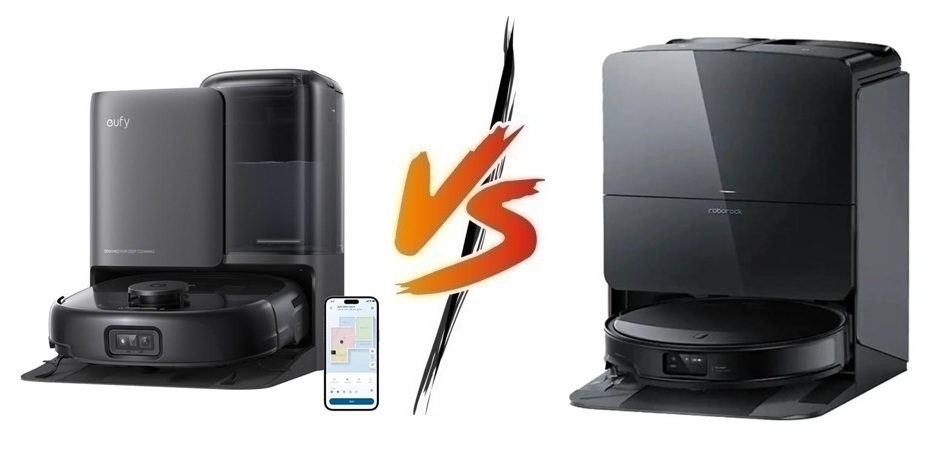
When you spend this much money on a robot vacuum, you stop thinking about “smart gadgets” and start thinking about replacement-level cleaning. That’s really the territory both the Eufy Omni E25 and the Roborock Saros 10R are aiming for. These are not entry-level robot vacuums you run once a week for maintenance cleaning. They’re designed to become the primary floor-care system in your home.
And honestly, both come surprisingly close.
The biggest difference between them is philosophy. The Eufy Omni E25 focuses heavily on raw cleaning power and aggressive mopping performance. The Roborock Saros 10R feels more like a highly refined autonomous cleaning machine that prioritizes intelligence, navigation finesse, and automation balance.
At first glance, they seem very similar. Both offer around 20,000Pa suction, self-emptying docks, hot-air mop drying, advanced obstacle avoidance, app-based mapping, and automated maintenance. But once you live with them for a few weeks, the differences become obvious.
Eufy Omni E25 vs Roborock Saros 10R Comparison Chart
If you click the links below, under the product images, you will be redirected to Amazon.com. In case you then decide to buy anything, Amazon.com will pay me a commission. This doesn’t affect the honesty of this review in any way though.
| Specification | Eufy Omni E25 | Roborock Saros 10R |
|---|---|---|
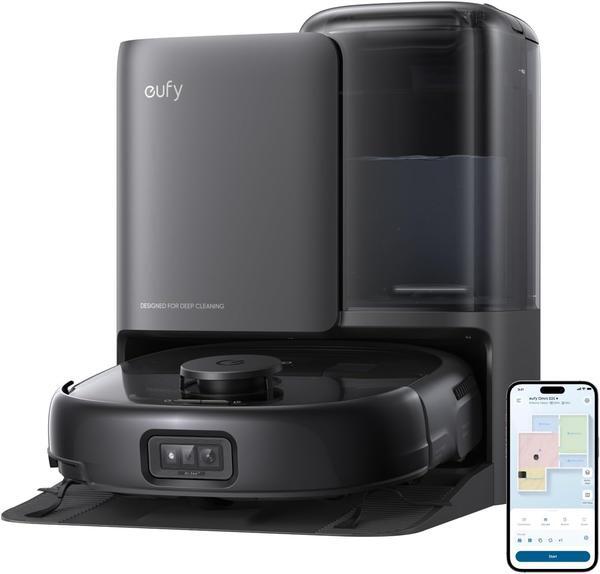 | 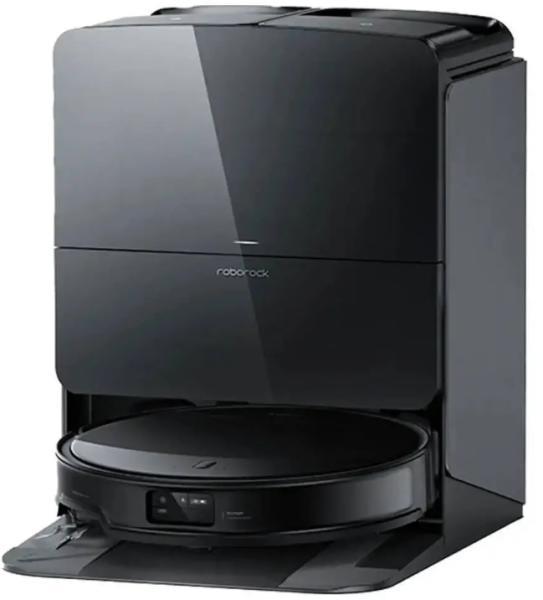 | |
| Check the best price on Amazon | Check the best price on Amazon | |
| Product Type | Premium robot vacuum & mop combo | Premium robot vacuum & mop combo |
| Navigation System | LiDAR + AI camera navigation | StarSight autonomous navigation system |
| Obstacle Avoidance | AI obstacle recognition | Advanced 3D obstacle recognition |
| Suction Power | Approx. 20,000Pa | Approx. 20,000Pa |
| Mopping System | HydroJet roller mop | Dual spinning mop pads |
| Mop Cleaning | Automatic self-washing roller system | Automatic mop washing |
| Mop Drying | Hot-air drying | Hot-air drying |
| Auto Dust Emptying | Yes | Yes |
| Clean Water Tank | Yes | Yes |
| Dirty Water Tank | Yes | Yes |
| Carpet Detection | Yes | Yes |
| Automatic Mop Lifting | Yes | Yes |
| Edge Cleaning | Extended edge cleaning system | FlexiArm edge cleaning system |
| Brush System | DuoSpiral anti-tangle brushes | DuoDivide anti-tangle brush system |
| Hair Tangle Resistance | Very good | Excellent |
| Multi-Floor Mapping | Yes | Yes |
| No-Go Zones | Yes | Yes |
| Room-Specific Cleaning | Yes | Yes |
| Voice Assistant Support | Alexa, Google Assistant, Siri Shortcuts | Alexa, Google Assistant, Siri Shortcuts |
| App Features | Cleaning schedules, room editing, custom suction/mop settings | Advanced automation, detailed mapping, adaptive cleaning routines |
| Dock Functions | Auto-empty, mop wash, mop dry, water refill | Auto-empty, mop wash, mop dry, water refill |
| Floor Type Optimization | Yes | Yes |
| Threshold Climbing | Good | Excellent |
| Low Furniture Clearance | Standard flagship height | Ultra-low profile design |
| Best Flooring Type | Hard floors & mixed surfaces | Mixed surfaces & complex homes |
| Pet Hair Performance | Excellent on hard floors | Excellent navigation around pet clutter |
| Carpet Deep Cleaning | Strong | Good to very good |
| Mopping Performance | Extremely aggressive and thorough | Highly refined and consistent |
| Navigation Intelligence | Very good | Exceptional |
| Dock Size | Medium-large | Medium-large |
| Noise Level | Moderately quiet | Slightly more refined acoustically |
| Maintenance Accessibility | Very easy to access and clean | More polished but slightly tighter internally |
| Smart Home Integration | Strong | Excellent |
| Best Strength | Deep cleaning & mopping power | Navigation & autonomous intelligence |
| Ideal User | Homes with heavy dirt, spills, pets, and hard floors | Users wanting premium automation and minimal supervision |
| My individual reviews | Eufy Omni E25 review |
Design & Build Quality
Design is one of those categories that people often underestimate when shopping for a robot vacuum. Most buyers focus on suction numbers, battery life, or app features because those are easy to compare on a spec sheet. But after living with one of these machines for a few months, you realize the physical design affects almost everything: how often it gets stuck, how easy it is to maintain, whether it blends into your home, and even whether you enjoy owning it.
The Eufy Omni E25 and the Roborock Saros 10R approach design from two very different philosophies, and honestly, that difference becomes obvious within the first hour of using them.
The Eufy Omni E25 feels like a machine engineered around cleaning performance first. Everything about it gives off that impression. The body is sturdy, slightly chunky, and purposeful. It doesn’t try too hard to disappear visually. Instead, it feels like a serious appliance built to do aggressive floor cleaning.
The Roborock Saros 10R takes the opposite approach. It feels refined, sleek, and unusually futuristic even by robot vacuum standards. If the Eufy looks like a high-performance cleaning tool, the Saros 10R looks like a polished consumer electronics product designed to blend seamlessly into a modern home.
Neither approach is wrong. They simply appeal to different types of buyers.
The first thing most people notice about the Saros 10R is its low-profile body design. Traditional flagship robot vacuums usually have a raised LiDAR turret sitting on top like a little puck. That turret helps navigation tremendously, but it also adds height. Roborock eliminated that visual bulk by integrating its navigation hardware into the body itself.
In real-world use, this matters more than most marketing materials suggest.
A lot of robot vacuums technically clean your home, but they leave entire hidden zones untouched because they physically cannot fit underneath furniture. The Saros 10R gets under places that many premium robot vacuums simply cannot reach. Beds, low couches, media cabinets, sideboards, floating vanities, and coffee tables suddenly become accessible cleaning zones instead of permanent dust reservoirs.
And once you notice that difference, it’s hard to ignore.
You start realizing how much dust accumulates under furniture that normal robot vacuums never reach. The Saros 10R changes that dynamic substantially.
The Eufy Omni E25 has a more traditional flagship robot shape. It’s slightly taller and more substantial overall. That doesn’t mean it struggles in normal homes. It still gets under most furniture without issue. But compared directly against the Roborock, it definitely feels physically larger and less agile in tight spaces.
That said, the Eufy has its own advantages because of this larger, more rugged construction.
It feels incredibly solid.
Some ultra-premium robot vacuums can almost feel delicate when you handle them directly. Thin plastic panels, glossy finishes, hidden seams, and complex mechanisms sometimes create the impression that you need to treat them carefully. The Eufy feels more durable and appliance-like. The plastics are thick, the removable components click firmly into place, and the overall structure feels built for heavy daily use.
If you have kids, pets, or a generally chaotic household, there’s something reassuring about that sturdiness.
The finish quality on both units is excellent, but they create very different impressions visually.
The Eufy has a slightly industrial aesthetic. Matte finishes dominate the design, fingerprints are less visible, and the machine hides everyday wear fairly well. It’s practical. After weeks of use, it still tends to look relatively clean and understated.
The Roborock looks more premium initially, but its glossy accents and polished surfaces are also more demanding cosmetically. Dust, fingerprints, and smudges become visible faster, especially under natural lighting.
That may sound minor, but robot vacuums live out in the open most of the time. Unlike upright vacuums hidden in closets, these machines become part of your room visually. So appearance matters more than people expect.
The docking stations also reveal a major difference in design philosophy.
The Eufy dock is functional first. It packs a huge amount of technology into a relatively compact footprint, but visually it prioritizes practicality over elegance. The water tanks are easy to access, the compartments are straightforward, and the overall system feels intuitive.
I actually appreciated this more over time.
Some premium robot vacuum docks try so hard to look minimalist that basic maintenance becomes awkward. Water tanks are hidden behind narrow doors, dust bags are recessed into tight compartments, and cleaning the dock itself becomes annoying.
The Eufy avoids most of that frustration. Everything is easy to reach.
The Roborock dock, meanwhile, feels more luxurious and integrated into modern interiors. It looks cleaner, more polished, and more architectural. If you place it in a high-end kitchen or hallway, it genuinely resembles a premium smart appliance rather than a cleaning station.
But that elegance comes with tradeoffs.
The Saros 10R dock feels slightly more complex internally. Accessing certain components requires a bit more care, and the polished surfaces show water spots and dust more easily. It’s beautiful, but slightly less forgiving in everyday ownership.
Another major aspect of build quality is how these machines physically move around the home.
The Eufy drives with confidence and force. You can feel the weight and traction when it transitions between floor surfaces or climbs thresholds. It behaves like a sturdy cleaning platform.
The Roborock feels lighter on its feet, even if the actual weight difference is not massive. Its movements are smoother, quieter, and more calculated. Furniture interactions feel gentler. Turns are more precise. Docking maneuvers are cleaner.
This becomes especially noticeable in cluttered homes.
The Eufy occasionally nudges objects more assertively. Not violently, but with enough force that lightweight items can shift slightly.
The Roborock behaves more delicately overall. It feels more aware of its environment physically, not just digitally.
Wheel and suspension design are also surprisingly important in long-term use.
Both vacuums handle thresholds and rugs well, but the Saros 10R feels slightly more refined during transitions. It climbs more gracefully and recovers faster from awkward angles. The Eufy handles obstacles effectively too, but with a bit more brute force.
Then there’s the question of maintenance accessibility, which many reviewers barely discuss despite it being one of the most important ownership factors.
This is where Eufy really deserves credit.
The Omni E25 is simply easier to work on day-to-day.
Removing the roller assembly is straightforward. Cleaning the filter takes seconds. Accessing water tanks is simple. Even clearing occasional debris from the dock feels intuitive.
The Roborock is not difficult to maintain, but it definitely feels more engineered and compartmentalized. Certain parts fit with tighter tolerances, and the machine feels more dependent on precise alignment and proper seating of components.
That precision contributes to its premium feel, but it also makes maintenance slightly less relaxed.
Noise insulation and mechanical refinement also deserve attention.
The Saros 10R sounds more sophisticated mechanically. Motors ramp up and down smoothly, wheel movement is quieter, and overall operation feels more polished acoustically.
The Eufy is not loud in a bad way, but it sounds more powerful and appliance-like. You hear more airflow, more brush activity, and more mechanical presence during cleaning.
Some people actually prefer that because it psychologically feels like stronger cleaning. Others will prefer the Roborock’s calmer and more controlled operation.
Ultimately, the design differences between these two vacuums reflect their broader personalities.
The Eufy Omni E25 feels like a heavy-duty cleaning machine optimized for strong real-world performance and easy ownership. It prioritizes practicality, accessibility, and cleaning aggression over sleek presentation.
The Roborock Saros 10R feels like a highly refined autonomous system designed to integrate elegantly into modern living spaces. It emphasizes sophistication, intelligence, and engineering finesse.
Personally, I think the Saros 10R is the more impressive piece of industrial design overall. Its low-profile construction, polished integration, and refined movement genuinely feel next-generation.
But I also think the Eufy feels tougher and more straightforward to live with over the long term.
And depending on the type of homeowner you are, that practical ruggedness may actually matter more than futuristic elegance.
Navigation Intelligence & Mapping
If suction power determines whether a robot vacuum can clean your floors, navigation intelligence determines whether it can clean your home effectively at all. And honestly, this is the category that separates decent robot vacuums from truly premium ones.
A robot vacuum with mediocre navigation becomes frustrating surprisingly quickly. It misses rooms, gets trapped under furniture, repeatedly bumps into chair legs, tangles itself in cables, or wastes battery wandering around inefficiently. Even strong suction cannot compensate for poor movement logic.
That’s why navigation matters so much more than people initially realize.
And between the Eufy Omni E25 and the Roborock Saros 10R, this is arguably the single biggest difference in the ownership experience.
The Eufy Omni E25 has good navigation. In many homes, it will perform perfectly well and create very few problems. It maps efficiently, avoids most obvious obstacles, and generally behaves like a modern flagship robot vacuum should.
But the Roborock Saros 10R operates on another level entirely.
The difference is not just technical. It’s behavioral.
The Eufy feels like a smart cleaning appliance navigating a room.
The Roborock feels like an autonomous machine actively understanding the environment around it.
That distinction becomes obvious during the very first mapping run.
The initial setup process on both vacuums is straightforward. They leave the dock, scan the home, and begin building a digital floor map inside the app. Both systems are fast compared to older robot vacuums, which sometimes required multiple cleaning sessions before producing usable maps.
But the quality of those maps differs noticeably.
The Eufy creates clean, usable layouts fairly quickly. Room boundaries are usually accurate, furniture detection is decent, and editable zones work reliably. For many users, that will be completely sufficient.
The Saros 10R, though, generates maps with astonishing detail and spatial awareness. Furniture placement appears more precise, room geometry looks cleaner, and obstacle recognition feels significantly more advanced. The robot seems to understand not just where objects are located, but how they relate to movement through the room.
That matters because modern robot vacuums no longer rely purely on random or semi-random movement patterns. Premium models now attempt to optimize movement continuously during cleaning.
And Roborock currently does this better than almost anyone else.
One of the first things I noticed with the Saros 10R was how little unnecessary motion it produced. It rarely hesitates. Rarely spins in place awkwardly. Rarely performs those strange mid-room corrections that some robot vacuums still make.
It moves with confidence.
The cleaning paths feel intentional and highly calculated. It enters rooms smoothly, cleans edges methodically, and exits without wasted movement. Even watching it work feels different because the behavior appears more intelligent.
The Eufy, by comparison, occasionally behaves more mechanically. It still cleans efficiently overall, but every now and then it makes route choices that feel slightly odd. Maybe it revisits an already-cleaned section prematurely. Maybe it turns awkwardly near furniture before correcting itself. Maybe it pauses briefly as if reassessing the room.
None of these issues are catastrophic. But over weeks of ownership, you start noticing them.
The Roborock simply behaves more naturally and more predictably.
Obstacle avoidance is another major area where the Saros 10R creates separation.
Modern homes are difficult environments for robot vacuums. Floors are rarely empty. There are dining chairs, cables, shoes, pet bowls, toys, backpacks, laundry piles, floor lamps, and all sorts of unpredictable clutter.
Older robot vacuums handled this badly. They would slam into objects repeatedly or get stuck constantly. Newer flagship models use cameras, LiDAR, infrared sensors, and AI recognition systems to navigate around obstacles instead.
Both the Eufy and Roborock are dramatically better than previous generations.
But the Saros 10R feels genuinely elite in this category.
It identifies obstacles earlier, approaches them more cautiously, and recovers from tight situations more gracefully. Chair legs especially highlight the difference. Many robot vacuums still struggle around dining tables because they constantly reposition themselves awkwardly between narrow furniture gaps.
The Saros 10R navigates these spaces with remarkable composure.
It also handles dynamic environments extremely well. If someone moves a chair during cleaning or leaves something unexpected on the floor, the Roborock adapts quickly without becoming confused.
The Eufy performs well too, but it relies slightly more on reactive behavior. It occasionally nudges objects before recognizing them fully. Lightweight items can get shifted a little during cleaning, especially in tighter spaces.
Again, none of this makes the Eufy “bad.” In fact, compared to mid-range robot vacuums, it still performs impressively well.
But when directly compared against the Saros 10R, the difference in environmental awareness becomes difficult to ignore.
Cable handling is especially important in real-world homes because cables remain one of the hardest obstacles for robot vacuums to manage.
Both models are much better than older robots, but neither is perfect.
The Eufy sometimes approaches loose cables too aggressively and can still tangle under certain conditions. Thin charging cables, headphone wires, and floor-level cords remain risky.
The Roborock is noticeably more cautious. It recognizes potential entanglement hazards earlier and avoids them more consistently. That said, even the Saros 10R occasionally fails with particularly thin or dark-colored cables.
No robot vacuum has completely solved cables yet.
Another huge advantage for the Saros 10R is how intelligently it handles multi-surface homes.
Homes today often combine:
- Hardwood
- Tile
- Rugs
- Thick carpets
- Threshold transitions
- Mats
- Raised edges
Managing all these surfaces smoothly requires far more than simple suction adjustment.
The Roborock constantly adapts to flooring conditions with impressive fluidity. It transitions between hard floors and rugs almost seamlessly. Mop lifting occurs quickly and reliably. Carpet recognition feels immediate rather than delayed.
The Eufy handles transitions competently too, but with slightly less finesse. Sometimes the transitions feel more mechanical or abrupt. You can tell the robot is responding to a floor change instead of anticipating it.
That predictive feeling is one of the Saros 10R’s greatest strengths overall.
It often behaves like it already understands what’s coming next.
Another underrated navigation factor is recovery behavior.
Robot vacuums inevitably encounter problems:
- A sock gets trapped
- A rug corner folds upward
- A chair shifts unexpectedly
- A door closes mid-clean
How the machine recovers from those situations matters enormously.
The Roborock is excellent at recovery logic. It reassesses its surroundings quickly, reroutes intelligently, and resumes cleaning with minimal confusion.
The Eufy occasionally needs more time to recalibrate after interruptions. Sometimes it repeats sections unnecessarily or pauses longer while determining a new route.
These differences sound small individually, but over hundreds of cleaning sessions they create a noticeably different ownership experience.
The Saros 10R simply feels more autonomous.
One area where this becomes especially important is large homes.
In smaller apartments, almost any decent flagship robot vacuum can clean effectively. But in larger homes with multiple rooms, long hallways, and complicated furniture layouts, navigation quality becomes critical.
The Saros 10R excels in these environments because it wastes so little movement. Its route planning is highly efficient, which improves battery usage and reduces total cleaning time.
The Eufy still performs strongly, but it occasionally feels less optimized in larger spaces. It may take longer routes, revisit sections more frequently, or require slightly more recharge management during massive cleaning sessions.
The app experience also contributes heavily to navigation quality.
Roborock’s app is currently one of the best in the industry. Map editing is detailed and intuitive. Room labeling works well. Cleaning zones are precise. Furniture placement visualization is excellent. Multi-floor mapping feels polished and reliable.
You can tell Roborock has spent years refining the software ecosystem around navigation intelligence.
The Eufy app is simpler and easier to learn initially, which some people may actually prefer. But advanced customization and fine control are more limited overall.
One final aspect worth discussing is emotional trust.
That may sound strange for a robot vacuum, but it matters.
Over time, you either trust a robot vacuum to operate independently or you don’t.
With the Saros 10R, I quickly reached the point where I felt comfortable running it unattended almost anytime. I trusted it not to get stuck, not to damage anything, and not to create surprises.
With the Eufy Omni E25, I still felt confident overall, but slightly more aware that occasional supervision might still be necessary in cluttered environments.
That difference is subtle, but it’s incredibly important in daily ownership.
Because the ultimate goal of a premium robot vacuum is not just cleaning power.
It’s freedom.
And right now, the Roborock Saros 10R comes closer to delivering truly autonomous cleaning than almost any robot vacuum I’ve used.
Vacuuming Performance
This is the category most people care about first, and understandably so. A robot vacuum can have incredible navigation, a beautiful app, and all the automation features in the world, but if it doesn’t actually clean floors effectively, none of that matters.
The good news is that both the Eufy Omni E25 and the Roborock Saros 10R are genuinely high-performing robot vacuums. These are not maintenance-only robots that lightly dust your floors while leaving visible debris behind. Both machines are powerful enough to handle real homes with real messes.
That said, they achieve their cleaning performance in noticeably different ways.
The Eufy Omni E25 approaches cleaning with brute-force confidence. From the moment it starts vacuuming, it feels aggressive. You hear the airflow immediately. You can see the brushroll attacking debris. The entire machine behaves like it’s trying to extract as much dirt as physically possible from the floor.
The Roborock Saros 10R feels more refined and calculated. It doesn’t appear as aggressive initially, but over time you realize it’s often achieving similarly strong cleaning results through smarter movement, better positioning, and more controlled airflow management.
This creates a fascinating contrast because raw power and actual cleaning effectiveness are not always the same thing.
On hard floors, both vacuums are excellent, but the Eufy leaves the stronger first impression.
If you scatter fine dust, cereal crumbs, flour, coffee grounds, rice, cat litter, or everyday kitchen debris across tile or hardwood flooring, the Eufy attacks it with serious authority. Its suction feels immediate and forceful, and the brush system does an impressive job pulling material inward without requiring multiple passes.
One thing I noticed quickly with the Eufy is how well it handles mixed debris sizes simultaneously. Some robot vacuums struggle when fine dust and larger particles are present together. They may collect larger debris while leaving fine dust behind, or vice versa.
The Eufy generally performs very consistently across both.
Its airflow seems tuned for aggressive pickup, and on smooth surfaces that works extremely well. Kitchens especially feel like the Eufy’s natural habitat. Crumbs under dining tables, flour near countertops, tracked dirt near entrances, and small bits of food all disappear quickly.
The Saros 10R also performs extremely well on hard floors, but it delivers cleaning differently.
Rather than relying purely on aggressive suction sensation, the Roborock emphasizes precision and coverage consistency. It follows tighter cleaning lines, maintains more accurate edge positioning, and avoids unnecessary overlap. Watching it clean feels methodical rather than forceful.
In practical terms, both leave floors looking extremely clean.
But psychologically, the Eufy feels more powerful while the Roborock feels more intelligent.
That distinction continues once you move onto carpets.
Carpet cleaning is where robot vacuums still face their biggest challenge overall because carpets require not just suction, but agitation and extraction. Upright vacuums still dominate deep carpet cleaning because their brushroll systems physically dig into carpet fibers more aggressively.
Neither the Eufy nor the Roborock fully replaces a premium upright vacuum for deep carpet restoration cleaning.
But both are impressive for autonomous robots.
The Eufy Omni E25 performs especially well on low-pile and medium-pile carpets. It visibly lifts debris from carpet fibers, and the suction increase when transitioning onto rugs feels substantial. You can actually hear the machine ramp up aggressively when carpet is detected.
Its brush system creates strong surface agitation, which helps with everyday dirt, crumbs, hair, and dust embedded near the top layer of carpet fibers.
What impressed me most about the Eufy was how effectively it maintained carpet appearance over repeated daily cleaning cycles. Even homes with moderate foot traffic stayed consistently fresh-looking without requiring constant manual vacuuming.
However, there are limits.
On thicker carpets or carpets with deeply embedded debris, the Eufy occasionally struggles to achieve complete extraction in a single pass. Heavy pet hair can sometimes clump rather than fully lift, especially if the carpet is dense or plush.
That doesn’t mean the cleaning is poor. Far from it. But it still reminds you that robot vacuums prioritize maintenance cleaning rather than deep restoration cleaning.
The Roborock Saros 10R approaches carpet cleaning differently.
Its cleaning feels more balanced and controlled rather than aggressively suction-focused. The robot adapts intelligently to carpet zones and manages transitions beautifully, but its brush system sometimes feels slightly gentler overall.
On everyday dust and light debris, it performs extremely well. Carpets look clean, organized, and refreshed after operation.
Where it occasionally falls behind the Eufy is raw extraction force on stubborn debris.
If you intentionally grind pet hair, sand, or fine dirt deeply into carpet fibers, the Saros 10R may require additional passes to achieve complete removal. The cleaning still looks good visually, but very demanding carpet conditions expose some limitations.
This becomes particularly important for homes with multiple pets.
Pet hair remains one of the hardest real-world tests for robot vacuums because it combines multiple problems simultaneously:
- Long fibers
- Static cling
- Carpet embedding
- Brushroll tangling
- Edge accumulation
The Eufy handles visible pet fur on hard floors exceptionally well. Hair pickup is strong, and the suction power helps prevent fur from simply being pushed around. Long-haired households especially benefit from the aggressive pickup style.
Its anti-tangle system also works surprisingly well. Hair accumulation still happens eventually, but far less frequently than older robot vacuums.
The Roborock is similarly impressive in hair management. In fact, its brush design may actually resist tangling slightly better over long-term use.
But there’s an interesting tradeoff.
The Saros 10R excels at preventing tangles while sometimes sacrificing a bit of deep carpet hair extraction performance. The Eufy occasionally pulls more hair from carpets overall, even if the brushroll requires slightly more maintenance later.
This is one of those categories where user priorities matter enormously.
If you want maximum maintenance-free operation, the Roborock feels more refined.
If you want slightly more aggressive extraction, the Eufy often feels stronger.
Edge cleaning is another area where both vacuums perform impressively compared to older generations.
Traditional robot vacuums often cleaned room centers reasonably well but left visible debris lines along walls and corners. Both the Eufy and Roborock have clearly evolved beyond that limitation.
The Eufy attacks edges assertively. Side brushes spin aggressively, suction positioning stays tight to walls, and the machine attempts to maximize edge contact whenever possible.
This works especially well in kitchens, where crumbs and dust naturally collect near cabinets and baseboards.
However, the aggressive edge approach occasionally creates minor debris scattering before collection. Lightweight particles can get pushed briefly before being vacuumed.
The Roborock feels more controlled around edges. It maintains excellent wall tracking and uses its extension systems intelligently to improve corner reach, but the overall behavior appears calmer and more measured.
The result is slightly cleaner execution overall, even if the Eufy sometimes feels more aggressive physically.
Another important category is consistency.
Some robot vacuums perform brilliantly during ideal conditions but struggle once real-life clutter appears. Shoes, cables, uneven rugs, chair legs, and narrow pathways can disrupt cleaning effectiveness dramatically.
The Saros 10R excels here because its navigation intelligence directly improves vacuuming performance. Since it moves more efficiently and positions itself more accurately, it wastes less cleaning potential.
The Eufy still cleans extremely well overall, but its occasional navigation quirks can slightly reduce consistency in cluttered spaces.
Battery efficiency also influences vacuuming performance more than people expect.
A robot vacuum that constantly drains battery inefficiently may reduce suction performance or interrupt cleaning cycles prematurely. The Roborock’s smarter route optimization helps maintain strong cleaning coverage even in larger homes.
The Eufy still offers excellent runtime, but it occasionally feels slightly more power-hungry due to its aggressive cleaning style.
Noise profile is another interesting distinction.
The Eufy sounds powerful. You hear airflow, brush movement, and active debris extraction constantly. Some users may find that reassuring because it genuinely feels like deep cleaning is happening.
The Roborock sounds smoother and more acoustically refined. It’s not necessarily quieter overall, but the sound profile feels calmer and less mechanically intense.
Over time, I found the Roborock easier to ignore during daily life, while the Eufy always reminded me it was actively cleaning.
Ultimately, both machines are outstanding performers compared to the broader robot vacuum market.
But their strengths differ slightly.
The Eufy Omni E25 prioritizes aggressive cleaning energy. It feels powerful, assertive, and highly focused on maximizing physical debris removal, especially on hard floors and everyday messes.
The Roborock Saros 10R prioritizes cleaning intelligence. It combines strong suction with exceptional movement efficiency, precision positioning, and highly refined environmental awareness.
Personally, if my home had mostly hard flooring, frequent kitchen messes, and high daily debris levels, I’d probably lean toward the Eufy because its cleaning style feels incredibly satisfying and forceful.
But for mixed flooring homes with more complex layouts, carpets, and furniture obstacles, the Roborock’s balance of intelligence and performance ultimately creates a more polished overall vacuuming experience.
Mopping Capability
A few years ago, robot vacuum mopping felt like a gimmick. Most models simply dragged a damp microfiber cloth behind the vacuum and called it a “mop.” It technically wiped the floor, but it rarely removed anything meaningful. Sticky spots stayed sticky, dried stains stayed visible, and the overall effect felt closer to dusting than actual mopping.
That has changed dramatically with machines like the Eufy Omni E25 and the Roborock Saros 10R.
These are not basic wipe-style mops anymore. Both products are attempting to replicate real floor washing behavior through automated systems, pressure control, intelligent water management, and self-cleaning docks. And honestly, both succeed to a surprising degree.
But they approach mopping in fundamentally different ways.
The Eufy Omni E25 focuses on aggressive physical floor washing. Its roller mop system is designed to actively scrub surfaces while continuously refreshing the cleaning roller during operation. The Roborock Saros 10R, meanwhile, focuses on intelligent and highly refined mopping behavior through dual spinning pads, adaptive lifting systems, and extremely sophisticated floor management.
After spending time with both, I think the Eufy delivers the more impressive raw mopping performance.
But the Roborock delivers the more polished overall mopping experience.
That distinction matters.
The first thing you notice about the Eufy is how serious its mop system feels. The roller maintains continuous contact with the floor while fresh water cycles through the system during cleaning. Instead of simply dragging moisture across the surface, the Eufy actively scrubs while simultaneously removing dirty water and residue.
In practice, it behaves more like a miniature powered floor washer than a traditional robot mop.
This creates an immediate advantage on sticky or stubborn messes.
Kitchen floors especially reveal the difference. Dried coffee drips, sauce splatter, light grease residue, muddy footprints, juice spills, and paw prints are all situations where many robot mops struggle because they simply smear contaminants around.
The Eufy handles these situations remarkably well.
After a cleaning cycle, floors often genuinely feel freshly mopped rather than lightly wiped. There’s a visible reduction in film buildup, especially on tile and sealed hardwood. If you walk barefoot afterward, the floor feels cleaner in a way that many robot mops fail to achieve.
What impressed me most was how consistently the Eufy maintained cleaning quality during longer sessions.
Some robot mops start strong but gradually become less effective because the mop pads get dirtier as cleaning continues. Eventually, they begin redistributing grime instead of removing it.
The Eufy’s roller-refresh approach minimizes that issue substantially. Because the system continually refreshes and manages water during operation, the mop stays cleaner for longer periods.
That gives it a major advantage in larger homes or heavily trafficked spaces.
The Roborock Saros 10R uses a different philosophy entirely.
Instead of a roller system, it relies on dual spinning mop pads that rotate against the floor with downward pressure. This system is extremely refined and far more advanced than older passive mop systems.
The spinning action genuinely scrubs surfaces rather than simply wiping them, and the pressure application feels well-balanced across different flooring types.
On normal day-to-day cleaning, the Saros performs beautifully.
Dust residue, light footprints, surface dirt, and everyday floor dullness disappear effectively. The floors look polished, and the overall cleanliness level is genuinely impressive for an autonomous system.
Where the Roborock occasionally falls slightly behind the Eufy is on heavier grime or sticky residue.
The spinning pads clean well, but the Eufy’s roller system simply feels more aggressive and more capable of physically lifting stubborn contamination from the floor surface.
This becomes especially noticeable in kitchens, entryways, and pet-heavy homes.
If your floors regularly deal with muddy shoes, cooking splatter, spilled drinks, or active children, the Eufy’s mopping system feels closer to a real manual mop cleaning session.
But the Roborock fights back hard in another category: intelligence.
The Saros 10R handles mixed flooring environments more elegantly than almost any robot mop I’ve used.
Modern homes often combine:
- Hardwood
- Tile
- Area rugs
- Carpets
- Thresholds
- Mats
Managing these surfaces properly is incredibly difficult for robot mops because moisture control becomes critical.
The Roborock handles transitions beautifully. Its mop lifting system is fast, reliable, and highly responsive. When carpets are detected, the mop pads raise intelligently to prevent moisture transfer, and the transitions happen smoothly without awkward pauses or hesitation.
The Eufy handles carpet transitions competently too, but the Roborock feels more sophisticated overall. Its floor recognition logic appears faster and more confident.
This creates a major advantage in homes with lots of mixed surfaces.
Another important difference is edge and corner mopping.
Robot vacuums traditionally struggle near walls because their circular bodies naturally leave small gaps in corners and along baseboards. Both Eufy and Roborock have invested heavily in improving edge cleaning performance, but they achieve it differently.
The Eufy attacks edges aggressively. It pushes its mop system close to walls and attempts to maximize physical contact near boundaries. In many situations, this works extremely well. Kitchen cabinet edges and hallway borders often look impressively clean afterward.
However, the aggressive approach can occasionally feel slightly less controlled. Depending on room geometry or furniture placement, edge consistency varies somewhat.
The Roborock feels more deliberate and precise. Its extension systems deploy intelligently near walls, and the machine maintains extremely accurate positioning during edge passes.
The result is slightly cleaner execution overall, even if the Eufy sometimes feels physically stronger during the process.
Water management is another category where both machines show how far robot mopping technology has evolved.
Older robot mops often left floors too wet, creating streaks or moisture buildup. Both the Eufy and Roborock regulate water flow impressively well.
The Eufy tends to use slightly more water overall, which contributes to its stronger scrubbing sensation. Floors feel more thoroughly washed afterward, but drying times can occasionally be a bit longer depending on the surface.
The Roborock uses water more conservatively and intelligently. It leaves floors slightly drier while still achieving strong cleaning performance.
Personally, I think the Eufy feels more satisfying immediately after cleaning because the floor genuinely looks and feels deeply washed.
But the Roborock feels safer and more polished for delicate flooring situations.
Dock automation also plays a huge role in mopping performance because dirty mop maintenance can quickly become unpleasant.
Both systems are excellent compared to older robot vacuums.
The docks:
- Wash the mop systems
- Dry components with hot air
- Refill clean water
- Collect dirty water
- Reduce odor buildup
This automation dramatically improves long-term usability.
The Eufy’s roller system requires slightly more maintenance over time simply because roller mechanisms involve more direct residue contact. Sticky grime and accumulated residue occasionally require manual inspection and cleaning.
The Roborock’s spinning pads are simpler mechanically and slightly easier to maintain day-to-day.
However, the Eufy’s cleaning performance advantage often makes that extra maintenance feel worthwhile.
Noise during mopping is another subtle difference.
The Eufy sounds more active while scrubbing. You can hear the roller movement and water interaction more clearly during operation. It creates the impression of active washing.
The Roborock operates more quietly and more gracefully. Its mopping behavior blends into the background more easily during daily life.
Another area where the Saros 10R excels is predictive behavior.
It intelligently adjusts cleaning based on room types, flooring conditions, and environmental layout. Bathrooms, kitchens, and entryways feel like they receive slightly more nuanced treatment automatically.
The Eufy is highly effective, but slightly more task-oriented in its approach. It focuses on physically cleaning as aggressively as possible.
And honestly, depending on your priorities, that may be exactly what you want.
For pet owners, both systems perform extremely well.
Paw prints, drool marks, tracked dirt, and daily grime are handled far better than older robot mop systems ever managed. But again, the Eufy feels more aggressive on physical stain removal, while the Roborock feels smarter about navigation and surface adaptation.
Ultimately, these two products represent two different interpretations of premium robot mopping.
The Eufy Omni E25 prioritizes cleaning force. It behaves like a compact autonomous floor washer focused on maximizing stain removal and physical scrubbing power.
The Roborock Saros 10R prioritizes intelligent refinement. It integrates mopping into a highly sophisticated autonomous cleaning ecosystem that feels polished, balanced, and exceptionally well-controlled.
If your biggest priority is actual floor washing performance, especially in homes with messy kitchens, pets, children, or heavy hard-floor traffic, I think the Eufy currently has the edge.
But if you want the most seamless and intelligent fully automated mopping experience overall, the Roborock remains incredibly difficult to beat.
Maintenance & Cleaning
One of the biggest promises of modern premium robot vacuums is convenience. These machines are no longer marketed as simple cleaning gadgets. They’re sold as automated floor-care systems designed to reduce how often you think about vacuuming and mopping altogether.
And to be fair, both the Eufy Omni E25 and the Roborock Saros 10R come impressively close to delivering that experience.
Compared to robot vacuums from even three or four years ago, these systems feel almost futuristic. They empty themselves, wash their own mop systems, dry components automatically, refill water reservoirs, monitor maintenance schedules, and notify you when attention is needed.
In daily life, that automation genuinely changes the ownership experience.
You stop thinking in terms of “vacuuming the house” and start thinking more in terms of “maintaining the system.” That sounds subtle, but it’s a huge difference psychologically. Instead of manually cleaning floors several times a week, you mostly supervise the machines while they handle routine upkeep autonomously.
But here’s the important reality that marketing often glosses over:
Neither of these machines is maintenance-free.
They dramatically reduce maintenance frequency, but they do not eliminate maintenance entirely. And the way each brand approaches long-term ownership reveals some very interesting differences.
The Eufy Omni E25 prioritizes accessibility and practical maintenance simplicity.
The Roborock Saros 10R prioritizes automation refinement and system intelligence.
After extended use, I found myself appreciating different aspects of both approaches.
The first major category is dust management.
Both systems include self-emptying docks, which honestly feel essential at this price level. Once you’ve lived with auto-emptying, it’s very difficult to go back to manually emptying tiny robot vacuum dustbins every day.
The basic process is simple:
- The robot cleans the house
- Returns to the dock
- The dock vacuums debris out of the onboard dustbin
- Dirt transfers into a larger disposable collection bag
In practice, both systems work very well.
The Eufy’s emptying process feels slightly more aggressive. The suction pulse inside the dock is powerful and forceful, and debris transfer happens quickly. Even larger debris loads usually clear successfully without much issue.
The Roborock’s emptying system feels more refined acoustically and mechanically. It’s still loud, because every self-emptying dock is loud, but the sound profile feels smoother and less abrupt.
Neither dock is something you’d want running next to you during a quiet phone call. But compared to older self-empty systems, both are reasonably civilized.
One thing I noticed over time is that the Roborock dock feels slightly cleaner internally after repeated use. Dust buildup around the emptying chamber appears more controlled overall.
The Eufy still performs very well, but because it tends to vacuum more aggressively and collect larger debris volumes, you occasionally notice more residual dust accumulation around certain dock components.
The dust bags themselves are straightforward on both machines. Replacing them is simple, hygienic, and infrequent for most households.
Where the differences become much more interesting is mop maintenance.
This is the category that truly separates modern flagship robot vacuums from older generations.
Traditional robot mops required constant manual attention:
- Removing dirty pads
- Washing microfiber cloths
- Emptying water tanks
- Drying components manually
- Preventing odor buildup
Both the Eufy and Roborock automate most of this process.
After cleaning sessions, the robots return to the dock where the mop systems are automatically washed and dried. Dirty water gets separated into its own tank while fresh water is stored independently.
And honestly, this feature alone changes the practicality of robot mopping enormously.
Without automatic mop washing and drying, robot mops become unpleasant fairly quickly. Wet pads sitting for hours develop odors fast, especially in warm environments.
Both companies clearly understand this problem.
The Roborock’s dual spinning mop pads are mechanically simpler to maintain. The pads detach easily, rinse cycles are efficient, and the overall system feels highly optimized for low-friction ownership.
You spend very little time thinking about the mop hardware itself.
The Eufy’s roller mop system is more ambitious, but also slightly more demanding.
Its roller mechanism physically scrubs more aggressively during operation, which improves cleaning performance, but naturally creates more opportunities for residue buildup over time. Sticky grime, kitchen grease, soap residue, and accumulated dirt can eventually collect around parts of the roller assembly if maintenance intervals are ignored.
This does not mean the system is problematic.
But it does mean the Eufy occasionally asks for more hands-on attention.
Personally, I didn’t find this frustrating because the roller cleaning performance is genuinely impressive. The tradeoff felt reasonable. But buyers expecting completely maintenance-free ownership should understand that more advanced cleaning systems inevitably create more maintenance complexity.
Fortunately, Eufy designed the components well.
Removing the roller assembly is easy, and most maintenance tasks are intuitive. Parts are accessible, clips feel sturdy, and cleaning pathways are straightforward to understand.
This is actually one area where I slightly preferred Eufy’s physical design philosophy overall.
The Roborock feels more sophisticated internally, but also more compartmentalized and tightly engineered. Certain parts fit with extremely precise tolerances, which contributes to the premium feel, but sometimes makes deep cleaning slightly less relaxed.
The Eufy feels more appliance-like and practical.
Hair management is another huge ownership factor that people often underestimate until they live with a robot vacuum full-time.
Hair is brutal for vacuum systems.
Long human hair, pet fur, carpet fibers, and threads can destroy older robot vacuums over time because they wrap around brushrolls and bearings continuously.
Thankfully, both of these machines are dramatically better than previous generations.
The Eufy’s anti-tangle brush system works very well in practice. Long hair still accumulates eventually, especially in households with pets or multiple people with long hair, but the maintenance frequency is far lower than older robot vacuums.
You spend less time cutting tangled hair off brushrolls manually, which honestly improves daily ownership more than most spec-sheet features.
The Roborock is arguably even better in this specific category.
Its brush design feels exceptionally optimized for resisting tangles. Hair accumulation still happens occasionally, but the system actively minimizes wrapping more effectively than most robot vacuums I’ve used.
If your household produces massive amounts of hair, either machine will save you a huge amount of maintenance frustration compared to traditional robot vacuums.
Filter maintenance is straightforward on both systems.
Both vacuums use high-efficiency filtration systems designed to capture fine dust and allergens effectively. Accessing the filters is simple, and cleaning intervals are reasonable.
The Eufy’s filter housing feels slightly easier to reach quickly. The Roborock’s filtration system feels a bit more integrated into the machine’s overall architecture.
Neither creates major problems.
Water tank management is another daily ownership detail that matters more than people expect.
Both systems use separate clean and dirty water tanks inside the dock. Emptying dirty water and refilling clean water becomes part of your periodic maintenance routine.
The Eufy tanks are slightly more straightforward physically. They remove easily, handles feel sturdy, and the overall process feels very practical.
The Roborock tanks look more elegant and integrated into the dock design, but they occasionally feel slightly less convenient to handle quickly.
Again, this reflects the broader design philosophies of both products:
- Eufy prioritizes practical accessibility
- Roborock prioritizes polished integration
Noise and odor management are also surprisingly important long-term ownership factors.
Both systems do a good job preventing musty mop smells through heated drying systems. That feature alone dramatically improves the experience compared to older robot mops.
However, no self-cleaning dock remains perfectly pristine forever.
Eventually, both systems require occasional manual cleaning of internal trays, drain areas, and washing compartments. Ignoring this entirely will eventually lead to residue buildup and potential odor issues.
The Roborock seems slightly better at keeping its internal systems cleaner automatically over time.
The Eufy occasionally requires more direct intervention because its roller mop system physically handles more grime during operation.
Software maintenance deserves mention too.
Roborock currently feels slightly ahead in long-term software refinement. Maintenance reminders, diagnostic systems, cleaning histories, and component monitoring all feel extremely mature and polished.
The Eufy app is solid and functional, but the Roborock ecosystem feels more deeply optimized around long-term autonomous ownership.
One of the most important emotional differences between the two systems is how much they disappear into daily life.
The Saros 10R feels more invisible overall. It quietly handles its routines, manages itself intelligently, and rarely asks for intervention.
The Eufy feels slightly more hands-on, but also more transparent. You feel more connected to what the machine is physically doing.
And honestly, I can see people preferring either approach.
Ultimately, both machines represent a massive leap forward compared to traditional robot vacuum ownership.
They dramatically reduce:
- Manual vacuum emptying
- Mop washing
- Daily floor maintenance
- Hair removal labor
- Cleaning frequency
But they still require ownership involvement.
And between the two, the Roborock Saros 10R delivers the smoother and more autonomous long-term maintenance experience overall.
Meanwhile, the Eufy Omni E25 feels more practical, more accessible, and slightly easier to physically work with when manual maintenance is required.
If your priority is maximum automation polish and minimal interaction, the Roborock probably wins.
If your priority is easier physical maintenance access and a more straightforward appliance-like ownership experience, the Eufy has real advantages.
Ergonomics & Usability
When people think about robot vacuums, they usually focus on cleaning performance first. That makes sense initially because suction power, mopping quality, and navigation are easy to visualize. But after a few weeks of ownership, something else becomes just as important: how easy the machine is to actually live with every day.
That’s where ergonomics and usability matter.
A robot vacuum can be incredibly powerful, but if the app is confusing, the dock is awkward to maintain, the controls are frustrating, or the system constantly asks for intervention, the ownership experience slowly becomes exhausting.
The Eufy Omni E25 and the Roborock Saros 10R are both premium products, so neither feels difficult or primitive to use. But they approach usability very differently, and honestly, the differences become more noticeable over time than I initially expected.
The Eufy focuses on simplicity and practical accessibility.
The Roborock focuses on sophistication and advanced customization.
Neither philosophy is inherently better. It depends heavily on what kind of user you are.
The first thing most people interact with is the setup process, and thankfully both machines perform very well here.
Modern flagship robot vacuums have improved enormously compared to earlier generations. Gone are the days of struggling through complicated Wi-Fi pairing sequences or cryptic app menus just to get basic functionality working.
Both the Eufy and Roborock guide you through setup clearly:
- Connecting to Wi-Fi
- Pairing the robot
- Mapping the home
- Configuring rooms
- Setting cleaning preferences
The Eufy’s onboarding process feels slightly simpler and more approachable immediately. The app interface is cleaner visually, menus are less dense, and the learning curve is gentle even for users who have never owned a robot vacuum before.
Within minutes, most people will understand the basic workflow.
The Roborock app is more advanced from the start. There are more settings, more customization layers, more environmental controls, and more automation options available immediately.
For tech-savvy users, this feels fantastic.
For less technical users, it can initially feel slightly overwhelming.
But over time, Roborock’s deeper software ecosystem becomes one of its biggest strengths.
The Saros 10R has one of the most polished robot vacuum app experiences currently available. You can customize almost everything:
- Room-specific cleaning behavior
- Carpet sensitivity
- Mop intensity
- Suction power
- Cleaning order
- Obstacle handling
- No-go zones
- Furniture recognition
- Multi-floor mapping
- Automation schedules
And importantly, these settings don’t feel tacked on. The interface remains surprisingly organized despite the depth.
The Eufy app is intentionally more streamlined. Most essential functions are present, but the overall experience feels more focused on simplicity rather than deep environmental tuning.
Personally, I think this creates two very different ownership experiences.
The Eufy feels easier to live with casually.
The Roborock feels more rewarding if you enjoy optimizing technology.
One of the most important usability factors for robot vacuums is trust. Specifically, whether you feel comfortable letting the machine operate independently without supervision.
The Saros 10R builds that trust extremely quickly.
Because its navigation and obstacle avoidance are so refined, you gradually stop worrying about it. You trust it to navigate around cables, avoid furniture, handle transitions properly, and recover from unexpected situations intelligently.
That confidence changes how you use the robot.
Instead of thinking, “I should probably monitor it while it cleans,” you eventually start running it automatically while leaving the house or going to sleep.
The Eufy inspires confidence too, but in a slightly different way.
It feels mechanically dependable and physically sturdy, but its navigation occasionally requires a little more awareness from the owner. You remain slightly more conscious that it’s a machine actively working through the environment.
Again, this isn’t a major flaw. But the Roborock reaches that “invisible assistant” feeling more consistently.
Dock usability is another major category that affects daily ownership.
Robot vacuum docks are no longer simple charging stations. These are now multifunction cleaning hubs managing:
- Dust collection
- Water refilling
- Mop washing
- Mop drying
- Waste separation
Because of that, physical usability matters enormously.
The Eufy dock feels more appliance-like and practical. Water tanks are easy to remove, maintenance compartments are accessible, and the entire system feels straightforward.
I actually appreciated this quite a bit.
Some premium smart appliances prioritize visual minimalism so heavily that basic maintenance becomes frustrating. Hidden panels, recessed handles, and tightly integrated compartments may look elegant, but they’re annoying during daily use.
The Eufy avoids most of that.
Its components are obvious, easy to grab, and simple to clean.
The Roborock dock feels more premium visually. It looks sleek, polished, and beautifully integrated into modern interiors. If appearance matters heavily to you, the Saros 10R dock genuinely looks like a luxury appliance.
But that elegance occasionally comes at the cost of practicality.
Certain maintenance tasks feel slightly more delicate or more engineered. Nothing is difficult exactly, but the system feels more precision-oriented overall.
Physical interaction with the robots themselves also differs subtly.
The Eufy feels rugged and sturdy in your hands. Components click firmly into place, removable parts are easy to understand intuitively, and the machine gives off a reassuringly durable feeling.
The Roborock feels more refined and tightly engineered. Tolerances feel extremely precise, moving parts operate smoothly, and everything feels premium.
But that refinement also creates slightly more psychological hesitation during maintenance. You naturally handle it more carefully because it feels more sophisticated.
Voice control integration works well on both systems.
Both support major smart home ecosystems, allowing you to:
- Start cleaning by voice
- Send the robot to specific rooms
- Pause cleaning
- Trigger routines
- Integrate with home automation systems
In practice, though, I found myself relying on automation schedules more than voice commands over time.
And this is where Roborock’s ecosystem becomes especially impressive.
The Saros 10R supports highly detailed automation logic. You can build routines around room usage, flooring types, cleaning times, and behavioral preferences in ways that genuinely feel futuristic.
For example:
- Increasing suction automatically in certain rooms
- Running kitchen mopping after dinner
- Cleaning entryways more frequently during rainy weather
- Avoiding bedrooms during sleeping hours
The Eufy handles scheduling well too, but with a more simplified philosophy overall.
Another huge usability factor is feedback clarity.
Robot vacuums constantly communicate:
- Maintenance reminders
- Cleaning completion
- Error states
- Obstacle detection
- Water tank status
- Dustbin conditions
The Roborock is excellent at presenting this information clearly and proactively. Notifications feel polished and informative without becoming overwhelming.
The Eufy’s feedback system is straightforward and functional, but slightly less refined overall.
Noise perception also affects usability more than people realize.
The Roborock feels quieter psychologically because its movements are smoother and its mechanical operation feels more controlled. Even when it’s actively cleaning, it tends to blend into the background more easily.
The Eufy sounds more energetic and appliance-like. You hear stronger airflow, more brush activity, and more obvious mechanical operation.
Some users may actually prefer this because it reinforces the feeling that serious cleaning is happening.
Others will prefer the Roborock’s calmer presence.
Accessibility for less technical users is another important distinction.
If I were recommending a robot vacuum to someone who:
- Doesn’t love complicated technology
- Wants minimal learning curve
- Prefers straightforward controls
- Values practical operation
…I’d probably lean toward the Eufy.
Its interface is easier to grasp quickly, its maintenance systems are physically intuitive, and the entire ownership experience feels less mentally demanding.
But for users who enjoy technology and customization, the Roborock ecosystem is genuinely exceptional.
It gives you tremendous control over how the machine behaves, and over time that flexibility becomes incredibly valuable.
One surprisingly important usability category is emotional interaction.
Some robot vacuums feel like gadgets.
Others begin to feel like part of the household routine.
The Eufy feels like a powerful cleaning appliance you operate.
The Roborock increasingly feels like an autonomous household system quietly managing itself in the background.
That distinction may sound abstract, but it becomes very real after months of ownership.
Ultimately, both machines succeed because they dramatically reduce the friction traditionally associated with floor cleaning.
They automate tedious work.
They reduce daily maintenance.
They simplify routine cleaning.
They save time consistently.
But they deliver that convenience differently.
The Eufy Omni E25 prioritizes approachable usability, practical maintenance access, and straightforward operation. It feels honest, functional, and easy to live with.
The Roborock Saros 10R prioritizes ecosystem refinement, intelligent automation, and deep customization. It feels sophisticated, polished, and technologically mature.
Personally, I think the Roborock delivers the stronger overall usability experience if you fully engage with its ecosystem.
But I also think the Eufy may actually feel more comfortable and less intimidating for many everyday users.
And honestly, that simplicity has real value.
Pet-Friendliness
Pet owners experience robot vacuums differently from everyone else.
If you don’t have pets, a robot vacuum mostly deals with dust, crumbs, light debris, and occasional dirt tracked in from outside. But once you add dogs or cats into the equation, the entire cleaning challenge changes.
Now you’re dealing with:
- Constant shedding
- Fur tumbleweeds under furniture
- Muddy paw prints
- Scattered litter
- Drool marks
- Food crumbs near bowls
- Accidents
- Toys left on the floor
- Hair wrapped around brushes
- Floors that somehow get dirty again two hours after cleaning
A robot vacuum that feels incredible in a spotless minimalist apartment can suddenly struggle badly in a real pet household.
That’s why pet-friendliness deserves its own category entirely.
And honestly, both the Eufy Omni E25 and the Roborock Saros 10R are clearly designed with pet owners in mind. These are among the better robot vacuums currently available for homes with animals.
But they excel in different ways.
The Eufy feels like it was designed to physically fight pet messes.
The Roborock feels like it was designed to intelligently survive pet environments.
That distinction becomes more obvious the longer you use them.
The first and most obvious challenge is pet hair pickup.
This is where robot vacuums either prove themselves quickly or become frustrating. Pet fur behaves differently from normal dust because it:
- Clings to surfaces
- Builds up rapidly
- Wraps around brushes
- Collects in corners
- Embeds into carpet fibers
And the volume can become overwhelming surprisingly fast in multi-pet homes.
The Eufy Omni E25 performs extremely well on visible fur pickup, especially on hard floors.
In homes with hardwood, tile, laminate, or vinyl flooring, the Eufy feels genuinely powerful. Fur piles disappear quickly, loose hair gets collected efficiently, and the machine handles daily shedding with impressive confidence.
What stood out to me most was how aggressively the Eufy attacks larger fur accumulations.
Some robot vacuums struggle once hair begins forming visible clumps. Instead of pulling the hair inward cleanly, they sometimes push it around the floor before eventually collecting it.
The Eufy generally handles this very well. Its suction feels strong enough to immediately capture most fur clusters without scattering them excessively.
This creates a major advantage in homes with:
- Huskies
- Golden Retrievers
- German Shepherds
- Long-haired cats
- Multiple pets shedding simultaneously
The Roborock Saros 10R also performs strongly on hard floors, but in a more controlled and methodical way.
It cleans pet fur consistently and intelligently, but it feels less aggressive physically. Instead of attacking debris forcefully, it focuses more on coverage accuracy and positioning precision.
The end result is still very clean floors.
But psychologically, the Eufy feels more satisfying in heavily fur-covered environments because you can visibly watch it devour hair piles more aggressively.
Carpet performance becomes more complicated.
Pet hair embedded in carpets remains one of the hardest cleaning tasks for any robot vacuum. Even premium upright vacuums sometimes struggle with deeply worked-in fur.
The Eufy performs surprisingly well on low and medium-pile carpets with pet hair. Daily maintenance cleaning keeps carpets looking consistently fresh, and surface fur accumulation rarely becomes overwhelming.
However, in homes with extremely heavy shedding and thick carpets, there are limits.
Very dense fur buildup can still overwhelm the system occasionally, especially if cleaning schedules are infrequent. In those situations, some hair may remain embedded deeper in carpet fibers after a single cleaning pass.
The Roborock faces similar limitations, although for slightly different reasons.
Its brush system is extremely effective at resisting tangles and maintaining smooth operation, but sometimes feels slightly less aggressive at deep carpet fur extraction compared to the Eufy.
In practical terms:
- The Roborock stays cleaner internally
- The Eufy sometimes extracts slightly more fur physically
This creates an interesting tradeoff.
If your priority is minimizing maintenance and avoiding tangled brushrolls constantly, the Roborock is exceptional.
If your priority is maximum raw hair pickup force, especially on hard floors and moderate carpets, the Eufy often feels stronger.
Another huge issue for pet owners is navigation around unpredictable environments.
Pets create chaos.
There are water bowls, food dishes, toys, blankets, bones, scratching posts, pet beds, random floor clutter, and constantly changing room layouts. A robot vacuum that navigates beautifully in a perfectly tidy home may struggle once pets are involved.
This is where the Roborock Saros 10R becomes incredibly impressive.
Its obstacle avoidance system is among the best I’ve seen in a consumer robot vacuum. It identifies pet-related obstacles quickly and navigates around them intelligently.
Food bowls especially highlight the difference.
The Roborock approaches them cautiously, adjusts movement precisely, and avoids bumping them unnecessarily. It behaves like it actually understands the object instead of merely reacting to contact.
The Eufy performs well too, but with slightly less finesse.
It occasionally nudges lightweight pet bowls or toys while navigating tighter spaces. The behavior is not reckless, but it feels more mechanical and less predictive.
For messy or cluttered pet homes, the Saros 10R clearly feels more intelligent overall.
This becomes especially important with cables and pet toys.
Pet owners often have:
- Automatic feeder cords
- Water fountain cables
- Small chew toys
- Plush toys
- Random pet accessories scattered around
The Roborock is noticeably better at recognizing and avoiding these hazards before contact occurs.
The Eufy still performs competently, but requires slightly more owner awareness in cluttered environments.
Then there’s the subject every pet owner worries about with robot vacuums:
Accidents.
No one likes talking about it, but it matters enormously.
A robot vacuum spreading pet waste across an entire home is basically every robot vacuum owner’s nightmare scenario.
Both companies clearly understand this concern, and both machines use advanced object recognition systems designed to identify hazards on the floor.
The Roborock feels more trustworthy here overall.
Its obstacle detection system appears more cautious and more refined, especially in uncertain situations. It tends to slow down earlier and evaluate objects more carefully before approaching.
The Eufy is capable too, but behaves slightly more aggressively physically during navigation.
If I were running a robot vacuum completely unattended in a home with young pets or animals prone to accidents, I would personally trust the Roborock more confidently.
Mopping performance for pet households is another major category.
Pets create floor grime differently from humans:
- Paw prints
- Water splashes
- Drool
- Dirt tracked from outside
- Food residue
This is where the Eufy becomes extremely compelling.
Its roller mop system handles pet-related floor messes exceptionally well. Muddy paw prints, dried water spots, and food splashes disappear more effectively than with many spinning-pad systems.
The Eufy genuinely leaves floors feeling freshly washed afterward, which matters enormously in pet homes where hard floors can develop a subtle sticky film over time.
The Roborock also mops very well, but the Eufy feels more aggressive and more satisfying on tougher pet grime specifically.
Odor management is another underrated category.
Pet homes naturally create stronger environmental odors because fur, dirt, and moisture accumulate faster. A poorly designed robot vacuum dock can become unpleasant surprisingly quickly.
Thankfully, both systems handle this much better than older robot vacuums.
The heated mop drying systems help enormously by preventing damp mop odors from developing after cleaning cycles.
The Roborock feels slightly cleaner internally over long-term use because its systems appear optimized for lower residue accumulation overall.
The Eufy occasionally requires slightly more manual cleaning around the mop system because of how aggressively it handles dirty floor conditions.
Noise also affects pet households differently.
Some pets completely ignore robot vacuums after a few days. Others remain nervous around them permanently.
The Roborock moves more quietly and more smoothly overall. Its calmer motion patterns and refined mechanical sounds may be less intimidating for anxious pets.
The Eufy feels more energetic and appliance-like during operation. Some pets may react more strongly initially because the machine sounds more physically active while cleaning.
That said, most pets adapt eventually to either system.
One thing I appreciated about both vacuums is how effectively they reduce the emotional burden of constant pet cleaning.
That’s really what matters most.
Instead of constantly seeing fur buildup around baseboards or paw prints near entrances, the floors simply stay consistently cleaner with minimal effort.
And psychologically, that changes daily life more than people expect.
Ultimately, both the Eufy Omni E25 and the Roborock Saros 10R are excellent choices for pet owners.
But they prioritize different strengths.
The Eufy feels optimized for physically cleaning pet messes aggressively:
- Strong fur pickup
- Excellent hard-floor performance
- Powerful mopping
- Great visible dirt removal
The Roborock feels optimized for intelligently operating inside pet households:
- Superior obstacle avoidance
- Better clutter handling
- Smarter navigation
- More autonomous reliability
Personally, if my home had mostly hard floors and multiple shedding pets, I’d seriously consider the Eufy because its cleaning aggression feels incredibly effective.
But if I had a cluttered, busy household with pets constantly leaving toys, bowls, and unpredictable obstacles around the home, I’d probably trust the Roborock more overall.
And honestly, for many pet owners, that peace of mind may matter just as much as raw cleaning power.
Conclusion
The Eufy Omni E25 and the Roborock Saros 10R represent two of the most advanced robot vacuum systems currently available, but what makes this comparison interesting is that neither machine completely dominates the other. Instead, they reflect two very different ideas of what a premium robot vacuum should be.
The Eufy Omni E25 focuses on cleaning force. It feels powerful, practical, and highly aggressive in day-to-day operation. Its vacuuming performance on hard floors is excellent, its roller mop system is genuinely impressive, and it handles visible dirt, fur, and sticky messes with the confidence of a machine designed primarily around cleaning effectiveness. It also feels sturdy, accessible, and refreshingly straightforward to maintain.
The Roborock Saros 10R, meanwhile, feels like the more technologically refined product overall. Its navigation intelligence is exceptional, its obstacle avoidance is among the best currently available, and its entire ecosystem feels deeply polished. It moves through the home with precision and confidence, integrates beautifully into automated routines, and requires very little supervision once fully configured.
In many ways, the Eufy feels like a high-performance cleaning appliance.
The Roborock feels like an autonomous household system.
For homes with heavy hard-floor usage, messy kitchens, muddy paw prints, or constant visible debris, I think the Eufy Omni E25 is incredibly compelling. Its cleaning style feels more aggressive and more satisfying physically.
But for users who prioritize automation, intelligence, navigation reliability, and long-term ecosystem refinement, the Roborock Saros 10R is probably the more complete experience overall.
And that really defines the final decision.
If you want the robot that feels like it cleans harder, the Eufy stands out.
If you want the robot that feels smarter and more autonomous, the Roborock wins.
Either way, both machines prove just how far robot vacuum technology has evolved. These are no longer novelty gadgets. They are legitimate floor-care systems capable of transforming how people maintain their homes every single day.