
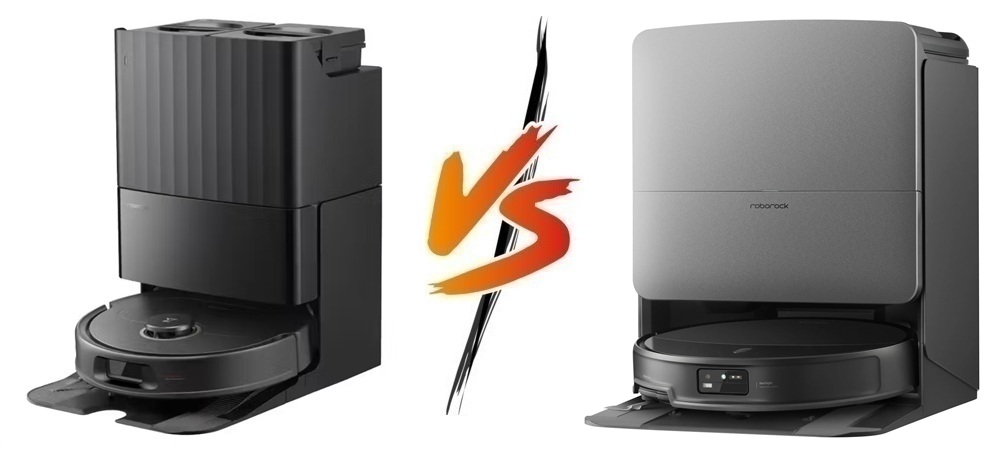
Robot vacuum cleaners have come a long way over the last few years. Features that once belonged exclusively to flagship models, such as self-emptying docks, spinning mop pads, intelligent obstacle avoidance, and AI-powered navigation, are now appearing in more affordable machines. Roborock has been one of the companies leading that evolution, and both the Roborock Qrevo S Pro and the Roborock Saros 20 showcase just how advanced modern robot vacuums have become.
Although they share the same brand and a similar philosophy of automating floor care, these two robots are aimed at different buyers. The Qrevo S Pro focuses on delivering a premium experience at a more approachable price, while the Saros 20 represents Roborock’s latest thinking in navigation, obstacle avoidance, cleaning intelligence, and overall refinement.
After comparing every major aspect of both machines, the Saros 20 is clearly the more capable robot overall. However, that doesn’t automatically make it the better purchase for everyone. In many homes, the Qrevo S Pro delivers nearly the same day-to-day cleaning experience while costing considerably less.
Here’s how they compare.
Roborock Qrevo S Pro vs Roborock Saros 20 Comparison Chart
If you click the links below, under the product images, you will be redirected to Amazon.com. In case you then decide to buy anything, Amazon.com will pay me a commission. This doesn’t affect the honesty of this review in any way though.
| Specification | Roborock Qrevo S Pro | Roborock Saros 20 |
|---|---|---|
 |  | |
| Check the best price on Amazon | Check the best price on Amazon | |
| Robot Type | Robot Vacuum & Mop | Premium Robot Vacuum & Mop |
| Navigation System | LiDAR Navigation with AI Obstacle Avoidance | Advanced LiDAR Navigation with Enhanced AI Obstacle Recognition |
| Mapping | Multi-Level 3D Mapping | Multi-Level 3D Mapping with Enhanced Scene Recognition |
| Obstacle Avoidance | AI-powered obstacle detection | Next-generation AI obstacle recognition with improved small object detection |
| Maximum Suction Power | Up to 7,000 Pa | Up to 20,000 Pa |
| Main Brush | Floating rubber brush | Enhanced floating anti-tangle rubber brush |
| Side Brush | Single side brush | Enhanced side brush with improved edge coverage |
| Mopping System | Dual rotating spinning mop pads | Dual rotating spinning mop pads with enhanced edge cleaning |
| Mop Lift | Automatic mop lifting | Automatic intelligent mop lifting |
| Water Tank | Internal electronically controlled water tank | Internal electronically controlled water tank |
| Carpet Detection | Yes | Yes, with more advanced adaptive cleaning |
| Carpet Boost | Yes | Yes |
| Cleaning Modes | Vacuum, Mop, Vacuum & Mop, Room Cleaning, Zone Cleaning | Vacuum, Mop, Vacuum & Mop, Intelligent Adaptive Cleaning, Room & Zone Cleaning |
| Automatic Dirt Detection | No | Yes |
| Self-Emptying Dock | Yes | Yes |
| Automatic Mop Washing | Yes | Yes |
| Warm Air Mop Drying | Yes | Yes |
| Automatic Water Refilling | Yes | Yes |
| Dirty Water Collection | Yes | Yes |
| Dust Bag Capacity | Large-capacity disposable dust bag | Large-capacity disposable dust bag |
| Dock Maintenance | Self-emptying, mop washing, drying, water refill | Enhanced self-maintenance with improved mop washing and drying |
| Battery Capacity | 5,200 mAh | 6,400 mAh |
| Maximum Runtime | Up to 180 minutes | Up to 220 minutes |
| Recharge & Resume | Yes | Yes |
| Threshold Crossing | Up to 20 mm | Up to 40 mm (with advanced chassis system) |
| Multi-Floor Support | Yes | Yes |
| No-Go Zones | Yes | Yes |
| No-Mop Zones | Yes | Yes |
| Room Customization | Yes | Yes |
| Cleaning Schedule | Yes | Yes |
| Voice Control | Amazon Alexa, Google Assistant, Siri Shortcuts | Amazon Alexa, Google Assistant, Siri Shortcuts |
| Mobile App | Roborock App | Roborock App |
| Firmware Updates | OTA Updates | OTA Updates |
| Pet-Friendly Features | Excellent hair pickup and obstacle avoidance | Enhanced pet obstacle recognition and anti-tangle performance |
| Noise Level | Moderate | Slightly quieter during cleaning |
| Low-Profile Design | Standard profile | Ultra-low profile for cleaning under more furniture |
| Recommended Home Size | Small to large homes | Medium to very large homes |
| Best For | Buyers seeking premium features at excellent value | Buyers seeking Roborock’s most advanced cleaning and automation technologies |
| My individual reviews | Roborock Qrevo S Pro review |
Key Differences at a Glance
| Category | Winner | Why |
|---|---|---|
| Design | Saros 20 | Slimmer profile and more refined construction |
| Navigation | Saros 20 | Smarter AI obstacle avoidance and navigation |
| Vacuuming | Saros 20 | Significantly higher suction and better carpet performance |
| Mopping | Saros 20 | More intelligent edge cleaning and mop management |
| Dock Features | Saros 20 | More advanced self-maintenance |
| Runtime | Saros 20 | Larger battery and longer cleaning sessions |
| Threshold Crossing | Saros 20 | Better capability over taller thresholds |
| Smart Features | Saros 20 | More intelligent automation and adaptive cleaning |
| Value for Money | Qrevo S Pro | Delivers most flagship features at a lower price |
Overall
| Model | Overall Rating |
|---|---|
| Roborock Qrevo S Pro | 9.3/10 |
| Roborock Saros 20 | 9.8/10 |
The Roborock Qrevo S Pro remains one of the strongest value-oriented premium robot vacuums available, offering an excellent balance of vacuuming, mopping, and automation. The Roborock Saros 20 builds on that foundation with substantially stronger suction, a lower-profile chassis, improved obstacle avoidance, a larger battery, enhanced threshold-climbing ability, and more sophisticated AI-driven cleaning, making it the more capable flagship overall for users who prioritize the most hands-off cleaning experience.
Design & Build Quality
When comparing the Roborock Qrevo S Pro and the Roborock Saros 20, it’s immediately clear that both robot vacuums come from the same design philosophy. Roborock has spent years refining its products, and that experience shows in both models. They share a minimalist aesthetic, high-quality materials, and thoughtful engineering that makes them feel more like premium home appliances than disposable gadgets. While there are obvious similarities between the two, spending time with each robot reveals that the Saros 20 has benefited from several generations of refinement, making it feel like a more polished and mature product overall.
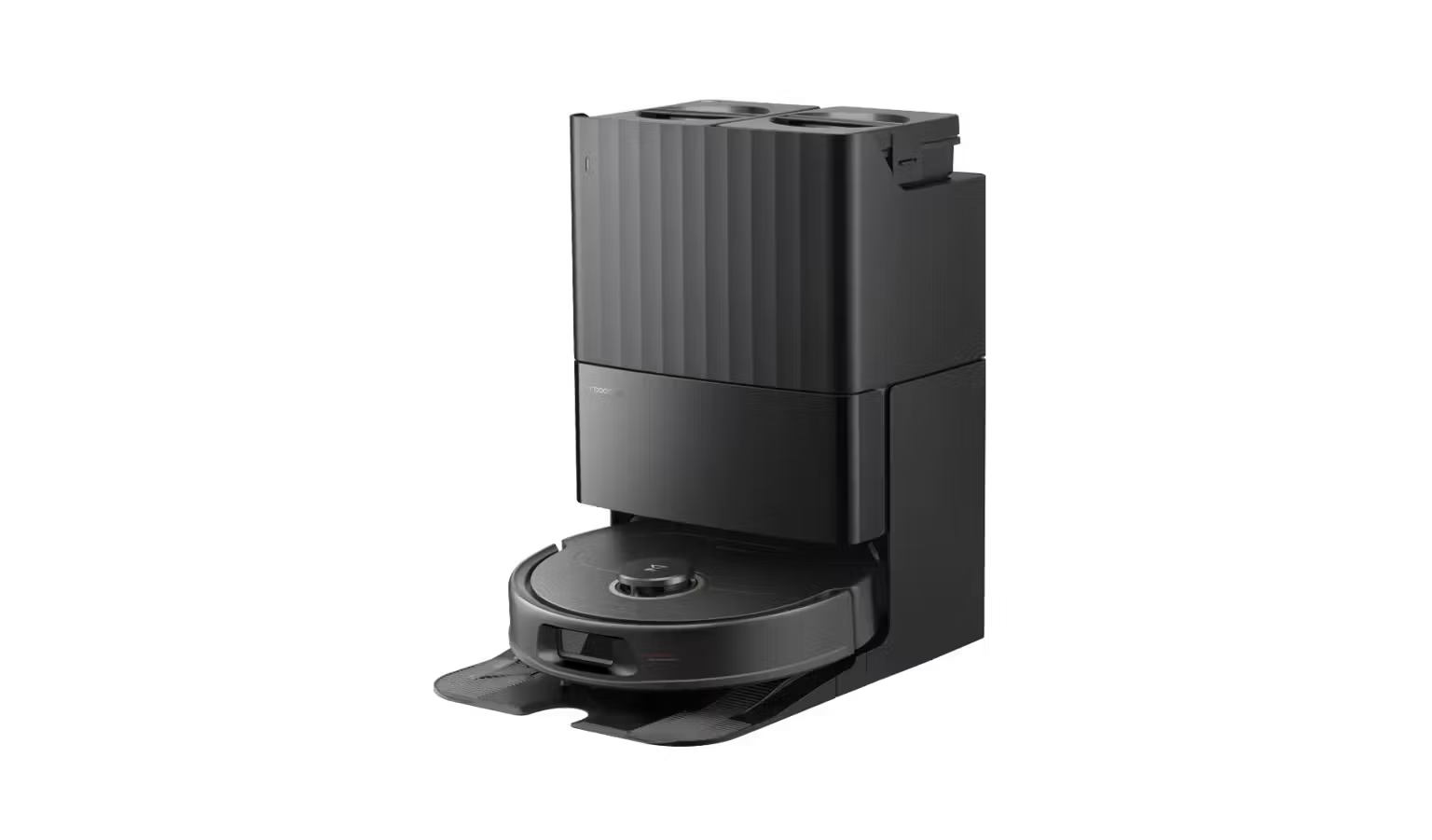
The Qrevo S Pro is a handsome robot vacuum that blends into almost any modern home. Its clean, circular shape, smooth exterior, and understated finish give it a premium appearance without trying too hard to stand out. It doesn’t have unnecessary styling flourishes or decorative accents that could quickly look dated. Instead, Roborock has focused on practicality, with a design that feels timeless and functional. The finish also does a respectable job of hiding fingerprints and light dust, which is something you’ll appreciate if the robot is parked in a visible location.
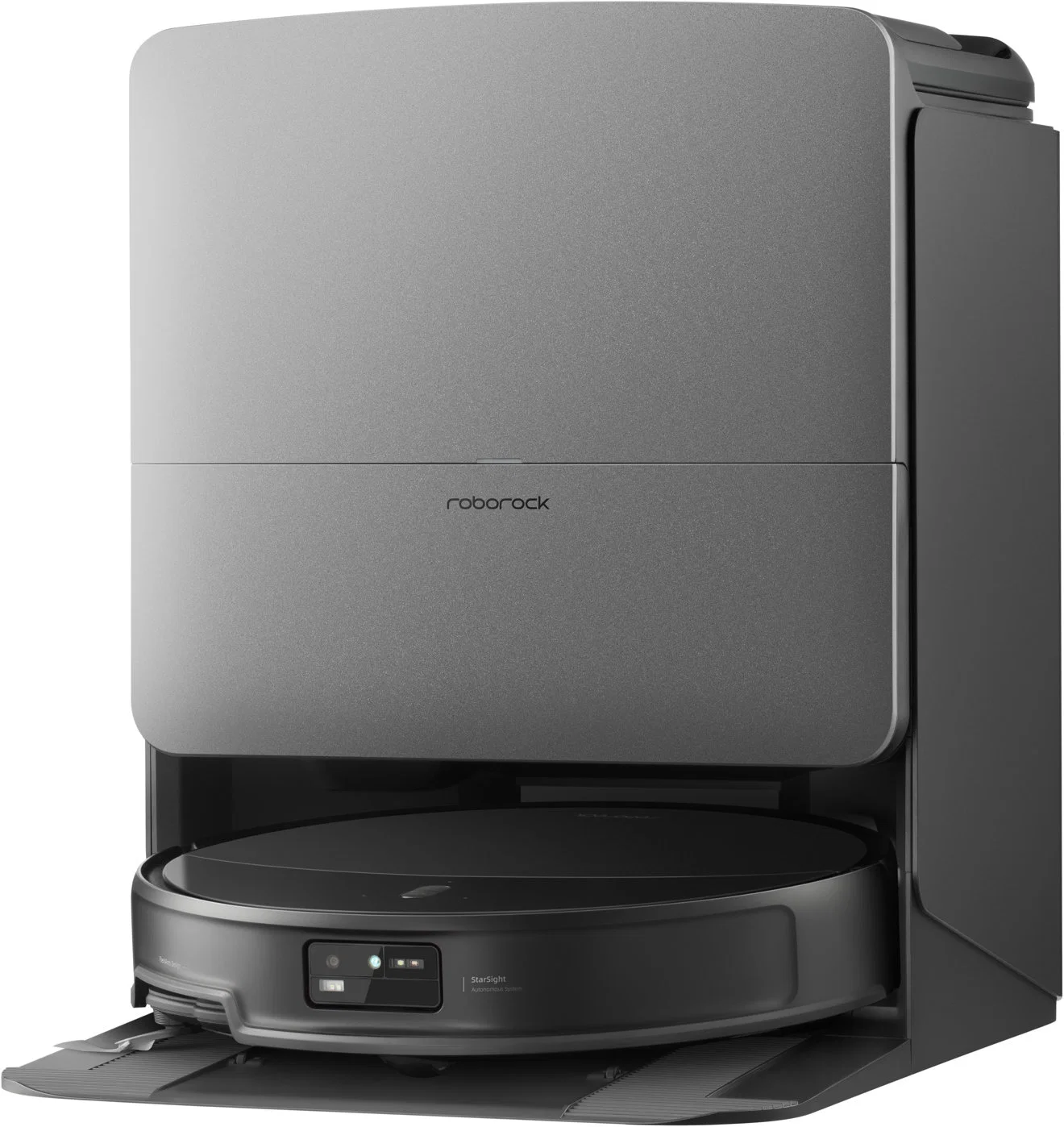
The Saros 20 follows a similar design language but manages to feel more refined from the moment you unpack it. While the overall shape remains familiar, the details are noticeably more sophisticated. Panel gaps are tighter, moving components operate with greater precision, and the entire robot gives the impression of being engineered with even greater attention to detail. None of these improvements are dramatic on their own, but together they create a product that feels unmistakably flagship.
One of the most significant differences between the two models is their overall height. The Saros 20 has been designed with a lower profile, allowing it to reach areas that would normally remain untouched by taller robot vacuums. This may seem like a small specification on paper, but in everyday use it makes a noticeable difference. Furniture such as sofas, beds, TV stands, sideboards, and cabinets often have just enough clearance to make or break a robot’s ability to clean underneath them. The Saros 20 can access more of these hard-to-reach areas, reducing the number of places where dust and pet hair can accumulate over time.
The lower profile doesn’t come at the expense of structural rigidity either. Despite its slimmer design, the Saros 20 feels every bit as solid as the Qrevo S Pro. There’s no sense that compromises have been made to achieve the more compact form factor. The housing feels rigid, with no creaking or flexing when handled, and every removable component fits securely into place.
Looking underneath both robots reveals another area where Roborock’s experience becomes evident. The layout of the main brush, side brush, drive wheels, and spinning mop pads has been carefully considered to maximize cleaning performance while keeping maintenance relatively simple. Both robots feature large rubber drive wheels that provide enough traction to transition smoothly between hard floors and carpets, while also allowing them to climb over common household thresholds with little difficulty.
The removable components are equally well designed. Dustbins slide in and out easily without requiring excessive force, water tanks are straightforward to refill, and filters can be accessed without disassembling half the machine. These might sound like minor conveniences, but they become increasingly important over months and years of ownership. A robot vacuum is only as convenient as its maintenance routine, and Roborock clearly understands that.
The quality of the plastic used throughout both robots deserves mention as well. Neither machine relies on thin, brittle plastic that feels likely to crack after repeated use. Instead, the surfaces have a dense, durable feel that inspires confidence. The finish also resists scratches reasonably well during normal operation, even when the robots occasionally brush against furniture legs or baseboards. While no robot vacuum is immune to cosmetic marks over time, both the Qrevo S Pro and the Saros 20 should retain their appearance well with ordinary use.
The bumper design is another example of Roborock’s mature engineering. Both robots use spring-loaded front bumpers that absorb gentle impacts without transmitting unnecessary force to the internal components. During testing, neither robot aggressively rammed furniture or walls. Even when physical contact occurred, it was typically slow and controlled rather than abrupt. The Saros 20, thanks to its more advanced navigation system, tends to make physical contact even less frequently, helping preserve both the robot and household furniture over the long term.
The multifunction docking stations deserve almost as much attention as the robots themselves because they play a central role in the overall ownership experience. The dock included with the Qrevo S Pro already represents a major upgrade over traditional charging stations. Instead of simply recharging the battery, it automatically empties the dustbin, washes the spinning mop pads, dries them with warm air, and refills the onboard water reservoir. These automated maintenance features dramatically reduce the amount of manual work required between cleaning sessions.
From a construction standpoint, the Qrevo S Pro’s dock feels sturdy and thoughtfully designed. The clean and dirty water tanks are easy to remove, their handles feel secure, and the overall structure remains stable even when fully loaded. Maintenance points are clearly accessible, making it simple to empty wastewater or replace consumables without awkward lifting or disassembly.
The Saros 20 takes this concept one step further with a dock that feels even more integrated into the overall cleaning process. Every interaction, from removing the water tanks to accessing the dust bag compartment, feels smoother and more intuitive. The internal layout appears better optimized, making routine maintenance quicker and less messy. It’s the sort of refinement that doesn’t necessarily grab your attention during the first week of ownership but becomes increasingly appreciated after months of regular use.
Cable management is another subtle but welcome improvement. Both docks have been designed to minimize visible wiring, allowing them to sit neatly against a wall without creating unnecessary clutter. Their appearance is clean enough that they don’t feel out of place in a living room, hallway, or kitchen, which isn’t something that could be said about many earlier robot vacuum docks.
Attention to detail extends to the robots’ controls as well. Physical buttons are minimal yet responsive, offering quick access to basic functions without forcing users to reach for the smartphone app every time. The button placement is logical, feedback is tactile, and indicator lights are bright enough to communicate status without becoming distracting in a dark room.
One area where Roborock continues to impress is overall serviceability. Brushes, filters, mop pads, and other consumable parts are designed to be replaced quickly using little or no tools. Hair removal from the brush roller is relatively straightforward, while the removable side brush can be swapped out in seconds. These design decisions may not be exciting, but they contribute significantly to the long-term ownership experience.
From a durability perspective, both robots inspire confidence. They feel like products designed to operate daily for years rather than months. Hinges, removable covers, water tanks, and cleaning modules all appear engineered with repeated use in mind. While long-term reliability ultimately depends on proper maintenance and usage, the underlying construction quality suggests that both models are built to withstand the demands of everyday cleaning.
Ultimately, both the Roborock Qrevo S Pro and the Roborock Saros 20 demonstrate excellent build quality that places them among the best-designed robot vacuums currently available. The Qrevo S Pro delivers a premium feel that exceeds expectations for its price point, offering solid construction, practical design, and a highly capable multifunction dock. The Saros 20, however, elevates nearly every aspect of the design with more refined engineering, a slimmer profile, improved dock integration, and a greater sense of overall polish. The differences aren’t revolutionary, but they are consistent throughout the product, creating a robot vacuum that feels like the culmination of years of thoughtful development. For buyers who value craftsmanship and attention to detail as much as cleaning performance, the Saros 20 earns a narrow but well-deserved victory in this category.
Navigation Intelligence & Mapping
If suction power is the muscle of a robot vacuum, then navigation is undoubtedly its brain. Even the most powerful vacuum becomes frustrating to own if it repeatedly misses rooms, gets trapped under furniture, or wanders around aimlessly before finding its way back to the charging dock. Fortunately, Roborock has built a strong reputation for intelligent navigation over the years, and both the Qrevo S Pro and the Saros 20 continue that tradition. They are among the most capable robot vacuums in this area, but after spending time comparing the two, it’s clear that the Saros 20 represents the next step in Roborock’s navigation technology.
The first thing I noticed was how quickly both robots became familiar with their surroundings. Initial mapping is remarkably fast on each model. Rather than cleaning randomly, they move with purpose, scanning rooms as they travel and constructing an accurate floor plan that can later be customized within the Roborock app. Even in homes with several rooms, hallways, and furniture arrangements, both robots are capable of producing detailed maps within a single exploration run.
The accuracy of these maps is impressive. Walls are placed correctly, room boundaries are generally recognized automatically, and furniture placement is represented well enough that the digital map closely resembles the actual layout of the home. Once the initial scan is complete, it’s easy to split or merge rooms, assign names such as “Kitchen” or “Living Room,” and create custom cleaning routines for individual areas.
For everyday use, the Qrevo S Pro already performs at a very high level. It follows efficient cleaning paths, avoids unnecessary overlap, and rarely wastes time revisiting areas that have already been cleaned. Unlike older robot vacuums that often relied on seemingly random movement, the Qrevo cleans in organized, parallel rows before finishing along the edges of the room. This systematic approach not only improves cleaning efficiency but also shortens the overall cleaning time.
The Saros 20 follows a similar cleaning pattern because the underlying navigation philosophy remains the same, but its movements appear even more deliberate. It hesitates less when entering unfamiliar spaces, transitions between rooms more smoothly, and generally gives the impression of making smarter decisions in real time. It’s one of those differences that’s difficult to appreciate by looking at specifications alone, but it becomes obvious after watching both robots complete several cleaning cycles.
Obstacle avoidance is where the gap between these two models becomes much more noticeable.
Most homes aren’t perfectly tidy. Shoes are left near the front door, phone chargers find their way onto the floor, children’s toys appear unexpectedly, and pet bowls rarely stay exactly where they were yesterday. A robot vacuum has to deal with this constantly changing environment, and how well it responds can have a significant impact on the overall ownership experience.
The Qrevo S Pro does an admirable job of detecting common household obstacles. Larger items such as dining chairs, table legs, bins, and furniture are handled confidently, and the robot generally slows down before making contact. In many cases, it avoids touching furniture altogether, relying on its sensors to adjust its route before any collision occurs.
Smaller obstacles, however, are naturally more challenging. While the Qrevo is capable of recognizing many of them, it occasionally takes a more cautious approach. Sometimes it leaves a slightly wider gap around clutter than necessary, which means small patches of floor may remain untouched until the next cleaning session after the obstacle has been moved. From a practical standpoint, this conservative behavior is preferable to becoming stuck, but it does result in slightly less complete coverage.
The Saros 20 demonstrates a higher level of confidence when navigating cluttered environments. It appears better at identifying smaller household objects and planning a route around them without sacrificing cleaning coverage. Items like slippers, power cables, pet toys, and charging cords are negotiated more gracefully, allowing the robot to clean closer to obstacles while still avoiding direct contact.
This improvement is particularly valuable in busy family homes where the floor is rarely completely clear. Instead of requiring you to prepare every room before starting a cleaning cycle, the Saros 20 adapts more naturally to the reality of everyday living. It feels less like a machine following a rigid set of instructions and more like one that’s capable of interpreting its surroundings intelligently.
Navigation around furniture is another area where Roborock continues to excel. Both robots move confidently around dining tables, chair legs, coffee tables, and sofas without becoming confused. They don’t simply circle furniture randomly. Instead, they clean methodically around each obstacle before resuming their previous cleaning pattern.
The Saros 20 performs these transitions more smoothly. It spends less time repositioning itself and rarely needs multiple attempts to navigate narrow gaps. Even complex furniture arrangements are handled with impressive efficiency, reducing the amount of time required to complete an entire floor.
Edge cleaning also benefits from intelligent navigation. Rather than focusing exclusively on open floor space, both robots dedicate separate passes along walls, skirting boards, and furniture edges where dust naturally accumulates. The Qrevo S Pro performs well in this regard, following room perimeters with impressive consistency. The Saros 20 builds upon this by maintaining more accurate positioning throughout the cleaning process, helping it stay closer to edges without unnecessary wandering.
Another strength shared by both models is multi-floor mapping. Homes with multiple levels often present challenges for less sophisticated robot vacuums, requiring users to create new maps manually or tolerate inconsistent navigation. Roborock has largely solved this problem. Both the Qrevo S Pro and the Saros 20 can recognize different floor layouts automatically, allowing users to carry the robot upstairs without having to reconfigure the app each time.
This feature becomes especially useful in larger homes where bedrooms, offices, and living spaces are spread across multiple floors. Once each map has been created, the robots remember room layouts, cleaning preferences, restricted zones, and scheduling information independently.
Speaking of restricted zones, both robots provide extensive customization options through the app. Virtual walls, no-go zones, and no-mop areas can all be drawn directly onto the map with remarkable precision. These features eliminate the need for physical magnetic strips or barriers and make it easy to prevent the robot from entering sensitive areas such as children’s play spaces, pet feeding stations, or rooms containing delicate furniture.
The precision of these virtual boundaries is excellent. During testing, both robots consistently respected the defined limits without drifting across them, even after multiple cleaning sessions. This reliability gives users confidence that scheduled cleaning routines won’t interfere with areas they intentionally want to exclude.
One feature I particularly appreciate is selective room cleaning. Rather than sending the robot through the entire home, it’s possible to instruct either model to clean only specific rooms or even designated zones within a room. For example, after preparing dinner, you can send the robot to clean just the kitchen without disturbing the rest of the house. Both models execute these targeted cleaning tasks efficiently, traveling directly to the selected area before beginning their work.
Docking performance is another aspect of navigation that’s often overlooked but plays an important role in everyday reliability. Both robots consistently locate and return to their docking stations once cleaning is complete or when battery levels become low. The process feels almost effortless, even in larger homes. Rather than wandering aimlessly while searching for the dock, both machines approach it confidently and align themselves accurately.
The Saros 20 once again displays slightly greater refinement. It appears to locate the dock more quickly and completes the docking maneuver with fewer small adjustments. It’s not a dramatic improvement, but it contributes to the overall impression that every aspect of its navigation system has been fine-tuned.
Adaptability is another area where the Saros 20 distinguishes itself. Homes are dynamic environments. Chairs get moved, doors are left open or closed, furniture is rearranged, and seasonal decorations temporarily alter room layouts. While both robots can adapt to these changes without requiring an entirely new map, the Saros seems quicker to incorporate temporary environmental changes into its navigation decisions. It rarely appears confused when encountering a modified room layout, instead recalculating its route with minimal hesitation.
Ultimately, the Roborock Qrevo S Pro already offers navigation performance that surpasses many competing robot vacuums on the market. Its mapping is accurate, route planning is efficient, obstacle handling is dependable, and app-based customization is among the best available. For most households, it provides a highly reliable and largely hands-free cleaning experience.
The Saros 20, however, demonstrates what happens when an already excellent navigation system is refined even further. Its smarter obstacle recognition, smoother movement, improved decision-making, enhanced edge coverage, and greater adaptability combine to create a robot that feels noticeably more autonomous in daily use. Rather than simply following a map, it appears to understand its environment more effectively, allowing it to clean with greater confidence and fewer interruptions. While both models rank among the best in their class, the Saros 20 earns the advantage by delivering one of the most intelligent and polished navigation experiences currently available in a consumer robot vacuum.
Vacuuming Performance
At the end of the day, the most advanced navigation system, the smartest app, and the most sophisticated docking station don’t mean much if a robot vacuum can’t actually clean the floor well. Vacuuming performance is still the single most important category when evaluating any robot vacuum, and this is an area where both the Roborock Qrevo S Pro and the Roborock Saros 20 perform exceptionally well. They represent the upper end of what today’s robot vacuums are capable of, but while the differences between them aren’t dramatic, the Saros 20 consistently demonstrates a slightly higher level of refinement that becomes noticeable over extended use.
One thing I appreciated almost immediately is that neither robot relies solely on raw suction power to achieve good cleaning results. Manufacturers often advertise increasingly impressive suction figures, but suction alone doesn’t determine how effectively a robot cleans. Brush design, airflow, navigation, carpet detection, and cleaning algorithms all contribute just as much to real-world performance. Roborock has clearly focused on balancing all of these elements rather than chasing numbers on a specification sheet.
On hard flooring, both robots perform remarkably well. Hardwood, laminate, vinyl, tile, and sealed stone surfaces present very little challenge for either machine. Everyday household debris such as dust, crumbs, cereal, rice, coffee grounds, and small pieces of dried leaves are collected with impressive consistency. The side brush gently sweeps debris toward the main brush, where it’s lifted into the dustbin without scattering particles around the room.
This is an area where I found surprisingly little difference between the two models. Running both robots over the same sections of hard flooring produced nearly identical results in most situations. Floors looked clean after a single pass, and there were very few visible remnants left behind. Unless you’re comparing them side by side, it’s unlikely that most users would notice a significant performance gap during routine cleaning.
The story changes slightly when the debris becomes finer. Dust, flour, baking powder, and similar lightweight particles often expose weaknesses in cheaper robot vacuums because their airflow isn’t well managed. Instead of collecting the debris, they sometimes push it around or leave a faint dusty film behind.
Fortunately, both Roborock models handle fine particles extremely well. Their airflow remains controlled, allowing them to collect dust without creating noticeable residue. In kitchens, laundry rooms, and entryways where fine dirt tends to accumulate, this makes a meaningful difference. Rather than requiring multiple cleaning cycles, both robots generally leave the floor looking clean after a single run.
Larger debris also poses little difficulty. Dry pet food, popcorn, cereal flakes, small pebbles carried in from outdoors, and similar household messes are collected effectively without clogging the intake. The wide opening beneath the robot allows these larger particles to pass through without becoming trapped around the brush assembly.
Carpet cleaning is where the comparison becomes more interesting.
Robot vacuums have traditionally struggled with carpets, particularly medium and high-pile varieties where dirt becomes embedded deep within the fibers. While no robot vacuum completely replaces a high-powered upright vacuum for periodic deep cleaning, modern flagship models have narrowed the gap considerably.
The Qrevo S Pro already performs very well on low-pile carpets and rugs. Everyday dust, loose dirt, pet hair, and crumbs are removed effectively, leaving carpets visibly cleaner after each pass. Its automatic carpet detection works reliably, increasing suction when it moves from hard flooring onto carpet without requiring manual adjustment. This happens quickly enough that cleaning performance remains consistent throughout the home.
On thicker carpets, however, there are occasions when the Qrevo S Pro requires a second pass to extract more deeply embedded dirt. This isn’t unusual for a robot vacuum, and the difference is relatively small, but it’s an area where the Saros 20 begins to justify its flagship positioning.
The Saros 20 demonstrates stronger carpet performance thanks to a combination of higher cleaning efficiency and more intelligent cleaning behavior. Rather than simply increasing suction, it appears better at recognizing areas where additional cleaning effort is required. On carpets that receive heavy foot traffic, such as hallways or living rooms, it does a more thorough job of lifting dirt from between the fibers.
One aspect I particularly appreciated was how naturally both robots transitioned between different floor types. Many homes contain a combination of hardwood, tile, rugs, and carpet, and frequent transitions can sometimes confuse robot vacuums. Neither model showed any hesitation when moving between surfaces. They adjusted their cleaning mode smoothly, allowing the entire home to be cleaned without interruption.
Hair pickup is another category that deserves special attention because it often separates good robot vacuums from great ones.
Households with long-haired family members quickly discover whether a robot vacuum has been designed with hair management in mind. Hair wrapping around the main brush can reduce cleaning performance and increase maintenance requirements if the brush design isn’t effective.
Both the Qrevo S Pro and the Saros 20 perform admirably here. Their brush systems minimize tangling better than many competing models, allowing them to collect significant amounts of long hair before manual cleaning becomes necessary. Hair still accumulates over time, as it does with virtually every vacuum cleaner, but the amount wrapped around the roller remains manageable and easy to remove during routine maintenance.
Pet owners will likely be equally satisfied. Cat hair, dog fur, and the fine undercoat shed by many breeds are collected effectively from both hard floors and carpets. During periods of heavy seasonal shedding, daily cleaning sessions are enough to keep fur accumulation under control, reducing the amount of manual vacuuming required throughout the week.
Another area where Roborock continues to impress is cleaning consistency. Some robot vacuums begin a cleaning session strongly but lose effectiveness as the dustbin fills or battery levels decrease. I didn’t observe this behavior with either model. Cleaning performance remained consistent from the beginning of the cycle to the end, even during longer cleaning sessions covering multiple rooms.
The dustbin capacity also feels appropriately matched to each robot’s intended purpose. Combined with automatic emptying at the docking station, it’s rare for the onboard dustbin to become overloaded during normal daily cleaning. Even homes with pets should find that the self-emptying system significantly reduces the need to manually empty collected debris.
Edge cleaning deserves separate consideration because it remains one of the more challenging aspects of robot vacuum design. Dust naturally collects along skirting boards, around furniture legs, and in room corners where airflow patterns tend to deposit fine particles.
The Qrevo S Pro performs well along straight walls, using its side brush to pull debris into the cleaning path. While some corners inevitably require occasional manual attention, overall coverage is impressive. The Saros 20 improves upon this with more precise positioning and slightly better brush coordination, allowing it to clean closer to walls and furniture edges. The improvement isn’t revolutionary, but over weeks of regular cleaning, it contributes to a more consistently clean home.
One characteristic I appreciated with both robots is their willingness to revisit areas if necessary. Rather than stubbornly following a predetermined route regardless of conditions, they occasionally adjust their cleaning pattern when navigating around furniture or particularly dirty sections of flooring. The Saros 20 appears more confident in making these decisions, resulting in slightly better overall coverage without noticeably increasing cleaning time.
Noise during vacuuming is another factor worth mentioning. Both robots remain reasonably quiet in their standard cleaning modes, producing a low, consistent hum that easily fades into the background. Maximum suction naturally generates more noise, especially on carpets, but neither machine reaches the intrusive sound levels associated with traditional upright vacuums. This makes it practical to schedule cleaning sessions while working from home or relaxing in another part of the house.
Perhaps the greatest compliment I can give both robots is that they encourage more frequent cleaning simply because they require so little effort to operate. Instead of waiting until floors visibly need attention, it’s easy to schedule daily cleaning sessions that prevent dirt from accumulating in the first place. This changes the role of the robot vacuum from an occasional convenience into an integral part of regular household maintenance.
Ultimately, the Roborock Qrevo S Pro delivers vacuuming performance that will satisfy the vast majority of households. It cleans hard floors exceptionally well, handles carpets with confidence, manages pet hair effectively, and maintains consistent performance throughout each cleaning cycle. It already belongs among the best robot vacuums in its price category.
The Saros 20 doesn’t completely redefine what a robot vacuum can do, but it refines nearly every aspect of the cleaning process. Its stronger carpet performance, more intelligent cleaning behavior, improved edge coverage, and greater overall efficiency combine to create a robot that feels more capable in everyday use. The differences are often subtle rather than dramatic, but they appear consistently across a wide range of floor types and cleaning situations. For buyers seeking the most complete vacuuming performance Roborock currently offers, the Saros 20 earns a deserved, if relatively narrow, victory.
Mopping Capability
One of the biggest changes in the robot vacuum market over the past few years has been the dramatic improvement in mopping performance. Not long ago, robot vacuum mops were little more than damp microfiber cloths dragged across the floor. They were useful for picking up light dust, but they struggled with anything more demanding than a few footprints or a thin layer of dirt. Modern Roborock models have largely left those limitations behind, and both the Qrevo S Pro and the Saros 20 demonstrate just how far the technology has progressed.
Although vacuuming remains the primary function of these machines, their mopping systems are now capable enough that many homeowners will find themselves reaching for a traditional mop far less often. Both robots use dual rotating mop pads instead of a passive cloth, and this single design choice makes an enormous difference in real-world cleaning performance.
The rotating pads actively scrub the floor rather than simply wiping over it. As the pads spin, they apply consistent pressure while loosening dried-on dirt, lifting light stains, and removing sticky residue that would have been left behind by earlier generations of robot mops. It’s immediately apparent that Roborock has invested significant engineering effort into making the mopping function something people can genuinely rely on rather than treating it as an optional extra.
The Qrevo S Pro already delivers an excellent mopping experience. During everyday use, it handles the kinds of messes that accumulate naturally in a busy household remarkably well. Kitchen floors with dried cooking splashes, muddy shoe prints in an entrance hallway, dusty hard floors, and light food spills are all cleaned effectively during a standard cleaning cycle. The finished floor doesn’t simply look cleaner; it feels cleaner underfoot, with noticeably less fine dust and residue remaining behind.
What impressed me most was how consistently the Qrevo maintained moisture across the floor. Some robot mops leave certain areas overly wet while barely dampening others, creating an uneven finish. The Qrevo distributes water evenly throughout the cleaning process, allowing the mop pads to remain consistently damp without soaking delicate flooring. This balanced approach makes it suitable for a wide variety of sealed hard floor surfaces, including hardwood, laminate, vinyl, ceramic tile, and stone.
The Saros 20 builds upon this already capable system with refinements that become more apparent the longer you use it. At first glance, the cleaning results can appear quite similar, particularly after routine maintenance cleaning. However, when dealing with more stubborn dirt or heavily trafficked areas, the Saros demonstrates a higher level of intelligence in how it approaches mopping.
Rather than simply following a fixed cleaning routine, it appears better at adapting to different floor conditions. In areas that require additional attention, such as kitchens, dining rooms, or entryways, it cleans more deliberately and maintains excellent contact between the mop pads and the floor surface. These subtle adjustments improve stain removal without noticeably extending cleaning times.
One area where both robots excel is routine maintenance cleaning. This is arguably where robot mops provide the greatest value. Instead of allowing dirt to accumulate over several days before manually mopping the entire house, both robots can perform light daily cleaning that prevents grime from building up in the first place.
After several weeks of regular operation, hard floors simply remain cleaner. Dust doesn’t have as much opportunity to settle, dried footprints become rare, and kitchen floors retain a freshly cleaned appearance with minimal effort from the user. This consistent maintenance cleaning is something that traditional mopping simply can’t replicate unless you’re willing to mop every day.
Sticky spills naturally present a greater challenge. Dried juice, coffee droplets, sauce splashes, or similar residues require more scrubbing force than ordinary dust. The rotating mop pads give both robots a significant advantage here compared to older dragging-cloth systems. Many light stains disappear after a single pass, while more stubborn marks are noticeably reduced. Particularly difficult stains may still require manual attention, but the frequency with which that’s necessary is dramatically reduced.
The Saros 20 generally removes stubborn residue more effectively than the Qrevo S Pro. The difference isn’t dramatic enough to completely change the ownership experience, but repeated testing shows that the Saros leaves fewer visible remnants when dealing with dried spills. Its mopping behavior feels more deliberate, particularly in areas where dirt has become embedded over time.
Water management is another important aspect of mopping performance. Excessive moisture can be problematic on certain flooring materials, while insufficient water limits cleaning effectiveness. Both robots strike an excellent balance, applying enough moisture to loosen dirt without leaving large wet patches behind. Floors usually dry within a relatively short period after cleaning, allowing normal household activity to resume quickly.
The Roborock app further enhances this flexibility by allowing users to adjust water usage according to their flooring and cleaning needs. Homes with delicate hardwood floors can use lighter water settings, while kitchens and tiled bathrooms can benefit from more aggressive moisture levels. Having this level of customization helps both robots adapt to a wider variety of environments.
Carpet handling has also improved significantly compared to older hybrid robot vacuums. One of the biggest frustrations with early robot mops was their tendency to drag wet mop pads directly across carpets and rugs. Roborock has largely solved this issue.
The Qrevo S Pro automatically detects carpets and lifts its spinning mop pads when transitioning from hard flooring. This allows the robot to vacuum rugs without transferring unnecessary moisture. For most homes, this system works reliably and eliminates the need to manually remove the mop assembly before each cleaning session.
The Saros 20 refines this process further. Carpet recognition appears slightly faster and more consistent, while the transition between floor types feels smoother overall. The robot inspires greater confidence when moving between hardwood flooring and expensive area rugs because it handles these transitions with very little hesitation.
Edge mopping remains one of the more challenging aspects of robot design. Circular robots naturally struggle to reach perfectly into square corners, leaving small triangular areas untouched. The Qrevo S Pro performs well along walls, bringing its spinning mop pads surprisingly close to skirting boards while maintaining stable navigation.
The Saros 20 once again demonstrates incremental improvement. Through more precise positioning and better control of its cleaning path, it reaches closer to room edges and furniture bases. The difference is subtle during individual cleaning sessions but becomes noticeable over weeks of continuous use, particularly in kitchens where dust and cooking residue tend to collect along cabinet kickboards.
The multifunction docking stations deserve considerable credit for the overall mopping experience. Automatic mop washing fundamentally changes how practical robot mopping becomes. Instead of expecting users to remove and wash dirty mop pads after every cleaning session, both docking stations clean the pads automatically before the robot resumes mopping or returns to its charging position.
The Qrevo S Pro already performs this task extremely well. Dirty water and debris are removed effectively, leaving the mop pads ready for the next cleaning cycle with minimal user intervention. Automatic warm-air drying further reduces moisture remaining in the pads, helping prevent unpleasant odors and bacterial growth between cleaning sessions.
The Saros 20 enhances this maintenance routine with a more refined washing process. The dock appears to clean the mop pads more thoroughly, and drying cycles are managed more intelligently depending on usage. While these improvements may seem relatively minor, they contribute to a cleaner, fresher system over the long term, especially for households that run daily mopping schedules.
Maintenance requirements remain refreshingly low on both models. Aside from periodically refilling the clean water tank, emptying the dirty water reservoir, and occasionally cleaning the docking station itself, there is remarkably little manual work involved. This level of automation transforms mopping from a chore that many people postpone into something that happens almost entirely in the background.
It’s also worth mentioning how quiet the mopping process itself is. Unlike vacuuming, which naturally produces noticeable motor noise, mopping operates with relatively little sound. This makes it practical to schedule mopping sessions early in the morning or later in the evening without creating significant disturbance.
Perhaps the greatest strength shared by both robots is consistency. A single manual mopping session might produce slightly better results than any robot can currently achieve, particularly when dealing with stubborn stains or heavily soiled floors. However, few people have the time or motivation to mop their entire home several times each week. These robots compensate by cleaning frequently, ensuring that dirt never has the opportunity to build up to the same extent. In practical terms, consistently clean floors often matter more than achieving a perfect result once every few weeks.
Overall, the Roborock Qrevo S Pro delivers one of the strongest mopping performances available in its class. Its rotating mop pads, effective water management, reliable carpet detection, and highly capable self-cleaning dock create a system that genuinely reduces the amount of manual floor cleaning required in everyday life. For many households, it will handle virtually all routine mopping without complaint.
The Saros 20 takes that excellent foundation and refines it in almost every area. Smarter cleaning behavior, improved edge coverage, more effective stain removal, better carpet transitions, and a more sophisticated dock combine to produce a mopping experience that feels even more autonomous and polished. The improvements are evolutionary rather than revolutionary, but together they make the Saros 20 one of the most capable robot mops currently available, earning it a well-deserved advantage in this category.
Maintenance & Cleaning
One of the biggest reasons people invest in a premium robot vacuum isn’t necessarily because it cleans better than less expensive alternatives. Instead, it’s because it reduces the amount of work required after the cleaning is finished. A robot that vacuums the floor beautifully but constantly needs its dustbin emptied, mop pads washed, brushes untangled, or sensors cleaned quickly becomes less convenient than advertised. Fortunately, both the Roborock Qrevo S Pro and the Roborock Saros 20 have been designed with long-term usability in mind, and they succeed remarkably well at minimizing routine maintenance.
Compared to robot vacuums from only a few years ago, both models feel like a major leap forward. Many of the daily or weekly tasks that users once had to perform manually have now been automated. Instead of interacting with the robot after every cleaning session, it’s entirely possible to let either model operate for several days, or even weeks in lighter-use households, with only minimal attention.
The feature that contributes most to this hands-off experience is the multifunction docking station. Rather than serving only as a charging base, the dock becomes an active part of the cleaning system. Once the robot finishes vacuuming, it returns automatically to empty its onboard dustbin into a larger disposable dust bag stored inside the dock.
This simple automation has a surprisingly large impact on everyday convenience. Traditional robot vacuums often require their small dustbins to be emptied after every cleaning session, particularly in homes with pets or large families. While this only takes a minute or two, it becomes another small household task that needs to be remembered.
With both the Qrevo S Pro and the Saros 20, that responsibility is largely eliminated. The onboard dustbin empties itself after each cleaning cycle, meaning users only need to replace the larger collection bag occasionally. Depending on how frequently the robot is used and how much dirt it collects, that interval can extend to several weeks or even months.
The dust-emptying process itself is efficient. Once the robot docks, a powerful suction system transfers debris from the internal dustbin into the dock’s collection bag. Fine dust, pet hair, crumbs, and larger debris are all removed effectively, leaving the robot ready for its next cleaning cycle without manual intervention.
Neither system is completely perfect, however. Very large clumps of hair or unusually bulky debris can occasionally remain inside the robot’s dustbin, particularly in homes with multiple pets. Fortunately, these situations are relatively uncommon and usually require only a quick manual check rather than complete emptying after every run.
The Saros 20 appears slightly more consistent during automatic emptying. Its dust transfer process feels a little more refined, and I noticed fewer instances where small amounts of debris remained inside the robot after docking. It’s not a dramatic improvement, but it contributes to the impression that Roborock has continued refining even the smallest details of the maintenance process.
Mop maintenance is another area where both robots dramatically reduce manual effort. Traditional hybrid robot vacuums often required users to remove dirty microfiber pads after every cleaning session, rinse them thoroughly, and reinstall them before the next run. That routine quickly became tedious, discouraging many owners from using the mopping function regularly.
The Qrevo S Pro largely solves this problem through automatic mop washing. After completing a mopping session, the robot returns to its dock, where the spinning mop pads are washed using clean water before being dried with warm air. This process removes accumulated dirt and significantly reduces the likelihood of unpleasant odors developing between cleaning cycles.
The Saros 20 follows the same principle but performs the process with greater refinement. The washing routine appears more thorough, ensuring that the mop pads remain cleaner over extended periods of use. Likewise, the drying process feels more intelligently managed, helping the pads dry evenly and reducing lingering moisture that could otherwise encourage mildew or bacteria over time.
These automated cleaning cycles don’t eliminate maintenance entirely, but they drastically reduce its frequency. Instead of washing mop pads daily, users mainly need to empty the dirty water tank and refill the clean water reservoir every few cleaning sessions. For most households, this represents a substantial improvement over traditional floor-cleaning routines.
Cleaning the docking station itself is also relatively straightforward. Both docks have removable trays and accessible maintenance points that make periodic cleaning simple. Inevitably, small amounts of dirt, lint, or residue accumulate where the mop pads are washed, but these areas are easy to access and rinse. Roborock has clearly considered long-term usability rather than treating the dock as an afterthought.
Brush maintenance remains an unavoidable aspect of robot vacuum ownership, although both models handle it well. Hair naturally wraps around rotating brushes over time, particularly in households with long-haired occupants or pets. Fortunately, Roborock’s brush design minimizes tangling more effectively than many competing systems.
After several weeks of regular cleaning, some hair accumulation is still inevitable, but removing it is generally straightforward. The main brush lifts out without requiring tools, allowing wrapped hair to be cut away or pulled free in just a few minutes. The side brush can also be removed easily if deeper cleaning becomes necessary.
The Saros 20 benefits from subtle improvements in brush design that appear to reduce hair accumulation slightly compared to the Qrevo S Pro. The difference won’t eliminate maintenance altogether, but it does extend the interval between cleanings, particularly in homes where long hair is a daily challenge.
Filters are another consumable component that requires occasional attention. Both robots use washable filters that can be cleaned periodically to maintain airflow and suction performance. Accessing the filters is refreshingly simple. The dustbin slides out smoothly, the filter removes easily, and cleaning takes only a few minutes before allowing it to dry completely.
The Roborock app also assists with maintenance by tracking component wear over time. Rather than relying on guesswork, users receive reminders when filters, brushes, mop pads, or other consumable parts are approaching the end of their recommended lifespan. These reminders are based on usage rather than simply elapsed time, making them more meaningful for households with varying cleaning schedules.
Sensor maintenance is often overlooked but remains important for consistent navigation performance. Dust accumulation on LiDAR sensors, cliff sensors, or charging contacts can gradually affect reliability if ignored. Thankfully, both robots make these areas easy to access. A quick wipe with a soft cloth every few weeks is usually sufficient to keep the sensors operating accurately.
One aspect I particularly appreciate is that neither robot requires specialized tools for routine maintenance. Nearly every removable component can be accessed by hand, making servicing quick even for users with little technical confidence. This simplicity encourages regular maintenance because it never feels like an intimidating task.
Water tank management is similarly straightforward. Both clean and dirty water tanks feature sturdy handles, wide openings, and secure lids that minimize spills during refilling or emptying. The transparent construction also allows users to monitor water levels at a glance without removing the tanks unnecessarily.
Noise during maintenance deserves brief mention as well. While vacuuming and mopping are relatively quiet, the automatic dust-emptying cycle is considerably louder. This short burst of suction is unavoidable because of the power required to transfer debris into the dock’s dust bag. Fortunately, the process only lasts a few seconds. The Saros 20’s dock appears slightly better insulated, softening the harshness of the emptying sound compared to the Qrevo S Pro, although neither could be described as quiet during this particular operation.
Long-term ownership also benefits from Roborock’s excellent availability of replacement parts. Filters, dust bags, side brushes, main brushes, mop pads, and other wear items are generally easy to obtain, making it practical to keep either robot performing at its best for years rather than replacing the entire machine when consumables wear out.
Reliability over extended use often comes down to how well a robot handles small maintenance tasks automatically. Both models perform admirably here. They monitor battery levels intelligently, return to the dock before becoming critically low on power, resume cleaning after recharging when necessary, and continuously manage their own cleaning systems with remarkably little user intervention.
Perhaps the greatest compliment I can give both robots is that they genuinely change how often I think about maintenance. Instead of interacting with the robot after every cleaning session, I found myself checking on it only occasionally to refill water, empty the wastewater container, or replace the dust bag when prompted. The robot becomes more like an automated household appliance than a gadget demanding constant attention.
Overall, the Roborock Qrevo S Pro delivers an outstanding ownership experience, dramatically reducing the routine maintenance associated with both vacuuming and mopping. Its multifunction dock, self-emptying system, automatic mop washing, straightforward component access, and intelligent maintenance reminders make it one of the easiest robot vacuums to live with in its class.
The Saros 20 builds upon this already excellent foundation through a series of thoughtful refinements. More efficient dust emptying, improved mop washing, slightly lower brush maintenance requirements, and an even more polished docking system combine to create an experience that feels almost effortless. Neither robot is completely maintenance-free, as no current robot vacuum truly is, but the Saros 20 comes remarkably close, offering one of the most hands-off ownership experiences currently available.
Ergonomics & Usability
The best robot vacuum isn’t necessarily the one with the highest suction power or the most advanced navigation system. It’s the one that quietly fits into your daily routine without demanding constant attention. Ergonomics and usability are often overlooked when comparing specifications, but they have a significant impact on long-term satisfaction. A robot vacuum that is intuitive to set up, simple to maintain, and flexible enough to adapt to different households will almost always be used more frequently than one that feels unnecessarily complicated.
This is an area where Roborock has consistently performed well, and both the Qrevo S Pro and the Saros 20 reflect years of refinement. While the Saros 20 introduces additional smart features and automation, both robots are remarkably approachable, even for someone who has never owned a robot vacuum before.
The experience begins with the initial setup. Many smart home products can be frustrating to configure, requiring multiple firmware updates, complicated pairing procedures, or repeated attempts to connect to a wireless network. Fortunately, that isn’t the case here. Both robots guide users through the setup process in a logical sequence, and within a relatively short time, they are ready to begin mapping the home.
The app walks users through connecting the robot to Wi-Fi, pairing it with the docking station, and performing the first mapping run. Each step is clearly explained, reducing the likelihood of confusion. Even if you’re not particularly interested in smart home technology, it’s difficult to feel overwhelmed by the process.
The first mapping run is also impressively straightforward. Rather than requiring manual room selection or extensive calibration, both robots simply begin exploring their surroundings and build a floor plan automatically. Watching the map gradually appear in real time is surprisingly satisfying, and within one cleaning session, the app presents a detailed representation of the home that requires very little correction.
Once the initial setup is complete, the Roborock app quickly becomes the center of the ownership experience. Fortunately, it remains one of the strongest software platforms available for robot vacuums. The interface strikes an excellent balance between simplicity and functionality. Essential controls are immediately accessible, while more advanced options are available without making the app feel cluttered.
For users who simply want to press a button and let the robot clean the entire house, the experience couldn’t be much easier. A single tap starts a full cleaning cycle, and the robot takes care of the rest. At the same time, users who enjoy fine-tuning their cleaning routines will find an impressive level of customization available beneath the surface.
Room-specific cleaning is one of the app’s most useful features. Instead of vacuuming the entire house every time, it’s possible to select individual rooms with just a few taps. This becomes particularly useful in everyday life. After preparing dinner, for example, you might only want to clean the kitchen. After guests leave, perhaps only the dining room requires attention. Both robots respond quickly to these commands, traveling directly to the selected room before beginning work.
Zone cleaning offers even greater flexibility. Rather than selecting an entire room, users can draw a temporary cleaning area directly on the map. This is ideal for localized messes, such as around a dining table, inside an entrance hallway, or beneath a pet feeding station. Instead of cleaning unnecessary areas, the robot focuses exactly where it’s needed.
The customization options extend well beyond room selection. Both robots allow users to adjust suction power, water flow, cleaning order, and cleaning frequency on a room-by-room basis. Bedrooms can be cleaned quietly in the morning, kitchens can receive maximum suction after meals, and hallways can be scheduled for more frequent cleaning than less heavily used spaces.
Despite offering this level of flexibility, the interface never feels intimidating. Options are organized logically, making it easy to find the settings you’re looking for without digging through endless menus. This thoughtful design helps ensure that advanced features remain accessible rather than hidden behind unnecessary complexity.
Scheduling is another area where both robots excel. Instead of creating a single cleaning schedule for the entire home, users can build highly personalized routines that match their daily lives. For example, the robot can vacuum downstairs every weekday morning, mop the kitchen every evening, and clean upstairs only on weekends. Once these schedules are configured, the robot operates almost entirely independently.
The Saros 20 expands upon these automation capabilities with additional intelligent behaviors. While the Qrevo S Pro follows scheduled instructions very effectively, the Saros often requires fewer manual adjustments over time. It feels more proactive, making smarter decisions based on changing conditions rather than relying exclusively on predefined settings.
Voice assistant integration adds another layer of convenience. Both robots support voice commands through popular smart home ecosystems, allowing users to begin or stop cleaning without opening the app. In practice, this feature is particularly useful when your hands are full or when you simply want to send the robot to clean a specific room without reaching for your phone.
Of course, smartphone control isn’t always practical, so both robots include physical buttons for basic operation. These controls are intentionally simple, allowing users to start cleaning, return the robot to the dock, or pause its current task without relying on the app. The buttons are responsive and well positioned, providing useful redundancy if your phone isn’t nearby.
Another aspect of usability that deserves praise is how clearly both robots communicate their status. Voice prompts, app notifications, and indicator lights all work together to keep users informed without becoming intrusive. Whether the robot has completed cleaning, requires maintenance, or encounters an obstacle, the information is presented clearly and usually includes practical suggestions for resolving any issues.
Maintenance reminders are similarly well implemented. Instead of expecting users to remember when filters, brushes, or mop pads need attention, the app tracks component usage automatically and provides timely notifications when maintenance is recommended. These reminders help preserve long-term cleaning performance without creating unnecessary interruptions.
Transporting the robots between floors is also easier than expected. Although both are substantial machines due to their onboard water systems and batteries, integrated carrying points make lifting them relatively comfortable. For households with multiple levels, it’s simple to move the robot upstairs while allowing it to recognize the correct map automatically.
The docking stations have also been designed with everyday usability in mind. Water tanks slide out smoothly, dust bags are easy to replace, and maintenance areas remain accessible without requiring the dock to be moved away from the wall. These practical details may not seem particularly exciting, but they contribute significantly to making ownership feel effortless over time.
One subtle difference I noticed is how confidently the Saros 20 operates once everything has been configured. It appears to require less intervention during daily use, largely because its improved navigation and obstacle avoidance reduce the likelihood of interruptions. The robot simply gets on with its work, making it feel more like a genuinely autonomous appliance than a machine that occasionally needs supervision.
The Qrevo S Pro, however, deserves considerable credit because it already delivers a highly polished experience. In most homes, users will spend very little time interacting with the robot after the initial setup. Scheduled cleaning, automatic maintenance, and reliable navigation combine to create a system that works quietly in the background with minimal involvement.
Accessibility is another strength shared by both models. Users don’t need to become experts in robot vacuum technology to benefit from their advanced capabilities. Basic functions are immediately understandable, while more sophisticated features can be explored gradually as confidence grows. This makes both robots equally suitable for technology enthusiasts and first-time buyers.
Reliability also plays an important role in usability. A robot that frequently becomes stuck or requires repeated troubleshooting quickly becomes frustrating, regardless of how many features it offers. Throughout regular use, both the Qrevo S Pro and the Saros 20 demonstrate impressive consistency. Cleaning schedules run as expected, maps remain stable, and software interactions feel dependable rather than experimental.
Software updates further contribute to the ownership experience. Roborock has developed a strong reputation for refining its products through ongoing improvements, adding features and optimizing performance long after purchase. While users don’t need to think about these updates frequently, it’s reassuring to know that the software platform continues to evolve rather than remaining static.
Ultimately, both the Roborock Qrevo S Pro and the Roborock Saros 20 succeed because they simplify household cleaning rather than adding another complicated smart device to manage. The Qrevo S Pro offers an intuitive app, excellent scheduling options, dependable automation, and a user-friendly interface that makes premium robot vacuum technology accessible to almost anyone. It strikes an excellent balance between advanced functionality and everyday simplicity.
The Saros 20 takes this already impressive foundation and smooths away many of the small interactions that users might not even realize could be improved. Smarter automation, fewer interruptions, more intelligent cleaning decisions, and an even more refined software experience create a robot that feels exceptionally mature. It asks very little of its owner while consistently delivering dependable results, making it one of the most user-friendly robot vacuums currently available. While the Qrevo S Pro is already easy to recommend from a usability perspective, the Saros 20 ultimately provides the more seamless and effortless ownership experience.
Pet-Friendliness
For many people, the true test of a robot vacuum isn’t how well it handles a spotless home, but how it performs in one shared with pets. Cats and dogs introduce a unique set of cleaning challenges that quickly expose the strengths and weaknesses of any vacuum cleaner. Hair seems to appear everywhere, muddy paw prints become a regular occurrence, pet food finds its way onto the floor, and toys are rarely left neatly out of the robot’s path. Both the Roborock Qrevo S Pro and the Roborock Saros 20 are well equipped to deal with these everyday realities, but the Saros 20 ultimately feels better suited to the unpredictability of life with pets.
The first challenge is, of course, pet hair. Anyone living with a Labrador during shedding season or a long-haired cat knows how quickly fur can accumulate. Hair gathers along baseboards, under furniture, around table legs, and across carpets, often within hours of cleaning. A robot vacuum needs to cope with this constant supply of debris if it’s going to make a meaningful difference.
The good news is that both Roborock models perform exceptionally well in this regard. On hard floors, loose fur is collected efficiently in a single pass. Fine undercoat hair, which tends to cling to surfaces because of static electricity, is also picked up with impressive consistency. Daily cleaning sessions keep visible hair accumulation to a minimum, meaning floors remain noticeably cleaner throughout the week rather than only immediately after manual vacuuming.
Carpets naturally present a greater challenge because pet hair works its way into the fibers over time. The Qrevo S Pro handles this surprisingly well, lifting most surface hair while collecting a respectable amount of embedded fur. For routine maintenance, it performs well enough that many pet owners will only need to use a traditional upright vacuum occasionally for a deeper clean.
The Saros 20 builds on this strong performance with slightly better carpet agitation and more effective cleaning patterns. It consistently removes a little more deeply embedded hair, particularly from medium-pile carpets where fur tends to become trapped beneath the surface. The difference isn’t dramatic after a single cleaning session, but over weeks of regular use, carpets generally retain a fresher appearance.
Long hair presents another maintenance concern, regardless of whether it comes from pets or people. Brush rollers can quickly become wrapped with strands that reduce cleaning performance if not removed periodically. Fortunately, Roborock has paid considerable attention to brush design.
The Qrevo S Pro already performs well at minimizing hair tangles. While no rotating brush is completely immune to wrapped hair, the amount that accumulates is generally manageable and easy to remove during routine maintenance. This reduces one of the more frustrating aspects of owning a robot vacuum in a pet-friendly household.
The Saros 20 improves slightly on this already solid foundation. Its brush system appears to resist tangling a little more effectively, reducing the frequency with which hair needs to be manually removed. For households with multiple long-haired pets, this seemingly minor refinement becomes increasingly valuable over months of regular use.
Pet food is another surprisingly common challenge. Dry kibble, biscuit crumbs, and scattered treats are all larger than ordinary dust and require enough airflow to be lifted into the dustbin without clogging the intake. Both robots handle these larger particles confidently, collecting them from both hard floors and low-pile carpets without difficulty.
Litter tracking is an area where robot vacuums can make an enormous difference for cat owners. Even cats that are meticulous about using their litter box inevitably scatter small granules onto nearby flooring. Left unattended, these particles quickly spread throughout the house.
Both the Qrevo S Pro and the Saros 20 do an excellent job of collecting tracked litter before it becomes a larger problem. Running the robot once or twice a day around the litter box area dramatically reduces the amount of litter carried into surrounding rooms. This daily maintenance is arguably more effective than waiting several days before performing a manual clean.
Muddy paw prints are another issue that highlights the importance of an effective mopping system. Dogs returning from a walk, particularly during wet weather, often leave faint footprints across hard floors before reaching their bed or favorite resting spot.
The rotating mop pads used by both robots perform well here. Light muddy prints, dried dust, and general grime are removed effectively during routine mopping sessions, helping floors maintain a consistently clean appearance. While neither robot is designed to tackle heavily soiled mud immediately after a rainy walk, they perform admirably when dealing with the everyday dirt that inevitably accumulates over time.
The Saros 20 once again gains a slight advantage through its more refined mopping behavior. It maintains better cleaning consistency in heavily used areas such as entryways, making it particularly well suited to households where dogs regularly move between indoors and outdoors.
One of the biggest concerns for pet owners considering a robot vacuum is obstacle avoidance. Animals rarely leave the floor perfectly tidy. Toys, chew bones, scratching posts, food bowls, water dishes, and blankets all create obstacles that the robot must navigate safely.
The Qrevo S Pro already handles most common household obstacles very well. It slows appropriately when approaching larger objects and usually finds a sensible route around them without becoming stuck. Pet bowls are generally avoided successfully, reducing the risk of accidental spills.
The Saros 20 feels noticeably more confident in these situations. Its improved obstacle recognition allows it to identify and navigate around smaller objects more reliably, including pet toys and lightweight accessories that might otherwise interfere with cleaning. This additional intelligence means you can be more comfortable starting an automated cleaning cycle even when the floor isn’t perfectly prepared.
One area where improved obstacle recognition provides genuine peace of mind is avoiding unexpected accidents. Every pet owner hopes this situation never occurs, but illness or an aging animal can occasionally result in unexpected messes. Modern robot vacuums with advanced object recognition are better equipped to identify unusual obstacles and avoid spreading them throughout the home.
While no recognition system should be considered infallible, the Saros 20’s more advanced navigation and obstacle avoidance make it the safer choice for households where unattended cleaning is common. The Qrevo S Pro performs well, but the Saros provides greater confidence when operating without supervision.
Noise is another factor worth considering from a pet’s perspective. Some animals quickly adapt to robot vacuums, while others remain cautious around them for months. Fortunately, both models operate relatively quietly in their standard cleaning modes. The smooth, consistent motor sound is generally less startling than the louder, more abrupt noise produced by conventional upright vacuums.
Many pets eventually learn to ignore the robot entirely, continuing to rest while it cleans around them. Others simply move to another room until the cleaning cycle is complete. Either way, the relatively modest operating noise helps make the transition easier.
The automatic emptying process is a different story. Like most self-emptying robot vacuums, both docking stations produce a brief burst of loud suction when transferring debris into the dock’s dust bag. This sudden noise can startle more sensitive animals, particularly during the first few weeks of ownership.
The Saros 20’s dock appears slightly better damped acoustically, softening the sound somewhat, but neither system could reasonably be described as quiet during this stage. Fortunately, the emptying cycle lasts only a few seconds before returning to silence.
Daily automation is perhaps the greatest advantage these robots offer pet owners. Rather than waiting until pet hair becomes visibly noticeable, scheduled cleaning sessions keep floors consistently clean throughout the week. This continuous maintenance dramatically reduces the amount of loose fur circulating through the home, which can also help minimize airborne dust and allergens.
The ability to schedule cleaning while you’re away from home is especially valuable. Returning to freshly vacuumed floors every evening quickly becomes one of those conveniences that’s difficult to give up once you’ve experienced it. Both robots perform this task reliably, although the Saros 20’s superior obstacle handling makes unattended operation feel slightly more reassuring.
Maintenance also remains manageable despite the increased demands of a pet-friendly household. Automatic dust emptying reduces the need to handle collected fur directly, while automatic mop washing helps prevent unpleasant odors from developing after cleaning muddy footprints or food spills. Periodic brush cleaning is still necessary, but the process is straightforward on both models.
Ultimately, both the Roborock Qrevo S Pro and the Roborock Saros 20 are excellent choices for homes with pets. The Qrevo S Pro provides strong hair pickup, dependable carpet cleaning, reliable mopping, and enough automation to significantly reduce the daily workload associated with keeping a pet-friendly home clean. For many households, it will prove more than capable of managing the challenges that cats and dogs bring.
The Saros 20, however, refines nearly every aspect of the experience. Better hair pickup on carpets, slightly lower brush maintenance, more capable obstacle avoidance, smarter navigation around pet accessories, and a more polished mopping system combine to create a robot that feels particularly well suited to busy households where pets are part of everyday life. While the Qrevo S Pro already performs at a very high level, the Saros 20 offers the extra confidence and consistency that many pet owners will appreciate, making it the stronger overall choice in this category.
Conclusion
Both the Roborock Qrevo S Pro and the Roborock Saros 20 represent just how far robot vacuum technology has evolved. They are no longer simple automated sweepers that wander around the house hoping to collect a bit of dust. Instead, they have become highly intelligent cleaning systems capable of vacuuming, mopping, navigating complex floor plans, and maintaining themselves with surprisingly little input from the user. Regardless of which model you choose, you’re investing in a robot that can genuinely reduce the amount of time spent on everyday floor care.
The Roborock Qrevo S Pro stands out as an exceptional value. It delivers excellent vacuuming performance, highly effective rotating mop pads, accurate LiDAR navigation, a capable multifunction dock, and one of the best user experiences in its price range. For households with a relatively straightforward layout and typical cleaning needs, it offers nearly everything most people could ask for. It strikes an impressive balance between performance, convenience, and affordability, making it an easy recommendation for buyers who want premium features without paying flagship prices.
The Roborock Saros 20, however, demonstrates what Roborock can achieve when it focuses on refinement rather than simply adding features. Every aspect of the experience feels more polished, from its slimmer design and improved obstacle avoidance to its smarter navigation, enhanced mopping intelligence, and more autonomous day-to-day operation. None of these improvements completely redefine the robot vacuum experience on their own, but together they create a machine that consistently feels more capable and requires even less user intervention.
Ultimately, your decision comes down to priorities. If maximizing value is your primary concern, the Qrevo S Pro is an outstanding purchase that delivers flagship-level performance in nearly every area. If, however, you want the most advanced and hands-off cleaning experience Roborock currently offers, the Saros 20 justifies its premium positioning with thoughtful refinements that become increasingly noticeable over months and years of ownership. It is the stronger all-around performer, but the Qrevo S Pro remains one of the smartest buys in the premium robot vacuum market.