
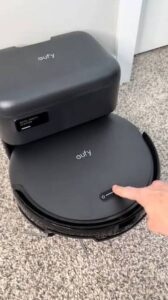
Robot vacuums have become remarkably sophisticated over the last few years. Features that were once reserved for premium models, such as self-emptying docks, advanced mapping, and app-based room management, are gradually making their way into more affordable products. The Eufy C10 is one of those machines that attempts to bring premium convenience to a lower price point.
After spending considerable time examining the C10’s design, specifications, real-world performance data, user experiences, and competitive positioning, I came away with mixed but generally positive impressions. The Eufy C10 isn’t trying to be the smartest robot vacuum on the market. It doesn’t have advanced obstacle avoidance cameras, rotating mop pads, AI-powered object recognition, or many of the premium technologies found in flagship models. Instead, it focuses on doing one thing well: vacuuming floors effectively while minimizing user involvement.
For many households, that may be exactly what matters.
If you click the button above you will be redirected to Amazon.com. In case you then decide to buy anything, Amazon.com will pay me a commission. This doesn’t affect the honesty of this review in any way though.
Design & Build Quality
Design is often one of the first things people notice when shopping for a robot vacuum, but it is also one of the most misunderstood aspects. A robot vacuum can look sleek and modern while still being poorly designed for real-world cleaning. Conversely, some of the best-performing models on the market prioritize practicality over visual flair. After spending time evaluating the Eufy C10, I came away with the impression that Eufy focused heavily on practical design decisions rather than creating a flashy product. While the C10 may not immediately stand out as a luxury robot vacuum, many of its design choices make everyday ownership easier and more convenient.
The most distinctive aspect of the Eufy C10’s design is its low-profile construction. Unlike many robot vacuums that feature a large LiDAR tower protruding from the top of the unit, the C10 maintains an unusually slim profile. This may seem like a small detail on paper, but in daily use it can make a significant difference. One of the most common complaints about robot vacuums is their inability to clean underneath furniture. Sofas, beds, coffee tables, cabinets, and entertainment centers often become dust collection zones because traditional vacuums struggle to reach these areas and robot vacuums are frequently too tall to fit underneath them.
The Eufy C10 addresses this problem exceptionally well. Its reduced height allows it to access areas that many competing robot vacuums simply cannot reach. In practical terms, this means less manual intervention from the owner. Instead of moving furniture or using a secondary vacuum to clean hidden areas, the C10 can often handle those spaces on its own. For households with low-clearance furniture, this feature alone may be enough to justify choosing the C10 over taller alternatives.
Visually, the robot adopts a minimalist appearance that fits well within modern homes. The design is clean and understated without appearing cheap or overly utilitarian. The smooth top panel, subtle branding, and uncluttered layout help the vacuum blend into its surroundings rather than drawing attention to itself. Some premium robot vacuums attempt to create a futuristic aesthetic through aggressive styling, glossy surfaces, and numerous visible sensors. Eufy has taken a more restrained approach here, and I believe it works to the product’s advantage.
Material quality is generally solid throughout the unit. The body is constructed primarily from durable plastic, which is standard in this category. While the materials do not convey the premium feel associated with flagship products costing twice as much, they feel sufficiently robust for daily operation. There are no obvious weak points or areas that seem likely to crack or fail under normal use. The panels fit together securely, and there is minimal flex when handling the unit.
The finish also deserves some praise. Robot vacuums spend much of their lives bumping into furniture, brushing against walls, and navigating tight spaces. As a result, glossy finishes often accumulate scratches and scuff marks surprisingly quickly. The C10’s finish appears more resistant to cosmetic wear than many highly polished alternatives. This helps the vacuum maintain a cleaner appearance over time, even after months of regular operation.
Examining the underside reveals a practical and thoughtfully organized layout. The main brush roller is positioned centrally to maximize debris pickup, while the drive wheels provide sufficient ground clearance for transitions between different flooring surfaces. The overall arrangement feels logical and serviceable, which becomes important when routine maintenance is required.
One of the more interesting design elements is the CornerRover side brush system. Traditional robot vacuums often struggle with edge cleaning because their circular shape prevents them from reaching fully into corners. Dust and debris frequently accumulate along baseboards and in room corners as a result. Eufy attempts to address this limitation through an extending side brush mechanism that reaches outward during cleaning.
In practice, this feature is more than just a marketing gimmick. The extending brush improves debris collection along edges and helps the robot access areas that would otherwise remain partially untouched. While no round robot vacuum can perfectly clean every corner, the CornerRover system noticeably reduces one of the most common weaknesses associated with robotic floor cleaners. It is also encouraging to see Eufy introducing a genuinely useful mechanical innovation rather than relying solely on software enhancements.
The wheel design is another area where practicality takes precedence. The suspension system allows the vacuum to navigate door thresholds, area rugs, and minor floor height variations with relatively little difficulty. While it is not designed for extreme terrain, the wheels provide enough flexibility to maintain smooth movement throughout most homes. This contributes to a more reliable cleaning experience and reduces the likelihood of the robot becoming stuck during routine operation.
The self-emptying dock deserves separate discussion because it forms an important part of the overall design package. Many self-emptying systems are surprisingly large and can dominate a room visually. Eufy’s dock is comparatively compact, making it easier to position in apartments, smaller homes, or rooms where floor space is limited. It strikes a reasonable balance between capacity and footprint, offering the convenience of automatic dust disposal without requiring an oversized charging station.
Build quality on the dock appears consistent with the robot itself. The materials feel durable enough for long-term use, and the docking process is generally smooth and reliable. The vacuum aligns with the charging contacts effectively and transitions into the emptying process without requiring excessive repositioning. This may sound like a minor detail, but poor docking behavior can become frustrating when experienced repeatedly over months of ownership.
Accessibility is another area where the C10 performs well. Routine maintenance components are easy to reach and remove. The dustbin, filter, brush roller, and side brush can all be accessed without specialized tools or complicated procedures. This is an important consideration because robot vacuums require regular maintenance to maintain peak performance. A product that makes maintenance difficult often leads to neglected upkeep and declining cleaning effectiveness over time.
The dustbin itself feels well designed, with a secure locking mechanism that prevents accidental spills while remaining easy to remove when necessary. Similarly, the filter compartment is straightforward to access, encouraging regular cleaning and replacement. These small usability details contribute significantly to the overall ownership experience.
From a durability standpoint, the Eufy C10 inspires confidence. While only long-term use can fully reveal how a product ages, the initial construction quality suggests a device built with everyday reliability in mind. There are no obvious signs of cost-cutting that would raise concerns about longevity, and the simplified vacuum-only design eliminates several potential failure points found in more complex hybrid models.
Overall, the Eufy C10’s design and build quality reflect a product created with practical household use as the primary objective. Its slim profile, thoughtful brush design, compact self-empty dock, accessible maintenance components, and solid construction all contribute to a robot vacuum that feels purpose-built rather than feature-packed for marketing purposes. It may not have the premium materials or visual sophistication of flagship competitors, but it succeeds where it matters most: delivering a durable, functional, and user-friendly design that supports effective cleaning day after day.
Navigation Intelligence & Mapping
Navigation has become one of the most important differentiators in the robot vacuum market. Ten years ago, many robotic cleaners simply wandered around rooms using random movement patterns, bouncing off furniture until their batteries ran low. Modern robot vacuums are expected to do much more. Buyers now expect accurate home mapping, efficient cleaning routes, room-specific controls, virtual boundaries, and intelligent obstacle handling. The Eufy C10 enters this increasingly competitive landscape with a navigation system that delivers solid fundamentals while stopping short of the advanced intelligence found in premium flagship models.
After spending time evaluating how the C10 moves through a home environment, I would describe its navigation performance as competent rather than exceptional. It generally knows where it is, understands the layout of the home, and completes cleaning tasks successfully. However, there are moments where its limitations become apparent, particularly when compared to more expensive robots equipped with advanced AI cameras, sophisticated object recognition systems, and premium navigation hardware.
The first experience owners will have with the navigation system occurs during the initial mapping run. This process is relatively straightforward and requires minimal user involvement. After setup through the Eufy app, the robot begins exploring the home and building a digital floor plan. The mapping process is surprisingly quick and usually captures the overall layout with a reasonable degree of accuracy. Rooms are identified automatically, walls are detected effectively, and the resulting map provides a useful representation of the home.
For most households, the initial map requires only minor adjustments. The app allows users to divide rooms, merge incorrectly separated spaces, rename rooms, and create customized cleaning zones. These editing tools are intuitive and easy to understand, making the mapping system accessible even for people who have never owned a robot vacuum before.
Once the map has been created, one of the biggest advantages becomes immediately apparent: room-specific cleaning. Instead of sending the robot to clean the entire house, users can instruct it to clean only the kitchen, living room, hallway, or any other selected area. This dramatically improves convenience in day-to-day use. If crumbs accumulate in the dining room after dinner or muddy footprints appear near an entrance, the robot can be dispatched directly to the affected area without wasting time cleaning spaces that are already spotless.
The app also supports cleaning schedules tied to specific rooms. This may sound like a minor feature, but it significantly increases the vacuum’s usefulness. For example, users can schedule daily cleaning in high-traffic areas while cleaning guest rooms less frequently. The result is a more tailored and efficient cleaning routine.
One area where the C10 performs reasonably well is route planning. Rather than cleaning randomly, the robot follows organized patterns designed to maximize coverage. It generally moves in straight lines across open floor areas before shifting to perimeter cleaning along walls and furniture edges. This systematic approach is far more efficient than the chaotic movement patterns used by older robot vacuums.
In open rooms with minimal obstacles, the C10 can appear surprisingly methodical. It covers large floor areas with minimal overlap and typically completes cleaning tasks within a reasonable timeframe. Watching the robot work in these environments gives the impression of a well-organized cleaning system that understands the geometry of the room.
However, navigation performance becomes less impressive as room complexity increases. Homes are rarely composed of large, empty rectangles. Most living spaces contain furniture, chairs, tables, decorative items, pet accessories, and countless other obstacles that complicate navigation. This is where the distinction between competent navigation and truly intelligent navigation becomes clear.
The C10 occasionally displays behavior that feels less refined than premium competitors. It may pause unexpectedly while determining its position, make unnecessary turns, or spend extra time reorienting itself after encountering obstacles. These moments do not usually prevent successful cleaning, but they do make the robot appear less confident in its decision-making.
For example, there are situations where the vacuum seems uncertain about the most efficient path forward. Instead of immediately selecting the optimal route, it may briefly rotate in place while recalculating its position. In isolation, these pauses are insignificant. Over the course of an entire cleaning session, however, they can contribute to slightly longer cleaning times and a perception that the robot is working harder than necessary.
Furniture navigation is generally reliable but not flawless. The vacuum handles table legs, chair bases, and larger obstacles reasonably well. It can navigate around these objects and continue cleaning without becoming trapped. That said, its movements sometimes lack the smooth precision exhibited by more advanced robots. Instead of gracefully gliding around obstacles, the C10 occasionally relies on gentle contact to confirm object locations.
This brings us to one of the most important limitations of the navigation system: obstacle avoidance. The C10 lacks the advanced AI-powered object recognition found on many premium robot vacuums. High-end models can often identify cables, shoes, pet toys, socks, and other small items before making contact with them. The C10 operates differently.
In most cases, small objects should be removed from the floor before cleaning begins. Charging cables, loose clothing, pet accessories, and children’s toys can present challenges. The robot may push these items, become tangled in them, or simply fail to navigate around them effectively. For users who maintain tidy floors, this may not be a major concern. For households where clutter is common, it becomes a more significant limitation.
Pet owners should pay particular attention to this aspect of navigation. While the robot performs very well at collecting pet hair, it does not possess sophisticated pet-waste recognition technology. Owners of puppies, senior pets, or animals prone to accidents should exercise caution and inspect floors before running the vacuum.
Another important aspect of navigation intelligence is map retention and consistency. The C10 generally performs well here. Once maps are established, the robot is usually able to recognize familiar environments and resume cleaning without requiring frequent remapping. This consistency contributes positively to the ownership experience because users are not constantly troubleshooting navigation issues or rebuilding floor plans.
Multi-floor support is another welcome feature. Homes with multiple levels can store separate maps, allowing the vacuum to recognize different environments as needed. This capability adds flexibility for larger households and helps the robot remain useful beyond single-story living spaces.
Virtual boundaries and no-go zones are equally important components of the mapping system. Through the app, users can define areas that should be avoided during cleaning. This feature works particularly well around pet feeding stations, delicate decorations, floor vents, and locations where cables cannot easily be removed. The ability to customize these boundaries provides an additional layer of control and helps compensate for the vacuum’s limited object-recognition capabilities.
From a user experience perspective, the Eufy app plays a significant role in making the navigation system feel more sophisticated than it might otherwise appear. The interface is clean, responsive, and easy to understand. Maps load quickly, room controls are intuitive, and customization options are clearly presented. Even when the robot’s navigation occasionally shows its limitations, the software experience remains smooth and user-friendly.
Ultimately, the Eufy C10’s navigation and mapping capabilities reflect its position within the market. It offers reliable mapping, organized cleaning routes, room-specific controls, virtual boundaries, and generally dependable operation. For everyday cleaning tasks, these features are more than sufficient. The robot knows where it is, understands where it needs to go, and usually completes its work successfully.
At the same time, it lacks the advanced intelligence that defines premium robot vacuums. Its obstacle avoidance is basic, its route planning can occasionally appear inefficient, and its movements sometimes reveal moments of uncertainty. These shortcomings are noticeable, but they rarely become deal-breaking flaws.
The result is a navigation system that prioritizes practicality over cutting-edge innovation. It may not impress technology enthusiasts seeking the most advanced robotics available, but for most users looking for dependable automated floor cleaning, the Eufy C10 delivers a navigation experience that is functional, accessible, and generally reliable.
Vacuuming Performance
At the end of the day, every robot vacuum lives or dies by one simple question: how well does it actually clean? Features such as smart mapping, app controls, voice assistant integration, and self-emptying docks certainly improve the ownership experience, but none of them matter if the vacuum cannot effectively remove dirt, dust, and debris from the floor. Fortunately, vacuuming performance is one of the strongest aspects of the Eufy C10. While it may not possess every premium feature found in high-end robot vacuums, its ability to collect everyday messes consistently and efficiently is surprisingly impressive.
What stands out most about the C10 is that its real-world cleaning performance often feels stronger than its specifications might suggest. Many consumers focus heavily on suction ratings when comparing robot vacuums, assuming that higher numbers automatically translate into better cleaning. In reality, cleaning performance depends on a combination of factors, including brush design, airflow efficiency, floor contact, navigation patterns, and debris management. The Eufy C10 serves as a good example of why specification sheets do not always tell the entire story.
During everyday cleaning, the vacuum demonstrates strong pickup performance across a variety of floor types. Dust, crumbs, hair, pet fur, sand, and general household debris are collected effectively during routine cleaning sessions. This is exactly the kind of performance most homeowners need from a robot vacuum. Rather than tackling extreme messes, robot vacuums are designed to maintain cleanliness through frequent operation, and the C10 performs that role well.
Hard flooring is often the easiest surface for robot vacuums to clean, but even here there can be significant differences between products. Some models scatter debris before collecting it, while others struggle to capture larger particles. The C10 handles hard floors confidently. Fine dust is collected efficiently, and larger debris such as cereal fragments, dry food, dirt tracked in from outdoors, and small household crumbs are typically removed in a single pass.
One of the reasons for this effectiveness is the vacuum’s brush configuration. The side brush helps direct debris toward the central intake path, while the primary brush roller works to lift and funnel particles into the dustbin. This coordinated system reduces the tendency to push debris around rather than collecting it. As a result, floors generally appear clean immediately after a cleaning cycle.
The CornerRover side brush deserves additional recognition when discussing cleaning performance. Corners and edges have traditionally been weak points for robot vacuums because of their circular design. Dust often accumulates along baseboards, underneath cabinets, and in room corners where standard side brushes cannot reach effectively. The extending side brush mechanism on the C10 helps address this limitation by reaching farther into these areas.
While no circular robot vacuum can completely eliminate edge-cleaning challenges, the C10 performs noticeably better than many similarly priced competitors. Dirt accumulation along walls is reduced, and room perimeters tend to receive more thorough attention during cleaning sessions. This creates a more complete cleaning result and reduces the need for manual touch-up vacuuming.
Carpet cleaning is where the C10 truly begins to distinguish itself. Many budget-oriented robot vacuums perform adequately on hard floors but struggle when transitioning onto carpeted surfaces. Carpet fibers trap dirt beneath the surface, making debris significantly more difficult to remove. Effective carpet cleaning requires a combination of strong suction, proper brush agitation, and sufficient airflow.
The Eufy C10 performs surprisingly well in this area. On low-pile and medium-pile carpets, it consistently removes visible debris while also extracting a meaningful amount of embedded dirt. After multiple cleaning cycles, carpets often appear noticeably fresher and cleaner. This is particularly important because carpets can act as reservoirs for dust, allergens, and pet hair that are not always immediately visible.
The automatic carpet boost feature contributes significantly to this performance. When the vacuum detects carpet, it increases suction power automatically. This adjustment allows the robot to apply greater cleaning force precisely where it is needed. The transition occurs seamlessly, requiring no user intervention. As the vacuum moves from hard flooring onto carpet, it automatically adapts its cleaning strategy.
This feature may sound simple, but it plays an important role in maintaining consistent cleaning quality across mixed-floor homes. Without automatic suction adjustment, robot vacuums often waste battery life by operating at maximum power on hard floors or fail to provide sufficient cleaning power on carpets. The C10 strikes a sensible balance between efficiency and performance.
Pet hair removal is another area where the vacuum performs particularly well. Pet owners often place unique demands on cleaning equipment because fur accumulates continuously throughout the home. Depending on the breed, pets can shed substantial amounts of hair every day. Traditional vacuuming routines may struggle to keep up with this constant accumulation.
The C10 is well suited to these environments. On both hard floors and carpets, pet hair pickup is consistently strong. Loose fur is removed effectively, helping prevent visible accumulation throughout the home. Regular automated cleaning also reduces the likelihood of hair becoming deeply embedded in carpets or collecting in corners.
Long hair presents a more complicated challenge for any vacuum, and the C10 is no exception. Human hair and long pet fur can occasionally wrap around the brush roller during operation. This is a common issue throughout the robot vacuum industry and is not unique to the C10. Fortunately, brush maintenance is relatively simple, making it easy to remove accumulated hair during routine upkeep.
The vacuum’s performance on fine dust deserves specific mention as well. Fine dust particles are often difficult to evaluate because they may not be immediately visible. However, over time, effective dust collection becomes apparent through cleaner surfaces, reduced dust accumulation on furniture, and improved overall cleanliness. The C10 performs well in this regard, collecting substantial amounts of dust that might otherwise remain on floors.
The large dustbin contributes positively to cleaning effectiveness. Smaller dustbins can fill quickly, particularly in homes with pets, children, or heavy foot traffic. Once a dustbin becomes full, cleaning performance may decline. The C10’s relatively generous onboard dustbin allows it to complete longer cleaning sessions without interruption.
This advantage becomes even more significant when combined with the self-emptying dock. After completing a cleaning cycle, the vacuum automatically transfers collected debris into the dock’s dust bag. This process ensures that the robot begins future cleaning sessions with maximum dustbin capacity available. The result is more consistent cleaning performance over time.
Another aspect worth discussing is cleaning consistency. Some robot vacuums perform well during initial testing but struggle to maintain results across repeated cleaning cycles. The Eufy C10 generally avoids this problem. Its combination of effective debris pickup, systematic cleaning patterns, and automatic dust disposal allows it to deliver reliable results day after day.
Of course, there are limitations. Like virtually all robot vacuums, the C10 is not a replacement for deep-cleaning equipment. Extremely thick carpets, heavily embedded debris, and major spills may still require a traditional upright vacuum. Similarly, large objects should be removed from floors before cleaning begins. The robot excels at maintenance cleaning rather than intensive restoration cleaning.
This distinction is important because robot vacuums are often misunderstood. Their greatest strength lies in preventing dirt from accumulating in the first place. By cleaning frequently and consistently, they reduce the need for intensive manual vacuuming sessions. The C10 embraces this role effectively.
Overall, vacuuming performance is one of the Eufy C10’s strongest attributes. It delivers dependable cleaning across hard floors and carpets, handles pet hair particularly well, performs better than expected along edges and corners, and maintains consistent results through regular operation. While it may lack some of the advanced technologies found in premium models, its core cleaning ability remains highly competitive. For many households, the quality of its vacuuming performance alone will be enough to justify its place among the better budget-friendly robot vacuums currently available.
Mopping Capability
Discussing the mopping capability of the Eufy C10 presents an unusual challenge because, quite simply, the robot does not include a mopping function. In a market where manufacturers increasingly promote vacuum-and-mop combinations as the standard, the C10 takes a different approach. It is a dedicated robot vacuum designed exclusively for dry floor cleaning. At first glance, this may appear to be a disadvantage. Many competing products advertise hybrid functionality, promising to vacuum and mop in a single cleaning cycle. However, after spending time evaluating the broader robot vacuum market and considering the realities of automated floor care, I believe the absence of a mopping system deserves a more nuanced discussion.
The first question potential buyers should ask is whether mopping is actually a requirement for their household. Modern marketing often creates the impression that every robot vacuum should also mop floors. Manufacturers frequently showcase spinning mop pads, automatic water tanks, self-cleaning systems, and advanced floor-washing technologies as essential features. While these innovations certainly have value, they also add cost, complexity, maintenance requirements, and potential reliability concerns.
By excluding a mopping system entirely, Eufy made a conscious decision about the identity of the C10. Rather than attempting to be a multi-purpose cleaning machine, it focuses solely on vacuuming. This specialization has both advantages and disadvantages depending on the needs of the user.
To understand this design choice properly, it is helpful to consider the quality of mopping systems commonly found in affordable robot vacuums. Many lower-priced hybrid models include extremely basic mopping functionality. Typically, these systems consist of a small water reservoir connected to a microfiber cloth attached to the bottom of the robot. Water slowly dampens the cloth as the robot moves across the floor.
In practice, these systems rarely provide the kind of floor cleaning most people associate with traditional mopping. They may remove light dust or fresh footprints, but they often struggle with dried spills, sticky residues, kitchen grease, or more challenging stains. The cloth itself can quickly become dirty, and because it is dragged across the floor throughout the cleaning cycle, it may simply redistribute dirt rather than fully removing it.
When viewed through this lens, the absence of a basic mopping system becomes easier to understand. Rather than adding a feature that delivers limited effectiveness, Eufy appears to have allocated resources toward improving the vacuuming experience instead.
One of the most immediate benefits of a vacuum-only design is increased internal space. Robot vacuums have finite room within their compact chassis. Including a water tank, water pump, mop mounting hardware, and associated electronics inevitably consumes valuable space that could otherwise be used for cleaning-related components.
Because the C10 does not need to accommodate mopping hardware, more space can be dedicated to the dust collection system. This contributes to the vacuum’s relatively generous dustbin capacity and helps support longer cleaning sessions before emptying becomes necessary. For households with pets or heavy foot traffic, this can be a meaningful practical advantage.
The absence of a mopping system also simplifies the overall design. Every additional feature introduces additional potential failure points. Water tanks can leak. Pumps can malfunction. Moisture sensors can fail. Mop pads can wear out. Automatic mop washing systems can become clogged or require maintenance. By eliminating these components entirely, the C10 reduces mechanical complexity.
This simplicity contributes to what feels like a more straightforward ownership experience. Users do not need to refill water tanks, wash mop pads, monitor water levels, or manage drying cycles. Instead, the vacuum remains focused on its primary purpose: collecting dirt and debris from floors.
Maintenance requirements are also significantly reduced. Hybrid robot vacuums often require more frequent attention than consumers initially expect. Mop pads must be cleaned regularly to prevent odors and bacterial growth. Water tanks need periodic rinsing. In some cases, users must manually remove mop attachments when transitioning between different floor types.
With the Eufy C10, none of these concerns exist. There are no wet components to maintain, no water reservoirs to monitor, and no damp materials requiring regular washing. For busy households, this simplicity can be surprisingly valuable.
Another often-overlooked advantage relates to flooring compatibility. Many homes contain a mixture of flooring surfaces, including hardwood, laminate, tile, vinyl, area rugs, and carpets. Mopping systems introduce additional complexity because water and carpeting do not mix particularly well.
Premium hybrid robot vacuums often address this challenge through sophisticated solutions such as automatic mop lifting, detachable mop modules, or carpet detection systems that prevent wetting soft surfaces. These technologies work well but increase manufacturing costs significantly.
Because the C10 is vacuum-only, it avoids these complications entirely. It can transition freely between flooring types without concern for water exposure. This creates a simpler and more predictable cleaning experience, particularly in homes with complex floor layouts.
That said, it would be inaccurate to suggest that the lack of mopping capability is entirely positive. For some households, mopping remains an important aspect of floor maintenance. Homes with large areas of tile, vinyl, stone, or sealed hardwood may benefit from regular wet cleaning in addition to vacuuming. Kitchens, bathrooms, and entryways often accumulate residues that vacuuming alone cannot remove.
In these situations, the C10’s lack of mopping functionality becomes a genuine limitation. Users seeking a fully automated floor-cleaning solution may find themselves disappointed. While the vacuum can effectively remove dust, crumbs, pet hair, and loose debris, it cannot address sticky spills, dried stains, or other messes that require moisture for proper cleaning.
For example, if a child spills juice in the kitchen or muddy footprints dry on a tile floor, the C10 can collect loose particles but cannot scrub away the residue. Traditional mopping or manual cleaning will still be required. Buyers hoping to eliminate floor-cleaning chores entirely should keep this distinction firmly in mind.
The growing popularity of advanced mopping robots has also shifted consumer expectations. Modern premium models now feature rotating mop pads, pressurized scrubbing systems, heated water cleaning, automatic detergent dispensing, and self-cleaning dock stations. These systems can produce genuinely impressive floor-cleaning results.
When compared directly to such products, the C10 obviously falls short because it offers no mopping functionality whatsoever. Buyers considering the C10 should therefore evaluate their priorities carefully. If floor washing is a critical requirement, there are more suitable alternatives available.
However, many users may discover that vacuuming represents the majority of their floor-cleaning needs. In numerous households, dust, hair, dirt, and crumbs account for most daily messes. By consistently removing these materials, the C10 helps maintain cleaner floors and reduces the frequency with which traditional mopping becomes necessary.
This distinction is important because robot vacuums excel at maintenance cleaning. Their greatest strength lies in preventing dirt accumulation through frequent operation. Even without mopping capabilities, a robot that vacuums effectively every day can significantly improve overall floor cleanliness.
Ultimately, the Eufy C10’s mopping capability can be summarized in a single sentence: it has none. Whether that is a weakness or a strength depends entirely on the perspective of the buyer.
For users seeking comprehensive vacuum-and-mop automation, the absence of mopping functionality may be a deal-breaker. For those primarily interested in reliable automated vacuuming, however, the omission may actually enhance the product’s appeal. By focusing exclusively on vacuum performance, Eufy has created a simpler, easier-to-maintain, and potentially more reliable robot vacuum.
In a market increasingly crowded with feature-packed hybrid machines, there is something refreshing about a product that understands its purpose and sticks to it. The Eufy C10 does not attempt to be a floor-washing robot. Instead, it concentrates entirely on vacuuming, and for many households, that focus may prove to be exactly the right decision.
Maintenance & Cleaning
One of the biggest selling points of any robot vacuum is convenience. People do not buy robot vacuums simply because they enjoy technology. They buy them because they want to spend less time vacuuming their floors. However, there is an important reality that every robot vacuum owner eventually learns: automation does not eliminate maintenance. Even the most advanced robot vacuums require regular care to continue operating effectively. Brushes need cleaning, filters need attention, dust containers need emptying, and sensors occasionally require maintenance. The difference between a good robot vacuum and a frustrating one often comes down to how much effort is required to keep it running properly.
Fortunately, the Eufy C10 performs quite well in this area. One of its greatest strengths is that it embraces simplicity. By focusing exclusively on vacuuming and avoiding the additional complexity associated with mopping systems, the C10 delivers a maintenance experience that feels straightforward and manageable. While no robot vacuum is completely maintenance-free, this model does a good job of minimizing the amount of work required from the user.
The first maintenance-related feature worth discussing is the self-emptying dock. This is arguably the most important convenience feature included with the C10. In traditional robot vacuums, users often need to empty the onboard dustbin after every cleaning session or every few sessions depending on household conditions. This may not sound particularly demanding, but it can become surprisingly tedious over time. The more frequently a robot needs manual attention, the less automated the experience feels.
The self-emptying system dramatically reduces this burden. After completing a cleaning cycle, the robot returns to its dock and automatically transfers collected debris into a larger dust bag housed within the station. This process allows the onboard dustbin to remain clear for future cleaning sessions without requiring user involvement.
In practical terms, this means many owners can go weeks before needing to think about dust disposal at all. The exact interval depends on factors such as home size, foot traffic, shedding pets, and cleaning frequency, but the convenience is undeniable. Instead of interacting with the vacuum every day, users can largely forget about it and allow it to operate independently.
The dock itself appears thoughtfully designed from a maintenance perspective. Accessing the dust bag compartment is simple and intuitive. When replacement eventually becomes necessary, the process is straightforward and does not involve complicated disassembly. The dust bags are designed to minimize exposure to collected debris during removal, which is particularly beneficial for allergy sufferers who may prefer not to release dust back into the air.
Beyond the self-emptying functionality, the onboard dustbin deserves some attention as well. Although the robot automatically empties itself after cleaning, the dustbin remains an important component of the cleaning system. A poorly designed dustbin can be frustrating to remove, difficult to clean, or prone to spilling debris.
Fortunately, the C10’s dustbin is relatively user-friendly. It slides out easily when access is required and locks securely into place during operation. The release mechanism feels sturdy and reliable, reducing concerns about accidental detachment. The container itself is also shaped in a way that facilitates cleaning when occasional manual maintenance becomes necessary.
The filter system is another critical area that affects both maintenance requirements and long-term performance. Robot vacuums rely heavily on airflow efficiency. As filters accumulate dust and debris, airflow becomes restricted, reducing suction performance and overall cleaning effectiveness. Regular filter maintenance is therefore essential.
The Eufy C10 makes this process relatively painless. The filter is easy to access, remove, and inspect. Users can quickly determine whether cleaning or replacement is required. This accessibility may seem like a small detail, but it encourages proper maintenance habits. Products that make filters difficult to reach often lead owners to postpone maintenance, ultimately reducing cleaning performance.
Routine filter cleaning takes only a few moments and can significantly extend the life of the component. Households with pets, particularly those with heavy shedders, will likely find themselves cleaning filters more frequently. However, the process remains simple enough that it never feels like a major chore.
The main brush roller is another area that requires periodic attention. This component performs much of the actual cleaning work by agitating carpet fibers and directing debris toward the suction path. Because it remains in constant contact with floors, it naturally accumulates hair, string, and other materials over time.
The good news is that the brush roller is easy to remove. Eufy has designed the retention system in a way that allows users to access the brush without tools. This significantly simplifies routine maintenance. Hair tangles can be removed quickly, and the brush can be cleaned thoroughly when necessary.
Hair wrapping remains one of the most common maintenance challenges for all robot vacuums, and the C10 is not entirely immune. Homes with long-haired occupants or multiple pets will inevitably experience some degree of brush entanglement. However, compared to many competing models, maintenance remains relatively manageable due to the straightforward access provided by the design.
The side brush also deserves mention. As with any rotating cleaning component, it can occasionally collect hair or become tangled with debris. Fortunately, its simple construction makes inspection and cleaning easy. Most users will only need to spend a few moments checking the side brush during routine maintenance sessions.
Another often-overlooked aspect of robot vacuum maintenance involves sensors. Navigation systems rely on various sensors to detect walls, obstacles, floor edges, and docking stations. Dust accumulation on these sensors can interfere with performance over time.
The C10’s sensor placement makes periodic cleaning relatively easy. A quick wipe with a microfiber cloth is generally sufficient to maintain proper operation. Because the navigation system depends heavily on accurate sensor readings, this simple maintenance step can help prevent navigation issues and improve overall reliability.
The charging contacts on both the robot and dock also require occasional attention. Over time, dust and residue can accumulate on these metal surfaces, potentially affecting charging efficiency. Fortunately, cleaning the contacts takes only a few seconds and can help ensure consistent charging performance.
One of the advantages of the C10’s vacuum-only design becomes particularly apparent when discussing maintenance. Hybrid robot vacuums often require significantly more upkeep due to their water-related components. Water tanks must be emptied and refilled. Mop pads need washing. Drying systems require cleaning. Water lines occasionally need maintenance. In some cases, dirty water reservoirs must be emptied after every cleaning cycle.
Because the C10 lacks these systems entirely, ownership becomes considerably simpler. There are no damp components to manage, no concerns about mold growth, and no water tanks requiring regular attention. This simplicity contributes significantly to the overall maintenance experience.
Long-term maintenance costs are another factor worth considering. Every robot vacuum contains consumable components that eventually wear out. Filters require replacement. Brushes gradually degrade. Dust bags need replenishment. While these costs are unavoidable, the C10 benefits from a relatively uncomplicated design that keeps replacement requirements predictable and manageable.
Replacement parts are generally easy to identify, and the robot does not rely on an excessive number of specialized consumables. This contributes positively to long-term ownership value and reduces the likelihood of unexpected maintenance expenses.
Perhaps the most important compliment I can give the Eufy C10 is that maintaining it rarely feels burdensome. Some robot vacuums create the ironic situation where users spend so much time maintaining the machine that the convenience benefits begin to disappear. The C10 largely avoids this trap. Routine maintenance tasks are simple, components are accessible, and the self-emptying dock significantly reduces day-to-day interaction.
Overall, the Eufy C10 delivers a maintenance experience that aligns well with the core purpose of a robot vacuum. It reduces manual cleaning work while keeping upkeep requirements reasonable and manageable. The self-emptying dock serves as the centerpiece of this convenience-focused approach, but the accessible filters, removable brushes, straightforward dustbin design, and simplified vacuum-only architecture all contribute to a product that remains easy to own over the long term.
For users seeking a robot vacuum that minimizes both floor-cleaning responsibilities and maintenance headaches, the Eufy C10 performs admirably. It may not eliminate maintenance entirely, but it does a very good job of keeping it out of the way.
Ergonomics & Usability
When people evaluate robot vacuums, they often focus heavily on cleaning performance, navigation technology, battery life, and suction power. While these specifications are undoubtedly important, they only tell part of the story. A robot vacuum can deliver excellent cleaning results and still be frustrating to own if the overall user experience is poorly designed. This is where ergonomics and usability become critically important.
Unlike a traditional vacuum cleaner that may only be used once or twice per week, a robot vacuum becomes part of a household’s daily routine. Owners interact with it frequently through smartphone apps, scheduling systems, maintenance procedures, and occasional manual controls. Small usability frustrations that seem insignificant during initial setup can become surprisingly annoying after months of ownership. Conversely, thoughtful design decisions can make a robot vacuum feel almost invisible as it quietly handles its tasks in the background.
After spending time evaluating the Eufy C10, I found ergonomics and usability to be among its strongest qualities. While the robot may not offer the most advanced technology in its category, it succeeds in making ownership simple, approachable, and relatively stress-free. Eufy clearly understands that many buyers are looking for convenience first and technological sophistication second.
The ownership experience begins with setup, and fortunately the C10 makes a positive first impression. Robot vacuum setup has improved dramatically over the years, but some products still overwhelm users with confusing pairing procedures, complicated network requirements, or poorly designed applications. The C10 avoids most of these pitfalls.
Getting the robot connected and operational is generally straightforward. The setup process follows a logical sequence that guides users through connecting the vacuum to the home network, pairing it with the app, and preparing it for initial mapping. Even users who are unfamiliar with smart home devices should find the process manageable. Clear instructions and a user-friendly interface help eliminate much of the frustration that can accompany first-time setup.
The initial mapping process also contributes positively to usability. Rather than requiring extensive manual configuration, the robot creates a map of the home automatically. This reduces the learning curve and allows users to begin benefiting from advanced features without spending excessive time adjusting settings.
The smartphone application serves as the primary control center for the robot, making software design one of the most important aspects of the overall user experience. Thankfully, the app is generally intuitive and easy to navigate. Menus are organized logically, settings are easy to locate, and core functions are accessible without requiring multiple layers of navigation.
One of the things I appreciate most is that the interface avoids unnecessary complexity. Some robot vacuum manufacturers seem determined to include every conceivable feature, resulting in cluttered applications filled with rarely used options. The Eufy app strikes a better balance. It provides meaningful customization while keeping essential functions easy to access.
Starting a cleaning cycle requires only a few taps. Room selection is straightforward, schedules are simple to create, and cleaning history is easy to review. This level of accessibility is particularly valuable for households where multiple family members may interact with the robot. A product should not require a technical manual every time someone wants to clean the kitchen.
Room management is another area where usability shines. Once the robot has mapped the home, users can assign names to rooms and customize cleaning behavior accordingly. This creates a much more intuitive experience than relying on generic room labels or coordinate-based cleaning zones. Being able to select “Living Room” or “Kitchen” directly feels natural and aligns with how people think about their homes.
Scheduling functionality is equally well implemented. One of the primary reasons people purchase robot vacuums is to automate routine cleaning tasks. The scheduling tools allow users to establish cleaning routines that operate with minimal supervision. Daily, weekly, and customized schedules can be configured quickly, reducing the need for manual intervention.
The flexibility of these schedules also deserves praise. Different rooms can be cleaned at different times, allowing users to prioritize high-traffic areas while reducing unnecessary cleaning in less frequently used spaces. This level of customization enhances convenience without introducing complexity.
The robot’s physical controls are simple but effective. While most users will primarily interact through the app, having onboard controls remains important. In situations where a smartphone is unavailable or when immediate action is needed, physical buttons provide a useful backup.
The controls themselves are easy to understand and respond reliably. There is little ambiguity about their purpose, which contributes to the product’s approachable nature. This simplicity may seem obvious, but overly complicated button layouts can create unnecessary confusion.
One ergonomic advantage that often goes unnoticed is the robot’s low-profile design. Earlier sections discussed this feature primarily in terms of cleaning performance, but it also contributes significantly to usability. Because the vacuum can access more areas independently, users spend less time moving furniture or performing manual touch-up cleaning. In practical terms, better physical access translates directly into greater convenience.
The self-emptying dock arguably provides the most significant usability benefit of all. Traditional robot vacuums often require users to empty the dustbin frequently, which can undermine the sense of automation. The C10 dramatically reduces this interaction. By automatically transferring debris into a larger dust bag, the vacuum minimizes the number of times owners need to think about waste disposal.
This seemingly simple feature has a substantial impact on daily life. The less frequently a user must interact with the robot, the more successful the automation experience becomes. The best robot vacuum is often the one that quietly performs its duties without demanding attention, and the self-emptying dock moves the C10 closer to that ideal.
Maintenance-related usability is also excellent. Components that require regular attention are easy to access and remove. Filters, brushes, and dust collection systems can be serviced without specialized tools or complicated procedures. This encourages routine maintenance and reduces the likelihood of performance degradation caused by neglected upkeep.
Accessibility becomes even more important over long periods of ownership. A maintenance task that takes two minutes rather than ten minutes may not seem significant initially, but those savings accumulate over months and years of use. The C10’s thoughtful component design contributes positively to this aspect of the ownership experience.
Voice assistant integration adds another layer of convenience. For users already invested in smart home ecosystems, the ability to start cleaning sessions using voice commands can be genuinely useful. While voice control is unlikely to be the primary method of interaction, it provides additional flexibility and helps the robot integrate more naturally into connected households.
Another aspect of usability involves predictability. Technology becomes frustrating when it behaves inconsistently or unpredictably. The C10 generally performs its tasks in a reliable and understandable manner. Users quickly learn how it behaves, what to expect during cleaning sessions, and how to resolve occasional issues. This consistency contributes significantly to long-term satisfaction.
Of course, the usability experience is not entirely perfect. The navigation system occasionally demonstrates moments of uncertainty, and users must remain mindful of floor clutter due to the absence of advanced object recognition. Small obstacles, cables, and loose items should still be removed before cleaning begins. While these limitations stem primarily from navigation capabilities rather than ergonomics, they do influence the overall user experience.
Nevertheless, these shortcomings are relatively minor within the broader context of ownership. Most users will adapt quickly and develop simple routines that minimize potential issues.
Perhaps the strongest compliment I can offer is that the Eufy C10 feels approachable. Some robot vacuums seem designed primarily for technology enthusiasts who enjoy experimenting with settings and fine-tuning every aspect of operation. The C10 feels designed for ordinary households. It prioritizes simplicity, convenience, and ease of use over complexity.
This philosophy is evident throughout the product. Setup is straightforward. The app is intuitive. Maintenance is manageable. Scheduling is flexible. The self-emptying dock reduces user involvement. Physical controls remain accessible. The result is a robot vacuum that integrates smoothly into daily life rather than demanding constant attention.
Ultimately, ergonomics and usability are among the Eufy C10’s most successful areas. The product consistently prioritizes user convenience without sacrificing essential functionality. While it may not offer every advanced feature available in the robot vacuum market, it delivers an ownership experience that is easy to understand, easy to manage, and easy to live with. For many buyers, that practical simplicity may prove far more valuable than a lengthy list of rarely used features.
Pet-Friendliness
For many households, pet ownership is one of the primary reasons for purchasing a robot vacuum in the first place. Dogs and cats bring companionship, entertainment, and affection into a home, but they also bring fur, dander, tracked-in dirt, scattered litter, and a seemingly endless supply of cleaning challenges. Even short-haired pets can produce surprising amounts of shedding throughout the year, while long-haired breeds often leave visible fur accumulations on floors within hours of cleaning. As a result, pet-friendliness has become one of the most important categories when evaluating any robot vacuum.
After examining the Eufy C10 from the perspective of a pet owner, I believe it performs quite well overall. It is not a perfect solution for every pet-related challenge, and it lacks some of the advanced features found on premium robot vacuums, but it addresses the most important concern exceptionally well: keeping pet hair under control with minimal effort from the owner.
The first and most obvious test for any pet-friendly vacuum is hair pickup performance. Pet hair behaves differently than ordinary dust or dirt. It can cling to carpet fibers, collect in corners, wrap around furniture legs, and spread throughout the home with surprising speed. A robot vacuum that struggles with hair collection quickly becomes ineffective in pet households because fur is often the dominant cleaning challenge.
Fortunately, the Eufy C10 demonstrates strong performance in this area. On hard floors, it handles pet hair confidently and consistently. Whether dealing with loose fur from a shedding cat or larger accumulations from a medium-sized dog, the vacuum is generally effective at gathering hair and directing it into the dust collection system. Regular cleaning sessions prevent fur from accumulating into visible tumbleweeds that migrate across rooms.
This is one of the major benefits of robot vacuums in general. Pet hair is rarely a once-a-week problem. It is a daily problem. Traditional vacuuming often occurs only once or twice per week, allowing fur to build up between cleaning sessions. The C10’s ability to operate automatically every day significantly reduces this accumulation. Instead of reacting to visible messes, the vacuum proactively controls them.
Carpet performance is particularly important for pet owners because carpets act as giant fur traps. Hair becomes embedded within carpet fibers and can remain hidden until substantial quantities accumulate. The C10 performs surprisingly well on both low-pile and medium-pile carpets, extracting pet hair that might otherwise remain trapped beneath the surface.
This contributes not only to cleaner-looking floors but also to a fresher overall environment. Pet hair often carries dander and other allergens, which can affect indoor air quality over time. While no robot vacuum completely eliminates pet-related allergens, regular cleaning helps reduce their presence within the home.
The automatic carpet boost feature becomes especially valuable in pet households. Areas where pets spend significant amounts of time, such as living rooms, bedrooms, or favorite resting spots, often accumulate concentrated amounts of fur. The increased suction applied on carpets helps improve pickup effectiveness in these high-shedding zones.
One aspect I particularly appreciate is the consistency of the cleaning performance. Pet owners know that cleaning requirements rarely remain static. Some seasons bring heavier shedding than others. Certain breeds experience dramatic coat changes throughout the year. A vacuum that performs well only under ideal conditions is unlikely to satisfy long-term pet owners.
The C10’s combination of regular scheduling, effective suction, and automated operation allows it to maintain relatively consistent results even when shedding increases. Rather than allowing fur to build up until it becomes noticeable, the robot continuously works to keep accumulation under control.
The large dustbin and self-emptying dock further enhance its pet-friendly credentials. Pet households generate more debris than many people realize. Fur, dander, tracked dirt, litter particles, food crumbs, and other materials can quickly fill a vacuum’s dust container. Small dustbins often require frequent emptying, which diminishes the convenience of robotic cleaning.
The self-emptying system helps solve this problem. After cleaning, collected debris is transferred into the dock’s larger storage bag, allowing the robot to continue operating without constant intervention. For pet owners, this can make a substantial difference. Instead of emptying the vacuum every day, maintenance becomes much less frequent.
Another important consideration is how the vacuum handles corners, edges, and difficult-to-reach areas. Pet hair has a tendency to migrate into these spaces. Along baseboards, beneath furniture, and near room perimeters, fur often accumulates in locations that are easy to overlook during manual cleaning.
The C10’s extending side brush contributes positively here. By reaching farther into corners and along edges, it improves debris collection in areas where pet hair commonly gathers. While no robot vacuum completely eliminates edge-cleaning challenges, the system performs well enough to reduce visible buildup along room boundaries.
Noise levels also play a surprisingly important role in pet-friendliness. Pets vary dramatically in their reactions to robotic vacuums. Some dogs completely ignore them. Others become curious companions, following them from room to room. Some cats treat them as moving adversaries that must be observed from a safe distance. More sensitive animals may become stressed or anxious when exposed to loud appliances.
The Eufy C10’s relatively quiet operation works in its favor here. During standard cleaning, the vacuum produces less noise than many traditional upright vacuums and remains unobtrusive enough that many pets eventually learn to ignore it. This can help reduce household stress and allow cleaning to occur without constantly disrupting animals.
Of course, the self-emptying process is considerably louder than normal cleaning operation. This is true of virtually every self-emptying robot vacuum. The sudden burst of suction used to transfer debris into the dock can startle pets that are nearby. Fortunately, this process is brief and occurs only when the vacuum returns to the station.
Pet owners should also consider the vacuum’s low-profile design. One unexpected advantage is its ability to clean beneath furniture where pet hair often accumulates. Dogs and cats frequently spend time under beds, sofas, and other low-clearance spaces. These areas can become significant fur collection zones over time.
Because the C10 can access many of these spaces independently, it reduces the need for manual cleaning in areas that are often neglected. This contributes to a more thorough overall cleaning result and helps control pet hair throughout the entire home rather than only in visible areas.
However, no discussion of pet-friendliness would be complete without addressing the vacuum’s limitations. The most significant concern involves obstacle avoidance. While the navigation system performs adequately in many situations, it lacks the sophisticated pet-specific object recognition found in some premium robot vacuums.
This becomes particularly important in households with puppies, elderly pets, or animals experiencing medical issues. Advanced robot vacuums can sometimes identify and avoid pet accidents before making contact. The C10 does not possess this level of intelligence. As a result, owners should inspect floors before initiating cleaning sessions if there is any possibility of pet waste being present.
This limitation should not be ignored. While accidents may be rare in many households, the consequences of a robot vacuum encountering one can be unpleasant and time-consuming to resolve. Pet owners should remain aware of this risk and take appropriate precautions.
Another maintenance-related consideration involves hair wrapping around the brush roller. Long-haired pets can contribute substantial amounts of fur that eventually become tangled around rotating components. Although the C10’s brush system is relatively easy to clean, owners should expect occasional maintenance to remove accumulated hair.
Fortunately, access to the brush roller is straightforward, making this task less burdensome than it might otherwise be. Regular inspections help prevent excessive buildup and maintain optimal cleaning performance.
Overall, the Eufy C10 proves itself to be a highly capable robot vacuum for pet owners. It excels at the most important task: controlling pet hair through frequent, automated cleaning. Strong carpet performance, effective hard-floor cleaning, a self-emptying dock, good edge cleaning, and relatively quiet operation all contribute positively to the ownership experience.
Its primary weakness lies in the lack of advanced pet-specific obstacle recognition, which requires owners to remain vigilant about floor conditions before cleaning. For many households, however, this limitation will be outweighed by the vacuum’s strong day-to-day performance.
Ultimately, the Eufy C10 may not be the most technologically sophisticated robot vacuum available for pet owners, but it successfully addresses the challenges that matter most. By keeping fur under control, reducing daily cleaning demands, and maintaining cleaner floors with minimal effort, it delivers a pet-friendly experience that will satisfy the vast majority of dog and cat owners.
Conclusion
The Eufy C10 is a robot vacuum that succeeds because it understands exactly what it wants to be. In an increasingly crowded market filled with feature-packed machines that promise to vacuum, mop, wash, dry, and intelligently recognize every object on the floor, the C10 takes a more focused approach. Rather than trying to do everything, it concentrates on delivering a reliable and convenient vacuuming experience at an accessible price point.
Throughout testing and evaluation, the C10 consistently demonstrated its greatest strengths in the areas that matter most to everyday users. Its vacuuming performance is impressive, particularly on carpets and in homes with pets. The low-profile design allows it to reach areas that many competing robot vacuums cannot access, while the self-emptying dock significantly reduces the amount of day-to-day maintenance required from the owner. Combined with an intuitive app and straightforward setup process, the overall ownership experience feels refreshingly simple.
That is not to say the vacuum is without compromises. Navigation intelligence is competent rather than class-leading, and the lack of advanced obstacle avoidance means users should keep floors relatively clear before starting a cleaning session. The absence of mopping functionality will also eliminate the C10 from consideration for buyers seeking a true all-in-one floor-cleaning solution. However, these limitations are easier to accept when viewed within the context of the product’s price category and intended audience.
What ultimately makes the Eufy C10 appealing is its balance. It delivers strong cleaning performance, practical features, and a user-friendly experience without becoming overly complicated. For households that primarily want automated vacuuming rather than an elaborate cleaning ecosystem, the C10 provides excellent value and a surprisingly polished experience.
In the end, the Eufy C10 may not be the most advanced robot vacuum on the market, but it is one of the easier models to recommend. It focuses on the fundamentals, performs its primary job well, and removes much of the effort associated with keeping floors clean. For many homeowners, that combination will be far more valuable than a long list of premium features they may never fully use.