
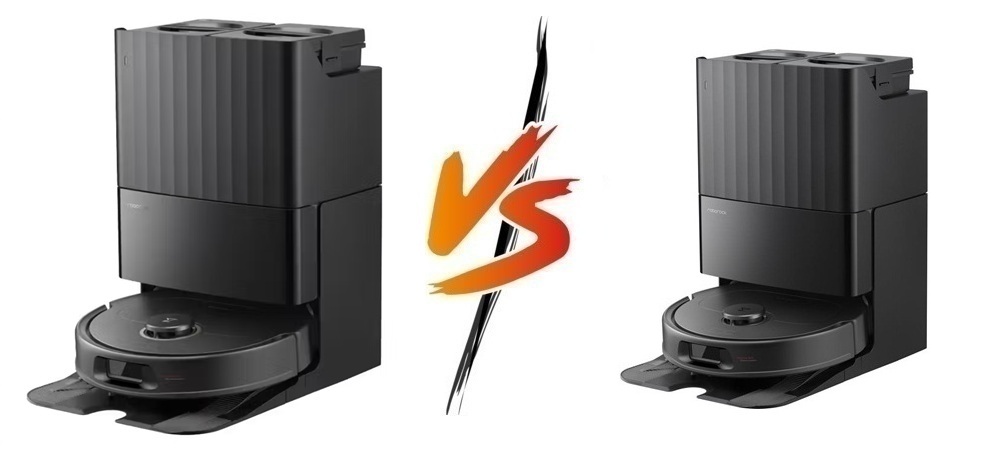
Roborock has become one of the most influential names in the robot vacuum market. While many manufacturers focus on adding flashy features, Roborock has consistently refined navigation, cleaning performance, automation, and reliability. Two of its most interesting mid-range offerings are the Roborock Qrevo S Pro and the Roborock QV 35A.
At first glance, these robots appear remarkably similar. Both feature self-emptying docks, spinning mop systems, LiDAR navigation, obstacle avoidance, app control, and automatic maintenance features. However, once you start examining the details, meaningful differences emerge that can significantly affect daily ownership.
The QV 35A is essentially designed as a value-oriented all-rounder, while the Qrevo S Pro pushes closer toward premium territory by offering substantially higher suction power, improved dock functionality, and a more advanced maintenance system.
Roborock Qrevo S Pro vs Roborock QV 35A Comparison Chart
If you click the links below, under the product images, you will be redirected to Amazon.com. In case you then decide to buy anything, Amazon.com will pay me a commission. This doesn’t affect the honesty of this review in any way though.
| Specification | Roborock Qrevo S Pro | Roborock QV 35A |
|---|---|---|
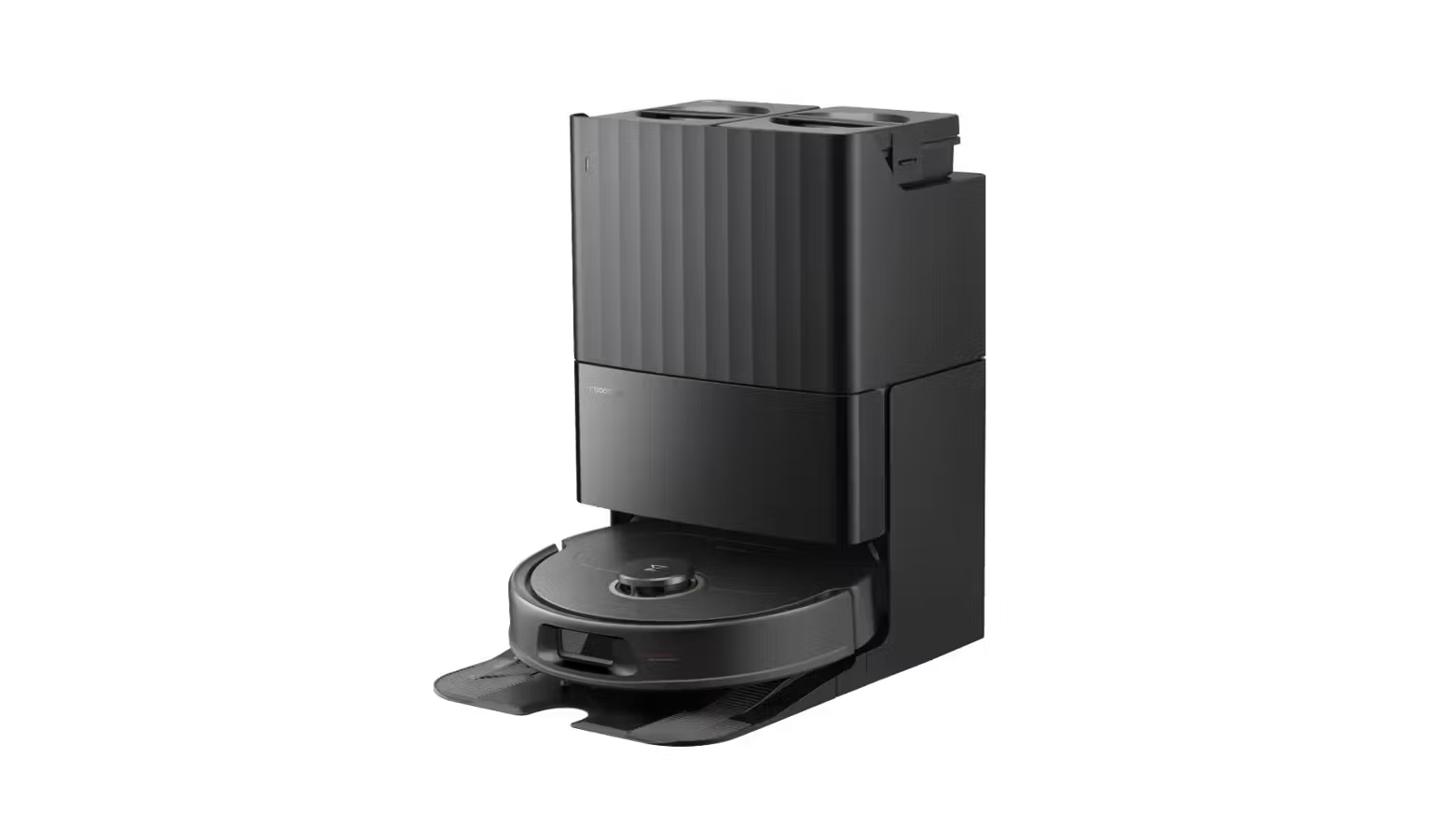 | 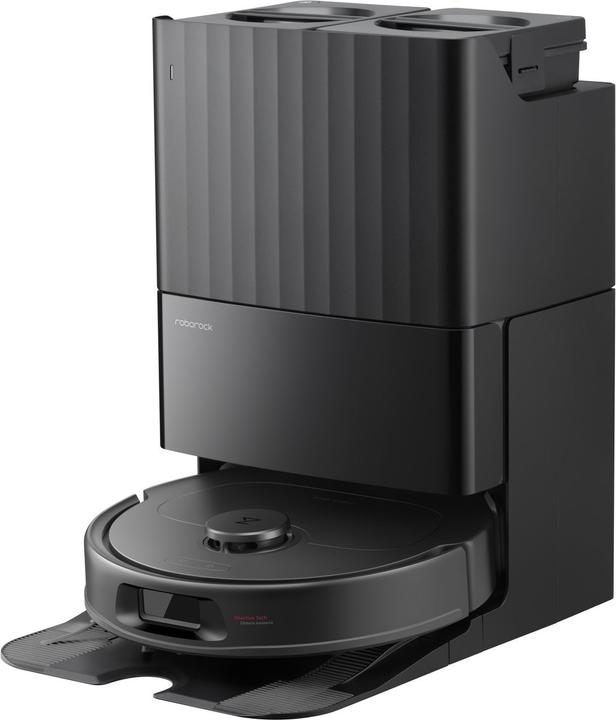 | |
| Check the best price on Amazon | Check the best price on Amazon | |
| Product Type | Robot Vacuum & Mop Combo | Robot Vacuum & Mop Combo |
| Navigation System | PreciSense LiDAR Navigation | PreciSense LiDAR Navigation |
| Obstacle Avoidance | Reactive Tech Obstacle Avoidance | Reactive Tech Obstacle Avoidance |
| Suction Power | 18,500 Pa HyperForce | 8,000 Pa HyperForce |
| Main Brush | Anti-Tangle Main Brush | All-Rubber Main Brush |
| Side Brush | Anti-Tangle Side Brush | Anti-Tangle Side Brush |
| Mopping System | Dual Spinning Mop Pads | Dual Spinning Mop Pads |
| Mop Lift | Yes | Yes |
| Hot Water Mop Washing | Yes | No |
| Mop Drying | Warm Air Drying | Hot Air Drying |
| Water Flow Adjustment | 30 Levels | Adjustable Water Flow |
| Auto Mop Washing | Yes | Yes |
| Auto Mop Drying | Yes | Yes |
| Auto Water Tank Refilling | Yes | Yes |
| Auto Dustbin Emptying | Yes | Yes |
| Dock Type | Multifunction Dock | Multifunction Dock |
| Dust Bag in Dock | Yes | Yes |
| Clean Water Tank | Yes | Yes |
| Dirty Water Tank | Yes | Yes |
| Removable Dock Base | Yes | Yes |
| Carpet Detection | Yes | Yes |
| Automatic Carpet Boost | Yes | Yes |
| Multi-Floor Mapping | Yes | Yes |
| Room Recognition | Yes | Yes |
| No-Go Zones | Yes | Yes |
| Virtual Walls | Yes | Yes |
| Selective Room Cleaning | Yes | Yes |
| Scheduled Cleaning | Yes | Yes |
| Voice Assistant Support | Yes | Yes |
| Smartphone App Control | Roborock App | Roborock App |
| Fast Charging | Yes | Yes |
| Off-Peak Charging | Yes | Yes |
| Pet Hair Management | Enhanced Anti-Tangle System | Good Anti-Tangle System |
| Recommended Floor Types | Hard Floors, Low- to Medium-Pile Carpet, Rugs | Hard Floors, Low-Pile Carpet, Rugs |
| Best Suited For | Pet Owners, Mixed Flooring, Larger Homes, Users Seeking Maximum Automation | Budget-Conscious Buyers, Hard-Floor Homes, Everyday Maintenance Cleaning |
| Overall Positioning | Upper Mid-Range / Near-Premium | Mid-Range Value Model |
| My individual reviews | Roborock Qrevo S Pro review | Roborock QV 35A review |
Key Differences at a Glance
| Category | Winner | Why |
|---|---|---|
| Suction Power | Qrevo S Pro | 18,500 Pa vs 8,000 Pa |
| Carpet Cleaning | Qrevo S Pro | Better deep-cleaning performance |
| Pet Hair Handling | Qrevo S Pro | Stronger suction and improved anti-tangle design |
| Mop Maintenance | Qrevo S Pro | Hot-water mop washing system |
| Long-Term Maintenance | Qrevo S Pro | More advanced self-maintenance features |
| Value for Money | QV 35A | Offers many premium features at a lower price |
| Hard Floor Cleaning | Tie | Both perform extremely well |
| Navigation & Mapping | Tie (slight edge to S Pro) | Similar LiDAR-based navigation systems |
| App Experience | Tie | Same Roborock software ecosystem |
| Automation | Qrevo S Pro | More advanced dock functionality |
Final Specification Verdict
| User Type | Recommended Model |
|---|---|
| Mostly Hard Floors | Roborock QV 35A |
| Apartment Owners | Roborock QV 35A |
| Budget-Focused Buyers | Roborock QV 35A |
| Pet Owners | Roborock Qrevo S Pro |
| Homes with Carpets | Roborock Qrevo S Pro |
| Large Homes | Roborock Qrevo S Pro |
| Maximum Automation | Roborock Qrevo S Pro |
| Best Overall Performance | Roborock Qrevo S Pro |
The Roborock QV 35A delivers much of the Roborock experience at a more affordable price, while the Roborock Qrevo S Pro offers a stronger feature set, substantially higher suction power, superior mop maintenance, and a more premium ownership experience overall.
Design & Build Quality
Design is often one of the first things buyers notice when comparing robot vacuum cleaners, but build quality is what ultimately determines how the product feels after months or even years of ownership. A robot vacuum may have impressive specifications on paper, but if it feels cheaply assembled, struggles to withstand daily use, or requires constant maintenance due to poor design decisions, the overall experience quickly deteriorates.
When comparing the Roborock Qrevo S Pro and Roborock QV 35A, it becomes clear that both robots are built upon a similar design philosophy. Roborock has developed a recognizable visual identity over the years, emphasizing clean lines, practical layouts, and functional engineering rather than flashy styling. Both models continue that approach, but there are important differences in refinement, materials, and overall execution that become more apparent the longer you live with them.
Roborock Qrevo S Pro
The Qrevo S Pro immediately presents itself as a premium product. Its overall appearance is modern and understated, making it easy to integrate into virtually any home environment. Whether placed in a minimalist apartment, a contemporary family home, or a traditional living space, the robot and dock blend into their surroundings without attracting unnecessary attention.
The robot itself maintains the familiar circular profile that has become standard among premium robot vacuums. While this shape may seem unremarkable at first glance, it remains one of the most practical designs for navigating around furniture, walls, and household obstacles. The top-mounted LiDAR turret is neatly integrated into the upper housing, avoiding the awkward appearance seen on some competing models.
One of the first things you notice when handling the Qrevo S Pro is the rigidity of the chassis. The body feels solid with very little flex when pressure is applied. The plastic panels fit together tightly, and there are no creaks or rattles that might suggest cost-cutting measures. The top cover opens smoothly and feels durable enough to withstand years of repeated access for maintenance and cleaning.
The bumper assembly deserves particular praise. Robot vacuums inevitably make contact with furniture, chair legs, and walls during operation. The Qrevo S Pro’s front bumper feels substantial and responsive, absorbing minor impacts without transmitting excessive force through the body of the machine. This contributes to both durability and quieter operation during cleaning cycles.
The wheel design also reflects Roborock’s maturity as a manufacturer. The suspension system provides enough travel to help the robot transition smoothly between different floor surfaces. Door thresholds, area rugs, and minor floor height variations are handled confidently, reducing the chances of the robot becoming stuck. The wheels themselves feel robust and are designed to maintain traction even when operating on smooth flooring surfaces.
A particularly notable improvement is the anti-tangle brush design. Pet hair and long human hair have traditionally been among the biggest challenges for robot vacuums. Over time, hair can wrap around brushes, reducing cleaning performance and increasing maintenance requirements. The Qrevo S Pro’s brush system appears specifically engineered to minimize these issues, helping maintain performance while reducing the amount of manual cleaning required.
Dock Design and Construction
The dock is where the Qrevo S Pro truly distinguishes itself.
Modern robot vacuums are no longer standalone cleaning devices. Instead, they function as part of a larger cleaning ecosystem centered around the docking station. As a result, the dock’s design has become nearly as important as the robot itself.
The Qrevo S Pro’s dock feels substantial and thoughtfully engineered. Rather than appearing as a simple charging station, it resembles a dedicated maintenance hub. Every component appears designed with accessibility and convenience in mind.
The clean-water and dirty-water tanks are easy to remove and reinstall. Their handles feel sturdy, and the tanks themselves are constructed from durable materials that inspire confidence during regular handling. This might seem like a minor detail, but poorly designed water tanks can quickly become a source of frustration during long-term ownership.
The removable dock base is another excellent design choice. Mop washing systems naturally accumulate dirt and residue over time. By allowing users to remove and clean the base tray more easily, Roborock simplifies one of the most overlooked aspects of robot vacuum ownership.
The overall dock footprint is admittedly larger than a traditional charging station, but the additional size serves a purpose. Every inch contributes to automation features that reduce daily maintenance and improve convenience.
Roborock QV 35A
The QV 35A shares much of its visual DNA with the Qrevo S Pro, which is not surprising considering their close relationship within the Roborock lineup. At a glance, many users would struggle to distinguish between the two robots without examining them side by side.
This similarity is largely positive. The QV 35A benefits from the same mature design language and practical engineering that have made Roborock products popular among consumers.
The robot itself feels well-built and durable. The chassis is solid, panel gaps are consistent, and the overall construction feels significantly better than many budget-oriented competitors. Even though the QV 35A is positioned as a more affordable model, it avoids feeling like a cheaper version of a premium product.
The robot’s controls are straightforward and intuitive. Physical buttons are positioned logically, and the removable dustbin is easy to access when necessary. Everyday interactions feel smooth and well considered.
The wheel system performs similarly to the Qrevo S Pro in most situations, providing reliable movement across mixed floor types. The bumper assembly is responsive and durable, helping protect both the robot and household furniture during operation.
Dock Design and Practicality
The QV 35A’s dock is one of the strongest aspects of the product. Compared to many competitors in the same price category, it offers an impressive degree of automation and functionality.
The dock supports automatic emptying, mop washing, water refilling, and drying functions. This significantly reduces the amount of day-to-day intervention required from the user.
However, when compared directly to the Qrevo S Pro, some compromises become apparent. The dock feels slightly less refined overall. While construction quality remains very good, it lacks some of the premium touches that make the S Pro’s dock feel particularly sophisticated.
The materials used throughout the dock remain durable, but the overall impression is more functional than luxurious. There is absolutely nothing wrong with this approach, especially considering the lower price point, but side-by-side comparisons reveal where Roborock allocated additional resources to the S Pro.
Long-Term Durability Considerations
When evaluating robot vacuums, long-term durability is often more important than immediate appearance.
Both models appear well positioned to withstand years of regular use. Roborock has established a strong reputation for reliability, and neither machine exhibits obvious weaknesses in construction.
The QV 35A offers impressive durability for its class and should satisfy most homeowners without issue. Its design avoids unnecessary complexity while maintaining a high level of functionality.
The Qrevo S Pro, however, feels slightly more polished in nearly every area. The improved dock design, enhanced anti-tangle components, sturdier overall feel, and greater attention to maintenance accessibility create a stronger impression of long-term quality.
Neither robot feels fragile, but the Qrevo S Pro consistently gives the impression that more engineering effort was invested into refining every aspect of the ownership experience.
Design & Build Quality Verdict
Both the Roborock Qrevo S Pro and Roborock QV 35A are exceptionally well-designed robot vacuums that demonstrate the company’s experience in this category. Neither model suffers from obvious construction flaws, poor material choices, or questionable engineering decisions.
The QV 35A delivers excellent build quality and represents one of the better-designed robots available in its price range. It feels durable, practical, and thoughtfully engineered.
The Qrevo S Pro, however, takes the same foundation and refines it further. The superior dock design, enhanced maintenance features, stronger anti-tangle systems, and slightly more premium construction elevate it above its sibling. While the difference is not dramatic, it becomes increasingly noticeable the longer you examine and use both machines.
For buyers who place a high value on refinement, durability, and overall ownership experience, the Qrevo S Pro earns a narrow but well-deserved victory in the Design & Build Quality category.
Navigation Intelligence & Mapping
If suction power is the muscle of a robot vacuum, navigation is the brain. Even the most powerful robot vacuum in the world becomes frustrating if it constantly gets stuck under furniture, misses entire sections of a room, or wastes time cleaning the same area repeatedly. Modern robot vacuums have evolved far beyond the random bump-and-go machines that dominated the market a decade ago. Today’s best models create detailed maps, intelligently plan cleaning routes, recognize obstacles, and adapt to changing environments.
When comparing the Roborock Qrevo S Pro and Roborock QV 35A, it quickly becomes apparent that navigation is one of the strongest areas for both machines. Roborock has spent years refining its navigation technology, and both robots benefit from that experience. Neither feels like an entry-level robot relying on basic sensors. Instead, both operate with the confidence and intelligence expected from premium robotic cleaners.
That said, there are subtle differences that become noticeable over time, particularly in challenging environments with pets, children, furniture clutter, and complex room layouts.
Why Navigation Matters More Than Most Buyers Realize
Many shoppers focus heavily on suction specifications because they are easy to compare. Navigation, however, often has a greater impact on everyday satisfaction.
A robot that cleans 95% of the floor but never gets stuck is usually more useful than a robot with stronger suction that constantly requires human intervention.
Good navigation affects nearly every aspect of ownership:
- Cleaning coverage
- Cleaning speed
- Battery efficiency
- Obstacle avoidance
- Multi-room performance
- Carpet recognition
- Mopping effectiveness
- User convenience
The goal is simple: the robot should clean your home while requiring as little attention as possible.
Both the Qrevo S Pro and QV 35A largely achieve this goal.
Initial Mapping Performance
The first task any robot vacuum must perform is understanding the layout of your home.
Both models use advanced LiDAR-based navigation systems. Unlike robots that depend entirely on cameras, LiDAR creates highly accurate distance measurements by scanning the environment with laser pulses. This technology has become the gold standard for robotic vacuum navigation because it works consistently regardless of lighting conditions.
During the initial mapping process, both robots move through the home surprisingly quickly. They do not attempt to perform a deep cleaning during the first mapping run. Instead, they focus on understanding room dimensions, wall locations, furniture placement, and navigational pathways.
The resulting maps are detailed and easy to understand. Rooms are generally identified correctly, floor plans appear accurate, and furniture placement is represented with impressive precision.
In most homes, both robots can generate a usable map within a relatively short period. Once complete, the maps can be customized within the Roborock application to create room divisions, cleaning schedules, no-go zones, and virtual barriers.
For most users, there is virtually no meaningful difference between the two robots during the initial mapping phase. Both perform exceptionally well.
Route Planning and Cleaning Logic
Creating a map is only the beginning. The real challenge lies in using that information effectively.
This is where Roborock’s navigation software continues to impress.
Both robots follow logical, methodical cleaning patterns. Rather than wandering randomly, they divide rooms into manageable sections and clean them systematically. The robots typically begin by tracing perimeter edges before transitioning into organized back-and-forth cleaning passes.
Watching either robot clean reveals a level of intentionality that was absent from earlier generations of robot vacuums. They rarely appear confused or indecisive.
One of the biggest advantages of this structured approach is efficiency. By minimizing overlap and avoiding unnecessary travel, both robots can clean larger areas while conserving battery life.
The QV 35A performs particularly well in open spaces. Living rooms, kitchens, hallways, and dining areas are covered efficiently with minimal wasted movement.
The Qrevo S Pro follows a very similar strategy but occasionally feels slightly more refined. It tends to recover from interruptions faster and appears somewhat more confident when transitioning between complex areas. These differences are subtle and unlikely to be noticed by casual users, but they become apparent during extended observation.
Obstacle Detection and Avoidance
Obstacle avoidance has become increasingly important as robot vacuums have evolved.
Modern households contain countless objects that can challenge robotic cleaners:
- Shoes
- Pet bowls
- Charging cables
- Children’s toys
- Furniture legs
- Clothing
- Bags
- Floor decorations
Both the QV 35A and Qrevo S Pro feature obstacle avoidance systems designed to reduce collisions and prevent entanglements.
In practice, both robots perform well with common household obstacles. They typically identify furniture legs accurately, navigate around larger objects smoothly, and avoid becoming trapped in obvious problem areas.
Table and chair legs present little difficulty. Both robots weave around them with surprising precision. Dining areas, which often challenge less sophisticated machines, are handled effectively.
The greatest challenge for any robot vacuum remains small, unpredictable objects.
Loose charging cables, pet toys, socks, and similar items can still create problems. Neither robot is completely immune to these situations. While both perform better than many competitors, users should still maintain reasonable floor preparation habits.
The Qrevo S Pro demonstrates a slight advantage in particularly cluttered environments. It appears more decisive when navigating around complex obstacle arrangements and may require fewer recovery maneuvers.
However, the difference is evolutionary rather than revolutionary.
Multi-Room and Multi-Floor Intelligence
Many modern homes contain multiple rooms and multiple levels. A robot vacuum that performs well in a single room but struggles with larger floor plans quickly becomes limiting.
Fortunately, both models handle multi-room environments extremely well.
After mapping, each robot can recognize individual rooms and apply different cleaning settings to each area. For example, users can assign stronger suction levels to carpeted bedrooms while using quieter settings in hard-floor hallways.
The robots can also clean rooms in a specified sequence, which is particularly useful when coordinating vacuuming and mopping tasks.
Multi-floor support is another major advantage. Homes with multiple levels can store separate maps for each floor, allowing the robot to recognize its surroundings without requiring a complete remapping process every time it is moved.
The transition between saved maps feels seamless and contributes significantly to the overall user experience.
Furniture Navigation
Furniture navigation is where robotic intelligence becomes particularly visible.
Large furniture items such as sofas, beds, cabinets, and entertainment centers are generally handled flawlessly by both robots. The maps accurately reflect these structures, and cleaning routes are adjusted accordingly.
More complex situations arise when dealing with:
- Dining chairs
- Coffee tables
- Recliners
- Bar stools
- Decorative stands
Both robots demonstrate impressive spatial awareness when navigating these environments.
They approach obstacles cautiously, adjust their routes dynamically, and maintain cleaning coverage without excessive bumping.
The Qrevo S Pro appears slightly more polished in these scenarios. It occasionally takes more efficient routes around dense furniture clusters and shows marginally fewer hesitation points during operation.
Again, this is not a dramatic difference, but it contributes to a perception of greater refinement.
Navigation Reliability Over Time
One of the most important aspects of navigation is consistency.
Some robot vacuums perform well initially but become less reliable as maps grow more complex or household layouts change.
Both the QV 35A and Qrevo S Pro demonstrate excellent long-term reliability.
Maps remain stable over time, room recognition remains accurate, and route planning continues to function effectively even after furniture is rearranged.
The robots adapt well to minor environmental changes and rarely require complete remapping.
This consistency is one of the reasons Roborock continues to enjoy a strong reputation among experienced robot vacuum owners.
User Control and Customization
The navigation system becomes even more powerful when paired with the Roborock application.
Users can create:
- No-go zones
- Invisible walls
- Custom cleaning sequences
- Room-specific cleaning routines
- Temporary restricted areas
- Selective room cleaning schedules
The level of control is impressive without becoming overwhelming.
Advanced users can fine-tune nearly every aspect of operation, while casual users can simply press start and allow the robot to handle everything automatically.
Both robots benefit equally from this software ecosystem.
Navigation Intelligence & Mapping Verdict
Navigation is one of the strongest categories for both the Roborock QV 35A and Roborock Qrevo S Pro. Both robots map accurately, clean efficiently, avoid obstacles competently, and provide excellent room management capabilities. They represent a significant step above entry-level robotic cleaners and deliver the intelligent behavior most buyers expect from modern premium machines.
The QV 35A offers navigation performance that will satisfy the vast majority of households. Its mapping accuracy, route planning, and obstacle handling are excellent for its price class.
The Qrevo S Pro, however, feels slightly more refined. It demonstrates marginally better obstacle management, smoother navigation around cluttered spaces, and a higher degree of confidence during complex cleaning scenarios. The differences are not dramatic, but they are noticeable during long-term ownership.
As a result, both robots score highly in this category, but the Qrevo S Pro earns a narrow victory thanks to its slightly more polished navigation intelligence and overall operational refinement.
Vacuuming Performance
For most people, vacuuming performance is the single most important category when evaluating a robot vacuum. Advanced navigation, sophisticated docking stations, and smart-home integrations are all valuable features, but at the end of the day, the primary purpose of a robot vacuum is simple: it needs to remove dirt from your floors effectively and consistently.
This is also the category where the most meaningful differences emerge between the Roborock Qrevo S Pro and the Roborock QV 35A.
Both robots are capable cleaners and significantly outperform many entry-level robot vacuums. However, while the QV 35A delivers excellent cleaning performance for its class, the Qrevo S Pro pushes closer to premium flagship territory, particularly when dealing with carpets, pet hair, and heavier debris.
The difference is not merely a matter of numbers on a specification sheet. It becomes noticeable during real-world use, especially in larger homes and households with demanding cleaning requirements.
Understanding Real-World Cleaning Performance
One of the biggest mistakes buyers make is focusing exclusively on advertised suction ratings.
While suction power is important, it is only one piece of the cleaning equation.
Actual vacuuming performance depends on several factors working together:
- Suction strength
- Brush design
- Airflow efficiency
- Debris pickup consistency
- Surface adaptability
- Carpet agitation
- Edge cleaning effectiveness
- Navigation efficiency
- Dustbin management
A robot with high suction but poor brush design may leave debris behind. Similarly, a robot with moderate suction but excellent floor contact and intelligent cleaning patterns can achieve surprisingly strong results.
Fortunately, both Roborock models benefit from years of refinement in these areas.
Roborock QV 35A Vacuuming Performance
The QV 35A positions itself as a value-oriented robot vacuum, but there is nothing entry-level about its cleaning ability.
From the first cleaning cycle, it becomes clear that Roborock designed this model to handle everyday household debris with confidence.
On hard flooring surfaces such as hardwood, laminate, tile, and vinyl, the QV 35A performs exceptionally well.
Fine dust, which often accumulates invisibly along floor edges and under furniture, is collected effectively. Daily household debris such as crumbs, dirt particles, lint, hair, and tracked-in dust rarely present a challenge.
One of the most impressive aspects of the QV 35A is how consistently it cleans. Rather than relying on brute force, it combines intelligent route planning with strong suction and effective brush contact to maintain reliable pickup rates throughout the cleaning cycle.
In kitchens, where floors often accumulate food particles and scattered debris, the robot performs particularly well. It handles cereal fragments, rice grains, pet kibble, breadcrumbs, and similar materials with ease.
The side brush contributes significantly to this effectiveness by sweeping debris inward toward the main brush and suction channel. Corners and edges are never perfectly cleaned by a round robot vacuum, but the QV 35A performs about as well as can reasonably be expected within the limitations of its form factor.
For households with mostly hard flooring, the cleaning performance is likely to exceed expectations.
Carpet Cleaning with the QV 35A
Carpets present a more demanding challenge.
Unlike hard floors, where debris sits on the surface, carpets trap dirt deep within their fibers. Removing that debris requires stronger airflow, effective brush agitation, and good floor contact.
The QV 35A performs well on low-pile carpets and rugs. Surface dirt, dust, hair, and everyday debris are removed effectively during routine cleaning sessions.
Area rugs are handled confidently, and the robot transitions smoothly between flooring types without losing momentum.
Medium-pile carpeting reveals the limits of the machine more clearly. While the robot still performs competently, deeply embedded dirt may require multiple cleaning passes to achieve optimal results.
This is not necessarily a major criticism. Most robot vacuums in this category face similar challenges. Nevertheless, users with extensive carpeting may occasionally notice that the robot excels more at maintenance cleaning than deep cleaning.
In practical terms, this means the QV 35A is excellent at keeping carpets clean but may not fully replace a traditional upright vacuum for periodic deep-cleaning sessions.
Pet Hair Performance on the QV 35A
Pet owners often have higher expectations for vacuum performance than other users.
Dog hair, cat hair, pet dander, tracked-in dirt, and litter particles create unique cleaning challenges that quickly expose weaknesses in robotic cleaners.
Fortunately, the QV 35A handles pet-related debris quite well.
On hard floors, pet hair pickup is consistently strong. Hair is effectively collected before it can accumulate into visible clumps, helping maintain a cleaner appearance throughout the home.
The anti-tangle design also reduces the frequency of brush maintenance compared to older robot vacuum generations.
While long hair and heavy shedding breeds can still create occasional maintenance requirements, the QV 35A remains highly capable in pet-friendly environments.
Roborock Qrevo S Pro Vacuuming Performance
The Qrevo S Pro enters this comparison with a clear advantage: significantly greater suction capability.
While suction numbers alone never tell the entire story, the increase here is substantial enough to influence real-world cleaning results.
The first thing many users notice is how confidently the Qrevo S Pro handles larger debris.
Crumbs, dirt, pet food, tracked-in outdoor particles, and household dust are removed with minimal effort. The robot rarely struggles with materials that might require a second pass from weaker machines.
On hard floors, the difference between the two robots is noticeable but not dramatic.
Both models already perform at a very high level on smooth surfaces. Since debris remains exposed on hard flooring, extremely high suction is not always necessary to achieve excellent results.
The Qrevo S Pro does appear slightly more thorough during edge cleaning and often leaves fewer residual particles behind after a single pass, but these differences are relatively subtle.
Carpet Performance with the Qrevo S Pro
Carpet cleaning is where the additional power begins to justify itself.
The Qrevo S Pro feels noticeably more capable when dealing with embedded debris.
Low-pile carpeting presents no challenge whatsoever. Dust, hair, dirt, and fine particles are removed efficiently and consistently.
Medium-pile carpets highlight the robot’s strengths even more clearly. The stronger suction allows the machine to pull debris from deeper within carpet fibers, producing visibly cleaner results after routine cleaning sessions.
Homes with multiple carpeted bedrooms, family rooms, and hallways benefit most from this additional capability.
The robot feels less like a maintenance cleaner and more like a legitimate replacement for a significant portion of traditional vacuuming tasks.
While no robot vacuum completely replaces a dedicated deep-cleaning upright vacuum, the Qrevo S Pro comes closer than many competitors in its price range.
Fine Dust and Allergen Removal
Fine dust often goes unnoticed because it is not immediately visible. However, it contributes significantly to indoor air quality and overall cleanliness.
Both robots perform impressively when dealing with microscopic dust particles.
The Qrevo S Pro gains a slight advantage due to its stronger airflow and greater ability to extract dust from carpets and textured flooring.
For allergy sufferers, this can be particularly beneficial.
The difference may not be visible after every cleaning session, but over weeks and months of continuous operation, improved fine-particle removal can contribute to cleaner living spaces.
Cleaning Consistency
One of the most underrated aspects of vacuuming performance is consistency.
A robot vacuum that performs brilliantly one day but misses debris the next quickly becomes frustrating.
Both the QV 35A and Qrevo S Pro excel in this area.
Their navigation systems ensure systematic floor coverage, while their cleaning hardware maintains stable performance across different environments.
Neither machine suffers from the erratic cleaning behavior that still affects some budget competitors.
This consistency creates trust. Users can schedule cleanings and reasonably expect the floors to remain clean without constant supervision.
Debris Capacity and Sustained Performance
The automatic emptying docks further improve cleaning effectiveness.
Because the robots regularly empty collected debris into larger dock-based dust bags, suction performance remains stable over extended cleaning periods.
Users rarely encounter situations where cleaning effectiveness declines because the onboard dustbin has become full.
This is especially beneficial in larger homes and households with pets, where debris accumulation can quickly overwhelm smaller robot vacuums.
Vacuuming Performance Verdict
The Roborock QV 35A delivers excellent vacuuming performance that will satisfy most households. It cleans hard floors extremely well, performs admirably on carpets, and handles pet hair better than many competitors within its price category. For routine maintenance cleaning, it is an impressive and highly capable machine.
The Roborock Qrevo S Pro, however, raises the bar further. Its substantially stronger suction, improved carpet cleaning ability, superior deep-debris extraction, and enhanced performance in demanding environments make it the stronger vacuum overall. The differences are modest on hard floors but become increasingly apparent on carpets, in pet-friendly homes, and during long-term ownership.
Both robots are excellent cleaners, but if vacuuming performance is your top priority, the Qrevo S Pro earns a clear and well-deserved victory.
Mopping Capability
A few years ago, robot vacuum mopping systems were often treated as little more than bonus features. Most robots simply dragged a damp cloth behind them, offering limited cleaning power and producing results that were only marginally better than skipping mopping altogether. Today, however, mopping technology has become one of the most important battlegrounds in the robot vacuum market, and the difference between an average mopping system and a great one can dramatically affect the overall ownership experience.
Both the Roborock Qrevo S Pro and the Roborock QV 35A belong to a newer generation of robot vacuums that take mopping seriously. Instead of relying on passive mop pads, they utilize dual rotating mop systems designed to actively scrub floors while maintaining consistent contact with the surface. This immediately places them in a different category from older or budget-oriented robots.
While both machines deliver strong mopping performance, the Qrevo S Pro ultimately offers a more sophisticated and complete solution. The difference is not necessarily in how clean the floor looks after a single cleaning session, but rather in how effectively the entire mopping system functions over weeks and months of regular use.
The Evolution of Robot Vacuum Mopping
To understand why these robots perform so well, it helps to understand what makes modern mopping systems effective.
Successful robotic mopping depends on several key factors:
- Consistent downward pressure
- Effective moisture control
- Scrubbing action
- Intelligent route planning
- Carpet avoidance
- Mop maintenance
- Water management
- Drying capability
If any of these elements are poorly executed, overall mopping performance suffers.
Both the QV 35A and Qrevo S Pro address these challenges with surprisingly advanced systems that would have been considered premium features only a few years ago.
Roborock QV 35A Mopping Performance
The QV 35A uses dual spinning mop pads that rotate continuously while the robot moves across the floor.
This approach offers a major advantage over passive mop systems. Instead of merely dragging a damp cloth behind the robot, the rotating pads actively scrub the surface. This creates significantly more friction and improves the robot’s ability to remove dirt, dried residue, and light stains.
In daily use, the results are impressive.
Hard flooring surfaces such as tile, laminate, vinyl, engineered wood, and sealed hardwood all benefit from the consistent scrubbing action. After a cleaning cycle, floors typically look cleaner, feel smoother underfoot, and exhibit fewer visible dust deposits.
One of the strongest aspects of the QV 35A’s mopping system is its effectiveness as a maintenance cleaner.
Homes that run the robot regularly often experience a cumulative benefit. Instead of allowing dirt and grime to build up over weeks, the robot removes small amounts continuously, helping floors remain consistently clean.
This approach is particularly effective in kitchens, hallways, entryways, and dining areas where dirt accumulation occurs daily.
Everyday Spill and Stain Removal
No robot vacuum should be expected to completely replace manual deep mopping, especially when dealing with stubborn stains. Nevertheless, the QV 35A performs admirably when confronted with common household messes.
Light footprints, dust films, dried water spots, and minor food residue are usually removed without difficulty.
Kitchen areas often benefit the most. Small splashes, cooking residue, and everyday grime that accumulate around food preparation zones are gradually eliminated through repeated cleaning cycles.
More stubborn stains can still challenge the system.
Dried coffee droplets, sticky beverage spills, and heavily embedded dirt may require multiple passes or manual intervention. However, this is true of nearly every robot mop currently available.
For routine floor maintenance, the QV 35A consistently delivers results that exceed expectations.
Water Management and Moisture Control
A successful robot mop must strike a balance between too much water and too little.
Excessive moisture can leave streaks, increase drying times, and potentially damage sensitive flooring. Insufficient moisture reduces cleaning effectiveness and limits stain removal capabilities.
The QV 35A manages this balance effectively.
Water distribution remains relatively even throughout the cleaning cycle, allowing the mop pads to maintain consistent cleaning performance. Floors are left slightly damp immediately after cleaning but generally dry within a reasonable amount of time.
The ability to adjust water flow settings further improves versatility.
Users can choose lighter moisture levels for delicate flooring or increase water usage in dirtier areas that require additional cleaning power.
This flexibility helps the robot adapt to different environments and floor types.
Carpet Protection and Mop Lifting
One of the most important features in any hybrid vacuum-mop robot is carpet protection.
Few things are more frustrating than discovering damp carpet after a cleaning cycle.
Fortunately, the QV 35A includes automatic mop lifting functionality. When carpets are detected, the robot raises its mop pads to reduce the risk of transferring moisture onto soft surfaces.
This allows mixed-floor homes to benefit from simultaneous vacuuming and mopping without requiring extensive manual intervention.
The transition process is generally smooth and reliable, contributing significantly to the robot’s practicality.
Roborock Qrevo S Pro Mopping Performance
At first glance, the Qrevo S Pro’s mopping performance may appear similar to the QV 35A.
Both use rotating mop pads.
Both provide automatic water management.
Both support intelligent route planning.
Both offer automatic mop lifting.
However, the Qrevo S Pro distinguishes itself through a series of refinements that improve both immediate cleaning performance and long-term ownership satisfaction.
The robot feels more complete as a mopping solution.
Floor Cleaning Effectiveness
In terms of raw floor-cleaning ability, the Qrevo S Pro performs at an extremely high level.
The rotating mop pads maintain excellent floor contact and produce consistent scrubbing action throughout the cleaning cycle.
Dust, footprints, pet paw marks, and everyday grime are removed efficiently. The robot leaves floors looking polished and well-maintained without requiring constant supervision.
The difference between the two robots during a single routine mopping session is relatively small.
Both clean well.
However, repeated use reveals areas where the S Pro gradually pulls ahead.
Hot-Water Mop Washing
The most significant advantage of the Qrevo S Pro is its hot-water mop washing system.
This feature may sound like a minor upgrade on paper, but its impact becomes increasingly noticeable over time.
Traditional mop washing systems clean the pads using room-temperature water. While effective, they can struggle to fully remove oils, grease, and stubborn residue from the mop material itself.
Hot water improves this process considerably.
Kitchen grease, floor oils, pet-related residue, and everyday dirt are removed more effectively during each washing cycle.
As a result, the mop pads remain cleaner between cleaning sessions.
This produces several benefits:
- Reduced odor development
- Improved hygiene
- More consistent cleaning performance
- Less residue transfer
- Better long-term mop condition
Many robot vacuums clean floors well initially but gradually lose effectiveness as their mop pads become increasingly contaminated. The Qrevo S Pro largely avoids this issue through its superior maintenance system.
Mop Drying and Hygiene
Mop drying is another area where the Qrevo S Pro excels.
Wet mop pads create an ideal environment for bacteria growth, unpleasant odors, and mildew formation.
By thoroughly drying the pads after cleaning sessions, the robot helps maintain a fresher and more hygienic system.
This becomes particularly valuable in humid climates or homes where mopping occurs frequently.
Users are less likely to encounter the musty odors that sometimes develop in lesser docking systems.
Over months of ownership, this contributes significantly to the overall user experience.
Handling Heavy-Traffic Areas
High-traffic areas place greater demands on any mopping system.
Entryways, kitchens, mudrooms, and hallways accumulate dirt more rapidly than other areas of the home.
The Qrevo S Pro performs exceptionally well in these environments.
Its consistent pad maintenance ensures that cleaning performance remains stable even when the robot encounters challenging conditions regularly.
Rather than redistributing dirt with increasingly contaminated mop pads, the system maintains a higher level of cleanliness throughout the cleaning cycle.
This leads to more reliable results and fewer visible streaks.
Long-Term Mopping Ownership Experience
The greatest difference between these two robots is not necessarily what happens on day one.
It is what happens after six months.
The QV 35A provides excellent floor cleaning performance and will satisfy most users without issue. Its rotating mop system represents a major improvement over older robot mops and performs admirably during routine household cleaning.
The Qrevo S Pro, however, focuses heavily on maintaining that performance over time.
The combination of hot-water washing, improved mop maintenance, efficient drying, and enhanced hygiene systems reduces the gradual decline that often affects robot mopping systems.
This creates a more premium ownership experience and reduces the amount of manual intervention required from the user.
Mopping Capability Verdict
Both the Roborock QV 35A and Roborock Qrevo S Pro offer highly effective mopping systems that significantly outperform traditional passive mop designs. Their rotating mop pads provide genuine scrubbing action, excellent floor coverage, and reliable maintenance cleaning for hard-floor households.
The QV 35A delivers impressive results and represents outstanding value. It handles everyday dirt, footprints, light stains, and routine floor maintenance with confidence, making it more than capable for most homes.
The Qrevo S Pro, however, goes further. Its superior mop maintenance ecosystem, hot-water washing technology, enhanced hygiene features, and stronger long-term performance create a more complete and refined mopping solution. The actual cleaning results may be similar during routine use, but the S Pro maintains those results more effectively over time.
For buyers seeking the strongest mopping experience and the lowest level of ongoing maintenance, the Qrevo S Pro earns a clear but well-deserved victory.
Maintenance & Cleaning
Maintenance is one of the least exciting topics when shopping for a robot vacuum, but it quickly becomes one of the most important aspects of ownership. A robot can have excellent suction, intelligent navigation, and advanced mopping capabilities, but if it constantly requires cleaning, untangling, emptying, and troubleshooting, the overall experience becomes far less enjoyable.
In fact, maintenance often determines whether a robot vacuum feels like a genuine household assistant or simply another appliance demanding regular attention.
The promise of robotic cleaning is convenience. The less frequently you need to interact with the machine, the closer it comes to fulfilling that promise.
Both the Roborock Qrevo S Pro and Roborock QV 35A are designed to minimize user intervention through self-emptying docks, automatic mop maintenance, and intelligent cleaning systems. Compared to robot vacuums from only a few years ago, both represent a major step forward in automation.
However, while both models reduce maintenance significantly, the Qrevo S Pro ultimately provides a more hands-off ownership experience.
Why Maintenance Matters
Many reviews focus almost entirely on cleaning performance while overlooking the practical realities of living with a robot vacuum.
Every robot vacuum requires maintenance in some form. Dustbins fill up. Filters become dirty. Brushes collect hair. Sensors accumulate dust. Mop systems require cleaning. Water tanks need attention.
The difference lies in how frequently these tasks occur and how easy they are to perform.
Good maintenance design accomplishes several goals:
- Reduces workload
- Preserves cleaning performance
- Improves hygiene
- Extends product lifespan
- Enhances reliability
- Minimizes frustration
A robot vacuum that requires five minutes of maintenance every day quickly becomes less appealing than one requiring fifteen minutes every month.
Roborock QV 35A Maintenance Experience
The QV 35A does an excellent job of minimizing routine maintenance.
The most important feature is the self-emptying dock. Instead of requiring users to manually empty the onboard dustbin after every cleaning session, the robot automatically transfers collected debris into a larger disposable dust bag located inside the docking station.
This dramatically reduces the frequency of dust disposal.
For smaller households, the dock bag may last weeks before replacement becomes necessary. Even in busier homes with children or pets, maintenance intervals remain far more manageable than with traditional robot vacuums.
This seemingly simple feature changes the ownership experience considerably. Users can schedule daily cleanings without constantly worrying about dustbin capacity.
Dustbin and Filter Maintenance
Although the dock handles most debris disposal, occasional maintenance remains necessary.
Filters gradually accumulate fine dust particles that reduce airflow and cleaning performance. Periodic cleaning helps maintain optimal suction and ensures consistent results.
Fortunately, accessing the filter system is straightforward. Components are easy to remove, inspect, and reinstall.
The dustbin itself rarely requires extensive attention due to the automatic emptying system, but periodic inspection is still recommended. Fine dust, pet hair, and debris can occasionally accumulate in corners or along internal surfaces.
Thankfully, the design makes cleaning relatively simple.
Brush Maintenance
Brush maintenance remains one of the most common maintenance tasks for any robot vacuum.
Hair is the primary challenge.
Long human hair, pet fur, carpet fibers, and threads naturally wrap around rotating brush components over time. Left unchecked, this buildup can reduce cleaning efficiency and increase motor strain.
The QV 35A performs reasonably well in this area.
Its brush system incorporates anti-tangle features that reduce hair accumulation compared to older robot vacuum designs. The improvements are noticeable, especially in homes with moderate hair levels.
However, maintenance is not eliminated entirely.
Households with long-haired occupants, multiple pets, or heavy shedding breeds will still need to inspect and clean the brushes periodically.
Fortunately, brush removal is simple and requires minimal effort.
Sensor Cleaning Requirements
Navigation systems rely heavily on clean sensors.
Dust, fingerprints, pet hair, and debris can gradually accumulate on sensor surfaces, potentially affecting navigation accuracy and obstacle detection.
The QV 35A’s sensors are positioned accessibly, making periodic cleaning quick and straightforward.
Most users will only need to wipe them occasionally using a soft cloth.
This is a minor task, but one worth mentioning because neglected sensors can affect performance over time.
Water Tank Management
The integrated docking station significantly reduces mopping-related maintenance.
Instead of manually refilling water tanks before every cleaning session, the system automatically replenishes the robot’s onboard supply as needed.
This convenience becomes increasingly valuable as mopping frequency increases.
Users still need to refill the dock’s clean-water tank and empty the dirty-water container periodically, but these tasks occur far less frequently than traditional manual mopping.
The tanks are easy to remove and carry, making the process relatively painless.
Dock Cleaning
One area many buyers overlook is dock maintenance.
Even the most advanced self-cleaning systems require occasional attention.
Mop washing naturally generates dirty water, residue, and debris accumulation. Over time, these materials can build up inside the docking station.
The QV 35A’s dock handles this process reasonably well, but users should expect periodic cleaning to maintain optimal hygiene and appearance.
Fortunately, the process is neither complicated nor especially time-consuming.
Roborock Qrevo S Pro Maintenance Experience
The Qrevo S Pro approaches maintenance with a more aggressive focus on automation.
While the QV 35A significantly reduces manual work, the S Pro attempts to minimize it even further.
The result is one of the most hands-off maintenance experiences available in this segment of the market.
Advanced Dust Management
Like the QV 35A, the Qrevo S Pro utilizes an automatic emptying dock that transfers debris into a larger collection bag.
Performance is excellent.
Dust disposal intervals remain long, suction remains consistent, and users rarely need to think about onboard dustbin capacity.
The system performs particularly well in larger homes where frequent cleaning sessions might otherwise overwhelm smaller robots.
The overall experience feels largely autonomous.
Improved Anti-Tangle Design
One of the biggest practical advantages of the Qrevo S Pro is its improved approach to hair management.
Hair remains one of the most persistent maintenance challenges for robot vacuums.
The S Pro’s anti-tangle system significantly reduces brush wrapping and minimizes the frequency of manual cleaning.
This benefit becomes increasingly noticeable in households with:
- Dogs
- Cats
- Long-haired family members
- Multiple occupants
While no brush system is completely immune to hair accumulation, the Qrevo S Pro requires less intervention than many competing robots.
Over months of ownership, this translates into meaningful time savings.
Hot-Water Mop Washing
The standout feature of the Qrevo S Pro’s maintenance system is undoubtedly its hot-water mop washing capability.
This feature influences maintenance more than many buyers initially realize.
Traditional mop cleaning systems often leave behind residual oils, dirt, and grime. Over time, these contaminants can accumulate on mop pads, reducing cleaning effectiveness and creating unpleasant odors.
Hot-water cleaning addresses this issue directly.
The warmer water removes grease and residue more effectively, helping keep mop pads cleaner between cleaning sessions.
As a result, users spend less time manually cleaning mop pads and enjoy more consistent cleaning performance.
Enhanced Hygiene
Hygiene is closely tied to maintenance.
A robot vacuum that remains clean internally generally requires less attention and provides a better ownership experience.
The Qrevo S Pro excels in this area.
Its mop cleaning system, drying functionality, and dock design work together to reduce moisture-related issues.
Wet mop pads are dried after use, minimizing the risk of mildew formation and unpleasant smells.
This becomes particularly valuable in humid environments or households that run daily mopping schedules.
Removable Dock Components
One of the most thoughtful design elements of the Qrevo S Pro is the accessibility of its dock components.
The removable dock base simplifies deep cleaning considerably.
Rather than awkwardly reaching into fixed compartments, users can remove and rinse components more easily.
This encourages regular maintenance and reduces the effort required to keep the dock in good condition.
The practical benefit may seem minor initially, but it becomes increasingly appreciated during long-term ownership.
Long-Term Ownership Considerations
Maintenance requirements often become more apparent after several months than during the first few weeks.
Both robots perform well initially.
The difference emerges over time.
The QV 35A remains relatively low-maintenance and compares favorably with many competitors in its price category.
The Qrevo S Pro, however, consistently requires slightly less attention.
Its improved brush system, superior mop maintenance, enhanced hygiene features, and more accessible dock design reduce the cumulative maintenance burden placed on the user.
None of these differences are dramatic individually.
Collectively, however, they create a noticeably more effortless ownership experience.
Maintenance & Cleaning Verdict
Both the Roborock QV 35A and Roborock Qrevo S Pro significantly reduce maintenance compared to traditional robot vacuums. Their self-emptying docks, automatic water management systems, and intelligent cleaning technologies eliminate many of the daily chores that once accompanied robotic cleaning.
The QV 35A performs admirably in this category. Routine maintenance remains minimal, components are easy to access, and the overall ownership experience is refreshingly convenient.
The Qrevo S Pro builds upon that foundation with a stronger emphasis on automation and hygiene. Its advanced anti-tangle design, hot-water mop washing, improved drying system, removable dock components, and enhanced self-maintenance capabilities reduce user involvement even further.
For users seeking the lowest possible maintenance workload and the most autonomous cleaning experience, the Qrevo S Pro earns a well-deserved victory in the Maintenance & Cleaning category.
Ergonomics & Usability
When evaluating robot vacuum cleaners, ergonomics and usability are often overlooked in favor of headline specifications such as suction power, battery life, or navigation technology. However, after living with a robot vacuum for several months, it becomes clear that usability plays a major role in determining whether the product feels genuinely helpful or merely technologically impressive.
A robot vacuum can have exceptional cleaning performance, but if the app is confusing, maintenance tasks are cumbersome, or everyday interactions become frustrating, the ownership experience suffers. The best robot vacuums are not necessarily the ones with the most features. They are the ones that integrate seamlessly into daily life and require as little effort from the user as possible.
Both the Roborock Qrevo S Pro and Roborock QV 35A perform very well in this category. Roborock has spent years refining not only its hardware but also the overall user experience. As a result, both robots feel polished and approachable. Even users transitioning from traditional vacuum cleaners or older robotic models should find the learning curve relatively manageable.
That said, the Qrevo S Pro introduces several refinements that make it feel slightly more effortless during long-term ownership.
First-Time Setup Experience
The usability journey begins before the robot even cleans its first room.
Initial setup can often reveal whether a manufacturer has prioritized user experience. Complex pairing procedures, poorly designed apps, and unclear instructions can create frustration before the robot has an opportunity to demonstrate its capabilities.
Fortunately, both models perform well during setup.
The physical assembly process is straightforward. Most components arrive largely preassembled, requiring only minimal preparation before operation. Water tanks, docking station components, and robot accessories are easy to identify and install.
Connecting either robot to the Roborock application is generally a simple process. The app guides users through each step clearly, reducing confusion even for those unfamiliar with smart-home products.
Within a relatively short period, users can typically complete setup, establish a wireless connection, and begin the initial mapping process.
The experience feels polished and mature, reflecting Roborock’s experience in the category.
Physical Controls and Accessibility
Although most users will rely heavily on the mobile application, physical controls remain important.
There are occasions when launching a quick cleaning cycle directly from the robot is more convenient than opening an app.
Both the QV 35A and Qrevo S Pro feature intuitive button layouts positioned on the top surface of the robot. The controls are clearly labeled and easy to reach.
Basic functions such as starting, pausing, or sending the robot back to the dock can be performed without using a smartphone.
This may seem like a small feature, but it contributes significantly to everyday usability.
The buttons provide good tactile feedback and are responsive without feeling overly sensitive.
Similarly, access panels for dustbins, filters, and maintenance components are thoughtfully designed. Parts can be removed without excessive force, and reinstallation is straightforward.
The overall design minimizes the likelihood of user error while performing routine maintenance tasks.
The Roborock App Experience
The mobile application serves as the command center for both robots.
In many ways, the app is just as important as the robot itself. It determines how easily users can customize cleaning routines, manage maps, schedule cleanings, and monitor performance.
Fortunately, Roborock continues to offer one of the strongest software experiences in the robot vacuum industry.
The interface strikes a balance between simplicity and advanced functionality.
Basic users can immediately access essential features such as:
- Starting a cleaning cycle
- Scheduling cleanings
- Selecting rooms
- Monitoring battery status
- Checking maintenance reminders
More advanced users can dive deeper into customization options.
The software allows detailed control over cleaning behavior, enabling owners to tailor the robot’s operation to their specific household needs.
Despite the large number of available features, the interface generally remains organized and intuitive.
This is one of the biggest strengths shared by both models.
Room-Specific Cleaning Controls
One of the most useful aspects of the Roborock ecosystem is room-based cleaning.
Rather than cleaning the entire home every time, users can instruct the robot to clean only specific areas.
This feature becomes invaluable in daily life.
For example:
- Cleaning the kitchen after dinner
- Vacuuming the living room before guests arrive
- Mopping an entryway during rainy weather
- Refreshing a pet area between full cleaning cycles
Both the QV 35A and Qrevo S Pro support highly flexible room-specific cleaning routines.
Users can customize suction levels, water flow settings, cleaning order, and cleaning frequency on a room-by-room basis.
This degree of control greatly enhances usability and convenience.
Scheduling and Automation
Automation is where robot vacuums truly begin to justify their existence.
A robot that only cleans when manually activated provides some convenience. A robot that automatically maintains the home with minimal intervention provides much more.
Both models excel in this area.
Scheduling options are comprehensive and easy to configure.
Users can create recurring cleaning routines based on:
- Specific times
- Days of the week
- Individual rooms
- Custom cleaning modes
The scheduling system is flexible enough to accommodate a wide variety of lifestyles.
Busy families, pet owners, apartment dwellers, and remote workers can all tailor cleaning schedules to match their daily routines.
Once configured, both robots require remarkably little attention.
Multi-Floor Home Usability
Multi-floor support has become increasingly important as robot vacuums evolve.
Many households contain multiple levels, and a robot that struggles with floor transitions can become inconvenient.
Both the QV 35A and Qrevo S Pro handle multi-floor environments effectively.
Multiple maps can be stored and recalled automatically, eliminating the need to repeatedly create new floor plans.
Users simply move the robot to another level and allow it to recognize the environment.
This process is generally smooth and reliable.
For homeowners with multiple floors, the feature significantly improves practicality.
Voice Assistant Integration
Modern smart homes increasingly rely on voice control.
Both robots support integration with popular voice assistant ecosystems, allowing users to initiate cleaning commands without touching the robot or opening the app.
Simple voice commands can trigger cleaning sessions, send the robot back to its dock, or perform other routine actions.
While voice control is not essential, it contributes to the overall feeling of convenience and automation.
The implementation feels mature and reliable rather than gimmicky.
Daily Interaction Requirements
One of the most revealing aspects of usability is how often a robot demands attention.
Many robot vacuums perform well initially but gradually become annoying due to frequent maintenance, navigation errors, or operational interruptions.
Both the QV 35A and Qrevo S Pro perform admirably in this regard.
The robots navigate confidently, maintain accurate maps, and generally complete cleaning sessions without intervention.
Users can often go days or even weeks without needing to perform significant maintenance.
This low-interaction design is one of the strongest indicators of good usability.
Dock Interaction and Convenience
The docking station plays a major role in everyday ergonomics.
Users regularly interact with:
- Dust bags
- Water tanks
- Cleaning trays
- Maintenance components
The easier these interactions become, the more pleasant long-term ownership feels.
The QV 35A’s dock is well-designed and user-friendly. Tanks are easy to access, components are logically arranged, and routine maintenance tasks remain manageable.
The Qrevo S Pro improves upon this formula with slightly greater refinement.
Its dock components feel more accessible, maintenance procedures are more streamlined, and the overall automation level reduces the frequency of required interaction.
While the differences are subtle, they become increasingly noticeable over time.
Learning Curve
One of the biggest strengths of both robots is that they remain approachable despite their sophistication.
Advanced features are available when desired but never feel mandatory.
New users can rely on automatic settings and achieve excellent results immediately.
Experienced users can explore advanced controls and customization options at their own pace.
This layered approach to usability is one of Roborock’s greatest strengths.
The products feel powerful without becoming intimidating.
Long-Term Ownership Experience
Usability often improves or deteriorates over time depending on how well a product is designed.
Both robots age gracefully from a user experience perspective.
Their software remains useful, navigation remains reliable, and maintenance routines stay manageable.
The QV 35A offers an excellent balance of functionality and simplicity that will satisfy most users.
The Qrevo S Pro, however, consistently feels slightly more polished. Its enhanced automation systems reduce manual involvement, while its maintenance design further simplifies ownership.
These refinements may appear small individually, but together they contribute to a more effortless experience.
Ergonomics & Usability Verdict
Both the Roborock QV 35A and Roborock Qrevo S Pro deliver excellent usability. Their intuitive setup processes, powerful mobile applications, flexible scheduling systems, and intelligent automation features make them among the easiest robot vacuums to integrate into everyday life.
The QV 35A succeeds in providing a user-friendly experience that balances advanced functionality with straightforward operation. It feels accessible to newcomers while still offering enough customization to satisfy experienced users.
The Qrevo S Pro builds upon that strong foundation with additional refinements that reduce maintenance requirements and increase overall automation. Its ownership experience feels slightly smoother, requiring less user involvement while maintaining the same powerful feature set.
Both robots perform exceptionally well in this category, but the Qrevo S Pro earns a narrow victory thanks to its more polished and hands-off day-to-day usability.
Pet-Friendliness
For many households, pet-friendliness is not simply another category in a robot vacuum review. It is often the deciding factor. A robot vacuum that performs brilliantly in a pet-free apartment may struggle significantly in a home occupied by dogs, cats, or other animals. Pet ownership introduces a unique set of cleaning challenges that place much greater demands on a robotic cleaning system.
Pet hair accumulates quickly. Paw prints appear daily. Dirt gets tracked indoors. Food spills around feeding stations. Litter escapes from litter boxes. Dander settles throughout the home. In households with multiple pets, these issues can become a constant battle.
This is where robot vacuums can genuinely transform daily life. Instead of spending time vacuuming every day to keep pet hair under control, a capable robot vacuum can continuously maintain cleanliness and prevent buildup before it becomes overwhelming.
Both the Roborock Qrevo S Pro and Roborock QV 35A are well-equipped for pet-friendly households. They offer strong suction, intelligent navigation, automatic maintenance features, and mopping capabilities that help address many of the challenges associated with pet ownership.
However, while both robots perform admirably, the Qrevo S Pro ultimately proves to be the more capable choice for homes with heavy shedding pets and demanding cleaning requirements.
Understanding Pet-Related Cleaning Challenges
Pet hair behaves differently from ordinary household debris.
Dust and crumbs generally remain where they fall. Pet hair, on the other hand, tends to travel throughout the home. Air circulation, foot traffic, and the pets themselves constantly redistribute fur across floors, rugs, furniture, and corners.
Some breeds shed lightly, creating manageable cleaning demands.
Others shed continuously.
Owners of breeds such as:
- Golden Retrievers
- Labrador Retrievers
- German Shepherds
- Siberian Huskies
- Maine Coons
- Ragdolls
- Persian Cats
know that pet hair can seem almost endless.
The ideal robot vacuum for pet owners must address several challenges simultaneously:
- Hair pickup
- Dander removal
- Litter collection
- Dirt tracking
- Odor management
- Hair tangling
- Frequent cleaning schedules
- Long-term maintenance
Both robots perform well in these areas, but not equally.
Roborock QV 35A in Pet Households
The QV 35A is a surprisingly capable pet-oriented robot vacuum despite its more affordable positioning.
Its suction performance is more than adequate for routine pet maintenance. Daily hair accumulation on hard floors is removed effectively, helping keep visible fur under control.
This is important because pet hair tends to become much easier to manage when removed frequently. Instead of allowing fur to collect into large clumps or tumbleweeds, the robot continuously removes small amounts before they accumulate.
In practical use, this creates a noticeable difference in household cleanliness.
Floors remain cleaner between traditional vacuuming sessions, and pet owners spend less time dealing with visible shedding.
Hard Floor Hair Pickup
Most pet owners have a mixture of flooring types, but hard floors often present the greatest concentration of visible pet hair.
Hair tends to gather along baseboards, under furniture, and in room corners.
The QV 35A performs particularly well on these surfaces.
Its combination of side brushing and suction allows it to capture loose fur before it spreads throughout the home. Daily cleaning schedules are especially effective because they prevent large accumulations from forming.
For homes with hardwood, laminate, tile, or vinyl flooring, the QV 35A can dramatically reduce the amount of visible pet hair present throughout the day.
Carpet Hair Removal
Carpets create a more demanding challenge.
Pet hair often becomes embedded within carpet fibers, making removal more difficult.
The QV 35A handles low-pile carpeting quite effectively. Surface-level fur, dust, and dander are removed with relative ease.
Medium-pile carpets are somewhat more challenging.
The robot still performs well, but some deeply embedded hair may remain after a single cleaning cycle. Running additional passes often improves results considerably.
For households with moderate shedding pets, this level of performance is generally sufficient.
However, homes with multiple large dogs or particularly heavy-shedding breeds may occasionally wish for additional cleaning power.
Pet Dander Management
Many people focus exclusively on visible fur while overlooking pet dander.
Dander consists of microscopic skin particles that contribute significantly to allergies and indoor air quality concerns.
Although invisible, it accumulates rapidly in pet-friendly homes.
The QV 35A does a good job of capturing fine particles during routine cleaning. Frequent operation helps reduce the amount of dander circulating throughout the home and contributes to a cleaner environment overall.
Regular cleaning schedules are particularly valuable because they prevent allergens from accumulating between cleaning sessions.
Litter and Feeding Area Cleanup
Cat owners face a unique challenge: litter tracking.
Even the most careful cats often carry litter granules beyond the litter box area.
These particles can spread surprisingly far throughout the home.
The QV 35A handles litter effectively on hard flooring surfaces. Granules are typically collected without difficulty, helping maintain cleaner floors around litter stations.
Similarly, the robot performs well around feeding areas.
Scattered kibble, crumbs, and small food particles are removed efficiently, reducing the need for frequent manual cleanup.
Brush Maintenance with Pets
One of the biggest challenges in pet households is hair wrapping around brushes.
Even strong robot vacuums can become frustrating if owners constantly need to untangle pet hair.
The QV 35A incorporates anti-tangle features that reduce this problem significantly compared to older robot designs.
Hair accumulation still occurs, particularly in homes with long-haired pets, but maintenance remains manageable.
Most owners will find brush cleaning requirements reasonable.
Roborock Qrevo S Pro in Pet Households
The Qrevo S Pro takes many of the strengths of the QV 35A and pushes them further.
From a pet-owner perspective, this is one of the strongest arguments for choosing the more expensive model.
The combination of stronger suction, enhanced anti-tangle technology, improved maintenance systems, and superior dock functionality creates a noticeably more pet-friendly experience.
Superior Hair Pickup
Pet hair is where the Qrevo S Pro’s increased suction becomes particularly valuable.
On hard floors, the difference is present but relatively modest.
Both robots already perform very well in these environments.
On carpets, however, the gap becomes more noticeable.
The Qrevo S Pro is better at extracting hair that has become embedded within carpet fibers. Areas frequently occupied by pets often benefit from the additional cleaning power.
Dog beds, favorite resting spots, and high-traffic pet areas tend to remain cleaner over time.
The robot simply handles large volumes of pet hair with greater confidence.
Better Performance for Heavy Shedders
Not all pet households are equal.
A single short-haired cat creates very different cleaning demands than two Huskies and a Golden Retriever.
For moderate pet ownership, both robots perform well.
For heavy shedding environments, the Qrevo S Pro begins to justify its premium positioning.
Its stronger cleaning performance allows it to maintain cleaner floors even when large amounts of fur accumulate daily.
The robot feels less likely to become overwhelmed during demanding cleaning sessions.
Enhanced Anti-Tangle Design
The anti-tangle improvements deserve special attention.
Hair management is one of the most practical aspects of pet ownership.
No matter how powerful a robot vacuum may be, constant brush cleaning quickly becomes frustrating.
The Qrevo S Pro’s brush system does a better job of resisting hair accumulation, reducing the frequency of manual maintenance.
The benefit becomes increasingly apparent in homes with:
- Long-haired dogs
- Multiple cats
- Long-haired family members
- Mixed-pet households
Over months of ownership, the time savings become meaningful.
Odor and Hygiene Benefits
Pets introduce more than just hair.
They also create additional hygiene challenges.
Paw prints, food residue, occasional accidents, and general household grime place greater demands on the robot’s maintenance system.
The Qrevo S Pro’s superior mop maintenance capabilities help address these issues.
Cleaner mop pads contribute to fresher-smelling floors and improved overall hygiene.
The hot-water washing system is particularly beneficial because it helps remove oils and residue more effectively than conventional cleaning methods.
While this may not directly affect hair pickup, it contributes to a cleaner living environment for both pets and owners.
Daily Automation for Pet Owners
Perhaps the greatest advantage of both robots is their ability to automate routine cleaning.
Pet owners often spend considerable time performing repetitive cleaning tasks.
Hair returns every day.
Litter reappears every day.
Dirt gets tracked indoors every day.
The ability to schedule automatic daily cleaning transforms the ownership experience.
Instead of reacting to visible messes, the robots proactively maintain cleanliness.
This consistent maintenance often matters more than raw cleaning performance alone.
Pet-Friendliness Verdict
Both the Roborock QV 35A and Roborock Qrevo S Pro are excellent choices for pet owners. Their strong suction, intelligent navigation, self-emptying docks, and automated cleaning routines make them highly effective tools for controlling pet hair, dander, litter, and everyday pet-related debris.
The QV 35A performs exceptionally well for most pet households and offers impressive value. It handles routine pet maintenance confidently and significantly reduces the amount of manual cleaning required.
The Qrevo S Pro, however, is the stronger machine overall. Its superior suction, improved anti-tangle design, enhanced maintenance systems, and greater ability to cope with heavy shedding environments make it particularly well suited for demanding pet households.
For homes with multiple pets, large shedding breeds, or owners seeking the most hands-off experience possible, the Qrevo S Pro earns a clear victory in the Pet-Friendliness category.
Conclusion
After thoroughly comparing the Roborock Qrevo S Pro and Roborock QV 35A across design, navigation, vacuuming performance, mopping capability, maintenance, usability, and pet-friendliness, one thing becomes clear: both are highly capable robot vacuum cleaners that deliver a level of convenience and automation that would have seemed remarkable only a few years ago.
The Roborock QV 35A stands out as an exceptional value-oriented model. It offers strong vacuuming performance, reliable navigation, effective mopping, and a highly automated docking station without demanding a premium price. For homes with mostly hard floors, moderate cleaning needs, and typical daily maintenance requirements, it provides nearly everything most users could reasonably want from a modern robot vacuum. It is easy to use, dependable, and impressively well-rounded.
The Roborock Qrevo S Pro, however, consistently demonstrates why it occupies a higher position in the lineup. While the differences between the two robots are not always dramatic in any single category, they become increasingly noticeable when viewed as a complete package. Stronger suction, improved carpet performance, enhanced anti-tangle systems, superior mop maintenance, hot-water mop washing, and a more refined overall ownership experience allow the S Pro to pull ahead in most areas that matter during long-term use.
What makes the Qrevo S Pro particularly compelling is that it requires less from the user. It cleans more aggressively, maintains itself more effectively, and demands less ongoing attention. For busy households, pet owners, and users who want the highest possible level of automation, those advantages can justify the higher investment.
Ultimately, choosing between these two models comes down to priorities. If maximizing value is the goal, the QV 35A is an excellent purchase that will satisfy the vast majority of users. If budget allows and you want the stronger all-around performer with greater long-term convenience, the Qrevo S Pro is the robot vacuum I would choose. It feels more complete, more refined, and better equipped to handle the challenges of everyday cleaning for years to come.