
There was a time when buying a robot vacuum meant accepting a fairly simple compromise. You got a little round machine that wandered around the house, bumped into furniture, picked up crumbs, and eventually got stuck somewhere under the sofa. If you wanted proper mopping, you still had to get out a conventional mop yourself.
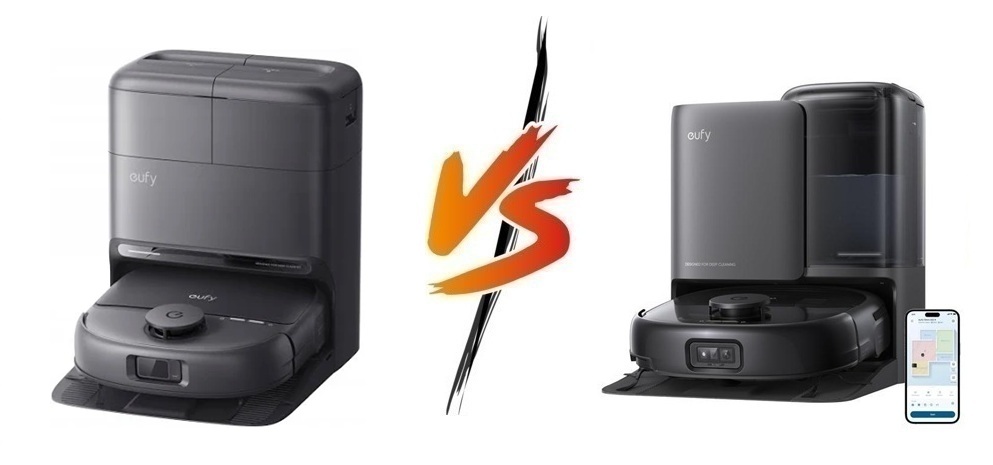
The eufy Omni C28 and Omni E25 belong to a very different generation of robot cleaners. Both are designed to take on the full daily floor-care routine: vacuuming, mopping, emptying their own dustbins, washing their mop rollers, drying those rollers, and returning to their docks to recharge. The E25 goes further in raw specifications, with 20,000 Pa of advertised suction versus 15,000 Pa for the C28, while both use eufy’s HydroJet rolling mop concept and DuoSpiral anti-tangle brush system.
On paper, that makes the E25 the obvious winner. In practice, the comparison is more interesting.
The C28 is positioned as the more affordable C-Series alternative, while the E25 sits higher in eufy’s range. The E25 brings more suction, a more sophisticated obstacle-recognition system using an RGB camera and LED illumination, and a larger overall feature set. The C28, however, is not a stripped-down budget robot. It still has LiDAR navigation, a self-cleaning roller mop, automatic dust emptying, mop washing and drying, and a genuinely useful anti-tangle brush design.
After looking at how these two machines approach the everyday problems that actually matter, my conclusion is fairly straightforward: the C28 is the better value-oriented choice, while the E25 is the more complete machine for homes where carpet cleaning, pets, clutter, and obstacle avoidance justify spending more.
The interesting question is whether the E25 is enough better to justify its higher price.
For many homes, yes.
For everyone else, the C28 may be the smarter buy.
Eufy C28 vs E25 Comparison Chart
If you click the links below, under the product images, you will be redirected to Amazon.com. In case you then decide to buy anything, Amazon.com will pay me a commission. This doesn’t affect the honesty of this review in any way though.
| Specification | eufy C28 | eufy E25 |
|---|---|---|
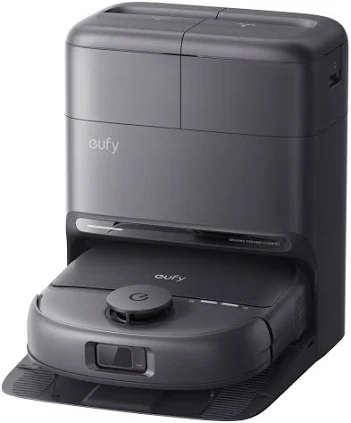 | 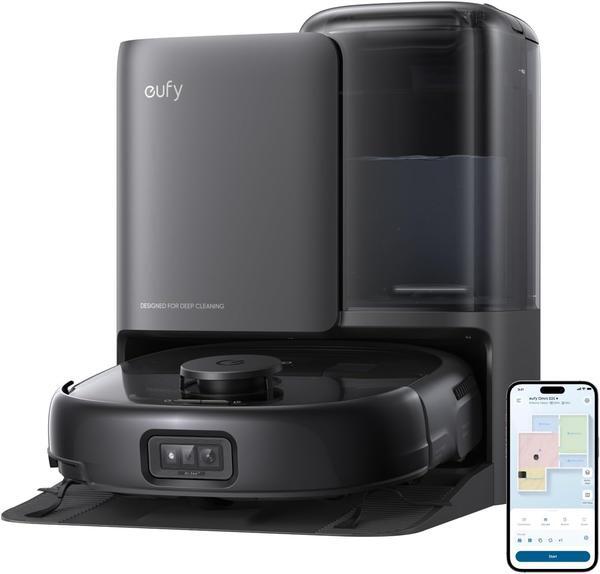 | |
| Check the best price on Amazon | Check the best price on Amazon | |
| Product type | Robot vacuum and mop | Robot vacuum and mop |
| Maximum suction power | Up to 15,000 Pa | Up to 20,000 Pa |
| Navigation | LiDAR-based navigation and mapping | LiDAR-based navigation and mapping |
| Obstacle avoidance | LiDAR-based obstacle detection | LiDAR plus RGB camera and LED-assisted obstacle detection |
| Mopping system | HydroJet roller mop | HydroJet roller mop |
| Mopping pressure | Standard HydroJet roller cleaning | Higher downward pressure for stronger scrubbing |
| Main brush | DuoSpiral anti-tangle brush | DuoSpiral anti-tangle brush |
| Hair management | Designed to reduce hair tangling | Designed to reduce hair tangling |
| Vacuuming performance | Strong everyday cleaning; particularly suitable for hard floors and routine maintenance | Higher-performance vacuuming, with an advantage on carpets, rugs, and heavier debris |
| Hard-floor cleaning | Excellent for dust, crumbs, hair, and everyday dirt | Excellent, with additional suction and scrubbing power for heavier messes |
| Carpet cleaning | Capable of routine carpet maintenance | Better suited to deeper carpet maintenance and embedded debris |
| Pet-hair performance | Very good for regular pet-hair removal | Better suited to heavy shedding and multiple-pet households |
| Mopping performance | Strong everyday mopping and floor maintenance | More aggressive scrubbing performance for stubborn dirt |
| Mapping capability | Structured home mapping with LiDAR | Structured LiDAR mapping with additional visual environmental awareness |
| Best suited to | Homes with mostly hard floors and moderate cleaning demands | Larger, busier, or more cluttered homes with heavier cleaning demands |
| Ideal user | Users prioritizing strong performance and value | Users prioritizing maximum cleaning performance and advanced obstacle recognition |
| Overall positioning | More value-oriented option | More powerful and feature-rich option |
| My individual reviews | Eufy C28 review | Eufy E25 review |
Quick specification verdict
| Category | Winner |
|---|---|
| Maximum suction | E25 |
| Navigation and mapping | E25 |
| Obstacle avoidance | E25 |
| Hard-floor cleaning | E25, narrowly |
| Carpet cleaning | E25 |
| Mopping capability | E25 |
| Pet-hair cleaning | E25 |
| Everyday value | C28 |
| Best for mostly hard floors | C28 |
| Best for demanding households | E25 |
| Best overall capability | E25 |
The main specification difference is straightforward: the E25 is the more powerful and more sophisticated model, with up to 20,000 Pa suction and additional visual obstacle detection. The C28 remains the more sensible choice for buyers who don’t need that extra performance, particularly in homes dominated by hard floors where regular automated cleaning is the priority.
Design & Build Quality: eufy C28 vs E25
The first thing I noticed when comparing the eufy C28 and E25 is that neither robot is trying to look like a futuristic gadget from a science-fiction film. Both follow the now-familiar circular robot-vacuum design, with a relatively low body, a sensor module on top, and a large multifunction docking station that sits somewhere between a charging cradle and a miniature floor-care appliance.
That is a good thing.
Robot vacuums work best when they become part of the background. You don’t want a machine that demands attention every time you walk into the room. You want something that can sit quietly in a corner, go about its business, and only remind you that it exists when it needs maintenance. Both the C28 and E25 are designed around that idea, although the E25 gives a slightly stronger impression of being the more sophisticated product.
The biggest design difference between the two is not necessarily the physical shape of the robots themselves. It is the technology and complexity built into them.
The C28 feels like a carefully engineered machine designed to deliver most of the premium robot-vacuum experience without pushing the price too high. The E25, by comparison, feels like eufy has taken that basic formula and added more hardware to make the robot more aware of its surroundings and more capable of dealing with difficult cleaning conditions.
That distinction becomes particularly apparent when you look at the top of each robot.
Both rely on LiDAR-based navigation, which means there is a raised sensor assembly that helps the robot map its environment and navigate systematically. This is one of the reasons these machines can operate so differently from older, simpler robot vacuums. Instead of wandering around and hoping to eventually cover the whole room, they are designed to understand the layout of the space and make more deliberate cleaning decisions.
The E25 adds an RGB camera and LED-assisted obstacle detection to that navigation package. From a design perspective, this is an important upgrade because it changes what the robot is capable of seeing. LiDAR is excellent at understanding the shape and structure of a room, but a camera can provide another layer of information about the objects occupying that room.
That sounds like a technical distinction, but it has a very practical consequence.
A robot vacuum doesn’t live in an empty showroom.
It lives in a real house.
There might be a charging cable next to the sofa, a pair of shoes in the hallway, a child’s toy in the living room, or a pet bowl sitting in the kitchen. The more information the robot has about what’s around it, the better its chances of navigating through that environment without constantly needing human supervision.
This is one area where the E25’s design feels more forward-looking.
The C28 is still a highly capable robot, but its overall design philosophy is closer to “map the home and clean efficiently.” The E25 is trying to add another layer: “map the home, clean efficiently, and understand more of what is physically in the way.”
That makes the E25 the more convincing choice if you have a busy household.
The physical height of the robots is another important consideration. Both are designed to be relatively low-profile, which is essential if you want them to clean underneath beds, sofas, cabinets, and other furniture. The C28’s body is particularly appealing from this perspective because it doesn’t have an excessively tall profile that immediately limits where it can go.
This is something that is easy to overlook when reading specifications.
A robot vacuum can have outstanding suction, excellent mopping, and sophisticated navigation, but if it cannot physically fit underneath your sofa, that technology is irrelevant in one of the dustiest places in the house.
The low-profile approach also affects the overall visual impression. Neither machine feels excessively bulky. They are still substantial appliances, of course, but the circular robot itself is designed to occupy relatively little visual space when it is sitting idle.
The docking stations are a different story.
This is where the C28 and E25 become much larger physical objects.
There is simply no way around it. If you want automatic dust emptying, water management, mop washing, and mop drying, you need somewhere to put all the necessary hardware. The result is a dock that is considerably more substantial than the simple charging stands used by basic robot vacuums.
The E25’s station, in particular, should be treated as a piece of furniture when planning where to put it.
You need enough room for the robot to approach and leave the dock reliably. You need access to the water tanks and dust collection system. You also need enough clearance around the station to make routine maintenance practical.
This is one of those design considerations that becomes obvious only after living with a robot vacuum.
The robot itself may be beautifully compact, but the complete system can occupy a surprisingly meaningful amount of floor and wall space.
I would therefore measure the intended location before buying either machine. Don’t just measure the width of the dock. Think about how you’ll actually use it. Can you remove the water tanks without hitting a cabinet? Can you open the relevant compartments? Is there enough room for the robot to maneuver into position? Is the station close enough to a power outlet? Can you comfortably access it when the dirty-water tank needs attention?
These details don’t make for exciting marketing copy, but they have a bigger effect on long-term satisfaction than many headline specifications.
The C28 benefits from essentially the same design philosophy while being the more value-oriented machine. Its dock is still a major component of the system, but the overall package feels easier to justify if you’re looking for premium automation without paying for every available feature.
The E25, meanwhile, gives the impression of a more ambitious cleaning platform.
That is particularly noticeable when you look at the mopping hardware.
Traditional robot mops often rely on one or two flat pads that remain attached to the robot as it moves around the house. The concept is simple, but it also has an obvious weakness: the pad can become progressively dirtier as cleaning continues.
The C28 and E25 take a different approach with their HydroJet roller mopping systems.
From a design perspective, this is a much more sophisticated solution. Instead of simply dragging a damp cloth over the floor, the roller is part of an active cleaning mechanism that manages water and keeps the cleaning surface refreshed.
I think this is one of the most important design choices in both machines.
It changes the way you think about the robot. The mopping system isn’t merely an accessory bolted onto a vacuum cleaner. It is a genuine second cleaning mechanism.
The E25 takes that concept further with substantial downward pressure on the mop roller. The idea is to provide more physical contact with the floor and, consequently, better scrubbing action. This is particularly useful when you’re dealing with the sort of mess that a simple damp pad struggles with: dried footprints, kitchen residue, and the thin layer of grime that builds up in busy areas.
The C28 also benefits from the HydroJet concept, which is why I don’t see it as a dramatically stripped-down version of the E25.
The two machines share a common philosophy.
The E25 simply pushes that philosophy further.
Another area where the physical design deserves credit is the brush system. Both robots use eufy’s DuoSpiral anti-tangle approach, which is aimed at dealing with one of the most persistent problems in robot-vacuum ownership: hair.
Anyone who has owned a vacuum cleaner knows that hair eventually finds a way to wrap itself around a brush.
Human hair is bad enough.
Long pet hair is worse.
A good anti-tangle design therefore isn’t just a nice extra. It can make the difference between a robot that requires regular intervention and one that can genuinely operate for days at a time without attention.
The C28 and E25 are both designed with this reality in mind. The brush geometry is intended to direct hair away from the central brush area and toward collection points where it can be picked up rather than tightly wound around the brush.
I wouldn’t interpret this as “you will never have to clean the brush.”
No robot vacuum deserves that promise.
Hair will still accumulate somewhere. You should still inspect the brush periodically. But the underlying design is clearly aimed at reducing the frequency and frustration of manual detangling.
For homes with pets, this is an important part of the build quality.
It also contributes to the feeling that these robots have been designed around actual household conditions rather than laboratory floors.
The E25 has another advantage in terms of perceived build sophistication because of its additional camera hardware. It is not necessarily that the plastic shell feels dramatically stronger than the C28’s. Instead, the E25 feels more technically dense. There is simply more hardware working together inside the machine.
That can be both an advantage and a consideration for long-term ownership.
More technology can mean better performance, but it also means more components that potentially require maintenance or repair. Cameras, sensors, pumps, drying systems, water pathways, and automated docking mechanisms all add complexity.
In my view, the benefits outweigh the concern, but it is worth remembering that these aren’t simple appliances anymore.
The C28 may actually have an appeal here. It provides a sophisticated automated cleaning experience while avoiding the temptation to add every possible piece of technology simply because it can be added.
If I were judging the two purely on physical design, I would give the E25 the win, but not by a huge margin.
The C28 feels well considered.
It has the low-profile body, automated docking concept, active roller mopping, anti-tangle brush design, and LiDAR navigation that you would expect from a premium robot vacuum.
The E25 takes that foundation and makes it more technically ambitious. The combination of higher-end navigation hardware, camera-based obstacle recognition, stronger suction, and more substantial mopping specifications gives it the feeling of a machine designed to operate with less human intervention.
There is also something to be said for the fact that both robots are designed to be largely self-contained.
When they finish cleaning, they don’t simply stop and wait for you to empty a tiny dustbin. They return to their station, recharge, and let the dock handle much of the messy work. The station washes and dries the mop system and manages the transition between cleaning cycles.
That is ultimately what I think the design of these two products gets right.
The robot itself is only half the product.
The real product is the relationship between the robot and the dock.
The C28 and E25 are designed as systems rather than standalone vacuums, and that makes them fundamentally different from cheaper robot cleaners. They are trying to eliminate the repetitive chores that normally make vacuuming and mopping feel like chores in the first place.
The E25 is the more sophisticated implementation of that idea. Its additional sensing and higher performance give it a more premium character, and I would choose it for a large, busy home where the robot is expected to deal with clutter, pets, carpets, and frequent cleaning.
The C28, however, is surprisingly close in overall design philosophy. It doesn’t feel like a compromise product. It feels like the version aimed at people who want the benefits of a highly automated robot vacuum without necessarily needing every extra capability offered by the higher-end model.
If I had to summarize the physical design in one sentence, I’d put it this way: the C28 is the more sensible design, while the E25 is the more ambitious one.
For most people, both are well thought out.
The E25 simply gives you more technology to work with, and that technology is most valuable when your home is genuinely difficult for a robot to clean.
If you have a relatively uncluttered home with mostly hard floors, the C28’s design already makes a lot of sense. If you have pets, children, carpets, and a floor that rarely looks the same twice, the E25’s more advanced hardware begins to justify itself.
That is ultimately where I would draw the line between them.
Design & Build Quality winner: E25, but the C28 is the better value-oriented design.
The E25 feels like the more advanced machine, particularly because of its additional sensing hardware and stronger overall cleaning architecture. The C28, however, gets the fundamentals right: a low-profile robot, a genuinely useful active mopping system, anti-tangle brush technology, and a comprehensive docking station.
Neither feels like a product designed simply to win a specification sheet.
The C28 is built around the idea of making premium robot cleaning more accessible.
The E25 is built around the idea of making the robot more capable of handling a messy, unpredictable home without needing you to constantly supervise it.
And between the two, that is the difference I would notice most after living with them.
Navigation Intelligence and Mapping: eufy C28 vs E25
Navigation is one of those features that is easy to underestimate when you’re shopping for a robot vacuum. Suction power is obvious. You can put a number next to it and compare one machine with another. Mopping pressure is easy to describe. Battery capacity can be measured. But navigation is different. You don’t really appreciate how important it is until a robot gets lost, misses a room, becomes trapped under a chair, or spends ten minutes repeatedly trying to drive through the same impossible gap.
This is where the eufy C28 and E25 take two slightly different approaches to the same basic problem.
Both are designed to map the home and clean methodically rather than wandering around randomly. Both use LiDAR-based navigation as the foundation of their mapping systems. The E25, however, adds an RGB camera and LED-assisted obstacle detection, giving it an additional way to interpret what is happening around it.
In a practical sense, I would describe the C28 as a robot that is very good at understanding the shape of your home, while the E25 is designed to have a better understanding of the objects inside it.
That distinction is more important than it initially sounds.
Imagine you have an empty room with a sofa, a dining table, and four chairs. The basic structure of that room doesn’t change very much. LiDAR is extremely useful here because the robot can build a map of the walls and major obstacles and then plan an efficient route.
Now imagine the same room on a typical Tuesday evening.
There are shoes beside the sofa.
A phone cable is lying near the wall.
One of the dining chairs has been pulled away from the table.
A child’s toy is sitting in the middle of the floor.
The cat’s food bowl is somewhere near the kitchen entrance.
This is where the difference between mapping and obstacle recognition becomes important.
A map tells the robot where it is.
Obstacle detection helps it understand what is currently in its way.
The C28’s LiDAR navigation gives it a strong foundation. It can scan its surroundings, establish the layout of the home, and create a structured map that allows it to clean in a much more organized fashion than older random-navigation robots.
That alone is a major step up from inexpensive robot vacuums.
With a good map, you can think about cleaning in terms of rooms and zones rather than simply pressing “start” and hoping the robot eventually covers everything.
The robot can understand that the kitchen is separate from the living room. It can identify the hallway as a connecting space. It can return to the dock when it needs to recharge and then continue cleaning rather than simply abandoning the job.
This is what makes the C28 practical as an everyday floor cleaner.
The navigation system isn’t just about preventing collisions. It is about efficiency.
Every unnecessary turn costs time.
Every repeated pass consumes battery.
Every time a robot gets confused by its own map, it creates another opportunity for the cleaning cycle to fail.
A robot with excellent suction but poor navigation is still a frustrating product. It may clean the areas it reaches beautifully, but if it doesn’t reach the right areas in the first place, the quality of the vacuum motor becomes almost irrelevant.
The C28’s LiDAR-based approach is therefore one of its strongest features.
It gives the robot a structured understanding of the home, which is particularly useful for larger spaces. Instead of spending the majority of its battery wandering around looking for places to clean, it can follow a more deliberate route.
In my experience with robot vacuums generally, this is one of the biggest differences between a machine you enjoy owning and one you eventually stop using.
The robot needs to behave predictably.
If you send it to clean the kitchen, you want it to clean the kitchen.
If you schedule the whole house, you want it to move through the house logically.
If it needs to recharge, you want it to return to the dock without drama and resume the job afterward.
That basic predictability is where the C28 performs well.
The E25 starts from the same foundation but adds another layer of intelligence.
Its RGB camera and LED-assisted obstacle detection are designed to help the robot identify objects that LiDAR alone may not interpret as effectively.
This is especially valuable in homes where the floor changes from one cleaning session to the next.
A map is essentially a record of the environment.
But homes are not static environments.
Furniture moves.
Children leave toys on the floor.
Pets move bowls and toys around.
People leave shoes in the hallway.
A robot that relies only on its map has to constantly reconcile the difference between what it expected to see and what is actually there.
The E25’s visual system gives it more information to work with.
That doesn’t mean it can recognize every object perfectly.
I wouldn’t treat any robot vacuum as a completely autonomous machine that can safely navigate absolutely anything. Small cables, thin objects, transparent items, and unusual clutter can still challenge automated systems.
The important point is that the E25 has a more sophisticated set of tools for dealing with those situations.
The camera adds visual information.
The LED helps the system operate in darker areas.
The LiDAR provides the structural map.
Together, those technologies should give the E25 a more complete picture of the environment.
The result is a robot that is better suited to a home where the floor isn’t carefully prepared before every cleaning cycle.
This is a meaningful advantage for families.
If you have children, you know how quickly a clean floor can become an obstacle course. One day the living room is completely clear. The next day there are building blocks, stuffed animals, shoes, and random objects that seem to have appeared from nowhere.
The C28 can handle normal household clutter, but the E25 is the one I would trust more to operate in an unpredictable environment.
The same is true for pet owners.
Pets create a constantly changing environment. A dog toy can move from one room to another. A food bowl may be placed in a different position. A cat may leave a toy in the middle of a hallway.
The E25’s additional visual sensing is therefore more than a technical luxury.
It is a practical feature.
However, I would still recommend a little common sense before starting any robot vacuum, regardless of which model you own.
I wouldn’t leave charging cables lying across the floor and assume the robot will always avoid them.
I wouldn’t leave fragile objects in its path.
I wouldn’t expect it to understand every potential hazard.
And I certainly wouldn’t assume that a robot can safely deal with every kind of pet accident.
Better navigation reduces supervision.
It doesn’t eliminate the need for it.
Another important aspect of navigation is mapping accuracy.
The first cleaning run is often the most interesting because the robot is effectively learning the house.
As it moves around, it is building a representation of the environment. Once that process is complete, the map becomes the foundation for future cleaning.
A good map should make the robot more useful over time.
You should be able to distinguish between rooms.
You should be able to select specific areas.
You should be able to create boundaries or no-go zones when necessary.
You should be able to schedule different types of cleaning for different areas.
This is particularly important when vacuuming and mopping are combined.
You don’t want the robot to treat the entire house as one identical surface.
The kitchen may benefit from more intensive mopping.
The bedroom carpet should be vacuumed rather than mopped.
The bathroom floor might need a more thorough wet clean.
The living room may contain a combination of hardwood and rugs.
The better the mapping system, the easier it becomes to turn these different cleaning needs into a repeatable routine.
The C28 is capable of this kind of structured approach, and that is one reason it feels much more advanced than a basic robot vacuum.
The E25’s additional sensing gives it an advantage when the map and the real world don’t perfectly match.
That’s an important distinction.
Mapping is about creating a model.
Navigation is about using that model to make decisions.
Obstacle avoidance is about reacting when reality doesn’t match the model.
The E25 has more hardware dedicated to that final part.
One area where I would still be cautious is multi-level homes.
Neither machine should be thought of as a robot that can independently carry itself upstairs. If you want to clean multiple floors, you’ll need to physically move the robot or use additional mapping functionality as supported by the software.
This is an area where expectations can get ahead of reality.
A robot vacuum can be extremely intelligent and still have one very basic limitation: it has wheels.
If the house has stairs, someone still has to move the machine.
For single-floor homes, however, the navigation capabilities of both robots are much more relevant.
The C28 is particularly attractive for people who want a reliable, structured cleaning routine without necessarily needing the most advanced object recognition.
The E25 is better for people who want to reduce the amount of preparation required before each cleaning session.
There is also a psychological difference between the two.
With a simpler robot, you tend to think of cleaning as something you prepare for.
You pick up cables.
You move shoes.
You collect toys.
Then you start the robot.
With a more intelligent robot like the E25, the goal is to make that preparation less necessary.
You can still tidy the floor for the best results, but you don’t have to treat the entire process like setting up a laboratory experiment.
That is where the E25’s navigation hardware has the greatest practical value.
It isn’t necessarily that the E25 will clean every room dramatically faster than the C28.
It is that the E25 should be better at dealing with the unexpected.
And unexpected things are exactly what robot vacuums encounter in real homes.
If I were comparing the two purely on mapping, the gap would be relatively small.
Both have LiDAR.
Both are designed to create structured maps.
Both are capable of systematic cleaning.
Both are much more sophisticated than random-navigation robots.
But once obstacle avoidance is included in the conversation, the E25 pulls ahead.
The camera and LED system give it an additional layer of environmental awareness that the C28 doesn’t have to the same degree.
This makes the E25 the more convincing choice for larger and more complicated homes.
If you live in a relatively uncluttered apartment with straightforward room layouts, the C28’s navigation system should already be more than sufficient.
If you live in a family home where furniture moves, objects appear on the floor, pets roam around, and the robot is expected to clean with minimal supervision, the E25’s extra intelligence becomes much easier to justify.
There is also a useful distinction between navigation intelligence and cleaning intelligence.
A robot can know exactly where it is and still make poor cleaning decisions.
The real test is whether the navigation system supports the cleaning system.
The C28’s structured mapping helps it make efficient cleaning passes.
The E25’s additional obstacle recognition should help it maintain those cleaning routes when the environment becomes more complicated.
That is the fundamental advantage of the E25.
It doesn’t necessarily replace the C28’s approach.
It builds on it.
For that reason, I see the E25 as the more complete navigation platform, but I don’t see the C28 as lacking.
The C28 has the core technology required for reliable robot-vacuum navigation.
The E25 adds the technology required to make that navigation more adaptable.
If I were choosing between them based only on navigation, my decision would depend on the home.
For a tidy apartment or a relatively uncluttered house, I would have no problem choosing the C28. The LiDAR mapping system gives it the ability to understand the home, clean systematically, and return to its dock without relying on random movement.
For a busy family home, I would choose the E25.
For a home with pets, I would choose the E25.
For a home where the robot is expected to run frequently while nobody is around, I would choose the E25.
The reason is simple: the more you want to leave the robot alone, the more valuable sophisticated obstacle avoidance becomes.
The E25 is therefore the winner in this category, but the C28 deserves a lot of credit.
The C28 has the navigation fundamentals right.
The E25 simply has more ways to interpret the world around it.
And in a robot vacuum, that is ultimately what intelligence should mean.
It isn’t about having the most impressive technical specifications.
It is about the robot knowing where it is, knowing where it needs to go, recognizing when something is in the way, and recovering gracefully when the real world doesn’t behave exactly as expected.
The C28 gets the first two parts right.
The E25 is better equipped for all four.
Navigation Intelligence and Mapping winner: E25.
The C28 is the better value if you have a predictable home and want reliable LiDAR-based mapping. The E25 is the better choice if you want the robot to cope with a changing, cluttered environment with less human intervention.
In other words, the C28 is a robot that knows its way around your house.
The E25 is a robot that is better prepared for the fact that your house won’t always look the same when it comes back tomorrow.
Vacuuming Performance: eufy C28 vs E25
Vacuuming performance is probably the category where people are most tempted to reduce the comparison to one number. The eufy C28 offers up to 15,000 Pa of suction, while the E25 raises that figure to 20,000 Pa. On paper, the E25 wins immediately. Twenty thousand is more than fifteen thousand, and the difference sounds substantial.
But robot vacuum performance isn’t quite that simple.
Suction power is important, but it is only one part of the cleaning equation. The way the robot’s brush system interacts with the floor, how effectively it moves air, how well it navigates, how many passes it makes, and how consistently it maintains contact with different surfaces all have an effect on the final result.
That is why I would describe the E25 as the stronger vacuum cleaner, but I wouldn’t describe the C28 as a weak one.
In fact, the C28’s performance is one of the reasons the comparison between these two robots is more complicated than simply saying “buy the E25 because it has more suction.”
The C28 is already operating at a level where it can handle the everyday mess found in a normal household. Dust, crumbs, hair, grit, food particles, and general floor debris are all well within its intended territory. The E25 simply gives you more performance headroom when the cleaning job becomes more demanding.
That distinction matters because most people aren’t cleaning a disaster every time they run a robot vacuum.
The majority of daily dirt is relatively easy to remove.
Think about the typical morning after breakfast. There might be a few cereal crumbs underneath the dining table, some toast crumbs near the kitchen counter, a little dust in the hallway, and pet hair scattered across the living room.
You don’t need 20,000 Pa of suction to pick up all of that.
A well-designed robot with 15,000 Pa and a good brush system can already do an excellent job.
This is where the C28 makes a strong case for itself.
It has enough suction to feel like a serious modern robot vacuum rather than a lightweight maintenance machine that merely moves dust around. Combined with its systematic navigation, the robot can make repeated, organized passes across the floor, giving it a good opportunity to collect debris that might otherwise be missed.
That consistency is arguably more important than the peak suction number in everyday use.
A robot that cleans your floors every day can prevent dirt from accumulating in the first place.
That’s the real advantage of robotic cleaning.
You don’t necessarily need one spectacular cleaning session if the machine is quietly removing small amounts of dirt every day.
The C28 fits that model very well.
Its 15,000 Pa maximum suction gives it plenty of power for routine cleaning on hard floors and a respectable ability to deal with rugs and carpets. If you run it frequently, the amount of debris it has to deal with on any individual cleaning cycle should naturally be lower.
The E25 takes the same approach but gives you a higher ceiling.
Its 20,000 Pa maximum suction is particularly interesting when the robot encounters heavier debris or carpet where dirt has become embedded below the surface.
Carpet is the environment where suction differences tend to matter more.
On a hard floor, dirt is sitting on the surface. The robot needs to move air effectively enough to pull that dirt into the intake.
On carpet, the situation is more complicated.
Dust and fine particles can become trapped between carpet fibers. Pet hair can become embedded in the pile. Small pieces of grit can work their way below the surface. The robot needs enough suction and agitation to pull those particles free.
This is where I would choose the E25.
The higher suction rating doesn’t guarantee that every carpet will suddenly become spotless, but it gives the robot more capability to deal with difficult debris.
The E25 is therefore the one I’d favor for a home with substantial carpeting.
If you have bedrooms with carpet, several area rugs, and a living room with a thicker pile, the extra performance is likely to be more useful than it would be in an all-hard-floor apartment.
The C28, by contrast, becomes more attractive as the percentage of hard flooring increases.
This isn’t because the C28 suddenly becomes bad on carpet.
It doesn’t.
It’s because the performance gap between the two robots is less noticeable when the cleaning surface itself is relatively easy to clean.
Hardwood, tile, laminate, and vinyl are all environments where regular robot cleaning can be highly effective without requiring extreme suction.
The C28 is particularly well matched to that use case.
You can run it frequently, let it collect dust and debris before it accumulates, and rely on the robot’s systematic navigation to cover the floor consistently.
The E25 will still clean better in absolute terms, but the difference may not be dramatic enough to justify the additional cost for everyone.
Another important part of vacuuming performance is the brush system.
Suction alone doesn’t determine how well a robot cleans.
The brush needs to agitate debris and guide it toward the intake. This is particularly important on carpets and rugs, where dirt can become lodged in the fibers.
Both the C28 and E25 use eufy’s DuoSpiral brush approach, designed to reduce hair entanglement while maintaining effective contact with the floor.
This is a significant advantage for households with pets or long-haired occupants.
Hair can be surprisingly difficult for robot vacuums.
It doesn’t necessarily get sucked straight into the dustbin.
Instead, long strands can wrap around the brush, accumulate over time, and eventually reduce performance.
A robot that has to be manually cleaned every few days loses some of the convenience that makes it appealing in the first place.
The C28 and E25 are designed to address this problem more intelligently.
The DuoSpiral system attempts to guide hair away from the central brush area rather than allowing it to form a tight knot around the roller.
I wouldn’t call either robot completely maintenance-free.
That’s not realistic.
If you have a long-haired dog that sheds heavily, you should still inspect the brush periodically. But reducing the amount of hair that becomes tightly wrapped around the brush can make a noticeable difference over weeks and months.
This is one area where the two robots are more evenly matched.
The E25 has more suction, but both benefit from the same basic brush philosophy.
That means the C28 doesn’t feel like a fundamentally inferior design for pet hair.
It simply doesn’t have the E25’s additional suction reserve.
Another factor worth considering is the size and type of debris.
Fine dust is one challenge.
Large crumbs are another.
A robot vacuum has to be able to pick up both without repeatedly pushing larger debris around.
The C28 should have no difficulty handling the everyday debris found in most homes, including food crumbs and small particles. The E25’s higher suction should give it more ability to handle heavier debris, but I wouldn’t expect the difference to be obvious in every situation.
A large piece of cereal, for example, isn’t necessarily difficult because the vacuum lacks suction. It may be more about the geometry of the intake and how the brush moves the object toward it.
This is why I prefer to think of suction as a reserve of capability rather than a guarantee of cleaning quality.
The E25 has more reserve.
The C28 has enough for most routine jobs.
One area where both machines should perform particularly well is maintenance cleaning.
This is where robot vacuums are at their best.
Instead of asking the robot to clean a heavily neglected floor once a week, you can run it much more frequently.
The C28 can therefore compensate for its lower maximum suction through consistency.
If the robot removes dust every day, the amount of dust present tomorrow will be lower.
That means you’re not asking the machine to recover from weeks of accumulated dirt.
The E25 can do the same thing, but it has more power available when the situation is more demanding.
This is why I see the E25 as a better all-round vacuum but the C28 as a better value proposition.
The E25 is more versatile across different floor conditions.
The C28 is more than capable for the majority of everyday cleaning.
The difference becomes more apparent when you look at homes with pets.
Pet owners are often dealing with two different types of debris at once.
There is fine dust and dirt tracked in from outside, and there is hair.
The C28’s anti-tangle brush system makes it well suited to dealing with the hair problem, while its 15,000 Pa suction provides plenty of capacity for regular floor maintenance.
The E25 adds another layer of performance.
If you have multiple pets, particularly large dogs, I would lean toward the E25. The combination of stronger suction and anti-tangle brush technology gives it a more convincing overall package for heavy shedding.
The difference becomes even more meaningful if you have carpet.
Pet hair on hardwood is relatively easy for a powerful robot to pick up.
Pet hair embedded in carpet is more demanding.
That’s where the E25’s additional suction becomes easier to justify.
I would also consider how often you intend to run the machine.
If you plan to run your robot every day, the C28 makes a lot of sense.
If you’re likely to run it only once or twice a week, I would be more inclined to choose the E25.
The reason is that less frequent cleaning means more accumulated debris.
A robot that has to deal with a week’s worth of dirt in one session benefits more from additional performance.
The E25 is also the machine I’d choose for larger homes.
Not because the C28 necessarily lacks the battery capacity or navigation capability to cover a large space, but because the more floor area you have, the greater the variety of surfaces and debris you’re likely to encounter.
Large homes tend to have more rugs.
More rooms.
More transitions.
More furniture.
More opportunities for dirt to accumulate.
The E25’s extra performance gives it more flexibility.
The C28 remains a strong choice if the large home is mostly hard flooring and you are willing to run the robot frequently.
Another point worth discussing is the difference between robot vacuuming and conventional vacuuming.
Neither the C28 nor the E25 should be considered a complete replacement for a powerful upright or canister vacuum in every home.
That’s especially true if you have thick carpet.
A conventional vacuum gives you much more control over where you clean and how long you spend on a particular area. You can make repeated passes over a heavily soiled section and use specialized attachments for stairs, upholstery, mattresses, and other surfaces.
A robot vacuum isn’t designed for that.
Its job is different.
It is a maintenance cleaner.
The best way to use either machine is to let it handle the daily workload and then bring out a conventional vacuum occasionally for deeper cleaning.
The E25 may reduce the frequency with which you need that deep clean, especially on carpets, but it doesn’t eliminate the need entirely.
The same applies to edges and corners.
Both robots are designed to improve cleaning along walls and around room edges, but no circular robot is going to outperform a human with a crevice tool in a difficult corner.
This is another reason to judge the machines based on their intended purpose.
The C28 and E25 are designed to keep floors consistently clean with minimal intervention.
They aren’t designed to replace every other cleaning tool in your home.
If I were comparing the two strictly on vacuuming performance, I would give the E25 the win without hesitation.
The 20,000 Pa maximum suction gives it a meaningful advantage, especially on carpets and in homes with heavy debris loads. Its stronger performance also makes it more attractive for pet owners and larger households.
But I wouldn’t underestimate the C28.
The 15,000 Pa maximum suction is still a serious specification, and for routine cleaning on hard floors, it is likely to be more than sufficient for many households.
The C28 is particularly compelling if you plan to use the robot as a daily maintenance cleaner.
Run it frequently.
Let it pick up small amounts of dust and debris every day.
Allow the automated dock to take care of the routine emptying and maintenance.
Used that way, the C28 should keep your floors consistently clean without needing the extra performance of the E25.
The E25 is the better choice when you want more flexibility.
You want the robot to handle hard floors but also perform strongly on carpet.
You have multiple pets.
You have heavier debris.
You don’t want to rely as heavily on frequent cleaning to maintain results.
You simply want the strongest vacuuming performance of the two.
In those situations, the E25 earns its position.
The C28 is the more sensible choice when your home doesn’t demand that extra capability.
There is a temptation to look at the 15,000 Pa versus 20,000 Pa figures and conclude that the E25 is 33 percent better at vacuuming.
I wouldn’t make that claim.
The real-world difference isn’t that linear.
You won’t necessarily look at a freshly cleaned hardwood floor and immediately see a dramatic difference between the two.
The E25’s advantage is more about having greater capacity when conditions become difficult.
It has more power available when the carpet is thicker, the debris is heavier, or the pet hair is more stubborn.
That’s a valuable advantage, but it isn’t equally valuable to everyone.
For my own buying decision, I’d use the floor plan as the deciding factor.
If I lived in a mostly hard-floor apartment with one or two rugs, I’d buy the C28 and feel confident that I wasn’t sacrificing much in everyday cleaning.
If I lived in a large house with carpeted bedrooms, several rugs, and two shedding dogs, I’d spend the extra money on the E25.
The E25 is simply the more capable vacuum.
The C28 is the more economical vacuum that gets surprisingly close to it for routine cleaning.
Vacuuming Performance winner: E25.
The E25 wins on raw power and versatility, particularly on carpets, heavy debris, and pet hair. Its 20,000 Pa suction gives it more headroom for demanding cleaning jobs, while its anti-tangle brush design helps make that power more useful in real homes.
The C28 is the value winner. Its 15,000 Pa suction is still strong enough for everyday cleaning, and on predominantly hard floors, the performance gap between the two is likely to feel smaller than the specifications suggest.
If your priority is maximum cleaning performance, choose the E25.
If your priority is getting excellent everyday vacuuming without paying for capability you may not need, the C28 makes a very convincing case.
Ultimately, I think the best way to describe the difference is this: the C28 is powerful enough for everyday life, while the E25 is powerful enough to deal with everyday life when it gets particularly messy.
Hard-Floor Cleaning: eufy C28 vs E25
Hard floors are where I think the eufy C28 and E25 make the strongest overall case for themselves. Whether you have hardwood, tile, laminate, vinyl, or another sealed hard surface, both robots are designed to do more than simply run a vacuum over the floor. They combine powerful vacuuming with active roller mopping, which makes them much more interesting as everyday floor-care appliances.
If your home is predominantly hard-floored, I think the choice between the two becomes less about whether either machine can clean effectively and more about how much additional performance you actually need.
The C28 is already a very capable hard-floor cleaner. Its 15,000 Pa maximum suction is more than enough for the type of debris that typically accumulates on hard surfaces. Dust, crumbs, grit, hair, pet fur, and the fine particles that get tracked in from outside are all within its intended workload.
On a hard floor, debris generally remains on the surface rather than becoming embedded deep into fibers. That makes the cleaning task considerably easier than vacuuming carpet.
This is why I wouldn’t automatically recommend spending more on the E25 simply because it has a higher maximum suction rating.
If you have mostly hardwood or tile, the C28’s vacuuming capability should already be sufficient for everyday maintenance.
The bigger advantage of both robots is their ability to combine vacuuming with mopping.
This is particularly useful in kitchens and dining areas, where dry debris and sticky messes often coexist. A conventional robot vacuum can pick up crumbs around the dining table, but it can’t do much about the faint layer of grime that builds up on the floor afterward. A robot mop can deal with that residue, but if you mop without vacuuming first, you risk pushing crumbs and loose debris around.
The C28 and E25 are designed to handle both jobs as part of one automated cleaning routine.
That makes a noticeable difference to the way you use them.
Instead of thinking, “I need to vacuum the floor, and then I need to mop it,” the process becomes much simpler. The robot can vacuum up the loose debris and then use its active mopping system to clean the remaining surface dirt.
The HydroJet roller system is particularly interesting here.
Traditional robot mops typically drag a damp pad across the floor. That can work well for light maintenance, but the pad itself becomes dirty as it moves around the house. The HydroJet approach is more dynamic, using an actively managed roller that is continuously refreshed with water.
In practical terms, this makes the machines feel more like actual floor scrubbers than robot vacuums with a wet cloth attached.
The C28 benefits substantially from this design.
For everyday kitchen floors, entryways, and other high-traffic areas, it should be capable of handling the thin film of dirt that vacuuming alone leaves behind. The active roller is also better suited to dealing with small spills and dried residue than a passive wiping pad.
The E25 takes the concept further with stronger mopping performance and greater downward pressure.
This is where I would give the E25 the advantage if your hard floors see heavy daily traffic.
A kitchen floor used by a family can accumulate a surprising amount of grime. Even when it looks clean, there can be traces of food, grease, footprints, and other residue that require more than a quick wipe.
The E25’s stronger scrubbing approach should make it better at dealing with these more stubborn messes.
That doesn’t mean the C28 is incapable of cleaning them.
It means the E25 is likely to require fewer compromises when the floor is genuinely dirty.
For hardwood, however, I would be more careful about the settings I use. Wood floors can be sensitive to excessive moisture, and the correct amount of water depends on the finish and condition of the floor.
The advantage of having control over the cleaning process is that you can tailor the robot’s behavior to the surface.
For a sealed hardwood floor, a light, controlled mopping routine can be extremely useful.
For a delicate or aging wood surface, I would take a more conservative approach.
This is an area where no robot vacuum should be treated as completely universal. The cleaning system may be designed to manage water intelligently, but your flooring manufacturer’s recommendations still matter.
Tile is where I think both robots can really show what they’re capable of.
Tile floors often have textured surfaces and grout lines that collect dirt. Vacuuming can remove loose debris from the surface, but mopping is necessary to deal with the more persistent grime.
The E25’s stronger scrubbing action gives it the edge here.
If you have large-format porcelain tiles with relatively smooth surfaces, the difference between the two may be modest. If you have textured tiles or heavily trafficked areas, the E25’s more aggressive mopping system becomes more valuable.
The same logic applies to vinyl and laminate.
These floors are generally straightforward to vacuum, so both machines should perform well at collecting dust and debris. The more interesting question is how effectively they can mop without leaving excessive moisture behind.
A good robot mop should leave the floor clean without creating a situation where you have to wait for large amounts of water to evaporate.
The C28’s active roller approach makes it well suited to this kind of regular maintenance.
The E25 simply offers more cleaning intensity.
Another advantage of both machines is their ability to operate regularly.
Hard floors benefit enormously from frequent cleaning because dust and debris remain visible. If you have pets, the floor can go from looking clean to looking noticeably dusty within a day.
Running the C28 or E25 regularly means the dirt never has much opportunity to accumulate.
This is especially important for pet hair.
On hardwood or tile, pet hair tends to remain on the surface, which makes it relatively easy for a robot to collect. The DuoSpiral anti-tangle brush design is helpful here because it reduces the amount of hair that wraps around the brush.
The E25’s higher suction gives it an advantage in heavy-shedding households, but I don’t think the difference will be dramatic on a smooth floor.
The C28 should already do an excellent job of daily hair removal if you run it consistently.
Edges and corners are another consideration.
The circular shape of a robot vacuum inevitably creates some limitations. Both machines can clean close to walls and furniture, but there will always be areas where a conventional vacuum or mop can reach more precisely.
This isn’t a flaw unique to these two models.
It’s simply the reality of robot design.
The important question is whether the robot leaves so much dirt behind that you need to constantly follow up manually.
I don’t think that is likely with either the C28 or E25.
The combination of systematic navigation, strong suction, and active mopping means the majority of the floor should be handled automatically, with occasional manual attention reserved for difficult edges and corners.
For homes that are almost entirely hard-floored, I would actually find the C28 particularly appealing.
It offers a very strong balance of capabilities.
You get powerful vacuuming, an active roller mop, automated cleaning and maintenance, and intelligent navigation without necessarily paying for the E25’s additional performance in areas where you may not need it.
The E25 becomes more attractive if your hard floors are exposed to particularly heavy use.
Think about a busy kitchen.
A family dining area.
A hallway where everyone enters the house.
A home with several pets.
These are environments where the extra cleaning power can be put to work every day.
The E25’s stronger vacuuming and more aggressive mopping make it the better choice for tougher hard-floor conditions.
But for the average home, the C28 is still an excellent proposition.
If I were choosing between the two for a mostly hardwood-and-tile home, I would ask myself one simple question: how dirty do my floors actually get?
If the answer is “mostly dust, crumbs, hair, and light everyday grime,” I’d choose the C28.
If the answer is “lots of pet hair, frequent spills, muddy footprints, and floors that need serious scrubbing,” I’d choose the E25.
Both are capable of transforming hard-floor maintenance.
The biggest benefit isn’t that either robot can perform one spectacular cleaning session.
It’s that they can clean frequently.
That means you can keep the floor in a consistently clean state rather than waiting until it becomes visibly dirty and then spending an hour vacuuming and mopping.
That is where robotic cleaning really earns its place in a modern home.
Hard-Floor Cleaning winner: E25, but the C28 is the smarter choice for lighter everyday maintenance.
The E25 wins because its stronger vacuuming performance and more intensive roller mopping give it greater ability to handle stubborn dirt and heavy traffic. The C28, however, is more than capable of keeping typical hard floors clean, particularly when used frequently.
For most predominantly hard-floor homes, I would consider the C28 the value sweet spot. For busy households that demand maximum cleaning performance, the E25 is the machine I’d choose.
Carpet Cleaning and Carpet Management: eufy C28 vs E25
Carpet is where the difference between the eufy C28 and E25 becomes more noticeable. On hard floors, both robots have relatively straightforward work to do: collect loose debris, remove dust, and mop the surface. Carpet is more demanding because dirt doesn’t simply sit on top. Fine particles can work their way between the fibers, pet hair can become embedded, and thicker rugs require more agitation and suction to achieve a genuinely thorough clean.
This is the category where I would give the E25 the clearest advantage.
That doesn’t mean the C28 is unsuitable for homes with carpets. Far from it. Its 15,000 Pa maximum suction gives it plenty of cleaning power for routine carpet maintenance, and the DuoSpiral brush system is designed to help lift debris while reducing the amount of hair that becomes tangled around the brush. If your home has a few low- or medium-pile rugs and carpeted bedrooms, the C28 should be able to handle everyday cleaning very well.
The important phrase here is “everyday cleaning.”
Robot vacuums are at their best when they’re allowed to clean frequently. If you run the C28 regularly, it can remove dust, crumbs, hair, and surface debris before those materials have much opportunity to accumulate.
That makes a significant difference on carpet.
A robot that cleans a carpet every day doesn’t need to deal with a week’s worth of pet hair and tracked-in dirt at once. It can continuously reduce the amount of debris present, helping the carpet remain fresher between deeper cleaning sessions.
The E25 takes this maintenance approach and adds more raw power.
Its 20,000 Pa maximum suction gives it a higher performance ceiling, which becomes more useful when the robot encounters thicker carpets or more deeply embedded debris.
This is particularly relevant to pet owners.
Pet hair is easy enough to see on dark hardwood floors, but carpet is a different story. Hair can become tangled into the fibers, especially in areas where pets sleep or regularly walk. A robot needs more than simple suction to deal with this effectively. The brush needs to agitate the surface while the vacuum system pulls the loosened hair away.
The E25’s combination of stronger suction and anti-tangle brush technology makes it the robot I’d choose for a home with significant carpet and heavy shedding.
The C28 should still perform well with pet hair, particularly if you run it frequently, but the E25 gives you more confidence when dealing with a difficult carpet.
There is another advantage to the E25 in mixed-floor homes.
Many households don’t have one uniform floor type. You might have hardwood in the living room, tile in the kitchen, carpet in the bedrooms, and rugs scattered throughout the house.
This is where a robot vacuum needs to be versatile.
The C28 can handle that kind of environment, but the E25 feels better equipped to make the transition between surfaces without asking you to compromise.
On hard floors, both robots can vacuum and mop.
On carpet, the robot can focus on vacuuming.
That ability to move between different surfaces as part of one automated cleaning routine is one of the main reasons these products are appealing in the first place.
The mopping system also has implications for carpet management.
You obviously don’t want a wet mop roller operating on carpet.
The whole point of an intelligent robot is that it should understand the difference between surfaces and manage its cleaning behavior accordingly.
This is an area where mapping and navigation become directly connected to carpet performance.
The robot needs to know where the carpet is.
It needs to avoid wet cleaning where appropriate.
It needs to transition between flooring types without getting confused.
It also needs to maintain good vacuuming performance when moving from a hard surface onto a rug or carpet.
The E25’s more sophisticated obstacle detection gives it an additional advantage in complicated rooms, particularly when rugs are surrounded by furniture or other obstacles.
However, I wouldn’t say the C28 is significantly behind in basic carpet management.
Its LiDAR navigation gives it the ability to map the home and understand where different rooms are located. For a relatively straightforward floor plan, that’s likely to be enough for reliable carpet cleaning.
The bigger difference is cleaning intensity.
If you have thin rugs that mainly collect crumbs and dust, the C28 should be perfectly adequate.
If you have thick carpeting that collects fine dirt and pet hair, I’d spend more on the E25.
The same applies to frequency of use.
If you are someone who runs the robot every day, the C28 becomes more competitive.
If you’re likely to run it once or twice a week, the E25 makes more sense.
The less frequently you clean, the more debris accumulates, and the more useful additional suction becomes.
I also wouldn’t expect either robot to replace a powerful upright vacuum for deep carpet cleaning.
This is an important distinction.
Even a very powerful robot vacuum has physical limitations. It is compact, battery-powered, and designed to move autonomously through an entire home. An upright vacuum can concentrate its full power on one small area and make multiple passes over particularly dirty sections.
If you have thick, high-pile carpet, stairs, or areas that receive heavy use, you’ll probably still want a conventional vacuum for occasional deep cleaning.
The robot’s job is to reduce how often you need to do that.
This is where I think the E25 has the potential to make a bigger difference.
By running frequently, it can remove loose debris and hair before they become deeply embedded. Over time, that can help keep the carpet looking cleaner and reduce the amount of heavy manual vacuuming required.
The C28 can do much the same thing, but the E25’s stronger vacuuming performance gives it more ability to deal with the material that escapes daily maintenance.
There is also the issue of rugs.
Rugs can be surprisingly challenging for robot vacuums because they vary enormously in thickness and construction.
A low-profile woven rug is one thing.
A thick, plush rug is another.
A lightweight rug that slides around is another problem entirely.
Neither the C28 nor E25 can magically eliminate every issue associated with every type of rug. You still need to consider whether the rug is stable, whether the robot can climb onto it easily, and whether the material is suitable for automated cleaning.
The E25’s stronger cleaning performance makes it more attractive for substantial rugs, but physical design and rug construction remain important factors.
I would also pay attention to fringe.
Robot vacuums and long rug tassels have never been natural friends. Even with anti-tangle technology, loose fringe can potentially create problems. If your home contains many decorative rugs with long tassels, I would take a little time to manage those areas before letting either robot run unattended.
The same practical advice applies to carpets with loose edges.
A robot vacuum is autonomous, but it still operates in a physical environment.
The cleaner and more predictable that environment is, the better the results will be.
For homes with mostly low-pile carpet, I think the C28 is a particularly sensible option. Its suction power is strong enough for daily maintenance, its brush system is designed with hair management in mind, and its mapping system should allow it to work systematically rather than wandering randomly.
The E25 becomes the obvious upgrade for more demanding carpet.
If your house has several carpeted rooms, thick rugs, multiple pets, or a lot of foot traffic, I would choose it.
The extra 5,000 Pa of maximum suction isn’t a guarantee that it will remove exactly 33 percent more dirt, but it does give the E25 additional capacity. That’s valuable when the cleaning surface itself is more difficult.
Ultimately, carpet performance comes down to how much work you expect the robot to do.
If you want a robot to maintain reasonably clean carpets between occasional deep cleans, the C28 is capable and likely to satisfy most users.
If you want the robot to take on a much larger share of your carpet-cleaning workload, the E25 is the better tool.
For me, the E25 wins this category because carpet is precisely where additional suction and more sophisticated navigation have the greatest opportunity to make a practical difference.
Carpet Cleaning and Carpet Management winner: E25.
The C28 is a strong choice for routine carpet maintenance, especially in homes with low- to medium-pile carpets and occasional rugs. Its powerful suction and anti-tangle brush system give it enough ability to keep everyday dirt and hair under control.
The E25 is better suited to homes where carpet is a major part of the cleaning challenge. Its higher suction gives it more ability to deal with embedded debris and pet hair, while its more advanced sensing makes it a better fit for complicated mixed-floor environments.
If your home is mostly hard floors with a few rugs, I’d be comfortable choosing the C28.
If you have wall-to-wall carpet, thick rugs, several pets, or simply want the robot to do as much of the carpet cleaning as possible, I’d choose the E25.
Neither replaces an upright vacuum for true deep cleaning, but the E25 comes closer to becoming the primary day-to-day carpet maintenance machine.
Mopping Capability: eufy C28 vs E25
Mopping is where the eufy C28 and E25 become more interesting than conventional robot vacuum cleaners. Plenty of robot vacuums can attach a damp cloth to the underside and drag it across the floor, but I don’t think that approach should automatically be described as true mopping. It is closer to automated wiping.
The C28 and E25 take a more ambitious approach with eufy’s HydroJet roller mopping system. Instead of relying on a passive pad that gradually becomes dirtier as the robot moves around the house, the roller is actively involved in the cleaning process, with water management designed to keep the cleaning surface refreshed.
That difference matters.
A traditional flat mop pad can be perfectly adequate for light daily maintenance. If your floor is already relatively clean and you simply want to remove a little dust or a few footprints, a damp pad can do the job.
But real floors are rarely that simple.
Kitchens accumulate grease.
Dining areas collect food residue.
Hallways pick up dirt from shoes.
Pets leave muddy footprints.
Children spill things.
A mop that simply drags a damp cloth over these surfaces may spread some of the mess around rather than genuinely removing it.
The HydroJet roller approach is designed to provide a more active form of cleaning.
The C28 benefits from this technology, making it a much more capable mopping machine than the typical robot vacuum with a basic water tank and microfiber pad.
The E25 takes the same fundamental idea and increases the cleaning intensity.
The biggest difference is the amount of downward pressure applied by the E25’s mopping system. More pressure means the roller can maintain stronger physical contact with the floor, which should translate into better scrubbing performance on stubborn marks.
That makes the E25 the stronger mopper of the two.
However, I don’t think the C28 should be dismissed as a compromise.
For everyday floor maintenance, the C28’s active roller system is likely to be more than sufficient.
If you’re running the robot regularly, you’re not necessarily asking it to remove months of accumulated grime. You’re asking it to deal with the small amount of dirt that has appeared since the last cleaning cycle.
That’s a much easier task.
The C28 should be well suited to this type of cleaning.
Think about a kitchen floor that gets vacuumed and mopped every day or every other day. The C28 doesn’t need to aggressively scrub away a thick layer of dirt because there shouldn’t be one. Instead, it can continuously remove the thin layer of grime that accumulates through normal household activity.
This is one of the main strengths of robotic mopping.
Frequency matters.
A robot that mops frequently can keep floors consistently clean, even if it isn’t as aggressive as a human with a traditional mop.
The E25’s advantage becomes clearer when you encounter more stubborn contamination.
If someone walks through the kitchen with muddy shoes, or if a sticky spill has partially dried, you want more than a gentle wipe.
This is where the E25’s stronger downward pressure becomes useful.
The roller can apply more physical force to the surface, helping to loosen residue rather than simply passing over it.
That doesn’t mean it will eliminate every stubborn stain automatically.
No robot mop should be expected to perform miracles.
A dried-on food spill that has been sitting on the floor for several days may still require manual attention. The E25 is simply better equipped to deal with these situations without needing you to intervene as often.
Floor type also plays a role.
On smooth tile, porcelain, vinyl, and sealed hard surfaces, both machines should be effective.
The C28’s active roller can handle everyday dirt and footprints, while the E25 adds additional scrubbing strength for more demanding situations.
Tile with textured surfaces or grout lines can be more difficult.
A passive mop pad may skim across the top without really working dirt out of the texture. An actively rotating roller with more pressure has a better chance of making meaningful contact with the surface.
This is one reason I would choose the E25 for a busy kitchen or a home with lots of tiled flooring.
Hardwood requires a little more care.
The fact that a robot can mop doesn’t mean every wood floor should be treated in exactly the same way. The finish, age, and construction of the flooring all matter.
A sealed hardwood floor may be perfectly compatible with controlled wet cleaning, while a particularly sensitive or damaged surface may require a more cautious approach.
I would always follow the flooring manufacturer’s recommendations.
The advantage of these robots is that they are designed around controlled water delivery rather than simply soaking a cloth and dragging it around.
That should make them more practical for regular maintenance, provided the floor itself is suitable for wet cleaning.
The distinction between the C28 and E25 becomes particularly interesting when you consider the size of the home.
In a small apartment, the C28’s mopping performance may be all you need.
A smaller floor area is easier to maintain, and frequent cleaning means less buildup. If you run the robot several times per week, the C28 can keep the floor in good condition without requiring the additional scrubbing strength of the E25.
In a larger home, the E25 becomes more attractive.
More floor area means more opportunities for dirt to accumulate.
More people means more footprints.
More pets mean more mess.
More rooms also mean more varied flooring.
The E25’s stronger cleaning capability gives it greater flexibility in these conditions.
Another important part of mopping performance is what happens after the robot finishes.
This is where the docking station becomes just as important as the mop itself.
A wet mop roller is not something you want sitting inside the robot for hours.
It needs to be cleaned.
It needs to dry.
Otherwise, you risk unpleasant odors and the gradual buildup of bacteria and residue.
The automated dock is therefore a major part of the mopping experience with both the C28 and E25.
After cleaning, the robot can return to the station, where the mop system is washed and dried.
This is a huge convenience compared with manually removing a dirty mop pad after every cleaning session.
It also helps maintain consistency.
The robot isn’t starting every cleaning cycle with a mop that has been sitting dirty since the previous day.
Instead, the system is designed to clean and dry the roller between uses.
That matters more than people might realize.
The best mopping system in the world isn’t useful if the mop itself becomes filthy and you have to wash it manually after every run.
Automation is the entire point.
The C28 does an excellent job of delivering that automated experience.
The E25 simply takes the actual floor-cleaning performance a step further.
For me, the C28 is the better choice for routine maintenance mopping.
If you have a home with mostly hard floors and your main goal is to keep them looking consistently clean, its HydroJet system provides a strong balance of convenience and performance.
The E25 is the better choice if you expect the robot to deal with more demanding messes.
Its additional scrubbing pressure gives it an advantage when floors need more than a light maintenance clean.
The difference is similar to the vacuuming comparison.
The C28 has enough capability for everyday life.
The E25 gives you more reserve for the days when everyday life gets messy.
I also think the mopping system makes both robots particularly attractive for pet owners.
Pet owners know that vacuuming isn’t the whole story.
A dog can track mud across a clean floor.
A cat can spill water around a bowl.
Pets can leave marks that are too fine for the vacuum to remove but too persistent to disappear on their own.
Having a robot that can vacuum and mop in one automated routine means you don’t need to constantly choose between the two.
The C28 can handle routine pet-related floor maintenance well.
The E25 is better if your pets regularly create heavier messes.
Ultimately, I would choose the E25 if mopping quality is one of my top priorities.
The stronger downward pressure and more intensive cleaning approach give it a meaningful advantage over the C28.
But I wouldn’t overlook the C28’s value.
It offers a genuinely useful mopping system rather than treating mopping as an afterthought.
That’s an important distinction.
Mopping Capability winner: E25.
The E25 is the stronger floor scrubber, particularly when dealing with stubborn marks, high-traffic areas, and heavier household mess. Its increased downward pressure gives the HydroJet roller more ability to physically work against the floor.
The C28 is the better value option for everyday maintenance. Its active roller mopping system should be more than capable of keeping already-maintained hard floors looking clean, especially when the robot is used frequently.
For a busy household with children, pets, and lots of hard flooring, I’d choose the E25.
For a smaller home where the robot will run regularly and the floors generally need light-to-moderate maintenance, I’d be very comfortable choosing the C28.
The key takeaway is that both machines move beyond the basic “wet cloth attached to a robot vacuum” approach. The C28 gives you a more serious automated mopping system, while the E25 takes that concept further with more aggressive physical cleaning.
If vacuuming is your priority, the E25’s extra suction is useful.
If mopping is your priority, the E25’s stronger scrubbing action is arguably even more important.
The C28 remains the more sensible choice for routine maintenance, but the E25 is the machine I’d trust when I need the robot to do more of the hard work itself.
Maintenance and Cleaning: eufy C28 vs E25
One of the biggest reasons to buy a premium robot vacuum is to reduce the amount of cleaning you have to do yourself. That’s the promise, anyway. The robot vacuums the floor, empties its dustbin, washes its mop, dries the cleaning roller, and returns to its dock. In theory, you simply press a button and forget about it.
The reality is slightly more complicated.
The C28 and E25 can automate a substantial amount of routine maintenance, but neither is completely maintenance-free. You still need to clean filters, check brushes, empty or refill tanks, inspect the dock, and occasionally deal with hair and debris that inevitably finds its way into moving parts.
The good news is that both machines are designed to make these jobs relatively infrequent.
The automated dock is the centerpiece of the experience.
Instead of returning to a basic charging station after every cleaning cycle, the robot can return to a much more comprehensive cleaning base. The station handles the dirty work associated with the mop system, washing the roller and drying it so that it doesn’t remain wet and dirty between cleaning sessions.
This is particularly important for anyone who has owned a conventional robot mop.
A dirty mop pad is one of the least appealing parts of automated floor cleaning. If you have to remove the pad, rinse it, wring it out, and hang it up after every run, the convenience of the robot quickly disappears.
The C28’s automated mop maintenance removes much of that hassle.
The E25 offers the same basic advantage, making both machines considerably easier to live with than simpler robot vacuums.
The dust-management system is another major convenience.
Instead of manually emptying a small dustbin after every cleaning cycle, the robot can transfer collected debris into the larger container in the dock. This means you can let the machine operate for longer periods without having to constantly monitor it.
For pet owners, this is especially valuable.
A shedding dog or cat can fill a robot’s dustbin surprisingly quickly. Automatic emptying means you’re less likely to discover that the robot stopped cleaning halfway through the house because its internal dust container was full.
The C28 and E25 are both designed around this kind of hands-off operation.
The E25 does have an advantage in homes where cleaning demands are particularly high, simply because its stronger vacuuming performance may allow it to collect more debris during each cycle. But both systems benefit from automated dust handling.
There are still maintenance jobs you can’t completely avoid.
The main brush should be checked periodically.
Even anti-tangle designs aren’t immune to long hair, especially if you have people or pets with particularly long hair. You may occasionally need to remove accumulated strands and inspect the brush for debris.
The side brushes also deserve occasional attention.
These components can pick up hair, dust, and other material, and keeping them clean helps maintain consistent edge cleaning.
Filters are another important consideration.
A clogged filter can reduce airflow and therefore affect vacuuming performance. If you notice the robot becoming less effective, the filter is one of the first things I’d inspect.
The mop system also needs periodic attention beyond its automatic washing cycle.
The dock itself can accumulate dirty water residue and debris. The water tanks need to be emptied or refilled as required, and the base should occasionally be wiped down.
This is particularly important if the robot is used frequently.
Automation doesn’t eliminate dirt.
It simply moves some of the cleaning work from the robot itself to the dock.
Between the two models, I don’t think maintenance is a major deciding factor. Both are designed to provide a relatively hands-off ownership experience, and the automated dock is a significant step up from basic robot vacuums.
The E25 may have more sophisticated hardware, which theoretically means more components to keep an eye on, but its overall automated maintenance system is still designed around convenience.
For me, the biggest difference is that both machines encourage a genuinely automated cleaning routine.
You can schedule cleaning, let the robot work, and return later to a floor that has been vacuumed and mopped without having to deal with a dirty mop pad.
Maintenance and Cleaning winner: Tie.
The C28 and E25 both offer a strong balance of automation and manageable upkeep. The E25 is the more advanced cleaner, but the C28 provides essentially the same fundamental convenience.
You will still need to perform occasional maintenance, because no robot vacuum can completely eliminate human involvement. But compared with manually vacuuming and mopping several times a week, both machines significantly reduce the routine workload.
If minimizing maintenance is your priority, I’d be comfortable choosing either one. The more important question is whether you need the E25’s additional cleaning performance, because the basic maintenance experience is strong on both.
Ergonomics and Usability: eufy C28 vs E25
A robot vacuum is supposed to make cleaning easier, but the real test of usability isn’t how impressive the robot looks on paper. It’s how little you have to think about it after the initial setup.
That’s where I think both the eufy C28 and E25 perform well.
The basic experience is straightforward. You set up the docking station, allow the robot to map the home, configure your cleaning preferences, and then let the machine handle the routine work. Once everything is established, the goal is for the robot to become almost invisible in your daily routine.
The C28 is particularly appealing from this perspective because it offers a relatively simple route into premium automated cleaning.
The robot’s LiDAR navigation means you don’t have to manually guide it around the house. Once the map is created, the machine can clean systematically rather than wandering randomly. This makes scheduled cleaning much more practical.
You can essentially tell the robot what you want cleaned and let it get on with the job.
The E25 follows the same general approach but adds more sophisticated obstacle recognition.
In everyday use, this can make the E25 feel more autonomous. The robot has additional tools for dealing with objects and clutter that weren’t necessarily present when the original map was created.
That doesn’t mean you can leave the house without thinking about the floor at all.
I would still pick up loose cables, fragile objects, and particularly small items before starting either robot. But the E25 should reduce the amount of preparation needed in a busy household.
The docking station is both a strength and a usability consideration.
On the positive side, it centralizes much of the routine maintenance. The robot can return to the station, recharge, empty its dust collection, and deal with the mop system.
That dramatically reduces the number of times you have to physically interact with the robot.
On the other hand, the dock itself is a substantial appliance.
You need to find a suitable location for it, ideally somewhere with enough clearance for the robot to approach and leave without difficulty. You also need access to the tanks and other maintenance components.
This is one of those things that looks easy until you install it.
I would recommend thinking about the dock’s location before buying either machine. A corner that looks convenient may not be practical if you can’t easily remove the water tanks or access the station for cleaning.
The robot itself is relatively easy to live with.
The circular shape makes it naturally suited to moving around furniture, while the low-profile design allows it to clean underneath many sofas and beds.
That said, furniture clearance is something you should check in advance.
The most frustrating robot vacuum experience is watching an expensive machine repeatedly attempt to squeeze underneath a piece of furniture where it doesn’t quite fit.
The C28 and E25 are both designed to be autonomous, but neither can overcome basic physical limitations.
The E25 has the advantage when it comes to clutter.
Its camera-based obstacle detection adds another layer of intelligence that should make it better suited to homes where the floor isn’t always perfectly tidy.
For families, that’s a real benefit.
You don’t necessarily need to spend ten minutes preparing the house before every cleaning cycle.
The C28 is still easy to use, particularly in a predictable environment. If your floors are generally clear and your furniture doesn’t move around much, its LiDAR navigation provides a very straightforward experience.
I also think the distinction between the two matters less once you establish a regular cleaning routine.
If you run the robot frequently, both machines become almost background appliances.
You aren’t constantly interacting with them.
The robot cleans.
The dock maintains it.
You empty or refill the appropriate tanks when necessary.
That’s about it.
The E25 is the more forgiving machine in a busy household, while the C28 is arguably the simpler choice for people who want premium automation without needing the highest level of environmental awareness.
Ergonomics and Usability winner: E25, narrowly.
The C28 is extremely easy to live with and should be more than sufficient for tidy homes and straightforward floor plans. The E25 wins because its more advanced obstacle detection makes it better suited to unpredictable real-world environments.
Neither is completely hands-off, but both come much closer to the idea of genuinely automated floor cleaning than a basic robot vacuum. If convenience is the priority, I think either model will deliver. The E25 simply requires a little less preparation when your home is busy, cluttered, or constantly changing.
Pet-Friendliness: eufy C28 vs E25
For pet owners, a robot vacuum has to do more than simply pick up dust. It needs to deal with hair, food crumbs, tracked-in dirt, and the general mess that comes with having an animal moving around the house all day. It also needs to operate safely around food bowls, toys, beds, and other pet-related obstacles.
This is an area where both the eufy C28 and E25 make a strong case for themselves.
The first advantage is the DuoSpiral anti-tangle brush design. Anyone who has owned a shedding dog or long-haired cat knows that hair can quickly become a problem for vacuum cleaners. It wraps around brushes, accumulates at the ends, and eventually requires manual removal.
The C28 and E25 are designed to reduce that problem by guiding hair away from the central brush area rather than allowing it to become tightly wound around the roller.
That doesn’t mean you will never have to clean the brush.
If you have a particularly hairy dog, or several pets, I would still check the brush regularly. No robot vacuum can completely escape the laws of physics.
But reducing the amount of hair that becomes tangled in the first place is a major usability benefit.
The C28 is particularly well suited to homes with pets that shed moderately.
Its 15,000 Pa suction is more than enough for routine collection of loose fur on hardwood, tile, and other hard surfaces. If you run the robot regularly, it can prevent hair from accumulating into the familiar tumbleweeds that appear underneath furniture and along baseboards.
The E25 takes things further with 20,000 Pa of maximum suction.
That additional power matters more if you have multiple pets or a heavy-shedding breed. It is especially useful on carpet, where pet hair can become embedded between fibers rather than simply sitting on the surface.
This is the situation where I’d choose the E25.
If you have two dogs that shed heavily and your home contains several carpeted rooms, the E25 gives you more cleaning headroom. The combination of stronger suction and anti-tangle brush technology makes it better suited to handling a substantial daily hair load.
Pet owners also benefit from the mopping systems.
Animals don’t just shed.
They track dirt inside.
A dog can come back from the garden with muddy paws. A cat can walk through spilled water near a bowl. Food can end up scattered across the kitchen floor.
The C28’s HydroJet roller system gives it the ability to address this kind of mess rather than simply vacuuming around it.
The E25 has the advantage when the mess is more stubborn because of its stronger mopping action and increased downward pressure.
This makes it the one I’d prefer for homes where pets regularly create muddy footprints or dirty patches on hard flooring.
Navigation is another important factor.
Pets can make a home unpredictable.
A toy that was in the corner five minutes ago may suddenly be in the middle of the living room. A food bowl may be moved. A dog bed may be dragged across the floor.
The E25’s additional camera-based obstacle detection gives it an advantage here.
It is better equipped to recognize and react to objects that weren’t necessarily part of the original map.
The C28 is still capable of navigating around normal household obstacles, but I would give the E25 the edge in a home where the floor changes constantly.
There is one important caveat for every pet owner: don’t assume that obstacle avoidance makes the robot completely safe around animals.
I wouldn’t let a robot vacuum operate unsupervised around a pet that is likely to interfere with it. Some animals are fascinated by moving machines, while others are frightened by them.
There is also the unpleasant but important issue of pet accidents.
No robot vacuum should be trusted to identify and safely avoid every type of pet mess. A robot that drives through an accident can spread it across a surprisingly large area.
For that reason, I would still recommend checking the floor before running either machine if you have a young, elderly, or accident-prone pet.
The E25’s better obstacle recognition reduces some risks but doesn’t eliminate them.
Overall, I think both robots are very good choices for pet households.
The C28 is ideal for regular hair removal and everyday maintenance, especially on hard floors.
The E25 is the better option for serious pet households, particularly those with multiple animals, heavy shedding, carpet, and frequent muddy or sticky messes.
Pet-Friendliness winner: E25.
The C28 is a capable pet-friendly robot thanks to its strong suction, anti-tangle brush design, and active mopping system. It should work very well for one or two pets in a relatively manageable home.
The E25 is the stronger choice for demanding pet households. Its higher suction is more useful for embedded hair, particularly on carpet, while its stronger mopping performance helps with muddy footprints and other hard-floor messes. Its more sophisticated obstacle detection also gives it an advantage in homes where pets constantly move toys, bowls, and other objects around.
If you have a cat or small dog and mostly hard floors, the C28 should be more than adequate.
If you have several pets, heavy shedders, lots of carpet, or a particularly messy household, I’d choose the E25.
Neither robot eliminates the need for occasional manual cleaning, but both can significantly reduce the amount of hair and everyday pet mess you have to deal with yourself. For the serious pet owner, though, the E25 is the model I’d trust to carry the larger share of the workload.
Conclusion
The eufy C28 and E25 are both impressive examples of how far robot vacuum cleaners have come, but they are aimed at slightly different buyers. The C28 is the more balanced, value-focused option, while the E25 is the model I’d choose when maximum cleaning performance and greater environmental awareness matter more than keeping the price as low as possible.
The C28’s biggest strength is that it gets the fundamentals right. It offers powerful 15,000 Pa vacuuming, LiDAR-based navigation, systematic mapping, an anti-tangle brush design, and an advanced HydroJet roller mopping system. For a home with mostly hard floors, moderate carpet, and a relatively predictable layout, that’s an excellent combination. It can vacuum regularly, mop hard floors, and handle much of the routine cleaning that would otherwise require manual work.
The E25 earns its higher position by adding more performance where it matters. Its 20,000 Pa suction gives it an advantage on carpets, rugs, and heavier debris, while its stronger mopping action makes it better suited to stubborn floor messes. The addition of camera-based obstacle detection also makes it the more convincing choice for homes with pets, children, clutter, or constantly changing floor conditions.
If I were buying for a tidy apartment with mostly hardwood, tile, or laminate floors, I’d seriously consider the C28. Its capabilities are already strong enough that the E25’s additional performance might not justify the extra expense.
For a larger, busier home, I’d choose the E25. The stronger vacuuming, more capable mopping, and improved obstacle recognition make it a more versatile all-rounder.
Ultimately, the C28 is the smarter choice for efficient everyday maintenance, while the E25 is the better choice for demanding households that want the robot to do more of the hard work.
Overall winner: eufy E25.
It isn’t dramatically better in every situation, but it is the more complete and capable machine. The C28 remains the better value proposition for many homes, but if budget isn’t the deciding factor, the E25 is the robot vacuum I’d choose.