
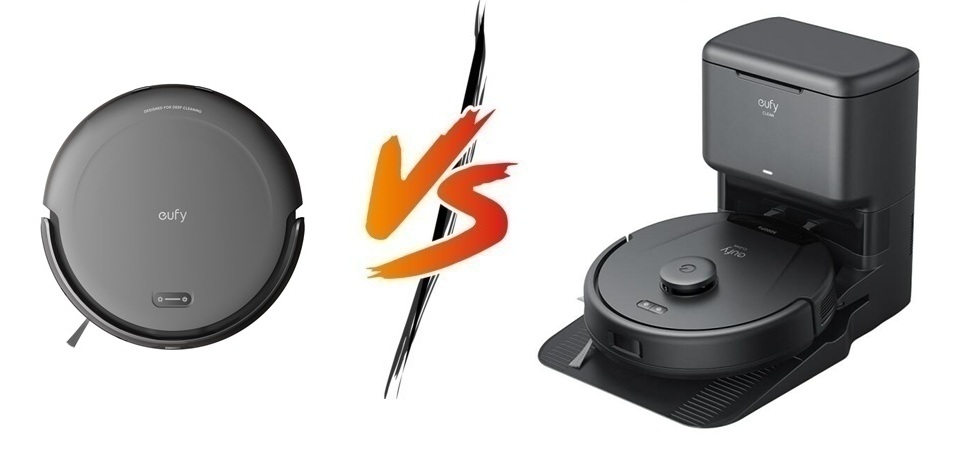
If you’re shopping for an affordable robot vacuum, chances are you’ve come across the Eufy C10 and Eufy L60. On paper, they look surprisingly similar. Both are positioned as budget-friendly robot vacuums with LiDAR navigation, smart mapping, app control, and self-emptying dock options. Both target people who want automated floor cleaning without spending premium Roborock or Dreame money.
After spending considerable time researching both machines and analyzing real-world user experiences, I think the comparison is more interesting than it first appears.
The Eufy C10 is the newer model. It focuses on simplicity, compact dimensions, and low-maintenance cleaning. The L60 is older but offers more powerful suction and a more mature navigation platform. While both belong to Eufy’s value-oriented lineup, they appeal to slightly different households.
The question is simple:
Should you buy the newer C10 or the proven L60?
The answer depends heavily on your home, floor types, pets, and expectations.
Eufy C10 vs Eufy L60 Comparison Chart
If you click the links below, under the product images, you will be redirected to Amazon.com. In case you then decide to buy anything, Amazon.com will pay me a commission. This doesn’t affect the honesty of this review in any way though.
| Specification | Eufy C10 | Eufy L60 |
|---|---|---|
 |  | |
| Check the best price on Amazon | Check the best price on Amazon | |
| Robot Type | Robot Vacuum with Self-Empty Station | Robot Vacuum with Self-Empty Station |
| Navigation System | Point LiDAR Navigation | iPath LiDAR Navigation with AI.Map 2.0 |
| Mapping Capability | Multi-room Mapping | Multi-room Mapping |
| Obstacle Avoidance | Basic Obstacle Detection | Basic Obstacle Detection |
| Suction Power | 4,000 Pa | 5,000 Pa |
| Automatic Carpet Boost | Yes | Yes (BoostIQ) |
| Main Brush Type | Rolling Brush | Rolling Brush |
| Edge Cleaning | Extending Side Brush | Standard Side Brush |
| Mopping Function | No | No |
| Dustbin Capacity (Robot) | Approximately 330 mL | Approximately 350 mL |
| Self-Empty Dock | Yes | Yes |
| Dock Dust Bag Capacity | 3 Liters | 2.5 Liters |
| Hair Detangling System | No | Yes |
| Maximum Runtime | Up to 120 Minutes | Up to 120 Minutes |
| Battery Capacity | 2,600 mAh | 5,200 mAh |
| Auto Recharge & Resume | Yes | Yes |
| Multi-Floor Mapping | Yes | Yes |
| No-Go Zones | Yes | Yes |
| Zone Cleaning | Yes | Yes |
| Room-Specific Cleaning | Yes | Yes |
| Scheduled Cleaning | Yes | Yes |
| Voice Assistant Support | Amazon Alexa, Google Assistant | Amazon Alexa, Google Assistant |
| App Control | Eufy Clean App | Eufy Clean App |
| Noise Level | Approximately 51 dB (Standard Mode) | Approximately 55–60 dB (Depending on Power Mode) |
| Threshold Climbing | Up to 17 mm | Up to 20 mm |
| Robot Height | 2.85 inches (72.5 mm) | 3.38 inches (85.8 mm) |
| Robot Diameter | Approximately 12.8 inches (325 mm) | Approximately 13.0 inches (330 mm) |
| Weight | Approximately 2.3 kg | Approximately 3.7 kg |
| Best Floor Types | Hard Floors, Low-Pile Carpets | Hard Floors, Low- and Medium-Pile Carpets |
| Pet Hair Performance | Good | Very Good |
| Under-Furniture Cleaning | Excellent | Good |
| Maintenance Requirements | Low | Very Low |
| Best For | Small Homes, Apartments, Low Furniture Clearance | Mixed Flooring, Pet Owners, Carpeted Homes |
| Overall Cleaning Performance | Good | Very Good |
| Overall Value | Good | Excellent |
| My individual reviews | Eufy C10 review |
Key Differences at a Glance
| Category | Winner |
|---|---|
| Suction Power | Eufy L60 |
| Navigation Quality | Eufy L60 |
| Carpet Cleaning | Eufy L60 |
| Pet Hair Handling | Eufy L60 |
| Maintenance Convenience | Eufy L60 |
| Under-Furniture Access | Eufy C10 |
| Corner Cleaning | Eufy C10 |
| Compact Dock Design | Eufy C10 |
| Battery Capacity | Eufy L60 |
| Overall Performance | Eufy L60 |
For most buyers, the Eufy L60 is the stronger all-around robot vacuum. The Eufy C10 becomes the better choice only if its ultra-slim design and ability to clean beneath very low furniture are priorities in your home.
Design & Build Quality
Design is one of the first things buyers notice when comparing robot vacuums, but it is also one of the most misunderstood categories. A robot vacuum can look sleek and modern in product photos yet become frustrating to live with once it starts navigating around furniture, squeezing beneath sofas, and surviving daily collisions with table legs and kitchen cabinets. Build quality goes beyond aesthetics. It encompasses durability, practicality, engineering decisions, and how well the machine holds up after months or years of regular use.
When comparing the Eufy C10 and Eufy L60, the differences in design philosophy become apparent almost immediately. Although both belong to Eufy’s affordable robot vacuum lineup, they were clearly built with different priorities in mind. The C10 focuses heavily on compactness and accessibility, while the L60 prioritizes cleaning effectiveness and long-term practicality.
Eufy C10 Design
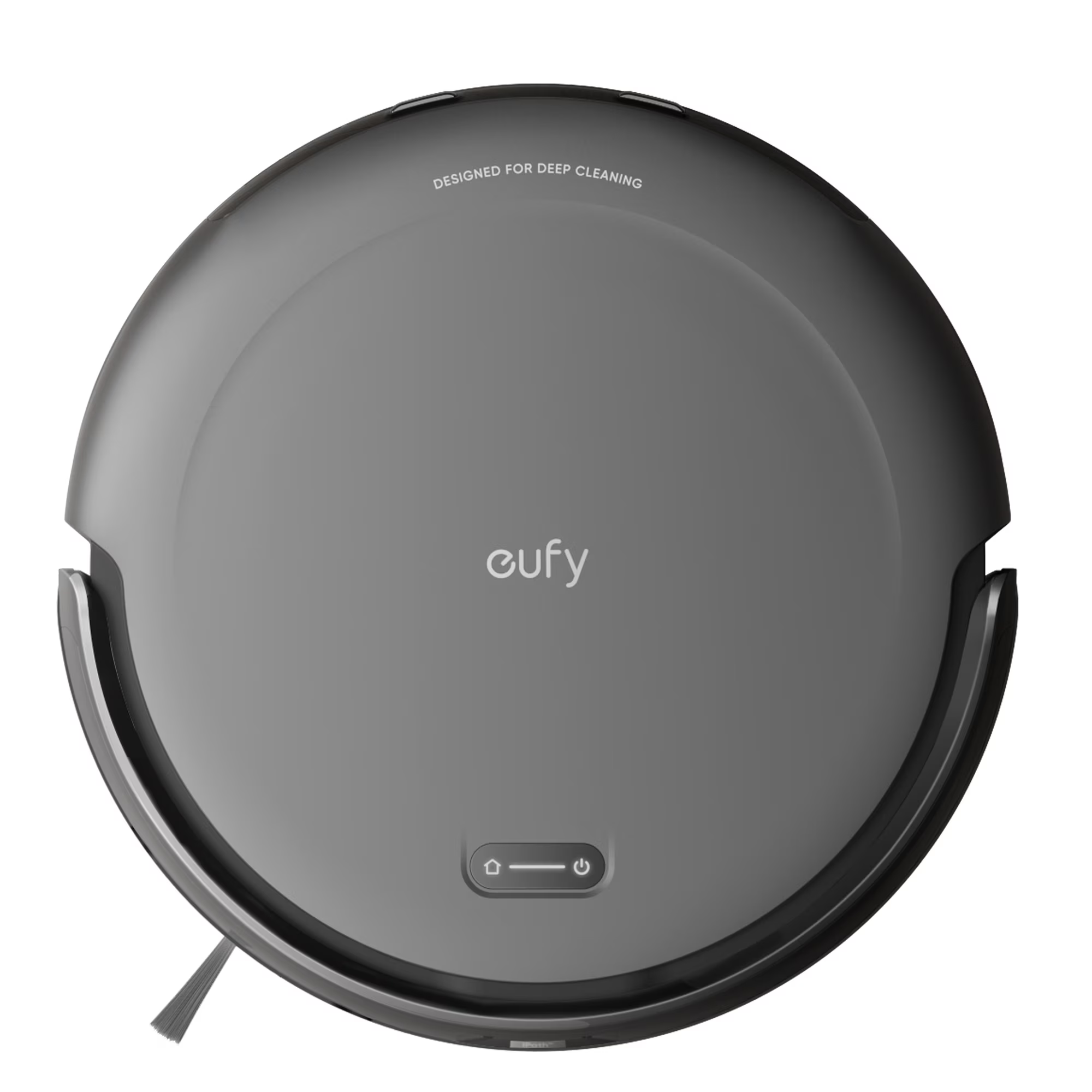
The defining characteristic of the Eufy C10 is its extremely slim profile. Unlike many robot vacuums that feature a large LiDAR tower protruding from the top, the C10 uses a different approach that allows the entire machine to remain unusually low to the ground. This design choice immediately sets it apart from many competitors.
In everyday use, the slim profile is not merely a marketing feature. It solves a real-world problem that many robot vacuum owners encounter. Traditional robot vacuums often struggle to fit beneath beds, sofas, entertainment units, and cabinets. As a result, those areas accumulate dust and pet hair despite having a robot vacuum running regularly throughout the home.
The C10 can access many of these difficult areas with ease. During routine cleaning cycles, it can travel under furniture that would completely block taller robots. For homes with low-clearance furniture, this can significantly improve overall floor coverage.
Visually, the C10 embraces a minimalist design language. The body is clean and understated, without excessive styling elements or flashy accents. It looks modern without drawing attention to itself. Most owners will likely appreciate how easily it blends into contemporary interiors.
The compact self-emptying dock follows a similar philosophy. Many self-emptying stations have become increasingly large over the past few years, sometimes resembling small household appliances rather than simple charging stations. The C10’s dock remains relatively compact, making it easier to place in apartments, smaller homes, or rooms where space is limited.
Another notable design feature is the extending side brush mechanism. This brush can reach outward when cleaning edges and corners, helping the robot collect debris that would otherwise remain untouched. It is a thoughtful engineering addition because corners remain one of the most challenging areas for any circular robot vacuum to clean effectively.
The overall appearance of the C10 feels modern and innovative. Eufy clearly attempted to differentiate it from the countless generic robot vacuums that currently populate the market.
Eufy C10 Build Quality
While the C10’s design is impressive, build quality presents a slightly more mixed picture.
The materials used throughout the robot are generally acceptable for its price category. The plastic housing feels reasonably solid and does not exhibit excessive flex when handled. Buttons and access panels operate smoothly, and the dustbin removal mechanism feels secure.
However, the lightweight construction creates a slightly less substantial impression compared to some competitors. This is not necessarily a sign of poor durability, but it does mean the robot feels less robust when picked up and carried.
The slim design also introduces compromises. To achieve such a low profile, certain components have been engineered differently than on conventional robot vacuums. While this allows the robot to fit beneath furniture, it may also contribute to slightly less confidence-inspiring durability over the long term.
One area where build quality becomes particularly important is collision management. Robot vacuums inevitably bump into furniture, walls, and other household obstacles. The front bumper system on the C10 absorbs impacts reasonably well, but the robot’s navigation behavior sometimes results in more frequent physical contact than owners might prefer.
Over months of operation, these repeated bumps can lead to cosmetic scuffs and scratches. Although this does not necessarily affect performance, it can make the robot appear worn more quickly than expected.
Overall, the C10 feels adequately constructed for its intended market segment, but it does not quite deliver the premium, overbuilt feel associated with higher-end robot vacuums.
Eufy L60 Design
The Eufy L60 takes a more conventional approach.
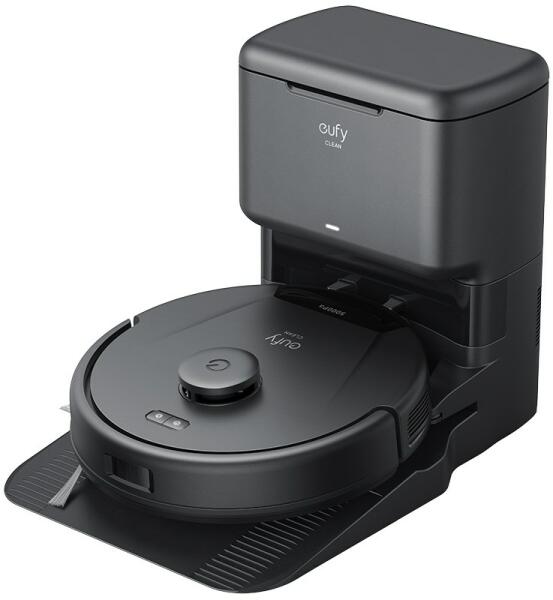
At first glance, it resembles the robot vacuum design that most consumers are familiar with. The body is slightly taller, and the overall shape prioritizes cleaning hardware and navigation systems rather than achieving the lowest possible height.
Some buyers may initially find the L60 less exciting because it lacks the C10’s unique slim-profile appeal. However, after spending time with both machines, it becomes clear that Eufy’s design decisions on the L60 were driven primarily by functionality.
The robot has a balanced, practical appearance that communicates its purpose immediately. Everything about the design feels optimized for cleaning performance rather than visual innovation.
The self-emptying dock is larger than the one included with the C10, but it also feels more substantial. Its dimensions are unlikely to be problematic for most households, although users living in very small apartments may prefer the more compact footprint of the C10’s station.
One particularly clever aspect of the L60’s design is its integration of the automatic hair detangling system. Long hair and pet fur are among the most common frustrations robot vacuum owners face. By incorporating a mechanism that actively cuts wrapped hair from the brush roller, Eufy addresses a maintenance issue that many competing manufacturers still leave entirely to the user.
This feature demonstrates a practical understanding of real-world ownership rather than focusing solely on showroom specifications.
Eufy L60 Build Quality
The L60 generally feels more mature and refined from a construction standpoint.
The chassis feels sturdy, with fewer signs of cost-cutting. The plastics are solid, the moving parts operate smoothly, and the overall assembly inspires confidence.
When lifting the robot, there is an immediate sense of density and structural integrity. Nothing rattles or feels loose. The machine feels like it was designed to withstand years of daily cleaning cycles.
The bumper system also appears more confidence-inspiring during operation. While no robot vacuum can completely avoid collisions, the L60 tends to handle physical contact with furniture in a controlled and predictable manner.
The main brush assembly, wheels, and removable components all feel durable and well-engineered. Maintenance access points are easy to reach, and the various removable parts lock into place securely.
Long-term ownership often reveals weaknesses that are not apparent during initial setup. Based on its construction and overall engineering, the L60 appears better positioned to maintain its performance and structural integrity over years of use.
Design & Build Quality Verdict
This comparison ultimately comes down to innovation versus practicality.
The Eufy C10 deserves praise for its remarkably slim design, compact dock, and creative approach to corner cleaning. It solves a genuine problem for households with low-clearance furniture and introduces useful ideas rarely seen at its price point.
However, the Eufy L60 feels like the more complete product from a build-quality perspective. Its construction inspires greater confidence, its components feel more robust, and its design choices focus on improving the ownership experience rather than simply creating an eye-catching specification sheet.
If your home contains numerous low sofas, beds, and cabinets that other robots cannot reach, the C10’s design advantages may outweigh its compromises.
For most buyers, however, the L60 delivers the stronger overall combination of durability, practicality, and long-term reliability.
Winner: Eufy L60
Navigation Intelligence & Mapping
Navigation is arguably the single most important factor that separates a good robot vacuum from a frustrating one. Suction power often dominates marketing materials, but even the strongest vacuum will struggle to clean effectively if it cannot move intelligently around a home. Efficient navigation determines how thoroughly a robot covers floors, how quickly it completes cleaning cycles, how often it gets stuck, and ultimately how much intervention is required from the owner.
When comparing the Eufy C10 and Eufy L60, both models benefit from modern LiDAR-based navigation systems, placing them far ahead of older robot vacuums that relied primarily on random movement patterns. However, while both machines appear similar on paper, their real-world navigation performance reveals meaningful differences that become increasingly noticeable during long-term ownership.
Why Navigation Matters
Before comparing the two robots directly, it is worth understanding why navigation technology plays such a critical role in overall cleaning performance.
Years ago, many budget robot vacuums operated almost blindly. They would travel in straight lines until hitting an obstacle, change direction, and continue moving until they encountered another object. While these robots eventually cleaned much of the floor, their movement patterns were inefficient and unpredictable.
Modern LiDAR systems have transformed the robot vacuum industry. By continuously scanning their surroundings and building virtual maps of the home, robots can create logical cleaning routes rather than wandering aimlessly. This improves coverage, reduces cleaning time, conserves battery life, and creates a much more reliable ownership experience.
The difference between a robot that systematically cleans a room and one that constantly retraces its steps can be enormous.
Both the C10 and L60 benefit from this technological advancement, but they implement it with different levels of effectiveness.
Eufy C10 Navigation System
The Eufy C10 uses a compact LiDAR navigation system combined with additional sensors that help the robot understand its surroundings. The primary goal of the system is to create an accurate floor plan while maintaining the robot’s unusually slim profile.
This presents an interesting engineering challenge.
Traditional robot vacuums often place a large LiDAR turret on top of the machine. The C10 avoids this approach in order to preserve its low height, which is one of its key selling points. While this allows the robot to fit beneath furniture that blocks many competitors, it also introduces certain compromises in environmental awareness.
During initial setup, the C10 generally creates maps quickly and accurately. Most rooms are recognized correctly, and the robot is capable of generating a usable floor plan after a relatively short exploration run.
The resulting map provides access to features that have become standard in modern robot vacuums, including room division, customized cleaning zones, scheduling, virtual boundaries, and no-go areas.
For users transitioning from older random-navigation robots, the improvement feels substantial.
The robot follows systematic cleaning paths rather than wandering unpredictably. It moves in organized rows and generally avoids excessive overlap during routine cleaning sessions.
At first glance, this creates the impression of a highly capable navigation system.
However, extended use reveals some limitations.
Real-World Behavior of the C10
The most noticeable weakness of the C10 is its tendency to rely more heavily on physical interaction with obstacles than many competing LiDAR-equipped robots.
Although it can identify walls, furniture, and room boundaries reasonably well, it often approaches objects closely before adjusting its course. In some situations, it appears to use gentle contact as a confirmation mechanism rather than avoiding obstacles entirely.
This is not necessarily a major problem in uncluttered homes.
If your floors remain relatively clear and furniture layouts are simple, the robot performs adequately. It can navigate between rooms, clean under furniture, and return to its dock without significant issues.
The situation changes when clutter enters the equation.
Items such as charging cables, pet toys, shoes, laundry, and small household objects can present challenges. The robot’s obstacle recognition capabilities are limited compared to more advanced systems that incorporate cameras or artificial intelligence-based object identification.
As a result, owners often need to spend more time preparing floors before cleaning cycles begin.
Another area where the C10 occasionally struggles is route optimization. While it generally follows logical patterns, there are situations where it spends extra time repositioning itself or making repeated passes through certain areas before moving on.
These inefficiencies are not catastrophic, but they contribute to a navigation experience that feels less refined than some competitors.
The robot usually gets the job done. It simply does so with less confidence and precision.
Eufy L60 Navigation System
The Eufy L60 takes a more conventional approach to LiDAR navigation, and in many respects, this benefits overall performance.
From the moment the robot begins mapping a home, it exhibits a stronger sense of spatial awareness. Floor plans are generated quickly, room recognition is accurate, and navigation behavior feels deliberate.
Like the C10, the L60 supports multi-room mapping, virtual boundaries, room-specific cleaning schedules, and customized cleaning routines.
The difference lies in execution.
The L60 generally appears more confident in its understanding of the environment. Rather than hesitating or repeatedly adjusting its position, it tends to move through rooms with a greater sense of purpose.
Cleaning paths are logical and efficient. The robot systematically covers open floor areas while minimizing unnecessary overlap. This translates into faster cleaning cycles and more predictable performance.
The robot also demonstrates stronger route planning when moving between rooms. Transitions feel smoother, and the machine rarely appears confused about its location.
These improvements may sound minor on paper, but they become increasingly valuable during everyday use.
A robot vacuum that consistently cleans the entire home without intervention is far more useful than one that occasionally requires assistance or supervision.
Mapping Accuracy
Both robots produce detailed maps that are easy to understand within the Eufy app.
Room segmentation works well on both models, allowing users to assign names to individual rooms and create customized cleaning routines.
For example, users can instruct either robot to clean only the kitchen after dinner or vacuum high-traffic areas multiple times per day.
The mapping systems also support virtual barriers and restricted zones, which can be particularly useful around pet feeding stations, delicate furniture, or areas containing cables.
However, the L60 generally maintains map accuracy more consistently over time.
The C10 occasionally requires map adjustments after environmental changes or navigation errors, whereas the L60 tends to preserve room layouts more reliably.
This contributes to a smoother ownership experience, especially in larger homes with multiple rooms.
Obstacle Handling
Neither robot belongs to the premium category of obstacle avoidance systems that use advanced cameras and artificial intelligence to identify individual objects.
Both machines can struggle with cables, socks, small toys, and other low-profile items.
In this respect, neither model should be considered a truly hands-off solution.
However, the L60 typically handles these situations more gracefully. It appears better at maintaining awareness of obstacles and navigating around them without becoming confused.
The C10’s lower profile sometimes allows it to access areas the L60 cannot reach, but this advantage can be offset by its less refined obstacle management.
As a result, users may occasionally find the C10 trapped beneath furniture or interacting with objects that the L60 would have avoided more effectively.
Long-Term Navigation Experience
One of the most important aspects of robot vacuum ownership is consistency.
A robot that performs well during the first week but becomes frustrating over time ultimately fails to deliver on its promise of convenience.
This is where the L60 establishes a clear advantage.
Its navigation system feels more mature, more predictable, and more reliable during everyday operation. Owners are less likely to encounter unexpected behavior, navigation errors, or incomplete cleaning runs.
The C10 remains perfectly usable and benefits significantly from its ability to clean beneath low furniture. For some households, that advantage alone may justify its purchase.
However, when evaluating navigation intelligence as a whole, the L60 consistently delivers the stronger performance.
Navigation & Mapping Verdict
Both the Eufy C10 and Eufy L60 represent a substantial improvement over older budget robot vacuums. Their LiDAR-based systems provide structured cleaning patterns, detailed home mapping, and useful customization options through the Eufy app.
The C10 deserves credit for integrating these capabilities into an exceptionally slim design. Its ability to access hard-to-reach areas is a genuine advantage that many users will appreciate.
Nevertheless, navigation is about more than simply creating a map. It is about understanding the environment, moving efficiently, avoiding problems, and completing cleaning tasks with minimal supervision.
In these areas, the Eufy L60 proves to be the more polished and dependable machine. Its route planning is more efficient, its spatial awareness feels more refined, and its overall behavior inspires greater confidence during daily operation.
Winner: Eufy L60
Vacuuming Performance
At the end of the day, every robot vacuum succeeds or fails based on one simple question: how clean does it leave your floors?
Features such as smart mapping, app controls, self-emptying docks, and voice assistants can certainly improve the ownership experience, but none of them matter if the robot struggles to remove dust, debris, hair, and dirt from the floor. Vacuuming performance remains the most important category in any robot vacuum comparison because it directly determines whether the machine can genuinely reduce household cleaning work.
When comparing the Eufy C10 and Eufy L60, both robots are capable cleaners that outperform many entry-level models. Neither feels underpowered for routine household maintenance, and both can effectively handle the everyday debris that accumulates in most homes. However, once cleaning conditions become more demanding, meaningful differences begin to emerge.
The Eufy L60 consistently demonstrates stronger overall cleaning ability, while the C10 focuses more on accessibility and convenience.
Understanding Real-World Vacuuming Performance
Before comparing the two robots directly, it is important to understand that vacuuming performance is about much more than suction numbers.
Manufacturers often advertise suction power as the primary measure of cleaning ability, but suction alone does not determine how well a robot cleans.
Several factors contribute to overall performance:
- Suction strength
- Brush design
- Airflow efficiency
- Debris pickup consistency
- Carpet agitation
- Edge cleaning effectiveness
- Navigation efficiency
- Floor coverage
A robot with higher suction may still perform poorly if its brush system is ineffective. Likewise, a robot with moderate suction can sometimes achieve excellent results if its brushes, airflow, and navigation work together efficiently.
This is why real-world cleaning results matter far more than marketing specifications.
Eufy C10 Performance Overview
The Eufy C10 is designed primarily as a maintenance vacuum.
This distinction is important because robot vacuums generally perform best when used frequently. Instead of replacing traditional vacuuming entirely, they prevent dust, crumbs, pet hair, and dirt from accumulating between deeper cleaning sessions.
Within that role, the C10 performs reasonably well.
On hard flooring surfaces such as hardwood, laminate, vinyl, and tile, the robot is capable of collecting most everyday debris without difficulty. Fine dust, pet hair, breadcrumbs, dirt tracked in from outside, and similar household messes are typically removed during a single cleaning cycle.
The robot’s brush system works effectively on smooth surfaces, and the suction power is sufficient to pull debris into the dustbin without leaving obvious trails behind.
In kitchens, dining areas, hallways, and living rooms with hard flooring, the C10 generally leaves floors looking clean after routine maintenance runs.
One of its strengths is consistency.
When operated daily or several times per week, it prevents visible dirt accumulation and helps maintain a tidy appearance throughout the home.
For many households, that may be enough.
Hard Floor Performance
Hard floors represent the easiest environment for robot vacuums, and both the C10 and L60 perform well here.
The C10 handles common debris types effectively, including:
- Dust
- Fine dirt
- Crumbs
- Pet hair
- Food particles
- Small household debris
The side brush helps direct debris toward the main suction path, while the low profile allows the robot to reach underneath furniture where dust often collects.
This advantage should not be underestimated.
Many robot vacuums leave significant amounts of debris under sofas and beds simply because they cannot physically access those areas. The C10’s slim design allows it to clean locations that remain untouched by taller competitors.
As a result, overall floor coverage can sometimes compensate for its lower suction power.
In certain homes, cleaning more areas may be more valuable than cleaning individual areas slightly better.
Carpet Performance of the C10
The situation becomes more challenging once carpets enter the picture.
Robot vacuums generally struggle more with carpeted surfaces because debris becomes embedded within carpet fibers rather than resting on top of the floor.
The C10 performs adequately on low-pile carpets and area rugs.
Loose dirt, pet hair, dust, and lightweight debris are usually removed successfully during normal cleaning runs. For maintenance cleaning, results are acceptable and often sufficient for households with moderate cleaning demands.
However, limitations become apparent when dealing with:
- Thick carpeting
- Dense carpet fibers
- Embedded dirt
- Heavy pet hair accumulation
- Larger debris particles
The robot can remove surface debris, but it lacks the deeper cleaning ability associated with stronger vacuum systems.
If a carpet has not been cleaned for an extended period, the C10 may require multiple passes to achieve satisfactory results.
Even then, some deeply embedded debris may remain behind.
Eufy L60 Performance Overview
The Eufy L60 approaches cleaning from a different perspective.
Where the C10 prioritizes accessibility and compactness, the L60 prioritizes cleaning power.
This becomes evident almost immediately during operation.
The stronger suction system provides noticeably greater pickup performance across virtually every floor type. Although the numerical difference between the two robots may not appear dramatic on paper, the real-world results are consistently in the L60’s favor.
The robot feels more confident when dealing with larger debris and more challenging cleaning situations.
Dust, crumbs, dirt, pet hair, and household debris are collected efficiently, often requiring fewer passes than the C10.
The difference is not necessarily dramatic during light cleaning tasks, but it becomes increasingly obvious as cleaning demands increase.
Hard Floor Performance of the L60
On hard floors, the L60 performs exceptionally well for its price category.
Like the C10, it removes dust, dirt, pet hair, and food debris with little difficulty. However, the stronger suction improves pickup consistency, particularly when dealing with heavier particles.
For example, larger crumbs, cereal pieces, tracked-in debris, and similar materials are often collected more effectively during a single pass.
The robot also appears slightly better at collecting debris from floor seams and textured surfaces.
While both robots leave hard floors looking clean, the L60 tends to achieve a more thorough result.
The difference may not always be visible immediately, but it becomes apparent when examining dustbin contents or observing repeated cleaning cycles over time.
Carpet Performance of the L60
Carpet cleaning is where the L60 establishes its clearest advantage.
Unlike hard floors, carpets demand both suction and agitation to extract dirt effectively. The L60’s stronger vacuum system provides a noticeable improvement in this area.
On low-pile carpets, performance is excellent for a robot vacuum in this price range.
The robot removes surface debris efficiently and maintains carpet appearance with regular use.
Medium-pile carpets also produce respectable results, particularly when the robot is allowed to clean frequently.
Pet owners are likely to notice the difference most clearly.
Pet hair has a tendency to become trapped within carpet fibers, especially in high-traffic areas. The L60’s stronger suction helps extract this material more effectively than the C10.
The automatic carpet boost functionality further enhances performance by increasing suction when carpeted surfaces are detected.
As a result, the robot adapts its cleaning behavior without requiring user intervention.
This creates a more effective cleaning experience across mixed floor types.
Debris Pickup Comparison
When directly comparing pickup performance, the L60 consistently gains an advantage in several categories.
For fine dust, both robots perform well.
For pet hair, the L60 performs better.
For carpet cleaning, the L60 performs better.
For larger debris, the L60 performs better.
For deep cleaning, the L60 performs significantly better.
The C10 remains fully capable of routine maintenance cleaning, but it is easier to overwhelm when dirt levels increase.
The L60 feels more versatile because it handles both maintenance cleaning and moderately demanding cleaning situations with greater confidence.
Daily Cleaning Versus Deep Cleaning
One of the most important distinctions between these robots is how they approach cleaning.
The C10 excels as a maintenance machine.
Run it every day, and floors will generally stay clean. Its slim profile allows it to access hidden areas, and its performance is sufficient to prevent visible dirt accumulation.
The L60 functions as both a maintenance cleaner and a more capable vacuum.
It still benefits from frequent operation, but it is better equipped to handle missed cleaning sessions, heavier debris loads, and carpeted environments.
This makes it more forgiving in real-world households where cleaning schedules are not always perfectly consistent.
Vacuuming Performance Verdict
The Eufy C10 delivers respectable cleaning performance and succeeds at its primary goal of maintaining hard floors and low-pile carpets between deeper cleaning sessions. Its ability to clean beneath furniture gives it a unique advantage that directly contributes to overall floor coverage.
However, when evaluating pure vacuuming ability, the Eufy L60 is the stronger machine.
Its superior suction, stronger carpet performance, better debris pickup, and more versatile cleaning capabilities make it the more effective cleaner across a wider range of situations.
The C10 is a good maintenance vacuum.
The L60 is a better vacuum cleaner.
Winner: Eufy L60
Mopping Capability
At first glance, the mopping comparison between the Eufy C10 and Eufy L60 seems incredibly straightforward because neither robot vacuum includes a built-in mopping system. Unlike many modern robot vacuums that combine vacuuming and mopping into a single appliance, both models are designed exclusively for dry floor cleaning.
From a purely technical standpoint, this means there is no direct mopping performance to compare. Neither robot includes a water tank, mop pad, vibrating mop module, rotating mop system, or any of the automated washing and drying features that have become increasingly common in premium robot vacuum models.
However, dismissing the category entirely would overlook an important part of the buying decision. In today’s robot vacuum market, consumers increasingly expect some level of floor washing capability, even from affordable models. As a result, understanding what the C10 and L60 do not offer is just as important as understanding what they do offer.
The absence of mopping functionality affects not only how these robots clean but also the type of household they are best suited for and the expectations buyers should have before making a purchase.
The Growing Importance of Robot Mopping
Over the past several years, robot vacuum technology has evolved dramatically.
Early robot vacuums focused solely on vacuuming. Their purpose was simple: collect dust, dirt, and debris from floors while reducing the need for manual vacuuming.
As competition increased, manufacturers began adding mopping systems to create more complete floor-cleaning solutions. What started as basic drag-behind damp cloths eventually evolved into sophisticated systems featuring:
- Electrically controlled water flow
- Vibrating mop pads
- Dual rotating mop heads
- Automatic mop washing
- Hot water cleaning
- Mop drying systems
- Intelligent carpet avoidance
Today, many consumers expect robot vacuums to handle both dry and wet cleaning tasks.
This shift makes the lack of mopping capability on the C10 and L60 more noticeable than it might have been just a few years ago.
Why Neither Robot Includes Mopping
The decision to exclude mopping functionality was likely intentional.
Both the C10 and L60 are positioned as affordable robot vacuums focused primarily on delivering strong vacuuming performance at accessible price points.
Including a mopping system would have increased manufacturing complexity and overall cost.
Additional components such as water tanks, pumps, mop pads, moisture sensors, and software controls would inevitably raise prices while introducing additional maintenance requirements.
Instead, Eufy appears to have concentrated resources on improving vacuuming performance, navigation, and self-emptying functionality.
From a value perspective, this approach makes sense.
Many consumers purchasing robot vacuums in this price range prioritize reliable vacuuming over advanced floor washing capabilities.
The result is two machines that focus on doing one job well rather than attempting to do multiple jobs adequately.
What You Lose Without Mopping
Despite the advantages of simplicity, the absence of mopping does create limitations.
Vacuuming and mopping address different types of dirt.
Vacuuming excels at removing:
- Dust
- Pet hair
- Crumbs
- Dirt particles
- Dry debris
Mopping addresses problems such as:
- Sticky residues
- Dried spills
- Kitchen splashes
- Footprints
- Smudges
- Fine surface grime
A robot vacuum can leave a floor looking clean while still leaving behind a thin layer of residue that only wet cleaning can remove.
This becomes especially noticeable in kitchens, dining rooms, bathrooms, and entryways.
For example, imagine a kitchen floor after several days of cooking.
The robot vacuum may successfully collect breadcrumbs, dust, and food particles. However, tiny grease droplets, beverage splashes, and sticky residues may remain attached to the floor surface.
Without mopping, those contaminants gradually accumulate.
Owners of the C10 and L60 should therefore view these machines as vacuuming solutions rather than complete floor-cleaning systems.
Hard Floor Homes
The lack of mopping affects hard-floor households more than carpet-heavy homes.
If your home contains primarily:
- Hardwood flooring
- Vinyl flooring
- Tile flooring
- Laminate flooring
You will likely notice the absence of mopping more frequently.
Hard floors often benefit from regular wet cleaning because they visibly show footprints, spills, and surface residue.
In these environments, a robot that combines vacuuming and mopping can significantly reduce household maintenance.
Since neither the C10 nor the L60 provides this functionality, owners must continue using traditional mops or dedicated floor-cleaning tools periodically.
The robots will help keep floors free of debris, but they cannot fully replace manual floor washing.
Carpet-Dominant Homes
Interestingly, the absence of mopping matters less in homes dominated by carpeting.
If most of your living space consists of:
- Wall-to-wall carpet
- Area rugs
- Carpeted bedrooms
- Carpeted living rooms
Mopping may not be particularly important.
In these situations, vacuuming performance becomes the primary concern because carpet cleaning relies almost entirely on suction, airflow, and brush agitation.
For carpet-focused households, the decision between the C10 and L60 should center on vacuuming ability rather than the lack of mopping.
The omission becomes much easier to accept when wet floor cleaning represents only a small portion of overall household maintenance.
Simplicity Has Advantages
While the absence of mopping may seem like a disadvantage, it also creates several practical benefits.
Robot vacuums with mopping systems often require significantly more maintenance than vacuum-only models.
Owners may need to:
- Refill water tanks
- Empty dirty water tanks
- Wash mop pads
- Replace worn pads
- Clean water channels
- Prevent mold buildup
- Monitor moisture-related issues
Premium systems can automate some of these tasks, but they rarely eliminate them entirely.
By focusing exclusively on vacuuming, both the C10 and L60 remain comparatively simple machines.
Maintenance requirements are lower.
There are fewer components that can fail.
Daily operation is more straightforward.
For many buyers, particularly those seeking a low-maintenance cleaning solution, this simplicity can be a meaningful advantage.
Which Robot Would Be Better If Mopping Existed?
Although neither robot includes mopping capability, it is possible to speculate about how their designs would influence mopping performance if such systems were present.
The C10’s ultra-slim profile could create challenges when incorporating larger water tanks or sophisticated mop mechanisms. Maintaining its compact dimensions would likely require compromises in water capacity or cleaning pressure.
The L60’s larger chassis would theoretically provide more room for a substantial mopping system, larger reservoirs, and more advanced floor-washing technology.
Its stronger cleaning platform and more robust construction would likely support mopping integration more effectively.
Of course, this remains purely hypothetical because neither model was designed for wet cleaning.
Who Should Consider a Mopping Robot Instead?
Some buyers should seriously consider alternatives that include mopping functionality.
You may want a robot vacuum with mopping capabilities if:
- You have large hard-floor areas.
- You frequently clean kitchen spills.
- You dislike manual mopping.
- You want maximum cleaning automation.
- You have children who create messes.
- You want a true vacuum-and-mop combination.
In these situations, upgrading to a robot with integrated mopping may provide greater long-term satisfaction.
The C10 and L60 excel at vacuuming, but neither attempts to address wet floor maintenance.
Mopping Capability Verdict
Comparing the Eufy C10 and Eufy L60 in terms of mopping capability ultimately results in a draw because neither machine offers any form of floor washing functionality.
Both robots are designed exclusively for vacuuming and should be evaluated accordingly.
The lack of mopping may disappoint buyers seeking an all-in-one floor-cleaning solution, particularly in homes with extensive hard flooring. However, it also contributes to simpler operation, lower maintenance requirements, and more affordable pricing.
Rather than viewing the absence of mopping as a flaw, it is more accurate to view it as a deliberate design choice. Eufy chose to focus resources on navigation, vacuuming performance, and automation rather than adding basic mopping features that might have diluted overall value.
As a result, both robots succeed as vacuum cleaners but leave wet floor cleaning entirely to the user.
Winner: Tie
Maintenance & Cleaning
One of the biggest misconceptions surrounding robot vacuums is that they are completely maintenance-free. Marketing materials often create the impression that a robot vacuum can be set loose in the home and forgotten about entirely. While modern self-emptying systems have significantly reduced the amount of work required from the owner, every robot vacuum still demands a certain level of routine maintenance to perform at its best.
Dustbins fill up. Filters become clogged. Brushes collect hair. Sensors gather dust. Wheels accumulate debris. Even the most advanced robot vacuum eventually requires attention.
This makes maintenance one of the most important long-term ownership categories. A robot vacuum that cleans well but requires constant upkeep can become frustrating over time. Conversely, a machine with slightly lower cleaning performance may still deliver a better ownership experience if maintenance requirements are minimal.
When comparing the Eufy C10 and Eufy L60, both robots are designed to reduce owner involvement as much as possible through self-emptying docks and straightforward maintenance systems. However, there are meaningful differences between them that become increasingly important over months and years of regular use.
Why Maintenance Matters
The true value of a robot vacuum lies in convenience.
People buy robot vacuums because they want to spend less time cleaning floors. If the robot constantly requires intervention, much of that convenience disappears.
Maintenance affects several aspects of ownership:
- Cleaning performance
- Reliability
- Longevity
- Operating costs
- User satisfaction
A neglected robot vacuum gradually loses effectiveness. Filters restrict airflow, tangled brushes reduce pickup performance, and dirty sensors can interfere with navigation.
Regular maintenance keeps the machine operating as intended, but the amount of effort required varies significantly from one model to another.
This is where the differences between the C10 and L60 become particularly important.
Eufy C10 Maintenance Overview
The Eufy C10 was clearly designed with ease of ownership in mind.
The robot incorporates a self-emptying system that automatically transfers debris from the onboard dustbin into a larger disposable dust bag located inside the docking station.
This feature alone dramatically reduces maintenance requirements compared to traditional robot vacuums.
Without a self-emptying dock, users may need to empty the robot’s dustbin after every cleaning cycle, especially in homes with pets or high levels of dust. With the C10, the robot can often operate for weeks before the dock’s dust bag requires replacement.
For many users, this transforms the ownership experience.
Instead of interacting with the vacuum every day, maintenance becomes an occasional task.
Dustbin and Self-Emptying Performance
The self-emptying dock is one of the strongest aspects of the C10.
The system generally transfers debris effectively, minimizing the frequency of manual intervention. Most dust, dirt, hair, and household debris are successfully moved from the robot into the larger storage bag.
The process is straightforward and largely automatic.
After completing a cleaning session, the robot returns to the dock, where accumulated debris is extracted from the onboard dustbin.
For households with moderate cleaning needs, the dock can store weeks’ worth of debris before requiring attention.
This greatly enhances convenience and makes the robot feel much more autonomous than older designs.
The dust bag replacement process is also simple and relatively clean. Users can remove the full bag and install a new one without significant exposure to collected dust.
This can be particularly beneficial for allergy sufferers who prefer to avoid direct contact with accumulated debris.
Brush Maintenance on the C10
Like most robot vacuums, the C10 uses a combination of a main brush and side brush to collect debris.
These components inevitably require periodic cleaning.
Hair, thread, string, and fibers can become wrapped around the brush roller over time. Pet owners and individuals with long hair are especially likely to encounter this issue.
Removing tangled hair is not particularly difficult, but it does require occasional manual effort.
The brush assembly is easy to access, allowing users to remove and clean it without specialized tools.
However, because the C10 lacks an advanced anti-tangle mechanism, owners should expect to inspect the brush regularly.
Ignoring accumulated hair can eventually reduce cleaning effectiveness and place additional strain on the motor.
Filter Maintenance
The C10 uses filtration systems designed to capture fine dust and airborne particles.
Over time, these filters gradually become clogged with debris.
Routine cleaning is necessary to maintain airflow and suction performance.
Fortunately, filter access is straightforward.
Most users can remove, clean, and reinstall the filter within a few minutes.
The Eufy app also helps simplify maintenance by tracking component wear and notifying users when filters, brushes, or other consumable parts may require attention.
These reminders reduce guesswork and help maintain optimal performance.
Eufy L60 Maintenance Overview
The Eufy L60 follows a similar maintenance philosophy but introduces one feature that significantly changes the ownership experience.
Like the C10, it uses a self-emptying dock to reduce dustbin maintenance. Daily interaction is minimal, and debris is automatically transferred into a larger collection bag after cleaning sessions.
The overall maintenance routine feels familiar to anyone who has used a modern self-emptying robot vacuum.
Where the L60 separates itself is in its approach to hair management.
The Hair Detangling System
Hair tangles are one of the most common complaints among robot vacuum owners.
Long hair and pet fur naturally wrap around rotating brush rollers during operation. Over time, these tangles can become dense enough to reduce cleaning effectiveness and require manual removal.
Traditionally, owners have had to cut or pull away tangled hair themselves.
The L60 addresses this issue through its integrated hair detangling system.
When the robot returns to the dock, accumulated hair wrapped around the main brush can be automatically cut and removed.
This feature may sound minor, but in practice it delivers a significant improvement in day-to-day ownership.
For households with pets, family members with long hair, or both, brush cleaning often represents the most annoying maintenance task.
By automating much of this process, the L60 reduces one of the largest sources of frustration associated with robot vacuum ownership.
Real-World Benefits for Pet Owners
The benefits of the L60’s hair management system become particularly apparent in pet-friendly homes.
Pet hair tends to accumulate rapidly.
Dogs shed constantly.
Cats deposit fur throughout the home.
Long-haired breeds can produce astonishing amounts of loose hair over time.
While both the C10 and L60 can collect this material effectively, the L60 requires less manual intervention to maintain peak performance.
The brush roller remains cleaner for longer periods, reducing maintenance frequency and helping preserve suction efficiency.
For pet owners, this convenience can easily become one of the robot’s most valuable features.
Sensor and Wheel Maintenance
Both robots require occasional cleaning of their sensors and wheels.
Dust can accumulate on navigation sensors, reducing accuracy over time. Likewise, hair and debris can become trapped around wheel assemblies.
Fortunately, maintenance in these areas is relatively simple for both models.
Periodic inspection and cleaning usually take only a few minutes.
Neither robot presents any major challenges when it comes to accessing sensors or wheel components.
The process is straightforward and unlikely to create frustration for most owners.
Replacement Parts and Long-Term Upkeep
Over years of operation, certain components inevitably wear out.
Common replacement items include:
- Filters
- Side brushes
- Main brushes
- Dust bags
Both robots utilize standard maintenance schedules similar to those found throughout the robot vacuum industry.
The Eufy app assists by monitoring component life and providing reminders when replacements may be necessary.
This helps users avoid performance degradation caused by worn consumable parts.
Long-term ownership costs are therefore relatively predictable.
Neither machine introduces unusual maintenance expenses beyond standard replacement components.
Day-to-Day Ownership Experience
The difference between these robots becomes most noticeable during everyday use.
The C10 is already a low-maintenance machine thanks to its self-emptying dock and user-friendly design. Most owners will find upkeep requirements reasonable and manageable.
The L60 takes that convenience one step further.
By reducing the need for manual brush cleaning, it removes one of the most frequent maintenance tasks robot vacuum owners encounter.
Over weeks and months, this seemingly small advantage becomes increasingly valuable.
The less time owners spend cutting hair from brush rollers, the more automated the cleaning experience feels.
Maintenance & Cleaning Verdict
Both the Eufy C10 and Eufy L60 deliver low-maintenance ownership experiences that are significantly more convenient than traditional robot vacuums without self-emptying systems.
The C10 performs well in this category. Its dock reduces dustbin maintenance, component access is straightforward, and app-based maintenance reminders help keep the robot operating efficiently.
However, the L60 goes further.
Its automatic hair detangling system addresses one of the most persistent frustrations associated with robot vacuum ownership. By reducing brush maintenance and improving long-term convenience, it creates a more hands-off experience overall.
For households with pets or long-haired family members, the advantage becomes even more significant.
Both robots are easy to maintain, but the Eufy L60 ultimately delivers the superior maintenance experience.
Winner: Eufy L60
Ergonomics & Usability
Cleaning performance often dominates robot vacuum reviews, but ergonomics and usability are what determine whether owners actually enjoy living with a product over the long term. A robot vacuum can have impressive suction power and advanced navigation technology, yet still become frustrating if it is difficult to set up, confusing to control, or prone to requiring frequent intervention.
The best robot vacuums fade into the background of daily life. They clean floors with minimal involvement from the user and become part of a household routine rather than another appliance that demands attention.
When comparing the Eufy C10 and Eufy L60, both models perform reasonably well from a usability perspective. Eufy has spent years refining its software ecosystem and user experience, and that experience is evident in both products. However, while they share many strengths, their differing design philosophies influence how they feel to live with on a day-to-day basis.
The C10 prioritizes simplicity, compactness, and accessibility, while the L60 focuses more on reliability and operational consistency.
First-Time Setup Experience
The ownership experience begins long before the robot performs its first cleaning run.
Initial setup can often reveal how user-friendly a product truly is. Complex pairing procedures, confusing instructions, and unreliable connectivity can create frustration before the robot even starts cleaning.
Fortunately, both the C10 and L60 offer relatively straightforward setup processes.
The robots arrive largely preassembled, requiring only basic preparation before use. Most users can unpack the robot, position the charging dock, connect the unit to the mobile app, and begin mapping their home within a short period of time.
The onboarding process feels intuitive.
The app guides users through each step, reducing the likelihood of configuration errors. Even buyers who have never owned a robot vacuum before should find the setup process approachable.
Neither robot presents any major barriers to entry, which is important because many buyers in this price category prioritize simplicity over technical customization.
The Eufy App Experience
One of Eufy’s greatest strengths is its software platform.
Both the C10 and L60 utilize the same app ecosystem, meaning users receive access to a mature set of features regardless of which model they choose.
The app serves as the central control hub for nearly every aspect of operation.
Users can:
- Start and stop cleaning sessions
- Create schedules
- Select individual rooms
- Define cleaning zones
- Establish no-go areas
- Monitor cleaning history
- Adjust suction settings
- Track maintenance requirements
- View floor maps
The interface is generally clean and easy to understand.
Menus are logically organized, and most functions can be accessed without navigating through complicated settings pages.
For many users, the app strikes a good balance between simplicity and functionality.
It offers enough customization to satisfy advanced users while remaining accessible to those who simply want to press a button and let the robot clean.
Mapping-Based Convenience
One area where modern robot vacuums have dramatically improved usability is room-specific cleaning.
Older robots typically cleaned the entire home every time they were activated. While effective, this approach lacked flexibility.
Both the C10 and L60 allow users to target specific rooms and zones.
For example, if crumbs accumulate in the kitchen after dinner, users can instruct the robot to clean only that room rather than running a complete house-wide cleaning cycle.
This may seem like a small feature, but it greatly enhances day-to-day convenience.
The ability to customize cleaning behavior according to changing needs helps transform the robot from a simple appliance into a genuinely useful household assistant.
Living With the Eufy C10
The C10’s usability is heavily influenced by its slim design.
One of the most satisfying aspects of ownership is watching the robot access areas that many competing models cannot reach. Beds, sofas, cabinets, and entertainment centers often conceal significant amounts of dust and debris.
The C10 can clean many of these spaces automatically.
This creates a sense of convenience that extends beyond traditional floor cleaning. Owners frequently discover that previously neglected areas remain cleaner with little additional effort.
The compact dock also contributes positively to usability.
Finding a suitable location for a charging station can sometimes be challenging, particularly in apartments or smaller homes. The C10’s smaller footprint provides greater flexibility when selecting a docking location.
However, the robot’s usability advantages are occasionally offset by its navigation behavior.
While the robot generally completes cleaning tasks successfully, it can sometimes require more supervision than ideal.
Certain obstacles may confuse the system, and some owners may find themselves intervening periodically to free the robot or reposition objects before cleaning sessions.
These interruptions are not constant, but they slightly diminish the otherwise seamless experience.
Living With the Eufy L60
The L60 approaches usability from a different angle.
Rather than focusing on compactness, it emphasizes reliability.
This becomes increasingly apparent during everyday operation.
The robot generally requires less supervision and tends to complete cleaning tasks with greater consistency. It navigates more confidently, transitions between rooms smoothly, and appears less prone to hesitation during cleaning runs.
As a result, owners often spend less time monitoring its progress.
This may sound like a minor distinction, but it has a significant impact on perceived usability.
A robot vacuum that consistently completes its work without assistance feels substantially more convenient than one that occasionally requires intervention.
The L60’s larger physical dimensions may prevent it from reaching certain low-clearance areas, but its overall behavior tends to inspire greater confidence.
Users can schedule cleaning sessions and trust that the robot will complete them with minimal oversight.
Physical Interaction
Although most robot vacuum interaction occurs through a smartphone app, physical controls still matter.
Both robots feature simple onboard controls that allow users to initiate cleaning sessions, return the robot to its dock, or perform basic operations without using the app.
This flexibility proves useful in situations where a smartphone is unavailable or when guests need to operate the robot.
The physical controls are straightforward and easy to understand.
Neither robot overwhelms users with unnecessary buttons or complicated interfaces.
The overall design philosophy prioritizes simplicity, which aligns well with the expectations of most robot vacuum buyers.
Scheduling and Automation
Automation represents one of the primary reasons people purchase robot vacuums.
The ability to schedule cleaning sessions allows floors to remain clean without requiring conscious effort from the owner.
Both the C10 and L60 support highly customizable schedules.
Users can establish routines based on:
- Time of day
- Specific rooms
- Cleaning frequency
- Suction settings
This flexibility enables the robots to adapt to a wide range of lifestyles.
For example, pet owners may schedule daily cleaning in living areas, while low-traffic rooms receive attention only a few times per week.
The scheduling tools are intuitive and contribute significantly to overall usability.
Once configured properly, both robots can operate with very little ongoing management.
Maintenance Notifications and User Guidance
An often-overlooked aspect of usability is how effectively a product communicates with its owner.
Robot vacuums contain multiple consumable components that require periodic maintenance.
Both the C10 and L60 provide maintenance tracking through the app, helping users understand when filters, brushes, or other components need attention.
These reminders simplify ownership by removing uncertainty.
Instead of guessing when maintenance is necessary, users receive clear guidance based on actual usage.
This feature helps preserve cleaning performance while reducing the likelihood of neglected maintenance.
Accessibility for Different Users
Not every robot vacuum owner is a technology enthusiast.
Some buyers simply want a machine that cleans floors without requiring extensive technical knowledge.
Both robots perform well in this regard.
The learning curve is relatively gentle, and the app avoids unnecessary complexity.
Older users, first-time robot vacuum owners, and individuals who prefer straightforward technology should find both models approachable.
That said, the L60’s more dependable behavior may make it slightly easier to live with over the long term because it requires less troubleshooting and intervention.
Long-Term Ownership Experience
The true test of usability occurs after several months of ownership.
Initial excitement fades, and daily convenience becomes the primary concern.
The C10 continues to impress with its ability to access difficult areas and its compact design. In homes with low furniture, this advantage remains valuable throughout ownership.
However, the occasional navigation quirks become more noticeable over time.
The L60 lacks the novelty factor of the ultra-slim design, but its consistency proves extremely valuable. The robot generally behaves predictably, completes tasks efficiently, and requires minimal supervision.
This reliability contributes significantly to long-term satisfaction.
In many ways, usability is about reducing friction, and the L60 simply introduces fewer opportunities for frustration.
Ergonomics & Usability Verdict
Both the Eufy C10 and Eufy L60 deliver user-friendly experiences that are accessible to both new and experienced robot vacuum owners. Their shared app ecosystem provides excellent control options, intuitive scheduling tools, and useful maintenance reminders.
The C10 earns points for its compact dock, slim profile, and ability to reach areas that many competing robots cannot access. These characteristics create genuine convenience in certain homes.
However, usability extends beyond physical design.
The Eufy L60 consistently feels easier to live with because it requires less supervision, navigates more confidently, and completes cleaning tasks with greater reliability. Over time, this operational consistency becomes one of its greatest strengths.
Both robots are easy to use, but the L60 ultimately provides the smoother and more effortless ownership experience.
Winner: Eufy L60
Pet-Friendliness
For many households, pet-friendliness is not just another category in a robot vacuum review. It is often the deciding factor. A robot vacuum that performs well in a pet-free home may struggle significantly once dogs, cats, or other shedding animals enter the equation. Pet ownership introduces a unique set of cleaning challenges that place additional demands on every aspect of a robot vacuum’s design.
Pet hair accumulates quickly. Dander spreads throughout the home. Litter gets tracked across floors. Food particles appear around feeding stations. Paw prints introduce dirt from outside. Long strands of fur wrap around brushes and wheels. Even the robot’s navigation system can be tested by toys, beds, water bowls, and other pet-related obstacles.
As a result, evaluating pet-friendliness requires looking far beyond simple suction specifications.
When comparing the Eufy C10 and Eufy L60, both robots are capable of helping pet owners maintain cleaner floors. However, one model is clearly better suited to the realities of living with shedding animals.
The Eufy C10 provides acceptable pet-cleaning performance for lighter workloads, while the Eufy L60 offers a more complete solution for households where pet hair is a daily challenge.
What Makes a Robot Vacuum Pet-Friendly?
Before comparing the two robots directly, it is worth understanding what characteristics matter most in pet-focused cleaning.
A genuinely pet-friendly robot vacuum should excel in several areas:
- Pet hair pickup
- Dander removal
- Carpet cleaning
- Hair-tangle resistance
- Maintenance convenience
- Navigation around pet-related obstacles
- Frequent cleaning capability
- Reliability
Many robot vacuums can handle occasional pet hair.
Far fewer can maintain performance after months of cleaning homes with multiple shedding animals.
The difference often becomes apparent only after extended ownership.
The Challenges of Pet Hair
Pet hair behaves differently from ordinary household debris.
Dust and crumbs generally sit on top of floors where they can be collected relatively easily. Pet hair is far more stubborn.
Hair tends to:
- Wrap around brushes
- Become embedded in carpet fibers
- Collect along baseboards
- Accumulate under furniture
- Form clumps in corners
- Clog vacuum components
Long-haired dogs and cats present an even greater challenge.
Breeds that shed continuously can produce surprising amounts of loose fur every day. In some households, vacuuming becomes necessary almost daily simply to keep floors looking presentable.
This is where robot vacuums provide their greatest value.
Instead of allowing hair to accumulate over several days, they can remove it continuously before it becomes a larger problem.
Eufy C10 and Pet Hair Management
The Eufy C10 performs reasonably well in homes with moderate pet hair levels.
Its suction system is capable of collecting loose fur from hard floors, area rugs, and low-pile carpets. During routine maintenance cleaning, the robot generally prevents visible hair accumulation from becoming excessive.
For households with a single cat or a small dog, the cleaning performance may be entirely satisfactory.
Daily cleaning schedules help maintain tidy floors and reduce the amount of hair that spreads throughout the home.
One advantage of the C10’s slim design is its ability to reach beneath furniture where pet hair frequently accumulates.
Anyone who owns a shedding dog or cat knows that fur has a remarkable tendency to migrate into difficult-to-reach locations.
Under beds.
Beneath sofas.
Behind entertainment centers.
Along cabinet kickplates.
These hidden areas often become reservoirs for pet hair.
The C10’s low-profile design allows it to access many of these spaces automatically, helping reduce buildup in areas that are often neglected during routine cleaning.
Limitations of the C10 for Pet Owners
Although the C10 performs adequately, several limitations become apparent in more demanding pet environments.
The first is suction power.
While sufficient for routine maintenance, the robot can struggle with heavier accumulations of pet hair, particularly on carpeted surfaces. Hair embedded within carpet fibers requires stronger suction and more effective agitation to remove completely.
The second limitation involves brush maintenance.
Pet hair naturally wraps around rotating brush rollers during operation. Over time, these tangles can become extensive, requiring manual removal.
Owners with multiple pets may find themselves cleaning the brush more frequently than they would prefer.
The problem becomes even more noticeable when dealing with long-haired breeds.
Golden Retrievers, Huskies, Maine Coons, Persian cats, and similar breeds can generate enough loose hair to overwhelm some robot vacuum systems.
The C10 can handle these situations, but it demands more owner involvement to maintain optimal performance.
Eufy L60 and Pet Hair Management
The Eufy L60 feels like a machine that was designed with pet owners firmly in mind.
From the moment cleaning begins, its stronger suction system provides an advantage.
Loose pet hair is collected more aggressively from hard floors and carpets alike. Hair that might require multiple passes on the C10 is often removed more efficiently by the L60.
The difference becomes increasingly noticeable in high-shedding households.
When dogs or cats shed heavily, cleaning performance depends not only on the robot’s ability to collect visible fur but also on its ability to maintain that performance over time.
This is where the L60 truly distinguishes itself.
The Importance of Hair Detangling
Perhaps the single most valuable pet-oriented feature on the L60 is its automatic hair detangling system.
Pet hair and long human hair create one of the most persistent maintenance challenges in robot vacuum ownership.
Over time, hair wraps around brush rollers and forms dense tangles that can reduce cleaning effectiveness.
Traditionally, owners have been forced to manually remove these tangles using scissors, cleaning tools, or considerable patience.
The L60 dramatically reduces this burden.
Its dock actively assists with hair removal, helping keep the brush cleaner with less manual intervention.
For pet owners, this feature can save a surprising amount of time over the course of a year.
It also helps ensure that the robot continues performing consistently between maintenance sessions.
Carpet Performance for Pet Owners
Carpets present a unique challenge in pet households.
Hair rarely remains on the surface.
Instead, it becomes trapped within fibers where it can be difficult to remove.
The stronger suction system found on the L60 provides a noticeable advantage in these situations.
Pet hair is extracted more effectively from carpets, rugs, and high-traffic areas.
Owners of shedding dogs are particularly likely to appreciate this difference.
Even short-haired breeds can leave substantial amounts of fur embedded in carpeting over time.
The L60’s additional cleaning power helps address this problem more effectively than the C10.
Pet Dander and Fine Dust
Pet ownership creates more than just visible hair.
Animals continuously produce microscopic dander that settles throughout the home.
This material contributes to dust accumulation and can be particularly problematic for allergy sufferers.
Both robots help reduce dander levels through frequent vacuuming.
Regular cleaning prevents dander from accumulating on floors and reduces the amount that becomes airborne through everyday household activity.
The L60’s stronger cleaning performance provides a slight advantage here, particularly on carpeted surfaces where fine particles tend to become trapped.
However, both robots contribute positively to overall household cleanliness when used consistently.
Navigation Around Pet Obstacles
Pet-friendly design is not solely about cleaning.
Navigation also plays an important role.
Pets introduce a variety of obstacles that robot vacuums must navigate around, including:
- Food bowls
- Water dishes
- Toys
- Beds
- Scratching posts
- Leashes
- Training pads
Neither the C10 nor the L60 features premium object-recognition technology capable of identifying individual pet-related items with high precision.
As a result, some degree of floor preparation remains advisable before cleaning sessions.
That said, the L60’s more refined navigation system generally allows it to operate with greater confidence and consistency around household obstacles.
This reduces the likelihood of interruptions during cleaning runs.
Daily Life With Pets
One of the greatest benefits of robot vacuums in pet households is their ability to clean frequently.
A traditional vacuum may only be used once or twice per week.
A robot vacuum can operate every day.
This difference is transformative.
Rather than allowing pet hair to accumulate between cleaning sessions, both the C10 and L60 can remove fur continuously.
Floors remain cleaner.
Hair clumps become less noticeable.
General maintenance becomes easier.
The L60 simply performs this role more effectively because it combines stronger cleaning performance with lower maintenance requirements.
Multi-Pet Households
The gap between the two robots becomes even wider in homes with multiple animals.
A single cat may not generate enough hair to expose the C10’s limitations.
Two large dogs almost certainly will.
As cleaning demands increase, the L60’s advantages become more apparent.
Its stronger suction, better carpet performance, and automated hair management system allow it to maintain effectiveness under heavier workloads.
The C10 remains capable, but it feels better suited to lighter shedding situations.
Pet-Friendliness Verdict
Both the Eufy C10 and Eufy L60 can help pet owners maintain cleaner homes through regular automated vacuuming. Each robot reduces visible hair accumulation, helps manage dander, and decreases the amount of manual floor cleaning required.
The C10 performs adequately for homes with moderate shedding levels and benefits from its ability to reach under furniture where pet hair often gathers.
However, the Eufy L60 is the more complete pet-cleaning solution.
Its stronger suction improves hair pickup, its carpet performance is noticeably better, and its automatic hair detangling system addresses one of the most common frustrations pet owners face. These advantages become increasingly valuable as shedding levels increase.
For households with dogs, cats, multiple pets, or long-haired animals, the L60 provides a significantly better ownership experience.
Winner: Eufy L60
Conclusion
After examining every major category, from design and navigation to cleaning performance, maintenance, usability, and pet-friendliness, a clear picture emerges of where these two robot vacuums fit within Eufy’s lineup.
The Eufy C10 is an interesting and highly specialized robot vacuum. Its greatest strength is undoubtedly its ultra-slim design. In homes with low-clearance furniture, this feature alone can make a meaningful difference because the robot can reach areas that many competitors simply cannot access. The extending edge brush is another thoughtful addition that improves corner cleaning, and the compact self-empty dock makes the entire system easy to accommodate in smaller living spaces. For apartments, smaller homes, and households that primarily need routine maintenance cleaning on hard floors, the C10 offers a surprisingly capable package at an attractive price point.
However, as the comparison progresses through each category, the Eufy L60 consistently demonstrates itself to be the more complete product. Its stronger suction delivers better overall cleaning performance, particularly on carpets and rugs. Its navigation system feels more refined and dependable, reducing the amount of supervision required during everyday operation. The automatic hair detangling system is a genuinely useful innovation that lowers maintenance requirements, especially for pet owners and households with long-haired occupants. Over time, these practical advantages contribute to a smoother and more satisfying ownership experience.
The most important distinction is that the C10 feels like a robot designed to solve a specific problem, while the L60 feels like a robot designed to excel in a wider range of situations. The C10’s slim profile is impressive, but the L60’s superior cleaning ability, better navigation, stronger pet performance, and lower maintenance demands make it easier to recommend to the average buyer.
If your top priority is cleaning beneath low furniture, the Eufy C10 remains a compelling option. For most households, however, the Eufy L60 is the better all-around robot vacuum and the model that delivers the stronger long-term value.
Overall Winner: Eufy L60