
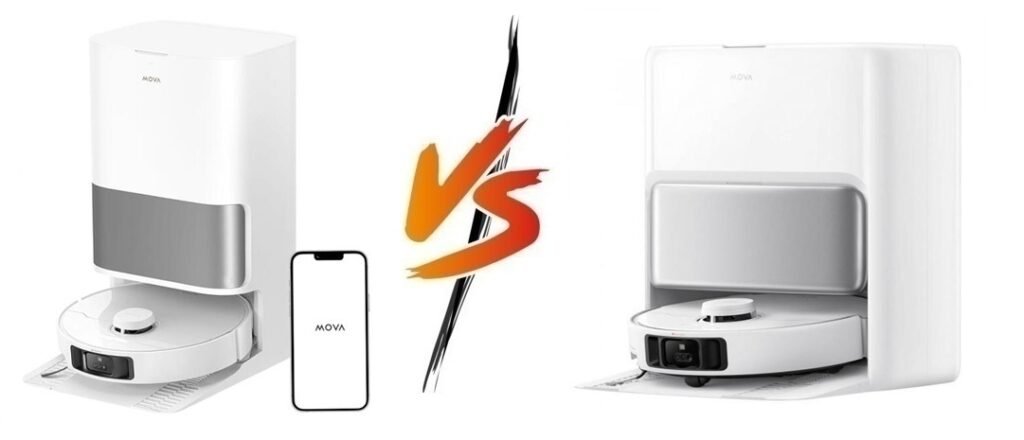
The robot vacuum market has become crowded with products that all promise the same thing: stronger suction, smarter navigation, better mopping, and less work for the owner. Most brands are now chasing the same goal, which makes genuine differentiation difficult.
That is what makes the comparison between the Mova P10 Pro Ultra and the Mova P50 Pro Ultra particularly interesting.
At first glance, they look like two variations of the same machine. They share the same design language, the same overall ecosystem, similar docking concepts, and many of the same smart features. But once you start looking beyond the marketing material, the differences become more meaningful.
The P10 Pro Ultra established itself as one of the strongest value-focused robot vacuums in its class. The P50 Pro Ultra, meanwhile, attempts to move further into premium territory with more sophisticated mopping systems, improved edge cleaning, better dock automation, and a stronger emphasis on hard-floor performance.
After examining specifications, long-term user experiences, independent testing reports, and real-world usage patterns, a clear picture emerges:
The P10 Pro Ultra is arguably the better vacuum.
The P50 Pro Ultra is arguably the better cleaning system overall.
Those two statements sound contradictory, but they make sense once you understand what each machine prioritizes.
Mova P10 Pro Ultra vs Mova P50 Pro Ultra Comparison Chart
If you click the links below, under the product images, you will be redirected to Amazon.com. In case you then decide to buy anything, Amazon.com will pay me a commission. This doesn’t affect the honesty of this review in any way though.
| Specification | Mova P10 Pro Ultra | Mova P50 Pro Ultra |
|---|---|---|
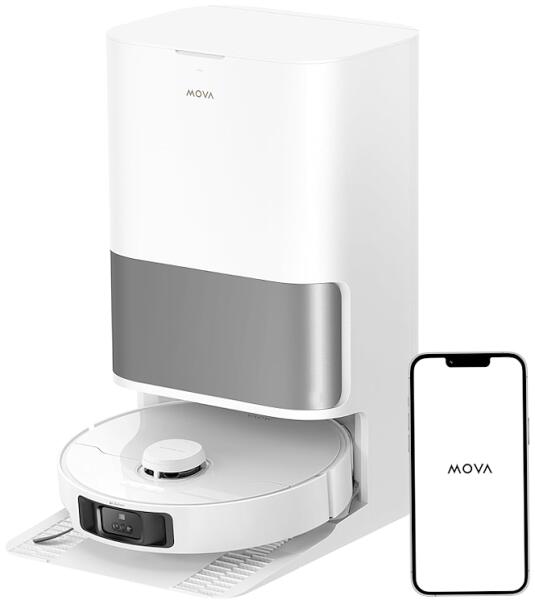 | 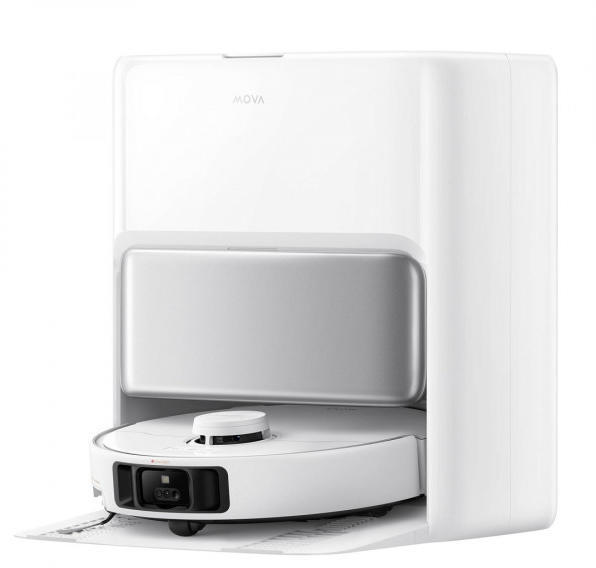 | |
| Check the best price on Amazon | Check the best price on Amazon | |
| Product Type | Robot Vacuum & Mop | Robot Vacuum & Mop |
| Navigation System | LiDAR Navigation + AI Obstacle Avoidance | Advanced LiDAR Navigation + AI Obstacle Avoidance |
| Obstacle Recognition | AI-powered object detection | Enhanced AI object detection with improved obstacle recognition |
| Suction Power | Up to 13,000 Pa | Up to 19,000 Pa |
| Main Brush | Rubber brush system | Anti-tangle brush system with enhanced hair management |
| Side Brush | Standard side brush | Extendable side brush for edge cleaning |
| Mopping System | Dual rotating mop pads | Dual rotating mop pads with extendable mop technology |
| Mop Extension | No | Yes |
| Carpet Detection | Yes | Yes |
| Mop Lift Function | Yes | Yes |
| Automatic Mop Removal | No | Yes |
| Edge Cleaning | Good | Advanced FlexReach edge cleaning |
| Dirt Detection | Basic | Advanced dirt detection and adaptive cleaning |
| Dustbin Emptying | Automatic | Automatic |
| Mop Washing | Automatic | Automatic |
| Mop Drying | Automatic hot-air drying | Enhanced hot-air drying |
| Dock Self-Cleaning | Yes | Improved self-cleaning dock system |
| Clean Water Tank | Large-capacity dock tank | Large-capacity dock tank |
| Dirty Water Tank | Large-capacity dock tank | Large-capacity dock tank |
| Battery Capacity | Approximately 5,200 mAh | Approximately 5,200 mAh |
| Recharge & Resume | Yes | Yes |
| Multi-Floor Mapping | Yes | Yes |
| Room Recognition | Yes | Enhanced room recognition |
| Virtual Walls / No-Go Zones | Yes | Yes |
| App Control | MOVA App | MOVA App |
| Voice Assistant Support | Yes | Yes |
| Pet Zone Cleaning | Basic support | Advanced pet-oriented cleaning modes |
| Hair Tangle Prevention | Good | Excellent |
| LED Illumination | No | Yes |
| Furniture Cleaning Precision | Very Good | Excellent |
| Carpet Cleaning Performance | Excellent | Very Good to Excellent |
| Hard Floor Cleaning Performance | Excellent | Excellent |
| Mopping Performance | Good to Very Good | Excellent |
| Corner Cleaning Performance | Good | Excellent |
| Automation Level | High | Very High |
| Dock Maintenance Requirement | Low | Very Low |
| Premium Positioning | Upper Mid-Range Flagship | Premium Flagship |
| My individual reviews | Mova P10 Pro Ultra review |
Quick Summary
| Category | Winner |
|---|---|
| Vacuuming Performance | P10 Pro Ultra |
| Carpet Cleaning | P10 Pro Ultra |
| Mopping Performance | P50 Pro Ultra |
| Edge & Corner Cleaning | P50 Pro Ultra |
| Obstacle Avoidance | P50 Pro Ultra |
| Pet Hair Management | P50 Pro Ultra |
| Self-Maintenance | P50 Pro Ultra |
| Navigation Intelligence | P50 Pro Ultra |
| Value for Money | P10 Pro Ultra |
| Overall Feature Set | P50 Pro Ultra |
Bottom Line
| Best For | Recommendation |
|---|---|
| Maximum value | Mova P10 Pro Ultra |
| Carpet-heavy homes | Mova P10 Pro Ultra |
| Hard-floor homes | Mova P50 Pro Ultra |
| Pet owners | Mova P50 Pro Ultra |
| Most advanced automation | Mova P50 Pro Ultra |
| Best overall cleaning ecosystem | Mova P50 Pro Ultra |
| Best performance-per-dollar | Mova P10 Pro Ultra |
In simple terms, the Mova P10 Pro Ultra is the stronger value-oriented cleaner with surprisingly excellent vacuuming performance, while the Mova P50 Pro Ultra is the more advanced all-around cleaning system with significantly better mopping, edge cleaning, automation, and pet-focused features.
Design & Build Quality
When comparing the Mova P10 Pro Ultra and the Mova P50 Pro Ultra, design and build quality might initially seem like a relatively minor consideration. After all, robot vacuum cleaners are primarily judged by how effectively they clean floors rather than how attractive they look. However, after spending time evaluating both models, it becomes clear that design plays a much larger role in the ownership experience than many buyers realize.
A robot vacuum is not a device that sits hidden away in a cupboard between uses. It lives in the home, often in a visible location, and operates daily. The quality of the materials, the fit and finish of individual components, the design of the docking station, and the overall durability of moving parts all contribute significantly to long-term satisfaction. In this regard, both the Mova P10 Pro Ultra and Mova P50 Pro Ultra perform well, but they approach premium design from slightly different perspectives.
At first glance, the two models share a very similar visual identity. Both feature the now-familiar circular robot design that dominates the premium robot vacuum market. The low-profile body, centrally mounted LiDAR navigation tower, and symmetrical layout create a modern and purposeful appearance. Neither machine attempts to reinvent the wheel stylistically, and that is probably a good thing. The design language feels mature, refined, and focused on function rather than gimmicks.
The P10 Pro Ultra immediately gives the impression of being a practical flagship. Its appearance is clean and understated. The matte surfaces help conceal fingerprints and dust accumulation, while the overall construction feels sturdy and well-engineered. There is a reassuring solidity when handling the robot. Nothing rattles, flexes excessively, or feels fragile. The top cover fits securely, the dustbin mechanism engages with confidence, and the various sensors appear well protected within the chassis.
One aspect I particularly appreciate about the P10 Pro Ultra is its emphasis on simplicity. There is a sense that every design decision was made with reliability in mind. The robot feels engineered to perform a task efficiently rather than impress with unnecessary complexity. As a result, the overall build inspires confidence. The machine appears capable of handling years of daily operation without showing excessive wear.
The bumper assembly deserves particular praise. Many robot vacuums use bumpers that feel lightweight or hollow, but the P10’s front impact protection feels robust and responsive. Since even the most intelligent robot occasionally encounters furniture, chair legs, and other obstacles, a durable bumper system is an important component of long-term durability. The P10 handles these interactions well without creating the impression that delicate internal components are being stressed.
The docking station continues this theme of practical engineering. It is undeniably large, but it avoids looking bulky or awkward. The design integrates the clean water tank, dirty water tank, and dust collection system in a manner that feels organized and easy to access. While it does not possess the visual sophistication of some ultra-premium competitors, it looks modern enough to fit comfortably into most homes.
The P50 Pro Ultra, by comparison, feels like the next step in the evolution of the design philosophy introduced by the P10. Although the overall shape remains similar, nearly every detail appears slightly more refined. The robot itself has a more premium aesthetic, with cleaner lines, tighter panel gaps, and a greater sense of polish throughout the construction.
What stands out most about the P50 Pro Ultra is how seamlessly its advanced functionality has been integrated into the design. Features such as the extendable side brush, advanced mopping mechanisms, and enhanced obstacle avoidance systems could easily have resulted in a bulky or awkward appearance. Instead, the engineers have managed to incorporate these additions without compromising the sleek overall profile of the machine.
The result is a robot that looks noticeably more expensive. The premium positioning is immediately obvious, even before the robot begins cleaning. Small details contribute to this impression. The finishes feel slightly more refined. The moving components operate with greater smoothness. The overall presentation suggests a product that has undergone several additional rounds of development and refinement.
The docking station is where the difference between the two models becomes even more apparent. While the P10’s dock is functional and attractive, the P50’s dock feels more sophisticated and integrated. The design appears cleaner and more appliance-like, helping it blend into modern interiors. Rather than looking like a piece of cleaning equipment, it resembles a carefully designed smart home device.
Build quality extends beyond appearance, however. The true test lies in how well the components withstand daily use. Here, both machines perform admirably. The wheels are substantial and provide excellent traction across a variety of floor types. The suspension systems allow the robots to navigate thresholds and uneven surfaces without feeling unstable. The side brushes are securely mounted and resist deformation even after extended use.
The removable components also deserve attention. Dustbins, water tanks, filters, and mop assemblies are all designed for regular interaction. On both models, these parts attach securely while remaining easy to remove for maintenance. This balance is more important than many people realize. Components that are difficult to remove often discourage proper maintenance, while loose-fitting components can create long-term reliability concerns.
Another factor worth discussing is structural rigidity. During handling, both robots feel exceptionally solid. Twisting forces applied to the chassis produce minimal flex, suggesting strong internal reinforcement. This matters because robot vacuums routinely experience impacts, drops from thresholds, and constant vibration throughout their lifespan. A rigid structure helps protect sensitive electronics and navigation hardware from long-term stress.
One area where the P50 gains a slight advantage is in the execution of its advanced mechanical systems. The extendable cleaning components feel impressively engineered and operate with precision. Given the number of moving parts involved, there is always a concern that additional complexity could compromise durability. However, the implementation appears thoughtful and robust. The mechanisms move smoothly and consistently, creating confidence that they are designed for sustained use rather than serving as mere marketing features.
From a practical standpoint, both robots are well suited to real-world environments. Their dimensions allow them to access areas beneath many pieces of furniture while still accommodating advanced navigation hardware. The low-profile construction helps maximize cleaning coverage without sacrificing sensor performance.
Ultimately, the difference between the two models comes down to refinement rather than quality. The P10 Pro Ultra is already a well-built robot vacuum that feels durable, reliable, and thoughtfully engineered. It provides the kind of construction quality most buyers would expect from a premium product. The P50 Pro Ultra simply builds upon that foundation with a more polished design, more sophisticated integration of advanced features, and a stronger premium feel throughout the entire package.
For buyers who value practicality above all else, the P10 Pro Ultra’s straightforward and robust design is likely to be more than sufficient. For those seeking the most premium ownership experience possible, the P50 Pro Ultra justifies its higher positioning with a noticeable increase in refinement and attention to detail. Both are impressively constructed machines, but the P50 ultimately feels like the more mature and luxurious product.
Navigation Intelligence & Mapping
When evaluating modern robot vacuum cleaners, navigation intelligence is arguably more important than suction power, mopping pressure, or even battery life. A robot can have the strongest motor in its category, but if it cannot understand its surroundings, avoid obstacles efficiently, and create accurate maps of the home, much of that cleaning potential is wasted. This is particularly true in larger homes where efficient route planning can dramatically impact cleaning coverage, battery consumption, and overall user satisfaction.
The comparison between the Mova P10 Pro Ultra and the Mova P50 Pro Ultra becomes especially interesting in this category because both machines are built upon sophisticated navigation foundations, yet they approach environmental awareness and decision-making with different levels of refinement. While both are capable performers, the P50 Pro Ultra introduces several enhancements that elevate the overall experience and make the robot feel more intelligent during everyday operation.
At the heart of both systems is LiDAR-based navigation. LiDAR remains one of the most reliable technologies available for robot vacuum mapping because it allows the robot to create detailed spatial representations of the environment regardless of lighting conditions. Unlike camera-only systems, LiDAR can accurately measure distances and build maps even in complete darkness. This provides a significant advantage for users who schedule cleaning sessions during the night or while away from home.
The Mova P10 Pro Ultra uses its LiDAR sensor to generate highly detailed floor plans during its initial mapping run. The mapping process is generally quick and efficient. The robot systematically explores the home, identifies room boundaries, and creates a digital floor plan that can later be customized through the companion application. Watching the robot build its first map is genuinely impressive. It moves with purpose, carefully tracing walls and obstacles while gradually assembling an accurate representation of the environment.
Once mapping is complete, the P10 demonstrates strong route-planning capabilities. Rather than moving randomly, it follows organized cleaning patterns designed to maximize coverage while minimizing unnecessary travel. In most homes, this results in efficient cleaning sessions and very little wasted movement. The robot generally avoids repeatedly cleaning the same area unless specifically instructed to do so.
One of the strengths of the P10 is its ability to maintain map consistency over time. Furniture can be moved, chairs can be repositioned, and temporary obstacles can appear, yet the robot usually adapts without requiring a complete remapping process. This flexibility contributes significantly to the overall user experience because it reduces the need for manual intervention.
However, while the P10’s navigation system is impressive, it occasionally reveals limitations in more complex environments. Homes with unusual layouts, heavily patterned rugs, reflective surfaces, or numerous obstacles can sometimes expose weaknesses in decision-making. These situations do not occur constantly, but they illustrate that the P10’s navigation intelligence is not infallible.
In certain scenarios, the robot may hesitate near difficult obstacles, take a less efficient route than expected, or spend additional time determining how to approach cluttered areas. These moments are relatively minor in the context of overall performance, but they become noticeable when compared directly with more advanced systems.
The P50 Pro Ultra builds upon the same fundamental navigation principles while introducing a higher level of environmental awareness. From the moment the robot begins mapping, it becomes apparent that the system is designed to gather and process more information about its surroundings. The result is a navigation experience that feels more confident and refined.
Like the P10, the P50 quickly creates accurate floor plans and room layouts. However, the quality of environmental recognition often appears more sophisticated. The robot demonstrates a stronger understanding of room boundaries, furniture placement, and potential obstacles. This allows it to make more informed decisions during cleaning sessions.
One of the most noticeable differences between the two models is obstacle avoidance. In real-world homes, obstacles are everywhere. Charging cables, shoes, pet toys, socks, water bowls, children’s toys, and countless other objects can interfere with a robot’s cleaning path. Effective obstacle avoidance is not simply about detecting these items. The robot must also decide how to navigate around them without compromising cleaning coverage.
The P10 generally performs well in this regard, successfully avoiding most common household objects. However, the P50 feels more deliberate and accurate when approaching cluttered spaces. It identifies obstacles earlier, adjusts its route more smoothly, and spends less time hesitating or recalculating its path. This improvement may seem subtle at first, but over weeks and months of ownership, it contributes significantly to a smoother and more reliable cleaning experience.
Another area where the P50 distinguishes itself is low-light navigation. Many robot vacuums rely heavily on ambient lighting for their visual recognition systems. As lighting conditions deteriorate, obstacle detection can become less reliable. The P50 addresses this challenge through enhanced sensing capabilities that allow it to maintain strong navigation performance even in dimly lit environments.
This may not sound particularly important until you consider how many people schedule cleaning sessions during the evening, overnight, or while they are away at work. A robot that can navigate confidently regardless of lighting conditions becomes much more versatile in everyday use.
Mapping customization is another crucial aspect of the ownership experience. Both robots provide extensive map management features through their companion applications. Users can divide rooms, merge spaces, create virtual boundaries, establish no-go zones, and define customized cleaning areas. These tools allow homeowners to tailor cleaning behavior to their specific needs.
For example, you might want the robot to avoid a play area filled with children’s toys, stay away from pet feeding stations, or clean a frequently used hallway more often than other rooms. Both the P10 and P50 handle these tasks effectively, giving users a high degree of control over cleaning operations.
The P50, however, expands upon this flexibility with more advanced environmental awareness. It can better identify cleaning priorities and adapt its behavior based on the conditions it encounters. This creates the impression that the robot is not merely following instructions but actively interpreting its surroundings.
Multi-floor support is another area where both robots perform admirably. For homes with multiple levels, the ability to store and manage separate maps is essential. Both models can recognize different floors and maintain distinct cleaning configurations for each environment. This eliminates the need to repeatedly remap the home whenever the robot is moved between levels.
Efficiency is another important consideration. Intelligent navigation is not simply about avoiding obstacles; it is also about minimizing unnecessary movement. Every extra meter traveled consumes battery power and increases cleaning time. The P10 generally demonstrates strong efficiency, often completing cleaning tasks quickly and methodically. The P50 matches this performance while displaying slightly more sophisticated decision-making when navigating complicated spaces.
What ultimately separates these two robots is not a dramatic difference in mapping accuracy but rather the overall maturity of their navigation systems. The P10 feels highly capable and dependable. For many households, its performance will be more than sufficient. It creates accurate maps, follows logical cleaning routes, and handles most obstacles effectively.
The P50, however, feels like a more advanced interpretation of the same concept. Its obstacle avoidance is more polished, its environmental awareness is stronger, and its navigation behavior appears more intelligent in challenging situations. The robot inspires greater confidence because it consistently demonstrates an ability to understand and adapt to its surroundings with minimal intervention.
In daily use, this difference translates into a smoother ownership experience. The P10 navigates well. The P50 navigates with a greater sense of awareness and refinement. Both are excellent examples of modern robot vacuum intelligence, but the P50 ultimately delivers the more sophisticated mapping and navigation experience.
Vacuuming Performance
For many buyers, vacuuming performance remains the single most important category when evaluating a robot vacuum cleaner. Features such as advanced mopping systems, self-cleaning docks, obstacle avoidance, and smart-home integration are certainly valuable, but they ultimately become secondary if the robot cannot consistently remove dirt, dust, hair, and debris from the floor. Regardless of how intelligent or automated a machine may be, its primary responsibility is still cleaning.
This is what makes the comparison between the Mova P10 Pro Ultra and the Mova P50 Pro Ultra particularly fascinating. On paper, one might expect the newer and more expensive P50 Pro Ultra to dominate this category. After all, it boasts higher advertised suction figures, more advanced cleaning technologies, and a greater emphasis on premium performance. However, real-world cleaning performance is often more complicated than marketing specifications suggest. Once both robots are evaluated across different floor types and cleaning scenarios, the gap becomes far narrower than expected, and in some situations, the P10 Pro Ultra actually delivers superior results.
The first thing worth understanding is that suction power alone does not determine cleaning effectiveness. Manufacturers frequently advertise increasingly large suction numbers because they are easy to market and easy for consumers to compare. However, vacuuming performance is influenced by a combination of factors including airflow efficiency, brush design, roller configuration, debris extraction mechanics, floor contact, navigation strategy, and software optimization.
In practical terms, a robot with lower advertised suction can sometimes outperform a machine with higher suction if the overall cleaning system is engineered more effectively.
The P10 Pro Ultra is an excellent example of this principle. Despite occupying a lower position in the product lineup, it consistently demonstrates impressive cleaning capabilities across a wide range of floor types. From the moment it begins cleaning, there is a noticeable sense of purpose in how it approaches debris collection. The brush system maintains effective contact with the floor, and the airflow path appears optimized for moving debris into the dustbin efficiently.
On hard flooring such as hardwood, laminate, tile, and vinyl, the P10 performs exceptionally well. Fine dust, everyday household debris, crumbs, sand, and dirt particles are collected with minimal difficulty. The robot’s cleaning pattern ensures thorough coverage, and it rarely leaves visible debris behind after completing a cleaning cycle.
One area where the P10 particularly impresses is handling mixed debris sizes. Many robot vacuums excel at collecting either fine dust or larger particles but struggle when faced with both simultaneously. The P10 manages this challenge remarkably well. Whether dealing with flour-like dust, cereal fragments, pet kibble, or tracked-in outdoor debris, it maintains consistently strong performance.
Carpet cleaning is where the P10 truly distinguishes itself. Vacuuming carpets presents unique challenges because debris becomes trapped within fibers rather than sitting on the surface. Effective carpet cleaning requires strong airflow, efficient agitation, and good brush design. The P10 appears to strike an excellent balance between these elements.
On low-pile carpets, the robot removes dust and dirt with impressive consistency. Daily debris accumulation disappears quickly, and the carpet often appears noticeably refreshed after a cleaning cycle. More importantly, the robot demonstrates strong deep-cleaning capability. Embedded dirt that has settled beneath the surface is lifted effectively, resulting in cleaner carpets over time.
Medium-pile carpeting presents a greater challenge for any robot vacuum, yet the P10 remains surprisingly capable. It maintains strong contact with the surface and avoids the loss of efficiency that some competing robots experience when transitioning from hard floors to thicker carpeting. The result is a level of carpet performance that feels unusually strong for a robot vacuum in this price category.
The P50 Pro Ultra enters this comparison with significantly higher expectations. Its headline specifications suggest a machine designed to deliver flagship-level vacuuming performance. In many respects, it succeeds. There is no question that the P50 is an extremely capable cleaner.
On hard floors, the P50 performs exceptionally well. Dust, hair, crumbs, and everyday debris are collected efficiently. The robot moves confidently across different floor surfaces and demonstrates excellent consistency throughout cleaning sessions. Its ability to maintain suction and cleaning effectiveness across large areas is particularly impressive.
One area where the P50 excels is handling larger debris. Whether dealing with pet food, tracked-in dirt, leaves, or other substantial particles, the robot demonstrates strong pickup capabilities. The airflow system appears highly effective at moving debris into the dustbin without scattering particles across the floor.
The P50 also benefits from more advanced cleaning intelligence. Rather than simply relying on raw suction power, it can adapt its cleaning behavior based on floor conditions. This dynamic approach helps optimize cleaning efficiency and ensures that resources are directed where they are needed most.
When evaluating carpet performance, however, the comparison becomes more nuanced. The P50 remains an excellent carpet cleaner, but its advantage over the P10 is not as dramatic as the specifications might suggest. In fact, some users may struggle to identify a meaningful difference in day-to-day use.
The reason is simple: the P10 is already extremely good at vacuuming carpets. While the P50 offers more power on paper, the P10’s brush design and airflow management allow it to extract debris from carpet fibers with remarkable effectiveness. As a result, the two robots often produce surprisingly similar results in real-world environments.
This does not mean the P50 underperforms. Far from it. Rather, it highlights how well-engineered the P10’s vacuuming system actually is. The newer model may possess greater theoretical capability, but translating that advantage into dramatically cleaner floors proves more difficult than expected.
Hair pickup is another critical area for many households. Long hair, pet fur, and fibers can quickly expose weaknesses in vacuum design. Both robots perform strongly in this regard, effectively collecting hair from hard floors and carpets alike.
The P50 does gain an advantage through its more advanced anti-tangle technologies. Hair is less likely to wrap around brushes and internal components, reducing maintenance requirements and helping sustain cleaning performance over time. This does not necessarily improve immediate cleaning results, but it contributes to a more consistent long-term experience.
Edge cleaning also influences overall vacuuming effectiveness. Dirt naturally accumulates along baseboards, in corners, and around furniture legs. The P10 handles these areas competently, reaching close enough to walls to remove most visible debris. However, some accumulation may remain in particularly tight spaces.
The P50 improves upon this performance through its enhanced edge-cleaning systems. By extending cleaning components closer to walls and obstacles, it captures debris that might otherwise be missed. Over time, this leads to cleaner edges and a more complete cleaning result.
Another important consideration is consistency. A robot vacuum’s performance should not be judged solely by its best cleaning run. What matters is whether it can deliver strong results day after day with minimal intervention. Both the P10 and P50 excel in this regard. Their navigation systems ensure comprehensive coverage, and their cleaning hardware maintains effectiveness across repeated cleaning cycles.
Ultimately, the vacuuming performance comparison produces a somewhat unexpected conclusion. The P50 Pro Ultra is undoubtedly a highly capable flagship robot vacuum with excellent cleaning power, strong debris pickup, and impressive adaptability. It performs at the level one would expect from a premium product.
The surprise is that the P10 Pro Ultra often performs nearly as well and occasionally exceeds expectations in certain cleaning scenarios, particularly on carpets. Its vacuuming system is exceptionally well-balanced, delivering cleaning results that rival more expensive competitors despite a lower position in the lineup.
For buyers whose primary concern is vacuuming performance alone, the P10 Pro Ultra remains one of the strongest values available. The P50 Pro Ultra may offer a more advanced overall package, but when it comes to pure debris removal, the gap between these two machines is far smaller than their specifications suggest.
Mopping Capability
Over the past few years, mopping has evolved from a secondary feature into one of the most important aspects of premium robot vacuum ownership. Early robot vacuums treated mopping as little more than dragging a damp cloth across the floor. While this approach could remove light dust, it offered little benefit when faced with genuine household messes. Modern flagship models are expected to do far more. They must scrub, lift stains, clean edges, manage water intelligently, avoid carpets, wash their own mop pads, and maintain consistent performance across large homes.
This is where one of the biggest differences between the Mova P10 Pro Ultra and the Mova P50 Pro Ultra becomes apparent.
While both robots offer fully automated mopping systems and are capable of maintaining hard floors effectively, the P50 Pro Ultra represents a significant step forward in overall floor-washing capability. The P10 delivers good results and remains more than adequate for many households, but the P50 feels purpose-built for users who place mopping performance at the center of their buying decision.
To understand the difference properly, it is important to establish realistic expectations. No robot vacuum currently replaces the deep-cleaning capability of a dedicated mop and bucket when dealing with severe stains or neglected floors. However, the best robot mops have become remarkably effective at maintaining cleanliness and dramatically reducing the need for manual floor washing. Both MOVA models fall into this category.
The P10 Pro Ultra approaches mopping with a practical and balanced philosophy. Its goal is not necessarily to provide aggressive scrubbing power but rather to maintain clean floors through frequent and consistent operation. For many homes, this strategy works extremely well.
On everyday hard surfaces such as hardwood, tile, laminate, stone, and vinyl flooring, the P10 performs reliably. It removes light footprints, dust residue, pet paw marks, and small spills without difficulty. When used regularly, it keeps floors looking noticeably cleaner than vacuuming alone.
One of the strengths of the P10 is consistency. Water distribution remains even throughout the cleaning cycle, helping prevent excessive wetting or dry patches. The mop pads maintain good contact with the floor, allowing the robot to clean efficiently while moving through rooms in a systematic pattern.
For households that already vacuum frequently and simply want an automated method of maintaining hard floors, the P10 is more than capable. Daily or every-other-day mopping sessions can dramatically reduce visible dirt accumulation and keep floors looking fresh.
The limitations of the P10 become more apparent when faced with tougher cleaning challenges. Dried food residue, sticky spills, mud stains, and areas with heavy foot traffic require greater scrubbing pressure and more aggressive cleaning techniques. The robot can improve these areas, but it often requires multiple passes to achieve results comparable to what more advanced systems can accomplish in a single cleaning session.
This does not make the P10 ineffective. Rather, it reflects the reality that its mopping system is designed primarily for maintenance cleaning rather than intensive floor restoration.
The P50 Pro Ultra takes a noticeably different approach.
From the moment the robot begins mopping, it becomes clear that floor washing was a major focus during development. The system feels more sophisticated, more adaptive, and ultimately more capable of handling challenging cleaning tasks.
The first advantage is scrubbing effectiveness. The P50 applies greater cleaning pressure while maintaining better pad contact with the floor. This allows it to remove stubborn residue more effectively and improve cleaning performance in areas where dirt has become partially embedded into the surface.
In practical terms, this means the P50 is better equipped to deal with kitchens, dining areas, entryways, and other high-traffic zones where mopping demands are greatest. Dried spills that might require multiple passes from the P10 are often handled more effectively by the P50 during a standard cleaning cycle.
One of the most significant upgrades is edge-cleaning performance. Traditional robot mops frequently leave a narrow strip of uncleaned floor along walls, cabinets, and furniture edges because the mop pads cannot physically reach these areas. Over time, dirt accumulates in these neglected zones, creating visible differences between the center of the room and the perimeter.
The P50 addresses this challenge with an extendable mopping mechanism that actively reaches toward edges during cleaning. This may sound like a relatively minor feature, but the real-world impact is substantial. Areas that many robot vacuums routinely miss receive significantly better coverage, resulting in a more complete and professional-looking clean.
This improvement becomes especially noticeable in kitchens, bathrooms, and hallways where dust and debris tend to gather along baseboards. The ability to reach these areas helps the P50 produce results that more closely resemble manual mopping.
Another area where the P50 demonstrates clear superiority is carpet management. One of the challenges facing hybrid robot vacuums is transitioning between hard floors and carpets. When mopping, the robot must avoid introducing moisture onto carpeted surfaces.
The P10 handles this reasonably well through mop lifting technology. When carpets are detected, the robot raises the mop assembly to reduce the risk of moisture transfer. For most situations, this solution works adequately.
The P50 takes the concept further through automatic mop removal functionality. Rather than simply lifting damp mop pads, the robot can leave them behind at the dock before vacuuming carpeted areas. This creates a cleaner separation between mopping and vacuuming tasks and virtually eliminates concerns about damp carpets.
For homes that contain a mixture of hard floors and carpeting, this feature contributes significantly to convenience and peace of mind. Users can schedule comprehensive cleaning sessions without worrying about manually adjusting settings or monitoring floor transitions.
Water management is another important aspect of mopping performance. Effective floor washing requires balancing moisture carefully. Too little water reduces cleaning effectiveness. Too much water can leave streaks, prolong drying times, or potentially damage sensitive flooring materials.
Both robots perform well in this regard, but the P50 exhibits greater precision. Water usage feels more controlled and responsive, helping maintain optimal cleaning conditions across different floor types. The result is more consistent cleaning quality and improved floor appearance after drying.
Dock automation also plays a critical role in long-term mopping performance. A robot can only clean effectively if its mop pads remain clean. Dirty mop pads simply redistribute grime rather than removing it.
The P10 includes automatic mop washing and drying functionality, which greatly reduces maintenance requirements compared to older robot mops. After cleaning sessions, the robot returns to the dock where the pads are washed and dried automatically.
This process works well and significantly improves convenience. Most owners will find that it eliminates much of the routine maintenance traditionally associated with mopping.
The P50 refines this process further. Its dock system cleans mop pads more thoroughly, manages contamination more effectively, and helps maintain peak cleaning performance over longer periods. Cleaner mop pads mean cleaner floors, particularly during extended cleaning sessions covering large areas.
Another factor worth considering is adaptability. Real homes are unpredictable. Some rooms require light maintenance cleaning while others demand deeper scrubbing. The P50 feels better equipped to recognize and respond to these changing conditions. Rather than applying the same cleaning behavior everywhere, it appears more capable of adjusting its approach based on the level of dirt encountered.
This creates the impression of a robot that is actively cleaning rather than simply following a predetermined route.
Ultimately, both robots offer strong mopping performance and represent a significant improvement over traditional robot mop systems. The P10 Pro Ultra succeeds as an excellent maintenance cleaner capable of keeping hard floors consistently clean with minimal effort. For many households, its performance will be entirely satisfactory.
The P50 Pro Ultra, however, moves closer to the premium end of the market. Its stronger scrubbing capability, superior edge cleaning, advanced carpet handling, improved dock maintenance, and more sophisticated floor-washing technologies combine to create a noticeably better mopping experience.
If vacuuming performance is the category where the P10 remains surprisingly competitive, mopping capability is where the P50 clearly establishes itself as the more advanced machine. The difference is not merely visible on a specification sheet. It is something that becomes increasingly noticeable with every cleaning cycle, particularly in homes where hard-floor maintenance is a daily priority.
Maintenance and Self-Cleaning
One of the biggest reasons people invest in premium robot vacuum cleaners is convenience. The goal is not simply to automate floor cleaning but to reduce the amount of maintenance required from the owner. A robot that vacuums and mops effectively but demands constant cleaning, emptying, washing, and troubleshooting can quickly become more work than it is worth. This is why maintenance and self-cleaning capabilities have become some of the most important differentiators in the modern robot vacuum market.
When comparing the Mova P10 Pro Ultra and the Mova P50 Pro Ultra, both machines perform well in this category. They offer a level of automation that would have seemed remarkable only a few years ago. However, the P50 Pro Ultra introduces several refinements that make the ownership experience noticeably more hands-off over the long term.
Before diving into the specifics, it is worth addressing a common misconception about self-cleaning robot vacuums. Despite the marketing terminology, no robot vacuum is completely maintenance-free. Every machine eventually requires filter cleaning, water refilling, waste disposal, and occasional component replacement. The difference lies in how often these tasks are required and how much effort they demand from the user.
The P10 Pro Ultra does an impressive job of minimizing these responsibilities. From the moment it completes a cleaning cycle, the dock takes over many of the tasks that would traditionally require manual intervention. The robot automatically empties its dustbin into a larger collection bag inside the dock, significantly extending the time between manual emptying sessions.
For most households, this feature alone represents a substantial improvement over traditional robot vacuums. Instead of emptying a small onboard dustbin after every cleaning run, users can often go weeks before needing to interact with the dust collection system. This becomes particularly valuable in larger homes or households with pets, where debris accumulation tends to be higher.
The automatic emptying process itself is generally effective. When the robot returns to the dock, a powerful extraction system transfers debris from the robot’s internal dustbin into the larger dock container. Most dust, dirt, hair, and debris are removed successfully, leaving the robot ready for its next cleaning cycle.
In everyday use, the process feels seamless. The robot cleans, returns to the dock, empties itself, and recharges without requiring user involvement. This level of automation dramatically changes the ownership experience compared to older robot vacuums.
The P10’s mopping maintenance system follows a similar philosophy. Once a mopping session is completed, the dock automatically washes the mop pads and begins a drying cycle. This prevents the pads from remaining damp for extended periods, reducing the risk of unpleasant odors, bacterial growth, and mildew development.
For many users, this functionality eliminates one of the most frustrating aspects of traditional robot mops. Previously, owners often had to remove wet mop pads manually, rinse them, and leave them to dry after every cleaning session. The P10 automates this process effectively and saves a considerable amount of time.
However, while the P10’s self-maintenance capabilities are impressive, they are not perfect. Over time, the dock itself requires cleaning. Dirty water residue can accumulate in certain areas, and components associated with mop washing may eventually need attention. None of this is unusual for a self-cleaning robot vacuum, but it does mean that periodic maintenance remains necessary.
This is where the P50 Pro Ultra begins to separate itself.
The P50 builds upon the automation foundation established by the P10 and focuses heavily on reducing owner involvement even further. While both machines perform many of the same maintenance tasks, the execution often feels more polished and efficient on the newer model.
The dust collection system remains largely similar in concept. The robot empties its onboard dustbin into a larger container housed within the dock, allowing users to go extended periods without manual emptying. Performance is strong, and the process remains largely automatic.
Where the P50 distinguishes itself is in the broader management of cleaning systems. The dock feels more sophisticated, with improved handling of both mop maintenance and internal cleanliness. After mopping sessions, the cleaning process appears more thorough, helping maintain the effectiveness of the mop pads over longer periods.
This matters more than many people realize. Clean mop pads directly influence floor-cleaning performance. If residue accumulates within the fibers of the pads, cleaning effectiveness gradually declines. By maintaining cleaner pads between sessions, the P50 helps sustain consistent mopping results over time.
The mop washing process itself feels more comprehensive. Pads emerge cleaner, fresher, and better prepared for future cleaning tasks. For households that rely heavily on the robot’s mopping functionality, this improvement contributes significantly to long-term satisfaction.
Drying performance also deserves attention. Effective drying is critical because moisture creates an environment where odors and microbial growth can develop. Both robots perform this task competently, but the P50’s implementation appears more refined. Mop pads dry efficiently, helping maintain freshness even when the robot is used frequently.
One area where premium robot vacuums often reveal their true quality is in how they manage hair accumulation. Hair is one of the most common causes of maintenance frustration. Long human hair, pet fur, and fibers naturally wrap around brushes and moving components, reducing cleaning performance and increasing maintenance requirements.
The P10 handles hair reasonably well. Under normal conditions, most hair is collected successfully, and brush cleaning remains relatively straightforward. However, users with long-haired family members or heavy-shedding pets may occasionally need to remove tangled hair manually from the brush assembly.
The P50 introduces more advanced anti-tangle technologies that significantly reduce this issue. Hair is less likely to become wrapped around critical components, resulting in fewer interruptions and less frequent manual cleaning. While no system completely eliminates maintenance, the reduction in brush maintenance is noticeable during extended ownership.
Another important aspect of maintenance is accessibility. Regardless of how advanced a robot vacuum becomes, users will eventually need to clean filters, inspect brushes, refill water tanks, and replace consumable parts. Both the P10 and P50 are designed with accessibility in mind.
The dustbins are easy to remove. Water tanks are conveniently positioned. Filters can be accessed without requiring tools. Mop pads can be replaced quickly when necessary. These seemingly small design decisions have a significant impact on day-to-day usability because they reduce friction whenever maintenance becomes necessary.
The companion application also contributes to maintenance management. Both robots monitor component wear and notify users when maintenance tasks are required. Rather than forcing owners to track filter usage or brush wear manually, the software provides reminders and maintenance schedules. This helps ensure the robot continues operating at peak performance.
One area where the P50 gains a subtle but meaningful advantage is in overall system cleanliness. The dock appears better equipped to manage the byproducts of automated cleaning. Water handling feels more refined, residue buildup is reduced, and the entire maintenance process feels more self-sufficient. Over time, this translates into fewer cleaning tasks for the owner and a more polished ownership experience.
Large households particularly benefit from these improvements. In homes where the robot operates daily, even small reductions in maintenance frequency become meaningful. The ability to go longer between interventions helps the robot feel more like a true automated cleaning system rather than simply a cleaning appliance.
Ultimately, both the Mova P10 Pro Ultra and Mova P50 Pro Ultra perform admirably in this category. The P10 already delivers a highly automated ownership experience that dramatically reduces the effort associated with floor care. Its self-emptying, mop-washing, and drying capabilities place it firmly within the premium segment.
The P50 Pro Ultra takes that experience one step further. Through improved dock management, more effective mop maintenance, enhanced anti-tangle systems, and a generally more refined approach to automation, it reduces owner involvement even further. The difference is not revolutionary, but it becomes increasingly noticeable over months of regular use.
For buyers seeking the lowest-maintenance ownership experience possible, the P50 Pro Ultra ultimately provides the more advanced self-cleaning ecosystem. The P10 remains highly convenient, but the P50 feels closer to the long-promised vision of a truly autonomous floor-cleaning system.
Pet-Friendliness
For pet owners, choosing a robot vacuum involves a very different set of priorities than it does for the average household. While most people are primarily concerned with dust, crumbs, and everyday debris, pet owners face an entirely different cleaning challenge. Pet hair accumulates constantly. Paw prints appear unexpectedly. Litter gets tracked across floors. Food spills happen regularly. Water bowls leave wet marks. Toys are scattered throughout the house. In some cases, accidents can create cleaning situations that quickly become disastrous if a robot vacuum is unable to recognize and avoid them.
As a result, pet-friendliness is not a minor feature category. For many buyers, it is one of the most important aspects of a robot vacuum’s overall performance. A machine that excels in a pet-free home may struggle considerably in an environment shared with dogs or cats.
When comparing the Mova P10 Pro Ultra and the Mova P50 Pro Ultra, both robots perform well in pet households. They possess the suction power, navigation systems, and automation features necessary to manage many of the challenges associated with pet ownership. However, the P50 Pro Ultra introduces several enhancements that make it feel more specifically designed for homes where animals are part of daily life.
The first challenge every pet owner faces is hair.
Whether you own a short-haired cat, a long-haired dog, or multiple pets, shedding is unavoidable. Pet hair has a remarkable ability to spread throughout a home. It accumulates beneath furniture, gathers along baseboards, settles into carpet fibers, and forms visible clusters in corners and high-traffic areas. Even homes that appear clean can contain surprising amounts of pet hair beneath the surface.
The P10 Pro Ultra handles pet hair extremely well. Its vacuuming system provides enough power to collect loose fur from hard floors, rugs, and carpets with minimal difficulty. Daily cleaning sessions can significantly reduce visible hair accumulation, helping maintain a cleaner and more comfortable living environment.
One of the advantages of robotic cleaning in pet households is consistency. Rather than waiting until hair becomes noticeable, the robot can clean every day. This prevents fur from building up and makes the home feel cleaner overall. The P10 performs particularly well in this role because it combines strong vacuuming performance with efficient navigation, allowing it to cover large areas effectively.
Carpets are often the greatest challenge for pet owners because hair tends to become embedded within carpet fibers. The P10’s strong carpet-cleaning performance gives it an advantage in this area. Pet hair that would otherwise require regular upright vacuuming can often be managed successfully through automated cleaning cycles.
The P50 Pro Ultra matches this performance while introducing additional technologies designed specifically to address pet-related cleaning challenges. Hair pickup remains excellent across all floor types, but the most significant improvement involves hair management rather than simple collection.
One of the ongoing frustrations with robot vacuums is brush entanglement. Long hair, whether from humans or pets, naturally wraps around rotating brush components. Over time, this reduces cleaning effectiveness and requires manual maintenance. In homes with multiple pets, brush cleaning can become a surprisingly frequent chore.
The P50’s enhanced anti-tangle systems help minimize this issue. Hair is directed more effectively into the dust collection pathway, reducing the amount that becomes wrapped around the brush assembly. While some maintenance is still necessary, the reduction in tangles becomes increasingly noticeable over weeks and months of ownership.
For households with long-haired dogs such as Golden Retrievers, Australian Shepherds, or Border Collies, this improvement can significantly reduce maintenance requirements.
Beyond hair management, pet owners often deal with larger and more varied debris than the average household. Dry food, treats, litter granules, shredded toys, tracked-in dirt, and outdoor debris all place additional demands on a cleaning system.
Both robots handle these materials effectively. Their strong suction systems and efficient debris collection mechanisms allow them to manage a wide variety of messes without difficulty. However, the P50 appears slightly more adaptable when encountering larger debris. Its cleaning system feels better optimized for the unpredictable nature of pet-related messes.
Litter tracking is another important consideration, particularly for cat owners. Even with high-quality litter mats, small particles inevitably spread throughout the surrounding area. Over time, litter can migrate surprisingly far from the litter box, creating both cleanliness and comfort issues.
The P10 performs well in this environment, collecting loose litter effectively during regular cleaning cycles. Its navigation system also allows owners to target specific rooms or zones where litter accumulation is greatest.
The P50 takes this flexibility a step further through enhanced cleaning customization and environmental awareness. It feels more capable of recognizing areas that require additional attention and can maintain higher cleaning standards in pet-heavy zones.
Obstacle avoidance is perhaps one of the most critical categories for pet owners. In a typical household, obstacles might include shoes, charging cables, or children’s toys. In a pet household, the stakes can be considerably higher.
Food bowls, water dishes, chew toys, scratching accessories, pet beds, and occasionally less pleasant surprises all present potential navigation challenges. A robot that collides with these objects can create unnecessary messes or disruptions.
The P10 generally performs well when navigating around common pet-related obstacles. It recognizes and avoids many everyday objects while maintaining efficient cleaning coverage. For most pet owners, this level of performance will be entirely satisfactory.
The P50 demonstrates a higher degree of environmental awareness. Its obstacle avoidance system feels more cautious and more precise when approaching objects. Rather than making last-second corrections, it often identifies potential obstacles earlier and adjusts its route more smoothly.
This improvement may seem subtle at first, but it becomes increasingly valuable in homes where toys, bowls, and pet accessories are frequently moved or left in unexpected locations.
Noise levels also deserve consideration when evaluating pet-friendliness. Pets react differently to robot vacuums. Some ignore them completely, while others remain cautious even after months of exposure. Loud operation can create stress for sensitive animals and may discourage owners from running cleaning cycles while pets are present.
Both the P10 and P50 operate at reasonable noise levels during standard cleaning tasks. Neither machine is silent, but both are generally quiet enough to avoid causing significant disruption. Most pets adapt quickly to their presence, particularly when cleaning sessions occur on a predictable schedule.
The P50’s smoother navigation behavior may offer a slight advantage here. Because it encounters fewer obstacles and makes fewer abrupt corrections, it tends to move through the home with greater confidence and consistency. This can create a less startling experience for nervous animals.
Mopping performance is another surprisingly important factor for pet owners. Paw prints, water bowl splashes, mud residue, and minor spills are all common occurrences in homes with animals. A robot vacuum that can effectively mop hard floors reduces the need for frequent manual cleaning.
The P10 provides strong maintenance-level mopping that helps keep pet-related floor contamination under control. Daily operation can prevent dirt accumulation and maintain a cleaner appearance throughout the home.
The P50 elevates this experience through stronger scrubbing capability, improved edge cleaning, and more sophisticated floor-washing technology. Areas around feeding stations, entryways, and frequently traveled pet routes benefit from the additional cleaning power.
The companion app also contributes to pet-friendliness. Both robots allow users to create customized cleaning schedules and room-specific cleaning plans. Pet owners can target high-shedding areas more frequently or establish dedicated cleaning zones around feeding stations and litter boxes.
The P50 expands upon these capabilities with more advanced customization options and enhanced environmental awareness. This allows the robot to adapt more effectively to the unique demands of pet ownership.
Ultimately, both the Mova P10 Pro Ultra and Mova P50 Pro Ultra are highly capable choices for homes with pets. The P10 offers strong vacuuming performance, excellent hair pickup, reliable navigation, and effective maintenance cleaning that can dramatically reduce the amount of manual floor care required.
The P50 Pro Ultra builds upon these strengths with superior hair management, more advanced obstacle avoidance, better mopping performance, enhanced cleaning intelligence, and a greater overall focus on automation. These improvements make it feel more purpose-built for the realities of pet ownership.
For households with one pet and relatively moderate cleaning demands, the P10 will likely prove more than sufficient. For multi-pet households, heavy shedders, or owners seeking the most hands-off experience possible, the P50 Pro Ultra ultimately provides the more complete pet-friendly cleaning solution.
Ergonomics and Usability
When people discuss robot vacuum cleaners, the conversation usually revolves around suction power, navigation systems, obstacle avoidance, and mopping performance. These are undoubtedly important categories, but they do not tell the whole story. In day-to-day ownership, ergonomics and usability often have a greater impact on satisfaction than raw cleaning performance. A robot vacuum can possess excellent hardware, but if the app is frustrating, maintenance tasks are awkward, settings are difficult to find, or automation feels unreliable, the overall experience suffers.
This is particularly relevant when comparing the Mova P10 Pro Ultra and the Mova P50 Pro Ultra. Both machines offer an impressive collection of premium features and advanced automation systems. However, the true measure of usability lies in how naturally these features integrate into everyday life. After spending time evaluating both models, it becomes clear that while the P10 provides a highly functional experience, the P50 introduces a greater level of refinement that makes ownership feel more effortless.
The user experience begins long before the robot cleans its first room. Initial setup is one of the first opportunities for a manufacturer to create either confidence or frustration. Fortunately, both MOVA models perform well in this area.
The unboxing process is straightforward. Components are logically packaged, instructions are easy to follow, and the robots themselves arrive largely preassembled. Most users can progress from opening the box to running their first cleaning session within a relatively short period of time. This may seem like a minor detail, but products that require extensive setup often create a negative first impression before they have even begun cleaning.
Connecting either robot to the companion application is generally uncomplicated. The app guides users through network configuration, device registration, and initial mapping procedures in a clear and structured manner. For those already familiar with smart-home devices, the process feels familiar and intuitive.
The companion application serves as the primary interface for both robots, making it one of the most important aspects of the ownership experience. Fortunately, the software is comprehensive and feature-rich. Users can view maps, customize cleaning routines, adjust suction levels, create schedules, establish virtual boundaries, define no-go zones, and manage maintenance reminders from a single interface.
The P10 Pro Ultra benefits greatly from this software ecosystem. Despite being the more affordable model, it provides access to most of the advanced controls users expect from a premium robot vacuum. Room-specific cleaning customization is particularly useful. Instead of cleaning the entire home every time, users can target specific areas based on daily needs.
For example, the kitchen can receive a stronger cleaning profile than the guest bedroom, or high-traffic areas can be cleaned more frequently than seldom-used spaces. This flexibility helps transform the robot from a simple automated vacuum into a genuinely intelligent cleaning assistant.
The mapping interface is also well executed. Rooms are clearly displayed, boundaries can be modified easily, and map management remains relatively intuitive. Multiple floor plans can be stored for multi-level homes, further enhancing convenience.
Where the P10 occasionally reveals its limitations is in the complexity of some advanced settings. While the functionality exists, navigating through the numerous options can sometimes feel overwhelming. Certain automation features require a degree of experimentation before users fully understand how they behave in real-world situations.
This is not necessarily a flaw, but it does mean that the robot occasionally feels like a sophisticated piece of technology that expects some involvement from the user.
The P50 Pro Ultra builds upon this same software foundation while delivering a more polished overall experience. Much of the interface remains familiar, but the integration between hardware and software feels more seamless.
One of the most noticeable differences is the robot’s ability to make intelligent decisions without requiring constant adjustment. While both models offer extensive customization, the P50 often feels more capable of managing cleaning tasks autonomously. Users spend less time fine-tuning settings because the robot appears better equipped to interpret environmental conditions and respond appropriately.
This contributes significantly to usability because the best automation is often invisible. Owners do not want to manage their robot constantly. They want it to clean effectively with minimal supervision. The P50 moves closer to that ideal.
Voice control compatibility is another aspect of usability worth discussing. Both robots integrate with popular smart-home ecosystems, allowing users to start cleaning sessions, pause operation, or send the robot back to its dock using voice commands. While not essential, this functionality becomes surprisingly convenient once incorporated into daily routines.
Simple commands such as cleaning the kitchen after dinner or sending the robot to vacuum a specific room can eliminate the need to open the app entirely. Both models perform well in this regard and integrate smoothly into connected homes.
Physical interaction with the robots is also important. Despite being largely autonomous devices, users still need to refill water tanks, empty waste containers, replace filters, inspect brushes, and occasionally reposition the robots manually.
The P10 performs admirably here. Dustbins are easy to access, water tanks are straightforward to remove and refill, and maintenance components are logically arranged. The robot never feels overly complicated or intimidating to service.
The dock follows a similar philosophy. Clean water tanks, dirty water tanks, and dust collection components are all reasonably accessible. Maintenance tasks can be completed quickly without requiring specialized tools or extensive disassembly.
The P50 retains this accessibility while improving overall refinement. Components fit together with slightly greater precision, maintenance tasks feel more streamlined, and the dock itself appears better organized. The difference is not dramatic, but it contributes to a more premium ownership experience.
Another important aspect of ergonomics is error handling. No robot vacuum operates perfectly at all times. Occasionally, a brush becomes obstructed, a filter requires attention, or a navigation issue occurs. The quality of the user experience often depends on how effectively the robot communicates these problems.
Both models provide clear notifications through the app and onboard voice prompts. Users are informed when maintenance is required or when cleaning tasks cannot be completed. Instructions are generally easy to understand, reducing frustration when troubleshooting becomes necessary.
Scheduling flexibility also deserves recognition. Both robots allow highly customizable cleaning schedules. Users can define different cleaning routines for different days, assign room-specific behaviors, and adjust cleaning intensity based on household needs.
This flexibility becomes particularly valuable for busy households. Rather than manually starting cleaning sessions, owners can establish routines that operate automatically in the background. Over time, the robot becomes integrated into daily life rather than functioning as a device that requires constant management.
The P50 gains an additional advantage through its more advanced automation capabilities. Features such as enhanced dirt detection and intelligent cleaning adjustments help reduce the need for manual intervention. The robot feels more capable of making appropriate decisions independently, which aligns perfectly with the purpose of robotic cleaning.
Accessibility for less technical users is another consideration. The P10 strikes a good balance between functionality and complexity, but some advanced options may feel intimidating to first-time robot vacuum owners. The learning curve is not steep, but there is still a period of familiarization required.
The P50 benefits from greater automation and more polished integration, which can make it feel easier to live with despite offering similar levels of functionality. In many situations, the robot simply requires less attention from the owner.
One often-overlooked aspect of usability is trust. A robot vacuum should inspire confidence that it will perform its tasks reliably without constant supervision. Both models achieve this to a large extent, but the P50 does so more consistently. Its navigation behavior, obstacle avoidance, and cleaning decisions create a stronger sense that the robot understands its environment and can operate independently.
Ultimately, both the Mova P10 Pro Ultra and Mova P50 Pro Ultra deliver strong ergonomics and usability. The P10 provides a highly capable and flexible user experience that offers most of the features found in premium competitors. It is easy to set up, easy to maintain, and highly customizable.
The P50 Pro Ultra takes that foundation and refines nearly every aspect of it. The software feels more integrated, the automation feels smarter, and the overall ownership experience requires less effort. Neither robot is difficult to use, but the P50 consistently feels more polished and more mature.
For users who enjoy customizing settings and optimizing cleaning routines, the P10 offers tremendous value and functionality. For those seeking the most effortless and seamless ownership experience possible, the P50 Pro Ultra ultimately delivers the superior usability package.
Conclusion
After thoroughly comparing the Mova P10 Pro Ultra and the Mova P50 Pro Ultra across every major category, one thing becomes clear: these two robot vacuum cleaners are far more closely matched than their positioning within the product lineup might initially suggest.
The Mova P10 Pro Ultra remains one of the most compelling values in the premium robot vacuum market. It delivers excellent vacuuming performance, impressive carpet cleaning, reliable navigation, effective self-maintenance features, and a surprisingly refined user experience. In several areas, particularly vacuuming and carpet debris extraction, it performs at a level that rivals or even exceeds expectations for a product in its price range. For buyers who prioritize dust pickup, pet hair removal, and overall cleaning value, the P10 Pro Ultra continues to make a very strong case for itself.
The Mova P50 Pro Ultra, however, represents the more complete and sophisticated cleaning system. While its vacuuming advantage over the P10 is smaller than the specifications might suggest, its improvements in mopping performance, edge cleaning, obstacle avoidance, self-maintenance, hair management, and overall automation are noticeable in everyday use. It feels less like a cleaning appliance and more like a fully integrated home-cleaning assistant. The refinements may appear incremental on paper, but together they create a more polished ownership experience.
Ultimately, the choice comes down to priorities.
If your home contains large carpeted areas, you want the strongest performance-per-dollar ratio, and you are looking for a premium robot vacuum without paying flagship prices, the Mova P10 Pro Ultra is likely the smarter purchase.
If your home features mostly hard flooring, you place significant importance on mopping, you have pets, or you simply want the most advanced and hands-off cleaning experience MOVA currently offers, the Mova P50 Pro Ultra justifies its premium positioning.
Both are excellent robot vacuums. The P10 Pro Ultra wins on value. The P50 Pro Ultra wins on refinement. Whichever model you choose, you will be getting a highly capable cleaning system that can dramatically reduce the amount of time and effort required to keep your home clean.