
Buying a robot vacuum used to mean a simple trade-off. You could buy one that wandered around the house bumping into furniture, getting confused by chair legs and occasionally eating a phone charger, or you could spend considerably more on something smarter. But that gap has narrowed a lot.
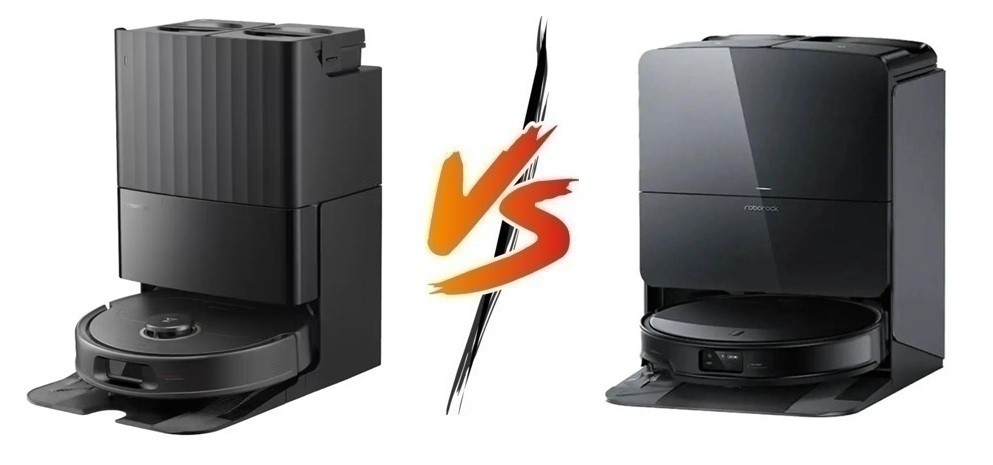
The Roborock Qrevo S Pro and Saros 10R show how advanced robot vacuums are now. Both can vacuum, mop, and take care of themselves without needing you to step in. Both can map a home, clean individual rooms, lift their mops when they encounter carpets and return to their docks when they need charging.
And they’re not meant for the same person.
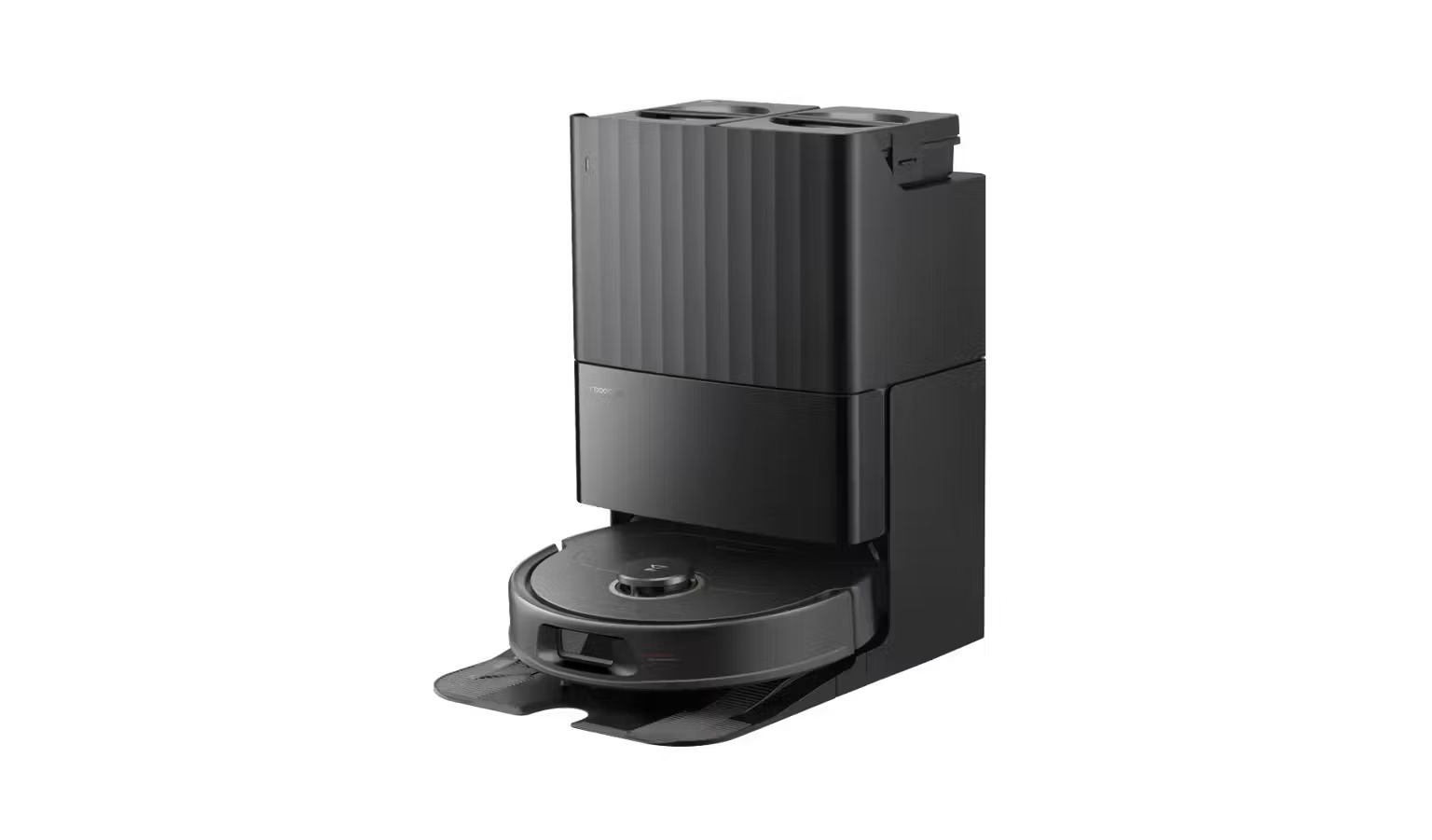
The Qrevo S Pro is a practical option. It uses a tried-and-true formula and adds a lot of automation without the high price. It has a conventional LiDAR tower, 18,500Pa maximum suction according to Roborock, dual rotating mop pads, structured-light obstacle avoidance and a multifunction dock. The robot itself is 96.5mm high.
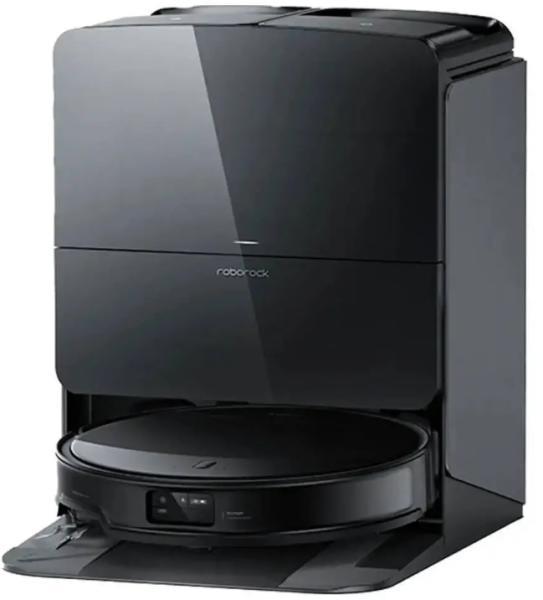
The Saros 10R is more extreme. The biggest difference is that it uses a low-profile sensing system instead of a traditional LiDAR turret. At just 79.8mm tall, it can get underneath furniture that the Qrevo S Pro simply can’t reach. It also adds more sophisticated 3D sensing, an RGB camera, an extending mop and side brush, a DuoDivide anti-tangle brush system and a more advanced obstacle-avoidance package.
On paper, the Saros 10R seems like the clear winner.
But in reality, it’s more complicated.
The Qrevo S Pro is considerably more capable than its price positioning might suggest, and if your home is relatively tidy, has plenty of hard flooring and doesn’t contain an obstacle course of cables, toys and pet bowls, it can deliver most of the experience people actually want from a premium robot vacuum.
The Saros 10R, meanwhile, earns its premium by solving the irritating edge cases. It’s better at seeing things in its path, better at reaching underneath low furniture, better at getting into edges and corners, and generally more convincing as a machine that you can set loose without first preparing the entire house.
That distinction becomes important when you live with the robot rather than read its specification sheet.
Roborock Qrevo S Pro vs Roborock Saros 10R Comparison Table
If you click the links below, under the product images, you will be redirected to Amazon.com. In case you then decide to buy anything, Amazon.com will pay me a commission. This doesn’t affect the honesty of this review in any way though.
| Feature | Roborock Qrevo S Pro | Roborock Saros 10R |
|---|---|---|
 |  | |
| Check the best price on Amazon | Check the best price on Amazon | |
| Positioning | Premium mid/high-end robot vacuum and mop | Flagship-level robot vacuum and mop |
| Overall cleaning | Excellent | Excellent to outstanding |
| Vacuuming performance | Strong suction and very good everyday debris pickup | Stronger overall system, particularly around edges and difficult areas |
| Main brush | Conventional all-rubber brush design | DuoDivide anti-tangle brush |
| Hair handling | Very good, but some hair can wrap around the brush | Excellent, with substantially better resistance to hair tangling |
| Pet hair | Very capable | Better suited to heavy shedding and multi-pet homes |
| Navigation | LiDAR-based navigation with intelligent mapping | More advanced navigation and environmental sensing |
| Obstacle avoidance | Very good | Excellent, with more sophisticated object recognition |
| Mapping | Accurate multi-level mapping and room recognition | Highly sophisticated mapping and navigation |
| Under-furniture cleaning | Good, but height limits access to some low furniture | Excellent thanks to its much lower profile |
| Mop system | Dual rotating mop pads | Dual rotating mop pads with more advanced edge coverage |
| Edge mopping | Very good, but leaves some areas close to walls | Better, thanks to an extending mop system |
| Mop washing | Automatic washing at the dock | Automatic washing at the dock |
| Mop washing temperature | Heated-water mop washing | Heated-water mop washing |
| Mop drying | Automatic warm-air drying | Automatic warm-air drying |
| Carpet handling | Automatically lifts mop pads when appropriate | Automatically manages mop pads for carpet cleaning |
| Hard-floor mopping | Excellent for routine maintenance | Excellent, with better edge coverage |
| Dried stains | Good, but manual scrubbing may still be required | Better, although still not a replacement for manual deep scrubbing |
| Dock automation | Automatic dust emptying, mop washing and drying | Automatic dust emptying, mop washing and drying |
| Dustbin emptying | Automatic | Automatic |
| Water management | Separate clean- and dirty-water tanks | Separate clean- and dirty-water tanks |
| Maintenance | Relatively straightforward | Highly automated, with improved anti-tangle design |
| Brush maintenance | Occasional hair removal required | Less frequent hair removal thanks to DuoDivide brush |
| Sensor maintenance | Occasional cleaning recommended | Occasional cleaning recommended |
| App experience | Comprehensive and easy to use | Comprehensive, with more advanced automation options |
| Room-specific cleaning | Yes | Yes |
| Scheduling | Yes | Yes |
| Voice control | Supported | Supported |
| Low-clearance cleaning | Good | Excellent |
| Busy/cluttered homes | Very capable, but benefits from some pre-cleaning tidying | Better suited to clutter and unpredictable obstacles |
| Pet households | Excellent | Outstanding |
| Noise | Relatively quiet in lower cleaning modes; louder at maximum power | Similar trade-off between cleaning power and noise |
| Ease of use | Excellent | Excellent |
| Learning curve | Low | Low to moderate due to greater feature set |
| Automation | Very high | Extremely high |
| Best suited to | Users wanting premium performance and strong value | Users wanting the most complete, hands-off cleaning experience |
| Biggest strength | Excellent balance of performance, automation and usability | More advanced navigation, lower profile, anti-tangle system and edge cleaning |
| Main limitation | Taller body and less sophisticated edge/obstacle handling than the Saros | Higher-end positioning and greater complexity come at a premium |
| Best value | Qrevo S Pro | — |
| Best overall | — | Saros 10R |
| My individual reviews | Roborock Qrevo S Pro review |
At a glance
| Category | Winner |
|---|---|
| Design & Build Quality | Saros 10R |
| Navigation & Mapping | Saros 10R |
| Vacuuming Performance | Saros 10R |
| Mopping Capability | Saros 10R |
| Maintenance & Cleaning | Saros 10R |
| Energy Efficiency & Noise | Qrevo S Pro / very close |
| Ergonomics & Usability | Saros 10R |
| Pet-Friendliness | Saros 10R |
| Value for Money | Qrevo S Pro |
| Overall | Saros 10R |
Bottom line
The Qrevo S Pro is the more compelling choice if you want a premium robot vacuum without necessarily needing Roborock’s most advanced hardware. It already offers excellent vacuuming and mopping, sophisticated navigation and an impressively automated dock.
The Saros 10R is the more capable machine overall. Its low-profile design, improved obstacle recognition, anti-tangle brush and extending cleaning mechanisms address several of the Qrevo’s remaining weaknesses. Those advantages become especially valuable in homes with pets, lots of furniture or complicated layouts.
Qrevo S Pro = better value.
Saros 10R = better overall performance and automation.
Design & Build Quality
Comparing the Roborock Qrevo S Pro and the Saros 10R reveals that they share a design philosophy, yet differ in their stages. The Qrevo S Pro is a polished version of the conventional premium robot vacuum. The Saros 10R feels like Roborock has taken that formula apart and asked which parts could be redesigned from the ground up.
Both machines are well-made, and neither feels cheap. But the differences become more interesting when you stop looking at them as gadgets and start thinking about what they’ve to endure every day. A robot vacuum spends its life repeatedly moving across hard floors, climbing over thresholds, squeezing around furniture, brushing against walls, getting wet during mopping and returning to a dock full of dirty water and dust. Build quality isn’t just about the initial plastic feel. It’s about the design’s environmental sense.
Qrevo S Pro: a refined conventional design
The Qrevo S Pro has a familiar, circular shape. It’s a format we’ve seen many times before because it works. The round body allows the robot to rotate in tight spaces, move around table legs and navigate open rooms without having corners that constantly catch on furniture.
At first glance, there’s nothing particularly radical about it. That’s part of its appeal.
The Qrevo S Pro appears mature, not experimental. The body is clean, understated, with integrated sensors and controls. This raised LiDAR turret is its most obvious traditional feature. This is a familiar sight on Roborock’s more conventional models and immediately tells you something about how the robot navigates.
Construction feels solid. This plastic doesn’t mimic metal or luxury materials; it feels suitable for a machine that spends most of its life under furniture. Covering a robot vacuum in expensive materials is pointless given its daily dust, water, hair, and chair-leg collisions.
What matters more is how the components fit together.
Removable sections, dust containers, and water-related components have a functional feel. Basic maintenance doesn’t require wrestling with the robot. Parts are designed for easy removal, emptying, cleaning, or replacement.
This is important since robot vacuums can be frustrating when maintenance requires disassembly. The Qrevo S Pro avoids most of that problem.
The robot itself is also relatively compact in footprint, although its height is more big than its width when you consider where it can clean.
At roughly 96.5mm tall, the Qrevo S Pro isn’t particularly large by robot-vacuum standards, but that raised navigation turret effectively determines the minimum clearance it needs. A sofa that looks as though it should be accessible might still be off-limits if there isn’t enough space above the LiDAR module.
This design decision doesn’t matter in a showroom, but it sort of matters at home.
A robot’s height isn’t noticeable on the floor. You notice it when you find dust under the sofa that the robot can’t reach.
Saros 10R: a different approach to the robot’s physical shape
The Saros 10R takes a much more interesting approach.
The most immediately noticeable change is the absence of the traditional LiDAR tower. Roborock integrates the sensing hardware into a lower-profile body, instead of using a large rotating sensor module on top.
It’s only around 80mm tall.
This isn’t just a cosmetic improvement. It’s a fundamental change to what the robot can physically access.
The difference between roughly 80mm and roughly 97mm may look insignificant on a specification sheet but in a real home it can be the difference between reaching under a sofa and stopping at the edge of it.
Beds are a good example too. Many modern beds have low clearances, especially those with drawers or thick frames. A conventional robot can end up cleaning everything around the bed while leaving a large rectangle of untouched floor underneath it.
The Saros 10R can get in there more easily.
I think this is one of the most convincing design decisions Roborock has made with the Saros range. The company has addressed a physical limitation that has existed for years, rather than making the robot stronger or adding app features.
The lower profile changes the machine’s look. It looks flatter and more streamlined. It has less of the “robot with a sensor sitting on its head” appearance of older models.
That has a certain elegance.
More, though, the redesign doesn’t appear to have been achieved simply by making the robot thinner. The body integrates a substantial collection of sensors and navigation technology, while keeping the cleaning hardware underneath.
This is a much harder engineering problem than just shrinking the exterior.
That materials and perceived quality
Neither machine is built like a luxury electronic device, and I don’t think it should be.
The most important thing is that the plastics and moving parts feel strong enough for repeated use. They meet that expectation.
The Saros 10R has a more premium feel, partly because the design is more cohesive. This absence of the LiDAR turret makes the top surface look cleaner, while the more integrated sensor arrangement gives it the appearance of a newer generation of hardware.
Glossy areas can still collect fingerprints or show marks. This is normal for robot vacuums, but machines that look pristine in photos will get scratched from living under furniture and moving around.
A few minor cosmetic marks are preferable to a delicate finish.
These machines are appliances first.
The docks are a major part of the product
A common mistake when reviewing robot vacuums is focusing only on the robot.
For the Qrevo S Pro and Saros 10R, that’s only half of it.
The dock is arguably just as important.
They use large multifunction docks, not just simple charging stations. The docks collect dust, handle water, wash and dry the mop pads.
This changes the product’s physical requirements.
You’re not just finding a place to park the robot. You’re installing a small cleaning station somewhere.
The Qrevo S Pro’s dock is substantial, but well-designed. The clean-water and dirty-water tanks are accessible, and the various components are designed around the expectation that the owner will occasionally remove and clean them.
That’s what I want.
An automated dock isn’t convenient if it can’t be cleaned manually.
The dock base is important. Mop washing exposes the docking area to dirty water, debris, and hair. Being able to clean the dock is basic but crucial.
The Saros 10R’s dock follows the same principle, but looks more sophisticated. It feels like a complete appliance, not just a charging station.
Its proportions are also different from the Qrevo S Pro’s dock, and this is something prospective buyers should consider before purchasing either model. The robot might be tiny, but the docking station isn’t.
Measure the space first if you plan to hide it. Allow enough room to remove the water tanks and dust bag. A dock that fits but can’t be opened comfortably isn’t useful.
Mechanical design and moving parts
The Saros 10R gets interesting here.
The robot has more sophisticated physical mechanisms than the Qrevo S Pro, including its extending edge-cleaning hardware and adaptable chassis.
These mechanisms are great; they solve actual cleaning issues.
But more moving parts also mean more mechanical complexity.
The Qrevo S Pro is more conventional in comparison. Its cleaning hardware is familiar and proven, also relatively straightforward. There’s something reassuring about that.
The Saros 10R does the opposite. Its side brush and mop can extend toward edges, and the chassis is designed to adapt to different floor transitions.
These features make sense immediately when you see them in operation. It’s not just trying to be smarter with software. It physically changes its configuration to reach places it couldn’t otherwise.
That’s a more meaningful use of engineering.
But there’s a potential downside: long-term complexity. A simple fixed component fails less often than a sophisticated moving mechanism. The Saros 10R isn’t unreliable, though. Buyers should recognize the difference between a mature platform and a flagship model with more mechanical functions.
Hair and brush design
The brush system is another area where the Saros 10R has a more modern design.
The Qrevo S Pro uses a conventional main brush arrangement that works well for everyday debris but can still require manual attention when hair becomes wrapped around the roller.
Anyone who’s owned a robot vacuum knows this routine.
You turn the robot over, remove the brush, discover that a surprising amount of hair has wound around the ends, and spend a few minutes cutting and pulling it free.
It’s not a disaster, but it’s not completely autonomous cleaning.
The Saros 10R’s DuoDivide brush does things differently. The split roller reduces the chance of long hair wrapping around the centre and channels debris toward the suction path.
I appreciate this kind of design feature because it addresses an actual ownership problem.
This could make a big difference for households with long hair over months of use.
Water and mopping hardware
Both machines have to deal with water, which ordinary vacuum cleaners don’t.
A robot that vacuums and mops needs to carry clean water, collect dirty water, and move between the floor and its dock repeatedly.
The Qrevo S Pro handles this through its multifunction dock and rotating mop system. The construction feels purpose-built around repeated wet cleaning rather than treating mopping as an afterthought.
The Saros 10R takes this idea further, especially with its extending mop hardware.
Again, the important point isn’t the feature’s novelty. What happens to the floor is what honestly matters.
A fixed mop can clean most of an open floor, but struggles near walls. An extending mop has an advantage because it can reach the floor the circular body can’t.
This makes the Saros 10R’s mechanical complexity more justifiable.
Durability in everyday use
I wouldn’t describe either robot as indestructible.
No robot vacuum can claim to be indestructible.
Both robots have sensors, brushes, filters, and mop components that require maintenance. And will eventually need attention. And the dock needs periodic cleaning, despite its automated features.
What impresses me about both models is that the designs generally acknowledge this reality.
That parts that need owner interaction are accessible, making routine maintenance practical.
The Qrevo S Pro has a more conservative design, which is easier to understand. Its architecture follows the usual robot-vacuum layout, making it easier to grasp.
The Saros 10R feels more like a technological flagship. More of its capabilities are built into the mechanical architecture, and the whole machine has been designed around reducing the limitations of previous generations.
So, which design is better?
For simplicity, the Qrevo S Pro deserves credit.
It doesn’t overcomplicate things with complex mechanisms. It executes a proven layout very well.
But for impressive engineering, the Saros 10R wins easily.
Its low-profile body is a standout feature. This feature is more useful than a cosmetic redesign, as it changes where the robot can clean.
The integrated sensing system lets Roborock remove the bulky LiDAR turret without affecting navigation. This results in a cleaner exterior and makes the machine more versatile around low furniture.
Then there are the extending cleaning arms and anti-tangle brush design.
Individually, these features don’t completely transform the robot. Taken together, they make the Saros 10R feel like a machine designed around the realities of a modern home rather than simply an upgraded version of an older robot.
The Qrevo S Pro remains excellent hardware, and its conventional design will be adequate for many people. In fact, its simplicity can be a benefit for those prioritizing dependable everyday cleaning over many features.
However, the Saros 10R is more convincing for engineering.
It’s smaller where it needs to be smaller, more flexible where it needs to be flexible, and more mechanically capable where traditional robot vacuums have always had limitations.
Design & Build Quality winner: Saros 10R
The Qrevo S Pro is well-built, thoughtfully designed, and gets the basics right. The Saros 10R takes it a step further by incorporating its physical design into the solution for traditional robot vacuum problems. Features like its low profile, integrated navigation hardware, extending cleaning mechanisms, and anti-tangle brush give it a clear advantage.
The difference isn’t about the Qrevo S Pro feeling cheaply made. It doesn’t feel cheaply made. The Saros 10R feels more purposefully engineered, which is the difference.
When spending flagship money on a robot vacuum, this is exactly the kind of improvement I expect to see.
Navigation Intelligence & Mapping
Navigation is one of the areas where a robot vacuum can either feel genuinely intelligent or suddenly remind you that you’re dealing with a small machine following instructions. The difference isn’t always obvious from a specification sheet. Both the Roborock Qrevo S Pro and the Roborock Saros 10R can map a home, recognize rooms, plan cleaning routes and return to their docks without much drama. But once you put them into a complicated home with furniture, cables, shoes, toys, pets and awkward spaces, the gap between their approaches becomes much easier to appreciate.
The Qrevo S Pro uses a mature LiDAR-based navigation system, while the Saros 10R takes a more sophisticated approach with a low-profile sensing architecture designed to understand both the layout of the home and the objects sitting within it. In other words, the Qrevo S Pro is very good at knowing where it is. The Saros 10R is better at understanding what is around it.
That distinction is central to the experience.
Qrevo S Pro: reliable, systematic navigation
The Qrevo S Pro uses LiDAR as its primary navigation technology. For anyone familiar with modern Roborock machines, this is a tried-and-tested approach.
The robot essentially builds a digital representation of the home and uses that map to determine where it is and where it needs to go. Rather than randomly bouncing around the room, it can work systematically through defined areas.
This is important because efficient navigation isn’t simply about avoiding obstacles. It’s also about avoiding unnecessary movement.
A robot that spends an hour wandering around a room may eventually clean the floor, but it’s wasting battery and taking longer to finish. A robot that understands the room layout can work in deliberate passes, covering the floor in an organized pattern.
The Qrevo S Pro is very good at this.
During normal operation, it doesn’t give the impression of being lost. It generally moves in a logical direction, follows the boundaries of rooms and works its way through open areas methodically.
For a typical apartment or house with relatively straightforward rooms, that’s already enough to make the robot feel highly autonomous.
The initial mapping process is also one of the more satisfying parts of owning a modern Roborock. Instead of waiting for the robot to discover every corner through repeated cleaning sessions, the mapping system can quickly establish the basic structure of the home.
Once the map exists, you can divide the space into rooms and give the robot more specific instructions.
That means you don’t have to physically carry the machine from one room to another.
You can simply tell it to clean the kitchen.
Or the hallway.
Or the entire downstairs floor.
That sounds obvious now, but it’s one of the biggest improvements robot vacuums have made over the years.
The Qrevo’s real strength is predictability
What I like about the Qrevo S Pro’s navigation is that it is predictable.
Predictability is underrated.
You don’t necessarily need your robot vacuum to demonstrate human-like intelligence. You need it to do the same basic job reliably every day.
The Qrevo S Pro’s mapping system is mature enough that it generally knows where it has been and where it still needs to go. That makes it particularly good for homes with relatively open layouts.
Its LiDAR system also means that it doesn’t depend entirely on visible light to understand the basic structure of a room.
Turn off the lights and the robot doesn’t suddenly become blind.
That’s one of the fundamental advantages of LiDAR navigation.
Where the Qrevo S Pro starts to struggle
The weakness appears when you introduce objects that weren’t part of the original map.
Imagine mapping your living room on Monday.
There are no shoes on the floor.
No toys.
No cables.
No clothes.
The robot creates an excellent map.
On Tuesday, the room looks completely different.
There’s a pair of trainers beside the sofa, a charging cable stretching across the floor and a children’s toy in the middle of the room.
The basic map hasn’t changed.
The room is still the same room.
But the robot now has to deal with temporary objects that aren’t represented in its original map.
This is where the Qrevo S Pro’s navigation system becomes less impressive.
It has obstacle-detection hardware, but it’s not designed to give the robot the same level of visual and three-dimensional understanding as the Saros 10R.
The Qrevo can detect many obstacles and adjust its path accordingly, but small objects can still be problematic.
Cables are particularly awkward.
A cable is thin, irregular and sometimes almost flush with the floor. From the perspective of a robot vacuum, that’s a terrible obstacle.
Shoes are easier, but the robot still has to decide whether the object is something it can safely approach, something it should go around or something it might accidentally push.
This is why robot-vacuum owners still hear the advice to “tidy the floor before cleaning.”
With the Qrevo S Pro, that advice remains relevant.
The Saros 10R focuses on environmental awareness through navigation
The Saros 10R takes a more advanced approach.
The StarSight navigation system uses solid-state LiDAR, 3D sensing and an RGB camera. It’s not just about creating a map. But to give the robot a deeper understanding of its surroundings.
This distinction may seem minor, but it’s a key difference between robots.
A traditional robot can know that there’s a wall about two metres ahead.
But a more advanced robot can see a chair leg, shoe, and cable in its path.
This information is more useful in changing environments.
The Saros 10R therefore feels more comfortable operating in a genuinely lived-in home.
And that’s important because most homes aren’t laboratories.
People leave stuff on the floor.
Pets move things around.
Children scatter toys.
A sock gets dropped.
A charging cable is left unplugged by the sofa.
A great robot vacuum doesn’t need an empty room to work well. It’s one that still works well in a messy room.
Obstacle avoidance is where the Saros earns its reputation
Obstacle avoidance is a strong point for the Saros 10R.
Its combination of sensors allows it to identify objects and make decisions about how to navigate around them.
You can see the difference right away.
Instead of approaching a small object and simply nudging it with the front of the robot, the Saros is more likely to recognize that the object occupies space and adjust its route.
This is particularly useful around furniture.
Chair legs can be a maze for a robot vacuum. A dining table surrounded by six chairs can have a dozen potential obstacles packed into a relatively small area.
A less capable robot may take a long time to get around them.
The Saros 10R can interpret its environment and choose a better route.
This doesn’t necessarily make it faster.
But it can be less wasteful.
And it reduces how often you need to step in.
The pet-owner advantage
This matters even more with pets around.
A pet-friendly robot vacuum needs to see more than walls and furniture.
The floor may contain toys, food bowls, balls, chew toys and other objects.
Some are harmless.
Some can get stuck in the brush.
Some should be avoided.
The Saros 10R’s visual and 3D sensing help it distinguish between these things.
I wouldn’t leave dangerous objects on the floor and expect the robot to handle them.
I don’t.
No obstacle-avoidance system should be treated as an excuse to stop paying attention to what your robot is doing.
There’s a big difference between a robot that needs a clear floor and one that can work around everyday clutter.
The Saros 10R is closer to the latter.
Low-profile navigation alters the map itself
The Saros 10R has another navigation advantage that isn’t purely about sensors.
Its height is physical.
The Saros 10R, at roughly 80mm tall, can travel underneath furniture the Qrevo S Pro may avoid.
Mapping is affected in a subtle way.
A robot can map and clean an area only if it can enter physically.
The Qrevo may map the boundary. And treat the space underneath as inaccessible if a bed or sofa blocks an area.
The Saros can potentially enter that area and add it to its actual cleaning route.
This means the Saros is better at navigating a different environment.
The Saros can navigate larger environments.
This is one of the strongest reasons I prefer it.
Accuracy of mapping
Both robots are very good at building maps.
The Qrevo S Pro’s LiDAR system has been refined over multiple generations, and the resulting maps are generally clear and useful.
Rooms can be identified, cleaning zones set, and no-go areas established.
The Saros 10R does this with a more sophisticated sensor package, but the biggest difference isn’t necessarily that its map looks dramatically better.
The robot benefits from having more information to interpret the map.
This distinction is important.
A nice map is beautiful.
A robot understanding what happens inside the map is more useful.
Cleaning strategy and room recognition
Both machines become easier to use once the map is created.
Different rooms can have different cleaning strategies assigned.
More intensive mopping might be given to a kitchen.
A bedroom might need lighter cleaning.
A hallway may need extra vacuum passes because more dirt is collected.
Roborock’s software becomes a major part of the navigation experience here.
The robot doesn’t simply follow a map.
The map is combined with instructions.
That allows you to move from “clean the house” toward something much closer to personalized cleaning.
The Saros 10R benefits from the same general software philosophy but has a better physical understanding of the environment.
The robot’s software instructions feel more effective because it has more information to work with.
Efficiency of route planning is another area where both robots perform well.
The Qrevo S Pro generally works through rooms in a structured way rather than repeatedly covering the same area.
This matters in larger homes particularly.
Battery consumption increases and cleaning takes longer if the robot crosses the entire house unnecessarily several times.
Cleaning performance therefore includes a logical route.
The Saros 10R’s navigation can improve this further by making more informed decisions around obstacles.
A chair needn’t become a full-scale detour.
The entire cleaning pattern needn’t be disrupted by a temporary object.
It can adapt simply.
The Saros is defined by its ability to adapt.
When the robot gets interrupted, what happens?
Another practical test of navigation intelligence is.
If you pick up the robot while it’s cleaning to move it.
Or perhaps somebody accidentally pushes it out of position.
A good navigation system should recover, rather than become completely confused.
The Roborock models are designed to localize themselves and then resume their tasks.
Modern mapping systems have an advantage over early robot vacuums, which could become confused easily.
The Saros 10R has an advantage. Because it can re-establish its position and understand its surroundings with more sensing information.
And the Qrevo S Pro is still highly capable.
Stairs and physical boundaries
Conventional staircases aren’t something these machines can climb.
That’s worth stating because advanced obstacle avoidance can sometimes create unrealistic expectations.
They can detect boundaries and avoid falling down stairs, but they aren’t autonomous multi-level cleaners.
If you’ve multiple floors, you’ll generally need to move the robot or purchase a separate machine for each level.
This also applies to large steps between rooms.
The Saros 10R is better at dealing with thresholds and uneven transitions, but there are still physical limits.
No software intelligence can make a robot vacuum climb normal stairs.
Privacy is another consideration
The Saros 10R’s RGB camera introduces another consideration that isn’t directly related to navigation performance.
A camera can make the robot better at recognizing objects.
Some people are uncomfortable with home cameras, understandably.
This is a legitimate consideration.
Someone who values simplicity may prefer the Qrevo S Pro’s sensor arrangement, which doesn’t use an onboard visual system for obstacle recognition.
No universal right answer exists here.
The Saros has the advantage if maximum environmental awareness is the priority.
If minimizing household devices with cameras matters more, the Qrevo’s approach may be more comfortable.
Which navigation system feels more intelligent?
The difference between the two robots is more meaningful than the specifications suggest in this category.
The Qrevo S Pro makes conventional robot vacuum navigation feel almost effortless, it’s smart enough to do so.
You map the house, divide the rooms, schedule cleaning, and let it work.
That’s often all you need for a tidy home.
The Saros 10R takes it a step further.
It understands more than just your home’s architecture.
That things occupying that architecture are understood much better by it.
It can deal with messier, more dynamic environments without needing as much preparation, which means.
That’s the real intelligence test.
A robot that works perfectly in an empty room isn’t particularly impressive.
A robot that can navigate around a chair, recognize a shoe, avoid a cable, move beneath a low sofa, clean around a pet bowl and still return to its dock at the end of the job is much closer to the autonomous cleaner people actually imagine when they hear the phrase “robot vacuum.”
Navigation verdict
Excellent navigation for its class is what the Qrevo S Pro has.
Its LiDAR mapping is mature, its route planning is reliable and its room-by-room control makes it easy to manage larger homes. If your rooms are relatively open and you generally keep the floor tidy, there’s very little to complain about.
The Saros 10R is in another league when environments get complicated.
Its low-profile sensing architecture, three-dimensional awareness, visual recognition and sophisticated obstacle avoidance give it a much better understanding of what’s actually happening around it.
The Qrevo getting lost and the Saros not getting lost isn’t the difference.
That difference is subtler than that.
The Qrevo has map understanding.
The Saros understands both the map and what’s inside it.
This makes the Saros 10R a more convincing autonomous machine.
Saros 10R wins for Navigation Intelligence & Mapping
I wouldn’t pay a huge premium for navigation alone in a simple home. The Qrevo S Pro is extremely competent, anyway.
But for a busy household where the floor changes throughout the day, where furniture creates tight spaces, where pets leave toys around and where you want to run the robot without first preparing every room, the Saros 10R’s navigation advantage becomes genuinely valuable.
That’s what separates a very good robot vacuum from a household appliance you can forget about.
Vacuuming Performance
The Roborock Qrevo S Pro and Saros 10R must justify their features through their vacuuming performance. Mapping is useful, docks are convenient. And obstacle avoidance makes life easier, but they’re still vacuum cleaners at heart. Their main job is to remove dust, crumbs, hair, grit, and other debris from the floor.
That interesting thing is that neither model is simply trying to win through maximum suction power. The Qrevo S Pro already has a very high quoted suction figure, while the Saros 10R pushes that number even further. But suction alone doesn’t determine cleaning performance. This brush design, airflow, floor contact, route planning, and edge reach all affect cleaning performance.
Both machines keep hard floors clean in everyday use. The Saros 10R has physical and software advantages that make it a more complete vacuum.
The Qrevo S Pro has serious cleaning power
The Qrevo S Pro isn’t pretending to be a premium vacuum.
Its quoted maximum suction power of 18,500Pa puts it firmly into high-performance robot-vacuum territory. This suction power handles ordinary household debris like dust, crumbs, cereal, rice, grit, and pet hair.
More, the robot combines that suction with a systematic cleaning pattern.
This is something that can easily be overlooked when comparing vacuum cleaners.
Imagine crumbs scattered across a kitchen floor. A robot with huge suction may perform worse if it only passes over crumbs once, compared to a less powerful one that covers the area twice.
The Qrevo S Pro’s navigation contributes to its cleaning performance.
It works methodically, not randomly. Once it has established the room layout, it can clean in organized passes and avoid wasting large amounts of time wandering around.
This makes the Qrevo S Pro effective for maintenance cleaning.
And that’s the role in which I think robot vacuums make the most sense.
You don’t necessarily need them to perform a once-a-month deep clean.
They should remove daily dust and debris.
Run the Qrevo S Pro frequently and the floor stays consistently clean.
The Qrevo S Pro excels on hard floors
It’s extremely capable on hard surfaces like tile, laminate, vinyl, and hardwood.
Fine dust is easy for it to handle.
Crumbs are handled well too.
Everyday kitchen debris is handled similarly. If cereal is dropped near the breakfast table, the robot can pick it up easily.
Larger debris can be more challenging.
Robot vacuums must balance intake size, brush geometry, and airflow. Very large pieces can occasionally be pushed around rather than immediately swallowed.
This isn’t unique to the Qrevo S Pro.
It’s a limitation of compact robot vacuums.
The Qrevo S Pro is convincing for ordinary household debris.
That fact that it can repeat the job every day is arguably more important than whether it can win a one-pass laboratory test.
The Saros 10R raises the ceiling
The Saros 10R builds upon the Qrevo S Pro’s vacuuming system, which is already strong, by making several key improvements to it.
That headline suction figure is about 20,000Pa, which puts it slightly above the Qrevo S Pro.
The roughly 1,500Pa difference doesn’t automatically mean a big difference in real-world performance. And I wouldn’t assume that it does.
The Saros doesn’t immediately draw attention to its cleaning performance when you glance at a floor it’s just vacuumed; and it’s highly unlikely you’d notice it removed 8% more dirt.
The advantage is cumulative.
The Saros has strong suction. And a more advanced brush system, it also does a better job with edge cleaning and navigation is more intelligent.
What makes it better is the combination.
DuoDivide is more than just a name for marketing purposes
The DuoDivide brush is one of the Saros 10R’s most interesting features for vacuuming.
That system’s design divides it in a way that guides hair and debris toward the suction path, reducing the tendency for long strands of hair to wrap around the brush, unlike a conventional single continuous roller.
More than you might think, this actually matters.
Hair is one of the biggest annoyances of robot vacuum ownership.
Rollers get wound with human hair.
Long pet hair does the same.
The brush ends up with a tightly wrapped bundle after many cleaning cycles. Airflow and brush performance suffer because of this, and the accumulated hair has to be removed manually, even though the robot still works.
That problem is tackled at its root by the Saros 10R’s brush design.
The brush will still need cleaning at some point, it’s just not a regular task.
Conventional rollers can develop a thick, tangled mass, but this is less likely to happen.
That’s a big plus for a household with long-haired occupants.
Debris is everywhere every day
These robots excel at handling the typical dirt found in most households.
Dust isn’t a problem.
Crumbs are easy.
Rice and cereal are pretty simple.
They can also bring in fine grit from outside.
The Saros 10R navigates complicated spaces around furniture more deliberately, which gives it an advantage when debris is scattered in these areas.
The Saros can approach the problem from more angles, whereas the Qrevo S Pro may only clean a room in a standard way.
It’s about flexibility and the Saros has that.
That distinction matters.
It’s not just about the dirt a vacuum can pick up when it goes right over it.
Reaching the dirt is what matters, and that’s also about the vacuum. The vacuum has to get to the dirt first.
Edge cleaning has an advantage
Edges are a physical problem for circular robot vacuums.
Round is the shape of the body.
The wall is straight.
A small area of floor remains inaccessible to the robot’s central cleaning system.
The side brush is useful, it has limits though.
The Qrevo S Pro does a decent job, and the Saros 10R is more ambitious.
The product’s side brush extends outward, reaching walls and furniture, and the mop hardware extends too, getting into edges.
The Saros is particularly effective in kitchens because of this.
Dirt tends to accumulate in certain areas and it’s worth considering where that
Along the skirting board.
Cabinets are beside the kitchen.
Dining furniture often has them around its legs.
Under the edges of beds.
A conventional robot’s circular shape is particularly problematic in these areas.
The Saros can’t completely eliminate the problem, because geometry is still geometry, but it reduces manual finishing. You’ll need to do less of it.
Vacuuming performance is affected by furniture.
Many robot-vacuum comparisons miss this, I think.
Physical access to the floor partly determines a vacuum cleaner’s ability to clean effectively.
The Qrevo S Pro is capable of cleaning 95% of a room beautifully.
You’ve still got areas that need manual attention, even if the remaining 5% is hidden underneath a sofa or along the back of a cabinet.
The Saros 10R’s lower body changes this equation.
It’s about 80mm tall, which means it can fit under furniture that’s too low for the Qrevo S Pro, given its height of around 96.5mm.
That doesn’t give a suction advantage.
That’s an advantage in coverage.
From a homeowner’s perspective, the distinction isn’t particularly significant.
That second machine delivers better vacuuming performance if it removes the dirt that the first machine leaves under the sofa.
Carpet is a more complicated story
High-end robot vacuums have it pretty easy with hard floors.
Things get difficult with carpet.
Dust, hair, and fine particles get trapped in a carpet’s fibers. Mechanical agitation is more important with deeper carpet piles.
Upright vacuum cleaners still have a big edge here.
Full-size uprights apply significant pressure via their cleaning heads, also agitating carpet fibers repeatedly. Robot vacuums, on the other hand, use smaller and lighter cleaning systems, which have to balance power, mobility, and battery life.
The Qrevo S Pro does a good job on regular carpets, especially with stuff like dirt on the surface.
That ability to lift mop pads when carpet is detected matters.
Wet mop pads can damage rugs when they’re dragged across them.
It’s not necessary to remove the mop system when the robot moves from hard floors to carpet.
It’s a major convenience in a mixed-floor home.
Deep carpet versus surface carpet
Cleaning a carpet is one thing, and maintaining it’s another.
The Qrevo S Pro is very good at maintenance.
Running it frequently removes surface dust and hair before they accumulate deeply.
One reason people are surprised by robot vacuums is that they don’t expect them to work as well
Daily floor cleaning by a robot can be effective even if it’s not better than an upright at removing deeply embedded dirt.
Weekly upright cleaning can remove a lot of debris that’s built up.
Running a robot daily can prevent accumulation.
The Saros 10R has a stronger overall package, following the same philosophy.
Thick, high-pile carpeting is still best tackled with a good upright, in my opinion, even if this can vacuum carpets effectively.
If you have pets, that’s especially the case.
Pet hair performance
Pet hair deserves its own discussion. Because it’s one of the most demanding jobs for a robot vacuum.
Short hair can be relatively easy.
Long hair is another matter.
Hair gets wrapped around brushes, caught in bearings and packed into dustbin corners.
The Qrevo S Pro can deal with everyday pet hair, especially on hard floors, but its conventional brush design means owners may have to perform regular hair maintenance.
The Saros 10R’s anti-tangle approach gives it a clear mechanical advantage.
This design reduces trapped hair, making it attractive to owners of long-haired pets or households with multiple long-haired individuals.
Independent testing shows varying results for the Saros 10R’s pet-hair pickup, especially on carpet.
This reminds us not to take any single spec or test result as absolute.
The floor type is important.
Hair type is also important.
The amount of hair is important too.
Whether hair is loose or embedded in carpet also matters.
So I would describe the Saros 10R as the better-designed machine for pet hair rather than claiming it’s universally the best pet-hair vacuum in every situation.
Dustbin capacity and automatic emptying
The dustbin is less important now since both machines use their docks heavily.
Once the robot finishes cleaning, it can return to the dock and transfer its collected dirt into a larger dust bag.
This is one of the most important improvements in modern robot vacuum design.
Without automatic emptying, a robot vacuum can become another household chore.
With automatic emptying, you can run the machine repeatedly without daily dustbin maintenance.
The Qrevo S Pro’s system is excellent in this regard.
The Saros 10R offers similar convenience.
In practice, both machines can run for extended periods with little intervention.
Households with multiple pets will fill the dust bag faster than single-person apartments.
This is obvious, but worth noting.
Maximum duration figures depend on usage.
Suction modes and cleaning intensity
Both machines have the strength of offering variable cleaning intensity.
You can choose lighter cleaning for daily maintenance or stronger cleaning when needed.
This is important for managing battery life.
Maximum suction isn’t always necessary.
If the house was cleaned yesterday, a lower setting may be enough for today’s dust.
A stronger mode is more suitable for the kitchen after dinner.
The ability to customize cleaning intensity therefore lets you balance performance, battery consumption and noise.
This approach is more intelligent than always running the motor at full power.
Route planning impacts real-world cleaning performance
This is one of the strongest arguments for buying a sophisticated robot vacuum instead of simply choosing the machine with the largest suction number.
Consider two robots with the same suction power.
Robot A moves randomly, missing some floor areas.
Robot B maps the room, divides it into paths, and systematically covers the area.
Robot B is a better cleaner.
The Qrevo S Pro is good at systematic cleaning.
The Saros 10R improves on that by being better at navigating around obstacles without compromising its route.
This means it can spend more time actually cleaning.
Instead of repeatedly bumping into furniture or getting trapped between chair legs, it can make better decisions about how to approach the space.
Vacuuming under furniture
This deserves special attention because it is one of the Saros 10R’s biggest real-world advantages.
Dust under beds is hard to deal with.
You can vacuum it manually, but it’s awkward.
The same applies to areas under sofas.
These are areas where people often don’t clean as frequently as they should.
The Saros 10R’s low profile means it can reach more of these spaces automatically.
That means its effective coverage can be considerably better than a taller robot, even if the two machines have comparable suction.
This is a strong reason to consider the Saros.
A robot vacuum should excel at cleaning areas people dislike cleaning.
What about large debris?
Neither machine should be treated as a replacement for a full-size vacuum when dealing with unusually large debris.
If you’ve dropped half a bag of flour on the kitchen floor, you shouldn’t necessarily send the robot into the mess and expect it to handle everything.
Large food chunks, tangled strings, and bulky packaging can also cause issues.
It’s best to handle major spills manually.
These robots are meant for routine cleaning, not cleaning up big messes.
Both robots can handle small crumbs, so you don’t need to worry about those.
That’s the idea.
Consistency matters more than how well they clean in one session.
This is perhaps the most important point about judging the vacuuming performance of these two machines.
If I were choosing between them purely based on a one-time cleaning test, I’d focus heavily on pickup percentages.
Most people use robot vacuums regularly, not just for one cleaning session.
The benefit comes from using them repeatedly.
The Qrevo S Pro can clean every day.
The Saros 10R can also clean daily.
In a month, they’ll run dozens of cycles.
A small amount of dirt removed every day can make the floor noticeably cleaner than a powerful vacuum used only once a week.
They work best with regular use.
They’re not meant to replace your regular vacuum for big messes.
They’re designed to reduce the impact of spills and everyday dirt.
Which one has better overall performance?
If we’re talking about overall vacuuming performance, the Saros 10R wins.
But it doesn’t win simply because its suction number is higher.
The Saros 10R’s system is more advanced.
It has powerful suction.
It has a more advanced anti-tangle brush.
It can reach edges better.
It can navigate more intelligently around furniture and temporary obstacles.
It can fit under more furniture.
And it can use all of those capabilities as part of a systematic cleaning strategy.
The Qrevo S Pro is still a great vacuum.
In a mostly hard-floor home, its performance isn’t a compromise. It has enough suction to handle everyday debris extremely well, and its systematic navigation means it can keep floors consistently clean.
The Saros 10R improves on that.
If the Qrevo S Pro is the kind of robot that makes you think, “I don’t need to vacuum as often anymore,” The Saros 10R might make you think you barely need to vacuum manually.
Upright or cordless vacuums are still needed for stairs, upholstery, deep carpet, and big messes. For daily floor maintenance, the Saros 10R is a more complete system.
Verdict on vacuuming performance:
The Qrevo S Pro deserves credit. Its suction, navigation, and brush system make it a powerful daily cleaner. It honestly works well on hard floors and can handle mixed flooring with regular use.
The Saros 10R has more than just extra suction.
The Saros 10R’s brush reduces hair maintenance, its side brush improves edge cleaning, and its low profile and navigation help it clean more efficiently.
That combination makes the Saros 10R the better vacuuming machine overall.
Vacuuming Performance winner: Saros 10R
The difference isn’t huge in a clean, open home with mostly hard floors. The Qrevo S Pro is close in that environment.
The difference is more obvious in a complicated home.
Low furniture, long hair, pets, carpets, dining chairs, narrow spaces and everyday clutter all favor the Saros 10R.
That’s what makes the Saros impressive. Its advantage isn’t just that it can pick up more dirt. It’s designed to find more dirt, reach more of the floor, and need less help from you.
Mopping Capability
The Roborock Qrevo S Pro and Saros 10R get more interesting when it comes to mopping, beyond what ordinary robot vacuums can do. Both machines are designed to do considerably more than drag a damp cloth behind themselves. They use rotating mop pads. And these machines can return to their docks to wash and dry the pads, handling water without needing much help.
This kind of matters because robot mopping wasn’t always a priority. Early robot vacuums often had a small water reservoir and a flat microfiber pad attached underneath. It would move across the floor, leaving a damp trail. It was mopping, but not very convincingly.
The Qrevo S Pro and Saros 10R are part of a new generation.
The goal here isn’t just to get the floor wet. That goal is to keep the floor clean with little help and do it often.
The Qrevo S Pro does this very well already. The Saros 10R makes some improvements, especially with edge cleaning and tough spots.
The Qrevo S Pro has a very useful mopping system
The Qrevo S Pro uses two rotating mop pads, not just one stationary cloth.
This difference matters.
Rotating pads can apply some mechanical action to the floor. As the robot moves, the pads rotate against the floor and bring a fresh section of microfiber into contact with it.
This makes the Qrevo S Pro much more effective at everyday grime.
Footprints are a good example.
A kitchen floor might look clean from far away, but it can still have a thin layer of food residue, grease, and dirt. A regular robot vacuum can’t clean that. But the Qrevo S Pro can.
Small spills are similar.
If someone spills sauce, walks in with wet shoes, or leaves muddy prints by the door, mopping repeatedly can make a difference.
It won’t replace manual scrubbing for stubborn stains, but that’s not the point.
The Qrevo S Pro is for maintenance.
It’s very good at that.
Rotating pads make a difference because
The Qrevo S Pro’s strongest point is the movement of its mop pads.
Think about how you mop manually.
You don’t just put a wet cloth on the floor and push it straight. You apply pressure, move the mop back and forth, and work on dirty areas.
The Qrevo’s pads offer a simpler version of this action.
They can loosen ordinary surface grime while the robot moves around the room.
This effect is noticeable on smooth floors.
On tile, vinyl, laminate, and sealed hardwood, the pads can remove the dirt that a vacuum can’t.
This is why the Qrevo S Pro can be particularly satisfying in kitchens and entrance areas.
Vacuuming alone isn’t enough in those places.
Water management is key
A good mopping robot needs intelligent water management.
The Qrevo S Pro has a clean-water supply in its dock and collects dirty water in a separate container. This robot can return to the dock to wash its mop pads rather than continuing around the house with increasingly dirty microfiber pads.
This feature is surprisingly important.
Mopping an entire house with the same cloth isn’t practical.
You’d never do that.
You’d rinse it often.
The Qrevo does this automatically.
When the pads become dirty, the robot can return to the dock, clean them and continue.
The cleaning process is more than just wetting the pads.
The system manages the cleaning material’s condition.
Heated water for washing mop pads
The Qrevo S Pro’s dock washes mop pads with heated water, reaching high temperatures during cleaning.
Hot water doesn’t necessarily remove every stain.
The main advantage is keeping the pads clean. And hygienic.
Mop pads collect dirt and debris from the floor.
The pad collects grease, dust, food residue, pet grime, and other contaminants.
Hot water breaks down the dirt and leaves the pad in better condition for the next cycle.
The difference becomes especially apparent if you run the robot frequently.
If the machine mops every day, the pads need to be cleaned every day.
The robot’s automatic hot-water washing makes daily cleaning practical.
Drying mop pads
Washing is only part of the problem.
A wet mop pad in a dark dock can harbor unpleasant smells and microbial growth.
The Qrevo S Pro dries its mop pads with warm air after washing them.
This is one of those features that sounds minor when you’re reading a product description but becomes much more important after you’ve owned a mopping robot.
A damp cloth left sitting around tends to smell.
A dry cloth doesn’t smell.
The drying process also means the robot is ready to begin another cleaning cycle with clean, dry mop pads rather than starting from a damp, stale state.
This makes the system feel like a real automated cleaner.
Lifting mop pads on carpet
One concern with robot mopping is how it handles carpet.
You don’t want the robot to drag a wet mop pad over a rug.
The Qrevo S Pro addresses this with automatic mop lifting. When it detects carpet, it can raise the mop pads so that it can vacuum the carpet without applying a wet pad to the fibers.
This makes mixed flooring easier to manage.
Imagine a typical downstairs area with:
Kitchen tile
Dining area hardwood
A rug under the dining table
A hallway with carpet
Manually defining every transition for a robot becomes tedious quickly.
The Qrevo S Pro manages these transitions automatically.
It’s not perfect for every rug or floor covering, but the concept is right.
The Qrevo struggles with edges
The Qrevo S Pro’s mopping system has the same limitation as most circular robots.
The body is round.
Walls aren’t.
The central mop system can’t reach a narrow strip near the room’s edge.
That side brush can move dirt toward the cleaning path, but the mop pads themselves can’t simply move into the corner.
This becomes particularly noticeable in kitchens.
You may have an otherwise beautifully cleaned floor with a thin line of grime remaining along the base of the cabinets.
It’s not a major failure.
It’s geometry.
But this imperfection separates an excellent robot from an exceptional one.
The Saros 10R offers mopping with more physical reach
It addresses this limitation directly.
Its mopping system also uses rotating pads but one of the pads can extend outward to reach closer to walls and furniture.
This is a much more meaningful upgrade than it might initially sound.
Roborock changed the physical cleaning mechanism instead of relying on software to compensate for the robot’s circular shape.
When the robot approaches an edge, the mop can move outward toward it.
This results in better coverage in areas where robot mops usually struggle.
Edge mopping is an advantage
The difference is especially obvious around kitchen cabinets.
Manually wiping your kitchen floor,
You push the mop right up against the cabinets.
Conventional robots can’t do that; they need to maintain a safe distance from the wall.
The Saros 10R’s mop can get much closer.
This means fewer areas need manual finishing.
That same applies around furniture.
A sofa, cabinet or bed can create narrow strips of accessible floor. The Saros can position itself beside the object and extend the mop into the remaining space.
The Saros 10R feels more autonomous in this area, rather than just more complicated.
Mopping around furniture is also better
It combines the extending mop with more sophisticated navigation.
This combination kind of matters.
The extending mop is only useful if the robot knows when to extend it.
The Saros can recognize edges and furniture and adapt its cleaning behavior accordingly.
That means it can get closer to walls and objects without repeatedly crashing into them.
This is particularly useful around dining tables.
Tables are difficult for robot vacuums; they’ve multiple legs, narrow gaps, and awkward corners.
The Qrevo S Pro can navigate around them, but the Saros 10R has a better combination of environmental awareness and physical reach.
It can get into the area while simultaneously improving mop coverage.
Mop pressure is another consideration
Neither robot can replicate the pressure of a human mop.
This is important.
A person can put body weight behind a mop to scrub a stubborn mark.
Robots have relatively lightweight chassis and limited downward force.
So while both machines are excellent at maintaining a floor, neither should be confused with a dedicated hard-floor scrubber.
If someone spills dried coffee and leaves it for two days, intervention may still be needed.
The robots are at their best when they prevent that buildup in the first place.
Run the Saros every day and a kitchen floor is much less likely to develop a thick layer of grime.
That’s the advantage.
Dried stains
Dried stains make for an interesting test.
A rotating mop pad can loosen many marks, particularly if the robot makes multiple passes. But heavily dried food, sticky sauces and old grease can be stubborn.
The Qrevo S Pro can improve these areas considerably; it won’t necessarily remove everything in one pass.
The Saros 10R has an advantage through its more sophisticated cleaning strategy and better edge access, but it still isn’t a robotic pressure washer.
It’s worth keeping expectations realistic.
These robots are maintenance machines.
They’re designed to keep floors clean, not rescue floors that have been neglected for months.
Water levels and cleaning intensity
Another useful aspect of both systems is the ability to adjust how aggressively the robot mops.
Not every floor needs the same amount of water, after all.
A sealed tile kitchen floor can tolerate more moisture than some hardwood floors.
A lightly used bedroom might need only a small amount of water.
A heavily trafficked entrance might benefit from more intensive cleaning.
Being able to customize the water and cleaning strategy lets the robot adapt to different areas.
This is especially useful when you’ve multiple floor materials.
Rather than treating the entire house as one surface, you can create routines that reflect how the rooms are used.
Vacuuming and mopping together
One of the best features is that vacuuming and mopping don’t have to be separate chores.
A robot can vacuum loose debris first and then mop the same floor.
That sequence makes sense.
You don’t want a wet mop pad dragging through crumbs and dust.
The Qrevo S Pro can coordinate the two functions through its modes and software.
The Saros 10R can do the same while benefiting from its more advanced navigation.
This is particularly useful in kitchens.
First, remove crumbs.
Then mop.
That result is much closer to what you’d achieve manually, except the robot can do it while you’re away.
Dirty mop water
The dirty-water tank is another underrated feature.
When the robot washes its pads, the water doesn’t simply disappear.
It has to go somewhere, after all.
Both systems collect it in a separate tank.
This is much better than repeatedly spreading dirty water around the floor.
However, the dirty-water tank means you still have one manual responsibility.
You need to empty the tank.
That may happen every few days, depending on the home’s size, cleaning frequency, and water usage.
It’s a small chore, but it’s still a chore.
Robot vacuum marketing sometimes makes automated cleaning sound completely maintenance-free.
It isn’t.
That better description is “dramatically reduced maintenance.”
The importance of mop drying
If I had to choose, I’d take a robot with a better mop-washing and drying system over one with slightly stronger mopping.
That might sound strange; the cleaning pads are the robot’s cleaning tool.
If they’re not clean, the system becomes less effective.
If they’re wet for long periods, they can smell.
If they’re not washed thoroughly, dirt accumulates.
The Saros 10R’s automated washing and drying system matters just as much as the rotating pads.
The Qrevo S Pro also does an excellent job here, which is one reason it remains such a strong all-rounder.
Mopping in a pet household
Pets change the requirements.
Dogs can bring mud inside.
Cats can scatter litter.
Both can leave food and water around their bowls.
This is where daily automated mopping becomes useful.
The Qrevo S Pro is effective for this type of maintenance.
You can schedule regular cleaning so small messes don’t accumulate.
The Saros 10R’s edge-cleaning advantage is particularly helpful around feeding areas, where debris often gathers along walls or underneath furniture.
Neither robot should be trusted blindly around pet accidents, of course.
If a serious mess occurs, remove it manually before starting a cleaning cycle.
No robot mop should be expected to distinguish every possible type of biological mess and make the correct decision every time.
Hard floors vs delicate floors
Your home’s flooring type should also influence how you set up your machine.
Tile and sealed stone are generally forgiving.
Vinyl and many modern hard floors work well with automated mopping too.
Wood needs more caution.
You should know how much moisture your floor can handle and adjust your settings accordingly.
A robot mop won’t hurt hardwood, but you can’t be casual about excessive moisture with wood floors.
That’s why customizable water levels are useful.
You can use a lighter setting when needed and heavier cleaning where the floor can handle it.
Is the Saros better at mopping?
Yes, but it’s not a huge difference.
The Qrevo S Pro has a good mopping system.
It has twin rotating pads, automatic washing, hot-water cleaning, warm-air drying, and carpet lifting, making it more advanced than older models.
For everyday floor maintenance, it’s excellent.
The Saros 10R doesn’t completely change mopping.
Instead, it improves the weak points in conventional designs.
The Saros 10R’s mop can reach closer to edges.
Its navigation can position the robot more intelligently around furniture.
The Saros 10R’s low profile lets it fit under more objects.
So it provides more consistent coverage overall.
The Saros 10R reduces the strip of floor around the perimeter that the Qrevo S Pro can’t reach.
That’s the difference in practice.
For large homes, which one is better?
Automation becomes more valuable as homes get larger.
Manually mopping a small apartment isn’t a huge inconvenience.
Mopping becomes a substantial weekly chore in a large house with multiple bathrooms, a kitchen, a dining area, hallways and several bedrooms.
Both Roborock machines can make this chore largely disappear.
The Saros 10R has an advantage: its improved navigation and edge coverage reduce the need to finish areas the robot couldn’t reach.
For large homes, I’d therefore lean toward the Saros.
For everyday maintenance, which one is better?
This is much closer.
The Qrevo S Pro is extremely good at regular maintenance cleaning.
If you run it several times a week, your floors can stay consistently clean without much intervention.
The Saros 10R is better, though not dramatically better, in the middle of an open kitchen floor.
The difference is more noticeable around edges, furniture and awkward spaces.
If your house is mostly open-plan with large areas of hard flooring, the Qrevo may deliver nearly all the mopping performance you need.
The Saros becomes more compelling if the house has lots of furniture and complicated edges.
Frequency is the real benefit
This most important thing to understand about robot mopping is.
It doesn’t have to scrub better than you.
It just has to mop more often than you would.
That’s the advantage it offers.
Most people don’t mop their floors daily.
A robot can.
This sort of means a small amount of dirt is removed before it becomes a larger problem.
Kitchen floors stay fresher, too.
Hallways don’t get that dull layer of grime.
Pet paw prints disappear quicker.
Dust doesn’t combine with moisture to become stubborn residue as often.
The Qrevo S Pro excels at creating this kind of routine.
The Saros 10R is even better, with its more advanced physical design giving it broader coverage.
The final verdict on mopping is
The Roborock Qrevo S Pro is a very capable mopping machine. Its dual rotating pads, automated pad washing, heated cleaning, drying system, and carpet-aware mop lifting make it a product that can change how often you need to mop manually.
It does an excellent job for a typical hard-floor home.
The Saros 10R takes this concept further, rather than replacing it.
Reach is its biggest advantage.
That extending mop can get closer to walls and furniture, while the robot’s lower body and more sophisticated navigation allow it to access areas that a taller, more conventional machine may miss.
This gives it better overall floor coverage.
The Qrevo S Pro isn’t a weak mopping robot. On the contrary. It’s one of the strongest reasons to consider the machine.
But the Saros 10R is more convincing if your definition of a good mop is not simply “does it make the middle of the floor clean?” but “how much of the floor can I leave it to clean without having to finish the job myself?”
The Saros wins here.
The Saros 10R wins for Mopping Capability
The Qrevo S Pro is the better-value mopping system, delivering a complete experience without flagship-level hardware.
The Saros 10R is the better mopping system, addressing the remaining weaknesses of conventional robot-mop design. It reaches farther, handles edges better, and combines its cleaning hardware with more capable navigation.
Neither machine eliminates the need for a traditional mop completely. Human attention is still required for stubborn stains, stairs, unusual surfaces, and major spills.
But for the ordinary dirt that appears every day, both machines can make manual mopping feel almost unnecessary.
This, more than any individual specification, is what makes their mopping systems effective.
Maintenance & Cleaning
When buying a robot vacuum, it’s easy to overlook what happens after it finishes cleaning. Manufacturers focus on suction power, navigation, obstacle avoidance and mopping performance but the real test is whether you still enjoy owning it six months later.
Maintenance is important here.
The Roborock Qrevo S Pro and Saros 10R automate much of the unpleasant work associated with vacuuming and mopping. They can empty their own dustbins, wash their mop pads, dry those pads and manage clean and dirty water through their docks. That makes them less demanding than older robot vacuums.
But they’re not maintenance-free.
You still need to inspect brushes, clean or replace filters, empty tanks, wipe sensors, and give docking stations occasional attention. Most of this work happens periodically, not after every cleaning session.
Between the two, the Qrevo S Pro is the simpler system to understand, while the Saros 10R has a few clever design improvements that can reduce some of the more annoying maintenance tasks.
The dock does most of the heavy lifting
The multifunction dock is the most important maintenance feature on both machines.
Without it, a robot vacuum is only partially autonomous. You’d still have to empty the dustbin and wash the mop pads yourself.
With the dock, the robot can return after cleaning and automatically take care of much of this.
The Qrevo S Pro’s dock empties the dustbin into a larger dust bag, washes and dries the mop pads. It also handles clean and dirty water for mopping.
The Saros 10R follows the same philosophy.
This makes a big difference to everyday ownership.
If you run the robot daily, you don’t want to empty a tiny dust container every evening.
You also don’t want to remove wet mop pads, rinse them, and hang them to dry.
This docks turn those tasks into something you mostly supervise.
Automatic dust emptying is handy
Automatic dust-emptying systems are useful in homes with pets.
Pet hair and dust can fill a small robot dustbin surprisingly quickly. Without automatic emptying, a robot could theoretically clean the floor every day but still require you to empty its bin after each run.
That defeats some of the purpose.
The Qrevo S Pro can transfer its collected debris into the larger dust bag in the dock.
The Saros 10R does the same thing.
For a typical household, the robot can run repeatedly before you need to think about the dust bag.
How long the dust bag lasts depends on the home.
A small apartment with one person might go a long time between changes.
A large house with two dogs and several people fills the bag faster.
That’s an important distinction because the manufacturer’s autonomy figures aren’t guarantees.
Your floor determines the maintenance schedule.
Dust bags are convenient. But come at a cost
A small trade-off exists.
Automatic emptying requires disposable dust bags or a similar collection system.
It’s very convenient, but also creates an ongoing cost for consumables.
To make the robot as economical as possible, factor in the cost of replacement bags.
The price is small, but not zero, and worth it for the convenience, in my opinion.
Also, ensure the bag is installed correctly.
This isn’t a daily task, fortunately.
The Qrevo S Pro’s main brush
The main brush is one of the components that deserves regular inspection.
Hair can accumulate around the roller ends, even with a good anti-tangle system.
This also applies to the Qrevo S Pro.
Long human hair is particularly troublesome because it tends to wind tightly around rotating components.
Pet hair can behave in a similar way.
If you ignore it for long enough, the accumulated hair can interfere with brush rotation and potentially reduce cleaning performance.
Checking the brush is straightforward, which is good news.
This task might take a few minutes every week or two, rather than after every cleaning cycle.
Hair management with the Saros 10R
The Saros 10R has an advantage in this area.
The DuoDivide main brush is designed to reduce hair tangling.
The divided design directs hair toward the suction path, rather than giving it a large roller to wrap around.
The brush still needs cleaning, though.
This reduces the problem.
For households with long-haired people or pets, I think this is one of the Saros 10R’s most practical improvements.
This isn’t glamorous.
Nobody buys a robot vacuum because they’re excited about cleaning its brush.
But anything that reduces how often you’ve to do that job is valuable.
Attention is still needed for side brushes
Hair can also collect on the side brush.
Because it spins close to walls and furniture, it can encounter dust, hair and debris that the main brush doesn’t.
Both robots benefit from occasional side brush inspections.
I’d pay particular attention to the Saros 10R’s extending side brush, which is mechanically more sophisticated.
Again, more moving parts can mean more places where debris can accumulate.
This isn’t a design criticism.
The extending brush offers a real benefit for cleaning.
It’s just part of owning the robot.
Filters are easy to forget. Because they’re hidden inside the robot.
They are critical.
A clogged filter restricts airflow. And can reduce vacuuming performance.
The Qrevo S Pro has a washable filter system, so you can clean it instead of replacing it.
The principle is simple: remove the filter, clean it, let it dry, and reinstall.
Never put a wet filter back into the robot simply because you want to get it running again.
It’s important to dry it.
You’ll also want to monitor the filter more closely if you’ve pets or allergy-sensitive household members, as fine particles can accumulate quickly.
Sensors also need cleaning
Modern robot vacuums rely on many sensors.
They help with navigation, obstacle detection, floor recognition, and docking.
A dirty sensor can have consequences beyond appearance.
Dust and fingerprints can interfere with sensing.
Both machines benefit from an occasional wipe with a soft cloth.
It’s a small task, but easy to forget.
I would treat sensor cleaning as part of a monthly maintenance routine, with more frequent checks if the robot operates in a particularly dusty environment.
The Qrevo S Pro’s LiDAR module
The Qrevo S Pro’s raised LiDAR module is another component worth keeping clean.
It’s exposed to dust and can collect fingerprints when handled.
Keeping it clean is simple, but it matters for navigation.
The Saros 10R has a physical advantage in this area.
That body doesn’t have a prominent LiDAR tower.
The sensing hardware is integrated into the design.
The Saros isn’t maintenance-free, but it has a cleaner exterior and fewer visible sensors to clean.
Mopping requires more maintenance than vacuuming
Maintenance is straightforward if you only use the robot for vacuuming.
Mopping adds complexity.
You’re dealing with water now.
Water pretty means you’ve tanks.
Tanks mean residue builds up.
Residue means you’ve to clean.
You need to refill the clean-water tank periodically.
This dirty-water tank needs to be emptied.
The dock’s washing area needs cleaning occasionally.
You need to inspect the mop pads.
The system also needs to stay dry between cycles to prevent odors.
This is why robot mops should never be thought of as completely maintenance-free.
They’re automated, not magic.
Mop pad washing
Both machines offer a big convenience: automatic mop washing systems.
The Qrevo S Pro can wash its mop pads at the dock using heated water.
The Saros 10R does a similar job.
You don’t have to manually rinse dirty microfiber pads after each cleaning session.
Automated washing doesn’t mean you’ll never have to clean the pads yourself.
Fine debris can get trapped in the fibers over time.
Greasy residues can accumulate. And the pads can become discolored.
It’s a good idea to remove them periodically and inspect them properly.
If they become excessively worn, replacement is necessary.
That’s normal wear and tear.
Mop drying is also essential
Both machines use warm air to dry the pads after washing.
This is arguably as important as the washing itself.
A damp mop pad can become unpleasant quickly if left inside a closed dock.
Anyone who has left a wet cloth in a sink overnight knows the smell I’m talking about.
Drying reduces that problem a lot.
And the robot will start the next cleaning session with dry mop pads.
But the automated drying system doesn’t make the dock completely self-cleaning.
It doesn’t.
Cleaning the dock
The dock is probably the part of the system that owners are most likely to neglect.
It’s ironic since that’s where a lot of dirt ends up.
The dock collects dust from the robot.
It washes dirty mop pads.
It stores dirty water.
It deals with whatever debris the robot brings back.
Eventually, the dock itself needs cleaning.
The Qrevo S Pro makes it easy to access the relevant areas, so you can clean the washing section and remove debris.
The Saros 10R is similarly designed around periodic dock maintenance.
This isn’t something I’d consider a major inconvenience.
Think of it like cleaning the lint filter in a dryer or wiping the seal of a washing machine.
The appliance automates the main job, but you still need to maintain the appliance.
Dirty water tanks
The dirty water tank needs special attention.
It has exactly what the robot washed off your floors.
That can include dust, hair, food residue and whatever else was on the mop pads.
It’s not ideal to leave dirty water sitting for a long time.
It’s sensible to empty it regularly, rather than waiting until it’s full.
It’s a small job, but one that makes the system much more pleasant to own.
Clean water tanks
The clean water tank is easier.
You just refill it when necessary.
How often you refill it depends on how often you mop and how much water the system uses.
Large homes will obviously consume more water.
If you’ve a small apartment, you may go several days between refills.
The important thing is that the robot can handle this through the dock rather than requiring you to refill a tiny reservoir inside the robot itself before every cleaning session.
Hair and pet debris
Pet owners should expect to perform maintenance more frequently than people without animals.
This applies to any model.
Hair is everywhere.
Some of it ends up in the brush.
Some catches in the side brush. And some makes it to the dustbin and dock.
The Saros 10R’s brush design gives it an edge.
Its anti-tangle system reduces one of the most irritating maintenance tasks.
The Qrevo S Pro is okay, but needs a bit more attention.
With a shedding dog at home, check the Qrevo’s main brush often.
With the Saros, you can probably stretch those inspections further.
Consumables and replacement parts
Replacement parts are another key factor in long-term maintenance.
Robot vacuums have parts that wear out.
Mop pads get worn out.
Filters need replacing eventually.
Side brushes can get damaged.
Main rollers won’t last forever.
Dust bags need to be replaced.
That’s normal.
You should consider those costs when buying.
A robot vacuum isn’t a one-time buy.
You’re buying into a maintenance system.
The Saros 10R has more parts that may need attention, but its design is more complex; the Qrevo S Pro’s design is easier to understand.
Maintenance frequency
If I were establishing a realistic routine, I’d break it down roughly like this.
After routine use, there shouldn’t be much to do.
Check the water levels every few days.
Inspect the brushes and mop pads every week or two.
Clean the sensors and dock periodically.
Replace parts when they’re worn out, not just on a schedule.
Your home will determine the schedule.
A pet-free apartment may need minimal intervention.
A large home with many pets needs more frequent maintenance.
Which one is easier to maintain?
This is a surprisingly close comparison.
The Qrevo S Pro has the advantage of simplicity.
Its design is familiar, its components are relatively straightforward and there aren’t as many sophisticated moving mechanisms to think about.
That’s a plus for someone who wants simple ownership.
The Saros 10R counters with better hair management and a more sophisticated overall cleaning system.
The DuoDivide brush can reduce one of the most common causes of manual maintenance.
The low-profile design also makes the LiDAR turret less noticeable.
But the Saros isn’t necessarily more troublesome to own, even though it’s more complex.
That’s a key difference.
Complexity and maintenance aren’t the same thing.
A complex mechanism can cut down on maintenance if it solves a common problem.
What I would actually do as an owner
If I owned either machine, I’d clean it before problems arise.
A small routine would be established.
Once a week, I’d check the main brush, side brush and mop pads.
I’d also inspect the dock and empty the dirty-water tank.
Every few weeks, sensors would be wiped and the dock cleaned more thoroughly.
The washable filter would be washed and dried before being reinstalled.
Every few months, consumables would be inspected and replaced if worn.
That might sound like a lot, but in practice we’re talking about short maintenance sessions rather than hours of cleaning.
Consistency is key.
Five minutes of maintenance is easier than rescuing a robot with months of accumulated hair and residue.
Long-term ownership
Maintenance becomes more important as robot vacuums get more expensive.
With a relatively inexpensive robot, you might just replace it when the battery or brush system becomes troublesome.
This is less appealing for a premium machine like the Saros 10R.
The goal is to keep it working properly for years.
This means taking care of the dock, keeping sensors clean, replacing consumables, and not ignoring warning signs.
The Qrevo S Pro may have an advantage due to its less ambitious architecture.
However, the Saros 10R’s design is not inherently fragile.
The more mechanisms solve meaningful problems.
The key is to treat the robot as a sophisticated appliance rather than a completely disposable gadget.
Final verdict on maintenance
The Qrevo S Pro and Saros 10R are much easier to maintain than older robot vacuums, thanks to their multifunction docks automating the most annoying tasks.
With automatic dust emptying, there are fewer trips to the bin.
Automatic mop washing eliminates the need to rinse dirty pads after each run.
Hot-water washing makes mops cleaner.
Warm-air drying reduces unpleasant odors.
Separate clean- and dirty-water tanks make mopping hands-off.
This is a compelling package.
The Qrevo S Pro has a slight edge in simplicity. Its conventional hardware makes it easy to understand, inspect, and maintain.
The Saros 10R has an edge in maintenance reduction. Its DuoDivide brush can reduce hair tangling, while its overall design minimizes some of the recurring problems associated with conventional robot vacuums.
Neither machine completely eliminates maintenance.
You’ll still need to empty tanks, replace consumables, clean brushes, inspect mop pads and occasionally clean the dock.
But the workload is tiny compared to maintaining a traditional vacuum and manually mopping floors.
Saros 10R wins for maintenance and cleaning
The Qrevo S Pro is arguably the safer choice if you want straightforward hardware and easy maintenance. But Saros 10R designs maintenance out of the experience.
The anti-tangle brush is also very useful, and its automated dock means the robot can spend much more of its life cleaning rather than waiting for you to intervene.
This most important thing to remember is that automation doesn’t mean zero maintenance. It means the machine handles the repetitive work and leaves you with occasional housekeeping tasks.
Saros 10R also makes the remaining tasks less annoying, slightly better than the other.
Ergonomics & Usability
A robot vacuum can have all the suction power and artificial intelligence in the world but if it’s frustrating to operate, you’ll eventually stop using it as often as you intended. That’s why ergonomics and usability deserve more attention than they usually get in robot-vacuum comparisons.
The Roborock Qrevo S Pro and Saros 10R are both designed around the idea that you shouldn’t have to think about cleaning very much. Ideally, you set it up, tell it what you want, and let it do its job on a schedule.
Both work that way.
The Qrevo S Pro feels like a polished robot vacuum, but the Saros 10R feels like a newer generation of household appliance. The Saros isn’t necessarily easier in every individual respect, but it does more of the things you’d otherwise have to think about yourself.
Setup
That first interaction with either robot is surprisingly important.
You don’t want to spend an evening setting up a vacuum cleaner.
Both use Roborock’s app for setup. Once connected, the robot can map the home and begin building the digital representation that underpins most of its intelligent features.
The Qrevo S Pro is easy to set up.
There’s nothing intimidating about the basic workflow. Put it on the dock, connect to the app, and start mapping.
After mapping, you can identify rooms, adjust boundaries, and create cleaning schedules.
The Saros 10R works similarly, but its navigation system helps in complicated homes.
The first map is only the beginning.
That real benefit comes when the robot has learned enough about the house to operate without constant supervision.
The app is what you use to control it
They don’t need physical controls.
The app is where most of the interesting interaction takes place.
You can select rooms, choose modes, adjust behavior, schedule cleaning, and monitor progress.
This is more useful than just a start button.
Imagine you’re leaving the house for work.
You notice the kitchen floor needs cleaning.
You don’t have to get up.
You can start cleaning the kitchen from your phone.
If you know the bedrooms are clean, you can skip them.
This control makes robot vacuums genuinely convenient.
Cleaning by room
Cleaning individual rooms is useful.
Traditional vacuums make you decide how much to clean each time.
With a robot, cleaning can become much more granular.
After dinner, the kitchen?
Clean it.
This hallway is dusty?
Clean the hallway.
The guest room hasn’t been used?
Leave it alone.
The Qrevo S Pro handles room cleaning well.
The Saros 10R does too, but its more advanced navigation gives it a slight advantage when the selected room contains lots of furniture or awkward spaces.
Scheduling is one of those features that sounds boring until you actually use it.
With a schedule set, the robot becomes a household background routine.
You can schedule vacuuming during the day when everyone is out.
The robot can clean the kitchen after dinner.
Lighter cleaning cycles can run on weekdays and more intensive ones on weekends.
The Qrevo S Pro is good for this, with enough battery capacity and automation to operate with little supervision.
The Saros 10R takes this concept further, handling unexpected objects better.
So there’s less pressure to prepare the floor before scheduled cleaning.
Physical controls
This physical controls on both machines are intentionally simple.
It’s a good thing.
No dashboard is needed for a robot vacuum.
A few buttons handle basic operations: start, stop, and return to dock.
The app is used for more advanced control.
This approach is useful as it separates simple and complicated tasks.
Press a button for immediate cleaning.
For more complex tasks, like cleaning the kitchen twice or following a schedule, open the app.
No screen on the robot is needed for this.
Dock placement honestly matters
Ergonomics isn’t just about the robot.
It’s also about dock placement.
Both machines need an appropriate area where they can return, charge and perform their maintenance routines.
The dock should have enough clearance for the robot to approach and leave.
It should be positioned conveniently for filling and emptying the water tanks.
This is particularly important for the Saros 10R, with its substantial dock.
I wouldn’t hide either dock in a completely inaccessible corner.
It needs occasional interaction.
Filling the water tank
Mopping requires a bit of physical work.
The clean-water tank needs refilling at some point.
The Qrevo S Pro makes refilling straightforward.
Remove the tank, fill it, and put it back.
The Saros 10R works the same way.
It’s not difficult, but dock position is worth considering.
Refilling is easy if the dock is near a kitchen or utility sink.
If you’ve hidden it at the far end of a room, you’ll be carrying a large water container farther than necessary.
It’s a surprisingly important consideration for usability.
Emptying dirty water
This also applies to the dirty-water tank.
It’s one of those tasks you don’t think about when you’re buying the robot. But the point is automation.
But the robot can’t magically dispose of dirty water.
It needs to be emptied.
The tanks are designed to be removable and carried to a sink.
Once you establish a routine, this becomes almost automatic.
Remembering to do it’s the key.
A robot that won’t mop because its tank is full isn’t broken. It’s asking you to do one of the few tasks that need manual intervention.
Dust bags and consumables
The automatic dust-emptying dock makes the Qrevo S Pro and Saros 10R very convenient, but you also get consumables.
The bag fills up eventually.
You remove it and put in a new one.
How often you need to replace it depends on how much debris the robot picks up.
Pet owners will use up bags faster, too.
Traditional upright vacuums have an edge here: no recurring bag replacements.
But you still have to empty the upright’s container by hand.
It’s about which task you prefer.
I prefer the robot’s approach; changing a bag occasionally is less annoying than emptying a small bin daily.
Moving the robots manually
One of the most important ergonomic differences between these machines is their physical design.
The Qrevo S Pro is pretty big.
It’s fine when it’s working, but its size and weight are noticeable if you need to carry it upstairs.
It’s a compromise you make with sophisticated robot vacuums.
They’ve batteries, motors, sensors, brushes, water systems, and other hardware on board.
You don’t generally buy one expecting it to be feather-light.
The Saros 10R is also substantial, but its lower-profile body makes it easier to think about for where it can physically go.
Its height is more important than its weight; it can fit into spaces that a taller robot can’t.
Cleaning under furniture
One of the Saros 10R’s biggest advantages is ergonomic.
Robot vacuums are especially useful for cleaning hard-to-reach areas.
A bed, for instance, is a classic example.
You can get a conventional vacuum under there but you often have to bend down, move furniture or use a long attachment.
The Saros 10R’s about 80mm body height means it can get into lower spaces.
So, there’s less need to move furniture manually.
The Qrevo S Pro is taller, meaning it can’t fit under as much furniture.
To me, this is more than just a navigation feature.
It’s also an ergonomic feature.
The whole purpose of a robot is to reduce physical effort.
I want a robot that lets me leave the sofa in place. And still clean underneath it.
Everyday interruptions
A robot vacuum’s usability also depends on how often it needs rescue.
The Saros 10R has an advantage here.
It’s better at handling home clutter due to its improved obstacle recognition.
The Qrevo S Pro is capable, but tidying up cables, socks, toys, and other small items before cleaning helps.
It’s not a huge deal, though.
But for a truly automated routine, every object you move yourself reduces automation.
The Saros handles imperfect situations better.
Pet owners
Pet owners appreciate the difference.
Pets can quickly turn a tidy room into an obstacle course.
There may be a toy beside the sofa, a food bowl near the wall and a ball sitting in the middle of the room.
The Qrevo S Pro can navigate around many of these things, but you still need to be somewhat careful about what you leave on the floor.
The Saros 10R is more forgiving, though.
Its object-recognition capabilities mean it can make better decisions about obstacles.
That doesn’t mean you should leave everything lying around, though.
You just have a larger margin for error.
Noise and usage
Noise is also a usability factor.
A vacuum cleaner can be extremely convenient until it starts operating at the exact moment you’re trying to work, sleep or watch television.
Both offer different cleaning modes, so you can choose a quieter one when you don’t need maximum performance.
Scheduling is particularly useful here.
You can just schedule the robot to clean when you’re not around.
That’s arguably the best way to deal with vacuum noise.
Rather than asking how quiet the robot is, ask if you can make it clean while you’re away.
Both score well on that.
Back to the dock
A robot vacuum that can’t find its dock isn’t very useful.
Neither of these machines has that problem normally.
They can navigate back to the docking station when cleaning is complete or when they need to recharge.
You stop thinking about the docking process after a while.
That’s what good automation should do.
You shouldn’t need to monitor the robot as it finishes.
It should just go back to its dock.
Resume cleaning
Large homes are another usability challenge.
A robot may not have enough battery for one session.
Both models can manage their battery intelligently and return to the dock to recharge before continuing.
This is important. Because it removes a decision from the user.
You don’t need to calculate if the battery will last.
The robot can make that decision.
The Saros 10R benefits from the same approach, although its more sophisticated route planning can make better use of the available cleaning time.
Voice integration
Voice integration can also make both robots easier to use.
For simple commands, there’s something satisfying about telling the robot to clean a particular area rather than reaching for your phone.
It’s not necessary.
Most owners will probably use the app for detailed routines.
But voice integration is useful when you’re busy.
If you’ve just cooked and see crumbs on the floor, telling the robot to clean the kitchen is easier than opening an app and navigating menus.
Learning the robot
Neither machine is hard to learn.
The Qrevo S Pro is arguably easier for someone who wants a straightforward experience.
The Saros 10R has more features and settings.
That basic workflow is simple.
Set it up.
Map the home.
Define the rooms.
Choose a schedule.
Let it clean.
More features are there when you need them.
You don’t need to understand the navigation system to use the robot.
How much supervision is actually needed?
This is the most useful measure of usability.
If the robot needs constant attention, it’s not convenient.
The Qrevo S Pro needs little supervision.
You need to maintain the dock, deal with water and consumables, and rescue the robot if it gets stuck.
The Saros 10R needs less intervention in a cluttered home because it avoids obstacles better.
That’s the difference.
Neither machine needs babysitting.
The Saros gives you more confidence it can handle a complicated cleaning session without needing to prepare everything first.
Which feels more intuitive?
I’d give the Qrevo S Pro the advantage for simplicity.
It has a mature interface and a familiar approach.
If you’re new to robot vacuums, it won’t take long to understand.
The Saros 10R feels more advanced.
There’s more happening behind the scenes, and that complexity generally works in your favor.
Instead of asking you to manage the robot’s limitations, it manages the environment itself.
That’s the better long-term approach.
Usability for families
Families are particularly likely to benefit from the Saros 10R.
A single adult living in a minimalist apartment can probably keep the floor reasonably clear without thinking about it.
A family home is different.
There are toys.
Shoes.
School bags.
Cables.
Furniture.
Pet bowls.
And all the random objects that appear during the day.
The Saros is better suited to that environment because it doesn’t require quite as much perfection from the people living there.
That is a significant usability advantage.
Which one would I rather live with?
This is one of those categories where the difference isn’t immediately obvious from a specification sheet.
The Qrevo S Pro is already very easy to live with.
It has an excellent automated dock, sensible app controls, room-based cleaning and reliable navigation.
For many households, that’s more than enough.
But the Saros 10R removes several small frustrations.
It gets under more furniture.
It handles obstacles more intelligently.
It deals better with clutter.
It can extend its cleaning hardware toward edges.
Its overall design is more focused on minimizing the situations where you have to intervene.
None of these advantages is revolutionary on its own.
Together, they make a difference.
Final verdict on ergonomics and usability
The Qrevo S Pro is an exceptionally user-friendly robot vacuum.
It’s easy to set up, easy to schedule, easy to control and easy to maintain. Once the map is established, you can largely forget about the machine and let it work.
Its main ergonomic limitation is physical rather than digital. It’s taller than the Saros 10R, which means there are more spaces it cannot reach underneath.
The Saros 10R feels more like a machine designed around the idea of true autonomy.
Its low profile lets it clean under more furniture, its obstacle-recognition system reduces the need to tidy the floor beforehand, and its more advanced cleaning hardware reduces the amount of manual finishing required.
The difference is especially noticeable in a busy household.
If you live in a relatively uncluttered apartment, the Qrevo S Pro is already so convenient that you may not care about the Saros’s additional sophistication.
If you have children, pets, lots of furniture or a home where things are rarely perfectly tidy, the Saros 10R makes a stronger case.
Ergonomics & Usability winner: Saros 10R
The Qrevo S Pro is easier in the sense that it is a mature, straightforward system that doesn’t require much thought.
The Saros 10R is easier in the more important sense: it asks less of you.
And for a robot vacuum, that’s ultimately the goal.
The best user interface isn’t necessarily the prettiest app or the most buttons. It’s the one that leaves you with the fewest reasons to interact with the machine at all. On that measure, the Saros 10R comes out ahead.
Pet Friendliness
Pet owners know a robot vacuum’s job is tougher than just picking up dust. With a dog or cat, a home’s environment changes daily. Hair appears on the floor every day, food gets scattered around bowls, litter finds its way into corners, toys migrate from one room to another and muddy paw prints can turn a previously clean floor into a small disaster.
So, pet-friendliness is a key differentiator between the Roborock Qrevo S Pro. And the Saros 10R.
Both robots clean pet hair well, especially on hard floors. And they both benefit from frequent automated cleaning. The Saros 10R, however, has features that make it more suitable for households with pets that create a lot of cleaning work. It’s better equipped to handle the mess of living with animals, thanks to its improved obstacle recognition, low-profile design, and anti-tangle brush system.
The Qrevo S Pro is still a strong choice, especially if you’re mainly concerned with keeping hair and daily debris under control, rather than dealing with a cluttered floor.
Pet hair is a key consideration
Most pet owners wonder: how well does it pick up hair?
It depends on the hair type and floor.
Short, loose hair on hard floors is easy for a powerful robot vacuum to pick up. That suction system can collect it efficiently, and frequent cleaning honestly means there’s less opportunity for hair to accumulate.
Long hair is tougher to clean.
It wraps around rotating brushes instead of going into the dustbin.
The Qrevo S Pro’s conventional brush design can be more demanding in this case.
It has enough suction power to collect pet hair, but the hair doesn’t always stay inside the dustbin. Some hair can wrap around the brush ends.
That doesn’t mean the Qrevo is a bad choice for pets.
Pet owners should just expect to check the brush periodically.
The Saros 10R’s anti-tangle advantage
The Saros 10R has a big advantage here with its DuoDivide main brush.
That divided brush guides hair to the suction inlet, preventing long strands from wrapping tightly around the roller.
This feature is practical for households with long-haired dogs, cats, or people.
You might think anti-tangle technology is a minor convenience.
But it’s not.
Brush maintenance is one of the most irritating parts of owning a robot vacuum.
A robot can run perfectly, quietly cleaning, then you turn it over and find a tight ball of hair around the roller.
Removing it’s a pain.
The Saros 10R’s design reduces hair accumulation, making it better for homes with constant shedding.
Hard floors are pet-friendly
Both robots are great for homes with mostly hard floors.
Hair is generally easier to remove from tile, laminate, vinyl and sealed wood than from carpet because it remains on the surface rather than becoming deeply embedded in fibers.
The Qrevo S Pro can make frequent cleaning very effective here.
Running the robot once or twice a day can prevent hair from collecting under furniture if you have a shedding dog.
This is one of the biggest advantages of robot vacuum ownership for pet owners.
You don’t need amazing one-pass performance.
You need performance that’s consistent.
A robot that picks up most hair daily can keep the floor clean without needing a conventional vacuum all the time.
Carpet is a challenge
Carpet changes the equation.
Pet hair can become tangled in carpet fibers, particularly if the carpet has a deeper pile.
To remove it, a robot vacuum must combine suction. And mechanical agitation.
The Qrevo S Pro can handle surface hair well but I wouldn’t expect it to completely replace a powerful upright or cordless vacuum for deep carpet cleaning.
Overall, the Saros 10R is better equipped, but it has the same limitation.
It’s a robot vacuum, not a carpet extractor.
For homes with wall-to-wall carpet and pets that shed a lot, I recommend occasional deep cleaning with a conventional vacuum.
This robot should be viewed as the daily maintenance system.
This division of labor works well.
Cleaning frequency is important
This is a big reason pets and robot vacuums work well together.
Pets shed continuously, not on a schedule.
They shed continuously.
You might use a conventional vacuum once or twice a week.
By then, several days of hair have built up.
Robots can clean daily.
This changes things.
You’re asking it to remove a day’s worth of hair, not a week’s worth.
That’s much easier.
The Qrevo S Pro is good at this because its automated dock means you don’t need to empty the dustbin every time.
The Saros 10R has this advantage too.
Pet toys are another challenge
Hair is only half the problem.
Toys are all over.
A dog may leave a ball in the middle of the living room.
A cat may abandon a toy mouse beside the sofa.
A chew toy can get in the robot’s way.
This is where navigation becomes part of pet-friendliness.
The Qrevo S Pro can detect and avoid many obstacles, but it isn’t as sophisticated at recognizing small objects as the Saros 10R.
The Saros’s combination of visual and three-dimensional sensing gives it a better chance of recognizing objects that shouldn’t be driven over.
That’s a meaningful advantage.
You don’t want the robot to try to pick up a toy.
You also don’t want it pushing things around.
Food and water areas
Pet feeding areas are tough.
Food and water bowls are often near walls.
Kibble can scatter on the floor.
Water can make damp spots.
Hair can collect around the bowls.
A good robot vacuum should clean around this area without making a mess.
Both machines can navigate around furniture and objects, but the Saros 10R’s improved obstacle recognition makes it better suited to these situations.
It’s also good at cleaning edges.
Pet bowls are often against walls or in corners, where circular robots struggle to clean.
The Saros can extend its cleaning hardware closer to edges, helping collect the debris that would otherwise remain around the perimeter.
Cat litter is a good test
Cat litter reveals a lot.
Litter pieces are heavy and scatter around the litter box.
A robot with strong suction can pick up litter, but coverage is the problem.
Litter collects in certain areas.
Just outside the litter tray.
On nearby walls.
Under things.
Around corners.
The Saros 10R can reach edges and navigate tight spaces, giving it an advantage.
The Qrevo S Pro is still highly effective, especially if it runs frequently, but some edge debris may require occasional manual attention.
Paw prints and muddy floors
Vacuuming is only part of pet-related cleaning.
Dogs can bring mud inside.
Cats can walk through dusty litter and leave tiny footprints across hard floors.
Mopping is really useful here.
The Qrevo S Pro’s rotating mop pads can deal with ordinary paw marks and fine dirt that vacuuming can’t remove.
The Saros 10R takes this a step further with better edge coverage.
If a dog repeatedly walks along the same hallway, for example, the robot can vacuum loose dirt and then mop the hard floor.
That can dramatically reduce the amount of manual cleaning required.
Caution is needed with pet accidents
There’s one important limitation that every pet owner should understand.
No robot vacuum should be trusted blindly around pet accidents.
If a pet has an accident, don’t assume the robot will recognize and avoid it.
That potential consequences of running a vacuum or mop through a mess are obvious.
The robot could spread the material to a larger area.
This brush, wheels, and mop system could get contaminated.
In an extreme case, it could turn a localized accident into a major cleaning job.
Although the Saros 10R has better object recognition, I wouldn’t count on either machine to always identify biological hazards.
You still need to pet-proof the cleaning area.
Water bowls and mopping
Water bowls are another challenge.
A robot can encounter spilled water while vacuuming or mopping.
Small water amounts on a sealed hard floor aren’t unusual, but large puddles are different.
Human judgment matters here too.
If a pet knocks over its water bowl, clean the puddle instead of expecting the robot to handle it.
The robot is designed to clean floors, not respond to every unexpected household event.
Pet beds
Pet beds can be difficult because they often have soft, flexible edges.
A robot may navigate around them, but the result depends on the bed’s shape and height.
The Saros 10R’s obstacle recognition helps here.
It can better understand the physical boundary of an object rather than simply treating everything as a wall.
If you’ve a low, flexible pet bed and the robot keeps trying to climb onto it, I’d set a no-go zone.
This is one of the software’s strengths.
You don’t have to redesign your home around the robot.
You can teach the robot which areas to avoid.
Cleaning pet areas
This ability to create room-specific or zone-specific cleaning routines is particularly valuable for pet owners.
Suppose the living room is mostly clean but the area around the dog bed is covered in hair.
You don’t need to clean the whole house.
You can send the robot to the area that needs it.
You can also schedule more frequent cleaning for the room where your pets spend most of their time.
This lets the robot adapt to your household’s routine.
The Qrevo S Pro handles this well.
The Saros 10R does it better with its obstacle handling.
Pets make dock hygiene more important
Pets also make maintaining the dock more important.
The robot is collecting hair, dust and potentially food particles throughout the house.
All that ends up in the dock.
The automatic emptying system is very useful, but the dock still needs to be cleaned periodically.
The dirty-water tank is especially important if you use the mop function a lot.
Pet-related grime can make its way onto the mop pads, and those pads then get washed inside the dock.
The dock is designed for this, but it still needs occasional cleaning.
I’d be more diligent about this in a pet household than I would in a home without animals.
Allergies and fine particles are a concern
Robot vacuums can also be useful for households concerned about airborne dust and allergens.
Both the Qrevo S Pro and Saros 10R have filtration systems designed to capture fine particles rather than simply redistributing them around the room.
Automatic dust collection sort of helps because the debris is transferred directly from the robot into the sealed collection system at the dock.
This sort of means you don’t have to keep opening a small dustbin and shaking its contents into a household bin.
Minimizing manual interactions is a big plus for people sensitive to dust.
Of course, no robot vacuum should be described as an allergy treatment.
It’s meant to clean floors.
And reducing dust can make a home feel fresher.
Access to furniture
Pets make cleaning under furniture more important.
Dogs and cats don’t care about the difficulty of reaching under a sofa.
Hair still accumulates there.
The Saros 10R’s low-profile design is especially useful here.
Because it can fit beneath lower furniture, it has access to areas where the Qrevo S Pro may simply be too tall.
This means less hair accumulates in dark corners.
I want a robot vacuum to handle tasks like this.
It’s not particularly enjoyable to crawl under a bed with a vacuum attachment.
If the robot can do it, that’s a big improvement in quality of life.
Noise sensitivity in pets
Another consideration is how the robot affects the animals.
Some pets don’t care about robot vacuums.
Others don’t like them.
A robot moving across the floor and making noise can be unsettling for a nervous dog or cat.
Neither Roborock should be assumed to be universally pet-approved.
The best approach is gradual introduction.
Let the pet see the stationary robot.
Run it for a short time.
Use quieter modes if needed.
Schedule cleaning when the pet is out or in another room if it’s still nervous.
That advantage of automated scheduling is that you can choose the times when the robot is least disruptive.
Can pets damage the robot?
Another reason obstacle avoidance matters.
A curious cat may check out the robot.
A dog may push it.
A puppy may try to chew on it.
Neither machine should be treated as indestructible.
That robot’s sensors help it navigate around objects but won’t protect it from an animal that interacts with it.
Common sense matters.
If you’ve a very curious pet, you may need to restrict access around the dock.
For dogs, which is better?
I’d give the Saros 10R the edge for dogs.
Dogs create a mix of problems:. And hair.
Toys.
Food.
Water.
Mud. And occasionally substantial debris.
The Saros handles this environment better, thanks to its more advanced navigation and obstacle recognition.
This anti-tangle brush also helps with shedding.
The Qrevo S Pro remains a very good choice, particularly for a dog that sheds moderately and lives mostly on hard floors.
The Saros is more capable overall.
For cats, which is better?
Cats create a slightly different cleaning challenge.
Cat hair can be fine and plentiful.
Litter is heavy and granular.
Toys can be small.
Food can be scattered.
Cats also tend to occupy spaces underneath furniture.
The Saros 10R’s low profile is particularly useful here.
Being able to get beneath beds and sofas can make a surprisingly big difference in a cat household.
That better obstacle recognition is also useful around bowls and toys.
Again, I’d choose the Saros for the more demanding environment.
Qrevo S Pro versus Saros 10R for shedding
If shedding is the main issue, the choice is straightforward.
The Qrevo S Pro has strong suction and can handle substantial amounts of hair.
Its automatic dust emptying also means you don’t have to empty the robot constantly.
The Saros 10R’s brush design gives it an edge.
Less hair on the roller is better.
For someone with a long-haired dog or cat, that alone could justify choosing the Saros.
The role of frequent cleaning
Regardless of which robot you choose, frequency is more important than many people realize.
I’d rather clean pet hair daily with the Qrevo S Pro than use a more powerful robot weekly.
This also applies to the Saros.
Robot vacuums work best when they’re treated as continuous maintenance systems.
This goal is to prevent hair and dirt buildup.
When hair builds up in corners or under furniture, any vacuum struggles.
That robot’s greatest strength is that it can prevent that buildup automatically.
Final verdict on pet-friendliness
The Roborock Qrevo S Pro and Saros 10R are both good choices for pet owners.
The Qrevo S Pro provides the core things a pet household needs: powerful suction, systematic cleaning, automatic dust emptying, effective mopping and enough obstacle detection to operate safely around normal household furniture.
The Qrevo S Pro is capable if you’ve one pet that sheds moderately, mostly hard floors, and a tidy home.
The Saros 10R, however, is better suited to the genuinely messy reality of pet ownership.
The DuoDivide brush reduces tangling.
Its more advanced obstacle recognition helps it deal with toys, bowls and other objects.
The low-profile body lets it clean under more furniture where hair accumulates.
Its extending mop improves cleaning around edges and furniture.
The more sophisticated navigation means you can rely on it more without careful floor preparation.
The Saros 10R wins for pet-friendliness
The Qrevo S Pro is a good pet vacuum.
The Saros 10R is better for pet households.
It comes down to how much mess you want the robot to handle.
If your home is tidy and you’re primarily trying to stay ahead of shedding, the Qrevo S Pro gives you most of what you need.
The Saros 10R’s combination of anti-tangle technology, obstacle recognition, and low-profile access is more valuable if you have long-haired pets, multiple animals, lots of toys, litter, food debris, and furniture that creates difficult cleaning zones.
Neither robot eliminates the need for occasional manual cleaning, and neither should be trusted to deal with pet accidents or dangerous objects without supervision.
But for the everyday reality of living with animals, the Saros 10R comes closer to being the robot you can simply let get on with the job.
Conclusion
The Roborock Qrevo S Pro and Saros 10R appeal to slightly different buyers, both being excellent robot vacuum cleaners. The Qrevo S Pro is the more sensible choice if you’re looking for a premium robot that delivers most of the important features without pushing as far into flagship territory. It vacuums extremely well, also mops effectively, and navigates intelligently, taking much of the daily maintenance work off your hands.
The Saros 10R is more ambitious. With a slimmer design, more advanced obstacle recognition, an improved brush system, and better edge cleaning, the Saros 10R is a more capable cleaner in difficult situations. It gets under more furniture, deals with hair more effectively and generally requires less preparation before you let it loose around the house.
This doesn’t make the Qrevo S Pro obsolete. Its value is arguably one of its biggest strengths. Many homes, especially those with open layouts and mostly hard floors, will find the Qrevo delivers an experience close to a flagship robot. Spending more on the Saros 10R can bring meaningful improvements, but not every household will notice them equally.
I’d choose the Qrevo S Pro for someone wanting excellent automated vacuuming and mopping, without needing every new feature. And I’d choose the Saros 10R for a larger or more complicated home, especially with pets, lots of furniture, low-clearance areas, or untidy floors.
Both machines show how far robot vacuums have progressed. They’re not just automated dust collectors. They can vacuum, mop, wash themselves, dry their pads, manage maps, and work around household rhythms.
This overall winner is the Roborock Saros 10R.
It isn’t a landslide victory, but it’s the more complete and capable machine. The Qrevo S Pro remains the smarter value choice, and I’d buy the Saros 10R if I wanted hands-off floor cleaning.