
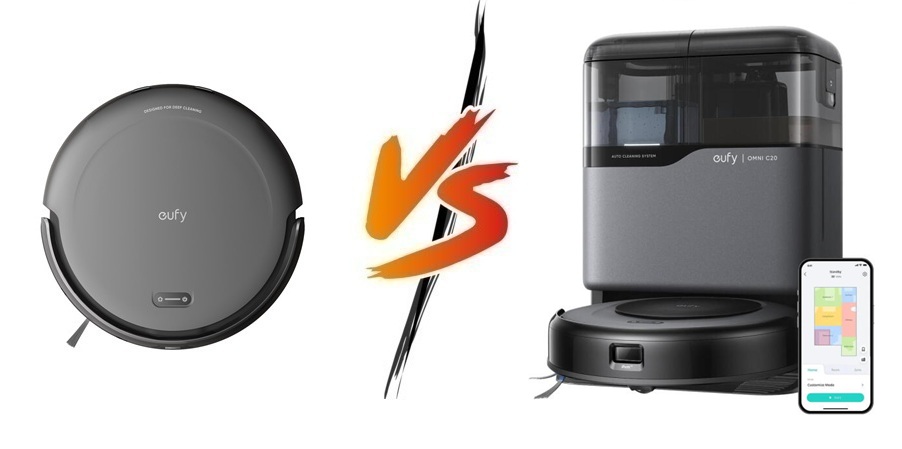
Robot vacuum cleaners have come a long way over the last few years. Features that were once reserved for premium models, such as smart mapping, app controls, automatic cleaning schedules, and mopping functions, have gradually become more accessible. Eufy has built a strong reputation by offering products that balance affordability with reliable performance, making its robot vacuums popular among homeowners who want to automate daily floor cleaning without spending a fortune.
The Eufy C10 and Eufy C20 are aimed at users looking for convenient, hands-off cleaning with modern smart features. While both robots share many similarities, there are meaningful differences that may make one a better fit depending on your home, flooring, pets, and cleaning expectations.
This comparison takes an in-depth look at every aspect of these two robot vacuums, from build quality and navigation to pet hair handling and long-term maintenance.
Eufy C10 vs Eufy C20 Comparison Chart
If you click the links below, under the product images, you will be redirected to Amazon.com. In case you then decide to buy anything, Amazon.com will pay me a commission. This doesn’t affect the honesty of this review in any way though.
| Specification | Eufy C10 | Eufy C20 |
|---|---|---|
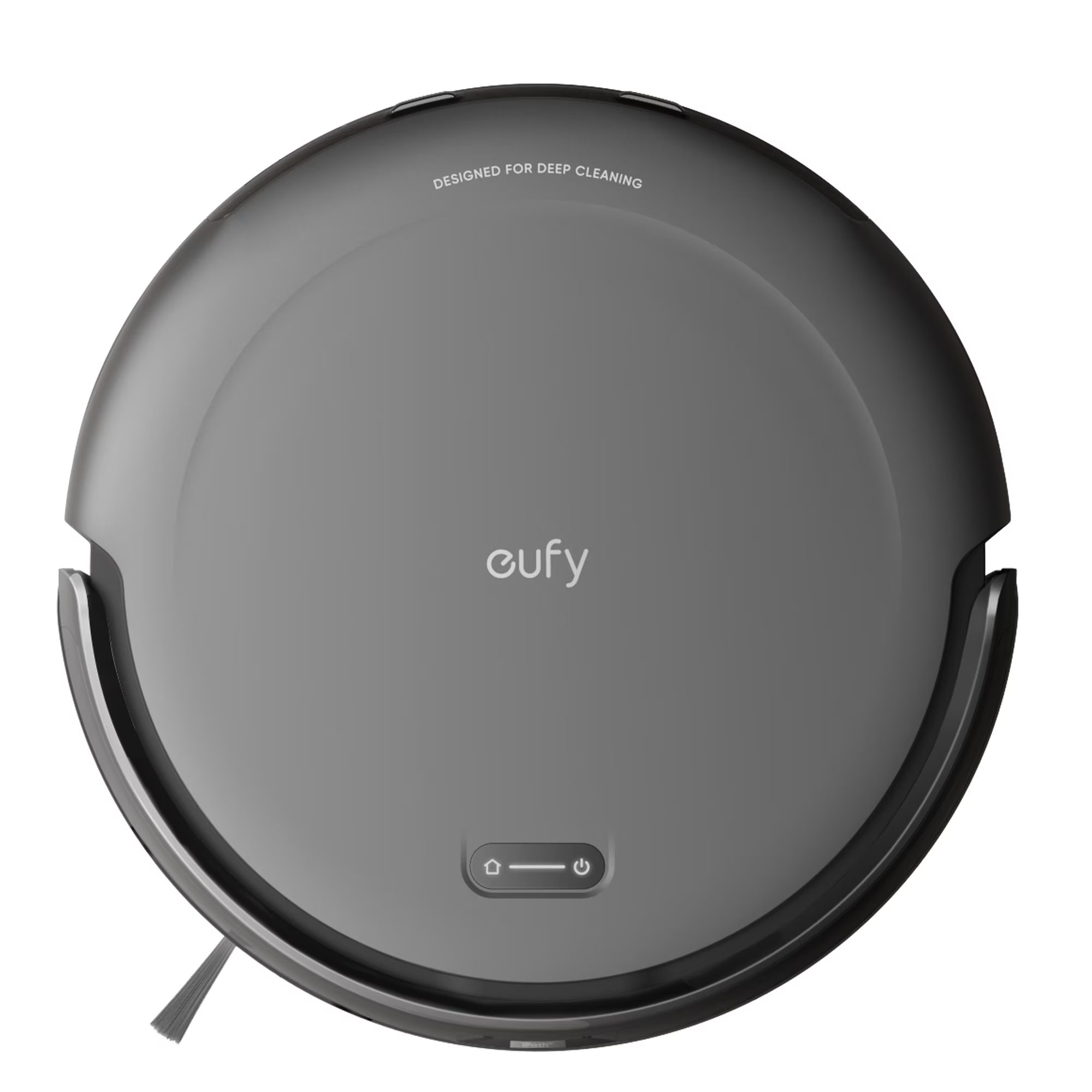 | 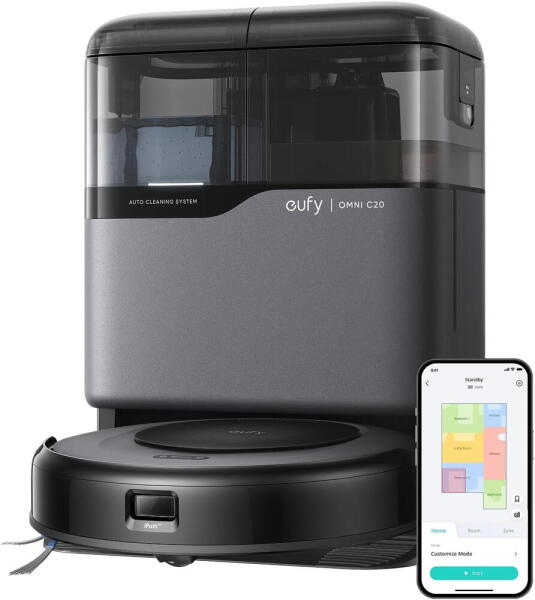 | |
| Check the best price on Amazon | Check the best price on Amazon | |
| Product Type | Robot Vacuum & Mop | Robot Vacuum & Mop |
| Navigation System | Smart laser navigation | Advanced laser navigation with improved mapping |
| Mapping | Multi-room mapping | Enhanced multi-room mapping |
| Obstacle Avoidance | Basic obstacle detection | Improved obstacle avoidance |
| Suction Power | Up to 4,000 Pa | Up to 7,000 Pa |
| Suction Levels | Multiple power modes | Multiple power modes with stronger maximum suction |
| Main Brush | Roller brush | Roller brush |
| Side Brush | Single side brush | Single side brush |
| Mopping Function | Yes | Yes |
| Water Tank | Integrated water tank | Integrated water tank with improved water management |
| Mop Pressure | Standard | Improved consistency |
| Carpet Detection | Yes | Yes |
| Auto Carpet Boost | Yes | Yes |
| Dust Bin Capacity | 600 ml | 600 ml |
| Water Tank Capacity | 200 ml | 200 ml |
| Battery Capacity | 2,600 mAh | 3,200 mAh |
| Maximum Runtime | Up to 120 minutes | Up to 180 minutes |
| Recharge & Resume | Yes | Yes |
| Charging Dock | Standard charging dock | Standard charging dock |
| App Control | Eufy Clean App | Eufy Clean App |
| Room Selection | Yes | Yes |
| No-Go Zones | Yes | Yes |
| Virtual Boundaries | Yes | Yes |
| Scheduled Cleaning | Yes | Yes |
| Voice Assistant Support | Amazon Alexa, Google Assistant | Amazon Alexa, Google Assistant |
| Wi-Fi Connectivity | 2.4 GHz | 2.4 GHz |
| Automatic Firmware Updates | Yes | Yes |
| Filter Type | High-efficiency filter | High-efficiency filter |
| Cliff Sensors | Yes | Yes |
| Automatic Dock Return | Yes | Yes |
| Noise Level | Approximately 55–60 dB | Approximately 55–60 dB |
| Suitable Floor Types | Hardwood, tile, laminate, vinyl, low- and medium-pile carpet | Hardwood, tile, laminate, vinyl, low-, medium-, and thicker carpets |
| Pet Hair Performance | Good | Very Good |
| Recommended Home Size | Small to medium homes | Medium to large homes |
| Dimensions | Approx. 325 × 323 × 72 mm | Approx. 330 × 330 × 85 mm |
| Weight | Approx. 2.5 kg | Approx. 3.3 kg |
| Available Color | Black | Black |
| My individual reviews | Eufy C10 review |
Note: Features and specifications may vary slightly depending on the region and specific retail bundle.
Design & Build Quality
When shopping for a robot vacuum cleaner, design is often one of the first things that catches your attention. A sleek exterior and compact dimensions certainly help, but good design extends far beyond appearance. It influences how well the robot navigates around furniture, whether it can reach difficult areas beneath cabinets and sofas, how durable it feels after months of daily use, and even how easy it is to perform routine maintenance. While the Eufy C10 and Eufy C20 share a similar design philosophy, there are subtle differences in their construction and refinement that become more noticeable the longer you live with them.
At first glance, both models feature the familiar circular profile that has become the standard for modern robot vacuums. There is a good reason for this design choice. A circular body allows the robot to rotate smoothly in tight spaces while minimizing the chances of getting caught on furniture legs or walls. It also helps distribute the internal components evenly, contributing to better balance as the vacuum travels across different floor surfaces.
Both the C10 and C20 maintain a relatively low profile, allowing them to clean underneath many pieces of furniture that are difficult to reach with a traditional upright vacuum cleaner. This is one of the biggest practical advantages of robot vacuums in general. Dust tends to accumulate under beds, couches, entertainment units, and sideboards simply because these areas are inconvenient to clean manually. A slim robot vacuum can regularly access these neglected spaces, preventing dust buildup before it becomes noticeable.
The overall appearance of both models reflects Eufy’s preference for understated, minimalist design. Rather than covering the robots with unnecessary decorative elements, the company has opted for clean lines, gently curved edges, and simple control buttons that blend naturally into most modern homes. Whether placed in a living room, hallway, or kitchen, neither vacuum stands out as an eyesore when sitting on its charging dock.
Material quality is another area where both models make a positive first impression. The outer shell is constructed from durable plastic that feels sufficiently rigid without making the robot excessively heavy. The panels fit together cleanly, with no obvious gaps or loose sections that might suggest poor manufacturing quality. This contributes to an overall impression of solidity, even though these machines are intended to remain lightweight enough for efficient movement.
The finish on the exterior also deserves some attention. Robot vacuums spend much of their lives visible in the home, making cosmetic durability more important than many buyers initially realize. Everyday handling, occasional bumps against furniture, and routine maintenance inevitably expose the housing to wear over time. Both models feature finishes that resist fingerprints reasonably well and are easy to wipe clean using a soft cloth. Minor dust accumulation is less noticeable than on highly polished surfaces, helping the robots maintain a tidy appearance between cleaning sessions.
Looking more closely at the front of each vacuum, the bumper assembly plays a much larger role than it may initially appear. Robot vacuums rely on a combination of sensors and gentle physical contact to navigate around the home. Even the most advanced navigation systems occasionally make light contact with furniture, walls, or other obstacles. The front bumper absorbs these impacts while simultaneously providing information that helps the robot determine when it has reached an obstacle.
The bumper mechanisms on both models feel well integrated into the overall design. They compress smoothly when necessary without feeling loose or unstable. This flexibility reduces the force of accidental contact, helping protect both the furniture and the vacuum itself. During everyday operation, most interactions with obstacles are gentle enough that they cause little concern.
The placement of sensors around the robot also demonstrates thoughtful engineering. Navigation sensors, cliff sensors, and docking sensors are positioned where they can gather useful environmental information while remaining reasonably protected from accidental damage. Because robot vacuums spend their lives close to the floor, sensor placement is particularly important. Dust, pet hair, and household debris can interfere with navigation if sensors are poorly positioned or difficult to access during maintenance.
Turning the robot over reveals additional aspects of the design that directly affect cleaning performance. Both the C10 and C20 utilize a familiar arrangement consisting of drive wheels, caster wheel, side brush, main brush roller, charging contacts, and cliff sensors. The layout feels logical and allows most maintenance tasks to be completed without requiring specialized tools.
The drive wheels deserve particular praise because they determine how effectively the robot navigates across different flooring types. Both models feature independently driven wheels with enough suspension to maintain consistent contact as the vacuum moves between hard flooring and carpets. This suspension system helps the robot remain stable when encountering small transitions such as doorway thresholds or slightly uneven flooring.
Although neither robot is designed to climb unusually high obstacles, they generally cope well with the everyday transitions found in most homes. Moving from hardwood flooring onto area rugs or low-pile carpets is handled smoothly, reducing the need for manual intervention.
The caster wheel at the front also contributes to stable movement. While it may seem like a minor component, a well-designed caster allows the robot to pivot efficiently without dragging or becoming unstable during tight turns. Both models demonstrate smooth directional changes that contribute to more predictable navigation.
One area where robot vacuum design has improved considerably over recent years is brush accessibility. Hair inevitably becomes wrapped around rotating brushes, particularly in homes with pets or occupants who have long hair. Eufy has designed both models so that the primary brush can be removed relatively quickly for cleaning. This seemingly simple feature makes routine maintenance far less frustrating than on earlier generations of robot vacuums.
The side brush also appears securely attached while remaining straightforward to replace when it eventually wears out. Since side brushes experience frequent contact with walls, furniture legs, and corners, they naturally require replacement over time. Easy access helps reduce long-term ownership costs and encourages regular maintenance.
Dustbin design is another aspect that affects daily usability. Both the C10 and C20 feature removable dustbins that slide in and out smoothly without excessive force. The release mechanisms feel secure enough to prevent accidental opening during operation while remaining simple enough that first-time users can understand them immediately.
The same attention to practicality extends to the water tank on models equipped with mopping functionality. Removing, filling, and reinstalling the tank is a straightforward process that does not require awkward positioning or complicated locking mechanisms. This encourages owners to use the mopping function more frequently because preparation takes very little time.
Weight distribution is another subtle but important aspect of the overall design. Both vacuums feel balanced when lifted, making it easy to carry them between floors if necessary. Since robot vacuums occasionally need manual repositioning, especially in multi-story homes, excessive weight quickly becomes inconvenient. Neither the C10 nor the C20 feels cumbersome during transport.
Another strength of both designs is their ability to fit naturally into a variety of home environments. The charging dock occupies relatively little floor space and can usually be positioned against a wall without becoming visually intrusive. Cable management around the dock is reasonably tidy, helping maintain a clean appearance while reducing the risk of the robot interfering with its own charging cable.
From a durability standpoint, the overall construction inspires confidence for long-term ownership. Daily operation exposes robot vacuums to thousands of small impacts, continuous wheel movement, and regular vibration. Components that initially appear solid but are poorly engineered often begin developing squeaks, loose panels, or alignment issues after extended use. The C10 and C20 both appear designed with these long-term stresses in mind, with sturdy panel construction and tightly assembled components that should withstand years of routine cleaning when properly maintained.
That said, the C20 feels slightly more refined in several small but meaningful ways. The panel fit appears a little tighter, transitions between different materials are smoother, and the overall finish gives the impression of a product that has benefited from incremental design improvements. These differences are not dramatic, and someone unfamiliar with both models might not notice them immediately. However, side-by-side, the C20 conveys a slightly more premium impression despite retaining the same minimalist design language.
Ultimately, neither robot attempts to reinvent the appearance of a robot vacuum cleaner, nor do they need to. Instead, both prioritize practical design decisions that improve everyday usability. Their compact dimensions, durable construction, accessible maintenance points, thoughtful sensor placement, and clean industrial design all contribute to an ownership experience that feels intuitive rather than complicated.
The Eufy C10 delivers a solid, dependable design that covers all the essentials expected from a modern robot vacuum. It feels well built, easy to maintain, and durable enough for regular daily use. The Eufy C20 builds upon this foundation with a slightly more polished construction and a greater sense of refinement that becomes increasingly apparent over time. While the differences are evolutionary rather than revolutionary, they help reinforce the C20’s position as the more premium option, particularly for buyers who value build quality and attention to detail alongside cleaning performance.
Navigation Intelligence & Mapping
Navigation is arguably the single most important feature of any modern robot vacuum. While powerful suction and an effective brush system are essential for removing dirt and debris, neither matters much if the robot cannot consistently find its way around your home. A well-designed navigation system ensures every room receives adequate attention, minimizes unnecessary repetition, avoids obstacles with confidence, and allows the vacuum to complete cleaning jobs efficiently without constant supervision.
The Eufy C10 and Eufy C20 are both designed to clean methodically rather than wandering randomly around a room, but there are meaningful differences in how intelligently they approach the task. Although both robots aim to automate floor cleaning, the C20 delivers a more polished navigation experience that becomes increasingly valuable in larger or more complex homes.
One of the first things you’ll notice when watching either robot clean is that they follow a structured pattern instead of moving aimlessly. Early generations of robot vacuums often relied on simple bump-and-turn navigation, repeatedly changing direction whenever they encountered an obstacle. While those systems eventually covered much of the floor, they often missed areas, cleaned the same location multiple times, and took far longer than necessary to finish a room.
Both the C10 and C20 move beyond this older approach by planning their cleaning routes more systematically. Rather than relying solely on physical contact with furniture, they attempt to understand the layout of the room and clean in organized passes. This results in more consistent floor coverage while reducing unnecessary battery consumption.
During routine cleaning sessions, the robots generally travel in parallel lines across open areas before returning to clean along walls and edges. This predictable movement is not only more efficient but also reassuring for the owner. Instead of wondering whether the robot has forgotten an entire section of the room, you can clearly see it working through the available floor space in a logical sequence.
The initial mapping process is another important aspect of the overall experience. During its first few cleaning runs, each robot gradually builds an understanding of your home’s layout. As it explores rooms, navigates hallways, and identifies permanent obstacles such as walls and large furniture, it creates a digital floor map that serves as the foundation for future cleaning sessions.
This mapping process is rarely perfect on the first attempt. Like most robot vacuums, both the C10 and C20 benefit from a few complete cleaning cycles before their maps become fully accurate. As the robots gather more information, they refine room boundaries, improve navigation paths, and reduce unnecessary movements.
The C10 performs this task competently, producing floor maps that are suitable for everyday cleaning. For many homeowners, especially those living in apartments or smaller houses with straightforward layouts, the resulting maps provide everything necessary for reliable operation. Once established, the robot can navigate from room to room with relatively little confusion and generally returns to familiar areas without significant difficulty.
The C20 builds upon this foundation with a more advanced approach to map management. It appears better at recognizing room boundaries, maintaining cleaner map organization, and adapting to larger homes with multiple connected spaces. These improvements may seem subtle at first, but they become increasingly valuable as the size and complexity of the home increase.
For example, homes with long hallways, open-plan living areas, or several connected rooms present a greater navigation challenge than a compact apartment. In these environments, efficient route planning becomes critical. A robot that repeatedly crosses the same hallway or revisits already-cleaned rooms wastes both time and battery life.
The C20 generally demonstrates better route optimization, choosing more direct paths between cleaning zones and spending less time deciding where to go next. This leads to shorter cleaning sessions while maintaining thorough floor coverage.
Another advantage of improved mapping is the ability to divide the home into individual rooms. Instead of treating the entire floor as one large cleaning area, the robot can recognize spaces such as the kitchen, living room, bedroom, and hallway separately. This opens the door to more flexible cleaning routines.
For example, you might choose to clean the kitchen after dinner while leaving the bedrooms untouched until the following morning. Alternatively, you may want to vacuum only the living room before guests arrive. Room-based cleaning allows these targeted cleaning sessions without requiring the robot to clean the entire home.
This level of customization is especially useful for busy households where different rooms accumulate dirt at different rates. Kitchens often require more frequent attention due to food preparation, while guest rooms may need cleaning only occasionally.
The accuracy of these room divisions also affects everyday convenience. The C20 generally produces cleaner, more intuitive room layouts that require less manual adjustment within the companion app. The C10 is certainly capable, but users may occasionally find themselves making small corrections if room boundaries are not identified exactly as expected.
Navigation intelligence also influences how confidently each robot moves around furniture. Every home presents countless obstacles, including dining chairs, coffee tables, sofas, bookshelves, floor lamps, and decorative items. Successfully navigating around these objects requires a balance between caution and efficiency.
If a robot behaves too cautiously, it leaves uncleaned areas around furniture because it keeps too much distance. On the other hand, an overly aggressive navigation system may result in frequent collisions that are both noisy and potentially damaging over time.
Both the C10 and C20 strike a reasonable balance, approaching obstacles carefully while still attempting to clean as closely as possible. Light contact with furniture occasionally occurs, particularly when maneuvering around chair legs or table bases, but these interactions are generally gentle rather than forceful.
The C20 appears slightly more confident when working in densely furnished rooms. It often navigates around complex arrangements with fewer hesitation points, reducing the stop-and-start behavior that can sometimes be observed in simpler navigation systems.
Dining rooms provide a good example of this difference. Multiple chair legs arranged around a table create a maze that many robot vacuums find challenging. The C20 generally weaves through these obstacles more smoothly, while the C10 may require additional repositioning before successfully cleaning the entire area.
Another important aspect of navigation is wall tracking. Cleaning close to baseboards is essential because dust and pet hair naturally accumulate along room edges. Both robots use side brushes to sweep debris inward while following walls, but maintaining a consistent distance from those walls depends on accurate navigation.
The C20 generally follows edges with greater precision, resulting in slightly more consistent edge cleaning. This is not necessarily due to stronger suction but rather because the robot positions itself more accurately as it moves alongside walls.
Corners remain one of the few challenges that affect nearly every circular robot vacuum. Since the body is round, it cannot physically reach into perfectly square corners the way a traditional vacuum nozzle can. Both the C10 and C20 rely on their rotating side brushes to extend their cleaning reach into these areas.
Although neither model completely eliminates corner cleaning limitations, consistent navigation ensures these areas receive attention during every cleaning session. Over multiple scheduled cleanings, the amount of debris left behind in corners is generally minimal.
Navigation also plays a major role when the battery begins running low. Rather than stopping wherever they happen to be, both robots are designed to locate their charging dock automatically. Successfully returning to the dock requires accurate positioning and a reliable understanding of the home’s layout.
In most cases, both the C10 and C20 return to their charging stations without issue. Even after cleaning several rooms, they generally retrace efficient routes back to the dock instead of wandering aimlessly in search of it.
For larger homes, recharge-and-resume functionality becomes particularly valuable. If the battery is insufficient to complete the entire cleaning job, the robot returns to recharge before continuing from approximately where it left off. This feature allows both models to maintain larger homes without requiring manual intervention.
The C20 appears slightly more reliable during these extended cleaning sessions. Better map management reduces the likelihood of duplicate cleaning or missed areas after recharging, making the overall process feel more seamless.
Changes within the home also test the flexibility of a robot’s navigation system. Rearranged furniture, newly placed rugs, or seasonal decorations all require the robot to adapt without becoming confused. Neither model expects the environment to remain completely static, and both can accommodate moderate changes without requiring the user to create an entirely new map.
However, substantial furniture rearrangements may occasionally benefit from allowing the robot to update or regenerate its map. Fortunately, this process is straightforward and does not significantly complicate ownership.
Multi-story homes introduce another consideration. Since the robots can only store and use one floor at a time during a cleaning session, owners who carry the vacuum between floors benefit from efficient map recognition. The ability to quickly identify the current environment reduces setup time and helps maintain consistent cleaning performance.
The companion app complements the navigation system by giving users greater control over how maps are used. Features such as room selection, cleaning order, restricted areas, and customized cleaning routines transform the map from a simple visual representation into a practical tool for managing household cleaning.
For many homeowners, this flexibility becomes one of the biggest advantages over traditional vacuuming. Instead of manually cleaning every room on a fixed schedule, the robot can adapt to changing needs with minimal effort.
Ultimately, both the Eufy C10 and Eufy C20 demonstrate how far robot vacuum navigation has evolved. Gone are the days of random movement and unpredictable cleaning patterns. Both models clean methodically, create usable floor maps, and navigate homes with a level of consistency that significantly reduces the amount of manual work required from the owner.
The C10 provides dependable navigation that will satisfy many users, particularly those with smaller homes or uncomplicated floor plans. It covers rooms efficiently, creates practical maps, and offers the convenience expected from a modern robot vacuum.
The C20, however, refines nearly every aspect of the navigation experience. Smarter route planning, more accurate room recognition, improved furniture handling, and better overall map management combine to create a robot that feels more autonomous and requires less oversight. While the differences may not always be dramatic during a single cleaning session, they become increasingly apparent over months of regular use, particularly in larger homes where intelligent navigation has the greatest impact on both efficiency and convenience.
Vacuuming Performance
For most buyers, vacuuming performance is ultimately the deciding factor when choosing between two robot vacuums. Smart navigation, attractive designs, and convenient mobile apps are all valuable features, but they mean very little if the robot cannot consistently leave your floors clean. The primary purpose of a robot vacuum is to remove dust, dirt, crumbs, hair, and everyday debris with as little manual intervention as possible. Fortunately, both the Eufy C10 and Eufy C20 are designed with this goal in mind, although they approach it with slightly different levels of capability.
Before comparing the two models directly, it’s worth setting realistic expectations. Robot vacuums are designed to maintain clean floors through regular use rather than replace every aspect of a traditional upright vacuum. Their greatest strength lies in consistency. Running every day or several times a week prevents dirt from building up in the first place, meaning your home stays cleaner with significantly less effort. Instead of waiting until dust and debris become noticeable, a robot vacuum quietly removes them before they accumulate.
With that in mind, both the C10 and C20 perform well as maintenance cleaning machines. They are capable of handling the types of debris that most households generate on a daily basis, including dust, food crumbs, pet hair, fine dirt tracked in from outside, and lint. The difference lies in how efficiently they collect heavier debris, how well they adapt to different floor surfaces, and how consistently they maintain their cleaning performance across an entire cleaning session.
On hard flooring, both models perform confidently. Surfaces such as hardwood, laminate, tile, vinyl, and stone generally present fewer challenges than carpet because dirt remains on the surface rather than becoming embedded in fibers. As a result, robot vacuums can achieve excellent pickup with relatively little effort.
In everyday use, both the C10 and C20 collect fine household dust very effectively. This is particularly noticeable in homes where sunlight reveals airborne particles settling onto floors throughout the day. Rather than allowing this dust layer to accumulate, both robots remove it during routine cleaning sessions, helping floors maintain a consistently clean appearance.
Kitchen floors are another area where both models perform well. Crumbs from bread, cereal, rice, flour, coffee grounds, and other dry food particles are generally picked up without difficulty. Running the robot after meal preparation or dinner quickly restores the floor without requiring the owner to retrieve a conventional vacuum cleaner.
The same applies to entrance areas where shoes bring in sand, dried mud, leaves, and small stones. Although larger rocks or excessive amounts of debris may still require manual cleaning, the robots easily handle the everyday dirt associated with normal household traffic.
One of the strengths shared by both models is their ability to clean frequently without becoming disruptive. Because they operate autonomously, they encourage a completely different cleaning routine. Instead of vacuuming once a week, many owners allow the robot to clean every day. This simple change dramatically improves overall cleanliness because small amounts of dirt never have the opportunity to accumulate.
The C20, however, demonstrates an advantage when dealing with larger quantities of debris. Whether due to stronger overall cleaning capability, better airflow management, or more efficient brush design, it appears more capable of maintaining consistent pickup even when floors are noticeably dirtier than usual.
Mixed debris tests provide a good example of this difference. Floors rarely contain just one type of dirt. Instead, they often feature a combination of fine dust, hair, larger crumbs, lint, and small particles spread across different surfaces. The C20 generally handles these varied cleaning conditions with greater confidence, requiring fewer repeat passes before achieving a satisfactory result.
Carpet cleaning presents a more demanding challenge for any robot vacuum. Unlike hard floors, carpets trap dirt within their fibers, requiring greater suction and more effective brush agitation to remove embedded debris. Even premium robot vacuums cannot fully match the deep-cleaning capabilities of a full-sized upright vacuum, but regular robotic cleaning significantly reduces dirt accumulation between manual vacuuming sessions.
On low-pile carpets, both the C10 and C20 perform well during routine maintenance cleaning. Dust, pet hair, lint, and everyday debris are collected effectively, especially when the robots are allowed to clean regularly. Freshly deposited dirt is generally removed without difficulty before it has time to settle deeply into the carpet.
The difference between the two becomes more noticeable on medium-pile carpets or rugs with denser fibers. Here, the C20 demonstrates greater consistency in lifting embedded dirt while maintaining better contact with the carpet surface. The additional cleaning effectiveness is not necessarily dramatic after a single cleaning session, but repeated use gradually produces cleaner-looking carpets.
Neither model should be viewed as a replacement for occasional deep carpet cleaning with a dedicated upright vacuum, particularly in busy households with children or pets. Instead, they excel at dramatically extending the time between those more intensive cleaning sessions.
Area rugs deserve separate consideration because they often present unique challenges. Lightweight rugs can shift beneath the robot, while thicker rugs may slightly affect navigation. Both the C10 and C20 generally transition onto standard rugs smoothly, although very lightweight rugs without non-slip backing may occasionally bunch up or move during cleaning. This is a common limitation shared by many robot vacuums rather than a flaw specific to either model.
Edge cleaning is another area that significantly influences real-world performance. Dust naturally accumulates along baseboards, beneath kitchen cabinets, and around furniture because these areas experience less foot traffic. The rotating side brush on both models sweeps debris inward toward the main brush and suction inlet, improving cleaning coverage along walls.
In practice, both robots perform well along straight walls, collecting fine dust, pet hair, and small debris with reasonable consistency. The C20 appears slightly more effective, largely because its navigation keeps it positioned closer to edges while maintaining smooth movement.
Corners remain one of the few limitations of every circular robot vacuum. Since neither machine can physically fit its entire body into a ninety-degree corner, they rely on the side brush to extend their cleaning reach. Fine dust is generally removed after repeated cleaning sessions, although larger debris occasionally requires manual attention.
Under-furniture cleaning is one area where robot vacuums outperform traditional vacuum cleaners in terms of convenience. Beds, sofas, cabinets, and entertainment units often become dust traps because reaching beneath them manually requires considerable effort. Thanks to their low profile, both the C10 and C20 regularly clean these hidden areas without any involvement from the owner.
This frequent under-furniture cleaning noticeably reduces dust accumulation over time, making one of the most neglected parts of the home virtually maintenance-free.
Performance around furniture also deserves praise. Chair legs, table bases, coffee tables, and shelving units create numerous obstacles that require careful maneuvering. Both robots generally maintain cleaning effectiveness while navigating around these objects, although the C20 tends to spend less time repositioning itself before continuing.
Another important aspect of vacuuming performance is debris retention. Collecting dirt is only half the challenge; the vacuum must also keep it securely inside the dustbin until emptying. Both models accomplish this well, with dustbins that securely contain collected debris throughout the cleaning cycle. Fine dust remains contained rather than escaping back onto the floor during movement.
Hair pickup is another strong point for both robots. Homes with long-haired occupants quickly accumulate strands throughout bathrooms, bedrooms, and living areas. Both the C10 and C20 effectively collect loose hair from hard floors and carpets, preventing it from forming visible clumps around the home.
Brush roll maintenance naturally becomes more important in these environments, as long hair gradually wraps around the rotating brush. While both vacuums require periodic cleaning, the C20 appears to manage hair tangles slightly better, reducing the frequency of maintenance.
Homes with multiple occupants also benefit from the robots’ ability to handle continuous daily dirt. High-traffic areas such as hallways, kitchens, and living rooms remain noticeably cleaner when vacuumed automatically every day instead of only during weekly manual cleaning.
One often overlooked aspect of vacuuming performance is consistency from beginning to end. Some robot vacuums perform well initially but gradually lose effectiveness as the dustbin fills or the battery level decreases. Both the C10 and C20 maintain stable cleaning performance throughout typical cleaning sessions, ensuring that later rooms receive the same attention as those cleaned first.
The ability to adapt suction according to floor type further improves efficiency. Hard floors generally require less power than carpets, allowing the robots to conserve battery while still achieving excellent cleaning results. When additional cleaning power is needed, both models are capable of increasing suction appropriately, helping remove more stubborn debris from carpeted surfaces.
Noise levels during vacuuming are also worth mentioning because they influence how frequently owners choose to use the robot. Both models remain noticeably quieter than traditional upright vacuum cleaners, making daily cleaning far less disruptive. It is entirely practical to let either robot clean while working from home, watching television, or carrying on a conversation in another room.
The C20 maintains a slight advantage in overall cleaning refinement. Its combination of stronger cleaning performance, more efficient navigation, and better adaptation to mixed flooring results in fewer missed areas and a more polished overall experience. While the C10 performs admirably, the C20 consistently feels more capable when dealing with demanding cleaning conditions.
Ultimately, both the Eufy C10 and Eufy C20 succeed because they embrace the philosophy that makes robot vacuums so effective: frequent, automated maintenance cleaning. Rather than attempting to replace every cleaning task, they remove the vast majority of everyday dirt before it becomes a visible problem.
The C10 offers dependable cleaning performance that will satisfy many homeowners, particularly those with predominantly hard flooring, smaller homes, or lighter cleaning requirements. It is reliable, consistent, and more than capable of maintaining a tidy living environment with regular use.
The C20 builds upon these strengths with improved overall cleaning effectiveness, greater confidence across different floor types, and better handling of heavier debris and pet hair. While the performance gap is not enormous, it is noticeable enough to justify its position as the more capable model for larger households, homes with mixed flooring, or anyone looking for the most thorough automated cleaning experience.
Mopping Capability
The addition of a mopping function has become one of the defining features of modern robot vacuum cleaners. While early robotic cleaners focused exclusively on vacuuming, today’s models increasingly combine vacuuming and mopping into a single device, allowing homeowners to tackle two everyday cleaning tasks simultaneously. For many households, this combination represents a significant step toward fully automated floor maintenance, reducing the need for manual cleaning throughout the week.
Both the Eufy C10 and Eufy C20 include mopping functionality, making them more versatile than vacuum-only models. However, as with their vacuuming performance, there are noticeable differences in how effectively each robot approaches wet cleaning. Although both are designed to maintain clean hard floors rather than replace traditional mopping entirely, the C20 delivers a more refined and capable experience that is especially beneficial in larger homes or households with busy daily routines.
Before comparing the two models directly, it’s important to establish realistic expectations. Robot mops are maintenance tools rather than deep-cleaning machines. Their primary purpose is to remove light dust, footprints, fine dirt, and recently deposited debris before it builds into stubborn grime. If you’ve spilled sticky juice, dropped pasta sauce on the kitchen floor, or have dried mud tracked throughout the hallway, you’ll still need to perform some manual cleaning. Robot mops simply aren’t designed to apply the downward pressure necessary to remove heavily dried stains.
Where they excel is in preventing floors from reaching that stage in the first place.
By running several times a week, or even daily, both the C10 and C20 keep hard flooring consistently cleaner than it would be with vacuuming alone. Fine dust that escapes vacuuming, light footprints, pollen, and small amounts of dried residue are gradually removed during each cleaning cycle. Over time, this creates a noticeable improvement in the overall appearance of floors, particularly in areas that experience regular foot traffic.
The setup process for the mopping system is straightforward on both models. Filling the water reservoir takes only a few moments, and attaching the mop pad is a simple task that quickly becomes part of the normal cleaning routine. Owners who initially assume the mopping feature will be inconvenient often discover that preparing the robot takes very little effort.
Once installed, the mop pad glides across the floor as the robot follows its cleaning route. Rather than soaking the surface, both models are designed to apply a controlled amount of moisture. This is an important consideration because excessive water can damage certain flooring materials, particularly hardwood and some laminate floors.
The C10 adopts a relatively conservative approach to water application. This works well for everyday maintenance cleaning, where the goal is simply to remove fine dust and leave the floor looking fresh. The restrained water usage also means floors dry fairly quickly after cleaning, reducing the chance of leaving noticeable damp patches behind.
For households with predominantly tile, vinyl, or sealed hardwood flooring, this gentle cleaning approach is often sufficient. If the robot runs several times each week, the amount of dirt requiring removal during each session remains relatively small, allowing the C10 to maintain clean floors with minimal intervention.
The C20 follows the same general philosophy but appears to manage water delivery with greater consistency. Rather than simply dragging a damp cloth behind the vacuum, it maintains more even moisture distribution across the cleaning session. This leads to more uniform cleaning results, particularly in larger rooms where inconsistent water application can otherwise become noticeable.
Even moisture distribution may sound like a minor detail, but it has a significant impact on the finished result. If one section of the mop pad becomes too dry while another remains saturated, cleaning performance becomes uneven. The C20 does a better job of maintaining consistent contact between the damp mop pad and the floor throughout longer cleaning sessions.
This becomes especially beneficial when cleaning larger open-plan living areas or homes with extensive hard flooring. Instead of requiring the user to monitor the water level frequently, the robot continues cleaning with a more predictable level of performance.
Another important aspect of robot mopping is the order in which cleaning occurs. Ideally, loose dirt should be vacuumed before the mop passes over the floor. Otherwise, fine dust and crumbs risk being smeared across the surface rather than removed. Both the C10 and C20 are designed with this principle in mind, combining vacuuming and mopping into a coordinated cleaning process that minimizes this issue.
This integrated approach offers one of the biggest conveniences of owning a combination robot vacuum and mop. Rather than vacuuming first and then returning with a traditional mop, the robot performs both tasks during the same cleaning session. For busy households, this can save a considerable amount of time over the course of a week.
Kitchen floors are one of the environments where the mopping function proves particularly useful. Cooking naturally creates small spills, flour dust, tiny food particles, and greasy residues that vacuuming alone cannot completely remove. Although neither robot is capable of scrubbing away hardened grease, regular mopping significantly reduces the gradual buildup that often occurs around cooking areas.
Dining rooms also benefit from routine mopping. Small drink splashes, food crumbs, and light footprints are all addressed during scheduled cleaning sessions, helping maintain a cleaner appearance without requiring frequent manual mopping.
Hallways present another excellent use case. These areas experience constant foot traffic throughout the day, making them prone to collecting fine dirt, dust, and outdoor contaminants brought in on shoes. Because both robots can clean automatically every day, they help prevent these particles from accumulating into visible grime.
The effectiveness of the mop pad itself also contributes to overall cleaning performance. Both models use reusable microfiber-style pads designed to capture fine particles while gently wiping the floor. Microfiber remains a popular material because its fine fibers lift dirt efficiently without scratching most sealed flooring surfaces.
Routine washing of the mop pad is essential for maintaining cleaning performance. A dirty pad quickly loses effectiveness and may begin spreading dirt rather than removing it. Fortunately, both robots make removing and reinstalling the pad relatively straightforward, encouraging regular maintenance.
Homes with pets can also benefit from the mopping function. Even after vacuuming removes loose fur, pets often leave behind paw prints, dried saliva near water bowls, or light dirt tracked in from the garden. Routine mopping helps address these everyday marks before they become noticeable.
The C20 again demonstrates a slight advantage in these situations because its more consistent water management allows it to maintain cleaning effectiveness across longer sessions. Larger homes with several hard-floor rooms particularly benefit from this increased consistency.
Another area where the two robots differ is their handling of dried marks. Neither robot should be expected to remove heavily dried spills without assistance, but the C20 appears slightly better at softening and lifting light dried residues during repeated cleaning passes. This does not eliminate the need for occasional manual mopping, but it does reduce how frequently deep cleaning becomes necessary.
The type of flooring in your home also influences how useful the mopping function will be. Tile and luxury vinyl flooring generally respond extremely well to regular robotic mopping because they tolerate moisture easily and show visible improvements after cleaning. Sealed hardwood flooring also benefits from light damp cleaning, provided water application remains controlled.
More delicate flooring materials require greater care. Owners should always follow the flooring manufacturer’s recommendations regarding moisture exposure. Fortunately, both the C10 and C20 apply relatively modest amounts of water, making them suitable for routine maintenance on many sealed hard floor surfaces.
Transitioning between hard floors and carpets presents another challenge for combination robot vacuums. During mixed-floor cleaning, the robot must avoid dragging a damp mop across carpeted areas. Effective navigation therefore becomes closely linked to mopping performance, as accurate floor recognition helps ensure appropriate cleaning behavior throughout the home.
In homes with mostly hard flooring and only a few rugs, both robots generally manage these transitions effectively. More complex floor plans with numerous alternating surfaces naturally place greater demands on the robot’s navigation system.
One advantage of frequent robotic mopping that is often overlooked is the gradual reduction in manual cleaning effort. Rather than waiting until floors visibly require mopping, homeowners enjoy consistently cleaner surfaces throughout the week. Dust accumulation decreases, footprints become less noticeable, and the home maintains a freshly cleaned appearance with relatively little involvement from the owner.
This is particularly valuable for busy families, professionals, and anyone who simply dislikes regular floor cleaning. The psychological benefit of knowing the floors are cleaned automatically each day is almost as important as the physical cleaning itself.
Maintenance requirements for the mopping system remain relatively simple. Water tanks should be emptied after use if the robot will remain unused for an extended period, helping prevent stagnant water from developing unpleasant odors. Mop pads should be washed regularly, and the water reservoir should occasionally be rinsed to prevent mineral buildup.
Fortunately, neither the C10 nor the C20 makes these tasks particularly difficult. The components are easily accessible, and routine maintenance quickly becomes part of normal ownership.
Ultimately, the mopping systems on both the Eufy C10 and Eufy C20 are designed around convenience rather than heavy-duty floor restoration. They excel at maintaining already clean floors, reducing everyday dust, removing light footprints, and minimizing the gradual buildup of surface dirt that inevitably occurs in active households.
The C10 delivers dependable maintenance mopping that complements its vacuuming performance well. It is simple to operate, uses water conservatively, and provides enough cleaning ability to noticeably reduce the need for manual mopping in many homes.
The C20 builds upon these strengths with more consistent water distribution, improved overall cleaning performance, and a more polished wet-cleaning experience. These refinements make it better suited to larger homes, extensive hard flooring, and households where the robot is expected to take on a greater share of everyday floor maintenance. While neither model completely replaces traditional mopping, both significantly reduce the time and effort required to keep hard floors looking clean, with the C20 offering the more capable and confidence-inspiring solution for long-term automated cleaning.
Maintenance & Cleaning
One of the biggest misconceptions about robot vacuums is that they are completely maintenance-free. While they undoubtedly reduce the amount of manual vacuuming required, they still need regular care to continue performing at their best. Fortunately, maintaining a robot vacuum is considerably easier than vacuuming an entire home by hand, and most maintenance tasks take only a few minutes. The Eufy C10 and Eufy C20 are both designed with user-friendly maintenance in mind, allowing owners to access the main components quickly without requiring specialized tools or technical knowledge.
Regular maintenance has a direct impact on cleaning performance. Even the most advanced robot vacuum will gradually lose suction, become less efficient at collecting debris, or encounter navigation problems if dustbins are left full, filters become clogged, or brushes accumulate excessive hair. Fortunately, both models are relatively straightforward to maintain, making it easy to establish a routine that keeps them operating efficiently for years.
The dustbin is naturally the component owners will interact with most frequently. Every cleaning session deposits dust, crumbs, pet hair, lint, and other household debris into the collection bin, which must eventually be emptied. How often this is necessary depends on several factors, including the size of the home, the number of occupants, whether pets are present, and how frequently the robot is used.
In smaller households without pets, the dustbin may only require emptying every few cleaning sessions. In larger homes or households with dogs or cats, however, the bin can fill surprisingly quickly. Pet hair, in particular, occupies a significant amount of space despite weighing very little, reducing the effective capacity of the container long before it appears completely full.
Both the C10 and C20 feature removable dustbins that slide out smoothly from the robot. The release mechanisms feel secure during operation but remain easy to operate when maintenance is required. There is no need to wrestle with awkward clips or apply excessive force, making the process suitable even for first-time robot vacuum owners.
Emptying the dustbin itself is a simple process. Once removed, the contents can be disposed of directly into a household waste bin. Fine dust naturally becomes airborne during this step, so many users prefer to empty the container outdoors or directly into a larger trash bag to minimize dust dispersal.
The internal shape of the dustbin also influences how easily debris can be removed. Both models feature reasonably smooth interiors that allow most collected material to fall out with little effort. Occasionally, compacted pet hair or larger debris may require a gentle tap to dislodge, but this is common among robot vacuums.
Filters are another essential maintenance component. They trap fine dust particles before air exits the vacuum, helping maintain suction performance while reducing the amount of dust released back into the room. Over time, these filters naturally become clogged with microscopic debris, restricting airflow if left unattended.
Cleaning the filter regularly helps restore airflow and maintain consistent suction. Fortunately, accessing the filter on both the C10 and C20 is straightforward once the dustbin has been removed. Depending on the household environment, gently tapping out accumulated dust or brushing the filter clean may be sufficient between replacements.
It is worth remembering that filters are consumable components rather than permanent ones. Even with careful maintenance, they gradually wear over time and eventually require replacement. Fortunately, replacement filters are relatively inexpensive and easy to install, making them one of the simplest long-term maintenance tasks.
The main brush roller requires equally regular attention, particularly in homes with pets or long-haired occupants. Hair naturally wraps around rotating brushes during cleaning, gradually reducing their effectiveness if left unchecked. Even households without pets will notice hair accumulating around the roller after several cleaning sessions.
Removing the main brush on both robots is refreshingly uncomplicated. A simple cover secures the roller in place, allowing it to be lifted out for inspection and cleaning. Wrapped hair can then be removed manually or with the small cleaning tool that often accompanies robot vacuums.
This maintenance task is especially important because excessive hair buildup can reduce brush rotation, increase strain on the motor, and ultimately decrease cleaning performance. Spending just a few minutes cleaning the roller every week or two helps preserve both cleaning efficiency and long-term reliability.
The side brush also deserves periodic inspection. Unlike the main roller, the side brush is responsible for sweeping debris inward from edges and corners toward the suction inlet. Because it frequently contacts furniture, walls, and baseboards, its flexible bristles naturally wear over time.
Fortunately, replacing the side brush is usually a quick process requiring minimal effort. Routine inspection helps identify bent or damaged bristles before they begin affecting edge cleaning performance.
One of the advantages shared by both the C10 and C20 is that most maintenance can be performed without tools. Components are designed to be user-serviceable, encouraging owners to perform regular upkeep instead of postponing it because the process seems inconvenient.
The wheels also benefit from occasional cleaning. Hair, thread, carpet fibers, and small pieces of debris sometimes become wrapped around the drive wheels or lodged within their housings. Although these accumulations rarely stop the robot entirely, they can gradually reduce traction or interfere with smooth movement.
Inspecting the wheels every few weeks helps prevent unnecessary wear. Any tangled hair can usually be removed by hand, restoring smooth operation almost immediately.
The front caster wheel should not be overlooked either. Because it rotates freely in all directions, it naturally collects dust and hair during normal operation. If neglected for long periods, the wheel may become less responsive, affecting maneuverability. Fortunately, cleaning this component is usually a quick task requiring only a few minutes.
Navigation sensors represent another important maintenance point. Modern robot vacuums rely heavily on optical and infrared sensors to understand their surroundings, detect obstacles, recognize stairs, and locate the charging dock. Dirty sensors can lead to navigation errors, unnecessary hesitation, or inaccurate mapping.
Fortunately, keeping these sensors clean is remarkably easy. A soft microfiber cloth is generally all that is needed to wipe away accumulated dust or fingerprints. Performing this simple task regularly helps ensure the robot continues navigating with confidence.
Cliff sensors located underneath the robot deserve particular attention. These sensors prevent the vacuum from driving down staircases by detecting sudden drops beneath the machine. Dust accumulation can interfere with their operation, making occasional cleaning an important safety precaution.
The charging contacts should also remain clean to ensure reliable battery charging. Over time, oxidation, dust, or residue can reduce electrical contact between the robot and its charging dock. Gently wiping both sets of contacts periodically helps maintain dependable charging performance.
For models equipped with mopping functionality, maintaining the water system is equally straightforward. The water tank should ideally be emptied if the robot will remain unused for an extended period. Leaving stagnant water inside the reservoir for weeks at a time is generally not recommended, as it may contribute to unpleasant odors or mineral buildup.
The mop pad requires the most frequent attention within the mopping system. After each cleaning session, the pad collects dirt that would otherwise remain on the floor. Washing it regularly restores its cleaning effectiveness while preventing old dirt from being redistributed during future cleaning cycles.
Fortunately, both the C10 and C20 make removing and reinstalling the mop pad a simple process. Because replacement pads are widely available, many owners choose to keep multiple pads on hand, allowing one to be washed while another is ready for immediate use.
Long-term maintenance extends beyond cleaning individual components. Consumable parts gradually wear during normal operation and eventually require replacement. Main brushes lose stiffness, side brushes become bent, filters reach the end of their service life, and mop pads naturally degrade after repeated washing.
These ongoing ownership costs are relatively modest and are typical of virtually every robot vacuum on the market. More importantly, replacing worn components helps preserve cleaning performance rather than allowing the robot to gradually become less effective over time.
One area where both robots perform well is accessibility. Maintenance points are logically arranged, and most components can be reached without disassembling the machine. This user-friendly design reduces frustration and encourages owners to perform routine upkeep before problems develop.
The companion app can also contribute to maintenance by reminding users when certain components require attention. Rather than relying entirely on memory, owners receive prompts indicating when filters, brushes, or other consumables should be inspected or replaced. These reminders are especially useful for users running their robot daily, where accumulated operating hours increase quickly.
Households with pets naturally require more frequent maintenance than those without animals. Dog and cat hair accumulate rapidly around brushes and inside dustbins, while tracked-in dirt places greater demands on filters and mopping systems. Even so, the maintenance burden remains relatively light compared to the time saved by automated daily cleaning.
Similarly, homes with children often generate more crumbs, paper scraps, craft materials, and general debris, requiring more frequent dustbin emptying. Fortunately, both models handle these increased maintenance demands without becoming difficult to manage.
Noise can occasionally serve as an early indicator that maintenance is needed. A brush tangled with hair, debris caught in the wheels, or an overfilled dustbin may cause the robot to sound slightly different during operation. Paying attention to these subtle changes allows owners to address minor issues before they develop into larger problems.
Over the long term, consistent maintenance contributes significantly to overall reliability. Many robot vacuum problems attributed to product quality are actually the result of neglected filters, heavily tangled brushes, dirty sensors, or overdue consumable replacement. Spending just a few minutes each week caring for the robot dramatically increases the likelihood of years of dependable operation.
Ultimately, both the Eufy C10 and Eufy C20 provide a maintenance experience that is refreshingly straightforward. Their components are easy to access, routine cleaning tasks require minimal effort, and ongoing upkeep quickly becomes part of a simple household routine. Neither model demands excessive attention, yet both reward regular maintenance with consistently strong cleaning performance.
The C10 delivers a practical, user-friendly ownership experience that keeps maintenance uncomplicated and approachable, even for first-time robot vacuum owners. The C20 follows the same philosophy while offering a slightly more refined overall experience, particularly for users who rely heavily on automation and expect the robot to clean larger homes on a frequent schedule.
Regardless of which model you choose, neither requires a significant time investment to maintain. A few minutes spent emptying the dustbin, cleaning the brushes, wiping the sensors, and occasionally replacing consumable parts is more than enough to keep these robot vacuums operating efficiently, ensuring they continue delivering reliable cleaning performance long after the initial purchase.
Ergonomics & Everyday Usability
A robot vacuum can have excellent cleaning performance, advanced navigation, and a long list of smart features, but if it is frustrating to use on a daily basis, those strengths quickly lose their appeal. Ergonomics and everyday usability are often overlooked when comparing robot vacuums, yet they play a major role in determining whether the product becomes an indispensable household assistant or simply another gadget that sits unused in the corner.
Unlike traditional vacuum cleaners, robot vacuums are designed to minimize human involvement. Ideally, once the initial setup is complete, they should require very little attention beyond occasional maintenance. Both the Eufy C10 and Eufy C20 embrace this philosophy, offering a user-friendly experience that allows owners to automate much of their routine floor cleaning. While the overall experience is similar on both models, the C20 introduces a number of refinements that make everyday operation feel slightly more polished and effortless.
The ownership experience begins with the initial setup. This first impression is important because it establishes how approachable the product feels, particularly for users who have never owned a robot vacuum before. Fortunately, both models are designed with simplicity in mind. Removing the robot from the box, placing the charging dock in an appropriate location, and connecting the vacuum to the companion app is generally a straightforward process.
The charging dock itself is compact enough to fit comfortably against most walls without occupying excessive floor space. Finding a suitable location usually isn’t difficult, provided there is sufficient clearance on either side for the robot to dock and depart without obstruction. Once positioned, the dock remains unobtrusive, blending naturally into most living spaces.
The robot automatically charges after being placed on the dock, allowing users to complete software setup while the battery begins preparing for its first cleaning session. This creates a smooth introduction to ownership without requiring multiple complicated steps before the vacuum can begin working.
The onboard controls are intentionally simple. Rather than overwhelming users with numerous buttons and complex combinations, both the C10 and C20 rely on a small number of clearly marked controls that allow basic functions such as starting, pausing, or returning the robot to its charging dock. Even users who rarely interact with smartphone apps can operate the vacuum directly when necessary.
For most owners, however, the companion app becomes the primary method of interaction. Modern robot vacuums depend heavily on software, and fortunately, both models present their features in an accessible manner. Scheduling cleaning sessions, selecting rooms, monitoring progress, and reviewing cleaning history are all organized logically, reducing the learning curve for first-time users.
One of the greatest conveniences of owning either robot is the ability to establish automatic cleaning schedules. Instead of remembering to vacuum every few days, users simply decide when cleaning should occur. The robot then handles the task independently, returning to its charging dock once finished.
This automation fundamentally changes how household cleaning fits into everyday life. Rather than cleaning only when floors visibly appear dirty, the robot quietly maintains cleanliness in the background. Many owners quickly discover that they spend less time thinking about vacuuming altogether because it becomes another automated household process.
The flexibility of scheduled cleaning is particularly useful for busy households. Cleaning can be programmed while everyone is at work, during school hours, or overnight if noise levels permit. Coming home to freshly vacuumed floors quickly becomes something many users take for granted after only a few weeks of ownership.
Another strength shared by both models is their minimal day-to-day interaction requirements. Once a cleaning schedule has been established, there is rarely any need to manually start individual cleaning sessions unless unusual circumstances arise. Maintenance tasks such as emptying the dustbin or washing the mop pad become the primary points of interaction rather than operating the robot itself.
This low-maintenance approach contributes significantly to the overall ergonomic experience. A product that constantly demands user attention eventually becomes tiresome, whereas one that quietly performs its job in the background integrates naturally into daily routines.
The physical ergonomics of handling the robot also deserve attention. Although robot vacuums spend most of their lives on the floor, there are occasions when they need to be carried between rooms or between floors in multi-story homes. Neither the C10 nor the C20 feels particularly heavy, making them comfortable to lift using one hand when necessary.
Their balanced weight distribution also helps during transport. Instead of feeling awkward or top-heavy, both robots remain stable while being carried, reducing the likelihood of accidentally dropping them.
Routine maintenance tasks have also been designed with usability in mind. Removing the dustbin requires only a simple motion, while accessing the main brush, side brush, and filters is similarly uncomplicated. These maintenance procedures quickly become second nature, encouraging owners to perform them regularly rather than delaying necessary upkeep.
The water tank used for mopping follows the same design philosophy. Filling, emptying, and reinstalling the reservoir can be completed in just a few moments without awkward handling or complicated locking mechanisms. Since these small interactions occur frequently throughout ownership, thoughtful ergonomic design has a meaningful impact on the overall experience.
One of the biggest usability advantages of robot vacuums is their ability to clean while the homeowner focuses on other tasks. Whether you’re preparing dinner, working from home, helping children with homework, or simply relaxing, the robot quietly continues its cleaning routine without requiring supervision.
The relatively low operating noise further enhances this convenience. Unlike traditional upright vacuums that often dominate an entire room with their sound, both the C10 and C20 remain unobtrusive enough for everyday activities to continue with minimal interruption.
The C20 demonstrates a slight advantage in overall refinement. Its smoother navigation results in fewer pauses, less hesitation around furniture, and fewer instances where the robot appears uncertain about its next move. These improvements may seem minor individually, but together they create a more seamless ownership experience.
Obstacle handling also contributes to everyday usability. In a perfectly organized home, navigation is relatively simple. Real homes, however, contain shoes near the entrance, dining chairs that move daily, charging cables, pet toys, shopping bags, and countless other temporary obstacles.
Both robots manage these everyday challenges reasonably well, although preparing the floor before cleaning still improves results. Taking a minute to remove loose cables or small objects allows the robot to complete its cleaning session with fewer interruptions.
The C20 generally requires slightly less preparation thanks to its more refined navigation and obstacle management. This additional independence contributes to the feeling that the robot is working with you rather than constantly requiring assistance.
Homes with multiple rooms benefit particularly from room-specific cleaning options. Instead of vacuuming the entire house every time, owners can target only those areas requiring attention. This flexibility is especially useful after cooking in the kitchen, entertaining guests in the living room, or dealing with muddy footprints in the hallway.
The ability to customize cleaning routines also improves usability. Different rooms have different cleaning requirements. High-traffic areas may benefit from daily cleaning, while guest bedrooms require far less frequent attention. The companion app allows users to adapt cleaning schedules to suit their household rather than forcing every room into the same routine.
Battery management further contributes to convenience. Neither robot requires users to monitor battery levels manually. When power runs low, the robot simply returns to the charging dock automatically. Larger cleaning tasks may involve recharging before completion, after which the robot resumes cleaning with little or no user involvement.
This automatic behavior reinforces the central purpose of a robot vacuum: reducing the amount of household work that demands your attention.
Another aspect of everyday usability involves reliability. A robot that frequently becomes stuck beneath furniture, loses its way, or requires repeated manual intervention quickly becomes frustrating regardless of its cleaning ability. Fortunately, both the C10 and C20 demonstrate dependable operation under typical household conditions.
Of course, no robot vacuum is completely immune to challenging situations. Loose charging cables, hanging curtains, lightweight rugs, and children’s toys remain common obstacles for nearly every model on the market. Spending a few moments preparing particularly cluttered rooms before scheduled cleaning significantly reduces these interruptions.
Multi-story homes introduce another practical consideration. Since robot vacuums cannot climb stairs, owners must manually carry them between floors if both levels require cleaning. Fortunately, both models are lightweight enough that this task remains relatively easy. Once placed on another floor, they quickly begin cleaning without requiring complicated setup procedures.
Storage is another area where the compact design proves beneficial. The charging dock occupies relatively little floor space, allowing the robot to remain conveniently accessible without dominating the room. Whether positioned in a hallway, utility room, kitchen, or living area, the dock integrates discreetly into most home layouts.
Long-term usability also depends on software updates and ongoing improvements. As smart home products become increasingly connected, owners naturally expect their devices to continue improving over time. While both the C10 and C20 provide a satisfying experience from the outset, software enhancements can further refine navigation, stability, and overall reliability throughout the product’s lifespan.
Accessibility is another strength worth mentioning. Because robot vacuums eliminate much of the physical effort associated with traditional vacuuming, they can make everyday floor cleaning considerably easier for older adults, individuals with limited mobility, or anyone recovering from injury. Instead of pushing and pulling a heavy upright vacuum around the home, users primarily interact with the robot through simple maintenance tasks and smartphone controls.
Even households without mobility concerns benefit from this reduction in physical effort. Time previously spent vacuuming can instead be devoted to other household responsibilities, family activities, or simply relaxing.
Ultimately, both the Eufy C10 and Eufy C20 succeed because they remain focused on making floor cleaning less demanding rather than introducing unnecessary complexity. Their intuitive controls, straightforward maintenance, automatic scheduling, and dependable day-to-day operation create an ownership experience that feels approachable from the very first cleaning session.
The C10 delivers exactly what many buyers are looking for: a reliable robot vacuum that quietly handles routine floor cleaning without requiring constant attention. It is simple to operate, easy to maintain, and well suited to users who value straightforward functionality over an abundance of advanced settings.
The C20 builds upon that foundation by refining nearly every aspect of everyday usability. Smarter navigation, improved automation, smoother interaction with the companion app, and greater overall independence result in a robot that feels even more capable of taking care of itself. While both models are pleasant to live with, the C20 offers the more polished and effortless ownership experience, particularly for larger homes and users who expect their robot vacuum to operate with minimal supervision.
Pet-Friendliness
For pet owners, choosing a robot vacuum involves a very different set of priorities than it does for the average homeowner. While every household generates dust, crumbs, and everyday debris, dogs and cats introduce an entirely new level of cleaning challenges. Loose fur seems to appear almost constantly, muddy paw prints can quickly undo freshly cleaned floors, scattered litter often finds its way outside the litter box, and pet food inevitably ends up around feeding stations. A robot vacuum that performs well in an average home may struggle to keep up in a house shared with one or more pets.
Fortunately, both the Eufy C10 and Eufy C20 are well suited to routine cleaning in pet-friendly homes. Neither model is designed exclusively for pet owners, but both benefit from the core advantage that makes robot vacuums so effective in these environments: consistency. Instead of allowing pet hair and dirt to accumulate over several days before tackling everything in one long cleaning session, the robots remove small amounts of debris every day. This gradual approach often proves far more effective than occasional deep cleaning alone.
One of the biggest differences pet owners notice after introducing a robot vacuum is the reduction in visible fur throughout the home. Dogs and cats shed continuously, even outside seasonal shedding periods. Hair settles on hardwood floors, collects in corners, drifts beneath furniture, and gathers along baseboards where air movement naturally pushes lightweight debris.
Running either the C10 or C20 daily prevents much of this hair from becoming noticeable. Instead of seeing clumps of fur collecting beneath dining chairs or around coffee tables, owners typically find that the robot removes them long before they become a visible problem.
This daily maintenance also reduces the amount of hair transferred to socks, slippers, and clothing while walking around the house. Although it may seem like a small improvement, it contributes significantly to making the home feel consistently cleaner.
Homes with short-haired pets generally present fewer challenges than those with long-haired breeds. Short fur tends to remain close to the floor, making it relatively easy for both robots to collect during regular cleaning sessions. Whether it’s fine cat hair or the short, stiff fur shed by many dog breeds, both the C10 and C20 perform well on hard flooring where loose hair remains exposed.
Long-haired pets, however, create a more demanding environment. Golden Retrievers, German Shepherds, Maine Coon cats, and similar breeds can shed surprisingly large amounts of fur, especially during seasonal coat changes. In these situations, the robot vacuum must collect much larger volumes of hair while maintaining consistent airflow and brush performance.
The C20 demonstrates a noticeable advantage under these conditions. Its stronger overall cleaning performance allows it to handle heavier shedding more confidently without requiring multiple cleaning passes as frequently. While the C10 remains perfectly capable for many pet owners, households with several large shedding animals are more likely to appreciate the C20’s additional cleaning capacity.
The type of flooring also influences how effectively pet hair is removed. Hard floors generally allow both robots to collect loose fur with little difficulty because hair remains on the surface. Tile, hardwood, laminate, vinyl, and stone flooring all play to the strengths of robot vacuums, allowing daily cleaning to keep pet hair under excellent control.
Carpet introduces additional complexity. Pet hair often becomes woven into carpet fibers, particularly in high-traffic areas where repeated foot traffic presses it deeper into the pile. Removing embedded hair requires stronger suction and more effective brush agitation than simply collecting loose fur from smooth flooring.
On low-pile carpets, both the C10 and C20 perform well when used consistently. Daily cleaning prevents hair from accumulating in thick layers, allowing the robots to maintain a cleaner carpet between occasional deep cleaning sessions with a traditional vacuum.
The C20 again holds a modest advantage on carpeted surfaces. It appears more capable of lifting embedded fur during routine cleaning, resulting in carpets that remain cleaner over extended periods. While neither robot completely replaces a full-sized upright vacuum for deep carpet cleaning, the C20 extends the interval between those more intensive cleaning sessions.
Another common challenge in pet-owning households is food debris around feeding areas. Dry kibble, crumbs from treats, and scattered bits of food inevitably end up on the floor, especially in homes with enthusiastic eaters. Both robots perform well when dealing with these everyday messes, collecting loose food particles efficiently during scheduled cleaning.
Pet feeding stations often become one of the most appreciated cleaning zones because owners no longer need to sweep around bowls manually every day. Instead, the robot quietly removes scattered food while cleaning the surrounding floor.
Water bowls introduce a different consideration. Since both models include mopping capability, users should ensure the floor around water bowls is suitable for robotic cleaning. Small water droplets generally present no issue, but larger spills should still be cleaned manually to prevent dirt from spreading during the robot’s cleaning cycle.
Cat owners face another unique cleaning challenge in the form of scattered litter. Even cats using enclosed litter boxes often carry small granules into the surrounding room. Depending on the type of litter used, these particles may be lightweight or surprisingly heavy.
Both the C10 and C20 perform well at collecting ordinary litter scattered near the box, helping prevent it from spreading throughout the home. Regular robotic cleaning is especially valuable here because litter tends to accumulate quickly, particularly in multi-cat households.
Of course, owners should still avoid allowing the robot to encounter significant pet accidents. Like virtually every robot vacuum, neither model is designed to detect and safely navigate around every type of biological waste. Promptly cleaning such accidents before starting the robot remains essential to avoid creating a much larger cleaning problem.
Paw prints are another area where robot vacuums provide meaningful assistance. Dogs returning from the garden often bring in fine dirt, dried mud, grass, and dust on their paws. While larger muddy prints still require manual attention, light dirt tracked across hard flooring is gradually removed through regular vacuuming and mopping.
This becomes particularly noticeable during rainy seasons when outdoor conditions constantly introduce new debris into the home. Rather than waiting until floors visibly require cleaning, the robot quietly removes these particles every day.
The mopping function further enhances pet-friendliness by addressing the fine dust and paw marks that vacuuming alone may leave behind. Areas around pet beds, feeding stations, and frequently used doorways often benefit most from this combination of vacuuming and light mopping.
Pet beds themselves also influence cleaning patterns. Fur naturally accumulates around these areas because animals spend extended periods resting in one location. Daily robotic cleaning prevents these spaces from becoming surrounded by visible hair, helping the room maintain a tidier appearance.
Furniture presents another consideration. Pets frequently jump onto sofas, chairs, and beds, transferring hair onto elevated surfaces that robot vacuums cannot reach. However, much of this fur eventually falls back onto the floor, where both the C10 and C20 collect it during routine cleaning sessions.
This gradual removal significantly reduces the amount of pet hair circulating throughout the home, even if manual cleaning of upholstered furniture remains necessary.
Brush maintenance naturally becomes more important in homes with pets. Hair wrapping around the main brush roller is unavoidable, regardless of the robot vacuum brand. Long pet hair gradually winds around rotating components, eventually requiring removal to maintain optimal cleaning performance.
Fortunately, both models make brush maintenance relatively straightforward. The main roller can be removed without difficulty, allowing accumulated hair to be cut or pulled away in just a few minutes. Owners of heavily shedding breeds will likely perform this maintenance more frequently than those without pets, but the process itself remains uncomplicated.
The C20 appears slightly more resistant to severe hair tangling, although neither robot eliminates the need for occasional brush cleaning entirely. This small improvement becomes more noticeable in households with multiple pets or animals that shed continuously throughout the year.
Odor control is another indirect benefit of frequent robotic cleaning. Pet hair often carries dust, dander, and outdoor contaminants that contribute to stale indoor odors over time. By removing these materials before they accumulate, both robots help maintain a fresher-smelling living environment.
Of course, robot vacuums should not be viewed as air purifiers, nor do they eliminate pet odors on their own. Regular cleaning simply reduces one of the many contributors to an untidy indoor environment.
Noise levels also deserve consideration, particularly for households with nervous or easily startled animals. Every pet reacts differently to robot vacuums. Some ignore them completely after a few days, while others remain cautious for much longer. Cats often observe the robot from a safe distance before deciding it poses no threat, while dogs may initially bark, follow, or attempt to investigate the moving machine.
Fortunately, both the C10 and C20 operate quietly enough that many pets gradually become accustomed to their presence. Their relatively smooth movement and moderate operating noise make them less intimidating than traditional upright vacuum cleaners, which often produce sudden bursts of loud sound.
Many owners eventually schedule cleaning sessions while the family is away from home, allowing pets to experience the robot without the added excitement of household activity. Over time, most animals simply learn to step aside as the robot approaches before returning to their usual routines.
One practical advantage of daily robotic cleaning is the reduction in allergens associated with pets. Pet dander combines with ordinary household dust to form fine particles that settle on floors and carpets. Regular vacuuming helps remove much of this material before it becomes airborne through everyday foot traffic.
Although neither robot eliminates pet allergens entirely, maintaining consistently cleaner floors contributes to a more comfortable living environment, particularly in homes where shedding is constant.
The size of the home also affects overall performance. Smaller homes with one or two pets are easily maintained by either model through daily cleaning. Larger houses with several animals naturally generate more fur, more tracked-in dirt, and more cleaning demands. Under these conditions, the C20’s improved navigation and stronger overall cleaning performance become increasingly valuable.
Ultimately, both the Eufy C10 and Eufy C20 prove to be capable companions for pet owners because they address the underlying problem that comes with living alongside animals: constant accumulation. Instead of allowing pet hair, litter, dust, and everyday debris to build up over time, they quietly remove small amounts every day, dramatically reducing the visible signs of shedding and daily pet activity.
The C10 offers dependable performance that will satisfy many households with one or two pets, particularly where hard flooring dominates and routine maintenance cleaning is the primary goal. It keeps fur under control, handles scattered debris well, and significantly reduces the amount of manual vacuuming required.
The C20 builds on these strengths with greater cleaning consistency, stronger performance on carpets, improved handling of heavier shedding, and more refined navigation that allows it to maintain larger, busier homes with less intervention. For households with multiple pets, long-haired breeds, or extensive mixed flooring, these improvements make it the more capable and confidence-inspiring choice, helping owners spend less time chasing pet hair and more time simply enjoying life with their four-legged companions.
Here’s an expanded conclusion that ties the comparison together while remaining balanced and reader-focused.
Conclusion
The Eufy C10 and Eufy C20 share the same fundamental goal: making everyday floor cleaning as effortless as possible. Both robot vacuums combine reliable vacuuming, smart navigation, app connectivity, and mopping functionality into compact machines that can significantly reduce the time and effort required to keep a home clean. For many households, either model will be a noticeable upgrade over relying solely on manual vacuuming, especially when used as part of a regular cleaning schedule.
The Eufy C10 stands out as the more straightforward option. It offers dependable performance across hard floors and carpets, a practical mopping system for routine maintenance, intuitive controls, and easy maintenance. Its simple, user-friendly approach makes it an excellent choice for apartments, smaller homes, or buyers purchasing their first robot vacuum. If your primary goal is to automate everyday cleaning without paying for features you may rarely use, the C10 delivers a satisfying balance of performance, convenience, and value.
The Eufy C20, however, feels like the more refined and capable machine. Throughout nearly every category, from navigation and mapping to vacuuming performance, mopping consistency, pet hair handling, and overall usability, it builds upon the strengths of the C10 with thoughtful improvements rather than dramatic redesigns. These refinements become increasingly noticeable over long-term ownership, particularly in larger homes, households with pets, or properties featuring a mix of hard floors and carpets. The smarter navigation, improved cleaning efficiency, and greater level of automation allow the C20 to operate with less supervision while delivering more consistent results.
Ultimately, the right choice comes down to your home’s needs and your expectations. If affordability and dependable everyday cleaning are your top priorities, the Eufy C10 is a capable robot vacuum that offers excellent value. If you’re willing to invest a little more for smarter navigation, stronger overall cleaning performance, and a more polished ownership experience, the Eufy C20 is the better long-term choice. While both models succeed in making household cleaning easier, the C20 earns the edge by delivering a more complete and confidence-inspiring automated cleaning experience.