
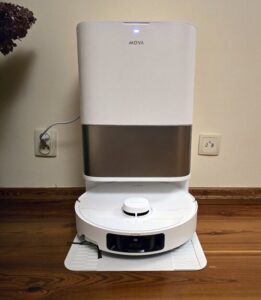
The robot vacuum market has changed dramatically over the last few years. What used to feel like a luxury gadget for tech enthusiasts has become a genuinely practical appliance for busy households. You can now buy a robot vacuum that vacuums, mops, empties itself, washes its own mop pads, dries them with hot air, maps multiple floors, avoids pet waste, and barely needs human intervention for weeks at a time.
That also means expectations are much higher.
A robot vacuum can no longer get away with simply driving around randomly and collecting surface dust. People expect these machines to clean intelligently, avoid cables, handle pet hair, transition between floor types, maintain themselves, and integrate smoothly into daily life.
The MOVA P10 Pro Ultra enters this crowded and extremely competitive space with a very aggressive feature set. On paper, it looks almost too good for its price range. You get 13,000Pa suction power, hot water mop washing, hot air drying, self-emptying, obstacle avoidance, extendable edge cleaning, mop lifting, app controls, voice assistant compatibility, and a full-service docking station.
The immediate question becomes obvious: does it actually deliver?
After spending considerable time evaluating the MOVA P10 Pro Ultra across hard floors, rugs, pet-heavy areas, kitchen messes, and daily maintenance routines, I came away with mixed but generally positive impressions. In some areas, this robot performs far above what you would expect for the price. In others, you can clearly see where the software ecosystem and refinement still lag behind premium competitors like Roborock and Dreame.
What makes the P10 Pro Ultra interesting is that it feels like a flagship robot vacuum trapped inside a mid-range product identity. The hardware is impressive. The cleaning system is powerful. The docking station is genuinely useful. But the overall experience still occasionally reminds you that software maturity matters just as much as raw specifications.
Still, this robot vacuum deserves serious attention because it offers a lot of cleaning performance for the money.
This review takes a detailed look at the MOVA P10 Pro Ultra from every angle that matters in real-world ownership.
If you click the button above you will be redirected to Amazon.com. In case you then decide to buy anything, Amazon.com will pay me a commission. This doesn’t affect the honesty of this review in any way though.
Design & Build Quality
The MOVA P10 Pro Ultra immediately gives the impression that it was designed to compete with far more expensive robot vacuums. Before even turning it on, the overall presentation feels polished and intentional. A lot of robot vacuums in the mid-range category still have that slightly plastic-heavy, gadget-like appearance where the product feels more like a tech toy than a serious household appliance. The P10 Pro Ultra avoids that problem surprisingly well.
The robot itself has a clean, understated design language. Instead of trying to look futuristic with glossy surfaces and aggressive styling, MOVA went for something more restrained and modern. The matte finish helps significantly here. Fingerprints are less visible, dust accumulation does not stand out as aggressively, and the robot blends into home environments naturally rather than constantly drawing attention to itself.
The circular body follows the standard shape used by most flagship robot vacuums, but the proportions feel balanced. It does not look overly bulky, nor does it feel fragile when handled. Picking it up gives a sense of density and structural rigidity that cheaper robots often lack. There is very little creaking or flexing when pressure is applied to the body shell, which matters more than people realize for long-term durability. Many budget robot vacuums begin developing rattles after several months of use because the chassis and internal mounting points are not particularly robust. The P10 Pro Ultra feels substantially more solid than that.
The LiDAR turret mounted on top is one of the first things people notice visually. At this point, LiDAR navigation has become almost synonymous with serious robot vacuum performance, and the turret reinforces that perception immediately. It does slightly increase the overall height of the unit, which means extremely low-profile furniture may still be inaccessible, but the tradeoff is worth it because LiDAR-based mapping remains significantly more reliable than many camera-only navigation systems.
The top panel is minimalistic and uncluttered. The physical buttons are responsive without feeling mushy, and their placement makes sense. Most users will control the robot through the app anyway, but having reliable onboard controls still matters when you want to quickly pause a cleaning session or send the robot back to the dock without opening your phone.
One detail that stood out during use was the quality of the removable components. On some robot vacuums, removable dustbins, mop trays, and brush covers feel like weak points that could eventually snap after repeated use. The MOVA components fit securely and remove cleanly without requiring excessive force. The dustbin clicks into place confidently, the water tanks feel properly sealed, and the mop assemblies attach firmly without wobbling.
That sense of refinement extends to the brush system as well. The side brush feels durable enough to survive repeated impacts against furniture and walls, and the main roller assembly is easy to remove for maintenance. The brush compartment does not feel flimsy or over-engineered. Everything is laid out in a way that suggests the designers understood that people would need to clean and maintain these parts regularly.
The wheel construction is another strong point. The suspension system has enough travel to help the robot move over thresholds and uneven flooring transitions without constantly getting stuck. In real-world homes, floors are rarely perfectly flat. There are door tracks, tile edges, rug transitions, and small height differences between rooms. The P10 Pro Ultra handles these obstacles with more confidence than many lower-end robot vacuums.
The wheels themselves have good traction and feel properly damped. Some robots create a hollow, clunky sound while moving across hard flooring because their wheel systems feel loose or poorly insulated. The MOVA moves more smoothly and quietly overall. The driving motion feels controlled rather than jerky.
The extendable edge-cleaning mechanisms are among the most premium-feeling aspects of the hardware. The extending side brush and movable mop arm introduce additional mechanical complexity, but they do not feel cheap or experimental. The movements are smooth and deliberate. There is no excessive rattling or grinding during operation, and the extension systems retract cleanly when not needed.
That matters because moving mechanical parts are often where cheaper appliances begin to show weaknesses over time. While long-term durability remains something that only years of ownership can truly confirm, the initial engineering quality here appears respectable.
The docking station deserves just as much attention because it is arguably the centerpiece of the entire ownership experience. This is not a small charging dock you hide under a table. The P10 Pro Ultra uses a full-service automation station that handles dust collection, mop washing, mop drying, and water management.
As a result, the dock is physically large.
There is no way around that. Buyers need to understand that this type of premium dock requires meaningful floor space. However, MOVA did a surprisingly good job making it look relatively elegant rather than industrial. The vertical layout keeps the footprint manageable, and the clean exterior styling helps it blend into modern homes more naturally than some oversized competitors.
The water tanks are particularly well designed. Both the clean water and dirty water containers slide in and out smoothly without awkward resistance. That sounds like a minor detail until you use a poorly designed dock where tank removal becomes frustrating or messy. Here, the process feels intuitive and clean.
The tank handles also feel sturdy enough to support repeated daily use. Some robot vacuum docks use thin plastic handles that flex alarmingly when carrying full water containers. The MOVA tanks feel more confidence-inspiring in comparison.
The removable cleaning tray at the base of the dock is another thoughtful design decision. Mop washing systems inevitably accumulate residue over time. Dirty water, dust particles, and cleaning solution buildup can create unpleasant grime if the tray cannot be cleaned easily. Being able to remove and rinse the tray without disassembling half the dock makes routine maintenance significantly easier.
Visually, the dock maintains the same modern aesthetic as the robot itself. The materials are primarily plastic, of course, but they do not feel excessively cheap. The matte surfaces help reduce fingerprint visibility, and the overall construction feels reasonably rigid.
Cable management is also handled fairly well. The rear cable routing helps keep the setup tidy rather than leaving wires exposed awkwardly behind the station. Small details like this contribute to the feeling that the product was designed carefully rather than assembled around specifications alone.
One area where MOVA still trails the most established premium brands is long-term trust. Companies like Roborock and iRobot have spent years building reputations around durability and after-sales support. MOVA is newer in many markets, and while the hardware feels genuinely premium, the brand still needs time to establish the same level of consumer confidence.
That uncertainty does not necessarily reflect poor build quality. In fact, the physical hardware here is surprisingly impressive for the price category. But long-term reliability involves more than initial construction. It includes software support, replacement part availability, repair infrastructure, and customer service consistency.
Still, purely from a physical design and build perspective, the P10 Pro Ultra exceeds expectations.
It looks modern, feels well assembled, and avoids many of the cheap design shortcuts that often plague mid-range robot vacuums. The robot itself feels sturdy, the dock is thoughtfully designed, and the overall product experience gives the impression of something much closer to a flagship model than its pricing might initially suggest.
For many buyers, the first few minutes with a product determine whether it feels like a premium appliance or just another disposable gadget. The MOVA P10 Pro Ultra makes a strong first impression, and more importantly, that impression largely holds up during daily use.
Navigation Intelligence & Mapping
Navigation is arguably the single most important feature in a modern robot vacuum. Suction power matters, mopping quality matters, and dock automation matters, but none of those things help much if the robot moves around the house inefficiently or constantly gets stuck. A robot vacuum lives or dies based on how intelligently it understands space.
The MOVA P10 Pro Ultra performs impressively well in this category overall, although it is not entirely free from inconsistencies. What makes the robot interesting is that the hardware foundation for navigation feels genuinely premium. The sensors, LiDAR system, and mapping capabilities are strong enough to compete with much more expensive products. The occasional issues mostly seem tied to software behavior and AI decision-making rather than sensor limitations.
The first setup process immediately demonstrates one of the robot’s strengths. Initial mapping is extremely fast. After placing the robot on the dock and starting the first exploratory run, the P10 Pro Ultra quickly begins building a detailed map of the home with very little confusion. It moves with purpose rather than wandering randomly like older robot vacuums used to do.
That difference is massive in day-to-day use.
Early robot vacuums often cleaned in chaotic patterns, bouncing between walls and furniture almost blindly. They eventually covered most of the floor, but the process looked inefficient and often missed areas entirely. The P10 Pro Ultra behaves more like a modern autonomous appliance. It systematically scans the environment, identifies room boundaries, and creates structured cleaning routes almost immediately.
The LiDAR navigation system is the main reason for this. The laser-based scanning creates accurate spatial awareness regardless of lighting conditions. Unlike camera-heavy systems that can struggle in dark rooms or at night, the MOVA remains reliable even in low-light environments. That becomes especially useful for overnight cleaning schedules or homes where lights are frequently off during automated cleaning sessions.
The mapping quality itself is excellent.
Room outlines appear accurate, furniture placement is reasonably precise, and the robot usually identifies transitions between different floor types correctly. The app-generated maps look clean and detailed rather than rough approximations. You can clearly distinguish hallways, open living areas, dining spaces, and individual rooms without much confusion.
One thing I appreciated was how quickly the robot segmented larger homes. Some robot vacuums require several cleaning cycles before maps become fully usable. The P10 Pro Ultra creates a surprisingly complete layout after the first run. Room naming, division, and adjustment are also straightforward inside the app.
The multi-floor mapping support works well too. For homes with multiple levels, the robot can store separate floor plans and switch between them intelligently. That is now expected from premium robot vacuums, but implementation quality still varies significantly between brands. The MOVA handles this process smoothly overall.
Where the robot becomes more interesting is obstacle avoidance.
The P10 Pro Ultra combines LiDAR navigation with AI-powered object recognition and front-facing sensors designed to identify obstacles before collisions occur. In many situations, this works remarkably well. The robot successfully recognizes and avoids common household objects such as shoes, pet bowls, cables, toys, and small clutter items that would have trapped or confused older robot vacuums.
Watching the robot approach an obstacle slowly, analyze it, and navigate around it without direct impact genuinely makes the machine feel intelligent at times. It behaves far more carefully than basic bump-navigation robots that simply ram into furniture repeatedly until they find another direction.
Chair legs are handled particularly well. Dining room chairs are traditionally difficult environments for robot vacuums because of their narrow gaps and irregular layouts. The P10 Pro Ultra moves through chair-heavy spaces with surprising confidence most of the time.
However, this is also where some inconsistencies begin to appear.
The obstacle avoidance system occasionally becomes overly cautious. There were moments where the robot hesitated in completely open areas, rotated multiple times while seemingly reassessing the environment, or avoided harmless floor patterns unnecessarily. These behaviors do not completely ruin the cleaning experience, but they do slightly reduce the polished feel that the best flagship robots achieve.
Patterned rugs appear to be one of the biggest triggers for navigation oddities.
Dark carpets, geometric rug designs, and high-contrast floor patterns can sometimes confuse the vision-based recognition system. In certain situations, the robot appears to interpret visual patterns as physical obstacles, leading to unnecessary rerouting or partial avoidance. This is not unique to MOVA. Several AI-assisted robot vacuums struggle with visually complex flooring because the camera systems occasionally misinterpret texture and contrast.
Still, it is noticeable.
Homes with mostly plain hard flooring will probably see smoother navigation performance overall than homes filled with patterned rugs and highly textured carpets.
The robot’s path planning is generally efficient. During standard cleaning cycles, the P10 Pro Ultra moves in organized rows and logical sequences rather than doubling back randomly. Coverage efficiency is strong, and overlap remains minimal in most rooms.
This creates two important benefits.
First, cleaning feels faster because the robot is not wasting movement constantly re-cleaning the same areas. Second, battery efficiency improves because navigation mistakes consume less power.
The robot also transitions between rooms smoothly. Doorways, narrow passages, and hallways rarely create confusion. Some robot vacuums become hesitant when moving between spaces or entering tighter areas. The MOVA usually maintains confidence while navigating these transitions.
Furniture interaction is another area where the robot performs reasonably well. It approaches walls and table legs gently rather than aggressively slamming into them. Soft-touch navigation might sound like a small detail, but it contributes heavily to the perception of refinement. Repeated hard impacts eventually damage furniture, walls, and the robot itself over time.
One area where the P10 Pro Ultra feels slightly less mature than top-tier competitors is adaptive AI behavior.
The robot includes automated cleaning intelligence designed to optimize cleaning routes and decisions dynamically. In theory, this sounds excellent. In practice, the results can feel inconsistent. Sometimes the AI cleaning modes work impressively well. Other times, the robot makes strange decisions that seem unnecessary.
For example, it may suddenly decide to re-clean a partially clean area while skipping another section temporarily. In other cases, it becomes overly cautious around rugs or pauses unexpectedly in open spaces.
Interestingly, manual customization often produces better results than relying entirely on automation.
Once I manually adjusted room sequences, cleaning priorities, and specific behaviors, the robot became noticeably more reliable. This suggests that the core navigation engine itself is strong, but the higher-level AI logic occasionally overcomplicates things.
Fortunately, the app provides extensive control over navigation settings.
Users can create:
- No-go zones
- Virtual walls
- Carpet avoidance areas
- Room-specific cleaning routines
- Custom cleaning sequences
These tools work well and help compensate for any occasional automation inconsistencies.
The no-go zone system is particularly useful. Once restricted areas are defined, the robot respects boundaries consistently. This becomes essential around cable-heavy desks, pet feeding areas, or delicate furniture.
Recovery behavior is also strong.
If the robot gets interrupted, moved manually, or lifted briefly, it usually recalibrates itself effectively rather than becoming completely disoriented. Some robot vacuums struggle badly after interruptions and require full remapping. The P10 Pro Ultra handles recovery far more gracefully.
Docking reliability deserves praise too.
Many robot vacuums clean reasonably well but occasionally fail to align with their charging docks properly, especially in darker rooms or cluttered spaces. The MOVA consistently returns to the dock with very few failed docking attempts during testing.
That reliability matters because a robot vacuum loses much of its value if it constantly dies mid-cleaning due to docking failures.
Another underrated strength is nighttime operation. Since the LiDAR system handles primary spatial awareness, the robot remains fully functional in dark environments. This allows users to schedule cleaning overnight without sacrificing navigation quality. Camera-dependent systems often lose performance in dim lighting conditions, but the MOVA remains dependable.
Overall, the P10 Pro Ultra delivers navigation performance that feels far closer to flagship territory than mid-range territory.
The hardware sensors are excellent, the mapping engine is fast and accurate, and obstacle avoidance is genuinely useful most of the time. The remaining shortcomings primarily involve software refinement rather than fundamental capability.
At its best, the robot feels smart, deliberate, and highly autonomous. At its worst, it occasionally behaves slightly overcautiously or makes strange AI-driven decisions that reduce efficiency.
Still, for the vast majority of households, the navigation system will feel like a substantial upgrade over older robot vacuums or lower-end competitors. The P10 Pro Ultra understands home layouts intelligently, cleans methodically, and avoids most everyday obstacles with confidence.
That combination is ultimately what separates a genuinely useful robot vacuum from one that becomes frustrating after the novelty wears off.
Vacuuming Performance
At the end of the day, vacuuming performance is the category that matters most. A robot vacuum can have the most advanced docking station in the world, impressive AI marketing, and every smart feature imaginable, but if it cannot consistently clean floors properly, the rest becomes irrelevant very quickly.
Fortunately, the MOVA P10 Pro Ultra performs extremely well where it counts most.
The first thing that stands out is the sheer suction power. MOVA advertises 13,000Pa suction, and while marketing numbers in the robot vacuum world should always be taken with some skepticism, the real-world cleaning performance genuinely feels strong. This is not one of those robot vacuums that glides around quietly while leaving obvious debris behind. The P10 Pro Ultra actually picks things up effectively, especially on hard floors.
Daily household debris is handled with very little trouble. Dust, crumbs, dirt particles, cereal, rice, pet hair, cat litter, and small food debris disappear quickly during normal cleaning runs. The robot creates the impression that it is actively extracting dirt rather than simply sweeping it around with airflow.
Hard floor performance is arguably the robot’s strongest area.
On hardwood, tile, vinyl, and laminate flooring, the suction system works exceptionally well. Fine dust collection is particularly impressive because many robot vacuums struggle with microscopic debris. They may collect larger particles while leaving behind that thin dusty film you can still feel under your feet afterward. The MOVA performs better than expected here. Floors genuinely feel cleaner after a full cleaning cycle.
Kitchen cleaning is another standout strength. Kitchens are difficult environments because they combine fine dust with heavier debris. Coffee grounds, flour particles, breadcrumbs, dried food bits, and small cooking residue all challenge airflow differently. Some robot vacuums scatter larger particles before eventually collecting them. The P10 Pro Ultra handles mixed debris surprisingly well.
The side brush contributes heavily to this performance. Instead of aggressively flinging debris away from the vacuum path, it feeds particles inward more effectively than many cheaper designs. That may sound like a small engineering detail, but it dramatically affects real-world cleaning consistency.
Edge cleaning is also notably improved compared to older circular robot vacuums. Historically, robot vacuums have struggled badly with corners and wall edges because round bodies naturally leave small uncleaned gaps. The extendable side brush on the P10 Pro Ultra helps reduce this issue substantially.
It still does not achieve the perfect edge precision of manual vacuuming, but the improvement is meaningful. Dust accumulation along baseboards is noticeably reduced after regular cleaning cycles. In homes with pets or high foot traffic, that makes a visible difference over time.
Carpet performance is where the robot becomes more impressive than many people might expect.
Robot vacuums have traditionally been much stronger on hard floors than carpets. The physical limitations are obvious. Upright vacuums use stronger airflow, larger brush rolls, and more aggressive agitation systems that penetrate deep carpet fibers more effectively. Robot vacuums operate with far lower overall physical force.
Even with those limitations, the P10 Pro Ultra performs very respectably on carpets and rugs.
The automatic carpet detection system responds quickly when transitioning from hard floors onto soft surfaces. Suction increases automatically, and the robot clearly applies more aggressive cleaning behavior. On low-pile and medium-pile carpets, visible debris removal is consistently strong.
Crumbs, pet hair, tracked dirt, and surface dust are collected effectively without requiring multiple cleaning passes in most situations.
The brush roller design also deserves credit here. Carpet agitation feels more effective than many mid-range competitors. The robot creates visible grooming patterns on carpets after cleaning, which usually indicates decent brush contact and suction consistency.
That said, expectations still need to remain realistic.
The P10 Pro Ultra is excellent for maintenance cleaning, but it does not fully replace a high-powered upright vacuum for deep carpet restoration. Embedded dirt deep within thick carpeting will still benefit from occasional manual vacuuming.
This is true of almost every robot vacuum currently available, including very expensive flagship models.
What the MOVA does exceptionally well is maintaining cleanliness consistently enough that deep manual cleaning becomes less frequent. Instead of carpets visibly accumulating dirt over several days, the robot keeps surface-level debris under control continuously.
That changes the overall cleanliness baseline inside a home.
Pet hair pickup is another area where the robot performs strongly. Homes with dogs or cats create a nonstop stream of fur accumulation, especially during shedding seasons. Daily robot vacuuming becomes transformative in these environments because it prevents hair from building up in the first place.
The P10 Pro Ultra handles fur on both hard floors and carpets surprisingly well. Hair pickup consistency remains strong even along room edges and under furniture.
Long hair management is also better than average, although not perfect.
Hair tangling remains one of the unavoidable realities of robot vacuum ownership. Long human hair and pet fur eventually wrap around brush rollers on almost every vacuum system. The MOVA reduces this problem better than many competitors, especially when equipped with the optional anti-tangle TriCut brush.
With the standard brush setup, some manual cleaning remains necessary. However, the tangling is manageable rather than excessive. Compared to many robot vacuums that require constant brush maintenance, the MOVA performs relatively well here.
One thing I appreciated during testing was how intelligently the robot manages suction levels. It does not simply blast maximum power constantly. Instead, it adjusts suction dynamically based on floor type and cleaning conditions.
This creates several advantages.
First, battery efficiency improves significantly. Second, overall noise levels remain lower during lighter cleaning tasks. Third, the robot avoids unnecessary strain on the motor system during routine maintenance cleaning.
The cleaning path strategy also improves vacuuming effectiveness. Because the robot moves in organized rows rather than chaotic random patterns, debris collection feels more thorough and deliberate. Coverage consistency matters just as much as raw suction power in robot vacuums.
The self-emptying system also contributes heavily to vacuuming performance indirectly.
One problem with older robot vacuums was that small onboard dustbins filled quickly, reducing airflow and suction during longer cleaning sessions. Since the P10 Pro Ultra automatically empties itself into the docking station after cleaning cycles, airflow consistency remains much more stable over time.
The auto-empty process itself is extremely effective. The suction force inside the dock removes debris from the robot’s internal dustbin aggressively and usually leaves very little behind. Fine dust, pet hair, and larger particles transfer successfully into the dock bag with minimal residue remaining inside the robot.
The downside, of course, is noise.
Like most self-emptying systems, the docking station becomes very loud during the emptying cycle. For roughly 10 to 15 seconds, it sounds closer to a compact shop vacuum than a quiet home appliance. Thankfully, the process is brief enough that it rarely becomes a major issue.
Under furniture cleaning performance is solid too. Thanks to the relatively low profile of the robot body, the P10 Pro Ultra reaches under beds, sofas, and cabinets effectively in most homes. These areas often accumulate huge amounts of hidden dust and pet hair over time, so regular automated cleaning here becomes genuinely valuable.
Another underrated strength is consistency.
Some robot vacuums perform well during initial tests but become less reliable during daily use. The P10 Pro Ultra generally maintains stable cleaning quality over repeated sessions. As long as the brushes and filters are maintained properly, the cleaning results remain dependable.
The robot also handles larger floor plans confidently. Battery life is sufficient for extended cleaning sessions, and the efficient navigation system prevents excessive wasted movement. That combination allows the robot to maintain strong cleaning performance even across larger homes.
Ultimately, the MOVA P10 Pro Ultra succeeds because it feels like a genuinely capable cleaning machine rather than a novelty gadget.
It vacuums with purpose. The suction system is legitimately powerful, the brush design is effective, carpet performance is better than expected, and hard floor cleaning is consistently excellent.
It will not completely eliminate the need for manual vacuuming forever, especially in heavily carpeted homes. No robot vacuum truly does. But for daily maintenance cleaning, which is the entire purpose of this category, the P10 Pro Ultra performs at a level that feels surprisingly close to premium flagship territory.
For many households, especially homes with pets, hard flooring, or busy daily schedules, that level of consistent automated cleaning can dramatically change how often traditional vacuuming is even necessary.
Mopping Capability
Mopping has become one of the biggest battlegrounds in the robot vacuum industry, largely because manufacturers finally realized that consumers expect more than a damp cloth being dragged lazily across the floor. Early robot mops were often disappointing. They technically added moisture to the floor, but they lacked the pressure, scrubbing motion, and intelligent water management needed to produce meaningful cleaning results.
The MOVA P10 Pro Ultra is part of the newer generation of robot vacuum-mop hybrids that actually take mopping seriously, and overall, it performs impressively well in this category.
The first thing that separates the P10 Pro Ultra from simpler mopping systems is the dual rotating mop pad design. Instead of passively dragging a microfiber cloth behind the robot, the MOVA uses spinning mop pads that actively scrub the floor surface while applying downward pressure.
That difference is immediately noticeable in real-world cleaning.
Dragging systems can remove loose dust and light residue, but they struggle badly with anything slightly sticky or dried onto the floor. Rotating pads create actual friction against the surface, allowing the robot to lift grime more effectively rather than simply smearing it around.
On hard flooring, the improvement is obvious.
The P10 Pro Ultra handles common daily messes such as:
- Footprints
- Paw prints
- Dried dust film
- Light kitchen grease
- Water spots
- Fine dirt residue
- Small food spills
far more effectively than entry-level robot mops.
After several cleaning cycles, floors genuinely look cleaner rather than merely dampened. That distinction matters because many robot vacuums advertise mopping functionality that barely changes the appearance of the floor at all.
One of the robot’s biggest strengths is consistency.
Instead of randomly wetting sections of the floor unevenly, the water distribution system appears carefully controlled. The mop pads maintain stable moisture levels throughout most cleaning sessions, preventing the streaky or patchy cleaning results that weaker systems often produce.
The app allows users to customize water flow intensity as well, which becomes extremely useful depending on floor type.
For example:
- Hardwood floors benefit from lighter water application
- Tile floors can handle heavier moisture
- Kitchen areas may need more aggressive mopping
- Delicate flooring may require gentler settings
This flexibility gives the robot a more premium feel because it adapts better to different home environments rather than forcing one universal cleaning style onto every surface.
The extendable mop arm is another feature that significantly improves real-world mopping performance.
One of the biggest weaknesses of circular robot vacuums has always been edge cleaning. Because the body shape is round, traditional mop systems leave noticeable uncleaned borders along walls, baseboards, and corners. The extendable mop mechanism on the P10 Pro Ultra helps close that gap.
Watching the mop extend outward toward edges feels surprisingly satisfying because you can immediately see the practical benefit. The robot reaches much closer to walls than older designs, reducing the dusty edge buildup that often remains after automated cleaning.
It still does not fully replace manual edge mopping, especially in tight corners, but the improvement is substantial enough to notice after regular use.
Kitchen performance is especially impressive.
Kitchens are one of the hardest environments for robot mops because they combine grease particles, dried spills, food residue, and constant foot traffic. The MOVA handles everyday kitchen maintenance cleaning very well. Small sauce drips, coffee spots, cooking dust, and general floor grime are removed effectively during routine cleaning cycles.
Sticky messes are where limitations still appear.
If you spill syrup, thick sauce, dried soda, or anything heavily adhesive, the robot may require multiple passes to fully remove it. Extremely stubborn dried residue can still require manual scrubbing.
That is not really a criticism of the MOVA specifically. It is simply the reality of current robot mopping technology. Even very expensive flagship models still struggle with deeply stuck-on messes because they cannot apply the same focused pressure a human can with a manual mop.
What matters more is how effectively the robot handles daily maintenance cleaning, and in that role, it performs extremely well.
The automatic mop lifting system is another major strength, particularly for mixed-floor homes.
Without mop lifting, robot vacuum-mop hybrids face a major problem. Either they avoid carpets completely while mopping, reducing cleaning coverage dramatically, or they risk dragging wet mop pads across rugs and carpets.
The P10 Pro Ultra solves this reasonably well by automatically raising the mop pads when carpet is detected.
In practice, this works reliably most of the time. Low-pile and medium-pile carpets remain protected from excessive moisture during mixed cleaning runs. The transition between hard flooring and rugs feels smooth and intelligent rather than awkward.
The lift height is generally sufficient for standard home carpeting, although extremely thick carpets can still occasionally make contact with the mop pads. Homes with mostly low-profile rugs and standard carpeting should encounter very few issues here.
The docking station contributes enormously to the overall mopping experience.
This is one of the areas where modern premium robot vacuums have evolved the most dramatically. Older mopping robots required users to manually remove dirty pads after every cleaning session, rinse them by hand, and leave them to dry separately. If you forgot, the pads quickly developed unpleasant odors and bacterial buildup.
The P10 Pro Ultra automates most of this process.
After mopping sessions, the robot returns to the dock where the mop pads are:
- Washed automatically
- Rinsed using hot water
- Scrubbed clean
- Dried with warm air
This creates a dramatically better ownership experience.
The hot water washing system helps break down oily residue and dirt more effectively than cold water alone. The difference becomes noticeable after repeated use because the mop pads remain fresher and cleaner for longer periods.
The warm air drying system is equally important.
Without proper drying, damp mop pads quickly develop mildew smells. Many early self-cleaning docks reduced manual labor but still struggled with lingering odors because the pads never dried completely. The MOVA’s drying system works well enough that unpleasant smells remain minimal under normal use conditions.
The dock also helps maintain consistent mopping quality over larger cleaning sessions. Instead of dragging increasingly dirty pads around the home indefinitely, the robot can return periodically to wash the pads before resuming cleaning.
That feature matters much more in larger homes.
Without periodic pad cleaning, robot mops eventually stop cleaning effectively because the microfiber surfaces become saturated with dirt. By refreshing the pads automatically, the P10 Pro Ultra maintains better cleaning consistency across long sessions.
Another impressive aspect is how the robot adapts to dirtier areas.
In kitchens, entryways, or heavily trafficked zones, the robot can detect areas requiring additional attention and perform extra mopping passes. Sometimes this behavior feels genuinely intelligent rather than purely scripted.
That said, the AI behavior is not always perfect.
Occasionally, the robot becomes overly cautious or performs unnecessary repeat passes in areas that already appear clean. In some cases, manually defining room settings produces more predictable results than relying entirely on automatic AI cleaning logic.
Still, the underlying mopping hardware itself is very capable.
Floor drying time after cleaning is also fairly reasonable. The robot does not flood surfaces excessively, assuming water settings are configured appropriately. Most hard floors dry within a manageable timeframe after cleaning cycles complete.
Noise levels during mopping are surprisingly mild too. Compared to vacuuming, the mopping process feels relatively unobtrusive. The only significantly loud moments occur during dock maintenance cycles, especially while washing and drying the mop system.
One underrated benefit of effective robot mopping is how it changes cleaning habits psychologically.
Instead of waiting until floors visibly look dirty before manually mopping the entire house, the robot maintains a cleaner baseline continuously. Dust film, footprints, and everyday grime never accumulate to the same degree because the floors receive regular maintenance automatically.
That ongoing maintenance effect is where the P10 Pro Ultra becomes genuinely valuable.
Will it fully replace deep manual mopping forever? No.
For major spills, heavily sticky messes, or detailed corner cleaning, manual intervention still produces better results. But for routine daily floor maintenance, especially in homes with hard flooring, pets, children, or heavy foot traffic, the robot dramatically reduces how often traditional mopping becomes necessary.
And that is ultimately the key point.
The MOVA P10 Pro Ultra does not treat mopping as a secondary gimmick added for marketing purposes. It treats it as a serious cleaning function, and most of the time, it performs at a level that genuinely justifies using it regularly.
Maintenance & Cleaning Experience
One of the biggest misconceptions people have about robot vacuums is that they are completely maintenance-free. Marketing materials often create the impression that you simply press a button once and never think about cleaning again. In reality, every robot vacuum still requires upkeep. Brushes need cleaning, filters need replacing, water tanks need refilling, and sensors eventually collect dust.
What separates good robot vacuums from frustrating ones is not whether maintenance exists, but how much friction the maintenance process creates during long-term ownership.
The MOVA P10 Pro Ultra performs very well in this area overall because it automates a significant portion of the routine work that used to make robot vacuums annoying.
The self-emptying dock is the most obvious example.
With older robot vacuums, the onboard dustbin filled quickly, especially in homes with pets or large floor areas. Users often needed to empty the dustbin after every single cleaning session, which reduced the convenience factor substantially. The P10 Pro Ultra solves this by automatically transferring debris into a larger disposable dust bag inside the docking station after each cleaning cycle.
In practical use, this dramatically changes the ownership experience.
Instead of constantly interacting with dust and debris, most users can go weeks without manually emptying anything. In average households, the dock bag should last a fairly long time before requiring replacement. In homes with multiple pets or very heavy daily dirt accumulation, replacement frequency increases, but it still remains far more convenient than manual emptying after every run.
The self-emptying process itself is aggressive and effective.
When the robot returns to the dock, the station uses powerful suction to pull dirt, dust, pet hair, and debris from the robot’s internal dustbin into the larger collection bag. The process is loud, but it works well. Most debris transfers successfully, leaving very little residue inside the robot afterward.
This matters because airflow consistency directly affects cleaning performance. A partially clogged dustbin reduces suction over time. By keeping the robot’s internal dust compartment relatively clear, the P10 Pro Ultra maintains stronger and more stable vacuuming performance during daily use.
The downside is the noise.
Like most self-emptying systems, the dock becomes extremely loud during the emptying cycle. For roughly 10 to 15 seconds, it sounds more like a compact industrial vacuum than a quiet smart appliance. The good news is that the process finishes quickly enough that it rarely becomes a major issue unless you schedule cleaning late at night near bedrooms.
The mopping maintenance system is arguably even more impressive because this is where older robot mops historically became unpleasant to own.
Traditional robot mops required constant manual pad cleaning. After each session, users needed to remove damp microfiber pads, rinse them by hand, and leave them to dry separately. Forgetting to do this even once could create sour odors or mildew buildup.
The P10 Pro Ultra automates nearly all of that.
Once the robot returns to the dock after mopping, the station automatically washes the mop pads using hot water. The pads are scrubbed clean, rinsed repeatedly, and then dried using warm air circulation.
This system significantly reduces manual labor while also improving hygiene.
The hot water cleaning cycle helps break down oils, dirt residue, and grime more effectively than cold water systems. Over time, this helps the mop pads stay fresher and cleaner between replacements. The drying system is equally important because damp mop pads are one of the biggest sources of odor in robot mopping systems.
The warm air drying process works surprisingly well in practice. The mop pads typically emerge dry enough to avoid the damp smell problems that plagued earlier robot mop generations. That may sound like a small quality-of-life improvement, but over months of ownership, it makes a huge difference.
The dock tray itself is also thoughtfully designed.
Underneath the washing area, the removable cleaning tray collects dirty water residue and debris from the mop cleaning process. Since these trays naturally accumulate grime over time, easy access becomes important. MOVA made the tray simple to remove and rinse manually, which helps keep maintenance relatively painless.
Water tank management is similarly straightforward.
The dock contains separate clean water and dirty water tanks. The clean water tank supplies fresh water for mopping and mop washing, while the dirty water tank collects wastewater afterward. Both tanks slide in and out smoothly without awkward resistance or leaking during normal handling.
Tank capacity is reasonable as well.
In average-sized homes, users will probably refill and empty the tanks every few days rather than every single cleaning session. Homes with larger floor areas or frequent mopping schedules will naturally require more frequent maintenance, but overall, the system feels balanced.
One thing I appreciated was how transparent the robot is about maintenance needs.
The app provides useful reminders and notifications for:
- Dust bag replacement
- Filter cleaning
- Brush maintenance
- Mop inspection
- Sensor cleaning
- Water tank status
These reminders help prevent the gradual decline in cleaning performance that often happens when owners forget routine maintenance tasks.
Brush maintenance remains one of the unavoidable realities of robot vacuum ownership.
Hair tangling still happens, particularly in homes with pets or people with long hair. The main roller gradually accumulates wrapped strands over time, and eventually, manual cleaning becomes necessary. Fortunately, the P10 Pro Ultra handles this relatively well compared to many competitors.
The brush compartment is easy to access, and the included cleaning tool helps remove tangled hair efficiently. The optional anti-tangle brush system also reduces buildup noticeably, especially for pet owners.
The side brush similarly requires occasional inspection because threads, fibers, and hair can wrap around the rotating arm over time. Thankfully, removing and reinstalling the brush is simple.
Filter maintenance is equally manageable.
The robot’s filter system captures fine dust effectively, but filters naturally become clogged eventually. Cleaning or replacing them periodically is necessary to maintain airflow and suction performance. The process is uncomplicated and does not require awkward disassembly.
Sensor cleaning is another maintenance task many people overlook.
LiDAR sensors, cliff sensors, and obstacle detection cameras gradually collect dust during daily use. If ignored for too long, navigation accuracy can decline. Fortunately, wiping the sensors down occasionally takes only a few seconds.
What makes the P10 Pro Ultra stand out is not that it eliminates maintenance entirely, but that it reduces how often users need to think about it.
That distinction matters.
Instead of daily intervention, maintenance becomes more periodic and manageable. Most of the ownership experience feels passive rather than demanding. Once schedules are configured properly, the robot largely takes care of itself for extended periods.
There are still limitations, of course.
The dock itself eventually needs cleaning because dirty water residue can accumulate around the washing area over time. Even self-cleaning systems are not truly self-maintaining forever. Owners still need to rinse components occasionally to prevent buildup.
Consumable costs are another factor worth mentioning.
Long-term ownership includes replacement expenses for:
- Dust bags
- Mop pads
- Filters
- Brushes
- Cleaning solutions
Fortunately, the replacement parts appear relatively affordable compared to some premium flagship competitors, although ongoing costs still exist.
One underrated aspect of the maintenance experience is psychological convenience.
Traditional vacuuming and mopping require mental effort. You need to notice dirt, decide when cleaning is necessary, gather supplies, and dedicate time to the process. The P10 Pro Ultra reduces much of that friction because maintenance cleaning happens automatically in the background.
Instead of floors gradually becoming visibly dirty before requiring a major cleaning session, the robot continuously maintains a cleaner baseline. That changes how people interact with household cleaning entirely.
Another positive detail is how accessible everything feels physically.
Nothing about the robot or dock seems intentionally complicated. Tanks remove cleanly, brushes detach easily, filters are reachable, and the dock components are logically organized. Some smart appliances become frustrating because even simple maintenance tasks require awkward disassembly. MOVA avoided that problem fairly well here.
Long-term durability remains the biggest unanswered question.
The automation systems inside the dock are mechanically complex. There are pumps, drying systems, suction motors, water channels, and moving cleaning mechanisms all working together continuously. While the hardware feels solid initially, long-term reliability over several years remains something only time can fully confirm.
Still, from a day-to-day usability perspective, the maintenance experience is one of the strongest aspects of the P10 Pro Ultra.
It succeeds at reducing the tedious parts of floor cleaning without making ownership overly complicated. Most tasks are automated, the remaining manual maintenance is manageable, and the overall system feels designed around minimizing friction rather than adding unnecessary complexity.
That balance is ultimately what modern premium robot vacuums are supposed to achieve, and the MOVA performs impressively well in that regard.
Ergonomics & Usability
Ergonomics and usability are often overlooked when people shop for robot vacuums because marketing tends to focus almost entirely on suction numbers, AI features, and automation systems. But after living with a robot vacuum for several months, the user experience becomes just as important as raw cleaning performance.
A robot vacuum can clean brilliantly and still become frustrating if the app feels confusing, the controls are unreliable, the maintenance process is awkward, or the automation behaves unpredictably. In many ways, usability determines whether a robot vacuum becomes a genuinely useful household appliance or simply another piece of technology that slowly stops getting used.
The MOVA P10 Pro Ultra delivers a surprisingly strong usability experience overall, although there are a few areas where the software ecosystem still feels slightly less polished than the very top-tier competitors.
The initial setup process is refreshingly straightforward.
Many robot vacuums still make first-time setup unnecessarily complicated, especially when it comes to Wi-Fi pairing and app integration. The P10 Pro Ultra avoids most of those frustrations. The dock assembly is intuitive, the robot pairs with the app relatively quickly, and the onboarding instructions are easy to follow even for users who have never owned a robot vacuum before.
Once connected, the robot immediately begins mapping the home, and this first impression matters a lot psychologically. Instead of spending an hour troubleshooting connectivity issues or correcting broken maps, the robot quickly starts behaving like a premium smart appliance.
The app itself is visually modern and feature-rich.
At first glance, the interface feels clean and reasonably organized. The main dashboard provides quick access to maps, cleaning controls, schedules, maintenance information, and customization settings without feeling excessively cluttered.
The live mapping feature is especially useful.
Watching the robot move around the home in real time gives users confidence that the navigation system is functioning properly. You can see exactly which rooms have been cleaned, where the robot currently is, and what route it plans to take next.
That level of visibility reduces a lot of the uncertainty people used to feel with older robot vacuums that seemed to move randomly without clear logic.
Room customization tools are another strong point.
The app allows users to:
- Split rooms
- Merge rooms
- Rename rooms
- Create no-go zones
- Add virtual walls
- Define carpet areas
- Customize room-specific cleaning settings
All of these tools work reasonably smoothly.
The ability to customize individual room behavior becomes extremely valuable in real-world use because not every room needs the same cleaning intensity. For example:
- Kitchens may require stronger suction and higher water flow
- Bedrooms may benefit from quieter cleaning
- Pet areas may need multiple passes
- Rugs may require different carpet handling behavior
The P10 Pro Ultra handles this flexibility well.
Scheduling functionality is also comprehensive. Users can create highly customized routines based on:
- Time of day
- Specific rooms
- Cleaning order
- Vacuum strength
- Mopping intensity
- Cleaning frequency
This flexibility allows the robot to integrate naturally into different lifestyles rather than forcing users into rigid automation patterns.
For example, you can schedule quieter cleaning sessions during work hours, heavier kitchen cleaning after dinner, or overnight maintenance cleaning in common areas. Once configured properly, the automation begins to feel genuinely useful rather than gimmicky.
One thing I appreciated during long-term use was how little day-to-day interaction the robot actually required after setup.
That is ultimately the goal of a premium robot vacuum.
Once schedules, maps, and room settings are configured, the robot largely operates independently. Instead of constantly managing the appliance, you mostly let it run in the background while occasionally checking maintenance notifications.
This passive usability is where robot vacuums either succeed or fail.
If a robot constantly demands intervention, troubleshooting, or supervision, the convenience advantage disappears quickly. The MOVA generally avoids this problem well.
The voice assistant integration is another helpful usability feature.
The robot works reasonably well with voice control systems like Alexa and Google Assistant. Basic commands such as:
- Start cleaning
- Stop cleaning
- Return to dock
- Clean specific rooms
work reliably enough for everyday use.
Voice commands are not essential, but they do add convenience in practical situations. Being able to tell the robot to clean the kitchen while cooking or send it back to the dock without opening the app feels surprisingly natural after a while.
The physical controls on the robot itself are also thoughtfully implemented.
Although most interactions happen through the app, the onboard buttons remain useful for quick manual control. The buttons are responsive, clearly labeled, and easy to press without feeling overly sensitive.
Dock interaction is similarly smooth.
The robot aligns itself with the dock consistently and rarely struggles during the docking process. That sounds like a minor detail, but unreliable docking becomes incredibly frustrating over time because failed charging attempts can interrupt cleaning schedules entirely.
The dock also simplifies usability by centralizing most maintenance tasks automatically.
Instead of manually:
- Emptying dustbins
- Washing mop pads
- Drying mop cloths
the dock handles most of the process independently. This dramatically reduces friction during daily ownership.
However, the usability experience is not entirely perfect.
The biggest issue is that some of the AI automation features occasionally feel overcomplicated or inconsistent.
The robot includes several automated cleaning intelligence systems designed to optimize behavior dynamically. In theory, this should improve convenience because the robot adapts automatically to different cleaning conditions.
In practice, the results can feel unpredictable at times.
Sometimes the AI cleaning modes behave impressively intelligently. Other times, the robot makes strange decisions that seem unnecessary, such as:
- Re-cleaning already clean sections
- Becoming overly cautious around rugs
- Pausing unexpectedly
- Taking inefficient routes
- Hesitating in open spaces
Interestingly, manually configuring cleaning behavior often produces more consistent results than relying entirely on the automatic AI systems.
This suggests the underlying navigation hardware is strong, but the higher-level software logic occasionally tries too hard to optimize behavior.
Fortunately, experienced users can largely work around this by customizing room settings manually.
Another usability consideration is the sheer number of available options.
Power users will probably love the level of control the app provides. There are extensive settings for carpet behavior, water levels, cleaning frequency, obstacle handling, suction modes, and automation routines.
For less tech-oriented users, though, the interface may initially feel slightly overwhelming.
There is definitely a learning curve if you want to take full advantage of the robot’s capabilities. Thankfully, the basic functionality remains simple enough that casual users can still operate the robot successfully without mastering every advanced setting.
The notification system is generally useful without becoming excessively intrusive.
Maintenance reminders, cleaning completion alerts, and error notifications are informative and easy to understand. The robot communicates problems clearly when they occur rather than displaying vague error messages.
For example, if:
- A brush becomes tangled
- The water tank is empty
- The dustbin needs attention
- The robot gets stuck
the app usually explains the issue clearly enough for quick troubleshooting.
The robot also recovers from interruptions fairly gracefully.
If you manually move it, pause cleaning mid-cycle, or temporarily block part of the map, the navigation system recalibrates effectively most of the time. Some robot vacuums become completely disoriented after interruptions and require extensive remapping. The P10 Pro Ultra handles recovery much better than that.
Another underrated usability advantage is low-light performance.
Because the robot relies heavily on LiDAR navigation, it remains fully functional in dark rooms and nighttime conditions. This makes overnight scheduling practical without sacrificing navigation quality.
Noise management also contributes to usability indirectly.
The robot is quiet enough in standard modes that it does not dominate the room acoustically during normal daytime operation. You can comfortably work, watch television, or hold conversations while it cleans nearby. Only the self-emptying dock cycle becomes significantly loud, but thankfully, that lasts only briefly.
One area where usability still depends heavily on household layout is clutter management.
Like all robot vacuums, the P10 Pro Ultra performs best in reasonably organized environments. While obstacle avoidance is good, excessive cables, loose clothing, and floor clutter can still create interruptions. Homes that are already somewhat tidy benefit the most from automated cleaning systems like this.
Long-term usability is ultimately where the P10 Pro Ultra becomes genuinely impressive.
Once the robot is properly configured, daily floor maintenance becomes almost invisible. You stop thinking about vacuuming and mopping as dedicated chores because the robot handles them continuously in the background.
That shift changes how cleanliness feels inside a home.
Instead of waiting for floors to become noticeably dirty before dedicating time to cleaning, the house simply remains consistently cleaner with minimal active effort. The usability systems, automation tools, and maintenance features all work together toward that goal.
The MOVA P10 Pro Ultra is not the most polished software ecosystem in the industry, but it gets remarkably close considering its price category. The app is feature-rich, the automation is genuinely useful most of the time, and the overall ownership experience feels far more mature than many competing robot vacuums in the same range.
Most importantly, it succeeds at making daily cleaning feel effortless, which is exactly what a premium robot vacuum is supposed to accomplish.
Pet-Friendliness
Pet owners are probably among the people who benefit the most from robot vacuums, and after spending time with the MOVA P10 Pro Ultra, it becomes very clear that this robot was designed with pet-heavy households in mind. Living with dogs or cats creates a completely different cleaning environment compared to pet-free homes. Fur accumulates constantly, paw prints appear almost daily, litter spreads across floors, and random messes become part of normal life.
A standard weekly vacuuming routine often is not enough anymore once pets are involved.
That is where a robot vacuum starts becoming less of a luxury gadget and more of a genuinely useful household appliance. The P10 Pro Ultra handles many of the most frustrating pet-related cleaning problems surprisingly well, especially when used consistently as part of a daily maintenance routine.
The first major strength is hair pickup.
Pet fur has a way of reaching every corner of a home. It collects under furniture, gathers along baseboards, sticks to rugs, and forms little tumbleweeds in high-traffic areas. One of the biggest advantages of the MOVA is that it prevents hair buildup before it becomes visually overwhelming.
Instead of waiting until floors visibly look furry, the robot quietly removes loose hair every day in the background.
That creates a major difference in overall home cleanliness.
The suction system performs especially well on hard floors where pet hair often tends to spread widely. Hardwood, laminate, tile, and vinyl floors remain noticeably cleaner after regular cleaning cycles. Fur gets collected efficiently rather than pushed around endlessly, which is something weaker robot vacuums often struggle with.
The side brush also helps significantly here because pet hair tends to gather along room edges and furniture borders. The extending edge-cleaning mechanism allows the robot to reach closer to walls than many older robot vacuums, reducing those visible hair lines that often remain near baseboards.
Carpet performance with pet hair is also impressive overall.
Pet fur can become deeply embedded in carpet fibers, especially in homes with long-haired animals. While the P10 Pro Ultra still does not fully replace a dedicated upright vacuum for deep carpet extraction, it performs very well for maintenance cleaning.
On low-pile and medium-pile carpets, the robot removes surface fur effectively and helps prevent buildup from becoming excessive between manual deep-cleaning sessions.
The automatic carpet boost feature contributes heavily to this. As soon as the robot transitions onto carpeted surfaces, suction increases automatically, allowing better hair extraction from soft flooring.
One thing that becomes obvious very quickly is how much difference daily cleaning makes in pet households.
Even if a manual upright vacuum technically removes more fur in a single session, most people do not vacuum their homes every day manually. The MOVA does. That consistency changes everything. Instead of hair accumulating gradually throughout the week, the robot keeps floors under control continuously.
The result is a home that simply feels cleaner all the time.
Hair tangling is another extremely important factor for pet owners, especially households with long-haired dogs, cats, or humans.
This is one of the areas where many robot vacuums become frustrating over time. Fur wraps around brush rollers, clogs moving components, and forces constant maintenance. The P10 Pro Ultra handles this problem better than average, although not perfectly.
The optional anti-tangle brush system genuinely helps reduce wrapped hair buildup. Without it, some tangling still occurs, particularly after several cleaning cycles in heavy-shedding environments. With the anti-tangle brush installed, maintenance frequency drops noticeably.
That does not mean the robot becomes completely maintenance-free. Long hair and pet fur still eventually require manual cleaning. However, the buildup feels manageable rather than excessive, which is a meaningful improvement over many competing systems.
The mopping functionality is another major advantage for pet owners.
Pets create more than just fur problems. Dogs track mud inside after walks. Cats scatter litter around boxes. Water bowls create splash marks. Paw prints appear constantly near entrances and hallways.
The P10 Pro Ultra’s rotating mop system handles these kinds of everyday messes surprisingly well.
Light muddy footprints, drool marks, dusty paw prints, and fine dirt residue are cleaned effectively during regular mopping cycles. In homes with active pets, this daily floor maintenance becomes incredibly valuable because hard floors otherwise start looking dirty very quickly.
The automatic mop washing system also improves the ownership experience significantly for pet households.
Without automated pad washing, dirty mop cloths quickly become unpleasant in homes with animals because they collect fur, dirt, and bacteria continuously. The P10 Pro Ultra cleans and dries the mop pads automatically after use, helping reduce odor buildup and keeping the system more hygienic overall.
Odor management matters much more in pet homes than many people realize.
Pet hair, wet paws, and litter dust can create lingering smells over time, especially if mop systems stay damp between uses. The warm air drying function helps prevent mildew odors from developing inside the dock or mop pads.
The obstacle avoidance system is another feature that becomes especially important with pets.
Pet households tend to contain far more unpredictable floor clutter than non-pet homes. Toys, food bowls, chew items, blankets, scratching posts, and random pet accessories can all create navigation hazards for robot vacuums.
The P10 Pro Ultra generally handles these situations reasonably intelligently.
The robot avoids pet bowls well most of the time and usually navigates around toys and floor clutter without direct collisions. Compared to older robot vacuums that aggressively rammed into everything blindly, the MOVA feels much more careful and aware of its surroundings.
That said, obstacle avoidance still is not flawless.
Very small objects or thin cords can occasionally create problems, and pet owners should still keep floors relatively organized for the best experience. Like all robot vacuums, the MOVA performs best in environments where obvious hazards are minimized.
One area where caution is still absolutely necessary is pet accidents.
This remains the nightmare scenario for every robot vacuum owner.
Although the obstacle detection system is fairly advanced, no robot vacuum should be trusted blindly around potential pet waste. If a robot runs through a pet accident, the result can become catastrophic very quickly, spreading the mess throughout multiple rooms.
Responsible pet owners should still visually inspect floors before automated cleaning sessions, especially in homes with puppies, elderly pets, or animals with inconsistent bathroom habits.
The robot’s overall behavior around pets is fairly gentle too.
Some robot vacuums move aggressively or unpredictably enough to scare animals. They bump into walls loudly, spin erratically, or produce sudden movement changes that nervous pets dislike. The P10 Pro Ultra behaves more smoothly and predictably overall.
Most dogs and cats seem to adapt to its presence fairly quickly.
The quieter standard cleaning modes also help reduce stress for noise-sensitive animals. While maximum suction mode and auto-empty cycles can become loud, everyday operation is relatively calm compared to traditional upright vacuums.
That matters because pets often react far more negatively to upright vacuums than robot vacuums. A robot cleaning quietly in the background tends to feel less disruptive than a loud manual vacuum session.
Another underrated advantage is under-furniture cleaning.
Pet hair accumulates heavily under beds, sofas, and cabinets because these areas rarely receive regular manual cleaning attention. The low-profile design of the P10 Pro Ultra allows it to reach into spaces that are easy to ignore during normal household cleaning.
Over time, this significantly reduces hidden fur accumulation.
The air quality benefits are also worth mentioning.
While robot vacuums are not substitutes for dedicated air purifiers, regular automated cleaning helps reduce airborne pet dander and dust circulation by removing debris before it accumulates excessively. Allergy sufferers may notice cleaner-feeling floors and less visible dust overall with consistent daily cleaning.
Battery life is another practical strength for larger pet households.
Homes with multiple pets often require more frequent and more aggressive cleaning. The P10 Pro Ultra handles larger floor plans reasonably well without constantly returning to charge mid-session. That allows it to maintain entire homes more consistently.
One particularly valuable aspect of robot vacuums in pet homes is psychological relief.
Pet owners often feel like they are constantly cleaning. Fur reappears almost immediately after vacuuming manually, and maintaining clean floors can become exhausting. The MOVA helps reduce that constant cleaning burden by quietly handling routine maintenance every day.
Instead of reacting to visible messes constantly, the home simply stays cleaner automatically.
That convenience becomes genuinely transformative after a while.
The P10 Pro Ultra is not perfect for pet owners. Hair tangles still happen occasionally, deep carpet extraction still benefits from manual vacuuming, and pet accidents still require caution. But overall, it performs extremely well in one of the most demanding real-world cleaning environments possible.
For households with dogs, cats, or multiple shedding pets, the MOVA P10 Pro Ultra feels less like a luxury device and more like a practical quality-of-life upgrade that meaningfully reduces daily cleaning stress.
Conclusion
The MOVA P10 Pro Ultra ends up being a surprisingly impressive robot vacuum, especially when you consider how competitive and crowded the premium robot vacuum market has become. At this point, simply offering strong suction or a self-emptying dock is no longer enough. Buyers expect intelligent navigation, reliable automation, effective mopping, pet-friendly performance, and an ownership experience that actually reduces household effort rather than creating new frustrations.
For the most part, the P10 Pro Ultra delivers on those expectations remarkably well.
What stands out most is how balanced the overall package feels. The robot does not rely on one flashy feature to compensate for weak fundamentals. Instead, it performs consistently across nearly every major category. Vacuuming performance is genuinely strong, especially on hard floors and everyday debris. The rotating mop system is far more capable than the passive mopping systems found on cheaper hybrids. Navigation is fast, methodical, and intelligent most of the time, while the self-maintaining dock dramatically reduces the amount of manual upkeep required.
The robot also feels thoughtfully designed for real households rather than controlled demo environments. Homes with pets, mixed flooring, daily foot traffic, and busy schedules benefit the most from what the MOVA offers. Once properly configured, it quietly handles routine floor maintenance in the background, keeping floors consistently cleaner without demanding constant attention.
That said, it is not completely flawless. The AI behavior occasionally feels overly cautious or inconsistent, long-term reliability is still something the brand needs to prove over time, and deep carpet cleaning still cannot fully replace a dedicated upright vacuum. But these limitations are relatively minor compared to the overall experience the robot provides.
Ultimately, the MOVA P10 Pro Ultra succeeds because it feels practical. It automates enough of the cleaning process to create a meaningful quality-of-life improvement while still delivering strong actual cleaning performance. For many households, especially pet owners or people who simply want cleaner floors with less daily effort, it offers a compelling balance of intelligence, convenience, and capability.