
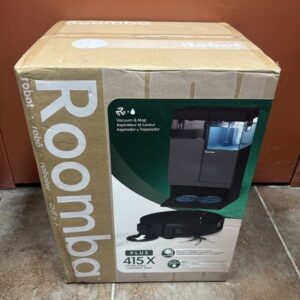
Robot vacuum cleaners have become far more capable over the past decade. What began as simple automated floor sweepers has evolved into sophisticated cleaning systems that can map homes, avoid obstacles, empty their own dustbins, and even mop hard floors. The iRobot Roomba 415X aims to build on that legacy by offering an automated cleaning experience designed to reduce the amount of time homeowners spend vacuuming.
This review takes a detailed look at every aspect of the Roomba 415X, from its physical construction and cleaning performance to navigation, maintenance requirements, smart features, and long-term usability. Rather than focusing solely on specifications, this review examines how the vacuum performs in everyday situations, including cleaning carpets, hardwood floors, homes with pets, and areas around furniture.
Whether you’re considering your first robot vacuum or upgrading from an older model, these are the characteristics that matter most in day-to-day ownership.
If you click the button above you will be redirected to Amazon.com. In case you then decide to buy anything, Amazon.com will pay me a commission. This doesn’t affect the honesty of this review in any way though.
Design & Build Quality
The design of a robot vacuum is about much more than aesthetics. While a sleek appearance certainly helps a device blend into a modern home, its physical construction has a direct impact on cleaning performance, durability, ease of maintenance, and long-term reliability. After spending time evaluating the iRobot Roomba 415X from a design perspective, it becomes clear that its overall philosophy focuses on practicality rather than trying to reinvent what already works. Every component appears to serve a functional purpose, from the shape of the chassis to the positioning of the sensors and the layout of the cleaning system underneath.
At first glance, the Roomba 415X follows the familiar circular profile that has become synonymous with robot vacuum cleaners. Although some manufacturers have experimented with D-shaped or hybrid designs to improve edge cleaning, the classic round form still offers several advantages. It allows the robot to rotate freely in tight spaces, navigate around furniture with minimal effort, and maintain predictable movement patterns while cleaning. The circular design also distributes impacts evenly around the body when the vacuum gently bumps into obstacles during navigation.
One of the first things that stands out is the vacuum’s relatively low-profile construction. A slim body is one of the defining characteristics of any capable robot vacuum because it determines how much of the home the machine can actually reach. Furniture such as sofas, beds, coffee tables, TV stands, and cabinets often accumulate surprising amounts of dust simply because traditional vacuums are inconvenient to maneuver underneath them. A low chassis enables the Roomba 415X to clean these difficult areas automatically, reducing the number of hidden dust traps throughout the home.
The overall proportions also strike a sensible balance between compactness and stability. A robot vacuum that is too lightweight may struggle to maintain traction on carpets or thresholds, while one that is unnecessarily heavy can consume more battery power and place additional strain on its drive motors. The Roomba 415X feels substantial enough to remain planted during operation without becoming cumbersome when it needs to climb onto rugs or transition between different floor surfaces.
Material quality plays an equally important role in determining how well a robot vacuum ages over years of regular use. Unlike many household appliances that remain stationary, robot vacuums spend their lives constantly moving, making contact with furniture, crossing thresholds, and occasionally encountering unexpected obstacles. This places significant demands on the exterior housing.
The shell of the Roomba 415X appears robust enough to withstand everyday wear. The plastic construction feels solid without becoming excessively heavy, and the various panels fit together cleanly with minimal flex when handled. While no plastic appliance is completely immune to scratches, the finish is designed to hide minor scuffs that inevitably occur after months of navigating around chair legs, cabinets, and walls.
The front bumper deserves particular attention because it serves as one of the primary protective elements of the robot. Rather than functioning as a rigid barrier, it is designed to absorb gentle impacts during normal navigation. Even with advanced sensors and intelligent mapping, robot vacuums occasionally make contact with furniture as they confirm object locations or adjust their path. A well-designed bumper cushions these encounters, helping protect both the furniture and the vacuum itself from unnecessary damage.
Another thoughtful aspect of the construction is the positioning of the top control interface. Although most owners will eventually rely on the companion app for scheduling and advanced settings, physical controls remain surprisingly useful. There are times when reaching for a phone simply isn’t practical, especially if you want to quickly start a cleaning session before leaving the house or pause the robot while moving obstacles out of its path. Keeping the physical buttons easily accessible ensures that the vacuum remains functional even if the wireless connection is temporarily unavailable.
The layout of these controls also contributes to the overall user experience. Rather than overwhelming users with multiple buttons and complicated combinations, the interface appears intentionally minimal. This simplicity aligns well with the purpose of a robot vacuum. Once initial setup has been completed, the machine should require very little interaction during everyday use.
Attention to detail becomes even more apparent when examining the underside of the robot. Although this area is rarely visible during normal operation, it houses the components that determine how effectively the vacuum performs. The main brush assembly, side brush, drive wheels, caster wheel, charging contacts, cliff sensors, and suction inlet all need to coexist within a relatively compact space without interfering with one another.
The drive wheels appear well integrated into the chassis, providing enough suspension travel to help the robot navigate slight changes in floor height. This becomes particularly important in homes with transitions between hardwood flooring, tile, laminate, and low-pile carpets. Even relatively small thresholds can become obstacles if the wheels lack sufficient movement or grip.
The tread pattern on the wheels also deserves recognition. Good traction allows the robot to maintain accurate navigation while reducing wheel slippage on smooth surfaces. Whether cleaning polished hardwood or textured tile, consistent grip contributes to more predictable movement and fewer navigation errors.
Equally important is the placement of the side brush. Positioned near the outer edge of the vacuum, it extends the cleaning path beyond the main suction opening by sweeping dust and debris inward. Since circular robot vacuums cannot physically reach every corner, the side brush becomes an essential component for improving edge cleaning. Its placement appears carefully chosen to maximize coverage while minimizing unnecessary contact with furniture.
The brush housing itself also seems designed with maintenance in mind. Hair, string, and fibers are unavoidable challenges for any vacuum cleaner, particularly in homes with pets or family members with long hair. Easy access to the brush assembly makes routine cleaning significantly less frustrating, encouraging owners to perform maintenance before buildup begins affecting performance.
Sensor integration represents another area where thoughtful design becomes evident. Modern robot vacuums rely on a variety of sensors to navigate safely through the home. These typically include cliff sensors that prevent falls down staircases, wall sensors for maintaining consistent spacing along edges, wheel encoders for measuring movement, and additional navigation hardware depending on the mapping system employed.
Rather than making these sensors visually prominent, they are incorporated cleanly into the overall design. This not only creates a more refined appearance but also helps protect sensitive components from accidental damage. Sensor windows are positioned where they can perform their tasks effectively while remaining less vulnerable to direct impacts.
Another design consideration that often goes unnoticed is airflow management. Efficient airflow is crucial for maintaining strong suction while preventing unnecessary strain on the motor. Internally, the vacuum’s layout appears organized to minimize airflow restrictions, allowing dust and debris to travel efficiently from the brush system into the dustbin. Although these internal pathways are hidden from view, their design has a measurable impact on long-term cleaning performance.
The dustbin itself appears straightforward to remove and reinstall, an important detail for a product that requires regular emptying. A dust container that slides smoothly into place without excessive force reduces wear on the locking mechanism while making routine maintenance feel less like a chore. Since emptying the dustbin may become part of a homeowner’s weekly routine, ergonomic design here contributes significantly to the overall ownership experience.
The charging contacts are similarly well positioned beneath the vacuum. Reliable charging depends on consistent alignment with the docking station, and recessed contacts help protect against accidental contamination while still making secure electrical contact. Their placement also reduces the likelihood of damage during normal movement across different floor surfaces.
Noise reduction has also influenced aspects of the physical construction. While the motor ultimately determines much of the operating sound, the rigidity of the housing plays a supporting role by minimizing vibrations and rattles. Panels that fit tightly together help create a more refined acoustic profile, giving the vacuum a more solid feel during operation.
From a visual standpoint, the Roomba 415X embraces a clean, understated appearance. It avoids flashy styling cues in favor of a timeless design that is unlikely to look outdated after only a few years. This restrained aesthetic allows the robot to blend naturally into a wide variety of home interiors, whether placed in a modern apartment or a more traditional family home.
Durability extends beyond the exterior shell. Components such as the wheels, brush mounts, bumper mechanism, and removable dustbin are all subjected to repeated use over the product’s lifetime. Their construction suggests that the vacuum has been designed with regular operation in mind rather than occasional use. While every mechanical device experiences wear over time, thoughtful engineering can significantly delay the onset of common issues.
Overall, the design and build quality of the iRobot Roomba 415X reflect a mature approach to robot vacuum engineering. Rather than chasing unconventional styling or unnecessary complexity, it emphasizes functional design, solid construction, and practical usability. Every major element of the chassis appears intended to support reliable daily cleaning while simplifying maintenance and improving long-term ownership. Although design alone cannot determine how well a robot vacuum cleans, it establishes the foundation upon which every other aspect of the user experience is built, and in this regard, the Roomba 415X makes a positive first impression.
Navigation Intelligence & Mapping
Navigation has become one of the defining features that separates modern robot vacuum cleaners from the early generations that simply wandered around a room until their battery ran low. While suction power and brush design remain essential components of cleaning performance, they can only be fully utilized if the vacuum knows where it has been, where it still needs to clean, and how to move efficiently around obstacles. The iRobot Roomba 415X places significant emphasis on intelligent navigation, aiming to provide a more organized and predictable cleaning experience than the random movement patterns that characterized older robotic cleaners.
One of the first things most users notice during the initial cleaning sessions is how methodical the vacuum appears. Rather than bouncing aimlessly from one wall to another, the Roomba 415X is designed to clean in structured paths whenever possible. This systematic approach immediately inspires more confidence because it gives the impression that the robot is actively planning its route instead of relying on chance to cover every section of the floor.
The benefits of structured navigation become increasingly obvious in larger homes. In a small apartment, even an inefficient robot will eventually pass over most areas simply because there is less space to cover. In larger homes with multiple rooms, hallways, and furniture arrangements, however, inefficient movement can lead to unnecessary battery consumption, missed spots, and repeated cleaning of the same areas. Intelligent route planning allows the Roomba 415X to maximize its available battery life while ensuring more consistent coverage.
During the first few cleaning runs, the robot spends a significant amount of time learning its environment. This mapping phase is an important part of the ownership experience, and it is worth allowing the vacuum to complete several uninterrupted cleaning sessions before judging its navigation capabilities. Like many mapping-enabled robot vacuums, the Roomba 415X gradually builds a more complete understanding of the home’s layout as it explores each room.
Initially, the robot may appear somewhat cautious. It pauses occasionally, changes direction more frequently, and spends additional time confirming room boundaries. While this behavior may seem slower than expected, it reflects the robot gathering information rather than cleaning inefficiently. Once the map becomes more complete, subsequent cleaning sessions typically become smoother and noticeably faster.
One of the most valuable aspects of intelligent mapping is the ability to distinguish between different rooms. Instead of treating the entire home as one continuous cleaning area, the robot can identify individual spaces such as the kitchen, living room, bedroom, hallway, or dining room. This opens the door to far more flexible cleaning schedules.
For example, kitchens often require more frequent attention due to food crumbs and daily foot traffic, while guest bedrooms may only need cleaning once or twice a week. Room-specific cleaning allows users to tailor schedules according to actual household needs rather than forcing every room to receive identical treatment. This not only saves battery life but also reduces unnecessary wear on brushes and other moving parts.
Another advantage of room recognition is convenience. Instead of carrying the robot manually into a particular room, users can simply instruct it to clean a selected area. This becomes particularly useful after cooking, when crumbs have accumulated beneath the dining table, or after children have finished playing in one part of the house. Rather than initiating a full-house cleaning cycle, the robot can focus on the area that actually needs attention.
The mapping system also contributes to more efficient cleaning patterns within each room. Rather than repeatedly crossing the same sections of floor, the Roomba 415X appears to divide spaces into manageable sections before systematically cleaning each one. Straight cleaning lines generally replace the irregular paths associated with older robot vacuums, creating more thorough floor coverage while minimizing wasted movement.
Furniture inevitably complicates navigation, and this is where intelligent path planning becomes particularly important. Dining chairs, coffee tables, sofas, bookshelves, and television stands create countless narrow passages that challenge any autonomous cleaning machine. The Roomba 415X approaches these situations with measured movements, carefully adjusting its path to clean around obstacles while avoiding unnecessary collisions.
No robot vacuum completely eliminates contact with furniture, nor should slight contact necessarily be viewed as poor navigation. Gentle touches often serve as confirmation points that help the robot verify object positions. The important distinction lies in how these encounters are managed. Instead of striking furniture with excessive force, the vacuum generally slows as it approaches obstacles, allowing its bumper and sensors to work together to refine its route.
Chair legs deserve particular mention because they represent one of the most demanding navigation challenges. Dining areas often contain multiple closely spaced legs positioned at varying angles, creating an obstacle course for robot vacuums. The Roomba 415X demonstrates reasonable patience in these situations, maneuvering between obstacles without becoming excessively confused or trapped. While cleaning around numerous chair legs naturally takes longer than cleaning an open floor, the robot’s systematic approach helps maintain steady progress.
Table edges and cabinet kickboards present another common challenge. The vacuum is designed to follow walls and furniture edges closely enough to collect dust that accumulates along these boundaries while maintaining sufficient clearance to avoid becoming wedged beneath low overhangs. This balance between proximity and caution contributes to more effective edge cleaning without sacrificing reliability.
Obstacle detection has become increasingly sophisticated in modern robot vacuums, and its value becomes apparent during everyday household use. Few homes remain perfectly tidy at all times. Shoes may be left in hallways, children’s toys scattered across living rooms, pet bowls positioned near walls, and charging cables occasionally left on the floor. These everyday objects create unpredictable environments that robot vacuums must navigate safely.
The Roomba 415X is designed to recognize many common obstacles and adjust its route accordingly. Rather than repeatedly attempting to push immovable objects, it typically identifies blocked pathways before selecting an alternative route. This improves cleaning efficiency while reducing unnecessary wear on both the robot and household furnishings.
Threshold handling also forms an important part of navigation performance. Many homes contain slight height differences between rooms, whether due to transitions between tile and hardwood, laminate and carpet, or simply decorative floor strips connecting two surfaces. Successfully crossing these transitions requires a combination of wheel traction, chassis clearance, and intelligent movement control.
The Roomba 415X generally approaches floor transitions with measured confidence. Instead of charging directly into raised edges, it adjusts its angle and climbing speed to improve traction. This controlled approach reduces the likelihood of becoming stuck while helping maintain consistent cleaning across multiple floor types.
Carpet detection represents another useful navigation feature. Moving from hard flooring onto carpet often requires different cleaning behavior. Depending on the available cleaning modes, the robot may adjust its suction level or brush operation when it detects a change in surface type. Automatic adaptation allows the vacuum to optimize performance without requiring manual intervention every time it enters a different room.
Navigation accuracy becomes particularly important when battery levels begin to decline. One of the defining characteristics of intelligent robot vacuums is their ability to locate the charging dock reliably. Returning successfully at the end of a cleaning cycle might sound like a simple task, but it requires accurate positioning, efficient path planning, and consistent map awareness.
The Roomba 415X is designed to monitor its remaining battery capacity and determine when it is time to recharge. Rather than continuing until the battery is completely exhausted, it should return to the docking station with sufficient reserve power. This approach helps avoid situations where the robot becomes stranded in another room, unable to complete either its cleaning cycle or its journey back to the charger.
In larger homes, recharge-and-resume functionality becomes particularly valuable. If the cleaning task exceeds the available battery capacity, the robot can return to its charging dock, replenish its battery, and then continue cleaning from approximately where it left off. This ensures that larger floor plans receive complete coverage without requiring manual intervention.
Map retention also contributes to a smoother ownership experience. Once the robot has learned the home’s layout, users naturally expect that information to remain available for future cleaning sessions. Persistent mapping eliminates the need to recreate floor plans every time the vacuum is used, making room-specific scheduling and customized cleaning routines much more practical.
As users become familiar with the system, the mapping features often evolve from a novelty into one of the vacuum’s greatest strengths. Being able to view a digital representation of the home, monitor completed cleaning areas, and schedule specific rooms transforms the robot from a simple automated appliance into a genuinely intelligent household assistant.
Navigation reliability extends beyond ordinary cleaning as well. Homes change over time. Furniture is rearranged, holiday decorations appear, boxes are temporarily placed in hallways, and family members leave unexpected items on the floor. A capable navigation system must remain flexible enough to adapt to these changing environments without becoming overly dependent on a perfectly static layout.
Perhaps the greatest compliment that can be paid to the Roomba 415X’s navigation system is that it gradually fades into the background. After the initial setup period, the robot begins moving confidently throughout the home, completing its cleaning tasks with minimal supervision. Instead of constantly rescuing it from corners or untangling it from furniture, owners can generally allow scheduled cleaning sessions to proceed with confidence.
Overall, the navigation intelligence and mapping capabilities of the iRobot Roomba 415X represent one of its most important strengths. Efficient route planning, systematic cleaning patterns, room recognition, obstacle management, and reliable map creation all work together to create a more effective and less frustrating cleaning experience. While no robot vacuum can completely eliminate the challenges posed by cluttered or constantly changing environments, a well-designed navigation system significantly reduces the need for user intervention, allowing the vacuum to fulfill its primary purpose: cleaning the home efficiently while requiring as little attention as possible.
Vacuuming Performance
Vacuuming performance is, without question, the single most important aspect of any robot vacuum cleaner. No matter how attractive the design may be or how advanced the navigation system appears, those features lose much of their value if the robot cannot consistently leave floors looking clean. The iRobot Roomba 415X is designed with everyday maintenance cleaning in mind, focusing on frequent, automated cleaning sessions that prevent dirt, dust, and debris from building up over time. Rather than replacing a full-sized upright vacuum for occasional deep cleaning, it aims to reduce the need for manual vacuuming by keeping floors consistently tidy.
One of the first things to understand about the Roomba 415X is that its cleaning philosophy differs from that of a conventional vacuum cleaner. Traditional uprights are typically used once every week or two for an intensive cleaning session. Robot vacuums, on the other hand, are intended to clean much more frequently. Running the Roomba 415X every day or every other day allows it to collect dust and debris before they have an opportunity to accumulate. This frequent maintenance approach often produces cleaner-looking floors overall, even if each individual cleaning session is less intensive than what a powerful upright vacuum might achieve.
The vacuum performs particularly well when dealing with the everyday dirt that naturally accumulates in busy households. Fine dust, breadcrumbs, pet hair, lint, dried leaves tracked indoors, and small particles of household debris are exactly the kind of messes robot vacuums are built to handle. Instead of allowing these materials to spread throughout the home over several days, the Roomba 415X collects them on a regular schedule, helping maintain a cleaner living environment with minimal effort from the user.
Its cleaning pattern also contributes to the overall performance. Rather than moving randomly across the floor, the robot follows organized routes that allow it to cover large areas efficiently. This structured approach reduces the likelihood of missing sections of flooring while minimizing unnecessary overlap. Although some degree of repeated cleaning naturally occurs when navigating around furniture or obstacles, the overall coverage feels deliberate rather than accidental.
Hard flooring generally represents the vacuum’s strongest environment. Surfaces such as hardwood, laminate, vinyl, tile, and stone allow the cleaning system to collect debris with relative ease. Fine dust that often settles along the edges of rooms is swept inward by the rotating side brush before being drawn into the main suction path. Larger debris, including cereal pieces, dry food, sand, and dirt brought in from outside, is typically handled without difficulty during routine cleaning sessions.
The vacuum’s performance on hard floors is especially noticeable in households where people frequently move between indoor and outdoor spaces. Entryways often become collection points for dirt, grass clippings, small stones, and other debris attached to footwear. Scheduling daily cleaning in these high-traffic areas helps prevent dirt from being carried deeper into the home, making the entire living space feel cleaner throughout the week.
The Roomba 415X also performs well beneath furniture, an area that is frequently overlooked during manual cleaning. Dust tends to collect under beds, sofas, entertainment units, and cabinets simply because these locations are inconvenient to reach with traditional vacuums. Thanks to its low profile, the robot can access many of these hidden spaces automatically, removing dust that might otherwise remain undisturbed for weeks or even months.
Carpet cleaning introduces additional challenges, as dirt becomes trapped between fibers rather than resting on the surface. Even so, the Roomba 415X demonstrates respectable performance when used as part of a regular maintenance routine. On low-pile carpets and rugs, it effectively removes loose debris, surface dust, pet hair, and everyday dirt before these materials become deeply embedded.
Medium-pile carpets require more effort, but frequent cleaning helps compensate for the increased resistance presented by thicker fibers. Instead of attempting to remove weeks of accumulated dirt in a single pass, the robot gradually maintains cleanliness by vacuuming regularly. This preventative approach proves surprisingly effective over time, particularly in homes where carpets experience moderate daily traffic.
High-pile carpets remain one of the most demanding environments for any robot vacuum. Longer fibers create additional resistance for both the drive wheels and the brush system, while deeply embedded dust often requires greater agitation than compact robotic cleaners can provide. Although the Roomba 415X can still contribute to routine maintenance on these surfaces, traditional upright vacuums generally remain the better choice for occasional deep carpet cleaning.
One aspect that deserves praise is the vacuum’s ability to maintain consistent cleaning quality throughout longer cleaning sessions. Efficient airflow and brush design help ensure that pickup remains relatively stable as the dustbin gradually fills. This consistency becomes particularly important in larger homes where the robot may spend well over an hour completing a full cleaning cycle.
The brush system plays a central role in overall vacuuming performance. Instead of relying solely on suction, robot vacuums combine mechanical agitation with airflow to lift dirt from the floor. This balanced approach allows the vacuum to loosen debris before transporting it into the dustbin. Hair, dust, and lightweight debris are therefore collected not only by suction but also through direct contact with the rotating cleaning brushes.
The side brush deserves special mention because it significantly expands the effective cleaning width of the robot. Dust and debris often accumulate along baseboards, cabinet edges, and furniture legs where the main suction inlet cannot reach directly. The rotating brush sweeps these materials toward the center of the vacuum, allowing the primary cleaning system to collect them. Although no circular robot vacuum can completely eliminate corner buildup, the side brush noticeably improves edge cleaning compared to relying on suction alone.
Performance around furniture is another area where thoughtful design makes a difference. Table legs, dining chairs, coffee tables, and shelving units create numerous obstacles that interrupt straight cleaning paths. Rather than avoiding these areas entirely, the Roomba 415X navigates carefully around them, cleaning as much accessible floor space as possible. This attention to detail helps ensure that frequently used living spaces receive more complete coverage.
Small debris is collected particularly effectively during routine cleaning. Dust, crumbs, cereal pieces, dried leaves, pet kibble, and similar materials are generally removed without difficulty. Larger objects naturally fall outside the intended scope of a robot vacuum, and users should still remove items such as socks, toys, and loose cables before starting a cleaning session to allow the robot to work more efficiently.
Homes with multiple floor types also benefit from the vacuum’s ability to transition between surfaces. Moving from hardwood into carpeted bedrooms or from tile kitchens into adjacent living areas rarely interrupts the cleaning cycle. This flexibility allows the Roomba 415X to treat the home as one continuous cleaning environment rather than requiring separate cleaning sessions for each surface type.
Repeated cleaning sessions often reveal one of the greatest strengths of robot vacuums in general: consistency. Even if an upright vacuum can achieve slightly deeper cleaning during a single session, most homeowners simply do not vacuum every day. A robot that quietly cleans several times each week frequently produces cleaner overall living conditions because dirt never has an opportunity to accumulate significantly.
This becomes particularly noticeable when examining dust levels beneath furniture, along hallways, and in frequently traveled areas. Instead of visible dust appearing after several days, regular automated cleaning keeps these areas looking cleaner almost continuously. The difference is less dramatic after each individual cleaning session but becomes increasingly apparent over the course of several weeks.
Pet hair presents another common challenge, and daily cleaning makes a substantial difference in homes with shedding animals. Rather than allowing fur to gather into noticeable clumps beneath furniture or along walls, the Roomba 415X removes loose hair before it spreads throughout the house. While extremely heavy shedding may still require occasional manual vacuuming, routine robotic cleaning significantly reduces visible pet hair on floors.
Another strength is the vacuum’s ability to maintain cleaning performance in everyday household conditions rather than ideal testing environments. Floors are rarely perfectly clear. Dining chairs are moved, rugs shift slightly, and household members continue their normal activities while the robot works around them. The Roomba 415X adapts well to these realistic conditions, continuing its cleaning cycle despite the occasional obstacle or furniture rearrangement.
Of course, realistic expectations remain important. Robot vacuums excel at maintaining cleanliness rather than restoring heavily neglected floors. Homes that have not been vacuumed for several weeks may require an initial deep cleaning using a traditional vacuum before the robot assumes responsibility for ongoing maintenance. Once that baseline cleanliness has been established, however, the Roomba 415X can play an important role in preserving it with remarkably little user intervention.
Another benefit of frequent vacuuming is the reduction of airborne dust. Every time people walk through the home, fine particles resting on the floor can become disturbed and circulate through the air. By removing dust regularly, the robot indirectly contributes to a cleaner indoor environment. While it should not be viewed as an air purification device, consistently cleaner floors often translate into reduced visible dust accumulation on furniture and other household surfaces.
Ultimately, the vacuuming performance of the iRobot Roomba 415X is best judged over weeks of ownership rather than after a single cleaning session. Its strengths lie in consistency, automation, and the ability to quietly perform routine maintenance with minimal supervision. By combining systematic navigation, an effective brush system, reliable debris pickup, and the convenience of scheduled operation, it succeeds in keeping everyday dirt under control across a wide variety of floor types. While it does not entirely replace the deep-cleaning capabilities of a full-sized upright vacuum, it substantially reduces the frequency with which manual vacuuming becomes necessary, making it a practical and valuable addition to modern households.
Mopping Capability
The addition of a mopping function has become one of the biggest developments in the robot vacuum market over the past few years. What was once considered a premium feature is now increasingly common, allowing a single machine to handle both dry debris and light wet cleaning during the same cleaning session. If the iRobot Roomba 415X is equipped with a mopping system, its goal is not to replace the traditional mop and bucket but to reduce the amount of manual floor maintenance required throughout the week. When viewed through that lens, the mopping capability becomes a valuable complement to the vacuuming system rather than a standalone cleaning solution.
The first thing to understand is that robotic mopping is designed for maintenance cleaning. This distinction is important because expectations often determine whether users are satisfied with the results. A robot mop excels at wiping away fine dust, footprints, light stains, and the thin layer of grime that gradually develops on hard floors through daily use. It is not intended to scrub heavily soiled surfaces or remove stubborn stains that have been left to dry for several days.
In everyday use, however, maintaining a consistently clean floor is often more beneficial than performing an intensive deep clean once every few weeks. By running the mopping function regularly, the Roomba 415X helps prevent dirt from accumulating in the first place. This frequent maintenance approach keeps hard flooring looking fresher and often reduces the need for extensive manual mopping sessions.
The integration of vacuuming and mopping into a single cleaning routine is one of the most practical aspects of the system. Dry debris such as dust, crumbs, hair, and dirt are collected before the damp mop pad passes over the floor. This sequence is important because attempting to mop loose debris without vacuuming first would simply push dirt around instead of removing it. Combining both cleaning methods in a single operation creates a more complete cleaning process while requiring very little user involvement.
One noticeable advantage is how much cleaner hard floors feel after regular mopping cycles. Vacuuming alone removes visible debris, but it cannot eliminate the fine layer of residue left behind by everyday living. Bare feet often reveal this difference more clearly than visual inspection alone. Floors that are vacuumed and lightly mopped several times each week tend to feel noticeably cleaner, smoother, and less dusty compared to floors that receive only dry cleaning.
The Roomba 415X is particularly well suited for homes with large areas of hard flooring. Hardwood, laminate, vinyl, ceramic tile, stone, and similar surfaces all benefit from routine damp cleaning. Kitchens, dining rooms, hallways, bathrooms, and entryways are especially good candidates because they experience frequent foot traffic and are more likely to accumulate fine dirt throughout the day.
Kitchen floors provide one of the clearest examples of where robotic mopping proves useful. Even in households where spills are cleaned immediately, cooking naturally produces small amounts of grease, crumbs, flour, and other food particles that settle onto the floor. While vacuuming removes loose debris, a damp mop helps lift the thin film that gradually develops over time. Running the Roomba 415X several times each week can significantly reduce this buildup, helping the kitchen maintain a cleaner appearance with minimal effort.
Dining areas also benefit from regular mopping. Chairs are constantly moved, food occasionally falls beneath the table, and frequent foot traffic creates visible marks on hard flooring. Automated mopping prevents these areas from becoming noticeably dirty between more thorough manual cleaning sessions.
Hallways represent another area where consistent mopping pays dividends. These high-traffic zones often accumulate dust, fine grit, and footprints carried in from other parts of the home. Because the robot follows scheduled cleaning routines, these surfaces receive attention far more frequently than they typically would with manual mopping alone.
One of the strengths of robotic mopping lies in consistency rather than intensity. A traditional mop may remove more dirt during a single cleaning session, but many homeowners simply do not have the time or motivation to mop every few days. The Roomba 415X addresses this by performing smaller cleaning tasks regularly. Over time, this approach often produces floors that remain cleaner overall because dirt never has an opportunity to become heavily embedded.
Water distribution is another important aspect of effective robotic mopping. Applying too much moisture can leave floors excessively wet, while insufficient water limits cleaning effectiveness. A balanced system ensures that the mop pad remains adequately damp without saturating delicate flooring materials. This is particularly important for hardwood floors, where excessive moisture can potentially cause damage over long periods if not properly controlled.
The mop pad itself serves as the primary cleaning surface. As the robot moves across the floor, the pad gently lifts fine dust, light stains, and surface residue. While the cleaning action is naturally less aggressive than vigorous hand scrubbing, it remains surprisingly effective for routine maintenance when used consistently.
Like any cleaning cloth, the mop pad requires regular maintenance to perform well. Continuing to use an excessively dirty pad simply redistributes dirt instead of removing it. Fortunately, replacing or washing the pad is typically a straightforward process, and regular cleaning helps maintain consistent mopping performance throughout the robot’s lifespan.
The robot performs especially well when dealing with fresh messes. Recently dried footprints, light drink splashes, dust residue, and minor cooking splatters are generally removed without difficulty during scheduled cleaning sessions. Addressing these everyday marks before they become stubborn stains is one of the greatest advantages of automated floor care.
Sticky spills present a more nuanced situation. Fresh spills are often handled reasonably well, particularly if the cleaning cycle begins shortly after the spill occurs. However, thick residues such as syrup, dried juice, sauces, or sugary drinks that have hardened over several hours typically require manual attention. Robotic mops simply lack the downward pressure and repeated scrubbing motion necessary to remove heavily adhered contaminants effectively.
Similarly, dried mud or caked-on dirt falls outside the intended purpose of the mopping system. These situations generally call for manual cleaning with greater pressure, more water, and stronger cleaning solutions than an automated robot can safely apply.
One area where the Roomba 415X’s mopping function shines is dust management. Fine household dust often settles onto hard floors even after vacuuming. This layer may not always be visible under normal lighting, but it becomes apparent when sunlight shines across the floor or when walking barefoot. Damp mopping captures these fine particles far more effectively than dry cleaning alone, resulting in floors that both look and feel cleaner.
The transition between different flooring materials is another important consideration. Homes frequently contain combinations of tile, hardwood, laminate, vinyl, and area rugs within the same floor plan. An effective robot mop must navigate these transitions intelligently while preventing unnecessary moisture from reaching carpets or rugs. Proper floor recognition and route planning contribute significantly to successful combined vacuuming and mopping sessions.
For households with children, regular mopping offers additional practical benefits. Young children often spend considerable time playing directly on the floor, making cleaner surfaces especially desirable. Frequent automated mopping helps maintain a more hygienic environment by removing dust and light residue that naturally accumulate between deeper cleaning sessions.
Pet owners can also appreciate the advantages of integrated mopping. Dogs and cats frequently track fine dirt into the home, while water bowl splashes and muddy paw prints are common occurrences. Vacuuming removes hair effectively, but mopping addresses the light smudges and footprints that often remain behind. Used together, these functions create a noticeably cleaner floor, particularly in entryways and areas where pets spend most of their time.
Noise levels during mopping remain relatively unobtrusive compared to many traditional floor-cleaning methods. Since the robot relies on slow, controlled movement rather than high-speed scrubbing, it can typically operate without creating significant disturbance. This allows scheduled mopping sessions to occur during working hours or while household members are occupied elsewhere.
Maintenance of the mopping system is relatively straightforward but should not be overlooked. Regularly refilling the water reservoir, cleaning the mop pad, and occasionally wiping the underside of the robot help maintain reliable performance. These simple tasks require only a few minutes but contribute significantly to long-term cleaning effectiveness.
One realistic limitation of robotic mopping involves corners and tight spaces. Because of its circular design, the Roomba 415X cannot press a rectangular mop pad tightly into every corner of a room. Likewise, areas immediately surrounding toilet bases, narrow gaps beside appliances, or extremely confined spaces may still require occasional manual attention. Fortunately, these represent relatively small portions of the total floor area.
Long-term use demonstrates that the greatest strength of the mopping system lies in its ability to reduce workload rather than eliminate it entirely. Many owners find themselves reaching for a traditional mop far less frequently because the robot continuously manages routine floor maintenance. Instead of performing extensive cleaning sessions every weekend, occasional spot cleaning becomes sufficient to address the few situations that exceed the robot’s capabilities.
It is also worth noting that the effectiveness of robotic mopping increases dramatically when paired with regular scheduling. Running the system once every week produces respectable results, but cleaning every two or three days prevents dirt from becoming established in the first place. This proactive approach aligns perfectly with the overall philosophy of robot vacuums: maintaining cleanliness through consistency rather than relying on occasional intensive cleaning.
Overall, the mopping capability of the iRobot Roomba 415X should be viewed as a highly practical feature that complements its vacuuming performance. While it does not replace the deep-cleaning power of traditional manual mopping, it excels at handling the routine maintenance that makes up the majority of everyday floor care. By regularly removing fine dust, footprints, light stains, and surface residue, it helps hard floors maintain a cleaner appearance and feel with remarkably little effort from the user. For busy households seeking to automate as much of their cleaning routine as possible, the addition of reliable mopping significantly enhances the overall value and convenience of the robot.
Maintenance & Cleaning
One of the biggest advantages of owning a robot vacuum is the reduction in day-to-day cleaning effort, but it is important to remember that the robot itself also requires regular care. No robot vacuum is completely maintenance-free, regardless of its price or feature set. Like any appliance with moving parts, filters, brushes, wheels, and sensors, the iRobot Roomba 415X performs best when it receives routine attention. Fortunately, the amount of maintenance required is generally modest, and most tasks take only a few minutes to complete. Establishing a simple maintenance routine not only keeps the vacuum performing at its best but also helps extend its overall lifespan.
Perhaps the most frequent maintenance task is emptying the dustbin. Although the capacity of the dust container is designed to accommodate everyday cleaning, how often it needs to be emptied depends largely on the size of the home, the number of occupants, and whether pets are present. In a smaller apartment with hard floors, the dustbin may last several cleaning sessions before reaching capacity. In a busy family home with shedding pets and multiple carpeted rooms, however, it can fill surprisingly quickly.
Fortunately, removing the dustbin is a straightforward process. It is designed to slide out smoothly without requiring excessive force or complicated steps. This may seem like a minor detail, but it makes a noticeable difference over months of ownership. Since emptying the dustbin becomes a regular part of using the robot, an intuitive removal mechanism encourages owners to perform the task promptly rather than postponing it.
The dustbin itself is generally easy to empty into a household waste bin. Dry debris such as dust, crumbs, hair, lint, and dirt are usually released with minimal effort. Occasionally, compacted material may remain lodged in the corners of the container, particularly if the robot has collected a significant amount of pet hair or fine dust. A gentle tap or quick wipe is usually sufficient to remove any remaining debris before reinstalling the container.
Users are often surprised by how much dust the robot collects during the first few weeks of ownership. Even homes that appear clean can contain remarkable amounts of fine dust hidden beneath furniture, along walls, and in corners. Seeing the contents of the dustbin after each cleaning session often reinforces just how much dirt accumulates on floors during everyday life.
The filter is another component that benefits from regular attention. Its primary purpose is to trap fine particles while allowing clean air to pass through the vacuum’s airflow system. As dust accumulates on the filter, airflow gradually becomes more restricted, potentially reducing suction efficiency. Cleaning the filter periodically helps maintain consistent performance and places less strain on the motor.
In most cases, loose dust can simply be tapped out of the filter over a waste bin. Some users also choose to use a small handheld vacuum or soft brush to remove stubborn particles. Whatever cleaning method is used, it is generally advisable to avoid damaging the filter material, as tears or excessive wear can reduce its effectiveness.
Even with regular cleaning, filters remain consumable components that require replacement over time. Their lifespan varies depending on usage patterns and household conditions, but replacing them at appropriate intervals helps maintain both cleaning performance and air quality.
The main brush assembly deserves particular attention because it performs much of the physical work involved in cleaning floors. Every time the robot operates, the brushes come into direct contact with dust, hair, carpet fibers, string, and other household debris. Over time, these materials naturally wrap around the rotating components.
Hair is especially prone to becoming entangled around brush rollers and axle ends. Homes with long-haired occupants or multiple pets typically experience faster accumulation. Fortunately, the Roomba 415X is designed to make brush maintenance relatively accessible. Removing the brush assembly requires only a few simple steps, allowing owners to clear away wrapped hair before it begins affecting cleaning performance.
Regular brush cleaning offers several benefits beyond improved suction. Tangled brushes require the motor to work harder, increasing wear while reducing effective agitation on carpets. By spending just a few minutes removing accumulated hair every couple of weeks, users help maintain both cleaning efficiency and the longevity of the internal drive system.
The side brush also benefits from periodic inspection. Positioned near the edge of the robot, it experiences frequent contact with furniture, baseboards, and corners. Although it is designed to withstand regular use, the flexible bristles may gradually become bent after extended operation. Cleaning away wrapped hair and replacing worn brushes when necessary helps preserve effective edge cleaning.
The wheels are another area that deserves occasional attention. Robot vacuums travel across a wide variety of surfaces, collecting dust, hair, carpet fibers, and small threads that can become lodged around wheel axles. If left unchecked, this buildup may restrict wheel movement or slightly affect navigation accuracy.
Fortunately, inspecting the wheels requires very little effort. Rotating them by hand while removing visible debris is often enough to keep them operating smoothly. Checking that both drive wheels move freely also provides an opportunity to identify any unusual wear before it develops into a larger issue.
The front caster wheel, despite its small size, plays an important role in maneuverability. Because it swivels continuously during operation, it can occasionally collect hair or fine thread around its axle. Removing these obstructions helps maintain smooth turning performance and prevents unnecessary strain during navigation.
Sensors are among the most important components of any robot vacuum, yet they are often overlooked during routine maintenance. Cliff sensors, wall sensors, navigation sensors, and charging contacts all rely on relatively clean surfaces to function accurately. Dust accumulation can interfere with sensor readings, potentially leading to navigation errors or difficulty locating the charging dock.
Fortunately, cleaning these components requires little more than a soft, dry microfiber cloth. Gently wiping the sensor windows every few weeks helps ensure that the robot continues navigating accurately throughout the home. This simple habit can prevent many of the minor issues that owners sometimes mistake for software problems.
The charging contacts should also be kept reasonably clean. These small metal connectors transfer power between the docking station and the robot, allowing the battery to recharge after each cleaning session. Dust, oxidation, or residue on either the robot’s contacts or the charging dock can occasionally interfere with reliable charging. A quick wipe with a dry cloth is generally sufficient to maintain a consistent electrical connection.
If the Roomba 415X includes a mopping system, additional maintenance tasks naturally accompany that functionality. The water reservoir should be emptied when the robot will not be used for an extended period, preventing stagnant water from remaining inside the tank. Likewise, the mop pad should be removed and washed after cleaning sessions to prevent dirt buildup and maintain effective floor cleaning.
Allowing a damp mop pad to remain attached indefinitely can lead to unpleasant odors and reduced cleaning performance. Fortunately, washing reusable mop pads is typically a simple process, making this one of the easier maintenance tasks to incorporate into a regular routine.
One aspect of maintenance that is often underestimated is keeping the cleaning area itself reasonably prepared. Although robot vacuums are becoming increasingly capable of navigating clutter, removing loose cables, socks, toys, and other small objects before cleaning allows the robot to complete its work more efficiently. Spending just a minute or two preparing the floor often prevents interruptions that would otherwise require manual intervention later.
Firmware updates also contribute to long-term maintenance, even though they involve software rather than physical cleaning. Manufacturers periodically release improvements that refine navigation algorithms, enhance obstacle detection, improve cleaning efficiency, or address minor operational issues. Installing these updates helps ensure that the robot continues performing at its best throughout its lifespan.
Replacement parts are another consideration for long-term ownership. Brushes, filters, side brushes, and mop pads naturally experience wear after months of repeated use. Fortunately, these components are intended to be replaceable rather than permanent. Routine replacement ensures that cleaning performance remains consistent without requiring the purchase of an entirely new vacuum.
The durability of maintenance components also deserves recognition. Access panels, brush covers, dustbin latches, and removable modules are designed for repeated handling. Since these parts may be removed dozens or even hundreds of times over the product’s lifetime, their construction should withstand regular use without becoming loose or difficult to operate.
Perhaps the greatest strength of the Roomba 415X from a maintenance perspective is that none of the routine tasks are especially demanding. Unlike traditional vacuum cleaners that often require large bags, complicated disassembly, or extensive cleaning after each use, the robot’s maintenance routine can usually be completed in just a few minutes. Emptying the dustbin, checking the brushes, wiping the sensors, and cleaning the filter quickly become familiar habits rather than inconvenient chores.
For households with pets, maintenance intervals naturally become shorter. Pet hair accumulates more rapidly around brushes, dustbins fill faster, and filters may require more frequent cleaning. Even so, these additional tasks remain relatively manageable and are generally outweighed by the robot’s ability to reduce the overall amount of manual vacuuming required.
The frequency of maintenance also depends on cleaning schedules. A robot operating daily naturally experiences more wear than one used only once a week. However, because each cleaning session collects less accumulated dirt, daily use often distributes wear more evenly while maintaining consistently cleaner floors. Many owners find that frequent light maintenance is easier than dealing with heavy dirt buildup after infrequent cleaning.
Long-term reliability is closely tied to maintenance habits. A well-maintained robot vacuum is more likely to retain its original cleaning performance, navigate accurately, and operate quietly over several years of use. Conversely, neglected brushes, clogged filters, dirty sensors, and overloaded dustbins gradually reduce effectiveness, sometimes leading owners to believe the vacuum itself has deteriorated when the issue is simply overdue maintenance.
Overall, maintaining the iRobot Roomba 415X is neither complicated nor time-consuming. Its components are designed with accessibility in mind, allowing routine care to be completed quickly without specialized tools or technical expertise. While no robot vacuum can truly be considered maintenance-free, the relatively modest attention required is a small trade-off for the convenience of automated floor cleaning. With regular dustbin emptying, filter care, brush cleaning, sensor maintenance, and timely replacement of consumable parts, the Roomba 415X is well positioned to deliver reliable performance while keeping maintenance demands comfortably manageable for everyday users.
Ergonomics & Everyday Usability
One of the primary reasons people invest in a robot vacuum is convenience. While cleaning performance, navigation, and battery life are all important, they ultimately serve a larger purpose: reducing the amount of time and effort required to keep a home clean. This is where ergonomics and everyday usability come into play. A robot vacuum can have impressive technical specifications, but if it is difficult to operate, frustrating to maintain, or requires constant supervision, much of its appeal disappears. Fortunately, the iRobot Roomba 415X appears to be designed with day-to-day practicality in mind, emphasizing simplicity, accessibility, and a largely hands-off ownership experience.
Unlike a traditional upright vacuum, which demands active involvement from beginning to end, the Roomba 415X shifts the majority of the cleaning process into the background. Once it has been set up and incorporated into a regular schedule, it becomes less of an appliance that requires attention and more of an automated household assistant that quietly performs its task with minimal interaction. That change alone can significantly alter the way homeowners approach floor cleaning.
The initial setup process is generally straightforward. Like most modern robot vacuums, the Roomba 415X requires a charging station positioned in an accessible location with sufficient clearance around it. Choosing the right location for the dock is important because the robot relies on consistent access when beginning and ending each cleaning cycle. Once installed, however, the docking station quickly becomes a permanent part of the home’s layout, and users rarely need to think about it again.
Pairing the vacuum with a smartphone is typically the next step. While some users initially view app-based setup as an unnecessary complication, it quickly becomes apparent that the mobile application serves as the primary control center for the entire cleaning system. The setup process is generally guided through clear instructions, allowing even first-time robot vacuum owners to become familiar with the basic functions without requiring extensive technical knowledge.
Once the initial configuration has been completed, the amount of daily interaction required is remarkably small. This is one of the strongest aspects of the Roomba 415X from an ergonomic perspective. Instead of preparing the vacuum, plugging it in, selecting attachments, and manually cleaning each room, users simply allow the robot to follow its scheduled routine. In many cases, the only regular responsibilities involve occasionally emptying the dustbin, cleaning the brushes, and checking that the floor is free of objects that might obstruct the cleaning path.
The ability to schedule cleaning sessions is perhaps the single most valuable usability feature. Rather than remembering to vacuum after work or during the weekend, users can create recurring schedules that fit naturally into their routines. The robot can clean while everyone is asleep, while the family is at work or school, or during any other convenient period when floor traffic is minimal.
This scheduling flexibility transforms vacuuming from an active household chore into a largely automated background task. Instead of noticing dirty floors and deciding when to clean them, the home simply remains cleaner because maintenance occurs consistently without requiring daily decision-making.
Another significant advantage is room-specific cleaning. Rather than running a full cleaning cycle every time, users can direct the robot toward particular areas that need attention. Kitchens after meal preparation, hallways during rainy weather, or entryways after outdoor activities often benefit from extra cleaning. Being able to focus on individual rooms improves both efficiency and convenience while reducing unnecessary wear on the robot.
The companion app also contributes significantly to everyday usability by centralizing most of the vacuum’s functions in one place. Scheduling, cleaning history, maintenance reminders, map management, and status updates are all typically accessible through a clean interface. This eliminates much of the guesswork associated with older robot vacuums, where users often had little idea what the machine had accomplished during a cleaning session.
Monitoring cleaning progress remotely is another practical benefit. Whether at work or away from home, users can often check whether the robot has completed its scheduled cleaning or whether any interruptions have occurred. This level of visibility provides reassurance without requiring anyone to remain physically present during operation.
Physical controls remain equally important despite the emphasis on smartphone functionality. There are occasions when using the app simply isn’t necessary. Pressing a button directly on the vacuum to begin a quick cleaning session remains intuitive and convenient, particularly for users who prefer a more straightforward interaction. Including both physical and digital controls allows the Roomba 415X to accommodate different user preferences without forcing reliance on a single control method.
The ergonomics of routine maintenance also deserve recognition. Dustbin removal is simple enough to become a quick habit rather than an inconvenience. Brushes and filters are reasonably accessible, reducing the frustration that sometimes accompanies cleaning household appliances. Since robot vacuums rely on regular maintenance for consistent performance, making these tasks straightforward significantly improves the overall ownership experience.
Weight is another factor that contributes to usability, even though robot vacuums spend most of their lives on the floor. There are still situations where users need to carry the robot between levels of a home, relocate it temporarily, or inspect the underside for maintenance. A balanced weight makes these occasional tasks less physically demanding while still providing enough stability for reliable operation during cleaning.
The low-profile design also offers ergonomic benefits beyond cleaning performance. Since the robot can access spaces beneath furniture independently, users no longer need to bend, kneel, or move heavy furniture nearly as often to remove accumulated dust. This is particularly valuable for older adults or anyone with mobility limitations, as it reduces the physical effort associated with maintaining hard-to-reach areas.
Noise management also influences everyday usability more than many people initially expect. A robot vacuum that operates at an excessively high noise level often discourages frequent scheduling because users prefer not to interrupt conversations, television viewing, or work. The Roomba 415X is designed to operate at a noise level that remains noticeable but generally manageable, allowing many owners to continue normal household activities while cleaning takes place in another room.
The autonomous return-to-dock feature further enhances convenience. Instead of requiring users to monitor battery levels or manually reconnect the charger after each cleaning session, the robot automatically returns to its charging station when necessary. This seemingly simple capability removes another small but repetitive task from the cleaning process, reinforcing the hands-off nature of robot vacuum ownership.
Homes with multiple occupants often appreciate another subtle usability benefit: the reduction of household disagreements over cleaning responsibilities. Since the robot handles routine vacuuming automatically, floor maintenance becomes less dependent on remembering whose turn it is to vacuum. While this may seem like a minor consideration, it contributes meaningfully to the practical value of automated cleaning in busy households.
The Roomba 415X also fits well into homes with unpredictable schedules. Unlike traditional cleaning sessions that require setting aside dedicated time, the robot can operate while household members focus on work, childcare, cooking, or leisure activities. This flexibility allows cleaning to occur without disrupting daily routines, which is one of the defining advantages of robotic automation.
Accessibility is another area where robot vacuums offer unique benefits. Individuals who experience difficulty pushing a heavy upright vacuum due to age, injury, or physical limitations may find robotic cleaning considerably easier to incorporate into their daily lives. While maintenance tasks still require some manual interaction, the physical demands are substantially lower than those associated with traditional vacuuming.
The learning curve for new users is also relatively gentle. Even individuals with limited experience using smart home devices typically become comfortable operating the robot after only a short period. The combination of straightforward controls, guided setup, and intuitive scheduling helps reduce the intimidation that sometimes accompanies advanced household technology.
Another often-overlooked aspect of usability is consistency. Manual vacuuming depends on motivation, available time, and energy. Some weeks, cleaning happens regularly; during busier periods, it may be postponed. The Roomba 415X eliminates much of this inconsistency by following scheduled routines regardless of how busy the household becomes. Floors therefore remain cleaner more consistently throughout the year.
The robot also encourages tidier habits in an indirect way. Knowing that the vacuum will operate on a regular schedule often motivates household members to pick up loose clothing, cables, toys, and other small objects from the floor beforehand. Over time, this simple routine contributes to a more organized living environment beyond the cleaning performed by the robot itself.
Of course, no robot vacuum is completely free of user involvement. Occasional maintenance, clearing unexpected obstacles, and replacing consumable parts remain part of ownership. However, the amount of manual effort required is dramatically lower than performing complete vacuuming sessions with a traditional machine several times each week.
One of the most satisfying aspects of everyday use is how quickly the Roomba 415X becomes part of the normal household routine. After the novelty of watching the robot navigate around furniture wears off, owners often stop thinking about it altogether. Floors simply remain cleaner because the robot quietly performs its scheduled work without constant reminders or supervision.
Long-term usability also depends on reliability. A robot that frequently becomes stuck, loses its map, or requires repeated intervention gradually becomes more frustrating than helpful. The Roomba 415X is designed to minimize these interruptions through intelligent navigation and consistent operation, allowing owners to trust it with routine cleaning rather than feeling compelled to supervise every cleaning cycle.
Overall, the ergonomics and everyday usability of the iRobot Roomba 415X represent some of its greatest strengths. Its thoughtful combination of automated scheduling, intuitive controls, accessible maintenance, smart connectivity, and independent operation significantly reduces the physical and mental effort associated with keeping floors clean. Rather than demanding constant attention, it integrates naturally into everyday life, quietly performing one of the home’s most repetitive chores while allowing users to focus their time and energy elsewhere. That seamless integration is ultimately what makes a robot vacuum feel less like another household appliance and more like a genuinely useful addition to the modern home.
Pet-Friendliness
For many households, one of the strongest reasons to invest in a robot vacuum is the presence of pets. Dogs and cats bring companionship, entertainment, and warmth to a home, but they also introduce an entirely new set of cleaning challenges. Shedding fur, muddy paw prints, tracked litter, scattered pet food, dander, and outdoor debris quickly become part of everyday life. Even owners who groom their pets regularly often find themselves vacuuming far more frequently than they would otherwise. The iRobot Roomba 415X is designed to reduce that workload by performing routine maintenance cleaning, making it particularly appealing for pet owners who want cleaner floors without having to reach for a vacuum every day.
One of the most obvious challenges in pet-friendly homes is loose hair. Some breeds shed seasonally, while others leave behind a constant stream of fine fur throughout the year. Hair has a remarkable ability to spread across every room, collecting beneath furniture, drifting into corners, and gathering along baseboards. Traditional vacuuming once or twice a week often struggles to keep pace with continuous shedding, especially during peak shedding seasons.
This is where the Roomba 415X demonstrates one of its greatest strengths. Instead of allowing pet hair to accumulate for several days before it is finally removed, the robot can vacuum on a daily schedule. Frequent cleaning prevents visible clumps of fur from forming, keeping floors looking consistently cleaner throughout the week. While each individual cleaning session may collect only a moderate amount of hair, the cumulative effect of daily operation is substantial.
Hard floors particularly benefit from this regular maintenance. Hair tends to glide across hardwood, tile, laminate, and vinyl flooring, collecting in corners or under furniture where air movement naturally pushes it. Left unattended, these small accumulations gradually become much more noticeable. The Roomba 415X is well suited to removing loose hair before it reaches that point, reducing the need for constant manual sweeping or vacuuming.
Carpeted homes present a different challenge. Pet hair often becomes intertwined with carpet fibers, making removal more difficult than on smooth flooring. While no compact robot vacuum can entirely match the deep-cleaning capability of a powerful upright vacuum on thick carpets, the Roomba 415X performs well as a maintenance cleaner. By vacuuming frequently, it prevents loose hair from becoming deeply embedded, making periodic deep cleaning both easier and more effective.
The brush system plays an important role in handling pet hair. Mechanical agitation helps loosen hair from floor surfaces while suction transports it into the dustbin. Rather than relying solely on airflow, the combination of brushes and suction provides more reliable pickup, particularly on textured surfaces where hair tends to cling.
One concern many pet owners have is brush tangling. Long hair, whether from pets or household members, naturally wraps around rotating components over time. While some degree of tangling is unavoidable with virtually any vacuum cleaner, the Roomba 415X is designed to make brush maintenance relatively straightforward. Regularly removing accumulated hair helps preserve cleaning performance while reducing unnecessary strain on the brush motor.
Daily scheduling is perhaps the greatest advantage for homes with shedding pets. Dogs and cats do not shed only on weekends or when it is convenient to vacuum. Shedding is continuous, which means cleaning must also be continuous to keep pace. The robot’s ability to operate automatically each day transforms what would otherwise be an endless cycle of manual vacuuming into a routine that largely manages itself.
Pet dander is another consideration. While invisible to the naked eye, dander consists of tiny skin particles that are continually shed by animals. These particles settle onto floors, mix with household dust, and can become airborne as people move through the home. Although a robot vacuum is not an air purifier, removing dust and debris from floors on a regular basis can help reduce the amount of material available to circulate throughout the living space.
Homes with multiple pets naturally place greater demands on any cleaning appliance. Two dogs, several cats, or combinations of different animals generate significantly more fur and dirt than a single pet. In these situations, the Roomba 415X benefits from flexible scheduling, allowing users to increase cleaning frequency to match the household’s needs. Running the robot every day, or even multiple times per day in high-traffic areas, can make a noticeable difference in maintaining overall cleanliness.
Entryways deserve special attention in pet-friendly households. Dogs returning from walks often carry dirt, grass, sand, leaves, or small stones on their paws. Even when paws appear clean, fine particles gradually accumulate near doors and hallways. Scheduling regular cleaning in these areas prevents outdoor debris from spreading throughout the rest of the house.
The kitchen is another area where pets frequently create additional cleaning challenges. Food bowls, water dishes, and feeding stations often become gathering points for scattered kibble and crumbs. Dry pet food is generally well suited to robotic vacuuming, allowing the Roomba 415X to collect loose pieces before they become crushed underfoot or carried into neighboring rooms.
Water bowls introduce another consideration. Pets occasionally splash water while drinking, leaving damp spots on nearby flooring. While these small spills are usually harmless, allowing the area to dry before the robot begins vacuuming helps prevent wet debris from entering the dustbin. If the vacuum includes a mopping function, regular floor maintenance around feeding areas becomes even more beneficial.
Cat owners face a unique challenge in the form of tracked litter. Even with well-designed litter boxes and mats, small granules often become attached to paws before being carried into adjacent rooms. These particles are not only unpleasant underfoot but can also create a gritty feeling on hard floors. Routine robotic vacuuming significantly reduces this problem by collecting tracked litter before it spreads widely throughout the home.
Furniture also plays a role in pet-related cleaning. Cats frequently nap beneath beds or sofas, while dogs often rest near couches or coffee tables. These favorite resting places become collection points for fur over time. The Roomba 415X’s low-profile design allows it to reach beneath many pieces of furniture, removing hair from areas that homeowners might otherwise neglect during routine cleaning.
Noise sensitivity is another factor worth considering. Every pet reacts differently to household appliances. Some dogs barely acknowledge a robot vacuum, while others bark enthusiastically or attempt to follow it throughout the cleaning cycle. Cats often respond with cautious curiosity before eventually learning to ignore its presence altogether.
Fortunately, many pets adapt surprisingly quickly. Because the Roomba 415X operates on a predictable schedule and moves in a relatively consistent manner, animals often become accustomed to its routine after several cleaning sessions. Scheduling cleaning while pets are outdoors, resting in another room, or during regular walking times can further reduce any initial stress.
Obstacle avoidance also contributes to pet-friendliness. Pet toys, chew bones, scratching posts, and food bowls create obstacles that require careful navigation. While clearing larger objects before cleaning remains advisable, intelligent navigation helps the robot move safely around many common household items without repeatedly bumping into them.
Pet accidents require a more realistic discussion. While robot vacuums are excellent at routine cleaning, they are not designed to handle wet messes or biological accidents. Solid or liquid pet waste should always be cleaned manually before allowing the robot to begin its scheduled cleaning cycle. Failing to do so can create a much larger cleaning problem than the original accident itself. Fortunately, this is a limitation shared by virtually all robot vacuums and should not be viewed as unique to the Roomba 415X.
Homes with both pets and children often benefit the most from robotic cleaning. These households typically experience constant floor traffic, frequent crumbs, toys scattered across the floor, and significantly higher levels of everyday dirt. Running the robot on a regular schedule helps maintain a cleaner environment despite the increased activity.
Maintenance naturally becomes more frequent in pet households. Dustbins fill more quickly, filters accumulate additional fine hair and dander, and brushes require more regular cleaning. Fortunately, these maintenance tasks remain relatively simple and are generally outweighed by the amount of manual vacuuming the robot eliminates. Spending a few extra minutes cleaning the brushes every couple of weeks is a small trade-off for avoiding daily vacuuming sessions.
Another subtle benefit is the reduction of visible pet hair between deep cleaning sessions. Many pet owners become accustomed to seeing fur along baseboards or gathering beneath furniture, assuming it is simply unavoidable. The Roomba 415X demonstrates that much of this accumulation can be prevented through consistent maintenance rather than more powerful individual cleaning sessions.
The robot also encourages a healthier cleaning routine overall. Because the floors remain consistently cleaner, pet hair has fewer opportunities to circulate through the home or become trapped in carpets. While this does not eliminate allergens entirely, it contributes to a cleaner living environment that many households appreciate, particularly during heavy shedding periods.
Long-term ownership reveals that the greatest advantage of the Roomba 415X for pet owners is not necessarily its ability to tackle unusually difficult cleaning challenges, but rather its ability to perform ordinary cleaning exceptionally consistently. Instead of waiting until fur becomes visibly noticeable, the robot quietly removes it every day, keeping cleaning demands manageable regardless of how many animals share the home.
Ultimately, the pet-friendliness of the iRobot Roomba 415X stems from its ability to address the realities of living with animals rather than attempting to eliminate every cleaning task entirely. Regular automated vacuuming, effective pickup of pet hair and tracked debris, convenient scheduling, accessible maintenance, and reliable operation all combine to create a machine that fits naturally into pet-owning households. While occasional deep cleaning and manual maintenance remain necessary, the Roomba 415X significantly reduces the time and effort required to keep floors clean in homes where shedding, muddy paws, scattered litter, and everyday pet-related messes are simply part of daily life.
Conclusion
The iRobot Roomba 415X demonstrates just how far robot vacuum technology has progressed in recent years. Rather than simply offering an automated alternative to manual vacuuming, it aims to become a dependable part of a household’s regular cleaning routine. Its greatest strength lies not in replacing a conventional vacuum cleaner outright, but in significantly reducing how often one needs to be used. By taking care of everyday dust, pet hair, crumbs, and other common debris on a consistent schedule, it helps maintain cleaner floors with remarkably little effort from the user.
Beyond its vacuuming performance, the combination of intelligent navigation, optional mopping functionality, user-friendly controls, and practical maintenance requirements creates a well-rounded ownership experience. The ability to clean beneath furniture, follow scheduled routines, and navigate multiple rooms without constant supervision allows the Roomba 415X to quietly handle one of the home’s most repetitive chores. Over time, this convenience often becomes even more valuable than any individual feature or specification.
Like every robot vacuum, it has realistic limitations. Deep carpet cleaning, stubborn dried stains, heavily soiled corners, and exceptionally cluttered environments still benefit from occasional manual intervention. Regular maintenance, including emptying the dustbin, cleaning brushes, and replacing consumable parts, also remains an essential part of long-term ownership. However, these responsibilities are relatively minor compared to the amount of time and physical effort saved through automated cleaning.
For busy families, professionals, pet owners, or anyone looking to simplify household maintenance, the Roomba 415X offers a practical solution that fits naturally into everyday life. Its true value becomes apparent after weeks and months of regular use, when consistently cleaner floors become the norm rather than the result of dedicated cleaning sessions.
Overall, the iRobot Roomba 415X delivers a balanced blend of convenience, thoughtful design, and dependable day-to-day performance. While it should be viewed as a complement to, rather than a complete replacement for, a traditional vacuum cleaner, it succeeds in making routine floor care significantly easier. For households seeking an automated cleaning companion that minimizes daily effort while maintaining consistently cleaner living spaces, the Roomba 415X proves itself to be a worthwhile addition to the modern home.