
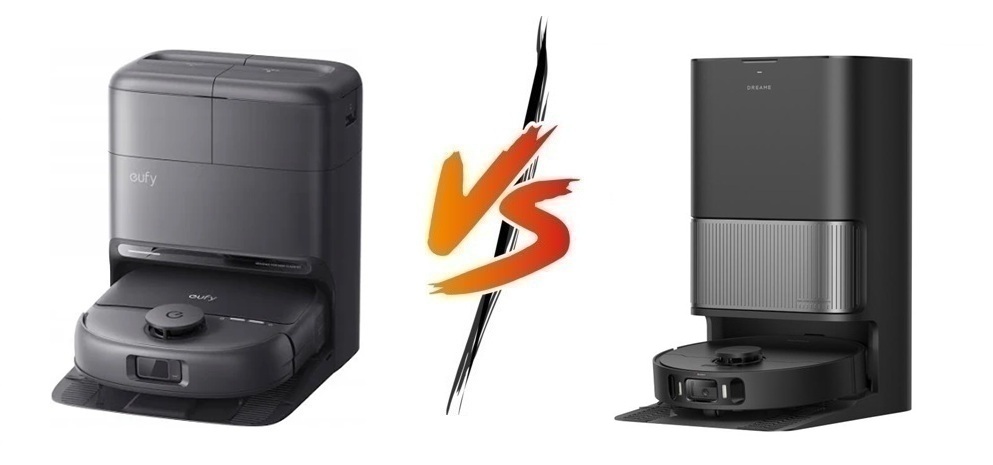
The interesting question about robot vacuum cleaners is no longer whether they can vacuum the floor. Most good models can collect crumbs, dust and pet hair. What basically matters is how much work they take off your hands, how smart they’re when unsupervised, and if their mopping systems are useful or just an extra cost.
The Eufy Omni C28 and Dreame L40 Ultra Gen 2 are interesting because they tackle this problem in different ways. Eufy focused on a practical combination of strong vacuuming, a unique self-cleaning roller mop, and a compact all-in-one dock. Dreame takes a more traditional premium approach with high suction, dual rotating mop pads, extendable cleaning hardware, and a sophisticated dock.
The difference looks big on paper. The C28 has 15,000 Pa suction, and the L40 Ultra Gen 2 has 25,000 Pa. Eufy uses a HydroJet roller mop, while Dreame uses two rotating mop pads. Both empty their dust bins, wash their mops, refill water, and dry the mop system automatically. Both can map your home and clean on their own.
But specs don’t tell the whole story.
The C28’s roller mop is a big strength, especially on hard floors, and its DuoSpiral anti-tangle brush makes it attractive for pet owners. The Dreame has stronger suction, better edge-cleaning hardware, and a more ambitious cleaning system. It’s the more powerful machine, but the C28 can sometimes feel like the more straightforward one.
I judged them on more than just lab numbers, but on what matters after months of use: navigation, carpets, corners, hair, wet messes, dock upkeep, noise, app control, furniture clearance, consumables, and whether you can trust it to work while you’re away.
Eufy Omni C28 vs Dreame L40 Ultra Gen 2 Comparison Chart
If you click the links below, under the product images, you will be redirected to Amazon.com. In case you then decide to buy anything, Amazon.com will pay me a commission. This doesn’t affect the honesty of this review in any way though.
| Feature | Eufy Omni C28 | Dreame L40 Ultra Gen 2 |
|---|---|---|
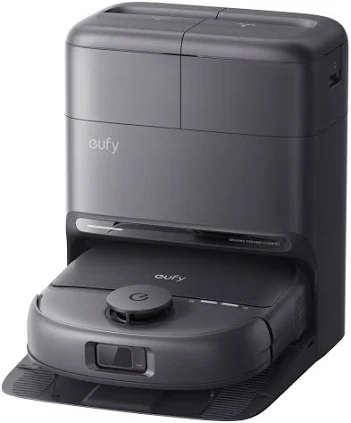 | 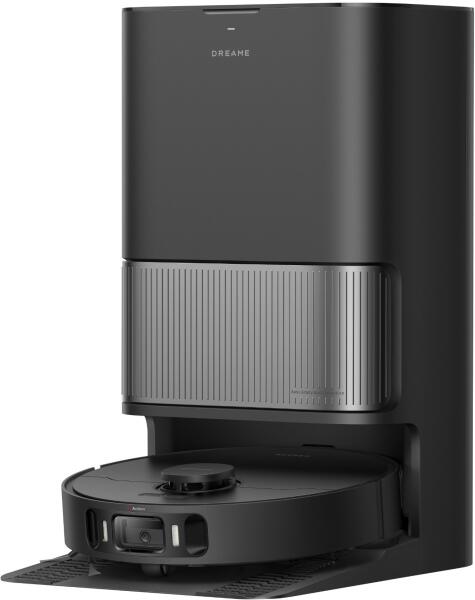 | |
| Check the best price on Amazon | Check the best price on Amazon | |
| Overall cleaning | Excellent everyday cleaning | Excellent, with stronger deep-cleaning ability |
| Maximum suction power | Up to 15,000 Pa | Up to 25,000 Pa |
| Main brush | DuoSpiral anti-tangle design | Anti-tangle brush system |
| Hard-floor vacuuming | Excellent | Excellent |
| Carpet cleaning | Very good | Excellent |
| Pet hair | Excellent, particularly on hard floors | Excellent, especially on carpets |
| Long hair management | Excellent | Very good |
| Mopping system | HydroJet roller mop | Dual rotating mop pads |
| Mopping performance | Excellent | Excellent |
| Dried-on stains | Very good | Excellent |
| Edge mopping | Very good | Excellent with extendable mop |
| Corner cleaning | Good | Very good |
| Mop self-cleaning | Continuous roller cleaning plus dock washing | Automatic mop-pad washing |
| Mop drying | Heated drying | Heated drying |
| Automatic dust emptying | Yes | Yes |
| Clean-water management | Automatic dock system | Automatic dock system |
| Dirty-water collection | Yes | Yes |
| Navigation | Excellent | Excellent |
| Mapping | Detailed multi-room mapping | Highly detailed mapping and room control |
| Obstacle avoidance | Excellent | Excellent |
| Carpet detection | Yes | Yes |
| Mop lifting | Yes | Yes |
| Edge cleaning | Good | Excellent |
| App usability | Straightforward and user-friendly | More comprehensive but more complex |
| Cleaning customisation | Very good | Excellent |
| Scheduling | Yes | Yes |
| No-go zones | Yes | Yes |
| Dock size | Large but relatively manageable | Large and more substantial |
| Maintenance | Low for a robot vacuum | Low for a robot vacuum |
| Filter/brush maintenance | Occasional | Occasional |
| Pet-friendliness | Excellent | Excellent |
| Best for hard floors | Excellent | Excellent |
| Best for carpets | Very good | Excellent |
| Best for heavy shedding | Excellent | Excellent |
| Best for long hair | Excellent | Very good |
| Best for cat litter | Very good | Excellent |
| Best for muddy paw prints | Excellent | Excellent |
| Ease of use | Excellent | Very good |
| Level of automation | Excellent | Excellent |
| Configuration flexibility | Very good | Excellent |
| Noise considerations | Generally reasonable, with dock noise during cleaning/drying | Generally reasonable, with dock noise during cleaning/drying |
| Overall versatility | Excellent | Outstanding |
| Overall rating | 9.2/10 | 9.3/10 |
| My individual reviews | Eufy C28 review | Dreame L40 Ultra review |
At a glance
| If you want… | Choose |
|---|---|
| The strongest overall vacuuming performance | Dreame L40 Ultra Gen 2 |
| Excellent hard-floor cleaning | Eufy Omni C28 |
| Better carpet performance | Dreame L40 Ultra Gen 2 |
| A more innovative mopping system | Eufy Omni C28 |
| Better edge mopping | Dreame L40 Ultra Gen 2 |
| Better long-hair management | Eufy Omni C28 |
| Heavy pet-hair cleaning | Dreame L40 Ultra Gen 2 |
| Simpler everyday operation | Eufy Omni C28 |
| More detailed cleaning controls | Dreame L40 Ultra Gen 2 |
| Lower day-to-day maintenance effort | Eufy Omni C28 |
| Maximum versatility | Dreame L40 Ultra Gen 2 |
| Mostly hard floors + frequent mopping | Eufy Omni C28 |
| Mixed floors + lots of carpet | Dreame L40 Ultra Gen 2 |
| The better all-rounder | Dreame L40 Ultra Gen 2 |
Design & Build Quality
The Eufy Omni C28 and Dreame L40 Ultra Gen 2 seem like similar products at first glance. Both are large, premium robot vacuum cleaners built around a circular robot and a multifunction docking station. They also both have a raised sensor turret, substantial wheels. And automated dust collection and water management, which makes them more complicated than older robot vacuums.
But they’ve distinct personalities when you look closer.
The Eufy Omni C28 feels like a machine designed around the practical experience of cleaning hard floors. Its most distinctive feature is the HydroJet roller mop, which gives the robot a noticeably different appearance from conventional dual-pad mopping robots. The C28 has a broad roller across its cleaning area, rather than two small circular pads. This shows where Eufy focused its engineering efforts.
In comparison, the Dreame L40 Ultra Gen 2 is more of a technical showcase. The L40 Ultra Gen 2 has an elaborate cleaning system, sophisticated sensors, and mechanical components that extend the brushes and mop pads. It basically seems like every available space is used for a feature.
Neither approach is incorrect. The difference is useful because it shows what each company prioritizes.
The Eufy Omni C28 is understated yet thoughtfully engineered
The C28 isn’t a particularly flashy robot. That’s actually something I like about it.
The body has the familiar round shape that dominates the robot-vacuum category, with a raised sensor assembly on top and a relatively clean control layout. It doesn’t look like a futuristic gadget in your living room. After the novelty wears off, it blends into the background.
That’s what I want from an appliance like this.
The robot is substantial but not too bulky. Its height is around 4.35 inches, which puts it firmly in the range where furniture clearance becomes something you should check before buying. This isn’t unusual for a robot with lidar navigation and a sophisticated cleaning system, but the C28 may not fit under every sofa, bed, or cabinet.
This spec matters more in everyday use than something like maximum suction pressure. Before buying, I’d measure the clearance under the furniture where you most want the robot to clean.
The C28 feels solidly built. It doesn’t feel like it’s been made lightweight to cut costs. The wheels, brush, and moving parts seem designed for daily use, not just occasional cleaning.
The most interesting part is what’s underneath.
The HydroJet roller mop changes the robot’s appearance and mechanics. Eufy made mopping an integral part of the cleaning system, not just an accessory. That roller rotates on the floor while getting fresh water from the cleaning system, staying wet and refreshed.
That’s a really different design philosophy from the two spinning mop pads found on the Dreame.
The roller is relatively wide, giving the C28 a broad cleaning area. Eufy designed it to rotate at high speed while applying substantial downward pressure, which gives the robot a more floor-scrubbing character than you might expect from a circular robot vacuum.
There is something reassuring about the design because you can understand what it’s trying to accomplish. The roller gets dirty, the system washes it, and dirty water is collected, then the process repeats.
The C28 uses its DuoSpiral brush to reduce hair wrapping. This shows Eufy focusing on a problem that matters after months of use. Hair wrapping around a conventional roller brush is a maintenance job nobody likes, especially with long-haired people or pets.
The C28’s brush system guides hair to the suction path, rather than letting it accumulate around the roller. You’ll still need to clean the brush, but the design should reduce how often you need to.
The Dreame L40 Ultra Gen 2: more elaborate and more mechanical
The L40 Ultra Gen 2 takes the opposite approach.
It looks and feels like a premium robot vacuum with many mechanical features.
The body is still circular, but there’s more going on underneath. Dreame has designed the robot around powerful vacuuming, dual rotating mops, extendable cleaning components and sophisticated navigation hardware.
The result is a more technically ambitious machine than the C28.
The most obvious difference becomes apparent when the robot approaches walls.
The L40 Ultra Gen 2 uses extendable cleaning hardware to get closer to edges, rather than accepting its circular body’s limitations. This is a clever solution to a problem all circular robots face.
A round machine can get close to a wall, but its cleaning components can’t reach the corner. The solution is to extend the cleaning components beyond the robot’s footprint.
This feature seems minor in specs, but it makes sense when you see the robot work.
The mop system is also sophisticated. Dreame uses two rotating mop pads, not a single roller. They provide mechanical agitation and let the robot adjust its cleaning for different floor parts.
The L40 Ultra Gen 2 also has a substantial wheel and suspension arrangement. This matters because the robot has to handle thresholds, rugs, and uneven transitions on its own.
A poorly designed robot can have good suction but struggle to move around a house.
The L40 seems built with this in mind.
A major portion of the design comes from the docking stations
When purchasing a robot, it’s the robot and its dock that you’re actually buying, not just one product. The dock is also a crucial part of the overall package, and it’s easy to overlook this.
Things get interesting with the C28 and L40 Ultra Gen 2 at the dock.
These stations are larger than the charging docks of older robot vacuums, essentially serving as miniature cleaning centres. Clean-water tanks, dirty-water collection, dust storage and systems for washing and drying the mop components are all included in them.
It’s compact. The Eufy station does a lot, so this is big.
A robot vacuum dock can’t be picked up and put away after use, it’s a permanent fixture somewhere. For small apartments, having a reasonably compact station makes a big difference, it can fit neatly beside a cabinet, or it’ll occupy a noticeable part of the room if it’s too large.
From a practical design standpoint, the C28 does well.
The station is tall and substantial, yet it doesn’t feel like it’s trying too hard to blend in as a piece of furniture, it’s reasonably restrained.
The Dreame station is larger and visually more imposing. It’s the design of the L40 Ultra Gen 2, which performs a broad range of functions automatically, that makes it this way.
The trade-off is that more maintenance capability means more hardware is needed. You’ve got to accommodate that extra hardware somehow. And that’s a consideration for both machines.
All a basic robot vacuum really needs is its charging base.
They require space for water tanks, dust collection, mop washing, and drying.
The dock footprint is just as crucial as the robot dimensions when making a decision between them, so I’d consider both factors seriously.
That feeling of quality is largely determined by materials
Neither of these machines feels cheap.
It may not seem like much, but this is crucial. With many moving parts, robot vacuums can be prone to wear and tear, and the cheap plastic used around hinges, wheels, and water connections can become a concern when you think about using them repeatedly over several years.
Both the Eufy and Dreame are made mostly of hard plastic, which is typical for appliances like these. What matters is how well the parts are put together.
The Eufy’s components are designed to be functional and accessible, they don’t have a decorative feel. It’s more utilitarian.
The Dreame looks more premium, its finish is slightly more sophisticated and it has a more complex mechanical design.
Dreame has a slightly better perceived build quality, though it’s not a huge difference.
I’d likely think the Dreame is the pricier robot if I picked them up without knowing the cost. The Dreame’s set of sensors and complex underbody hardware, along with its moving cleaning components, contribute to this impression.
The Eufy doesn’t feel cheap, it’s clear that cost wasn’t the only consideration when they built it.
Durability is affected by moving parts and longevity
This is where the two designs become more difficult to judge.
Having more mechanical features can add capability, and it also increases the potential points of failure.
The Eufy’s mopping concept is pretty simple. A central roller does the work, and a station handles cleaning and drying it.
The Dreame has a more complex design, with additional moving parts, especially in the extendable brush and mop areas.
Those mechanisms in Dreame devices actually address genuine cleaning issues. However, when it comes to owning one long-term, simpler mechanical systems tend to be more practical and easier to maintain.
I’d say the C28 is more conservative, while the L40 Ultra Gen 2 is more ambitious.
Simplicity is a major plus with Eufy, and that’s because it has fewer moving parts, which is a big draw for some people.
Dreame makes a stronger argument if better edge coverage and more advanced cleaning behaviour are worth the added complexity.
That’s what it comes down to, which one I’d rather have in the house.
Aesthetics play a role here, just as much as engineering does.
I’d prefer the C28 if I wanted a robot that does its job quietly without drawing attention to itself. The dock is relatively compact and the appearance is straightforward, making it easier to fit into a normal living space.
I’d choose the Dreame for maximum capability, and it’s worth noting I’d be okay with it being more noticeable.
The mechanical approach of the Dreame is also somewhat satisfying. It’s clear the designers have thought about a major limitation of robot vacuums when you see its cleaning components extend toward a room’s edge.
What impresses me most about the Eufy from an everyday-use perspective is its roller mop. This feature isn’t just another spec, it actually changes how the robot cleans hard floors.
The verdict
Build quality is where the Dreame L40 Ultra Gen 2 slightly edges out the competition, in my opinion.
This robot looks more premium, with more complex mechanics and a higher end feel. Its underbody, wheel system, and extendable cleaning hardware are substantial, giving the impression that it was designed with few limitations, and it’s also slightly more sophisticated mechanically.
I’d say the Eufy C28 has a more practical design, it’s the winner in that area.
This dock is compact and it’s relatively easy to assemble. What stands out is the roller-mop system and anti-tangle brush, which are clearly designed with everyday use in mind. It doesn’t try to tackle every issue, and instead focuses on solving the ones that matter.
The issue isn’t that one machine is well made and the other isn’t, both are solid pieces of hardware.
The Dreame has a more advanced feel to it.
The Eufy feels more focused.
If I were judging solely on materials, mechanical sophistication and perceived premium quality, I’d choose the L40 Ultra Gen 2. If I were judging how intelligently the physical design translates into everyday ownership, the C28 comes surprisingly close.
My final score for this category is 9/10 for the Dreame L40 Ultra Gen 2 and 8.5/10 for the Eufy Omni C28.
Navigation Intelligence & Mapping
Navigation is often underappreciated when buying a robot vacuum. What a specification sheet won’t show you is how the machine navigates around furniture. It can list things like suction power, battery size. And mop rotation speed. But these specs are irrelevant if the robot gets stuck under a chair for ten minutes.
To work well, a robot vacuum must know its surroundings, make a reliable map, keep track of where it’s cleaned, see obstacles, and make good choices when things change. And it should be able to fix things if something goes wrong.
The Eufy Omni C28 and Dreame L40 Ultra Gen 2 both use new navigation tech. They’ve different strengths though.
The C28 is simple. And works well in a tidy home.
The Dreame is more complex. And it uses its maps to clean around the house in different ways.
Neither robot is completely autonomous like in science fiction. A clear floor still helps them a lot, which is an important difference. Obstacle avoidance doesn’t mean you can just leave stuff like cables, socks, toys, and pet bowls all over the floor. And expect the robot to navigate around them perfectly.
Getting to know the house is the first mapping.
The first cleaning run matters because it’s a big moment for any robot vacuum.
The machine must exit the dock and then explore the space available to it, which allows it to establish the basic geometry of the home. It’s crucial this process is completed quickly, and the floor plan isn’t messed up in the process.
The Eufy Omni C28 has an advantage because it uses lidar-based mapping. This is better than simpler robots that move around randomly or use basic optical sensors.
Lidar is useful because it lets the robot create a spatial representation of its surroundings, rather than just reacting to what’s in front of it. The C28 can figure out where walls and big objects are, set room boundaries, and make a map for cleaning specific rooms.
The initial mapping process is relatively straightforward in practice.
The robot explores methodically, not as if it’s forgotten its location.
It creates a map, then you can divide the home into rooms and tell the C28 to clean specific areas.
That sounds more significant than it’s, but it’s not, it’s crucial.
You can give a robot vacuum specific commands when it knows the difference between a kitchen, hallway, and bedroom. This makes it more useful than one that only has a universal “clean everything” button.
The Dreame L40 Ultra Gen 2 can also create a detailed map of the home.
That system combines spatial info and obstacle detection to build a map of the house, which it uses for cleaning room by room and planning routes.
Navigating complex environments is where the Dreame shows its strength, it’s more deliberate. The Dreame doesn’t just follow the most obvious path, it plans routes around rooms. It uses the map, and that helps it avoid going over the same ground unnecessarily.
No machine will necessarily create a perfect map the first time it’s used and it’s unlikely that either will.
Something as simple as a chair being moved halfway through the mapping process, or a door that was closed during the first run being open, or an object sitting in a hallway can affect the robot’s interpretation of its environment.
That’s normal behaviour for a robot vacuum, not a specific issue with either product.
Room recognition and map management
The real test begins once a map exists.
To be useful, a map should be more than just a picture of the house, it needs to provide information that can be acted upon.
Through their apps, both robots let you choose which rooms and areas to clean. This means you can have the robot clean the kitchen without it going into the bedrooms, or clean the downstairs area without it mapping the upstairs.
The Eufy C28’s support for multiple maps is especially helpful in houses with more than one storey.
I consider this feature essential, not luxurious.
Having multiple levels in a house, such as a ground floor, first floor, and possibly a basement, shouldn’t require a robot to relearn the entire layout each time it’s moved between floors.
The C28 stores multiple floor maps and it uses the right one when you move it.
A major limitation is the robot can’t move between floors on its own, so it’s necessary to carry it upstairs.
Dreame models work for larger homes too, with a similar multi-floor concept.
Dreame’s control options become more extensive after the map is set up, which is where it gains an edge.
The robot can behave differently in rooms with different floor types, and areas can be defined for particular cleaning methods.
A kitchen requires different cleaning strategies than a carpeted bedroom; this distinction is important.
Route planning
Either a robot vacuum comes across as intelligent or it’s just automated at this point.
It kind of works systematically, following efficient cleaning paths rather than moving randomly around the room, which the C28 generally does.
Normally, it moves around the perimeter first, then works through the interior in an organised pattern, which is more efficient. The old-style random-navigation robots aren’t as efficient, they can spend a lot of time revisiting the same areas.
The robot also understands where it has already been, which means it can return to unfinished areas when necessary rather than starting from scratch.
The Dreame has a systematic approach as well, and because it has a larger range of cleaning hardware, route planning is more important.
The L40 Ultra Gen 2’s ability to extend its side brush and mop system toward edges means it’s not as necessary for it to closely follow walls, unlike robots that only have a fixed cleaning head.
It allows the device to maintain a sensible route and clean close to the perimeter at the same time, giving it more freedom.
It makes a subtle difference, and this impression is that the Dreame considers the outcome of cleaning, rather than just following a set path.
Obstacle avoidance
Navigation’s most critical component is arguably this part.
An empty room is a robot vacuum’s ideal environment.
Real homes aren’t like that.
There are cables beside televisions, charging leads beside beds, slippers in hallways, toys under tables and pet bowls in kitchens.
The C28 identifies objects and avoids collisions using its navigation and obstacle-detection hardware. Larger obstacles and furniture are generally handled well, but it’s not perfect.
Cables that are small can still cause issues.
Many robot vacuums have this problem. Cords are thin and low to the ground, making them hard to see from the robot’s viewpoint. It’s tough for a navigation system, even a sophisticated one, to detect them.
Obvious hazards need to be removed before cleaning for the C28 to work best.
It isn’t a huge deal. Getting into a routine of running the robot while you’re out makes cleaning up cables and socks beforehand a minor task that takes about two minutes.
The L40 Ultra Gen 2 needs consideration on its own terms, and its features shouldn’t be assumed to be better just because they’re an update. The Dreame’s obstacle-detection system is complex, but that’s a separate issue.
The Gen 2 version has updated its sensing hardware and obstacle-avoidance approach, but it’s not necessarily better in every way, even with its new name.
I can recognise and navigate many household objects but it’s not a good idea to leave a floor covered in small items and expect it to work perfectly.
Pet owners need to know this.
One thing is a pet bowl. Next to it, there’s also a thin piece of string.
Navigation is affected by the furniture around it
Machines have it easier with furniture.
Lidar-based navigation is very effective in understanding the position of large objects since their movement can be predicted.
Robots can navigate around furniture like sofas, tables, chairs, and cabinets without running into them all the time.
What goes on underneath furniture is the more interesting question.
Navigation and physical design are both part of it.
First, the robot determines if a gap exists, then it assesses whether it can fit through the gap, and it also decides if entering is worthwhile.
The height of the C28 makes some low furniture inaccessible.
The Dreame has this limitation too.
A robot can’t physically fit into a gap smaller than the machine, no matter how intelligent its mapping is.
I’d measure the clearance under sofas and beds before buying either model, it’s just a good idea to check that first.
Low light navigation
Lidar-based systems have an advantage in that navigation doesn’t rely solely on visible light.
Both machines are useful in homes where you want to run cleaning cycles at night or with the curtains closed.
I prefer lidar navigation over camera-only approaches for this appliance, and that’s another reason why.
Nobody’s home, so a robot vacuum should still work, even in a dark room.
It handles low light well, and because the C28 can keep navigating in darker conditions, automated scheduling is more practical.
The Dreame is similarly capable.
Both machines are more mature in this area compared to older robot vacuum cleaners.
The robot can clean with the lights off, it’s not necessary to have every light in the house on.
Recovery when things go wrong
This test sort of matters enormously in real life, though it rarely appears in advertisements.
If the robot encounters a chair it doesn’t recognise,
Or a door closes.
Or someone moves a piece of furniture.
Or the robot gets pushed slightly out of position.
A good navigation system should recover.
The C28 is good at reorienting itself and returning to the correct part of its map, generally. However, there can be occasional moments where the map or room recognition isn’t quite what you’d expect.
It’s not unusual, though you should be aware of it.
The Dreame’s navigation system can also recover from interruptions; its more sophisticated mapping gives it an edge with complicated layouts.
I don’t expect miracles from either robot, though,
If you physically move the machine from one side of the house to another while it’s cleaning, you’re essentially asking it to reconcile two different pieces of spatial information.
It can, sometimes,
Sometimes the quickest solution is to let it return to the dock and re-establish its position.
Cleaning boundaries
One of the most useful developments in robot vacuum software is virtual boundaries.
This robot can be told not to enter a particular area without physical blocks.
It’s useful for rooms with delicate objects, pet feeding areas, or sections where the robot isn’t wanted.
The C28 has virtual boundaries and room-specific cleaning.
The Dreame offers similar control.
It’s better than physical magnetic strips or barriers since the boundaries can be changed at will.
You can temporarily exclude the living room if the children are playing there.
If you’re cooking, you can send the robot to clean the hallway without physical rearrangements.
Where Eufy does better
Simplicity is the C28’s biggest navigation advantage.
It maps the home effectively, supports multiple floors and provides the controls most people actually need.
Good results don’t require hours of configuration.
It’s more than capable for a relatively tidy home with conventional furniture.
The navigation system is closely integrated with the machine. The robot doesn’t feel like it has an elaborate mapping system for the app’s sake. The map honestly helps it determine where to clean and how to return to the dock.
Where Dreame does better
The L40 Ultra Gen 2 has an edge in complicated cleaning strategies.
The robot’s mapping, obstacle detection, and extendable cleaning components work together, making it more capable around edges, furniture, and mixed floor types.
Overall, the system feels more sophisticated.
But sophistication and perfection aren’t the same thing.
There are still situations where you should tidy the floor before starting a cleaning cycle, and the Gen 2’s sensing system shouldn’t be treated as a guarantee that every cable or small object will be avoided.
Final verdict
The Dreame L40 Ultra Gen 2 wins overall for navigation and mapping, though the difference isn’t huge.
The Eufy Omni C28 is a competent navigator, genuinely intelligent. The C28’s lidar mapping, multiple-floor support, room selection, and systematic cleaning routes make it suitable for most homes.
The Dreame goes further, though.
The Dreame combines mapping with sophisticated cleaning behaviour and integrates navigation better with its edge-cleaning hardware. Working through a complicated floor plan feels more deliberate.
My scores would be:
Eufy Omni C28: 8.5/10
Dreame L40 Ultra Gen 2: 9/10
However, neither robot should be treated as completely autonomous.
Both machines work best in a reasonably tidy environment, with cables and small objects removed, doors open or closed as needed, and time to learn the home.
Once those conditions are met, both can navigate a real home predictably, letting you leave them to clean while doing something else.
That’s the real measure of navigation intelligence, ultimately. Not whether the robot can produce an impressive-looking map in an app, but whether you can start a cleaning cycle, walk away and trust that it will find its way around the house, clean where it’s supposed to, avoid most of what it shouldn’t touch, and eventually find its way home.
Vacuuming Performance
A robot vacuum’s performance is ultimately about its vacuuming capabilities. While clever mapping, attractive docks and impressive apps are useful, they don’t mean much if the machine can’t pick up crumbs, hair and embedded dust.
The Eufy Omni C28 and Dreame L40 Ultra Gen 2 are both serious vacuum cleaners, not just machines for maintaining a spotless floor. Both can handle everyday dust and debris comfortably. And clean carpets and hard floors. But they’ve different priorities when it comes to cleaning.
The C28 has 15,000 Pa of maximum suction and places considerable emphasis on its brush design and general cleaning balance. On paper, the Dreame is more aggressive, with up to 25,000 Pa of suction, and it combines that power with a more complex brush and floor-cleaning system.
The Dreame is therefore the obvious winner if you look only at the numbers.
But in practice, the difference isn’t as drastic as the numbers suggest.
What suction power really means
The first thing I’d caution against is treating Pascal ratings as a direct measurement of cleaning ability.
A 25,000 Pa robot won’t necessarily remove 67 percent more dirt than a 15,000 Pa robot. Suction pressure is only one part of the equation.
The cleaning head is important.
The brush is also important.
Airflow is important too.
How well the robot seals against the floor is also important.
The intake’s shape matters.
The robot’s movement across the room is important.
The type of dirt you’re removing is also a factor.
Fine dust cleaning embedded deep inside carpet is a different problem from breakfast cereal scattered across a kitchen floor.
That said, the difference between 15,000 Pa and 25,000 Pa still matters. The Dreame has considerably more suction headroom, and you can expect that advantage to become more noticeable when the robot is dealing with heavier debris, thick carpet or dirt that has worked its way into fibres.
The Eufy shows that a well-designed 15,000 Pa machine can still be a very capable everyday vacuum.
Hard floor cleaning
The Eufy C28 impresses on hard floors.
On hardwood, laminate, tile, and other smooth surfaces, it handles ordinary household debris with ease. It can handle dust, crumbs, cereal, pet hair, and small grit.
The suction difference is less important here.
Debris is on or near the surface on hard floors. The robot doesn’t need to pull particles out of deep carpet fibres. A good intake and brush system can collect a lot of dirt without needing extreme suction.
This benefits the C28.
It has a systematic cleaning pattern and doesn’t just pass over debris once. The combination of repeated passes, suction, and its brush system gives it excellent everyday performance.
The Dreame is also impressive.
Its extra suction helps with heavier particles like grit and cat litter over larger areas. The robot can handle relatively heavy debris with ease.
Comparing them just on a kitchen floor, the difference isn’t huge.
The C28’s cleaning level makes the Dreame’s extra power less necessary for ordinary crumbs and dust.
Fine dust
Fine dust is an interesting test.
Large debris cleaning is visible, but fine dust makes floors look dirty over time. It settles along skirting boards, gets trapped in textured flooring, and kind of works into carpet.
The C28 handles fine dust well on hard floors, especially with regular cleaning.
This is an advantage of using a robot vacuum for maintenance. It doesn’t need to remove six days’ worth of dirt in one pass if you use it daily or every other day.
Using a modest suction regularly can sometimes produce a cleaner home than a powerful vacuum used weekly.
The Dreame has an advantage with embedded fine dust.
Its higher suction helps pull particles from carpet and textured surfaces.
This is where I would expect the difference to become visible over time.
Large debris
Large debris is interesting because suction isn’t always the most important factor.
Consider cereal, dried leaves, or larger food pieces on the floor.
This robot has to get its brush and intake over the debris without pushing it around.
The C28 can handle these types of particles very well, although its behaviour can vary depending on how large the object is and whether it approaches the intake at the correct angle.
The Dreame’s more powerful system helps with heavier debris.
It’s particularly convincing with cat litter and other relatively dense particles that can sometimes be pushed around by weaker robot vacuums.
One thing I like about the Dreame is that it doesn’t feel as though it’s working at the edge of its capabilities when faced with a floor containing a mixture of dust and larger particles.
The C28 can handle the job, but the Dreame has more power in reserve.
Carpet cleaning
I wouldn’t hesitate to choose the Dreame in this category.
Carpet poses a challenge for robot vacuums as dirt doesn’t just sit on the surface.
Fine particles get stuck deep within the fibres. And it’s tough to remove them, this process needs both agitation and suction to be effective.
With 25,000 Pa maximum suction, the L40 Ultra Gen 2 has a big advantage.
When it moves onto carpet, it automatically boosts suction, which helps it use more power exactly where it’s needed.
It’s surprisingly good on carpet for a 15,000 Pa machine, the C28.
Independent testing shows it does a strong job deep-cleaning, and it’s not just a hard-floor specialist that can handle carpets.
This robot has multiple floor types.
For homes with mainly low- or medium-pile carpet, routine maintenance is something the C28 can handle effectively.
Thick carpets and rugs make the difference more important.
Deep-pile carpet is a challenge. And a robot vacuum won’t fully replace a good upright or cordless vacuum when it comes to removing embedded dirt. That said, the Dreame is closer to this standard than its competitors.
More particles get pulled out of the carpet with this extra suction, rather than just picking up what’s on the surface.
Rugs can be a problem since they’re usually uneven. And have fringes.
Transitioning between hard floors and rugs is something both robots can do, but how well they do it depends on the rug.
A rug that’s flat and tightly woven isn’t much trouble.
Loose rugs that are thick demand a lot more.
It’s useful that the C28 can lift its mop when it detects carpet, because this prevents a wet mopping component from crossing a rug.
The Dreame handles floor transitions intelligently, adjusting its cleaning behaviour to suit the surface it’s on.
What matters most isn’t whether a machine can climb onto a rug or not.
Can it clean the rug without getting stuck or dragging it around, and will it leave wet areas behind. It’s about effectively cleaning the rug.
Both perform well normally.
Pet hair
Pet hair is one of the strongest arguments for the C28.
Eufy’s DuoSpiral brush system reduces hair wrapping by guiding hair toward the suction path. Hair is prevented from winding itself tightly around the roller due to the brush geometry.
Having a long-haired dog or cat makes that highly relevant.
Pet hair often becomes tangled around standard brush rollers, which can decrease suction power. The owner typically has to remove the hair manually, cutting it away from the roller.
That issue is greatly diminished by the design of the C28.
The brush isn’t maintenance-free, but its design is one of the more thoughtful aspects of this machine.
Dreame’s hair-management brush system works differently, it’s designed to cut or break up hair so it gets drawn into the vacuum path.
It works well, and for long hair, the Eufy’s approach is slightly preferred.
Pet hair on carpet is where the Dreame regains some ground.
The stronger suction makes it especially good at pulling hair out of carpets.
That answer depends on the environment again.
Eufy is my choice for long hair on hard floors.
Dreame is what I’d use for pet hair embedded in carpet.
Edge cleaning
The edges and corners of a room also need attention when it comes to vacuuming performance.
The middle of your floor can be made to look spotless by a robot, but it often leaves a dusty strip around the perimeter.
One traditional weakness of circular robot vacuums is this.
Debris from edges gets pushed into the robot’s cleaning path by the C28’s side brush system.
The physical shape of the machine limits how close the main cleaning system can get to a wall, which affects its performance, it’s not perfect but works reasonably well.
The Dreame has the stronger solution.
That cleaning hardware can get closer to walls and corners with its extendable side brush, and that reduces the amount of floor left behind.
Difference is noticeable in homes with many hard edges, such as kitchen cabinets and skirting boards.
The C28 isn’t bad at edge cleaning, it just doesn’t have the same mechanical advantage.
Corners are even harder.
Given its round shape, a robot can’t fit into a square corner.
It uses a side brush to sweep debris outward, or an extendable mechanism is also employed.
That advantage here’s due to the Dreame’s design.
Corners are cleaned reasonably well by the C28, and it’s still a good idea to manually clean them every now and then, because dust can accumulate there.
The Dreame reduces that problem.
The L40 Ultra Gen 2 is better suited to a large house, I think. Small areas of missed cleaning become more noticeable in bigger houses.
Consistency is key when cleaning
Consistency is probably the most important quality of a robot vacuum.
A deep clean is what you get with an upright vacuum, since you’re in control of where it goes and how many passes it makes.
Less work, done more frequently, is how a robot vacuum achieves success.
This changes the way I judge the C28 and Dreame.
Using the C28 once a week, its limitations would likely become more apparent to me.
It becomes extremely effective if I run it every day.
This also applies to the Dreame.
Automated cleaning that’s done often stops dust, hair, and crumbs from building up.
I don’t think the difference between 15,000 and 25,000 Pa is crucial when choosing a machine to keep a home clean.
A machine that runs on schedule is more valuable than one with a better theoretical specification that’s not being used.
Either one doesn’t replace an upright vacuum.
No, not completely.
This applies especially to homes with thick carpet, stairs, or upholstery, and areas that robots can’t easily access.
For stairs, sofas, car interiors, curtains, and deep cleaning, a good upright or cordless vacuum is still useful.
The robot has a different job.
It handles the floor maintenance tasks that people often put off.
The C28 and L40 Ultra Gen 2 are more complementary to a conventional vacuum than direct replacements.
Having mostly hard floors means you can use a robot for nearly all your routine floor cleaning.
Which one cleans better?
Purely on vacuuming performance, the Dreame L40 Ultra Gen 2 comes out on top, and I would choose it.
It’s got a substantial advantage on carpet and heavier debris with 25,000 Pa suction. The edge-cleaning hardware is better too. This machine generally feels like it has more cleaning power in reserve.
Despite its lower suction rating, the Eufy Omni C28 is more capable than you might think.
The hard-floor performance is excellent, and it’s also particularly good at handling pet hair. With a 15,000 Pa system, it has more than enough power to tackle normal household dirt.
Hardwood, tile, or laminate dominated homes don’t leave me wanting the Dreame over the C28 every time I vacuum.
That environment gets harder and this difference becomes more important.
Dreame means more carpet.
Dreame means thicker carpet.
More heavy debris means Dreame.
Dreame means more perimeter cleaning.
Hard floors and lots of pet hair make Eufy very attractive.
Final verdict
My scores for overall vacuuming performance are as follows:
Rating for Eufy Omni C28: 8.7 out of 10
Dreame L40 Ultra Gen 2 scores 9.4 out of 10
The Dreame stands out as the more powerful vacuum, especially when tackling embedded dirt in carpets, rather than just basic hard-floor upkeep.
The Eufy is an excellent everyday cleaner, with a balanced performance and an intelligently designed brush system. It’s particularly appealing to animal owners because of its ability to deal with pet hair.
Your home has mostly hard flooring, so the C28’s vacuuming performance is sufficient, making its other benefits, like the HydroJet mopping system and compact dock, pretty compelling.
For a robot that can handle a genuinely dirty, mixed-floor home with minimal assistance from an upright vacuum, the Dreame L40 Ultra Gen 2 is a better option.
What matters most isn’t relying solely on brute-force suction for either machine. Both are effective because vacuuming combines power, agitation, navigation, repeated coverage, and sensible floor-specific behavior.
The Dreame has a larger performance envelope.
It surpasses the Eufy, which delivers strong results in a slightly narrower range.
Mopping Capability
Mopping highlights key differences between the Eufy Omni C28 and Dreame L40 Ultra Gen 2, as they employ distinct technologies. And philosophies on what their purpose should be; the machines don’t just use varying versions of the same tech, they’ve different ideas about their role.
The Eufy Omni C28 is equipped with a HydroJet roller mop. It’s automated, like the Dreame L40 Ultra Gen 2, which uses two rotating mop pads. Both return to their docks for washing. And can raise their mopping parts when encountering carpet.
They appear to be quite similar in theory.
They feel quite different in practice.
The Eufy basically works like a miniature floor-washing machine, it’s got a roller that’s always getting fresh water. And getting cleaned as it goes around. The Dreame is more like a robot mop. But advanced, it’s using two pads that spin. And apply pressure to the floor, then they go back to the dock to get washed and dried.
Neither approach is universally better.
The Eufy is better for large areas of hard flooring, keeping the cleaning surface fresh throughout.
It’s the opposite with the Dreame, which shines on edges, targeted scrubbing, and different floor types.
To really assess a mopping system, you’ve got to consider more factors than just if the floor appears wet after the robot goes over it.
The Eufy HydroJet roller
What makes the C28 stand out is its HydroJet system.
The robot uses a relatively wide cylindrical roller that’s in constant contact with the floor, rather than a pair of circular mop pads.
As the roller spins rapidly against the surface, fresh water is supplied to it through the cleaning system.
The roller has 24 water ports, it’s said, and it operates at a rotation speed of around 270 rpm, with about 1 kg of downward pressure, according to Eufy.
The important part isn’t any individual number.
The combination is key.
Water constantly refreshes the roller as it moves and applies pressure to the floor.
The C28 has a very different mopping behaviour, and that’s because it doesn’t just drag damp pads across the surface like some other robots do.
Cleaning a kitchen floor with a conventional mop can be a real chore.
Clean is how the mop starts.
One section gets wiped.
Dirt gets picked up by the mop.
Another section is entered now.
If you don’t rinse the mop, it’s just spreading dirt around.
The C28 is designed to address this problem mechanically becomes It’s the mechanical design of the C28 that addresses
The robot’s roller gets cleaned all the time it’s working.
Water that’s dirty gets collected instead of staying in the mop.
The C28’s mopping system is more than a marketing feature and that’s the biggest reason I consider it this way.
Dreame’s dual rotating mops
The Dreame L40 Ultra Gen 2 follows a more traditional high-end path for robot mops.
The robot has two circular mop pads that rotate, and these are mounted at the back.
The pads’ rotation against the floor generates mechanical agitation, which is different from just passively wiping the surface.
This is important.
Loose dust can be removed with a stationary damp cloth, and it’s somewhat useful for that, but dried-on marks are a different story.
Rotation adds scrubbing action.
This arrangement lets the Dreame keep consistent contact with the floor, and it’s across a pretty wide area too.
The robot returns to the dock for a wash when the pads get dirty, and then cleaning starts again.
The Dreame doesn’t rely on the same dirty pads for the entire house.
That system works very well for routine floor cleaning.
Eufy’s roller gets refreshed all the time it’s cleaning, but Dreame’s pads only get cleaned every now and then.
The floor being genuinely dirty makes that distinction more important.
What makes one system better at cleaning than another?
Both are great for everyday dirt like dust, footprints, and kitchen grime.
Regular use of either robot results in a cleaner floor since small amounts of dirt are removed continuously, not allowed to build up. The floor stays cleaner because dirt doesn’t have time to accumulate, it’s constantly being removed.
The Eufy has a slight advantage when dealing with broad areas of hard flooring.
The machine gets a continuous cleaning action from the roller, and since it’s refreshed as it works, the cleaning surface stays in good condition.
The Dreame has an advantage when it’s necessary to scrub mechanically.
The machine’s rotating mop pads apply sustained friction to the floor. It can also make extra passes over areas needing more attention.
Ordinary dirt doesn’t actually have a huge difference.
Dried or sticky stains make the difference clear.
Stains that have dried on
Robot mops are put to the test by dried food, muddy footprints, and sticky drink residue, which show if they’re really useful.
Against these kinds of marks, a robot that only makes the floor damp doesn’t much help.
The C28 handles ordinary dried dirt pretty well, especially if it’s allowed to go over the area a few times.
It’s the downward pressure from the roller that matters. This pressure keeps the roller from just floating over the floor.
No robot mop can perform miracles though.
If a stain has been on the floor for several days, it’s likely hardened a lot, and that probably sort of means it’ll need multiple cleaning passes or some manual work.
Dreame’s rotating mop pads get this job done well too.
Mechanical agitation from the pads makes the L40 Ultra Gen 2 really good at working on tough spots.
Dried food stains are a frequent problem in my kitchen, so I’d likely prefer the Dreame for targeted scrubbing.
Daily maintenance is where the Eufy stays highly competitive.
Water usage
Another important difference is water management.
Fresh water is used continuously by the C28’s roller system during cleaning, and dirty water is collected separately.
The mopping process is more hygienic, essentially, since the roller gets washed continually.
A wet cleaning system uses water, and that’s a drawback.
Running the robot more often, and having a dirtier floor, means you’ll have to check the clean-water tank more frequently.
The Dreame’s dock uses a lot of water, washing the mop pads after each cleaning cycle.
A person who quickly wipes a small spill with a damp cloth will use less water than either machine.
That is not the point.
Machines like these are meant to efficiently clean big spaces on their own.
This work is done for you, so you don’t have to stand there and do it yourself.
Cleaning the mops
One of the biggest advantages of buying a premium robot mop rather than a basic robot vacuum with a detachable cloth.
The Eufy and Dreame both return to their docks to wash their cleaning components.
You don’t have to take a dirty mop off the robot and rinsing it manually after every cleaning cycle.
At the dock, the Eufy’s roller is washed and dried with heated air.
The Dreame also washes its mop pads and uses heated drying to reduce residual moisture.
Drying matters.
A wet mop in a dark, enclosed dock is a great place for unpleasant smells to develop.
Though hot-air drying doesn’t make the system maintenance-free, it makes owning one more pleasant.
You still need to clean the dock regularly.
Neither machine can remove the need for basic hygiene.
You need to empty the dirty-water tanks.
Dock surfaces need to be wiped.
Hair and debris can accumulate around drains.
Filters need attention sometimes.
If you ignore those jobs for months, even the best automated mop will become unpleasant.
Edge mopping
Dreame has a clear advantage here.
The L40 Ultra Gen 2 has an extendable mop mechanism, allowing a cleaning pad to move outward.
This solves a fundamental problem with circular machines.
The robot can get close to the wall, but a fixed mop pad will still leave a gap.
Dreame reduces the gap.
This is useful in kitchens.
Kitchen cabinets have long, straight edges where dirt and splashes build up. With the mop closer to the cabinet base, the robot can clean more floor without manual help.
The Eufy can also clean along edges, but its roller arrangement doesn’t provide the same degree of lateral reach.
It loses a little ground.
With lots of skirting boards, cabinets, and hard edges, the Dreame’s design is more valuable.
Corners are even more difficult.
A circular robot can’t fit a large rectangular mop into a ninety-degree corner.
The C28’s roller can get close, but some manual cleaning will inevitably remain necessary.
The Dreame’s extendable mop helps, but geometry is still a problem.
Don’t expect perfect floor corners with either machine.
Dreame gets closer.
This basically matters less in open-plan rooms, but more in smaller rooms with lots of corners.
Carpet and wet-floor protection
A good robot mop needs to understand when it should stop mopping.
This is obvious, but important.
You don’t want the robot to go from a wet kitchen floor to an expensive carpet.
Both machines can detect carpet and lift their mop systems.
The C28’s mop roller lifts enough to avoid ordinary carpet.
The Dreame raises its mop components on carpet.
Both machines work in mixed-floor homes.
I still recommend setting clear floor types in the app, rather than relying on automatic detection.
With thick rugs, delicate materials, or unusual floor transitions, some configuration is helpful.
The best robot vacuum is one you set up correctly and let work.
Maintenance & Cleaning
Spending serious money on a premium robot vacuum reduces maintenance you’ve to do yourself. A basic robot vacuum can save you from pushing a conventional vacuum around the house but if you’re still removing dirty mop pads, emptying a small dust bin after every run and cleaning the machine constantly, some of the convenience disappears.
The Eufy Omni C28 and Dreame L40 Ultra Gen 2 take a much more ambitious approach. The docking stations are automated cleaning centres. They empty the dust container, wash mopping components, collect dirty water, supply fresh water and dry the mop system.
Neither machine is maintenance-free.
The maintenance changes.
Instead of spending ten minutes cleaning the robot after every session, you spend a few minutes checking tanks, filters, brushes, and the dock. For me, that’s the real measure of a good robot vacuum: not whether it can claim “zero maintenance”. But whether it turns frequent chores into occasional ones.
Basic maintenance routine
Both machines have two kinds of maintenance.
The dock handles routine maintenance automatically.
The second requires human maintenance.
Automated maintenance includes dust emptying, mop washing, water management, and mop drying.
Manual maintenance includes emptying or refilling tanks, replacing dust bags, cleaning filters, removing hair, wiping sensors, and occasionally cleaning the dock.
This distinction is important because premium robot vacuum marketing can make the docking station sound magical.
It’s not.
The dock can do an impressive amount of work, but it can’t completely eliminate the physical consequences of collecting dirt and water.
Eufy C28: a very automated system
The Eufy Omni C28 has an interesting maintenance system with a HydroJet roller that cleans itself continuously.
The roller isn’t simply used until it becomes dirty and then returned to the dock at the end.
Fresh water is supplied during mopping, and dirty water is removed.
The roller is refreshed throughout the cleaning process.
That’s a major maintenance advantage.
It reduces dirt on the surface and means you’re less likely to finish with a contaminated mop component.
When the robot returns to the dock, the station carries out a thorough cleaning process and dries the roller.
That combination of continuous and dock-based cleaning is one of the C28’s strongest features.
Dreame L40 Ultra Gen 2: excellent dock automation
The Dreame L40 Ultra Gen 2 takes a different approach with two rotating mop pads.
After cleaning, the robot returns to the dock, where the pads are washed and dried.
This works well in normal household use.
You’re not left with dirty mop pads after every cycle.
This dock handles most unpleasant work.
Dreame has also designed the dock around cleaning the mop-washing area itself, reducing the amount of residue that accumulates around the station.
This reduces intervention frequency, though the dock isn’t self-cleaning.
Dust collection
Dust collection is easy to automate.
Both machines return to their stations and transfer collected dirt into a larger dust bag or container.
This is dramatically more convenient than manually emptying the small dust bin inside the robot after every run.
The C28 has a large-capacity dust collection system, and the Dreame uses a substantial dust bag designed to last under normal conditions.
How long it actually lasts depends heavily on the household.
A single person in a small apartment will fill the bag more slowly than a family with two dogs.
That’s why advertised “months of hands-free cleaning” figures should be treated as estimates rather than promises.
In a pet household, the bag will need replacing or emptying sooner.
This task is small compared to conventional vacuuming.
Dust bags and ongoing costs
Ongoing consumable costs are worth considering before purchase.
The robot itself isn’t the only thing you’re buying.
You’ll need replacement dust bags, filters, brushes, and mop components eventually.
The C28’s dust-bag system is convenient because collected dirt is sealed away. When full, you remove and replace the bag.
This is cleaner than manually dumping a dusty container into a household bin.
The Dreame uses the same principle.
Hygiene is the advantage.
This disadvantage is buying proprietary or compatible replacement bags.
Consumable availability matters if you’re keeping the robot for years.
Check that replacement bags and filters are available in your country before buying an expensive robot vacuum.
Water tank management
Water maintenance is more obvious.
Both docks have separate clean- and dirty-water systems.
This clean water tank needs regular refilling.
The dirty-water tank needs regular emptying.
How often this happens depends on how much mopping you do.
If you run a short mopping cycle every day, you’ll naturally use more water than someone who mops twice a week.
The C28’s water tanks are generously sized, reducing intervention frequency.
The Dreame has similar water capacity.
Neither system requires you to stand beside the robot during cleaning.
That’s important.
You might refill the clean-water tank every few days rather than repeatedly during the cleaning cycle.
Don’t ignore the dirty water tank
This needs special attention.
That dirty-water tank collects everything that has been removed from the floor during mopping.
That can include dust, hair, food residue and other organic material.
Leaving the mixture in a warm tank for long isn’t good.
Even if the robot has completed its automatic cleaning cycle, I’d recommend emptying the dirty-water tank regularly rather than waiting until it is completely full.
This is particularly important with pets.
A dirty water tank can develop an unpleasant smell quickly.
The tank is easy to remove and empty on both machines.
This job takes little time but makes a significant hygiene difference.
Mop drying is one of the features that separates these premium machines from inexpensive robot mops.
A wet mop is a problem.
It can smell.
It can encourage microbial growth.
It can leave the robot sitting in a damp environment.
Both the C28 and L40 Ultra Gen 2 use heated air to dry mopping components after washing.
The process takes time and can be audible, but I consider it essential.
The robot can finish cleaning at 10 p.m. and spend the next few hours drying the mop while you’re asleep.
By morning, the cleaning components are less likely to be damp.
That trade-off is electricity and noise.
The drying cycle isn’t silent, and you may notice it if the dock is near a bedroom.
Position the dock away from sleeping areas.
Cleaning the HydroJet roller
The C28’s roller is a big advantage, but you need to understand it.
Automatic washing takes care of most ordinary dirt, but hair and debris can still accumulate around the ends of the roller and within its surrounding mechanism.
Occasional inspection is worthwhile.
With pets, check the roller more frequently.
The advantage is the roller is accessible and designed for service, not sealed away.
This is important because no component remains maintenance-free forever.
Cleaning the Dreame mop pads
The Dreame’s mop pads are automated but need occasional attention.
The dock does most work, but the pads accumulate substances that don’t disappear during an automated wash.
They’re also consumable components.
Over time, fibres wear down and the pads become less effective.
Replacing them is part of normal ownership, not a sign of a problem.
Replacement shouldn’t be required constantly.
A well-maintained mop pad system should last for a substantial period before needing attention.
Hair. And brush maintenance
The biggest difference between robot vacuums is something pet owners will notice here.
Hair gets everywhere.
The DuoSpiral brush on the C28 is designed to cut down on hair wrapping, so it needs less manual cleaning than a standard roller would.
That doesn’t mean you can forget about it.
Hair tends to accumulate at the ends of brush components, like wheels, or other moving parts.
The Dreame has a hair-management system that’s designed to reduce hair wrap around the brush.
Neither option gets rid of maintenance.
Long hair used to be a real problem with older robot vacuums, it could turn the main roller into a tangled mess that looked like a tightly wound rope. But newer models have improved in this regard.
At first, I’ll check the brush about once a week in a home with pets.
It remains clean, the interval can be extended.
Filters can be overlooked. And it’s not hard to see why, they’re not as noticeable as the dust bag.
They’re essential nonetheless.
The filter catches fine particles, preventing them from getting into the motor. And then back out into the room, as the robot collects dust.
The filter gets loaded with dust eventually.
A dirty filter can really cut down on airflow and it’s also going to affect how well the cleaner performs.
Periodic filter maintenance is required for both machines.
Component and manufacturer instructions dictate the cleaning method. Filters may be washed or cleaned, but some are meant for replacement only.
Not every filter should be washed, that’s the key rule to keep in mind.
Aggressive cleaning can damage a filter that isn’t designed to get wet.
Sensors and navigation hardware
Occasional attention is also needed for the robot’s sensors.
Dust accumulates on optical sensors and detection surfaces.
Navigation and obstacle detection become less reliable when that happens.
Maintenance is relatively simple.
Dust on accessible sensors can typically be removed with a soft, dry cloth.
You should clean it every time you clean the robot.
This principle also applies to the charging contacts.
Dirty components can cause the robot to have trouble making a reliable connection for charging.
Components that move and wheels are another area that doesn’t receive enough attention.
Axles on wheels can get hair wrapped around them.
Dust accumulates in these mechanisms.
Debris can get stuck in small pieces.
Substantial wheels on both robots help them handle ordinary thresholds and floor transitions, and while no wheel system can avoid getting stuck on debris, these wheels are designed to minimize issues.
It’s a good idea to check things over every few weeks.
This isn’t a major chore.
Preventative maintenance is all it’s.
Cleaning the dock itself
People probably forget the most important maintenance task.
Dirty water, dust, and cleaning residue tend to accumulate at the dock.
Automated cleaning can’t completely reach some places, so residue will eventually remain, even if the dock has automatic washing functions.
The washing tray should therefore be inspected and cleaned periodically.
Occasional rinsing of the water tanks is also necessary.
Odours are most likely to develop in the dirty-water system, and that’s why it deserves attention.
Cleaning the dock still requires manual effort with the C28 and Dreame, as neither one makes this task optional.
Is one machine easier to maintain than the other?
This is extremely close.
The Eufy C28 has an advantage due to its design, as the HydroJet roller is cleaned while it’s running.
The mop doesn’t just keep getting dirtier until the cleaning’s done, it’s actually designed to pick up dirt and grime as it goes, so it’s not
That anti-tangle brush system reduces hair-related maintenance and that’s very useful.
The Dreame has a great automated dock and its mop-washing system is really strong.
The entire process has the advantage of being highly integrated.
Day-to-day maintenance is where the Eufy has a slight advantage, I think.
The dock on the Dreame is slightly more sophisticated overall.
Maintenance over the long haul
What matters is what happens after six months.
I expect both of these machines to behave similarly to other premium robot vacuums.
They will need consumables.
They will need filters.
Eventually, brushes wear out.
Mop components will eventually need replacement.
Cleaning is needed for the dock.
Attention is needed for the dirty-water tank.
These jobs don’t need to happen daily.
Key to the design is that achievement.
That’s the final verdict
Maintenance and cleaning of the two machines would get the following scores from me:
Eufy Omni C28 scores 9.2 out of 10
Dreame L40 Ultra Gen 2 scores 9.1 out of 10.
The Eufy’s edge is its HydroJet roller system, which excels at automated maintenance. It continuously refreshes the roller during mopping, and the dock handles washing and drying afterward.
The Dreame is nearly as convenient.
It handles mop maintenance nicely, with its dock taking care of the unpleasant parts, and automated dust collection means you don’t have to touch the robot often.
No machine here’s totally maintenance-free.
That distinction is important.
Maintenance tasks include emptying tanks, replacing bags, inspecting brushes, cleaning filters, and washing the dock. The robot’s sensors and moving parts also require monitoring.
These are more like occasional maintenance jobs, not the daily cleaning chores.
That’s what I’m looking for in a premium robot vacuum.
A good system doesn’t mean you never have to touch it. Instead, it’s one that breaks down a daily task into smaller jobs that are spread out over a month.
They do a great job of that, the Eufy Omni C28 and Dreame L40 Ultra Gen 2.
I’d choose the C28 for long-haired pets, it’s got an anti-tangle brush and a continuously cleaned roller.
I’d go with the Dreame for a thorough automated dock experience.
The difference is small for most people, so I’d decide based on cleaning performance, mopping preference, and price; maintenance isn’t the top factor.
They can do a lot on their own, like cleaning a dirty floor, going back to their dock, emptying themselves, washing and drying their cleaning equipment, and getting ready for the next job, all with minimal effort from you, aside from refilling a tank every now and then.
Hair and Pet-Friendliness
Having a dog or cat makes a robot vacuum more demanding. Pet owners aren’t dealing with ordinary household dust. It’s a mix of fur, dander, dirt, crumbs, litter. And muddy paw prints.
Hair can be tough to deal with.
Hair wraps around brushes. And collects under furniture, forming little clumps. They can shed a lot. A robot vacuum that looks impressive in a showroom can become frustrating after a few weeks if you’re constantly cutting hair from the brush.
The Eufy Omni C28 and Dreame L40 Ultra Gen 2 differ in their approach. Both are very capable pet-friendly machines but the Eufy has some particularly thoughtful features for managing hair, while the Dreame’s greater suction power gives it an advantage when fur is embedded in carpets.
Hair on hard floors
Hard floors are generally the easiest environment for pet hair.
The fur isn’t embedded in anything. So the main challenge is getting it into the vacuum rather than pushing it around.
The Eufy C28 performs particularly well here. Its 15,000 Pa suction provides more than enough power for ordinary pet hair, while the DuoSpiral brush is designed to guide hair toward the suction path and reduce wrapping around the roller.
That’s really important.
A robot vacuum can pick up all the hair, but still be bad for pets if the brush gets clogged.
The C28’s brush helps with this problem.
Instead of allowing hair to wind itself tightly around the roller, the spiral arrangement encourages it toward the central collection area where it can be sucked into the dust system.
It’s not perfect. Long strands can still get caught, particularly around the ends of the brush. It makes a big difference in how often you need to clean the brush.
The Dreame L40 Ultra Gen 2 is also good on hard floors.
It has more power and a brush that reduces tangling.
There won’t be a huge difference in fur collection on hard floors.
The bigger difference would be how the machines behave after several weeks of use.
I’d give Eufy a slight edge because of its simple hair management.
Pet hair on carpet changes everything.
Hair gets stuck in the carpet. It gets caught in the fibers and goes down.
The Dreame’s suction is more important here.
The L40 Ultra Gen 2 has considerably more vacuuming power available than the C28, and that gives it an advantage when dealing with fur that has become embedded in carpet.
It’s great for dogs that shed a lot.
Imagine a carpeted living room where the dog spends most of the day. After a few days, there’s a layer of fur that’s hard to see. A weaker robot may pick up the visible hair but leave a big amount behind.
The Dreame can pull out more hair from the carpet.
The C28 still does well.
It’s still fine for carpeted homes. It’s strong enough for regular cleaning, especially if it runs often.
For heavy shedding and carpet, I’d choose the Dreame.
The extra suction is really useful.
Long human hair
Pet owners aren’t the only people who have to worry about hair.
Long human hair can be worse than short pet hair.
Long hair can wrap around the brush and get stuck.
I really like the Eufy’s brush here.
This design is intended to reduce the tendency for long hair to wrap around the roller.
It’s not perfect, but it’s easier to maintain.
If there are several people with long hair in the house, this could become a surprisingly important advantage.
The Dreame also has a dedicated anti-tangle approach and does a good job preventing hair from becoming permanently wrapped around its main brush.
But when I think about long hair specifically, I would give the C28 a narrow advantage.
The Eufy seems to prioritize hair management.
What happens to the hair after it’s picked up?
This question is what the robot does with the hair.
Automatic dust collection is really useful here.
Both robots empty their dust containers into a bigger bag.
You don’t have to open a small bin with pet hair and dust.
It’s useful for allergies because the hair and dust stay enclosed.
You still need to replace the dust bag periodically, but that is much less unpleasant than emptying the robot manually after every cleaning cycle.
Pet owners should expect to replace the bag more frequently than people without animals.
A dog that sheds heavily can produce an enormous amount of fur.
It’s not the robot’s fault. It’s just what the robot is picking up.
In fact, if the bag fills quickly, that may be a sign that the robot is doing its job exceptionally well.
Dander and fine particles
Pet ownership isn’t just about hair you can see.
Dander and fine dust can be more important, particularly if you want the house to feel clean rather than simply look clean.
Both robots have filters that catch fine particles.
The C28 is good at removing fine debris.
The Dreame’s stronger vacuum system gives it an advantage on carpet, where fine particles can become deeply embedded.
But frequency is the biggest factor.
Running the robot daily removes small amounts of dander and dust.
It’s better than running a strong vacuum once a week.
For pet owners, I would therefore use either machine on a frequent schedule rather than relying on occasional deep cleaning.
Pet food and crumbs
Pets are messy eaters.
Dry food has a tendency to scatter around bowls, while cats can leave tiny pieces of litter and dogs can distribute crumbs across the kitchen.
Both robots handle messy eating well.
The Dreame is better with heavy particles.
The C28 can pick up normal crumbs from hard floors.
The challenge is the area around the food.
Navigation is important here.
You don’t want the robot to push against the bowls.
Both machines can recognise obstacles, but I would still create a small no-go zone around delicate feeding areas if your pets tend to move their bowls.
Water bowls need special attention.
The robot shouldn’t run through spilled water.
A defined cleaning boundary can prevent a lot of unnecessary trouble.
Cat litter
Cat litter is another excellent test of a robot vacuum.
Litter is relatively heavy and granular, and some varieties are particularly good at finding their way into corners and under furniture.
The Dreame’s additional suction gives it an advantage here.
It can pick up larger amounts of litter without appearing to work particularly hard.
The C28 also handles litter effectively, especially on hard flooring.
The difference isn’t enough that I’d reject the Eufy for a cat-owning household.
If you have several cats and litter is constantly being tracked around the house, though, I’d favour the Dreame.
Its greater suction reserve makes it better suited to that kind of demanding environment.
Muddy paws
Muddy paw prints are a completely different problem because they combine debris with moisture.
This is where the mopping systems become important.
The C28’s HydroJet roller is particularly well suited to frequent removal of light paw marks.
Because the roller is continuously refreshed with water, it can deal with a sequence of dirty footprints without simply dragging the same dirty mop surface around the house.
This is one of the strongest arguments for the C28 in a dog-owning home.
The Dreame is also excellent.
Its rotating mop pads provide strong mechanical scrubbing, and the dock washes the pads automatically.
For dried muddy paw prints, the Dreame’s rotating mop system can be particularly effective.
For frequent light paw-print maintenance, I’d probably give the C28 a small advantage.
Pet accidents
This is an area where expectations need to be realistic.
No robot vacuum should be trusted to identify every pet accident correctly.
Modern obstacle-detection systems can recognise many objects and avoid some hazards, but you should not assume that a robot will reliably distinguish a fresh accident from an ordinary patch of floor.
This is particularly important with puppies and kittens.
If there’s a reasonable possibility of an accident on the floor, I’d avoid scheduling the robot while nobody is home until you’re confident the pet is house-trained.
A robot running through a wet mess can spread the problem over a surprisingly large area.
It can also contaminate brushes, wheels and mopping components.
Neither the Eufy nor the Dreame should be treated as a solution to this problem.
Fur around furniture
Pets tend to sleep under furniture.
Unfortunately, that’s also where fur accumulates.
A robot’s ability to reach under sofas and beds therefore matters enormously.
The C28 has a reasonably compact body, but its height means that some low furniture remains inaccessible.
The Dreame has a similar physical limitation.
No amount of navigation intelligence can compensate for a robot that simply doesn’t fit under the sofa.
This is why I’d measure clearance before buying.
If your dog spends most of the day underneath a particular piece of furniture, make sure the robot can actually get there.
Otherwise, you’ll still need an upright or handheld vacuum for that area.
Pet toys and small objects
This is one area where robot vacuum ownership requires a little discipline.
Dogs and cats leave toys everywhere.
Some are large enough for the robot to identify and avoid.
Others are not.
Small ropes, thin cords, ribbons and pieces of fabric can potentially become tangled in the brush.
Even sophisticated obstacle avoidance cannot guarantee perfect identification of every small object.
I’d therefore develop a simple routine before running either robot.
Pick up toys.
Remove cables.
Move fragile bowls.
Check the floor for strings or ribbons.
It takes perhaps two minutes, but it can save you from having to rescue the robot later.
Automatic cleaning is particularly valuable with pets
This is perhaps the biggest overall advantage of these machines for pet owners.
Pets produce dirt continuously.
You don’t necessarily need a deep clean every day, but you do need regular cleaning.
A robot vacuum is excellent at this because it can work while you’re out.
The C28 can vacuum and mop on a regular schedule, while the Dreame can do the same with its more powerful vacuum system and sophisticated mop dock.
Instead of waiting until you can see fur on the floor, you can simply arrange for the robot to remove it every day.
That keeps the accumulation under control.
Which is better for dogs?
For dogs, I’d give the overall advantage to the Eufy C28 for hard-floor homes.
Its combination of anti-tangle brush design, HydroJet mopping and strong everyday vacuuming is particularly well suited to homes where dogs regularly bring in dirt and leave paw prints.
The C28 also makes a lot of sense if the majority of the dog’s mess is on tile, laminate or hardwood.
If you have large amounts of carpet, however, I’d switch my recommendation to the Dreame L40 Ultra Gen 2.
Its additional suction is valuable when fur gets embedded in carpet.
Which is better for cats?
For cats, the decision is slightly different.
Cat owners often have to deal with litter as well as fur.
The Dreame’s stronger suction makes it excellent at picking up litter, while its carpet performance is also stronger.
The C28 remains very good, especially if your home has mostly hard floors.
For a multi-cat household, however, I’d choose the Dreame.
For a single cat in a mostly hard-floor apartment, the Eufy is arguably the more balanced option.
Overall pet-friendliness
If I were scoring pet-friendliness as a whole, I’d give both machines very high marks.
The C28 gets 9.3/10.
The L40 Ultra Gen 2 gets 9.4/10.
The scores are deliberately close.
The Eufy has a better argument around hair management and everyday hard-floor pet mess.
The Dreame has stronger raw vacuuming performance and is better equipped for heavy shedding on carpet and larger quantities of granular debris such as cat litter.
If I had a long-haired dog in a house with hardwood floors, I’d probably choose the C28.
If I had two cats, several rooms of carpet and litter tracking through the house, I’d choose the Dreame.
Final verdict
The important thing is that neither robot requires you to choose between powerful vacuuming and sensible hair management.
Both are genuinely designed with real household mess in mind.
The Eufy Omni C28 stands out because its DuoSpiral brush system tackles one of the biggest frustrations of pet ownership: hair wrapped around the brush. Its HydroJet roller is also particularly useful for muddy paw prints and everyday floor maintenance.
The Dreame L40 Ultra Gen 2 counters with considerably stronger suction, better performance on carpets and excellent handling of heavier debris. For homes where pets shed heavily or track litter everywhere, that extra power can make a meaningful difference.
My overall choice would therefore depend on the type of pet mess I was dealing with.
Choose the Eufy C28 for: long hair, mostly hard floors, frequent paw prints, and owners who particularly dislike brush maintenance.
Choose the Dreame L40 Ultra Gen 2 for: heavy shedding, lots of carpet, multiple pets, cat litter and homes where maximum vacuuming power matters.
Neither is a substitute for an upright or handheld vacuum when it comes to stairs, upholstery, deep-cleaning pet beds or getting into places the robot cannot reach.
But for the everyday battle against fur, crumbs, litter and muddy footprints, both machines are exceptionally useful.
And that’s ultimately what makes a robot vacuum genuinely pet-friendly. It isn’t simply the ability to pick up a large amount of hair in one impressive cleaning test. It’s the ability to keep doing it day after day without becoming clogged, tangled or so demanding to maintain that you stop using it.
On that measure, both the Eufy Omni C28 and Dreame L40 Ultra Gen 2 are among the more convincing choices for a pet-owning household.
Ergonomics & Usability
A robot vacuum is supposed to ease cleaning, so usability is just as important as cleaning performance. A machine can have exceptional suction and an impressive list of automated features but if the app is hard to use, the dock is awkward to live with or the robot constantly needs rescuing, convenience is lost.
This is particularly important with the Eufy Omni C28 and Dreame L40 Ultra Gen 2 because both are complex machines. They don’t just vacuum. They map rooms, change cleaning modes, wash their mops, empty their dust containers and manage water automatically. There are a lot of functions to control and good design makes the complexity feel easy to use.
After living with this kind of robot vacuum, I’ve come to think of usability in two ways. There’s daily use, and there’s manual interactions. This first should be almost invisible. The second should be straightforward.
Both machines do a good job, but they’ve different personalities.
Setup
The initial setup is relatively straightforward with both robots.
You place the docking station somewhere suitable, connect it to power, fill the water tank, and add the necessary parts. Then you connect the robot to the app and allow it to map the home.
This sounds simple, but the location of the dock deserves some thought.
Neither machine is particularly small once you include its full multifunction station. You need enough clearance around the dock for the robot to approach and leave reliably, and access to the water tanks and dust bag should be easy.
This isn’t something I’d want to discover after installation.
The Eufy C28 has a slight ergonomic advantage because its station feels a little less imposing. It is still a substantial piece of equipment, but it fits better in a typical room.
The Dreame’s station is more elaborate and therefore demands a little more space.
That’s a fair trade-off because the station is doing more work, but it’s worth remembering that you’re not simply finding a place for a charging base. You’re finding a permanent home for a small automated cleaning appliance.
Carrying the robot vacuums aren’t designed to be carried around constantly, but you may need to lift it sometimes.
Perhaps you want to clean another floor.
Perhaps you need to move the robot after it gets stuck.
Perhaps you’re cleaning the area around the dock.
Both the C28 and L40 Ultra Gen 2 are reasonably substantial machines.
They’re not especially heavy compared with a conventional vacuum cleaner, but carrying them up and down stairs can be a hassle.
This matters more in multi-storey homes.
Both machines can maintain multiple maps, but neither can magically climb a staircase. You still have to transport the robot between floors.
If that’s going to be a regular part of your routine, I’d consider the physical weight and the ease with which you can get a secure grip before buying.
For most users, though, this will be an occasional task rather than a daily concern.
App Control
The smartphone app is effectively the remote control for both machines.
This is where you configure rooms, schedules, cleaning intensity, mop behaviour, no-go zones and other preferences.
Eufy’s app experience is generally approachable.
The C28 provides a good balance between giving you control and avoiding the feeling that you need a technical manual just to start vacuuming.
The most important functions are easy to understand.
You can choose whether to clean the whole home or particular rooms, adjust settings and schedule cleanings.
That’s what I want.
The app should make the robot more useful without becoming a hobby in itself.
Dreame’s app has more features.
The L40 Ultra Gen 2 gives you a considerable amount of control over how the robot behaves. That’s excellent if you’re the sort of person who enjoys fine-tuning an appliance, but it can be overwhelming at first.
The upside is flexibility.
Once you’ve configured the robot to your liking, you can create a cleaning routine that is surprisingly sophisticated.
For example, you can have different areas receive different cleaning treatments depending on their flooring and how dirty they tend to become.
The downside is that the Dreame’s extensive feature set can make the learning curve slightly steeper.
Cleaning by Room
This is one of the features that makes both machines genuinely useful.
Instead of sending the robot everywhere, you can select a specific room.
That’s particularly handy when the kitchen needs cleaning after dinner but the bedrooms don’t.
The C28 makes this straightforward.
Once the map is established and rooms have been identified, selecting a room is a simple task.
The Dreame provides similar functionality but offers more detailed cleaning options.
If you enjoy configuring the exact number of passes, suction level or mopping intensity for different rooms, the Dreame allows more customization.
If you simply want to say “clean the kitchen”, the C28 may feel more natural.
Scheduled Cleaning
Scheduling is one of the most important features for me because it’s where a robot vacuum stops being a gadget and becomes an appliance.
The best cleaning routine is one you don’t have to think about.
Both robots can be scheduled to clean automatically.
You can arrange cleaning around your routine, this is useful if you’re away from home during the day.
A robot vacuum doesn’t need to clean when you’re watching television.
It can work while you’re out and return to its dock when finished.
This is also where pet owners benefit enormously.
Instead of noticing fur and deciding that you really should vacuum sometime later, you can schedule daily cleanings.
The C28 is particularly good for this kind of set-and-forget use.
The Dreame is equally capable, although its larger collection of options means you’ll probably spend more time configuring the initial routine.
Robot Controls
The physical controls on the robot itself are intentionally simple.
That’s a good thing.
You don’t want to be tapping through menus on the machine.
That basic controls allow you to start or stop cleaning and send the robot back to the dock.
Most advanced functions belong in the app.
I like this approach because it means a guest or family member can operate the robot without needing to understand the entire system.
If someone wants the robot to clean, they can press the obvious button.
For everything else, there’s the phone.
Emptying and then refilling
Their enormous footprint is justified here for the docking stations.
A conventional robot vacuum typically requires emptying its small onboard dust bin after each use.
That dock automatically takes care of that with the C28 and L40 Ultra Gen 2.
One major improvement over cheaper models is usability. And it’s significant.
This same thing goes for mopping.
There’s no need to take out a dirty pad after each cleaning cycle and wash it by hand.
The dock is what handles this process.
Water management is the main manual job left.
This clean-water tank needs refilling and the dirty-water tank has to be emptied.
They’re pretty straightforward.
Keeping up with maintenance makes the process relatively clean. And the tanks are accessible.
Full large tanks can be somewhat awkward to handle.
More water in the tank results in fewer refills. However, it’s also heavier to carry.
It’s better to refill a bigger tank every few days than have to constantly deal with a small one.
Living with the docking station
Usability is a big consideration. And the dock is probably the biggest part of that in everyday use.
It’s more than just a place to charge. This is where they handle dust, clean water and dirty water too.
Location matters.
I would put it in a spot with a hard floor and easy access to water, and make sure there’s enough room around it for the robot to move.
An ideal setup would be a tiled utility room.
A kitchen can also work well.
A bedroom is less appealing due to the noise from the dock during automatic emptying, and also when it’s washing and drying the mop.
The Dreame station’s size is pretty substantial, and that makes me more aware of how it looks.
Its dock is easier to integrate into a normal room for the C28.
When intervention is necessary, what steps should be taken?
This test is more important than you’d think.
Autonomy isn’t a trait of any robot vacuum.
Stuck ones turn up somewhere eventually.
A cable might have gotten caught in the brush.
A blockage, possibly a sock, might be obstructing the intake.
A chair might have been moved.
An unusual threshold might be what the robot has encountered.
That’s when the solution should be clear.
Both machines usually alert you through the app when they need attention.
Relative simplicity is what works in the C28’s favour.
The Dreame offers more detailed information, and it also has a lot of settings and mechanisms, which means there’s more to learn about it.
Rescue isn’t difficult for either.
It’s not necessary to diagnose the machine like an engineer is what matters.
Boundaries and no-go zones
Digital boundaries are a major usability advantage as well.
You can tell the robot not to enter a room, which is an alternative to physically blocking it.
Pet feeding areas, children’s play areas, and rooms with delicate objects are where this is especially useful.
This type of control is supported by both machines.
This robot operates without more intervention once boundaries are created.
You set this feature once and it’s useful because you can forget about it afterwards.
Settings for carpet and mop
Mixed-floor homes need some extra configuration work.
The robot shouldn’t use the same mopping behaviour on hardwood and carpet.
These machines can detect carpets and they raise their mop components.
The app also lets you configure cleaning preferences.
If you have a house with various flooring types, the Dreame gives you more control over the cleaning process, which is something I find useful.
The Eufy is easier to understand.
Recurring theme with these two machines is what we see here.
Dreame gives you more.
Eufy makes it easier to use what you actually need.
Inaccessible areas and stairs require cleaning too
Stairs aren’t something these robots will clean.
That’s worth stating because robot vacuums can sometimes give the impression they’re going to replace every other vacuum in the house.
They won’t.
For stairs, upholstery, shelves, and tight spaces, a handheld, stick, or upright vacuum is still necessary.
Areas underneath furniture are also out of reach if the robot can’t fit underneath them.
This isn’t really a criticism of either model.
That’s just a limitation of the category.
A robot is best viewed as handling routine floor maintenance, much like an appliance, whereas a traditional vacuum is better suited for deep cleaning and navigating tricky spaces.
Convenience in daily life
Robots are at their best here.
A normal weekday is pretty standard.
You head out the door to go to work.
The cleaning cycle starts now that the robot is scheduled to do it.
The kitchen gets vacuumed, and then it moves on to the hallway, the living room gets cleaned, and it also mops the hard flooring.
The system identifies carpets and adjusts its behaviour accordingly.
It returns to the dock when the job is finished.
Empty now, the dust is.
It’s washed, the mop.
Drying is complete for the cleaning components.
Floors are cleaner when you get home than they were when you left.
That’s what these machines aim to deliver.
They get remarkably close too.
What’s easier to live with?
I give the Eufy Omni C28 a slight edge for simplicity.
That controls are straightforward, and its overall philosophy is easy to grasp. Configuration and scheduling options are available, after which it can largely be left to run on its own.
The HydroJet system makes sense after you’ve used it for a bit. Automatic cleaning of the roller is a feature, and the station takes care of the less pleasant parts.
The Dreame L40 Ultra Gen 2 is the better choice for control.
For those who want to customize their robot to fit their home’s specific needs, the Dreame is very appealing.
Fine-tuning is also possible for cleaning preferences, room behaviour, and edge cleaning, which can take up more of your time.
This can be seen as a benefit or a mild case of over-engineering, it really depends on your personality.
Technology enthusiasts likely appreciate the flexibility it offers.
For a hassle-free cleaning experience with minimal effort, the Eufy is a better choice because it allows you to simply press a button and get clean floors.
Long-term usability matters
Ergonomics isn’t really tested in the first week.
We’re at month six now.
By then, the novelty has disappeared.
It’s no big deal that the robot can map the house now, that’s just what it’s supposed to do.
Their key functions are automated, so both machines should do well here.
Its simple design means the C28 won’t give you much trouble over time and it’s easy to live with for years.
Dreame’s design is more mechanically complex, which means there’s more that can go wrong, but it also allows the machine to do things that simpler models can’t.
No obvious winner exists here.
There’s a balance to strike between simplicity and capability.
Final verdict
Ergonomics and usability of the Eufy Omni C28 get a 9.2 out of 10 from me, and the Dreame L40 Ultra Gen 2 gets a 9.1.
The Eufy has a slight edge because its functionality is more intuitive from the start.
The controls are straightforward, and its dock is easy to work with. It’s also designed to automate many of its most important features, so they don’t need constant monitoring.
The Dreame has a more advanced software setup and it’s probably more powerful too.
Controlling exactly how your robot cleans different rooms can be more satisfying with this machine.
Flexibility can be useful, but it’s easy to cross into unnecessary complexity.
That ideal robot vacuum, to me, should essentially be invisible once it’s all set up.
The Eufy C28 does that particularly well.
Set your rooms, boundaries are established, and a schedule is created to let it work for you.
The Dreame offers similar functionality, and it also provides more chances to adjust and fine-tune the system as you go.
Neither machine is hard to use, it’s just that Eufy focuses on accessibility and Dreame focuses on control.
Spending that much on a robot vacuum makes this distinction worth considering.
The Eufy Omni C28 is a good choice for a set-it-and-forget-it cleaner.
The Dreame L40 Ultra Gen 2 is a highly configurable cleaning system, it’s more rewarding, but it requires a bit more time to learn its controls.
What matters most is that both achieve the key goal of minimizing how often you think about vacuuming and mopping.
Conclusion
Eufy Omni C28 and Dreame L40 Ultra Gen 2 are impressive examples of how far premium robot vacuum cleaners have come. Neither is simply a robot that drives around picking up crumbs. Both can map a home, vacuum different floor types, mop hard surfaces, empty their own dust bins, wash their mopping systems and return to their docks without constant supervision.
This choice between them ultimately comes down to priorities.
Dreame L40 Ultra Gen 2 is stronger overall. Higher suction power gives it an edge on carpets, pet hair, and heavier debris, and its navigation, extendable components, and edge coverage make it capable in larger homes. For maximum performance, especially in mixed-floor homes, I’d choose Dreame.
The Eufy Omni C28 is arguably the more distinctive and focused machine. Its HydroJet roller mop is useful, not just a feature, and it has a hair-management system, making it attractive to pet owners. It also feels slightly simpler to operate and has a less imposing overall presence.
For hard floors, regular mopping, and households with long hair or pet fur, C28 is compelling.
Neither eliminates the need for a conventional vacuum. Stairs, upholstery, tight corners, and deep cleaning still need manual attention. That’s not a weakness. They take over repetitive work that consumes most time.
I’d choose Dreame L40 Ultra Gen 2 overall, because it has a broader range of capabilities and stronger performance.
Eufy Omni C28 isn’t far behind, and could be the better choice for the right home.
Dreame is more capable.
Eufy is a more focused alternative.
Both are great choices if you want to stop thinking about vacuuming daily.