
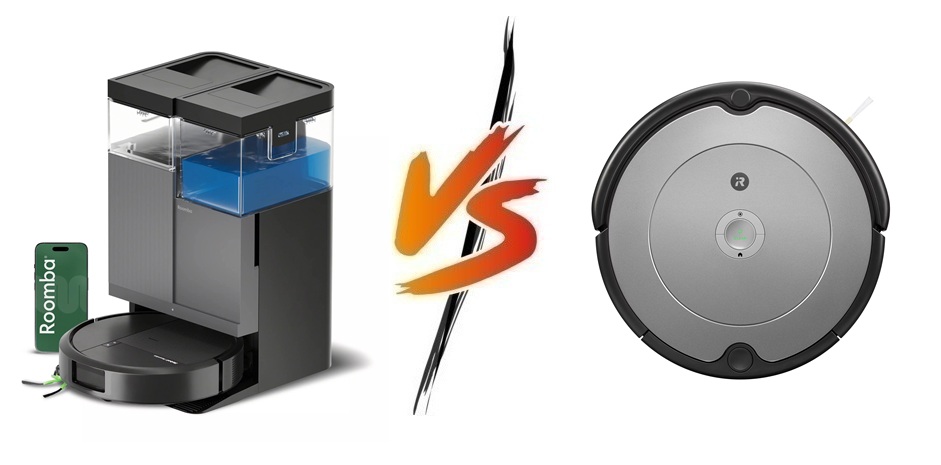
The robot vacuum market has changed dramatically over the last few years. What was once considered a luxury gadget capable of handling only light dust has evolved into a category of genuinely capable home appliances. Modern robot vacuums can map an entire home with remarkable accuracy, recognize different floor types, empty their own dustbins, wash and dry their own mop pads, and clean specific rooms on demand. At the same time, older models continue to remain on the market, often at highly attractive prices, giving buyers a choice between affordability and cutting-edge convenience.
The iRobot Roomba Plus 415X and the iRobot Roomba 694 perfectly illustrate this evolution.
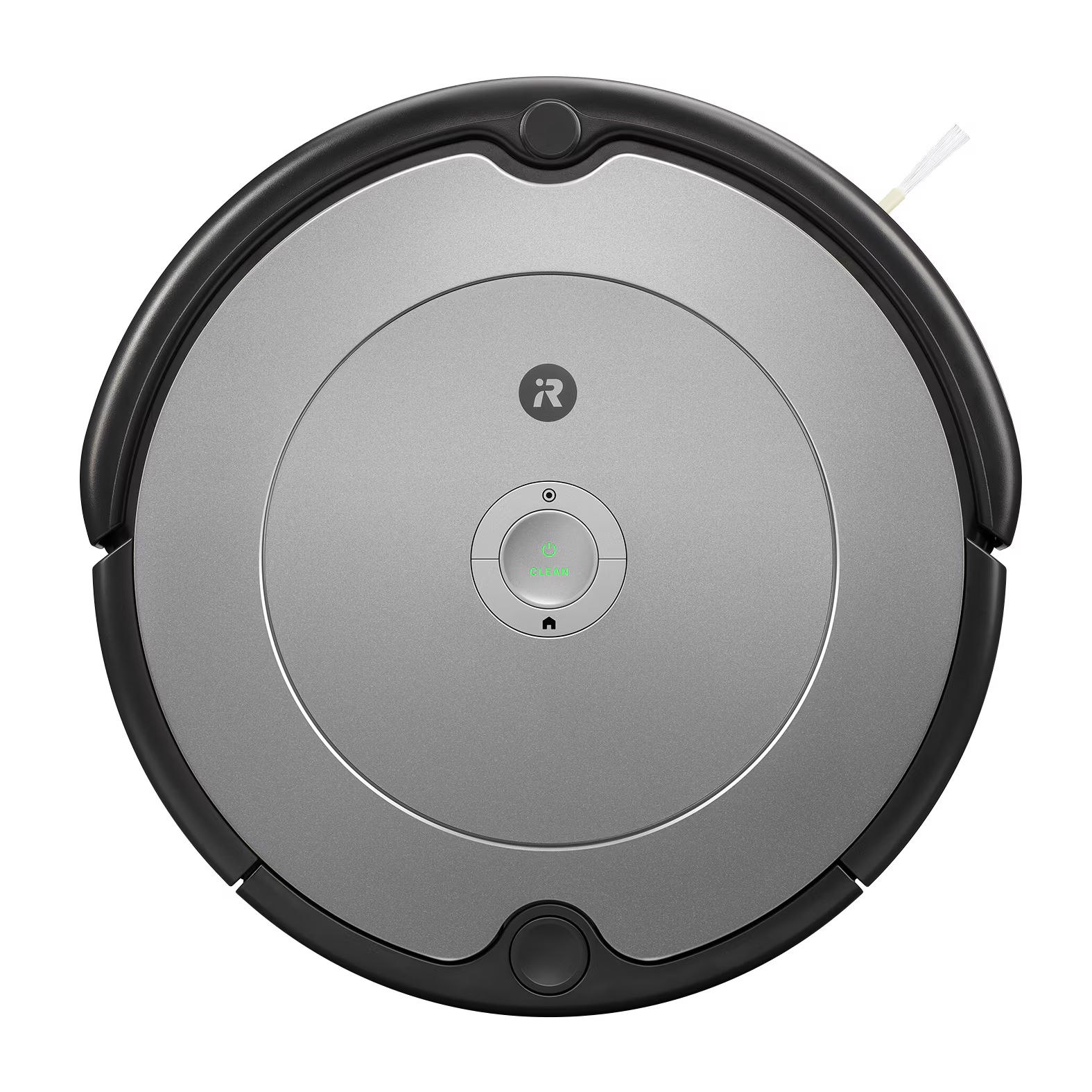
Although both products carry the Roomba name, they represent two completely different generations of robot vacuum technology. The Roomba 694 is one of iRobot’s long-standing entry-level models, designed to offer dependable daily vacuuming without overwhelming users with advanced features. It relies on iRobot’s traditional navigation system, provides straightforward app connectivity, and focuses on one primary task: vacuuming floors consistently.
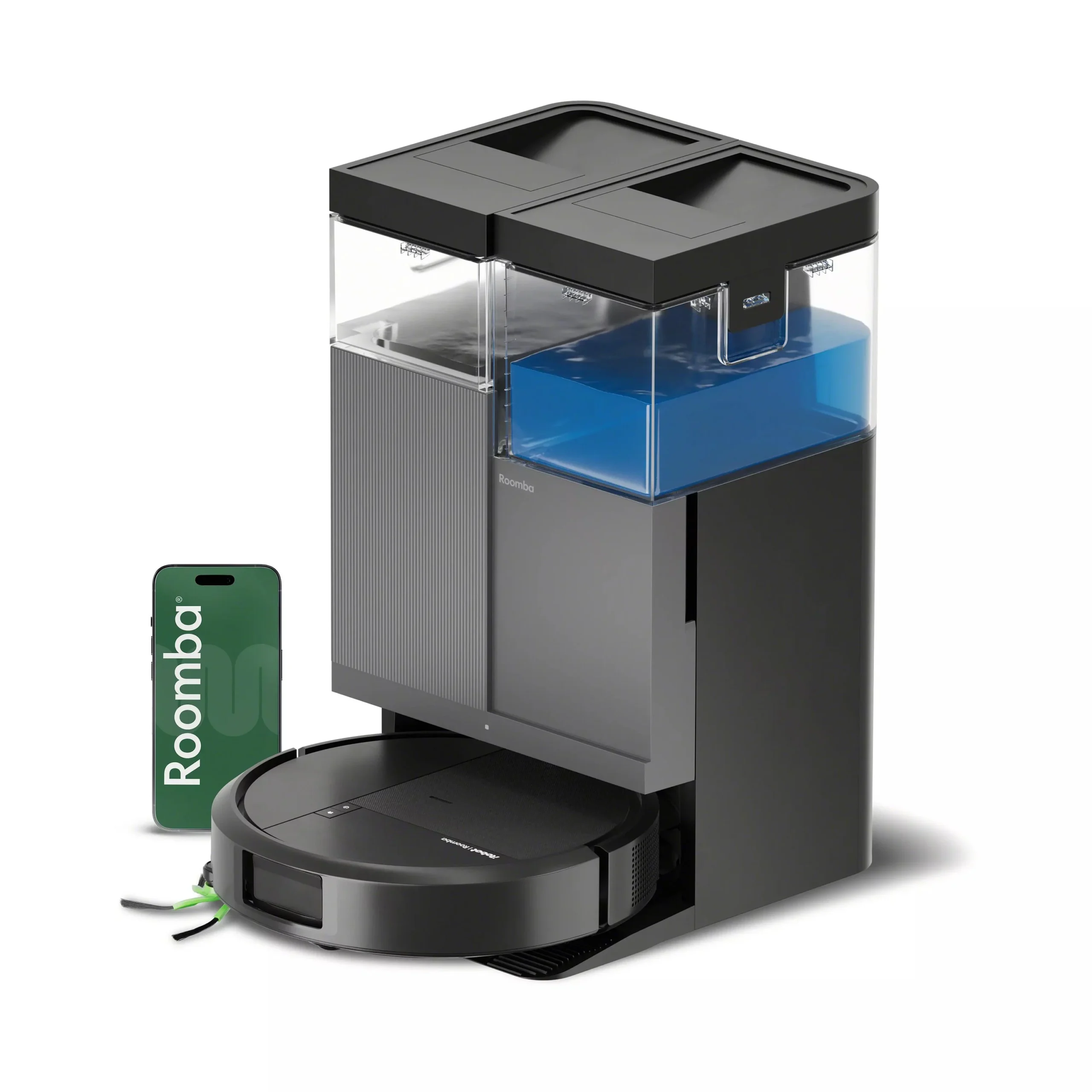
The Roomba Plus 415X, by contrast, reflects iRobot’s modern approach to automated floor care. Rather than simply vacuuming, it attempts to automate nearly every aspect of floor maintenance. It combines LiDAR-based navigation with intelligent room mapping, dual rotating mop pads, automatic carpet detection, mop lifting, self-emptying, automatic pad washing, heated pad drying, and considerably more sophisticated cleaning routines. In many ways, it functions as a fully automated floor cleaning system rather than just a robot vacuum.
This difference is immediately reflected in their respective prices. The Roomba 694 frequently sells as one of the most affordable genuine Roomba models available, making it appealing to first-time buyers, students, apartment owners, or anyone looking for an inexpensive way to reduce routine vacuuming. The 415X, meanwhile, occupies a much more premium segment of the market, competing with advanced hybrid robots from manufacturers such as Roborock, Dreame, Ecovacs, and Narwal.
That naturally raises an important question: does the significantly higher price of the 415X translate into a meaningfully better ownership experience, or does the Roomba 694 continue to represent excellent value despite its age?
iRobot Roomba 415X vs iRobot Roomba 694 Comparison Chart
If you click the links below, under the product images, you will be redirected to Amazon.com. In case you then decide to buy anything, Amazon.com will pay me a commission. This doesn’t affect the honesty of this review in any way though.
| Specification | iRobot Roomba Plus 415X | iRobot Roomba 694 |
|---|---|---|
 |  | |
| Check the best price on Amazon | Check the best price on Amazon | |
| Product Type | Robot Vacuum & Mop | Robot Vacuum |
| Navigation Technology | ClearView™ LiDAR Navigation | Adaptive Navigation with floor tracking sensors and bump navigation |
| Home Mapping | Yes, intelligent room mapping | No |
| Cleaning Pattern | Systematic row-by-row cleaning | Reactive/random cleaning pattern |
| Room-Specific Cleaning | Yes | No |
| Multi-Floor Maps | Yes | No |
| No-Go Zones / Keep-Out Areas | Yes | No |
| Obstacle Avoidance | Advanced obstacle detection with LiDAR and sensors | Basic bumper-based obstacle detection |
| Vacuuming Function | Yes | Yes |
| Mopping Function | Yes | No |
| Mop Type | Dual rotating mop pads | N/A |
| Automatic Mop Lifting | Yes | N/A |
| SmartScrub Deep Mopping | Yes | N/A |
| Self-Emptying Dustbin | Yes | No |
| Automatic Mop Washing | Yes | N/A |
| Automatic Mop Drying | Yes (heated drying) | N/A |
| Dock Type | AutoWash Multifunction Dock | Standard Charging Dock |
| Dust Collection | Automatic into dock dust bag | Manual dustbin emptying |
| Clean Water Tank | Yes (in dock) | No |
| Dirty Water Tank | Yes (in dock) | No |
| Carpet Detection | Yes | Automatic suction adjustment for carpets (Dirt Detect only, no mop interaction) |
| Automatic Carpet Avoidance During Mopping | Yes | N/A |
| Main Brush System | Dual Multi-Surface Rubber Rollers | Dual Multi-Surface Rubber Rollers |
| Edge Cleaning Brush | Yes | Yes |
| Pet Hair Performance | Excellent | Very Good |
| Filtration | High-Efficiency Filter | High-Efficiency Filter |
| Wi-Fi Connectivity | Yes | Yes |
| Smartphone App | iRobot Home App | iRobot Home App |
| Voice Assistant Support | Amazon Alexa & Google Assistant | Amazon Alexa & Google Assistant |
| Custom Cleaning Routines | Yes | Limited |
| Scheduled Cleaning | Yes | Yes |
| Zone Cleaning | Yes | No |
| Recharge & Resume | Yes | No |
| Automatic Return to Dock | Yes | Yes |
| Battery Type | Rechargeable Lithium-Ion | Rechargeable Lithium-Ion |
| Floor Compatibility | Hardwood, tile, laminate, vinyl, low- to medium-pile carpet, area rugs | Hardwood, tile, laminate, vinyl, low-pile carpet, area rugs |
| Ideal Home Size | Medium to large homes | Small to medium homes |
| Best For | Fully automated vacuuming and mopping with minimal maintenance | Affordable everyday vacuuming and first-time robot vacuum owners |
| My individual reviews | iRobot Roomba 415X review |
Design & Build Quality
At first glance, the iRobot Roomba Plus 415X and the iRobot Roomba 694 are unmistakably members of the same product family. Both adopt iRobot’s familiar circular profile, low-slung design, and minimalist appearance that has become synonymous with the Roomba brand. However, spending even a few minutes with both machines quickly reveals that they were designed with very different goals in mind. The Roomba 694 reflects an era when robot vacuums were primarily expected to automate vacuuming, while the Roomba Plus 415X has been engineered as a comprehensive floor care system that aims to minimize user intervention as much as possible.
Although the two robots share the same DNA, nearly every aspect of their design demonstrates how far iRobot’s engineering has progressed over the years.
The Roomba 694 embraces simplicity. Its circular body features smooth curves, a combination of matte and glossy black plastics, and a textured central control area surrounding the signature Clean button. There is very little visual clutter. The design is functional rather than flashy, with every component serving a clear purpose. It doesn’t attempt to stand out as a luxury appliance, nor does it include decorative lighting or elaborate styling elements that have become increasingly common among competing robot vacuums.
Despite its age, the 694 still looks perfectly respectable in a modern home. The understated appearance allows it to blend into most interiors without drawing unnecessary attention. Owners looking for a robot that quietly performs its job without becoming a centerpiece of the room will likely appreciate its straightforward design philosophy.
The Roomba Plus 415X takes a noticeably more contemporary approach. While maintaining the recognizable Roomba silhouette, it introduces cleaner panel lines, a more refined finish, and better integration of its numerous sensors. The overall aesthetic feels more premium and aligns with what many consumers now expect from modern smart home devices. It looks less like a household appliance and more like a sophisticated piece of connected technology.
One of the most obvious differences between the two robots is the presence of the LiDAR navigation module on top of the 415X. This raised turret immediately distinguishes it from older Roomba models. Rather than relying solely on bump sensors and simpler navigation techniques, the rotating laser continuously scans the surrounding environment, allowing the robot to build highly detailed maps of the home.
Some buyers worry that the addition of a LiDAR turret makes robot vacuums significantly taller, limiting their ability to clean underneath furniture. In reality, the increase in height is relatively modest. While there may be a handful of low-profile sofas, TV stands, or cabinets that the 694 can fit beneath more easily, the difference is unlikely to have a dramatic impact in most households. For many users, the vastly improved navigation capabilities more than justify the slightly taller profile.
Construction quality is another area where both robots perform well.
iRobot has built a strong reputation over many years for producing durable robot vacuums, and both models continue that tradition. The plastics used throughout the chassis feel dense and solid rather than thin or brittle. There are no noticeable creaks when lifting either robot, and the various body panels fit together with reassuring precision. Nothing feels loose or poorly assembled.
The Roomba 694 may be an entry-level model, but it certainly doesn’t feel inexpensive. Even after years on the market, its overall build quality remains competitive with many newer budget robot vacuums. This is one of the reasons why older Roombas continue to have loyal owners long after newer models are released.
The 415X, however, demonstrates several refinements that become increasingly apparent during everyday use.
The front bumper assembly feels smoother and more controlled when making contact with furniture. Earlier robot vacuums often relied on relatively firm impacts to determine the presence of obstacles, sometimes resulting in audible bumps against chair legs or cabinets. While the bumper on the 415X still serves as a backup collision sensor, the improved navigation system allows the robot to slow down before making contact, resulting in gentler interactions with furniture and walls.
This seemingly minor improvement contributes significantly to the overall impression of refinement. Watching the 415X navigate around a room simply feels more deliberate and controlled than watching the 694.
The underside of both robots follows iRobot’s familiar layout, featuring a side brush that sweeps debris toward the central cleaning system. However, the 415X benefits from several years of incremental engineering improvements. The brush housing appears more robust, component tolerances feel tighter, and the removable cleaning modules are easier to access during routine maintenance.
One design feature that deserves particular praise on both models is the use of rubber dual multi-surface rollers rather than traditional bristle brush rolls. Unlike many older robot vacuums that relied heavily on bristles, these rubber rollers are significantly less prone to becoming tangled with long hair. Anyone with family members who have long hair, or households with shedding pets, will appreciate how much easier they are to clean.
Hair still wraps around the roller ends over time, but removing it typically requires only a few moments rather than a lengthy cleaning session with scissors.
The dustbin design illustrates one of the largest philosophical differences between the two products.
On the Roomba 694, the dustbin is compact, lightweight, and simple to remove. Pressing the release button allows the entire bin to slide out of the rear of the robot, making disposal straightforward. For smaller apartments or homes with relatively little debris, this system works perfectly well.
However, the limited capacity means owners will likely empty the dustbin every few cleaning cycles, and possibly after every session in homes with pets or heavy foot traffic.
The 415X approaches this challenge very differently.
Rather than expecting the user to empty the robot manually, it is designed to work in conjunction with its multifunction AutoWash Dock. After completing a cleaning cycle, the robot returns to the dock, where collected debris is automatically transferred into a much larger sealed dust bag. Depending on household conditions, this bag can often accommodate weeks of accumulated debris before requiring replacement.
From a convenience standpoint, the difference is substantial. Instead of interacting with the robot several times each week, owners may only need to replace the dock’s dust bag periodically.
The dock itself is arguably one of the most significant physical differences between these two products.
The Roomba 694 includes a compact charging station that occupies very little floor space. Installation is quick, placement is flexible, and it can easily fit into apartments, small hallways, or narrow utility rooms.
The AutoWash Dock supplied with the 415X is considerably larger because it performs multiple functions beyond charging. It houses the self-emptying system, clean water reservoir, dirty water collection tank, mop washing mechanism, and drying system. Naturally, accommodating all of these features requires a larger footprint.
Some homeowners may initially view the dock’s size as a disadvantage, particularly if floor space is limited. However, the larger dock is also what enables the robot to operate with such a high degree of autonomy. Instead of simply serving as a charging station, it functions as an automated maintenance center that handles many of the routine tasks owners previously had to perform manually.
Another aspect worth mentioning is serviceability.
Both robots are designed with maintenance in mind. Filters, rollers, side brushes, batteries, and several wear components can be replaced without specialized tools. This not only reduces long-term ownership costs but also helps extend the operational lifespan of the robots. iRobot has historically maintained strong support for replacement parts, allowing owners to keep their machines running for many years with relatively modest investment.
From an ergonomic perspective, both robots are easy to handle. Integrated carrying points make lifting them between floors comfortable, and removable components are generally intuitive to access. The 415X naturally contains more moving parts because of its combined vacuuming and mopping functions, but these additional mechanisms are integrated cleanly into the overall design without making the robot feel overly complicated.
Ultimately, the design comparison reflects two distinct philosophies.
The Roomba 694 focuses on delivering dependable vacuuming through a straightforward, durable, and uncomplicated design. It avoids unnecessary complexity and remains an excellent example of a well-built entry-level robot vacuum.
The Roomba Plus 415X, meanwhile, represents a much more ambitious interpretation of what a robot vacuum can be. Its refined construction, intelligent sensor integration, multifunction docking station, and emphasis on automation create a product that feels considerably more sophisticated in everyday use. While its larger dock and additional hardware require a greater initial investment and slightly more space, they also transform the ownership experience by reducing routine maintenance and allowing the robot to operate with minimal user involvement.
Both machines uphold iRobot’s reputation for solid build quality, but they cater to different expectations. The Roomba 694 prioritizes simplicity and reliability, whereas the Roomba Plus 415X is clearly designed for homeowners who want a robot capable of handling as much of the cleaning process as possible with little need for manual intervention.
Navigation Intelligence & Mapping
If there is one category that best illustrates the technological gap between the iRobot Roomba Plus 415X and the Roomba 694, it is navigation. While both robots are capable of cleaning an entire home over time, the way they approach that task is fundamentally different. In fact, the difference is so significant that it can completely change the day-to-day ownership experience. Navigation determines how efficiently a robot cleans, how long it takes to finish a job, how well it covers individual rooms, and how much confidence owners have in letting it operate unattended.
The Roomba 694 represents iRobot’s older navigation philosophy, relying on a reactive cleaning system that combines floor sensors, wheel encoders, bump sensors, and adaptive algorithms. Instead of creating a detailed map of the home, the robot continuously reacts to its surroundings as it encounters them. It changes direction after bumping into furniture, follows walls when appropriate, spirals over concentrated dirt, and gradually covers the available floor space through a combination of movement patterns.
This approach may sound primitive compared to today’s LiDAR-equipped robots, but it is worth remembering that it served as the foundation of robot vacuum cleaning for many years. In smaller homes or apartments with relatively open floor plans, the Roomba 694 is often capable of achieving respectable cleaning coverage, even if its route appears somewhat random to the observer.
Watching the 694 at work can occasionally feel unpredictable. It may vacuum one section of a room, move toward a hallway, return to the original area several minutes later, and then revisit another section before finally moving on. At first glance, this behavior can give the impression that the robot is cleaning inefficiently. However, iRobot’s cleaning algorithms are designed to maximize overall coverage over the course of an entire cleaning session rather than following a perfectly organized path.
The downside is that efficiency suffers. Because the robot lacks a detailed understanding of the home’s layout, it inevitably spends time revisiting areas that have already been cleaned while potentially delaying other sections until much later in the cleaning cycle. This increases the overall cleaning time and results in additional battery consumption.
The Roomba Plus 415X approaches navigation from an entirely different perspective.
Its LiDAR-based navigation system continuously scans the surrounding environment with laser measurements, allowing the robot to build an accurate digital representation of the home. Rather than reacting to obstacles only after encountering them, the 415X understands where furniture, walls, doorways, and rooms are located before it begins cleaning.
This difference becomes immediately obvious during the first cleaning run.
Instead of wandering through the home while gradually discovering its surroundings, the 415X methodically explores each room, identifying boundaries, measuring distances, and constructing a detailed floor plan. Once mapping has been completed, future cleaning sessions become remarkably organized.
Rather than following seemingly random paths, the robot cleans in neat, parallel rows that resemble the pattern a person might use while vacuuming manually. This structured approach minimizes unnecessary overlap while ensuring consistent coverage across the entire floor.
The result is not simply more satisfying to watch. It is objectively more efficient.
Because the robot always knows its exact location within the mapped environment, it rarely wastes time retracing its steps unnecessarily. Cleaning sessions are typically completed faster, battery power is used more efficiently, and every accessible section of the floor receives more predictable coverage.
Room recognition is another area where the technological difference becomes especially apparent.
Since the Roomba 694 does not create persistent maps, it cannot distinguish between individual rooms in any meaningful way. From the robot’s perspective, the entire accessible floor essentially becomes one continuous cleaning area. If the owner wants to clean only the kitchen or only the living room, the options are limited. In many cases, this requires physically moving the robot into the desired room and closing doors to prevent it from wandering elsewhere.
The 415X offers a dramatically different experience.
Once the initial mapping process is complete, the companion app allows homeowners to label individual rooms, divide or merge spaces, establish cleaning zones, and customize cleaning routines for different parts of the home. Want the robot to vacuum only the dining room after dinner? That becomes a simple app command. Need the kitchen mopped every evening while leaving the bedrooms untouched? The robot can accommodate that without requiring any physical interaction.
These capabilities transform the robot from a general-purpose cleaning device into a far more flexible household assistant.
Multi-room navigation also benefits significantly from mapping technology.
The Roomba 694 generally has no difficulty moving through open doorways and exploring connected rooms, but because it lacks an overall understanding of the home’s layout, transitions between rooms can sometimes appear inefficient. It may spend an extended period cleaning one area before unexpectedly returning to a previously visited room or repeatedly crossing hallways.
The 415X behaves much more deliberately.
It systematically completes one room before moving to the next according to its optimized cleaning plan. This structured progression not only shortens cleaning time but also makes the robot’s behavior far easier to predict. Owners quickly develop confidence that the robot will clean every designated room before returning to its charging dock.
Obstacle avoidance is another area where the newer model demonstrates clear advantages.
The Roomba 694 primarily identifies obstacles through physical contact. While its bumper system is durable and effective, the robot typically discovers furniture by gently bumping into it. This works well for large, stationary objects such as walls, tables, and sofas, but smaller items can occasionally create challenges.
Chair legs, lightweight decorative objects, pet bowls, and floor lamps may require several gentle contacts before the robot successfully navigates around them. In most cases, this is not harmful, but repeated contact can become noticeable over time.
The 415X’s navigation system allows it to recognize many obstacles before making physical contact. Combined with its onboard sensors, the LiDAR system enables smoother navigation around furniture and tighter path planning in complex environments. Instead of repeatedly tapping chair legs from multiple directions, the robot often adjusts its route well in advance, resulting in quieter and more graceful movement throughout the home.
That said, no robot vacuum is perfect when confronted with clutter.
Items such as loose charging cables, socks, shoelaces, children’s toys, and pet accessories can still present challenges for both machines. The 415X is generally better equipped to avoid these situations, but owners should still make a habit of removing small floor clutter before scheduled cleaning sessions to ensure optimal performance.
Another significant advantage of LiDAR navigation is its independence from ambient lighting.
Some earlier navigation systems relied heavily on visual cameras, which could struggle in dark environments. Because the 415X uses laser-based mapping, it performs consistently whether cleaning in bright daylight, dim evening conditions, or complete darkness. This makes overnight cleaning schedules far more practical, allowing homeowners to wake up to freshly cleaned floors without leaving lights on throughout the house.
The Roomba 694 also functions in low-light conditions, but because it lacks advanced mapping altogether, lighting has relatively little influence on its navigation. Instead, its cleaning effectiveness depends primarily on how thoroughly it eventually covers the available floor area.
Map persistence is another feature that significantly enhances the 415X’s usability.
Once the home has been mapped, the robot retains this information between cleaning sessions. Furniture changes can be accommodated through periodic map updates, but there is no need to rediscover the home’s layout every time it starts cleaning. This enables advanced features such as no-go zones, virtual boundaries, room-specific cleaning schedules, and customized cleaning preferences for different spaces.
For example, homeowners can instruct the robot to avoid children’s play areas during the day, increase suction in high-traffic hallways, vacuum carpets while simultaneously mopping hard floors, or perform multiple passes in particularly dirty rooms. These levels of customization simply are not possible on the Roomba 694 because it lacks the spatial awareness necessary to distinguish one area from another.
Navigation reliability over extended ownership is also worth considering.
The Roomba 694’s relatively simple navigation system has the advantage of being extremely mature. Years of refinement have resulted in dependable performance with relatively few surprises. Although it may not clean with the efficiency of newer robots, its straightforward approach has proven reliable across countless households.
The 415X introduces considerably greater sophistication, but it also places much heavier emphasis on software. Features such as room recognition, intelligent routing, obstacle avoidance, and customized cleaning routines depend on accurate map management and regular software updates. Fortunately, modern iRobot software has matured considerably, making these advanced capabilities feel stable rather than experimental.
Ultimately, navigation is the category where the Roomba Plus 415X most convincingly demonstrates the value of modern robot vacuum technology. Its LiDAR-based mapping transforms cleaning from a largely reactive process into a carefully planned operation that is faster, more efficient, and substantially more convenient. The ability to clean specific rooms, remember floor plans, avoid obstacles more intelligently, and follow structured cleaning paths significantly improves both performance and user experience.
The Roomba 694 remains capable of keeping floors clean, particularly in smaller homes where its reactive navigation has fewer opportunities to become inefficient. However, once you’ve experienced the precision and flexibility of a modern mapping robot like the 415X, it becomes difficult to return to a system that essentially cleans by exploration rather than by understanding its environment. For households seeking a truly autonomous cleaning experience, advanced navigation is no longer a luxury feature but one of the most meaningful improvements a robot vacuum can offer.
Cleaning Performance
Ultimately, the success of any robot vacuum comes down to one simple question: does it consistently leave your floors cleaner than they were before? Features such as smart mapping, self-emptying docks, app control, and voice assistants certainly improve the ownership experience, but none of them matter if the robot fails at its primary task. Fortunately, both the iRobot Roomba Plus 415X and the Roomba 694 are capable cleaners. However, they achieve their results in very different ways, and the overall cleaning experience differs considerably depending on the type of flooring, the amount of debris, and the expectations of the user.
The Roomba 694 was designed during a time when robot vacuums were intended to supplement regular vacuuming rather than replace it entirely. It performs best when used frequently, ideally several times a week, preventing dust, dirt, and hair from accumulating in the first place. Instead of tackling heavily soiled floors after weeks of neglect, it excels at maintaining already clean surfaces. This philosophy remains perfectly valid for many households, particularly smaller homes where dirt levels remain relatively manageable.
The Roomba Plus 415X, by contrast, is designed to take on a much more comprehensive role. Its improved suction system, more advanced cleaning algorithms, intelligent route planning, and integrated mopping capabilities allow it to tackle larger cleaning jobs with greater confidence. Rather than simply maintaining floors, it often feels capable of performing the kind of thorough daily cleaning that many homeowners previously associated with upright or cordless stick vacuums.
One of the most noticeable differences between the two robots is how efficiently they clean an entire room.
The Roomba 694’s reactive navigation means that it frequently revisits areas multiple times while leaving other sections untouched until later in the cleaning cycle. Although this eventually results in respectable floor coverage, the process is less systematic. Some high-traffic areas may receive multiple cleaning passes simply because the robot happens to cross them repeatedly, while other areas receive only a single pass before the battery begins running low.
The 415X benefits enormously from its structured navigation. Because it understands the layout of the room before cleaning begins, it follows neat, parallel cleaning paths that maximize coverage while minimizing unnecessary overlap. Every section of the floor receives deliberate attention, creating a much more consistent cleaning result. Watching the robot work inspires confidence because its movements appear purposeful rather than random.
Hard floors are where both robots perform particularly well.
On hardwood, laminate, tile, vinyl, and stone flooring, the Roomba 694 is more than capable of collecting everyday household debris. Dust, crumbs, pet hair, cereal, dry leaves tracked in from outside, and similar debris are generally removed without difficulty. The dual rubber brush rollers effectively agitate dirt while the side brush sweeps debris away from edges and toward the main cleaning path.
Fine dust is handled especially well, largely because the robot passes over the floor frequently during its cleaning cycle. Even if a particular area is initially missed, there is a good chance the robot will return to it later from a different angle.
The 415X builds upon these strengths with stronger suction, more intelligent cleaning patterns, and better overall consistency. Because it spends less time retracing previously cleaned areas, it can devote more attention to systematically covering every accessible section of the floor. This becomes particularly noticeable in larger rooms where organized cleaning paths help maintain uniform performance from one side of the room to the other.
Larger debris also highlights the advantages of the newer model.
Items such as breakfast cereal, dry pet food, popcorn, rice, sand, or small amounts of soil tracked indoors are handled confidently by both robots, but the 415X generally completes the task with fewer passes. Its stronger suction and improved airflow allow it to collect heavier particles more efficiently, reducing the likelihood of debris being pushed ahead of the robot before eventually being picked up.
That said, neither robot should be viewed as a substitute for a full-sized vacuum when dealing with exceptionally heavy messes. Large piles of construction debris, significant quantities of flour, broken glass, or damp materials remain outside the intended scope of robot vacuums. They perform best when integrated into a routine cleaning schedule rather than being expected to recover from extreme situations.
Carpet cleaning introduces more noticeable differences.
The Roomba 694 performs reasonably well on low-pile carpets and area rugs. Everyday dust, hair, and surface debris are removed effectively, particularly when the robot cleans regularly. However, because of its more modest suction system and simpler navigation, deeply embedded dirt can remain within carpet fibers after a single cleaning pass.
Owners with predominantly low-pile carpeting will likely find its performance perfectly adequate for day-to-day maintenance, but those expecting the deep-cleaning capability of an upright vacuum may be disappointed.
The 415X demonstrates clear improvements in this area. Stronger suction, combined with more consistent cleaning paths, allows it to extract noticeably more debris from carpet fibers. On medium-pile carpeting especially, the difference becomes easier to appreciate over extended use. High-traffic walkways remain cleaner, and the robot appears better equipped to remove the fine dust that gradually accumulates below the visible surface.
Neither robot is specifically designed for plush, high-pile carpeting, where thick fibers can still challenge wheel traction and airflow. Nevertheless, the 415X handles these surfaces with greater confidence than the 694.
Area rugs generally pose little difficulty for either machine.
The Roomba 694 occasionally approaches lightweight rugs somewhat aggressively because it discovers them through physical contact, sometimes causing slight bunching if the rug lacks adequate grip underneath. The 415X’s more deliberate navigation tends to result in smoother transitions onto rugs, and its carpet recognition system enables it to adjust cleaning behavior automatically when moving between different floor types.
Edge cleaning remains one of the traditional challenges for robot vacuums, and neither model completely escapes the physical limitations imposed by their circular design.
Since round robots cannot physically extend their main cleaning brushes fully into sharp ninety-degree corners, some accumulation of fine dust may remain in these areas regardless of model. This is a limitation shared by virtually every circular robot vacuum currently available.
Both machines compensate through the use of a rotating side brush that sweeps debris inward toward the main suction channel. Along baseboards, cabinet edges, and walls, this system works quite well. Dust, pet hair, and light debris are generally collected effectively during routine cleaning.
The 415X benefits from its more precise navigation, allowing it to maintain a more consistent distance from walls and furniture. As a result, edge cleaning often appears slightly more thorough because the robot follows straighter, more deliberate paths along room boundaries.
Spot cleaning behavior also differs considerably between the two robots.
The Roomba 694 offers a spot-cleaning mode that concentrates its efforts within a localized area, making it useful for small spills or concentrated dirt. However, since the robot lacks mapping capabilities, positioning must be done manually.
With the 415X, localized cleaning becomes much more sophisticated. Through the mobile app, users can simply select a room or define a specific cleaning zone on the digital map. The robot then travels directly to that location, performs the requested cleaning task, and returns to its dock upon completion. This dramatically improves convenience, particularly in larger homes where carrying the robot between rooms quickly becomes tiresome.
Consistency over repeated cleaning sessions is another important consideration.
Because the Roomba 694 relies heavily on repeated cleaning cycles to achieve complete coverage, homeowners often obtain the best results by scheduling daily operation. Running the robot every day gradually compensates for the limitations of its navigation system and keeps dust accumulation under control.
The 415X requires less reliance on repetition. Its organized cleaning patterns produce more predictable results during a single session, allowing owners greater flexibility in scheduling. Even if the robot operates only a few times each week, floors generally remain impressively clean because each individual cleaning cycle is more comprehensive.
Another area where the newer model excels is its ability to adapt cleaning behavior to different environments. Carpet detection, customizable suction levels, room-specific settings, and intelligent cleaning routines enable homeowners to tailor performance according to the needs of each room. High-traffic hallways can receive more aggressive cleaning than rarely used guest bedrooms, while kitchens can receive both vacuuming and mopping in a single routine.
These levels of customization are simply unavailable on the Roomba 694, whose straightforward operation reflects its simpler design philosophy.
In everyday use, both robots fulfill their intended roles remarkably well. The Roomba 694 remains an excellent maintenance vacuum for homeowners seeking an affordable, dependable solution to everyday dust and debris. It may require more frequent operation and occasional manual intervention, but it consistently reduces the amount of traditional vacuuming needed throughout the week.
The Roomba Plus 415X, however, delivers a substantially more complete cleaning experience. Its stronger vacuuming performance, intelligent route planning, superior carpet handling, efficient debris collection, and ability to integrate vacuuming with automated mopping create a machine that feels considerably closer to a fully autonomous cleaning system. Rather than simply helping with household chores, it has the potential to take over much of the routine floor maintenance entirely, allowing homeowners to spend less time thinking about cleaning and more time simply enjoying consistently clean floors.
Mopping Capability
The largest functional difference between the iRobot Roomba Plus 415X and the Roomba 694 becomes apparent the moment hard floors need more than just vacuuming. While the Roomba 694 is exclusively a robot vacuum, the Roomba Plus 415X is designed as a true vacuum-and-mop combination, capable of vacuuming carpets and hard floors before automatically switching to mopping where appropriate. This distinction alone places the two products in entirely different categories of home cleaning.
For prospective buyers, the comparison is therefore less about determining which robot mops better and more about understanding whether integrated mopping genuinely adds value to everyday cleaning. After spending time evaluating the strengths and limitations of modern robot mopping systems, it becomes clear that while they are not direct replacements for occasional deep manual mopping, they have reached a level where they can dramatically reduce how often homeowners need to reach for a traditional mop and bucket.
Since the Roomba 694 lacks any mopping functionality, owners who choose this model must continue to clean hard floors manually after vacuuming. For many households, this arrangement remains perfectly acceptable. Vacuuming typically removes the majority of loose dirt, dust, crumbs, and pet hair, while periodic manual mopping addresses dried spills, muddy footprints, cooking residue, and other stains that require moisture to remove.
This traditional cleaning routine has served homeowners well for decades.
The Roomba Plus 415X, however, attempts to automate both stages of floor care.
Unlike earlier robot mop designs that simply dragged a damp microfiber cloth behind the robot, the 415X employs two rotating mop pads positioned beneath the chassis. This design is considerably more effective because the rotating pads actively scrub the floor instead of merely wiping across its surface. The motion more closely resembles the circular action of a person using a handheld spin mop, allowing the robot to loosen dirt rather than simply spreading moisture over it.
This represents one of the biggest improvements in robot mopping technology over the past several years.
Passive mopping systems often produced acceptable cosmetic results on already clean floors, but they struggled with dried spills or sticky residue. Rotating mop pads apply more consistent mechanical agitation, making them noticeably more capable of lifting everyday dirt from hard flooring.
The difference becomes particularly apparent in kitchens, dining rooms, utility rooms, and entryways.
These are areas where small food spills, dust, fine grit, and shoe marks accumulate regularly. The rotating mop pads gently scrub these surfaces during routine cleaning, helping maintain a freshly cleaned appearance throughout the week. While they may not remove every stubborn stain immediately, frequent cleaning prevents many marks from becoming difficult to remove in the first place.
One of the strengths of the 415X is its ability to vacuum before mopping.
This sequence is surprisingly important.
Traditional mopping without first removing loose debris often results in dust, pet hair, and crumbs being pushed around by the damp mop. Because the 415X vacuums first, much of the dry material has already been collected before the mop pads make contact with the floor. This produces cleaner overall results while reducing the likelihood of streaking or dragging dirt across the room.
The transition between vacuuming and mopping is handled intelligently.
Instead of requiring users to run separate cleaning cycles, the robot can seamlessly combine both tasks during a single cleaning session. As it encounters different floor types, it automatically adjusts its cleaning strategy based on the mapped layout of the home.
This becomes especially valuable in homes with mixed flooring.
Many households contain hardwood flooring in hallways, tile in kitchens and bathrooms, laminate in living areas, and carpets in bedrooms. Switching between vacuuming and mopping manually can become tedious, particularly when multiple floor types exist within the same cleaning routine.
The 415X largely eliminates this inconvenience.
Perhaps the most impressive aspect of its mopping system is the automatic mop lifting feature.
One of the biggest concerns surrounding combination vacuum-and-mop robots has always been the possibility of dragging wet mop pads across carpets and rugs. Earlier generations often required owners to remove mop attachments manually before cleaning carpeted areas or establish complicated cleaning routines to avoid wetting soft flooring.
The 415X addresses this issue by automatically raising its mop pads whenever carpet is detected.
In practical terms, this allows the robot to move directly from hardwood floors onto area rugs or wall-to-wall carpeting without transferring significant moisture onto textile surfaces. The result is a much more seamless cleaning experience, particularly in homes where hard floors and carpets are closely connected.
Although no automated system is completely foolproof, the automatic lifting mechanism significantly reduces one of the most common frustrations associated with hybrid robot cleaners.
Water management is another area where the 415X demonstrates thoughtful engineering.
Rather than simply soaking the mop pads continuously, the robot controls water delivery throughout the cleaning session. Maintaining an appropriate moisture level is essential because excessive water can leave streaks or prolong drying times, while insufficient moisture limits cleaning effectiveness.
During normal operation, the floors are left slightly damp rather than visibly wet. In most homes, surfaces dry naturally within a relatively short period after the robot has passed.
This controlled application of water makes the system suitable for many sealed hard floor surfaces, including tile, laminate, vinyl, and properly finished hardwood flooring. As always, homeowners should verify that their particular flooring manufacturer permits damp mopping before relying on any robot mop regularly.
Another feature that significantly enhances long-term usability is the multifunction docking station.
Unlike basic robot mops that require owners to remove and rinse dirty mop pads after every cleaning session, the AutoWash Dock performs much of this maintenance automatically.
After returning to the dock, the robot’s mop pads are washed using clean water before being prepared for future cleaning sessions. This greatly reduces one of the least enjoyable aspects of robot mopping ownership. Instead of handling dirty microfiber pads after every use, owners only need to empty the dirty water tank, refill the clean water reservoir, and occasionally replace consumable components.
For busy households, this level of automation can make the difference between regularly using the mopping function and gradually abandoning it because maintenance becomes inconvenient.
The dock also dries the mop pads after cleaning.
This seemingly simple feature offers several practical advantages.
Allowing damp microfiber pads to remain wet for extended periods can encourage unpleasant odors or bacterial growth, particularly during warmer months. Automatic drying helps keep the pads fresher between cleaning sessions while reducing the likelihood of mildew developing.
Daily usability improves substantially as a result.
Instead of wondering whether the mop pads are still damp from yesterday’s cleaning cycle, owners can simply schedule the next cleaning with confidence.
Naturally, robot mopping does have limitations.
Neither the 415X nor any other current consumer robot mop completely replaces deep manual floor cleaning.
Sticky residues that have dried for several days, grease buildup near stovetops, heavy mud tracked indoors after storms, paint splatters, or stubborn stains often require targeted manual scrubbing. Similarly, grout lines on textured tile floors may still benefit from occasional hands-on cleaning.
These are tasks that remain outside the capabilities of most autonomous floor cleaning robots.
However, it is important to view the 415X within the context of routine household maintenance rather than occasional deep cleaning.
Most homeowners do not deep-clean their floors every day. Instead, they simply want their floors to remain consistently presentable between more thorough cleaning sessions. This is precisely where the rotating mop system excels.
By gently scrubbing hard floors several times each week, the robot prevents many small messes from accumulating into larger cleaning projects.
The cumulative effect becomes surprisingly noticeable over time.
Floors retain their freshly cleaned appearance longer, fine dust becomes less visible in sunlight, footprints are reduced, and kitchens remain cleaner despite regular cooking activity. Rather than dramatically transforming dirty floors overnight, the system gradually minimizes the amount of manual work required throughout the month.
The absence of any mopping capability on the Roomba 694 naturally places it at a disadvantage in this category.
That is not necessarily a criticism of the robot itself. The 694 was designed with a clear objective: dependable automated vacuuming at an affordable price. It performs that task well, and many buyers may have no interest in automated mopping.
Nevertheless, homeowners with extensive hard flooring will likely appreciate the additional convenience offered by the 415X.
For homes dominated by hardwood, laminate, vinyl, or tile, integrated mopping represents far more than an added feature on a specification sheet. It transforms the robot from a device that merely collects loose debris into one capable of maintaining the overall cleanliness and appearance of hard floors on a daily basis.
In the end, the comparison is straightforward. The Roomba 694 leaves all wet cleaning responsibilities to the homeowner, functioning solely as a capable robot vacuum. The Roomba Plus 415X, meanwhile, delivers a far more comprehensive floor care solution. Its rotating mop pads, intelligent water management, automatic carpet detection, self-washing dock, and pad drying system work together to automate one of the most time-consuming household chores. While it cannot entirely replace the occasional deep manual mop, it can dramatically reduce how often that task becomes necessary, making it one of the most meaningful upgrades for households with predominantly hard flooring.
Pet Hair Performance
For many households, pet hair is one of the biggest reasons to invest in a robot vacuum in the first place. Dogs and cats have a remarkable ability to spread hair throughout the home, often far beyond the areas where they spend most of their time. Fine fur collects under furniture, gathers along baseboards, clings to rugs, and seems to reappear almost as quickly as it is removed. During seasonal shedding periods, even diligent homeowners may find themselves vacuuming every day simply to keep floors looking presentable.
Both the iRobot Roomba Plus 415X and the Roomba 694 are designed to help reduce this daily workload, but they approach the challenge with different levels of sophistication. While both machines are capable of collecting pet hair effectively, the newer 415X offers several advantages that make it better suited for homes with multiple pets or heavy shedding.
One of the first things worth noting is that iRobot has long been recognized for designing robot vacuums that perform well with pet hair. Even older Roomba models earned a reputation for handling hair better than many competing robots, thanks largely to their dual rubber brush rollers. Unlike traditional bristle brushes, which can become tightly wrapped with long hair after only a few cleaning sessions, rubber rollers are naturally more resistant to tangling.
This design remains one of iRobot’s strongest engineering decisions.
Both the Roomba 694 and the 415X use dual counter-rotating rubber rollers that work together to lift dirt, hair, and debris from the floor while directing everything toward the suction channel. Because the rollers flex slightly as they rotate, they maintain consistent contact with a variety of floor surfaces while reducing the amount of hair that becomes permanently wrapped around the cleaning mechanism.
In practice, this means less maintenance for the owner.
Anyone who has previously owned a robot vacuum with traditional bristle brush rolls will probably remember spending several minutes cutting tangled hair away with scissors every week. While neither Roomba completely eliminates maintenance, cleaning the rollers generally requires far less effort. Most pet hair is pulled directly into the dustbin instead of remaining wound around the brushes.
The Roomba 694 performs surprisingly well on hard flooring in homes with cats or short-haired dogs.
Loose fur scattered across hardwood, tile, laminate, or vinyl flooring is collected efficiently during routine cleaning. The side brush helps move hair away from walls and furniture toward the main rollers, while the suction system captures lightweight hair without simply pushing it across the floor.
Because pet hair tends to accumulate gradually throughout the day, the 694 performs best when scheduled to clean frequently. Running the robot every day prevents hair from building up into larger clumps that become more difficult to collect. In this maintenance role, it proves to be an effective household companion.
However, heavier shedding begins to expose some of the limitations of the older model.
Its smaller dustbin fills relatively quickly in homes with large dogs or multiple pets. Owners may find themselves emptying the dustbin after every cleaning session, particularly during spring and autumn shedding seasons. Although this process is straightforward, it does require regular attention and slightly reduces the convenience that robot vacuums are intended to provide.
The Roomba Plus 415X addresses this issue through its self-emptying system.
After each cleaning cycle, collected pet hair is automatically transferred into the dock’s larger dust bag. For households where pets produce significant amounts of fur every day, this feature quickly becomes one of the robot’s greatest strengths. Rather than checking the dustbin after every cleaning session, owners can simply allow the robot to operate autonomously for extended periods before the dock itself requires attention.
The difference may seem modest on paper, but it becomes increasingly valuable over time.
Pet owners already spend considerable time brushing animals, washing bedding, cleaning food bowls, and managing other routine care. Eliminating one additional maintenance task makes the overall ownership experience noticeably more enjoyable.
Carpet cleaning presents another important consideration.
Pet hair often embeds itself deep within carpet fibers, particularly in areas where dogs frequently lie down or cats choose to rest. Removing this hair requires not only adequate suction but also sufficient agitation to loosen it from the carpet.
The Roomba 694 performs well on low-pile carpets, collecting surface hair with reasonable consistency. Daily operation helps prevent excessive buildup, keeping carpets looking tidy between more thorough cleanings.
Medium-pile carpeting begins to challenge the older robot more noticeably.
While it still removes loose hair effectively, deeply embedded fur may require multiple cleaning sessions before the carpet appears completely clean. Owners of particularly fluffy dogs or long-haired cats may occasionally notice small amounts of remaining hair after a single pass.
The 415X demonstrates clear improvements in this area.
Its stronger suction system, combined with more efficient navigation and systematic cleaning patterns, allows it to extract greater amounts of pet hair from carpet fibers during each cleaning cycle. Instead of relying on repeated random passes to achieve complete coverage, the robot deliberately cleans every accessible section of the carpet using organized routes.
The result is greater consistency throughout the room.
Pet hair tends to accumulate unevenly. Areas near sofas, pet beds, feeding stations, and frequently used hallways often experience much heavier shedding than other locations. Because the 415X allows room-specific cleaning routines and customized cleaning schedules, owners can instruct the robot to revisit these high-shedding areas more frequently than the rest of the home.
This level of customization represents a meaningful advantage for households with indoor pets.
Long hair presents another challenge that deserves discussion.
Many homes contain not only shedding pets but also family members with long hair. Hair from both sources often becomes intertwined around vacuum rollers, wheel axles, and brush housings.
Fortunately, both Roombas handle this situation better than many competing robot vacuums.
Although some hair inevitably accumulates around the roller bearings and brush ends, the amount requiring manual removal is generally quite manageable. Routine maintenance every week or two is usually sufficient to keep the cleaning system operating efficiently.
Neither robot completely eliminates hair wrapping around the side brush, however.
Because the side brush rotates rapidly while sweeping debris inward, occasional tangles remain unavoidable. Fortunately, removing the side brush is a relatively simple process, allowing accumulated hair to be cleared with minimal effort.
Pet dander is another important consideration, particularly for allergy sufferers.
Hair itself is only part of the problem. Tiny skin flakes, dried saliva proteins, dust, and microscopic debris produced by pets often contribute more significantly to indoor allergies than visible fur.
Both robots use filtration systems designed to capture fine particles before exhausting air back into the room. While neither should be considered a substitute for dedicated air purification, frequent vacuuming significantly reduces the amount of pet-related allergens accumulating on floors over time.
Because the 415X cleans more systematically and generally requires less manual intervention, homeowners are often more inclined to schedule frequent automated cleaning sessions. This increased cleaning frequency indirectly contributes to better long-term allergen management throughout the home.
Pet food is another everyday mess that robot vacuums frequently encounter.
Dry kibble, scattered treats, litter granules tracked away from litter boxes, bird seed, or hay from small animal enclosures all require slightly different cleaning characteristics than ordinary dust.
Both robots handle these materials competently, although the 415X generally collects larger particles with fewer passes. The organized cleaning routes also reduce the likelihood of larger debris being pushed around before eventually being collected.
Navigation plays a surprisingly important role in pet-friendly performance as well.
The Roomba 694 occasionally bumps into pet bowls, scratching posts, or lightweight toys while navigating. Although these gentle impacts are rarely forceful enough to cause damage, they may occasionally shift lightweight objects around the room.
The 415X’s more advanced navigation system reduces these interactions considerably. By recognizing furniture and obstacles more effectively, it moves through rooms with greater precision, making it less likely to disturb pet accessories during routine cleaning.
Of course, no robot vacuum is completely immune to unexpected pet-related accidents.
Loose chew toys, ropes, tennis balls, and particularly pet waste remain hazards for virtually every robot vacuum currently available. While the 415X’s obstacle detection improves its ability to navigate around many everyday objects, responsible pet owners should still inspect floors before scheduled cleaning sessions to minimize the risk of unfortunate encounters.
Noise can also influence how comfortably pets coexist with robot vacuums.
Some dogs become anxious around noisy appliances, while cats often react cautiously to unfamiliar sounds and movement. Although both robots produce the characteristic operating noise expected from robot vacuums, the 415X’s smoother navigation often results in fewer abrupt impacts against furniture. This slightly calmer operating behavior may help nervous pets become accustomed to its presence more quickly.
After several weeks of regular operation, many pets simply learn to ignore robot vacuums altogether, continuing to nap while the machine quietly cleans around them.
Ultimately, both the Roomba 694 and the Roomba Plus 415X perform admirably in homes with pets, continuing iRobot’s long-standing reputation for effective pet hair management. The 694 remains an excellent choice for smaller households with one or two pets, particularly when operated on a daily schedule that prevents hair from accumulating excessively. Its dual rubber rollers, dependable suction, and straightforward operation make it a capable maintenance cleaner at an accessible price.
The 415X, however, is clearly designed with more demanding households in mind. Stronger suction, systematic room coverage, self-emptying capability, intelligent scheduling, and improved carpet performance combine to create a robot that requires significantly less owner involvement while maintaining consistently cleaner floors. For families with multiple shedding pets, larger homes, or anyone tired of constantly emptying dustbins and chasing fur tumbleweeds across the floor, the additional convenience and cleaning efficiency offered by the 415X make it a substantial step forward in automated pet hair management.
Maintenance & Cleaning
One of the primary reasons people invest in a robot vacuum is to reduce the amount of time they spend cleaning their home. However, an often-overlooked reality is that robot vacuums require cleaning themselves. Dustbins must be emptied, filters need replacing, brushes collect hair, sensors become dusty, and wheels occasionally need attention. The amount of maintenance required can have a significant impact on long-term satisfaction, especially once the novelty of owning a robot vacuum has worn off.
In this respect, the iRobot Roomba Plus 415X and the Roomba 694 offer two very different ownership experiences. Both machines are relatively straightforward to maintain compared to many household appliances, but the level of automation built into the 415X dramatically reduces the frequency of routine maintenance. The Roomba 694, meanwhile, relies much more heavily on the owner performing small but regular maintenance tasks.
Neither approach is necessarily better for everyone. Some homeowners prefer the simplicity of a conventional robot vacuum with fewer moving parts, while others are happy to pay more upfront in exchange for significantly less day-to-day involvement.
The most frequent maintenance task on any robot vacuum is emptying the dustbin.
With the Roomba 694, this becomes a regular part of ownership. The robot carries a relatively compact onboard dustbin that collects everything it vacuums during each cleaning session. In smaller apartments with minimal debris, the bin may last through several cleaning cycles before needing attention. In larger homes, or in households with pets, children, or heavy foot traffic, the dustbin often needs to be emptied after every cleaning session.
Fortunately, iRobot has designed the process to be quick and intuitive.
The dustbin slides smoothly out of the rear of the robot with the press of a release button. Emptying it into a household trash can takes only a few seconds, and the bin itself is easy to wipe clean if fine dust begins accumulating along the interior walls.
The Roomba Plus 415X approaches this routine very differently.
Instead of asking the owner to empty the robot manually, it automatically empties itself into the multifunction AutoWash Dock after completing a cleaning cycle. The dock contains a much larger disposable dust bag capable of storing weeks’ worth of collected debris before requiring replacement.
For many households, this completely changes the maintenance routine.
Rather than checking the robot after every cleaning session, owners may only need to replace the dock’s dust bag every month or two, depending on the amount of dirt, dust, and pet hair collected. This significantly reduces one of the most repetitive maintenance tasks associated with robot vacuum ownership.
The self-emptying process itself is surprisingly efficient.
When the robot docks, a powerful burst of suction transfers debris from the onboard dustbin into the sealed collection bag inside the station. Although the process is noticeably louder than normal vacuuming, it lasts only a short time and eliminates the need to handle loose dust after every cleaning session.
For allergy sufferers, this sealed disposal system offers another practical advantage.
Instead of shaking fine dust into the air while emptying a small dustbin, the entire collection bag can simply be removed and discarded with minimal exposure to accumulated debris. While no system is completely dust-free, it is undeniably cleaner than repeatedly emptying a traditional dustbin.
Brush maintenance is another important consideration.
One of iRobot’s greatest strengths continues to be its dual rubber multi-surface rollers. Unlike conventional bristle brush rolls, these rubber rollers resist hair tangles remarkably well. Pet hair and long human hair still accumulate around the roller ends over time, but most hair is directed into the dustbin rather than becoming tightly wrapped around the cleaning mechanism.
Routine inspection remains advisable.
Removing the rollers takes only a minute or two, and accumulated hair can usually be pulled away by hand without requiring scissors. Compared to many robot vacuums that use traditional bristle brushes, maintenance is significantly easier and less frustrating.
Both the Roomba 694 and the 415X share this advantage.
The side brush, however, requires slightly more attention.
Because it rotates rapidly while sweeping debris toward the main cleaning path, long hair and threads occasionally become wrapped around its base. This is normal for virtually every robot vacuum on the market. Fortunately, the side brush can be removed easily, allowing any tangled material to be cleared before performance begins to decline.
Filter maintenance is another task that owners should not neglect.
The filter plays an essential role in trapping fine dust particles before clean air is exhausted back into the room. As dirt accumulates within the filter, airflow gradually decreases, potentially reducing cleaning performance and placing additional strain on the vacuum motor.
For both robots, regular filter cleaning is recommended.
Lightly tapping accumulated dust from the filter after several cleaning sessions helps maintain consistent airflow. Eventually, every filter reaches the end of its service life and should be replaced to restore maximum performance.
Fortunately, replacement filters remain relatively affordable and are widely available.
Wheel maintenance is often overlooked until problems begin to develop.
Hair, carpet fibers, thread, and fine debris can gradually become wrapped around the drive wheels or front caster wheel. Left unattended, these accumulations may interfere with smooth movement or reduce traction.
Fortunately, both Roombas provide relatively easy access to these components.
Periodic inspection every month or two is usually sufficient. Removing wrapped hair requires only a few minutes and helps maintain smooth navigation throughout the robot’s lifespan.
Sensor cleaning is equally important.
Modern robot vacuums rely on numerous sensors to detect stairs, identify obstacles, locate the charging dock, and navigate efficiently throughout the home. Dust accumulation on these sensors can gradually reduce their effectiveness.
Both robots benefit from occasionally wiping their cliff sensors, charging contacts, and exterior navigation sensors with a soft microfiber cloth. This simple maintenance task takes very little time yet helps ensure consistent operation.
The 415X naturally includes additional maintenance requirements because of its integrated mopping system.
Unlike the vacuum-only Roomba 694, it contains water reservoirs, mop pads, and washing components that require periodic attention.
Fortunately, much of this work is automated.
After completing a mopping session, the robot returns to the AutoWash Dock, where its mop pads are automatically cleaned. This removes much of the dirt collected during mopping without requiring the owner to manually rinse microfiber pads after every use.
The dock also dries the pads once washing has finished.
This drying process helps prevent unpleasant odors, mildew, and bacterial growth that can develop when damp microfiber pads remain wet for extended periods. It also means the robot is generally ready for its next scheduled cleaning session without requiring any intervention.
Nevertheless, some manual maintenance remains unavoidable.
Owners must periodically refill the clean water tank and empty the dirty water reservoir housed within the docking station. Depending on the frequency of mopping and the size of the home, this may be necessary every few days or once every week.
Fortunately, both tanks are designed for easy removal and refilling.
The process is straightforward and considerably less demanding than manually mopping an entire home.
Over time, the mop pads themselves naturally wear.
Repeated washing gradually reduces the effectiveness of the microfiber material, making occasional replacement necessary. Fortunately, replacing the pads is simple and requires no tools.
The docking station itself also deserves occasional cleaning.
Because it handles dust collection, water management, and mop washing, small amounts of dirt inevitably accumulate within certain areas of the station over extended use. Wiping accessible surfaces and inspecting the washing tray periodically helps maintain hygienic operation and prevents unnecessary buildup.
Long-term durability is closely connected to maintenance habits.
Both the Roomba 694 and the 415X benefit greatly from regular care. Simple tasks such as replacing worn brushes, cleaning sensors, emptying bins promptly, and inspecting moving parts help maintain peak performance while extending the overall lifespan of the robot.
Fortunately, iRobot has traditionally designed its products with repairability in mind.
Many consumable components, including filters, side brushes, rubber rollers, batteries, and mop pads, are designed to be user-replaceable. This not only reduces ongoing ownership costs but also allows owners to keep their robots operating efficiently for many years without replacing the entire unit.
Another positive aspect is that neither robot requires specialized tools for most routine maintenance.
The majority of cleaning tasks can be completed by hand within a matter of minutes. Even replacing consumable parts is generally intuitive, making ownership approachable for users with little technical experience.
From an overall ownership perspective, the difference between these two models comes down to how much manual involvement the owner is willing to accept.
The Roomba 694 follows a traditional maintenance model. It asks owners to empty the dustbin regularly, clean filters periodically, remove accumulated hair from brushes, and perform occasional inspections of wheels and sensors. None of these tasks are particularly difficult, but together they form a consistent maintenance routine that becomes part of everyday ownership.
The Roomba Plus 415X dramatically reduces this workload through automation. Self-emptying, automatic mop washing, pad drying, and intelligent dock management eliminate several of the most repetitive chores that owners typically associate with robot vacuums. Although the multifunction dock introduces its own maintenance requirements, such as managing clean and dirty water tanks, the overall amount of manual effort is noticeably lower.
Ultimately, both robots are relatively easy to maintain compared to many competing products, thanks to iRobot’s thoughtful engineering and emphasis on user-serviceable components. The Roomba 694 rewards owners who don’t mind spending a few minutes each week caring for their robot, while the 415X is designed for those who want the robot to look after itself as much as possible. For busy households, larger homes, or anyone seeking the highest level of automation currently available within the Roomba lineup, the maintenance advantages of the 415X represent one of its strongest selling points and contribute significantly to its more premium ownership experience.
Maintenance & Cleaning
One of the primary reasons people invest in a robot vacuum is to reduce the amount of time they spend cleaning their home. However, an often-overlooked reality is that robot vacuums require cleaning themselves. Dustbins must be emptied, filters need replacing, brushes collect hair, sensors become dusty, and wheels occasionally need attention. The amount of maintenance required can have a significant impact on long-term satisfaction, especially once the novelty of owning a robot vacuum has worn off.
In this respect, the iRobot Roomba Plus 415X and the Roomba 694 offer two very different ownership experiences. Both machines are relatively straightforward to maintain compared to many household appliances, but the level of automation built into the 415X dramatically reduces the frequency of routine maintenance. The Roomba 694, meanwhile, relies much more heavily on the owner performing small but regular maintenance tasks.
Neither approach is necessarily better for everyone. Some homeowners prefer the simplicity of a conventional robot vacuum with fewer moving parts, while others are happy to pay more upfront in exchange for significantly less day-to-day involvement.
The most frequent maintenance task on any robot vacuum is emptying the dustbin.
With the Roomba 694, this becomes a regular part of ownership. The robot carries a relatively compact onboard dustbin that collects everything it vacuums during each cleaning session. In smaller apartments with minimal debris, the bin may last through several cleaning cycles before needing attention. In larger homes, or in households with pets, children, or heavy foot traffic, the dustbin often needs to be emptied after every cleaning session.
Fortunately, iRobot has designed the process to be quick and intuitive.
The dustbin slides smoothly out of the rear of the robot with the press of a release button. Emptying it into a household trash can takes only a few seconds, and the bin itself is easy to wipe clean if fine dust begins accumulating along the interior walls.
The Roomba Plus 415X approaches this routine very differently.
Instead of asking the owner to empty the robot manually, it automatically empties itself into the multifunction AutoWash Dock after completing a cleaning cycle. The dock contains a much larger disposable dust bag capable of storing weeks’ worth of collected debris before requiring replacement.
For many households, this completely changes the maintenance routine.
Rather than checking the robot after every cleaning session, owners may only need to replace the dock’s dust bag every month or two, depending on the amount of dirt, dust, and pet hair collected. This significantly reduces one of the most repetitive maintenance tasks associated with robot vacuum ownership.
The self-emptying process itself is surprisingly efficient.
When the robot docks, a powerful burst of suction transfers debris from the onboard dustbin into the sealed collection bag inside the station. Although the process is noticeably louder than normal vacuuming, it lasts only a short time and eliminates the need to handle loose dust after every cleaning session.
For allergy sufferers, this sealed disposal system offers another practical advantage.
Instead of shaking fine dust into the air while emptying a small dustbin, the entire collection bag can simply be removed and discarded with minimal exposure to accumulated debris. While no system is completely dust-free, it is undeniably cleaner than repeatedly emptying a traditional dustbin.
Brush maintenance is another important consideration.
One of iRobot’s greatest strengths continues to be its dual rubber multi-surface rollers. Unlike conventional bristle brush rolls, these rubber rollers resist hair tangles remarkably well. Pet hair and long human hair still accumulate around the roller ends over time, but most hair is directed into the dustbin rather than becoming tightly wrapped around the cleaning mechanism.
Routine inspection remains advisable.
Removing the rollers takes only a minute or two, and accumulated hair can usually be pulled away by hand without requiring scissors. Compared to many robot vacuums that use traditional bristle brushes, maintenance is significantly easier and less frustrating.
Both the Roomba 694 and the 415X share this advantage.
The side brush, however, requires slightly more attention.
Because it rotates rapidly while sweeping debris toward the main cleaning path, long hair and threads occasionally become wrapped around its base. This is normal for virtually every robot vacuum on the market. Fortunately, the side brush can be removed easily, allowing any tangled material to be cleared before performance begins to decline.
Filter maintenance is another task that owners should not neglect.
The filter plays an essential role in trapping fine dust particles before clean air is exhausted back into the room. As dirt accumulates within the filter, airflow gradually decreases, potentially reducing cleaning performance and placing additional strain on the vacuum motor.
For both robots, regular filter cleaning is recommended.
Lightly tapping accumulated dust from the filter after several cleaning sessions helps maintain consistent airflow. Eventually, every filter reaches the end of its service life and should be replaced to restore maximum performance.
Fortunately, replacement filters remain relatively affordable and are widely available.
Wheel maintenance is often overlooked until problems begin to develop.
Hair, carpet fibers, thread, and fine debris can gradually become wrapped around the drive wheels or front caster wheel. Left unattended, these accumulations may interfere with smooth movement or reduce traction.
Fortunately, both Roombas provide relatively easy access to these components.
Periodic inspection every month or two is usually sufficient. Removing wrapped hair requires only a few minutes and helps maintain smooth navigation throughout the robot’s lifespan.
Sensor cleaning is equally important.
Modern robot vacuums rely on numerous sensors to detect stairs, identify obstacles, locate the charging dock, and navigate efficiently throughout the home. Dust accumulation on these sensors can gradually reduce their effectiveness.
Both robots benefit from occasionally wiping their cliff sensors, charging contacts, and exterior navigation sensors with a soft microfiber cloth. This simple maintenance task takes very little time yet helps ensure consistent operation.
The 415X naturally includes additional maintenance requirements because of its integrated mopping system.
Unlike the vacuum-only Roomba 694, it contains water reservoirs, mop pads, and washing components that require periodic attention.
Fortunately, much of this work is automated.
After completing a mopping session, the robot returns to the AutoWash Dock, where its mop pads are automatically cleaned. This removes much of the dirt collected during mopping without requiring the owner to manually rinse microfiber pads after every use.
The dock also dries the pads once washing has finished.
This drying process helps prevent unpleasant odors, mildew, and bacterial growth that can develop when damp microfiber pads remain wet for extended periods. It also means the robot is generally ready for its next scheduled cleaning session without requiring any intervention.
Nevertheless, some manual maintenance remains unavoidable.
Owners must periodically refill the clean water tank and empty the dirty water reservoir housed within the docking station. Depending on the frequency of mopping and the size of the home, this may be necessary every few days or once every week.
Fortunately, both tanks are designed for easy removal and refilling.
The process is straightforward and considerably less demanding than manually mopping an entire home.
Over time, the mop pads themselves naturally wear.
Repeated washing gradually reduces the effectiveness of the microfiber material, making occasional replacement necessary. Fortunately, replacing the pads is simple and requires no tools.
The docking station itself also deserves occasional cleaning.
Because it handles dust collection, water management, and mop washing, small amounts of dirt inevitably accumulate within certain areas of the station over extended use. Wiping accessible surfaces and inspecting the washing tray periodically helps maintain hygienic operation and prevents unnecessary buildup.
Long-term durability is closely connected to maintenance habits.
Both the Roomba 694 and the 415X benefit greatly from regular care. Simple tasks such as replacing worn brushes, cleaning sensors, emptying bins promptly, and inspecting moving parts help maintain peak performance while extending the overall lifespan of the robot.
Fortunately, iRobot has traditionally designed its products with repairability in mind.
Many consumable components, including filters, side brushes, rubber rollers, batteries, and mop pads, are designed to be user-replaceable. This not only reduces ongoing ownership costs but also allows owners to keep their robots operating efficiently for many years without replacing the entire unit.
Another positive aspect is that neither robot requires specialized tools for most routine maintenance.
The majority of cleaning tasks can be completed by hand within a matter of minutes. Even replacing consumable parts is generally intuitive, making ownership approachable for users with little technical experience.
From an overall ownership perspective, the difference between these two models comes down to how much manual involvement the owner is willing to accept.
The Roomba 694 follows a traditional maintenance model. It asks owners to empty the dustbin regularly, clean filters periodically, remove accumulated hair from brushes, and perform occasional inspections of wheels and sensors. None of these tasks are particularly difficult, but together they form a consistent maintenance routine that becomes part of everyday ownership.
The Roomba Plus 415X dramatically reduces this workload through automation. Self-emptying, automatic mop washing, pad drying, and intelligent dock management eliminate several of the most repetitive chores that owners typically associate with robot vacuums. Although the multifunction dock introduces its own maintenance requirements, such as managing clean and dirty water tanks, the overall amount of manual effort is noticeably lower.
Ultimately, both robots are relatively easy to maintain compared to many competing products, thanks to iRobot’s thoughtful engineering and emphasis on user-serviceable components. The Roomba 694 rewards owners who don’t mind spending a few minutes each week caring for their robot, while the 415X is designed for those who want the robot to look after itself as much as possible. For busy households, larger homes, or anyone seeking the highest level of automation currently available within the Roomba lineup, the maintenance advantages of the 415X represent one of its strongest selling points and contribute significantly to its more premium ownership experience.
Ergonomics & Everyday Usability
A robot vacuum can offer impressive suction power, intelligent navigation, and an extensive list of smart features, but if it is inconvenient to use on a daily basis, many of those advantages quickly lose their appeal. The best robot vacuums are the ones that quietly become part of a household routine, requiring very little thought from the owner while consistently delivering clean floors. This is where ergonomics and everyday usability become just as important as raw cleaning performance.
The iRobot Roomba Plus 415X and the Roomba 694 represent two different philosophies in this regard. The Roomba 694 focuses on simplicity, offering a straightforward user experience with minimal complexity. The Roomba Plus 415X, on the other hand, aims to automate nearly every aspect of floor cleaning. While this introduces additional features and settings, it also reduces the amount of manual work required over the long term. Choosing between them depends largely on whether you value simplicity above all else or prefer greater convenience through automation.
Starting with the initial setup, both robots are relatively approachable, even for first-time robot vacuum owners.
The Roomba 694 is particularly easy to get started with. Once the charging dock has been positioned against a suitable wall and the robot has completed its initial charge, pairing it with the mobile app takes only a few minutes. The app guides users through the setup process clearly, and those who prefer an even simpler experience can begin cleaning by pressing the large physical Clean button on top of the robot.
This straightforward approach is one of the Roomba 694’s biggest strengths. There are very few settings to configure, and owners can be cleaning their floors almost immediately after unpacking the robot.
The Roomba Plus 415X naturally requires a little more time during initial setup because of its greater number of features. In addition to connecting the robot to the home Wi-Fi network, users must position the larger multifunction dock, fill the clean water tank, and allow the robot to create its first map of the home.
Although this process takes longer, it is largely a one-time investment. Once the robot has mapped the home and the dock has been configured, most subsequent interactions become remarkably simple.
The first mapping run deserves special mention because it directly influences the user experience going forward.
Rather than immediately beginning routine cleaning, the 415X initially explores the home, identifying room boundaries, furniture placement, and overall layout. Some users may find this process slightly slower than expected, but the time spent creating an accurate map pays dividends later by enabling room-specific cleaning, customized schedules, and more efficient navigation.
Physical controls remain refreshingly uncomplicated on both models.
The Roomba 694 features a prominent Clean button that allows users to start or stop a cleaning cycle without opening the app. This proves surprisingly useful in everyday life. Not every cleaning task requires a smartphone, and there is something satisfying about simply pressing a button before leaving the house.
The 415X also includes onboard controls, although its richer feature set naturally encourages greater use of the companion app. Fortunately, neither robot forces owners into using the app exclusively. Basic operation remains accessible directly from the machine itself.
Carrying the robots between floors is another area where thoughtful design becomes apparent.
Both models are reasonably lightweight for their category and incorporate practical shapes that make lifting comfortable. Most homeowners should have little difficulty carrying either robot upstairs when necessary.
The Roomba 694 enjoys a slight advantage simply because it lacks the additional water system and mopping hardware found in the 415X. However, the difference is not dramatic enough to influence purchasing decisions for most people.
The docking stations create one of the most noticeable contrasts in everyday usability.
The Roomba 694’s charging dock is compact, unobtrusive, and extremely easy to position. It occupies very little floor space and fits comfortably in apartments, hallways, utility rooms, or spare corners without becoming visually intrusive.
The multifunction dock supplied with the 415X requires considerably more space. It houses the self-emptying mechanism, clean water reservoir, dirty water tank, mop washing system, and drying components. Consequently, owners need to allocate a larger dedicated area for installation.
At first, this larger footprint may seem inconvenient.
However, after several weeks of use, many owners are likely to conclude that the extra space is a worthwhile trade-off. The dock effectively becomes the robot’s maintenance center, handling many tasks that would otherwise require regular manual intervention.
One of the biggest ergonomic improvements offered by the 415X is the reduction in repetitive chores.
With the Roomba 694, owners become accustomed to emptying the dustbin frequently, checking the filter, monitoring brush cleanliness, and manually preparing the robot before every cleaning session. None of these tasks are particularly demanding, but together they require consistent attention.
The 415X changes this dynamic considerably.
The robot empties its own dustbin, washes its own mop pads, dries them automatically, and returns to its dock without requiring user involvement. As a result, interaction with the robot becomes much less frequent.
This reduction in maintenance has a surprisingly positive psychological effect.
Instead of viewing the robot as another appliance requiring regular care, owners begin treating it more like an automated household system that simply operates in the background.
Scheduling flexibility is another area where usability differs substantially.
The Roomba 694 supports scheduled cleaning through the mobile app, allowing users to automate routine vacuuming. For many households, this functionality alone is sufficient. The robot can clean every morning while the family is at work or school, returning to its dock before anyone comes home.
The 415X expands these scheduling capabilities considerably.
Rather than scheduling only full-home cleaning sessions, users can assign different cleaning routines to individual rooms, specify varying suction levels, combine vacuuming with mopping, create recurring cleaning zones, and customize routines according to household habits.
For example, the kitchen can be vacuumed and mopped every evening after dinner, while bedrooms receive vacuum-only cleaning twice a week. Entryways can receive extra attention during rainy weather, while guest rooms are cleaned less frequently.
These options may initially appear excessive, but they quickly become practical once integrated into daily routines.
Another important aspect of usability is how well each robot handles unexpected interruptions.
If the Roomba 694 encounters an obstacle it cannot overcome or becomes trapped beneath furniture, it generally stops and waits for assistance. Because it lacks advanced mapping capabilities, recovering from these situations occasionally requires restarting part of the cleaning cycle.
The 415X generally manages interruptions more gracefully.
Thanks to its detailed map of the home, it can often resume cleaning exactly where it left off after resolving temporary issues. This creates a smoother ownership experience, particularly in larger homes where restarting an entire cleaning session would be frustrating.
The mobile app also plays a major role in everyday usability.
For the Roomba 694, the app functions primarily as a scheduling and remote-control tool. It allows owners to start, stop, and monitor cleaning sessions while away from home, making it considerably more convenient than operating the robot manually.
The 415X transforms the app into the primary control center for the entire cleaning system.
Interactive maps, room labels, cleaning histories, maintenance reminders, customizable routines, no-go zones, and cleaning preferences are all managed through the app. Despite the greater complexity, the interface remains approachable enough that most users should become comfortable navigating it after only a few days.
Voice assistant compatibility further enhances convenience.
Both robots can integrate with popular smart home ecosystems, allowing cleaning sessions to be started using simple voice commands. While this feature is unlikely to replace the app entirely, it proves surprisingly useful when your hands are occupied with cooking, carrying groceries, or managing children.
Daily interaction with the robots also reveals subtle differences in confidence.
The Roomba 694 occasionally gives the impression that it is exploring rather than deliberately cleaning. Owners unfamiliar with reactive navigation may briefly wonder whether it has forgotten part of the room before eventually returning later in the cleaning cycle.
The 415X inspires much greater confidence through its organized movement.
Watching it clean neat rows, transition logically between rooms, and return directly to its dock reinforces the impression that it understands its environment. This predictability contributes significantly to user satisfaction, even if the end result—clean floors—is similar in less demanding homes.
Households with elderly users or those who are less comfortable with technology should also consider ergonomics carefully.
The Roomba 694’s simplicity may actually be an advantage in these situations. Fewer features mean fewer settings to learn, and the robot’s straightforward operation makes it accessible to users who simply want to press a button and let the machine work.
The 415X asks a little more during the initial learning period, but rewards users with substantially greater automation once configured. For tech-savvy households, families with busy schedules, or anyone already invested in a smart home ecosystem, the additional capabilities are likely to feel intuitive rather than overwhelming.
In everyday life, the biggest distinction between these two robots is not how they clean, but how much they ask of their owners.
The Roomba 694 remains refreshingly uncomplicated. It requires occasional manual maintenance and a little patience during cleaning, but its controls are intuitive, its operation is dependable, and its learning curve is minimal. It is the kind of appliance that almost anyone can begin using immediately without consulting a lengthy instruction manual.
The Roomba Plus 415X, meanwhile, represents the next stage in home automation. While it introduces greater complexity during setup, it steadily repays that investment through reduced maintenance, smarter scheduling, room-specific cleaning, automated mopping, self-emptying, and a significantly more hands-off ownership experience. For many users, the true value of the 415X lies not in any single feature but in the way all of its intelligent systems work together to reduce the amount of attention the robot requires. Once integrated into a daily routine, it becomes less of a gadget and more of a dependable household assistant that quietly takes care of one of the most repetitive chores in modern home maintenance.
Conclusion
Comparing the iRobot Roomba Plus 415X and the Roomba 694 is less about determining which robot is objectively better and more about understanding how much robot vacuum technology has evolved over the past several years. Although both machines carry the Roomba name and share iRobot’s reputation for dependable cleaning, they are designed for very different buyers with very different expectations.
The Roomba 694 remains an excellent entry point into the world of robot vacuums. Its straightforward operation, reliable cleaning performance, durable construction, and affordable price make it a compelling option for apartments, smaller homes, and anyone looking to automate routine vacuuming without investing in premium features they may never use. It may lack intelligent mapping, self-emptying capabilities, and mopping functionality, but it still succeeds at its core purpose: helping homeowners spend less time pushing a traditional vacuum around the house.
The Roomba Plus 415X, however, is a far more ambitious product. Rather than simply vacuuming floors, it aims to automate nearly every aspect of routine floor care. Its LiDAR-based navigation, room-specific mapping, rotating mop pads, automatic carpet detection, self-emptying dust collection, mop washing, and pad drying work together to create a cleaning experience that requires remarkably little day-to-day involvement. These features are not merely conveniences on a specification sheet; they genuinely reduce the amount of time and effort owners spend maintaining clean floors.
For households with multiple rooms, mixed flooring, busy family schedules, or pets that shed throughout the year, the 415X offers meaningful advantages that extend well beyond stronger cleaning performance. It provides a level of autonomy that transforms it from a simple household appliance into a reliable cleaning assistant capable of maintaining consistently clean floors with minimal supervision.
Ultimately, there is no wrong choice between these two robots, provided your expectations match what each model was designed to deliver. If affordability and simplicity are your highest priorities, the Roomba 694 continues to offer excellent value. If your goal is to automate as much of your floor cleaning routine as possible and enjoy the convenience of modern robotic cleaning technology, the Roomba Plus 415X is unquestionably the more capable, more versatile, and more future-ready investment.