
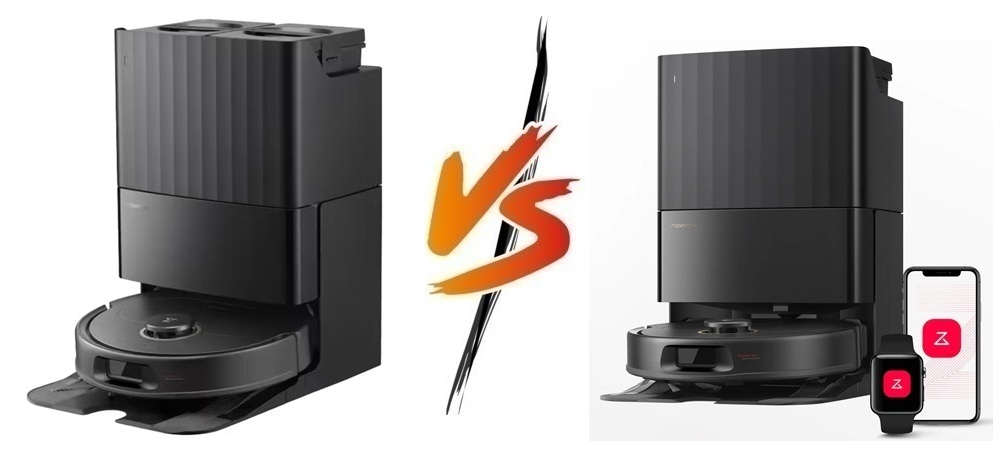
Roborock has become one of the few companies that consistently produces robot vacuums capable of replacing a significant portion of manual floor cleaning. The challenge for buyers today isn’t finding a good robot vacuum. It’s figuring out which Roborock model actually makes the most sense.
The Roborock Qrevo S Pro and Roborock Qrevo S5V sit in a particularly interesting position. Neither is a flagship model, yet both offer features that would have been considered premium just a few years ago. Both combine vacuuming and mopping, both include self-maintaining docking stations, and both aim to deliver a mostly hands-free cleaning experience. However, their priorities differ in ways that become very apparent once you look beyond the marketing materials.
The Qrevo S Pro focuses heavily on raw cleaning power and dock functionality, offering 18,500 Pa suction and hot-water mop washing. The S5V takes a more balanced approach, emphasizing anti-tangle technology and edge-cleaning capabilities through its extending mop system.
After examining the specifications, feature sets, user feedback, and Roborock’s design philosophy, here’s how these two robot vacuums compare in real-world ownership.
Roborock Qrevo S Pro vs Roborock Qrevo S5V Comparison Chart
If you click the links below, under the product images, you will be redirected to Amazon.com. In case you then decide to buy anything, Amazon.com will pay me a commission. This doesn’t affect the honesty of this review in any way though.
| Specification | Roborock Qrevo S Pro | Roborock Qrevo S5V |
|---|---|---|
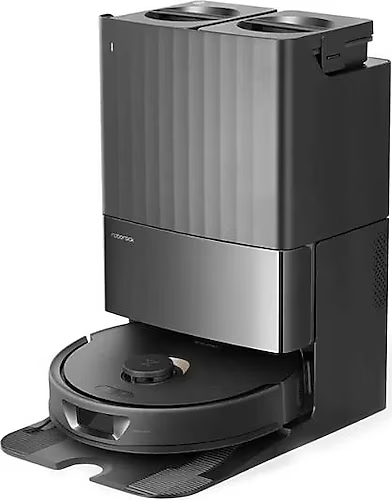 | 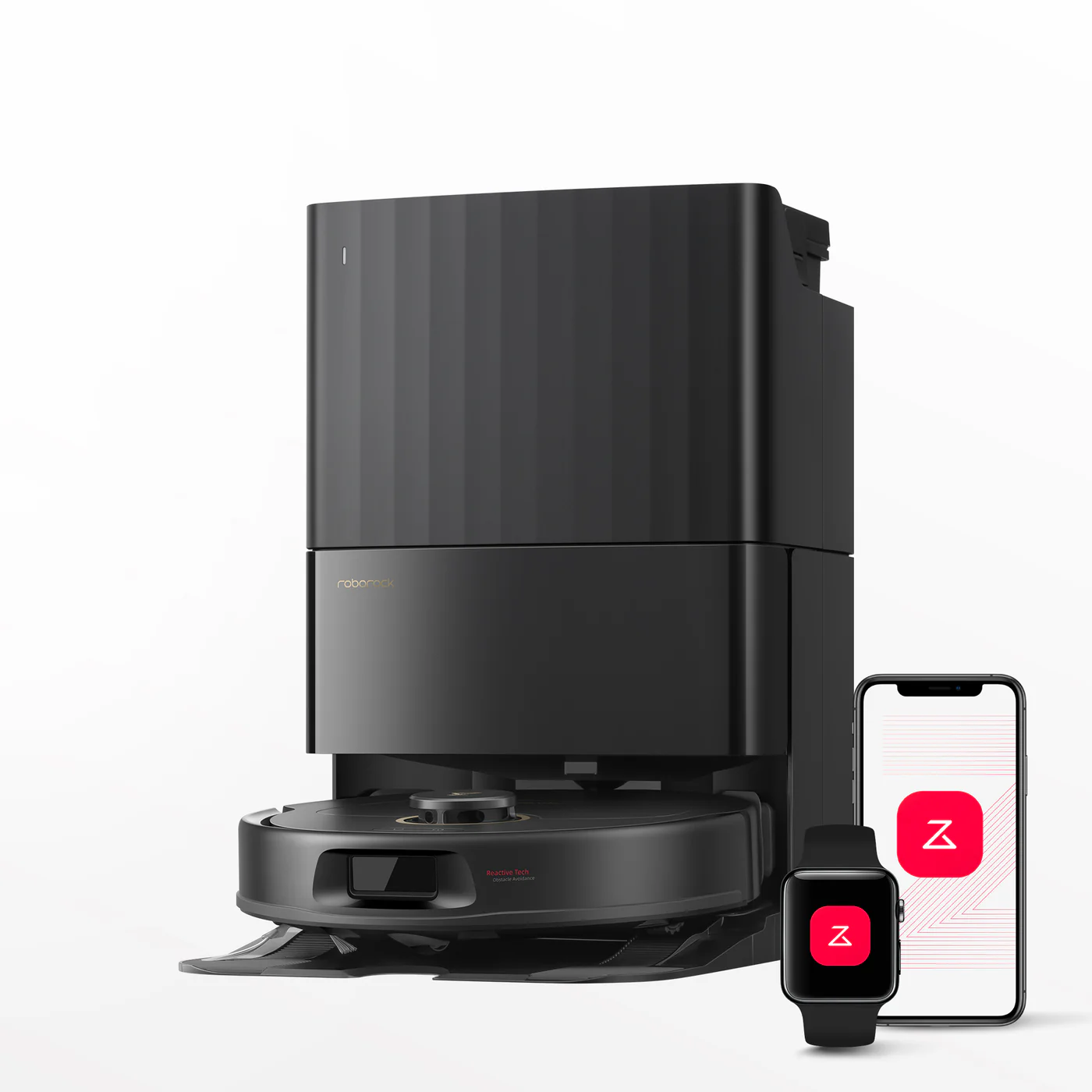 | |
| Check the best price on Amazon | Check the best price on Amazon | |
| Product Type | Robot Vacuum & Mop | Robot Vacuum & Mop |
| Navigation System | PreciSense LiDAR Navigation | PreciSense LiDAR Navigation |
| Obstacle Avoidance | Reactive Tech Obstacle Avoidance | Reactive Tech Obstacle Avoidance |
| Maximum Suction Power | 18,500 Pa | 12,000 Pa |
| Main Brush | Single All-Rubber Brush | DuoDivide Anti-Tangle Brush |
| Anti-Tangle Technology | Basic Hair Resistance | Advanced DuoDivide Anti-Tangle System |
| Side Brush | Standard Side Brush | Anti-Tangle Side Brush |
| Mopping System | Dual Rotating Mop Pads | Dual Rotating Mop Pads |
| Mop Rotation Speed | Up to 200 RPM | Up to 200 RPM |
| Mop Lifting | Yes | Yes |
| Maximum Mop Lift Height | 10 mm | 10 mm |
| Edge Mopping Extension | No | Yes |
| Hot Water Mop Washing | Yes | No |
| Mop Drying | Hot Air Drying | Hot Air Drying |
| Dock Type | Multifunction Dock | Multifunction Dock |
| Automatic Dust Emptying | Yes | Yes |
| Automatic Mop Washing | Yes | Yes |
| Automatic Water Refilling | Yes | Yes |
| Dirty Water Collection | Yes | Yes |
| Dock Self-Cleaning | Yes | Yes |
| Dust Bag Capacity | 2.7 L | 2.7 L |
| Clean Water Tank Capacity | 4 L | 4 L |
| Dirty Water Tank Capacity | 3.5 L | 3.5 L |
| Battery Capacity | 5,200 mAh | 5,200 mAh |
| Maximum Runtime | Up to 180 Minutes | Up to 180 Minutes |
| Automatic Recharge & Resume | Yes | Yes |
| Threshold Crossing Ability | Up to 20 mm | Up to 20 mm |
| Carpet Detection | Yes | Yes |
| Carpet Boost | Yes | Yes |
| SmartPlan Cleaning Mode | SmartPlan 2.0 | SmartPlan |
| Multi-Floor Mapping | Yes | Yes |
| No-Go Zones | Yes | Yes |
| Virtual Walls | Yes | Yes |
| Room-Specific Cleaning | Yes | Yes |
| Selective Room Cleaning | Yes | Yes |
| Zone Cleaning | Yes | Yes |
| Voice Assistant Support | Alexa, Google Assistant, Siri Shortcuts | Alexa, Google Assistant, Siri Shortcuts |
| App Control | Roborock App | Roborock App |
| Pet Hair Handling | Excellent | Excellent+ |
| Carpet Cleaning Performance | Excellent | Very Good |
| Hard Floor Cleaning | Excellent | Excellent |
| Edge Cleaning | Very Good | Excellent |
| Maintenance Requirements | Low | Very Low |
| Best For | Mixed Flooring, Maximum Cleaning Performance, Highest Automation | Pet Owners, Hair Management, Edge Cleaning |
| My individual reviews | Roborock Qrevo S Pro review | Roborock Qrevo S5V review |
Key Differences at a Glance
| Feature | Advantage |
|---|---|
| Suction Power | Qrevo S Pro |
| Carpet Cleaning | Qrevo S Pro |
| Hot Water Mop Washing | Qrevo S Pro |
| Dock Sophistication | Qrevo S Pro |
| Automation Features | Qrevo S Pro |
| Hair Tangle Prevention | Qrevo S5V |
| Pet-Friendliness | Qrevo S5V |
| Edge Mopping | Qrevo S5V |
| Maintenance Convenience | Qrevo S5V |
| Overall All-Round Performance | Qrevo S Pro |
| Specialized Pet Home Performance | Qrevo S5V |
Bottom Line
| Category | Winner |
|---|---|
| Best Overall Robot Vacuum | Roborock Qrevo S Pro |
| Best for Pet Owners | Roborock Qrevo S5V |
| Best for Carpeted Homes | Roborock Qrevo S Pro |
| Best for Hard Floors | Tie |
| Best Mopping System | Roborock Qrevo S Pro |
| Best Edge Cleaning | Roborock Qrevo S5V |
| Best Long-Term Maintenance Experience | Roborock Qrevo S5V |
| Best Value (if similarly priced) | Roborock Qrevo S Pro |
Overall Recommendation: The Roborock Qrevo S Pro is the stronger all-around machine thanks to its substantially higher suction power, hot-water mop washing, and more advanced dock functionality. The Roborock Qrevo S5V remains the better choice for households where pet hair and brush tangles are the primary concern.
Design & Build Quality
Design and build quality are often overlooked when people compare robot vacuums. Most buyers naturally focus on suction power, navigation technology, or mopping performance because those specifications seem easier to measure. Yet after living with a robot vacuum for several months, build quality becomes one of the most important factors in determining long-term satisfaction. A robot vacuum is expected to drive into furniture, transition between different flooring surfaces, navigate around obstacles, dock multiple times per day, and operate with minimal supervision. Poor construction quickly reveals itself under these conditions.
When comparing the Roborock Qrevo S Pro and Roborock Qrevo S5V, it’s immediately obvious that both machines come from the same design philosophy. Roborock has spent years refining its hardware, and these two models represent mature products rather than experimental designs. Neither unit attempts to reinvent the robot vacuum form factor. Instead, both focus on improving proven concepts while maintaining the durability and practicality that Roborock owners have come to expect.
At first glance, the two robots appear nearly identical. Both feature the familiar circular body shape that has become standard throughout the industry. The low-profile design allows each robot to clean underneath beds, sofas, cabinets, and other furniture that would normally require manual cleaning. Their dimensions are compact enough to navigate most modern homes without difficulty while still accommodating a large dustbin, water tank, battery, and navigation hardware.
The top section of both robots is dominated by the LiDAR navigation turret. While some manufacturers have moved toward camera-only navigation systems to reduce overall height, Roborock continues to rely heavily on LiDAR technology because of its proven accuracy and reliability. The turret itself feels solid and well integrated into the overall design. Pressing lightly against it produces no concerning flex or movement, which speaks positively about the internal mounting structure.
One aspect I particularly appreciate about both models is their restrained appearance. Many manufacturers try to make robot vacuums look futuristic through excessive styling elements, glossy surfaces, or aggressive design language. The Qrevo S Pro and Qrevo S5V take a more mature approach. Their appearance is clean, functional, and understated. They blend naturally into most homes rather than drawing attention to themselves.
The plastic materials used throughout both robots feel premium without becoming unnecessarily expensive. The outer shell has enough rigidity to resist flexing when lifted, while the finish does a reasonable job of hiding fingerprints and minor dust accumulation. This might seem like a small detail, but robot vacuums spend most of their lives sitting in plain sight. A finish that constantly looks dirty can become irritating surprisingly quickly.
Examining the body panels more closely reveals tight manufacturing tolerances. Gaps between components remain consistent throughout the chassis, and there are no obvious signs of cost-cutting in the assembly process. Buttons feel responsive and well damped, producing a reassuring click when pressed. The dustbin compartments slide in and out smoothly without feeling loose or fragile.
Where the two robots begin to differ is underneath the chassis.
The Qrevo S Pro follows a more traditional cleaning system layout. Everything feels robust and straightforward. The brush housing is easy to access, and the internal components appear designed with durability in mind. This simplicity can actually be beneficial because fewer moving parts often translate into fewer long-term maintenance concerns. The engineering emphasis seems focused on maximizing cleaning effectiveness while keeping the design practical.
The Qrevo S5V introduces additional complexity through its anti-tangle brush system and edge-cleaning enhancements. These features add sophistication to the underside design. The brush assembly contains more specialized components intended to manage hair and debris before tangles develop. From an engineering perspective, this is impressive because it addresses one of the most common frustrations associated with robot vacuum ownership.
What stands out is that the additional complexity does not make the S5V feel fragile. Everything remains solidly constructed and carefully integrated into the overall chassis. Roborock clearly invested significant effort into ensuring that the advanced brush system feels like a natural extension of the design rather than an afterthought.
The wheels on both models deserve recognition as well. They provide enough suspension travel to handle floor transitions confidently while maintaining traction on a variety of surfaces. Cheaper robot vacuums often struggle when moving between hard flooring and thicker carpets, but both Qrevo models feel stable and composed during these transitions. The wheel assemblies themselves appear sturdy and capable of handling years of daily operation.
Bumper construction is another area where build quality becomes apparent. Both robots feature responsive front bumpers that absorb minor impacts effectively. No robot vacuum completely avoids physical contact with furniture, so bumper durability matters. The bumpers on both models feel well engineered, with smooth movement and consistent responsiveness across their full range of travel.
The docking stations deserve their own discussion because they represent a significant portion of the overall ownership experience.
The Qrevo S Pro’s docking station is arguably one of its strongest design achievements. Despite incorporating advanced self-maintenance features, it remains relatively compact and visually clean. The water tanks are easy to access, the removable cleaning tray simplifies maintenance, and the overall layout feels intuitive. Every component appears to have been positioned with practical use in mind.
What I particularly like about the S Pro dock is how serviceable it feels. Some premium docking stations look attractive initially but become frustrating when routine maintenance is required. The S Pro avoids this trap. Emptying tanks, cleaning trays, and accessing consumables feels straightforward and efficient.
The S5V’s docking station follows a similar design philosophy. It shares much of the same visual language and maintains a strong focus on usability. Build quality remains excellent, with sturdy plastic construction and well-fitting components throughout. The dock feels substantial without becoming excessively bulky.
From a durability perspective, both docking stations inspire confidence. The water reservoirs are thick enough to resist cracking, the docking mechanisms feel precise, and the overall structures appear capable of withstanding years of regular interaction. Since docking stations are handled far more frequently than the robots themselves, this level of durability is particularly important.
Long-term ownership considerations also favor both models. Access panels, filters, brushes, and maintenance components have been designed with user accessibility in mind. Nothing feels unnecessarily complicated. Owners can perform routine maintenance without needing specialized tools or excessive patience.
Ultimately, both the Roborock Qrevo S Pro and Qrevo S5V demonstrate the benefits of mature product development. They feel refined, well engineered, and thoughtfully constructed from top to bottom. The Qrevo S Pro earns a slight advantage because of its exceptionally well-designed docking station and highly practical maintenance features. However, the Qrevo S5V counters with a sophisticated brush system that showcases impressive engineering and attention to real-world usability.
In practical terms, neither robot disappoints in this category. Both feel like premium appliances designed for years of dependable service. The differences are subtle rather than dramatic, which is perhaps the strongest compliment that can be given. Instead of one model feeling significantly better built than the other, both reflect the high manufacturing standards that have helped establish Roborock as one of the most respected names in the robot vacuum market.
Navigation Intelligence & Mapping
Navigation is arguably the most important feature in any robot vacuum. Suction power may be the specification that grabs attention on a product page, but navigation intelligence is what determines whether a robot actually cleans your home effectively. A robot with average suction and excellent navigation will almost always outperform a robot with extreme suction and poor mapping. If the machine cannot find dirt, reach difficult areas, or move efficiently through a home, raw cleaning power becomes largely irrelevant.
This is one of the reasons Roborock has built such a strong reputation in the robot vacuum market. For years, the company has consistently delivered navigation systems that rank among the best available. The Roborock Qrevo S Pro and Roborock Qrevo S5V continue that tradition, offering highly sophisticated mapping and route-planning capabilities that place them well above entry-level competitors.
At a fundamental level, both robots rely on LiDAR navigation technology. The laser sensor mounted on top of the robot continuously scans the environment as the machine moves throughout the home. Unlike camera-only navigation systems, LiDAR works reliably regardless of lighting conditions. Whether the robot is cleaning in bright daylight, dim evening lighting, or complete darkness, mapping accuracy remains consistent.
This immediately creates an advantage in real-world use.
Many robot vacuums perform reasonably well during the day but become noticeably less effective at night when camera systems struggle to identify environmental features. The Qrevo S Pro and Qrevo S5V avoid this problem entirely. They can operate at 2 PM or 2 AM with virtually identical navigation performance.
The first mapping run is usually the moment that reveals how intelligent a robot vacuum truly is. Some robots require multiple passes before producing a usable floor plan. Others generate maps that require extensive manual editing afterward.
Both Qrevo models perform impressively during initial mapping.
The robots move confidently through the home, identifying room boundaries, walls, furniture locations, and floor transitions with remarkable speed. Within a relatively short period, users are presented with a detailed map that accurately reflects the layout of the home. In most cases, room divisions are identified correctly without requiring manual intervention.
This may not sound particularly exciting until you’ve experienced a robot that performs poorly in this area. Incorrect room segmentation can create endless frustrations later. Rooms merge together when they shouldn’t. Hallways become misidentified. Cleaning schedules become harder to manage. Fortunately, both Roborock models handle these tasks exceptionally well.
One of the biggest strengths shared by the Qrevo S Pro and Qrevo S5V is their ability to clean methodically rather than randomly.
Years ago, many robot vacuums relied on relatively simple navigation systems. They bounced from obstacle to obstacle, gradually covering a room through repeated passes. While they eventually cleaned most areas, the process was inefficient and time-consuming.
The Qrevo series takes a completely different approach.
Both robots first create a detailed understanding of the environment and then generate structured cleaning paths. Rather than wandering aimlessly, they clean in organized rows, systematically covering each section of the floor. Watching them operate often feels more like observing a carefully programmed machine than a traditional household appliance.
The efficiency benefits become especially noticeable in larger homes.
Because the robots know where they have already cleaned, they avoid wasting battery life revisiting the same areas unnecessarily. Cleaning sessions finish faster, battery consumption remains lower, and overall coverage improves.
When comparing the two models directly, however, some subtle differences begin to emerge.
The Qrevo S Pro appears to benefit from slightly more advanced software refinement. While the underlying navigation hardware is very similar, the S Pro’s route planning often feels a bit more polished. It tends to make smarter decisions regarding cleaning order, room prioritization, and cleaning intensity.
For example, when using automatic cleaning modes, the S Pro often demonstrates a stronger understanding of room context. Kitchens, entryways, and high-traffic areas may receive more intensive treatment, while lower-traffic spaces are handled more efficiently. The result is a system that requires less user intervention over time.
This does not mean the S5V performs poorly. Far from it.
In fact, if the two robots were tested side by side in many homes, most users would struggle to identify major navigation differences. Both are highly capable machines. The advantage simply lies in the finer details of software optimization.
Obstacle avoidance represents another crucial area of navigation performance.
Modern homes contain countless navigation challenges. Power cables, pet toys, shoes, chair legs, floor lamps, backpacks, and clothing items all create potential obstacles. A robot vacuum must not only identify these objects but also determine how to navigate around them efficiently.
Both the Qrevo S Pro and Qrevo S5V perform well here.
Large obstacles are rarely problematic. Furniture, walls, tables, and chairs are identified accurately and incorporated into cleaning routes without difficulty. The robots move smoothly around these obstacles while maintaining consistent cleaning coverage.
Where things become more complicated is with smaller objects.
Like most robot vacuums in their category, neither model is completely immune to issues involving thin cables, charging cords, socks, or scattered toys. While obstacle avoidance technology has improved dramatically in recent years, certain household items remain challenging for all robot vacuums.
That said, both models generally perform better than average in this area. They are less likely to become trapped than many competing products and recover effectively when unexpected situations arise.
Multi-floor mapping is another area where Roborock continues to excel.
Many households today contain multiple levels, and manually recreating maps each time the robot changes floors would quickly become frustrating. Both the Qrevo S Pro and Qrevo S5V support multiple stored floor plans, allowing users to move the robot between levels without starting from scratch.
This feature significantly improves flexibility.
Once a new floor has been mapped, the robot can recognize it automatically and apply previously saved cleaning settings. Room names, no-go zones, schedules, and cleaning preferences remain intact, reducing the amount of manual configuration required.
The companion app also deserves substantial credit for the overall navigation experience.
A robot vacuum’s intelligence is only useful if users can interact with it effectively. Roborock’s app remains one of the strongest in the industry because it presents complex navigation data in a simple, intuitive format.
Maps are clear and easy to understand. Room boundaries can be adjusted with minimal effort. Virtual walls can be placed precisely where needed. Specific zones can be targeted for cleaning without requiring the entire home to be vacuumed.
This level of control becomes increasingly valuable over time.
For example, if someone spills coffee in the kitchen, they can simply send the robot to clean that specific area. If guests are arriving and only the living room needs attention, targeted room cleaning takes only a few taps.
Another impressive aspect of both robots is their ability to resume cleaning intelligently after interruptions.
If battery capacity becomes low during a cleaning session, the robot returns to the dock, recharges, and then resumes cleaning exactly where it left off. This sounds simple, but executing it accurately requires sophisticated mapping and location tracking. Both models handle the process smoothly, ensuring complete coverage even in larger homes.
Long-term reliability is equally important when evaluating navigation systems.
Some robots perform well initially but gradually develop mapping inconsistencies as software ages or environmental conditions change. Roborock’s navigation platform has generally proven reliable over extended periods, and both the Qrevo S Pro and Qrevo S5V appear to continue that trend.
Weeks and months after setup, users can expect consistent navigation performance with minimal need for remapping or troubleshooting.
Overall, the navigation experience delivered by both robots is excellent. The Qrevo S5V provides fast, accurate, and highly dependable mapping that will satisfy the vast majority of users. The Qrevo S Pro, meanwhile, adds a layer of refinement that makes the entire system feel slightly more intelligent and autonomous.
The difference is not dramatic enough to define the purchasing decision on its own, but it is noticeable. Both robots demonstrate why Roborock remains one of the industry’s strongest navigation leaders, while the Qrevo S Pro edges ahead through superior software polish and smarter automated decision-making. For buyers seeking the most capable navigation package available between these two models, the Qrevo S Pro earns a narrow but deserved victory.
Vacuuming Performance
Vacuuming performance is the category that most buyers pay attention to first, and understandably so. At the end of the day, a robot vacuum exists to remove dirt, dust, hair, crumbs, and debris from your floors. Everything else, from navigation to smart features, ultimately serves that primary purpose. If a robot cannot clean effectively, its advanced technology means very little.
When comparing the Roborock Qrevo S Pro and Roborock Qrevo S5V, vacuuming performance becomes one of the most interesting parts of the comparison because these robots take slightly different approaches to achieving excellent results. The Qrevo S Pro focuses on maximizing raw cleaning power, while the Qrevo S5V places greater emphasis on maintaining consistent cleaning performance through advanced brush engineering and anti-tangle technology.
The result is that both robots perform extremely well, but they excel in different situations.
Before diving into specific floor types and cleaning scenarios, it’s important to understand that modern robot vacuums have improved dramatically compared to earlier generations. Just a few years ago, robot vacuums were often considered maintenance tools rather than primary cleaning devices. They helped reduce dust accumulation but rarely replaced traditional vacuuming entirely.
That is no longer the case.
Both the Qrevo S Pro and Qrevo S5V belong to a generation of robot vacuums capable of delivering genuinely impressive cleaning results. For many households, they can handle the majority of floor cleaning needs with only occasional supplemental cleaning from a cordless or upright vacuum.
The most obvious difference between these two models lies in suction power.
The Qrevo S Pro offers significantly higher maximum suction. On paper, this gives it an immediate advantage, particularly when dealing with deeply embedded debris. Higher suction allows the vacuum to generate stronger airflow through the cleaning system, which improves its ability to lift dirt from textured surfaces and carpets.
In practice, the benefits are most noticeable on carpets and rugs.
Hard floors are relatively easy for modern robot vacuums to clean. Dust, pet hair, crumbs, and loose debris generally sit on the surface, making them accessible even to moderate suction systems. As a result, both the Qrevo S Pro and Qrevo S5V perform extremely well on hardwood, laminate, tile, vinyl, and similar flooring types.
Running either robot across a hard floor typically produces excellent results. Fine dust is collected effectively, larger debris is removed with little difficulty, and visible dirt disappears after a single pass in most situations.
The differences become more apparent when carpets enter the equation.
Carpets trap dirt beneath the surface fibers. Dust, hair, sand, and other particles settle deep within the pile, making extraction considerably more challenging. This is where the Qrevo S Pro’s stronger suction begins to justify its specifications.
During carpet cleaning, the S Pro demonstrates a greater ability to pull embedded debris upward from within the carpet structure. Fine particles that might remain trapped after weaker cleaning passes are more likely to be removed. Homes with extensive carpeting will benefit from this additional cleaning power, particularly in high-traffic areas where dirt tends to accumulate over time.
The advantage becomes even more noticeable with low- and medium-pile carpeting. These surfaces allow the airflow generated by the vacuum to penetrate effectively, maximizing the benefits of the increased suction.
For homeowners with large carpeted living rooms, hallways, bedrooms, or family spaces, the Qrevo S Pro generally provides stronger overall carpet-cleaning performance.
However, vacuuming performance is not determined by suction alone.
One of the biggest mistakes consumers make is assuming that higher suction automatically guarantees superior cleaning results. While suction is important, brush design plays an equally critical role.
This is where the Qrevo S5V begins to shine.
The S5V incorporates Roborock’s advanced anti-tangle brush system, which addresses one of the most persistent challenges faced by robot vacuums: hair accumulation.
Anyone who has owned a robot vacuum in a household with long-haired individuals or shedding pets understands the problem. Hair wraps around the main roller brush, gradually reducing cleaning effectiveness. Over time, tangled hair can restrict brush movement, decrease pickup performance, and increase maintenance requirements.
The S5V is specifically designed to minimize this issue.
Its brush system actively directs hair toward collection points while reducing the likelihood of wrapping around rotating components. This may not sound as impressive as a headline suction figure, but in everyday use it can have a significant impact on long-term performance.
A vacuum that maintains ninety-five percent of its cleaning ability week after week may ultimately outperform a more powerful vacuum whose brush becomes partially clogged between maintenance sessions.
This distinction becomes particularly important in pet households.
Dog hair and cat hair create unique cleaning challenges because they behave differently from ordinary dust and debris. Hair tends to cling to surfaces, wrap around rollers, and accumulate in corners. The Qrevo S5V’s brush design is exceptionally effective at handling these conditions.
During routine cleaning sessions, pet hair is collected efficiently without creating the maintenance headaches often associated with traditional brush designs. Owners spend less time cutting tangled hair from rollers and more time enjoying the benefits of automated cleaning.
The Qrevo S Pro remains highly capable in this area as well. Its stronger suction helps capture loose pet hair effectively, especially on carpets and rugs. However, it generally requires slightly more brush maintenance over time.
Edge cleaning is another important aspect of vacuuming performance.
Robot vacuums naturally struggle with edges because their circular shape prevents the cleaning system from reaching every corner perfectly. Both models use side brushes to sweep debris toward the main suction path, helping improve coverage along walls and furniture.
In day-to-day use, both robots perform well around room perimeters. Dust accumulation along baseboards is reduced significantly, and debris is generally collected efficiently during regular cleaning cycles.
Corners remain one of the few areas where manual intervention may occasionally be necessary, although both robots perform better than many competing models.
Fine dust collection deserves special mention because it often reveals the true effectiveness of a vacuuming system.
Large crumbs are easy to see and easy to remove. Fine dust is more difficult. It settles into flooring textures, accumulates under furniture, and contributes significantly to overall indoor cleanliness.
Both the Qrevo S Pro and Qrevo S5V excel at collecting fine particulate matter.
The combination of strong airflow, effective filtration, and intelligent cleaning patterns allows both robots to remove dust efficiently from a wide variety of surfaces. Homes with allergies or sensitivities will likely benefit from the consistent dust reduction provided by either model.
The difference once again comes down to emphasis.
The Qrevo S Pro focuses on maximum extraction capability. It attacks dirt aggressively and delivers exceptional cleaning performance, especially on carpets.
The Qrevo S5V focuses on maintaining that performance consistently over time through improved brush management and reduced maintenance requirements.
Battery efficiency during vacuuming is also worth considering.
High suction levels naturally require more energy. The Qrevo S Pro can consume battery power more quickly when operating at maximum settings, particularly on carpets where automatic suction boosting is activated. The S5V’s slightly lower suction requirements may allow it to operate somewhat more efficiently under certain conditions.
In most homes, however, the difference is unlikely to be significant enough to influence purchasing decisions.
What ultimately makes this comparison difficult is that both robots solve different problems exceptionally well.
The Qrevo S Pro is the better choice for users who prioritize absolute cleaning power. If your home contains extensive carpeting, heavy dirt accumulation, or challenging cleaning conditions, the additional suction provides meaningful benefits.
The Qrevo S5V is the better choice for users who prioritize maintenance-free operation. Homes with pets, long hair, or frequent hair accumulation may benefit more from the anti-tangle brush system than from higher suction figures.
After extensive consideration, I would characterize the Qrevo S Pro as the stronger vacuum cleaner in purely technical terms. Its ability to extract dirt from carpets and remove embedded debris gives it a measurable performance advantage.
At the same time, the Qrevo S5V deserves enormous credit for addressing one of the most common frustrations associated with robot vacuum ownership. By reducing brush tangles and maintaining cleaning efficiency over longer periods, it delivers a user experience that many households may actually prefer.
The result is a rare category where declaring a clear winner feels somewhat misleading. The Qrevo S Pro delivers superior raw vacuuming performance, while the Qrevo S5V delivers superior vacuuming convenience. Which matters more depends entirely on the home in which the robot will operate.
Mopping Capability
Robot vacuum mopping systems have improved more in the past five years than almost any other category of home cleaning technology. There was a time when “mopping” simply meant dragging a damp microfiber cloth across the floor. Those systems could remove a light layer of dust, but they struggled with footprints, dried spills, kitchen residue, and other real-world messes. For many homeowners, the mopping function felt more like a marketing feature than a practical cleaning solution.
The Roborock Qrevo S Pro and Roborock Qrevo S5V belong to a much newer generation of robot vacuum cleaners. These machines are designed not merely to dampen floors but to actively scrub them. While neither robot can completely replace the deep-cleaning ability of a traditional mop and bucket when tackling severe messes, both come surprisingly close during everyday maintenance cleaning.
In fact, for many households, the mopping systems found in these two models may end up being used more frequently than the vacuuming functions themselves. Hard flooring has become increasingly common in modern homes, and keeping those surfaces clean often requires regular mopping rather than repeated vacuuming.
At first glance, both robots appear very similar.
Each uses dual rotating mop pads mounted underneath the chassis. This design has become one of the most effective approaches currently available in the robot vacuum market. Instead of simply dragging a stationary pad across the floor, the mop pads actively rotate while applying pressure to the surface below.
The difference may sound minor, but it dramatically improves cleaning performance.
Rotating pads create a scrubbing action that helps loosen dirt, remove dried residue, and break up grime that would otherwise remain attached to the floor. This approach allows both robots to tackle messes that older mopping systems would simply glide over.
During everyday cleaning, both the Qrevo S Pro and Qrevo S5V perform exceptionally well on hard surfaces such as hardwood, laminate, vinyl, tile, and sealed stone flooring.
Dust residue disappears easily.
Footprints are removed effectively.
Light kitchen spills are cleaned without difficulty.
Everyday dirt tracked in from outside is generally handled in a single pass.
This level of performance is important because most homeowners are not dealing with catastrophic messes every day. The primary purpose of a robot mop is maintaining cleanliness consistently enough that major cleaning sessions become less frequent. In that regard, both models succeed remarkably well.
However, while the foundation of their mopping systems is similar, the two robots diverge significantly in how they approach the finer details of floor cleaning.
The Qrevo S Pro’s biggest advantage lies not in the robot itself but in the docking station.
One of the least glamorous yet most important aspects of robot mopping is mop maintenance. Dirty mop pads can quickly become a problem. As they repeatedly contact floor contaminants, they accumulate oils, dust, bacteria, and residue. Without proper cleaning, mopping performance gradually declines.
This is where the S Pro’s hot-water washing system becomes a major advantage.
The docking station actively cleans the mop pads using heated water, helping remove grease, dirt, and stubborn residue more effectively than traditional cold-water cleaning systems. The difference is particularly noticeable in kitchens, where cooking oils and food particles often create more challenging cleaning conditions.
Over time, cleaner mop pads lead to better mopping performance.
A freshly washed mop pad simply cleans floors more effectively than one carrying accumulated residue from previous cleaning cycles.
The hygiene benefits should not be overlooked either.
One of the common complaints associated with earlier robot mopping systems was odor development. Damp mop pads left sitting between cleaning cycles could eventually produce unpleasant smells. The S Pro’s more advanced cleaning process helps minimize this issue and contributes to a fresher overall ownership experience.
In practical terms, this means the robot is better prepared for each cleaning session.
Instead of beginning every mopping run with partially cleaned pads, it starts with mop pads that are significantly cleaner and more effective.
The Qrevo S5V takes a different approach.
Rather than focusing primarily on pad maintenance, it focuses on improving floor coverage.
Its most notable feature is the extending mop system, which allows the robot to clean closer to edges and walls than traditional designs.
This addresses one of the longstanding limitations of robot mops.
Because robot vacuums are circular, their cleaning components naturally sit slightly inward from the outer edge of the machine. As a result, narrow strips of flooring near walls and baseboards can sometimes remain untouched.
The S5V attempts to solve this problem through an extending mop mechanism that reaches farther toward edges during cleaning.
The improvement is surprisingly noticeable in certain environments.
Bathrooms often contain numerous edges and narrow spaces where dirt accumulates. Kitchens feature cabinets, appliances, and toe kicks that create similar challenges. In these situations, the S5V’s extended reach allows it to clean areas that many robot mops struggle to access effectively.
For homeowners who pay close attention to edge cleanliness, this feature can become one of the robot’s most appealing characteristics.
The difference may only involve a few centimeters of additional reach, but those centimeters often determine whether visible dirt remains behind after a cleaning cycle.
Another important aspect of mopping performance involves water management.
Both robots perform well here.
Neither floods floors with excessive moisture, nor do they leave surfaces overly dry. Water distribution feels controlled and consistent, allowing the mop pads to remain sufficiently damp without creating puddles or streaking issues.
This balance is critical for protecting sensitive flooring materials.
Excessive moisture can damage certain wood floors over time, while insufficient moisture reduces cleaning effectiveness. Both the Qrevo S Pro and Qrevo S5V strike a sensible balance that should satisfy most homeowners.
The handling of dried stains provides another useful performance benchmark.
Fresh spills are relatively easy for any mop to address. Dried stains are more challenging because they require sustained contact, pressure, and scrubbing action.
Both robots perform impressively when confronted with dried beverage spills, light food residue, and similar household messes.
The rotating mop system allows them to apply continuous scrubbing pressure, gradually loosening material that would resist simpler cleaning mechanisms.
That said, expectations should remain realistic.
Neither robot can completely replicate the focused scrubbing power of a person manually cleaning a stubborn stain. Deeply dried or heavily soiled areas may still require occasional manual intervention.
For regular maintenance cleaning, however, both systems perform at a level that would have seemed remarkable only a few years ago.
Carpet interaction is another area where modern robot mops have improved substantially.
Earlier robot mops often required users to remove mop attachments before cleaning carpeted rooms. This created inconvenience and reduced automation.
Both the Qrevo S Pro and Qrevo S5V feature automatic mop lifting capabilities.
When carpet is detected, the mop pads lift away from the floor, reducing the risk of transferring moisture onto carpeted surfaces. This allows the robots to navigate mixed-floor homes much more effectively.
The transition process feels seamless during operation.
The robot moves confidently from hard flooring to carpet and back again without requiring user intervention.
From a long-term ownership perspective, consistency matters just as much as raw cleaning ability.
A robot mop that performs brilliantly for a month before becoming difficult to maintain ultimately provides a worse experience than a slightly less aggressive system that remains reliable over time.
This is why the comparison between these two models becomes so interesting.
The Qrevo S Pro prioritizes mop cleanliness and long-term hygiene. Its advanced dock ensures that the mopping system remains effective day after day with minimal owner involvement.
The Qrevo S5V prioritizes floor coverage. Its extending mop mechanism actively improves edge cleaning and addresses one of the most visible weaknesses of many robot mops.
Choosing between them depends largely on which limitation bothers you more.
If your primary concern is maintaining consistently clean mop pads with minimal maintenance, the Qrevo S Pro offers a superior solution.
If your primary concern is maximizing floor coverage along walls, cabinets, and edges, the Qrevo S5V delivers a more specialized approach.
Personally, I give a slight overall advantage to the Qrevo S Pro.
The reason is simple: every square centimeter of floor the robot cleans benefits from cleaner mop pads. The advantages of hot-water mop maintenance affect the entire cleaning process rather than a specific subset of floor areas.
That does not diminish the accomplishment of the S5V. Its edge-cleaning capabilities solve a genuine problem and produce visibly better results around room perimeters.
Ultimately, both robots offer some of the strongest mopping systems currently available in their class. The Qrevo S Pro focuses on maintaining peak mopping performance over time, while the Qrevo S5V focuses on expanding cleaning coverage. Neither approach is wrong, but for most households seeking the most complete mopping experience, the Qrevo S Pro’s dock-driven advantages give it a narrow but meaningful lead.
Maintenance & Cleaning Requirements
Maintenance is one of the least exciting topics in any robot vacuum review, yet it is often one of the most important factors influencing long-term satisfaction. A robot vacuum may offer excellent suction, advanced navigation, and impressive mopping capabilities, but if it constantly requires attention, cleaning, untangling, or troubleshooting, the ownership experience can quickly become frustrating.
This is particularly relevant in the robot vacuum market because the entire purpose of these machines is convenience. Buyers invest in robotic cleaning systems because they want to spend less time maintaining clean floors, not because they want to add another appliance that requires frequent care.
The Roborock Qrevo S Pro and Roborock Qrevo S5V both aim to minimize maintenance through extensive automation. However, they approach this goal in slightly different ways. The Qrevo S Pro focuses on reducing mop-related maintenance through a highly advanced docking station, while the Qrevo S5V places greater emphasis on reducing brush maintenance through its anti-tangle cleaning system.
The result is an interesting comparison between two robots that are both highly automated but prioritize different aspects of ownership convenience.
To understand why this matters, it’s helpful to consider what robot vacuum maintenance actually involves.
Many first-time buyers assume a robot vacuum can be completely ignored after setup. While modern systems come closer to that ideal than ever before, some maintenance remains unavoidable.
Dustbins eventually need emptying.
Filters require periodic cleaning.
Brushes collect hair.
Water tanks need refilling.
Mop pads require washing.
Sensors accumulate dust.
Docking stations occasionally need attention.
The quality of a robot vacuum’s maintenance system is largely determined by how effectively it minimizes these responsibilities.
Starting with dust management, both robots perform exceptionally well.
Each model includes an automatic self-emptying dock that transfers collected debris from the robot’s internal dustbin into a larger dust bag stored inside the docking station. This dramatically reduces the frequency with which owners need to interact with the dust collection system.
Without automatic emptying, many robot vacuums require dustbin attention every few cleaning sessions. In homes with pets, large families, or high traffic levels, daily emptying may even become necessary.
The self-emptying docks largely eliminate this issue.
Instead of interacting with the dustbin every few days, owners can often go weeks before needing to replace the dock’s larger dust bag.
For most households, this represents one of the most significant convenience upgrades available in modern robot vacuums.
The process itself is generally reliable on both machines. Debris transfers efficiently, and dust containment remains excellent throughout the operation. The result is less mess, less exposure to allergens, and fewer interruptions to automated cleaning schedules.
The real differences emerge when examining brush maintenance.
Hair is one of the most common maintenance challenges faced by robot vacuum owners.
Long human hair, pet hair, and fibers from rugs can gradually wrap around the main brush roller. Over time, these tangles reduce cleaning efficiency and require manual removal.
Anyone who has owned a traditional robot vacuum is familiar with the process. The brush must be removed, tangled hair must be cut away, and the roller must be cleaned before being reinstalled.
Depending on household conditions, this process can become surprisingly frequent.
This is where the Qrevo S5V gains a meaningful advantage.
Its anti-tangle brush system is specifically designed to minimize hair accumulation around the roller. Instead of allowing hair to wrap tightly around rotating components, the system actively guides strands toward the dust collection path.
In practical use, this significantly reduces maintenance requirements.
Pet owners are likely to notice the difference immediately.
Homes with long-haired family members will notice it as well.
Rather than spending time removing tangled hair every week, owners may find themselves performing brush maintenance far less frequently.
The impact on convenience is substantial because brush cleaning is often one of the most annoying maintenance tasks associated with robot vacuums.
The Qrevo S Pro uses a more traditional brush design.
It remains effective from a cleaning perspective, but it does not offer the same level of hair-management sophistication. As a result, owners may need to perform brush inspections and cleaning more regularly, particularly in homes with heavy hair accumulation.
That does not mean maintenance becomes burdensome.
Compared to older robot vacuums, the S Pro still requires relatively little attention.
The difference simply becomes noticeable when directly compared to the S5V’s advanced anti-tangle system.
Mop maintenance introduces another major area of distinction.
Historically, robot mops have often created their own maintenance challenges. Dirty mop pads accumulate grime, develop odors, and gradually lose cleaning effectiveness if not cleaned regularly.
The Qrevo S Pro addresses this issue aggressively through its advanced docking station.
After cleaning sessions, the robot returns to the dock, where the mop pads undergo an automated washing process. The use of heated water improves the removal of dirt, oils, and residue from the pads.
This has two important benefits.
First, the pads remain cleaner over time.
Second, the owner spends less time manually cleaning or replacing mop pads.
The difference becomes increasingly valuable as ownership continues. Clean mop pads contribute not only to better floor cleaning but also to improved hygiene and odor control.
The dock itself also feels designed with maintenance in mind.
The removable cleaning tray simplifies periodic cleaning and reduces the effort required to keep the station functioning properly. Components are easy to access, and routine upkeep rarely feels complicated.
The Qrevo S5V also provides automated mop maintenance, but its approach is somewhat less sophisticated.
The system still reduces manual work significantly compared to traditional robot mops, but the dock places slightly more responsibility on the owner over time. Mop pads remain reasonably clean, yet the overall maintenance process lacks some of the refinement found in the S Pro’s dock.
Again, this is a matter of degrees rather than a dramatic difference.
Both systems are highly automated compared to many alternatives.
The Qrevo S Pro simply pushes automation slightly further.
Water management is another area worth examining.
Both robots use clean-water and dirty-water tanks housed within their docking stations. This arrangement minimizes the need for frequent refilling and emptying.
Most owners will find that tank maintenance becomes a weekly task rather than a daily one.
The tanks themselves are easy to remove and reinstall. Handles are comfortable, openings are large enough for convenient cleaning, and overall usability is excellent.
This may sound like a small detail, but poorly designed water tanks can make routine maintenance surprisingly frustrating.
Fortunately, neither robot suffers from that problem.
Filter maintenance remains relatively straightforward as well.
Both robots use accessible filtration systems that can be removed, cleaned, and replaced without difficulty. Periodic filter cleaning helps maintain suction performance and supports overall system efficiency.
Replacement intervals are reasonable, and the app provides useful reminders when maintenance tasks become necessary.
This highlights another strength shared by both models: maintenance tracking.
The Roborock app monitors component wear and usage, providing reminders when filters, brushes, mop pads, or other consumables require attention.
This proactive approach helps prevent performance degradation and reduces the likelihood that owners will forget important maintenance tasks.
Sensor cleaning deserves brief mention too.
Like all robot vacuums, both models rely on various sensors for navigation, obstacle detection, and docking. Dust accumulation can occasionally interfere with performance if sensors are ignored for extended periods.
Fortunately, sensor access is excellent on both machines.
A quick wipe with a microfiber cloth is generally sufficient to keep everything operating correctly.
When evaluating overall maintenance requirements, it becomes clear that both robots perform exceptionally well by modern standards.
Neither machine demands excessive attention.
Neither feels high-maintenance.
Both succeed in delivering a largely automated cleaning experience that significantly reduces household workload.
The difference lies in where they focus their engineering efforts.
The Qrevo S Pro excels at dock automation, mop maintenance, and long-term cleanliness. Its sophisticated dock reduces owner involvement and keeps the entire mopping system operating at peak effectiveness.
The Qrevo S5V excels at brush maintenance and hair management. Its anti-tangle technology directly addresses one of the most common frustrations associated with robot vacuum ownership.
If your household includes pets, long hair, or frequent brush tangles, the S5V’s maintenance advantages may outweigh every other consideration.
If your priority is maximizing automation and minimizing interaction with the mopping system, the S Pro offers a more refined ownership experience.
Overall, I would give a slight edge to the Qrevo S5V in this category.
While the S Pro’s dock is undeniably impressive, brush maintenance is often the task owners encounter most frequently. By dramatically reducing hair tangles and brush cleaning requirements, the S5V removes one of the biggest annoyances associated with robotic floor care.
Both robots make maintenance remarkably easy. The S5V simply manages to make it slightly easier.
Ergonomics & Usability
When people think about robot vacuum cleaners, ergonomics is rarely the first category that comes to mind. The term is usually associated with handheld appliances, office chairs, or computer peripherals rather than autonomous cleaning machines. Yet after spending weeks or months living with a robot vacuum, ergonomics and usability often become more important than raw specifications.
The reason is simple.
A robot vacuum is designed to reduce effort. Every aspect of the ownership experience should make life easier, not more complicated. The best robot vacuum is not necessarily the one with the strongest suction or the most advanced feature list. It is the one that integrates seamlessly into daily life and quietly performs its job with minimal intervention.
This is an area where both the Roborock Qrevo S Pro and Roborock Qrevo S5V perform extremely well. Roborock has spent years refining not only its hardware but also the overall user experience. These robots feel less like gadgets and more like mature household appliances that have been designed around real-world use.
From the moment the robots are removed from their packaging, the emphasis on usability becomes apparent.
Initial setup is straightforward and largely stress-free. The docking station requires basic assembly, the water tanks are easy to install, and the app guides users through the connection process in a logical manner. Even people with limited experience using smart home devices should find the setup process manageable.
This matters more than it may seem.
Many robotic appliances promise convenience but create frustration during installation. Complicated onboarding processes can leave users feeling overwhelmed before the first cleaning session even begins. Fortunately, neither the Qrevo S Pro nor the Qrevo S5V suffers from this issue.
Once the robots are connected to the app, users are greeted with one of the strongest software experiences in the robot vacuum industry.
The Roborock app plays a central role in the usability of both machines. In many ways, the app serves as the primary control interface, and its quality directly influences the overall ownership experience.
Thankfully, the software is intuitive, responsive, and remarkably polished.
Maps are easy to understand.
Rooms are clearly labeled.
Settings are logically organized.
Important functions are easy to find.
This may sound obvious, but many competing robot vacuum apps struggle with cluttered interfaces and confusing navigation. Roborock has managed to create a system that feels powerful without becoming intimidating.
For new users, the app offers enough guidance to make operation simple.
For advanced users, it provides enough customization to satisfy even the most demanding cleaning preferences.
One of the biggest usability strengths shared by both robots is the flexibility of cleaning customization.
Users can create room-specific cleaning schedules, adjust suction levels, modify water flow settings, establish no-go zones, define virtual walls, and create targeted cleaning routines.
Despite the depth of available options, the system rarely feels complicated.
The interface does an excellent job of hiding complexity until it is needed.
A casual user can simply press “Clean” and allow the robot to handle everything automatically.
A power user can spend hours fine-tuning room behavior if desired.
Both approaches are equally well supported.
Day-to-day operation is equally impressive.
The robots consistently demonstrate a high degree of autonomy. Once schedules are configured, they require very little attention. They leave the dock, complete their cleaning tasks, return automatically, and manage many maintenance functions without user involvement.
This creates one of the most satisfying aspects of robot vacuum ownership: the feeling that cleaning is happening in the background.
Instead of planning cleaning sessions around your schedule, the robot quietly works around your life.
This is where the Qrevo S Pro gains one of its most significant usability advantages.
Its enhanced automation features make the robot feel particularly independent.
The cleaning system adapts intelligently to different environments and often requires fewer manual adjustments. Users who prefer a “set it and forget it” experience will likely appreciate this approach.
The robot feels capable of making sensible decisions without constant oversight.
The Qrevo S5V is also highly automated, but its strengths lie elsewhere. Its usability advantages are tied more closely to maintenance reduction than software intelligence. The anti-tangle brush system reduces one of the most common interruptions in robot vacuum ownership.
From a usability perspective, reducing maintenance is just as valuable as improving software.
A robot that requires less cleaning and fewer interventions naturally feels easier to live with.
Physical ergonomics are another important consideration.
Although robot vacuums operate autonomously, owners still interact with them regularly.
Water tanks need filling.
Dust bags require replacement.
Components occasionally need cleaning.
The robot may need to be carried between floors.
These interactions reveal whether a product has been designed thoughtfully.
Fortunately, both the Qrevo S Pro and Qrevo S5V perform very well in this regard.
The water tanks are easy to remove and reinstall.
Handles feel comfortable and secure.
Tank openings are large enough to simplify filling and cleaning.
There is very little fumbling involved.
The dust collection system is similarly user-friendly. Accessing the dust bag compartment is straightforward, and replacement requires only a few seconds.
The robots themselves are also easy to handle.
Their weight feels manageable, making transportation between floors relatively simple. The body design provides enough grip to lift the robot confidently without feeling awkward.
Button placement is another small but meaningful detail.
The physical controls on both robots are intuitive and responsive. Although most users will rely heavily on the smartphone app, having accessible onboard controls remains useful for quick commands or troubleshooting.
Voice control support further enhances usability.
Both robots integrate well with major smart home ecosystems, allowing users to initiate cleaning sessions through voice assistants.
This may seem like a novelty feature initially, but many owners eventually incorporate voice commands into their daily routines.
Being able to say, “Clean the kitchen,” or “Start vacuuming,” without opening an app can become surprisingly convenient.
Scheduling functionality is equally strong.
Users can create highly detailed cleaning routines based on time, room, cleaning intensity, and other variables.
For example, the robot can be configured to clean the kitchen every morning, vacuum high-traffic areas every evening, and perform a full-house cleaning twice per week.
Once established, these schedules operate reliably in the background.
This level of automation contributes significantly to the feeling that the robot is genuinely reducing household workload.
Another area where usability shines is recovery behavior.
No robot vacuum is perfect.
Occasionally, furniture is moved.
Obstacles appear unexpectedly.
Cleaning sessions are interrupted.
Battery levels become low.
How a robot responds to these situations often determines whether ownership feels smooth or frustrating.
Both models handle interruptions exceptionally well.
When battery power runs low, the robots return to the dock, recharge, and resume cleaning from the correct location.
If obstacles temporarily block progress, they generally recover intelligently rather than becoming hopelessly confused.
These capabilities may seem routine today, but they play a major role in creating a seamless user experience.
Notification management deserves recognition as well.
Both robots provide useful status updates without becoming intrusive.
The app communicates maintenance reminders, cleaning completion notifications, and error messages clearly.
Information is presented in a way that helps users understand what action, if any, is required.
This reduces frustration and improves confidence in the system.
Long-term usability is perhaps where Roborock’s experience becomes most apparent.
Some robot vacuums create a strong first impression but gradually reveal small annoyances over time. Navigation quirks, unreliable scheduling, complicated maintenance procedures, or confusing software updates can slowly erode user satisfaction.
The Qrevo S Pro and Qrevo S5V avoid most of these pitfalls.
Their interfaces remain intuitive after months of use.
Their automation systems continue to provide meaningful value.
Their maintenance requirements remain manageable.
The overall experience feels stable and mature.
When directly comparing the two models, however, choosing a clear winner becomes difficult.
The Qrevo S Pro offers slightly better automation and a more refined autonomous cleaning experience. It often feels as though the robot requires less oversight and fewer manual adjustments.
The Qrevo S5V counters with practical usability advantages derived from its anti-tangle brush system. By reducing maintenance interruptions, it creates a smoother ownership experience for many households.
Ultimately, both robots excel in ergonomics and usability because they understand the fundamental purpose of a robot vacuum: eliminating effort.
The Qrevo S Pro achieves this through intelligent automation and sophisticated system management.
The Qrevo S5V achieves it through maintenance reduction and practical engineering.
For most users, the difference will be small enough that either robot delivers an outstanding ownership experience. If forced to choose, I would give the slightest advantage to the Qrevo S Pro because its enhanced automation contributes to a more hands-off cleaning experience. However, the margin is extremely narrow, and many owners may find the S5V’s reduced maintenance requirements equally compelling.
In practical terms, both robots represent some of the most user-friendly and approachable robotic cleaning systems currently available, making ergonomics and usability one of the strongest categories for both models.
Pet-Friendliness
For many households, pet-friendliness is not simply another category in a robot vacuum review. It is often the category that matters most. A home with one or more pets creates cleaning challenges that can quickly overwhelm ordinary vacuum cleaners, and those challenges become even more apparent when evaluating robot vacuums.
Pet hair behaves differently from ordinary household dust.
Pet dander spreads throughout the home and settles into carpets, furniture, and corners.
Paw prints appear unexpectedly.
Food crumbs collect around feeding stations.
Litter gets tracked across hard floors.
Water bowls leave damp areas that attract dirt.
A robot vacuum that performs well in a pet-free environment may struggle significantly once dogs, cats, or other animals become part of the equation.
This makes pet-friendliness one of the most demanding tests of a robot vacuum’s overall capability.
Fortunately, both the Roborock Qrevo S Pro and Roborock Qrevo S5V are exceptionally well suited to pet households. In fact, many of their most important design features directly address the unique challenges associated with living alongside animals.
That said, they approach these challenges in different ways.
The Qrevo S Pro focuses on maximizing cleaning performance through stronger suction, advanced mopping maintenance, and highly effective dirt removal.
The Qrevo S5V focuses on reducing maintenance and preventing hair-related issues through its sophisticated anti-tangle system.
As a result, pet owners must decide which approach aligns best with their specific situation.
The most obvious pet-related challenge is hair.
Anyone who owns a shedding dog or cat understands how quickly hair can accumulate. Even breeds that are considered low-shedding can leave surprising amounts of fur throughout a home.
Pet hair appears everywhere.
It gathers beneath furniture.
It accumulates along baseboards.
It drifts into corners.
It becomes embedded in carpets and rugs.
It clings stubbornly to hard floors.
Managing this constant accumulation is one of the primary reasons many pet owners invest in robot vacuums.
The Qrevo S Pro attacks this challenge through raw cleaning power.
Its stronger suction allows it to collect loose pet hair very effectively from both hard floors and carpets. During routine cleaning sessions, visible fur disappears quickly, and the robot does an excellent job of preventing hair buildup between deeper cleaning sessions.
The advantage becomes especially noticeable on carpeted surfaces.
Pet hair has a tendency to work its way into carpet fibers, where it becomes more difficult to remove. The S Pro’s additional suction helps extract this embedded hair more effectively than many competing robots.
Homes with multiple shedding dogs or thick-coated breeds may particularly benefit from this added cleaning power.
The robot feels aggressive when cleaning carpets, and the results generally reflect that.
However, suction power only addresses part of the problem.
Removing hair from the floor is one challenge.
Preventing hair from clogging the vacuum itself is another.
This is where the Qrevo S5V becomes extremely interesting.
Its anti-tangle brush system is arguably one of the most pet-focused features found on either machine.
Hair accumulation around vacuum brushes has long been one of the biggest frustrations associated with robotic cleaning. Pet owners often discover that a robot capable of collecting large amounts of hair eventually becomes burdened by that same hair wrapping around rollers and moving parts.
The result is increased maintenance.
Brushes require frequent cleaning.
Performance gradually declines between maintenance sessions.
Ownership becomes more demanding.
The S5V is designed specifically to minimize these issues.
Its brush system actively manages hair before significant tangles can form. Rather than allowing long strands to wrap repeatedly around the roller, the system guides them toward collection pathways where they can be transported into the dustbin.
For pet owners, this can dramatically reduce maintenance requirements.
The difference is especially noticeable in homes with long-haired dogs, long-haired cats, or multiple animals.
Instead of stopping every few days to remove tangled fur from the brush roller, owners may find that maintenance intervals become significantly longer.
From a practical standpoint, this convenience is difficult to overstate.
A robot vacuum that requires less maintenance is more likely to be used consistently.
Consistent use leads to cleaner floors.
Cleaner floors lead to better overall pet-hair control.
The relationship is surprisingly important.
Pet dander presents another major challenge.
Unlike visible hair, dander consists of microscopic skin particles that spread easily throughout a home. Dander contributes significantly to indoor allergens and often settles deep within carpets and soft furnishings.
Both robots perform well in this area.
Their strong suction systems and effective filtration help capture fine particles before they can recirculate into the environment.
For allergy sufferers, this can make a meaningful difference.
Regular automated cleaning reduces the amount of dander accumulating on floors, particularly in high-traffic areas where pets spend much of their time.
Again, the Qrevo S Pro gains a slight advantage due to its stronger suction performance, particularly on carpeted surfaces where dander tends to become trapped.
Yet the S5V remains highly effective and compensates through its ability to maintain cleaning performance over longer periods without brush interference.
The mopping systems also deserve attention when discussing pet-friendliness.
Pets create more than just hair.
Dogs track mud indoors after walks.
Cats leave traces of litter around litter boxes.
Water bowl splashes create sticky residue on hard floors.
Food particles accumulate around feeding areas.
These messes often require mopping rather than vacuuming.
Both robots handle these situations remarkably well thanks to their rotating mop systems.
Regular mopping helps keep pet-related messes under control and reduces the amount of residue accumulating on hard surfaces.
The Qrevo S Pro gains another advantage through its advanced mop maintenance system.
Clean mop pads matter more in pet households than many people realize.
Pet-related messes often contain oils, food residue, dirt, and organic material that can accumulate within mop pads over time.
By washing the pads more thoroughly, the S Pro helps maintain cleaning effectiveness and reduce odor development.
This contributes to a fresher overall cleaning experience.
The benefit becomes increasingly noticeable as weeks and months pass.
Pet owners are often particularly sensitive to odors because animals introduce a variety of smells into the home environment.
Keeping the mopping system cleaner helps prevent the robot itself from becoming a source of unwanted odors.
Noise levels can also influence pet compatibility.
Some animals react negatively to loud appliances.
Dogs may bark.
Cats may hide.
Nervous pets may become stressed when unfamiliar machines begin moving around the home.
Both the Qrevo S Pro and Qrevo S5V perform reasonably well in this area.
Neither robot is completely silent, but their operating noise is generally predictable and relatively controlled.
Many pets adapt quickly after a short adjustment period.
The robots move smoothly, avoid sudden erratic behavior, and generally appear less intimidating than traditional upright vacuums.
Navigation intelligence also contributes to pet-friendliness.
Homes with pets often contain unpredictable obstacles.
Pet toys may appear unexpectedly.
Food bowls may be relocated.
Beds, scratching posts, and accessories can create navigation challenges.
Both robots handle these situations competently.
Their mapping systems help them navigate around common pet-related obstacles while maintaining effective cleaning coverage.
No robot vacuum is perfect when confronted with constantly changing environments, but both Roborock models perform better than average in this regard.
One particularly important consideration for pet owners is cleaning frequency.
Homes with animals benefit from more frequent cleaning than pet-free homes.
A robot vacuum that can operate autonomously several times per week, or even daily, creates a substantial improvement in overall cleanliness.
Both the Qrevo S Pro and Qrevo S5V excel here.
Their automated docking systems, self-emptying capabilities, and advanced scheduling features make daily cleaning realistic rather than burdensome.
This consistency often matters more than any single cleaning session.
Small amounts of hair removed every day prevent large accumulations from developing in the first place.
When directly comparing the two models from a pet-owner perspective, the decision becomes surprisingly difficult.
The Qrevo S Pro delivers stronger suction, superior carpet cleaning, and better mop hygiene. It excels at removing pet-related debris and maintaining overall cleanliness.
The Qrevo S5V delivers one of the most effective anti-tangle systems available in its class. It directly addresses one of the most common frustrations encountered by pet owners and significantly reduces maintenance requirements.
If your household includes multiple shedding pets, particularly animals with long hair, the S5V may ultimately provide the better ownership experience despite its lower suction figures.
If your priority is maximum cleaning performance and superior floor maintenance, particularly on carpets, the S Pro remains an exceptionally compelling option.
Overall, I would give a narrow advantage to the Qrevo S5V in the pet-friendliness category.
The reason is not that it cleans better than the S Pro in every situation. Rather, it solves a specific problem that pet owners encounter constantly. Hair tangles are one of the most persistent challenges in robotic cleaning, and the S5V addresses that challenge more effectively than the S Pro.
Both robots are outstanding choices for pet households. The Qrevo S Pro is the stronger cleaner, but the Qrevo S5V is the more specialized pet companion. For many pet owners, that distinction may ultimately make all the difference.
Conclusion
After spending time examining every major aspect of these two robot vacuum cleaners, one thing becomes immediately clear: there is no bad choice here. The Roborock Qrevo S Pro and Roborock Qrevo S5V are both highly capable machines that deliver a level of automation, cleaning performance, and convenience that would have seemed remarkable only a few years ago. Both represent the strengths that have helped Roborock establish itself as one of the leading brands in the robot vacuum market.
The Qrevo S Pro is the model that will appeal to the broadest range of buyers. It offers stronger suction, a more advanced docking station, superior mop maintenance, and slightly more refined automation. Throughout this comparison, it consistently felt like the more complete package. Its hot-water mop washing system improves long-term hygiene, its vacuuming performance is among the strongest in its class, and its overall cleaning experience requires very little user intervention. For households with a mix of hard floors and carpets, it is arguably the more versatile robot.
The Qrevo S5V, however, should not be viewed as a lesser alternative. In several areas, it provides practical advantages that some users may value even more than additional suction power. The anti-tangle brush system is genuinely useful, especially in homes with pets or long-haired family members. Its edge-cleaning capabilities also help address one of the most common limitations of robot mops. These features may seem minor on paper, but they can have a significant impact on everyday ownership.
If I were recommending a single model to the average buyer, I would choose the Roborock Qrevo S Pro. It delivers the strongest all-around performance and offers the most premium experience across the widest range of cleaning scenarios.
However, if your home is constantly battling pet hair, long hair, and brush tangles, the Qrevo S5V becomes an extremely compelling alternative. In those situations, its specialized engineering may ultimately provide a more satisfying ownership experience.
Both robots are excellent. The Qrevo S Pro is the better all-rounder, while the Qrevo S5V is the better specialist. The right choice depends on which strengths matter most in your home.