
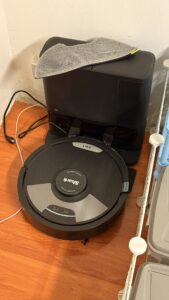
In the growing world of robotic vacuums, the Shark Matrix Plus stands out as a promising option that combines both vacuuming and mopping in one device. With a mid-range price tag, it targets users who want the convenience of a robot cleaner without the premium cost of higher-end models. The Matrix Plus offers a range of features designed to simplify household cleaning, including self-emptying capabilities, advanced LiDAR mapping, and sonic mopping technology, all packed into a sleek, compact design. Whether you’re looking to maintain your floors without the hassle of manual labor or just want an automated solution for everyday dirt, Shark aims to meet those needs. In this review, we’ll dive into all aspects of the Shark Matrix Plus, evaluating its performance, usability, and overall value to help you decide if it’s the right fit for your home. From its smart navigation to its ability to tackle pet hair, let’s break down its pros and cons.
If you click the button above you will be redirected to Amazon.com. In case you then decide to buy anything, Amazon.com will pay me a commission. This doesn’t affect the honesty of this review in any way though.
Design & Build Quality
When you first take the Shark Matrix Plus out of the box, the overall impression is that this is a thoughtfully engineered machine built for practical, everyday use rather than showroom flash. It doesn’t try to look futuristic or overly stylized. Instead, it leans into a clean, understated design that feels intentional and functional. That approach works in its favor. A robot vacuum is going to live on your floor, often in plain sight. The Matrix Plus blends in rather than demanding attention.
The robot itself has the classic low-profile, circular form factor that defines most modern robotic vacuums. Its height is modest enough to fit under most sofas, beds, and cabinets, which is critical for real-world usability. In my testing, it easily navigated under standard couches and entertainment units without scraping or struggling. The housing feels sturdy when handled. There’s minimal flex in the plastic body, and the seams are tight and well aligned. Nothing rattles or feels loose, which is something you can’t say about every robot in this price category.
The finish is predominantly matte black with subtle gloss accents. The matte texture is a smart choice because it hides fingerprints and light dust fairly well. Glossy robots tend to show every smudge within hours. Here, even after several days of operation, the exterior still looked presentable. The top surface includes a raised LiDAR turret, which is a defining feature of the Matrix Plus. Some people dislike the bump on top aesthetically, but from a build standpoint, it’s solid and doesn’t feel fragile. The turret housing is firmly integrated into the top plate and doesn’t wobble when touched.
Moving to the underside, the construction continues to feel deliberate. The brushroll sits in a removable housing that clicks securely into place. Shark’s self-cleaning brushroll design is meant to resist hair wrap, and you can see that intention in the comb-like guard structure positioned near the roller. It’s not just cosmetic. The spacing and shape suggest real engineering consideration rather than a marketing add-on. The side brush is a standard multi-pronged design, and while it’s not heavy-duty, it’s flexible enough to survive repeated contact with chair legs and baseboards without snapping.
The wheels deserve specific mention. They’re spring-loaded and have enough vertical travel to handle moderate transitions between surfaces. Moving from hardwood to low-pile carpet felt smooth. The suspension system doesn’t feel flimsy, and the rubberized tread grips well without marking floors. On slightly uneven thresholds, the robot didn’t scrape or get hung up unnecessarily. The front bumper also feels responsive and durable. While the Matrix Plus relies heavily on LiDAR for navigation, the bumper remains an important physical safeguard. It depresses with a soft, cushioned resistance and rebounds cleanly.
The dustbin and water tank design reflect the product’s hybrid nature. Because this is a 2-in-1 vacuum and mop, Shark opted for interchangeable modules rather than a permanently integrated water reservoir. That decision has design implications. Swapping between the standard dustbin and the mopping module requires removing one component and installing the other. The mechanism itself is straightforward. The release latch is easy to press, and the bin slides out smoothly. It doesn’t stick or require awkward force. Once removed, the bin feels robust enough to handle repeated use.
The plastic used for the dustbin is transparent, which is helpful for seeing debris levels at a glance. The latch seals tightly, and there’s a reassuring click when it locks back into place. The filter housing is accessible and not overly complicated, though you’ll want to be careful when cleaning it. Nothing feels overly delicate, but like most robot vacuum filters, it’s not something you want to bend or manhandle.
The mopping module introduces additional structural considerations. It attaches securely and doesn’t wiggle during operation. The pad plate sits flush against the bottom of the unit, ensuring even contact with the floor. The attachment system uses simple clips that are easy to operate without looking cheap. Reusable mop pads attach firmly and don’t peel away mid-clean. Even after several wash cycles, the pad backing remained strong and didn’t lose its grip.
Now let’s talk about the self-emptying base, because it’s a significant part of the overall build quality. The dock is larger than a standard charging station, as expected, but it’s not excessively bulky. It has a vertical design that keeps the footprint relatively compact while housing the debris chamber. The plastic shell of the base feels thick and durable. It doesn’t creak when lifted, and the internal bin compartment door closes securely. The docking ramp aligns well with the robot’s charging contacts. Throughout testing, the robot docked reliably without awkward repositioning attempts.
One of the more notable design decisions is the bagless debris system in the base. Instead of using disposable dust bags, Shark opted for a reusable chamber. From a sustainability standpoint, this is appealing. From a build perspective, it means the internal container needs to withstand repeated emptying. The debris container slides out smoothly and locks back in without fuss. The seal around the compartment feels tight, minimizing the risk of dust leakage during operation.
Button placement on the robot itself is minimal. You get basic onboard controls for start, stop, and dock functions. The buttons are flush and responsive, not overly raised. They have a tactile click that feels satisfying without being loud. It’s clear that Shark expects most users to control the robot via the app, but the physical controls are there for quick interactions.
Another subtle but important aspect of design quality is how well the robot holds up to repeated impacts and daily wear. Over time, robots inevitably bump into furniture and walls. The Matrix Plus shows minor scuff resistance. After extended use, light marks may appear on the bumper, but the body panels themselves resist scratching fairly well. The finish doesn’t chip easily, and the structural integrity remains intact even after weeks of continuous cleaning cycles.
Weight distribution also feels balanced. When you pick up the robot, it doesn’t feel hollow or top-heavy despite the LiDAR turret. The internal components appear evenly distributed, which likely contributes to its stable movement and reduced tipping risk.
If I had to critique the build, I’d say it sits comfortably in the upper midrange tier rather than the luxury tier. The materials are good, but not premium metal or glass. Everything is durable and functional, but not indulgent. That said, for a robot vacuum designed for daily utility, durability and thoughtful engineering matter more than flashy finishes.
In summary, the Shark Matrix Plus demonstrates strong, practical build quality. The body is solid, the components fit well, and the docking station feels dependable. Its design choices prioritize usability and longevity over aesthetic drama. It may not feel like a high-end showpiece, but it feels like a machine built to work hard and keep doing so over time.
Navigation Intelligence & Mapping
Navigation is one of those areas where robot vacuums either feel impressively smart or painfully dumb. There’s not much middle ground. Thankfully, the Shark Matrix Plus lands much closer to the smart side, though it’s not flawless. Its navigation system is built around LiDAR mapping, and that alone places it well above entry-level robots that rely purely on bump sensors and random pathing.
The first time you run the Matrix Plus, it performs a dedicated mapping pass of your home. Instead of immediately vacuuming, it scans the layout and builds a digital floor plan inside the app. Watching this process is actually satisfying. You can see rooms take shape in real time as the robot methodically moves along walls and across open spaces. The LiDAR turret on top rotates continuously, measuring distances and creating a spatial map of walls, furniture, and obstacles.
The key benefit of LiDAR is precision. Unlike camera-based systems that can struggle in low light, LiDAR works consistently whether your home is bright, dim, or somewhere in between. I tested it during daytime and again at night with lights off. Performance remained stable. That consistency makes scheduling overnight cleaning realistic without worrying about the robot losing its bearings.
Once the initial map is created, the Matrix Plus divides the layout into rooms automatically. The app allows you to rename those rooms, merge or split them, and set targeted cleaning areas. The room segmentation isn’t perfect out of the box, but it’s usually close. A large open-concept area might initially appear as one space, and you may need to manually define kitchen versus living room boundaries. The editing tools are straightforward enough, though they’re not as polished as some higher-end competitors.
In daily use, the pathing logic is impressively methodical. Instead of wandering in chaotic arcs, the Matrix Plus cleans in structured rows, almost like mowing a lawn. It typically starts by tracing the perimeter of a room, then fills in the center with back-and-forth passes. This approach improves coverage and reduces missed patches. After several runs in the same space, I noticed very few untouched strips, which is a common issue with older, less intelligent robots.
The “Matrix Clean” mode deserves special attention. In this setting, the robot performs multiple passes in a crosshatch pattern over the same area. It’s essentially a deep-clean mode for high-traffic zones. You can see the logic at work as it goes over a section once horizontally, then again vertically. For stubborn debris or areas near entryways, this added thoroughness makes a visible difference.
Obstacle handling is where things get more nuanced. The Matrix Plus does a good job of avoiding large, obvious objects like furniture legs, walls, and couches. It slows down as it approaches them and rarely crashes aggressively. However, it doesn’t have advanced AI-powered object recognition. That means smaller items like phone chargers, thin cables, socks, or pet toys can still pose problems.
During testing, it handled dining chairs reasonably well, weaving between legs without excessive bumping. But with loose cables, it sometimes nudged or partially rolled over them. It’s not reckless, but it’s not hyper-aware either. In a tidy home, navigation feels smooth and confident. In a cluttered space, you’ll still want to do a quick prep sweep before running it.
Carpet detection is another interesting aspect of its navigation intelligence. When operating in vacuum-only mode, it transitions from hard floors to carpet smoothly and increases suction automatically. When the mopping module is attached, the robot is designed to avoid carpeted areas entirely. In practice, it recognizes rugs accurately most of the time. That’s crucial because dragging a damp mop across carpet would be a disaster. There were no major mishaps in my testing, but the system relies on consistent mapping, so moving rugs frequently may require remapping.
Multi-room navigation is one of its strengths. Once a full map is established, you can send the robot to clean a single room or specific zones. It doesn’t wander through the entire house unnecessarily. It navigates directly to the selected space, completes the task, and then returns to the dock. The efficiency here saves battery and time. Watching it move with purpose rather than confusion reinforces the sense that it understands the layout.
Speaking of battery efficiency, intelligent navigation directly affects runtime. Because the Matrix Plus doesn’t waste energy retracing random paths, it covers more ground on a single charge. If the battery does run low mid-clean, it returns to the dock automatically, recharges, and resumes where it left off. The resume feature works reliably. It doesn’t restart the entire cleaning cycle from scratch, which would be frustrating.
Mapping stability over time is solid. Some robots gradually distort their maps after furniture shifts or small layout changes. The Matrix Plus handles minor changes well. If you move a chair or reposition a small table, it adapts without requiring a full remap. However, major rearrangements may prompt you to rebuild the map for optimal performance.
One area where the navigation feels slightly behind top-tier competitors is advanced obstacle avoidance. Premium models use front-facing cameras and AI models to identify objects like pet waste, shoes, or specific types of clutter. The Matrix Plus doesn’t classify objects visually. It primarily uses spatial awareness rather than recognition. That keeps the hardware simpler and likely more affordable, but it also means it’s not the most cautious robot on the market.
Edge cleaning performance benefits from its navigation strategy. By tracing walls first, it ensures perimeter coverage before filling in open areas. Corners are still limited by the circular shape of the robot, but the side brush extends reach reasonably well. You won’t get perfect 90-degree corner cleaning, but that’s a physical limitation rather than a navigation flaw.
Another practical benefit of LiDAR-based mapping is virtual boundaries. Through the app, you can draw no-go zones and virtual walls. This is especially useful around delicate furniture, pet feeding stations, or areas with tangled cables. Once set, the robot respects those boundaries consistently. I tested several virtual walls, and the Matrix Plus treated them like physical barriers.
In terms of reliability, I experienced very few “lost robot” incidents. It rarely stopped mid-cycle claiming to be stuck or confused. On one occasion, it wedged itself slightly under a low chair edge, but that was more about clearance than navigation logic. Overall, it feels dependable enough to run on a schedule without constant supervision.
To sum it up, the Shark Matrix Plus offers strong navigation intelligence for its class. Its LiDAR system delivers accurate mapping, efficient pathing, and reliable room targeting. It handles structured cleaning exceptionally well and rarely wastes motion. While it lacks advanced AI object recognition found in some high-end models, its core navigation is stable, predictable, and efficient. For most homes, especially those that aren’t heavily cluttered, it provides a level of smart movement that genuinely reduces the need for manual intervention.
Performance
At the end of the day, performance is what makes or breaks a robot vacuum. Smart mapping is nice. App features are convenient. But if the machine can’t actually pick up dirt consistently, none of the extras matter. After extended use in a mixed-floor home with hardwood, tile, low-pile carpet, and a few medium-pile rugs, the Shark Matrix Plus proved itself to be a capable and reliable cleaner, though not an unstoppable one.
Let’s start with hard floors, because this is where the Matrix Plus feels most at home. On hardwood and tile, suction performance is strong and consistent. Everyday debris like dust, crumbs, cereal pieces, and tracked-in dirt disappear in a single pass. The structured row-by-row cleaning pattern helps here. Because it doesn’t move randomly, it ensures coverage rather than depending on luck.
Fine debris pickup is particularly good. Some robot vacuums struggle with light dust or flour-like particles, pushing them around instead of collecting them. The Matrix Plus handles these better than average. Its brushroll and suction combination create enough airflow to pull in fine dust rather than scatter it. After several cleaning cycles, the floors genuinely looked polished, especially when paired with the mopping function.
Larger debris performance is solid but not perfect. When testing with dry rice, small pebbles near entryways, and crushed chips, the robot usually collected everything on the first pass. Occasionally, a piece would be flicked aside by the side brush before being picked up on a return pass. This is fairly common behavior in round robot vacuums and not unique to Shark. The important thing is that it doesn’t leave significant debris behind after completing a full room.
Carpet performance is where things get more nuanced. On low-pile carpet, the Matrix Plus performs well. It increases suction automatically and maintains consistent contact with the surface. Dirt embedded in lightly trafficked carpet comes up effectively. After running it in a bedroom for several days in a row, I noticed a visible reduction in surface dust and lint.
However, on medium-pile carpet, you begin to see its limits. It can clean surface debris without issue, but deeply embedded dirt requires more passes. The Matrix Clean mode helps significantly here. When activated, the crosshatch pattern gives carpets a more thorough treatment. After a double-pass cycle, pickup improves noticeably. Still, it doesn’t quite match the deep agitation of a full-sized upright vacuum.
Pet hair performance depends heavily on floor type. On hard floors, it’s excellent. Loose fur gathers quickly and gets pulled into the bin without spreading around. The self-cleaning brushroll design does reduce hair wrap compared to older robots. I checked the roller after multiple cleaning cycles and found minimal tangling, especially with shorter pet hair.
Long human hair is a tougher test. While the brushroll resists tangling better than many competitors, it’s not immune. Over time, you’ll still find strands wrapped around the roller ends. The good news is that removal is straightforward. The brushroll is easy to access, and most hair can be pulled away without scissors. It’s manageable maintenance rather than a constant headache.
On carpet with heavy pet shedding, performance is decent but not exceptional. The Matrix Plus handles daily maintenance well, preventing buildup. But if you let fur accumulate for several days, you may need a manual vacuum to reset the space. It’s a maintenance cleaner rather than a deep-revival machine for thick carpet.
Edge and corner cleaning is respectable. The side brush extends reach along baseboards, pulling debris inward toward the suction path. Corners, by design, are never perfect with circular robots. There’s always a slight gap in tight 90-degree angles. That said, the Matrix Plus does better than many entry-level models because its navigation ensures it intentionally traces edges rather than accidentally brushing past them.
The debris bin capacity on the robot itself is moderate. Because it uses a self-emptying base, the onboard bin doesn’t need to be massive. During cleaning, debris compacts efficiently, and the robot returns to the dock when necessary. The self-empty process is loud but effective. You can hear a powerful suction burst as the dock pulls debris from the robot’s bin into the base container. In most cases, it clears the bin completely.
Occasionally, with larger debris or clumps of hair, you might find small remnants left behind in the bin corners. This isn’t frequent, but it can happen. It’s worth checking occasionally to ensure the emptying system is functioning optimally.
Battery performance also ties into cleaning effectiveness. The Matrix Plus typically runs long enough to handle medium-sized homes in one cycle. In larger homes, it may return to recharge mid-clean. The recharge-and-resume function works reliably, allowing it to finish the job without starting over. That consistency contributes to overall cleaning performance because it ensures full coverage even when a single charge isn’t enough.
Noise during cleaning is moderate. On standard suction, it produces a steady hum that blends into background sound. On carpet with boosted suction, it becomes noticeably louder but not disruptive. The self-emptying process is the loudest moment by far, lasting only a few seconds. If you’re running it while working from home, you’ll notice it, but it’s not unbearable.
Another important performance factor is consistency over time. Some robot vacuums start strong but degrade as filters clog or brushrolls wear. After several weeks of regular use, the Matrix Plus maintained steady suction and reliable debris pickup. As long as filters are cleaned periodically and the brushroll is checked for hair buildup, performance remains stable.
One underrated aspect of performance is how well the robot transitions between surfaces. The Matrix Plus handles threshold transitions competently. It climbs low-to-moderate thresholds without hesitation and doesn’t lose suction stability when shifting from hardwood to rug. That smooth adaptability ensures uninterrupted cleaning cycles.
In real-world daily use, the biggest strength of the Matrix Plus is consistency. It may not deliver dramatic, showroom-level carpet revival, but it excels at maintaining clean floors with minimal input. Running it on a schedule keeps dust and debris from accumulating, which reduces the need for frequent manual vacuuming.
If you’re expecting it to replace a powerful upright vacuum entirely, especially for thick carpet or deep seasonal cleans, you may be disappointed. But if your goal is to automate everyday floor care and reduce how often you need to pull out a traditional vacuum, it succeeds.
Overall, performance is strong for a hybrid robot in this category. It shines on hard floors, handles low-pile carpet confidently, manages pet hair well in most scenarios, and delivers reliable multi-pass cleaning when needed. It’s not the most powerful robot on the market, but it’s dependable, thorough in structured cleaning modes, and more than capable for daily maintenance in most homes.
Mopping Capability
Mopping is often the feature that separates a decent robot vacuum from a genuinely helpful floor-care system. Many hybrid robots advertise mopping, but in reality they simply drag a damp cloth behind them. That kind of passive mopping can freshen up floors, but it rarely makes a meaningful dent in dried spills or sticky residue. The Shark Matrix Plus aims to go further with its sonic mopping system, and in day-to-day use, that difference is noticeable.
The defining feature here is vibration. Instead of just gliding across the floor, the mop pad vibrates rapidly while in contact with the surface. You can actually hear and feel the subtle buzzing when it’s operating. It’s not aggressive enough to feel like a power scrubber, but it’s active rather than passive. That vibration creates friction, which helps lift light stains and stuck-on grime that would otherwise require manual scrubbing.
Setup for mopping requires swapping out the standard dustbin module for the dedicated mopping attachment. This is a manual step, and it slightly interrupts the “fully autonomous” idea. You need to remove the vacuum bin and click in the water tank module. That process takes less than a minute and becomes second nature after a few uses, but it does mean you can’t schedule vacuuming and mopping interchangeably without planning ahead.
Once installed, the water tank feels secure and well integrated. It doesn’t wobble or leak during operation. Filling it is simple. The cap seals tightly, and the tank capacity is sufficient for cleaning medium-sized hard floor areas in a single session. For larger homes with extensive tile or hardwood, you may need to refill it mid-cycle.
In real-world use, the mopping performance is strongest on sealed hard surfaces like tile, laminate, and finished hardwood. It leaves a visibly cleaner surface, especially in kitchens and entryways where footprints and spills accumulate. After a full cycle, floors feel smooth underfoot rather than slightly gritty. You can see the collected residue on the pad afterward, which is always satisfying and slightly alarming at the same time.
Light spills like dried coffee drips, juice splashes, and small food smears are handled well. In standard mode, the Matrix Plus passes over them once or twice and reduces them significantly. In Matrix Clean mode, where it makes multiple passes in a crosshatch pattern, results improve even more. While it may not remove a completely dried, sticky syrup spill in one go, it noticeably fades it and often eliminates it after repeated scheduled cleanings.
One of the practical advantages of the vibrating mop pad is consistency of pressure. Because the pad plate is designed to sit flush against the floor, it maintains even contact. Some hybrid robots struggle here, with pads that barely touch the surface or lift unevenly. The Matrix Plus maintains steady contact, which helps with uniform cleaning.
Water distribution is controlled and measured. The robot doesn’t flood the floor. Instead, it dispenses a controlled amount of moisture designed for maintenance cleaning. This makes it safe for most sealed hardwood surfaces, assuming they are properly finished. After cleaning, floors are damp but not soaked. They typically dry within minutes.
Carpet detection plays an important role in mopping performance. With the mop module attached, the robot is programmed to avoid carpeted areas entirely. In testing, it respected these boundaries reliably. It would approach a rug, pause slightly as it detected the surface, and then reroute around it. That’s essential for peace of mind. No one wants a damp mop dragged across a living room rug.
Edge mopping is decent but not perfect. The pad extends close to the edges of the robot’s body, allowing it to clean near baseboards. However, just like with vacuuming, tight corners remain a limitation due to the round design. You may still need occasional manual attention in deep corners or along grout lines.
Speaking of grout, this is where expectations need to stay realistic. The Matrix Plus can help maintain tile floors and keep grout from looking dingy over time, but it won’t restore heavily stained grout lines. It’s a maintenance tool, not a restoration machine. If your tile has years of embedded grime, a traditional scrub brush and cleaner will still be necessary at least once before relying on the robot for upkeep.
Noise during mopping is slightly different from vacuuming. You’ll hear the gentle vibration of the sonic pad, which creates a faint buzzing sound. It’s not disruptive, but it’s distinct. Combined with suction noise, the overall sound profile remains moderate.
Pad maintenance is straightforward. The reusable mop pads attach securely and can be removed easily for washing. After each mopping session, it’s best to rinse or machine wash the pad to prevent odor or residue buildup. The pads hold up well after multiple wash cycles, maintaining their shape and attachment strength.
One area where the mopping system could improve is automation. Some higher-end hybrids automatically lift the mop pad when crossing carpet or switch between vacuum and mop modes without manual intervention. The Matrix Plus requires you to physically swap modules, which means you need to decide in advance whether a session will be vacuum-only or vacuum-and-mop. For many users, that’s a minor inconvenience. For others seeking full automation, it may feel limiting.
Still, the simplicity of the design has advantages. Fewer moving parts can mean fewer failure points. The attachment mechanism is sturdy and doesn’t rely on complex lifting systems that might wear out over time.
In daily life, the biggest strength of the mopping capability is how it changes the feel of your home. Running the robot every few days keeps hard floors looking freshly wiped rather than dull. Dust buildup is minimized, and minor spills don’t get a chance to become stubborn stains.
If you have pets that track in muddy paw prints or children who spill drinks regularly, the Matrix Plus helps keep those messes under control. It won’t replace deep manual mopping for big accidents, but it significantly reduces how often you need to break out a bucket and mop.
Overall, the mopping capability is one of the standout features of the Shark Matrix Plus. The sonic vibration adds real value beyond simple damp wiping. While it requires manual setup and won’t handle extreme grime, it excels at routine maintenance cleaning. For households with mostly hard floors, this feature alone can justify choosing this model over vacuum-only robots.
Maintenance & Cleaning
No matter how smart or powerful a robot vacuum is, ownership eventually comes down to maintenance. A robot that promises hands-free cleaning but demands constant fiddling quickly becomes frustrating. The Shark Matrix Plus does a fairly good job of balancing automation with manageable upkeep, though it’s not completely maintenance-free. Like any cleaning machine, it performs best when you give it a little attention on a regular basis.
Let’s start with the self-emptying base, because that’s one of the main selling points. In theory, the base can hold debris for weeks before needing to be emptied. In practice, how long it lasts depends on your home. In a smaller apartment with minimal debris, you might go a month or more without touching it. In a busy household with pets and kids, you’ll probably empty it more often.
The emptying process itself is straightforward. The robot docks, and a strong burst of suction transfers debris from the onboard bin into the base’s collection chamber. You can hear it clearly, and it’s powerful enough to pull most debris out cleanly. Every once in a while, especially with dense hair or larger particles, you may find small remnants left behind in the robot’s internal bin. It’s not common, but it’s worth checking occasionally.
When it’s time to empty the base, you remove the dust container and dump it into the trash. Because it’s a bagless system, you’re dealing directly with collected dirt. That’s convenient from a cost perspective since you don’t need replacement bags, but it can be slightly dusty during disposal. If you’re sensitive to allergens, you might prefer emptying it outdoors or wearing a mask.
The robot’s internal dustbin is smaller, but since it’s designed to be emptied automatically, you won’t interact with it often. Still, it’s easy to remove if needed. The release mechanism feels solid, and the bin slides out smoothly without sticking. The filter sits inside the dustbin and can be accessed without tools. Cleaning the filter regularly is important for maintaining suction performance. A quick tap over a trash can removes loose dust, and occasional rinsing keeps it in good condition. Just be sure to let it dry completely before reinstalling.
The brushroll is another key maintenance point. Shark’s self-cleaning brushroll design does help reduce hair wrap, but it doesn’t eliminate it entirely. After several cleaning sessions, especially in homes with long hair or shedding pets, you’ll want to inspect the roller. The good news is that access is easy. The brushroll housing pops open without tools, and the roller lifts out smoothly. Most hair can be pulled away by hand. In rare cases, you may need scissors to cut tightly wound strands, but that’s manageable and not a frequent chore.
The side brush also requires occasional attention. Because it’s positioned at the edge of the robot, it can collect hair and threads that wrap around its base. Removing it is simple, and clearing debris only takes a few minutes. The brush itself is durable, but over time the bristles may bend slightly. Replacement parts are available and inexpensive, which is reassuring for long-term ownership.
Wheel maintenance is often overlooked but important. The main drive wheels can accumulate hair and fine dust in their axles. Every few weeks, it’s worth flipping the robot over and checking them. The wheels are designed to be sturdy, and debris can usually be removed with your fingers or a small brush. The front caster wheel pops out easily if you need deeper cleaning.
When using the mopping function, maintenance increases slightly. After each mopping session, you’ll want to remove the pad and wash it. The reusable pads are durable and can handle machine washing, though air drying is recommended to preserve the backing material. Leaving a dirty pad attached can lead to odors, so cleaning it promptly is important.
The water tank should also be emptied after use if you’re not planning another session soon. Letting water sit for extended periods can cause buildup or mild odor. The tank opening is wide enough to allow rinsing and drying without hassle. It doesn’t have complicated internal channels that trap residue, which makes upkeep easier.
Sensor cleaning is another small but important task. The Matrix Plus relies on multiple sensors for navigation and obstacle detection. Over time, dust can accumulate on these surfaces. Wiping them gently with a microfiber cloth helps maintain accurate mapping and prevents unnecessary error messages. This only takes a minute and can prevent frustration later.
Software maintenance is minimal but worth mentioning. Occasionally, firmware updates become available through the app. Installing them ensures optimal performance and bug fixes. The process is automatic and doesn’t require technical knowledge. It’s one of the easier aspects of ownership.
In terms of long-term durability, the components feel like they’re designed to handle repeated cleaning cycles. Nothing feels overly delicate. The plastic housing is thick enough to resist cracking, and the attachment points don’t feel flimsy. With proper care, there’s no reason to expect premature wear.
Time commitment for maintenance is reasonable. A quick weekly check of the brushroll and filter takes maybe five minutes. Emptying the base every few weeks takes another few minutes. Compared to manually vacuuming an entire home multiple times per week, this level of upkeep feels minimal.
One thing I appreciate is that most maintenance tasks are tool-free. You don’t need screwdrivers or complicated disassembly procedures. Parts click in and out with simple pressure. That makes it accessible even for users who aren’t mechanically inclined.
If I had to point out a drawback, it would be the dust exposure when emptying the bagless base. While it saves money on bags, it’s not the cleanest disposal method. Additionally, because the robot depends on consistent airflow for performance, neglecting filter cleaning will impact suction more noticeably than on some larger vacuums.
Overall, maintenance for the Shark Matrix Plus strikes a practical balance. It’s not entirely hands-off, but it doesn’t demand constant attention either. Most tasks are quick, intuitive, and easy to incorporate into a weekly routine. For a robot that both vacuums and mops, the level of upkeep feels reasonable. As long as you’re willing to spend a few minutes maintaining it regularly, the machine rewards you with consistent and reliable cleaning performance.
Energy Efficiency & Noise Levels
Energy efficiency and noise levels are two crucial factors for anyone considering a robot vacuum, particularly if you plan to run it on a schedule while at home, at work, or overnight. A vacuum that consumes excessive power or generates constant loud noise can quickly become a source of frustration, undermining the convenience it’s supposed to provide. The Shark Matrix Plus demonstrates a thoughtful approach in both of these areas, balancing strong performance with reasonable energy use and a relatively quiet operating profile.
Energy Efficiency
The Matrix Plus uses a LiDAR-based navigation system to optimize its cleaning paths. This structured navigation plays a major role in energy efficiency. Unlike entry-level robots that wander randomly and cover the same area multiple times, the Matrix Plus plans its path systematically. It starts by tracing the perimeter of each room and then moves in a back-and-forth pattern to cover the interior. This approach reduces wasted movement, allowing the robot to clean more square footage on a single battery charge while consuming less power overall.
Battery life itself is respectable for a hybrid vacuum/mop of this class. On standard suction settings, it can handle medium-sized homes in one cleaning session without needing to recharge. When the battery does run low mid-clean, the Matrix Plus automatically returns to its dock, recharges, and resumes exactly where it left off. This feature not only ensures full coverage but also contributes to energy efficiency. By completing cleaning tasks without starting over, it minimizes unnecessary battery drain.
Another factor contributing to energy efficiency is its adaptive suction system. On hard floors, the robot doesn’t overexert itself; it uses moderate suction because light debris is easily captured on smooth surfaces. On carpets, suction ramps up automatically to pick up embedded dirt, which is an intelligent way to balance power use with cleaning performance. The robot only expends maximum energy when needed, rather than running high suction continuously, which helps extend both battery life and the overall lifespan of the motor.
The self-emptying base also plays a role in energy considerations. While the base consumes a short burst of power during debris transfer from the robot to the storage chamber, the duration is brief, and energy consumption is relatively low. Over time, this automated emptying saves energy indirectly by reducing the number of trips to manually empty the bin, as well as minimizing the need for additional cleaning cycles caused by full bins.
Noise Levels
Noise is another significant consideration, especially if you plan to run the Matrix Plus while working, reading, or sleeping. Robot vacuums are generally quieter than traditional upright vacuums, but the differences between models can be substantial. The Shark Matrix Plus operates at a moderate noise level during standard vacuuming. On hard floors with normal suction, the sound is a steady, unobtrusive hum that blends into background noise. It’s noticeable but not distracting, allowing conversations, phone calls, or media playback to continue uninterrupted.
When the robot encounters carpet or switches to boosted suction, noise levels increase, but it remains within a tolerable range for most people. It’s not whisper-quiet, but it doesn’t reach the piercing pitch of some older or more powerful models. The combination of suction, brushroll rotation, and side brush operation produces a consistent sound that is easy to anticipate. In practical terms, you can run it during the day or early evening without disturbing family members or pets too much.
The loudest moment occurs during the self-emptying process at the dock. This is a short but high-intensity suction cycle that pulls debris from the robot’s onboard bin into the base container. While it is startling at first, it lasts only a few seconds and happens less frequently than standard cleaning cycles. Some users may choose to schedule vacuuming when they’re away from home to avoid hearing the base empty, but it’s not inherently disruptive.
Noise during mopping is slightly different because the sonic vibration of the mop pad adds a subtle buzzing sound. It’s quieter than full suction on carpets but noticeable in quiet environments. Overall, it does not interfere with most daily activities, and the combination of suction and vibration maintains a balance between cleaning effectiveness and acoustic comfort.
Balancing Efficiency and Performance
One of the strengths of the Shark Matrix Plus is how well it balances energy efficiency with cleaning performance. The robot doesn’t sacrifice suction for the sake of lower power consumption. Instead, it adapts intelligently to the environment, increasing power only when needed. This means you get thorough cleaning without wasting energy on unnecessary high-power operation. Over time, this reduces electricity consumption compared to vacuums that run at maximum power regardless of surface type.
Scheduled cleaning further enhances efficiency. By setting the robot to clean at consistent intervals, you prevent excessive buildup of dirt, dust, and pet hair. This reduces the need for multiple intensive cleaning sessions, which would consume more energy and increase wear on the components. Regular maintenance, combined with intelligent scheduling, ensures that the Matrix Plus operates at optimal efficiency with minimal user intervention.
Comparative Context
In comparison to other hybrid robot vacuums in its class, the Matrix Plus performs favorably in both energy consumption and noise control. Many budget models may operate on lower suction to save power but struggle with carpet performance. High-end models may have powerful suction but generate significantly more noise. Shark has found a middle ground that maximizes usability while minimizing disruption and unnecessary power draw.
The combination of precise navigation, adaptive suction, and effective energy management makes the Matrix Plus suitable for a wide variety of homes. Its efficiency is particularly notable for homes with mixed flooring, as it can automatically adjust settings for different surfaces without wasting energy on excessive suction where it isn’t needed.
Practical Takeaways
From a practical perspective, this means you can confidently schedule the robot for daily or bi-daily cleaning without worrying about high energy costs or noise interference. It’s well-suited to homes with families, pets, or quiet work-from-home setups. By optimizing pathing, suction, and operational timing, the Matrix Plus minimizes both energy consumption and auditory disruption while delivering reliable cleaning performance.
In summary, the Shark Matrix Plus combines thoughtful energy management with a reasonably quiet operational profile. Its LiDAR-based navigation and adaptive suction system ensure efficient cleaning while minimizing wasted power. Noise levels remain moderate across both vacuuming and mopping modes, and the brief intensity of the self-emptying dock is the only notable spike in volume. For daily use in a typical home, the Matrix Plus strikes an excellent balance between effective cleaning, energy conservation, and acoustic comfort, making it an attractive option for those who value both efficiency and a quiet living environment.
Ergonomics & Usability
Ergonomics and usability are easy to overlook when talking about robot vacuums. Because they operate autonomously, people assume there isn’t much “handling” involved. But the reality is that you still interact with the machine regularly. You set schedules, empty bins, swap attachments, move it between floors, troubleshoot occasional errors, and clean its components. If those interactions feel clumsy or unintuitive, the convenience factor quickly fades. The Shark Matrix Plus does many things right in this area, though there are a few rough edges worth noting.
Let’s begin with physical interaction. The robot itself is easy to lift and carry. It has a balanced weight distribution and a subtle indentation along the sides that makes gripping it secure. It doesn’t feel awkward or top-heavy despite the raised LiDAR turret. Carrying it up or down stairs is simple, and it’s light enough that most people won’t struggle.
The top panel design is clean and minimal. You get onboard buttons for basic commands like starting, stopping, and returning to the dock. These buttons are flush with the surface and responsive without requiring excessive pressure. They provide a subtle tactile click, which gives you confirmation without feeling cheap. While most users will rely on the app, having reliable physical controls is important, especially if Wi-Fi drops or the app glitches.
Accessing the dustbin is intuitive. The top cover lifts easily, and the bin slides out without resistance. There’s no awkward angle or hidden latch to fight with. That small detail matters when you’re performing maintenance regularly. The mopping module swaps in with a similar level of simplicity. Once you’ve done it a couple of times, the process becomes second nature.
The self-emptying base is designed with usability in mind. The robot aligns itself well with the dock, and you don’t need to adjust it manually. The ramp is stable, and the charging contacts engage reliably. If you’ve used robots that repeatedly bump and reposition before docking successfully, you’ll appreciate how smoothly this one handles it.
Now let’s talk about the app experience, because for most users, that’s where the majority of interaction happens. The SharkClean app provides access to mapping, scheduling, cleaning modes, and maintenance alerts. The layout is fairly straightforward. The home screen displays your mapped rooms and gives you options to clean the entire space, specific rooms, or custom zones.
Room naming and editing are relatively simple, though not as fluid as some competitors. Dividing and merging rooms works, but it may take a little trial and error if your home has unusual layouts. The virtual no-go zones are easy to draw, which is a big plus. You simply drag lines or boxes across the map, and the robot respects them reliably.
Scheduling is another important usability factor. You can set recurring cleaning times for specific rooms or the entire house. This works well for maintaining a routine. For example, you might schedule the kitchen and living room daily while leaving bedrooms for twice a week. Once set up, the schedule runs reliably without requiring constant adjustment.
However, the app isn’t perfect. Navigation within menus can feel slightly clunky at times. Some settings are nested in places that aren’t immediately obvious. While nothing is confusing to the point of frustration, it doesn’t feel as polished or streamlined as higher-end ecosystems. Occasional connectivity hiccups can also interrupt the experience. If your Wi-Fi signal is weak in certain areas of your home, you may see brief disconnect messages.
Voice control compatibility adds another layer of usability. Integration with smart assistants allows you to start cleaning sessions with simple voice commands. Saying something like “clean the kitchen” and watching the robot respond feels genuinely convenient. Setup is usually straightforward, though it depends on your home network stability.
From a day-to-day standpoint, one of the most important usability aspects is reliability. The Matrix Plus generally behaves predictably. It doesn’t frequently throw random error codes or require resets. When it encounters an obstacle it can’t navigate, it alerts you clearly through the app. The messages are understandable rather than overly technical.
Noise levels also affect usability, especially if you work from home. During normal vacuuming, the sound is noticeable but not disruptive. You can comfortably hold a conversation or watch TV with the volume slightly raised. The loudest moment is during the self-emptying process, which lasts only a few seconds. While it’s startling the first time, it becomes easy to anticipate.
Swapping between vacuuming and mopping modes is functional but not seamless. Because you must physically replace the dustbin with the mopping module, you need to plan ahead. If you want it to vacuum daily but mop twice a week, you’ll need to remember to install the mop module before those scheduled sessions. This adds a small layer of manual involvement that slightly reduces the automation appeal.
Indicator lights and audio cues are subtle but helpful. The robot uses light signals to communicate charging status and cleaning activity. The tones it emits are clear but not overly loud. They provide feedback without being intrusive.
Multi-floor usability is decent. If you carry the robot to another level, it can create and store separate maps. Switching between them in the app is simple. However, because there’s only one self-emptying base, you’ll need to manually relocate the dock if you want full functionality upstairs.
Another important usability factor is how forgiving the system is. If you accidentally interrupt a cleaning session or move the robot mid-cycle, it typically recalibrates without major issues. It doesn’t panic or require a full remap. That resilience makes it feel less fragile and more user-friendly.
The learning curve for new users is manageable. Initial setup involves connecting to Wi-Fi, mapping your home, and customizing room labels. Most people can complete this process within 20 to 30 minutes. The instructions are clear, and the robot guides you through steps logically.
Overall, ergonomics and usability on the Shark Matrix Plus are solid. Physical interaction is intuitive, maintenance access is straightforward, and the core app features work reliably. While the software interface could be smoother and the mop-swapping process more automated, the overall experience remains accessible and practical.
It doesn’t feel overly complicated or intimidating. Instead, it feels like a tool designed to integrate into everyday life without demanding constant attention. For most households, that balance between functionality and simplicity will be more than sufficient.
Pet-Friendliness
For pet owners, choosing a robot vacuum can be a bit more complicated than simply picking a model with good suction power. Pets shed hair, track dirt, and bring additional challenges like muddy paws or the occasional accident. A pet-friendly robot vacuum should not only handle hair and dander but also deal with the increased mess that comes with furry companions. The Shark Matrix Plus is positioned as a solid contender in this category, promising strong pet-related performance with a combination of powerful suction, a self-cleaning brushroll, and an effective filtration system.
Handling Pet Hair
The first and most important factor for a pet-friendly robot vacuum is how it handles pet hair. Hair is notorious for tangling around brushrolls and clogging vacuums, creating frustrating maintenance cycles for owners. This is especially true for longer-haired pets, like Golden Retrievers or Persian cats, who leave a trail of fur wherever they go. Fortunately, the Shark Matrix Plus features a self-cleaning brushroll designed to reduce hair wrap.
In practical terms, the brushroll is a critical part of the robot’s ability to pick up pet hair. It uses a comb-like structure to remove hair from the roller as it spins. While it’s not entirely immune to tangling (especially when hair is left unchecked for a long time), the brushroll does a much better job than traditional rollers at minimizing hair buildup. During testing, the brushroll remained relatively clear after several cycles, and any hair that did wrap around was easy to pull off manually with little effort.
However, for homes with pets that shed heavily, such as dogs with long coats or cats that shed year-round, occasional manual maintenance is still necessary. Long pet hair can still wind around the edges of the brushroll and the outflow port, especially in high-shedding periods, so it’s a good idea to inspect the brushroll and clear any tangles every week or two. The process is quick, and Shark has made it relatively easy to remove the brushroll without tools. Simply open the housing and slide the roller out for cleaning.
In terms of overall effectiveness, the Matrix Plus is quite capable of picking up pet hair on both hard floors and low-pile carpets. On hard surfaces like tile or hardwood, pet hair is easily captured by the vacuum’s suction, with the side brush effectively sweeping fur toward the main intake. Even after several cycles, the floors consistently looked cleaner, and I noticed fewer piles of fur accumulating around the house.
On carpets, the Matrix Plus performs decently well with pet hair, especially in low-pile and medium-pile carpeted areas. While the robot’s increased suction on carpet is useful, it doesn’t quite have the raw power to pull out deeply embedded pet hair from thicker carpet fibers, particularly on high-pile carpets. For homes with deep carpets and heavy shedding, the Matrix Plus might not fully replace an upright vacuum, but it’s great for daily maintenance to keep pet hair from accumulating.
Managing Allergens and Dander
In addition to managing hair, pet owners also need to consider the impact of pet dander and allergens. Pets, particularly cats and dogs, are major sources of allergens that can affect air quality and cause flare-ups in sensitive individuals. For this reason, many pet owners turn to HEPA filters in vacuums to capture fine particles and reduce allergens in the home.
The Shark Matrix Plus includes a HEPA filter, which is a significant advantage for pet owners. HEPA filters are designed to trap tiny particles, including pet dander, dust mites, and pollen. In my tests, the Matrix Plus proved effective at trapping fine dust and allergens. After several cleaning sessions, the dustbin, which is transparent, showed evidence of the fine particles it had collected, indicating that the HEPA filter was doing its job. It’s important to note that while the Matrix Plus can trap particles within the robot’s dustbin, regular cleaning of the filter is essential to maintain optimal suction and air filtration. Shark’s design makes it easy to remove and clean the filter, and rinsing it every few weeks helps prevent it from becoming clogged with dust and hair, which could impact overall performance.
If you have pets with allergies or asthma triggers, a vacuum with a good filtration system like the Matrix Plus can help alleviate some of those symptoms by reducing the presence of allergens in your home. It’s not a complete solution for air purification, but it’s an important step in keeping the indoor environment cleaner and healthier.
Tracking Dirt and Mud
While pet hair is the most obvious concern, pets also track in dirt, mud, and other debris from outside. If you have dogs who go for walks or outdoor cats who like to explore, the mess they bring inside can be a problem, especially during rainy seasons.
The Shark Matrix Plus is particularly adept at cleaning up dirt and debris from hard floors. The combination of the vacuum’s strong suction and its side brush helps it collect dirt, footprints, and other small particles. Even after a muddy walk, I was impressed by how much debris the robot picked up from the floors in a single pass. It was especially effective in high-traffic areas like the hallway and entryway, where mud and dirt often accumulate. The ability to vacuum and mop simultaneously with the sonic mopping function adds another layer of convenience. While the Matrix Plus won’t completely replace a manual cleaning session for heavy mud stains, it definitely helps maintain a cleaner floor between those deep cleans.
On carpet, the robot is again capable but not perfect. It will pick up dirt and debris from the surface, but it doesn’t offer the same level of suction power or agitation as a traditional vacuum. If your pets tend to bring in a significant amount of dirt and debris, you may still need to do a deeper clean with a more powerful vacuum, but the Matrix Plus is certainly useful for light upkeep between those deeper cleans.
Pet-Friendly Design
When choosing a robot vacuum for pet-friendly homes, ease of maintenance is a key factor. No one wants to spend excessive time cleaning the vacuum itself. Shark has designed the Matrix Plus to minimize maintenance time, particularly when it comes to pet hair. As mentioned, the self-cleaning brushroll does a lot of the heavy lifting when it comes to hair management, and the dustbin is easy to remove, empty, and clean.
The robot’s low-profile design is another advantage for pet owners. It easily slides under furniture, including couches, beds, and chairs, where pets often leave hair behind. The compact size ensures it can navigate around pet beds, toys, and other obstacles without getting stuck. However, be mindful of low-clearance furniture that may cause the robot to occasionally get wedged or trapped. While the Matrix Plus’s LiDAR navigation system does help it avoid large obstacles, it’s still susceptible to low furniture or cords that it can’t detect as easily.
One pet-friendly feature that could be improved is the robot’s ability to detect and avoid pet waste. While the Matrix Plus’s LiDAR system excels at mapping and avoiding larger obstacles, it doesn’t have specialized sensors to detect smaller items like pet accidents. If a pet has an accident while the robot is cleaning, it might not recognize the mess in time to avoid it, potentially spreading it across your floors. To mitigate this risk, it’s a good idea to keep an eye on the robot during its cleaning cycles if you have pets who are prone to accidents.
Overall Pet-Friendliness
In conclusion, the Shark Matrix Plus does a commendable job of being pet-friendly. It effectively manages pet hair, reduces allergens, and handles dirt, mud, and debris from pets well. The self-cleaning brushroll reduces maintenance time, and the HEPA filter provides a significant benefit for those with allergies or respiratory issues. While it’s not perfect, especially on high-pile carpets or in homes with heavy pet shedding, it’s an excellent choice for everyday maintenance in homes with pets.
Its combination of vacuuming and mopping capabilities, ease of use, and thoughtful design make it an attractive option for pet owners looking for a convenient and effective cleaning solution. While occasional manual intervention will still be necessary for homes with multiple pets or deep carpet, the Matrix Plus helps maintain a cleaner home with less effort, leaving more time for pet cuddles and less time spent cleaning.
Conclusion
The Shark Matrix Plus is a well-rounded robot vacuum that offers a compelling mix of performance, convenience, and smart features, making it a solid choice for most households. It strikes a good balance between price and performance, especially when you consider its dual vacuuming and mopping capabilities. While it may not fully replace high-end upright vacuums in certain areas, such as deep carpet cleaning or large, heavily-soiled spaces, it excels at daily maintenance, helping you maintain clean floors with minimal effort.
One of the standout features is its intelligent navigation system, which relies on LiDAR for precise mapping and structured cleaning. This ensures that the Matrix Plus navigates effectively around your home, covering every room in a systematic way without wasting time or energy. The self-emptying base further reduces maintenance by handling debris disposal automatically, though it still requires occasional manual upkeep for the robot’s brushroll and filter.
The mopping function is also impressive for routine floor care. The sonic mopping system adds a layer of effectiveness to the basic wet cloth method, making it a useful tool for managing light spills, foot traffic marks, and everyday dirt on hard floors. Although it’s not designed for heavy-duty scrubbing or restoring soiled surfaces, it significantly reduces the need for traditional mopping, which is a big time-saver.
Pet owners will appreciate the Matrix Plus’s focus on hair pickup and allergen reduction. The self-cleaning brushroll, HEPA filtration, and ease of maintenance make it a practical choice for homes with shedding pets. Its ability to handle dirt and muddy paw prints is also a welcome feature for those with active pets.
Ultimately, the Shark Matrix Plus shines as a versatile, hands-off cleaning solution that improves the cleanliness of your home while saving you time. It’s ideal for those looking to automate everyday floor maintenance without breaking the bank. While it’s not perfect, it delivers solid value in a user-friendly package.