
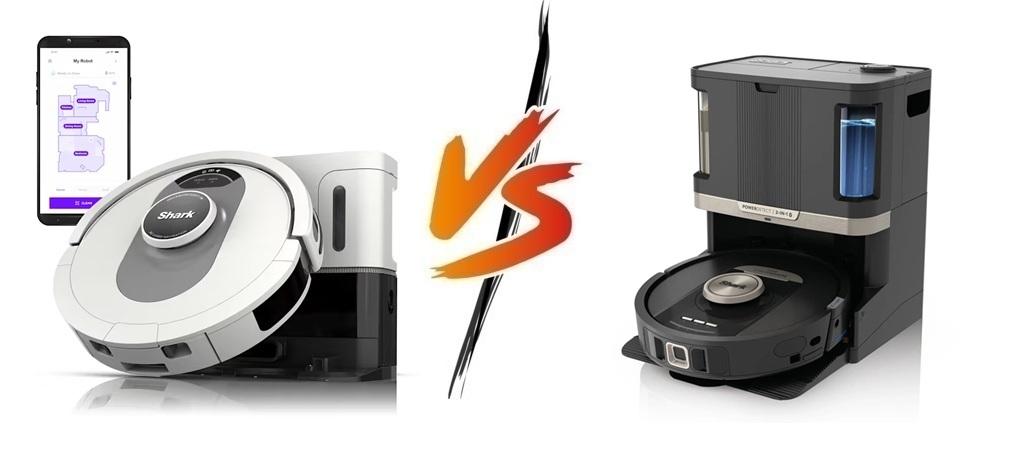
Robot vacuums have moved from novelty gadgets to everyday essentials. A few years ago, they were convenient but inconsistent. Today, they’re smart enough to map your home, empty themselves, and in some cases even mop your floors without much input from you. That’s the space both the Shark AI Ultra and the Shark PowerDetect are competing in.
On paper, they seem similar. Both promise intelligent navigation, strong suction, and hands-off maintenance. But once you look closer, they’re built with slightly different priorities. The AI Ultra focuses on efficient, systematic vacuuming with minimal complexity. PowerDetect, on the other hand, aims to be a more complete floor-care system, adding mopping and adaptive cleaning technology into the mix.
In this review, I’ll compare them the way most people actually use them: in real homes, with pets, furniture, cords on the floor, and the occasional spill that wasn’t planned for.
Shark AI Ultra vs Shark PowerDetect Comparison Chart
If you click the links below, under the product images, you will be redirected to Amazon.com. In case you then decide to buy anything, Amazon.com will pay me a commission. This doesn’t affect the honesty of this review in any way though.
| Feature / Specification | Shark AI Ultra | Shark PowerDetect |
|---|---|---|
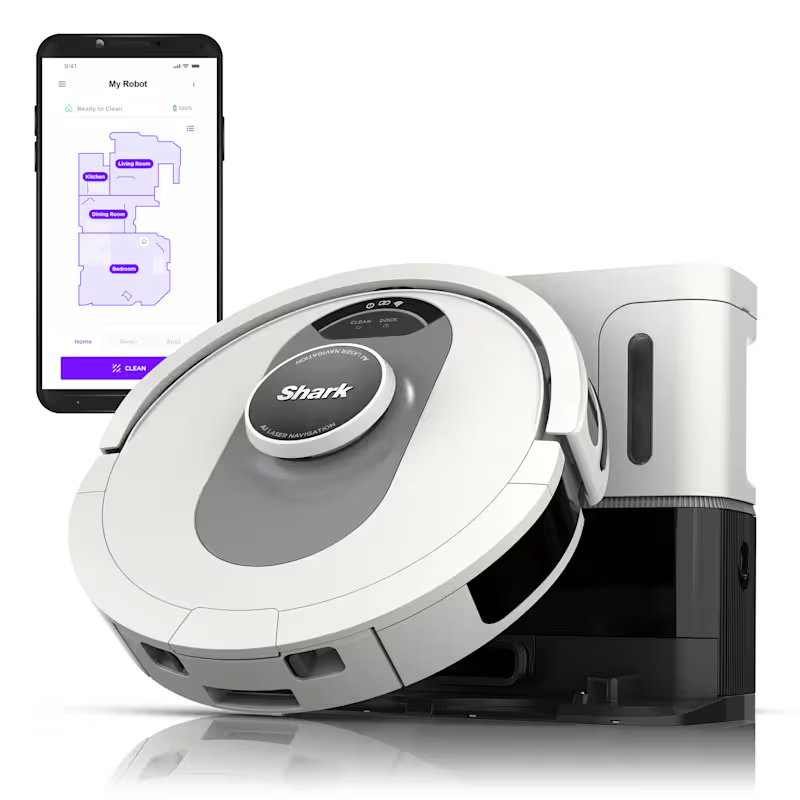 | 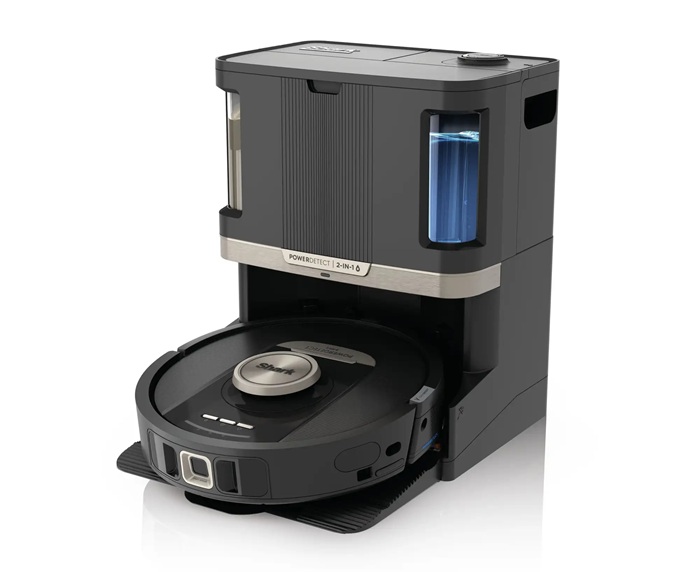 | |
| Check the best price on Amazon | Check the best price on Amazon | |
| Primary Function | Vacuum only (some variants 2-in-1) | Vacuum + Mop (integrated system) |
| Navigation System | 360° LiDAR mapping + Matrix Clean | Advanced LiDAR + adaptive detection |
| Cleaning Pattern | Structured grid (matrix-style) | Structured grid + adaptive response |
| Suction Adjustment | Manual suction modes | Automatic dirt & surface detection boost |
| Carpet Boost | Manual selection | Automatic |
| Runtime (Approx.) | Up to 120 minutes | Up to 120 minutes (varies with mop use) |
| Recharge & Resume | Yes | Yes |
| Self-Emptying Base | Yes (bagless in most models) | Yes (varies by model; some with advanced dock) |
| Dustbin Capacity (Robot) | Small internal bin (auto-empties) | Small internal bin (auto-empties) |
| Dock Capacity | Large debris capacity (30–60 days typical) | Debris bin + optional water tanks |
| Mopping Capability | No (standard model) | Yes |
| Water Tank | N/A | Integrated onboard tank |
| Auto Mop Refill | No | Available on higher-end models |
| Auto Mop Washing | No | Available on select models |
| Mop Pad Type | N/A | Reusable microfiber pad |
| No-Mop Zones | N/A | Yes |
| Brushroll Type | Self-cleaning anti-hair wrap | Anti-hair wrap brush system |
| Edge Cleaning Brush | Yes | Yes |
| Obstacle Avoidance | LiDAR-based navigation | LiDAR + improved adaptive response |
| Multi-Floor Mapping | Yes | Yes |
| App Control | Yes (room labeling, scheduling, no-go zones) | Yes (adds mop control & water levels) |
| Voice Assistant Support | Yes | Yes |
| Weight (Robot) | Lighter | Slightly heavier (due to mop hardware) |
| Dock Size | Medium footprint | Larger footprint (especially with water tanks) |
| Best For | Vacuum-focused cleaning, low maintenance | Mixed floors, deeper versatility, pet homes |
| Maintenance Complexity | Low | Moderate (due to mop system) |
| Ideal Flooring | Carpet + hard floors (vacuum only) | Hard floors + carpet (vacuum & mop combo) |
| My individual reviews | Shark AI Ultra review |
Quick Takeaways
- Shark AI Ultra is simpler, lighter, and more focused on vacuum performance with minimal maintenance.
- Shark PowerDetect adds adaptive suction and full mopping capability, making it more versatile but slightly more complex to maintain.
- Both support smart mapping, scheduling, recharge & resume, and strong pet-hair handling.
Design & Build Quality
When you live with a robot vacuum every day, design stops being a cosmetic detail and becomes something practical. How tall it is determines whether it can get under your couch. The finish determines how quickly it starts looking scratched. The base station affects how much space it takes up in your hallway. After spending time with both the Shark AI Ultra and the Shark PowerDetect, it’s clear that Shark designed them with different priorities in mind.
Overall Aesthetic and First Impressions
The Shark AI Ultra has a clean, understated look. It’s a classic round robot vacuum with a raised LiDAR turret on top and a matte or semi-gloss finish, depending on the variant. It doesn’t try to look futuristic. It looks practical. The materials feel solid enough, though clearly plastic. That’s not a criticism. Almost every robot vacuum in this category uses high-density plastic to keep weight manageable and costs under control.
The PowerDetect feels more premium at first touch. The plastic panels are thicker, seams are tighter, and the overall unit has a denser feel when you pick it up. The finish also tends to resist fingerprints a little better. On a shelf or docked in a visible area, it looks slightly more refined.
That said, both units are clearly built to function rather than impress. You’re not buying a decorative object. You’re buying a cleaning machine that’s going to bump into chair legs several times a week.
Dimensions and Clearance
One of the first things I check with any robot vacuum is height. If it can’t get under common furniture, you lose a big part of the value.
The AI Ultra has a relatively low profile, though the LiDAR tower adds a bit of height. In most homes, it fits under sofas and beds that have standard clearance. I found it rarely struggled with typical living room furniture, but if you have very low modern couches, you’ll want to measure.
The PowerDetect is slightly bulkier, especially in versions that support advanced mopping systems. The added internal hardware for water tanks and mop components increases weight and, in some variants, height. It still fits under most furniture, but it’s not quite as nimble as the AI Ultra in tighter spaces.
If your home has a lot of low-clearance furniture, the AI Ultra has a small advantage simply because it’s lighter and fractionally slimmer.
Base Station Design and Footprint
The base station is half the story with modern robot vacuums. You’re not just storing a charger anymore. You’re housing a self-emptying system, and sometimes water tanks and cleaning modules.
The AI Ultra’s self-empty base is relatively straightforward. It’s tall but not overly wide. The design is simple: a vertical dustbin compartment with a bagless collection system in most configurations. I appreciate that it doesn’t dominate the room visually. You can tuck it into a corner and forget about it.
However, the bagless system does make the bin slightly bulkier. And when you empty it manually, you’re exposed directly to the collected debris. If you’re sensitive to dust, that’s something to consider.
The PowerDetect’s base is a more serious piece of hardware. On models with mop management, the station often includes clean and dirty water tanks, plus automated pad maintenance. That makes the dock larger and heavier. It’s not huge, but you’ll notice it more in smaller apartments.
The upside is convenience. The downside is space. If you live in a compact home or don’t want a visible tech station in your living area, the AI Ultra’s dock is easier to live with.
Structural Durability
Robot vacuums take abuse. They hit table legs. They scrape against baseboards. They occasionally fall off small ledges if your home layout is unusual.
The AI Ultra feels sturdy enough to survive normal collisions. The bumper system absorbs most everyday impacts without rattling or shifting. After weeks of use, minor scuffs may appear along the outer ring, but nothing structural. The wheels feel stable and maintain traction on both hard floors and carpets.
The PowerDetect gives the impression of being slightly more reinforced. The bumper response feels firmer, and the chassis flex is minimal. When lifting it, there’s less creaking or panel movement. It feels engineered to handle heavier internal components, which makes sense given the added mopping hardware.
Neither unit feels fragile. But if I had to choose which one inspires more long-term confidence in build strength, the PowerDetect edges ahead.
Brushroll and Underside Engineering
Flip both units over and you start to see meaningful differences.
The AI Ultra’s underside is cleanly laid out. It features a self-cleaning brushroll designed to minimize hair wrap, along with a side brush for edge cleaning. The brush housing is easy to access. You can remove it without tools, which matters when hair inevitably builds up over time.
The materials underneath feel durable, though again mostly plastic. The brush guard snaps in securely, and the wheels have a decent suspension range to adapt to uneven flooring.
The PowerDetect’s underside is more complex, especially in mop-enabled versions. You have the vacuum brushroll plus mop pad assembly components. The integration is thoughtful. The mop mechanism doesn’t feel like an afterthought. It’s built into the chassis in a way that feels intentional.
However, complexity means more moving parts. Over time, that may mean more maintenance. From a pure build standpoint, though, the engineering feels robust rather than fragile.
Water Tank and Mop Integration
This is where the PowerDetect separates itself clearly.
The AI Ultra, in its vacuum-only form, has no water tank. That simplicity works in its favor. There’s less that can leak, clog, or fail. You’re dealing with dry debris only.
The PowerDetect incorporates water storage and mop pads in a way that feels well integrated. The tank locks into place securely. It doesn’t wobble or feel loose. The sealing mechanisms appear solid, reducing the chance of leaks if installed properly.
Still, any water system adds risk. Over time, mineral buildup, improper seating, or worn seals could cause issues. That’s not unique to Shark. It’s just the reality of combination vacuum-mop robots.
From a build perspective, though, the PowerDetect’s water system feels engineered with durability in mind rather than as a thin add-on feature.
Finish, Wear, and Long-Term Appearance
After regular use, robot vacuums show wear. The question is how quickly.
The AI Ultra’s finish can pick up fine scratches around the bumper and edges. The top surface holds up reasonably well but may show swirl marks if cleaned with rough cloths. It still looks fine after months of use, but it won’t stay showroom perfect.
The PowerDetect’s exterior panels seem slightly more resistant to visible scuffing. The finish feels thicker and less prone to micro-scratches. That might not matter to everyone, but if the dock is in a visible part of your home, appearance does count.
Weight and Handling
When you need to carry the unit upstairs or clean it manually, weight matters.
The AI Ultra is easier to lift and reposition. It’s lighter and simpler. Carrying it between floors doesn’t feel like a chore.
The PowerDetect, due to added components, is heavier. Not dramatically, but noticeably. If you frequently move your robot between floors manually, the lighter AI Ultra is more convenient.
Design Philosophy Comparison
Stepping back, the AI Ultra feels designed around simplicity and efficiency. It’s a vacuum robot first and foremost. The materials are solid, the layout is straightforward, and there’s very little excess.
The PowerDetect feels like a more ambitious machine. It’s trying to replace more of your manual cleaning routine. As a result, it has more components, more weight, and a more substantial dock. The materials and assembly reflect that added responsibility.
If you value minimalism, lower weight, and fewer moving parts, the AI Ultra’s design makes a lot of sense. If you want a machine that feels like a comprehensive cleaning station, the PowerDetect’s heavier, more premium build will likely appeal more.
Neither feels cheaply made. Neither feels fragile. But they do represent two different philosophies: streamlined vacuum specialist versus all-in-one floor care system.
Navigation Intelligence & Mapping
Navigation is where robot vacuums either feel smart or frustrating. Strong suction doesn’t matter much if the robot keeps missing corners, getting stuck under chairs, or cleaning the same patch of floor three times while ignoring another. After extended use, the difference between the Shark AI Ultra and the Shark PowerDetect becomes clear not in what they promise, but in how confidently they move through a real home.
Core Navigation Technology
Both models rely on LiDAR-based navigation. That raised turret on top isn’t just for show. It scans the room continuously, building a 360-degree map of your environment. Compared to older camera-only or random-pattern robots, LiDAR systems are dramatically more consistent. They don’t wander aimlessly. They move with intention.
In everyday use, both robots create a usable floor plan after the first mapping run. The initial pass is usually slower as the machine learns your layout. After that, cleaning cycles become more efficient because the robot follows structured paths rather than reactive bumping.
Where the difference starts to show is refinement.
The AI Ultra’s navigation feels deliberate and methodical. It moves in clean, straight lines across open areas, then shifts direction in a grid-like pattern. Watching it work is oddly satisfying. It covers space in a predictable, logical way. In medium-sized rooms, it rarely misses visible patches.
The PowerDetect operates similarly, but with slightly more adaptive behavior layered on top. It still uses structured paths, but it reacts more dynamically when it encounters transitions between surfaces or unexpected obstacles.
Mapping Accuracy
Both units generate digital maps inside the app, allowing you to label rooms and create cleaning zones. Accuracy is strong on both, especially in standard rectangular rooms.
The AI Ultra does a good job dividing spaces logically. After a few cleaning cycles, the map becomes stable. You can split rooms, combine spaces, and assign specific cleaning tasks to certain areas. In most homes, it recognizes walls and permanent fixtures accurately.
That said, the AI Ultra can occasionally struggle with highly irregular layouts. If you have many tight corners, alcoves, or furniture clusters, it sometimes creates slightly awkward room boundaries in the app. These aren’t deal-breakers, but you may need to manually adjust room divisions.
The PowerDetect tends to produce slightly cleaner maps from the start. It seems better at recognizing subtle boundaries between open-plan areas like kitchen and dining zones. The mapping interface also allows more granular control in some configurations, especially when setting mop-restricted zones.
If you care deeply about digital map precision and detailed room control, the PowerDetect feels a bit more polished.
Obstacle Detection and Avoidance
This is where real-world performance separates marketing from reality.
The AI Ultra handles large, predictable obstacles well. Table legs, sofas, beds, and walls are no problem. It slows as it approaches them, lightly taps if needed, and adjusts its path.
However, smaller objects can still trip it up. Loose charging cables, thin socks, or pet toys left on the floor sometimes cause problems. The AI Ultra is better than random-navigation robots, but it’s not flawless at identifying small clutter. You still need to do a quick floor check before running it if you want a stress-free cycle.
The PowerDetect feels more confident around clutter. It approaches objects more cautiously and tends to reduce unnecessary bumping. In homes with pets or children where the floor isn’t always perfectly clear, this matters.
It’s not magic. It can still encounter trouble with very thin cords or fabric. But in daily use, it feels like it makes fewer navigation mistakes.
Multi-Room and Multi-Level Mapping
Both robots support multi-room mapping and can remember layouts across cleaning sessions. Once mapped, you can instruct them to clean only the kitchen, only the living room, or a specific zone you draw in the app.
The AI Ultra handles multi-room cleaning efficiently. It moves from room to room in a logical sequence, usually finishing one space before transitioning to the next. Doorway detection is solid, and it rarely becomes confused moving between spaces.
The PowerDetect performs similarly but adds more nuance when mopping is involved. For example, you can set no-mop zones for carpeted areas while still allowing vacuuming there. This integration between mapping and cleaning mode is where it shines.
If you have a multi-level home, both units can store multiple floor maps. However, neither can climb stairs, so you’ll need to move them manually between floors. The lighter weight of the AI Ultra makes that slightly easier, but from a mapping standpoint, both remember separate layouts reliably.
Recharge and Resume Behavior
A strong navigation system includes intelligent recharge behavior. If a robot runs out of battery mid-clean, it should return to the dock, recharge, and resume exactly where it left off.
The AI Ultra handles this well. When battery levels drop, it calculates the return path, docks cleanly, recharges, and continues cleaning from the correct location. In most cases, it does not restart the entire room. It picks up almost precisely where it paused.
The PowerDetect performs similarly, though its battery management can vary slightly depending on whether mopping is active. Mopping typically consumes more energy. Still, it resumes cleaning in an organized way rather than randomly restarting.
Both models show strong maturity in this area.
Edge Cleaning and Perimeter Tracking
Navigation intelligence also affects how well a robot cleans along walls and edges.
The AI Ultra tracks perimeters competently. It follows walls in a steady path, using its side brush to sweep debris inward. In open spaces, it doesn’t hug walls aggressively, but it does return for perimeter passes as part of its cleaning algorithm.
The PowerDetect tends to be slightly more deliberate along edges, especially when adaptive suction is triggered near baseboards. It feels like it lingers just a bit longer in areas where debris often collects.
Neither will replace a handheld vacuum for ultra-detailed edge cleaning, but both perform well for automated maintenance.
Threshold Handling and Surface Transitions
Homes aren’t flat test labs. You have rugs, thresholds, tile transitions, and sometimes uneven flooring.
The AI Ultra handles standard thresholds and low rugs without much trouble. It can climb typical transitions between hard floors and area rugs. On thicker rugs, it occasionally needs a second attempt, but it usually succeeds.
The PowerDetect feels more stable when handling small height changes. Its movement over thresholds seems smoother and more confident. If you have multiple room transitions or slightly uneven flooring, this small difference becomes noticeable over time.
Cleaning Pattern Logic
One thing I appreciate about both robots is that they avoid the old “pinball” style of cleaning. They don’t bounce randomly until the battery dies.
The AI Ultra follows a matrix-style pattern. It moves in rows, then overlaps slightly on subsequent passes. This systematic approach gives you visible coverage consistency.
The PowerDetect follows similar structured logic but integrates adaptive decision-making when it detects dirtier areas. If it senses heavier debris, it may slow down or increase suction while maintaining map awareness.
That adaptive behavior makes cleaning feel more intentional rather than just repetitive.
App Integration and Map Editing
Navigation is only as useful as the control you have over it.
With the AI Ultra, you can set no-go zones, label rooms, and schedule targeted cleans. The app interface is straightforward. Most people can figure it out without reading a manual.
The PowerDetect’s app experience feels slightly more comprehensive. Because it integrates mopping, you can define no-mop zones, adjust water output, and fine-tune cleaning intensity by room. That additional flexibility enhances how navigation translates into practical control.
Long-Term Consistency
Some robot vacuums perform well for the first few weeks, then gradually lose mapping accuracy.
Both of these models maintain stable maps over time. Furniture changes can require a remap, but that’s true for most LiDAR systems. In stable home layouts, the maps remain reliable.
Overall, both robots demonstrate mature navigation systems with structured cleaning, reliable mapping, and solid recharge behavior. The AI Ultra feels methodical and dependable. The PowerDetect feels slightly more adaptive and refined, especially in complex or cluttered environments.
If your home is fairly simple and you value straightforward, predictable cleaning, the AI Ultra’s navigation will likely satisfy you completely. If your home is busier, with mixed surfaces and frequent small obstacles, the PowerDetect’s more nuanced behavior gives it a modest edge.
Performance
Performance is where expectations meet reality. A robot vacuum can look sleek, map beautifully, and connect perfectly to your phone, but if it doesn’t actually clean well, none of that matters. After extended, real-world use of the Shark AI Ultra and the Shark PowerDetect, the differences in performance become clear not just in raw suction, but in how intelligently that suction is used.
Suction Power and Debris Pickup
Let’s start with the basics: how well do they pick up dirt?
The Shark AI Ultra delivers strong, consistent suction. On hard floors like tile, laminate, or hardwood, it performs very well. Fine dust, crumbs, sand, and everyday debris are collected efficiently in a single pass. Its structured cleaning pattern helps ensure that it doesn’t leave visible trails behind.
On carpets, performance is solid but slightly more dependent on pile height. On low- to medium-pile carpets, it removes surface debris effectively. You’ll see visible improvement after a cleaning cycle. However, deeply embedded debris in thicker carpet may require multiple passes or a higher power mode. The AI Ultra relies on steady suction rather than highly reactive adjustments, so performance is consistent but not aggressively adaptive.
The PowerDetect takes a slightly different approach. It doesn’t just rely on fixed suction levels. It actively detects dirtier areas and boosts power when needed. In practice, this means that when it encounters a concentrated mess, such as a pile of crumbs near the kitchen counter or dirt tracked in by shoes, it slows slightly and increases suction.
On hard floors, this adaptive behavior makes a noticeable difference. Instead of gliding over heavy debris at standard power, it reacts in real time. On carpets, the automatic boost when transitioning from hard floor to rug gives it an edge in mixed-floor homes. You don’t have to manually set carpet boost; it just happens.
If your home has mostly light debris and regular maintenance cleaning, both robots perform well. But if you deal with variable mess levels, the PowerDetect’s responsive suction gives it an advantage.
Deep Cleaning Ability
Robot vacuums aren’t meant to replace heavy-duty upright vacuums for deep, seasonal cleaning. That said, some come closer than others.
The AI Ultra handles everyday cleaning extremely well. If you run it several times per week, your floors will consistently look clean. Its brushroll agitates carpet fibers enough to lift surface debris, and on hard floors it leaves a polished appearance free of dust buildup.
However, when dealing with deeply embedded dirt in carpet fibers, especially in high-traffic areas, it doesn’t match the power of a full-size upright vacuum. It’s designed for maintenance rather than restoration.
The PowerDetect performs slightly better in deeper carpet cleaning due to its automatic suction adjustments. When it detects resistance or increased debris levels, it increases intensity. Over time, this leads to slightly better dirt extraction in heavy-use areas.
Still, it’s important to keep expectations realistic. Both are excellent maintenance tools. Neither replaces a high-powered corded upright for deep carpet restoration.
Consistency Across Cleaning Cycles
Consistency matters more than peak performance. A robot vacuum should clean just as well in month three as it did on day one.
The AI Ultra maintains consistent suction output across cycles. Its motor performance feels steady, and its brushroll does a good job resisting hair tangling. As long as you maintain filters and empty the base regularly, cleaning quality remains stable.
The PowerDetect also maintains consistency, though its additional mopping hardware introduces another variable. When the mop is engaged, performance remains strong, but water tank maintenance becomes part of the equation. If the mop pads aren’t cleaned or the tank isn’t refilled properly, overall cleaning performance can decline.
In pure vacuuming consistency, both perform reliably over time.
Edge and Corner Cleaning
Edges and corners are often weak spots for robot vacuums.
The AI Ultra’s side brush does a decent job sweeping debris away from baseboards and into the suction path. In most cases, it leaves edges visibly clean after one or two passes. However, in very tight corners, especially sharp 90-degree angles, it can miss small debris.
The PowerDetect behaves similarly but tends to linger slightly longer along edges when detecting heavier debris. The adaptive suction helps ensure that dust along walls is fully captured.
Neither unit eliminates the need for occasional manual edge cleaning in very tight spaces, but both perform well enough for routine maintenance.
Performance on Different Floor Types
Hardwood and Laminate
Both robots excel here. They glide smoothly, collect dust effectively, and leave floors visibly cleaner. The AI Ultra’s steady suction is more than adequate. The PowerDetect’s adaptive boost is helpful for high-traffic entryways.
Tile
On tile floors with grout lines, suction consistency matters. The AI Ultra handles surface debris well, but very fine dust in grout lines may require multiple passes. The PowerDetect’s reactive suction can help extract debris from textured surfaces more effectively.
Low-Pile Carpet
Both perform well. The AI Ultra delivers consistent cleaning. The PowerDetect offers slightly stronger performance due to automatic carpet boost.
Medium-Pile Carpet
Performance is still good on both, but the PowerDetect pulls slightly ahead in debris extraction due to its ability to adjust power dynamically.
High-Pile Carpet
Neither robot is ideal for thick, plush carpet. They can move across it, but suction effectiveness decreases. In homes with predominantly high-pile carpeting, supplemental cleaning with a traditional vacuum may still be necessary.
Battery Performance During Cleaning
Cleaning performance is tied to battery management. A robot that loses suction near the end of a cycle isn’t performing consistently.
The AI Ultra delivers stable suction throughout its runtime. As battery levels drop, cleaning intensity remains fairly consistent until it returns to dock.
The PowerDetect consumes slightly more energy, especially when using adaptive suction and mopping simultaneously. However, it manages power intelligently and returns to dock before performance noticeably drops.
Both units support recharge and resume, meaning large homes can still be cleaned fully even if a mid-cycle recharge is required.
Handling of Large Debris
Large debris, such as cereal pieces or small leaves tracked indoors, can challenge some robot vacuums.
The AI Ultra handles medium-sized debris well but may occasionally push very large pieces briefly before suctioning them. It generally captures them within a pass or two.
The PowerDetect’s stronger suction boost gives it a better chance of capturing larger debris in a single pass. Its airflow feels slightly more aggressive when activated.
In everyday use, both manage common household debris effectively.
Hair Pickup and Tangle Resistance
Hair performance is critical, especially for pet owners.
The AI Ultra’s self-cleaning brushroll is designed to resist tangles. In practice, it performs well. Long human hair and pet fur wrap less tightly than on older brush designs. Occasional maintenance is still required, but not excessively.
The PowerDetect also manages hair well. Its adaptive suction helps lift fur from carpet fibers more efficiently. Combined with mop functionality, it also addresses fine hair left behind on hard floors.
In homes with moderate to heavy shedding, both are capable, but the PowerDetect’s extra suction responsiveness provides a small advantage.
Real-World Cleaning Experience
After weeks of regular use, the difference comes down to personality.
The AI Ultra feels dependable and steady. It cleans thoroughly in a structured, predictable way. If your goal is reliable daily vacuum maintenance without complexity, it delivers exactly that.
The PowerDetect feels slightly more proactive. It reacts to messes instead of treating every square foot the same. That adaptability makes it feel more intelligent in dynamic households.
In pure vacuum performance, both are strong contenders. The AI Ultra offers reliable, consistent cleaning. The PowerDetect layers adaptive intelligence on top of strong suction, giving it a performance edge in homes with mixed surfaces and unpredictable mess levels.
If you value simplicity and steady results, the AI Ultra performs very well. If you want a robot that actively responds to changing conditions in your home, the PowerDetect justifies its more advanced positioning.
Mopping Capabilities
Mopping is where the difference between these two machines becomes impossible to ignore. The Shark AI Ultra is, in most configurations, a dedicated vacuum. The Shark PowerDetect is designed to handle both dry debris and wet cleaning in a more integrated way. If you’re deciding between them, your flooring type and your tolerance for manual mopping will heavily influence your choice.
Vacuum-Only vs. True 2-in-1 Design
The Shark AI Ultra, in its standard form, does not mop. That’s not a weakness if you primarily have carpet or if you prefer traditional mopping methods. In fact, the absence of water tanks and mop pads keeps the design simpler and reduces maintenance. There are fewer parts that can clog, leak, or wear out.
However, if your home has a significant amount of tile, laminate, vinyl, or sealed hardwood, vacuuming alone won’t remove dried spills, sticky residue, or fine grime buildup. Dust may disappear, but subtle film remains over time. In those cases, a vacuum-only robot eventually needs backup from a manual mop.
The Shark PowerDetect approaches floor care differently. It integrates a mopping system into its cleaning routine, allowing it to vacuum and mop in the same session. This fundamentally changes how your floors feel over time. Instead of just looking clean, they feel cleaner underfoot.
Water Tank Design and Integration
The PowerDetect includes a dedicated water tank system that feeds moisture to a mop pad underneath the unit. The tank locks into place securely and feels stable during operation. It doesn’t rattle or feel loosely attached, which matters because any movement could lead to leaks or uneven water distribution.
Water capacity is moderate. It’s enough for standard room coverage without requiring constant refills. For larger homes, you may need to refill between sessions, but that’s typical for most hybrid robots.
The base station on higher-end configurations may also support automated refilling and mop pad maintenance. This significantly reduces manual involvement. Instead of removing and washing pads after every session, the dock handles part of the process.
By contrast, the AI Ultra avoids all of this complexity. There’s no water to manage, no pads to wash, and no additional components to maintain. Simplicity can be a benefit, especially if you don’t want to deal with wet systems.
Mop Pad Performance
The quality of a robot’s mopping system comes down to pressure, coverage, and water distribution.
The PowerDetect uses a flat mop pad system that maintains steady contact with the floor. It doesn’t simply drag a damp cloth behind it. The pad is positioned to maximize surface contact while maintaining balance with suction.
In everyday cleaning, this setup handles light spills and sticky residue effectively. Dried juice spots, faint footprints, and thin layers of kitchen grime are noticeably reduced after a session. It’s not aggressive scrubbing like a person applying pressure with a traditional mop, but it’s far beyond a simple damp wipe.
The AI Ultra, without mopping functionality, cannot address these types of messes at all. It can remove dry debris from the spill area, but it won’t eliminate sticky residue.
Simultaneous Vacuuming and Mopping
One of the PowerDetect’s strengths is its ability to vacuum and mop in a coordinated way. It vacuums first to remove loose debris, then follows with mopping action in the same cleaning cycle. This prevents dirt from being smeared across the floor.
The transition between surfaces is handled intelligently. When the robot detects carpet, it avoids mopping in that zone. In homes with mixed flooring, this feature is critical. You don’t want damp mop pads dragging across rugs.
The AI Ultra, as a vacuum-only unit, doesn’t need to worry about wet and dry transitions. Its entire focus is suction-based cleaning.
Stain Handling
Let’s talk about real-world messes. Think kitchen splashes, coffee drips, dried pet paw prints, or light mud.
The PowerDetect handles light to moderate stains well. If the spill isn’t heavily dried or thick, the mop pad combined with controlled moisture usually removes it in one or two passes. For more stubborn dried stains, you may need to run a second cleaning cycle or pre-treat manually.
It’s important to understand that robot mops are designed for maintenance cleaning, not deep scrubbing. They prevent buildup rather than eliminate months of neglect.
The AI Ultra, of course, cannot address wet or sticky stains at all. If those types of messes are common in your home, you’ll still need a separate mopping routine.
Water Control and Floor Safety
Over-wetting floors can damage certain materials, especially wood. Controlled water output is essential.
The PowerDetect regulates water flow to avoid oversaturation. Floors are left slightly damp, not soaked. In most cases, surfaces dry within minutes after cleaning. This makes it safe for sealed hardwood, laminate, and tile.
You can also adjust water levels depending on how much cleaning power you want. Light moisture works for routine maintenance. Slightly heavier dampness works better for sticky residue.
Because the AI Ultra does not introduce moisture at all, there’s zero risk of water-related damage. For households with delicate flooring or where moisture control is a concern, that simplicity can be reassuring.
Mop Maintenance Requirements
Mopping introduces additional maintenance responsibilities.
With the PowerDetect, mop pads need to be washed regularly. Depending on the model, the dock may rinse or manage them automatically, but periodic manual cleaning is still necessary to prevent odor or buildup.
Water tanks must also be emptied and dried to avoid stagnation. In hard-water areas, mineral deposits can accumulate over time. Occasional descaling or thorough cleaning may be required.
The AI Ultra completely avoids this category of maintenance. There are no damp components to worry about, no water tanks to clean, and no potential for mildew if maintenance is neglected.
If you want the lowest-maintenance ownership experience possible, vacuum-only design has advantages.
Coverage Efficiency
Mopping coverage depends heavily on navigation precision.
The PowerDetect uses its mapped routes to ensure systematic mop coverage. It doesn’t randomly drag the pad across the floor. It follows structured passes similar to vacuum mode. This leads to uniform results.
In open areas, coverage is consistent. In tighter spaces, performance depends on how well the robot can maneuver. It does well around chair legs and kitchen islands, though extremely narrow gaps may still require manual attention.
The AI Ultra, again, cannot contribute to wet cleaning coverage.
Practical Everyday Impact
Over time, the difference becomes noticeable.
In a home using the AI Ultra exclusively, floors remain free of visible debris. However, if you walk barefoot in high-traffic areas, you may still feel slight residue buildup after weeks of use without manual mopping.
In a home using the PowerDetect regularly, floors tend to feel smoother and cleaner underfoot. The subtle removal of fine grime makes a difference you may not see immediately but definitely feel.
That difference is especially noticeable in kitchens, entryways, and homes with pets.
Limitations of Robot Mopping
It’s important to stay realistic. The PowerDetect’s mopping function is excellent for maintenance cleaning but not a substitute for heavy-duty scrubbing.
It won’t scrub grout deeply. It won’t remove thick, dried mud without multiple passes. It won’t disinfect floors in the same way as strong chemical cleaning.
But for daily or weekly upkeep, it dramatically reduces the need for manual mopping.
Overall Assessment
When evaluating mopping capabilities, this comparison is straightforward.
The Shark AI Ultra does not mop, and that simplicity benefits users who only need vacuum performance and want fewer maintenance steps.
The Shark PowerDetect delivers meaningful wet cleaning that enhances overall floor care. It combines vacuuming and mopping into one coordinated system, reducing the need for manual intervention.
If your home is primarily carpeted, the absence of mopping on the AI Ultra may not matter at all. If you have significant hard flooring and want to minimize manual mopping, the PowerDetect’s integrated system becomes a major advantage.
In this category, the PowerDetect clearly leads because it offers a capability the AI Ultra simply does not provide.
Maintenance & Cleaning Ease
No matter how smart or powerful a robot vacuum is, ownership always comes down to maintenance. A machine that cleans your floors but requires constant hands-on attention quickly becomes frustrating. The real test is how much effort it takes to keep the robot running at peak performance week after week. When comparing the Shark AI Ultra and the Shark PowerDetect, maintenance is one of the clearest differences between a streamlined vacuum-only system and a more complex all-in-one cleaning solution.
Self-Emptying Base: How Hands-Off Is It?
Both models are designed to reduce daily involvement, but they do it differently.
The Shark AI Ultra typically comes with a bagless self-emptying base. After each cleaning cycle, the robot docks and automatically transfers debris from its internal dustbin into the larger base container. In practical terms, this means you may only need to empty the base every few weeks, depending on home size and debris levels.
The bagless design has two main advantages. First, there’s no need to purchase replacement disposal bags. Second, you can visually see when the container is full. However, emptying a bagless bin can release a small amount of dust back into the air. If you’re sensitive to allergens, you’ll want to empty it carefully over a trash bin.
The Shark PowerDetect also supports automatic emptying in many configurations. In vacuum-only mode, maintenance is similar to the AI Ultra. But once you factor in mopping features, the dock becomes more involved. Higher-end configurations may include clean and dirty water tanks, and in some cases automated mop pad management.
This adds convenience but also additional cleaning tasks. Instead of just emptying dry debris, you may need to manage water reservoirs and occasionally rinse internal components.
If your priority is minimal interaction, the AI Ultra’s simpler dock system is easier to manage.
Dustbin and Filter Maintenance
Inside the robot itself, both models have accessible dustbins and filters.
The AI Ultra’s internal bin is straightforward to remove and rinse. The filter is positioned in a way that makes it easy to tap out dust or replace when needed. In normal use, filters should be cleaned every few weeks and replaced periodically to maintain suction performance.
Accessing these components feels intuitive. You don’t need tools, and there are no complicated release mechanisms.
The PowerDetect follows a similar layout for its vacuum components. The internal dustbin and filter are also accessible and easy to remove. However, because it integrates mopping in many versions, you may find yourself managing both dry debris and moisture systems at the same time.
From a purely vacuum maintenance perspective, both are simple. The added mopping hardware is what increases complexity in the PowerDetect.
Brushroll Cleaning and Hair Management
Hair tangling is one of the most common maintenance headaches with robot vacuums.
The AI Ultra features a self-cleaning brushroll designed to minimize hair wrap. In real-world use, it performs well. Long hair and pet fur still accumulate over time, but they don’t wrap tightly around the brush core. Cleaning the brushroll usually involves removing it, cutting away any stubborn strands, and snapping it back into place.
This process takes only a few minutes and doesn’t require tools.
The PowerDetect also manages hair effectively. Its brush system is robust and designed to resist tangling. However, because the underside may also include mop pad assemblies, cleaning the entire base area can take slightly longer.
You’re not just checking the brushroll. You’re also ensuring that mop components are free of buildup.
For households with pets or long hair, both models require periodic brush maintenance. The AI Ultra’s simpler underside makes the process marginally quicker.
Mop Pad and Water System Maintenance
This is where maintenance differences become significant.
The AI Ultra avoids all wet system responsibilities. There are no water tanks, no mop pads, and no risk of mildew. Maintenance is entirely dry: emptying debris, cleaning filters, and occasionally wiping sensors.
The PowerDetect introduces water management into the equation. Mop pads must be cleaned regularly. Depending on the model, the dock may partially rinse them, but you’ll still need to remove and wash pads periodically to prevent odor and bacteria buildup.
Water tanks require emptying and refilling. If you leave stagnant water in the system, unpleasant smells can develop. In hard water areas, mineral deposits may accumulate and require occasional descaling.
These aren’t overwhelming tasks, but they add layers to ownership. Instead of a quick five-minute maintenance routine every couple of weeks, you may spend additional time checking moisture-related components.
If you’re comfortable with that trade-off for cleaner floors, it’s worth it. If not, simplicity favors the AI Ultra.
Sensor and Navigation Component Cleaning
Both robots rely on sensors and LiDAR for navigation. Dust buildup on sensors can reduce mapping accuracy.
The AI Ultra’s sensors are easy to access and wipe clean with a microfiber cloth. The LiDAR turret on top should be kept clear of dust and fingerprints for optimal performance.
The PowerDetect requires similar care. Because it operates in both dry and damp environments, you’ll want to ensure that moisture doesn’t leave residue on navigation sensors.
In both cases, occasional gentle cleaning keeps navigation consistent.
Frequency of Maintenance
In practical terms, here’s what ownership looks like over a month.
With the AI Ultra, you’ll likely:
- Empty the self-empty base every few weeks.
- Tap out or rinse the filter periodically.
- Check the brushroll once or twice.
- Wipe sensors occasionally.
Total time commitment: minimal.
With the PowerDetect, you’ll likely:
- Empty the debris bin in the dock.
- Manage water tanks.
- Wash mop pads regularly.
- Check the brushroll.
- Clean filters.
- Occasionally inspect for water residue buildup.
Total time commitment: moderate but manageable.
Neither system requires daily hands-on cleaning, but the PowerDetect does ask for more involvement.
Odor Control
Dry debris can create odor if left unattended, especially with pet hair.
The AI Ultra’s sealed base helps contain smells reasonably well, but because it’s bagless, strong odors can accumulate in the container over time if not emptied regularly.
The PowerDetect’s wet components can introduce a different kind of odor if mop pads are not cleaned promptly. Damp fabric left too long can develop musty smells.
In both cases, regular maintenance prevents issues. Neglect increases odor risk.
Replacement Parts and Long-Term Costs
Maintenance also includes replacing consumables.
For the AI Ultra, replacement filters and brushroll components are the primary ongoing costs. Because the dock is bagless, you save money on disposable bags.
For the PowerDetect, you may need replacement mop pads in addition to filters and brushes. If your model uses disposable components for the dock, those costs add up as well.
Long-term ownership of the PowerDetect typically involves slightly higher maintenance expenses due to added components.
Ease of Troubleshooting
Occasional jams or clogs are inevitable.
The AI Ultra’s internal layout is straightforward. If something gets stuck, it’s usually easy to access and remove.
The PowerDetect’s added mop assembly means troubleshooting may involve checking more areas. Still, Shark’s design keeps components accessible without complicated disassembly.
Neither machine feels overly difficult to service at a user level.
Overall Ownership Experience
After living with both systems, the difference comes down to philosophy.
The AI Ultra feels low-maintenance and predictable. Its dry-only system simplifies upkeep. You spend less time managing the machine and more time letting it work.
The PowerDetect offers greater cleaning versatility, but that versatility comes with added responsibility. If you’re willing to clean mop pads and manage water tanks, you gain more comprehensive floor care.
If you want the simplest possible ownership experience with minimal ongoing tasks, the AI Ultra is easier to live with. If you want enhanced cleaning capability and don’t mind a slightly more involved routine, the PowerDetect remains manageable but requires more attention.
Neither machine is high-maintenance by traditional appliance standards. But in a direct comparison, the AI Ultra wins for simplicity, while the PowerDetect trades simplicity for expanded functionality.
Ergonomics & Usability
When people think about robot vacuums, they often focus on suction power or mapping technology. But ergonomics and usability are what determine whether you actually enjoy owning the device. A robot vacuum should reduce friction in your life, not introduce new routines that feel like chores. After extended use of both the Shark AI Ultra and the Shark PowerDetect, the differences in daily interaction become very clear.
Initial Setup Experience
First impressions matter. Setup should feel straightforward, not like assembling a complicated appliance.
The Shark AI Ultra is refreshingly simple to set up. You place the dock, plug it in, download the app, connect the robot to Wi-Fi, and run an initial mapping cycle. The app walks you through the process step by step. Most users can complete setup within 15 to 20 minutes.
The PowerDetect follows a similar setup process but may include additional steps if it has a mopping system with water tanks. Filling the tank, attaching mop pads, and understanding wet-cleaning settings adds a few more minutes. It’s not difficult, but it is more involved.
If you prefer a quick, minimal setup experience, the AI Ultra feels slightly more streamlined. If you’re comfortable with a few extra steps for added functionality, the PowerDetect remains user-friendly but slightly more complex.
App Interface and Control
The app experience plays a major role in usability. Both models connect to Shark’s mobile app, which acts as the primary control hub.
With the AI Ultra, the interface feels clean and intuitive. You can:
- Start or stop cleaning remotely.
- Schedule recurring cleanings.
- Label rooms after mapping.
- Create no-go zones.
- Adjust suction levels.
Everything is presented clearly. You don’t feel overwhelmed with options.
The PowerDetect’s app interface builds on that foundation. In addition to vacuum settings, you also gain control over:
- Water output levels.
- Mop-only or vacuum-only modes.
- No-mop zones.
- Room-specific cleaning preferences.
The added flexibility is useful, especially in mixed-floor homes. However, it also means more menus and options to navigate. For tech-comfortable users, this is a benefit. For someone who just wants to press “clean” and forget it, the AI Ultra’s simpler interface may feel more approachable.
On-Device Controls
While most interaction happens through the app, physical buttons still matter.
The AI Ultra typically has a simple control interface on the robot itself. A clean button and possibly a dock button are easily accessible. If your phone isn’t nearby, you can start a full-home clean directly from the unit.
The PowerDetect also includes physical controls, but because it supports multiple cleaning modes, you may rely on the app more often to fine-tune behavior. The on-device controls are functional but not designed for advanced customization.
Both robots are designed primarily for app-based interaction, which feels natural in 2026.
Scheduling and Automation
Automation is where robot vacuums really shine.
The AI Ultra allows you to schedule daily or weekly cleanings by room. Once you set it, you can largely forget about it. It will clean at the designated times and return to dock automatically.
The PowerDetect expands on this by allowing room-specific settings tied to cleaning schedules. For example, you can set the kitchen to receive both vacuum and mop cleaning in the morning, while the living room gets vacuum-only treatment in the evening.
This level of customization is extremely helpful in busy households. It allows the robot to adapt to your lifestyle rather than forcing you to adjust around it.
From a usability perspective, both handle scheduling well. The PowerDetect simply offers more control.
Voice Assistant Integration
Both models typically support integration with popular voice assistants. You can initiate cleaning sessions with simple voice commands.
The AI Ultra responds well to basic commands like “start cleaning” or “clean the kitchen.” The response time is fast, and the connection remains stable once set up properly.
The PowerDetect functions similarly but allows more specific voice commands depending on configuration. You may be able to instruct it to mop a specific area or adjust cleaning intensity through voice control.
Voice control is not essential, but it adds convenience, especially when your hands are full.
Physical Handling and Portability
Although robot vacuums are designed to operate independently, there are times when you need to pick them up.
The AI Ultra’s lighter weight makes it easier to carry between floors. If you live in a multi-level home without a dock on each floor, this matters. Lifting it feels manageable and balanced.
The PowerDetect is slightly heavier, particularly models with integrated mopping systems. Carrying it upstairs is not difficult, but you’ll notice the added weight.
The design of the handle area and overall grip on both models feels secure. There are no awkward protrusions or fragile-feeling components.
Dock Interaction
Interacting with the dock is part of everyday usability.
The AI Ultra’s dock is simple. It serves as a charging station and debris collection unit. Emptying it is straightforward. The lid opens easily, and the bin slides out without resistance.
The PowerDetect dock may involve additional tasks like checking water levels or cleaning mop-related components. While the interface is logical, it requires more frequent attention.
If your goal is minimal interaction, the AI Ultra’s dock feels less demanding.
Alerts and Notifications
Both robots send notifications through the app when maintenance is required or when a cleaning cycle is complete.
The AI Ultra’s alerts are clear and concise. You’ll know when the bin is full, when the filter needs attention, or if the robot encountered an obstacle.
The PowerDetect generates similar alerts but may also notify you about water tank levels or mop maintenance.
The clarity of communication is strong in both cases. You rarely feel confused about what needs to be done.
Learning Curve
For someone new to robot vacuums, ease of learning is important.
The AI Ultra has a very gentle learning curve. Its vacuum-only design and straightforward app make it easy to understand within the first week.
The PowerDetect requires slightly more exploration due to its mopping features and advanced customization. It’s still accessible, but it may take a few cleaning cycles to fully understand all available settings.
Neither device feels overly technical, but simplicity favors the AI Ultra.
Day-to-Day Practical Experience
In daily life, the AI Ultra feels like a quiet assistant. You schedule it, occasionally check the base, and let it handle routine cleaning. There’s very little micromanagement involved.
The PowerDetect feels more like a comprehensive cleaning system. It asks for slightly more input but gives you more control in return. If you enjoy optimizing your cleaning schedule and tailoring performance by room, it feels rewarding.
If you prefer minimal involvement, the AI Ultra aligns better with that mindset.
Accessibility Considerations
For users who want simple, predictable operation, the AI Ultra’s reduced complexity can be beneficial. Fewer features mean fewer potential points of confusion.
The PowerDetect, while not difficult to use, introduces additional variables that may require more active management.
Both models are accessible to most users, but comfort with technology will influence which feels more intuitive.
Overall Ergonomics and Usability Verdict
From a usability standpoint, neither robot is difficult to operate. Both are thoughtfully designed and generally intuitive.
The Shark AI Ultra excels in simplicity. Setup is fast, controls are clear, and maintenance reminders are straightforward. It minimizes friction and feels easy to live with.
The Shark PowerDetect offers more features and greater control. That added flexibility enhances cleaning customization but introduces slightly more complexity.
If you value simplicity and minimal interaction, the AI Ultra feels smoother day to day. If you appreciate customization, adaptive features, and the ability to fine-tune cleaning behavior, the PowerDetect provides a richer user experience.
In this category, the choice comes down to how much control you want versus how hands-off you prefer your cleaning routine to be.
Pet-Friendliness
If you have pets, a robot vacuum stops being a luxury and starts becoming a necessity. Fur accumulates faster than most people expect. Even short-haired animals shed constantly, and long-haired breeds can leave visible tumbleweeds across hardwood floors within a day or two. Add muddy paw prints, tracked litter, and the occasional accident, and you quickly realize that “good enough” cleaning isn’t enough. In homes with animals, performance has to be consistent and forgiving. After extended use of both the Shark AI Ultra and the Shark PowerDetect, their differences in pet-friendliness become very clear.
Hair Pickup on Hard Floors
Hard floors are often where pet hair becomes most visible. Fur tends to collect along baseboards, under furniture, and in corners.
The Shark AI Ultra performs well here. Its suction is strong enough to capture loose fur in a single pass, and the side brush does a solid job of sweeping hair toward the intake path. In open spaces, it leaves floors visibly clean after a full cleaning cycle. Fine pet hair, even lighter strands, gets picked up consistently.
However, when fur gathers in heavier clumps, the AI Ultra sometimes pushes the pile briefly before suctioning it up. This isn’t unusual for robot vacuums, but it can require an extra pass in particularly heavy shedding periods.
The PowerDetect handles hard-floor fur slightly more aggressively. Because it adjusts suction when it detects heavier debris, it’s better at immediately capturing larger clumps. In high-shedding homes, especially during seasonal coat changes, this adaptive suction gives it an advantage.
Carpet Performance with Pet Hair
Carpet is where many robot vacuums struggle with pet hair. Fur tends to embed itself into fibers, especially in medium-pile carpeting.
The AI Ultra’s brushroll design helps lift surface-level pet hair effectively. On low- to medium-pile carpets, it removes visible fur well during routine maintenance cleaning. If you run it several times per week, carpets stay manageable and free of obvious buildup.
That said, deeply embedded fur may still require occasional deep cleaning with a traditional upright vacuum. The AI Ultra is strong for maintenance, but it doesn’t fully replace deep extraction cleaning.
The PowerDetect performs slightly better on carpeted areas, primarily due to its automatic suction boost. When transitioning from hard floor to carpet, it increases power without user intervention. This allows it to pull more hair from fibers during regular cleaning cycles.
For pet owners with mixed flooring, that automatic boost reduces the need to manually adjust settings.
Brushroll Tangle Resistance
One of the biggest frustrations in pet households is hair wrapping tightly around brushrolls. Long human hair combined with pet fur can create thick tangles that require cutting tools to remove.
The AI Ultra includes a self-cleaning brushroll system designed to reduce wrapping. In everyday use, it performs well. Hair does accumulate, but it tends to gather in a way that’s easier to remove. You won’t eliminate maintenance entirely, but you’ll likely spend less time cutting hair away compared to older brush designs.
The PowerDetect also handles tangling effectively. Its brush design feels robust and capable of handling heavier fur loads. Because it adjusts suction when encountering dense hair, it’s less likely to leave strands behind that later wrap tightly.
In heavy-shedding homes, both models perform competently. Neither eliminates maintenance, but both significantly reduce hair-related frustration compared to basic robot vacuums.
Pet Dander and Fine Particles
Beyond visible fur, pets generate fine dander that settles into floors and carpets.
The AI Ultra’s suction combined with its filter system captures a significant amount of fine debris. Regular cleaning cycles help reduce the accumulation of allergens on surfaces.
The PowerDetect performs similarly in vacuum mode. However, because it also offers mopping functionality, it can remove fine dander that settles on hard floors more effectively. Vacuuming lifts loose particles, and mopping captures the residual dust layer that suction alone may leave behind.
For allergy-sensitive households, that additional wet-cleaning capability makes a noticeable difference over time.
Handling Pet Messes
Let’s talk about real-world situations: muddy paw prints, spilled water bowls, scattered litter, and occasional accidents.
The AI Ultra handles dry messes well. If your cat kicks litter outside the box, it can clean it up effectively. If your dog tracks in dry dirt, it removes the debris without issue.
However, when it comes to sticky paw prints or dried mud streaks, the AI Ultra can only remove loose particles. It won’t eliminate smudges.
The PowerDetect’s mopping capability becomes especially useful here. Light muddy prints can be wiped away during a scheduled cleaning session. Kitchen splashes near pet bowls are addressed more thoroughly. It won’t scrub deeply dried mud without multiple passes, but it significantly reduces the need for manual spot-mopping.
For homes where pets frequently go outdoors, this feature is valuable.
Noise and Pet Sensitivity
Some pets are extremely sensitive to noise. A loud or unpredictable robot vacuum can stress animals.
The AI Ultra operates at a moderate noise level. On hard floors, it’s noticeable but not overwhelming. Most pets adjust to it after a few sessions. Because its movement pattern is structured and predictable, animals tend to become comfortable with its routine.
The PowerDetect can be slightly louder, especially when suction increases automatically. The added mechanical components for mopping may also create subtle additional sound. Most pets adapt, but very noise-sensitive animals might react more strongly to sudden power boosts.
If your pet is particularly skittish, the AI Ultra’s steady, predictable sound profile may feel less intrusive.
Obstacle Avoidance Around Pet Items
Pet households often have bowls, toys, beds, and scratching posts scattered around.
The AI Ultra navigates around larger items well. It avoids bowls and beds if properly mapped, but small toys can still present challenges. It’s wise to pick up lightweight chew toys before cleaning sessions.
The PowerDetect demonstrates slightly better obstacle handling overall. It approaches objects more cautiously and is somewhat less likely to push small items across the floor.
Neither model is perfect at avoiding tiny objects, but the PowerDetect feels a bit more refined in cluttered pet environments.
Self-Emptying Convenience in Pet Homes
Pet hair fills dustbins quickly. Self-emptying functionality becomes especially important in multi-pet households.
The AI Ultra’s self-empty base reduces how often you need to interact with the machine. Instead of emptying the bin after every session, you can go weeks between maintenance, depending on shedding levels.
The PowerDetect offers similar convenience in vacuum mode. In homes with heavy shedding, this automation is a major quality-of-life improvement.
However, because the PowerDetect may also involve mop maintenance, your interaction frequency might still be slightly higher overall.
Odor Management
Pet hair and dander can create odor if left in a dustbin too long.
The AI Ultra’s enclosed base helps contain odors reasonably well, though bagless systems may release some smell when emptied.
The PowerDetect faces similar considerations for dry debris. Additionally, mop pads must be cleaned promptly to avoid developing musty odors in pet-heavy households.
Proper maintenance prevents issues with both models.
Multi-Pet Households
In homes with multiple pets, cleaning demands increase significantly.
The AI Ultra can handle high-volume shedding if run frequently. Daily cleaning sessions help maintain control over fur buildup.
The PowerDetect, with its combination of adaptive suction and mopping, feels slightly more capable in extremely high-shedding environments. It addresses both fur and surface grime simultaneously.
If you have several large dogs or multiple long-haired cats, the PowerDetect offers a small but noticeable performance advantage.
Overall Pet-Friendliness Verdict
Both robots are strong choices for pet owners. They manage fur effectively, reduce daily cleaning effort, and support automated maintenance.
The Shark AI Ultra excels in simplicity and consistent fur removal. It’s reliable, straightforward, and well-suited for homes where dry debris is the primary concern.
The Shark PowerDetect goes a step further by integrating adaptive suction and mopping. It handles fur, dander, and light paw-print residue more comprehensively.
If your pets primarily shed fur but don’t frequently track in dirt, the AI Ultra is more than capable. If your household deals with both shedding and messy paws on hard floors, the PowerDetect provides broader cleaning support.
In pet-heavy homes, both machines significantly reduce manual vacuuming. The PowerDetect simply expands that benefit into light wet-cleaning territory, making it slightly more versatile for active animal households.
Conclusion
Choose Shark AI Ultra if you want:
- A strong robot vacuum centered on vacuum performance.
- Simpler maintenance (no water tanks).
- Quiet suction and minimal parts.
- Solid mapping and coverage.
- Best budget/value in its class.
Choose Shark PowerDetect if you want:
- A true vacuum + mop combo.
- Adaptive suction that responds to dirt levels.
- Advanced settings and controls.
- Better handling of mixed floor types and spills.
- A more polished, fully featured robot cleaning experience.
Both robots are solid Shark offerings — but they serve slightly different needs. If vacuuming is your primary concern, Ultra gives you excellent coverage, smart mapping, and simple upkeep. If you want more — deeper clean, mop capability, adaptive detection, and a future-proof cleaning partner — PowerDetect is worth the extra investment.
In other words:
🧹 Ultra = Vacuum Expert
🧼 PowerDetect = All-Around Floor Care Pro