
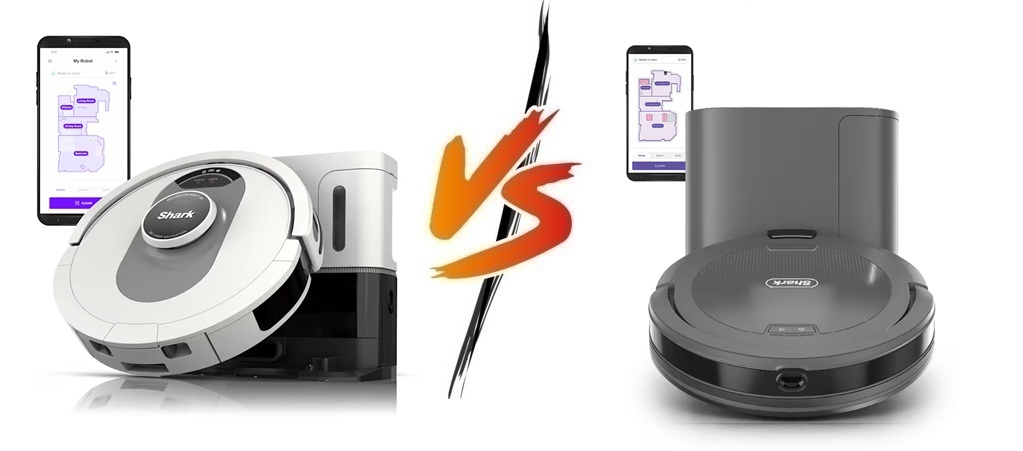
Robot vacuums have become an essential tool for modern households, offering a level of convenience that traditional upright or canister vacuums simply can’t match. Among the leading options in today’s market are Shark’s AI Ultra and Shark Navigator robot vacuums, both designed to simplify cleaning while handling everyday messes with minimal human intervention. While both models come from the same trusted brand, they target slightly different user needs: the AI Ultra leans into advanced navigation, intelligent mapping, and a more hands-off cleaning experience, whereas the Navigator focuses on straightforward performance, ease of use, and value. Choosing between them requires a detailed understanding of how they perform across multiple areas, from design and build quality to cleaning power, navigation intelligence, and maintenance. This review will provide a comprehensive, side-by-side comparison, highlighting strengths, weaknesses, and practical considerations to help you decide which Shark robot vacuum best fits your home and lifestyle.
Shark AI Ultra vs Shark Navigator Comparison Chart
If you click the links below, under the product images, you will be redirected to Amazon.com. In case you then decide to buy anything, Amazon.com will pay me a commission. This doesn’t affect the honesty of this review in any way though.
| Feature | Shark AI Ultra | Shark Navigator |
|---|---|---|
 |  | |
| Check the best price on Amazon | Check the best price on Amazon | |
| Type | Robot vacuum with optional mopping | Robot vacuum |
| Navigation System | 360° LiDAR + smart mapping, multi-floor memory | SmartPath navigation, systematic row-by-row cleaning |
| Floor Mapping | Multi-room and multi-level mapping, customizable zones, virtual boundaries | Basic room mapping, limited customization, no multi-floor memory |
| Suction Power | High suction with adaptive adjustment (hard floors and carpets) | Strong suction, fixed or limited adjustment |
| Brushroll | Self-cleaning brushroll, reduces hair wrap, edge cleaning with side brushes | Self-cleaning brushroll, reduces hair wrap, side brushes for edges |
| Dustbin Capacity | Robot: ~0.7 L; Base: up to 60 days capacity | Robot: ~0.45 L; Base: smaller capacity, manual emptying needed more often |
| Filter Type | Washable high-efficiency filter | Washable high-efficiency filter |
| Battery Runtime | ~120 minutes | ~90–100 minutes |
| Recharge & Resume | Yes, resumes cleaning where left off | Yes, but may be less efficient depending on model |
| Mopping Capability | Optional mop attachment for light maintenance | Not available |
| Pet-Friendliness | Excellent: strong suction, self-cleaning brushroll, large dustbin, allergen control | Good: strong suction, self-cleaning brushroll, smaller dustbin |
| Noise Levels | Moderate, slightly louder at max suction | Slightly quieter overall |
| App Control | Full-featured app: maps, scheduling, cleaning modes, zone control | Basic app: start/stop, scheduling, status monitoring |
| Voice Control | Compatible with Alexa & Google Assistant | Compatible with Alexa & Google Assistant (some models) |
| Physical Dimensions | Low-profile with LiDAR tower, slightly larger footprint | Compact, lower profile, easier under low furniture |
| Weight | Heavier, provides stability | Lighter, easier to reposition |
| Maintenance | Minimal: self-emptying base, easy-access components, washable filters | Moderate: smaller bin, frequent emptying, easy-access components |
| Ideal For | Large homes, multi-floor, heavy pet hair, tech-savvy users | Small to medium homes, straightforward cleaning, light to moderate pet hair |
| My individual reviews | Shark AI Ultra review |
Design & Build Quality
When it comes to robot vacuums, design and build quality are not just about aesthetics—they significantly affect durability, usability, and even cleaning performance. The Shark AI Ultra and Shark Navigator are both products of a brand with a reputation for thoughtful engineering, but they approach design differently, catering to different types of users and homes. Spending time with both units reveals a lot about the priorities Shark placed in each model and how those priorities translate into real-world use.
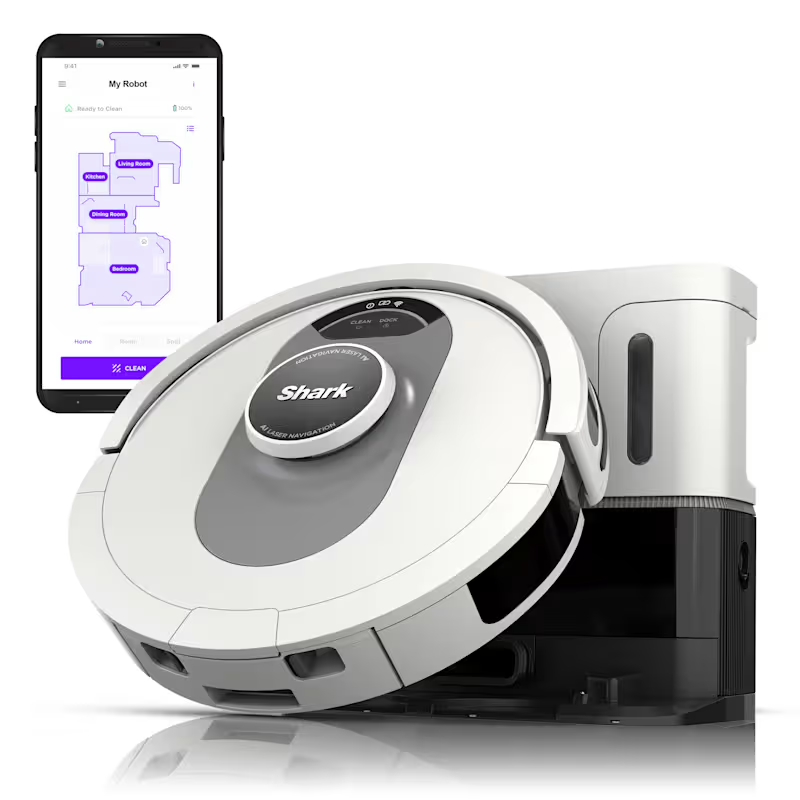
Starting with the Shark AI Ultra, the first thing you notice is its modern, slightly futuristic appearance. The body has a matte finish that is pleasant to touch and resists fingerprints, smudges, and minor scratches, which is crucial for a device that will spend most of its life in visible areas of your home. Its low-profile design, combined with a slightly raised LiDAR tower, gives it a professional, high-tech look without being gaudy. The build feels solid in the hand, with no creaks or flimsy parts, signaling that it can withstand the bumps and nudges that inevitably happen during regular cleaning. The top shell is durable but still light enough to make the vacuum easy to move if necessary. The buttons on the unit are minimal, mostly limited to power, home, and spot-cleaning commands, maintaining a clean, user-friendly interface. The placement of these buttons is logical, and they are tactile enough that you can operate them without needing to look down, which is a small but important ergonomic consideration.
The AI Ultra’s self-empty base is a major part of its design and build story. The base is large, heavier than the Navigator’s, and clearly built to be stable. Its weight can make positioning it a challenge in tighter spaces, but once in place, it feels rock-solid and doesn’t tip over easily. The base’s construction includes high-quality plastics and reinforced areas to handle repeated interaction as the robot docks and undocks multiple times a day. The dustbin compartment within the base is intelligently designed to hold up to 60 days of debris, which is one of the largest capacities you’ll find in this segment. The mechanism for transferring debris from the robot into the base is smooth and consistent, reducing the chance of clogs or spillage. Overall, the self-emptying system enhances the impression of a premium, well-thought-out design.
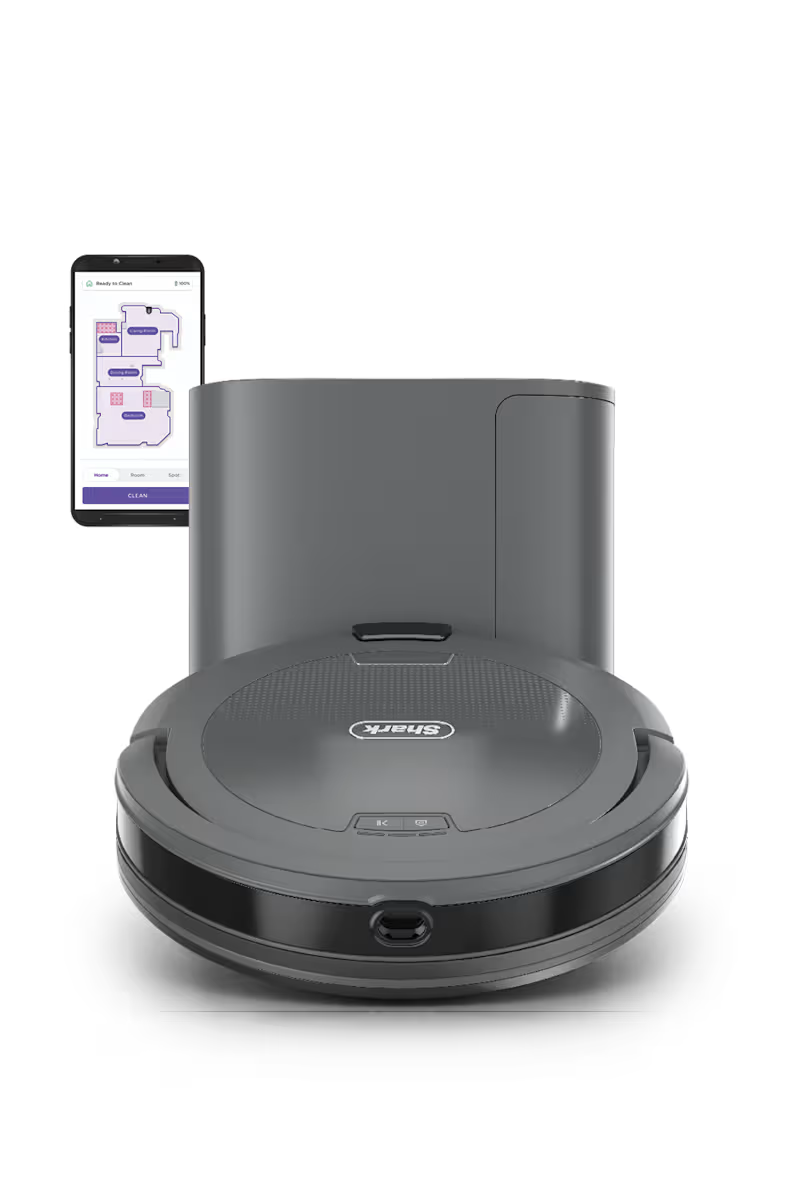
In contrast, the Shark Navigator has a more practical, utilitarian aesthetic. It is lower to the ground and lighter than the AI Ultra, which makes it easier to slide under furniture such as beds, sofas, and cabinets. Its body is composed of solid plastics that feel durable, though they are not as refined to the touch as the Ultra’s matte finish. While the Navigator doesn’t carry the same futuristic flair, its design emphasizes functionality over form. Its control buttons are clearly labeled, slightly larger than those on the AI Ultra, and offer a user-friendly experience without requiring a smartphone or app for basic operation. This simplicity is advantageous for users who want a straightforward vacuum without navigating multiple menus or app features.
The Navigator’s self-emptying base, available in certain models, is significantly more compact than the AI Ultra’s. While it doesn’t hold quite as much debris, its smaller footprint makes it easier to fit in tight spaces such as narrow hallways, closets, or corners. The base’s build quality is solid, and the bagless design minimizes ongoing costs, though the smaller dustbin capacity means more frequent manual emptying if you have a large home or heavy foot traffic. The docking mechanism works well, and the Navigator aligns and docks reliably, although it can occasionally require minor adjustments if placed on uneven flooring.
One notable difference between the two models lies in the weight distribution and mobility. The AI Ultra is heavier overall, but this weight is balanced in a way that gives it stability as it navigates complex obstacles or transitions from one floor type to another. The Navigator’s lighter frame allows it to glide more easily across hard floors and low-pile carpet, but it can sometimes feel less grounded when maneuvering over rugs with thicker edges. Both units have thoughtfully designed bumpers with sensors that prevent damage to walls and furniture, but the AI Ultra’s slightly more sophisticated sensor layout allows for smoother contact avoidance, which also contributes to a perception of higher build quality.
Examining the wheels and brushroll area reveals further differences in design. The AI Ultra’s wheels are larger, with a soft rubberized coating that allows them to traverse thresholds and small obstacles with minimal effort. Its brushroll is protected by a shroud that helps prevent hair and debris from tangling, while still allowing easy removal for cleaning or replacement. The Navigator also features a self-cleaning brushroll, but its wheels are slightly smaller and less robust, making it more susceptible to getting caught on high-pile carpet edges or uneven surfaces. Both machines have strategically placed sensors around the brushroll and wheels to detect debris clogs, but the AI Ultra’s more advanced design reduces the frequency of these events.
Another subtle design element is the access to internal components for maintenance. The AI Ultra’s panels open easily, and the dustbin, filter, and brushroll can be removed and replaced with minimal effort. The design ensures that users are not forced to contort the robot or struggle with small latches. Similarly, the Navigator allows easy access to its filter and brushroll, though some users may find the smaller compartments slightly more fiddly when emptying or cleaning. Both robots use washable filters, and the placement is intuitive, reducing the learning curve for maintenance.
The aesthetic design also extends to LED indicators and display features. The AI Ultra uses a combination of subtle LEDs to indicate battery status, connectivity, and cleaning mode without being overly bright or distracting. The Navigator employs simpler LED signals but remains functional, ensuring that users can quickly understand its status at a glance. Neither robot is intrusive in terms of design, but the AI Ultra feels more premium and modern, while the Navigator prioritizes straightforward practicality.
Finally, in terms of overall longevity, the AI Ultra’s heavier, well-reinforced components suggest that it may maintain structural integrity over longer periods, particularly in homes with pets or frequent cleaning cycles. The Navigator, while still durable, might experience more wear over time due to its lighter construction and smaller wheels encountering repeated stress on thicker rugs or thresholds. Both units have protective bumpers and sensor shields to mitigate the impact of collisions, but the AI Ultra’s more robust build gives it a small edge in surviving accidental bumps and general wear.
In conclusion, the Shark AI Ultra and Shark Navigator are both thoughtfully engineered, but they prioritize different aspects of design and build quality. The AI Ultra emphasizes a premium, tech-forward feel, robust construction, and a self-emptying system capable of long-term hands-off use. Its materials, weight distribution, and larger wheels contribute to both durability and navigation stability. The Navigator, on the other hand, is designed for users who value simplicity, easy maneuverability, and compact placement. Its lighter, practical design makes it ideal for homes with lower furniture clearance or smaller spaces, while still maintaining solid build quality for everyday cleaning tasks. Choosing between them largely comes down to whether you value advanced design features and a premium feel, or prefer straightforward functionality with a more compact form factor.
Navigation Intelligence & Mapping
Navigation intelligence and mapping are among the most critical factors that distinguish mid-range and premium robot vacuums from basic models. How a robot moves around your home, identifies obstacles, remembers rooms, and plans its cleaning path can determine not only the thoroughness of cleaning but also the overall user experience. Both the Shark AI Ultra and Shark Navigator are designed with modern navigation technologies, but they implement these features differently, reflecting their intended user priorities. Spending time with each reveals the strengths and limitations of their respective systems.
Starting with the Shark AI Ultra, its navigation is centered around a full 360-degree LiDAR sensor mounted on a raised tower on top of the robot. This sensor emits laser pulses that bounce off walls, furniture, and objects, allowing the robot to construct a highly detailed, real-time map of the home. The LiDAR-based mapping enables the AI Ultra to move in systematic, efficient patterns, cleaning in straight lines and covering every reachable area without excessive repetition. Unlike basic random-navigation robots that wander and bump into obstacles, the AI Ultra creates a grid-like cleaning pattern, ensuring full coverage and minimizing missed spots. This approach is particularly effective in homes with multiple rooms, complex layouts, or varied furniture arrangements.
One of the key advantages of the AI Ultra’s mapping system is its ability to remember multiple floor plans. For households with more than one level, the vacuum can store separate maps and recognize when it has moved to a different level, allowing it to resume cleaning without having to remap every time. This memory-based intelligence reduces cleaning time and enhances efficiency, especially for large homes. Furthermore, the mapping software within the app allows users to define zones, set no-go areas, and create virtual boundaries. This is particularly useful for homes with delicate items, pet areas, or sections where cleaning is unnecessary or undesirable. The combination of precise LiDAR scanning and robust app-based controls gives users a high degree of control over cleaning routines.
Another aspect of the AI Ultra’s navigation intelligence is obstacle detection and avoidance. The robot employs a suite of sensors—including cliff sensors, wall-following sensors, and object-detection systems—to move around furniture, cords, and other common household obstacles safely. The AI Ultra tends to slow down near obstacles, carefully maneuvering around legs of chairs, low tables, and other items rather than bumping or pushing them. It also excels at recognizing changes in floor type, adjusting its suction power automatically when transitioning from hardwood to carpet. This adaptability reduces the need for human intervention and ensures consistent cleaning quality across different surfaces.
The AI Ultra also demonstrates impressive performance in challenging environments. For instance, when navigating around tight corners or small gaps between furniture, the LiDAR system enables precise calculations, reducing instances where the robot gets stuck or leaves uncleaned patches. It can also detect cluttered areas, such as scattered shoes or pet toys, and navigate around them without losing track of the cleaning pattern. This level of spatial awareness is indicative of the AI Ultra’s high-end navigation capabilities and contributes to a smoother, more predictable cleaning experience.
In contrast, the Shark Navigator uses a system known as SmartPath Navigation. While it does not feature a fully 360-degree LiDAR sensor, it employs a combination of forward-looking sensors and gyroscopic tracking to create a structured cleaning pattern. Unlike random-bounce robots, the Navigator moves in a systematic back-and-forth motion, allowing it to clean large areas methodically. Its row-by-row approach ensures that it doesn’t miss spots in open spaces and that coverage is relatively even. While it lacks the same level of mapping detail as the AI Ultra, it is still significantly more intelligent than older, basic models.
The Navigator’s SmartPath system is particularly effective in homes with simple layouts. It can navigate around furniture and obstacles efficiently, though it requires slightly more attention to floor preparation. Small items like shoes, cords, or pet toys can occasionally cause minor interruptions in its path, requiring the user to intervene or manually adjust the route. Unlike the AI Ultra, the Navigator’s mapping and app controls are less advanced, offering fewer options for customizing cleaning zones or creating virtual boundaries. This makes it more suitable for users who prefer a straightforward, low-maintenance experience over a highly configurable system.
One area where the Navigator does perform well is obstacle avoidance. It has cliff sensors to prevent falls down stairs and bump sensors to reduce collisions. It also detects edges and adjusts movement to avoid getting trapped under low furniture. While it may occasionally bump lightly into chair legs or small objects, the design ensures that these encounters are minor and do not compromise overall navigation. The Navigator’s simpler system also means that setup is quick and intuitive, requiring minimal configuration before the first cleaning run.
Both models incorporate recharge-and-resume functionality, allowing them to return to their base when the battery runs low, recharge, and resume cleaning where they left off. However, the AI Ultra’s system is more intelligent in its path planning when returning to the base and resuming cleaning, thanks to its detailed maps and memory of room layouts. The Navigator also completes this task reliably, but it may follow a slightly less optimized path, occasionally retracing areas it has already cleaned.
Another important aspect of navigation intelligence is adaptability to dynamic environments. The AI Ultra adjusts well to changing conditions, such as doors being opened or closed mid-cleaning, furniture being moved, or temporary obstacles appearing. Its sensors continuously update the map and adapt the cleaning pattern in real-time, ensuring minimal disruption. The Navigator, while capable of basic obstacle adaptation, relies more on pre-defined cleaning patterns and may require user intervention if a temporary blockage completely blocks its path.
Finally, user interaction with the navigation system is worth considering. The AI Ultra offers a robust app interface where users can view maps in real time, define cleaning priorities for specific rooms, and monitor progress. Users can even schedule multi-room cleaning with specific intensity settings, a level of control that enhances convenience and personalization. The Navigator’s app experience is simpler and more streamlined. Users can start, stop, or schedule cleaning and monitor progress, but customization options are limited. This makes it easier for less tech-savvy users to operate but less appealing for those who want a fully tailored cleaning experience.
In conclusion, the Shark AI Ultra and Shark Navigator both offer navigation intelligence well beyond basic robots, but they do so with different emphases. The AI Ultra excels in detailed mapping, adaptive obstacle avoidance, multi-floor memory, and extensive app-based customization, making it ideal for larger homes, complex layouts, and users who want precise control over cleaning routines. The Navigator, while simpler, provides reliable, methodical cleaning suitable for smaller homes or users who value ease of use and straightforward operation over advanced mapping features. The choice between these two models largely depends on the size and complexity of the home and how much value the user places on sophisticated navigation and mapping capabilities.
Performance (Suction & Cleaning)
Performance is arguably the most critical factor when evaluating a robot vacuum. No matter how intelligent or well-built a machine is, if it cannot clean effectively, it fails its primary purpose. The Shark AI Ultra and Shark Navigator both aim to deliver strong cleaning performance, but their approaches and capabilities reveal some key differences, particularly when it comes to suction power, surface adaptability, and handling debris of varying sizes. Examining each in detail provides a clear picture of how they function in real-world scenarios.
Starting with the Shark AI Ultra, its cleaning performance is immediately noticeable. The vacuum generates strong suction that is capable of picking up fine dust, everyday dirt, and heavier debris such as cereal or small pebbles with minimal passes. This power translates effectively across hard surfaces, including hardwood, tile, and laminate, where it lifts dust and pet hair efficiently. On carpets, the AI Ultra maintains a strong suction profile that can remove embedded dirt and hair from low- to medium-pile surfaces. Its cleaning effectiveness is enhanced by the self-cleaning brushroll, which spins at a speed optimized to agitate fibers without scattering debris. This brushroll design is particularly effective in homes with pets, as it significantly reduces hair wrap compared to traditional brushrolls.
The AI Ultra demonstrates an impressive ability to adjust suction based on floor type. As it moves from hard floors to carpets, the vacuum increases suction automatically to maintain cleaning performance, ensuring that dirt is not left behind. This adaptive behavior is particularly important for homes with mixed flooring types, as it eliminates the need for the user to intervene or manually switch modes. Additionally, the combination of suction and brushroll rotation helps the vacuum lift debris from corners and along edges. Edge cleaning is enhanced by the robot’s slim profile and side brushes, which sweep debris toward the main brushroll. The AI Ultra handles complex edges and corners better than many competitors, ensuring that floors are cleaned thoroughly.
Another important aspect of performance is coverage efficiency. Thanks to its advanced navigation system, the AI Ultra moves in systematic grid patterns, avoiding missed spots and reducing redundancy. Unlike random-movement robots that may miss areas or repeatedly cover the same spot, the AI Ultra optimizes its path to balance speed and thoroughness. This results in faster cleaning cycles while maintaining high debris pickup rates. Even in homes with multiple rooms and varied layouts, the AI Ultra manages to clean methodically, ensuring consistent results throughout the house.
Battery life also plays a role in overall performance. The AI Ultra offers around 120 minutes of runtime on a single charge, which is sufficient for medium to large homes. Its recharge-and-resume feature allows it to return to the base when the battery is low, recharge, and then continue cleaning exactly where it left off. This capability ensures that even larger areas receive a complete cleaning without user intervention. The combination of strong suction, intelligent path planning, and long battery life makes the AI Ultra a high-performing machine that can handle daily cleaning tasks with minimal oversight.
In contrast, the Shark Navigator delivers solid performance in its own right, though with some limitations compared to the AI Ultra. Its suction is strong for a mid-range robot vacuum and handles everyday dirt, dust, and light debris effectively. On hard floors, the Navigator does an excellent job lifting particles and pet hair, ensuring that floors remain visibly clean after a single pass. It also performs reasonably well on low-pile carpets, though it struggles slightly with deeply embedded dirt or high-pile areas. The brushroll is self-cleaning, which helps reduce hair wrap and keeps the vacuum running efficiently over multiple cleaning cycles.
The Navigator’s cleaning pattern, guided by SmartPath Navigation, ensures methodical coverage in open areas. Its back-and-forth rows are effective in most rooms, though its less sophisticated mapping system may occasionally result in slightly uneven coverage in complex layouts or tight corners. Users with simple home layouts will find the Navigator more than adequate for daily cleaning, but those with multi-room or irregularly shaped spaces may notice occasional missed spots or minor overlaps. Edge cleaning is competent, aided by side brushes, but the Navigator sometimes leaves small traces of dirt along baseboards compared to the AI Ultra, especially if debris is pushed into corners.
Surface adaptation is another area where the Navigator shows its strengths and limitations. It can detect changes in floor types and adjust suction to some degree, but the transitions are not as seamless or aggressive as those on the AI Ultra. For example, when moving from hardwood to a medium-pile carpet, the Navigator may require additional passes to achieve the same level of deep cleaning. This is not a dealbreaker, but it does indicate that the vacuum is best suited for homes with primarily hard floors or low-pile carpets.
Both vacuums handle common household debris effectively, including dust, dirt, cereal, and small stones, but the AI Ultra has an edge when dealing with larger quantities or heavier debris. Its stronger suction combined with more consistent brushroll performance allows it to remove embedded particles more efficiently. In homes with pets, the AI Ultra also demonstrates superior performance, as it can pick up hair without frequent intervention. The Navigator is still pet-friendly, but heavier shedding may require more frequent emptying and occasional manual cleaning of the brushroll.
Noise levels also factor into perceived performance. The AI Ultra is slightly louder at higher suction settings, but this is balanced by its efficiency and speed, which means it completes cleaning cycles quickly. The Navigator operates at a marginally lower noise level, making it less intrusive during operation, but it may take slightly longer to cover the same area, particularly if multiple passes are required to pick up all debris.
Another aspect worth noting is performance on uneven surfaces and thresholds. The AI Ultra, with its larger, rubberized wheels, navigates rugs, door thresholds, and minor floor transitions with ease, maintaining suction and stability. It rarely gets stuck or requires manual assistance. The Navigator’s smaller wheels and lighter frame are generally sufficient for low-pile rugs and minor thresholds, but it may struggle with thicker carpet edges or taller obstacles, occasionally requiring a nudge to continue.
Cleaning in corners and along walls highlights the difference in design philosophy. The AI Ultra’s combination of side brushes and intelligent navigation allows it to reach tight corners, sweep along walls, and prevent dirt buildup effectively. The Navigator performs adequately but may leave small traces of debris in very tight corners or along baseboards due to less precise edge alignment. In open areas, both vacuums perform well, but the AI Ultra demonstrates more thorough coverage in complex room geometries.
Finally, both vacuums support multi-room cleaning and can tackle larger areas with varying levels of effectiveness. The AI Ultra’s mapping memory, adaptive suction, and systematic pathing make it well-suited for larger homes or areas with multiple types of flooring. The Navigator is best for simpler layouts, smaller homes, or apartments, where its methodical SmartPath cleaning is sufficient for daily maintenance.
In conclusion, the Shark AI Ultra and Shark Navigator both deliver strong cleaning performance, but the AI Ultra consistently outperforms the Navigator in suction strength, surface adaptability, edge and corner cleaning, and coverage efficiency. The AI Ultra excels in homes with multiple rooms, mixed flooring types, and pets, offering a higher level of thoroughness with minimal user intervention. The Navigator remains a solid choice for value-oriented buyers or those with smaller, simpler home layouts, providing dependable cleaning without the advanced features or suction power of the AI Ultra. Choosing between the two depends largely on home size, floor complexity, and the user’s preference for either maximum cleaning performance or straightforward, reliable operation.
Mopping Capability
Mopping capability is an increasingly popular feature in robot vacuums, as many users want a single device to both vacuum and maintain hard floors. While neither the Shark AI Ultra nor the Shark Navigator is primarily marketed as a mop-vacuum hybrid, understanding their handling of wet cleaning or optional mopping attachments is important, especially for users with hardwood, tile, or laminate floors.
The Shark AI Ultra, in certain configurations, offers an optional mopping attachment. This system is designed more for light maintenance cleaning rather than deep scrubbing. When attached, the water reservoir allows for a damp mop to glide over hard floors, picking up fine dust and light stains. The vacuum’s navigation intelligence complements this function, allowing it to cover the floor systematically without retracing its path excessively. The AI Ultra’s ability to detect different floor types ensures that mopping is restricted to appropriate surfaces, avoiding carpets where water could cause damage. However, it’s important to note that the mopping function is not intended for heavily soiled floors; it works best as a finishing step after vacuuming to give hardwood or tile a polished, dust-free appearance.
The mopping attachment is easy to install and remove, and the microfiber pad can be machine washed multiple times. The reservoir holds enough water to cover a moderate-sized room in one session, though larger homes may require refills. Some users have reported that the mop may leave streaks if the floor is particularly dirty, so pre-vacuuming is recommended for optimal results. The AI Ultra’s ability to maintain a steady path ensures even coverage, but like most robotic mops, it cannot apply the same pressure as manual mopping, so stubborn stains require human intervention.
The Shark Navigator, on the other hand, does not offer a built-in mopping function in its standard or self-empty configurations. Its focus is purely on vacuuming, which makes it simpler to use but less versatile for homes where mopping is part of the regular cleaning routine. Users looking for an integrated mop experience would need to consider other Shark models or separate mop solutions. The lack of wet cleaning capability is not a limitation for those who only need vacuuming performance, but it’s a factor to consider for homes with tile or hardwood that benefit from occasional damp mopping.
In practical terms, the mopping function of the AI Ultra should be viewed as a maintenance tool rather than a replacement for traditional mopping. It excels at light cleaning, removing dust, hair, and minor surface residue, while the Navigator remains focused solely on strong, efficient vacuuming. For households that want a hybrid robot vacuum-mop experience, the AI Ultra’s optional attachment provides some versatility, but neither unit offers the deep-scrubbing performance found in specialized mop-robot hybrids.
Overall, the AI Ultra has a modest advantage in mopping capability due to its optional attachment and systematic navigation, while the Navigator sticks to vacuuming only. Users who require occasional floor mopping will find the AI Ultra more adaptable, but those whose cleaning needs are primarily vacuuming-based will not miss this feature with the Navigator.
Maintenance & Cleaning
Maintenance and cleaning are critical factors when evaluating the long-term usability and convenience of a robot vacuum. Even the most intelligent and powerful robot can become frustrating if it requires constant attention, frequent manual cleaning, or complicated upkeep. Both the Shark AI Ultra and the Shark Navigator were designed with these considerations in mind, but they approach maintenance differently, reflecting their target user bases and overall design philosophy. A closer look at their dust handling, brushroll design, filter maintenance, and overall ease of cleaning reveals how each model performs in day-to-day life.
Starting with the Shark AI Ultra, its maintenance strategy is centered around convenience and minimal user intervention. One of its standout features is the self-emptying base, which can hold up to 60 days’ worth of dust, debris, and pet hair. This capacity drastically reduces the frequency with which users need to interact with the vacuum, making it nearly a set-it-and-forget-it solution. The bin transfers debris from the robot to the base through a smooth, automatic process. This reduces the risk of dust escaping during emptying and ensures consistent performance even in homes with pets or heavy foot traffic. The self-emptying system is engineered to be reliable; it rarely jams, and its simple bagless design makes it easy to inspect and clean if necessary.
The AI Ultra’s brushroll is another key component in its low-maintenance design. It features a self-cleaning mechanism that actively removes hair and fibers while vacuuming, greatly reducing the need for manual intervention. While long hair may occasionally wrap around the brush, the frequency and difficulty of untangling it are far lower than on traditional robot vacuums. The brushroll is easy to remove when cleaning or replacing, with clearly marked latches and intuitive access panels. Side brushes are similarly accessible, allowing users to remove and clean them in seconds. The combination of brushroll and side brushes ensures that both central debris and edge dust are consistently captured while keeping routine maintenance simple.
Filter maintenance on the AI Ultra is straightforward as well. The vacuum uses washable filters that can be rinsed under running water and allowed to dry before reinsertion. This design reduces ongoing costs associated with disposable filters and ensures that the vacuum maintains strong suction over time. The filter compartment is easy to access without any tools, and its placement minimizes exposure to collected dust during removal. Users typically find that periodic filter cleaning every few weeks, depending on usage and household conditions, is sufficient to maintain peak performance.
In addition to hardware considerations, the AI Ultra’s navigation system contributes indirectly to easier maintenance. Because the vacuum systematically covers the entire floor without missing spots, debris is less likely to accumulate in corners or behind furniture. Its precise mapping reduces repeated coverage of the same areas, which minimizes unnecessary wear on the brushroll and prolongs the lifespan of moving components. The combination of smart navigation, self-emptying capability, and self-cleaning brushes makes the AI Ultra particularly well-suited for users who want minimal hands-on involvement.
The Shark Navigator also emphasizes ease of maintenance but in a slightly different way. Its dustbin is smaller than the AI Ultra’s, meaning that it must be emptied more frequently, typically after each cleaning session in medium-sized homes. The bin itself is simple to remove, with a clear mechanism for opening and emptying contents without making a mess. While the smaller size increases user interaction, it keeps the overall vacuum unit more compact and lightweight, which some users prefer.
The Navigator also features a self-cleaning brushroll designed to minimize hair wrap and tangling. Like the AI Ultra, this brushroll reduces the frequency of manual intervention, though it may require occasional cleaning if pets shed heavily. The side brushes are also easily removable for cleaning or replacement. Filter maintenance is straightforward, with washable filters that slide out without tools. Although the smaller bin and simpler components mean slightly more frequent maintenance, the process is intuitive and quick, making the Navigator low-maintenance in practical terms.
A notable difference between the two models is the interaction required with the self-empty base. The AI Ultra’s base is larger and can accommodate longer intervals between manual handling, which is particularly advantageous for busy households or users with pets that shed frequently. The Navigator’s smaller base is easier to place in tighter spaces, but it demands more regular monitoring to ensure it doesn’t fill up mid-cycle. Both systems are reliable, but the AI Ultra is clearly designed for those seeking a more hands-off experience.
Another consideration is accessibility for deeper cleaning or replacement of internal components. The AI Ultra’s panels are designed to open easily, with intuitive access to the brushroll, filters, and dustbin. No tools are required, and the layout reduces the risk of spilling dust during maintenance. The Navigator is similar in this regard, with accessible compartments and easy removal of parts, though its smaller design may make some maneuvers slightly more fiddly. Both vacuums allow users to perform routine maintenance without frustration, though the AI Ultra emphasizes ease of use for extended periods between interventions.
Long-term maintenance also involves the durability of components. The AI Ultra’s heavier, reinforced construction supports more intensive cleaning cycles and reduces wear on wheels, brushrolls, and sensors. Its navigation system ensures even wear distribution by avoiding repeated cleaning of the same areas. The Navigator, while well-built, has a lighter frame and smaller wheels, which may experience slightly higher stress over time, particularly on thresholds or thicker carpets. This can mean that parts may require replacement or attention sooner than with the AI Ultra, though overall lifespan remains strong with proper care.
Finally, both vacuums simplify the task of keeping the robot itself clean. Sensors, wheels, and brush compartments are designed to resist debris buildup, and the layout of components ensures that maintenance tasks are clear and achievable. The AI Ultra’s systematic cleaning patterns reduce the frequency of obstructions or clogs, while the Navigator’s simple design allows users to quickly identify and clear any issues that do arise. In both cases, routine attention is manageable and does not require technical skill.
In conclusion, the Shark AI Ultra and Shark Navigator are both designed with maintenance and cleaning convenience in mind, but they approach it differently. The AI Ultra prioritizes a hands-off, low-intervention experience with its large self-emptying base, self-cleaning brushroll, and systematic navigation. The Navigator emphasizes straightforward, intuitive maintenance with a smaller, more compact design that still offers easy access to the dustbin, brushes, and filters. For users seeking minimal interaction and extended periods between maintenance, the AI Ultra is the superior choice. For those who prefer simplicity, lighter components, and a more compact form factor, the Navigator provides reliable performance with manageable upkeep.
Ergonomics & Usability
Ergonomics and usability are central considerations when evaluating a robot vacuum because these factors determine how intuitive the device is to operate, how much time the user spends interacting with it, and ultimately how satisfying the cleaning experience is. A vacuum may excel in performance and navigation, but if its controls are complicated, the app is confusing, or it is cumbersome to maintain, the overall experience suffers. Both the Shark AI Ultra and the Shark Navigator focus on usability, yet they approach it differently, reflecting the priorities of their respective user bases. A detailed look at control methods, app interfaces, physical handling, scheduling, and daily interaction reveals how these two models compare in practical terms.
Starting with the Shark AI Ultra, its ergonomics are designed with a high degree of automation in mind. The physical unit itself is minimalistic, with only a handful of buttons on the top, typically including power, home, and spot-cleaning functions. These buttons are logically arranged and provide tactile feedback, making basic operation simple even for first-time users. For most cleaning tasks, however, the user interacts with the vacuum via the accompanying mobile app. The app interface allows full control over cleaning schedules, room mapping, suction levels, and no-go zones. Users can monitor cleaning progress in real time, view detailed maps, and adjust cleaning patterns as needed. The visual representation of floor maps in the app makes it easy to see which areas have been cleaned and which have not, providing a sense of control and transparency.
One of the most significant usability advantages of the AI Ultra is its ability to remember multiple floor plans. For multi-level homes, this eliminates the need to remap each level before cleaning. Users can set specific cleaning routines for individual rooms, prioritize high-traffic areas, and even schedule separate cleaning modes for different days of the week. This level of customization is particularly beneficial for households with pets, children, or complex furniture layouts, as it allows the robot to focus on the areas that need the most attention without requiring constant supervision.
Voice control adds another layer of ergonomic convenience. The AI Ultra integrates with popular voice assistants such as Alexa and Google Assistant, enabling users to start, stop, or schedule cleanings with simple voice commands. This hands-free approach reduces the need to interact with the app or physical buttons, which is especially useful for busy households. The combination of voice control, app-based scheduling, and intelligent mapping makes the AI Ultra highly convenient for users who want a near-autonomous cleaning experience.
Physical handling is also considered in the design. The AI Ultra is relatively lightweight for its size, and its low-profile design allows it to slide under most furniture. The self-emptying base, while larger than that of the Navigator, is positioned to allow easy access for emptying, monitoring, or moving if necessary. The components that require user attention, such as the dustbin, filters, and brushrolls, are designed for quick removal and replacement without tools, further reducing friction in daily use. Even filling the optional water reservoir for mopping is straightforward, with clear indicators for maximum capacity and simple attachment mechanisms.
The Shark Navigator, in comparison, emphasizes simplicity and straightforward usability. Its physical design is more compact and lower to the ground, making it easier to maneuver under low furniture. The control buttons are larger and more prominent than those on the AI Ultra, providing an intuitive interface for users who prefer physical controls over app-based operation. These buttons cover the essential functions, including start, stop, home, and spot cleaning, allowing the Navigator to be used effectively without a smartphone or digital interface.
The Navigator also supports app control and scheduling, though the interface is simpler and less feature-rich than the AI Ultra’s. Users can set cleaning times, monitor progress, and access basic status updates, but customization options for mapping, zones, or no-go areas are more limited. This makes the Navigator appealing for users who prefer a plug-and-play experience without spending time fine-tuning settings. The app is responsive and easy to navigate, and its streamlined approach reduces potential confusion for first-time users or those less comfortable with technology.
Another important aspect of ergonomics is maintenance workflow. Both vacuums allow easy access to dustbins, filters, and brushrolls, but the AI Ultra’s larger self-emptying base reduces how often the user must interact with the vacuum. This contributes to a smoother, more effortless experience over weeks and months of operation. The Navigator, with its smaller bin and simpler base, requires more frequent attention, but the process is intuitive and quick, so it does not significantly detract from usability. The lighter weight of the Navigator also makes it easier to lift and reposition, which may be advantageous for users with mobility considerations.
Scheduling and automation further distinguish the two models. The AI Ultra allows highly granular scheduling, including selecting specific rooms, setting cleaning intensities, and configuring different schedules for different days. Combined with its mapping memory, this allows highly efficient and tailored cleaning routines. The Navigator supports basic scheduling, which is sufficient for many households, but lacks the same level of room-specific control or cleaning customization. For users who value simplicity and do not need advanced automation, the Navigator provides a more straightforward, less intimidating interface.
Noise levels also factor into usability. Both models operate at moderate volumes that are noticeable but not overly disruptive, though the AI Ultra’s higher suction settings can be slightly louder. However, the efficiency of its cleaning cycles often offsets the slight increase in noise by completing tasks faster. Both units are generally quiet enough to run during the day without disturbing household activities, and their predictable movement patterns prevent sudden or startling behavior.
Finally, both vacuums are designed with accessibility in mind. They can be operated effectively by users of varying technical comfort levels. The AI Ultra is ideal for users who enjoy fine control, app-based management, and automation features, while the Navigator appeals to those who prefer a more hands-on, uncomplicated approach. Both units minimize physical effort during routine use, and their intuitive designs reduce the learning curve for new owners.
In summary, ergonomics and usability are strong points for both models, but they manifest differently. The Shark AI Ultra excels in customization, automation, app control, and hands-off operation, making it suitable for larger homes or tech-oriented users who value detailed management of their cleaning routine. The Shark Navigator prioritizes simplicity, intuitive physical controls, and straightforward operation, appealing to users who prefer a more direct, low-maintenance experience. The choice between the two largely depends on the user’s preference for advanced automation versus uncomplicated, ready-to-use functionality, and both vacuums succeed within their intended usability frameworks.
Pet-Friendliness
Pet-friendliness is a critical factor for many households considering a robot vacuum. Homes with cats, dogs, or other furry companions face unique cleaning challenges, including shedding hair, dander, tracked-in dirt, and occasional spills. Beyond simply picking up pet hair, a pet-friendly vacuum must handle these challenges efficiently while being resilient to repeated use in high-traffic, messy areas. The Shark AI Ultra and Shark Navigator both cater to pet owners, though they approach the issue with different design philosophies and capabilities. Examining their suction power, brush design, navigation, allergen control, and maintenance needs provides a comprehensive picture of how they perform in pet-heavy environments.
The Shark AI Ultra stands out as particularly well-suited for homes with pets. Its suction power is strong enough to lift not only loose hair but also embedded pet dander from carpets and rugs. This is crucial for maintaining clean floors and reducing allergens, especially for households with allergy-prone members. The vacuum’s self-cleaning brushroll is a central component in its pet-friendliness. Long pet hair can often tangle traditional brushrolls, requiring frequent manual removal, but the AI Ultra’s design significantly reduces hair wrap. The combination of high-speed brush rotation and a carefully engineered debris path minimizes the risk of clogging, allowing the vacuum to run continuously even in homes with heavy shedding.
Navigation intelligence also plays a role in pet-friendliness. The AI Ultra’s 360-degree LiDAR sensor allows it to move systematically and avoid obstacles such as pet bowls, toys, or sleeping areas. Its ability to remember multiple floor plans and recognize specific rooms means it can be directed to clean high-traffic areas where pets spend the most time. For example, living rooms where dogs often lounge or kitchens where pet food is spilled can be prioritized. This precise mapping reduces missed spots where hair and dirt might otherwise accumulate and ensures more consistent cleaning without user intervention.
Additionally, the AI Ultra’s large self-emptying base is particularly advantageous for pet owners. Homes with multiple pets or heavy shedding can generate substantial amounts of hair and debris. The base can hold up to 60 days’ worth of dirt, reducing the frequency of emptying and minimizing exposure to allergens during the maintenance process. This hands-off feature is not just convenient but also critical for people who might otherwise be sensitive to pet hair and dander. Combined with washable filters, this design helps maintain indoor air quality, ensuring that pet dander and fine dust do not recirculate during cleaning.
Edge cleaning and corner access are also vital in pet-heavy homes. Pets often shed along baseboards and in corners, where hair can accumulate unnoticed. The AI Ultra’s combination of side brushes and main brushroll allows it to sweep hair from edges and corners efficiently. Its systematic navigation ensures that these areas are not missed, unlike simpler robots that may wander randomly and fail to fully address pet-specific messes. Even in complex room layouts with multiple obstacles, the AI Ultra maintains consistent cleaning performance, reducing the need for supplemental manual vacuuming.
The Shark Navigator is also designed with pets in mind, though it approaches the problem with a slightly different balance of features. Its suction power is strong for a mid-range robot vacuum and is capable of picking up loose hair and light debris effectively. The Navigator’s self-cleaning brushroll reduces hair wrap, although it is slightly less aggressive than the AI Ultra’s system. In households with moderate shedding, the Navigator performs well, but heavy shedding may require more frequent manual intervention or shorter cleaning cycles to maintain optimal performance.
Navigation is an important consideration for the Navigator as well. Its SmartPath system moves in methodical, back-and-forth patterns, allowing it to clean large open areas efficiently. While its mapping and obstacle recognition are less advanced than the AI Ultra’s, the Navigator still navigates around pet bowls, toys, and furniture with a reasonable degree of reliability. It is best suited for homes where pets do not leave highly cluttered environments or where floors are mostly open. For pet-heavy areas with lots of obstacles or multiple levels, the Navigator may occasionally miss patches of hair or require manual repositioning.
Another factor in pet-friendliness is allergen control. Both vacuums use high-quality filters to capture fine particles, including pet dander. The AI Ultra, with its larger dustbin and frequent self-emptying, maintains more consistent suction and filter performance over extended cleaning cycles, which helps reduce allergen exposure. The Navigator also captures fine particles effectively, though smaller dustbin capacity means filters may become saturated more quickly in high-shedding households, requiring more frequent cleaning or replacement.
Maintenance and user interaction are also central to pet-friendliness. Pet owners value vacuums that minimize exposure to hair and dander during routine cleaning. The AI Ultra’s self-emptying base, washable filters, and easily removable brushroll components reduce the chances of contact with allergens during maintenance. The Navigator, while slightly more hands-on due to its smaller bin, still offers accessible components and straightforward cleaning routines. Pet owners will need to empty the bin more often and check the brushroll for hair wrap, but the process is simple and does not require tools or complex disassembly.
Noise and operational behavior can also influence pet-friendliness. Some pets are sensitive to loud or erratic machines. The AI Ultra’s systematic movement, predictable pathing, and moderate noise levels make it less startling for animals. It glides smoothly around rooms, pausing gently near obstacles and avoiding sudden jerky movements. The Navigator is slightly quieter in operation, which may be preferable for particularly nervous pets, but its simpler navigation means it may occasionally bump into objects, potentially startling animals. Both units are generally well-tolerated by pets once they become accustomed to the robot’s presence.
Finally, both vacuums offer practical scheduling options that enhance pet-friendliness. Owners can set cleaning times when pets are not active in certain rooms, ensuring that hair and debris are collected efficiently without disturbing pets. The AI Ultra’s advanced scheduling allows room-specific cleaning, while the Navigator provides simpler timing-based schedules. In both cases, the ability to automate cleaning reduces stress for both the pet and the owner, maintaining a cleaner environment with minimal manual intervention.
In summary, both the Shark AI Ultra and Shark Navigator are well-suited for households with pets, but they cater to different levels of pet-related challenges. The AI Ultra excels in homes with heavy shedding, multiple pets, or complex layouts, offering superior suction, self-cleaning brushrolls, systematic navigation, and a large self-emptying base that reduces allergen exposure and maintenance needs. The Navigator is highly capable for lighter shedding and simpler home layouts, providing reliable suction, reduced hair wrap, and straightforward usability. Pet owners seeking a hands-off, high-capacity solution will likely prefer the AI Ultra, while those desiring a simpler, more compact option will find the Navigator effective for everyday pet maintenance.
Energy Efficiency & Noise Levels
Energy efficiency and noise levels are two important but often overlooked factors when evaluating robot vacuums. A machine that consumes excessive electricity can increase household energy costs, while a loud vacuum can disrupt daily activities, work-from-home routines, or even disturb pets. Both the Shark AI Ultra and Shark Navigator have been engineered with these considerations in mind, though they approach them differently. Understanding how each model balances power consumption, runtime, and operational sound helps users make informed choices for their homes.
Starting with energy efficiency, the Shark AI Ultra is designed to optimize cleaning while maintaining moderate power consumption. Despite its strong suction and advanced navigation capabilities, it consumes electricity efficiently by combining systematic cleaning patterns with adaptive power settings. For example, when the AI Ultra detects hard floors, it can reduce suction slightly to save energy while still achieving effective cleaning. Conversely, when transitioning to carpets, it temporarily increases suction to lift embedded dirt. This adaptive approach not only enhances cleaning performance but also prevents unnecessary energy expenditure, making the vacuum efficient over long cleaning cycles.
Battery performance plays a key role in overall energy efficiency. The AI Ultra comes equipped with a long-lasting lithium-ion battery that provides roughly 120 minutes of runtime per charge. For larger homes, its recharge-and-resume feature allows the robot to return to the base, recharge partially, and then resume cleaning exactly where it left off. This feature ensures that the vacuum can complete multi-room or multi-floor cleaning without requiring the user to manually recharge it. Efficient energy use combined with intelligent path planning results in a device that maximizes cleaning coverage per unit of energy consumed.
The self-emptying base of the AI Ultra further contributes indirectly to energy efficiency. Because the vacuum does not need to repeatedly stop mid-cleaning for bin emptying, it completes cleaning cycles faster and more efficiently. Less idle time and fewer interruptions translate into lower cumulative energy usage over repeated cleaning sessions. Additionally, the base itself uses minimal energy during automatic emptying, designed to operate only when necessary rather than continuously, which contributes to overall energy savings.
In contrast, the Shark Navigator is slightly simpler in its energy profile. It lacks the AI Ultra’s advanced adaptive suction adjustments but is nonetheless efficient due to its straightforward cleaning patterns and moderate suction levels. The Navigator’s SmartPath navigation ensures that the vacuum moves methodically rather than randomly, which reduces wasted movement and unnecessary cleaning cycles. By following a row-by-row path, the Navigator avoids repeated coverage and maximizes the area cleaned per charge, making it effective for energy-conscious users despite its less sophisticated suction modulation.
Battery life on the Navigator is slightly shorter than the AI Ultra, typically around 90 to 100 minutes depending on floor type and cleaning intensity. While this is sufficient for small to medium-sized homes, larger areas may require multiple recharges or divided cleaning sessions. The lack of a fully automated recharge-and-resume system on some Navigator configurations means that in these cases, users may need to manually recharge the vacuum, which slightly reduces overall energy efficiency compared to the AI Ultra. However, for many households, the Navigator’s simpler power system is adequate and predictable, and its lower suction settings often make it slightly less power-intensive per minute of operation.
Noise levels are another critical aspect of usability, particularly in homes with children, work-from-home environments, or sensitive pets. The Shark AI Ultra is generally louder than the Navigator at maximum suction settings, but the noise remains moderate compared to traditional upright vacuums. Most users find that its sound level is tolerable during daytime cleaning, and because it operates efficiently and covers space systematically, the duration of high-noise operation is minimized. Additionally, the AI Ultra’s movement patterns are smooth and predictable, which prevents sudden, startling sounds that can occur when a vacuum repeatedly bumps into objects. The predictable operation is important not only for user comfort but also for maintaining a calm environment for pets.
The Navigator is slightly quieter overall, largely due to its smaller motors and lower maximum suction. This quieter operation can be beneficial in homes where noise sensitivity is a concern. Its row-by-row cleaning path and less complex obstacle navigation result in fewer sudden acceleration changes or abrupt motor adjustments, further reducing perceived noise. While the Navigator may take slightly longer to complete a full cleaning cycle, the reduced noise levels make it less intrusive, particularly in households where cleaning may occur while people are present or working.
Both vacuums balance noise and performance effectively, but their designs reflect different priorities. The AI Ultra emphasizes maximum cleaning power and coverage, which can result in higher sound levels during intensive cleaning tasks. The Navigator prioritizes quieter operation and straightforward usability, accepting a minor trade-off in suction intensity and coverage efficiency. Users will need to consider their tolerance for operational noise and the trade-off between speed, power, and quiet operation when choosing between the two models.
Operational consistency also contributes indirectly to energy efficiency. The AI Ultra’s intelligent navigation and obstacle avoidance reduce redundant movement, meaning the vacuum cleans each area once and does so effectively. This prevents repeated cycles that waste energy and produce additional noise. The Navigator, while less advanced in mapping, also follows an efficient path, though it may occasionally overlap previously cleaned areas if obstacles disrupt its linear cleaning pattern. In both cases, the robots are designed to minimize wasted effort, enhancing both energy efficiency and user experience.
Finally, both models offer scheduling features that further optimize energy use. Users can schedule cleanings during times when the vacuum can operate uninterrupted, reducing the likelihood of frequent stops, collisions, or wasted cycles. By allowing users to coordinate cleaning with household routines, both vacuums help maximize efficiency, conserve battery life, and minimize unnecessary noise exposure.
In conclusion, both the Shark AI Ultra and Shark Navigator perform well in terms of energy efficiency and noise management, but they do so in different ways. The AI Ultra excels in adaptive suction, efficient multi-room navigation, and a hands-off cleaning cycle with minimal interruptions, making it particularly effective for larger homes and heavy-duty cleaning needs. The Navigator emphasizes quiet operation and straightforward energy use, providing reliable cleaning with slightly less power consumption but at the cost of reduced advanced features. Households that value strong performance with intelligent energy optimization may prefer the AI Ultra, while those prioritizing quieter operation and simplicity will find the Navigator well-suited to their needs.