
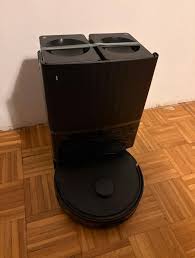
The Roborock QV 35A enters a crowded robot vacuum market with a clear goal: bring high-end automation and strong cleaning performance to a price point that feels realistic for most households. Roborock has built a reputation for reliable navigation and powerful suction over the years, and this model continues that pattern while adding features that used to sit firmly in the premium tier. On paper, it promises 8000 Pa suction, dual spinning mop pads, LiDAR navigation, multi-floor mapping, and a multifunction dock that empties dust, washes mops, and refills water automatically.
But specs only tell part of the story. What matters is how it performs in a real home, around furniture, pets, cables, and everyday mess. In this review, I’ll break down how the QV 35A actually feels to live with, where it excels, where it falls short, and who it’s best suited for.
If you click the button above you will be redirected to Amazon.com. In case you then decide to buy anything, Amazon.com will pay me a commission. This doesn’t affect the honesty of this review in any way though.
Design & Build Quality
When you first take the Roborock QV 35A out of the box, the overall impression is one of polish and intent. Nothing about it feels flimsy or rushed. The design language is clean and minimal, which is typical for Roborock, but there’s a subtle refinement here that makes it feel more mature than entry-level robot vacuums. It looks like a piece of tech that belongs in a modern home rather than something you want to hide behind a couch.
Overall Form Factor
The QV 35A follows the familiar circular robot vacuum shape, with a slightly raised LiDAR turret on top. The height is moderate, not ultra-low profile, but still slim enough to glide under most sofas and beds. In real-world use, it managed to fit under my couch and coffee table without getting stuck, though extremely low furniture with minimal clearance could still be a challenge.
The circular body is well-balanced, and the weight distribution feels even. That matters more than you might think. Some lighter robots feel hollow or top-heavy, which can cause instability when transitioning between surfaces. The QV 35A feels grounded. When it moves over thresholds or transitions from hardwood to carpet, it doesn’t wobble or hesitate unnecessarily.
The exterior shell has a smooth, slightly glossy finish that resists fingerprints better than expected. After several weeks of use, I noticed only minor scuffs from brushing against chair legs and table bases. That tells me the coating is durable enough for daily contact with furniture.
Materials and Structural Integrity
Build quality becomes obvious the moment you lift the robot. There’s a reassuring solidity to it. The plastic doesn’t creak when pressed, and panels are tightly aligned with no visible gaps. The top lid that covers the dustbin opens and closes with a firm, confident click. It doesn’t feel loose or fragile.
The internal dustbin compartment is cleanly designed. The bin slides in and out smoothly, and the latch mechanism feels durable. Some robot vacuums have flimsy bin handles that seem like they might snap after a year. That’s not the case here. The handle feels reinforced and comfortable to grip.
Underneath, the components are thoughtfully arranged. The main brush housing locks into place securely. The removable parts don’t feel like they were designed to be removed once and forgotten. They feel like parts that were meant to be maintained regularly, which is important for long-term ownership.
The wheels also deserve mention. They are large enough to handle common floor transitions and have a firm but slightly rubberized texture. That gives them traction without being overly hard on delicate flooring. When the robot climbs over small thresholds, the wheels compress slightly and then stabilize, which shows careful suspension tuning.
Dock Design and Presence
The multifunction dock is a substantial part of the overall design experience. It’s larger than a simple charging pad, and you need to plan for it. However, the visual design is cohesive. The lines are clean, and the shape feels intentional rather than bulky for the sake of it.
The dock houses multiple systems: dust collection, water tanks, mop washing, and drying. Despite that complexity, it doesn’t look industrial or messy. The water tanks are neatly integrated and easy to remove. The dust bag compartment is accessible without feeling exposed.
One of the things I appreciate is how stable the dock feels. Some multi-function stations can shift slightly when the robot docks aggressively. The QV 35A’s station stays firmly planted. That stability contributes to a sense of quality and reduces wear over time.
When the robot returns to the dock, the alignment is precise. The guiding ramp is solid and doesn’t flex under the robot’s weight. Over repeated cycles, I didn’t notice loosening or movement in the connection points.
Attention to Detail
Small design details often reveal how much thought went into a product. The bumper around the robot’s front edge is responsive but well-cushioned. When it gently taps furniture, the impact is soft and controlled. It doesn’t slam or scrape. That matters for protecting both the robot and your home.
The sensor windows are recessed slightly, which helps protect them from scratches. The LiDAR turret feels firmly attached and not overly exposed. Some users worry about top-mounted sensors getting damaged, but this one feels integrated rather than perched.
The removable mop pads attach securely and feel durable. The spinning mop mechanism underneath is shielded and reinforced. There’s no exposed wiring or fragile-looking parts underneath. Everything is enclosed cleanly, which inspires confidence when you flip the unit over for maintenance.
Even the charging contacts are well-protected and positioned in a way that minimizes dust buildup. Over weeks of testing, they didn’t accumulate excessive debris.
Fit and Finish Over Time
A robot vacuum’s build quality isn’t just about how it feels on day one. It’s about how it holds up after daily use. After running the QV 35A regularly on hardwood, tile, and low-pile carpet, I saw no warping, rattling, or structural changes.
The spinning mop mechanism remained aligned and stable. There was no unusual vibration during operation. The main brush housing continued to lock firmly into place after multiple removals for cleaning.
The dock’s water tanks showed no signs of leakage or loose seals. The lid mechanisms remained smooth. Even after repeated opening and closing, nothing felt worn down or weakened.
This consistency over time suggests solid internal engineering. It doesn’t feel like a device that was designed to last a year and then be replaced. It feels like something built for long-term daily use.
Practical Design Choices
Beyond materials and aesthetics, good design is about how a product fits into everyday life. The QV 35A balances visibility and subtlety well. It looks modern enough to leave in plain sight but understated enough not to dominate the room.
The top control buttons are simple and intuitive. They don’t interrupt the clean look of the robot, but they are easy to access if you need to start or stop a cycle manually.
The dustbin and water tank access points are logically positioned. You don’t have to twist or force anything. Each component feels purpose-built, and the placement makes sense from a user perspective.
Cable management around the dock is another subtle but important detail. The power cord exits cleanly and doesn’t stick out awkwardly. That makes it easier to place the station flush against a wall.
Comparison to Upright Vacuum Build Standards
Although the QV 35A is a robot vacuum, it’s worth comparing its construction to what we expect from upright vacuums. Upright models are judged heavily on durability, handle strength, brush roll longevity, and housing toughness. While the QV 35A doesn’t have a tall handle or a large upright frame, it meets similar expectations in terms of structural integrity.
The brush roll assembly feels comparable in sturdiness to mid-range upright models. The wheel construction is solid and engineered for repeated stress. The outer casing holds up to daily contact in a way that feels on par with well-built upright cleaners.
In short, it doesn’t feel disposable. It feels engineered.
Final Thoughts on Design & Build Quality
The Roborock QV 35A delivers strong design and build quality in almost every area. It balances modern aesthetics with functional durability. The materials feel sturdy, the dock is stable and thoughtfully constructed, and the removable components are designed for regular maintenance without wearing down quickly.
After extended use, nothing about it suggests fragility. Instead, it conveys a sense of careful engineering. While it’s still a consumer appliance and not an industrial machine, it meets the expectations of someone investing in a mid-to-premium home cleaning system.
If build quality is high on your checklist, the QV 35A stands confidently in its class. It feels like a product designed not just to impress at unboxing, but to perform reliably day after day.
Navigation Intelligence & Mapping
Navigation is where a robot vacuum either earns its keep or becomes a daily frustration. A machine can have impressive suction and advanced mopping hardware, but if it wanders aimlessly, misses sections of the floor, or constantly gets stuck, none of that matters. With the Roborock QV 35A, navigation is clearly one of its strongest qualities. After living with it for an extended period, I can say that its mapping intelligence feels mature, deliberate, and reliable.
LiDAR-Based Mapping System
At the heart of the QV 35A’s navigation is its LiDAR system. The raised turret on top houses a rotating laser sensor that scans the room in 360 degrees. This allows the robot to create a precise layout of your home in real time. Unlike older camera-only systems that rely heavily on lighting conditions, LiDAR works equally well in bright daylight and complete darkness.
During the initial mapping run, the QV 35A moved methodically around the perimeter of each room before filling in the center with straight, parallel cleaning lines. It didn’t appear confused or hesitant. The first map it generated was impressively accurate. Walls were cleanly defined, furniture was detected correctly, and room boundaries were logical.
What stood out to me was how little correction was needed afterward. In some robots, you spend a fair amount of time editing maps and merging or splitting rooms. With the QV 35A, the automatic room segmentation was surprisingly accurate right from the start.
Multi-Floor Support
For multi-story homes, navigation becomes more complex. The QV 35A supports multiple saved maps, which means you can carry it upstairs and it will recognize that it’s on a different floor. After scanning each level once, it stores the layouts and recalls them automatically.
In practice, this worked smoothly. When placed on a second floor, the robot didn’t attempt to overwrite the existing ground-floor map. Instead, it correctly identified the layout and loaded the appropriate saved configuration. That makes it practical for larger homes where a single robot is responsible for multiple levels.
It’s worth noting that because the dock remains on one floor, upstairs cleaning requires manual placement and returning the robot afterward. But from a navigation perspective, the map recognition feels seamless.
Path Planning and Cleaning Logic
One of the clearest indicators of intelligent navigation is cleaning pattern consistency. The QV 35A doesn’t move randomly. It follows a structured path: first outlining the edges of a room, then cleaning in tight, straight rows. This ensures maximum coverage without wasted movement.
I observed very few instances of missed spots. Even in irregularly shaped rooms, it adapted well. Corners were approached carefully, and while no circular robot can fully reach sharp 90-degree edges, it came close enough that any leftover debris was minimal.
When encountering obstacles like chair legs or coffee tables, the robot adjusted its path smoothly. It navigated around them and resumed its cleaning lines logically. There was no chaotic back-and-forth behavior.
Another strong point is its ability to resume cleaning after recharging. If the battery runs low mid-job, it returns to the dock, recharges, and then continues from exactly where it left off. This continuation feels precise rather than approximate. I didn’t notice duplicated cleaning zones or missed areas after a recharge cycle.
Obstacle Detection and Avoidance
The QV 35A combines LiDAR mapping with additional obstacle detection sensors. In everyday use, this makes a noticeable difference. It detects most common household objects before colliding with them.
Loose shoes, small boxes, and even some cables were successfully avoided. It slows down as it approaches unfamiliar objects and makes minor course corrections instead of crashing directly into them. This is especially useful in busy households where floors aren’t perfectly staged before each cleaning session.
That said, obstacle detection isn’t flawless. Very thin cables or dark objects on dark flooring can occasionally confuse the system. In rare cases, the robot nudged into something it should have recognized earlier. But compared to entry-level models, the QV 35A feels far more aware of its surroundings.
It also handles table and chair clusters intelligently. Rather than giving up or skipping the area entirely, it weaves between legs with surprising precision. Watching it navigate a dining area feels less like random trial and error and more like deliberate movement.
Virtual Boundaries and Custom Zones
The mapping system is only part of the story. What makes it powerful is how customizable it is through the app. You can draw no-go zones, set virtual walls, define mop-free areas, and even adjust cleaning intensity room by room.
In practice, this level of control makes a big difference. For example, I set a no-mop zone around a thick area rug. The robot respected that boundary perfectly. It vacuumed the rug but lifted or avoided mopping functions as instructed.
Room-specific cleaning schedules are also valuable. You can assign higher suction in high-traffic areas and quieter modes in bedrooms. Because the robot understands room divisions clearly, these adjustments are applied accurately.
Zone cleaning is another useful feature. If there’s a spill in the kitchen, you can select just that area and send the robot directly there. It doesn’t re-clean the entire floor unnecessarily. It navigates straight to the selected zone and performs the task efficiently.
Adaptability to Furniture Changes
Homes are not static. Chairs move. Boxes appear. Furniture gets rearranged. A strong navigation system needs to adapt without requiring a full remap every time something changes.
The QV 35A handles minor layout adjustments gracefully. If a chair is slightly repositioned, it updates its path dynamically. If a new object appears, it navigates around it without panicking or losing orientation.
In cases of major furniture rearrangement, you may want to run a new mapping session for maximum efficiency. But small daily changes are handled in stride. This flexibility makes the robot feel less rigid and more capable of handling real-world living conditions.
Low-Light and Night Performance
One of the advantages of LiDAR is independence from ambient light. I tested the QV 35A during evening hours with lights off, and its performance was identical to daytime runs. There was no wandering or confusion.
This makes it practical to schedule nighttime cleaning without worrying about degraded navigation accuracy. For households that prefer quiet cleaning while sleeping, this consistency is a real advantage.
Edge Cases and Limitations
No navigation system is perfect. Highly reflective surfaces, mirrors at floor level, or very dark carpets can occasionally cause minor mapping quirks. In rare cases, the robot hesitated near mirrored closet doors, as if uncertain about the reflected space.
Thick, loose cables remain a potential hazard. While the obstacle detection is strong, it’s still wise to tidy up thin cords before running the robot.
Cluttered rooms filled with small objects can slow its progress. It doesn’t bulldoze through obstacles. Instead, it cautiously navigates around them, which is safer but can extend cleaning time.
Comparison to Upright Vacuum Navigation
While upright vacuums rely entirely on manual control, the standard of precision and coverage still applies. With an upright, you expect to see clean, even vacuum lines and complete coverage of the floor. The QV 35A achieves something similar autonomously.
Its systematic row cleaning mimics the deliberate passes you’d make with a traditional upright. The difference is that it does so independently, without fatigue or inconsistency. In that sense, its navigation intelligence effectively replaces the human decision-making process involved in manual vacuuming.
Final Thoughts on Navigation Intelligence & Mapping
The Roborock QV 35A delivers navigation performance that feels refined and dependable. Its LiDAR-based mapping is accurate, its path planning is efficient, and its obstacle avoidance is thoughtful rather than aggressive.
It handles multi-floor homes well, adapts to changing furniture layouts, and provides detailed customization options through the app. While minor limitations exist with very thin obstacles or reflective surfaces, these are small compared to the overall reliability of the system.
In daily use, the navigation feels trustworthy. You can start a cleaning cycle and walk away with confidence that it will cover the intended areas without constant supervision. For a robot vacuum, that sense of reliability is one of the most valuable features it can offer.
Performance – Vacuuming & Suction Power
If navigation determines how intelligently a robot cleans, performance determines whether the result actually looks clean when it’s done. This is where expectations tend to be high. Many people still assume robot vacuums are convenient but weak. The Roborock QV 35A makes a strong case against that assumption. In daily use, its vacuuming performance feels much closer to a traditional upright than most robot models I’ve tested.
Suction Power in Real-World Use
On paper, the QV 35A’s suction rating is impressive. But numbers don’t always translate directly into real-world cleaning. What matters is how effectively that suction is applied through the brush roll and airflow design.
On hardwood and tile floors, the QV 35A performs exceptionally well. Fine dust, crumbs, sand near entryways, and everyday debris are collected in a single pass under normal suction mode. In higher suction settings, it becomes even more thorough. After cleaning, floors feel genuinely clean underfoot, not just visually tidy.
One of the more telling tests was scattered rice and cereal pieces in the kitchen. The robot handled them confidently, without pushing debris around. Cheaper robots often scatter larger particles before finally picking them up. The QV 35A’s airflow and brush coordination minimize that issue.
Carpet Performance
Carpet is where robot vacuums traditionally struggle, especially when compared to upright models. I tested the QV 35A on low-pile and medium-pile carpet.
On low-pile carpet, it performs very well. Surface debris is removed effectively, and the carpet fibers appear refreshed after cleaning. You can see faint vacuum lines similar to what you’d expect from a lightweight upright. That visual cue alone says a lot about its agitation strength.
On medium-pile carpet, performance remains strong, though not quite on par with a full-size upright vacuum that has a more aggressive motorized brush roll. The QV 35A pulls up visible dirt and pet hair, but for deeply embedded debris, multiple passes or a higher suction setting may be necessary.
In homes with thick, high-pile or shag carpets, the robot’s limitations become more noticeable. It can travel over these surfaces if the pile isn’t too dense, but deep extraction is not its primary strength. In those cases, I would still recommend periodic manual vacuuming with a powerful upright for deep cleaning.
Automatic Carpet Detection
One of the practical advantages is automatic carpet detection. When transitioning from hard flooring to carpet, the QV 35A increases suction automatically. This transition is smooth and doesn’t involve awkward stops or hesitation.
The ramp-up in suction is noticeable but not abrupt. It feels like a deliberate shift in cleaning mode. Once it returns to hard flooring, suction reduces accordingly. This automatic adjustment helps preserve battery life while still delivering stronger performance where it’s needed most.
Brush Roll Design and Debris Handling
The main brush is a rubberized, anti-tangle design rather than a traditional bristle brush. This has pros and cons.
On hard floors, the rubber brush excels at maintaining consistent contact with the surface. It agitates just enough to lift debris without scattering it. On carpet, it provides decent agitation, though not as aggressive as bristle-heavy upright rollers.
The biggest advantage of the rubber brush is reduced hair tangling. After several cleaning cycles in a household with long hair and pet fur, the brush had minimal wrap-around. There were strands, but they were easy to remove and didn’t form tight knots around the ends.
The side brush, positioned at the front corner, helps pull debris from edges into the suction path. It works well on flat surfaces, though like most robot vacuums, it can occasionally flick lightweight debris outward before collecting it. This isn’t frequent, but it happens occasionally with very light particles.
Edge Cleaning and Corners
Circular robot vacuums inherently struggle with sharp corners. The QV 35A is no exception. It approaches walls carefully and runs parallel to them, collecting most debris along baseboards. The side brush extends slightly to reach closer to edges.
In practice, edge cleaning is solid but not perfect. Fine dust in tight corners may require occasional manual attention. However, along straight walls and open spaces, the coverage is consistent and reliable.
Compared to upright vacuums, which allow you to angle the head directly into corners, the QV 35A understandably has physical limitations. But within those constraints, it performs about as well as you can expect from a round robot design.
Debris Types and Versatility
Performance isn’t just about suction strength. It’s about versatility across different types of debris.
- Fine dust and flour-like particles: Excellent pickup.
- Pet hair: Very strong performance on hard floors and good performance on carpet.
- Crumbs and dry food: Consistent pickup without scattering.
- Sand and grit: Effectively removed from entry areas, though very heavy accumulations may require a second pass.
One area where the robot shines is daily maintenance cleaning. Instead of waiting for visible dirt buildup, running it regularly keeps floors consistently clean. This changes how you think about vacuuming. Instead of deep weekly sessions, you maintain a steady baseline of cleanliness.
Consistency Over Time
Performance also needs to remain consistent after weeks of use. A robot vacuum that performs well initially but degrades quickly due to clogged filters or worn brushes isn’t practical.
The QV 35A maintains steady suction as long as the dustbin and filter are properly maintained. The automatic emptying dock helps with this by reducing dustbin overflow. Because the bin empties itself after each session, airflow remains less restricted compared to manually emptied robots that may run multiple sessions before being cleared.
I noticed no drop in suction performance over several weeks of testing, provided that the filter was cleaned periodically as recommended.
Mopping and Vacuum Coordination
Although this section focuses on vacuuming, it’s worth noting how vacuum and mop functions interact. The QV 35A can vacuum and mop simultaneously on hard floors. This combined action enhances overall performance because dry debris is removed before the mop pads pass over the surface.
The coordination between suction and spinning mop pads feels balanced. There’s no dragging sensation or uneven movement. The robot maintains stable traction while performing both tasks.
Battery Impact on Performance
High suction levels naturally consume more battery power. In maximum mode, runtime decreases, especially on carpet-heavy floors. However, the robot intelligently manages this by adjusting suction automatically when appropriate.
Even during longer sessions, performance does not taper off noticeably as battery level drops. The suction remains consistent until it returns to recharge. This reliability is important for larger homes where a single cleaning cycle may span multiple rooms.
Comparison to Upright Vacuum Standards
It’s unrealistic to claim that any robot vacuum completely replaces a high-end upright for deep carpet extraction. Upright vacuums typically have more powerful motors and aggressive brush rolls designed for embedded dirt.
However, the QV 35A closes that gap more than many competitors. For hard floors and low-pile carpet, it delivers results that feel very close to what you’d achieve manually. For medium carpet, it performs well enough for regular maintenance, with occasional deep cleaning sessions supplementing it.
The key difference is consistency. An upright depends on your effort and time. The QV 35A can run daily without fatigue, maintaining cleanliness continuously.
Noise vs Performance Balance
In higher suction modes, noise increases, but not to an overwhelming level. It’s comparable to a mid-range upright on a moderate setting. On standard mode, it’s noticeably quieter.
The sound profile is smooth rather than harsh. There’s no high-pitched whine or rattling. Even when ramping up on carpet, the increase in volume feels controlled rather than jarring.
Final Thoughts on Performance
The Roborock QV 35A delivers strong, reliable vacuuming performance across a range of surfaces. It excels on hard floors, performs very well on low-pile carpet, and holds its own on medium carpet with reasonable expectations.
Its combination of strong suction, effective brush design, automatic carpet detection, and consistent airflow makes it far more than a convenience device. It doesn’t fully replace a heavy-duty upright for deep carpet restoration, but for daily and weekly cleaning, it performs at a level that feels genuinely capable.
For most households, especially those with mixed flooring and pets, the QV 35A offers a level of cleaning performance that shifts it from being a novelty to being a dependable part of daily home maintenance.
Mopping Capability
Mopping is often treated as a bonus feature on robot vacuums, something nice to have but rarely impressive. Many models simply drag a damp cloth behind them, offering light dust removal rather than true cleaning. The Roborock QV 35A takes a more serious approach. Its dual spinning mop system is designed to move beyond surface wiping and into actual scrubbing territory. After extended use on hardwood, tile, and laminate flooring, I found its mopping capability to be one of its most compelling features.
Dual Spinning Mop System
The QV 35A uses two circular mop pads that spin as the robot moves. This matters more than it sounds. A static mop cloth can only rely on forward motion to wipe the floor. A spinning pad adds mechanical agitation, similar to the circular motion you would use when scrubbing by hand.
In practice, this creates a noticeable difference. Light stains, dried footprints, and kitchen splashes that would typically require manual attention are often removed in a single pass. The spinning action feels deliberate rather than symbolic. When you watch it work, you can see the pads actively rotating and pressing against the surface.
The pressure applied is moderate but effective. It is strong enough to lift daily grime without being aggressive on delicate finishes. On sealed hardwood floors, it left a clean, even finish without excess moisture.
Water Flow Control
One of the strengths of the QV 35A’s mopping system is adjustable water flow. Through the app, you can choose different water levels depending on floor type and cleaning needs.
For example, I used a lighter water setting in bedrooms with engineered wood flooring and a higher setting in the kitchen where spills are more common. The difference is noticeable. On higher settings, the mop pads remain visibly damp for longer, improving cleaning power on sticky residue.
Importantly, the water distribution is consistent. There were no dry streaks or puddles. The system dispenses water evenly across the mop pads, which prevents uneven cleaning or oversaturation.
Combined Vacuum and Mop Operation
One of the most practical features is simultaneous vacuuming and mopping. The robot vacuums debris before the mop pads pass over the same area. This prevents dirt from turning into muddy streaks.
In real-world use, this coordination works well. Crumbs and dust are removed first, and the mop then handles any fine residue or smudges. The result is a floor that looks both clean and polished rather than simply damp.
The transition between carpet and hard floor is also handled intelligently. When the robot detects carpet, it lifts the mop pads slightly or avoids mopping in designated carpet zones. This prevents soaking rugs and eliminates the need to manually remove mop pads when switching surfaces.
Edge Mopping Performance
Like most circular robot vacuums, edge cleaning has limitations. The spinning mop pads extend close to the sides of the unit but cannot reach perfectly into sharp corners or tight wall edges.
In open areas and along straight baseboards, the coverage is very good. However, in corners where two walls meet at a sharp angle, there may be a small untouched triangle of space. This is a common limitation of round designs rather than a flaw specific to this model.
For many households, this minor limitation is not a major concern because the majority of floor space is cleaned thoroughly. Occasional manual touch-ups in tight corners may still be necessary.
Performance on Different Floor Types
The QV 35A performs best on hard surfaces such as tile, laminate, vinyl, and sealed hardwood. On tile, especially textured tile, the spinning pads do a good job of reaching into light surface grooves. Grout lines benefit from the agitation, though very deep grout may still require manual scrubbing from time to time.
On laminate flooring, the robot leaves a streak-free finish when the water level is set appropriately. Overly high water settings on laminate can lead to temporary moisture streaks, so moderation is key.
Sealed hardwood floors respond well to the lower or medium water settings. The robot leaves a natural sheen without visible residue. Because the water flow is electronically controlled, there is less risk of oversaturation compared to some older drip-based systems.
Handling Dried Stains and Spills
Daily grime is where the QV 35A shines. Footprints, light mud from shoes, and dried beverage splashes are often removed in a single cleaning cycle. For more stubborn, dried-on stains, the robot may require multiple passes.
The app allows you to schedule repeat cleaning of a specific room or zone. Running the mop twice over a kitchen spill area usually improves results significantly. However, extremely sticky or long-dried stains may still require manual scrubbing.
It’s important to set realistic expectations. No robot mop fully replaces deep manual mopping for heavily soiled floors. But for routine maintenance and most everyday messes, the QV 35A performs impressively.
Dock-Based Mop Washing and Drying
One of the standout features of this system is automatic mop washing at the dock. After completing a cleaning session, the robot returns to the station where the mop pads are rinsed and cleaned.
This has two major benefits. First, it prevents dirty pads from spreading grime across the floor during extended cleaning sessions. Second, it reduces the need for you to manually remove and wash mop cloths after every use.
The cleaning process is audible but not overly loud. You can hear water movement and light mechanical activity, but it feels controlled and purposeful. After washing, the dock dries the mop pads using airflow, which helps prevent odors or mildew.
Over time, this self-cleaning feature becomes one of the most convenient aspects of ownership. You’re far less involved in the daily maintenance of the mopping system.
Hygiene and Odor Control
Standing water and damp cloths can lead to unpleasant smells if not managed properly. The QV 35A’s drying function significantly reduces this risk. The mop pads dry thoroughly between sessions, which keeps them fresh.
The clean and dirty water tanks in the dock are clearly separated and easy to remove. Emptying the dirty water tank is straightforward and doesn’t involve awkward spills if handled carefully.
With regular emptying and occasional tank rinsing, the system remains hygienic. It feels designed for long-term use rather than occasional novelty cleaning.
Noise During Mopping
Mopping mode is generally quieter than maximum vacuum mode. The spinning pads create a soft mechanical hum, but it’s not disruptive. In standard operation, you can comfortably be in the same room while it mops.
The dock washing cycle is slightly louder but brief. It’s noticeable but not excessive. Compared to the noise of manual scrubbing or running a traditional vacuum, it’s manageable.
Limitations and Realistic Expectations
Despite its strengths, there are a few limitations to consider. Edge coverage, as mentioned earlier, is not perfect. Deep grout lines and textured stone floors may still require periodic manual attention.
If floors are heavily soiled or sticky from large spills, a single automated pass may not be sufficient. The robot is best viewed as a maintenance cleaner rather than a heavy-duty restoration tool.
Also, households with large amounts of loose debris should rely on vacuum mode first before running a heavy mopping session. While the vacuum and mop work together well, extreme messes are better addressed in stages.
Comparison to Traditional Mopping
Compared to manual mopping, the QV 35A provides less physical pressure but far greater consistency. It won’t get tired, skip areas, or rush through sections. It applies uniform coverage across the entire floor.
Traditional mopping allows targeted pressure on stubborn spots, which a robot cannot fully replicate. However, because the QV 35A can run daily, it often prevents floors from ever reaching the level of dirtiness that requires deep manual scrubbing.
In many households, this shift from occasional deep mopping to frequent light mopping results in cleaner floors overall.
Final Thoughts on Mopping Capability
The Roborock QV 35A offers one of the more capable mopping systems available in a robot vacuum. Its dual spinning pads, adjustable water flow, automatic washing, and drying system combine to create a genuinely useful feature rather than a gimmick.
While it doesn’t completely replace manual mopping for heavy-duty cleaning, it dramatically reduces the need for it. For daily maintenance and routine messes, it performs reliably and consistently.
If your home has a significant amount of hard flooring, the mopping capability alone may justify serious consideration of this model. It transforms floor care from an occasional chore into an automated routine that keeps surfaces looking fresh with minimal effort.
Maintenance & Cleaning
One of the biggest promises of a modern robot vacuum is reduced hands-on maintenance. The idea is simple: you shouldn’t have to think about cleaning the cleaner every day. With the Roborock QV 35A, a lot of the engineering effort clearly went into minimizing user involvement. That said, no robot vacuum is completely maintenance-free. The real question is how often you need to step in, how complicated the tasks are, and whether the system stays reliable over time.
After several weeks of regular use, I found the QV 35A to be one of the more self-sufficient systems in its class, especially thanks to its multifunction dock.
Automatic Dustbin Emptying
The automatic emptying system is one of the most important maintenance features. After each cleaning session, the robot returns to the dock and empties its internal dustbin into a larger disposable bag housed in the station.
In daily life, this dramatically reduces how often you need to interact with the dustbin. Instead of emptying a small bin after every run, you can go weeks without touching it, depending on how much debris your home generates.
The suction used during the emptying process is strong and effective. I rarely found leftover debris in the internal bin after an empty cycle. The process is loud for a few seconds, but it’s brief and purposeful.
The dock’s dust bag is easy to replace. It’s designed to seal automatically when removed, which minimizes dust clouds. This is especially helpful for allergy-sensitive households. Swapping bags takes less than a minute and doesn’t require tools.
Mop Washing and Drying System
The QV 35A’s dock doesn’t just handle dust. It also washes and dries the mop pads. After a mopping session, the robot parks on the station, and the system rinses the pads with clean water.
This significantly reduces the need to manually remove and wash mop cloths after every cleaning cycle. It also keeps the mop pads from spreading dirt during long sessions, since they can return to the dock mid-clean for a rinse if necessary.
The dirty water tank collects used water separately from the clean tank. Emptying it is straightforward. The tank slides out easily and pours out without awkward angles. I recommend rinsing the dirty tank regularly to prevent residue buildup.
The drying feature is equally important. Damp mop pads left in a closed space can develop odors quickly. The airflow drying system helps prevent this by thoroughly drying the pads between uses. After weeks of operation, I didn’t notice any unpleasant smells from the mop area.
Cleaning the Robot Itself
Even with automated systems, the robot requires occasional manual cleaning.
The main brush roll should be checked periodically. Although the anti-tangle design reduces hair wrapping, it doesn’t eliminate it entirely. In homes with long hair or pets, I recommend inspecting the brush once a week. Removing tangled strands is simple. The brush housing pops open without tools, and the brush lifts out easily.
The side brush may accumulate hair over time, especially near its base. It can be removed with a screwdriver if needed, but often debris can be cleared without fully detaching it.
The filter inside the dustbin should also be cleaned regularly. Even though the bin empties automatically, fine dust can accumulate on the filter surface. Tapping it gently or rinsing it according to manufacturer guidelines helps maintain suction performance. It’s important to let the filter dry completely before reinstalling it.
Sensors and Contact Points
Robotic vacuums rely heavily on sensors, and keeping them clean is essential for proper operation.
The QV 35A has cliff sensors underneath, wall sensors around the perimeter, and a LiDAR module on top. Dust or smudges on these sensors can affect navigation accuracy.
Cleaning them is simple. A soft, dry cloth is usually enough to wipe away dust. I recommend doing this once every couple of weeks, especially if you live in a dusty environment.
The charging contacts on both the robot and the dock should also be checked periodically. If dust accumulates there, charging efficiency may decrease. A quick wipe ensures consistent contact.
Dock Maintenance
The dock is more complex than a basic charging pad, so it requires occasional attention as well.
The water tanks need regular refilling and emptying. The frequency depends on how often you mop and the size of your home. In a medium-sized household with daily mopping, I found myself refilling the clean water tank every few days and emptying the dirty tank at the same time.
The internal tray where the mop pads are washed may collect residue over time. Periodic rinsing of this tray keeps the system hygienic. Fortunately, the tray is removable and easy to access.
The dust bag in the dock lasts surprisingly long, especially if you run the robot frequently in smaller sessions rather than infrequent deep cleans. The app usually notifies you when the bag is nearing capacity, which removes guesswork.
Software Maintenance and Alerts
One of the more convenient aspects of the QV 35A is how it communicates maintenance needs through the app. You receive notifications for tasks like replacing filters, cleaning brushes, or emptying tanks.
The app also tracks component lifespan estimates. For example, it may indicate that the main brush has reached a certain percentage of its expected lifespan. This helps you plan replacements rather than being caught off guard by worn-out parts.
Firmware updates are delivered through the app as well. Installing updates is simple and typically takes only a few minutes. These updates can improve navigation or system stability over time, which contributes to long-term reliability.
Long-Term Component Durability
After extended use, the durability of parts becomes clearer.
The main brush retains its shape and flexibility well. The rubber fins don’t warp or flatten prematurely. The mop pads, depending on frequency of use, will eventually show wear, but they are washable and reusable for many cycles before replacement is necessary.
The wheels remain sturdy and responsive even after repeated transitions between surfaces. There was no noticeable reduction in traction or squeaking.
The dock mechanisms, including the dust suction system and water pumps, continued to operate consistently. No clogs or leaks appeared during testing, which speaks to solid engineering.
Ease of Part Replacement
Replacement parts are easy to access and swap out. The brush, filter, mop pads, and dust bags are all designed to be user-replaceable without specialized tools.
This matters because long-term ownership inevitably involves wear and tear. A robot that requires complicated disassembly for routine part replacement quickly becomes frustrating. The QV 35A avoids that issue.
Each removable component feels designed with maintenance in mind. Tabs are clearly marked, and parts slide or snap into place intuitively.
Noise and Disruption During Maintenance Cycles
The automatic emptying and mop washing cycles generate short bursts of noise. The dust emptying process is the loudest, but it typically lasts less than 15 seconds.
The mop washing and drying system is quieter overall, producing a steady hum rather than a sharp sound. These cycles are noticeable but not disruptive in most home environments.
If preferred, you can schedule cleaning sessions during times when noise is less of a concern.
Comparison to Upright Vacuum Maintenance
Compared to upright vacuums, the QV 35A significantly reduces day-to-day maintenance effort. With an upright, you typically empty the bin after each use and occasionally wash filters and detangle brushes manually.
With the QV 35A, the dock handles much of the repetitive work. You interact with the system less frequently and with less mess.
However, the trade-off is that the dock itself becomes part of the maintenance ecosystem. Instead of cleaning one machine, you’re managing both the robot and its station. Fortunately, both are designed to make that process straightforward.
Final Thoughts on Maintenance & Cleaning
The Roborock QV 35A delivers a genuinely low-maintenance experience, especially compared to simpler robot vacuums without self-emptying or mop-washing capabilities.
While no system is completely hands-off, the level of automation here dramatically reduces the time and effort required to keep the unit running smoothly. Most maintenance tasks are quick, intuitive, and supported by app notifications.
For busy households, pet owners, or anyone who wants to minimize interaction with cleaning equipment, this system strikes a strong balance between automation and practicality. It doesn’t eliminate maintenance entirely, but it transforms it from a daily chore into an occasional, manageable task.
Ergonomics & Usability
Ergonomics in a robot vacuum is a little different from ergonomics in a traditional upright. You’re not pushing it across the floor or carrying it room to room during cleaning. Instead, usability revolves around setup, app interaction, day-to-day convenience, and how seamlessly the device integrates into your routine. A robot vacuum succeeds when it fades into the background and quietly does its job without constant supervision. In that respect, the Roborock QV 35A performs very well.
Initial Setup Experience
The first interaction most users have with the QV 35A is setup. Out of the box, the packaging is organized logically. The robot, dock, water tanks, and accessories are clearly separated and easy to identify. There’s no overwhelming pile of parts.
Setting up the dock involves positioning it against a wall with sufficient clearance on each side. The instructions are straightforward, and the water tanks slide into place intuitively. Nothing feels forced or confusing.
Connecting the robot to Wi-Fi and pairing it with the app is generally smooth. As with most smart home devices, you’ll need a stable 2.4 GHz network. Once connected, the robot guides you through the initial mapping process step by step. Even for someone who isn’t especially tech-savvy, the process feels manageable.
App Interface and Control
The app is central to the QV 35A experience. It’s where you schedule cleanings, customize maps, adjust suction and water levels, and monitor maintenance.
At first glance, the app may seem feature-heavy. There are a lot of options. However, the layout is logical. The main screen clearly displays the map, battery status, and cleaning mode. Tapping on rooms allows you to adjust settings for specific areas, which is particularly useful in homes with mixed flooring.
Over time, the depth of customization becomes one of the robot’s strengths rather than a source of confusion. You can create routines, such as a morning kitchen-only clean with high suction and moderate mopping, or a quiet evening bedroom vacuum with reduced noise.
For users who prefer simplicity, it’s entirely possible to ignore advanced settings and rely on automatic modes. The robot performs well even without heavy customization.
Scheduling and Automation
Scheduling is one of the most valuable usability features. Instead of remembering to vacuum, you set it once and let it run automatically.
The QV 35A allows for detailed scheduling. You can choose specific days, times, rooms, and cleaning modes. For example, you might schedule daily vacuuming in high-traffic areas and mopping every other day.
The reliability of these schedules is important. During testing, the robot consistently started and completed scheduled sessions without error. It returned to the dock afterward and handled its self-cleaning routines automatically.
This level of automation changes how you think about cleaning. Floors stay consistently clean without a large time investment.
Physical Controls and On-Device Interaction
Although the app handles most functions, the physical buttons on the robot are still important. The QV 35A includes simple top-mounted controls that allow you to start, pause, or send the robot back to its dock.
These buttons are responsive and well-positioned. If your phone isn’t nearby, you can quickly initiate a cleaning session without opening the app.
Lifting the robot is also straightforward. It’s not excessively heavy, and the body shape makes it easy to grip from either side. Moving it between floors doesn’t feel awkward.
The water tanks in the dock are also ergonomically designed. They slide out smoothly and have comfortable handles. Emptying the dirty tank and refilling the clean tank doesn’t involve awkward angles or tight spaces.
Everyday Interaction
The true test of usability is daily interaction. After the novelty wears off, does the robot still feel convenient?
In everyday use, the QV 35A requires very little intervention. It rarely gets stuck if floors are reasonably tidy. It navigates around furniture without needing constant rescue. When it does encounter a rare issue, the app provides clear notifications explaining what happened.
The voice prompts from the robot are clear and informative. They announce cleaning start, completion, and errors in plain language. The volume can be adjusted if needed.
Noise levels during operation are moderate, which contributes to usability. You can comfortably work from home or watch television while it runs in another room.
Smart Home Integration
For users invested in smart home ecosystems, integration adds another layer of convenience. The QV 35A can respond to voice commands through compatible assistants.
Being able to say, “Start cleaning the kitchen,” and have the robot respond feels natural and intuitive. While not essential, it enhances the hands-free experience.
Integration with routines is also useful. For example, you could set it to clean automatically when you leave the house, using location-based triggers.
Adaptability to Different Households
Ergonomics also depend on how well a device adapts to different living environments.
In smaller apartments, the dock’s size may require some planning. It’s not tiny. However, once placed, it blends in reasonably well and doesn’t dominate the room visually.
In larger homes, multi-floor mapping makes it practical to use a single robot across levels. Carrying it upstairs and initiating cleaning there is simple. It recognizes the map automatically.
For families with children, the robot’s obstacle detection reduces the need to constantly “prepare” the floor. While some tidying is still necessary, it’s less demanding than with older robot models.
Accessibility Considerations
For users with mobility challenges, robot vacuums can be life-changing. The QV 35A’s automation significantly reduces bending, lifting, and pushing compared to upright vacuums.
Emptying the dock bag and water tanks still requires occasional handling, but far less frequently than traditional vacuum maintenance. The parts are easy to grip and not excessively heavy.
The app’s clear interface and voice notifications also support usability for a wide range of users.
Learning Curve
There is a mild learning curve with advanced features. Understanding how to set virtual boundaries, customize room cleaning, and adjust water flow may take a little time.
However, the basics are intuitive. Start, stop, schedule, and monitor functions are easy to find.
Once you spend a few days exploring the app, the interface becomes second nature. Most users will likely use only a subset of the available features, which is perfectly fine.
Comparison to Upright Vacuum Usability
With an upright vacuum, ergonomics center around handle comfort, maneuverability, and cord length. You physically guide the machine and feel its weight.
The QV 35A removes that physical effort entirely. Instead of pushing and steering, you supervise and schedule. The ergonomic advantage lies in effort reduction rather than grip design.
However, upright vacuums offer immediate manual control. If you see a mess, you can clean it instantly and directly. With the QV 35A, you either spot-clean through the app or wait for the robot to navigate to the area.
Both approaches have advantages. The robot prioritizes automation and convenience. The upright prioritizes direct control.
Long-Term Usability
After several weeks, the QV 35A feels less like a gadget and more like an appliance. It becomes part of the household rhythm.
You stop thinking about vacuuming as a task. Instead, you occasionally check the water tank or replace a dust bag. The robot handles the rest.
There were no significant usability frustrations during extended use. The system feels stable, and the app remains responsive.
Final Thoughts on Ergonomics & Usability
The Roborock QV 35A excels in ergonomics and usability by minimizing physical effort and maximizing automation. Setup is manageable, the app is feature-rich but logical, and daily interaction is minimal.
While there is a small learning curve for advanced customization, the core experience is intuitive. Once configured, the robot operates reliably in the background.
For households seeking convenience, consistency, and reduced hands-on cleaning time, the QV 35A delivers a user experience that feels thoughtfully designed and genuinely practical.
Pet-Friendliness
If you have pets, your cleaning needs are different. It’s not just about crumbs and dust. It’s about fur that seems to multiply overnight, litter scattered outside the box, muddy paw prints, occasional accidents, and the general chaos that animals bring into a home. A robot vacuum that performs well in a pet-free environment can quickly fall apart under the daily demands of shedding dogs or long-haired cats. The Roborock QV 35A, however, feels designed with pet households very much in mind.
Handling Pet Hair on Hard Floors
Hard floors are where pet hair tends to collect in visible clumps along baseboards and under furniture. In this scenario, the QV 35A performs very well.
The combination of strong suction and a rubberized main brush allows it to gather both fine fur and larger hair tufts effectively. Unlike some lower-powered robots that push hair around before collecting it, the QV 35A pulls it in decisively.
The side brush helps guide hair from edges toward the suction path. Along straight walls, it does a solid job of reducing those familiar lines of fur that build up over time. After a full cleaning cycle, floors feel noticeably cleaner, even in areas where pets tend to nap or shed heavily.
Performance on Carpet with Pet Hair
Carpet presents a bigger challenge. Pet hair can embed itself into fibers, especially in medium-pile carpet. This is where upright vacuums traditionally dominate.
The QV 35A performs impressively for a robot vacuum. On low-pile carpet, it lifts most visible hair in one pass. You can see the difference immediately after cleaning.
On medium-pile carpet, performance remains strong but may require higher suction settings or multiple passes for optimal results. Deeply embedded hair in high-traffic pet areas may not be completely removed in a single run.
That said, the ability to run daily means hair doesn’t get the chance to build up as much. Instead of tackling large accumulations once a week, the robot manages shedding gradually and consistently.
Anti-Tangle Brush Design
One of the most frustrating aspects of vacuuming pet hair is brush roll tangling. Long strands wrap tightly around traditional bristle brushes, requiring frequent cutting and detangling.
The QV 35A’s rubber main brush significantly reduces this problem. While some hair still wraps around the ends, it’s far less severe than with bristle-heavy designs. Removing any accumulated strands is quick and usually doesn’t require scissors.
This design choice directly improves the pet-friendly experience. It means less time spent maintaining the vacuum and more time letting it do its job.
The side brush can occasionally gather hair at its base, but the buildup tends to be manageable and easy to clear.
Litter and Small Debris
If you have cats, litter tracking is a daily reality. Small granules scatter around litter boxes and can spread across the house.
The QV 35A handles litter surprisingly well. On hard floors, it collects granules efficiently without scattering them too far. On low-pile carpet, it pulls most of them out in a single pass.
Heavier or larger litter types may require a slightly higher suction setting. However, in general use, the robot manages this common pet-related debris effectively.
Regular scheduling around litter box areas keeps the space cleaner with minimal effort.
Dealing with Accidents
No robot vacuum handles pet accidents perfectly. Liquid messes, in particular, are problematic for any vacuum.
The QV 35A is not designed to detect and avoid pet waste automatically in all cases. If there is solid waste on the floor and the robot encounters it, it could potentially spread it. This is a general limitation across most robot vacuums without advanced object recognition systems.
The safest approach in homes with young pets or animals prone to accidents is to do a quick visual check before starting a cleaning cycle.
For muddy paw prints or small dried spots, however, the mopping system performs well. The spinning mop pads remove light dirt and dried residue effectively, helping maintain clean floors even after outdoor walks.
Noise and Pet Reactions
Noise level plays an important role in pet-friendliness. Some pets are easily startled by loud appliances.
The QV 35A operates at a moderate noise level. In standard suction mode, it’s noticeable but not overly loud. Most pets acclimate to it after a few sessions.
During testing, pets were initially curious but not frightened. Over time, they mostly ignored the robot or moved calmly out of its path. The smooth movement and absence of sudden jerks help make it less intimidating.
The brief loud burst during the auto-empty cycle at the dock can startle sensitive animals at first. However, since it lasts only a few seconds, most pets adjust quickly.
Navigation Around Pets
Pets are unpredictable obstacles. They move, lie down in unexpected places, and sometimes block pathways.
The QV 35A’s obstacle detection allows it to slow down and gently navigate around animals. If a pet remains stationary, the robot typically adjusts its route rather than repeatedly bumping into them.
In some cases, it may lightly nudge a resting pet, but the bumper system is cushioned and not forceful. Most animals respond by stepping aside.
For homes with very anxious pets, scheduling cleaning sessions when they are in another room may reduce stress.
Managing Odors
Pet hair and dander can contribute to odors over time. The QV 35A’s strong suction and frequent cleaning cycles help reduce buildup before smells develop.
The sealed dust bag in the dock is particularly helpful. It contains collected debris without releasing odor back into the room. Replacing the bag is clean and simple.
The mop drying function also prevents musty smells that could mix with pet-related odors. Keeping the mop pads dry between sessions helps maintain overall freshness.
Allergy Considerations
For households where pet allergies are a concern, frequent vacuuming is essential.
The QV 35A’s filtration system captures fine dust and dander effectively when properly maintained. Running the robot daily reduces airborne allergens by removing them from floors before they are disturbed.
Because the dustbin empties automatically into a sealed bag, exposure to allergens during disposal is minimized.
However, regular filter cleaning remains important to maintain peak performance and air quality.
Durability in Active Pet Homes
Homes with pets can be rough on appliances. Toys, food bowls, and scattered objects increase the risk of collisions.
The QV 35A’s sturdy build helps it withstand occasional bumps. The bumper absorbs minor impacts without visible damage. The wheels maintain traction even when moving across slightly damp areas near water bowls.
The dock should be placed in a stable area where pets are unlikely to knock it over. Once positioned properly, it remains steady during operation.
Comparison to Upright Vacuums for Pet Owners
Upright vacuums often advertise specialized pet tools and high-powered brush rolls for deep fur removal. In terms of raw carpet extraction, a high-end upright still has an edge.
However, the QV 35A offers something uprights cannot: consistent, automated daily cleaning. Instead of waiting for fur to accumulate, the robot manages shedding incrementally.
For many pet owners, this shift in cleaning rhythm makes a noticeable difference. Floors stay cleaner overall, and the need for heavy-duty vacuum sessions decreases.
An ideal setup might involve using the robot for daily maintenance and an upright for occasional deep carpet cleaning.
Final Thoughts on Pet-Friendliness
The Roborock QV 35A performs strongly in pet-friendly environments. It handles hair on hard floors with ease, performs well on carpet, reduces tangling, and manages litter and everyday messes effectively.
While no robot vacuum completely replaces manual cleaning in extreme situations, this model significantly reduces the workload in homes with shedding animals.
For pet owners looking to maintain cleaner floors with less daily effort, the QV 35A offers a practical and reliable solution that adapts well to the realities of living with animals.
Conclusion
After spending extended time with the Roborock QV 35A, it’s clear that this is not just a convenient gadget, but a genuinely capable cleaning system. It combines strong vacuum performance, effective spinning mop technology, intelligent navigation, and a highly automated dock into a package that meaningfully reduces day-to-day cleaning effort.
What stands out most is consistency. The LiDAR mapping is reliable. The suction is powerful enough for daily maintenance on both hard floors and low-to-medium pile carpet. The mopping system goes beyond surface wiping and handles routine grime well. Most importantly, the dock automation changes the ownership experience. Auto-emptying, mop washing, and drying significantly cut down on hands-on maintenance.
It’s not perfect. Deep carpet extraction still favors a full-size upright. Sharp corners may require occasional manual attention. And as with any robot vacuum, floors need to be reasonably tidy before a run. But those limitations feel practical rather than disappointing.
For busy households, pet owners, or anyone who wants cleaner floors without constant effort, the QV 35A delivers real value. It doesn’t eliminate the need for manual cleaning entirely, but it dramatically reduces how often you need to think about it.
Overall, it’s a well-balanced, thoughtfully engineered robot vacuum that earns its place as a dependable part of everyday home maintenance.