
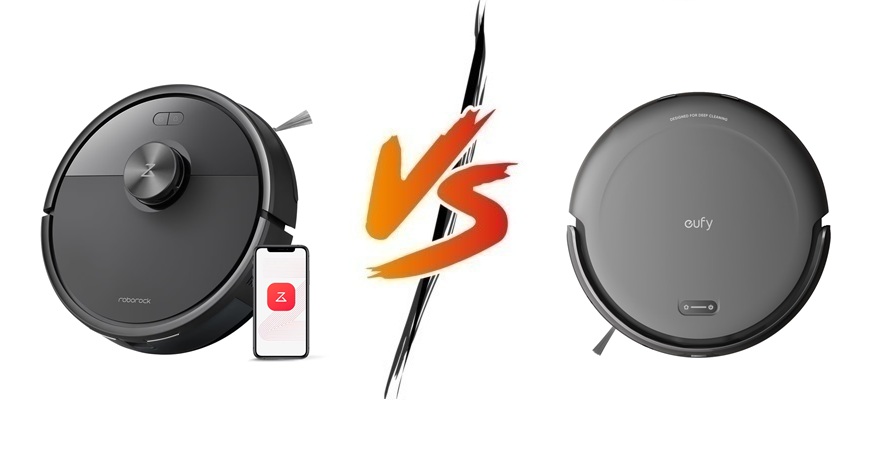
Robot vacuum cleaners have reached a point where even mid-range models promise hands-off cleaning, smart navigation, and enough power to replace frequent manual vacuuming. But in practice, not all robots deliver the same experience. Small differences in suction strength, navigation logic, app usability, and maintenance can make one model feel effortless while another slowly becomes a chore.
In this comparison, I take a close, real-world look at two popular self-emptying robot vacuums: the Roborock Q7 M5+ and the Eufy C10. Both target users who want automated cleaning without stepping into flagship-level pricing, yet they approach that goal very differently. Over several weeks of use, I evaluated how they handle daily messes, pet hair, carpets, hard floors, and long-term upkeep. Rather than focusing on specs alone, this review breaks down how each robot actually performs in a lived-in home, where convenience, reliability, and consistency matter more than marketing claims.
Roborock Q7 M5+ vs Eufy Comparison Chart
If you click the links below, under the product images, you will be redirected to Amazon.com. In case you then decide to buy anything, Amazon.com will pay me a commission. This doesn’t affect the honesty of this review in any way though.
| Specification | Roborock Q7 M5+ | Eufy C10 |
|---|---|---|
 |  | |
| Check the best price on Amazon | Check the best price on Amazon | |
| Type | Robot Vacuum + Mop | Robot Vacuum Only |
| Navigation System | LiDAR with advanced mapping | LiDAR-based |
| Mapping & App Features | Multi-floor mapping, customizable rooms, no-go zones, virtual walls | Basic mapping, limited no-go zones, fewer customization options |
| Suction Power | Up to 4200 Pa | Around 2000 Pa |
| Battery Life | Up to 180 minutes | Up to 120 minutes |
| Dustbin Capacity | 470 ml (robot); 2.5L (self-emptying bag) | 300 ml (robot); self-emptying bag size varies, smaller than Roborock |
| Mopping Capability | Yes, electronic water control with mop pad | No mopping function |
| Brush Type | Anti-tangle rubber main brush + side brush | Standard bristle main brush + side brush |
| Docking Station | Large self-emptying dock | Compact self-emptying dock |
| Noise Level | Approx. 67 dB | Approx. 58-60 dB |
| Height | Around 9.65 cm | Around 7.5 cm |
| Weight | About 3.5 kg | About 2.7 kg |
| Obstacle Clearance | Can climb thresholds up to 2 cm | Can climb thresholds up to 1.6 cm |
| Carpet Detection | Yes, with automatic suction boost | No automatic boost |
| App Control | iOS and Android, advanced controls | iOS and Android, basic controls |
| Voice Control | Alexa, Google Assistant | Alexa, Google Assistant |
| Price Range | Mid to high | Budget to mid-range |
| My individual reviews | Roborock Q7 M5+ review | Eufy C10 review |
Design & Build Quality
Design and build quality are easy to overlook when shopping for a robot vacuum, but they have a bigger impact on day-to-day satisfaction than most people expect. This is the part of the product you’ll see every day, bump into furniture, lift for maintenance, and trust not to break after a year of use. Both the Roborock Q7 M5+ and the Eufy C10 are clearly designed to be practical household tools rather than decorative gadgets, but the way each brand approaches durability, materials, and overall finish is noticeably different once you live with them.
Roborock Q7 M5+
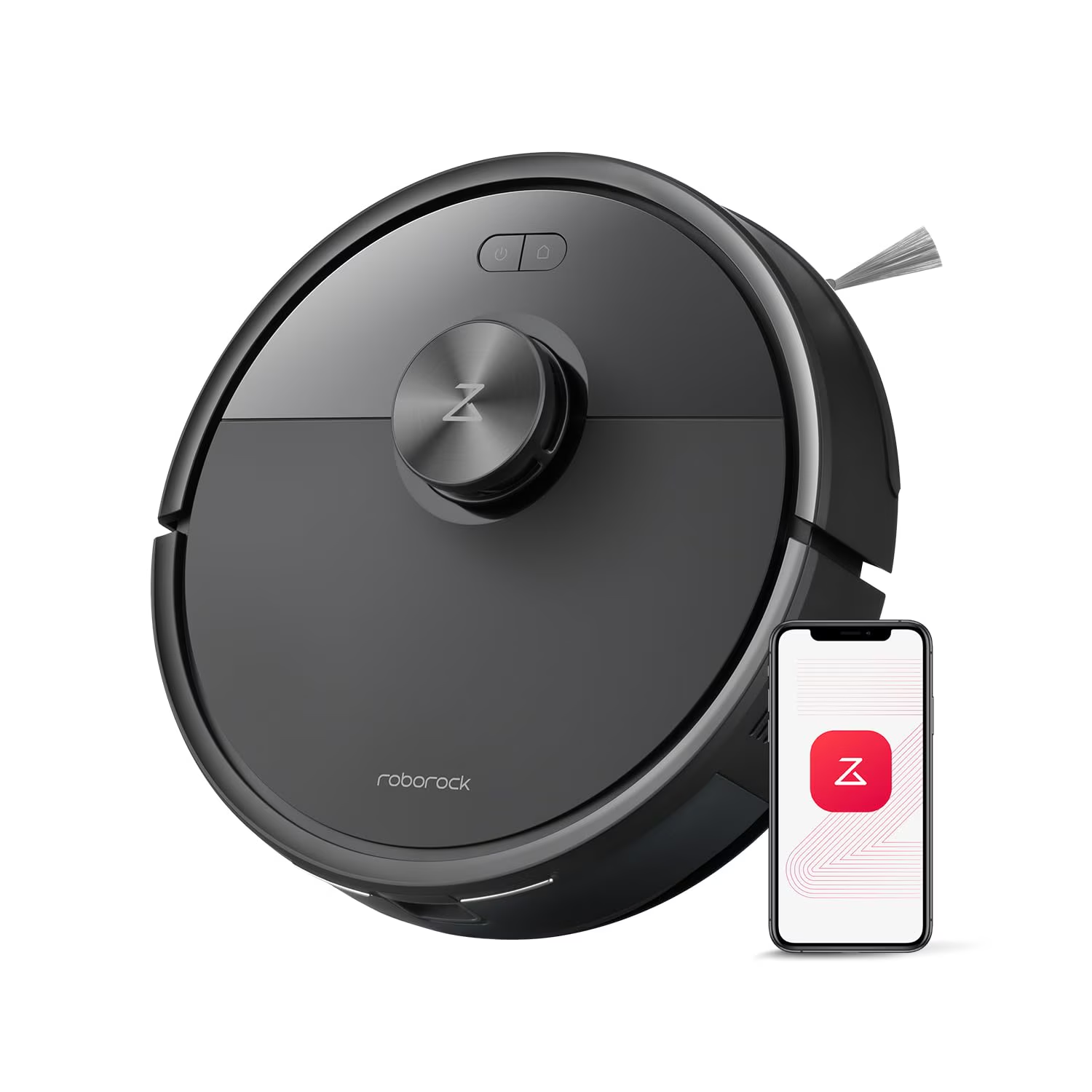
The Roborock Q7 M5+ immediately gives off a more premium impression. It has a reassuring weight when you lift it, and that weight feels purposeful rather than clumsy. The body is made mostly of thick, rigid plastic with a mix of matte and semi-gloss finishes. The matte sections do a good job of hiding dust and fine scratches, while the glossier top panel looks clean and modern when freshly wiped, though it does tend to show fingerprints over time. This is not a dealbreaker, but it does mean you’ll notice cosmetic wear sooner if you care about how your robot looks sitting out in the open.
The most visually prominent design element is the LiDAR turret on top. It adds height to the robot, which can limit access under very low furniture, but the trade-off is worth it. The turret feels solidly mounted and well integrated into the chassis. It does not rattle, wobble, or feel like a weak point, even after repeated bumps into furniture legs or walls. The front bumper is wide, responsive, and well cushioned. During use, it absorbs impacts cleanly and helps the robot navigate without harsh collisions.
Underneath, the Q7 M5+ continues the impression of thoughtful engineering. The main brush housing snaps in and out with a firm but manageable resistance, and the brush itself feels durable. The rubberized brush design is clearly aimed at reducing hair tangling, and while no robot is immune to hair buildup, this one handles it better than many others. The side brush is flexible without feeling flimsy, and it holds its shape well after weeks of use along baseboards.
The self-emptying dock is large, but intentionally so. It feels like a stationary appliance rather than an accessory. The plastics are thick, the lid opens smoothly, and the dust bag compartment seals well. When the robot docks and empties itself, there’s no sense of strain or vibration that might suggest long-term reliability issues. It’s not a beautiful object, but it feels built to last.
Eufy C10
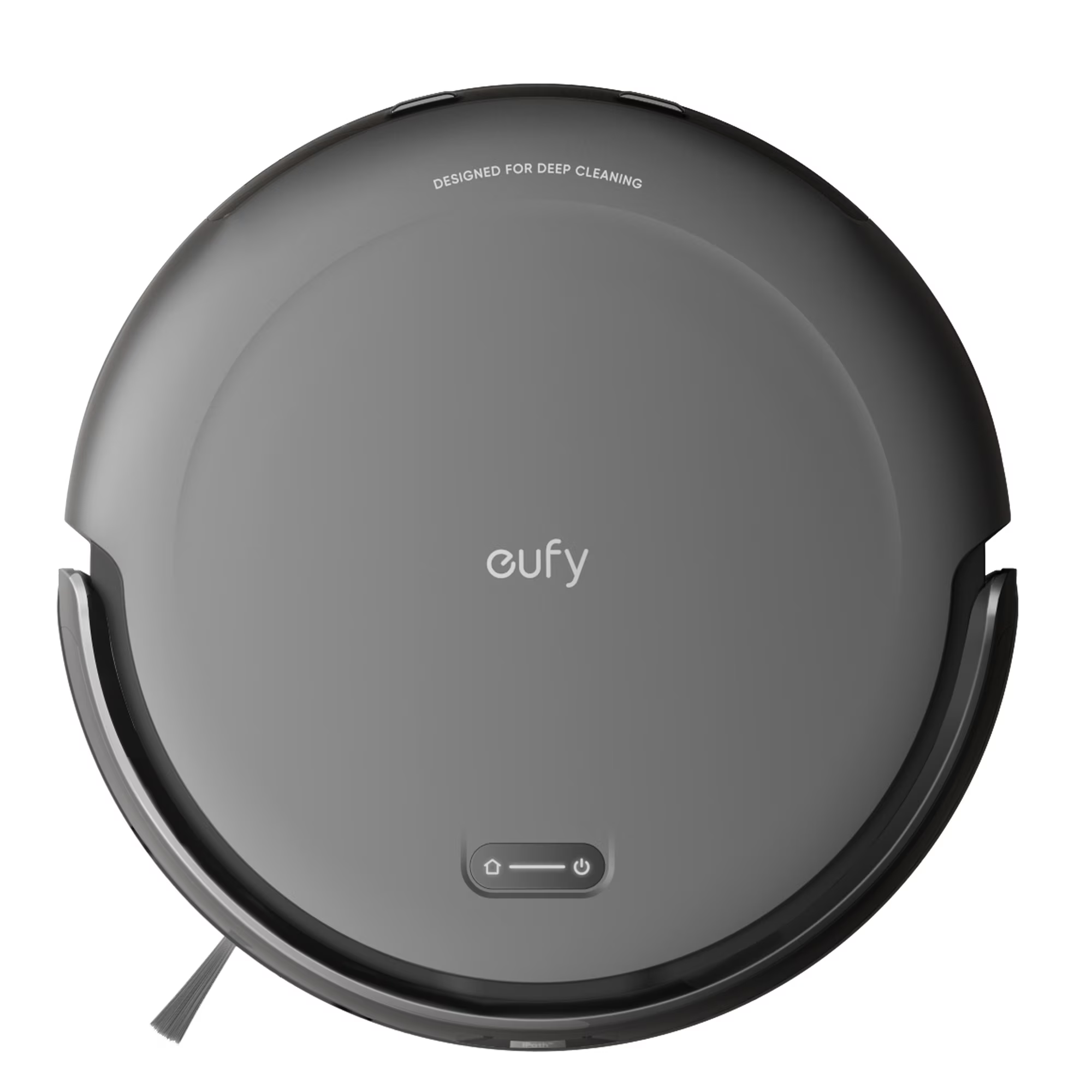
The Eufy C10 takes a different approach. It’s more understated and functional, with a slimmer profile and fewer visual flourishes. When you pick it up, it’s noticeably lighter than the Roborock. This doesn’t automatically mean it’s fragile, but it does give a different first impression. The plastic shell is mostly matte, which is a smart choice. It hides dust, smudges, and minor scuffs very well, making the robot look clean even if you don’t wipe it down often.
The overall shape is simple and conservative. There are no sharp edges or aggressive contours, just smooth curves designed to slide around furniture. The top panel buttons are clearly labeled and responsive, with a solid click that feels dependable. The LiDAR turret is smaller and less visually dominant than Roborock’s, contributing to a slightly lower overall height. This helps the C10 squeeze under more furniture, which can be a practical advantage in homes with low sofas or cabinets.
That said, the materials feel thinner in places. The front bumper works well, but it doesn’t absorb impacts as confidently as the Roborock’s. Over time, you may notice slightly firmer bumps into chair legs or table feet. It’s not aggressive or damaging, but it lacks the refined “soft touch” feel of a more premium bumper system.
On the underside, the Eufy C10 is straightforward. The brush assembly is easy to remove and clean, and the parts are clearly designed with simplicity in mind. The main brush is functional but more prone to hair wrapping, especially in homes with pets or long hair. The side brush does its job but feels like a consumable part that will need replacing sooner rather than later.
The self-emptying dock is compact and practical. It takes up less floor space than Roborock’s, which is a real benefit in smaller apartments. The lid and dust bag compartment are easy to access, though the plastics feel thinner and less reinforced. It doesn’t feel fragile, but it also doesn’t inspire the same long-term confidence as the Roborock dock.
Fit, Finish, and Long-Term Durability
When it comes to fit and finish, the Roborock Q7 M5+ clearly aims higher. Panels align cleanly, seams are tight, and nothing feels loose or poorly secured. Buttons and latches have a consistent resistance that suggests quality control was a priority. Even after weeks of daily use, there’s no new rattling or creaking.
The Eufy C10 is well assembled, but you can tell where costs were controlled. Panel gaps are slightly wider, and some parts flex more under pressure. Again, this doesn’t make it unreliable, but it does suggest a shorter cosmetic lifespan if the robot is frequently handled, moved, or bumped.
From a durability standpoint, both robots are built to handle daily cleaning. However, the Roborock feels more forgiving of rough use. If it gets stuck, nudged, or accidentally kicked while cleaning, it shrugs it off. The Eufy will survive the same treatment, but you may feel more inclined to treat it carefully.
Practical Design in Everyday Use
Living with these robots highlights small design decisions that matter. The Roborock’s dustbin access, brush removal, and mop attachment system all feel designed for repeated use. Nothing feels like it will snap or wear out quickly. The added bulk of the dock is the biggest downside, especially in smaller homes, but the trade-off is a more solid, appliance-like presence.
The Eufy C10 shines in simplicity. It’s easier to carry, easier to tuck away, and less visually intrusive. If you value minimalism and don’t want your robot vacuum to dominate a corner of the room, the Eufy fits better. However, that simplicity comes with compromises in perceived sturdiness and long-term wear resistance.
Design Verdict
In terms of design and build quality, the Roborock Q7 M5+ feels like a step closer to a premium appliance. It’s heavier, sturdier, and built with longevity in mind. The Eufy C10 is well designed for its class, but it prioritizes compactness and affordability over refinement. Neither is poorly built, but if build quality is high on your priority list, the Roborock clearly holds the advantage.
Navigation Intelligence & Mapping
Navigation is where a robot vacuum either earns your trust or slowly loses it. You can forgive weaker mopping or a smaller dustbin, but if a robot gets lost, misses rooms, or cleans inefficiently, it quickly becomes more frustrating than helpful. In this section, I’ll focus on how the Roborock Q7 M5+ and the Eufy C10 actually behave once you let them loose in a real home, not just what their spec sheets promise.
Roborock Q7 M5+
The Roborock Q7 M5+ uses a LiDAR-based navigation system, and from the very first run, it’s obvious that mapping accuracy is one of its strongest points. On its initial cleaning pass, the robot moves deliberately and confidently, tracing walls, identifying room boundaries, and gradually building a detailed map of the entire space. It doesn’t feel hesitant or exploratory for long. Within one or two full runs, the map is already reliable enough to support room-specific cleaning and custom schedules.
Once a map is established, the Q7 M5+ cleans in a logical, methodical pattern. It follows straight, parallel lines and rarely overlaps its path unnecessarily. This makes cleaning faster and more energy efficient, but more importantly, it creates a sense of predictability. You can watch it in the app and immediately understand what it’s doing and why. That predictability becomes valuable over time because it builds trust. You know it’s not randomly wandering or skipping areas.
Obstacle handling is also well tuned. While the Q7 M5+ does not rely on advanced cameras or object recognition, its LiDAR system and bumper sensors work together smoothly. It slows down as it approaches walls and furniture, makes light contact when needed, and adjusts its path without aggressive bumping. Chair legs, table bases, and sofa edges are handled cleanly. The robot rarely gets trapped unless the environment is genuinely tricky, such as tight cables or very low clearances.
One of the most useful aspects of Roborock’s navigation system is how flexible the software layer is. The app allows you to divide rooms, merge spaces, name them, and assign different cleaning behaviors to each one. You can tell the robot to clean the kitchen daily at higher suction, the bedroom every other day at lower power, and avoid certain areas entirely. Virtual walls and no-go zones are precise and reliable. Once set, they stay set, even after updates or power cycles.
Multi-floor mapping is another area where the Q7 M5+ feels well thought out. If you move the robot between levels, it can recognize and store multiple maps. While you still need to place it manually, it adapts quickly and doesn’t become confused by the change in environment. This makes it a solid option for homes with stairs, provided you don’t mind carrying it.
Overall, the Roborock’s navigation feels mature. It’s not flashy, but it’s dependable, efficient, and consistent, which matters far more in everyday use.
Eufy C10
The Eufy C10 also uses LiDAR navigation, and that already puts it ahead of many entry-level robot vacuums. On the first run, it maps out rooms with reasonable accuracy and avoids the chaotic, random movement that cheaper robots are known for. It follows a structured cleaning path and covers most areas systematically.
However, side-by-side with the Roborock, the differences become noticeable. The initial mapping process takes longer, and the robot sometimes hesitates when transitioning between rooms or navigating complex layouts. It still completes the job, but the confidence level is lower. You may see it pause briefly, rotate in place, or retrace a small section before continuing.
Mapping accuracy is generally good, but not flawless. In rooms with dark furniture, reflective surfaces, or irregular layouts, the C10 occasionally misjudges boundaries. This can result in slightly distorted room shapes in the app or areas that need manual correction. Fortunately, the app allows basic room editing, but it doesn’t offer the same depth of control as Roborock’s.
Obstacle avoidance is serviceable but less refined. The C10 relies more heavily on physical bumping to understand its environment. It will make firmer contact with furniture and walls, especially at higher speeds. This isn’t dangerous, but it does make the robot feel a bit more mechanical and less graceful. In cluttered spaces, it’s also more likely to get momentarily stuck or confused.
The app experience reflects this simpler navigation system. You can schedule cleanings, select rooms, and create basic no-go zones, but the options are more limited. Virtual boundaries work, but they’re less precise, and small adjustments can take a bit of trial and error. For users who want a “set it and forget it” experience, this may be enough. For those who enjoy fine-tuning, it can feel restrictive.
Multi-floor use is possible, but not as seamless. The robot can handle different layouts, but it doesn’t switch between saved maps as smoothly. You may need to remap or guide it more often when changing floors, which adds friction to an otherwise automated process.
Real-World Navigation Behavior
In daily use, these differences add up. The Roborock Q7 M5+ feels like it understands your home. It remembers where things are, adapts to small changes, and recovers gracefully when something is out of place. If a chair is moved or a door is closed, it adjusts without losing its sense of direction.
The Eufy C10 feels more reactive. It responds to what’s in front of it rather than planning far ahead. This doesn’t stop it from cleaning effectively, but it does mean you’ll occasionally notice inefficiencies, like repeated passes over the same area or slower progress through complex rooms.
Another important factor is recovery behavior. If either robot is picked up and moved, the Roborock reorients itself faster once placed back down. The Eufy sometimes needs more time or a full return to the dock to regain confidence in its position.
Navigation Verdict
Both robots offer competent LiDAR-based navigation, but they target different expectations. The Roborock Q7 M5+ is clearly designed for users who want precision, customization, and minimal supervision. Its mapping is accurate, its routes are efficient, and its software gives you meaningful control over how your home is cleaned.
The Eufy C10 delivers reliable navigation for simpler needs. It’s a big step up from random-navigation robots and works well in straightforward layouts. However, it lacks the refinement, flexibility, and long-term consistency that make the Roborock feel truly smart. If navigation quality is a top priority, the Roborock is the more confidence-inspiring choice.
Performance
Performance is ultimately the reason to buy a robot vacuum. You can forgive average design or a basic app, but if the robot doesn’t consistently leave your floors cleaner than before, it fails its core purpose. Performance isn’t just about suction numbers either. It’s about how well that power is applied, how effectively the robot adapts to different floor types, and how consistent the results are over time. After extended use, the Roborock Q7 M5+ and the Eufy C10 reveal very different performance profiles.
Roborock Q7 M5+
The Roborock Q7 M5+ is immediately impressive once it starts cleaning. On hard floors, it pulls in fine dust, crumbs, and grit with ease, even along edges where many robots struggle. The suction feels strong and purposeful rather than loud and chaotic. Dirt is lifted efficiently and deposited cleanly into the bin without leaving visible trails behind.
On carpets, especially low to medium pile, the difference becomes even more noticeable. The Q7 M5+ automatically increases suction when it detects carpet, and that boost is strong enough to extract debris that many robot vacuums leave behind. Fine dust, pet hair, and tracked-in dirt are lifted in fewer passes, which means faster cleaning cycles and less battery drain overall.
One of the most important performance advantages of the Roborock is consistency. It doesn’t just clean well on the first day. After weeks of daily or near-daily use, the results remain stable. The suction system maintains airflow effectively, and the brush continues to agitate debris without clogging easily. This reliability matters more than peak performance because it determines whether the robot continues to replace manual vacuuming or slowly becomes supplemental.
Edge cleaning is another strong point. While no round robot can truly clean sharp corners, the Q7 M5+ gets close. Its side brush extends debris inward efficiently, and the strong suction ensures that debris is actually captured rather than scattered. Along baseboards, the floors look noticeably cleaner compared to weaker robots.
The Roborock also handles transitions well. Moving from hard floors to carpets, over thresholds, and between rooms happens smoothly. It doesn’t lose suction efficiency or get stuck repeatedly. This contributes to a feeling of uninterrupted, professional cleaning rather than a series of small corrections.
Eufy C10
The Eufy C10 delivers respectable performance, but it operates in a different class. On hard floors, it does a good job with everyday dust and light debris. Crumbs, pet fur, and surface dirt are picked up reliably, especially in open areas. If your home is mostly hard flooring and you run the robot frequently, the C10 can maintain a generally clean appearance.
However, the limitations show up as debris becomes heavier or more embedded. On carpets, especially anything thicker than low pile, the suction struggles to pull dirt from deeper layers. After a cleaning cycle, the carpet may look tidy, but running a more powerful vacuum afterward often reveals what the robot missed.
Repeated passes help, but that comes at the cost of longer cleaning times and increased wear. The C10 relies more heavily on coverage than extraction. It cleans by persistence rather than force, which can be sufficient in light-use homes but less effective in busy households.
Edge performance is adequate but not impressive. Along baseboards and around furniture legs, some debris tends to get pushed aside rather than collected. This is especially noticeable with fine dust or heavier particles like sand or litter. You may find yourself needing to spot-clean these areas manually.
That said, the C10 performs consistently within its limits. It doesn’t suddenly drop in effectiveness after a few weeks, and its suction remains stable as long as maintenance is kept up. It just doesn’t reach the same depth of clean as the Roborock.
Carpet Performance and Deep Cleaning
Carpet performance is often where robot vacuums are separated into different tiers. The Roborock Q7 M5+ sits comfortably in the upper range for its category. While it won’t replace a full-size upright vacuum for deep carpet cleaning, it significantly reduces the need for one. After regular use, carpets look fresher, feel less gritty, and collect less visible debris.
The Eufy C10, by contrast, feels more like a maintenance tool for carpets. It keeps surface debris under control but doesn’t tackle deeper dirt effectively. In low-traffic areas, this may be enough. In high-traffic zones, you’ll still need a stronger vacuum on a regular basis.
Rug handling is also worth mentioning. The Roborock handles rugs confidently, even those with thicker edges, without losing cleaning efficiency. The Eufy sometimes hesitates or reduces effectiveness when encountering heavier rugs, particularly if they shift during cleaning.
Performance Over Time
One of the most overlooked aspects of performance is how it holds up over time. The Roborock Q7 M5+ shows strong long-term reliability. Its airflow system resists clogging, and the brush design reduces hair buildup. Even with pets in the home, performance remains close to day-one levels with routine maintenance.
The Eufy C10 requires more frequent attention to maintain peak performance. Hair wraps more tightly around the brush, and fine dust can accumulate faster in the filter. None of this is unusual, but it does mean performance degrades more quickly if maintenance is delayed.
Real-Life Cleaning Scenarios
In a busy household with pets, kids, or frequent foot traffic, the Roborock feels like it’s genuinely taking work off your plate. Floors stay consistently clean, and you’re less likely to notice problem areas building up over time.
In quieter households with fewer messes, the Eufy C10 can be sufficient. It keeps things tidy, especially if run daily, but it doesn’t create that “deep clean” feeling that makes you forget when you last used a manual vacuum.
Performance Verdict
The Roborock Q7 M5+ clearly outperforms the Eufy C10 in almost every performance-related area. Its stronger suction, better carpet handling, and more consistent long-term results make it feel like a serious cleaning tool rather than a convenience gadget.
The Eufy C10 still performs well within its intended scope. It’s capable, reliable, and effective for light to moderate cleaning needs. However, if performance is your top priority and you want a robot vacuum that genuinely reduces manual cleaning, the Roborock stands out as the stronger and more satisfying choice.
Mopping Capability
Mopping is often the most misunderstood feature in robot vacuums. Many people expect a robot with a mop attachment to replace a traditional mop entirely, but in reality, most robot mopping systems are designed for maintenance rather than deep cleaning. With that in mind, the difference between a robot that includes basic mopping and one that skips it entirely becomes more meaningful in daily life. The Roborock Q7 M5+ and the Eufy C10 take very different approaches here, and understanding those differences is key to setting realistic expectations.
Roborock Q7 M5+
The Roborock Q7 M5+ includes a combined vacuum-and-mop system, which means it can sweep and wipe floors in a single cleaning run. The mopping system is simple by modern standards, but it’s functional and, in the right context, genuinely useful. It consists of a removable water tank and a microfiber mop pad that drags along the floor as the robot moves.
Setup is straightforward. You fill the water tank, attach the mop pad, and select the desired water flow level in the app. The water dispensing is electronically controlled, which helps prevent over-wetting and keeps moisture levels consistent across different rooms. On sealed hard floors like tile, laminate, vinyl, or sealed hardwood, the moisture level is light enough to feel safe while still leaving the floor visibly cleaner.
In everyday use, the Roborock’s mopping works best as a dust and residue remover. It excels at picking up fine dust that vacuuming alone sometimes leaves behind. After a vacuum-and-mop run, hard floors look more even and feel smoother underfoot. Light spills, footprints, and faint smudges are reduced or removed entirely, especially if the robot runs regularly.
Where the system struggles is with dried-on stains or sticky messes. The mop pad is passive, meaning it doesn’t scrub or vibrate. If something has dried onto the floor, the robot may glide over it without fully removing it. Running the mop multiple times can help, but it’s still no substitute for manual scrubbing.
Another limitation is carpet interaction. The Q7 M5+ does not automatically lift the mop pad when it detects carpet. This means you need to manage cleaning zones carefully. In mixed-floor homes, you’ll either need to remove carpets from mop runs or set up no-mop zones in the app. The controls allow this, but it adds an extra step to what would otherwise be a fully automated process.
Despite these limitations, the Roborock’s mopping capability adds real value if you understand its role. It’s best thought of as a floor refresher rather than a deep cleaner. Used daily or several times a week, it significantly reduces how often you need to mop manually.
Mop Pad and Maintenance
The mop pad itself is well made and easy to remove. It attaches securely and doesn’t sag or shift during cleaning. After use, it’s simple to rinse out and reuse, though it will need regular washing to prevent odors and streaking. In homes with pets or high foot traffic, you’ll likely want to clean the pad after every one or two runs.
Over time, the pad does wear, but replacements are inexpensive and easy to find. The water tank is easy to refill and doesn’t leak when handled properly. It’s a simple system, but simplicity here is a strength. There’s very little that can go wrong mechanically.
Eufy C10
The Eufy C10 does not include any mopping functionality. It is strictly a vacuum, and this is an intentional design decision rather than a missing feature. By excluding mopping hardware, Eufy keeps the robot simpler, lighter, and more focused on vacuuming performance.
For some users, this is actually a benefit. If you prefer to mop manually or use a dedicated floor cleaner, the absence of a mop removes any need to manage water tanks, pads, or no-mop zones. There’s also no risk of damp carpets or streaked floors due to improper settings.
However, the lack of mopping does mean that fine dust and residues can build up over time on hard floors. Even with regular vacuuming, hard surfaces often benefit from occasional wiping. With the C10, that task remains fully manual.
Real-World Impact of Having a Mop
The practical difference between these two robots becomes clear over weeks of use. In homes with mostly hard floors, the Roborock’s mop significantly improves overall cleanliness. Floors stay fresher, and you’re less likely to notice dullness or fine dust accumulation. It doesn’t replace deep mopping sessions, but it stretches the time between them.
In contrast, with the Eufy C10, floors stay visually clean but lack that wiped finish. You may not notice the difference day to day, but over time, you’ll likely find yourself mopping manually more often.
In homes with mixed flooring, the value of mopping depends heavily on how much effort you’re willing to put into setup. If you’re comfortable creating cleaning zones and adjusting schedules, the Roborock integrates well. If you want absolute simplicity, the Eufy’s vacuum-only approach avoids potential frustration.
Mopping Noise and Drying Time
The mopping process on the Roborock is quiet, adding no noticeable noise beyond the vacuum itself. Because the water output is controlled and light, floors dry quickly. In most cases, surfaces are dry to the touch within minutes, which reduces the risk of slipping or damage.
There’s also no lingering odor or excessive moisture, provided the mop pad is kept clean. Neglecting pad maintenance, however, can lead to streaking or unpleasant smells over time.
Mopping Verdict
The Roborock Q7 M5+ offers a basic but genuinely useful mopping function that enhances overall floor cleanliness when used correctly. It’s not designed for heavy scrubbing or stain removal, but as a maintenance tool, it does its job well.
The Eufy C10’s lack of mopping is neither a flaw nor a strength on its own. It simply reflects a different philosophy. If you value simplicity and don’t mind manual mopping, the C10 keeps things straightforward. If you want your robot to handle as much floor care as possible, even at a basic level, the Roborock’s mopping capability adds meaningful convenience.
Maintenance & Cleaning
Maintenance is the unglamorous side of owning a robot vacuum, but it’s one of the biggest factors in long-term satisfaction. A robot that cleans well but demands constant attention quickly becomes more work than it’s worth. Both the Roborock Q7 M5+ and the Eufy C10 are designed to minimize hands-on upkeep, especially with their self-emptying docks, but they still require regular care. The difference lies in how often that care is needed and how easy it is to perform.
Roborock Q7 M5+
The Roborock Q7 M5+ is clearly designed with low-maintenance ownership in mind. Its self-emptying dock is the centerpiece of this experience. After each cleaning run, the robot automatically returns to the dock and empties its internal dustbin into a sealed bag. In everyday use, this works reliably and thoroughly. The suction during emptying is strong enough to pull out most debris in one go, reducing the chance of buildup inside the robot.
The dust bag itself lasts a long time, especially in homes without heavy shedding pets. For most households, replacing the bag every few weeks is sufficient. The bag system is also relatively clean. When it’s time to replace it, you can remove the bag without dust spilling into the air, which is a real benefit for allergy-sensitive users.
Inside the robot, the internal dustbin is small but easy to access. On the rare occasions when manual emptying is needed, the bin opens cleanly and doesn’t trap debris in corners. The filter is easy to remove and can be gently tapped or rinsed, depending on your preference. Keeping the filter clean helps maintain suction performance over time.
Brush maintenance is another area where the Roborock performs well. The main brush is designed to resist hair wrapping, and in practice, it does a better job than many competitors. Hair still accumulates, especially in pet-heavy homes, but it’s easier to remove. The brush pops out without tools, and most hair can be peeled away in a single motion. The side brush also resists tangling better than average and retains its shape after extended use.
The mop system adds a layer of maintenance, but it’s manageable. The mop pad needs to be removed and washed regularly to prevent odors and streaking. This is a manual task, but it’s quick and straightforward. The water tank needs occasional rinsing, especially if you use tap water with higher mineral content. None of this is difficult, but it does require consistency.
Overall, the Roborock’s maintenance routine feels predictable and well thought out. You know what needs attention, how often, and how to do it without frustration.
Eufy C10
The Eufy C10 also benefits from a self-emptying dock, and for many users, this alone dramatically reduces daily maintenance. After each cleaning run, the robot empties its bin automatically. The system works reliably, though the emptying suction feels slightly less aggressive than Roborock’s. Occasionally, fine debris or hair can remain in the internal bin, requiring a manual check every so often.
The dust bags in the Eufy dock are easy to replace and generally clean to handle. However, they tend to fill faster, especially in homes with pets or high foot traffic. This means slightly more frequent replacements compared to the Roborock. While this isn’t a major inconvenience, it’s something to factor into long-term costs and effort.
The internal dustbin is easy to access, but it’s a bit more prone to debris sticking to the walls. Fine dust can cling inside, especially if humidity is low. A quick tap or wipe solves the issue, but it adds an extra step to maintenance.
Brush maintenance requires more attention on the Eufy C10. The main brush tends to collect hair more tightly, and removing it takes a bit more effort. Hair often wraps around the ends of the brush and needs to be cut or carefully unwound. This is a common issue with many robot vacuums, but it means maintenance sessions take longer and need to happen more often.
The side brush also shows wear sooner. After weeks of use, the bristles may start to bend or splay outward, reducing effectiveness and requiring replacement sooner than expected.
Filter and Sensor Care
Both robots rely on clean filters and sensors to function properly. The Roborock’s filter housing is slightly better sealed, which helps keep fine dust from reaching sensitive components. Cleaning the filter is simple, and the robot provides reminders through the app.
The Eufy’s filter is also easy to remove, but it clogs more quickly due to lower airflow efficiency. Regular cleaning is essential to maintain performance. Neglecting filter care has a more noticeable impact on the Eufy’s suction than on the Roborock’s.
Sensor cleaning is similar on both robots. Cliff sensors, wall sensors, and charging contacts need occasional wiping. The Roborock seems less sensitive to minor dust buildup, while the Eufy may show navigation quirks if sensors are neglected for too long.
Long-Term Maintenance Experience
Over time, the difference in maintenance philosophy becomes clear. The Roborock Q7 M5+ feels designed to minimize intervention. You still need to maintain it, but the intervals are longer, and the tasks are quicker. It tolerates delayed maintenance better without a dramatic drop in performance.
The Eufy C10 demands a bit more attention. If you stay on top of maintenance, it performs consistently. If you fall behind, performance drops faster. This doesn’t make it a bad product, but it does make it less forgiving.
Maintenance Verdict
Both robots reduce daily cleaning effort significantly, especially with their self-emptying docks. However, the Roborock Q7 M5+ stands out for its lower maintenance burden and more forgiving design. Its brush system, dust handling, and filtration work together to keep performance stable with minimal effort.
The Eufy C10 is easy to maintain in absolute terms, but it requires more frequent attention to brushes, filters, and dust bags. For users who don’t mind routine upkeep, this may not be an issue. For those who want the most hands-off experience possible, the Roborock offers a smoother, less demanding ownership experience.
Ergonomics & Usability
Ergonomics and usability determine how enjoyable a robot vacuum is to live with. These factors don’t show up clearly on spec sheets, but they shape your daily experience more than raw performance numbers. A robot can clean exceptionally well, but if its app is confusing, its controls are awkward, or routine interactions feel clumsy, that quality quickly gets overshadowed. The Roborock Q7 M5+ and the Eufy C10 approach usability with very different philosophies, and those differences become more obvious the longer you use them.
Roborock Q7 M5+
The Roborock Q7 M5+ is built around the idea that users want control. From the moment you open the app, it’s clear that Roborock expects you to interact with the software regularly, fine-tuning how and when your home is cleaned. For users who enjoy customization, this is a major strength.
Initial setup is straightforward, but it does take a bit of time. Connecting the robot to Wi-Fi, mapping your home, and configuring rooms and schedules is guided step by step, but there are a lot of options. New users may feel slightly overwhelmed at first. That said, the app is logically structured, and after a few cleaning cycles, everything begins to feel intuitive.
Day-to-day operation is smooth. You can start a full clean, target specific rooms, or create custom routines with just a few taps. The map view is clear and responsive, making it easy to see what the robot is doing in real time. Adjusting suction power, mopping intensity, or cleaning order is simple once you know where to look.
Physical interaction with the robot is also well designed. The top-mounted buttons are responsive and clearly labeled, allowing you to start or stop cleaning without opening the app. The robot is easy to lift thanks to a well-balanced center of gravity, and it doesn’t feel awkward or unstable when carried between floors.
Maintenance-related ergonomics are equally strong. Removing the dustbin, filter, brush, or mop pad feels natural and requires no tools. Parts click into place securely without requiring excessive force. This matters because these are tasks you’ll perform repeatedly over the life of the robot.
One potential downside is that the sheer number of features can make troubleshooting feel complex. If something goes wrong, there are many settings to check. However, the app provides clear notifications and explanations, which helps reduce frustration.
Eufy C10
The Eufy C10 takes a more minimalist approach to usability. Its design philosophy seems to prioritize ease of use over customization. Setup is quick and painless. Connecting the robot, running the initial mapping cycle, and scheduling cleanings can all be done in a short amount of time with minimal decision-making.
The app interface is clean and uncluttered. There are fewer options, but they are presented clearly. For users who want a robot vacuum to simply work without constant tweaking, this is a major advantage. You don’t need to think much about suction levels or cleaning patterns. You set a schedule and let it run.
Daily interactions with the robot are simple. Starting a clean, sending it back to the dock, or pausing a run can be done easily from the app or using the physical buttons. The robot’s lighter weight makes it easier to carry, which is helpful if you move it between floors frequently.
However, the simplicity does come with trade-offs. The lack of advanced controls means you can’t fine-tune cleaning behavior for different rooms or situations. If you want stronger cleaning in high-traffic areas or different schedules for specific rooms, your options are limited.
Maintenance ergonomics are acceptable but less refined. Removing the brush or dustbin takes a bit more effort, and parts don’t always click into place as smoothly. These are small inconveniences, but they add up over time.
App Experience and Learning Curve
The contrast between the two apps is one of the biggest usability differences. Roborock’s app is powerful but complex. Eufy’s app is simple but limited.
With Roborock, there’s a learning curve, but once you climb it, you gain flexibility. You can experiment with different cleaning strategies and adapt the robot to your lifestyle. With Eufy, there’s very little to learn, but also very little to customize.
Neither approach is objectively better. It depends entirely on what you value more: control or convenience.
Feedback, Notifications, and Trust
Another usability factor is how clearly the robot communicates with you. The Roborock provides detailed notifications about cleaning progress, maintenance needs, and errors. You always know what’s happening and what needs attention.
The Eufy’s notifications are more basic. You’re informed when cleaning starts or finishes and when maintenance is required, but the information is less detailed. For many users, this is enough. For others, it may feel vague.
Over time, this affects trust. The Roborock feels transparent. The Eufy feels hands-off.
Physical Ergonomics in the Home
Both robots navigate homes comfortably, but their physical designs affect usability in subtle ways. The Roborock’s larger dock takes up more space and is harder to reposition. Once placed, it’s best left alone. The Eufy’s smaller dock is easier to fit into tight spaces and relocate if needed.
The Roborock’s taller body may limit access under very low furniture, while the Eufy’s slimmer profile helps it reach more areas without intervention.
Ergonomics & Usability Verdict
The Roborock Q7 M5+ is designed for users who want an intelligent cleaning system they can shape to their needs. It rewards engagement and offers a sense of control and reliability. However, it demands a bit more attention and learning.
The Eufy C10 is designed for simplicity. It’s easy to set up, easy to live with, and requires very little thought. The trade-off is reduced flexibility and control.
In terms of ergonomics and usability, neither robot is inherently better. The Roborock excels in depth and refinement, while the Eufy shines in approachability and ease. The right choice depends on how involved you want to be in managing your robot vacuum.
Pet-Friendliness
For many households, pets are the real test of a robot vacuum. Pet hair, tracked-in dirt, scattered litter, food crumbs, and the occasional accident create a much harsher environment than a pet-free home. A robot that performs well in these conditions needs more than basic suction. It needs consistent pickup, resistance to tangling, reliable navigation, and a maintenance routine that doesn’t become overwhelming. The Roborock Q7 M5+ and the Eufy C10 approach pet-related challenges differently, and those differences become very clear in daily use.
Handling Pet Hair on Hard Floors
On hard floors, both robots are capable of picking up loose pet hair, but the Roborock Q7 M5+ does it more decisively. The stronger suction pulls in hair in a single pass rather than pushing it around. This is especially noticeable with fine or wispy hair that tends to cling to surfaces due to static. The Roborock captures this hair cleanly and deposits it into the bin without leaving trails behind.
The Eufy C10 can handle surface hair on hard floors reasonably well, especially if it runs frequently. However, hair tends to collect into small clumps before being fully picked up. In corners and along baseboards, some strands are often left behind. Over time, this creates a visible buildup in pet-heavy areas unless you intervene manually.
Carpet and Rug Performance with Pets
Carpets are where pet hair becomes truly challenging. Hair embeds itself into fibers and requires both agitation and suction to remove effectively. The Roborock Q7 M5+ performs noticeably better here. Its brush design and suction strength allow it to lift a meaningful amount of embedded hair, particularly from low- and medium-pile carpets. After regular use, carpets look less matted and feel cleaner to the touch.
The Eufy C10 struggles more in this area. While it can remove loose hair from the surface, it has difficulty extracting hair from deeper layers. In homes with shedding pets, this means carpets will still need frequent manual vacuuming. The robot helps, but it doesn’t significantly reduce the workload.
Rugs add another layer of complexity. The Roborock handles most rugs confidently, maintaining traction and suction. The Eufy may hesitate or lose efficiency on thicker rugs, especially if they shift during cleaning.
Hair Tangling and Brush Maintenance
Hair tangling is one of the most important pet-related factors, and this is where design choices really matter. The Roborock Q7 M5+ uses a brush system that resists tangling better than average. Hair still wraps around the brush over time, but it tends to collect loosely, making removal easier. You can usually clean the brush quickly without cutting or excessive pulling.
The Eufy C10’s brush is more prone to tight wrapping. Long hair, in particular, winds itself around the brush ends and requires more effort to remove. This means more frequent maintenance sessions and more time spent untangling hair. For pet owners, this difference alone can significantly affect satisfaction.
Side brushes tell a similar story. The Roborock’s side brush holds up better under constant hair exposure, while the Eufy’s side brush shows wear sooner and may need replacing more often.
Litter, Dirt, and Heavy Debris
Homes with cats or dogs often deal with more than hair. Litter, dry food, soil, and small bits of debris are common. The Roborock’s stronger suction and better airflow allow it to pick up heavier particles more reliably. Cat litter near litter boxes, for example, is collected efficiently without being scattered.
The Eufy C10 can pick up some of this debris, but heavier particles are more likely to be pushed aside or left behind, especially along edges. Multiple passes help, but that reduces efficiency and increases wear.
Accidents and Obstacle Awareness
While neither robot is designed to handle pet accidents, how they navigate around unexpected obstacles matters. The Roborock’s more deliberate movement and stronger mapping reduce the risk of it blindly driving through messes, though it’s still possible if accidents go unnoticed.
The Eufy’s more reactive navigation increases the risk slightly. It relies more on bumping and less on predictive movement, which can lead to messier outcomes in worst-case scenarios. Neither robot should be left unattended in environments where accidents are likely, but the Roborock inspires slightly more confidence.
Noise and Pet Comfort
Noise levels matter not just to humans but also to pets. The Roborock, when running at full power, can be louder, which may startle sensitive animals. However, its efficient cleaning means it often finishes faster or can be run at lower power modes without sacrificing cleanliness.
The Eufy is generally quieter, which some pets tolerate better. However, longer cleaning times may offset this advantage. Over time, most pets adapt to both robots, but initial reactions may differ.
Odor Control and Hygiene
Pet hair and dander can contribute to odors if not handled properly. The Roborock’s sealed dust bag system helps contain smells, especially when bags are replaced on schedule. The mop function also helps reduce fine dust that contributes to lingering pet odors on hard floors.
The Eufy’s dust handling is adequate but less effective at containing odors over long periods. More frequent bag changes help, but it’s another maintenance consideration for pet owners.
Living with Pets Long-Term
Over weeks and months, the Roborock Q7 M5+ feels better suited to pet-heavy households. It reduces visible hair buildup, keeps floors more consistently clean, and requires less frequent hands-on maintenance. It doesn’t eliminate the need for manual cleaning, but it significantly reduces it.
The Eufy C10 works best in homes with lighter shedding or fewer pets. It can keep things under control if run daily, but it doesn’t dramatically reduce manual effort in high-shedding environments.
Pet-Friendliness Verdict
Both robots can coexist with pets, but they are not equally suited to the task. The Roborock Q7 M5+ is clearly the stronger choice for pet owners. Its suction power, brush design, and overall consistency make it more effective at handling hair, dirt, and everyday pet messes.
The Eufy C10 is capable but better suited to lighter workloads. For homes with minimal shedding, it may be enough. For homes with multiple pets or heavy shedding, the Roborock offers a more reliable and less demanding experience.
Conclusion
Both the Roborock Q7 M5+ and the Eufy C10 offer strong value in the growing robot vacuum market, but they cater to different types of users and priorities. After spending extensive time with both models, it’s clear that each has strengths and compromises that shape the overall experience.
The Roborock Q7 M5+ stands out as a more premium and versatile option. Its superior build quality, refined navigation, and powerful cleaning performance make it a reliable partner for a wide range of home environments, especially those with mixed flooring and pets. The addition of a controlled mopping system adds practical convenience, helping maintain hard floors between manual deep cleans. The robot’s app and software are feature-rich, offering deep customization that allows users to tailor cleaning patterns, schedules, and no-go zones precisely. Maintenance is thoughtfully designed to minimize hassle, and the self-emptying dock works efficiently. The trade-off is a higher upfront investment and a slightly steeper learning curve, but for those who want a long-term, hands-off cleaning solution, the Q7 M5+ delivers consistently.
The Eufy C10, by contrast, focuses on simplicity and ease of use. It’s lighter, easier to set up, and less demanding in terms of maintenance. Its navigation and cleaning performance are solid for everyday dust and light debris, particularly on hard floors. The lack of a mopping function keeps things straightforward, and the smaller dock takes up less space. However, it doesn’t offer the same depth of customization or the robust cleaning power needed for heavier debris or thicker carpets. For users seeking a no-fuss, reliable vacuum that covers basic cleaning needs without too much involvement, the C10 is a sensible choice.
In the end, your decision depends on how much control you want and how demanding your cleaning needs are. The Roborock Q7 M5+ is the better pick if you want a smarter, more capable machine that handles complex environments and offers advanced features. The Eufy C10 suits those who prefer a simpler, lighter option for straightforward cleaning tasks. Both deliver solid results within their niches, but their differences are significant enough to guide your choice based on your home and lifestyle.