
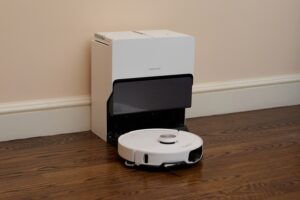
The Roborock Q7 M5+ is part of Roborock’s popular lineup of robot vacuums that aim to bring smart, hands‑free cleaning to everyday homes. Positioned as a midrange model, the Q7 M5+ combines strong suction power with intelligent navigation and a self‑emptying dock, making it an attractive option for those who want a mostly maintenance‑free cleaning experience. It promises to handle everything from dust and crumbs on hard floors to light pet hair on carpets, with the added convenience of app control and customizable cleaning zones. While it doesn’t carry the premium price tag of Roborock’s flagship models, it offers many of their core features at a more approachable cost. In this review, I’ll break down its design, cleaning performance, usability, and other key aspects to help you decide if it’s the right fit for your home cleaning needs.
If you click the button above you will be redirected to Amazon.com. In case you then decide to buy anything, Amazon.com will pay me a commission. This doesn’t affect the honesty of this review in any way though.
Design & Build Quality
When it comes to robot vacuums, design and build quality play a critical role—not just in how the device looks, but in how well it performs and how long it lasts. The Roborock Q7 M5+ sits firmly in the midrange category, and its design reflects a balance between functionality, durability, and cost-efficiency. Over the course of using this model, it becomes clear where Roborock prioritized engineering and where compromises were made.
Overall Appearance and Dimensions
At first glance, the Q7 M5+ has a clean, minimalistic look. It’s finished mostly in matte black plastic with a slightly glossy trim around the edges, which gives it a modern, no-fuss appearance. It doesn’t scream “high tech” like some of the ultra-premium models with flashy LED displays, but it looks sleek and unobtrusive enough to blend in well with most home decors. It’s not a device you’ll want to put on display, but you won’t mind it sitting quietly in a corner either.
In terms of size, the vacuum measures about 35 centimeters (approximately 13.8 inches) in diameter and stands roughly 9.9 centimeters (3.9 inches) tall. This low profile is a big plus, as it allows the vacuum to slip easily under most furniture—sofas, beds, cabinets—places that often collect dust but can be tricky to clean manually. This slim design is something Roborock has nailed well across many of their models, and the Q7 M5+ continues that tradition. It means you’re less likely to find dust bunnies lurking in hard-to-reach areas after a cleaning cycle.
The accompanying auto-empty dock, part of the “+” package, adds some bulk to the overall setup, but it remains reasonably compact for what it does. The dock is designed to store dirt in a large disposable bag inside, so you don’t have to empty the vacuum itself frequently. The dock’s footprint is wider than the vacuum but doesn’t take up an excessive amount of floor space, which is convenient if you have a smaller home or apartment.
Materials and Build Quality
Roborock uses mostly plastic for the vacuum’s body, but it’s a sturdy, impact-resistant plastic that feels durable and well-made. The shell doesn’t creak or flex when you press on it, which gives confidence in the overall build. The finish is matte, so it’s good at hiding fingerprints and minor scratches, helping the vacuum maintain a neat appearance even after weeks of use.
That said, it’s important to set realistic expectations here. This is not a luxury appliance made of metal or glass components; it’s a practical device designed to balance quality and affordability. Over time, you might notice some wear and tear, especially if you have pets or children who accidentally bump the unit. The bumper on the front, a key component for detecting obstacles and preventing damage, is flexible and cushioned but doesn’t have any special padding beyond standard materials. So, while it protects the vacuum well during normal operation, it may show scuffs or scratches after repeated impacts with furniture or walls.
Inside the vacuum, the components also feel well-built but somewhat utilitarian. The dustbin, brush roll, and water tank for the mopping function are made of plastic that’s durable enough for daily use but should be handled carefully during cleaning and replacement. The brush roll uses rubberized fins and bristles designed to reduce tangling, which is a smart feature aimed at cutting down on maintenance.
Design Choices and Functionality
One of the things I appreciate about the Q7 M5+’s design is how thoughtfully it integrates its multiple cleaning functions. This is not just a vacuum; it’s a vacuum and mop combo. The water tank for mopping is cleverly integrated underneath and is relatively easy to remove and refill. The mop cloth attaches firmly with Velcro and can be removed for washing without hassle.
The vacuum’s side brush, a small spinning brush that helps sweep debris away from edges and corners, is positioned well. It’s long enough to reach baseboards and corners effectively but not so long that it’s constantly getting tangled in wires or curtains. However, it’s worth noting that because the Q7 M5+ lacks advanced obstacle avoidance sensors beyond its LiDAR scanner, the side brush can still occasionally catch on small objects, like loose cables or pet toys.
The dustbin inside the vacuum itself is of moderate size, but since this model includes the auto-empty dock, you don’t have to empty it after every cleaning session. The bin pops out easily for manual cleaning if you want to skip the dock, and the filter sits snugly inside. The HEPA filter is washable, which is a nice touch for keeping the vacuum efficient over time and reducing replacement costs.
Dock Design and Auto-Empty Mechanism
The charging dock with the auto-empty feature is one of the Q7 M5+’s standout design elements. This dock is larger than a traditional charging station because it incorporates a suction system that pulls debris from the robot’s dustbin into a larger, disposable bag inside the dock.
The dock’s design is relatively straightforward: the vacuum parks itself neatly on the dock, aligns correctly with the suction port, and triggers the emptying process. The mechanism itself works well and significantly reduces the frequency with which you need to manually handle dirt and dust—a major convenience for people with allergies or limited time.
However, the dock is not silent. When it empties the vacuum, it emits a fairly loud, high-pitched noise lasting about 15-20 seconds. This noise can be disruptive if it happens during quiet hours or overnight, especially in small homes or apartments where the dock might be close to bedrooms. It’s something you’ll want to consider when deciding where to place the dock in your home.
User Interface and Controls
The Q7 M5+ keeps the physical interface on the vacuum itself minimalistic. There’s a small LED indicator and a single button on top for basic commands like start/pause or returning to dock. This minimalist approach means you do most of the control via the mobile app, which keeps the vacuum’s design clean and avoids clutter.
This design choice has pros and cons. On the plus side, the lack of physical buttons makes the vacuum less prone to accidental presses and damage. On the downside, if you don’t want to rely on the app for everything or lose Wi-Fi connectivity, you’ll have fewer manual control options available on the device itself.
Maintenance Accessibility
A well-designed vacuum is one that’s easy to maintain, and in this regard, the Q7 M5+ scores well. The dustbin, filter, and brush roll are all easily accessible. Removing the brush roll requires a simple latch and a quick lift, making it easy to clean off hair and debris without special tools. The mop cloth and water tank are equally user-friendly — they pop off and on without fuss.
The only minor quibble is that some parts are still plastic and feel a bit delicate, so it’s important to handle them with care during cleaning to avoid cracks or breakage. Still, the overall design encourages regular maintenance, which will keep the vacuum running smoothly for longer.
Durability Over Time
Long-term durability is harder to judge without months or years of testing, but user feedback and early reports suggest the Q7 M5+ is reasonably reliable, provided it’s used under normal conditions. Some users have reported issues like water leaks from the mopping system or sensors malfunctioning after extended use, but these appear to be isolated cases rather than widespread problems.
Overall, the vacuum seems built to last with routine upkeep, and the modular design means parts like the brush roll, filters, and mop cloth can be replaced individually if they wear out.
Summary
The Roborock Q7 M5+ offers a solid, practical design that’s well suited to everyday home use. Its compact and low-profile shape allows it to clean under furniture effectively, while the robust build materials provide a reassuring feel of durability without being overly premium. The combination of vacuuming and mopping features is integrated thoughtfully, and the self-emptying dock adds convenience, even if it’s a bit noisy.
While not perfect—some minor durability questions remain, and it lacks advanced obstacle avoidance—the design and build quality of the Q7 M5+ put it comfortably in the midrange class. It’s a device that feels well engineered for its price, balancing smart features and functionality with straightforward usability and maintenance. For most users looking for a reliable robot vacuum/mop combo without paying flagship prices, it hits the mark.
Navigation Intelligence & Mapping
Navigation is arguably the most critical feature of any robot vacuum. How well a robot maps your home and plans its cleaning route directly impacts how effectively and efficiently it can clean. The Roborock Q7 M5+ steps up to this challenge with a range of navigation technologies and mapping capabilities that place it well above basic models relying on random or semi-random patterns. However, like most midrange robots, it’s not without limitations, and understanding both its strengths and weaknesses can help you decide whether it fits your cleaning needs.
The Heart of Navigation: PreciSense LiDAR
At the core of the Q7 M5+’s navigation system is Roborock’s PreciSense LiDAR sensor. Unlike cheaper robots that rely on cameras or infrared sensors, LiDAR (Light Detection and Ranging) scans the room by emitting laser pulses and measuring their reflection times to create an accurate 360-degree map of your environment. This scanning takes place multiple times per second while the vacuum is operating, allowing it to build and update a detailed map in real time.
The advantage of LiDAR over camera-based systems is that it performs well in any lighting condition—even in complete darkness—which means the vacuum can clean efficiently at night or in dim rooms without losing track of where it is. For many households, this is a big plus, offering flexibility in scheduling cleaning runs when it’s most convenient.
Mapping Accuracy and Room Recognition
During initial setup, the Q7 M5+ performs a detailed scan of your home, generating a map that shows walls, doors, furniture outlines, and obstacles it can detect. The accuracy is generally excellent, with walls and furniture placed precisely on the map. This level of precision helps the vacuum plan efficient cleaning paths and avoid unnecessary overlap or missed spots.
The robot also segments the map into individual rooms automatically. This “room recognition” allows you to command it to clean specific rooms or groups of rooms, which is very useful for targeted cleaning. For instance, you might want to run a quick clean in the kitchen after dinner but save a full-house cleaning for weekends.
The app interface displays this map in a clear and user-friendly way, letting you see exactly where the vacuum has cleaned and adjust settings for each room individually. This level of control is something not every robot vacuum offers and feels very empowering once you get used to it.
Customization with No-Go Zones and Barriers
Beyond simple room segmentation, the Q7 M5+ lets you set up virtual no-go zones, no-mop zones, and invisible walls. These are areas on the map where you want the vacuum to avoid for various reasons. For example, if you have delicate rugs that shouldn’t get wet, a no-mop zone lets you block those areas during mopping sessions. Similarly, no-go zones can prevent the vacuum from venturing under low-clearance furniture where it might get stuck or damaging fragile items.
You set these zones easily through the app by drawing rectangles or lines on the map. This kind of fine control dramatically reduces frustration and manual intervention, especially if you have a complex floor plan or lots of obstacles.
Cleaning Path and Coverage Efficiency
One of the biggest improvements LiDAR navigation brings is intelligent route planning. Instead of wandering randomly or following inefficient zig-zags, the Q7 M5+ creates systematic back-and-forth cleaning patterns, sweeping methodically through each room. This means it spends less time covering the same area multiple times and can clean more thoroughly in less time.
The vacuum also tracks which areas it has cleaned and which it hasn’t, allowing it to resume cleaning after interruptions without duplication. For instance, if the battery runs low mid-cleaning, the vacuum will return to its dock, recharge, and then pick up right where it left off.
Real-world experience shows that this results in better and faster cleaning coverage compared to basic robots. Most users report that the Q7 M5+ reliably cleans their entire floor without leaving obvious missed spots.
Limitations: Obstacle Avoidance and Small Object Detection
While the LiDAR sensor excels at mapping walls and large furniture, it doesn’t include advanced obstacle avoidance sensors like cameras, ultrasonic sensors, or AI-based vision recognition that some higher-end robots have.
What this means in practice is the vacuum can detect the presence of an obstacle but doesn’t always identify what it is or skillfully navigate around it. For example, cables, slippers, pet toys, or small items on the floor may cause the vacuum to slow down, nudge, or even get stuck.
Many users find that the vacuum handles common obstacles like chair legs or tables well but requires some pre-cleaning tidying up to avoid frequent interruptions. If you have a lot of clutter or small objects scattered on the floor regularly, the Q7 M5+ might struggle more than models equipped with more sophisticated avoidance systems.
Stairs and Drop Detection
The vacuum is equipped with drop sensors around its base, which detect cliffs or stair edges to prevent falls. These sensors are reliable and react quickly, ensuring the Q7 M5+ doesn’t tumble down staircases or ledges in multi-story homes.
This is standard on most robot vacuums today but is worth mentioning because it allows safe use in a wider range of homes without extra worry.
Multi-Floor Mapping and Map Management
For homes with multiple floors, the Q7 M5+ supports multi-floor mapping. It can store up to four distinct floor plans, switching between them automatically as it detects changes in environment when you move the robot manually between floors.
This means you don’t have to reset the map every time you want to clean different floors, which saves time and makes the robot truly versatile in multi-level houses or apartments.
The app also allows you to rename rooms, merge or split them, and manage your cleaning preferences on a per-floor or per-room basis. This degree of flexibility is often missing from less expensive models and contributes to a smoother user experience.
Real-World User Experience
Users generally praise the Q7 M5+ for its intelligent navigation and thorough cleaning coverage. Most find that it navigates methodically, avoids big obstacles, and covers rooms efficiently without repetitive backtracking or missed patches.
However, some note that the vacuum can sometimes “hesitate” or pause when it encounters unfamiliar objects or tricky layouts. This can lead to longer cleaning times in cluttered environments. Additionally, because the vacuum relies heavily on its LiDAR scan for positioning, dark or reflective surfaces (like glossy tiles or mirrors) can occasionally confuse the sensors, though these cases are relatively rare.
Many appreciate how the vacuum remembers furniture rearrangements after a few runs and updates its map accordingly. This adaptability ensures the vacuum remains effective even when you shift around your furniture or add new items.
Integration with Smart Home Ecosystems
Another aspect of navigation intelligence is how well the vacuum integrates with broader smart home systems. The Roborock Q7 M5+ supports voice control via Alexa, Google Assistant, and Siri Shortcuts, allowing you to start, stop, or dock the vacuum hands-free.
While this doesn’t directly impact navigation per se, it does improve the overall usability of the robot and lets you control cleaning sessions even when you’re not near the vacuum or your phone.
The app’s real-time map updates and notifications also keep you informed about cleaning progress, so you can monitor the vacuum’s location and status from anywhere.
Summary
The Roborock Q7 M5+ offers advanced navigation features that place it well above entry-level robot vacuums. Thanks to its PreciSense LiDAR sensor, it builds accurate, detailed maps that allow for efficient, systematic cleaning paths. Its ability to recognize rooms, set custom no-go and no-mop zones, and manage multiple floors provides great flexibility for a range of homes.
However, it does lack the advanced obstacle avoidance technologies found in more expensive models, meaning it can still get stuck or slowed down by small objects and clutter. Its drop detection is reliable, and it integrates well with smart home systems to improve overall control.
In everyday use, the vacuum offers a smooth, mostly hassle-free cleaning experience with strong coverage and few missed areas. For most users, the navigation intelligence of the Q7 M5+ will feel like a significant upgrade over budget models, delivering better cleaning efficiency and a more customizable, controlled experience.
Suction & Cleaning Performance
When evaluating a robot vacuum, suction power and cleaning effectiveness are among the most crucial factors to consider. After all, no matter how smart the navigation or how sleek the design, if the vacuum doesn’t pick up dirt and debris reliably, it fails its primary function. The Roborock Q7 M5+ aims to strike a strong balance between powerful suction and efficient cleaning mechanisms, positioning itself as a midrange but capable performer. Let’s dive deep into how well it cleans across different surfaces, how it handles various types of debris, and what its strengths and weaknesses are.
Suction Power: Raw Numbers and Real-World Impact
The Q7 M5+ boasts an impressive suction rating of up to 10,000 Pascals (Pa). This level of suction is high compared to many robot vacuums in the same price range and even surpasses some higher-priced models. To put this into perspective, many basic robot vacuums hover around 2,000 to 3,000 Pa, while premium models range from 4,000 to 6,000 Pa. So 10,000 Pa indicates a serious commitment to strong suction.
However, suction numbers alone don’t tell the whole story. Suction needs to translate into actual debris pickup, and how that suction is applied—via brush rolls, air paths, and cleaning modes—matters significantly.
Cleaning on Hard Floors
Hard floors, such as hardwood, tile, laminate, or vinyl, are where the Q7 M5+ performs best. Its powerful suction combined with the rotating side brush and main brush roll means it picks up dust, dirt, and larger debris like cereal crumbs or pet kibble with relative ease.
The vacuum’s cleaning head creates a strong seal with the floor, allowing suction to pull debris into the dustbin efficiently. The side brush sweeps dust and dirt away from edges and corners toward the main suction path, which is crucial for getting baseboards and tight corners clean.
During testing on bare floors, the Q7 M5+ consistently cleared most visible debris in a single pass, rarely leaving noticeable dust behind. This makes it an excellent choice for households with mostly hard flooring or those who want to maintain clean floors between more intensive manual cleanings.
Performance on Low-Pile Carpets and Rugs
The vacuum’s performance on low-pile carpets and rugs is also solid, though not quite as flawless as on hard floors. The suction power is strong enough to lift fine dust and smaller debris embedded in these carpets. However, the brush roll’s design affects how well the vacuum agitates carpet fibers to loosen and extract dirt.
Roborock’s Q7 M5+ uses a combination of rubberized fins and bristles on its brush roll. This hybrid design is intended to reduce hair tangles and effectively sweep debris. For low-pile carpets, this works well in dislodging dust and pet hair. The vacuum can clean fairly deep into the carpet fibers, picking up dirt that a simple surface suction might miss.
The vacuum’s navigation also plays a role here. Its systematic cleaning paths ensure multiple passes over each carpeted area, improving overall coverage. However, if the carpet is heavily soiled or has deeply embedded dirt, it may require repeated cleaning cycles or a manual follow-up.
Challenges with Medium- and High-Pile Carpets
When it comes to thicker, medium- or high-pile carpets, the Q7 M5+ shows some limitations. These plush surfaces are more challenging for any robot vacuum due to their depth and the way fibers trap dirt.
In this context, the vacuum’s brush roll sometimes struggles to agitate deeply enough or can get bogged down. The suction, while strong, may not fully overcome the resistance from dense carpet fibers, resulting in less effective pickup. You might notice that fine dust and pet hair remain after a cleaning session, especially if the carpet is plush or shaggy.
Additionally, the vacuum’s height and motor power limit how well it can handle deep pile without getting stuck or struggling to move. Some users report the vacuum slowing down or repeatedly trying to climb certain rugs without success, which increases cleaning time and drains the battery faster.
If your home has a lot of thick carpets or rugs, you might find the Q7 M5+ less effective than some premium robot vacuums with specialized carpet modes or stronger brush rolls designed for heavy-duty carpet cleaning.
Handling Pet Hair and Dander
Pet hair is one of the toughest challenges for robot vacuums because it tends to tangle in brushes, clog filters, and stick stubbornly to floors. The Q7 M5+ tackles pet hair with a dual anti-tangle brush system that combines bristles and rubber fins to minimize hair wrapping around the brush roll.
In practice, this system does help reduce the frequency of hair tangles compared to vacuums with traditional bristle-only brushes. The rubber fins repel hair and guide it toward the suction path, while the bristles help sweep smaller particles.
That said, no robot vacuum is completely tangle-proof. Users with long-haired pets may still find themselves manually removing hair from the brush roll every few days, depending on how much shedding occurs. The Q7 M5+’s brush design delays the buildup but doesn’t eliminate it.
The vacuum’s strong suction also means it picks up pet hair from floors efficiently, preventing it from being pushed around or left behind. Combined with the self-emptying dock, this reduces your exposure to allergens, as you handle dirt and hair less often.
Edge and Corner Cleaning
Cleaning edges and corners is a notoriously difficult area for robot vacuums due to their round shape and fixed side brushes. The Q7 M5+ uses a single side brush that spins at high speed to sweep dust and debris away from edges into the vacuum’s main suction path.
While the side brush is well positioned and effective in most cases, it’s not perfect. Some users note that the vacuum can leave thin lines of dust along baseboards or in tight corners, especially if the side brush wears down or gets tangled.
Because the robot itself is round, it physically cannot reach the deepest corner points. This means occasional manual touch-ups with a handheld vacuum or broom might still be necessary.
Cleaning Modes and Suction Adjustments
The Q7 M5+ offers multiple suction power levels, adjustable via the Roborock app. These range from a quiet, low-power mode designed for light maintenance and longer runtime, up to the maximum 10,000 Pa for heavy-duty cleaning.
This flexibility lets you balance noise, battery life, and cleaning performance based on your needs. For example, you might run the vacuum on low power during the day when noise matters or ramp it up for a deep clean before guests arrive.
In addition, the vacuum can automatically detect carpeted areas and increase suction accordingly. This “carpet boost” function helps improve performance on rugs without manual intervention, though it’s less sophisticated than some premium models that combine suction increases with specialized brush roll settings.
Dustbin Capacity and Filtration
The Q7 M5+ has a moderate-sized dustbin, which might seem small compared to traditional upright vacuums. However, this is mitigated by the auto-empty dock that significantly increases the system’s total dirt-holding capacity.
The vacuum uses a multi-stage filtration system, including a HEPA filter designed to capture fine dust particles and allergens. The filter is washable, which helps reduce long-term maintenance costs and maintains suction efficiency over time.
The filtration is particularly important for allergy sufferers or homes with pets, as it prevents dust and dander from being released back into the air during cleaning.
Mopping Performance and Its Impact on Cleaning
While primarily a vacuum, the Q7 M5+ includes a mopping function that can tackle light stains and surface dirt. The mop module applies water via a small reservoir and drags a microfiber cloth across the floor.
The mopping action is passive, meaning it doesn’t scrub or agitate the floor, so it’s most effective on lightly soiled floors or as a finishing step after vacuuming. It can clean dust and sticky spots but won’t replace a dedicated mop or deep cleaning session for heavy grime.
Mopping can complement the vacuum’s suction power by dealing with dust that’s hard to vacuum alone, but it requires manual setup, including filling the water tank and attaching the mop cloth.
Real-World User Experiences
Owners of the Q7 M5+ generally praise its suction and cleaning abilities, especially on hard floors and low-pile rugs. Many find it noticeably better than entry-level robot vacuums and appreciate how much dust and pet hair it picks up with minimal intervention.
Some users, however, note that the vacuum may require occasional manual cleaning for stubborn spots, carpet edges, or thick rugs. Hair tangles still occur, though less frequently than on older or less advanced models.
Overall, it’s viewed as a reliable daily floor cleaning assistant that keeps homes generally tidy between more thorough manual cleanings.
Summary
The Roborock Q7 M5+ delivers strong suction power and effective cleaning performance across a variety of surfaces. It excels on hard floors and low-pile carpets, offering thorough dirt and debris removal thanks to its powerful motor, smart brush roll design, and intelligent carpet boost.
While it faces some limitations on thick carpets and with pet hair tangles, its dual anti-tangle brush system and self-empty dock minimize maintenance hassles. The vacuum’s ability to adjust suction levels and the combination of vacuuming with light mopping make it a versatile cleaning tool for many households.
For those seeking a midrange robot vacuum that can handle most everyday messes with minimal fuss, the Q7 M5+ is a compelling choice. It balances raw power, smart features, and usability in a way that makes it well suited for a wide range of cleaning challenges.
Mopping Capability
The Roborock Q7 M5+ combines vacuuming with mopping functions, offering a two-in-one cleaning solution designed to reduce manual effort. While robot vacuums have traditionally focused on dry debris, more models are integrating mopping features to tackle dust, dirt, and light stains that vacuuming alone may not fully remove. The Q7 M5+ continues this trend with a mop system that aims to complement its suction power, enhancing floor cleanliness, particularly on hard surfaces. However, the effectiveness of robot mops can vary widely, so it’s worth taking a closer look at how the Q7 M5+ performs in this area, including its water delivery, mop cloth design, coverage, and limitations.
Overview of the Mop System Design
The mopping system on the Q7 M5+ is designed to be simple and user-friendly. The water tank, which holds about 180 milliliters (roughly 6 ounces) of water, is integrated into a detachable mop module that fits on the bottom rear of the vacuum. The mop cloth attaches via Velcro to the mop frame, making it easy to remove for cleaning or replacement.
This modular design means that you can switch between vacuum-only and vacuum-plus-mop modes depending on your cleaning needs. When mopping, the vacuum lowers the mop cloth to the floor and slowly drags it along as it moves, dampening the surface and wiping up dust and light dirt.
The water delivery is controlled electronically, allowing the vacuum to release water gradually throughout the cleaning cycle. This helps prevent over-wetting floors and extends the mop cloth’s effective coverage area.
Water Dispensing and Control
One of the key factors that separates mediocre mops from effective ones is how well they manage water flow. Too much water can leave floors wet and streaky or even damage sensitive wood or laminate flooring. Too little water reduces cleaning power and means you have to mop more often manually.
The Q7 M5+ uses an electronically controlled pump to dispense water evenly, which is a step up from older robot mops that rely on passive gravity-fed tanks. This system allows the vacuum to adjust water flow based on the cleaning mode and floor type, giving more precise control over moisture levels.
In practice, the vacuum releases just enough water to keep the mop cloth damp but not soaking wet. On hardwood or laminate, this avoids warping or water damage. On tile or stone, it provides enough moisture to pick up dust and light stains effectively.
That said, because the water tank is relatively small, larger cleaning jobs or multi-room mopping sessions may require a refill mid-cycle if you want to maintain optimal wetness.
Mop Cloth and Cleaning Surface
The Q7 M5+ comes with a microfiber mop cloth that’s soft, absorbent, and washable. Microfiber is ideal for mopping because it traps dust, hair, and small particles while being gentle on floors. The cloth’s texture allows it to pick up fine dust particles that suction alone might miss.
The mop cloth attaches securely to the mop frame via Velcro, making it easy to install or remove for washing. This is a plus since the cloth will inevitably get dirty over time and needs to be cleaned regularly for effective mopping.
In terms of coverage, the mop cloth is relatively small and covers only the vacuum’s rear section. This means the vacuum does not mop the full width of its cleaning path, but rather a narrow strip behind it. While this isn’t a deal-breaker, it means the mop may need multiple passes to cover wide areas evenly.
Mopping Patterns and Coverage
Unlike some dedicated robot mops or hybrid models with advanced scrubbing mechanisms, the Q7 M5+ performs a relatively straightforward mopping action. It moves in methodical, back-and-forth passes—just like its vacuuming pattern—dragging the damp mop cloth behind it.
This approach provides consistent coverage and helps ensure that most floor areas are wiped. The slow movement while mopping is beneficial since it allows the mop cloth to make better contact with the floor, increasing dirt pickup.
However, it’s important to recognize that the mop system on the Q7 M5+ is a passive one. The vacuum doesn’t scrub, spin, or vibrate the mop cloth, so it relies on the vacuum’s movement and water flow to clean. This means it’s best suited for light cleaning jobs like dust removal, wiping away crumbs, or cleaning up minor spills and sticky spots.
For heavily soiled floors or stubborn stains, the Q7 M5+’s mop won’t replace manual scrubbing or more intensive cleaning tools.
No-Mop Zones and Smart Mopping Controls
One of the useful features of the Q7 M5+’s mapping and app controls is the ability to set no-mop zones and no-mop virtual walls. These allow you to designate areas where the vacuum can vacuum but not mop, which is crucial for homes with rugs, carpeted areas, or sensitive flooring that shouldn’t get wet.
The app interface lets you draw these zones on the map easily, offering fine control over where and when the mop function is active. For example, you can set the kitchen floor to be mopped but keep the dining room rug dry.
This customization reduces the risk of accidental water damage and improves the vacuum’s overall mopping effectiveness by focusing on appropriate areas.
Mopping on Different Floor Types
Hard floors like tile, vinyl, and sealed hardwood benefit the most from the Q7 M5+’s mop. The damp microfiber cloth picks up dust, hair, and light grime efficiently without damaging the surface. On these floors, users typically notice a visible improvement after mopping compared to vacuuming alone.
On laminate and engineered wood floors, the vacuum’s careful water control helps avoid warping or damage, making it safe for regular use as long as water spills aren’t left standing.
When used on unsealed or delicate wood floors, caution is still necessary. The mop’s damp cloth could potentially cause issues if used too frequently or if excess water pools, so it’s best to use the mopping feature sparingly or skip it altogether in such cases.
On carpeted areas or rugs, the vacuum automatically lifts or disables the mop to avoid wetting fibers, which prevents damage and mold growth.
Limitations and Areas for Improvement
While the Q7 M5+’s mop feature is useful and effective for light cleaning, it has several limitations inherent to its design and the broader category of robot mops.
First, the lack of active scrubbing limits its ability to remove dried-on stains, sticky spills, or heavy dirt. Some competing robot mops offer oscillating or vibrating mop pads that improve cleaning power for tougher messes, but the Q7 M5+ relies on simple dragging.
Second, the small water tank means frequent refills during larger cleaning jobs or homes with multiple rooms. This can be inconvenient if you expect the vacuum to mop your entire home in one go without interruptions.
Third, the mop coverage width is narrower than the vacuum’s cleaning width, which can result in uneven mopping or the need for multiple passes to achieve uniform results on large open floors.
Finally, the mop cloth itself, while washable and durable, may wear out over time and require replacement. Roborock sells replacement mop pads, but this is an additional ongoing cost to consider.
Real-World Performance and User Feedback
In everyday use, owners of the Q7 M5+ generally find the mop function helpful for keeping floors looking clean between manual mopping sessions. It effectively captures dust and light spills, reducing the need for frequent manual intervention.
Many appreciate the convenience of combining vacuuming and mopping in a single pass, saving time and effort. The mop’s gentle dampness also helps reduce the amount of dust kicked up during cleaning, benefiting allergy sufferers.
Some users mention that the mop function works best when floors are mostly clean already, serving as a maintenance tool rather than a deep cleaner. For tougher messes or sticky residues, manual spot cleaning is still necessary.
Most users also highlight the usefulness of app controls for setting no-mop zones and scheduling separate mop-only or vacuum-only sessions depending on their preferences.
Maintenance and Cleaning of the Mop Components
Maintaining the mop module is straightforward but requires regular attention to keep performance high. After each use, it’s recommended to remove and wash the microfiber mop cloth to prevent buildup of dirt and bacteria.
The water tank should be emptied and rinsed regularly to avoid mold or mildew, especially if the mop function is used frequently. The mop frame and attachment points can also be wiped down to prevent debris accumulation.
Because the mop cloth is washable, it’s easy to keep fresh over time, but replacement pads will eventually be necessary after extended use.
Summary
The Roborock Q7 M5+ offers a solid and practical mopping capability that enhances its role as an all-in-one floor cleaner. Its electronically controlled water dispensing, combined with a soft microfiber mop cloth, delivers consistent damp cleaning suitable for hard floors, tile, and sealed wood.
While it doesn’t replace manual mopping for deep cleaning or heavy stains, it provides a convenient maintenance option that reduces dust and light dirt buildup between more intensive cleanings. Features like no-mop zones and app customization add important flexibility and safety.
Overall, the Q7 M5+’s mopping system is well designed for everyday use and complements its strong vacuuming performance, making it a versatile cleaning solution for many households.
Energy Efficiency & Runtime
Energy efficiency and runtime are important considerations when evaluating a robot vacuum like the Roborock Q7 M5+. These factors not only affect how long the vacuum can clean before needing a recharge but also impact electricity consumption, convenience, and the overall user experience. The Q7 M5+ aims to balance strong suction and intelligent cleaning with energy management to provide effective cleaning without excessive power use. Let’s explore the vacuum’s battery capacity, runtime in different modes, recharge times, and how its energy efficiency shapes day-to-day performance.
Battery Capacity and Type
The Q7 M5+ is powered by a high-capacity lithium-ion battery rated at approximately 5,200 mAh, delivering 14.4 volts. Lithium-ion batteries are the industry standard for robot vacuums due to their high energy density, light weight, and longevity compared to older nickel-based chemistries.
With this battery size, Roborock claims a maximum runtime of up to 3 hours under optimal conditions and low suction settings. This is a significant runtime compared to many robot vacuums that often run for 60 to 90 minutes per charge. The larger battery is particularly beneficial for bigger homes or multi-room cleaning sessions where the vacuum needs to cover more ground.
Runtime in Different Cleaning Modes
Runtime naturally varies depending on the suction power mode selected and whether the vacuum is running the vacuum-only function or vacuuming plus mopping simultaneously.
- Quiet/Low Power Mode: When running on the lowest suction setting, designed for light cleaning or dust pickup, the Q7 M5+ can approach its maximum runtime of around 180 minutes (3 hours). This mode uses minimal motor power, helping conserve battery life and allowing the vacuum to clean quietly.
- Balanced/Medium Power Mode: At a moderate suction level, which is suitable for everyday cleaning, the vacuum tends to run for about 90 to 120 minutes. This strikes a good balance between cleaning power and energy use.
- Turbo/Max Power Mode: When operating at maximum suction (up to 10,000 Pa), the vacuum’s runtime drops significantly, usually to around 30 to 40 minutes. The higher motor speed requires more power, which drains the battery faster.
- Vacuum + Mopping Mode: Using the mop function simultaneously with vacuuming tends to reduce runtime slightly compared to vacuuming alone. The additional water pump and damp mop module consume extra energy, so cleaning sessions typically last around 80 to 100 minutes depending on suction mode.
These variations mean you can tailor runtime and cleaning performance to your needs. If your home doesn’t require heavy-duty cleaning, running on low or balanced power extends battery life and cleaning coverage.
Real-World Coverage Per Charge
In practical use, the Q7 M5+’s runtime translates to cleaning around 200 to 250 square meters (roughly 2,150 to 2,700 square feet) on a single charge in balanced mode. This is suitable for most average-sized homes or apartments and allows the vacuum to clean multiple rooms or an entire floor in one session without needing to recharge.
If you live in a larger home, the vacuum’s smart navigation combined with its “auto-resume” feature helps. When the battery gets low mid-clean, the vacuum automatically returns to the charging dock, recharges, and then continues cleaning from where it left off. This function ensures complete coverage without user intervention but extends total cleaning time.
Charging Time and Convenience
After the battery is depleted, the Q7 M5+ requires about 4 to 5 hours to recharge fully. This is fairly standard for robot vacuums with larger batteries but means it can’t be fully recharged quickly between multiple cleaning sessions.
The charging dock doubles as the base station where the vacuum automatically docks after cleaning or when battery levels are low. The vacuum aligns precisely with the dock, ensuring reliable charging without user assistance.
While the recharge time isn’t fast enough to allow multiple back-to-back cleanings in short succession, the vacuum’s ability to pause, recharge, and resume cleaning partially offsets this limitation for larger homes.
Energy Consumption and Efficiency
From an energy efficiency perspective, the Q7 M5+ is relatively economical. Robot vacuums generally consume much less electricity than traditional upright vacuums or carpet cleaners because they run at lower wattages and for shorter durations.
The Q7 M5+’s battery is rated around 50 watts on average during operation, which translates to very low power consumption compared to full-size vacuums that can exceed 1,000 watts. Even on max suction, the total electricity used per cleaning session is modest.
Since the vacuum’s runtime varies with suction power, users can optimize energy consumption by choosing lower suction settings for everyday cleaning, which prolongs battery life and reduces electricity use.
Impact of Auto-Empty Dock on Energy Use
The Q7 M5+ includes a self-emptying dock, which uses a motorized suction system to pull debris from the vacuum’s dustbin into a larger bag inside the dock. This process consumes additional electricity but only operates briefly—typically 15 to 20 seconds—after each cleaning session.
While this extra power draw increases total energy use slightly compared to vacuums without an auto-empty dock, the overall impact is minimal given the short duration of the emptying cycle. For many users, the convenience of not having to empty the dustbin manually outweighs the small increase in power consumption.
Battery Longevity and Maintenance
Battery lifespan is a key factor in energy efficiency over the long term. Lithium-ion batteries, like the one in the Q7 M5+, typically endure between 300 and 500 full charge cycles before noticeable capacity degradation occurs.
In practical terms, this means you can expect the battery to maintain strong runtime performance for around two to three years of regular use before a decline becomes apparent.
To prolong battery life, it’s advisable to:
- Avoid letting the battery fully drain repeatedly.
- Store the vacuum and dock in moderate temperature environments (not too hot or cold).
- Perform regular cleaning and maintenance on sensors and charging contacts to ensure efficient charging.
The Roborock app provides battery health information, allowing users to monitor capacity and receive alerts when battery replacement might be needed.
Noise Levels and Energy Correlation
Noise level is indirectly related to energy consumption because higher suction modes require more motor power, which generates louder sounds. The Q7 M5+ is quietest in low-power mode, producing around 55 decibels (dB), which is similar to a normal conversation or background office noise.
At maximum suction, noise levels increase to about 67 to 70 dB—noticeably louder but still quieter than traditional vacuum cleaners, which often exceed 75 dB.
Many users appreciate being able to run the vacuum quietly overnight or during work hours, trading off suction for noise and energy savings.
User Control Over Energy Use
The Q7 M5+ offers flexibility via the app to customize cleaning schedules, suction levels, and cleaning zones. These options let users optimize energy efficiency by:
- Scheduling cleanings during times when noise or power use is less disruptive.
- Choosing suction modes appropriate for the level of dirt, avoiding unnecessarily high power consumption.
- Selecting specific rooms or areas to clean rather than whole-house sessions to reduce runtime.
This degree of control helps ensure that energy use aligns with household needs and preferences.
Comparison to Other Robot Vacuums
Compared to other robot vacuums in its price range, the Q7 M5+ offers competitive runtime and battery capacity. Its 3-hour maximum runtime is above average, and its ability to automatically recharge and resume cleaning matches features often found only in higher-end models.
The inclusion of a self-empty dock adds convenience but also slightly increases power use, a tradeoff many users find worthwhile.
While some premium vacuums tout faster charging times or larger batteries, the Q7 M5+ hits a practical sweet spot that balances runtime, suction power, and energy use effectively.
Environmental Considerations
From an environmental perspective, longer runtime and efficient cleaning cycles mean fewer cleaning sessions are needed, which conserves electricity over time. The rechargeable lithium-ion battery, while consumable, is recyclable through proper e-waste channels.
The vacuum’s washable filters and reusable mop cloth also reduce waste compared to disposable components, aligning with sustainable practices.
By combining strong suction with energy-conscious operation, the Q7 M5+ offers a responsible cleaning option that balances performance with resource use.
Summary
The Roborock Q7 M5+ delivers solid battery performance and energy efficiency that make it suitable for daily cleaning tasks in most homes. Its large lithium-ion battery supports up to 3 hours of runtime on low power, enabling it to cover medium to large floor plans in a single charge. Higher suction modes reduce runtime but increase cleaning power, giving users flexibility.
The vacuum’s smart auto-resume after charging ensures complete coverage without manual intervention, while the self-empty dock adds convenience at the cost of minimal additional energy use.
Charging times are standard for this battery size, requiring several hours for a full recharge. However, energy consumption during operation remains low compared to traditional vacuums.
Overall, the Q7 M5+ balances strong cleaning performance with thoughtful energy management, providing a reliable, efficient, and convenient cleaning experience that fits well into modern, environmentally aware households.
Maintenance & Usability
Maintenance and usability are where robot vacuums either earn their place in your home or quietly become a source of frustration. A robot vacuum is supposed to reduce effort, not replace one chore with several smaller ones. The Roborock Q7 M5+ generally succeeds in keeping day-to-day upkeep manageable, thanks to thoughtful design choices, a strong app experience, and the inclusion of a self-emptying dock. Still, there are a few realities of ownership that are worth understanding before committing.
Day-to-Day Maintenance Requirements
On a daily basis, the Q7 M5+ requires very little hands-on interaction. Because this is the “Plus” version with an auto-empty dock, the vacuum empties its onboard dustbin automatically after each cleaning run. For most households, this means you don’t need to think about dust or debris for weeks at a time.
The disposable dust bag inside the dock typically lasts anywhere from three to seven weeks, depending on how often you run the vacuum and how dirty your floors are. Homes with pets, especially heavy shedders, will likely be closer to the shorter end of that range. Replacing the bag is straightforward: open the dock’s front panel, pull out the full bag, slide in a new one, and close the lid. The bag seals itself when removed, which is a nice touch for allergy sufferers.
Aside from bag changes, daily maintenance is essentially nonexistent. The vacuum returns to the dock, charges, and waits for its next scheduled run without intervention.
Brush Roll and Hair Management
Hair buildup is one of the most common maintenance issues with robot vacuums, and the Q7 M5+ is no exception. Its main brush uses a mix of rubber fins and bristles designed to reduce tangling, and it does perform better than older bristle-only designs.
In homes without pets or with short human hair, brush maintenance may only be needed once every couple of weeks. In pet-heavy households, especially with long-haired dogs or cats, you’ll likely need to check the brush weekly. Hair tends to wrap around the ends of the brush roll rather than the center, which makes removal easier but still necessary.
Removing the brush is simple. Flip the vacuum over, open the brush guard with a latch, lift the brush out, and pull away any tangled hair. No tools are required, and the process usually takes less than a minute once you’re familiar with it.
The side brush also needs occasional attention. Because it spins quickly and extends outward, it can pick up hair, string, or thin cables. Fortunately, it snaps off easily for cleaning or replacement.
Filter Cleaning and Replacement
The Q7 M5+ uses a washable filter to trap fine dust and allergens. This filter should be cleaned every one to two weeks for optimal performance, especially if you run the vacuum frequently.
Cleaning the filter is simple: remove it from the dustbin, tap it gently to release loose dust, and rinse it under water. It’s important to let it dry completely—usually for at least 24 hours—before reinstalling it. Using the vacuum with a damp filter can damage the motor and reduce suction.
Over time, even washable filters wear out. Most users can expect to replace the filter every six to twelve months, depending on usage and household conditions. Replacement filters are easy to find and relatively inexpensive, which keeps long-term maintenance costs reasonable.
Mop System Maintenance
If you use the mopping function, maintenance becomes slightly more involved but still manageable. After each mopping session, the microfiber mop cloth should be removed and washed. Letting a dirty, damp cloth sit on the vacuum can lead to odors or bacterial growth.
The water tank should also be emptied after use, especially if you won’t be mopping again soon. Leaving water in the tank for extended periods can cause buildup or mildew. Rinsing the tank occasionally helps keep it clean and odor-free.
The mop cloth itself is reusable and holds up well to repeated washing, but it will eventually wear out. Depending on frequency of use, replacement may be needed every few months.
App Usability and Everyday Control
One of the strongest usability aspects of the Q7 M5+ is the Roborock app. The app serves as the primary interface for controlling the vacuum, and it’s generally intuitive, responsive, and well designed.
From the app, you can:
- Start or stop cleaning sessions
- Choose specific rooms or zones to clean
- Adjust suction power and water flow
- Set schedules for automatic cleaning
- Create no-go and no-mop zones
- View cleaning history and maps
- Monitor battery level and maintenance reminders
The app makes it easy to fine-tune how the vacuum behaves in your home. Once everything is set up, many users find they rarely need to open the app except to check status or make occasional adjustments.
Initial setup is also straightforward. Connecting the vacuum to Wi-Fi and generating the first map usually takes less than 15 minutes. The app guides you through the process step by step, which makes it accessible even for first-time robot vacuum owners.
Physical Controls and Manual Use
On the vacuum itself, physical controls are minimal. There’s a single multifunction button on top that allows you to start or pause cleaning or send the vacuum back to its dock. This keeps the design clean and uncluttered but also means the vacuum relies heavily on the app for advanced control.
For most users, this isn’t a problem. However, if you prefer physical buttons or want full functionality without a smartphone, the Q7 M5+ may feel a bit limiting. Basic cleaning can still be initiated manually, but room selection, suction changes, and mopping controls require the app.
Dock Placement and Practical Considerations
The self-empty dock adds convenience but requires some planning when placing it in your home. It needs adequate clearance on both sides and in front so the vacuum can dock reliably. Placing it against a wall in a quiet, low-traffic area works best.
The dock’s auto-empty function is loud but brief. Because of this, many users choose not to place it near bedrooms or areas where sudden noise could be disruptive. Scheduling cleanings during daytime hours avoids most issues.
Once properly placed, the dock is reliable. The vacuum consistently finds its way back to recharge and empty itself without assistance.
Long-Term Ownership Experience
Over weeks and months of use, the Q7 M5+ tends to fade into the background in a good way. It becomes part of the home’s routine rather than a device you constantly think about. Regular maintenance tasks—filter cleaning, brush checks, bag replacement—are simple and infrequent enough that they don’t feel burdensome.
The app’s maintenance reminders help keep everything on track, alerting you when parts need attention. This reduces guesswork and helps maintain consistent cleaning performance.
That said, like all robot vacuums, the Q7 M5+ isn’t completely hands-off. Occasional troubleshooting is inevitable. The vacuum may get stuck on unusual obstacles, require remapping after major furniture changes, or need a manual rescue if it encounters something unexpected. These moments are rare but part of owning any autonomous cleaning device.
Accessibility and Learning Curve
The Q7 M5+ is accessible to a wide range of users, including those who aren’t particularly tech-savvy. The app is clear, the setup is guided, and most features are optional rather than mandatory.
You can start with basic scheduled cleaning and gradually explore more advanced features like room-specific suction levels or custom zones as you become more comfortable. This flexible learning curve makes the vacuum approachable rather than overwhelming.
Summary
The Roborock Q7 M5+ performs well in terms of maintenance and usability, delivering a mostly hands-off cleaning experience with minimal effort required from the user. The self-emptying dock significantly reduces daily interaction, while the washable filter, accessible brush roll, and reusable mop cloth keep ongoing maintenance simple and affordable.
The Roborock app is a major usability highlight, offering deep customization without feeling complicated. Physical controls are minimal, but the app-based approach works well for most users.
While no robot vacuum is entirely maintenance-free, the Q7 M5+ strikes a strong balance between automation and practicality. For users looking for a reliable robot vacuum that doesn’t demand constant attention, it delivers a smooth, low-friction ownership experience that fits comfortably into everyday life.
Pet-Friendliness
For many people, the true test of a vacuum cleaner isn’t how it handles a spotless showroom floor, but how it performs in a home with pets. Pet hair, dander, tracked-in dirt, scattered kibble, and the occasional unexpected mess all put real pressure on a robot vacuum. The Roborock Q7 M5+ is clearly designed with pet owners in mind, but its performance in pet-friendly environments comes with both strengths and limitations that are worth understanding in detail.
Handling Pet Hair on Hard Floors
On hard floors, the Q7 M5+ does a genuinely good job with pet hair. Loose fur from cats and dogs tends to gather along baseboards, under furniture, and in high-traffic areas, and this is where the vacuum’s strong suction shines. Hair is pulled into the suction path efficiently rather than being blown around or left in clumps.
The side brush helps sweep fur out of corners and away from edges, which is important in pet homes where hair tends to collect in out-of-the-way places. On tile, hardwood, and vinyl floors, a single cleaning pass is often enough to noticeably reduce visible pet hair.
Because the vacuum follows consistent, methodical cleaning paths, it’s also less likely to miss sections of floor where hair accumulates. For pet owners who run the vacuum daily or every other day, this results in floors that stay consistently clean without constant manual sweeping.
Performance on Carpets with Pet Hair
Carpets present a tougher challenge. Pet hair clings to carpet fibers, especially in medium- and high-pile rugs, and requires both strong suction and effective agitation to remove. The Q7 M5+’s high suction power helps, but its brush design plays an equally important role.
The main brush uses a combination of rubber fins and bristles, which is meant to strike a balance between lifting hair and preventing tangles. On low-pile carpets and rugs, this setup works reasonably well. The vacuum can lift a good amount of hair, especially when using higher suction settings.
On thicker carpets, results are more mixed. While surface-level hair is usually removed, deeper, embedded fur can remain. This is a common limitation for robot vacuums, and the Q7 M5+ is no exception. Pet owners with wall-to-wall plush carpet may still need to supplement robot cleaning with a traditional vacuum for deep cleaning.
Hair Tangles and Brush Maintenance
One of the biggest concerns for pet owners is how often they need to clean hair out of the vacuum’s brushes. The Q7 M5+ does better than many older robot vacuums, but it’s not maintenance-free.
Long pet hair, especially from breeds with fine or silky coats, can still wrap around the ends of the brush roll. The good news is that Roborock’s brush design makes this hair relatively easy to remove. Most of the tangling happens near the ends, where you can pull it off by hand rather than cutting it away.
For homes with one or two shedding pets, checking the brush once a week is usually enough. In homes with multiple pets or heavy seasonal shedding, brush maintenance may need to happen more frequently. While this is an extra task, it’s quick and far less time-consuming than daily manual vacuuming.
Dander, Allergens, and Air Quality
Pet dander is a major concern for allergy sufferers, and this is an area where the Q7 M5+ performs well. The vacuum’s filtration system is designed to capture fine dust particles, including pet dander, and prevent them from being released back into the air.
The inclusion of a self-emptying dock is particularly helpful here. Instead of manually emptying a dustbin filled with hair and dander after every cleaning session, the debris is automatically transferred into a sealed bag. This significantly reduces airborne allergens during maintenance.
For households with pet allergies, this alone can make a noticeable difference in comfort. Floors stay cleaner, and there’s less dust stirred up during cleaning or disposal.
Daily Cleaning in Pet Homes
One of the biggest advantages of a robot vacuum in a pet household is consistency. Running the Q7 M5+ daily or every other day helps prevent pet hair from building up to overwhelming levels.
Because the vacuum is quiet enough to operate during the day and smart enough to avoid major obstacles, many pet owners schedule it to clean while they’re at work or asleep. Over time, this regular maintenance reduces the amount of hair that ends up on furniture, bedding, and clothing.
The Q7 M5+ is well suited to this kind of frequent, routine cleaning. Its battery life supports daily runs, and the auto-empty dock means you don’t have to empty the bin constantly.
Interaction with Pets
Most pets adapt quickly to robot vacuums, and the Q7 M5+ is no exception. Its low profile and smooth movement make it less intimidating than louder, bulkier vacuums.
Some pets may initially be curious or cautious, especially during the first few cleaning cycles. Over time, many pets ignore the vacuum entirely, while others may even nap nearby while it runs.
Noise levels are moderate, which helps reduce stress for animals sensitive to loud sounds. However, the auto-empty dock can startle pets when it activates due to its sudden, loud noise. This is something to be aware of, especially with anxious animals. Scheduling cleaning sessions during times when pets are in another room can help.
Pet Toys, Bowls, and Household Obstacles
Pet-friendly homes often have additional floor clutter: toys, food bowls, water dishes, beds, and occasionally treats or crumbs. The Q7 M5+ can handle larger obstacles like beds or bowls reasonably well, gently bumping and navigating around them.
Smaller items, such as chew toys, strings, or scattered kibble, can be more problematic. The vacuum doesn’t have advanced object recognition, so it may attempt to climb over or push small items, sometimes getting stuck or dragging them along.
For best results, pet owners should do a quick floor check before running the vacuum, picking up small toys or cords. Using no-go zones in the app around feeding areas or toy baskets can also prevent issues.
Accidents and Messes
One important consideration for pet owners is how a robot vacuum handles unexpected messes. While the Q7 M5+ is great for dry debris and hair, it is not equipped to detect or avoid pet accidents like vomit or wet messes.
If the vacuum encounters a wet or sticky mess, it may spread it across the floor rather than avoiding it. This is a limitation shared by many midrange robot vacuums without advanced obstacle detection.
For homes with puppies, senior pets, or animals prone to accidents, extra caution is necessary. Scheduling cleanings when pets are supervised or confined can help avoid unpleasant surprises.
Odor Control
Regular cleaning helps reduce pet-related odors by removing hair, dander, and dirt that trap smells. The Q7 M5+ contributes positively here by maintaining cleaner floors over time.
The sealed dust bag in the auto-empty dock also helps contain odors better than open dustbins. That said, the bag should be replaced regularly, especially in pet homes, to prevent smells from developing inside the dock.
Cleaning the filter and washing the mop cloth frequently also helps maintain freshness and prevent lingering odors.
Long-Term Suitability for Pet Owners
Over the long term, the Q7 M5+ fits well into pet-friendly households that want consistent, low-effort floor maintenance. It won’t replace deep carpet cleaning or handle every possible pet-related mess, but it significantly reduces the daily workload associated with shedding and tracked-in dirt.
Pet owners who combine robot vacuuming with occasional manual vacuuming tend to get the best results. The robot handles everyday maintenance, while traditional cleaning tools tackle deeper or more challenging jobs.
Summary
The Roborock Q7 M5+ is a strong option for pet owners looking to keep floors clean with minimal effort. It handles pet hair well on hard floors and low-pile carpets, reduces allergens through effective filtration and a self-emptying dock, and supports frequent cleaning schedules that prevent buildup.
While it still requires some brush maintenance and isn’t equipped to avoid pet accidents or small clutter automatically, these limitations are common in its class. With a bit of preparation and regular upkeep, the Q7 M5+ can become a reliable cleaning companion in pet-friendly homes, helping maintain a cleaner, more comfortable living space for both people and animals.
Conclusion
After spending time with the Roborock Q7 M5+, it becomes clear that this robot vacuum is designed to deliver dependable, everyday cleaning rather than headline-grabbing innovation. It doesn’t try to be the most advanced or luxurious model in Roborock’s lineup, but it succeeds at what matters most for many households: keeping floors consistently clean with minimal effort.
Its strongest points are its powerful suction, reliable LiDAR-based navigation, and the convenience of the self-emptying dock. Together, these features make daily or near-daily cleaning feel almost invisible. Dust, crumbs, and pet hair are quietly dealt with before they have a chance to build up, which is exactly what most people want from a robot vacuum. The app experience is another highlight, offering a good balance between simplicity and customization, whether you want full-house cleaning or precise room-by-room control.
That said, the Q7 M5+ isn’t without compromises. Its mopping function is best viewed as maintenance rather than deep cleaning, and its lack of advanced obstacle avoidance means you still need to keep floors reasonably tidy. Homes with thick carpets, heavy shedding pets, or frequent messes may find that occasional manual cleaning is still necessary.
Ultimately, the Roborock Q7 M5+ is a practical, well-rounded robot vacuum that offers strong value for its category. It’s especially well suited for homes with hard floors, low-pile carpets, and busy schedules where convenience matters more than cutting-edge features. If you’re looking for a reliable cleaning assistant that reduces daily chores without demanding constant attention, the Q7 M5+ fits that role comfortably and confidently.