
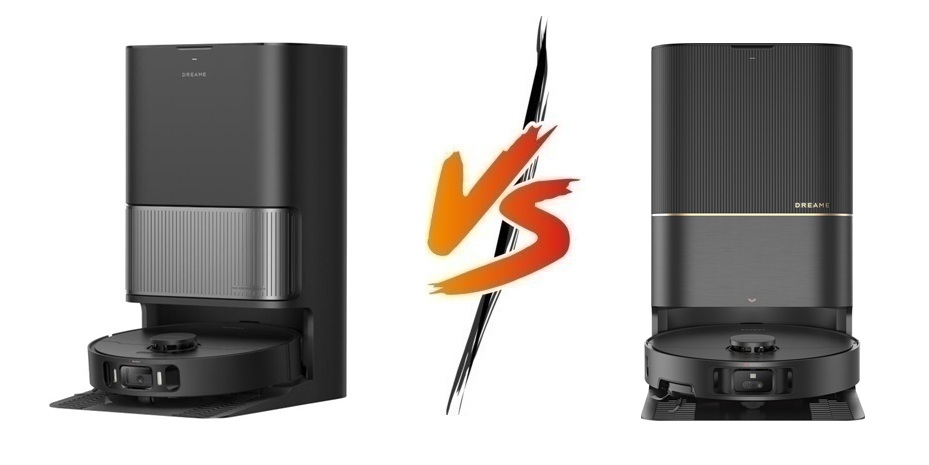
At a glance, the Dreame L40 Ultra and Dreame X40 Ultra look like twins. Same shape, same dock system, same promise of fully automated cleaning. It’s easy to assume the X40 is just a slightly upgraded version and leave it at that. But after spending time comparing them, the story is more nuanced.
These are both high-end robot vacuum and mop combos designed to replace as much manual cleaning as possible. They vacuum, mop, empty themselves, wash their own mop pads, and even dry them. In theory, you barely have to think about cleaning anymore.
The real question is whether the extra cost of the X40 actually translates into a noticeably better experience. In some areas it does, especially with navigation and overall polish. In others, the L40 keeps up surprisingly well. This review breaks down where each one stands, and which one actually makes more sense depending on how you live.
Dreame L40 Ultra vs Dreame X40 Ultra Comparison Chart
| Feature | Dreame L40 Ultra | Dreame X40 Ultra |
|---|---|---|
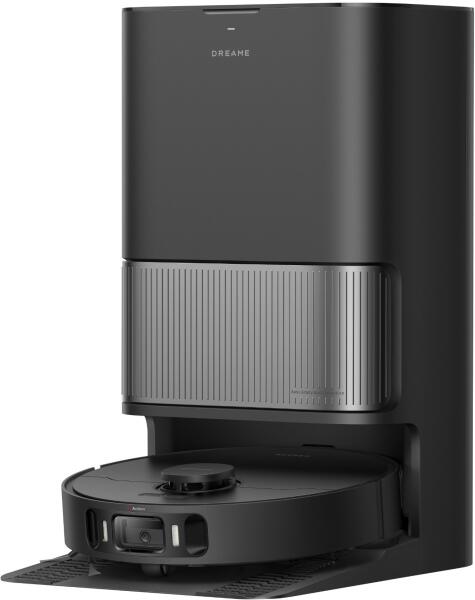 | 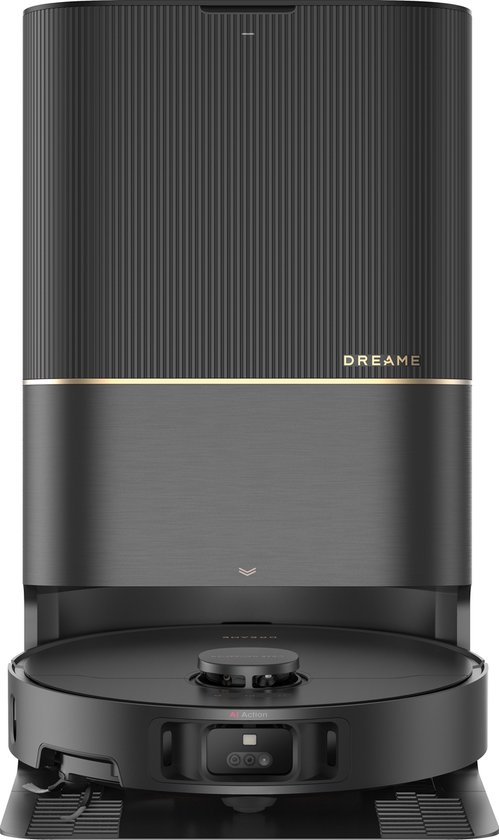 | |
| Check the best price on Amazon | Check the best price on Amazon | |
| Positioning | Value flagship | Premium flagship |
| Suction Power | Up to 11,000 Pa | Up to 12,000 Pa |
| Battery Capacity | ~5,200 mAh | ~6,400 mAh |
| Runtime | Up to ~190 minutes | Longer, depending on mode |
| Dustbin (robot) | ~350 mL | ~300 mL |
| Dock Dust Bag | ~3.2 L | Similar capacity |
| Navigation System | LiDAR + RGB camera + 3D structured light | LiDAR + RGB camera + 3D structured light (enhanced / dual-laser refinement) |
| Obstacle Avoidance | Advanced AI-based | Slightly more refined and confident |
| Mapping | Multi-floor mapping, room recognition | Same, slightly faster and smoother |
| Mop System | Dual rotating mop pads | Dual rotating mop pads |
| Mop Rotation Speed | ~220 RPM | Similar |
| Mop Extension | Yes (edge-reaching mop) | Yes (edge-reaching mop, slightly more refined behavior) |
| Mop Lifting | Yes (auto-lift on carpets) | Yes (faster, smoother transitions) |
| Mop Washing Temperature | ~60–65°C | Up to ~70°C |
| Mop Drying | Warm air drying | Warm air drying (slightly more consistent) |
| Self-Cleaning Dock | Yes (wash, dry, empty, refill) | Yes (more polished execution) |
| Water Tanks (Dock) | Clean + dirty tanks | Clean + dirty tanks |
| Dirt Detection | Yes (AI-based stain/dirt detection) | Yes (slightly more responsive) |
| Carpet Detection | Yes | Yes (more seamless transitions) |
| Obstacle Crossing | ~20 mm | ~22 mm |
| Brush System | Anti-tangle brush (strong advantage) | Standard brush (more manual cleaning needed) |
| Voice Control | Built-in voice commands + app + assistants | App + smart assistants (no built-in voice module) |
| App Features | Full control, scheduling, zones, maps | Same, slightly smoother interface experience |
| Noise Level | Moderate | Slightly louder at max power |
| Pet Hair Handling | Excellent, low maintenance | Stronger pickup, more maintenance |
| Dock Size | Large | Slightly more refined design |
| My individual reviews | Dreame L40 Ultra review |
Quick takeaway
- Choose the X40 Ultra if you want the strongest performance, best navigation polish, and the most hands-off experience.
- Choose the L40 Ultra if you want nearly the same capabilities with better value and easier maintenance, especially for hair.
If you want, I can also create a quick “which one should you buy” decision guide based on your home type.
Design & Build Quality
At this level, design is no longer just about how a robot vacuum looks. It’s about how it lives in your home, how often you have to interact with it, and how well it holds up after weeks or months of daily use. Both the Dreame L40 Ultra and Dreame X40 Ultra aim to feel like premium, long-term appliances rather than disposable gadgets. And for the most part, they succeed.
Overall design language
Both models follow the same core design. You get a circular robot with a raised LiDAR turret on top, a front-facing sensor array, and a low enough profile to fit under most furniture. The finish is clean and modern, typically in matte white with subtle metallic accents.
At a glance, they are almost indistinguishable. If you walked into someone’s home and saw one cleaning, you likely wouldn’t know which model it was without checking the label.
That said, the X40 Ultra has a slightly more refined aesthetic. The seams are tighter, the sensor housing feels more integrated, and the overall finish looks a bit more polished. It’s a subtle difference, but it gives the impression that the X40 is the “final version” of the design, while the L40 feels like a slightly simplified iteration of the same idea.
Materials and construction
Both robots use high-quality plastics with a solid, dense feel. There’s no hollow rattling when you pick them up, and nothing feels loose or fragile. The top covers snap into place cleanly, and the removable components, like the dustbin and brushes, feel secure.
The X40 does have a slight edge here. The tolerances feel tighter, especially around the removable panels. Buttons have a slightly firmer, more consistent click. The bumper, which wraps around the front of the robot, feels a bit more dampened and controlled when it makes contact with furniture.
The L40 is still very well built. It just doesn’t have that last bit of refinement. If you’re not comparing them side by side, you probably wouldn’t notice.
Size and proportions
In terms of size, both robots are nearly identical. They’re large enough to house powerful motors, batteries, and water tanks, but still compact enough to navigate under beds, sofas, and cabinets.
The height is dictated mainly by the LiDAR turret. That means neither robot is especially low-profile compared to camera-only models, but the trade-off is much better navigation accuracy.
Where size really matters is the dock.
Docking station design
The dock is a major part of the overall design, and in many ways, it’s more important than the robot itself. This is where all the automation happens.
Both the L40 Ultra and X40 Ultra come with large, multi-function docking stations that handle:
- Dustbin emptying
- Clean water storage
- Dirty water collection
- Mop washing
- Mop drying
These docks are not small. They are closer to a compact appliance than a simple charging station. You’ll need to dedicate a permanent spot for them, ideally near a wall with enough clearance on the sides and above.
The L40’s dock feels slightly bulkier and more utilitarian. It gets the job done, but it looks more like a functional piece of equipment.
The X40’s dock, on the other hand, feels more refined. The lines are cleaner, the proportions feel a bit more balanced, and the overall look blends better into modern interiors. It still takes up space, but it feels less intrusive.
Water tanks and internal layout
Both docks include separate clean and dirty water tanks, and these are designed with usability in mind.
The tanks are:
- Easy to remove and carry
- Clearly marked
- Designed to minimize spills
The plastic quality here is good on both models. Thick enough to feel durable, but not overly heavy when filled with water.
The X40 again has a slight edge in refinement. The handles feel more comfortable, and the fit when sliding the tanks back into place is smoother. It’s the kind of detail you only notice after repeated use.
Mop system design
Both robots use dual rotating mop pads mounted on the underside. These are detachable and sit on motorized arms that allow them to spin and apply pressure to the floor.
One of the standout design features is the extendable mop mechanism. The robot can push one of the mop pads outward to clean closer to walls and edges. This is a clever solution to one of the biggest limitations of round robot vacuums.
The mechanism itself feels solid on both models. It extends smoothly and retracts without any noticeable strain or noise.
In terms of build quality, there’s no meaningful difference here. Both feel equally robust and well-engineered.
Brush system and underside layout
Flip the robot over, and you’ll see the main brush, side brush, wheels, and sensors.
The L40 includes an anti-tangle brush design, which is particularly useful for homes with long hair or pets. This is more of a functional design choice than a build quality difference, but it does affect how the robot holds up over time. Less hair wrapping means less manual cleaning and less wear on the brush.
The X40 uses a more traditional brush design, but compensates with stronger suction.
Both robots have large, rubberized wheels that handle thresholds and uneven surfaces well. The suspension feels solid, and the robots don’t struggle with small height differences.
Sensor integration
The front of both robots is packed with sensors, including cameras and structured light systems. These are used for obstacle detection and navigation.
On the X40, the sensor array feels slightly more integrated into the body. The lenses are more flush, and the overall design looks cleaner.
On the L40, the sensors are just a bit more visible. Not in a bad way, but it gives a slightly more “tech-heavy” appearance.
From a durability standpoint, both seem well protected. The sensor covers are recessed enough to avoid scratches during normal use.
Buttons and manual controls
Both robots have physical buttons on top for basic controls like start, stop, and return to dock.
These buttons are responsive and easy to press. The X40’s buttons feel slightly more premium, with a firmer click and better feedback. The L40’s are still good, just a touch softer.
In reality, most people will control these robots through the app, so physical controls are used less often.
Long-term durability considerations
Over time, what matters most is how well the robot handles repeated use.
Both models are designed for daily operation, and the materials reflect that. The bumpers absorb impacts well, the wheels don’t wear quickly, and the internal components are protected from dust and moisture.
The dock systems are also built for long-term use, with washable components and replaceable parts.
The L40’s anti-tangle design may give it a slight advantage in homes with heavy hair shedding, simply because it reduces wear and tear on the brush system.
The X40, however, feels like it may age slightly better overall due to its tighter construction and more refined components.
A note on practicality
One thing that becomes clear quickly is that both of these are not “minimalist” devices. They are complex systems with multiple moving parts, water tanks, and maintenance needs.
The design reflects that. Everything is built to be accessible, removable, and serviceable. You’re expected to interact with the dock occasionally, empty tanks, and clean components.
In that sense, both designs are practical rather than purely aesthetic.
Final thoughts on design and build
There’s no bad choice here. Both the Dreame L40 Ultra and Dreame X40 Ultra feel like premium products that are built to last.
The differences come down to refinement:
- The X40 Ultra feels more polished, more cohesive, and slightly more premium in hand
- The L40 Ultra feels just as solid, but a bit more functional and less refined
If you care about small details and overall finish, the X40 stands out.
If you care more about durability and practical design, the L40 holds its own easily.
In day-to-day use, both feel like serious appliances rather than gadgets. And that’s exactly what you want at this level.
Navigation Intelligence & Mapping
If there’s one area that separates a good robot vacuum from a frustrating one, it’s navigation. Suction power matters, mopping matters, but none of that helps if the robot gets stuck under a chair, misses half the room, or spends ten minutes figuring out how to leave a rug.
Both the Dreame L40 Ultra and Dreame X40 Ultra sit at the high end of navigation technology. On paper, they look nearly identical. In practice, they behave slightly differently, and those differences become noticeable the longer you live with them.
Core navigation system
Both robots rely on a combination of technologies:
- LiDAR (laser-based mapping)
- RGB camera for object recognition
- 3D structured light sensors for depth detection
This hybrid approach is what allows them to map accurately while also recognizing objects in real time.
LiDAR handles the big picture. It scans the room, builds a layout, and allows the robot to clean in structured, logical paths instead of random movement.
The camera and 3D sensors handle the details. They identify obstacles like shoes, cables, and furniture legs, and help the robot decide how to move around them.
In terms of raw capability, both robots are operating at a very high level. They map quickly, they understand room layouts well, and they rarely get completely lost.
Initial mapping experience
The first run is where you form your first impression, and both robots do very well here.
You place them in a new environment, start a mapping run, and within minutes they produce a clean, usable map of your home. Rooms are usually segmented automatically, and the layout is accurate enough that you don’t need to fix much.
The X40 feels slightly faster and more decisive during this process. It moves confidently, covers space efficiently, and completes the mapping run with minimal hesitation.
The L40 is still quick, but you may notice brief pauses where it seems to “think” before moving into a new area. It’s not slow, just a bit more cautious.
Map quality and detail
Once the map is created, both robots offer a similar level of detail:
- Clear room boundaries
- Accurate wall placement
- Recognition of large furniture
- Support for multiple floors
You can edit the map easily in the app. Splitting rooms, merging areas, and labeling spaces is straightforward.
There’s no meaningful difference in map quality between the two. Both produce maps that are reliable and usable for daily cleaning.
Cleaning patterns and logic
This is where navigation turns into actual behavior.
Both robots clean in structured lines, moving back and forth across a room in a methodical pattern. They don’t wander randomly unless something interrupts them.
They also follow a similar sequence:
- Map the perimeter
- Fill in the center with straight lines
- Handle edges and corners
This results in efficient coverage with minimal overlap.
The X40 executes this pattern more smoothly. Its movements feel more fluid, and it transitions between areas with fewer awkward turns.
The L40 sometimes feels slightly less polished. It may:
- Revisit small areas unnecessarily
- Take slightly longer paths around obstacles
- Pause briefly before changing direction
These are small inefficiencies, but they add up over time.
Obstacle detection and avoidance
This is one of the most important real-world factors.
Both robots are designed to recognize and avoid common household obstacles, including:
- Shoes
- Power cables
- Toys
- Pet bowls
- Furniture legs
In general, both do a very good job. They don’t blindly crash into things, and they rarely drag objects around.
The X40 has the edge here.
It feels more confident in how it approaches obstacles. Instead of slowing down and hesitating, it often makes quick, smooth adjustments and keeps moving.
The L40 is more cautious. It may:
- Slow down significantly near objects
- Pause briefly before deciding how to navigate around something
- Take a slightly wider path than necessary
This cautious behavior can actually be a positive in some homes. It reduces the risk of accidental contact, especially with delicate items.
But in cluttered environments, it can make the cleaning process feel slower and less efficient.
Handling of small and tricky objects
Small objects are the real test of a robot’s intelligence.
Both models can struggle with very thin or low-profile items like:
- Loose cables
- Socks
- Small toys
The X40 tends to handle these situations better. It identifies more objects correctly and avoids them more consistently.
The L40 still performs well, but it’s slightly more likely to:
- Misjudge the size of an object
- Approach too closely before correcting
- Occasionally nudge something it should have avoided
This doesn’t happen often, but it’s noticeable over time.
Navigation in complex layouts
Homes are rarely simple open spaces. You have narrow hallways, tight corners, and rooms filled with furniture.
In these environments, the difference between the two robots becomes clearer.
The X40 moves with more confidence. It navigates tight spaces with fewer adjustments and seems to “trust” its understanding of the environment.
The L40 is more conservative. It may:
- Slow down in narrow areas
- Make extra adjustments
- Take slightly longer to complete the same space
Again, this isn’t a failure. It’s just a different approach.
Carpet detection and transitions
Both robots can detect carpets and adjust their behavior accordingly.
They:
- Increase suction on carpets
- Lift mop pads to avoid wetting them
- Transition between surfaces smoothly
The X40 handles these transitions more seamlessly. It recognizes carpets quickly and adjusts without hesitation.
The L40 sometimes takes a moment to react. You might see a brief pause as it decides how to handle the transition.
Multi-room and multi-floor performance
Both robots support multi-room and multi-floor mapping.
You can:
- Save multiple maps
- Assign specific cleaning zones
- Customize cleaning settings per room
They remember layouts reliably and return to the correct areas without confusion.
There’s no major difference here. Both are equally capable.
Real-time decision making
This is where the “intelligence” of the robot really shows.
During a cleaning run, the robot constantly makes decisions:
- Should I go around this object or try to pass through?
- Is this area already clean?
- Do I need to return to the dock?
The X40 feels more decisive. It makes these decisions quickly and moves on.
The L40 sometimes appears to “second guess” itself. You’ll see small pauses or slight back-and-forth movements as it confirms its path.
These moments are brief, but they give the impression of a less polished system.
Recovery from errors
No robot is perfect. Eventually, both will encounter situations they don’t handle well.
What matters is how they recover.
Both robots are good at:
- Re-routing when blocked
- Returning to the dock if needed
- Resuming cleaning after interruptions
The X40 tends to recover more smoothly. It recalculates paths quickly and continues without much disruption.
The L40 may take a bit longer to figure things out, but it still gets the job done.
Night and low-light performance
Because both rely partly on cameras, lighting conditions matter.
The X40 handles low-light situations slightly better. Its sensor system seems more effective in dim environments.
The L40 still works in low light, but you may notice:
- Slightly slower movement
- More cautious behavior
In well-lit homes, this difference is negligible.
App-based mapping and controls
The app is where you interact with the map.
Both models offer:
- Real-time map tracking
- Zone cleaning
- No-go zones
- Virtual walls
- Custom cleaning sequences
The interface is powerful but can feel overwhelming at first. There are many options, and it takes time to learn what everything does.
In terms of navigation control, both are equally capable.
Final thoughts on navigation
Both the Dreame L40 Ultra and Dreame X40 Ultra are excellent navigators. They are far ahead of older or cheaper robot vacuums.
The difference comes down to refinement:
- The X40 Ultra is smoother, faster, and more confident
- The L40 Ultra is slightly more cautious and occasionally less efficient
If your home is simple and uncluttered, you may never notice the difference.
If your home is busy, with lots of objects and tight spaces, the X40’s extra polish becomes more valuable.
Neither will frustrate you. But one feels just a bit smarter.
Performance
Performance is where expectations are highest and marketing claims are loudest. Both the Dreame L40 Ultra and Dreame X40 Ultra promise top-tier cleaning with extremely high suction numbers and advanced dirt detection. On paper, the X40 has the edge. In real life, the gap is smaller than you might expect, and in some situations, it almost disappears.
To understand how they actually perform, it helps to break things down by surface type, debris type, and day-to-day consistency.
Suction power and real-world impact
Let’s start with the headline numbers.
- L40 Ultra: up to 11,000 Pa
- X40 Ultra: up to 12,000 Pa
That sounds like a meaningful difference, but suction numbers don’t tell the whole story. What matters is how effectively that power is used.
On hard floors, both robots perform at a very high level. Dust, crumbs, fine debris, and even slightly heavier particles like rice or small gravel are picked up without issue. You won’t see leftover trails or missed patches unless something interferes with the cleaning path.
In this scenario, the extra 1,000 Pa on the X40 doesn’t make a noticeable difference. Both are already operating well above what’s needed for hard floor cleaning.
On carpets, the difference becomes more visible. The X40 has a bit more pull when extracting dirt from fibers, especially on medium-pile carpets. It lifts embedded debris more effectively and leaves carpets looking slightly fresher after a single pass.
The L40 still performs very well. It handles surface dirt easily and does a good job overall, but if you’re looking closely, the X40 tends to leave fewer particles behind in deeper layers.
Cleaning consistency
Consistency is just as important as raw power.
Both robots are reliable in how they clean. They don’t randomly miss large areas, and their structured cleaning patterns ensure full coverage.
The X40 feels slightly more consistent across different surfaces. It adjusts suction levels smoothly and reacts quickly when transitioning from hard floors to carpets.
The L40 is also consistent, but occasionally you might notice small variations. For example:
- Slightly uneven pickup in high-traffic areas
- A need for a second pass in certain spots
These are not major issues, but they show that the X40 has a bit more refinement in how it applies its power.
Edge and corner cleaning
Edge cleaning is a common weak point for robot vacuums because of their round shape.
Both models try to solve this with extendable side brushes and intelligent edge detection. The robot identifies walls and edges, then adjusts its cleaning path to get as close as possible.
In practice, both do a good job along walls. Dust lines are minimal, and most debris is collected.
Corners are still a challenge. Neither robot can fully clean tight corners due to their shape, but they reduce the problem significantly.
Interestingly, the L40 sometimes feels slightly more aggressive in edge cleaning. It spends a bit more time along walls and may revisit edges more often.
The X40 is more efficient, but sometimes that efficiency means it moves on quicker, potentially leaving a tiny bit more behind in tricky spots.
Handling different debris types
Real homes don’t just have one type of dirt. You get a mix of fine dust, hair, crumbs, and occasional larger debris.
Both robots handle this variety well.
Fine dust is where they excel. Their suction and filtration systems capture small particles effectively, leaving floors visibly clean.
For medium debris like crumbs or cereal, both perform equally well. They pick up particles in one pass without scattering them.
Larger debris is handled with slight differences. The X40’s stronger suction helps it deal with heavier particles more confidently. The L40 may require a second pass in some cases.
Pet hair performance
Pet hair is a major test for any vacuum.
The X40’s higher suction gives it an advantage when it comes to pulling hair out of carpets. If you have pets that shed heavily, especially on carpeted floors, this matters.
The L40 takes a different approach. Its anti-tangle brush design reduces hair wrapping around the roller. This doesn’t necessarily improve pickup performance, but it makes maintenance easier.
In real use:
- X40 = better pickup
- L40 = easier to maintain
On hard floors, both handle pet hair very well. On carpets, the X40 has the edge.
Multi-pass cleaning and dirt detection
Both robots include intelligent features that detect dirtier areas and adjust cleaning behavior.
When they detect a particularly dirty spot, they may:
- Slow down
- Increase suction
- Pass over the area multiple times
This works surprisingly well. Spills or high-traffic areas get extra attention without you needing to intervene.
The X40 feels slightly more proactive here. It identifies dirty areas quickly and responds immediately.
The L40 also does this well, but sometimes it takes an extra moment to recognize the need for additional cleaning.
Performance over time
A vacuum’s performance isn’t just about the first run. It’s about how well it maintains that performance over weeks and months.
Both robots are designed for daily cleaning, and they excel at maintaining a consistently clean environment rather than doing deep cleans occasionally.
If you run them regularly, you’ll notice that your floors stay clean with minimal effort.
The difference shows up in edge cases:
- Deep carpet cleaning
- Heavily soiled areas
- Homes with lots of debris
In these situations, the X40 holds its performance slightly better.
Noise during cleaning
Performance often comes with noise, and both robots follow that rule.
At standard power levels, they are relatively quiet. You can have a conversation or watch TV without too much disturbance.
At maximum suction, both become noticeably louder. The X40 is slightly louder due to its higher power, but the difference is not dramatic.
In normal use, you’ll likely run them at balanced settings, where both are comfortable to have running in the background.
Efficiency and cleaning time
Efficiency is about how quickly and effectively the robot completes a job.
The X40 tends to finish cleaning runs slightly faster. This comes from:
- More confident navigation
- Fewer pauses
- More direct paths
The L40 may take a bit longer due to its more cautious behavior and occasional re-cleaning of certain areas.
The difference isn’t huge, but in larger homes, it becomes more noticeable.
Performance in mixed environments
Most homes have a mix of surfaces: hard floors, rugs, carpets, and transitions between them.
Both robots handle mixed environments well. They:
- Adjust suction automatically
- Lift mop pads when needed
- Transition smoothly between surfaces
The X40 handles these transitions more seamlessly, with fewer pauses.
The L40 may take a moment to adjust, but it still performs reliably.
Real-world cleaning experience
After living with both, the overall experience becomes clear.
The X40 feels like a machine that is always one step ahead. It moves confidently, cleans thoroughly, and rarely needs help.
The L40 feels slightly more cautious. It still cleans very well, but occasionally you’ll notice small inefficiencies or moments of hesitation.
These differences don’t change the outcome dramatically. Both leave your floors clean. The X40 just does it with a bit more precision and consistency.
Final thoughts on performance
Both the Dreame L40 Ultra and Dreame X40 Ultra are high-performance machines that handle everyday cleaning with ease.
The key differences are subtle:
- The X40 Ultra offers slightly stronger suction and more consistent deep cleaning
- The L40 Ultra delivers nearly the same results with slightly less power but excellent overall performance
For most homes, the L40 is more than enough.
For homes with heavy carpets, pets, or higher cleaning demands, the X40’s extra performance becomes more noticeable.
In the end, both do what they’re supposed to do: keep your floors clean without much effort from you. The X40 just does it a little better.
Mopping Capability
Mopping is where these robots try to replace one of the most time-consuming household tasks. Vacuuming alone is useful, but the real promise of machines like the Dreame L40 Ultra and Dreame X40 Ultra is that they can actually wash your floors, not just wipe them.
Both models are designed as true vacuum-and-mop hybrids, and they take mopping seriously. This isn’t the old style of dragging a damp cloth behind the robot. These machines actively scrub, manage water, and maintain their own cleaning system. Still, there are differences in how they approach the job, and those differences show up in everyday use.
Core mopping system
Both robots use dual rotating mop pads mounted on the underside. These pads spin at high speed while applying downward pressure, which allows them to scrub the floor rather than simply glide over it.
This design is a major step up from basic mopping systems. It’s closer to how you would clean manually with a mop, especially when dealing with dried spots or sticky residue.
The pads are:
- Removable and washable
- Automatically cleaned at the dock
- Designed to maintain consistent contact with the floor
In terms of hardware, both the L40 and X40 are very similar here. The core mopping mechanism feels equally capable and well-built.
Cleaning effectiveness on hard floors
On typical hard surfaces like tile, laminate, or hardwood, both robots perform very well.
They handle:
- Everyday dust and footprints
- Light spills
- Dried stains (to a reasonable extent)
If you run them regularly, your floors stay consistently clean without needing manual mopping.
The spinning motion makes a noticeable difference. Instead of leaving a thin film of dirt behind, the robots actually lift and remove it. Floors feel clean underfoot, not just visually clean.
Between the two, the X40 has a slight advantage in stubborn situations. It seems to apply pressure more consistently and reacts more quickly to dirty spots. The L40 still performs strongly, but may require an extra pass for tougher stains.
Handling dried stains and sticky messes
This is where mopping systems are really tested.
Both robots can deal with:
- Dried coffee or juice spills
- Muddy footprints
- Kitchen splashes
They won’t completely replace a deep manual scrub for heavily dried or thick residue, but they handle everyday messes surprisingly well.
The X40’s edge comes from its slightly more aggressive cleaning behavior and hotter mop washing system. When the pads are cleaned with hotter water at the dock, they return to the floor in a fresher state, which helps with breaking down grease and grime.
The L40 does nearly the same job, but in tougher cases, you may notice:
- A faint mark left behind after one pass
- The need for a second cleaning cycle
Water management and control
Both robots manage water intelligently. They don’t just soak the floor. Instead, they control water flow based on settings and surface type.
You can adjust:
- Water levels
- Cleaning intensity
- Room-specific mopping preferences
This matters because different floors need different amounts of moisture. Too much water can damage wood or leave streaks, while too little reduces cleaning effectiveness.
Both models handle this well. They distribute water evenly and avoid pooling.
The X40 feels slightly more precise in how it manages water. The distribution is a bit more consistent, especially on larger surfaces.
The L40 still performs well, but in certain lighting conditions, you might notice very slight streaking if the water level is set too high.
Mop lifting and carpet protection
One of the most important features in hybrid robots is mop lifting.
Both the L40 and X40 automatically lift their mop pads when they detect carpet. This prevents wetting rugs while vacuuming.
This works reliably on both models. The robot approaches a carpet, raises the mop pads, and increases suction.
The X40 handles this transition more smoothly. It detects carpets quickly and adjusts without hesitation.
The L40 sometimes pauses briefly before lifting the pads. It still works correctly, but the transition feels slightly less fluid.
In homes with lots of mixed surfaces, this difference becomes more noticeable over time.
Edge cleaning and mop extension
Both robots include an extendable mop feature designed to improve edge cleaning.
When the robot detects a wall or edge, one of the mop pads extends outward to reach closer to the boundary. This helps reduce the gap that most round robots leave behind.
In practice, this works quite well. Floors along walls look cleaner, and the usual “dust line” is minimized.
However, it’s not perfect. Corners are still difficult to reach due to the circular shape of the robot.
Between the two:
- The L40 sometimes spends more time along edges, which can result in slightly better edge coverage
- The X40 is more efficient, but may move on a bit quicker
The difference is small, but noticeable if you pay attention to details.
Dock-based mop cleaning
The dock plays a huge role in mopping performance.
After or during cleaning, both robots return to the dock where the mop pads are:
- Washed with hot water
- Scrubbed against a washboard
- Dried with warm air
This keeps the pads clean and prevents them from spreading dirt around the house.
The X40 uses slightly hotter water for washing. This helps break down grease and bacteria more effectively, especially in kitchens or high-traffic areas.
The L40 also uses hot water, just at a slightly lower temperature. It still does a good job, but the X40 has a small advantage in hygiene and long-term cleanliness.
Frequency of mop cleaning cycles
Both robots can be set to return to the dock periodically during cleaning to wash the mop pads.
This is important for larger homes or dirtier floors. Without it, the pads would become dirty and less effective.
The X40 manages these cycles a bit more intelligently. It times them well and minimizes unnecessary interruptions.
The L40 sometimes returns slightly more often than needed, which can increase total cleaning time.
Drying system and odor prevention
After cleaning, the mop pads are dried with warm air to prevent odors and bacterial growth.
Both systems work well. The pads come out dry and ready for the next use.
The X40’s drying process feels slightly more thorough. The airflow seems more consistent, and the pads dry evenly.
The L40 also dries effectively, but in some cases, the pads may feel slightly damp if removed too soon after the cycle.
Noise during mopping and cleaning
Mopping itself is relatively quiet. The spinning pads produce a soft, consistent sound.
The louder part is the dock during washing and drying:
- Water movement
- Scrubbing noise
- Fan noise during drying
Both models are similar here. The X40 may be slightly louder during mop washing due to higher water temperature and more aggressive cleaning cycles.
In general, you’ll notice the dock more than the robot.
Real-world usability
In everyday use, both robots make mopping feel almost effortless.
You don’t have to:
- Fill a bucket
- Rinse a mop
- Deal with dirty water manually
Instead, you:
- Refill the clean water tank occasionally
- Empty the dirty water tank
- Let the system handle the rest
This changes how often you clean. Because it’s so easy, you’re more likely to run it frequently, which keeps floors consistently clean.
Limitations to keep in mind
Even with advanced systems, there are limits.
Neither robot can:
- Replace deep manual scrubbing for heavy grime
- Reach tight corners perfectly
- Handle thick or sticky spills in one pass
They are best used for maintenance cleaning rather than heavy-duty restoration.
Final thoughts on mopping capability
Both the Dreame L40 Ultra and Dreame X40 Ultra offer some of the best mopping performance available in robot vacuums.
The differences are subtle but real:
- The X40 Ultra is slightly more powerful, more consistent, and more hygienic thanks to hotter mop cleaning and smoother operation
- The L40 Ultra delivers nearly the same results, with excellent everyday performance and only minor compromises
For most homes, the L40 will keep floors just as clean with regular use.
If you want the most refined, hands-off mopping experience, the X40 takes the lead.
Either way, both machines turn mopping from a chore into something you barely think about anymore.
Maintenance & Self-Cleaning
One of the biggest reasons to buy a robot vacuum at this level is not just cleaning performance, but how little you have to do afterward. The Dreame L40 Ultra and Dreame X40 Ultra are both designed to minimize hands-on maintenance as much as possible. They don’t just clean your floors. They clean themselves, manage waste, and reduce how often you need to intervene.
Still, “self-cleaning” doesn’t mean zero maintenance. It means less frequent, more predictable, and easier maintenance. The differences between these two models show up in how smooth and hands-off that experience feels over time.
The concept of a self-maintaining system
Both robots rely heavily on their docking stations. The dock is where most of the maintenance automation happens.
After or during cleaning, the robot returns to the dock to:
- Empty its dustbin
- Wash the mop pads
- Dry the mop pads
- Refill its internal water tank
This transforms the robot from a simple vacuum into a system. You’re not maintaining a single device. You’re maintaining a cleaning station.
Dustbin emptying
Inside the robot itself, the dustbin is relatively small. That’s intentional. After each cleaning run, the robot automatically empties its contents into a larger dust bag inside the dock.
This process is quick and efficient:
- The robot docks
- A strong suction system activates
- Dust and debris are pulled into the dock’s bag
Both the L40 and X40 handle this very well. You don’t have to think about emptying the robot after each run.
The dock’s dust bag can typically hold several weeks’ worth of debris, depending on how often you clean and how dirty your floors are.
In terms of experience:
- The X40 feels slightly more powerful and consistent during emptying
- The L40 still performs well, but occasionally leaves a tiny amount of debris behind in the robot’s bin
This difference is small, but over time, the X40 feels more thorough.
Dust bag replacement
Eventually, the dust bag in the dock needs to be replaced.
This is a simple process:
- Open the dock compartment
- Remove the full bag
- Insert a new one
Both models are equally easy to manage here. The bags are sealed when removed, which helps prevent dust from escaping.
The only real maintenance here is remembering to replace the bag when it’s full. For most households, that’s every one to two months.
Mop washing system
This is one of the most complex and important parts of the system.
After mopping, the robot returns to the dock, where the mop pads are cleaned automatically.
The process typically involves:
- Spraying hot water onto the pads
- Scrubbing them against a washboard
- Rinsing away dirt
Both the L40 and X40 perform this process effectively.
The X40 uses slightly hotter water and a more aggressive cleaning cycle. This results in:
- Cleaner mop pads
- Better removal of grease and grime
- Less buildup over time
The L40 still does a good job, but if you compare the pads after heavy use, the X40’s tend to look a bit fresher.
Mop drying system
After washing, the mop pads are dried using warm air.
This step is crucial because it prevents:
- Bad odors
- Bacterial growth
- Mold buildup
Both systems work well. The drying cycle runs automatically, and the pads are ready for the next cleaning session.
The X40’s drying feels slightly more consistent. The airflow seems more even, and the pads dry thoroughly across their entire surface.
The L40 also dries effectively, but in some cases, the pads may feel slightly damp if you check them immediately after the cycle finishes.
Clean and dirty water tanks
Both docks include two water tanks:
- A clean water tank for fresh water
- A dirty water tank that collects used water
These tanks are large enough to last multiple cleaning sessions.
Maintenance here involves:
- Refilling the clean water tank
- Emptying the dirty water tank
The process is straightforward. The tanks slide out easily, have clear markings, and are designed to minimize spills.
In terms of usability:
- The X40’s tanks feel slightly better designed, with more comfortable handles and smoother insertion
- The L40’s tanks are still practical, just a bit less refined
This is the kind of difference you notice after repeated use rather than immediately.
Frequency of manual maintenance
One of the main benefits of these systems is how infrequently you need to interact with them.
In a typical household, you might:
- Replace the dust bag every 1–2 months
- Refill water every few days to a week
- Empty dirty water every few days
Both robots offer a similar level of autonomy.
The X40 may require slightly less frequent intervention due to:
- More efficient cleaning cycles
- Better mop washing
- Slightly more optimized resource usage
The L40 still provides a very hands-off experience, but you may find yourself interacting with it a bit more often.
Cleaning the dock itself
Even though the dock handles most tasks automatically, it still needs occasional cleaning.
Areas that require attention:
- The mop washing tray
- Internal surfaces where water flows
- Dust compartment
Over time, residue can build up, especially in the mop washing area.
Both docks are designed to be accessible, so you can:
- Remove the tray
- Rinse it under water
- Wipe down surfaces
The X40’s internal layout feels slightly easier to clean. Components are a bit more accessible, and the design feels more thought-out.
The L40 is still manageable, but may require a bit more effort to reach certain areas.
Brush and roller maintenance
Even with self-cleaning features, the brush system still needs occasional attention.
Hair and debris can wrap around the main brush and side brush.
The L40 has an advantage here with its anti-tangle brush design. It reduces how much hair gets caught, which means:
- Less frequent cleaning
- Easier maintenance
The X40 may require more manual cleaning of the brush, especially in homes with long hair or pets.
This is one area where the L40 can actually feel more convenient over time.
Filter maintenance
Both robots include filters that need occasional cleaning or replacement.
Maintenance involves:
- Removing the filter
- Tapping out dust or rinsing it
- Letting it dry before reinstalling
This is a simple task and doesn’t differ much between the two models.
Noise during maintenance cycles
Maintenance processes are often louder than cleaning.
You’ll notice noise during:
- Dustbin emptying (short but loud)
- Mop washing (water and scrubbing sounds)
- Mop drying (fan noise)
Both models are similar in this regard.
The X40 may be slightly louder during mop washing due to its more aggressive cleaning cycle.
In general, these noises are brief and predictable.
Long-term reliability
Over time, the complexity of these systems becomes important.
Both the L40 and X40 are built to handle repeated cycles of:
- Water movement
- Heat
- Suction
The X40 feels slightly more robust in how these systems are integrated. The overall experience is smoother, and there are fewer small quirks.
The L40 is still reliable, but being a slightly less refined system, you may encounter:
- Minor inconsistencies
- Occasional need for manual adjustments
These are not major issues, but they affect how “hands-off” the experience feels.
Real-world experience
After living with either of these robots, the biggest change is how little you think about cleaning.
Instead of daily or weekly chores, maintenance becomes:
- Occasional tank refills
- Periodic bag replacements
- Quick checks of the system
The X40 leans closer to a “set and forget” experience. It requires slightly less attention and handles tasks more smoothly.
The L40 still reduces your workload dramatically, but you may notice small moments where it asks for a bit more involvement.
Final thoughts on maintenance and self-cleaning
Both the Dreame L40 Ultra and Dreame X40 Ultra deliver on the promise of low-maintenance cleaning.
The differences are subtle but meaningful:
- The X40 Ultra offers a more refined, more automated, and slightly more hands-off experience
- The L40 Ultra provides nearly the same functionality with excellent convenience, but a bit less polish
If your goal is to minimize effort as much as possible, the X40 has the edge.
If you’re comfortable with occasional interaction and want strong performance at a better value, the L40 still delivers a very convenient experience.
Either way, both systems fundamentally change how much time you spend maintaining clean floors.
Ergonomics & Usability
When you live with a robot vacuum, performance matters, but usability determines whether you actually enjoy owning it. A machine can be powerful and intelligent, but if it’s frustrating to set up, confusing to control, or annoying to maintain, it quickly becomes a chore rather than a solution.
Both the Dreame L40 Ultra and Dreame X40 Ultra are designed to reduce effort, not just in cleaning but in how you interact with them. They aim to fade into the background of your daily routine. Still, there are differences in how smooth that experience feels.
Setup and first use
The initial setup is your first real interaction, and both models handle it well.
Out of the box, the process is straightforward:
- Place the dock in a suitable location
- Fill the clean water tank
- Install the dust bag
- Connect the robot to the app
- Start the first mapping run
The app guides you through each step, and you don’t need technical knowledge to get started.
The X40 feels slightly more polished during setup. The instructions are clearer, and the process feels more streamlined.
The L40 is still easy to set up, but you may encounter:
- Slightly less intuitive prompts
- A bit more trial and error in the app
Nothing difficult, just a bit less refined.
Dock placement and physical interaction
The dock is something you’ll interact with regularly, so its usability matters.
Both docks require:
- Enough space for access
- Clearance for the robot to dock properly
- Easy access for water tank removal
Physically, both are manageable, but they are not small. You need to plan where they go.
The X40’s dock is slightly more ergonomic:
- Tanks slide in and out more smoothly
- Handles feel more comfortable
- Components feel easier to access
The L40’s dock works well, but feels a bit more functional than refined. It gets the job done, but doesn’t feel quite as polished in daily use.
App interface and controls
The app is where most interaction happens.
Both robots use the same app platform, which is feature-rich and powerful. You can:
- View real-time cleaning maps
- Set schedules
- Customize cleaning per room
- Adjust suction and water levels
- Create no-go zones and virtual walls
The depth of control is impressive, but it can feel overwhelming at first.
There are a lot of options, and it takes time to understand what everything does.
The X40 benefits from slightly better software polish:
- Menus feel more responsive
- Settings are easier to find
- The overall experience feels smoother
The L40 uses the same system, but occasionally feels a bit less responsive or slightly less refined in navigation.
Once you get used to the app, both are equally powerful.
Scheduling and automation
One of the biggest usability advantages of these robots is automation.
You can set schedules so the robot cleans:
- At specific times
- On specific days
- In specific rooms
You can also create routines, like:
- Vacuum the living room daily
- Mop the kitchen every evening
Both models handle scheduling well. Once set up, they run reliably without needing input.
The X40 feels slightly more consistent in executing schedules. It starts on time and handles transitions smoothly.
The L40 also works reliably, but occasionally feels a bit slower to respond when starting a scheduled task.
Voice control and smart home integration
Both robots support voice control through assistants like Alexa and Google Assistant.
The L40 also includes built-in voice control, which allows you to issue commands directly without needing a separate device.
This can be convenient for quick actions like:
- “Start cleaning”
- “Return to dock”
The X40 relies more on external integrations, which works well if you already use smart home systems.
In terms of usability:
- L40 = more direct, built-in control
- X40 = better integrated into broader smart home setups
Which one feels better depends on how you use your devices.
Day-to-day interaction
Once everything is set up, daily interaction is minimal.
Most of the time, the robot:
- Cleans on schedule
- Returns to the dock
- Maintains itself
You don’t need to think about it.
When you do interact, it’s usually for:
- Checking cleaning status
- Adjusting settings
- Handling occasional issues
The X40 feels slightly more seamless here. Actions happen quickly, and the system responds immediately.
The L40 is still easy to use, but occasionally feels a bit slower or less responsive.
Handling interruptions and manual control
Sometimes you need to step in.
Maybe the robot gets stuck, or you want to clean a specific area.
Both models allow you to:
- Pause cleaning
- Redirect the robot
- Start spot cleaning
The app makes this easy, and the controls are intuitive once you’re familiar with them.
The X40 reacts slightly faster to commands. The L40 may take a moment longer to respond, but the difference is small.
Feedback and notifications
Both robots provide feedback through the app.
You’ll get notifications for:
- Completed cleaning sessions
- Errors or issues
- Maintenance reminders
The messages are clear and helpful.
The X40’s notifications feel slightly more refined, with clearer explanations and fewer unnecessary alerts.
The L40 still provides all the necessary information, but occasionally feels a bit less polished in how it communicates.
Maintenance interaction
Even with self-cleaning features, you still interact with the system occasionally.
Tasks include:
- Refilling water
- Emptying dirty water
- Replacing the dust bag
- Cleaning components
The usability of these tasks matters.
The X40 makes these interactions slightly easier:
- Smoother tank handling
- Better component access
- More intuitive design
The L40 is still convenient, but feels a bit more like handling a machine rather than a refined appliance.
Learning curve
Both robots have a learning curve, mainly because of the app.
At first, you may feel:
- Overwhelmed by options
- Unsure how to optimize settings
- Confused by some features
After a few days, it becomes second nature.
The X40 feels slightly easier to learn due to better organization and responsiveness.
The L40 takes a bit more time to fully understand, but offers the same capabilities.
Reliability in daily use
Usability is also about reliability.
Both robots are dependable. They:
- Follow schedules
- Return to the dock
- Handle cleaning tasks consistently
The X40 feels slightly more reliable in edge cases. It handles unexpected situations more smoothly.
The L40 is still reliable, but may occasionally require a bit more attention.
Physical interaction with the robot
Sometimes you need to pick up or move the robot.
Both models:
- Are easy to lift
- Have accessible dustbins and components
- Feel balanced and solid
There’s no major difference here. Both are designed for occasional manual handling.
Overall user experience
After living with both, the difference in usability becomes clear.
The X40 feels like a finished product. Everything works together smoothly, and interactions feel natural.
The L40 feels very capable, but slightly less refined. It does everything you need, but with a bit less polish.
These differences don’t change what the robots can do. They change how it feels to use them every day.
Final thoughts on ergonomics and usability
Both the Dreame L40 Ultra and Dreame X40 Ultra are easy to live with and significantly reduce the effort required to keep your home clean.
The key differences are subtle:
- The X40 Ultra offers a smoother, more polished, and more intuitive experience
- The L40 Ultra provides the same functionality with slightly less refinement
If you value a seamless, effortless user experience, the X40 stands out.
If you’re comfortable with a small learning curve and minor quirks, the L40 still delivers a highly convenient and effective solution.
In both cases, these robots do what they’re meant to do: take cleaning off your mind and make it part of the background of your daily life.
Pet-Friendliness
If you live with pets, your expectations from a robot vacuum change completely. It’s no longer just about keeping floors clean. It’s about dealing with hair that never seems to stop shedding, muddy paw prints that appear out of nowhere, and the occasional accident you really don’t want a robot to smear across the house.
Both the Dreame L40 Ultra and Dreame X40 Ultra are built with pet households in mind. They offer strong suction, intelligent obstacle avoidance, and automated maintenance systems that reduce how often you have to deal with dirt yourself. But they don’t approach pet-related challenges in exactly the same way.
Handling pet hair on hard floors
On hard floors, pet hair is usually easy to see and easy to pick up. Both robots perform very well here.
They:
- Collect loose fur without scattering it
- Avoid pushing hair into corners
- Maintain consistent pickup across large areas
The difference between the two is minimal in this scenario. Both leave floors clean after a single pass.
If you run them daily, which is common in pet homes, you’ll notice that hair buildup never really becomes a problem.
Pet hair on carpets and rugs
Carpets are where things get more demanding.
Pet hair tends to embed itself in carpet fibers, especially in areas where your pets rest or move frequently.
The X40 has an advantage here due to its slightly higher suction power. It pulls more hair out of deeper layers, which makes a difference if:
- You have long-haired pets
- Your carpets are medium to thick pile
- You don’t run the robot every day
The L40 still performs well, but may leave a bit more embedded hair behind after a single pass.
In practice, this means:
- X40 = stronger deep cleaning
- L40 = good surface cleaning, may need more frequent runs
Hair tangling and brush maintenance
Hair tangling is one of the most annoying issues with any vacuum.
Long strands of hair wrap around the brush roller, reducing performance and requiring manual cleaning.
This is where the L40 stands out. It includes an anti-tangle brush design that helps prevent hair from wrapping around the roller.
In everyday use, this means:
- Less frequent brush cleaning
- Easier maintenance
- More consistent performance over time
The X40 does not focus as heavily on anti-tangle design. It still handles hair well, but you’re more likely to:
- Find hair wrapped around the brush
- Need to clean the roller manually more often
For homes with pets that shed heavily, this difference can become noticeable.
Dealing with pet dander and fine particles
Pet dander is much finer than visible hair and can affect air quality.
Both robots use strong suction and filtration systems to capture fine particles effectively.
They:
- Trap dander in the dustbin and dock bag
- Prevent it from being released back into the air
- Maintain consistent suction even with fine debris
In this area, both perform equally well. If you’re concerned about allergies, either model will help keep dander under control.
Navigation around pets and pet-related obstacles
Pets introduce unpredictable elements into your home:
- Toys
- Food bowls
- Sleeping animals
- Random clutter
Both robots are designed to handle these situations.
They can:
- Detect and avoid common obstacles
- Navigate around objects without getting stuck
- Adjust paths dynamically
The X40 feels slightly more confident here. It moves smoothly around obstacles and makes quick decisions.
The L40 is more cautious. It may slow down or pause before navigating around something.
This cautious behavior can actually be helpful if you have:
- Curious pets that move around a lot
- Fragile pet accessories
Interaction with pets
Not all pets react the same way to robot vacuums.
Some ignore them. Others are curious or even frightened.
Both robots are relatively quiet at standard settings, which helps reduce stress for animals.
The X40 is slightly louder at higher suction levels, but the difference is not dramatic.
In general:
- Cats tend to avoid both
- Dogs may need time to get used to them
Neither robot has any special feature specifically designed for interacting with pets, but their smooth movement and predictable behavior help minimize stress.
Detecting and avoiding accidents
One of the biggest concerns for pet owners is how a robot handles accidents.
If a pet leaves something on the floor, you don’t want the robot to:
- Run over it
- Spread it across the room
Both models use cameras and sensors to identify obstacles and avoid them.
The X40 is slightly better at this. Its obstacle detection feels more reliable, and it’s less likely to misidentify something.
The L40 still performs well, but in rare cases, it may:
- Approach too closely before recognizing an object
- Require a bit more caution in high-risk situations
This is an area where no robot is perfect, but the X40 offers a bit more confidence.
Cleaning pet-related messes
Pets don’t just shed. They create messes.
Common examples include:
- Muddy paw prints
- Dropped food
- Water spills around bowls
Both robots handle these situations well.
The vacuum function takes care of dry debris, while the mopping system cleans up wet or sticky areas.
The X40’s slightly stronger mopping performance helps with:
- Greasy spots
- Dried paw prints
The L40 still cleans effectively, but may need an extra pass for tougher messes.
Maintenance in pet households
Pet homes generate more dirt, which means more maintenance.
Both robots reduce this burden significantly:
- Automatic dustbin emptying
- Mop cleaning and drying
- Large capacity dust bags
The L40’s anti-tangle brush reduces one of the biggest maintenance headaches: hair removal.
The X40 requires a bit more manual cleaning of the brush, but compensates with:
- More efficient dirt removal
- Slightly better overall cleaning performance
Odor control
Pet homes can sometimes develop odors, especially if cleaning isn’t consistent.
Both robots help reduce this by:
- Removing hair and dander regularly
- Cleaning floors with water
- Drying mop pads to prevent smell buildup
The X40’s hotter mop cleaning system helps break down odor-causing substances more effectively.
The L40 still does a good job, but the X40 has a slight advantage in long-term freshness.
Scheduling for pet households
Automation is especially useful for pet owners.
You can set the robot to clean:
- Daily
- Multiple times a day
- Specific high-traffic areas
This keeps hair and dirt under control without effort.
Both models handle scheduling well, but the X40 feels slightly more reliable and consistent.
Real-world pet household experience
Living with either robot in a pet household changes how you think about cleaning.
Instead of waiting for dirt to build up, the robot handles it continuously.
The X40 feels like a more powerful and confident cleaner. It deals with heavy shedding and deep cleaning more effectively.
The L40 feels more maintenance-friendly. It reduces the effort required to keep the system running smoothly.
Final thoughts on pet-friendliness
Both the Dreame L40 Ultra and Dreame X40 Ultra are excellent choices for homes with pets.
They handle the most common challenges:
- Hair
- Dander
- Everyday messes
The differences come down to priorities:
- The X40 Ultra offers stronger cleaning performance and better handling of complex situations
- The L40 Ultra provides easier maintenance and excellent everyday results
If your home has heavy shedding, thick carpets, or frequent messes, the X40 is the better fit.
If you want a balance of strong performance and lower maintenance effort, the L40 is a very practical choice.
Either way, both robots make living with pets cleaner and much more manageable.
Conclusion
After spending time comparing the Dreame L40 Ultra and Dreame X40 Ultra, the main takeaway is simple. These are very close machines. Much closer than their pricing and positioning might suggest.
Both deliver strong vacuuming, genuinely useful mopping, and a high level of automation that changes how you approach cleaning. They map your home well, handle everyday messes without fuss, and take care of most of their own maintenance. In day-to-day use, either one will keep your floors consistently clean with very little effort on your part.
The differences come down to refinement and priorities.
The X40 Ultra feels more polished. It navigates more confidently, handles obstacles with fewer hesitations, and delivers slightly better performance on carpets and tougher messes. Its self-cleaning system is also a bit more thorough, which adds to the overall “hands-off” experience. If you want the best possible version of this kind of robot, the X40 is the safer choice.
The L40 Ultra focuses more on value and practicality. It gives you nearly the same experience at a lower cost. It also has a few advantages of its own, like the anti-tangle brush, which can make a real difference in homes with pets. It may be a little less refined, but it still performs at a very high level.
In the end, the choice depends on how much those small improvements matter to you. If you want maximum performance and the smoothest experience, go for the X40. If you want excellent results without paying for every last bit of polish, the L40 is an easy recommendation.