
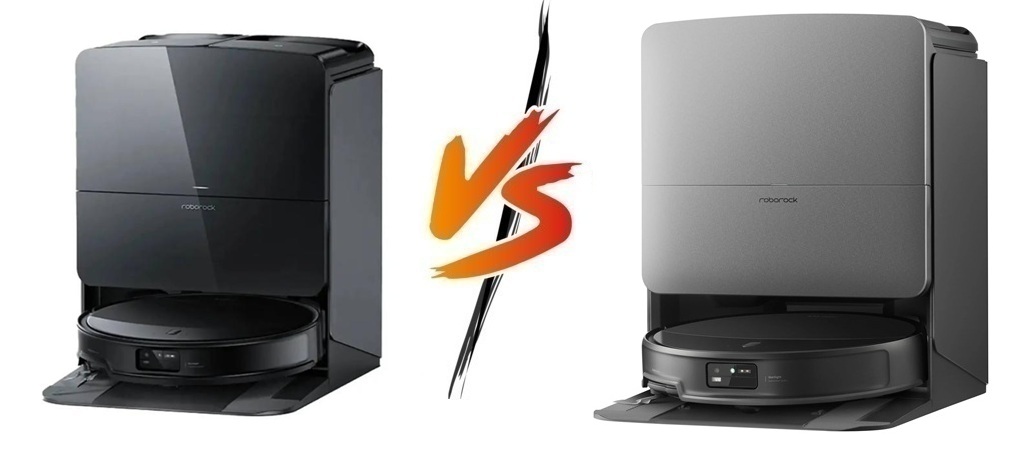
Roborock has reached the point where its flagship robot vacuums are less like traditional vacuum cleaners and more like autonomous floor-maintenance systems. The Saros 10R was already an ambitious machine: unusually thin, packed with 3D sensing, capable of vacuuming and mopping, and paired with a dock that could empty its dustbin, wash its mop pads and dry them. The Saros 20 builds on the same idea, pushing many key specs further.
But the key question isn’t whether the Saros 20 has more impressive numbers. It clearly does. The more interesting question is whether those upgrades actually make a difference in a normal home, and whether the Saros 20 improves on the 10R everywhere or introduces compromises of its own.
I’ve focused on them as robot vacuum cleaners, not upright vacuums, so I’ve added sections that are key for autonomous cleaners: like threshold climbing, carpet handling, docking station design, autonomy, smart home integration, floor adaptability, and long-term ownership. These factors are arguably more important than ergonomic considerations for upright vacuums.
That short version is this: the Saros 20 is the more ambitious cleaning machine, particularly for carpets, thresholds, edges and demanding mixed-floor homes. But the Saros 10R remains remarkably competitive, and its more mature obstacle-avoidance behavior can actually make it the more dependable choice in some cluttered homes.
This difference becomes clearer when looking at the two machines category by category.
Roborock Saros 10R vs Roborock Saros 20 Comparison Table
If you click the links below, under the product images, you will be redirected to Amazon.com. In case you then decide to buy anything, Amazon.com will pay me a commission. This doesn’t affect the honesty of this review in any way though.
| Feature | Roborock Saros 10R | Roborock Saros 20 |
|---|---|---|
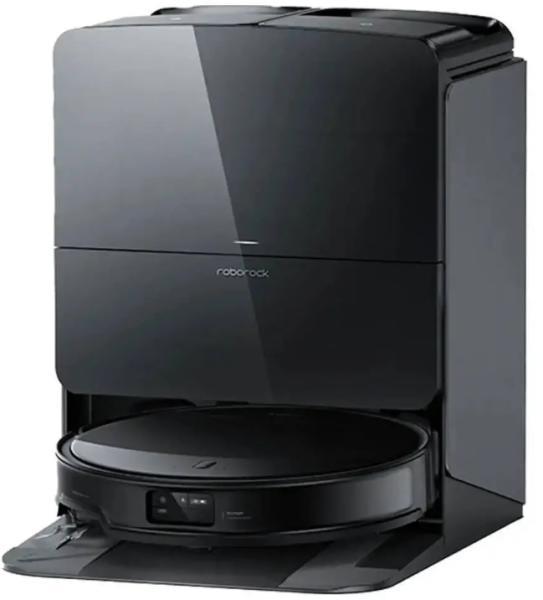 | 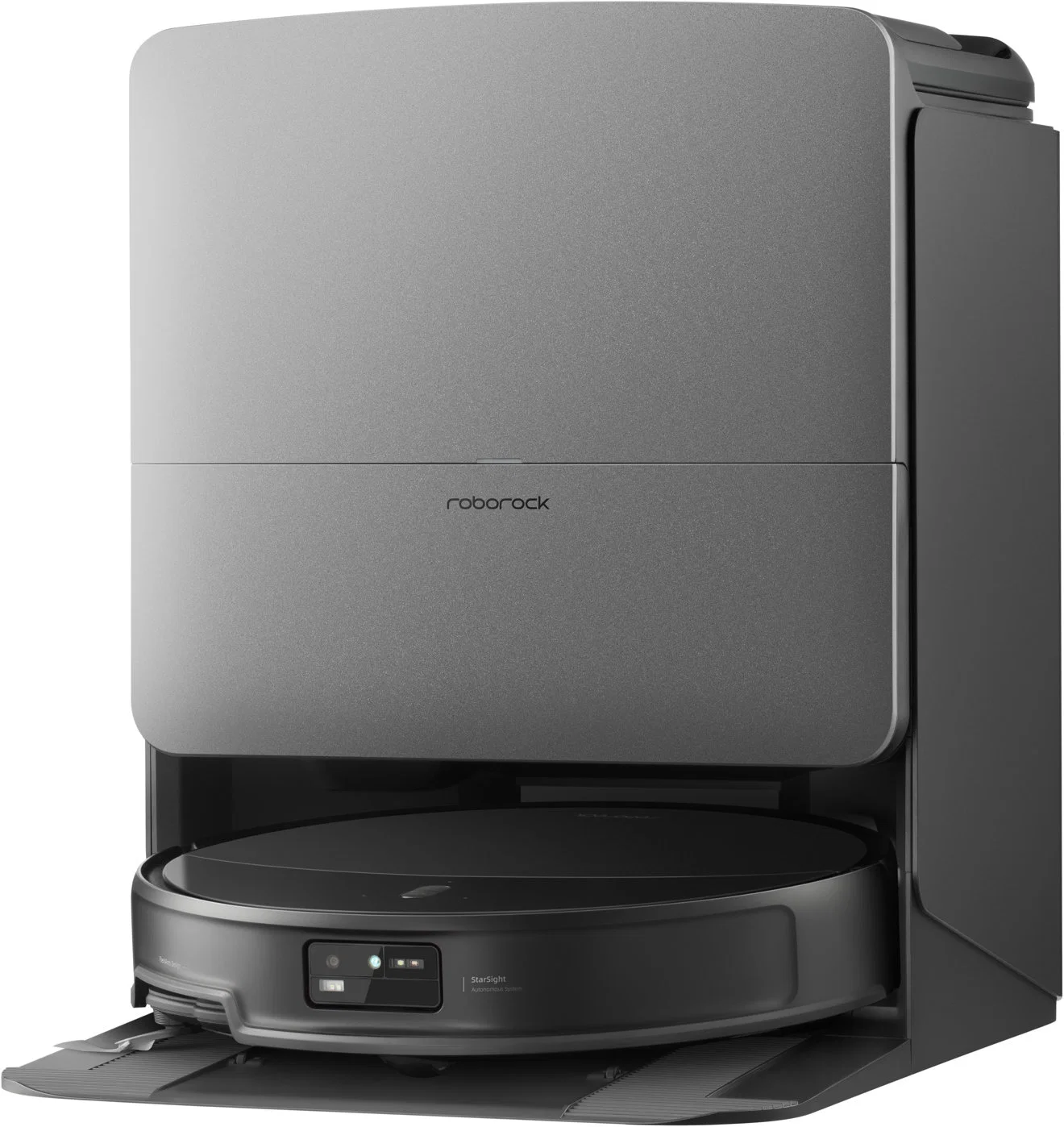 | |
| Check the best price on Amazon | Check the best price on Amazon | |
| Positioning | Premium flagship robot vacuum/mop | Newer, more technically ambitious flagship |
| Maximum suction | Up to 20,000 Pa | Up to 36,000 Pa |
| Battery | 6,400 mAh | 6,400 mAh |
| Robot height | Around 8 cm | Around 8 cm |
| Navigation system | StarSight solid-state 3D sensing | StarSight Autonomous System 2.0 |
| Mapping | Advanced 3D mapping and room recognition | More advanced mapping and adaptive planning |
| Obstacle avoidance | Excellent, particularly around everyday household objects | More advanced sensing, though performance can vary with certain objects |
| Main brush | DuoDivide anti-tangle design | Advanced anti-tangle system / DuoDivide approach |
| Edge cleaning | FlexiArm side brush and edge-cleaning system | FlexiArm edge-cleaning system |
| Mopping | Dual rotating mop pads | Dual rotating mop pads |
| Mop washing | Automated mop washing | Automated washing with more advanced RockDock system |
| Mop washing temperature | Automated washing | Up to 100°C / 212°F |
| Mop drying | Yes | Yes |
| Dock | Multifunction automated dock | RockDock with more advanced cleaning automation |
| Threshold handling | Very good for typical household thresholds | Major advantage with AdaptiLift Chassis 3.0 |
| Maximum claimed threshold capability | More limited | Up to approximately 4.5 cm + 4.3 cm in specified double-layer configurations |
| Carpet cleaning | Excellent for everyday cleaning | Stronger, particularly on demanding carpets |
| Pet hair | Excellent anti-tangle performance | Better suited to heavy shedding and carpeted homes |
| Hard-floor cleaning | Excellent | Excellent, with additional power available |
| Under-furniture cleaning | Excellent due to low-profile design | Excellent due to similarly low-profile design |
| Mixed flooring | Very capable | Better suited to complicated mixed-floor environments |
| App & scheduling | Extensive automation and customization | More advanced planning and automation |
| Maintenance | Highly automated | Highly automated, with more advanced dock functionality |
| Best suited to | Mostly hard floors, moderate pet hair, straightforward layouts | Thick carpets, heavy pet hair, difficult thresholds and complex homes |
| Main strength | Refinement, navigation and everyday usability | Cleaning power, mechanical capability and adaptability |
| Main consideration | Less capable on especially demanding carpets and thresholds | Higher complexity and typically higher cost |
| Overall character | Refined and practical flagship | More powerful and mechanically ambitious flagship |
| My individual reviews | Roborock Saros 10R review |
At a glance
| If you prioritize… | Consider |
|---|---|
| Mostly hard floors | Saros 10R |
| Strong everyday mopping | Both |
| Heavy carpet cleaning | Saros 20 |
| Heavy pet shedding | Saros 20 |
| Anti-tangle performance | Both |
| Difficult thresholds | Saros 20 |
| Low-profile furniture access | Both |
| Mature obstacle avoidance | Saros 10R |
| Maximum suction capability | Saros 20 |
| Simpler flagship proposition | Saros 10R |
| Maximum mechanical capability | Saros 20 |
| A more demanding mixed-floor home | Saros 20 |
| A straightforward hard-floor home | Saros 10R |
Design & Build Quality
Design and build quality are crucial when it comes to a robot vacuum that costs this much. This premium device will be moving around your home for hours, fitting under furniture, navigating transitions, docking itself repeatedly, and getting its brushes and wheels dirty with dust. It’s also exposed to water when mopping. This robot needs to be slim to reach tight spaces, strong to withstand constant use, and cleverly designed so maintenance isn’t a hassle.
The Roborock Saros 10R and Saros 20 are flagship products, and it shows. They don’t feel like budget robot vacuums with expensive sensors added on. Instead, they represent different approaches to high-end robots. The Saros 10R focuses on refinement and compactness. In contrast, the Saros 20 builds on that formula by adding mechanical complexity to increase its physical capabilities.
Saros 10R has a compact and refined design, and it’s also deliberately understated
The Saros 10R makes a good impression right away, and its compact design is a major reason why. What’s immediately noticeable is how low to the ground it is, roughly 8 cm tall, which means it can fit under furniture that would be a problem for a lot of other robot vacuums, making its large tech payload that much more impressive.
This specification has a practical impact. Dust accumulates easily under beds, and it’s hard to reach with a regular vacuum. Low sofas, cabinets, and sideboards are also a problem. A robot that can fit underneath these without help does something many upright vacuums can’t: clean without requiring you to move furniture.
The slim profile of the Saros 10R is largely due to its unconventional design, which does away with a traditional raised LiDAR turret. It uses a more integrated sensing system, eliminating the need for a large circular sensor assembly on top. This design choice results in a cleaner look and, more, enables the robot to keep its low height.
The Saros 10R has a fairly restrained visual design, it’s not flashy. This approach works, and it’s probably the right one, because a robot vacuum is essentially an appliance. What makes for good design in this case is something that becomes unobtrusive, it just blends in once it’s on the floor.
Physical controls on the robot’s top surface are minimal, and it’s mostly clean. Interaction with the robot happens via the app, rather than buttons on the robot. This approach is suitable for a machine designed to work autonomously. It also means physical controls aren’t that important to the overall experience.
Roborock hasn’t skimped on the plastics used in this robot, they feel right for a high-end appliance. Panels fit together neatly and moving parts have a precise feel, which is what you’d expect from something in this category. It’s clear they’ve built this thing to last, with a solid construction that doesn’t scream cheap.
A few compromises still exist. Scratches and marks show up more easily on some glossy exterior surfaces than they would on a completely matte finish. It’s a minor cosmetic issue, not a structural one, but when you’re spending this much on a machine, you tend to notice things like surface wear more.
What you don’t see is the Saros 10R’s real design achievement
The 10R’s design is most impressive in what it doesn’t show on the outside.
Roborock has managed to fit a lot of hardware into a small body.
The drive system, battery, suction motor, brush assembly, sensors, navigation hardware, water-management components and mopping mechanism are all inside that relatively thin shell. The robot also needs enough clearance underneath to move across different floor types without becoming stuck.
That’s a difficult engineering problem. It’s not hard to make a robot powerful if you can make it big. But making it powerful and thin is much harder.
The 10R’s design shows Roborock understood the compromise.
An attractive robot vacuum isn’t much use if it can’t fit under your furniture. And suction figures don’t matter if the machine can’t navigate reliably.
The 10R is therefore designed around a useful principle: make the robot as physically unobtrusive as possible while packing the intelligence and cleaning hardware into the available space.
Build quality includes the cleaning system
The 10R’s main brush design feels carefully engineered.
The DuoDivide brush reduces hair wrapping by separating the central brush area. It’s particularly useful in homes with long hair or pets. Hair wrapped around a conventional roller can affect cleaning performance and force you to stop and cut it away.
The Saros 10R doesn’t eliminate this problem completely, because no mechanical brush can make hair disappear, but its design substantially reduces the amount of manual intervention required.
That’s important for build quality in a robot vacuum.
A well-built machine that needs hair removed every two days isn’t well designed for owners.
The same idea applies to the side brush. Roborock has developed its FlexiArm system to move the cleaning brush outward when necessary, allowing the robot to get closer to walls and furniture.
This solves a problem that comes from the robot’s circular shape. A round body leaves a gap around edges. Instead, Roborock built a moving component to reduce the gap.
Mopping hardware and water management
The Saros 10R has a more advanced mopping system than older robot vacuums.
The two rotating mop pads scrub the floor instead of just dragging a wet surface. The pads can also be managed by the docking station, which washes and dries them automatically.
This adds complexity because the robot must coordinate vacuuming, mopping, water, and docking.
The benefit is that you don’t have to treat the mopping system separately.
That’s a success in design. It’s not just a vacuum with a damp cloth. It’s meant to be an autonomous floor-cleaning system.
Saros 20 is an evolution, not a redesign
The Saros 20 takes the fundamental physical concept of the 10R and pushes it considerably further.
The two robots don’t look radically different at first glance. Both are low-profile, both have a relatively clean circular design, and both avoid the old-fashioned raised LiDAR turret. But the real change happens underneath the Saros 20.
The AdaptiLift Chassis 3.0 is the most important addition.
This is one of the features that makes the Saros 20 feel like a genuine next-generation machine rather than simply a more powerful version of the 10R.
Conventional robot vacuums are limited to their manufactured height. The Saros 20 can alter its chassis to handle different surfaces and obstacles.
This is especially valuable for climbing thresholds.
A few centimetres of height difference may be insignificant to a person walking through a doorway, but it can be a major obstacle for a small autonomous machine. Roborock has tackled a fundamental limitation of robot vacuums by giving the Saros 20 a more adaptable chassis.
The claimed ability to handle double-layer thresholds approaching 9 cm in total is particularly impressive. Not every home needs that capability, but the principle matters. The Saros 20 is designed to adapt to the house, rather than requiring a perfectly prepared space.
More capability comes with more moving parts
However, there’s a trade-off.
The more mechanically sophisticated a robot becomes, the more components it has that can potentially require maintenance.
The Saros 10R is complicated, and the Saros 20 adds more mechanical movement with its adaptive chassis.
That’s not necessarily weak. Modern cars and appliances have many moving parts without being unreliable. But it is something worth considering when comparing the two.
The Saros 20 has more hardware because it’s designed to do more.
The Saros 20’s ability to alter its configuration is useful for houses with awkward thresholds and mixed flooring. If your floors are flat, some of that capability may never be used.
A stronger platform for cleaning
The Saros 20 brings a substantial increase in suction capability, but the physical design kind of matters more.
A stronger motor needs an airflow system, brush assembly, and dust path that can make effective use of it.
The Saros 20’s design feels more focused on tough cleaning environments. This extra suction is especially relevant for carpets, where embedded dust and pet hair require more effort.
The robot needs to stay in contact with the surface. This adaptive chassis does more than just climb thresholds.
On carpet, the machine can alter its position to improve contact and cleaning performance. The robot isn’t just trying to suck harder. It’s attempting to create a better overall cleaning system.
That’s a more sensible approach to engineering.
Wheels and mobility are important
Wheels on a robot vacuum are easy to overlook until they cause problems.
They need traction to move across flooring, carpet, and rugs, and to cross small elevation changes. They also need to turn the robot precisely without damaging floors.
The Saros 20’s chassis gives it an advantage because its mobility isn’t dependent on fixed wheel geometry.
This makes the robot interesting for older homes or properties with mixed flooring, where level transitions can’t always be assumed.
The Saros 10R remains highly capable on ordinary surfaces, but the Saros 20 has more physical flexibility.
Dock construction is also important
It’s also important not to judge the build quality of either product by looking only at the robot.
The docking station is a crucial part of owning one of these products.
Both models have large docks that do a lot more than just recharge the robot. These docks also empty dust, manage water, wash. And dry the mop pads.
The Saros 20’s RockDock takes this concept further with hot mop washing. And more automation.
In this case, the larger dock makes sense because of what it can do. A tiny charging base would be more attractive, but it wouldn’t provide the same level of automation.
The downside is that the dock takes up a lot of floor space. Anyone living in a small apartment should consider its dimensions and placement before buying either machine.
That robot can fit under furniture.
But the dock can’t.
Saros 10R versus Saros 20: which feels better built?
The answer depends on what you mean by “better built.”
I prefer the Saros 10R if we’re talking about simplicity and refinement.
The engineering is really neat. The robot is thin, the exterior is simple, and the brush system is clever.
If you’re talking about mechanical capability, the Saros 20 is more impressive.
The Saros 20 has an adaptive chassis, a stronger cleaning system, and it handles tough floors better. It feels as though Roborock has taken the fundamental weaknesses of robot vacuums and tried to solve them mechanically rather than simply adding more software.
That’s an important difference.
The Saros 10R is a really refined robot vacuum.
The Saros 20 is a more ambitious robotic floor-cleaning machine.
For a normal home, the 10R’s design is close to ideal. The 10R is easy to live with because it’s slim and has good navigation and cleaning components.
But for a tough home, the Saros 20’s extra complexity makes sense. A more adaptable chassis can handle high thresholds, thick carpets, and tough transitions.
The verdict on design and build quality
The Saros 10R wins on design refinement, but the Saros 20 wins on engineering capability.
The 10R feels like a product that has been carefully optimized around a simple objective: fit an enormous amount of technology into a robot that can quietly disappear underneath furniture and clean the house without getting in the way.
The Saros 20 asks what if the robot could adapt more to its environment.
That’s why the Saros 20 is ultimately the more impressive piece of engineering. Its chassis, cleaning hardware and mobility systems allow it to tackle situations that would simply stop a less capable robot.
But good engineering doesn’t always mean better ownership.
If your home has relatively flat floors and standard furniture, the Saros 10R’s simpler and highly refined design may provide everything you actually need. If your home is full of thresholds, thick rugs, mixed flooring and other physical obstacles, the Saros 20’s more mechanical capability becomes much more valuable.
Either way, these don’t look like disposable appliances. Both are carefully engineered flagship machines, and their low-profile bodies represent one of the most significant improvements Roborock has made to the practical design of robot vacuums. The Saros 10R established that formula extremely well; the Saros 20 turns it into something more adaptable and mechanically ambitious.
Navigation Intelligence & Mapping
Navigation is arguably the most important part of a premium robot vacuum. A robot can have extraordinary suction power, excellent brushes and a sophisticated mopping system but none of that matters if it can’t find its way around the house reliably.
The Saros 10R and Saros 20 are also notable. Both use Roborock’s StarSight sensing technology instead of the traditional raised LiDAR turret found on many older robot vacuums. The Saros 10R introduced this approach to Roborock’s flagship range, while the Saros 20 develops it further with StarSight Autonomous System 2.0.
On paper, the Saros 20 seems like the clear winner. In reality, the comparison is more complex. The newer robot has more sophisticated hardware and a broader set of navigation capabilities, but the Saros 10R has already reached a very high level of maturity. In some real-world situations, its behavior can actually feel more predictable.
Navigation matters a lot
This first thing to understand about robot-vacuum navigation is that it isn’t simply about knowing where the walls are.
A basic robot can detect bumps and change direction. A good robot knows its location. A very good robot knows where it has already been, where it needs to go next, what kind of surface it’s driving over and which objects it should avoid.
A flagship robot such as the Saros 10R or Saros 20 has to solve all of these problems simultaneously.
Imagine a typical living room. There might be a sofa, four chair legs, a coffee table, a rug, electrical cables, children’s toys, shoes and perhaps a pet bowl. The robot has to distinguish between permanent objects and temporary clutter.
It also needs to map the room without getting confused by reflections or unusual furniture.
Then there’s the problem of cleaning.
Randomly driving around the room doesn’t make sense. A well-designed robot should cover the floor methodically, minimize travel, and remember cleaned areas.
That’s the key difference between an autonomous robot and a remote-controlled vacuum.
Saros 10R: StarSight changes the physical design of navigation
The Saros 10R’s StarSight system is important because it allows Roborock to achieve sophisticated three-dimensional sensing without putting a traditional rotating LiDAR tower on top of the robot.
This has two main consequences.
The first is obvious: the robot can be much thinner.
That second is less obvious: the navigation system can be designed around multiple sensing technologies rather than relying primarily on a single rotating scanner.
The result is a robot that understands its surroundings in detail and can fit under furniture.
This combination is very useful.
A tall robot might theoretically have excellent navigation, but if it can’t physically fit beneath the bed, its map of the room doesn’t help you much.
The 10R has a key advantage: it can navigate spaces that are inaccessible to many taller robots.
Mapping the home is crucial
The first major interaction with either robot is the mapping process.
That goal isn’t just to create a nice map in an app. The map is the basis for what the robot does next.
The robot needs to understand room boundaries, walls, openings, and the home’s geometry.
The Saros 10R is good at this.
It can quickly create a usable map and then divide the home into individual rooms. After mapping, you can tell the robot to clean specific rooms without cleaning the whole house.
That changes the experience.
Instead of thinking of the robot as a machine that cleans “the floor,” you begin treating it as a system that manages individual areas of your home.
The Saros 20 uses a similar approach with a newer platform and more advanced software.
The StarSight Autonomous System 2.0 improves positioning, understanding, and obstacle recognition.
The improvement isn’t obvious during the first cycle. That advantage appears when the robot makes complex decisions.
Positioning is accurate
A robot vacuum needs to know its location.
Maintaining positioning while moving is difficult.
The robot may pass under a table, turn around a chair, enter a dark room, cross a rug, and enter a large space.
The sensors receive different information constantly.
The Saros 10R handles this well. Its navigation is generally methodical rather than chaotic. It establishes a route, follows it, and covers the floor.
That’s important because one of the most annoying robot-vacuum behaviors is repeatedly cleaning the same area while missing another part of the room.
The 10R’s mapping minimizes inefficient behavior.
The Saros 20 builds on this with a newer system.
Roborock describes StarSight 2.0 as providing faster mapping and more precise positioning, while the robot’s software can use the information to adapt its cleaning strategy.
In a simple room, the difference isn’t big.
Both robots know their location.
The Saros 20’s advantage matters more in complex environments.
Obstacle recognition
The comparison gets interesting here.
Robot vacuums have traditionally had one major problem with autonomous navigation: they can map a room beautifully, but often fail to recognize small objects in their path.
A cable, sock, or shoe can interrupt a cleaning cycle.
The Saros 10R uses its three-dimensional sensing system and obstacle-recognition software to address this issue.
It can identify objects in its path and attempt to route around them rather than simply driving into everything it encounters.
This is extremely effective in a relatively tidy home.
If you leave a chair in the middle of the room, the robot will navigate around the legs.
Leave a shoe on the floor and it can often recognize it as an obstacle rather than treating it as a piece of debris to be swallowed.
This makes the 10R feel intelligent, not just automated.
The Saros 20’s more sophisticated obstacle avoidance
The Saros 20 takes obstacle recognition a step further.
This newer navigation system recognizes a larger variety of objects and uses that information to plan routes.
This is useful in homes with cluttered floors.
More sophisticated sensing doesn’t always guarantee better behavior.
Independent testing found the Saros 20’s obstacle avoidance inconsistent in certain situations, like around carpet and pet waste.
That’s a significant point because robot-vacuum intelligence isn’t ultimately judged by how many objects the robot can theoretically identify.
The robot’s actions when encountering objects matter most.
A system that recognizes 300 types of objects is impressive.
A system that always avoids cables, dog toys, or pet accidents is more useful.
The Saros 10R performs well in this area, which is why I wouldn’t call the Saros 20 a universal navigation upgrade.
Pet waste is a difficult test because
Pet waste is effectively the ultimate obstacle-avoidance challenge.
A robot needs to recognize a small, irregular object that may have little contrast with the floor.
If it fails, the consequences are much worse than getting stuck.
The Saros 10R has generally performed well in obstacle-recognition testing, although no robot vacuum should be treated as completely incapable of this failure.
The Saros 20’s performance in this area is less reassuring in some independent testing.
This doesn’t mean the 20 has poor navigation.
The newer system hasn’t solved one of the toughest problems in autonomous floor cleaning.
Pet owners should take this seriously.
Clutter and real homes
Manufacturers often show robot vacuums in clean, carefully prepared rooms.
Homes are usually messier.
Chargers get left on the floor. Children leave toys in the hallway. Shoes end up beside the sofa. A blanket falls onto the carpet. A pet moves a toy into another room.
The best robot isn’t always the one with the most impressive laboratory specification.
It keeps cleaning even when the house is a mess.
The Saros 10R is really good at handling clutter since its navigation system balances mapping and avoiding obstacles.
It can handle a messy environment.
The Saros 20 can also handle clutter, but it can be more picky about objects and surfaces.
This is one of the few areas where I would hesitate choosing the newer model.
Planning its route
After the robot gets its bearings, it figures out its next move.
Both machines generally use systematic cleaning patterns instead of moving randomly.
This is important for efficiency.
Random movement wastes battery power, takes longer and makes it hard to cover everything.
A systematic robot can break the floor into smaller areas and clean them one by one.
The Saros 10R is great at this.
It typically moves in organized passes and avoids recleaning areas it’s already done.
The Saros 20 introduces more adaptive behavior.
Its SmartPlan 3.0 system lets the robot adjust its cleaning based on the environment, not just using the same pattern.
For example, a carpeted area may receive different treatment from a hard floor.
A heavily soiled section may receive more attention.
A room with obstacles may require a different route from an open room.
This is where the Saros 20 feels more autonomous than a robot following a set pattern.
Room recognition and cleaning zones
Both robots benefit a lot from their maps since the map helps control the robot.
You can make cleaning routines for specific rooms.
You don’t have to wait for it to clean the whole house if the kitchen needs cleaning after dinner.
You can send it to a specific room.
You can also set boundaries where needed.
This is useful around pet food areas, delicate furniture or spaces where the robot could become trapped.
The Saros 20’s better navigation makes these features more powerful, but the 10R is already great.
This shows how flagship robots have diminishing returns.
This difference between a basic robot and the Saros 10R is huge.
That jump from the Saros 10R to the Saros 20 is more about refining an already capable system.
Navigation around furniture
Both machines perform impressively when it comes to furniture.
The robot needs to understand that a chair leg isn’t a wall, for example.
It must get close enough to clean around furniture without colliding with it. And it needs to determine if a gap is wide enough to fit through.
Dining chairs make this particularly important.
A room with a dining table and six chairs is surprisingly complex to navigate due to many narrow gaps and vertical obstacles.
The Saros 10R generally handles these situations very well.
The Saros 20 also handles them well, though its advanced system isn’t dramatically better in ordinary rooms.
Both robots can approach furniture carefully and work their way around it without constantly crashing into every obstacle.
Navigation under furniture
Their low-profile design gives them a navigation advantage.
It can enter spaces many competitors can’t.
But there’s a subtle challenge.
The robot needs to know whether it can safely enter a space and whether it can get back out.
A robot that gets trapped under a cabinet isn’t intelligent just because it found the gap.
The Saros systems use environmental sensing to judge accessible spaces and plan.
Accurate mapping pretty matters for this reason too.
As it moves, the robot learns the house’s physical boundaries.
Threshold navigation
The Saros 20 has a clear physical advantage here.
Navigation isn’t useful if a robot can’t cross from one room to another.
The Saros 10R has an adaptive chassis system that can handle substantial thresholds.
The Saros 20 goes further with AdaptiLift Chassis 3.0.
It can raise and adjust its chassis to deal with larger floor transitions, including complicated double-layer thresholds.
That makes navigation a mechanical problem, not just computational.
It doesn’t just need to calculate a route.
It must be physically capable of following the route.
The Saros 20 is better equipped.
This can make a big difference if your kitchen is higher than your hallway or you’ve large door tracks.
Carpet recognition and navigation
The robot needs to understand the surface it’s driving on.
Carpet changes how the robot moves, how much suction is appropriate and how the brushes should behave.
Both robots can recognize different floor conditions and alter their cleaning strategy.
The Saros 20 has the advantage of its adaptive chassis, which can alter the robot’s physical position to maintain better contact with carpet.
Navigation and cleaning are closely connected, then.
This robot isn’t simply asking:
“Where am I?”
It also asks:
“What am I driving on?”
and
“How should I clean it?”
That’s the direction robot-vacuum technology is heading.
Mapping after the first run
One of the best things about modern Roborock robots is that the mapping system doesn’t feel like a one-time setup feature.
The map is an ongoing representation of the home.
Furniture can change.
Rooms can be rearranged.
Doors can be opened or closed.
The robot can update its understanding of the environment.
The Saros 20 has a newer processing system, giving it more scope for adaptive behavior.
The Saros 10R remains excellent here, though.
Its map is accurate enough that once you’ve established the basic room structure, you rarely need to think about it.
That’s what you want.
Is the Saros 20 better at navigating?
This is the question I’d ask after everything else.
It has a more advanced navigation platform, but that doesn’t mean it’s better in every situation.
The Saros 20 has stronger hardware, newer software, and more sophisticated environmental capabilities.
It is particularly impressive when navigation involves difficult floor transitions, carpets and complex physical environments.
But the Saros 10R has the advantage of being an exceptionally mature system.
Its obstacle avoidance is strong, and some independent testing has found it more reliable than the Saros 20 in certain scenarios.
This makes the choice more interesting than just saying newer is better.
Which navigation system would I trust more?
I’d be comfortable choosing the Saros 20 for a clean, organized home with complicated flooring.
It can understand different surfaces and negotiate difficult transitions, making it more capable.
I’d be more cautious about choosing the 20 for a home with lots of clutter, children, pets, and objects left on the floor.
The Saros 10R’s navigation has a particularly strong reputation for dealing with obstacles, and its behavior can feel more predictable.
That’s an important quality in an autonomous appliance.
You don’t need the robot to be clever.
You want it to be clever, reliably.
Navigation and mapping verdict
The Saros 10R and Saros 20 are both among the most sophisticated robot-vacuum navigation systems in their class.
The Saros 10R gets the fundamentals right, with accurate mapping, systematic route planning, excellent furniture navigation, low-profile access, and strong obstacle recognition.
The Saros 20 takes it further. StarSight 2.0, SmartPlan 3.0, and the adaptive chassis give it more environmental awareness and physical freedom. It’s impressive in homes with complicated thresholds, carpets, and different floor levels.
The Saros 20 isn’t perfect, though.
The Saros 10R’s mature obstacle avoidance is an advantage, especially in homes with unpredictable clutter. That newer model has more advanced technology, but some of that more intelligence doesn’t consistently translate into better real-world decisions.
The distinction is this:
The Saros 10R is more refined.
The Saros 20 is more capable.
Those aren’t quite the same thing.
If your home is relatively tidy and physically complicated, I’d favor the Saros 20. It’s designed to understand and overcome difficult environments.
If your home is cluttered and unpredictable, the Saros 10R remains extremely compelling. It may not have the newer generation of Roborock’s navigation technology, but it has something equally valuable: a mature system that tends to make sensible decisions about where it can and can’t go.
That may be the most important measure of robot-vacuum intelligence. Not how many sensors it has, how many objects it claims to recognize or how impressive its mapping technology sounds, but whether you can start the machine, leave the house and come back later to find that it has quietly cleaned the floors without needing your help.
Vacuum Cleaning Performance
A robot vacuum’s existence is justified by its vacuuming. Navigation, mapping, artificial intelligence and an impressive docking station are useful but the fundamental question remains simple: how well it removes dirt from the floor?
Both the Saros 10R and Saros 20 are at the premium end of Roborock’s range, and they can do something older models struggled with: providing useful everyday cleaning, not just collecting surface dust.
The difference is most apparent beyond clean, hard floors. Both machines are extremely capable on tile, laminate, hardwood, and other smooth surfaces. On carpet, the Saros 20’s higher suction power and adaptive design give it an advantage, especially with embedded dirt and pet hair.
However, don’t get distracted by the numbers on the spec sheet. The Saros 20’s 36,000 Pa maximum suction is higher than the Saros 10R’s 20,000 Pa, but suction pressure doesn’t determine performance alone. Brush design, airflow, floor contact, debris size, cleaning pattern, and software all influence dirt collection.
Hard-floor cleaning
Both robots are most convincing on hard floors.
On hardwood, tile, laminate, vinyl and similar surfaces, most of the debris is sitting relatively close to the surface. This challenge is therefore less about forcing suction deep into a material and more about collecting everything efficiently without scattering it.
The Saros 10R does this well.
Its main brush and suction system collect a broad range of debris, from fine dust and crumbs to cereal pieces and grit. This robot’s methodical pattern means it doesn’t just pass over an area once. It covers the floor progressively, which is important because even a good brush will miss particles on its first pass.
The Saros 20 is also impressive on hard floors.
Its higher suction gives it more cleaning power, but the difference isn’t dramatic on a smooth kitchen floor. The Saros 10R is already operating at a high level, leaving little debris for the Saros 20.
This is one of the most important points when comparing these two robots.
A spec improvement can be big without a big visible improvement.
Going from a cheap robot to the Saros 10R can transform a hard floor’s appearance. Going from the Saros 10R to the Saros 20 may produce a smaller improvement because the starting point is already so high.
Fine dust and everyday debris
Fine dust is one of the most important types of debris for a robot vacuum because it accumulates constantly.
People often notice crumbs, pet hair and visible dirt, but fine dust can settle across the entire floor and gradually work its way into corners and underneath furniture.
Both robots are well suited to this type of cleaning because they can operate often.
This is a major advantage over upright vacuums.
An upright might provide stronger deep cleaning, but you won’t run it daily. A robot can clean the same floor repeatedly, preventing dirt from accumulating.
The Saros 10R’s performance with fine debris is impressive in a daily cleaning routine.
The Saros 20 has more raw power available, but the practical difference is less obvious on a smooth floor.
The Saros 20 becomes more interesting when fine particles are trapped in a surface.
Cleaning carpet is a much tougher test.
It can’t just glide over. And pick up loose particles. Dirt becomes trapped between carpet fibres, while hair can become tangled or embedded.
The Saros 20’s improvements make sense here.
The Saros 10R is good on carpet. But it’s strong in different ways. Its DuoDivide brush manages hair and reduces tangles well, and it has enough suction for ordinary debris.
Preventing tangles and extracting embedded material are different challenges.
A brush can be excellent at remaining relatively free of hair while still not being the most aggressive tool for pulling hair out of dense carpet.
The Saros 20 has more suction power and an adaptive chassis for better carpet contact.
This combination is important.
More suction doesn’t mean a robot vacuum cleans carpet effectively. It needs correct airflow and a brush that agitates the surface enough to loosen debris.
The Saros 20’s ability to adjust gives it another advantage.
Thicker carpets
The difference is more interesting on thicker carpet.
A conventional robot can struggle when the carpet surface becomes deep enough to interfere with the wheels and brush. It may move slower, lose contact, or not clean as deeply as on a hard floor.
The Saros 20 responds dynamically to this.
Its adaptive chassis can alter the robot’s height, allowing it to maintain better contact with different surfaces.
This doesn’t make it equivalent to a large upright vacuum with a powered brush head, but it makes the Saros 20 unusually capable for a machine of this size.
The Saros 10R can handle carpets well, but it doesn’t have quite the same degree of mechanical adaptability.
If you only have low-pile rugs, the difference may not matter.
With thick carpets, the Saros 20 is easier to justify.
Pet hair is a problem
Pet hair is perhaps the most revealing comparison between the two.
Two questions arise:
How much hair is picked up?
How much hair wraps around the brush?
The Saros 10R does well on the second question.
The DuoDivide brush reduces tangling. Instead of allowing long strands to accumulate around one central roller area, the divided design sort of helps guide hair toward areas where it can be collected more effectively.
This is convenient for long human hair.
Anyone who has owned a conventional vacuum knows how quickly long hair can wind around a roller. The roller becomes less effective and needs manual cutting.
The Saros 10R reduces that problem.
The Saros 20 keeps the anti-tangle idea and adds stronger cleaning.
Testing shows the 20 is effective at picking up pet hair, where more suction and aggressive cleaning help.
For a home with a heavily shedding dog or cat, I would therefore favor the Saros 20.
It’s better suited to the actual extraction problem rather than simply managing the hair after it has been collected.
Debris can be a problem
Robot vacuums sometimes struggle with larger pieces of debris due to their small openings compared with an upright vacuum.
The Saros 10R handles normal household debris well.
Crumbs. And small food particles are generally within its capabilities.
The Saros 20’s stronger suction doesn’t mean it can pick up every large object. Geometry still basically matters. If something is too large for the intake or brush system, suction won’t change that.
That’s why regular cleaning is effective.
It doesn’t have to deal with a week’s worth of debris at once.
If you run it regularly, most material remains small enough and sparse enough so it can be cleaned efficiently.
Edge cleaning
Circular robot vacuums often struggle with edge cleaning.
The round body leaves a small gap between it and the wall, and the central brush can’t reach that space.
The Saros 10R uses its FlexiArm side brush to address this.
When the robot approaches an edge, the brush can extend outward to reach closer to the wall.
This feature has a noticeable impact on a room’s cleanliness.
A robot can clean the center of a room but leave a thin strip of dust around the edges.
This is especially noticeable in kitchens where crumbs collect against cabinets.
The Saros 20 refines this approach.
The edge-cleaning system is where the Saros 20 feels more complete.
Geometry still applies, and tight corners are tough, but it leaves very little debris on accessible edges.
Corners remain a more difficult problem.
A round robot can’t fit into a 90-degree corner.
This side brush can reach into the corner, but there will always be limits to how effectively a rotating brush can pull debris out of the very tip.
Both machines do well, but not perfectly.
The Saros 20 covers edges better, but neither should be purchased under the assumption that it will eliminate the need for occasional manual attention in every corner.
That’s a fundamental limitation of the form factor rather than a Roborock-specific flaw.
Cleaning under furniture
The Saros 10R excels in this area.
Its low-profile design allows it to get beneath beds, sofas and cabinets that many traditional robot vacuums simply can’t reach.
The Saros 20 is the same.
In fact, this may be more important than their differences in suction power.
Consider a space beneath a bed.
A conventional upright vacuum may require you to crouch down, attach a hose or move the bed. A thin robot can clean that area automatically, without help.
The Saros 10R and Saros 20 are good at removing hidden dust.
Their navigation systems work with the design to determine accessible areas, rather than just driving under furniture.
Multiple cleaning passes
You can be less concerned about a single cleaning pass with robot vacuuming.
Running the robot daily means a small amount of debris missed today may be collected tomorrow.
Both Roborock models can also adjust cleaning behavior according to the room and cleaning requirements.
This makes them particularly effective for maintenance cleaning. And they can handle it well.
For example, a kitchen might benefit from more frequent cleaning than a spare bedroom. A carpeted entrance could receive more attention than a relatively clean study.
The Saros 20 takes this philosophy further with newer software, too.
The result is less about producing one spectacular cleaning performance and more about keeping the entire house consistently clean.
Vacuuming and mopping
Another advantage is that vacuuming and mopping don’t have to be separate tasks.
The Saros 10R and Saros 20 can do both vacuuming and mopping as part of their routine.
It can recognize different surfaces and adjust its cleaning hardware accordingly.
This is especially useful on hard floors, and it makes a big difference.
Imagine a kitchen floor after dinner. Crumbs, dust, and small particles, as well as dried marks from spills, may be present.
An upright vacuum would remove dry debris, but then you’d still need to mop.
A conventional mop would handle marks but leave crumbs behind.
A premium robot can handle both tasks in one routine, which is convenient.
The vacuuming performance is more useful because it’s part of a larger floor-care system.
Don’t judge suction power by Pa alone
The Saros 20’s 36,000 Pa is impressive, no doubt.
The Saros 10R’s 20,000 Pa was impressive at launch, too.
But suction pressure isn’t a standard measure of cleaning performance, as many consumers assume.
You can have a powerful motor and still design an inefficient airflow system.
Likewise, a well-designed brush and intake can make excellent use of relatively modest suction.
That’s why the Saros 20’s advantage should be understood as more headroom rather than a guarantee of dramatically better cleaning.
It has extra power when needed.
On hard floors, extra power is often not needed.
Thick carpets with embedded dirt and pet hair, however, benefit from it more.
Battery and cleaning endurance, too
Both robots have large batteries and can clean sizable areas before returning to the dock.
Several factors affect battery endurance.
Maximum suction uses more power.
Carpet generally requires more energy than smooth flooring.
Mopping also introduces water-management demands.
Navigation affects efficiency, too; unnecessary movement wastes battery capacity.
The Saros 20’s system isn’t always running at maximum power, though.
This would be wasteful and unnecessary.
Instead, the robot can adjust its behavior according to the cleaning environment.
This is another reason the 36,000 Pa figure shouldn’t be seen as a constant power draw.
How they compare in everyday cleaning
The character of each robot becomes clear once you look past the marketing numbers.
The Saros 10R is an outstanding maintenance cleaner.
It’s particularly effective on hard floors, handles carpet cleaning well, deals with hair efficiently, and has excellent edge coverage.
Consistency is its greatest strength.
You can run it frequently and let it gradually keep the house clean.
The Saros 20 has more capability.
It’s better suited to demanding homes due to its stronger suction and improved carpet performance.
Pet owners with carpets will appreciate the difference.
It handles difficult floor transitions more confidently and can clean more areas without help.
For hard floors, which one would I choose?
If almost your entire home consists of hardwood, tile, laminate or vinyl, I wouldn’t choose the Saros 20 purely for its suction rating.
It’s already exceptionally good on these surfaces.
The 10R’s performance is sufficient unless you have another reason to buy the newer model, like difficult thresholds or heavy pet hair.
This is true especially if the two have a big price difference.
For carpet, which one would I choose?
The answer is different here.
I would choose the Saros 20.
It has a meaningful advantage due to its more suction, adaptive chassis, and improved pet-hair performance.
This is particularly true if your carpets are relatively thick or if you’ve pets.
The 10R is not bad on carpet. It’s simply competing against a newer machine that has been designed specifically to overcome some of the limitations of robot carpet cleaning.
For pet owners, which one is better?
The Saros 10R is an excellent choice for mostly hard floors and moderate shedding.
For heavy shedding, especially on carpet, I’d move toward the Saros 20.
Neither machine should replace occasional deep cleaning with a powerful vacuum.
Robot vacuums are great at maintaining cleanliness.
They aren’t magical.
A deep carpet clean may still benefit from a conventional vacuum with a large powered brush head.
Verdict on vacuum cleaning performance
The Saros 10R is already an excellent vacuum cleaner, particularly on hard floors. It has a mature cleaning system, a clever anti-tangle brush design, and a low-profile body that lets it clean areas conventional vacuums often miss.
The Saros 20 is more powerful and capable, but its biggest advantage isn’t just the jump from 20,000 to 36,000 Pa.
It’s how the more power combines with improved carpet handling, adaptive chassis movement, stronger pet-hair performance, and more sophisticated cleaning behavior.
That difference is small for hard floors because the Saros 10R is already good.
The Saros 20 pulls ahead more clearly for carpets, pet hair, and demanding mixed-floor homes.
I’d summarize the machines like this:
The Saros 10R is an exceptional everyday vacuum for maintenance.
The Saros 20 is stronger for demanding homes.
I’d be happy to use the Saros 10R as the primary vacuum if my home is mostly hard flooring. The Saros 20’s additional capability is easier to justify if you have substantial carpeting, multiple pets, or floors that collect embedded hair and dirt.
That’s the most important distinction. The Saros 20 isn’t better just because it has a bigger number on the specification sheet. It’s better when you need the more power and capability.
Mopping Capability
Mopping is one of the areas where premium robot vacuums have moved well beyond the old idea of dragging a damp cloth across the floor. The Roborock Saros 10R and Saros 20 both vacuum and mop in one routine, but with different priorities.
Both use dual rotating mop pads, not a simple passive wiping cloth. It matters. Rotating pads work against the floor, loosening marks, residue, and grime as the robot moves. They can also adjust their cleaning behavior depending on the floor and cleaning task, making the mopping system much more useful for regular maintenance.
The Saros 10R is capable on hard floors. The Saros 20 has a more powerful platform and advanced dock. The 10R doesn’t become inadequate. Instead, the Saros 20 is designed to push further into the territory where a robot can handle more demanding floors with less intervention.
Dual Rotating Mop Pads
Their biggest strength is the dual rotating mop pads.
Rotating pads provide agitation, not just pressure. It helps with dirt vacuuming can’t remove. Fine dust can settle into the surface, while cooking areas often develop a thin layer of grease or residue that requires some form of scrubbing.
The Saros 10R is great for everyday hard-floor mopping. When used regularly, it can keep floors looking consistently clean rather than waiting until dirt has accumulated heavily. Robotic mopping is best for maintenance. A daily or every few days robot doesn’t remove a week’s grime at once.
The Saros 20 follows the same basic philosophy but combines it with a more capable overall platform. Its stronger mechanical design and more advanced dock make it better suited to homes where mopping is part of a broader automated cleaning routine.
Neither machine should be confused with a traditional manual mop when dealing with severe, dried-on contamination. A robot can scrub surprisingly well, but there are still situations where human pressure and repeated passes have an advantage.
For normal dirt, they’re better than basic mop systems.
Everyday Hard-Floor Cleaning
Hard floors are where both the Saros 10R and Saros 20 make the most sense as mopping machines.
On tile, vinyl, laminate and other suitable hard surfaces, the robots can combine vacuuming and mopping into a single routine. That means loose crumbs and dust can be removed while the mop pads deal with the remaining fine residue.
The Saros 10R’s mopping system doesn’t feel like an afterthought. The robot is low enough to reach beneath furniture, its navigation system can systematically cover rooms, and the rotating pads provide actual agitation.
It changes the meaning of automated mopping. Instead of thinking of the robot as something that occasionally wipes the floor, it becomes a machine that can maintain the floor continuously.
The Saros 20 offers the same benefit, with advantages for complicated floor plans. Its adaptive chassis helps it maintain better mechanical contact across different surfaces, which can be useful in homes where hard floors are mixed with rugs, thresholds and uneven transitions.
For a mostly hard-floor apartment or house, though, the difference between the two is less dramatic than the specifications might suggest. The Saros 10R is good at the job.
Dried Stains and Stubborn Messes
One of the most important questions with any robot mop is how it handles messes that aren’t simply loose dust.
Spills that are fresh are easy to clean. A damp mop can either pick up or spread a thin layer of residue, depending on the substance. Dried food, footprints and sticky patches are tougher. Because they need agitation and contact with the floor to loosen.
Both Roborock models have an advantage with their rotating pads.
The Saros 10R can handle many everyday marks, especially if it makes multiple passes over a problem area. It works best with messes that are part of normal household maintenance, not those that have hardened for days.
The Saros 20 may be more convincing in tough situations, combining rotating pads with a more advanced chassis and platform. The RockDock also provides a more advanced support system between cleanings.
But there’s a key difference between being better at mopping and replacing manual cleaning entirely. Neither robot removes the need for manual cleanup of stubborn spills. If someone drops a thick sauce on the floor and it dries into a hard layer, even a premium robot shouldn’t be expected to behave like a person pressing a mop firmly against the surface.
The real benefit is that frequent automated cleaning prevents those situations from happening often.
Mop Washing and Drying
This dock is crucial to the mopping experience, as a dirty mop pad after each room makes the robot less useful.
Both the Saros 10R and Saros 20 are designed around automated mop washing. After cleaning, the robot can return to its dock, where the pads are washed rather than simply being left wet and dirty.
This is one of the biggest differences between premium robotic mops and simpler models.
With a basic robot, the owner may need to remove, rinse, wring, and reinstall the cloth after each cleaning. This undermines the convenience of automation quickly. The Saros system transfers much of that work to the dock.
The Saros 20 goes further with the RockDock system, using hot water for mop washing, up to 100°C. The purpose isn’t simply to make the specification look impressive. Hotter water can help deal with oily residue and improve the cleaning of the mop pads themselves.
The dock dries the pads after washing them. That’s important because constantly leaving a damp mop sitting inside an enclosed dock would create an unpleasant maintenance problem.
The Saros 20 feels like a complete cleaning appliance here, not just a more powerful robot.
Water Management
Water control is another part of robot mopping that’s often overlooked.
Too little water can leave floors streaky or not clean enough. Too much water can create unnecessary moisture, which not all flooring materials can handle.
Both machines manage water delivery automatically, letting users choose cleaning settings instead of manually soaking a cloth.
This is especially useful when cleaning different rooms. A kitchen may need a more intensive routine, while a low-traffic bedroom may only need light maintenance.
The ability to automate these differences is more important in everyday use than simply having the highest possible water output.
Users should follow their flooring manufacturer’s requirements. Not every wood floor or specialty surface should be treated like sealed tile, and automated cleaning doesn’t remove the need to understand what the flooring can safely tolerate.
Carpets and Mop Separation
A good robot mop needs to know when to stop mopping.
This is where the Saros 10R and Saros 20 become considerably more sophisticated than older hybrid robots. That machines can recognize carpeted areas and adjust their cleaning behavior so they don’t go over every carpet with wet pads.
The Saros 20 has an advantage: its AdaptiLift Chassis 3.0 provides more flexibility on different surfaces. It can raise or adjust parts of its chassis to help manage carpets, thresholds and transitions.
That’s useful in a mixed-floor home where the robot might move from a tiled kitchen to a carpeted living room and then back onto hard flooring.
The challenge isn’t just avoiding carpets. It also needs to return to hard floors without compromising coverage. A robot that spends too much time avoiding areas or repeatedly getting confused by transitions defeats some of the point of automation.
The Saros 10R handles these situations well; the Saros 20 is more adaptable.
Edge Mopping
Round robot vacuums traditionally struggle with edges.
Circular robots have trouble getting the mop pad to where the wall meets the floor. Roborock addresses this with its FlexiArm approach, which allows the cleaning system to extend closer to edges.
This matters particularly in kitchens, hallways and along cabinets, where dirt often accumulates around the perimeter of a room.
The Saros 10R already makes a strong effort to solve this problem. The Saros 20 continues the same concept, helping it maintain better coverage around edges while retaining the advantages of a compact round body.
Neither robot can eliminate the limitations of being circular. Tight inside corners remain challenging because there simply isn’t a circular path that can physically reach every last millimeter.
Even so, the edge-cleaning system reduces the amount of manual touch-up required.
Hygiene and Long-Term Mopping
A robot mop’s performance shouldn’t be judged only by what happens during the first five minutes of cleaning.
The real test is what happens over time.
Dirty pads, stagnant water, and residue in the dock can become bigger problems than the floor dirt. This is why automated washing and drying matter.
The Saros 10R already provides a substantial amount of automation in this area. The Saros 20 improves this with a better dock and hot-water washing.
But neither machine is maintenance-free.
Owners still need to empty tanks, refill water, clean the dock, and inspect components. Automation reduces the workload; it doesn’t eliminate it.
This is important when evaluating the robots. A premium robot mop needs attention. It turns frequent chores into occasional maintenance.
Saros 10R vs Saros 20 for Mopping
The Saros 10R remains an excellent choice for homes where hard-floor mopping is the main priority. It has rotating pads, edge cleaning, automated washing and drying, and strong navigation.
The Saros 20 is the more ambitious system. It has a better dock, hot-water washing, and an adaptive chassis, making it better for complicated floors and demanding cleaning.
The Saros 20 isn’t necessarily better at every mopping task. On an ordinary kitchen floor, both can produce excellent results. The difference matters in complicated environments and maintenance.
Final Verdict on Mopping
For pure hard-floor mopping, the Saros 10R is already close to what most households need from a premium robot. Its rotating mop pads provide real agitation, its edge-cleaning system improves coverage, and its dock handles much of the unpleasant maintenance automatically.
The Saros 20 takes that foundation and builds a more thorough floor-care system around it. The Saros 20’s features make it attractive for households with multiple floor types and demanding conditions.
That practical difference is not about one machine mopping and the other not. Both can mop very effectively. The Saros 20 integrates mopping into a more capable and automated system.
If your home has mostly hard floors and you want reliable mopping, the Saros 10R delivers. If you’ve a complicated home with multiple surfaces and want maximum automation, the Saros 20 is stronger.
In both cases, the biggest benefit isn’t one cleaning session. It’s consistent cleaning. Frequent vacuuming and mopping can prevent dirt from becoming a major job. That’s where the Saros 10R and Saros 20 are most useful.
Maintenance & Cleaning
Convenience is a key advantage of premium robot vacuums. You want to press a button, set a schedule and let the machine take care of the floors without having to think about it every day. But that convenience depends heavily on how well the robot and its dock can manage their own maintenance.
The Roborock Saros 10R and Saros 20 are both designed around this idea. These docks are more than just charging stations. They empty the robot’s dustbin, wash the mop pads, manage clean and dirty water, and dry the mops so the robot can return to cleaning with relatively little human involvement.
The Saros 20 takes this concept further with its RockDock system, and the Saros 10R offers a surprisingly thorough automation. The key question isn’t whether these machines are maintenance-free. Neither one is. This question is how much routine work they remove and how easy the remaining maintenance is.
Dustbin Emptying
Most people want to eliminate emptying the robot’s dustbin.
Both the Saros 10R and Saros 20 can return to their docks and automatically transfer collected dirt into a larger dust container. This makes a big difference from older robot vacuums that required owners to open them after each cycle.
For everyday use, the dock can handle the unpleasant part of vacuuming without requiring constant intervention.
This is particularly useful in homes with pets. Hair and debris build up fast, and emptying a small dustbin daily can be annoying. Automatic emptying means the robot can continue running according to a schedule without requiring the owner to remember whether its internal bin is full.
That larger dust container means less frequent maintenance.
This interval depends on the home. A tidy apartment without pets fills the container slower than a large house with shedding animals. Users should still check the dock periodically rather than assuming it can operate indefinitely.
Brush Maintenance
A robot that collects lots of hair can create a maintenance problem of its own.
Hair wraps around conventional roller brushes, especially where the brush meets the bearings. Those tangles can restrict movement, reduce performance, and require cutting away hair.
The Saros 10R has a DuoDivide brush design to reduce hair wrapping around the main brush.
The Saros 20 continues this anti-tangle approach with a more powerful cleaning system.
Owners will still find hair around the brush. No robot vacuum can eliminate tangles in every household. Long hair can collect around moving parts, especially with prolonged use.
The advantage is that the system makes tangles less frequent and easier to manage.
A quick inspection every so often is still worthwhile. Preventive maintenance is easier than waiting for a clogged brush.
Mop pad washing
Mopping involves a different kind of upkeep.
Vacuum brushes can keep working with some dust and hair, but a dirty mop pad can quickly become a problem. If the robot simply dragged the same dirty cloth around the house, it could spread residue from one room to another.
The Saros 10R addresses this with automatic mop washing at its dock. After cleaning, the robot returns to its station and cleans the mop pads.
The Saros 20 takes it further with RockDock and hot-water washing. Roborock says the water can get up to 100°C, which helps the dock handle greasy residue.
This is a key difference between premium and basic models.
The user doesn’t have to remove the mop pads after every cleaning session, rinse them under a tap and reinstall them. The dock handles most of that work.
Mop drying
Washing is only half the problem.
A wet mop pad can get unpleasant if it stays damp. Moisture can cause odors and make the system less hygienic.
Both machines dry their mop pads after washing.
This matters for people who schedule cleanings while they’re away. If the robot mops at noon and the owner returns in the evening, the system manages the wet pads.
Drying kind of helps mop pads spend less time wet.
But drying isn’t an excuse to ignore the dock. That dock can accumulate moisture and residue. Owning a robot mop still requires some manual cleaning.
Clean and dirty water
Automation helps with water but doesn’t eliminate upkeep.
That dock uses clean water to wash mop pads and collects dirty water separately. That means the user doesn’t have to wash the pads manually after each run.
This clean-water tank needs refilling and the dirty-water tank needs emptying.
This is a relatively simple task, but it’s one of the recurring responsibilities that owners should expect.
Frequency depends on how often the robot mops and the area size. A robot that mops the whole house daily uses more water than one that cleans a small apartment twice a week.
The Saros 20’s advanced dock doesn’t change this. More automation means less cleaning, not no maintenance.
Cleaning the Dock
The dock is easy to overlook. Because it does most of the work automatically.
In reality, the dock becomes one of the most important components to maintain.
The dock deals with dirty mop water, washed debris, dust collection and repeated docking cycles. And over time, residue can build up around the washing area, drainage points, and other surfaces.
The Saros 10R needs occasional attention, just like the Saros 20.
A good routine is to inspect the dock’s washing area periodically and wipe away any visible residue. And the dirty-water container should be cleaned, not just emptied all the time. The same goes for areas where hair or debris might build up.
This isn’t difficult maintenance, but it’s the sort of task that’s easy to forget because the robot itself continues working.
Filters and airflow
Vacuum performance depends on airflow too.
The robot’s filters catch fine dust before air passes through the exhaust system. As the filter becomes loaded with debris, airflow can gradually decrease.
So filter maintenance is still important, even with a sophisticated automatic dock.
That dock can empty the robot’s dustbin, but it can’t eliminate the need for inspection and maintenance of the filtration system.
Owners should follow the recommended cleaning and replacement schedule for the filter components and not treat a filter as permanent.
This is particularly important in homes with pets, where fine hair, dander, and dust can build up faster.
A robot with a powerful motor can only perform as well as its airflow system lets it. So keeping the filter clean protects both cleaning performance and long-term usability.
Sensors and navigation hardware
There is another category of maintenance that has nothing to do with dirt collection.
The Saros 10R and Saros 20 rely heavily on sensors, cameras, and other sensing hardware for navigation and obstacle recognition. These components need to stay reasonably clean.
Dust, fingerprints, or residue on a sensor can interfere with its ability to recognize the environment accurately.
This doesn’t mean owners need to clean the sensors every time they’re used. A periodic wipe with an appropriate soft, dry or slightly damp cloth is generally enough to keep exposed surfaces clear.
The low-profile design of both robots makes this important because they operate close to the floor, where dust is concentrated.
Navigation intelligence can be sophisticated, but it still depends on physical sensors being able to see and interpret the environment.
Wheels, side brush, and small components
The main roller isn’t the only moving part worth checking.
This side brush can collect hair and thread, and the wheels can pick up debris that affects how they move. Small objects can also get trapped around moving parts.
A quick inspection every week or two, depending on usage, can prevent minor problems from becoming bigger ones.
The Saros 10R’s and Saros 20’s anti-tangle features reduce the amount of manual work, but they don’t remove the need for basic inspection.
This is a reality of owning any automated appliance with moving components: occasional preventive maintenance is easier than fixing a neglected machine.
How Much Work Is Really Left for the Owner?
The Saros 10R and Saros 20 impress in this area.
Neither robot eliminates maintenance completely. But they automate the tasks that would otherwise be the most repetitive.
This robot can vacuum itself back to the dock, empty its collected debris, wash its mop pads, dry them and recharge its battery.
The owner is mainly left with periodic tasks like refilling clean water, emptying dirty water, replacing or cleaning filters, checking brushes and wheels, and dock cleaning.
This is a different experience from using a basic robot vacuum.
The more you use the robot, the more valuable this automation is. If you run the robot every day, manually maintaining a basic machine can become part of your daily routine. High-end systems handle most of that work in the background.
Saros 10R vs Saros 20 for Maintenance
The Saros 10R has a simplicity advantage as it automates most important maintenance tasks without the Saros 20’s mechanical sophistication.
This dock handles dust collection, mop washing, and drying, for a relatively hands-off experience.
The Saros 20 goes further with RockDock and a more advanced mop-washing system. Hot-water washing maintains cleaner mop pads, and the dock design makes the robot more self-sufficient between cleanings.
The Saros 20 has a more mechanically sophisticated platform. The adaptive chassis and more moving systems provide benefits, but the added complexity kind of means more components to monitor long-term.
This isn’t necessarily a reliability issue. It simply means that the Saros 20 should be viewed as a more complicated cleaning appliance rather than a really maintenance-free one.
Long-Term Ownership
This most important maintenance advantage of both robots is consistency.
A robot vacuum is useful when it can clean frequently without becoming another chore. The Saros 10R and Saros 20 are both designed around that principle.
The Saros 10R gets most of the way. It automates dust collection and mop care, keeping routine maintenance straightforward.
The Saros 20 takes it further, especially for users who want maximum automation and advanced mop maintenance with RockDock.
But neither should be bought with the expectation that the owner will never need to touch it. Brushes need inspection, filters need attention, water tanks need service, and docks need cleaning.
These tasks become periodic maintenance, not daily chores.
Final Verdict on Maintenance & Cleaning
The Saros 10R and Saros 20 show how far robot vacuum maintenance has come. That docks automate what were manual tasks, happening after cleaning.
The Saros 10R is convenient. Its automatic dust emptying, mop washing and mop drying make it a genuinely low-maintenance floor-care system rather than simply a robot vacuum with a charging base.
The Saros 20 goes another step with the RockDock system and hot-water mop washing, making it particularly appealing to users who want the robot to take care of as much of its own cleaning as possible.
Remaining maintenance is mostly predictable and manageable: refilling water, emptying the dirty-water tank, cleaning the dock, inspecting brushes and wheels, and maintaining filters and sensors.
Neither machine eliminates maintenance, but both reduce it dramatically. The Saros 10R offers a highly automated ownership experience without needing the full complexity of the Saros 20, while the Saros 20 is aimed at people who want the most thorough self-maintaining cleaning system available between manual interventions.
For most owners, this is what matters. This best robot isn’t necessarily one that never needs attention. It’s the one that can clean your home repeatedly while making you think about maintenance as little as possible.
Usability
A robot vacuum can have excellent suction, sophisticated navigation and an impressive mopping system, but none of that matters much if it’s frustrating to use. The tech should become background noise when it comes to usability. The ideal robot should be easy to set up, simple to control, predictable when cleaning and capable of handling routine tasks without constantly asking for attention.
Both the Roborock Saros 10R and Saros 20 are designed around that idea. They’re flagship-level machines with extensive automation, but the experience is slightly different. The Saros 10R seems like a refined system that makes everyday cleaning predictable. The Saros 20 has more mechanical capability and automation, making it useful in complicated homes.
Initial Setup
Getting either robot ready for its first cleaning session is pretty straightforward.
The dock needs to be in a good spot with enough room for the robot to leave, return, and move around. Once connected to the app, the robot can begin mapping the home and learning its environment.
The most important part of the initial setup isn’t putting it together. It’s about giving the robot a sensible space to learn in.
Removing obvious clutter from the floor during the first mapping run can help create a cleaner baseline. Once the map has been created, rooms can be identified and cleaning routines can be customized.
This is where both machines benefit from Roborock’s software experience. You don’t have to control the robot like a remote-controlled device. You can set a routine and let the system handle most of it.
App and Controls
The app is key because these robots offer more control than just a start and stop button.
You can choose individual rooms, schedule cleaning, adjust preferences, and create different routines for different areas.
This level of control is useful in larger homes. You might want the kitchen and hallway cleaned daily, but bedrooms only need attention a few times a week.
The Saros 10R provides enough flexibility for most homes. The Saros 20 adds more sophisticated behavior and planning, but that doesn’t necessarily mean it’s dramatically easier to operate.
One of the 10R’s strengths is that its capabilities are easy to understand. Once the map and cleaning preferences are configured, daily operation can become almost automatic.
Automation is where these robots make the biggest difference compared with traditional vacuum cleaners.
You don’t have to remember to start cleaning every time. Schedules can handle regular cleaning, while the robot can return to its dock when it needs to recharge or maintain its mop pads.
This makes the Saros 10R effective as a daily maintenance machine. After setting a routine, it can handle dust, crumbs, and everyday debris without needing much involvement.
The Saros 20 is more focused on hands-off use. Its advanced cleaning and docking systems let it handle complicated floor plans with less intervention.
For users who prioritize automation, this is a strong reason to consider a premium robot.
Navigating Around Furniture
Both robots benefit from their low profiles.
Since there’s no traditional raised LiDAR turret, the robots can fit under furniture that might be off-limits to taller robot vacuums.
This has a practical effect on use. You don’t have to constantly move furniture to give the robot access.
The Saros 10R is good at using tight spaces, and the Saros 20 combines its low profile with a more adaptable chassis.
So, both machines can clean areas that a conventional upright vacuum might miss.
Handling Clutter
Homes are rarely perfectly tidy.
Shoes, cables, toys and other objects can appear on the floor between cleaning sessions. A robot’s ability to identify and avoid obstacles therefore has a major impact on how convenient it is.
The Saros 10R has strong obstacle-recognition capabilities and generally provides predictable behavior around everyday objects.
The Saros 20 has a more advanced sensing and navigation system, but more advanced hardware doesn’t mean that every situation will be handled perfectly. Unusual objects, cables in the way, and clutter can still be a challenge for an autonomous robot.
Both machines work best with a reasonably tidy floor.
Thresholds and Floor Transitions
The Saros 20 has a clear advantage here.
The Saros 20’s AdaptiLift Chassis 3.0 makes it more flexible with thresholds and floor height changes.
For homes with difficult transitions between rooms, this can make the difference between a robot that works throughout the house and one that needs occasional assistance.
The Saros 10R handles ordinary transitions well, but the Saros 20 is better for tougher environments.
This matters a lot in older homes, homes with different flooring, or spaces with raised thresholds.
Everyday Interaction
Once both robots are configured, most owners will interact with them surprisingly little.
That’s a good thing.
You can start cleaning manually if needed, but these machines aim to reduce manual work.
The robot’s physical controls are simple on purpose. Most detailed settings belong in the app, while the robot itself handles navigation, cleaning and docking.
The Saros 10R feels polished because it doesn’t overwhelm the user with unnecessary interaction.
The Saros 20 has advanced capabilities that mostly work behind the scenes.
Maintenance and User Effort
How often the owner has to maintain the machine also affects usability.
Both robots automate dust collection and mop care, removing a lot of repetitive work.
You still need to refill clean water, empty dirty water, inspect components, and clean the dock occasionally, but these are periodic tasks.
The Saros 20’s dock reduces manual work even more, especially for mop maintenance.
Which Is Easier to Live With?
The Saros 10R and Saros 20 are both highly usable, but they’ve slightly different strengths.
The Saros 10R is arguably the simpler proposition. It offers a mature combination of mapping, obstacle avoidance, automated cleaning and app control without requiring the owner to understand much about how the system works.
The Saros 20 is more capable in complicated homes. Its adaptive chassis, stronger floor-transition abilities and more advanced automation can make it easier to operate in environments where a less capable robot would need help.
This distinction sort of matters. The Saros 20 isn’t easier just because it has more features. It’s easier when those features solve real home problems.
Final Verdict on Usability
Both the Saros 10R and Saros 20 are designed for everyday usability and to stay out of the way.
The Saros 10R is a polished option for users who want powerful automated cleaning without complexity. Its navigation, app controls, low-profile design, and self-maintaining dock create a system that can be configured once and left alone.
The Saros 20 takes this concept further for demanding homes. Its capable chassis and advanced automation make it better for difficult thresholds, mixed flooring, and complicated layouts.
The Saros 10R provides all the usability most people need for a straightforward home. For homes that challenge robot vacuums with floor transitions, carpets, and awkward layouts, the Saros 20’s hardware can mean less manual work.
Both succeed for the same reason: they make floor cleaning something that can happen quietly in the background, not something you’ve to remember.
Pet-Friendliness
Pet owners face a unique mess that robot vacuums must handle. Pet hair can accumulate quickly, fine dander settles into carpets and corners. And food crumbs can appear in places you don’t expect. And then there’s the problem of pet accidents on the floor, which every robot vacuum must take seriously.
The Roborock Saros 10R and Saros 20 are designed for pet-heavy homes, with slightly different strengths. The Saros 10R combines strong anti-tangle technology with excellent navigation, and the Saros 20 adds more suction power and mechanical capability for homes with substantial carpet and heavy shedding.
Pet Hair on Hard Floors
Hard floors are easy for both robots to handle.
On smooth surfaces, loose fur remains visible, making it easier for the robot to collect. The Saros 10R is effective as a daily cleaner because it can cover the same areas repeatedly without needing much owner input.
With pets, hair accumulation is a frequency problem, and this matters. Daily runs can prevent fur from forming large piles.
The Saros 20 performs the same role, offering more suction power. This extra capability is useful when the robot encounters more hair or moves between hard floors and carpet.
The Saros 10R has enough capability for routine cleaning in a home with one moderately shedding pet and mostly hard floors.
Pet Hair on Carpet
The difference is more noticeable on carpet.
Pet hair can get between carpet fibers, making it harder to remove than loose hair on a hard floor. This robot needs effective brush contact and sufficient suction to pull hair from the surface.
The Saros 10R can handle pet hair on carpets, but the Saros 20 is more aggressive.
The Saros 20’s higher suction and adaptive chassis help it maintain better contact with different surfaces. This gives the Saros 20 an advantage in homes with thick carpets or big shedding.
The Saros 10R isn’t a poor choice for carpeted homes just because of this. The 20 has more headroom when the cleaning job is demanding.
For a heavily shedding dog or cat in a house with substantial carpet, that more capability can be meaningful.
Anti-Tangle Performance
Hair wrapping around the main brush frustrates pet owners.
A conventional roller can quickly become covered in long fur and human hair. When that happens, the owner must remove the brush and manually cut or pull the hair away.
The Saros 10R addresses this with its DuoDivide brush design, intended to reduce hair wrapping.
The Saros 20 continues the anti-tangle approach, combining it with a stronger cleaning system.
Neither robot should be considered completely immune to tangles. Long hair can still collect around components after many cycles. Reducing tangle frequency and severity makes a big difference to ownership.
For pet owners, this may be more valuable than increasing suction power. A robot that picks up hair effectively but requires constant brush cleaning isn’t convenient.
Pet Dander and Fine Debris
Pet ownership creates more than just visible hair.
Animals also produce fine dander and other small particles that can settle into carpets, upholstery and flooring.
Vacuuming frequently prevents these particles from accumulating. Both Saros models can be scheduled for regular cleaning, letting owners maintain the floor without waiting for visible debris to build up.
The filtration system plays a crucial role too. As with any vacuum, maintaining the filters is necessary to keep airflow and cleaning performance consistent.
For homes with pets, regular filter inspection becomes more important because the machine is likely to process considerably more hair and fine debris than it would in a pet-free home.
Food Around Pet Areas
Pets often create another type of floor mess: food.
Kibble, crumbs and small pieces of food can end up scattered around feeding areas. Both robots handle this everyday debris well.
Scheduling cleaning is particularly useful in this case. Owners can schedule the robot to clean around feeding areas after meals, avoiding repeated sweeping.
The Saros 10R navigates strongly, returning to relevant rooms or areas when needed. The Saros 20 offers similar convenience with more cleaning power for heavier debris.
Pet Toys and Clutter
Pet-friendly cleaning isn’t just about suction.
A robot also needs to understand that toys, bowls, cables and other objects may be sitting on the floor.
Both Saros models use obstacle recognition to identify objects and adjust routes. This can reduce the amount of preparation required before cleaning.
Still, no autonomous robot should be expected to recognize every unusual pet toy perfectly. Small objects can be hard to identify due to shape, position, and lighting.
Owners should keep valuable or easily damaged objects out of the robot’s path.
The more predictable the environment, the more reliably the robot can operate.
Pet Waste: The Important Caveat
Pet waste is arguably the most important obstacle-avoidance test for a robot vacuum.
If a robot drives through an accident, the consequences can be far worse than simply leaving some dirt behind. Waste can spread across the floor, wheels, and brush system, turning a routine cleaning into a major job.
The Saros 10R has generally show strong obstacle-recognition behavior, and this remains one of its appealing qualities for pet owners.
The Saros 20 has a more advanced sensing system, but it doesn’t guarantee perfect recognition in all situations. Pet waste can be difficult for autonomous systems because its size, shape, color and position can vary dramatically.
For that reason, pet owners should not treat either robot as a guarantee against accidents.
For pets prone to accidents, prevention and sensible scheduling are still important. A robot can reduce the amount of everyday cleaning you’ve to do, but it shouldn’t be relied upon to safely identify every possible hazard.
Which Saros is better for pet owners?
The answer largely depends on the type of pet mess.
The Saros 10R suits homes with mostly hard floors, moderate shedding, and tidy spaces. Its anti-tangle brush, strong navigation, and frequent cleaning make it practical for pet-floor maintenance.
The Saros 20 becomes more attractive when the home has substantial carpet, multiple pets or heavy shedding. Its higher suction and adaptable chassis give it an edge on carpets with embedded fur or complicated floor surfaces.
The 10R may also appeal to owners who place a particularly high priority on obstacle avoidance and predictable navigation around everyday clutter.
The 20 is better for households needing maximum cleaning capability.
Final Verdict on Pet-Friendliness
Both the Saros 10R and Saros 20 can be excellent choices for pet owners, but they excel in slightly different ways.
The Saros 10R is highly capable at cleaning pet hair every day. Its anti-tangle design reduces one of the most annoying maintenance problems associated with pet ownership, while its navigation and scheduling capabilities make frequent cleaning easy.
The Saros 20 is stronger when pet hair is a major challenge, especially in carpeted homes. Its greater suction and adaptive chassis provide more power and flexibility for heavy shedding and demanding floors.
Neither robot completely eliminates pet ownership responsibilities. You still need to manage toys and clutter, monitor potential accidents, clean filters and occasionally inspect the brush system.
But that’s not really the point. The value of either robot lies in handling the background mess of living with animals.
For moderate pet hair and mostly hard floors, the Saros 10R is already highly capable. The Saros 20 makes a stronger case for multiple pets, heavy shedding, and substantial carpet. In both cases, frequent automated cleaning is what ultimately makes the biggest difference: instead of waiting for pet hair to become a visible problem, the robot can keep dealing with it every day.
Conclusion
The Roborock Saros 10R and Saros 20 are premium robot vacuums that do more than just pick up dust. They combine powerful vacuuming, active mopping, sophisticated navigation and automated dock maintenance into systems that can handle much of the daily floor-cleaning routine with minimal involvement.
The Saros 10R remains the more straightforward recommendation for homes where the cleaning environment isn’t especially demanding. It’s low-profile, capable on hard floors, and effective at avoiding obstacles and removing pet hair. Its mopping system and automated dock make it a hands-off cleaning solution. For many households, especially those with mostly hard flooring, the 10R already provides more capability than they are likely to need.
The Saros 20 takes it further. It has a higher suction capacity, adaptive chassis, improved threshold handling, and a more advanced navigation system, making it better suited to demanding homes. Thick carpets, heavy pet hair, mixed flooring and difficult transitions are areas where its more hardware can make a meaningful difference.
This doesn’t make the Saros 10R obsolete. In fact, one of the most important conclusions from this comparison is that the 20’s additional capability matters most when your home can actually take advantage of it. If your floors are relatively straightforward, the 10R can deliver excellent results without requiring the extra investment.
The choice comes down to the type of home, not just the newer or more powerful machine. The Saros 10R is a refined flagship robot for everyday cleaning, and the Saros 20 is the more ambitious option for households with greater demands.
Both show how far premium robot vacuums have come. It’s not just about stronger suction or better mopping. It’s turning floor cleaning into a largely automated task.