
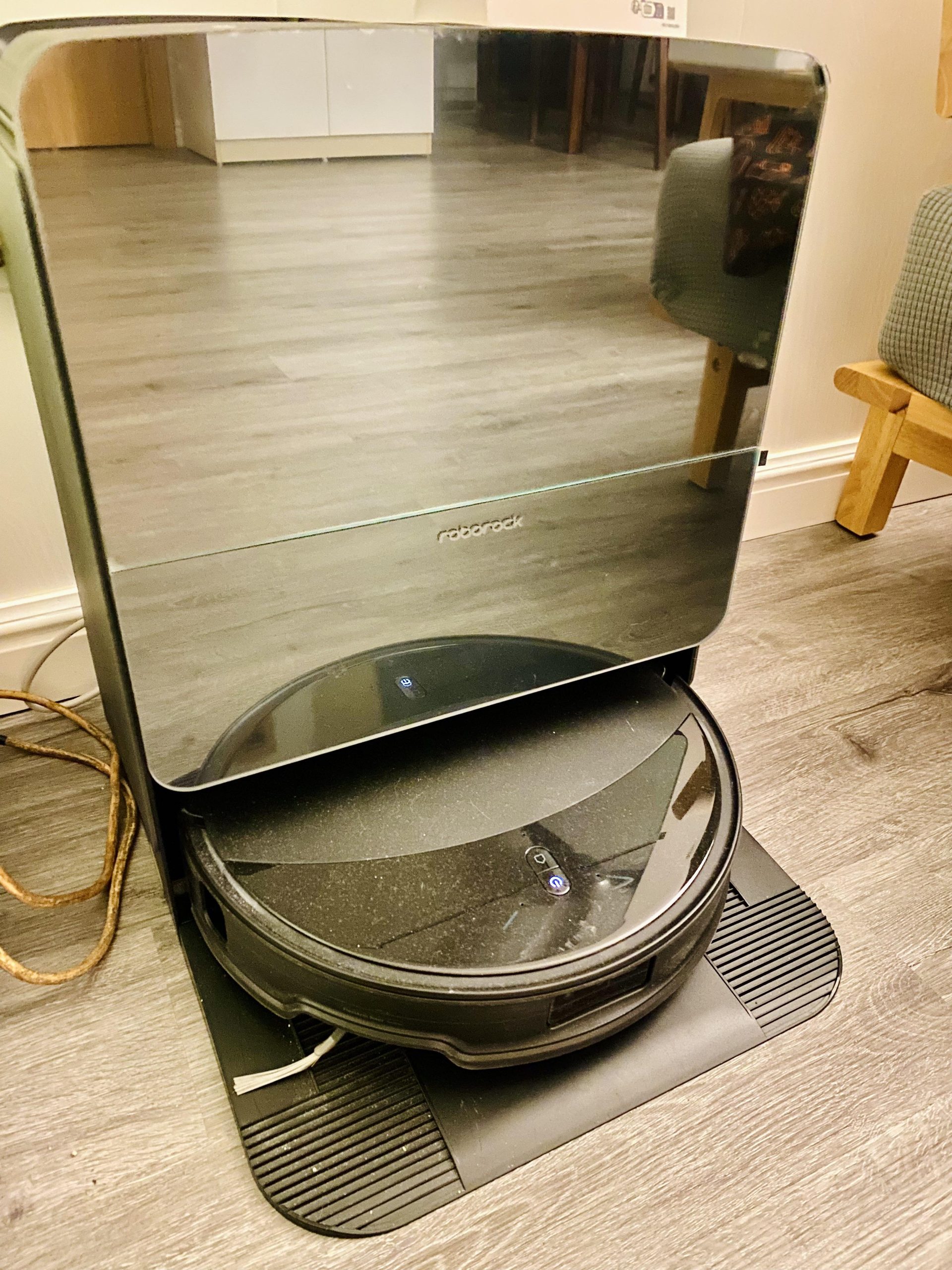
The Roborock Saros 10R makes you rethink what a robot vacuum should be.
For years, robot vacuums have been great at taking over a tedious job: running a vacuum around the house when you don’t feel like it. The trade-off was that you usually had to accept compromises. They couldn’t fit under some furniture. They struggled with cables and socks. They didn’t do well on carpet. Mopping was often just dragging a damp cloth across the floor. And even expensive models needed a lot of maintenance.
The Saros 10R tries to eliminate many of those compromises.
It has a thin 3.14-inch body, Roborock’s StarSight navigation system, a lifting chassis, a split anti-tangle brush, an extending side brush, dual spinning mop pads, automatic mop removal, hot-water washing, hot-air drying, automatic dust emptying, and a smartphone app.
If you click the button above you will be redirected to Amazon.com. In case you then decide to buy anything, Amazon.com will pay me a commission. This doesn’t affect the honesty of this review in any way though.
That’s a lot of technology in a relatively small machine.
But specs aren’t what matter when you’re spending a lot on a vacuum. The real question is much simpler:
Does the Saros 10R actually make cleaning easier, and does it clean well enough that you can stop thinking about vacuuming?
After looking at its design, navigation, vacuuming, mopping, maintenance, noise, usability, and behavior around pets, my answer is mostly yes. But there are some important qualifications, especially if you’ve a lot of carpet or expect it to replace a powerful upright vacuum.
Design & Build Quality
The Roborock Saros 10R makes a strong first impression but what I find more interesting is that most of its design decisions have a practical reason behind them. It’s not just a futuristic-looking robot vacuum. Its shape, sensors, wheels, brush arrangement and docking system have all been designed around the basic problems that have held robot vacuums back for years.
The most obvious difference is the height. At around 3.14 inches, or roughly 8cm, the Saros 10R is remarkably low. This sets it apart from many conventional robot vacuums, especially older premium models with a raised LiDAR turret. The Saros 10R doesn’t have that familiar bump sticking out of its roof. Its navigation hardware is integrated into the body instead.
This spec seems insignificant until you use the vacuum in a real home.
A robot vacuum can have excellent suction, clever software and an enormous list of features, but if it’s too tall to fit underneath your sofa, bed or cabinet, none of those things matter. The Saros 10R’s low profile lets it reach areas that taller robots simply can’t. In my view, this is one of the most meaningful improvements in the design because it affects actual cleaning coverage rather than just adding another impressive-looking feature to the box.
Dust accumulates under furniture because it’s hard to reach. You might vacuum the visible parts of a room regularly, but leave the floor under a bed untouched for weeks. The Saros 10R makes much of that neglected space accessible. It’s simple, but it makes the robot more useful.
The low body creates a design challenge, as Roborock had to fit a lot of technology into a shallow chassis. The Saros 10R requires navigation sensors, obstacle-detection hardware, a battery, motors, wheels, brushes, a dustbin, a water system, and two mopping mechanisms, all without sacrificing its ability to fit under furniture. From above, it’s easy to underestimate the engineering that’s packed into this compact machine.
The appearance is understated, which is appropriate. It has a clean, minimalist look, like an expensive modern appliance. Roborock kept the physical controls simple, without covering the body with unnecessary buttons or decorations. Most control happens through the app, which makes sense for a machine that operates on its own.
The materials feel appropriate for a premium product. The combination of matte and glossy surfaces gives the Saros 10R a polished look without making it look too flashy. The glossy sections inevitably attract fingerprints and can show scratches more easily than a completely matte finish, but this is a relatively minor complaint. When the robot is on its dock and working, its appearance is less important than its construction quality.
What matters more is the machine’s feel when you handle it. The Saros 10R doesn’t feel flimsy or too lightweight. Components that need to be opened or removed generally feel reasonably substantial, and the major serviceable parts are designed with the assumption that owners will eventually need to clean or replace them.
That’s important because robot vacuums have a tough life.
An upright vacuum normally gets carried out of a cupboard, used for twenty or thirty minutes, and put away again. The Saros 10R can spend hours moving around the floor every week. The wheels cross thresholds repeatedly. The brushes encounter hair and debris. The body bumps into furniture. It returns to its dock, connects with charging contacts, gets its dustbin emptied, and its mop pads washed, then goes out again.
The build quality should be judged as the construction of an appliance designed for continuous use, not occasional use.
The wheels are particularly important here. They’re not just for propelling the robot across flat flooring. They need to move and have traction to handle rugs, transitions, and uneven surfaces while staying in contact with the floor. The Saros 10R’s adjustable chassis adds to this. When the robot encounters a larger transition, its adjustable height gives it more flexibility than a fixed-height robot.
This contributes to an overall impression that the Saros 10R has been designed around real houses rather than showroom floors.
The brush system is similar.
The DuoDivide main brush on Roborock’s vacuum is split, not a single roller. This design directs hair and debris to the vacuum’s center, where the suction path can collect it. Also, it reduces long hair wrapping around the brush, which is a big plus.
This is a small. But big example of good appliance design.
A good design isn’t just about specs. Sometimes it’s the component that means you don’t have to take the machine apart every few days.
Anyone who has owned a robot vacuum for a while knows how annoying tangled hair can become. Long human hair and pet hair can wrap around a conventional brush until the roller starts looking like it’s wearing a thick rope. You eventually have to remove the brush, find something sharp and cut the hair away. The Saros 10R’s brush is designed to cut down on that task.
The side brush is another example. Robotic vacuums struggle with corners due to their round shape. Round machines can’t fit into square corners. Roborock addresses this with an extending side brush that can reach farther toward walls and into corners.
And the key point isn’t how advanced it sounds. It’s that it fixes a real issue with robot vacuums.
This same philosophy appears in the mopping system. The Saros 10R has two rotating mop pads, not one stationary cloth. This robot and dock manage these pads, so it can switch between vacuuming and mopping without much help.
The dock is also worth noting.
It’s big, but that’s because of its features. A simple charging dock only needs to provide electricity. The Saros 10R’s dock is like a small cleaning station. It needs room for clean water and dirty water, a dust-collection system, mop-washing hardware, drying equipment and the mechanisms required to service the robot.
So, the dock isn’t compact. It needs a dedicated place in the home, and prospective buyers should think about this before purchasing the vacuum. You don’t want to discover after spending a substantial amount of money that the only suitable location is an awkward corner behind a piece of furniture.
However, its size makes sense given what it can do.
When the robot docks, a lot of the unpleasant work is done automatically. Dust is transferred out of the robot, the mop pads are washed, and the pads can be dried before the next cleaning cycle. The dock becomes a key part of the product, not just an extra.
How it docks also shows its build quality. A robot that struggles to align itself correctly with its dock would quickly become frustrating, particularly because so many of its automated functions depend on making a reliable connection. The Saros 10R generally feels like a system designed around this repeated interaction.
One area where I would still exercise some caution is long-term durability. The Saros 10R is very complex. It has many more parts and components than a basic vacuum. It has motors, pumps, sensors, and mechanisms for mopping, charging, and docking.
That’s the price of automation.
Basic vacuum cleaners are remarkably durable, as there’s little that can go wrong. A premium robot vacuum is effectively a small autonomous machine. And more functionality means more things can go wrong. I don’t consider that a specific flaw of the Saros 10R but it’s something I would keep in mind when comparing a four-figure robot with a conventional vacuum that might last for many years with relatively little servicing.
The Saros 10R’s physical design is one of its strongest characteristics, despite the complexity. It doesn’t feel like a traditional robot vacuum with features added over time and more like a product designed from the ground up around autonomous cleaning.
The low-profile body is a key example. That split main brush is designed to handle hair. The extending side brush handles corners. That adjustable chassis handles floor transitions. The mop system is for hard-floor maintenance. The dock addresses a major weakness of autonomous appliances: the need for human help.
The restrained exterior also contributes to this sense of purpose. There aren’t many physical controls because the robot isn’t supposed to demand your attention. It should sit on its dock, leave as needed, clean the floor, return when its battery is low or the cycle is finished, and service itself.
What I like most about the Saros 10R’s build is.
It’s well constructed, but not just in the usual way. The physical design is closely tied to its job. The machine is low, which helps with low furniture. The brushes are designed around hair because hair is a problem. The chassis can adapt to thresholds, which are a problem. The dock handles washing and emptying, which helps with maintenance.
But there are compromises. The dock takes up a lot of space, the glossy surfaces will get worn, and the complexity raises questions about long-term servicing and durability. But these trade-offs are reasonable for a machine that automates a lot of household floor cleaning.
Judging the Saros 10R on its physical design, I’d rank it near the top.
Design and build quality: 9/10.
The biggest compliment I can give is that the impressive design features actually solve problems. Most of them solve real problems you’ll encounter when the robot cleans your home.
The Dock Is Half the Product
When evaluating a premium robot vacuum, a common mistake is focusing too much on the robot itself. You consider its suction power, brush design, sensors, battery and mopping system, and then decide if it’s worth the cost.
The Roborock Saros 10R is a product where this approach misses half of its value.
The dock is arguably just as important as the robot. In fact, if you’re buying a machine at this price specifically because you want to reduce the amount of cleaning you’ve to do yourself, the dock may be the feature that determines whether the Saros 10R feels revolutionary or merely like an expensive automated vacuum.
That’s because the robot isn’t designed to operate as a standalone appliance. It partners with a dock that charges, empties the dustbin, washes and dries the mop pads, and manages water. The robot does the visible work of moving around your home, while the dock handles much of the unpleasant work that happens between cleaning sessions.
As you use a robot vacuum, this difference becomes clear.
A basic robot can be surprisingly good at picking up dirt. But then there’s the aftermath. You find a mix of dust, hair, and crumbs in the dustbin. The mop pad is dirty and wet. You’ve to wash the pad, empty the dustbin, refill, and reassemble everything. Do that after every cleaning session and eventually the robot starts feeling less like a convenience and more like another appliance that needs looking after.
The Saros 10R dock breaks this cycle.
A charging station that does more than just charge
At the most basic level, the dock is obviously a charging station. The Saros 10R returns to the dock for power and uses it as a home base.
But ‘charging station’ doesn’t do it justice.
It’s like a small service center for the robot.
Once the Saros returns, several things can happen automatically. Its dustbin can be emptied, its mop pads can be washed, the pads can be dried and the robot can recharge in preparation for its next cleaning run.
This changes the ownership experience a lot.
You don’t need to think about whether the robot’s internal dustbin is full before sending it out. You don’t need to remove the mop pads every time it finishes cleaning. You don’t have to leave wet pads in a closed compartment overnight.
The machine is reset for its next task.
That’s what a premium docking system is for.
The dock’s size is the trade-off for automation
There is, however, no getting around the fact that this is a substantial piece of equipment.
A simple robot-vacuum charging dock can be little more than a narrow plastic stand. The Saros 10R’s dock is considerably more substantial because it has to accommodate water tanks, a dust-collection system, pumps, washing components, drying hardware and the various mechanisms required to service the robot.
You need to plan where to put it.
That might sound obvious, but it’s something worth considering before purchasing rather than after opening the box. The Saros 10R isn’t the kind of appliance you can necessarily squeeze into an insignificant gap between pieces of furniture. The dock needs space for the robot to move around reliably.
You also need to be able to reach it.
You’ll have to refill the clean water, empty the dirty water, and replace parts eventually. If you hide the dock, maintenance becomes a hassle.
I think this is one of the few areas where the Saros 10R’s sophisticated design creates a genuine compromise. That more self-sufficient the robot becomes, the more substantial the infrastructure around it has to be.
But you get a level of automation that a small dock can’t match.
This dock’s automatic dust collection
The first big convenience is automatic dust emptying.
The robot’s dustbin is small due to limited space inside. That’s fine since the robot can transfer debris to a larger bag at the dock.
This feature might sound boring, but it’s valuable in daily use.
Think about manual vacuuming. You stop cleaning to deal with a full container. Now imagine doing that with a robot vacuum. If you had to empty the small bin after every few runs, it wouldn’t feel autonomous.
The dock reduces that interruption.
The robot can clean, return home and empty itself.
Debris goes into the larger bag, not the robot.
It’s especially useful for households with pets. Hair takes up a lot of space in a small dustbin, and pet hair, crumbs, and household dust can fill it quickly.
With automatic collection, you can let it work without constant checks.
Of course, the bag still needs replacing eventually. No system can make dirt disappear. Replacing a bag periodically is less intrusive than daily dustbin emptying.
The mop-washing system is more significant
For me, though, the dock’s mop-washing function is arguably more big than automatic dust collection.
Vacuuming is cleaner than mopping.
A robot vacuums by collecting dirt in a container. But when it mops, the dirt stays on the pads until cleaned.
If you simply let a robot finish mopping and then park it with dirty, wet pads attached, you’re creating an ideal environment for unpleasant smells and bacteria.
The Saros 10R tackles this problem differently.
When the robot returns to the dock, the mop pads can be washed automatically. The dock uses water to remove the dirt accumulated during cleaning, effectively preparing the pads for the next session.
Mopping is most effective with a reasonably clean mop.
It’s pointless to tell a robot to mop with pads saturated with yesterday’s dirt.
The washing process therefore isn’t just about convenience. It kind of helps maintain the quality of the cleaning process from one run to the next.
Washing with hot water
Heated water makes the system more interesting.
The dock can wash the mop pads with hot water, reaching temperatures of up to around 80°C under the system’s specified conditions.
That benefit is better removal of greasy residue.
Think about the kitchen floor after cooking. A dry cloth can pick up crumbs, but oily residue is different. Warm water is generally more effective at breaking down this kind of contamination.
The heated washing system is a sensible solution to keeping cleaning surfaces clean, a major problem with automated mopping.
The answer is automatic cleaning of the cleaning surfaces.
It sounds circular, but that’s what makes it work.
Drying the pads
Washing the mop pads solves one problem, but creates another.
Wet fabric in a dark robot vacuum is unappealing.
The drying system is important here.
After washing, the dock can circulate heated air to dry the mop pads. The purpose isn’t simply to make them feel dry when you touch them. Drying reduces the amount of moisture left behind and helps prevent the musty smell that can develop when damp microfiber remains enclosed for long periods.
It’s particularly useful for daily robot use.
Without drying, you could easily end up with a situation where the robot cleans your floor but smells slightly unpleasant whenever it returns to the dock.
I don’t mind the drying process taking time.
The robot doesn’t need to be ready right away.
I can run the Saros in the evening and let the pads dry overnight, so it’s ready to clean again in the morning.
It’s more sensible to let it take its time than to rush through each stage.
Water management
The Saros 10R’s dock introduces water management as a new kind of maintenance.
You fill the clean-water tank, and the dock uses that water to wash the mop pads and support the mopping process, collecting dirty water separately.
It’s more convenient than manual washing, but the dock needs more maintenance, like an appliance.
There are two water systems to remember.
One contains clean water.
The other collects dirty water.
The clean tank needs refilling, and the dirty tank needs emptying eventually.
How frequently you need to do this depends on the size of the home, how often you mop and how much water the robot uses, but these are the chores that prevent the Saros from being genuinely maintenance-free.
This isn’t a major criticism to me.
A washing machine needs detergent, a dishwasher needs detergent and cleaning, and a coffee machine needs water.
The goal isn’t zero maintenance.
The goal is reducing maintenance to a level that doesn’t interfere with normal use.
The Saros 10R gets quite close.
Dock hygiene honestly matters too
There’s one thing I wouldn’t want potential owners to misunderstand.
The automated washing system doesn’t mean you can totally forget about the dock.
Dirty water contains everything the robot has removed from your floor. Over time, residue can build up in the dirty-water tank, washing area and other parts of the dock.
The dock therefore needs occasional cleaning.
This isn’t something you’ll necessarily notice every day, but it’s part of owning a robot with a mop.
I would add dock cleaning to your routine. Empty the dirty-water tank when necessary, rinse it, inspect the washing area and wipe away accumulated residue.
It’s a small amount of work compared with manually washing mop pads after every cleaning session, but it’s still work.
This distinction is key when you hear about “no-hands-required” cleaning.
The dock makes it possible to schedule cleanings
Where the dock really earns its keep is scheduled cleaning.
Imagine setting the robot to vacuum every weekday morning while you’re out.
With a basic robot, you’d have to worry about whether its dustbin will fill, whether the battery will run down, whether its mop is dirty or whether it will return home in a condition that requires immediate attention.
The Saros 10R can handle a lot of this on its own.
It can clean, return to the dock, recharge, empty its dustbin and service its mop system before the next scheduled run.
That makes frequent cleaning practical.
And frequent cleaning is exactly why robot vacuums work so well.
This best robot isn’t necessarily the one that can remove the largest amount of dirt in a single cleaning session. It’s the one that can quietly remove smaller amounts of dirt every day without asking you to participate.
The dock is what makes that possible.
A crucial part of owning one
This is why I think the title “The Dock Is Half the Product” is justified.
Without the dock, the Saros 10R would still be a sophisticated robot vacuum. It would navigate well, clean floors effectively and mop intelligently.
But the dock changes the nature of the product.
It turns it into a nearly autonomous cleaning system.
You’ll see this difference after using it a while.
On the first day, automatic dust emptying might feel like a neat feature.
After a month, you appreciate not having to empty the bin.
That first time the mop pads are automatically washed, it feels clever.
After dozens of cleaning cycles, you realize you’ve avoided dozens of unpleasant mop-cleaning jobs.
The first time you see the robot return to the dock, wash its pads and start drying them, it’s impressive.
Eventually, it simply becomes normal.
And that’s arguably the highest compliment you can give this kind of technology.
The best automation isn’t something you constantly admire. It’s something you stop noticing because it has quietly removed a chore from your life.
The Saros 10R’s dock won’t eliminate all maintenance. You’ll still refill water, empty dirty water, replace bags and occasionally clean the dock itself. It also takes up a meaningful amount of floor space, so buyers need to think carefully about where it will live.
But those trade-offs are worth it for what you get.
The dock lets the robot run with minimal human help. It keeps the dust collection system ready, maintains the mop pads, manages water and keeps the robot charged and prepared for its next assignment.
If you’re buying the Saros 10R to clean less yourself, this may actually be the most important part of the entire purchase.
The robot cleans your floor.
The dock cleans the robot.
And that second job is what makes the first one genuinely autonomous.
Navigation Intelligence & Mapping
What sets the Roborock Saros 10R apart from a regular robot vacuum is its navigation. Many robot vacuums can get around a room without totally losing their way. And they do avoid obvious obstacles, but the Saros 10R seems to actually understand its surroundings as it cleans.
The Saros 10R is more at home in the second category.
Its navigation system uses precise mapping. And multiple sensors, along with object recognition, to get a detailed view of its surroundings. This robot can also respond to new things that weren’t there when the map was made. This is crucial in a house, where things are always changing, chairs get moved, doors open and close, people leave shoes on the floor, pets roam around, and cables show up in unexpected places.
Two kinds of intelligence are necessary for a robot vacuum.
It must determine its location and understand its surroundings, specifically what’s in front of it.
The Saros 10R is particularly good at both.
A different approach to LiDAR
Roborock’s navigation system on the Saros 10R is notable for ditching the usual raised LiDAR turret.
Premium robot vacuums have typically featured a circular sensor module on top. This module scans the environment, giving the robot info about walls, furniture, and room dimensions as it rotates.
One major physical disadvantage is a significant drawback of this technology, which works very well otherwise.
The robot is made taller by it.
Physical access pretty matters because a robot’s navigation system is only useful if it can reach the area it mapped. If a sofa has just enough clearance for a robot’s body, a raised sensor turret might still not fit.
The Saros 10R uses its StarSight navigation system in a unique way, it’s integrated into the robot. This design makes the machine much flatter.
Navigation technology clearly influences physical design, and this is a great illustration of that impact.
The robot needs to be able to go into more areas. Making it smarter isn’t the only goal; it’s also about capability.
Mapping matters a great deal
Cleaning a floor is still possible for a robot vacuum without effective mapping, it’s just that the process doesn’t feel very methodical.
Some areas may get too much attention while others are neglected. Repeatedly going over the same spot is also a problem. Determining whether a section has already been cleaned can be a struggle.
The Saros 10R’s mapping system provides a more structured approach.
The robot builds a representation of the home during its initial exploration. Walls, rooms, open areas, and obstacles are identified, and this information is used to plan cleaning routes.
Having established the map, the robot can now use it to navigate without having to relearn the house’s layout from scratch each time it leaves the dock.
This distinction is important.
The robot learns the environment during its first cleaning run. It’s more purposeful in subsequent runs.
Things change, and the first map isn’t the final map.
I also like the fact that mapping isn’t treated as something that happens once and then remains frozen forever.
Homes change.
A table gets moved. New furniture is purchased, like a sofa. Boxes sometimes remain in the hallway for a few days. Doors that are usually open can be closed at times.
To work well, a robot vacuum must be able to handle changes and not get confused, it’s about being able to adapt and keep cleaning.
The Saros 10R’s navigation system combines stored information about the home with real-time sensor data. This helps it tell the difference between the house’s general layout and things that are only there temporarily.
The system starts to feel genuinely intelligent here.
New objects don’t always require the robot to treat them as completely new environments.
It simply goes around.
Object recognition is a big deal
The Saros knows its location through mapping.
What to do next is decided with the help of object recognition.
Robot vacuums operate at floor level, which puts them in contact with various objects that people usually pick up before vacuuming.
A shoe might stop a traditional robot vacuum, and it will figure out it can’t pass through after bumping into it.
The Saros 10R recognizes objects before it makes contact, and it adjusts its path.
The machine’s character is altered by this difference, though it may seem minor.
This robot isn’t just blindly moving around, it’s constantly scanning the floor and deciding where it can go safely.
Furniture avoidance
The Saros 10R handles furniture well.
The Saros 10R can identify table legs, chairs, cabinets and other objects and navigate around them rather than repeatedly colliding with them.
It’s not just about protecting furniture.
Collisions can slow a robot down a lot.
Imagine a dining room with six chairs. A poorly navigating robot can spend a surprising amount of time bumping into chair legs, reversing, turning and trying another route.
With better object recognition, a robot can navigate the environment more efficiently.
The Saros 10R’s behavior is generally more deliberate. It approaches obstacles, adjusts its route and continues cleaning rather than repeatedly attempting the same impossible path.
Small objects are important
The really difficult navigation problems aren’t large pieces of furniture.
A sofa is easy to detect.
A chair is easy to detect.
A power cable on a dark floor is hard to detect.
This is where the Saros 10R’s sensing system becomes particularly valuable.
It recognizes many small household objects. That includes things such as shoes, toys and other objects that might otherwise become trapped in a brush.
It can then alter its route.
This reduces the amount of preparation you’ve to do before cleaning.
However, there’s an important qualification.
No robot vacuum is perfect at recognizing every small object.
Very thin cables remain difficult for even sophisticated systems because they’re physically tiny and can blend into their surroundings. A USB cable lying across a floor is an excellent example. From a human perspective, it’s obvious. From a low-mounted camera and sensor system moving several inches above the floor, it can be surprisingly difficult to distinguish.
So I wouldn’t interpret the Saros 10R’s obstacle avoidance as permission to leave everything on the floor.
It’s better understood as a very effective safety net.
Navigation around pets
This is particularly important for pet owners.
In a home with pets, a robot vacuum has to handle more than just fur.
Pets leave toys, food, and other things around. They can also create one of the worst possible obstacles for a robot vacuum: an accident on the floor.
Running a robot over pet waste can turn an ordinary cleaning session into a major cleanup operation.
It identifies and avoids pet waste.
That’s an important practical feature, and arguably one of the clearest examples of navigation intelligence providing a genuine benefit rather than simply making a specification sheet look impressive.
It’s not just looking for the fastest route.
It’s trying to determine which objects it should avoid.
Navigating around people and pets
The home isn’t an empty environment while the robot is running.
People are walking around.
Pets move unpredictably.
A robot that stops every time something crosses its path isn’t very useful.
It adjusts its route when something appears. If a person walks through the room, the robot can wait, alter its direction or find another path.
This makes the robot much less intrusive.
It doesn’t mean you’ll never notice it. You will.
But it feels more like sharing the room with a small autonomous machine than supervising a lost appliance.
Planning its route
It benefits from a structured cleaning approach.
Rather than wandering aimlessly, it generally sort of works through areas in an organized pattern.
This matters for both efficiency and coverage.
For a large house, it needs to avoid unnecessary travel. Every extra turn consumes battery power and time.
A good route means more battery power for cleaning.
The robot can also return to areas when necessary rather than assuming that every section has been adequately covered after one quick pass.
That becomes particularly useful when cleaning modes are customized by room.
Cleaning room by room
Mapping allows for different cleaning routines in each room.
It doesn’t need to clean the whole house the same way.
You might have a kitchen that needs more frequent mopping, a hallway that needs daily vacuuming and a bedroom that only needs cleaning twice a week.
The map helps create those routines.
With the map, you can schedule cleaning for each room.
That changes the concept of robot vacuuming from “press a button and let it run” to something much closer to an automated household routine.
The machine becomes capable of following a cleaning strategy rather than simply performing a generic cleaning cycle.
There are multiple floor types
In homes with mixed flooring, mapping is particularly useful.
Hardwood, tile, rugs, and carpet can all be found in just a few rooms of a modern house.
The Saros 10R needs to know the location of surfaces since its vacuuming and mopping actions vary by area.
Dragging a wet mop over carpet isn’t a good idea.
Stronger vacuuming might be needed on a rug.
The kitchen needs more frequent mopping than a bedroom, it’s likely.
Mapping and surface recognition systems on the robot make it possible to incorporate those differences into its cleaning strategy.
Expensive robot vacuums justify their complexity in this area too.
It’s possible to clean with a basic machine.
A sophisticated one can decide how to clean.
The low-profile advantage returns here
Its physical design and navigation system work well together on the Saros 10R.
The robot’s low height allows it to include areas under furniture in its map that other robots can’t reach.
Navigation has no use without physical access, which makes it essential to consider this point.
Dust under the bed is a problem a robot can’t solve if its body is too big to fit in that space, even though it could make a perfect map of the area.
The Saros 10R can often enter those spaces.
Combining low-profile construction with advanced mapping creates a more useful system than using either feature on its own.
Reorientation occurs. And there’s occasional hesitation
There are some flaws in the navigation system.
Now and then, the Saros 10R stops briefly, and it may rotate or seem to reassess its position.
The difference in sensing architecture from a conventional turret-based LiDAR system makes this more noticeable.
This isn’t something I see as a big weakness.
It’s better for the robot to pause for a few seconds to figure out its location than to keep going in the wrong direction.
What happens afterward is important.
The Saros 10R recovers its position well and resumes cleaning in normal operation.
Navigation involves more than just speed
Finishing a room quickly doesn’t necessarily mean a robot’s navigation is good, and that’s what it’s tempting to judge.
That’s the wrong metric, I think.
Finishing a task ten minutes faster means little if a robot misses corners, gets tangled in cables, or repeatedly collides with furniture, as it’s not actually an improvement.
Reliable coverage with minimal intervention is what good navigation is about.
The Saros 10R generally succeeds because it balances several things at once and that’s what makes it work.
Navigation features include
surface awareness,
room recognition,
real-time obstacle detection,
furniture clearance.
Also, route planning and
recovery when something changes
are important aspects.
And accurate mapping
is crucial for this process.
The result is a robot that usually honestly seems to know where it’s and where it needs to go.
The owner’s preparation is still a consideration and it’s necessary to determine how much more work is needed.
To judge the Saros 10R’s navigation, this method is probably the most useful.
Preparing a house shouldn’t be like setting up a lab.
Before pressing the cleaning button on a basic robot, owners typically establish a routine. This often involves picking up cables, moving shoes, rescuing socks, and removing toys to prevent them from being damaged. They also need to check the floor for any items the robot might try to pick up.
The Saros 10R reduces preparation considerably.
Cables need to be managed and fragile objects moved out of the robot’s path. Anything that could cause damage shouldn’t be left on the floor. You should use common sense.
Obsessing over every small object isn’t necessary.
That’s a meaningful improvement.
What’s the real-world verdict
One of the strongest reasons to buy the Saros 10R is its navigation system.
The map’s influence on the robot’s behavior is its greatest advantage, rather than just producing an attractive map in an app.
The general structure of the home is known to it.
It identifies rooms.
It plans routes.
It recognizes many obstacles.
It adapts to changes in its environment.
It can navigate beneath low furniture.
Different floor types are no problem.
Many objects that could cause a robot vacuum to get stuck or damaged can be avoided by it.
Limits still exist. Cables that are thin can be tough to deal with. It’s possible for objects to get missed and a room that’s cluttered is going to give any autonomous cleaner trouble. Pauses and repositioning are also just part of using one.
Those limitations don’t undermine the overall achievement.
The Saros 10R doesn’t feel like it’s just trying to avoid getting lost, it’s more than that.
The way it moves seems like that of a robot trying to understand the floor plan and make sensible decisions within it.
That’s an important distinction.
I rely on navigation as the base for nearly all other features of the Saros 10R. Without it, the vacuuming, mopping, and automation, which are excellent, wouldn’t be nearly as useful, since the robot needs to be able to navigate the house reliably.
The Saros 10R has its foundation right.
Navigation Intelligence & Mapping scores 9.7 out of 10.
Don’t expect the Saros 10R to be completely autonomous like in science fiction, as it still requires occasional user intervention, such as picking up a cable or rescuing an object from the floor. However, the Saros 10R comes remarkably close to making autonomous navigation feel routine, rather than experimental, compared to other consumer robot vacuums.
Vacuuming Performance
Vacuuming performance is where the Saros 10R has to justify its premium price and for the most part, it does. This isn’t simply a robot that makes a few passes around the house and picks up whatever happens to be directly in its path. The cleaning system combines strong suction, a redesigned main brush, an extending side brush, intelligent route planning, and automatic adjustment for different floors. It’s particularly impressive on hard floors. And capable on carpets, though not a replacement for a good upright vacuum for deep cleaning.
Strong Everyday Pickup
The first thing I noticed about the Saros 10R’s vacuuming performance is how consistently it handles ordinary household debris. Dust, crumbs, cereal pieces, hair, grit from shoes, and the small particles that gradually accumulate around furniture are exactly the kind of mess this robot is designed to deal with.
It performs well on hard floors. The combination of high suction power and the DuoDivide main brush lets it collect fine dust and larger pieces without scattering debris. This matters more than you’d think. Some robot vacuums are good at collecting dust but struggle with larger debris, and others can pick up cereal or crumbs but leave fine particles behind.
The Saros 10R generally avoids that compromise.
Its cleaning pattern also helps. It builds a map and follows deliberate routes through each room, rather than wandering randomly. Coverage is more consistent, especially when you run it regularly. A single cycle may not produce the same result as manual vacuuming, but the robot can return to the same areas repeatedly over a week.
That’s where a robot vacuum makes more sense than an upright for everyday cleaning.
Hard Floors Are Its Strongest Area
If your home is mostly hardwood, tile, laminate, vinyl, or another smooth surface, the Saros 10R is easy to recommend.
Fine dust is one of the most noticeable problems on hard floors because it settles into the surface and becomes visible in certain lighting. It’s very effective at removing fine dust during routine cleaning. It also handles larger particles, like food crumbs and dirt from shoes.
That side brush is important here. It’s not just sweeping debris toward the center. The extending FlexiArm side brush allows it to reach farther toward walls and around certain corners, reducing the amount of debris left sitting just outside the robot’s normal cleaning path.
It doesn’t magically reach every corner. Square corners are tough for a round robot, and debris can accumulate in awkward edges. But it does a better job getting close to the perimeter than many conventional robot vacuums.
This is particularly useful for kitchens and dining areas. Crumbs and fine debris appear constantly in those rooms, and regular automated cleaning prevents the floor from becoming visibly dirty.
The DuoDivide Brush Makes a Difference
The DuoDivide main brush is an interesting hardware choice.
Instead of a continuous roller, it’s divided into sections. This design improves how hair and debris move through the brush and reduces hair wrapping around the roller.
In everyday use, that can make a noticeable difference.
Hair is a big problem for robot vacuums because it doesn’t just get picked up. Long strands can wrap around the brush, build up over time, and eventually interfere with cleaning performance. The split-brush design reduces this problem by directing hair to areas where it can be collected more effectively.
It’s not maintenance-free. Long hair and pet hair can still accumulate, especially around other moving parts. But the brush is more manageable than a traditional roller that turns into a cylinder of hair.
This feature doesn’t impress on a spec sheet but becomes valuable after months of use.
Carpet Performance Is Good, But More Complicated
The Saros 10R’s performance is more nuanced on carpet.
It’s capable of cleaning carpets and removes everyday surface debris well. Fine dust, crumbs, and loose dirt are generally handled well, especially when the robot is allowed to make more than one pass.
Carpet demands more from a vacuum than hard floors. Dirt can become embedded between carpet fibers, and the robot’s relatively compact cleaning head simply doesn’t have the same mechanical agitation or sustained deep-cleaning ability as a powerful upright vacuum.
It’s a strong maintenance cleaner on low- and medium-pile carpets. Run it frequently and it can prevent dirt from accumulating to the point where the carpet needs serious attention.
This distinction is important. I wouldn’t buy the Saros 10R expecting it to eliminate the need for a conventional vacuum if your home has a lot of carpet. Think of it as the machine that keeps carpet clean between deeper manual vacuuming sessions.
It can also require multiple passes when dealing with particularly fine debris. A first pass may remove most of the visible dirt while leaving a small amount behind. That’s not a major problem since you can schedule another cleaning cycle.
Debris requires different approaches
The Saros 10R is convincing, given the variety of debris in a real home.
Large crumbs are handled differently than fine dust. Hair. And sand behave differently. Pet food. And flour behave differently. A robot that performs well with only one category isn’t necessarily a good all-round cleaner.
The Saros 10R’s suction and brush design combine for a broad range.
Larger debris is generally pulled into the cleaning system rather than pushed around indefinitely. Fine dust is collected well on hard surfaces. Hair is handled with less brush wrapping than you would see with a conventional single roller.
Very fine debris on carpet is demanding. That’s where robot-sized cleaning systems’ limitations become obvious.
For most routine messes, the Saros 10R behaves like a serious vacuum.
Cleaning under furniture
The low-profile design affects vacuuming performance, determining where the robot can clean.
At roughly 8 cm tall, the Saros 10R can travel beneath furniture that many other robot vacuums simply can’t reach. Sofas, beds, cabinets, and other low-clearance furniture can become significant dust traps because conventional vacuums often struggle to reach underneath them.
The Saros 10R gets into those spaces, so its cleaning coverage isn’t limited.
This is why its design and navigation work well together. Being thin is only useful if the robot knows where it can safely go. The Saros 10R combines its low profile with mapping to make under-furniture areas part of the cleaning route.
Edge cleaning is better than average
Edges are another area where robots are weak.
A round robot leaves a small area near walls its main brush can’t reach. The Saros 10R addresses this with its extending side brush, which can move outward to bring debris closer to the main cleaning path.
That improvement is noticeable around furniture and walls. It doesn’t eliminate the need for occasional manual attention in tight corners, but it reduces the amount of dirt that collects along room boundaries.
For everyday cleaning, perimeter dirt is visible. A floor can look clean but appear dirty if crumbs and dust are around the edges.
Where it falls short
The Saros 10R has limitations.
Deep cleaning is a limitation. A high-quality upright vacuum is better for extracting dirt from carpet. That robot’s compact format and gentle approach can’t match a full-size vacuum head.
Fine debris on carpet can also require more passes. With thick carpeting and heavy traffic, you may notice a difference.
Stubborn debris is also an issue. A robot vacuum works best when it can approach a mess from the right angle and move over it methodically. Certain particles can be pushed slightly before being collected, while debris trapped tightly against awkward furniture legs or in very narrow gaps may remain.
Those are category limitations, not flaws.
The real advantage is consistency
The biggest strength of the Saros 10R isn’t necessarily that it can outperform a human using a powerful upright vacuum for one intensive cleaning session.
It can clean without your help.
That changes the standard by which I think this robot should be judged. If you run it several times a week, dust and crumbs have far less opportunity to build up. The floor stays cleaner because the robot maintains it constantly.
This strategy works well on hard floors. On carpets, it provides strong routine maintenance but not deep cleaning.
Overall, the Saros 10R delivers excellent performance, with hard floors as its strongest category. Its features work together, not in isolation.
That’s what I want to see in a robot vacuum. It doesn’t need to be the most powerful vacuum. It needs to leave the house cleaner, with little intervention.
Vacuuming performance rating: 9.3/10.
Hard-Floor Cleaning
Hard floors are where the Roborock Saros 10R feels most at home. On hardwood, laminate, tile, vinyl, or other smooth surfaces, it consistently delivers good results with its strong suction, well-designed brushes, edge cleaning and systematic navigation. It also handles everyday messes like fine dust, crumbs, hair, grit and small particles that collect around furniture and along walkways.
Everyday pickup is excellent
Dust and debris can’t hide on hard floors. Fine particles sit on the surface, crumbs remain visible, and pet hair can collect into little clumps that are surprisingly obvious in daylight.
The Saros 10R handles this debris well.
The robot’s strong suction pulls in fine dust instead of just moving it around, and the main brush honestly helps collect particles that aren’t sucked in right away. It also handles larger debris well. Things like cereal pieces, rice, dry food crumbs, and small bits of dirt generally don’t pose much of a challenge.
I like that it’s consistent. It doesn’t need a big cleaning session to make a difference. A regular daily or every-other-day run is enough to keep smooth floors looking freshly maintained.
That’s arguably more important than raw suction power. Since it lives in the home, it can clean often without needing you to get involved.
It handles fine dust particularly well
Fine dust is easy to notice on dark hardwood, polished tile, and other smooth floors. Sunlight can show a thin layer of dust or tiny particles even when the floor looks clean from far away.
It performs well in this situation.
It can collect small particles without leaving a visible trail. This is especially useful in bedrooms, hallways, and living rooms where dust builds up from normal activity.
Its systematic cleaning pattern also helps. Since it doesn’t bounce around randomly, it covers each area in a controlled way. This means fewer obvious missed spots and less frustration from cleaning the same area repeatedly while missing another part of the room.
Larger Debris Doesn’t Cause Many Problems
Hard-floor cleaning isn’t only about dust. Homes have a lot of larger debris.
Kitchen floors are a good example of this. After preparing food, you might have crumbs, rice, cereal, vegetable pieces, or dried food particles scattered around the kitchen floor. A robot that’s only good at fine dust can struggle with this, especially if its brush pushes larger objects around instead of picking them up.
The Saros 10R is better at handling this type of mess.
The main brush and suction system work together to pull debris into the robot instead of sweeping it around. The larger pieces that are within its cleaning path are generally collected efficiently.
There can still be exceptions. Very large objects, unusually shaped debris, or material sitting in an awkward position may be pushed before the robot manages to collect it. That’s normal for a compact robot vacuum and isn’t a major weakness.
Edge cleaning makes a difference
Traditional robot vacuums struggle with the area around walls and furniture.
A circular robot leaves a small strip near the edge because its main brush can’t reach into corners. The Saros 10R addresses this with its FlexiArm side brush, which can extend outward to reach closer to walls and edges.
This is particularly effective along straight walls.
Instead of leaving a clearly visible line of dust around the room, the robot can sweep debris toward its main cleaning path. The result is a cleaner look.
Corners are still tricky. A round robot can’t fit into a square corner, so it won’t completely eliminate manual cleaning. The Saros 10R reduces the work.
That difference is even more noticeable in kitchens and dining areas where small crumbs tend to collect near the edges.
Hair and Dust Work Well Together
The Saros 10R’s DuoDivide brush works well on hard floors too.
Long hair can be troublesome for almost any vacuum. Instead of simply being sucked away, it can wrap around a conventional roller and gradually form a tangled mass.
This design reduces the problem. The brush is less likely to get wrapped up because hair and debris are directed through the system in a specific way.
That doesn’t mean you can forget about maintenance completely. Hair can still accumulate around moving components, and households with long-haired occupants will eventually need to inspect the brush and related areas.
It’s easier to live with than a conventional single roller.
Performance Around Furniture
Another strength is how effectively the Saros 10R combines hard-floor cleaning with its low-profile design.
It’s only around 8 cm tall, so it can fit under many sofas, beds, and cabinets. Those areas often collect an impressive amount of dust because they’re difficult to clean manually.
On hard floors, this is especially valuable because dust under furniture can stay there for weeks if you don’t move things around.
It can just clean these areas as part of its regular route.
This navigation system helps it approach furniture without crashing into it over and over. It can clean around table legs and chairs without making a mess.
Mixed Debris and Real-World Messes
What makes the Saros 10R convincing on hard floors is its ability to handle different kinds of dirt during the same cleaning cycle.
Imagine a kitchen floor after dinner. There might be fine flour or dust near the counter, crumbs underneath the table, pet hair in the hallway, and small pieces of grit near the entrance.
It doesn’t need to know what type of debris it’s dealing with. It just cleans the area, picking up whatever is there.
This is a key difference between a useful robot and one that only works well in perfect conditions.
Where Hard-Floor Cleaning Could Still Improve
There are some limitations.
Tight corners are still difficult for it, like with most circular robots. Debris stuck in narrow gaps between furniture and walls can survive cleaning.
It won’t replace a handheld vacuum for precision jobs.
Regular use is also important for performance. If a hard floor hasn’t been cleaned for weeks and has a substantial amount of accumulated dirt, a single automated run may not produce the same result as deliberately going over the floor with a powerful upright vacuum.
That’s not how you should use this robot.
It’s best for continuous maintenance.
The Verdict on Hard Floors
The Saros 10R is a good option for households with mostly hard floors. It picks up fine dust well, handles bigger debris, cleans edges effectively, manages hair, and covers rooms in a systematic way.
This biggest advantage isn’t that it can perform one spectacular cleaning session. You can schedule it to clean regularly, so dust and debris get removed before they build up.
This makes a big difference in how a home looks and feels.
Hard-floor cleaning rating: 9.5/10.
Carpet Cleaning
The Roborock Saros 10R has to work harder on carpet. Hard floors are straightforward since dust and debris are on the surface. Carpet is different. Dirt can settle between fibers, fine particles can become embedded, and hair can work its way down into the pile. And it has less contact with the floor than an upright vacuum with a carpet head.
The Saros 10R performs well on carpets, especially as a regular cleaner. It can remove everyday dust, crumbs, hair, and surface debris effectively, but its limitations become more obvious when you ask it to perform the kind of deep cleaning normally associated with a powerful upright vacuum.
Surface-Level Cleaning Is Strong
On low- and medium-pile carpets, the Saros 10R does a good job of collecting the debris that accumulates through normal household use.
Dust, crumbs, small pieces of food, and loose hair are generally picked up effectively. The robot’s suction is strong, and the main brush helps lift debris and guide it to the suction.
The difference between carpet and hard floor isn’t that the Saros 10R becomes ineffective. Carpet is just a tougher environment.
On a hard floor, a small particle is sitting in plain sight. On carpet, that same particle may be resting between fibers or partially embedded in the pile. The robot therefore has to rely on both suction and brush action to remove it.
It does well for routine cleaning.
Frequent Cleaning Is the Key
The Saros 10R makes the most sense on carpet when you let it clean frequently.
If you run it several times a week, it can prevent dust and debris from accumulating deeply in the first place. The robot removes loose material continuously, rather than all at once.
This is where a robot vacuum can actually complement a traditional vacuum rather than compete directly with it.
A conventional upright might still be better for a thorough weekly deep clean, but the Saros 10R can handle the repetitive work in between. It can run while you’re working, sleeping, or away from home, keeping the carpet in a consistently maintained condition.
Regular cleaning matters more than it seems. A carpet that receives several light cleaning sessions can remain noticeably cleaner than one that receives a single intensive vacuuming every couple of weeks.
Fine Debris Is More Challenging
Fine debris shows the limitations.
Particles such as flour, very fine dust, and other small debris can settle deeply into carpet fibers. The Saros 10R can remove much of this material, but it may take more than one pass to achieve the same level of cleanliness you’d get by slowly moving a powerful upright vacuum over the area.
This isn’t necessarily a problem during normal automated cleaning. The robot can simply return to the area later.
But if you deliberately scatter fine debris onto a carpet and expect the Saros 10R to remove every particle in one pass, you may be disappointed.
This is important when evaluating robot vacuums. Their purpose is continuous maintenance, not necessarily maximum extraction from heavily soiled carpet.
The Main Brush Helps With Carpet
The DuoDivide brush is useful on carpets because it provides contact and helps with hair and debris.
Hair is particularly troublesome on carpet because it can become tangled in the fibers rather than sitting on top of them. The Saros 10R’s brush design helps collect loose hair without becoming overwhelmed as quickly as some traditional roller designs.
Long hair doesn’t disappear without maintenance. If you’ve long hair, check the brush occasionally.
Hair management isn’t an everyday chore.
The Saros 10R excels on low-pile carpet
It’s convincing on low-pile carpet and rugs.
These surfaces don’t resist the robot’s movement, and debris is accessible. The robot can move methodically across the surface while collecting everyday dirt.
Medium-pile carpet is handled well, depending on density and construction.
Thick carpeting is different. A robot vacuum can struggle more on these surfaces because the fibers absorb debris more deeply and create greater resistance for the cleaning mechanism.
If your home is dominated by thick, high-pile carpeting, I’d be less inclined to treat the Saros 10R as your only vacuum.
Multiple Passes Can Improve Results
The Saros 10R doesn’t need to finish in one pass.
You can schedule repeated cleaning or target high-traffic areas. This compensates for some limitations over time.
A living room carpet might get several cleanings a week. The first pass removes loose crumbs. Later passes pick up more fine material.
It’s not as satisfying, but it’s practical.
This carpet stays clean.
High-traffic areas need extra attention
Areas such as hallways, entrances, living rooms, and around dining tables tend to accumulate more dirt than other parts of the home.
The Saros 10R handles these areas well as part of regular maintenance but heavily trafficked carpet may still benefit from occasional manual vacuuming.
And the same applies to areas where people eat often. Small crumbs can work their way into carpet fibers, particularly around sofas and dining furniture.
That robot prevents these areas from becoming neglected, but it shouldn’t replace a deep-cleaning machine.
Rugs are a mixed bag
Rugs introduce another variable.
Flat, firmly positioned rugs are generally straightforward for the Saros 10R. But problems can arise with very lightweight rugs, thick shaggy designs, tassels, or loose edges. These surfaces can interfere with the robot’s movement or become difficult for the brush to navigate.
And this isn’t unique to the Saros 10R. Robot vacuums have to deal with moving over flexible materials and avoiding obstacles at the same time.
The Saros 10R’s navigation and obstacle detection reduce many of these problems, but I would still be cautious with delicate rugs that have long fringes or loose decorative elements.
Where an upright still wins
A good upright vacuum has a clear advantage for deep carpet cleaning.
An upright gives direct control over the cleaning head. You can slow down over a dirty patch, make several passes, and apply pressure where necessary. Many upright vacuums have brush-roll systems designed to agitate carpet fibers aggressively.
The Saros 10R doesn’t offer manual control like that.
It’s designed to move independently, cover large areas, and return to its dock when finished. That’s a different approach.
For someone with mostly hard floors and a few carpets or rugs, this isn’t big. But for someone with wall-to-wall carpet, it’s more important.
The best way to use it on carpet
I’d use the Saros 10R for maintenance and keep a conventional vacuum for deep cleaning.
Run the Saros 10R often, especially in high-traffic rooms. Let it handle loose dirt, dust, crumbs, and hair before they become deeply embedded.
Then use an upright or another deep-cleaning vacuum when the carpet needs more attention.
That combination makes more sense than expecting one machine to do everything.
Overall carpet performance
The Saros 10R is strong at carpet maintenance, but it’s not a dedicated deep-carpet specialist.
Its suction is powerful, its brush system is well-designed, and its navigation allows it to cover carpeted rooms consistently. It performs best on low- and medium-pile carpets, but thick carpets and deeply embedded fine debris expose its limitations.
The important thing is that these limitations don’t undermine its usefulness; it’s still useful. If the robot cleans regularly, your carpets are less likely to require major intervention.
That’s the Saros 10R’s role: taking over the repetitive work that keeps carpets presentable between deeper cleans.
Carpet cleaning rating: 8.5/10.
Mopping Capability
The Roborock Saros 10R stands out from basic robot vacuums when it comes to mopping. Plenty of robot cleaners can drag a damp cloth across the floor and technically call it mopping. The Saros 10R takes a much more serious approach, using two rotating mop pads, adjustable water management, automatic mop washing, heated cleaning, drying and intelligent decisions about when and where mopping is appropriate.
This system honestly works well for routine hard-floor maintenance. It’s not for heavily soiled kitchen floors, but it’s great for fingerprints, footprints, dried splashes, light grime, and everyday dirt.
Dual Spinning Mop Pads
The Saros 10R’s mopping system is based on its pair of rotating mop pads.
This is more useful than a stationary cloth being pulled behind the robot. As the robot moves, the rotating pads loosen surface grime with continuous movement against the floor.
This matters most where vacuuming alone isn’t enough.
A kitchen floor can look clean after vacuuming but still feel sticky or dull from dried food residue, footprints, or tiny splashes. The rotating mop pads help the Saros 10R address that grime, not just collect loose particles.
This pads keep consistent contact with the floor, making the cleaning action more uniform.
Much Better Than a Damp Cloth
The difference between vacuuming and mopping is clear when looking at the type of dirt.
Vacuums are great at removing loose material. It can pick up crumbs, hair, dust, and grit. But it can’t remove dried liquid or residue from dirty shoes.
That’s where the Saros 10R’s mopping system comes in.
The spinning pads provide light mechanical agitation and controlled water application to keep the surface damp. Together, they help the robot deal with everyday surface grime that vacuums can’t touch.
The floors aren’t going to be spotless after every single pass if there’s a heavily dried-on mess, but routine cleaning is where the system really shines.
Water Management Is Important
The Saros 10R doesn’t just soak its mop pads.
Water delivery can be adjusted based on the floor’s moisture needs. This is important since different floors and dirt types need different amounts of water.
A lightly soiled hard floor may only need a little moisture, but a kitchen floor may need a more thorough cycle.
That ability to control this makes the robot more practical across different rooms.
It also reduces the risk of excessive water being left behind. That’s particularly important with flooring where prolonged moisture exposure isn’t desirable.
Intelligent Carpet Handling
A big concern with a robot that vacuums and mops is what happens when it hits a carpet.
The Saros 10R recognizes different floor surfaces and manages its mopping system accordingly. The mop pads can be lifted when necessary to avoid dragging wet pads across carpet.
This allows mixed flooring without creating no-go zones just to keep the carpet dry.
The robot can vacuum carpet with its mopping components raised, then mop when it reaches hard flooring.
This kind of automation makes a combination robot practical.
Automatic Mop Detachment
The Saros 10R goes a step further by allowing the mop pads to be automatically detached when appropriate.
This is useful if the robot needs to vacuum areas without wet mop pads. Instead of just lifting the pads, the system can leave them at the dock and work as a dedicated vacuum when needed.
This feature sounds minor until you use it.
Without automatic mop removal, a combination robot carries its mopping equipment everywhere. Even with the pads lifted, they’re still part of the robot. With automatic detachment, the Saros 10R can approach different floors more flexibly.
Hot-Water Mop Washing
The dock is crucial for mopping performance, as it does more than just recharge the robot.
After a cleaning cycle, the mop pads can be washed automatically using heated water. This is particularly useful because dirty mop pads are a problem that can undermine the entire point of automated mopping.
Wiping a kitchen floor with a dirty cloth spreads grime around. You might remove some grime, but you’re also spreading some of it around.
The Saros 10R’s automatic washing system cleans the pads between sessions, preventing this problem.
Heated water is particularly useful for greasy or stubborn household residue. Heated water is better at loosening contamination from the pads than cold water alone.
Drying Prevents the Musty-Smell Problem
Washing the pads is only half the equation.
A wet mop left inside a closed dock can develop an unpleasant smell surprisingly quickly. The Saros 10R also dries the mop pads with heated air, which helps.
This makes the system more automated.
You don’t want to finish a cleaning cycle only to discover that the robot’s mop pads smell damp the next morning. Automatic drying reduces that risk and also helps keep the pads in better condition between cleaning sessions.
While it doesn’t replace manual washing or inspection entirely, it reduces daily effort dramatically.
Different Rooms, Different Needs
The Saros 10R becomes particularly useful when you configure different cleaning behavior for different rooms.
A bedroom might only need light mopping. A kitchen could benefit from a more intensive cycle. A hallway might need frequent vacuuming but less frequent mopping.
The robot can be used more intelligently, as it doesn’t treat the entire house as one surface.
The combination of mapping and mopping is important here. The robot knows which room it’s cleaning and can follow the cleaning settings you’ve established rather than applying the same approach everywhere.
What It Can’t Do
Despite its impressive automation, the Saros 10R isn’t a replacement for manual floor scrubbing.
A person can stop. And apply pressure to tackle sticky spots that have been sitting for hours. It lacks that level of control.
They aren’t designed to remove every stubborn stain. They’re great for maintenance and light grime, but serious messes may need manual intervention.
That’s key.
It’s meant to keep floors clean, not fix ones that have been neglected for months.
Consistency is the biggest advantage
That mopping system’s strength, like the vacuuming, is consistency.
You can have it mop regularly, rather than waiting for the floor to get dirty. It removes small amounts of grime before they can build up.
This makes a difference in kitchens, dining areas, entryways, and homes with kids or pets.
That floor may not look dramatically different after every individual cleaning cycle, but after several days of regular automated mopping, the overall surface tends to stay cleaner and fresher.
Verdict
The Saros 10R has a very complete automated mopping system. The dual pads provide real cleaning, and the automatic lifting and detachment make mixed floors easier to handle.
The heated washing and drying system is also important, as it keeps the equipment ready for the next cycle without needing you to wash and hang the pads.
Its only major limitation is the same one shared by virtually every robot mop: it isn’t a substitute for manually attacking stubborn, heavily dried-on stains.
But it’s great for everyday maintenance. It doesn’t just wipe the floor with a damp cloth. It provides useful cleaning and automates most of what makes robot mopping a hassle.
Mopping capability rating: 9.3/10.
Maintenance & Cleaning
One of the biggest advantages of the Roborock Saros 10R is that it takes care of much of its own routine maintenance. That’s essential for a robot vacuum at this price. A premium robot shouldn’t require you to empty a dustbin, wash a mop and clean the brushes after every cleaning session. The Saros 10R’s multifunction dock handles most of those repetitive jobs automatically, although it isn’t completely maintenance-free.
The important distinction is that the robot reduces maintenance rather than eliminating it.
Automatic Dust Collection
That first major convenience is automatic dust emptying.
After completing a cleaning cycle, the Saros 10R returns to the dock, where accumulated debris is transferred from the robot into the larger dust-collection system. This means you don’t have to remove and empty a small internal dustbin after every run.
Homes with pets, kids, or lots of foot traffic benefit from this. Debris like hair, crumbs, and dust accumulate fast. Manually emptying a robot vacuum daily would be inconvenient.
The dock allows the robot to operate for much longer periods with very little attention.
You’ll eventually need to empty the dock’s larger dust container or replace its dust bag, depending on the configuration you’re using. But that’s a much less frequent job than emptying the robot itself.
Mop Maintenance Is Mostly Automated
Mopping usually creates more maintenance than vacuuming because the cleaning pads become dirty and wet.
The Saros 10R addresses this by returning to its dock after mopping and automatically washing the mop pads. The dock can use heated water to clean them, helping remove the dirt and residue collected during the cleaning cycle.
This is especially useful in kitchens, where mop pads can pick up greasy residue and food particles.
Once the washing process is finished, the dock dries the pads with warm air. This reduces the chance of moisture sitting on the pads for hours and developing an unpleasant smell.
It’s a simple idea, but it makes a huge difference to how willing you’re to use the mopping function regularly.
The dock still needs cleaning
This dock does an impressive amount of work, but it isn’t self-cleaning in the literal sense.
Dirty water eventually accumulates in the wastewater tank, and the clean-water tank needs to be refilled. Depending on how frequently you use the mopping system, these tasks can become regular parts of ownership.
The dock’s washing area can also accumulate small amounts of dirt, hair, and residue over time.
This is normal.
A system that washes dirty mop pads inevitably ends up handling dirty water and debris. Expecting the dock to remain perfectly clean without any human intervention would be unrealistic.
That good news is that these tasks are periodic rather than constant. A few minutes of maintenance every so often is a reasonable trade-off for having the robot perform most of the work automatically.
The Brushes Are Easier to Live With
Brush maintenance is another area where the Saros 10R’s design helps.
The DuoDivide main brush is designed to reduce hair tangling, which is particularly useful in households with long hair or pets. Hair can still accumulate, but the split design makes the brush easier to inspect and clean than many conventional roller systems.
Periodic checks are also necessary for the side brush.
Even with good anti-tangle technology, strands of hair and thread can wrap around rotating components. Leaving them there indefinitely can increase resistance and eventually affect performance.
The important thing is that these checks don’t need to happen after every cleaning cycle. A quick inspection once in a while is generally enough for routine household use.
Attention is still needed for filters
The filtration system also requires periodic care.
Fine dust inevitably reaches the filter, and as the filter becomes loaded with particles, airflow can decrease. That can eventually affect vacuuming performance.
This is one of those maintenance tasks that is easy to forget because the robot itself may continue running normally.
It’s worth checking the filter according to the recommended maintenance schedule and cleaning or replacing it when necessary. If you have a particularly dusty home or pets that generate a lot of debris, you may need to pay closer attention.
Keeping the filtration system clean is not just about hygiene. It’s also about maintaining the robot’s airflow and suction performance over the long term.
Wheels and Sensors Matter Too
Less obvious components also deserve attention.
Cameras, depth sensors, navigation hardware and cliff sensors are crucial to the Saros 10R. Dust or smudges on those surfaces can potentially interfere with accurate sensing.
It’s a good idea to wipe the sensor areas occasionally.
Wheels can collect hair and dirt, particularly on carpets or areas with loose debris. Occasional wheel checks help the robot move smoothly.
These aren’t difficult jobs, but they’re easy to overlook because they aren’t part of the daily cleaning routine.
Mop Pads Are Consumable
Mop pads don’t last forever, even with automatic washing and drying.
Eventually, they become worn, stained, or less effective. Replacing them periodically is part of owning a robot mop.
That same principle applies to other consumable components such as filters and potentially brushes.
This is worth considering when calculating the long-term cost of ownership. That initial purchase price is only part of the equation. A premium robot that uses several replaceable components will have ongoing maintenance costs, even if those costs are relatively modest.
Maintenance Alerts Help
The Saros 10R’s software has an advantage: it remembers maintenance tasks for you.
The app can keep track of component usage and provide reminders when certain parts need attention or replacement.
That’s useful because robot vacuums have several different maintenance requirements, and remembering all of them manually would be unnecessarily complicated.
You can use the app as a checklist.
The robot alerts you when something needs attention, so you don’t have to guess when a component is worn out.
What “Low Maintenance” Really Means
Don’t confuse low maintenance with no maintenance.
The Saros 10R can empty its own dust container, wash its mop pads, dry them, recharge itself, and manage much of the cleaning process automatically. However, you still need to maintain the dock, refill water, empty wastewater, clean filters, inspect brushes, and wipe sensors occasionally.
These jobs are occasional, not daily.
This makes ownership much easier than with a conventional robot vacuum that needs frequent manual intervention.
Long-Term Ownership
The real maintenance test isn’t about the Saros 10R’s first week. It’s whether the routine stays manageable after months.
That design is for continuous operation. The robot can run repeatedly, return to the dock, empty its debris, clean its mop pads, dry them, and recharge without requiring you to reset the system after every session.
That creates a much more sustainable cleaning routine.
You’ll still need to spend some time looking after it, but the amount of hands-on work is small compared with the amount of cleaning the machine performs.
Final Verdict
The Saros 10R’s strongest practical feature is its maintenance. The dock handles jobs that would be repetitive chores, like dust emptying and mop cleaning. The heated mop washing and drying system is valuable because it keeps the mopping system ready for the next cycle.
You still have to empty tanks, clean the dock, inspect brushes, maintain filters, wipe sensors, and replace parts. These tasks are manageable and not too frequent.
For a machine designed to automate household cleaning, that’s exactly the balance I want. It doesn’t pretend that maintenance doesn’t exist. Instead, it takes care of the tedious parts and leaves you with only the occasional upkeep that genuinely needs human attention.
Maintenance & cleaning rating: 9.4/10.
User Friendliness
Even with great hardware, a robot vacuum can be frustrating to own. But complicated menus, unreliable room recognition, and poor notifications can turn it into a machine that needs constant supervision.
The Roborock Saros 10R makes most of the right calls on usability. It’s not completely hands-off, but the basic experience is simple, and there are settings for owners who want to fine-tune the robot’s behavior. Once configured, it can mostly run on its own.
Setup is relatively simple
Getting the Saros 10R ready for its first clean isn’t hard.
You need to put the robot in its dock, connect it to the app, and give it access to your Wi-Fi network. From there, it can create its initial map and begin learning the layout of the house.
Mapping is important because it makes the Saros 10R more useful once it knows the rooms and floor areas. You can tell it which rooms or areas to clean, rather than just pressing a button and hoping it covers everything.
This makes the robot more configurable than a basic automated appliance.
The App Is the Control Center
Most interaction with the Saros 10R happens through the Roborock app, and this is where the robot’s flexibility becomes apparent.
You can view the map, select rooms, create routines, adjust settings, schedule jobs, and check the robot’s status.
That interface can look a little overwhelming at first because there are so many options. But that’s because the robot can do a lot.
If you just want to clean the whole house, you don’t need to explore all the menus. The basic controls are easy to understand. Advanced options are available when you need them.
This approach is good for a premium robot vacuum since users have different expectations. One person may want to press “Clean” and walk away, while another may want different vacuum and mopping settings for every room.
The Saros 10R works for both types of users.
Room-by-Room Cleaning Is Extremely Useful
Once the map has been created, one of the most convenient features is the ability to clean specific rooms.
If the kitchen needs attention after cooking, there’s no reason to vacuum the bedrooms at the same time. You can select the kitchen and send the robot there.
If you’ve had guests and the living room needs a quick clean, you can target that room instead of running a full cycle.
This saves time and reduces unnecessary battery drain.
It also makes the robot much more practical for everyday life because cleaning can be based on what actually needs attention rather than following a rigid routine.
Scheduling Makes It Feel Autonomous
Scheduling becomes more valuable over time.
You can set routines so the Saros 10R runs without manual input each time.
For example, you might schedule morning vacuuming when everyone’s out, and mopping on certain days.
The robot can return to its dock, recharge, empty its dust container, and handle the mop pads when necessary. That means the scheduled routine doesn’t require you to be standing nearby.
This is where the Saros 10R starts to feel truly autonomous, not just remote-controlled.
Voice control adds convenience
The Saros 10R also supports voice-based control, which can be useful when you don’t want to open the app.
Simple commands such as starting or stopping cleaning can be convenient, particularly when you’re already busy with something else.
Voice control isn’t necessary, but it’s a nice addition to the flexible control system.
That important thing is that you’re not forced to use voice commands. The app remains the primary control method, so you can choose whichever interaction feels most natural.
Automatic Decisions Reduce Supervision
The Saros 10R’s user friendliness isn’t just about the app.
The robot’s ability to make its own decisions plays a big part in the experience.
It can recognize different floor types, navigate around furniture and objects, adjust its cleaning behavior, return to the dock when necessary, and manage its mopping equipment.
And that reduces how often you need to step in.
This matters with a robot vacuum, as frequent intervention defeats the purpose. If you’re always moving the robot, rescuing it, emptying it, and washing the mop, it’s like using a conventional vacuum with extra hassle.
The Saros 10R skips a lot of that hassle.
There Is Still a Learning Curve
But with many features comes a downside: the Saros 10R isn’t self-explanatory.
There are a lot of settings, and users who want maximum control will need some time to understand what each option actually does.
Map editing, cleaning modes, carpet behavior, mop settings, schedules, obstacle handling, and other controls can initially feel like a lot to take in.
But you don’t need to understand everything right away.
You can start with the default settings and gradually adjust the robot as you learn how it behaves in your home.
That’s probably the best approach for most people.
Physical Controls Are Simple
Physical controls on the robot are limited by design.
Basic function buttons let you start, pause cleaning, or return the robot to its dock without using the phone.
This is useful for quick commands.
Physical buttons don’t offer the same control as the app, which isn’t their purpose. They’re for immediate actions, with the app handling detailed setup.
The buttons themselves could feel a little more premium and tactile, but this is a minor complaint.
Maintenance Is Integrated Into the Experience
The Saros 10R also handles maintenance information in a user-friendly way.
The app can provide reminders about components that need attention, helping you keep track of filters, brushes, mop-related maintenance, and other consumables.
This is important because a robot vacuum has more maintenance requirements than a traditional vacuum in some respects. You’ve brushes, sensors, filters, water tanks, mop pads, and a dock to think about.
The software tracks these needs, reducing mental overhead.
The Dock Makes Everyday Use Easier
And the dock deserves credit as well.
The robot can return to it automatically after cleaning and use it as its base for charging, dust collection, mop washing, and mop drying.
So you don’t need to prepare the robot for its next cycle.
No need to remove the dustbin after each run. You don’t need to immediately wash the mop pads. You don’t need to remember to put the robot on its charger.
That dock effectively handles the reset process.
What Could Be Better?
The biggest potential issue is complexity.
The Saros 10R offers enough customization that some users may find the app more complicated than necessary. Someone who only wants a simple “clean everything” button could easily ignore most of the advanced functions, but the sheer number of options can still be intimidating.
The robot also relies heavily on the app for its best features. If you prefer physical controls and minimal technology, this may not be the ideal type of appliance.
And for smartphone users, the learning curve is manageable.
Final Verdict
Once set up, the Saros 10R is highly user-friendly. The biggest strength isn’t the simplicity of each control. But rather, the whole process needs little intervention.
The robot can be scheduled, and you can select rooms, adjust behavior, monitor progress, and have the dock handle post-cleaning tasks.
There are enough advanced options to satisfy experienced users, while the basic functions remain accessible to someone who simply wants the floors cleaned without thinking about it.
This is what good robot-vacuum usability should achieve. Technology should make cleaning easier, not add complexity to household systems.
User friendliness rating: 9.4/10.
Conclusion
Roborock Saros 10R is an impressive example of how far premium robot vacuums have evolved. It’s not just a machine that drives around the house collecting dust. Advanced navigation, strong vacuuming, effective mopping, intelligent obstacle avoidance. And a capable multifunction dock are all combined makes it a genuinely automated cleaning system.
Consistency is its biggest strength. It delivers excellent everyday cleaning on hard floors, handling dust, crumbs, hair, and debris with little intervention. Carpet performance is good for routine maintenance, but traditional upright vacuums are better for deep cleaning thick or heavily soiled carpet.
The mopping system is also a major highlight. Dual rotating mop pads, automatic washing, heated drying, and the ability to manage different floor types make it more practical than basic robot mops. You can schedule regular cleaning without having to deal with dirty mop pads after every run.
Navigation is arguably just as important. It can map the home accurately, recognize obstacles, work around furniture, and reach underneath low areas. The low-profile design is not just visually appealing. This allows the robot to clean spaces many other models can’t reach.
Compromises still exist. The price is high, maintenance isn’t completely eliminated, and serious carpet cleaning is better handled by a good upright vacuum. It can also struggle with small or awkward objects, since no obstacle-detection system is perfect.
Even with those limitations, the Saros 10R succeeds at its main objective: keeping the home clean with little daily effort.
It’s especially compelling for households with mostly hard floors, mixed flooring, pets, or busy schedules. It’s expensive, but the automation, cleaning performance, and convenience make the premium easier to justify.
Overall rating: 9.1/10.