
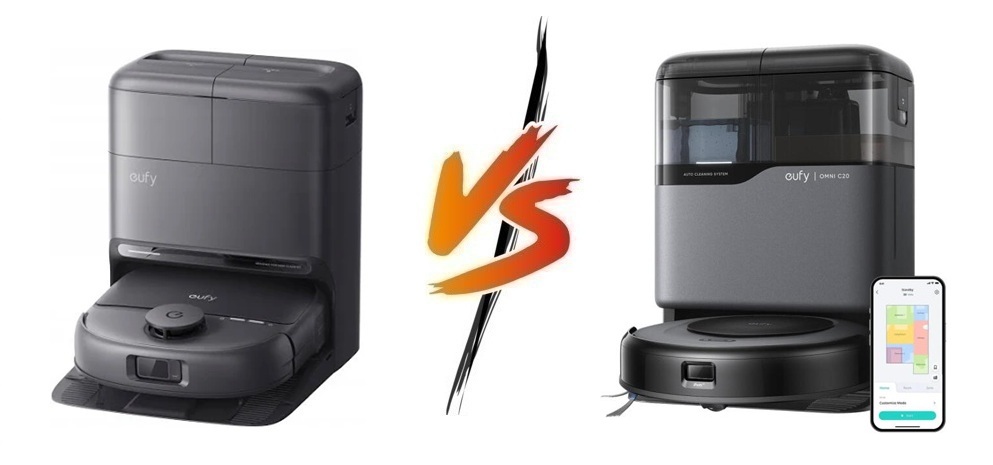
Eufy is basically at the same level as the big players in the world of robot vacuum cleaners. Even though people are always talking about the top-of-the-line models from brands like Roborock, Dreame, and Ecovacs, Eufy has been working on making their products all about being easy to use and maintain and not just having lots of fancy features.
If you look at the Eufy C20 and C28 side by side, they seem almost identical at first. They both have things like a self-emptying base, which uses lasers to navigate and avoid obstacles, anti-tangle brushes and can be controlled with an app and do both vacuum and mop. But when you dig a bit deeper, the main difference between them becomes clear. The C28 essentially takes all the good stuff from the C20 and makes it even better. It’s not just a new and improved version of the same thing, it was made to address some of the issues that ordinary mid-range robot vacuums have. It turns out that these two robots are aimed at different types of people. If you’re after something that is very cheap and very easy to use, then the C20 is probably what you want. On the other hand, if you’re looking for a low-maintenance owner experience, with an even better mopping function, and a bit more power and a more automatic way to maintain your machine, then the C28 is the one. This review will go over all the details of both of these machines, from how they look and work to what its like to live with them and own them long term.
Eufy C28 vs Eufy C20 Comparison Chart
If you click the links below, under the product images, you will be redirected to Amazon.com. In case you then decide to buy anything, Amazon.com will pay me a commission. This doesn’t affect the honesty of this review in any way though.
| Specification | Eufy Omni C28 | Eufy Omni C20 |
|---|---|---|
 |  | |
| Check the best price on Amazon | Check the best price on Amazon | |
| Model number | T211A110 | T2280 |
| Cleaning functions | Vacuum + mop | Vacuum + mop |
| Maximum suction power | 15,000 Pa | 7,000 Pa |
| Main brush | DuoSpiral™ anti-tangle brush | Pro-Detangle / anti-tangle brush |
| Side brush | Dual side brushes / CornerRover™ arm | Fixed side brush |
| Pet-hair handling | DuoSpiral™ anti-tangle system | Anti-tangle brush |
| Mopping system | HydroJet™ self-cleaning roller mop | MopMaster™ dual rotating mop pads |
| Mop type | Single rolling mop | Dual spinning mop pads |
| Mop rotation | 270 RPM | 180 RPM |
| Mop pressure | 1 kg / approximately 9.8 N | 6 N |
| Mop self-cleaning | Continuous/real-time roller cleaning | Automatic pad washing at dock |
| Mop lifting | 10.8 mm | Automatic mop lifting |
| Mop drying | Hot-air drying | Hot-air drying |
| Automatic dust emptying | Yes | Yes |
| Automatic water refilling | Yes | Yes |
| Dirty-water collection | Yes | Yes |
| Automatic mop washing | Yes | Yes |
| Automatic detergent dispensing | Yes | Not listed as an automatic dispensing feature |
| Dock type | 5-in-1 Omni Station | All-in-One Omni Station |
| Dust bag capacity | 3 L | 3.1 L |
| Clean-water tank | 2.2 L | 2.5 L |
| Dirty-water tank | 2.2 L | 2.4 L |
| Navigation | LiDAR/LDS + laser-line obstacle detection | iPath™ laser navigation |
| Mapping | Smart mapping / multi-room mapping | Smart mapping / multi-room mapping |
| Obstacle avoidance | AI obstacle avoidance using LDS + laser line | Bump/cliff detection; no dedicated obstacle avoidance |
| Camera | No RGB camera; laser-based system | No RGB camera |
| Multi-floor mapping | Yes | Yes |
| App control | Yes | Yes |
| Wi-Fi | Yes | Yes |
| Bluetooth | Yes | Yes |
| Voice assistant support | Yes | Yes |
| Standard vacuum runtime | Up to 216 minutes | Up to approximately 170 minutes* |
| Vacuum + mop runtime | Up to 123 minutes | Lower than vacuum-only runtime |
| Battery | Not prominently specified in current product listing | 3,200 mAh |
| Obstacle clearance | 0.79 in / approximately 20 mm | Not specified in the same format |
| Robot dimensions | 13.77 × 12.87 × 4.35 in | 328 × 334 × 85 mm / approximately 12.9 × 13.1 × 3.35 in |
| Robot height | 4.35 in / 110.5 mm | 3.35 in / 85 mm |
| Robot weight | Approximately 10.9 kg / 24 lb listed for the package/product configuration | 3.3 kg / 7.3 lb |
| Dock dimensions | 17.20 × 13.88 × 16.93 in | 330 × 289 × 460 mm / approximately 13.0 × 11.4 × 18.1 in |
| Recommended surfaces | Hard floors, wood floors, short-wool carpet | Hard floors, carpets and mixed flooring |
| Best suited to | Heavy-duty vacuuming, pets, mixed floors, advanced mopping | Everyday vacuuming/mopping, hard floors, lower-profile furniture |
| Overall positioning | More powerful, more advanced C-series model | More affordable, compact C-series model |
| My individual reviews | Eufy C28 review |
Design & Build Quality
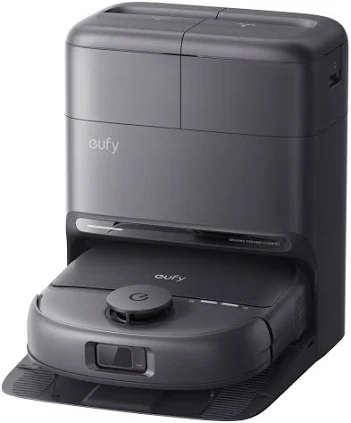
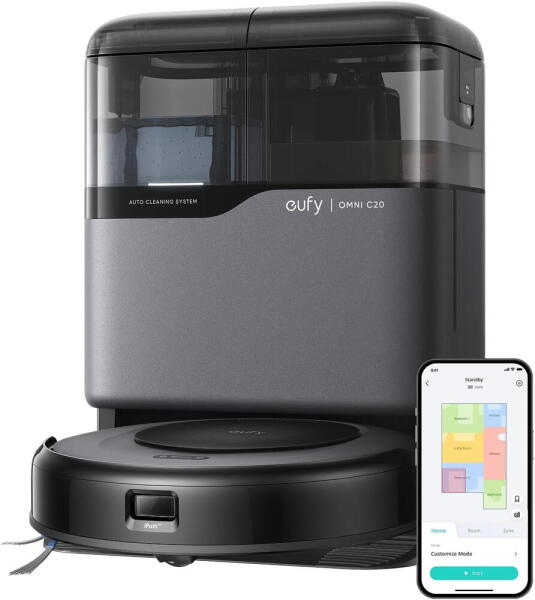
Eufy’s C20 and C28 basically share the same no-frills approach, favoring practicality over a showy appearance. They essentially look like the same thing from a distance, and at first, it might be hard to tell them apart. But taking a closer look shows there are some key differences, mainly in how they’ve thought about the whole package, not just the vacuum part.
The idea behind these simple, rounded shapes is that they can easily spin around in small spaces and go under most pieces of furniture. And because they’re only about 4 inches tall, they should be able to fit under a lot of different types of furniture. You know, all those hard-to-reach spots where a regular vacuum can’t get to. Sure, really, really low-clearance stuff might still be a problem, but most homes won’t have a problem with this.
Also, they’re about the right size. Not too big, not too small. They can hold a good-sized dustbin, the stuff they need to navigate your home and their battery, and still aren’t too big or clunky. So, they can get through the small spaces between the furniture without getting stuck. These two vacuums are made from a type of strong and durable plastic. They don’t have any fancy or special materials. They’ll get bumped and brushed against a lot of things and pick up a lot of dirt and dust. What matters more is how long they last, not what they look like. They are made from a special kind of non-reflective plastic that doesn’t get all smeared with fingerprints. This is a bit of a plus.
A lot of other, more expensive-looking vacuums end up with lots of nicks and scuffs after a few months. This one looks a bit better. They fit together very well with no gaps or creaks. When you press on different parts, there’s almost no movement. There’s also a good-sized bumper on the front that can take the hit when the vacuum runs into something. This gives you a sense of security, you know they’ll be okay for a long time.
On top, there are some small but nice buttons. They give a good feel and aren’t too loose or stiff. Most people will probably control the machine with the app on their phone, but having the physical controls is still helpful for quickly starting or stopping the vacuum.
Overall, it looks and feels like a solid, well-made product. It’s not too flashy and it passes the “does it feel like it might break?” test. If you use one of these in your home for a while, you should be happy with it. The Eufy C20 and C28 both have a special light on top that uses a laser to draw a map of the room. Some people worry that this might get in the way or break easily, but it’s actually built in properly. It moves around a tiny bit when you touch it, but that’s about it. And where it is, it doesn’t look like an afterthought, it’s part of the design.
However, it does make the vacuum slightly bigger than one with just a camera. But better mapping makes up for that. One thing that can make or break a good robot vacuum is how easy or hard it is to do the simple things like clean or replace the dustbin. Happily, both of these score well here. The bin just pops out from under the top. It takes no more than a bit of a pull and then you can empty it. It goes back on easily too. Accessing and cleaning the filter, which you have to do from time to time, is just as easy. And the water tank is just as simple to take out.
Although the vacuum will do a lot of the work, you still have to check on some parts now and then. You can appreciate that Eufy made these parts easy to find and replace when you need to. You’ll also notice that the main brush is in the middle and comes out with two easy-to-find release levers. It was a pain with some old robot vacuums to get the brush out when it got all tangled. Now you can do it in seconds. The side brush is attached but can still be swapped when it wears out. The wheels are also pretty cool. They can move up and down to get over some small steps and the like. The vac won’t lose its grip and will keep going. This helps it get a constant pull and move forward.
Lastly, the charging station is where these two differ the most. The C20 has a special Omni station that not only collects the dirt andempties the dustbin, but also does the dirty water, refills it with clean, and dries the mop. That leaves you with even less to do. And still, it’s not very big. It’s a good size for what it does. Replacing the bag in front is a breeze. It’s nice and doesn’t expose you to the yucky stuff you’re trying to clean. That’s especially good for people with allergies. The C28 essentially takes this and improves it.
On the outside, not a lot is different, but under the hood, the way it washes the mop is new. Instead of just doing it once, it has a special system that keeps cleaning the roller as you go. This may not sound like a big deal, but in the long run, it really helps. Your floors get even cleaner and there’s less chance of the dirt moving around. Cleaning the inside of the dock, which you have to do every now and then, is also a bit easier. That makes owning one of these a bit more enjoyable.
So where are these two vacuum cleaners? They’re not too big. Each one can fit up against a wall and they don’t take over the whole room. There’s a special way of managing the cables on the back which stops them from getting all over the place and making a mess. The two water tanks in each one are also placed side by side. This makes them take up less space even though they have lots of features. Anyone who already has a normal charging point for their vacuum will see that these ones are a bit bigger.
Essentially, they’re like a service center for your robot. They need some extra space around them for the vacuum to drive in and out freely. They are made to be used in a variety of rooms like a utility area, kitchen, or a hallway. Because of their simple design, they won’t draw a lot of attention to themselves. One of the best things about both of these is how well they work together as a single unit. Everything looks and feels like it was all designed at the same time. There are no signs of it being made in a hurry or that some parts were added on after the fact. Even the small details like the way you open and close them, and the way you clean and remove the brushes, show that the people who made them thought about how people would actually use them. Over time, the C20 is going to start to feel like a finished product. It has good, solid construction and a great, easy-to-use design which makes doing routine tasks a lot simpler.
With the C28, all that’s taken a little bit further. Its new and improved dock, and its better way of doing the final clean with the mop, make it a more polished and well-thought-out machine. The changes they’ve made haven’t changed what the robot looks like, but they’ve made using the whole system a lot easier and more convenient. Ultimately, neither of these is bad when it comes to how they’re made or how they look. They can both last for a long time if you use them every day. And they don’t feel cheap and flimsy like some other affordable robot vacuums. If just looking at the way they’re designed was the only thing that mattered, then the difference would be pretty small. But when you consider the special part these play in the overall product, then the C28 is a tiny bit better because it does a few more things in a more user-friendly way.
Navigation Intelligence & Mapping
If your robot vacuum doesn’t know where it’s going, then it might as well have no suction power, even the best one will just get the job done. Essentially, the way a robot finds its way around, gets around obstacles and knows when it has finished is all part of the basics. Most people expect more from their robot vacuums than just mindlessly bumping them around the house until they get the job done.
They need to create a map of the place, plan the most efficient cleaning route, stay out of the way of things and come back to their recharging base on their own. Thankfully, the Eufy C20 and C28 are a cut above the rest. They both have essentially the same main navigation technology: LiDAR which is basically a system that uses laser pulses to figure out how far apart from the floor and other objects that the vacuum is.
What this means is that it can draw up a pretty accurate picture of the space, and this is true whether it’s at 10 am when the sun is shining or 3 am when it’s dark. LIDAR gives two big advantages. First, it works all the time, no matter what. People who want to set their robot to clean when they’re not even at home obviously appreciate this. The second advantage is that it is fast. Eufy’s two models need just one quick tour around the place and then they’re ready to go. They don’t take ages to work out where everything is and then go back and forth over the same bit of floor.
In fact, in most cases, one go is enough for them to get a good idea of the layout, and with just a little bit of fine-tuning, you’re ready to go. A good robot will start by doing a quick scan of the area and then do a methodical sweep of the outside of the place before moving on to the inside. It does this because it needs to establish where the edges are.
Then, once it knows where the edges are, it can get on with the rest. And this is where you see the difference in the C20 and C28. They don’t just plod around looking lost and uncertain; they move with a purpose. They don’t get stuck in the middle of a room or spend too much time going over the same bit of floor. They’re just like mowing a lawn, one row at a time. By doing it this way, there are several benefits.
First and foremost, all areas get a good clean. There’s no bits that get left out. Second, it takes less time than other methods. And finally, because it doesn’t waste as much power, the battery lasts longer. So you can get more done. And it looks like they’re thinking, not just bumbling from one place to another. You watch them and it looks like they have a plan. They make nice, smooth turns and don’t pause for long when there’s a bit of open space. Both of these vacuums can tell one area from another. After it has finished making the map, you can name each room. And actually, this is pretty handy. You can tell the vacuum to just clean one room at a time. So if you’ve just made a mess in the kitchen, you can easily send it in there to clean up. Or if the kids have trodden mud all through the hall, then you can have the vacuum just focus on that. And because you can set the level of how hard it should be working, the type of floor and how often it should do the place.
So if you have a mix of different types of floors, this is especially useful. Hard floors get a light clean and the carpets get a deeper one. And because it remembers the settings, pretty soon you’ll hardly ever even need to think about it.
If your home has more than one level, you’ll need more than just one floor plan. Fortunately, both of these models can store and use different maps for each level, so you don’t have to create a new one every time you move the robot to a new floor.
Once a level is mapped, the robot will know where it is when you take it there. This makes it a lot easier to use the robot to clean upstairs or in a finished basement. You just take the robot to the floor you want to clean, turn it on, and let it find the right map. Although the charging base stays on one level, the robot can still clean other floors and then come back to the dock on its own when its battery runs out. You shouldn’t let your robot vacuum have free access to your whole house.
Some places like where you feed your pet, your kid’s play area, or a room with many cords should be off-limits. Both of these models let you set up no-go zones using the app. You can also set up no-mop zones for rooms with carpets or sensitive floors that can’t get wet. “Virtual walls” is another option, essentially, you can tell the robot which areas it can’t enter by drawing an invisible line. This is all easy to do and can be changed if your furniture moves around. These two robots are good at more than just telling where to go.
They also figure out the best way to clean and how to do it with the battery they have. Instead of cleaning in a random order, they plan a logical route that doesn’t have them moving back and forth too much. If they’re running low on power during a long job, they’ll go back to their charger, charge up, and then pick up where they left off. This is especially helpful in big houses where one charge probably won’t be enough. They don’t forget what they were doing and start over, they just keep going. All of this happens on its own, and it makes it seem like the robot is really in charge.
Overall, both of these are very good at navigating. After they’ve learned the layout of your home, using them is a breeze. Scheduling a clean is simple, they avoid most things that are in their way, and they return to their base without any problems. The combination of good mapping, smart cleaning, and the ability to set up no-go zones and get around obstacles all make them seem more advanced than you would expect from a robot in this price range. There’s not a lot of difference between the two, but the C28 is a bit better at planning its path and dealing with obstacles, and its overall performance is a bit more polished. If you get the C20, you’ll still be happy with its performance, but if you choose the C28, you’ll get an even better experience.
Cleaning Performance
So what really matters when it comes to a robot vacuum? Is it the cool features like Wi-Fi connectivity, automatic emptying, and a built-in water tank for mopping? Sure, those things are nice, but if your vacuum can’t even get the job done, then none of that other stuff matters. Luckily, both the Eufy C20 and C28 can get the job done, and they each do it in their own way.
The C20 is made for the daily mess that most people deal with. It’ll pick up the usual stuff like dust, crumbs, and pet hair. It’s also great at keeping your floors clean if you have a small amount of clutter. But if you have a bigger house, or a home with a lot of different types of flooring, the C28 is your best bet. It has a lot more oomph and is better at getting rid of tough messes. It also does a better job on carpets. It can pick up things that the C20 might leave behind, like dirt that’s worked its way down into the carpet.
When you look at the specs, the C28 has a higher suction power than the C20. But just having a higher number doesn’t necessarily mean it’s going to clean better. A lot of other things can affect how well a vacuum actually works, like its design and how well it picks up and moves around debris. Still, in real life, there is a big difference between these two. The C28 really does do a better job, especially on deeper or more varied messes. And with more people and/or pets in the house, or a mix of different types of flooring, that’s especially true.
On hard flooring like wood, tile, or stone, both vacuums do a great job. They both make quick work of things like dust, small pieces of food, and the like. Essentially, they’re both very good at keeping your hard floors looking their best. But the C28 is a bit more effective at picking up larger pieces of debris that sometimes give lower-end vacuums trouble. When it comes to getting around your home, especially where there are different types of flooring, the C20 and C28 both do well. They can both go over most of the common edge and threshold. They don’t usually get stuck.
They also don’t struggle too much when they move from one type of floor to another. The C28 has a slight advantage here. Its extra oomph helps it pick up more of what was left behind on the old floor before it moves on to the new one. For people with big, open-plan living spaces, this is especially a plus. Essentially, both of these vacuums will do a good job, but in different ways.
Kicking into high gear: Both of these vacuums do a great job of keeping your whole house clean without getting worse as they go. They’ve got good air flow systems that work well even when there’s a lot of junk in the canister. The C20 does well on a typical day of cleaning an average-sized place. But the C28 does even better, especially if you have a big house where the cleaner will be running for a long time. Because the C28 has a special feature that automatically empties the dirt and dust out of its container when it gets too full, it doesn’t get slower like some other robot vacuums do when the canister is full. So, you still get the same level of clean from it.
Now, let’s talk about cleaning around the things in your home that are hard to get to, like the legs of tables and chairs. These are problem areas because they have small spaces and lots of dust and dirt gets stuck there. But both of these vacuums have special navigation systems that help them get close to these areas without bumping into them and the side brush on the C28 is especially good at picking up the stuff that’s been pushed up against the furniture. If you have a really dirty spot near some of your furniture, the C28 might need to make a second pass, but the C20 might not pick it all up. Most people don’t vacuum as often as they should.
They usually do it about once a week or every 10 days. But these two robot vacuums change the way we think about this. They’re so quiet and easy to use that you can set them to run every day, or even multiple times a day if you live in a very busy home. Instead of having a lot of cleanup all at once, they just take care of the little bits of dirt and dust that come in all the time. As a result, your place will feel a lot cleaner. And there won’t be any big piles of dirt and dust and hair and crumbs all over the floor.
If you want a low-maintenance solution for your home, the C20 will keep your floors clean and looking nice. It’s perfect for a small house, or an apartment, or for anyone who just wants a simple and affordable option. But if you need something more powerful, the C28 is the better choice. It’s basically a better all-around cleaner. It’s not just a bit better, it can handle most situations and will only rarely need a second pass. If you want a robot that can do all the little cleanups and the big ones too, the C28 is the way to go.
Carpet Performance
Cleaning carpets with a robot vacuum is harder than it is for hard floors because of the way that they trap and hold onto dirt and other debris. For one thing, when you walk on a carpet, you push some of the dirt and other small things like this into the carpet. And then there’s static and the carpet just sort of holds onto it. Pet hair gets all tangled up in the fibers and fine stuff settles down below the surface of the carpet, and bigger pieces can even get stuck down inside. Robot vacuums can’t push down on the carpet like a regular vacuum can.
They have to use their own weight, and their brushes and suction to pick up the debris. So, it’s not just about having a lot of suction, it’s about how well the vacuum moves around, how its brushes work, if it can tell the difference between a carpet and something else, and how good a job it does of moving air through the space. The two Eufy vacuums, the C20 and the C28, do okay on most people’s carpets, but they do a bit better in different ways.
The C20 is okay for people who don’t have a lot of really thick or old or high-piled carpets. It’ll get most of the surface dirt and dust. If you run it a few times a week, your low-pile and mostly hard flooring will stay pretty clean and you won’t have to do a lot of extra hand-vacuuming. It moves in a pattern and covers the whole area, which also helps. Essentially, it goes back and forth in the same path over and over until it’s done. This way, it doesn’t miss any spots. On low-pile carpet, it picks up fine stuff, like dust and small bits of food or pet hair, from the surface. And it will keep it looking good. But when you step up to medium-pile or higher, it gets a bit tougher.
Then, the Eufy C20 still does a decent job, but it has trouble with the thicker and more stubborn dirt and debris. It does okay with everyday messes, but when you have a lot of crumbs or tiny things like that, or it’s been a while since the carpet was last cleaned, it might take a few passes to get everything. And same with the C28. It does a way better job, though. It really shows how much more it can pick up in one go. So, if you have a lot of medium-pile or higher, this is a good thing. It means the carpet stays cleaner for longer between when you have to do it by hand.
People who have pets essentially judge their robot vacuums based on how well they do on carpet. And for good reason, cats and dogs shed all over the place, especially in the areas where they sleep and play. Essentially, this hair gets all tangled up with the carpet fibers. A robot that can deal with this is a must-have. The eufy C20 does okay with just loose hair, but its design has a special brush that pushes the hair towards the vacuum’s hole and stops it from getting all wrapped around the brush. If you have a short-haired dog or cat, this will be fine. If you have a long-haired one, you might have to do an extra pass over the same spot if it’s very hairy.
The eufy C28 does an even better job. It has a lot more suction power than the C20, which means it can pull out the hair that’s already inside the carpet, not just what’s just lying on top. If you have two or more pets, you’ll really notice the difference, especially on furniture, in their beds, and in the hallways where they shed the most. No matter what, though, a robot won’t ever remove all the need for doing some deep cleaning on your carpets. But it will make it so you don’t have to do it as often.
Both of these eufy models have a special feature: they can tell when they’re on a carpet and will automatically turn up the suction. They do this without you having to switch any settings. When they move from a hard floor to a rug, they adjust what they’re doing and keep on going without stopping. The C28 does this even better because it’s a lot more powerful. So, it doesn’t make as big of a difference in its cleaning on different types of floors. Where the carpet meets the wall or the baseboard, or where it rubs against the furniture, is where a lot of the dust and pet hair ends up. Both of these vacuums use a side brush that pushes everything towards the middle.
The C20 does a pretty good job here, but the C28 does a bit better. It’s worth noting that because they’re round, there will always be some spots where the vacuum can’t quite reach, like super-sharp corners. You may still have to get out the old vacuum for those. Otherwise, though, these two do a great job of cleaning along the edges. Really, the main difference between these two is how you should think about them.
The C20 is best at keeping your carpets looking good by doing a little bit of cleaning every day. If you don’t have a lot of people or animals in your home, and most of your floors are hard, then it will work just fine.
The C28, on the other hand, is more about giving you a deeper clean. It will pick up a lot more dirt and debris than the C20, which means your carpets will stay cleaner for longer and you’ll not have to get out the big vacuum as often. If you have kids, or a lot of pets, or a lot of people in and out of your home, this might be worth the extra money.
Pet Hair Performance
Picking the right robot vacuum for your home can start with one thing: how much of a pain in the neck is pet hair. If you’ve got a house with one or more dogs or cats, then you’re going through this. Pet hair just keeps coming and can get everywhere, under the couch, wrapped around the legs of your chairs, and stuck in the carpet. And if you have long-haired pets, their fur can easily get all tangled up in your robot vacuum’s brushes and clog up its parts. So, when we looked at the Eufy C20 and C28, we were interested in how well they deal with this stuff. Both of them say they’re good with pets, but we wanted to see if that’s just a sales pitch or if there’s some real substance behind it.
Essentially, what we’re looking for in a pet-owning household is a vacuum that can handle the following:
1. make enough of a current to pick up the light as well as the long, fine undercoat that pets shed;
2. has a good brush that can get the hair out of the carpet fibers;
3. doesn’t get all clogged up with tangles;
4. has enough room in its dustbin and is smart enough to deal with the extra yuck that pets produce.
Hard floors are actually the easiest for a robot to clean when there’s a lot of pet hair around. Both the C20 and C28 do a great job on hardwood, tile, and other non-carpeted surfaces. They don’t really spread the hair around, and the side brush on both of them picks up the loose stuff from along the walls and baseboards and sends it towards the main brush and the suction. Daily cleanings work especially well in homes with pets. It would otherwise take a while for the hair to build up and form big clumps.
The C20 does a pretty good job here, but the C28 does it a bit faster and more consistently, especially when there’s a lot of new fur coming out. But carpets are a whole different story. Because of all the foot traffic, the hair gets pushed down into the fibers, where it gets all knotted up. The C20 does okay with the hair on the surface, but after a couple of days without a cleaning, it starts to struggle. Some of the hair stays in the carpet. If you’ve got a short-haired cat or a small dog, you’ll probably not have too much trouble. But with a bigger dog or more than one, you may end up having to run the vacuum over the same spot a few times to get all the hair.
The C28, on the other hand, does a much better job. It has more powerful suction, which means it picks up more of the hair on the first pass, so you don’t need to go over it as many times. In fact, it actually makes the carpet a bit cleaner than it was before. And this is especially true for people with multiple dogs or who have a lot of seasonal shedding. For people with long-haired pets, their fur is the most problematic. It can easily wrap itself around the C20 and C28’s spinning brushes. But the Eufy guys have come up with a special anti-tangle brush called the DuoSpiral.
Instead of using a regular, round brush that just makes the hair wrap around it, the DuoSpiral has a special design that directs the hair towards the center and away from the brushes. This is a big plus for both of the Eufy’s. They do a good job with this, and the C28 takes it a bit further. After several cleanings, you still have to clean out the C20’s brushes, but the C28’s stay relatively free of hair.
Finally, for those of us who deal with a lot of pet hair, the worst part of the year is when our pets blow their coat. It’s like a never-ending supply of fluff. But the Eufy’s have some features that are particularly useful during this time. The C20 empties its own dustbin into a larger canister, which is super handy when there’s a lot of hair coming out. And the C28 has even more powerful suction and a smarter way of dealing with the full can, so it can keep on cleaning without needing a break. All in all, if you’ve got multiple dogs or really shed a lot, the C28 is the better bet. It’s not a huge difference, but it will save you time and effort in the long run.
If you have a pet, you probably know how much dirt and other stuff comes out of your vacuum. This is especially true because of all the hair that your pet sheds. It takes up a lot of room in any trash can. So if you have a robot vacuum that doesn’t have a self-emptying base, you’ll need to empty it by hand. This isn’t a problem for most Eufy models. They have special self-emptying stations that move the yucky stuff from the vacuum to bigger bags. If you have one or two dogs or cats, you might not have to change the bag for a month or more. It will really save you time when your pets are shedding a lot. And it’s especially nice not having to check and see if the bag needs to be changed. You just let the machine do its thing! It also makes it easier to get rid of the hair and dander (which is another type of small, powdery stuff that comes from your pet) that’s in the air. This makes it harder to notice any bad smells in your home. By getting rid of the extra hair on the floor, you’re also making it less likely that it will end up on your socks and feet.
The way these Eufy vacuums pick up the pet hair makes it easier to clean than other brands, which means you don’t have as much contact with the yucky stuff. People who have multiple pets need the best vacuum possible. One little cat might not make enough hair for the Eufy C20 or C28 to have a big impact. But a few big dogs will definitely push them to their limits.
The C20 can still work well if you plan to run it every day. However, it might take a couple of tries to get the really hairy areas clean. The C28 does an even better job. It has a stronger pull, which lets it get more hair in each pass. Also, it doesn’t lose its power when it’s working for a long time. So, if you have a dog that sheds a lot, such as a Golden Retriever or a Siberian Husky, you’ll really like the C28. Caring for your Eufy robot is pretty easy.
Over time, some hair and other things will build up on the brushes and the filters. But both of these Eufy models are not too bad. You can take off the main brush without any tools, and the other parts are also easy to find and replace. Because the C28 has a slightly better way of dealing with tangles, you’ll have to do even less work on it. Neither of these is “no-maintenance” but they do need a lot less attention than other robot vacuums made for people with pets.
All in all, the Eufy C20 and C28 are great for anyone with a pet. They each come with a lot of good features and are low-maintenance. The C20 does a good job in a small to medium-sized home or on hard floors. The C28 does everything the C20 does, but better. It’s especially good for people who have lots of pets and want to spend less time picking up after them.
Maintenance & Cleaning
Two things make the Eufy C20 and C28 stand out from other robot vacuums: how little work you have to do after each use and how much easier they are to live with overall. Older robot vacs said they’d make cleaning easier, but in reality, you still had to empty a small container, get hair out of the brushes, wash the mops by hand, and regularly clean the sensors.
This made the upkeep not much different from the way you take care of a regular vacuum. The Eufy models change this. They have self-emptying docks, which put the dirt and yucky stuff into a bigger bag inside the base. This makes a big difference. If you forget to empty the old container, your next clean won’t be as good. People with pets especially will need to empty it after every use because of all the fur that gets collected.
But with the Eufy, you probably won’t have to do this more than a few times a month, and that’s if you have lots of pets or a really large home. Cleaning the mini dustbin inside the robot is also a lot easier. You just pull it out and push it back in. It’s a bit like taking out the battery from your phone. The inside is pretty smooth so dirt doesn’t get stuck in the corners. After a while, just give it a quick rinse and let it dry, and it’s ready to go.
This design makes one of the small but annoying parts of owning a robot vacuum a lot easier. As for the filters, like any vacuum, they catch the tiny stuff in the air. Changing them isn’t hard, just pull them out and either tap off the big clumps or follow the instructions to wash them. If you have a pet or allergies, you might need to do this more often.
But because the filters are so easy to get to, it doesn’t feel like a big deal. And when you do need new ones, they’re not too expensive. Another thing that’s always been a pain with robot vacs is dealing with the brushes. Long hair from people or your pets gets wrapped around them and that slows down the cleaning and takes a while to sort out.
The Eufy C20 and C28 have something called the Duo spiral. Most of the long hair ends up in the dirt container instead of on the brush. You’ll still need to do some work, but a lot less than with most other robots. If and when you do have to clean the brushes, you just snap off the cover and take out the roller. Any remaining hair comes off easily and you can put everything back on in about 10 seconds.
You also have to check and clean the side brushes and the wheels. Like the main brush, they pick up a lot of fluff and string. Getting to them is not a problem. They can be taken out and put back in without any tools. The wheels might get some hair wrapped around them, which can stop the robot from moving around. But that only needs to be done about once a month. Cleaning the sensors (which help the robot know where it is and what’s around it) is also a breeze. Just a soft cloth and a quick wipe and they’re good to go. Do this about once a month and your Eufy will continue to navigate around your home with ease.
Both of these vacuuming machines share one major benefit when it comes to upkeep, they each have an auto-mop feature. Most people have to take off and hand-wash and then let the old-fashioned way of doing things air-dry before you can use the mop again. Not so with the C20. After a clean, it goes back to its charging dock, where the whole thing is given a good rinse and then a quick blast of warm air to dry it. Not only is this less work for you, but it also makes the mop last longer because it doesn’t get all stinky and develop those nasty smells that happen when a mop gets too damp and sits around.
It goes one step better with the C28. Its “Hydrojet” system is like a built-in cleaning agent that keeps the mop head free of yucky gunk for most of the time. It’s not just a case of giving the thing a quick once-over at the end of the job; the C28 keeps the mop clean throughout the entire job. It ends up needing a lot less from you because of this. It can cover a bigger area and do a better job because of it.
Both of the charging stations have two separate containers, one for clean water and one for the dirty stuff. You just top up the clean one when it runs out, and the other one collects all the yucky old water that gets splashed about during the mopping. They’re a bit of a pain to empty, I suppose, but at least they’re easy to get in and out. And they’re made of a hard plastic that should last for ages. They’re not exactly the most glamorous job in the world, but at least you can do it quickly and with your hands relatively clean.
One of the few bits that will still need a bit of a wipe around from time to time is the actual base of the machine. They’re essentially self-servicing, but like all appliances of this sort, they will benefit from the odd once-over. On the C28, though, you’ve got a bit more room to get in there and give it a good clean. That makes it a bit easier.
Eventually, all the various parts on these things will wear out and need to be replaced. That’s especially true of the brushes and the filters. But the nice thing is that the ones used by the C20 and C28 are fairly simple and not too expensive. Replacing them is part of the cost of running one of these, but it’s not too bad. Perhaps the new-design brush on the C28 is a bit of an improvement here too, though. It’s less likely to get all tangled up with long hairs, so that will last longer.
Essentially, what you get with either of these is a low-maintenance machine that will just get on with the job and not really bother you. Scheduling cleanings happens on its own. Emptying the dustbin is all taken care of automatically. The mop gets cleaned and dried. New water gets added when it runs out. Hair gets untangled very infrequently. Essentially all you do is the odd check now and then to make sure everything is still in order. It’s a great experience if you’re coming from one of the older, more demanding models. And the C28 takes it a bit further by making even more of the process easier. So, all in all, these two do an excellent job at making something that was always going to have some upkeep, a lot less of a chore.
Ergonomics & Ease of Use
Eufy’s C20 and C28 are essentially automatic and easy to live with. You set them up, and then they just work in the background. The way you interact with them is pretty low-key. Most of the time you’ll be using the phone app. You’ll probably only need to do this for a minute or two a day. Getting started with either of these vacuums is super easy. Take them out of the box, and plug in the base. Make sure there’s enough space around the base for the robot to move around. The water and dirt containers are clearly labeled, and most come with a pre-attached dust collector.
To connect the robot to your Wi-Fi and get it up and running, you just follow the in-app instructions. Even if you’re not very tech-savvy, you should be fine. The first clean is also when it does the initial mapping of your home. So, you can start using it right away. These two models have one of the simplest and most painless setup processes of any robot vacuum on the market.
Both of the robots has a few buttons on top. They let you turn them on and off, and start or stop a cleaning. They’re big and clicky, so it’s easy to find and press them by touch. It might sound like a small thing, but it’s actually really handy. If you spill something on the floor, it’s quicker to hit the ‘go’ button on the robot than it would be to pull out your phone. Visitors or family members who aren’t used to the app can still use the robot with just these basic controls. The main way you’ll be interacting with the Eufy, though, is through the app. And, happily, this part of the experience is also a real winner. The app is clean and simple and doesn’t try to overwhelm you with lots of unnecessary options.
When you open it, it shows you a map of your home, and you can start a full or partial clean with just a couple of taps. You can rename your rooms, adjust the cleaning settings, and look at your cleaning history in a clear and not too cluttered way. Most of the time, it only takes a couple of seconds to do what you need to on a daily basis. Even more advanced features like setting a schedule, setting virtual barriers, and choosing which areas not to clean are explained in a way that anyone can figure them out without having to read the manual. The app strikes a good balance, giving you a lot of control, but not making you feel like you need a degree in computer science to use it.
One of the biggest benefits of a robot vacuum is that it does a lot of itself, and both of the Eufys take full advantage of this. Scheduling a clean is a breeze. You tell the robot when and where you want it to clean and at what power level. For example, you could set your kitchen to get a once-over after dinner and your bedrooms to get done twice a week. You can also set the right suction and mopping intensities for specific rooms, so the robot can just do them on its own. Once you’ve got all this set up, the Eufy will go off and do its thing, and you won’t really need to think about it. In fact, you might only look at the app to see how it’s getting on, or to remind you to do some occasional cleaning or maintenance. That’s basically what most people who buy a high-end robot like this are hoping for. Of course, maps aren’t always 100% right, and you might need to make some changes.
Luckily, both of the Eufy’s make this part super easy. You can rename a room, join or split them, and even draw in any areas you don’t want the robot to go into. You can also mark places where you don’t want the mop to go. These tools are fun to use, they work well, and you don’t need any special skills to get the hang of them. Compared to some other apps which hide these features down in a menu, Eufy’s way of doing it is much more logical. In the end, what I think is the best thing about these two robots is that they’re just so low-maintenance.
Once you’ve set them up, they just run in the background. They go back to their charging dock when they’re done, empty themselves, wash and dry their mops, and then go back to waiting. Before long, you’ll hardly ever even notice they’re there. Which, I think, is what good design should do. It should make our lives simpler, not add to the list of things we have to do. Both of the Eufy models do this.
If you own a house with multiple levels, you may wonder whether a robot vacuum is a good idea. However, the Eufy models are up to the task. They can handle homes with multiple floors because they can store many different floor plans in their memory. This makes it easy to take them upstairs when you need to. Because the machines are not too heavy, it’s not hard to move them from one floor to another. Once you get one on a new level, it quickly figures out where it is and starts cleaning without needing to be re-mapped.
Even though the charging dock stays on just one floor, the fact that the robots are so portable makes cleaning multiple stories relatively simple. Getting used to a new smart home device can be intimidating when it presents too many options and settings. That is not the case with the C20 or C28. At first, you can just use the basic cleaning functions, and then more advanced features become available as you get more comfortable with the system. This gradual introduction makes the product appealing to people who are buying a robot vacuum for the first time, and it still gives experienced users the ability to fine-tune how the cleaner operates. After a few days, most people will feel at ease using the app and changing the settings. A product is not truly “smart” if it doesn’t work as it should. If you have to constantly stop and fix problems, then it’s not very helpful.
Fortunately, both of these Eufy models do their jobs as expected. They start and finish the scheduled cleanings on time. They go back to the charging dock when they are supposed to. The self-cleaning feature of the mop works properly, and the batteries are managed well by the robot. It will even finish a job and then go and charge, then come back and pick up where it left off. This makes it possible for you to leave the house and know that the cleaning will be done when you get back. Many people overlook one part of the design: how easy it is to use.
Not everyone is a tech expert and not everyone is in perfect health. These two Eufy models are especially good for older people, those with mobility issues, or anyone who just wants to do less around the house. They can now have their floors cleaned by scheduling a cleaning, which would have otherwise required them to push a heavy vacuum. The Eufy’s simple app, low-maintenance design, and reliable way of working all make it possible for a lot of different people to use them.
Overall, both the Eufy C20 and C28 give you the kind of experience that people have been promising from their robot vacuum for a long time. From unboxing to using them, everything has been thought about. It’s not hard to set them up, and there are always physical buttons if you prefer those over the app. Also, since there is a lot of automation, you don’t have to spend much time telling the robot what to do.
Keeping them running is also a breeze, as all the parts are in an easy-to-reach place. Features like setting a schedule, drawing a map of your home, using a voice assistant, and the auto-dock all work together to make using these two Eufy robot vacuums very easy and not just something that sounds good on paper. The C20 is already one of the most user-friendly in its class and will probably meet the needs of most homeowners. The C28 takes it a bit further with a better dock and some small but useful improvements.
Neither one of them require a lot of special knowledge, a lot of fiddling, or complicated care. What most people want from a robot: a working, low-maintenance, and quiet way to keep their floors clean, that is what they deliver. Between the two, the C28 has a slight edge, but both set a high standard for being easy to live with and use.
Conclusion
The eufy C20 and C28 are two top-notch examples of just how far robot vacuum technology has come. Not only do they not feel like a watered-down version of a real vacuum, they also don’t make you do most of the work. They each have a strong vacuum, clever LiDAR navigation, and a smart way of collecting and storing the dirt and also include a high-tech mopping system.
This makes it a lot less work to keep your house clean. If what you’re after is a reliable and effective daily cleaning experience without the very strongest possible cleaning power then the 8,000 Pa of the C20 will do a great job. Especially when it comes to giving the once over on your hard floor or on low to mid-pile carpets, and it’s good at dealing with any pet hair you may have. Its charging station will also cut down on the usual type of maintenance that you get with a standard robovac.
If you live in a small place, like an apartment, or you don’t have too many cleaning jobs, this one is a perfect balance of what you need and how easy it is to use. But if you want the full package then the C28 is the better choice. With its 15,000 Pa of suction, it will pick up dirt and debris from your carpet and really tough pet hair with ease. On top of this, it also has a more advanced mopping function called the Hydro Jet and a more modern charging base. This will take even less time and effort out of your cleaning routine. It’s ideal for bigger houses, people with lots of pets, and those who want their robovac to do as much of the actual cleaning as possible.
So, essentially, it all depends on how much of a cleaning and how much of the drudgery you’re willing to let the machine do. If you just want to throw something on the floor and have it stay that way, then either one will do a great job with a minimum of fuss. But if you want the one which leaves the least room for you to have to get out your old fashioned vacuum and mop, then the C28 is the obvious choice.