
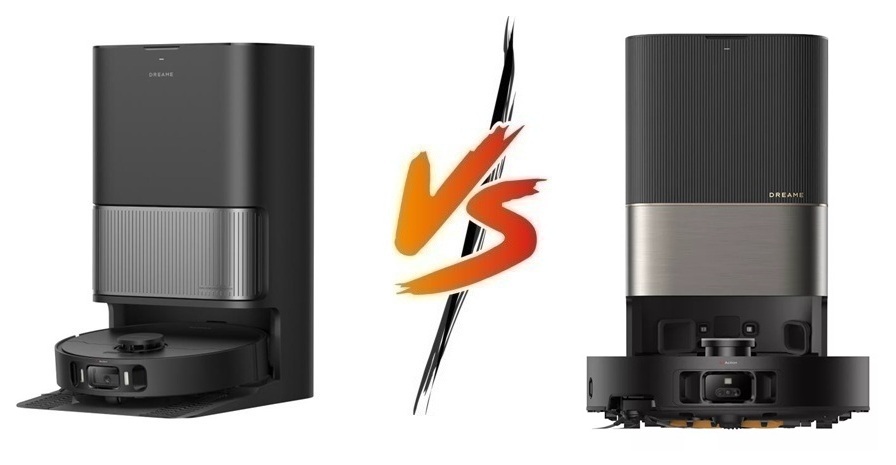
If you’re deciding between the Dreame L40 Ultra and the Dreame X50 Ultra, you’re already looking at two of the more advanced robot vacuums on the market. These aren’t entry-level cleaners that just bounce around randomly. Both models are designed to take over most of your floor care with minimal input, from vacuuming to mopping and even self-maintenance at the dock.
At first glance, they seem very similar. They share the same overall philosophy: strong suction, rotating mop pads, and a fully automated base station. But once you look closer, the differences start to matter. The X50 Ultra is positioned as the flagship, with newer navigation tech, more adaptive cleaning, and a stronger focus on automation. The L40 Ultra, meanwhile, aims to deliver most of that experience at a more reasonable price.
This comparison focuses on how those differences actually play out in everyday use.
Dreame L40 Ultra vs Dreame X50 Ultra Comparison Chart
If you click the links below, under the product images, you will be redirected to Amazon.com. In case you then decide to buy anything, Amazon.com will pay me a commission. This doesn’t affect the honesty of this review in any way though.
| Category | Dreame L40 Ultra | Dreame X50 Ultra |
|---|---|---|
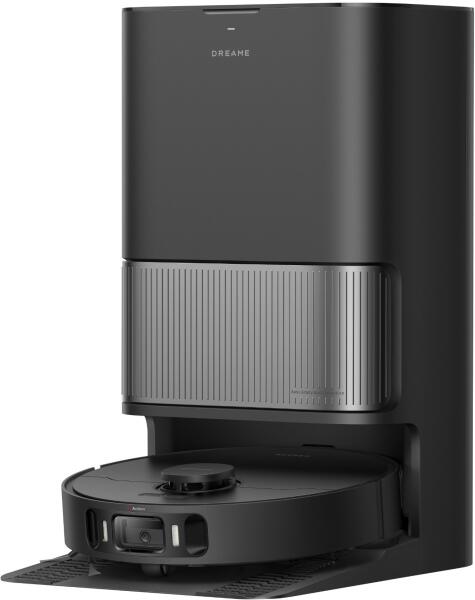 | 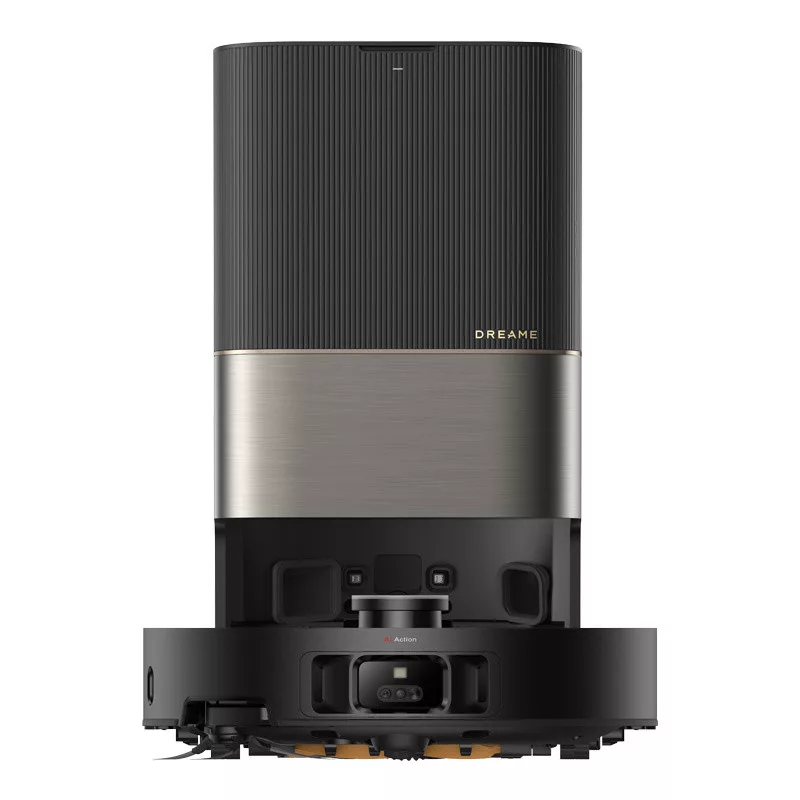 | |
| Check the best price on Amazon | Check the best price on Amazon | |
| Product position | Upper mid-range flagship | Top-tier flagship |
| Suction power | High (premium-level) | Higher (enhanced flagship level) |
| Navigation system | LiDAR + camera | LiDAR + camera + advanced 3D sensing |
| Obstacle avoidance | Good | Excellent (more advanced recognition) |
| Mapping capability | Multi-floor mapping, room segmentation | Faster, more detailed, more adaptive mapping |
| Maximum threshold climbing | ~1.9 cm | ~3.8 cm |
| Height profile | Taller (fixed LiDAR tower) | Lower (retractable LiDAR for under-furniture access) |
| Vacuum brush system | Anti-tangle main brush | Improved anti-tangle brush system |
| Side brush | Standard side sweeping brush | Enhanced adaptive side brush behavior |
| Mopping system | Dual rotating mop pads | Improved dual rotating mop pads with adaptive pressure |
| Mop pressure control | Fixed/standard adjustment | More dynamic pressure adjustment |
| Water tank system | Dock-based clean/dirty water tanks | Improved efficiency + optimized water handling |
| Mop lifting on carpet | Yes | Yes (more responsive and precise) |
| Self-empty dustbin | Yes | Yes (more efficient and consistent) |
| Mop washing system | Automatic washing + drying | Improved washing efficiency + better drying consistency |
| Dust bag capacity (dock) | Large capacity (multi-week use) | Similar capacity (optimized airflow efficiency) |
| Battery life | Long runtime (large home coverage) | Similar or slightly improved efficiency in real use |
| Noise level | Moderate | Slightly quieter and smoother acoustics |
| App control | Dreame app (full control suite) | Dreame app (enhanced automation behavior) |
| Smart mapping features | Room naming, zoning, no-go zones | More precise zone handling + better auto segmentation |
| Pet handling | Good | Excellent (better hair handling + obstacle detection) |
| Under-furniture cleaning | Limited by fixed height | Improved due to retractable LiDAR |
| Maintenance frequency | Moderate (periodic manual cleaning needed) | Lower (more automated upkeep behavior) |
| Best suited for | Standard homes, value-focused buyers | Complex homes, pets, premium automation users |
| My individual reviews | Dreame L40 Ultra review |
Design & Build Quality
Design is one of those things that seems secondary when you’re buying a robot vacuum, right up until you’ve lived with one for a few weeks. Then it starts to matter a lot. These machines sit out in the open, move around your home daily, and interact with furniture, walls, and clutter. The way they’re built affects not just how they look, but how they behave.
At a glance, the Dreame L40 Ultra and Dreame X50 Ultra follow a similar visual language. Both are round, low-profile robots paired with a relatively large docking station. But once you spend time with them, the differences become more noticeable and, in some cases, surprisingly important.
Overall aesthetic and presence
The L40 Ultra has a clean, understated look. It’s the kind of design that blends in easily. The finish is matte, fingerprints aren’t too obvious, and the shape is familiar if you’ve seen robot vacuums before. It doesn’t try to stand out, which is actually a strength if you prefer something that doesn’t draw attention in your living space.
The X50 Ultra takes a slightly different approach. It still looks minimal, but there’s a more refined, almost engineered feel to it. Edges are tighter, transitions between materials are smoother, and the whole unit feels more deliberate. It gives off the impression that more thought went into how each part fits together.
This becomes more apparent with the dock. The L40’s base station is functional and well-built, but it looks like a piece of equipment. The X50’s dock feels more integrated, almost like a home appliance you wouldn’t mind placing in a visible area like a kitchen corner or hallway.
Neither one is unattractive, but the X50 feels more like a finished product, while the L40 feels more like a very good tool.
Materials and durability
In terms of materials, both robots use high-quality plastics, and neither feels cheap. The L40 Ultra is solid, with panels that don’t flex much and a body that can handle daily bumps into furniture without issue. It’s clearly built for long-term use.
The X50 Ultra builds on that with slightly tighter tolerances. When you pick it up, there’s less creaking, and everything feels more compact. Buttons have a more defined click, and the removable components, like the dustbin and mop system, fit more precisely.
That said, there’s a trade-off here. The L40’s simpler construction might actually work in its favor over time. Fewer moving parts usually means fewer things that can wear out or fail. The X50 introduces more advanced mechanisms, and while they feel premium now, they do add complexity.
It’s not that the X50 feels fragile. It doesn’t. But it is more intricate.
The LiDAR system and height design
One of the most noticeable physical differences is the LiDAR system.
The L40 Ultra uses a traditional fixed LiDAR tower on top. This is the standard approach and works well. The downside is that it adds height, which limits how low the robot can go under furniture.
The X50 Ultra changes this with a retractable LiDAR module. When the robot approaches low-clearance areas, the sensor lowers, reducing the overall height. This allows it to clean under furniture that the L40 simply can’t reach.
This isn’t just a gimmick. In real homes, it makes a difference. Think about sofas, beds, and cabinets that sit just a bit too low for most robot vacuums. The X50 can often get into those spaces, while the L40 stops short.
From a design perspective, this is one of the most meaningful upgrades. It’s a mechanical solution to a real-world limitation.
But again, it adds complexity. A moving LiDAR system is inherently more complicated than a fixed one. Over time, that could matter, although it’s hard to say how much without long-term data.
Bumpers, sensors, and external components
Both robots are covered in sensors, but the way they’re integrated differs slightly.
The L40 Ultra has a more traditional layout. Sensors are visible, especially around the front bumper and edges. The bumper itself is sturdy and responsive, designed to absorb light impacts without damaging furniture or the robot.
The X50 Ultra integrates its sensors more seamlessly. The front section, in particular, feels more cohesive, with fewer obvious breaks in the design. It gives the impression of a more advanced system, even before you see it in action.
Functionally, both are durable. They can handle daily navigation, small collisions, and general wear without issues. But the X50 feels more refined in how those components are packaged together.
Wheels and underside construction
Flip both robots over, and you’ll see another layer of design decisions.
The L40 Ultra has a straightforward underside layout. The main brush, side brush, wheels, and mop system are all easy to access. Maintenance is simple, and parts are easy to remove and clean.
The X50 Ultra keeps a similar layout but refines it. The wheels feel more robust, with better suspension and slightly more travel. This contributes to its improved ability to handle thresholds and uneven surfaces.
The brush system on the X50 also feels more advanced. It’s designed to reduce tangling and improve pickup, especially for hair. The materials used here feel slightly more durable, and the overall construction is tighter.
From a user perspective, both are easy to maintain. But the X50 gives the impression that it’s built to handle more demanding environments.
Docking station design
The docking station is a huge part of the experience with these robots. It’s not just a charger. It’s where the robot empties its dustbin, washes its mop pads, and dries them.
The L40 Ultra’s dock is large but practical. It has clearly defined sections for water tanks, dust collection, and cleaning components. Everything is accessible, and the layout makes sense.
The X50 Ultra’s dock feels more polished. The design is more compact in appearance, even if the size is similar. Panels fit more cleanly, and the overall look is less industrial.
One thing you notice over time is how the dock integrates into your home. The L40’s dock feels like something you place out of the way. The X50’s dock feels like something you can leave in a visible spot without it looking out of place.
This might sound minor, but when you’re living with the device every day, it matters.
Water tanks and maintenance access
Both models have removable water tanks for clean and dirty water. The L40’s tanks are functional and easy to handle. They slide in and out without much effort, and the handles are sturdy.
The X50 improves slightly on this with better ergonomics. The tanks feel more balanced when you carry them, and the seals are a bit tighter. It’s a small upgrade, but it makes routine maintenance feel a bit smoother.
Access to internal components is also slightly better on the X50. Panels open more cleanly, and there’s a sense that everything was designed with repeated use in mind.
Size and footprint
In terms of size, both robots are similar, but the X50 has a slight advantage in height due to its retractable LiDAR. This gives it more flexibility in tight spaces.
The dock footprint is comparable, though the X50’s design makes it feel less bulky visually.
If space is tight, neither is truly compact, but the X50 is easier to live with in visible areas.
Long-term design considerations
This is where things get more subjective.
The L40 Ultra’s simpler design might age better. Fewer moving parts, fewer advanced mechanisms, and a more straightforward construction could mean fewer issues over time.
The X50 Ultra is more ambitious. It introduces new features that improve performance and usability, but they come with added complexity.
So the question becomes: do you value simplicity or innovation?
If you want something dependable and straightforward, the L40 feels like a safe bet.
If you want something that pushes the category forward and offers tangible improvements in daily use, the X50 stands out.
Final thoughts on design
Both robots are well-built. There’s no clear loser here.
The L40 Ultra is solid, practical, and easy to live with. It does everything you expect from a premium robot vacuum without overcomplicating things.
The X50 Ultra goes further. It refines the design, improves integration, and introduces features that genuinely change how the robot interacts with your home.
In day-to-day use, the X50 feels more advanced. But the L40 still holds up as a reliable, well-designed machine that gets the fundamentals right.
Your choice comes down to whether you want proven simplicity or a more forward-looking design.
Navigation Intelligence & Mapping
Navigation is where robot vacuums either feel smart or frustrating. It’s the difference between a machine that quietly does its job and one that gets stuck under a chair while you’re in the middle of something else. Both the Dreame L40 Ultra and Dreame X50 Ultra are far beyond the random, bump-and-go cleaners of the past, but they approach intelligence at slightly different levels.
At a basic level, both robots use LiDAR-based navigation combined with camera systems. This means they scan your home, build a map, and then follow structured cleaning paths instead of wandering aimlessly. Even the L40 Ultra, which is the less advanced of the two, already operates at a high standard. It maps quickly, divides rooms accurately, and follows logical cleaning patterns.
But once you start comparing them directly, the X50 Ultra shows that “smart” can still get smarter.
Initial mapping and setup
The first run is often where you notice how capable a robot is. The L40 Ultra performs well here. It typically completes a full mapping run efficiently, identifying walls, major furniture, and room boundaries without much confusion. The map it produces is clean enough that most people won’t need to make many adjustments.
The X50 Ultra does this just as quickly, but with more detail. It doesn’t just see walls and large objects. It starts to interpret smaller elements more confidently, such as chair legs, plant stands, and irregular layouts.
What stands out is not just speed, but certainty. The L40 maps accurately, but it sometimes feels like it’s playing it safe. The X50 feels more decisive, as if it understands the space rather than just scanning it.
Real-time navigation behavior
Once the map is created, the day-to-day navigation becomes the real test.
The L40 Ultra follows structured, methodical paths. It cleans in straight lines, handles room transitions smoothly, and rarely misses large areas. If your home layout is fairly open and predictable, it performs consistently well.
However, in more complex environments, you may notice moments of hesitation. For example, when approaching cluttered zones or tight furniture arrangements, the L40 can slow down, pause briefly, and adjust its path. It’s not a failure, but it breaks the illusion of seamless intelligence.
The X50 Ultra reduces these moments significantly. It moves with more fluidity, especially in areas where objects are close together or slightly irregular. Instead of stopping to reassess, it often adjusts on the fly.
This creates a subtle but important difference in experience. The L40 feels careful. The X50 feels confident.
Obstacle detection and avoidance
Obstacle avoidance is one of the most important aspects of modern robot vacuums, especially in real homes where floors are rarely perfectly clear.
The L40 Ultra handles common obstacles well. It can detect and navigate around:
- Furniture legs
- Shoes
- Larger cables
- Basic household clutter
It does this reliably most of the time, but not perfectly. Thin objects, loosely placed cables, or irregular shapes can still cause minor issues. Occasionally, it may nudge or lightly push something before adjusting.
The X50 Ultra improves on this in a noticeable way. With more advanced sensing, it recognizes a wider range of objects and reacts earlier. Instead of discovering obstacles at the last moment, it often anticipates them.
In practice, this means:
- Fewer accidental bumps
- Better avoidance of small or low-profile items
- Less need to “prepare” your home before cleaning
If you’re someone who doesn’t want to tidy up before every cleaning cycle, this matters a lot.
Handling cables and small objects
Cables are a common weakness for robot vacuums. Even good models can struggle with thin wires or loosely placed charging cords.
The L40 Ultra does an acceptable job. It avoids many cables, but not all. If a cable is thin or blends into the floor, there’s still a chance it might get caught.
The X50 Ultra performs better here. It’s more consistent at recognizing cables as obstacles rather than debris. While it’s not perfect, the risk of tangling is noticeably lower.
This is one of those improvements you don’t fully appreciate until you’ve had to untangle a robot mid-clean. The X50 reduces how often that happens.
Navigation in cluttered spaces
Clutter is where the gap between these two models becomes more obvious.
The L40 Ultra can handle moderate clutter, but it prefers cleaner environments. In tight or messy areas, it may:
- Skip certain spots
- Re-route more often
- Take longer to complete cleaning
It’s still effective, but less efficient.
The X50 Ultra is better suited for real-world mess. It navigates around objects more precisely and is less likely to abandon tricky areas. It can weave through tighter spaces and maintain better coverage.
If your home has:
- Kids’ toys on the floor
- Frequently moved furniture
- Irregular layouts
the X50 feels noticeably more capable.
Multi-room and multi-floor mapping
Both robots support multi-room mapping and can store multiple floor plans. This is useful if you live in a multi-level home or want to customize cleaning by room.
The L40 Ultra handles this well. It recognizes different rooms, allows you to label them, and supports zone cleaning and scheduling.
The X50 Ultra offers the same features but with slightly better room recognition. It tends to segment spaces more accurately, especially in open-plan layouts where boundaries are less obvious.
Switching between maps is smooth on both models, but the X50 feels a bit more seamless overall.
Path planning and efficiency
Cleaning efficiency is not just about power. It’s about how intelligently the robot covers the space.
The L40 Ultra uses systematic path planning. It cleans in rows, overlaps slightly to avoid missed spots, and follows a predictable pattern. This works well and ensures consistent coverage.
The X50 Ultra refines this approach. It still uses structured paths, but it adapts more dynamically. For example, it may:
- Adjust its path mid-clean to handle obstacles more efficiently
- Optimize routes between rooms
- Reduce redundant passes
Over time, this can lead to slightly faster cleaning cycles and more complete coverage.
It’s not dramatically faster, but it feels more optimized.
Edge and corner navigation
Edges and corners are tricky for robot vacuums. This is where navigation and physical design overlap.
The L40 Ultra does a decent job along walls and edges. It follows boundaries closely, but may leave very small gaps in tight corners.
The X50 Ultra improves edge tracking. It maintains closer alignment with walls and handles corners with more precision. Combined with its overall navigation improvements, it reduces the need for manual touch-ups.
Again, this is a small difference on paper, but noticeable over time.
Low-light and nighttime performance
Both robots are designed to work in low-light conditions, thanks to LiDAR navigation.
The L40 Ultra performs reliably in the dark. It doesn’t depend heavily on ambient light, so nighttime cleaning is not an issue.
The X50 Ultra matches this but adds more robust object recognition even in low-light environments. It maintains better obstacle awareness when visibility is limited.
If you prefer running your robot at night or while you’re away, both are dependable, but the X50 has a slight edge in consistency.
Interaction with the app and map control
The app experience plays a big role in how you interact with navigation.
With the L40 Ultra, the map is easy to edit. You can:
- Divide rooms
- Set no-go zones
- Create cleaning schedules
The X50 Ultra offers the same controls, but the maps it generates often require fewer manual adjustments. That’s the key difference. You spend less time fixing things.
In daily use, this makes the X50 feel more autonomous. You rely on it more and intervene less.
Recovery and error handling
No robot is perfect. At some point, it will encounter something unexpected.
The L40 Ultra generally recovers well. If it gets stuck or confused, it will try to reroute or notify you through the app. However, it’s slightly more prone to needing help in tricky situations.
The X50 Ultra handles these moments better. It’s less likely to get stuck in the first place, and when it does, it often finds a way out without intervention.
This reduces one of the biggest frustrations with robot vacuums: having to rescue them.
Final thoughts on navigation
Both the Dreame L40 Ultra and X50 Ultra offer strong navigation systems that are far ahead of older or budget models. If you’ve never used a high-end robot vacuum before, either one will feel impressively smart.
But when you compare them side by side, the X50 Ultra stands out as the more advanced system. It’s not just about better mapping. It’s about how confidently it moves, how well it handles real-world clutter, and how little attention it needs from you.
The L40 Ultra is reliable, structured, and effective. It does exactly what most people need.
The X50 Ultra goes further. It reduces friction, handles complexity better, and delivers a more seamless experience overall.
If navigation is a top priority, especially in a busy or cluttered home, the difference is worth paying attention to.
Performance
When people talk about performance in a robot vacuum, they usually mean suction power. That’s part of it, but it’s not the full picture. Real performance is a combination of suction, brush design, airflow, navigation efficiency, and how consistently the robot cleans different surfaces. It’s also about how often you need to step in and fix what it missed.
Both the Dreame L40 Ultra and Dreame X50 Ultra sit firmly in the high-performance category. They are designed to handle daily cleaning across mixed flooring without much input from you. But once you look closely, the X50 Ultra pulls ahead in a few key areas that add up over time.
Raw suction and airflow
On paper, both models offer strong suction. In everyday use, that translates into very good pickup on hard floors and solid performance on carpets.
The L40 Ultra already feels powerful. It can handle:
- Fine dust and debris
- Crumbs and food particles
- Pet hair on hard floors
It rarely struggles with typical household mess. For most homes, especially those with a mix of wood, tile, or laminate flooring, it delivers consistently clean results.
The X50 Ultra builds on that foundation with slightly higher effective suction and better airflow management. The difference is not dramatic when you look at a single cleaning run, but it becomes noticeable over time. It tends to leave fewer stray particles behind, especially in mixed debris situations.
Where this shows up most is in one-pass cleaning. The L40 sometimes benefits from a second pass in dirtier areas. The X50 is more likely to get it right the first time.
Hard floor performance
Hard floors are where both robots shine. This includes surfaces like tile, hardwood, vinyl, and laminate.
The L40 Ultra performs very well here. It picks up fine dust efficiently and handles larger debris without scattering it too much. Its side brush helps pull dirt away from edges, and the main brush captures it effectively.
The X50 Ultra does all of this slightly better. The improvements are subtle but real:
- Less debris scatter when approaching larger particles
- Better pickup along edges
- More consistent suction across different floor textures
One thing you notice is how clean the floor feels after a run. With the L40, it’s clean. With the X50, it feels a bit more thorough, especially in high-traffic areas like kitchens and entryways.
Carpet and rug performance
Carpet is where performance differences become more visible.
The L40 Ultra handles low to medium pile carpets well. It can remove surface debris and a good amount of embedded dirt. However, on thicker carpets, it may struggle to extract deeper particles in a single pass.
The X50 Ultra improves in two ways:
- Stronger agitation from the brush system
- Better suction consistency on uneven surfaces
This results in better pickup on:
- Medium to high pile carpets
- Rugs with denser fibers
- Areas where dirt gets embedded over time
If you have mostly hard floors with a few rugs, both models will satisfy you. But if your home includes more carpeting, the X50 provides a noticeable upgrade.
Hair pickup and anti-tangle performance
Hair, especially long hair and pet hair, is one of the biggest challenges for robot vacuums.
The L40 Ultra handles hair reasonably well. It can pick up both short and long strands, but over time, some hair will wrap around the brush. This means you’ll need to clean it manually from time to time.
The X50 Ultra is more effective at reducing tangles. Its brush design and airflow work together to minimize how much hair gets stuck. This doesn’t eliminate maintenance entirely, but it reduces how often you need to deal with it.
In daily use, this makes a difference. You spend less time pulling hair out of the brush and more time letting the robot do its job.
Edge cleaning and corners
Edges and corners are always tricky areas.
The L40 Ultra does a decent job along walls and baseboards. Its side brush pulls debris inward, and the main suction picks it up. However, very tight corners may still require occasional manual cleaning.
The X50 Ultra improves edge performance in two ways:
- Better alignment with walls due to more precise navigation
- Slightly more effective debris pickup along edges
This doesn’t mean it perfectly cleans every corner, but it reduces the number of spots you’ll need to touch up later.
Debris variety and real-world mess
Not all dirt is the same. A good robot vacuum needs to handle a mix of materials:
- Fine dust
- Sand or grit
- Food crumbs
- Pet hair
- Small debris like cereal or rice
The L40 Ultra handles most of these well. It’s particularly strong with fine dust and everyday dirt. However, with mixed debris, especially heavier particles combined with lighter ones, it may leave behind a few pieces.
The X50 Ultra is more consistent across different debris types. It manages transitions between materials better, meaning it’s less likely to leave behind a mix of heavy and light particles.
This is one of those differences that’s hard to quantify but easy to notice over time. Floors just feel more uniformly clean.
Consistency and repeatability
Consistency is an underrated part of performance. It’s not just about how well the robot cleans once, but how reliably it delivers the same results every day.
The L40 Ultra is generally consistent, but its performance can vary slightly depending on conditions. For example:
- Cluttered areas may reduce efficiency
- Heavier dirt may require multiple passes
The X50 Ultra is more predictable. It handles variations in dirt and layout with fewer changes in performance. This makes it feel more dependable.
You don’t have to think about whether it did a good job. It usually just does.
Multi-pass cleaning and adaptability
Both robots support multi-pass cleaning, where they go over the same area more than once for better results.
The L40 Ultra benefits more from this feature. In dirtier areas, running a second pass can noticeably improve results.
The X50 Ultra still supports multi-pass cleaning, but it relies on it less. Its stronger baseline performance means it often achieves similar results in a single pass.
This can save time and battery, especially in larger homes.
Battery usage and performance balance
Performance and battery life are always connected.
The L40 Ultra is slightly more conservative. It balances suction and efficiency, which can result in longer cleaning sessions on a single charge.
The X50 Ultra uses its power more aggressively. It prioritizes performance and intelligence, which can lead to slightly higher energy consumption.
In practice, both robots are capable of cleaning large areas, and both will return to the dock to recharge if needed. The difference is not significant enough to be a deciding factor for most users.
Noise during performance
Stronger performance often means more noise, but both models manage this well.
The L40 Ultra produces a moderate level of noise. It’s noticeable but not disruptive, especially on standard settings.
The X50 Ultra is slightly more refined acoustically. Even when operating at higher power levels, it sounds smoother and less harsh.
This makes it more comfortable to run while you’re at home, especially in shared living spaces.
Performance over time
Another important factor is how performance holds up with regular use.
The L40 Ultra maintains good performance as long as you keep up with basic maintenance, like emptying the dustbin (handled automatically) and cleaning the brush.
The X50 Ultra, thanks to its improved anti-tangle design and more efficient systems, tends to maintain peak performance with less manual intervention.
This ties back to the overall experience. The less you have to maintain it, the more consistent the performance feels.
Final thoughts on performance
Both the Dreame L40 Ultra and X50 Ultra deliver strong cleaning performance that will satisfy most users. The L40 Ultra already operates at a level that feels premium and capable.
But the X50 Ultra refines that performance in ways that matter over time. It’s not just about being more powerful. It’s about being more consistent, more efficient, and more reliable across different conditions.
If your expectations are high, or if your home presents more challenges like carpets, pets, or mixed debris, the X50 Ultra justifies its position as the stronger performer.
If you want something that cleans well without overthinking it, the L40 Ultra still delivers a very solid experience.
Mopping Capability
Mopping is where robot vacuums have made the biggest leap in the last few years. What used to be a basic damp wipe has turned into something that can genuinely replace light manual mopping in many homes. Both the Dreame L40 Ultra and Dreame X50 Ultra fall into this newer category. They don’t just drag a wet cloth across the floor. They actively scrub, manage water flow, and maintain their own mop pads.
That said, while both are good, the X50 Ultra pushes things further in ways that become more noticeable the more you rely on the feature.
Core mopping system
Both models use dual rotating mop pads mounted at the rear of the robot. These pads spin while pressing down on the floor, creating a scrubbing action rather than just wiping.
The L40 Ultra already does this well. The rotation helps lift dirt instead of just spreading it around, and the pressure is enough to deal with everyday grime like footprints, dust residue, and light kitchen mess.
The X50 Ultra uses a similar system but refines how it applies pressure and maintains contact with the floor. The result is more consistent scrubbing, especially across uneven surfaces or slightly textured flooring.
In simple terms, both clean. The X50 cleans a bit more thoroughly.
Water management and control
Water flow is one of the most important factors in mopping performance. Too little water, and you’re just smearing dirt. Too much, and you risk streaks or over-wetting the floor.
The L40 Ultra offers adjustable water levels through the app. You can choose how wet the mop pads should be depending on your floor type and cleaning needs. This works well, and once you find the right setting, it’s mostly set-and-forget.
The X50 Ultra takes this a step further with more dynamic water control. Instead of relying only on fixed levels, it adjusts water output more actively during cleaning. For example, it may use more water in dirtier areas and less in cleaner zones.
This leads to:
- Better dirt removal in high-traffic areas
- Fewer streaks on already clean floors
- More efficient use of water overall
It’s a subtle upgrade, but it improves consistency across the entire cleaning cycle.
Handling dried stains and tougher messes
This is where the difference between good and very good becomes clear.
The L40 Ultra can handle light dried stains, like small spills or footprints that have settled. However, for tougher spots, it may require:
- Multiple passes
- Pre-treatment (like spraying the area first)
The X50 Ultra performs better with these kinds of messes. Its improved pressure and water management allow it to break down dried residue more effectively.
It’s still not a replacement for deep manual scrubbing, especially for sticky or heavily dried spills. But it gets closer than the L40 does.
If your floors regularly deal with:
- Kitchen splashes
- Sticky residues
- High foot traffic
the X50 makes a noticeable difference.
Edge mopping and coverage
Mopping along edges is one of the hardest things for robot vacuums to get right.
The L40 Ultra does a decent job, but like most robots, it can leave a small gap along walls and in tight corners. This is partly due to the round shape of the robot and the placement of the mop pads.
The X50 Ultra improves edge coverage slightly. Its navigation precision allows it to get closer to walls, and the mop system maintains better contact in those areas.
The difference isn’t dramatic, but over time, you’ll notice fewer untouched strips along baseboards.
Carpet detection and mop lifting
One of the biggest concerns with mopping robots is how they handle carpets and rugs.
Both the L40 Ultra and X50 Ultra include automatic carpet detection and mop lifting. When the robot detects carpet, it raises the mop pads to avoid getting them wet.
The L40 Ultra handles this reliably in most cases. It transitions between hard floors and carpets without major issues.
The X50 Ultra improves on this with faster and more precise detection. It reacts more quickly when approaching carpets, reducing the chance of accidental damp contact.
It also lifts the mops slightly higher, which adds an extra layer of protection for thicker rugs.
If your home has a mix of hard floors and carpets, both will work, but the X50 feels more dependable.
Mop washing and hygiene
A major advantage of both models is their self-cleaning dock.
After a cleaning session, the robot returns to the dock, where the mop pads are:
- Washed with clean water
- Scrubbed to remove dirt
- Dried to prevent odors and bacteria
The L40 Ultra’s system works well. The mop pads come out clean enough for regular use, and the drying function helps prevent that damp smell you might expect.
The X50 Ultra improves this process with:
- More thorough washing cycles
- Better water distribution during cleaning
- More effective drying
This results in cleaner mop pads over time and less buildup of residue.
In practical terms, this means:
- Less manual cleaning for you
- Better hygiene
- More consistent mopping performance
Frequency of maintenance
Even with self-cleaning systems, some maintenance is still required.
With the L40 Ultra, you’ll occasionally need to:
- Clean the mop tray
- Rinse components
- Check for buildup over time
The X50 Ultra reduces how often you need to do this. Its improved washing system keeps things cleaner for longer.
This doesn’t eliminate maintenance, but it makes the system feel more autonomous.
Floor compatibility
Both robots are suitable for a wide range of hard floor types, including:
- Tile
- Hardwood
- Laminate
- Vinyl
The L40 Ultra performs well across these surfaces, especially when you adjust water levels appropriately.
The X50 Ultra adapts more dynamically, which helps when you have different floor types in the same home. It transitions more smoothly between them and maintains consistent results.
If your home has varied flooring, the X50 feels more flexible.
Streaking and finish quality
One of the most noticeable outcomes of mopping is how the floor looks afterward.
The L40 Ultra generally leaves a clean surface, but in some cases, especially with higher water settings, you might notice light streaking.
The X50 Ultra reduces this effect. Its more controlled water usage and consistent pressure lead to a more even finish.
Floors tend to look:
- More uniform
- Less streaky
- Slightly closer to a hand-mopped result
This is one of those details that becomes more important the more you pay attention to it.
Daily vs deep cleaning use
Both robots are best suited for regular maintenance cleaning rather than deep, occasional mopping.
The L40 Ultra is excellent for:
- Keeping floors clean day-to-day
- Preventing buildup of dirt and grime
The X50 Ultra does the same but handles heavier cleaning slightly better. It’s more capable when the floor hasn’t been cleaned for a while.
Still, neither replaces a deep manual clean entirely. But the X50 reduces how often you feel the need to do one.
Real-world experience
In daily use, the difference between the two models comes down to how often you think about the mopping process.
With the L40 Ultra, you might occasionally notice:
- A missed spot
- A streak
- The need for an extra pass
With the X50 Ultra, these moments happen less often. It feels more automatic, more complete.
That shift in perception is important. The less you notice the system, the better it’s doing its job.
Final thoughts on mopping capability
The Dreame L40 Ultra already offers a strong mopping system that will satisfy most users. It’s a big step up from older robot vacuums and handles everyday cleaning with ease.
The Dreame X50 Ultra refines that system in meaningful ways. It improves consistency, handles tougher messes better, and reduces the amount of manual intervention needed.
If mopping is a major part of why you’re buying a robot vacuum, the X50 Ultra is the stronger choice.
If you just want reliable, low-maintenance floor cleaning that keeps things tidy, the L40 Ultra still delivers a very capable experience.
Maintenance & Cleaning
Maintenance is the part of robot vacuum ownership that no one gets excited about, but it’s what ultimately determines whether the product feels effortless or annoying over time. Both the Dreame L40 Ultra and Dreame X50 Ultra are built to reduce hands-on work as much as possible. They automate many of the tasks that used to be manual, especially compared to older robot vacuums.
That said, “low maintenance” doesn’t mean “no maintenance.” The difference between these two models is how often you need to step in and how smooth those interactions feel when you do.
The role of the docking station
The docking station is the heart of the maintenance system for both models. It’s not just a charger. It’s where most of the cleaning work happens after the robot finishes a run.
Both the L40 Ultra and X50 Ultra docks handle:
- Automatic dustbin emptying
- Mop pad washing
- Mop pad drying
- Water management (clean and dirty tanks)
With the L40 Ultra, this system already feels like a major upgrade over simpler robots. After a cleaning session, the robot returns, empties its internal dustbin into a larger bag in the dock, and washes its mop pads automatically.
The X50 Ultra takes the same concept and refines it. The process feels more seamless, with slightly better integration between each step. You notice it less, which is exactly the point.
Dustbin emptying and debris handling
Both robots use a self-emptying system that transfers debris from the onboard dustbin into a larger disposable bag in the dock.
The L40 Ultra does this reliably. The suction in the dock is strong enough to clear most debris, including fine dust and larger particles. In most cases, the onboard bin is fully emptied after each run.
However, occasionally, especially with heavier debris or compacted dirt, a small amount may remain inside the robot. It’s not a major issue, but it can happen.
The X50 Ultra improves consistency here. Its emptying system is slightly more powerful and better optimized, which results in fewer leftover particles in the internal bin.
Over time, this means:
- Less buildup inside the robot
- More consistent suction performance
- Fewer manual checks
The difference is subtle but noticeable if you pay attention to long-term cleanliness.
Dust bag replacement
Both docks use disposable dust bags that collect debris over time. These bags can typically hold several weeks’ worth of dirt, depending on how often you clean and how dirty your home is.
With the L40 Ultra, replacing the bag is straightforward. You open the dock, remove the full bag, and insert a new one. The process is clean and doesn’t release much dust.
The X50 Ultra follows the same process but feels slightly more refined. The bag compartment is easier to access, and the fit is more precise. It’s a small improvement, but it makes the task quicker and cleaner.
In both cases, this is a low-frequency task. You might only need to do it once every few weeks or even once a month.
Mop pad cleaning and maintenance
The mop system is where maintenance becomes more complex.
After each mopping session, both robots return to the dock, where the mop pads are washed and dried automatically. This is one of the biggest advantages of these models compared to simpler mopping robots.
The L40 Ultra’s cleaning system works well. The dock uses water to rinse the pads and remove dirt, then dries them with warm air. For everyday use, this keeps the pads clean enough.
However, over time, you may notice:
- Slight residue buildup
- The need for occasional manual rinsing
- The mop tray collecting dirt
The X50 Ultra improves this process. Its washing system is more thorough, with better water distribution and more effective agitation during cleaning. The drying process is also more consistent.
This results in:
- Cleaner mop pads over longer periods
- Less odor buildup
- Reduced need for manual intervention
You’ll still need to clean the system occasionally, but less often than with the L40.
Water tanks and liquid management
Both models include separate tanks for clean and dirty water in the dock.
The L40 Ultra’s tanks are easy to remove and refill. You’ll need to:
- Refill the clean water tank regularly
- Empty the dirty water tank after a few cleaning cycles
The process is simple, but it does require regular attention, especially if you use the mopping function frequently.
The X50 Ultra improves the ergonomics of these tanks. They are easier to carry, better balanced, and feel more secure when inserting and removing them.
More importantly, the X50 tends to manage water more efficiently, which can slightly reduce how often you need to refill or empty the tanks.
It’s not a huge difference, but it contributes to a smoother routine.
Brush and roller maintenance
The main brush is one of the components that requires the most attention over time.
The L40 Ultra’s brush does a good job of picking up debris, but it can accumulate:
- Hair (especially long hair)
- Fibers from carpets
- Dust buildup around the ends
You’ll need to remove the brush occasionally and clean it manually. This is not difficult, but it’s a regular task.
The X50 Ultra reduces this burden with a more advanced brush design. It’s better at preventing tangles, which means:
- Less frequent cleaning
- Easier removal of debris when you do clean it
This is particularly noticeable in homes with pets or people with long hair.
Filters and internal components
Both robots use filters to capture fine dust and allergens. These filters need to be cleaned or replaced periodically.
With the L40 Ultra, you’ll need to:
- Tap out or rinse the filter occasionally
- Replace it after extended use
The X50 Ultra follows the same routine but tends to keep the filter cleaner for longer due to its more efficient airflow and dust handling.
Again, this reduces how often you need to think about maintenance.
Cleaning the dock itself
The dock is not maintenance-free. Over time, it can accumulate dirt, especially in the mop washing area.
With the L40 Ultra, you may need to:
- Wipe down the interior
- Clean the mop tray
- Remove any buildup from water channels
This is not something you do every week, but it’s necessary to keep the system hygienic.
The X50 Ultra reduces how often this is needed. Its improved washing system keeps the internal components cleaner, so maintenance intervals are longer.
When you do need to clean it, the design makes access slightly easier.
Noise and disruption during maintenance cycles
One aspect that’s easy to overlook is how the robot sounds during maintenance.
When the L40 Ultra empties its dustbin or washes its mop pads, it can be a bit loud. The suction process, in particular, is noticeable.
The X50 Ultra performs the same tasks but tends to do so more quietly or with a smoother sound profile. It’s still audible, but less disruptive.
This matters if you run the robot while you’re at home or during quiet hours.
Frequency of manual intervention
This is where everything comes together.
With the L40 Ultra, you’ll still have a relatively low-maintenance experience, but you may need to:
- Check the brush more often
- Clean the mop system occasionally
- Manage water tanks regularly
With the X50 Ultra, these tasks are:
- Less frequent
- Easier to perform
- Less intrusive in daily life
The overall feeling is that the X50 requires less attention.
Long-term ownership experience
Over weeks and months, these small differences add up.
The L40 Ultra feels like a well-designed system that still expects some involvement from you. It automates a lot, but not everything.
The X50 Ultra pushes closer to a fully hands-off experience. It reduces friction wherever possible, making the robot feel more like a background appliance rather than something you actively manage.
Final thoughts on maintenance and cleaning
Both the Dreame L40 Ultra and X50 Ultra significantly reduce the effort required to keep your floors clean. Compared to traditional robot vacuums, they are a major step forward.
The L40 Ultra offers a solid balance of automation and simplicity. It handles most tasks well and keeps maintenance manageable.
The X50 Ultra refines the experience. It minimizes how often you need to intervene and makes the entire process feel smoother and more complete.
If your goal is to spend as little time as possible thinking about maintenance, the X50 Ultra has a clear advantage. If you’re comfortable with occasional hands-on care, the L40 Ultra still delivers a very convenient experience.
Ergonomics & Usability
Ergonomics and usability are what turn a robot vacuum from a piece of tech into something that actually fits into your daily life. You can have great performance and smart navigation, but if the system is frustrating to use, you’ll feel it quickly. These are the details that shape how often you interact with the robot, how easy it is to manage, and whether it truly feels like an “automatic” solution.
Both the Dreame L40 Ultra and Dreame X50 Ultra aim to reduce friction as much as possible. They automate a lot, they rely heavily on the app, and they’re designed to run in the background. But the X50 goes a bit further in smoothing out the experience.
First-time setup
The initial setup process is your first real interaction with the product, and it sets expectations.
With the L40 Ultra, setup is straightforward. You take the robot and dock out of the box, plug everything in, fill the water tank, and connect the robot to the app. The instructions are clear, and most people will get it running without issues.
The X50 Ultra follows the same process but feels slightly more guided. The app does a better job walking you through each step, and the hardware itself feels a bit more intuitive to assemble and position.
Neither is difficult, but the X50 gives a smoother first impression. It feels more polished from the start.
The app experience
Both models rely on the same Dreame app, which is central to how you control and customize the robot.
The app includes:
- Real-time mapping
- Room labeling
- Cleaning schedules
- Zone and spot cleaning
- No-go zones
- Suction and water level adjustments
The interface is clean and generally easy to navigate. Even if you’re new to robot vacuums, it doesn’t take long to understand how things work.
With the L40 Ultra, you’ll likely spend a bit more time in the app after setup. You may need to:
- Adjust room boundaries
- Add no-go zones
- Fine-tune cleaning settings
With the X50 Ultra, the app feels more like a control panel than a problem-solving tool. Because the robot handles more on its own, you don’t need to intervene as often.
The key difference isn’t the app itself. It’s how often you need to use it.
Daily interaction
In an ideal scenario, a robot vacuum should require very little daily interaction.
The L40 Ultra comes close to this. Once it’s set up and scheduled, it can run on its own most of the time. But you may still find yourself checking in occasionally to:
- See if it completed a run properly
- Adjust settings for specific areas
- Handle small issues
The X50 Ultra reduces this need. It feels more independent. You’re less likely to check on it because it gives you fewer reasons to.
This shift is subtle but important. The less you think about the robot, the better the experience feels.
Physical controls and interaction
Both robots include basic physical controls on the unit itself, usually for starting or stopping a cleaning cycle.
The L40 Ultra’s buttons are functional and responsive. They do what they need to do, but most interaction happens through the app.
The X50 Ultra’s controls feel slightly more refined. The buttons have a better tactile response, and the overall interface feels more cohesive with the rest of the design.
That said, physical controls are a minor part of the experience for both models. Most users will rely on the app or automation.
Handling and portability
You won’t carry your robot vacuum around often, but when you do, it should be easy.
The L40 Ultra is reasonably easy to lift and move. It has a balanced weight, and the shape makes it simple to grab.
The X50 Ultra feels slightly more compact and better balanced, especially when handling the dock components like water tanks. The design improvements here are small but noticeable when you’re refilling or cleaning.
The water tanks on the X50 are particularly well-designed. They’re easier to grip, less awkward to carry, and feel more secure when inserting them back into the dock.
Noise perception in daily use
Noise is part of usability, especially if you plan to run the robot while you’re at home.
The L40 Ultra is not overly loud, but you will notice it. On higher suction settings or during dock operations, it can be disruptive in quieter environments.
The X50 Ultra manages sound better. It’s not silent, but the noise is smoother and less harsh. This makes it easier to live with, especially during longer cleaning sessions.
It’s the kind of difference that doesn’t show up in specs but becomes clear in daily use.
Scheduling and automation
Scheduling is one of the most useful features in a robot vacuum.
Both models allow you to:
- Set daily or weekly cleaning schedules
- Customize cleaning by room
- Adjust settings based on time or area
The L40 Ultra handles scheduling well, but you may need to tweak it occasionally based on how the robot performs in certain areas.
The X50 Ultra feels more “set and forget.” Once you create a schedule, it tends to run smoothly without needing adjustments.
This is largely due to its better navigation and obstacle handling. The fewer issues it encounters, the less you need to manage it.
Smart home integration
Both robots support integration with smart home systems and voice assistants.
You can use voice commands to:
- Start or stop cleaning
- Send the robot back to the dock
- Trigger specific cleaning modes
The experience is similar on both models. Voice control works reliably, but it’s usually limited to basic commands.
For most people, this is a convenience feature rather than a primary way of interacting with the robot.
Feedback and notifications
The app provides notifications about the robot’s status, including:
- Cleaning progress
- Maintenance reminders
- Errors or issues
The L40 Ultra gives you all the necessary information, but you may see more notifications related to minor issues or adjustments.
The X50 Ultra generates fewer alerts because it encounters fewer problems. When it does notify you, it’s usually for something that genuinely needs attention.
This contributes to a less cluttered, less intrusive experience.
Error handling and recovery
No robot vacuum is perfect. At some point, something will go wrong.
With the L40 Ultra, errors are usually easy to understand and fix. The app will guide you through what happened and how to resolve it.
The X50 Ultra reduces how often these situations occur. It’s better at avoiding problems in the first place, which is the best kind of usability improvement.
When errors do happen, the guidance is similar, but you’ll encounter them less frequently.
Learning curve
Both robots are relatively easy to learn.
The L40 Ultra may require a bit more experimentation at the beginning. You might need to adjust settings, test different cleaning modes, and fine-tune the map.
The X50 Ultra feels more intuitive. It requires less trial and error because it gets more things right from the start.
For someone new to robot vacuums, this can make a difference in how quickly they feel comfortable with the device.
Living with the robot
After the initial setup and adjustment period, usability becomes about how the robot fits into your routine.
The L40 Ultra becomes a helpful tool. You still think about it occasionally, check in on it, and manage small tasks.
The X50 Ultra feels more like an appliance. It runs, cleans, and maintains itself with minimal input.
This distinction is subtle but meaningful. One feels like something you use. The other feels like something that just works.
Final thoughts on ergonomics and usability
Both the Dreame L40 Ultra and X50 Ultra offer a user-friendly experience that is far ahead of older robot vacuums. They simplify cleaning and reduce the amount of effort required to maintain your home.
The L40 Ultra is approachable, reliable, and easy to manage. It strikes a good balance between automation and control.
The X50 Ultra refines that experience. It reduces friction, minimizes the need for interaction, and feels more polished overall.
If you value simplicity and don’t mind occasional adjustments, the L40 Ultra will serve you well. If you want something that feels as effortless as possible, the X50 Ultra delivers a more seamless experience.
Pet-Friendliness
If you have pets, a robot vacuum isn’t just a convenience. It becomes part of how you manage daily life. Hair builds up quickly, dirt gets tracked in, and accidents happen. A vacuum that works well in a pet-free home can struggle once you add shedding, toys, food crumbs, and unpredictable messes into the mix.
Both the Dreame L40 Ultra and Dreame X50 Ultra are designed to handle these challenges, but they don’t do it equally. The X50 Ultra clearly leans more into pet-focused performance, while the L40 Ultra covers the basics well but with a few limitations.
Hair pickup and daily shedding
Pet hair is the most constant challenge. It doesn’t just appear occasionally. It accumulates every day, especially with dogs and long-haired cats.
The L40 Ultra does a solid job picking up pet hair on hard floors. It can collect loose fur, dust, and small debris without much trouble. On carpets, it performs reasonably well, especially with shorter fibers.
However, as hair builds up, you may notice:
- Slightly reduced efficiency in a single pass
- Occasional leftover strands along edges or corners
- The need for more frequent cleaning cycles
The X50 Ultra improves on this in a noticeable way. Its suction and brush system work together more effectively, allowing it to pick up larger volumes of hair in one go. It’s better at handling:
- Heavy shedding periods
- Mixed debris (hair + dirt + crumbs)
- Repeated cleaning without performance drop
If your pet sheds lightly, both models will keep up. If shedding is constant or heavy, the X50 feels more capable.
Hair tangling and brush maintenance
Hair tangling is one of the most frustrating parts of owning a robot vacuum.
With the L40 Ultra, hair can wrap around the main brush over time. This is especially true with long human hair or pet fur. You’ll need to:
- Remove the brush periodically
- Cut or pull out tangled strands
- Clean the ends where hair tends to collect
It’s manageable, but it becomes part of your routine.
The X50 Ultra reduces this issue significantly. Its brush design is more resistant to tangling, and it handles long hair better. This means:
- Less frequent maintenance
- Easier cleaning when needed
- More consistent performance between cleanings
This alone can make a big difference if you have pets that shed a lot.
Handling pet-related debris
Pets don’t just shed. They create a mix of debris:
- Dry food pieces
- Litter from cat boxes
- Dirt tracked in from outside
- Occasional messes around feeding areas
The L40 Ultra handles most of this well. It can pick up small kibble, dust, and dirt without issue. However, with larger or heavier debris, it may:
- Push particles slightly before picking them up
- Require a second pass for full cleanup
The X50 Ultra handles mixed debris more smoothly. It’s better at:
- Capturing larger particles without scattering them
- Transitioning between fine dust and heavier debris
- Maintaining suction consistency
In practical terms, this means less leftover mess after a single cleaning cycle.
Obstacle avoidance and pet safety
Pets introduce unpredictability. Toys, bowls, and random objects can end up anywhere on the floor.
The L40 Ultra can detect and avoid many common obstacles, but it’s not perfect. It may:
- Nudge lightweight objects
- Misinterpret small or irregular items
- Occasionally get too close before adjusting
The X50 Ultra is more advanced in this area. It recognizes a wider range of objects and reacts earlier. This leads to:
- Fewer accidental bumps into pet bowls or toys
- Better avoidance of small items
- Reduced risk of getting stuck
This is especially useful if your pet tends to leave things scattered around.
Pet accidents and sensitive situations
One of the most important aspects of pet-friendliness is how the robot handles accidents.
No one likes to think about it, but it happens. If a robot vacuum runs over pet waste, it can create a much bigger problem.
The L40 Ultra has basic obstacle detection, but it may not always recognize certain types of mess, especially if they are small or blend into the floor.
The X50 Ultra is better equipped to avoid these situations. Its more advanced sensing system improves its ability to identify and steer clear of unusual objects.
It’s not foolproof, but it reduces the risk significantly. This is one of those features that you hope you never need, but it matters when you do.
Noise and pet comfort
Noise affects not just you, but your pets as well.
The L40 Ultra produces a moderate level of noise. Most pets will adjust to it over time, but some may find it unsettling at first, especially during louder operations like dustbin emptying.
The X50 Ultra is slightly quieter and has a smoother sound profile. This can make a difference for:
- Nervous pets
- Animals that are sensitive to sudden noise
- Households where the robot runs frequently
A quieter robot is easier for pets to tolerate, which means fewer interruptions and less stress.
Cleaning around pet zones
Certain areas in a home are more affected by pets:
- Feeding stations
- Litter boxes
- Sleeping areas
The L40 Ultra can clean these zones effectively, but you may need to set no-go zones or adjust cleaning settings manually to avoid issues like wet mopping near food bowls.
The X50 Ultra handles these areas more intelligently. It adapts better to different conditions and requires fewer manual adjustments.
For example, it’s more reliable when transitioning between dry and wet cleaning modes in sensitive areas.
Odor management and hygiene
Pets can introduce odors, especially when combined with dirt and moisture.
The L40 Ultra’s self-cleaning system helps keep mop pads from developing smells, but over time, you may still need to:
- Clean the mop system manually
- Check for buildup in the dock
The X50 Ultra improves hygiene with a more effective cleaning and drying system. This reduces:
- Odor buildup in mop pads
- Residue accumulation
- The need for manual deep cleaning
This is particularly important in homes with pets, where cleanliness needs to be maintained consistently.
Frequency of cleaning in pet homes
If you have pets, you’ll likely run your robot vacuum more often.
The L40 Ultra can handle frequent cleaning, but you may notice:
- More frequent maintenance tasks
- Slight dips in performance between cleanings
The X50 Ultra is better suited for high-frequency use. It maintains performance more consistently and requires less intervention.
This makes it easier to rely on daily or even multiple daily cleaning cycles.
Interaction with pets
Some pets are curious about robot vacuums, while others ignore them.
The L40 Ultra behaves predictably, which helps pets get used to it over time. However, its occasional hesitation or sudden adjustments can sometimes startle more sensitive animals.
The X50 Ultra moves more smoothly and confidently. Its behavior is more consistent, which can make it easier for pets to adapt.
This might seem minor, but it contributes to a calmer environment overall.
Long-term pet ownership experience
Over time, the differences between these two models become more noticeable.
With the L40 Ultra, you may find yourself:
- Cleaning the brush more often
- Checking for missed hair
- Managing occasional navigation issues
With the X50 Ultra, these tasks become less frequent. The robot handles more on its own, which is exactly what you want in a pet-heavy household.
The goal is not just cleaning. It’s reducing the mental load of managing pet-related mess.
Final thoughts on pet-friendliness
Both the Dreame L40 Ultra and X50 Ultra are capable of handling homes with pets. The L40 Ultra provides a strong baseline and will work well for many households.
But the X50 Ultra is clearly designed with more demanding environments in mind. It handles hair better, avoids obstacles more reliably, and requires less maintenance over time.
If you have one pet with light shedding, the L40 Ultra will likely meet your needs.
If you have multiple pets, heavy shedding, or a more unpredictable home environment, the X50 Ultra offers a more complete and less stressful solution.
Conclusion
Choosing between the Dreame L40 Ultra and the Dreame X50 Ultra comes down to how much refinement you want in your daily cleaning routine.
The L40 Ultra is a very capable machine. It delivers strong vacuuming, effective mopping, and a high level of automation that already feels close to hands-off. For many homes, especially those with simpler layouts and lighter cleaning demands, it does everything you need. It’s reliable, straightforward, and offers solid value for the price.
The X50 Ultra builds on that foundation in a way that feels less like an upgrade on paper and more like an upgrade in experience. It’s not just slightly better in one area. It’s consistently better across multiple aspects: navigation, obstacle handling, mopping precision, and maintenance. These improvements reduce the number of small interruptions that add up over time.
What really sets the X50 apart is how little you need to think about it. It handles complexity better, adapts more naturally to real-world conditions, and requires less manual input. That makes it feel more like a true “set it and forget it” appliance.
That said, the price difference matters. Not everyone needs that extra layer of intelligence and refinement.
If you want strong performance and excellent automation at a more reasonable cost, the L40 Ultra is the smarter buy. If you want the most seamless, low-effort experience possible, especially in a busy or pet-heavy home, the X50 Ultra justifies its premium.