
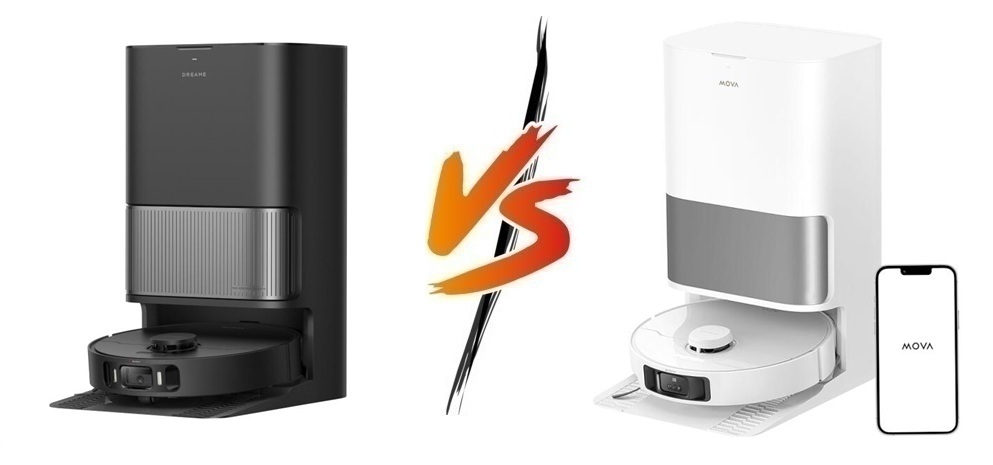
If you’ve been researching robot vacuums in the mid-to-premium range, the Dreame L40 Ultra and Mova P10 Pro Ultra are almost impossible to ignore. On paper, they look nearly identical, and that’s because they essentially are. Mova is a sub-brand of Dreame, and the P10 Pro Ultra is built on the same foundation as the L40 Ultra, just with some updates and refinements added later on.
That makes this comparison a bit more interesting than usual. It’s not about choosing between two completely different machines, but about understanding how small changes in software, tuning, and feature behavior can affect everyday use.
Both models promise a hands-off cleaning experience with self-emptying docks, automated mopping systems, and advanced navigation. But once you start using them, differences begin to show, especially depending on your home layout, flooring, and expectations.
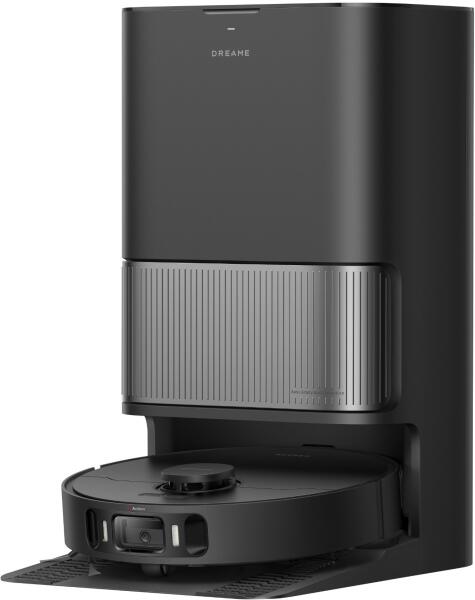
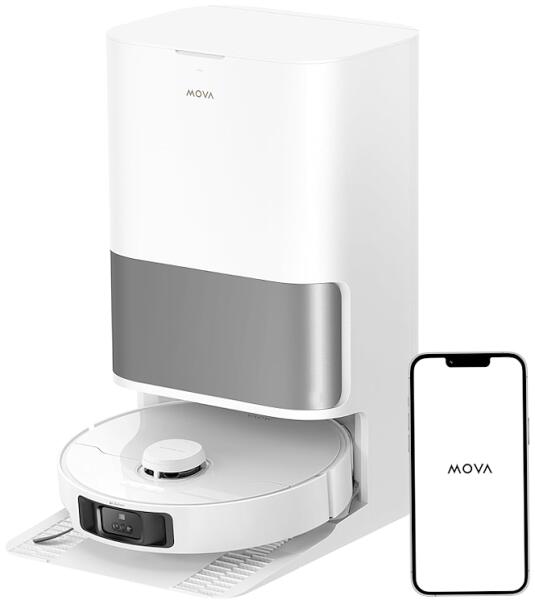
Dreame L40 Ultra vs Mova P10 Pro Ultra Comparison Chart
If you click the links below, under the product images, you will be redirected to Amazon.com. In case you then decide to buy anything, Amazon.com will pay me a commission. This doesn’t affect the honesty of this review in any way though.
| Feature | Dreame L40 Ultra | Mova P10 Pro Ultra |
|---|---|---|
 |  | |
| Check the best price on Amazon | Check the best price on Amazon | |
| Brand Positioning | Dreame flagship-style mid-premium | Mova (Dreame sub-brand), updated variant |
| Suction Power | ~11,000 Pa | ~13,000 Pa |
| Navigation System | LiDAR + RGB camera + structured light | LiDAR + RGB camera + structured light (refined AI) |
| Mapping | Multi-floor mapping supported | Multi-floor mapping supported |
| Obstacle Avoidance | Good but sometimes inconsistent | Excellent, more accurate and confident |
| Object Recognition | Yes | Yes (improved AI recognition) |
| Cleaning Pathing | Structured but occasionally inefficient | More refined, smoother movement |
| Side Brush | Extendable, works on all surfaces | Extendable, disabled on carpets |
| Brush Type | Single rubber brush | Single rubber brush |
| Mop System | Dual rotating mop pads | Dual rotating mop pads (improved tuning) |
| Mop Extension | Yes (edge cleaning) | Yes (edge cleaning with improved behavior) |
| Mop Lifting | Yes (for carpets) | Yes (pads lift but stay attached) |
| Mop Removal Option | Yes (more flexible handling) | No automatic removal |
| Water Flow Settings | Adjustable | Wider range, more granular control |
| Stain Detection | Basic | AI-based stain recognition (experimental) |
| Dock Functions | Self-empty, mop wash, hot air dry, water refill | Same, with slightly improved automation flow |
| Dustbin Emptying | Automatic | Automatic |
| Mop Cleaning | Hot water wash | Hot water wash (more refined cycle) |
| Mop Drying | Hot air drying | Hot air drying |
| Clean Water Tank | Yes | Yes |
| Dirty Water Tank | Yes | Yes |
| Battery Life | Good | Slightly longer runtime |
| Threshold Clearance | ~1.9 cm | ~2.5 cm (better climbing) |
| Minimum Height Clearance | ~10.5 cm | ~10.5 cm |
| Noise Level | ~55–60 dBA | ~53–60 dBA (slightly quieter) |
| Hard Floor Performance | Good | Better (stronger suction, better pickup) |
| Carpet Performance | Better overall | Weaker, especially at edges |
| Pet Hair Pickup | Moderate | Moderate (better on hard floors) |
| Filtration | Basic (no sealed HEPA system) | Basic (similar limitation) |
| App Features | Full control, slightly complex | More polished, more AI automation |
| AI Cleaning Mode | Limited | Yes (CleanGenius automation) |
| Edge Cleaning | Good | Slightly better consistency |
| Maintenance Level | Low | Low (slightly more streamlined) |
| Ideal Floor Type | Mixed flooring | Mostly hard floors |
| Overall Strength | Balanced performance | Better automation + hard floor cleaning |
| My individual reviews | Dreame L40 Ultra review | Mova P10 Pro Ultra review |
Quick Summary
- Choose the Dreame L40 Ultra if you have a mix of carpets and hard floors and want more consistent carpet cleaning and flexibility.
- Choose the Mova P10 Pro Ultra if your home is mostly hard flooring and you want better obstacle avoidance, stronger suction, and more hands-off automation.
Design & Build Quality
When you first take either the Dreame L40 Ultra or the Mova P10 Pro Ultra out of the box, the immediate impression is that you’re dealing with a premium product. Not flashy, not overdesigned, but clean, purposeful, and clearly built with a lot of thought behind how these machines are supposed to live in your home.
Both robots follow the now-familiar circular design with a raised LiDAR turret on top. That turret gives them their distinctive profile and is essential for navigation, but it also sets a physical limitation right away. These are not low-profile robots. They won’t slide under every sofa or cabinet, and that’s something you notice quickly once you start using them in a real space.
The materials themselves feel solid. The outer shell is made from dense, matte-finish plastic that resists fingerprints better than glossy surfaces. You can pick either robot up without feeling any flex or creaking. That matters more than it sounds. A lot of cheaper robot vacuums feel hollow or slightly fragile, especially around the dustbin compartment or top lid. That’s not the case here. Everything clicks into place with a reassuring firmness.
The top panel is simple. You get a few physical buttons for basic controls like starting or stopping a cleaning cycle and sending the robot back to its dock. They’re responsive and have a nice tactile feel, but realistically, you won’t use them much after the initial setup. These machines are designed to be controlled through the app, and the hardware reflects that. Minimalist, but not in a way that feels limiting.
Underneath, both models share almost identical layouts. A single rubber brush roll sits in the center, flanked by a side brush that extends outward when needed. The rubber brush is a smart choice. It resists hair tangling better than bristle brushes and is easier to clean. If you’ve ever spent time cutting hair out of a traditional vacuum roller, you’ll appreciate this immediately.
The side brush is more interesting than it looks at first glance. It’s mounted on an extendable arm, which allows it to reach into corners and along edges more effectively than fixed brushes. This is one of those small design decisions that actually makes a noticeable difference in day-to-day cleaning. Corners are where a lot of robot vacuums struggle, and while neither of these is perfect, the extendable mechanism gives them a better shot at picking up debris where walls meet floors.
The mop system is another defining part of the design. Both units use dual rotating mop pads mounted at the rear. These aren’t passive cloths dragging along the floor. They actively spin, applying pressure as they move. The pads are slightly raised when the robot is vacuuming carpets, which helps avoid soaking them. On the Dreame L40 Ultra, there’s an added layer of flexibility with mop pad management. Depending on how you configure it, the robot can better adapt when switching between cleaning modes. The Mova P10 Pro Ultra keeps things simpler, but that simplicity can sometimes limit how it handles mixed flooring.
Now let’s talk about the docking station, because it’s arguably just as important as the robot itself.
Both models come with a large, multifunction dock that does far more than just charge the vacuum. This is where a lot of the “Ultra” experience comes from. The dock houses separate tanks for clean and dirty water, a dust collection system, and internal components that wash and dry the mop pads.
Physically, the dock is substantial. It takes up real space, and you’ll need to plan where to place it. It’s not something you can tuck away easily behind furniture. That said, the design is clean enough that it doesn’t look out of place in a modern home. The lines are simple, the color scheme is neutral, and the overall aesthetic leans more toward an appliance than a gadget.
Build quality here is just as solid as the robots themselves. The water tanks slide in and out smoothly, with clear markings that make it obvious which is which. The lids seal tightly, so you don’t have to worry about spills when moving them. The dust bag compartment is also well designed, with a straightforward mechanism that makes replacement quick and relatively mess-free.
One thing you start to appreciate over time is how well everything fits together. The robot aligns with the dock precisely when returning to charge or empty itself. There’s no awkward bumping or repositioning. It just works. That kind of consistency comes from careful engineering, and it shows.
There are a few subtle differences between the two systems, even though they look almost identical at first glance. The Mova P10 Pro Ultra feels like a slightly refined version of the Dreame dock and robot combination. Not in terms of materials, but in how the system behaves as a whole. Movements are a bit smoother, transitions feel more deliberate, and the overall experience comes across as more polished. It’s not a dramatic difference, but if you use both side by side, you start to notice it.
On the Dreame L40 Ultra, the design leans a bit more toward flexibility. Features like better handling of mop pads and more adaptable cleaning configurations give it an edge in homes with mixed surfaces. It feels like a system that was designed to handle a wider variety of scenarios, even if that means it’s slightly less streamlined in execution.
Another aspect worth mentioning is durability over time. While long-term data always takes months or years to fully understand, the construction of both models suggests they’re built to last. The moving parts, like the side brush arm and mop extensions, feel sturdy rather than delicate. That’s important, because these are the components that see the most wear.
Maintenance access is also part of design, and both robots do this well. The dustbin is easy to remove, the brush roll pops out without tools, and the filters are accessible without digging through layers of plastic. These are small things, but they make a big difference when you’re cleaning the vacuum itself.
There are, however, a couple of design trade-offs that come with this level of complexity. The first is size. These are not compact robots, and the dock especially demands space. The second is reliance on moving parts. More features mean more components that could eventually need attention. That’s the price of having a system that tries to automate nearly everything.
In daily use, both the Dreame L40 Ultra and the Mova P10 Pro Ultra feel like thoughtfully designed machines. They don’t try to impress with flashy design choices. Instead, they focus on practicality, durability, and making everyday cleaning as hands-off as possible.
If I had to sum it up simply, the build quality is excellent across the board. The differences come down to philosophy. The Dreame feels slightly more adaptable, while the Mova feels slightly more refined. Neither is objectively better in terms of construction. It’s more about which approach fits your home and your expectations.
Navigation Intelligence & Mapping
Navigation is where robot vacuums either feel like genuinely smart machines or like random devices bumping around your home. With the Dreame L40 Ultra and the Mova P10 Pro Ultra, you’re clearly in the “smart” category, but the way they express that intelligence is slightly different, and that difference becomes more noticeable the longer you live with them.
Both models rely on a combination of LiDAR, camera-based vision, and structured light sensors. On paper, that’s a very capable setup. LiDAR handles mapping and spatial awareness, while the camera and light sensors help identify and avoid objects. In practice, this combination allows both vacuums to build accurate maps quickly and navigate in a structured, methodical way rather than wandering aimlessly.
The first time you run either robot, the initial mapping process is surprisingly fast. You can send it out on a mapping run, and within a short time, it will generate a usable floor plan of your home. Rooms are usually divided logically, and the app gives you the ability to rename them, merge them, or split them further if needed. This is one of those moments where modern robot vacuums feel genuinely advanced compared to older generations.
That said, mapping accuracy is only part of the story. What matters more is how the robot uses that map during cleaning.
The Dreame L40 Ultra tends to follow structured, predictable paths. It moves in straight lines, covers areas in sections, and generally behaves in a way that makes sense when you watch it. However, it can sometimes feel a bit inconsistent. You might notice it revisiting certain spots unnecessarily or taking slightly inefficient routes. It’s not chaotic, but it’s not always perfectly optimized either. Over time, this can translate into slightly longer cleaning sessions or occasional missed edges that require a second pass.
The Mova P10 Pro Ultra feels like it builds on this foundation and refines it. The movement is more deliberate, and the transitions between areas feel smoother. It’s less likely to hesitate or double back without a clear reason. This gives the impression that the robot “understands” the space better, even though the underlying hardware is very similar.
Where the difference really becomes obvious is in obstacle avoidance.
In a perfectly clean, empty room, both robots perform similarly. But real homes aren’t empty. There are cables, shoes, chair legs, pet toys, and all sorts of unpredictable clutter. This is where navigation intelligence is tested.
The Dreame L40 Ultra does a decent job of avoiding obstacles, but it can be a bit cautious or inconsistent. Sometimes it identifies objects correctly and steers around them smoothly. Other times, it hesitates, approaches too closely, or misjudges what it’s seeing. You might find it nudging into lightweight objects or stopping briefly as it tries to figure out a path forward.
The Mova P10 Pro Ultra feels more confident in these situations. It recognizes obstacles earlier and adjusts its path more cleanly. Instead of hesitating, it tends to glide around objects in a way that feels more natural. This is especially noticeable in cluttered spaces, where the P10 maintains its cleaning pattern without breaking rhythm as often.
One specific area where this matters is cable avoidance. Loose cables are a common problem for robot vacuums. The L40 can sometimes get too close, risking tangles or requiring intervention. The P10 is generally better at identifying and avoiding them, which reduces the need for you to “prepare” the room before cleaning.
Another important aspect of navigation is how the robots handle different floor types and transitions.
Both models can detect carpets and adjust their behavior accordingly. They can increase suction when moving onto carpet and lift their mop pads to avoid wetting soft surfaces. In terms of navigation, they also recognize these areas as distinct zones within the map, allowing for more customized cleaning routines.
However, this is also where some quirks can appear. Patterned carpets, especially those with high contrast or dark designs, can sometimes confuse the sensors. The robot might interpret certain patterns as obstacles or voids, leading to irregular cleaning paths or avoided areas. This is not unique to these models, but it’s something to be aware of. In these cases, navigation can feel less reliable, and you may need to adjust settings or manually guide the robot.
Threshold handling is another part of navigation that often gets overlooked but matters in real homes. Both the L40 Ultra and the P10 Pro Ultra can handle moderate thresholds reasonably well. They approach them with enough momentum to climb over without getting stuck, and they rarely misjudge small height differences. The P10 has a slight edge here, as it seems more confident when crossing taller thresholds, maintaining its path without hesitation.
Then there’s the question of multi-room and multi-level navigation.
Once the map is created, both robots allow you to clean specific rooms, set schedules for different areas, and define no-go zones or virtual walls. This level of control is essential if you want the robot to fit into your routine rather than the other way around.
The app plays a big role in this experience. Both systems offer a detailed map view, and you can see exactly where the robot has cleaned, where it’s going, and how it’s navigating around obstacles. The P10’s software feels slightly more refined, with smoother updates and a more responsive interface, but the overall functionality is very similar.
Another subtle but important factor is how the robots recover from navigation errors.
No matter how advanced the system is, there will be moments when the robot gets confused. It might lose its position, encounter an unexpected obstacle, or end up in a tricky spot. The Dreame L40 Ultra can sometimes take longer to recover in these situations. It might pause, rotate in place, or attempt a few different paths before finding its way again.
The Mova P10 Pro Ultra tends to recover more quickly. It reassesses its position and continues cleaning with less interruption. This contributes to a smoother overall experience, especially in homes with complex layouts.
Over time, these small differences add up. With the L40, you might occasionally feel the need to check on it or intervene. With the P10, you’re more likely to trust it to complete the job on its own.
That trust is really what defines good navigation. It’s not just about how accurate the map is or how advanced the sensors are. It’s about whether you feel comfortable letting the robot run without supervision.
Both of these models are capable, and both represent a high level of navigation technology. But the Mova P10 Pro Ultra feels like a more polished version of the same idea. It handles obstacles better, moves more efficiently, and requires less attention from you.
The Dreame L40 Ultra is still very good, and in simpler environments, the difference may not matter much. But in busier, more cluttered homes, the gap becomes more noticeable.
In the end, navigation isn’t just a technical feature. It’s what determines whether a robot vacuum feels like a helpful assistant or something you have to manage. Between these two, both lean toward the assistant side, but the P10 does it with a bit more confidence and consistency.
Cleaning Performance
When it comes down to it, cleaning performance is the reason you’re buying one of these machines in the first place. Everything else, navigation, automation, app features, all of that supports one simple goal: picking up dirt and leaving your floors clean without you having to think about it.
With the Dreame L40 Ultra and the Mova P10 Pro Ultra, performance is good overall, but not identical. The differences aren’t dramatic at first glance, yet they become clear once you start paying attention to how each robot handles different surfaces and types of debris.
Let’s start with hard floors, because that’s where both of these machines spend most of their time in many homes.
On tile, hardwood, or laminate, both robots perform well, but the Mova P10 Pro Ultra has a noticeable edge. It simply picks up more debris in a single pass. Fine dust, crumbs, and small particles are collected more consistently, leaving fewer traces behind. You can run it once and feel confident the floor is clean, rather than needing a second pass.
Part of this comes down to suction power. The P10 runs a slightly stronger motor, and you can feel that in how it handles heavier debris like sand or grit. It also seems better tuned in how it directs airflow toward the intake, which helps reduce the amount of fine dust that gets pushed around before being collected.
The Dreame L40 Ultra, by comparison, is still competent on hard floors, but it can leave a bit more fine debris behind, especially along edges or in areas where the robot changes direction. It’s not something you’ll notice every time, but over a week of use, you may find yourself thinking the floor doesn’t feel quite as clean as it could.
Edge cleaning is worth talking about separately, because it’s one of the classic weak points of robot vacuums.
Both models use an extendable side brush designed to reach into corners and along baseboards. On hard floors, this works reasonably well. The brush flicks debris toward the main suction inlet, and the robot follows up by vacuuming it. The P10 tends to be slightly more consistent here, largely because of its smoother navigation and better obstacle handling. It maintains its cleaning path along walls more effectively, which leads to better edge coverage.
That said, neither robot is perfect in corners. Very fine dust can still accumulate over time, especially in tight angles where airflow is limited. This is normal for robot vacuums and not a unique flaw of these models.
Now let’s move onto carpets, because this is where things shift.
The Dreame L40 Ultra performs better on carpets overall. It agitates fibers more effectively and does a more thorough job of lifting debris from the surface. On low-pile carpets, it’s fairly reliable. Crumbs, pet hair, and everyday dirt are picked up in a way that feels acceptable for a robot vacuum.
The Mova P10 Pro Ultra, despite having stronger suction, doesn’t perform as well here. The main reason is its behavior on carpets. It disables its side brush when it detects carpet, which significantly reduces its ability to clean edges and corners in carpeted areas. That means you can end up with visible debris along walls or in corners, even after a full cleaning cycle.
In the middle of the carpet, performance is decent. It will pick up surface-level dirt and some embedded debris, but it doesn’t dig as deeply into fibers as you might expect given its suction rating. This is one of those cases where raw power doesn’t tell the whole story. Brush design, airflow, and movement patterns all play a role, and the P10 doesn’t fully capitalize on its higher suction when it comes to carpets.
High-pile carpets are a challenge for both machines. They can move across them, but cleaning effectiveness drops. Debris tends to stay embedded, and the robots may struggle to maintain consistent contact with the surface. If your home has a lot of thick carpet, neither of these should be your only vacuum.
Pet hair performance is another area that deserves attention.
Both robots are adequate, but not exceptional. On hard floors, pet hair is handled well enough. It gets pulled into the dustbin without too much trouble, and the rubber brush helps prevent tangling. However, on carpets, things get more complicated. Hair can cling to fibers, and neither robot consistently removes it in one pass.
You may notice that hair collects along edges or gets left behind in areas where airflow isn’t strong enough to lift it. Over time, some hair will also wrap around the brush roll, although the rubber design makes this easier to clean than traditional bristle brushes.
If you have pets that shed heavily, these robots can help maintain cleanliness between deeper cleans, but they won’t replace a dedicated upright or stick vacuum for thorough hair removal.
Another aspect of cleaning performance that often gets overlooked is how the robots handle different types of debris.
Large debris, like cereal or small bits of food, is generally picked up well by both models. The intake is wide enough, and the suction is strong enough to handle these without pushing them around too much.
Medium debris, like rice or dry pet food, is also handled competently, although you may occasionally see pieces get flicked aside by the side brush before being collected.
Fine debris is where the difference between the two becomes more noticeable. The P10 is better at capturing fine dust in a single pass, while the L40 may leave a thin layer behind that only becomes obvious in certain lighting conditions or when you walk barefoot.
Cracks and crevices are a weak point for both. The suction inlet sits slightly above the floor, which limits how well either robot can pull debris out of narrow gaps. The side brush can help dislodge particles, but it can also scatter them. This is a limitation of the category rather than a specific flaw.
Consistency is another important factor.
The Dreame L40 Ultra can sometimes feel a bit inconsistent. You might run the same cleaning routine twice and get slightly different results. It’s not unreliable, but it’s not perfectly repeatable either.
The Mova P10 Pro Ultra feels more consistent. It follows its cleaning patterns more precisely and delivers more predictable results from one run to the next. That consistency adds to the sense that it’s a more refined machine, even if the underlying hardware is similar.
Finally, there’s the question of how these robots perform over time.
As the dustbin fills, filters accumulate debris, and brushes pick up hair, performance can decline slightly. Both models are affected by this, but the impact is manageable as long as you keep up with basic maintenance. The self-emptying dock helps a lot here, since it reduces how often the onboard dustbin reaches capacity.
In everyday use, both the Dreame L40 Ultra and the Mova P10 Pro Ultra are capable cleaners. They handle routine maintenance cleaning well and can keep your floors in good condition with minimal effort.
The difference comes down to where you need them to excel.
If your home is mostly hard floors, the Mova P10 Pro Ultra delivers better results. It’s more thorough with fine debris and more consistent overall.
If you have a mix of hard floors and carpets, the Dreame L40 Ultra offers a more balanced performance. It handles carpets more effectively and provides better edge cleaning in those areas.
Neither is perfect, but both are good enough to change how you think about daily cleaning. The key is choosing the one that aligns with your floors, because that’s where the real difference shows.
Mopping Capability
Mopping is where robot vacuums have made the biggest leap in recent years. What used to be a basic drag cloth that spread water around has evolved into something much closer to actual floor washing. Both the Dreame L40 Ultra and the Mova P10 Pro Ultra sit firmly in this newer category, using dual rotating mop pads, automated cleaning docks, and a surprising amount of intelligence in how they handle wet cleaning.
At a glance, the two systems look identical. Underneath each robot are two circular mop pads that spin while the robot moves forward. This spinning action applies light pressure and creates a scrubbing effect, which is far more effective than older designs. It’s the difference between wiping a surface and actually cleaning it.
In everyday use, both robots do a good job on hard floors like tile, laminate, and sealed wood. They can remove light dirt, footprints, and minor spills without much trouble. If you run them regularly, your floors will stay consistently clean without needing much manual intervention.
That said, there are differences in how each machine approaches mopping, and those differences show up in real-world results.
The Mova P10 Pro Ultra feels like the more refined mopping system overall. It handles water distribution more precisely, and the way it adjusts its cleaning behavior based on what it detects on the floor makes it feel more adaptive. For example, it can increase water flow or adjust its pathing when it identifies a dirtier area. This doesn’t always result in dramatic changes, but over time, it leads to more consistent cleaning.
One feature that stands out is the level of control you have over water usage. The P10 offers a wide range of water flow settings, allowing you to fine-tune how wet the mop pads get. On lightly soiled floors, you can keep things relatively dry, which helps prevent streaking. On tougher messes, you can increase water output and let the robot spend more time scrubbing.
The Dreame L40 Ultra also provides adjustable water settings, but it feels slightly less nuanced in how it applies them. It still does a solid job, but it doesn’t adapt quite as dynamically during a cleaning cycle. You’re more reliant on setting the right level ahead of time rather than letting the robot adjust on the fly.
Stain removal is where the difference becomes clearer. Both robots can handle dried-on dirt to a certain extent, especially if you run them multiple times over the same area. However, the P10 tends to break down stubborn spots more effectively in a single session. This is partly due to its improved pressure and partly due to its smarter handling of water and movement.
That doesn’t mean the L40 is weak. It’s still capable of removing most everyday messes, and for routine maintenance, it’s more than sufficient. But if you’re dealing with sticky residues, dried spills, or kitchen messes that require a bit more effort, the P10 has the advantage.
Another important aspect of mopping is how the robots deal with edges and corners.
Both models use extendable mop arms that push one of the pads outward to reach closer to walls and along baseboards. This is a clever solution to a long-standing problem, since traditional round robots often leave a thin strip of uncleaned floor along edges.
In practice, both do a decent job here, but neither is perfect. The extension mechanism helps, but it can’t fully replicate the precision of manual mopping. You may still notice slight gaps in tight corners or around complex shapes like chair legs. The P10 again feels a bit more consistent, mainly because its navigation keeps it closer to edges for longer stretches.
Now let’s talk about carpet interaction, because this is where mopping systems can either shine or become a problem.
Both robots are designed to avoid soaking carpets, but they handle this in slightly different ways. The Dreame L40 Ultra has more flexibility in how it manages its mop pads when transitioning between surfaces. It can lift them higher or adjust its behavior to better suit mixed flooring environments.
The Mova P10 Pro Ultra keeps things simpler. It lifts the mop pads when it detects carpet, but they remain attached to the robot. In most cases, this works fine, but in more complex layouts with frequent transitions between hard floors and carpets, it can feel a bit less adaptable.
If your home has clearly separated areas, like tiled kitchens and carpeted living rooms, both systems will work well. If your layout is more mixed, with rugs scattered throughout, the L40’s approach may feel slightly more practical.
The docking station plays a huge role in the overall mopping experience, and this is where both models really stand out.
After each cleaning session, the robot returns to the dock, where the mop pads are automatically washed with hot water. This removes dirt and prevents buildup that could otherwise spread across your floors during the next run. Once cleaned, the pads are dried using hot air, which helps prevent odors and bacterial growth.
This automation changes how you think about mopping. You’re no longer dealing with dirty pads by hand, and you don’t have to worry about remembering to clean them after each use. The system takes care of it in the background.
Water management is also handled automatically. The dock refills the robot’s clean water tank and collects dirty water from the cleaning process. You’ll still need to empty and refill the tanks occasionally, but it’s a far less frequent task compared to traditional mopping.
In terms of reliability, both systems perform well. The docking process is smooth, and the cleaning cycle is consistent. You don’t have to babysit the robot to make sure it’s doing its job. It docks, cleans itself, and gets ready for the next run without much input.
There are, however, a few limitations to keep in mind.
First, neither robot replaces a deep manual mop. If you have heavily soiled floors or sticky residues that have built up over time, you’ll still need to clean them manually at least once. These robots are best at maintaining cleanliness rather than restoring heavily dirty surfaces.
Second, the use of water introduces variables like streaking and drying time. On certain floor types, especially glossy tiles, you may notice light streaks if the water flow is set too high. Adjusting the settings can help, but it’s something you may need to experiment with.
Third, detergent use is optional but can improve results. Both systems can handle cleaning solutions mixed into the water, which helps with odor and stain removal. However, you’ll need to use compatible products to avoid damaging the system.
Over time, the consistency of the mopping system becomes one of its biggest strengths. Instead of occasionally mopping your floors, you end up doing it regularly without thinking about it. That leads to a noticeable improvement in overall cleanliness, especially in high-traffic areas like kitchens and entryways.
Between the two, the Mova P10 Pro Ultra stands out as the stronger mopper. It’s more adaptive, more consistent, and slightly more effective at handling tougher messes. The Dreame L40 Ultra is still very capable and will meet the needs of most users, but it feels like an earlier version of the same idea.
In daily use, both systems deliver a level of convenience that’s hard to go back from. Once you get used to having your floors mopped automatically, it quickly becomes one of those features you don’t want to live without.
Maintenance & Cleaning
One of the biggest selling points of high-end robot vacuums like the Dreame L40 Ultra and the Mova P10 Pro Ultra is how much routine maintenance they remove from your life. The idea is simple: instead of constantly emptying dustbins, washing mop pads, and checking on the machine, most of those tasks are handled automatically. In practice, both of these models come very close to delivering on that promise, but there are still some important details that shape the day-to-day experience.
Let’s start with the part you interact with the least but benefit from the most: the self-maintaining dock.
Both vacuums come with a large docking station that handles multiple tasks in one place. When the robot returns after a cleaning session, it automatically empties its internal dustbin into a sealed bag inside the dock. This alone removes one of the most frequent annoyances of traditional robot vacuums. Instead of emptying a small bin every day or two, you might only deal with the dust bag every few weeks, depending on how often you run the vacuum and how much debris your home generates.
The emptying process itself is quick and relatively clean. There’s a short burst of suction, and the debris is transferred into the bag with minimal leakage. You might hear it happen, but it’s over in seconds. The bags are designed to trap dust effectively, which helps reduce exposure when you eventually remove and replace them.
Beyond dust handling, the dock also manages the mopping system. After each mopping session, the robot’s pads are washed using water from the clean tank. The system agitates the pads to remove dirt, then drains the dirty water into a separate tank. After that, the pads are dried with warm air. This drying step is more important than it might seem. Without it, damp pads would quickly develop odors or even mold.
In daily use, this means you’re not touching dirty mop pads at all. That’s a huge improvement over earlier robot mops, where you had to remove and rinse cloths by hand after each run. Here, the process is automatic and consistent, which makes it much more likely that you’ll actually use the mopping feature regularly.
Of course, “self-maintaining” doesn’t mean “no maintenance.” There are still things you need to do, just less often.
The most obvious is managing the water tanks in the dock. The clean water tank needs to be refilled, and the dirty water tank needs to be emptied. How often depends on your usage. If you mop frequently, you might need to handle this every few days. If you only mop occasionally, it could stretch to a week or more.
The tanks themselves are well designed. They’re easy to remove, carry, and clean. The lids seal properly, so you don’t have to worry about spills when transporting them. The dirty water tank can develop a mild odor if left unattended for too long, so it’s best to empty and rinse it regularly.
Moving on to the robot itself, there are a few components that require periodic attention.
The brush roll is one of them. Even though both models use rubber brushes that resist tangling, hair can still wrap around them over time, especially if you have pets or long hair in the household. Removing the brush is straightforward, and cleaning it usually takes just a few minutes. It’s not something you’ll need to do after every run, but checking it once a week is a good habit.
The side brush also needs occasional cleaning. Because it’s constantly flicking debris toward the suction inlet, it can accumulate hair and dust. The extendable mechanism adds a bit of complexity, but it doesn’t make maintenance difficult. You can remove the brush and clean it without tools.
Filters are another part of the maintenance routine. Both robots use internal filters to trap dust before air is expelled. Over time, these filters become clogged, which can reduce suction and overall performance. Cleaning them is simple. You remove the filter, tap out the dust, and rinse it if needed. Just make sure it’s completely dry before putting it back.
One thing to note is that neither of these models has a fully sealed filtration system designed for maximum allergen containment. While the filters do their job reasonably well, very fine particles can still escape. From a maintenance perspective, this means you may want to clean filters more frequently if you’re sensitive to dust.
The sensors are another area that benefits from occasional attention. Both robots rely heavily on sensors for navigation and obstacle avoidance, and if those sensors get dirty, performance can suffer. Wiping them down with a soft cloth every so often helps keep everything running smoothly.
The charging contacts on both the robot and the dock should also be kept clean. Dust or residue can interfere with charging, leading to inconsistent behavior. A quick wipe every couple of weeks is usually enough.
Now, in terms of differences between the two models, the overall maintenance experience is very similar, but there are a few subtle distinctions.
The Mova P10 Pro Ultra feels slightly more refined in how it manages its internal processes. The transitions between tasks, like emptying the bin or washing the mop pads, feel smoother and more consistent. This doesn’t drastically change what you have to do, but it contributes to a more polished experience.
The Dreame L40 Ultra, on the other hand, offers a bit more flexibility in certain areas, particularly around how it handles mopping components. This can be useful in mixed-floor homes, but it also means there are slightly more variables to keep track of. It’s not complicated, just a bit less streamlined.
Long-term maintenance costs are another consideration.
You’ll need to replace:
- Dust bags
- Filters
- Mop pads
- Brushes
These are all consumables, and while none of them are particularly expensive on their own, the costs can add up over time. The good news is that replacement parts are widely available, and the process of swapping them out is straightforward.
Durability also plays a role in maintenance. Both robots feel well built, and the components that experience the most wear, like brushes and mop pads, are designed to be replaced easily. The moving parts, including the extendable arms, feel sturdy enough to handle regular use without becoming a weak point.
One aspect that often gets overlooked is how maintenance affects your willingness to use the product.
With older or simpler robot vacuums, the need for frequent manual cleaning can become a barrier. If you have to empty the bin after every run or wash mop pads by hand, you might start skipping cleaning sessions. Over time, that defeats the purpose of having a robot vacuum.
With the L40 Ultra and P10 Pro Ultra, the reduced maintenance makes it much easier to stick to a regular cleaning routine. You set a schedule, let the robot do its job, and only step in occasionally to handle the bigger tasks like refilling water or replacing consumables.
That shift in behavior is one of the biggest benefits of these systems. It’s not just about saving time in individual tasks. It’s about making cleaning feel automatic rather than something you have to think about.
In day-to-day use, both models deliver a genuinely low-maintenance experience. You’re still involved, but at a much lower level than with traditional vacuums or even earlier robot models.
If you’re looking for a slight edge, the Mova P10 Pro Ultra feels a bit more polished and consistent in how it handles its maintenance routines. The Dreame L40 Ultra is just as capable but leans slightly toward flexibility over simplicity.
Either way, both systems succeed in making cleaning less of a chore, which is ultimately what matters most.
Ergonomics & Usability
Ergonomics and usability are often overlooked when comparing robot vacuums, but they play a huge role in how satisfying the product feels over time. You can have strong suction and advanced navigation, but if the system is frustrating to set up, confusing to control, or requires constant micromanagement, the overall experience suffers. With the Dreame L40 Ultra and the Mova P10 Pro Ultra, both aim to deliver a hands-off, intuitive experience, but they approach it with slightly different levels of refinement.
Let’s start with the initial setup, because that’s your first real interaction with the product.
Out of the box, both robots are relatively straightforward to get going. You place the dock, fill the clean water tank, install the dust bag, and power on the robot. From there, the app guides you through connecting the vacuum to your Wi-Fi and running the first mapping cycle. The process is mostly smooth, but it does require some patience if you’re not used to smart home devices.
The apps themselves are central to usability. You won’t get the full experience without them. Both models rely heavily on their companion apps for almost every feature beyond basic start and stop commands. This includes mapping, scheduling, adjusting suction and water levels, and customizing cleaning routines.
The interface for both systems is fairly comprehensive. You get a map view of your home, where rooms are automatically detected and labeled. You can rename rooms, draw virtual boundaries, and assign different cleaning settings to each area. For example, you might set the kitchen to higher suction and more water for mopping, while keeping the living room on a quieter, lighter setting.
The Dreame L40 Ultra’s app is functional and gives you a lot of control, but it can feel slightly overwhelming at first. There are many options, and not all of them are immediately intuitive. You may need to spend some time exploring the menus to understand what everything does. Once you get used to it, it becomes second nature, but the learning curve is there.
The Mova P10 Pro Ultra builds on this with a slightly more polished experience. The layout feels cleaner, and the system leans more heavily on automation. Instead of requiring you to fine-tune every setting, it offers AI-driven cleaning modes that adjust parameters based on what the robot detects. This can make the initial experience feel simpler, especially if you don’t want to dive into detailed customization right away.
That said, both apps still allow manual control for those who prefer it. You can adjust suction levels, choose between different cleaning patterns, and set specific routines for different times of day. The flexibility is there, but the P10 makes it easier to ignore that complexity if you want a more hands-off approach.
Day-to-day usability is where these differences become more noticeable.
With the Dreame L40 Ultra, you’re more likely to take an active role in managing the robot. You might tweak settings for different rooms, adjust cleaning sequences, or manually intervene if something doesn’t go as planned. It’s not difficult, but it feels like a system that expects some input from you.
The Mova P10 Pro Ultra, on the other hand, feels more autonomous. Once you’ve set it up, you can largely let it run on its own. It makes more decisions on its own and requires fewer adjustments. This can be a big advantage if you want something that just works without much involvement.
Physical interaction with the robot is minimal for both models. The buttons on top are useful for quick commands, but most of the time, you’ll control everything through the app. The robots are easy to pick up if needed, and the build quality makes them feel sturdy in hand. However, because they’re relatively large and have a raised LiDAR turret, they’re not the easiest to carry around frequently. This isn’t a major issue, but it’s something to keep in mind if you plan to move the robot between floors.
The docking station also plays a role in usability. It’s not just a passive charger. It’s an active part of the system that handles cleaning, water management, and dust collection. From a usability perspective, this reduces the number of tasks you have to think about.
However, the dock’s size can be a challenge. It requires a dedicated space with enough clearance for the robot to dock and operate properly. You’ll need to think about placement during setup, and once it’s in place, it’s not something you’ll want to move often.
Interacting with the dock is simple. Refilling the clean water tank and emptying the dirty water tank are straightforward tasks. The tanks are easy to access and don’t require awkward movements. Replacing the dust bag is also quick and relatively clean.
Noise and feedback are another part of usability that often gets overlooked. Both robots provide audible cues when they start, finish, or encounter issues. The app also sends notifications, which can be helpful for keeping track of what the robot is doing without needing to watch it.
The Mova P10 Pro Ultra tends to provide slightly clearer feedback through the app, with more detailed status updates and smoother transitions between tasks. The Dreame L40 Ultra is still informative, but it can feel a bit less refined in how it communicates with you.
Another important aspect is how the robots handle errors or unexpected situations.
No robot vacuum is completely immune to getting stuck or encountering something it can’t handle. When this happens, the way the system responds can either make it a minor inconvenience or a frustrating experience.
The Dreame L40 Ultra sometimes requires more intervention. It may pause and wait for input if it’s unsure how to proceed. The app will notify you, but you’ll need to step in to resolve the issue.
The Mova P10 Pro Ultra tends to handle these situations more gracefully. It attempts to resolve problems on its own before asking for help, and when it does need input, the instructions are usually clearer. This contributes to a smoother overall experience.
Scheduling and automation are also key parts of usability.
Both models allow you to set cleaning schedules based on time, day, and specific rooms. You can create routines that fit your lifestyle, such as running the vacuum while you’re at work or cleaning certain areas more frequently than others.
The P10’s AI features make this even more flexible. It can adjust cleaning intensity based on usage patterns or detected dirt levels, which reduces the need for manual adjustments. The L40 offers similar capabilities but relies more on user input to fine-tune them.
One subtle but important factor is trust.
With the Dreame L40 Ultra, you may feel the need to check on it occasionally, especially in the early stages of use. You’ll want to make sure it’s navigating correctly and cleaning as expected.
With the Mova P10 Pro Ultra, that need tends to fade more quickly. It feels more predictable and reliable, which makes it easier to let it run without supervision.
Over time, this difference affects how you use the product. A robot that requires less attention becomes part of your routine more naturally, while one that needs occasional oversight can feel slightly more demanding.
In the end, both the Dreame L40 Ultra and the Mova P10 Pro Ultra offer a high level of usability compared to most robot vacuums. They simplify cleaning, reduce manual effort, and integrate well into daily life.
The difference comes down to how much control you want versus how much automation you prefer.
The Dreame L40 Ultra gives you more direct control and flexibility, but it may require a bit more involvement. The Mova P10 Pro Ultra leans toward automation and ease of use, making it feel more like a true set-it-and-forget-it system.
Neither approach is inherently better. It depends on whether you enjoy fine-tuning your devices or prefer them to handle things on their own.
Pet-Friendliness
If you have pets, a robot vacuum quickly goes from being a convenience to something that feels almost necessary. Hair, dander, tracked-in dirt, and the occasional mess all add up fast. Both the Dreame L40 Ultra and the Mova P10 Pro Ultra are positioned as capable solutions for pet owners, but they handle the realities of a pet-filled home with slightly different strengths and weaknesses.
Let’s start with the most obvious issue: pet hair.
On hard floors, both vacuums handle pet hair reasonably well. Hair tends to gather along edges, under furniture, and in corners, and both robots are capable of pulling it into the suction path without too much trouble. The rubber brush design helps here, as it resists tangling better than traditional bristle brushes. Instead of hair wrapping tightly around the brush, it tends to collect loosely and can be removed more easily during maintenance.
That said, neither robot completely eliminates hair wrap. If you have long-haired pets or multiple animals, you will still need to check and clean the brush roll periodically. The good news is that it’s a quick task and doesn’t require much effort.
On carpets, pet hair becomes more challenging. Both models struggle a bit with deeply embedded hair, especially on thicker carpets. The Dreame L40 Ultra does a slightly better job overall, mainly because it maintains full functionality of its side brush and has more consistent agitation of carpet fibers. This helps lift hair and guide it toward the suction inlet.
The Mova P10 Pro Ultra, despite having stronger suction on paper, falls short here. Its decision to disable the side brush on carpets reduces its ability to gather hair from edges and corners. You may notice hair building up along walls or in areas where the robot doesn’t make direct contact. In the center of the carpet, it performs decently, but it doesn’t fully compensate for the lack of edge cleaning.
If your home has mostly hard floors with a few rugs, the difference may not matter much. But if you have large carpeted areas and pets that shed heavily, the L40 will feel more capable in day-to-day use.
Dander and fine particles are another important consideration for pet owners.
Pets don’t just shed visible hair. They also release fine dander that can affect air quality, especially if you have allergies. Both vacuums can pick up this fine debris from floors, but their filtration systems are not fully sealed. This means that some fine particles can escape back into the air through the exhaust.
In practice, this isn’t a deal-breaker, but it’s something to be aware of. If you’re particularly sensitive to allergens, you may still need a separate air purifier or a vacuum with a more advanced filtration system for deep cleaning.
Daily maintenance cleaning, however, is where these robots shine. By running them regularly, you can keep dander and dust from building up in the first place. This consistent cleaning can make a noticeable difference in how your home feels, even if the filtration isn’t perfect.
One of the most valuable features for pet owners is obstacle avoidance, especially when it comes to unexpected messes.
Anyone with pets knows that accidents happen. Whether it’s a dropped toy, a food bowl, or something less pleasant, a robot vacuum that blindly drives over everything can quickly turn a small problem into a much bigger one.
This is where the Mova P10 Pro Ultra stands out. Its obstacle detection and avoidance are more reliable and more confident. It’s better at recognizing objects on the floor and steering around them without getting too close. This reduces the risk of the robot running over something it shouldn’t.
The Dreame L40 Ultra also has advanced obstacle avoidance, but it can be less consistent. It may approach objects more cautiously or misjudge certain items, leading to occasional bumps or near misses. In most cases, this isn’t a major issue, but it does mean you may need to be a bit more mindful of what’s left on the floor.
For pet owners, that difference can matter. The more you trust the robot to avoid problems, the less you feel the need to “prepare” your home before each cleaning cycle.
Noise is another factor to consider, especially if your pets are sensitive to sound.
Both robots are relatively quiet for their category, but they’re not silent. The vacuuming noise is noticeable, and the dock’s self-emptying process can be loud for a short period. Some pets will get used to this over time, while others may remain wary.
In general, the noise levels are low enough that they shouldn’t cause significant stress for most animals, but it’s something to keep in mind if you have particularly sensitive pets. Running the vacuum while you’re out of the house can help ease the transition.
Mopping also plays a role in pet-friendliness.
Pets often track in dirt, leave paw prints, or create small messes that aren’t easily handled by vacuuming alone. The mopping systems on both models help address this by regularly cleaning hard floors.
The Mova P10 Pro Ultra has a slight advantage here. Its more adaptive mopping behavior and better stain handling make it more effective at dealing with the kinds of messes pets create. Whether it’s muddy paw prints or dried food residue, it tends to clean more thoroughly in a single pass.
The Dreame L40 Ultra is still capable, but it may require multiple passes or higher water settings to achieve the same result. For routine cleaning, both are fine, but for more stubborn messes, the P10 feels more capable.
Another practical consideration is how the robots handle pet-related obstacles like toys, bowls, and beds.
Both models can navigate around larger items without much trouble, but smaller objects can be more challenging. The Mova P10 Pro Ultra’s improved obstacle recognition helps it avoid things like chew toys or small items more reliably. The L40 may occasionally nudge or push these objects, which isn’t a major issue but can disrupt the cleaning process.
Pet beds and blankets can also affect navigation. Both robots may treat them as obstacles or areas to avoid, depending on how they’re detected. This is generally handled well, but you may need to adjust your setup slightly to get the best results.
Maintenance is another area where pet ownership has an impact.
More hair and debris mean more frequent cleaning of brushes, filters, and sensors. While both robots are designed to minimize manual maintenance, pet owners will still need to stay on top of these tasks to keep performance consistent.
The self-emptying dock is a big advantage here. It reduces how often you need to deal with collected hair and debris, which is especially helpful in homes with heavy shedding.
Over time, the biggest benefit of using a robot vacuum in a pet-friendly home is consistency.
Instead of letting hair and dirt build up between cleaning sessions, you can maintain a baseline level of cleanliness every day. Floors stay cleaner, odors are reduced, and the overall environment feels more comfortable.
Between the two models, the choice depends on what matters most to you.
If your priority is better carpet performance and more balanced cleaning across different surfaces, the Dreame L40 Ultra is a solid choice. It handles pet hair on carpets more effectively and provides a more even performance overall.
If you value stronger obstacle avoidance, better hard floor cleaning, and more effective mopping, the Mova P10 Pro Ultra stands out. It’s particularly well suited to homes with mostly hard floors and a need for reliable navigation around pet-related clutter.
Neither robot is perfect, and both have limitations when it comes to deep cleaning or handling heavy shedding on carpets. But as part of a regular cleaning routine, they can make a noticeable difference in managing the everyday challenges of living with pets.