
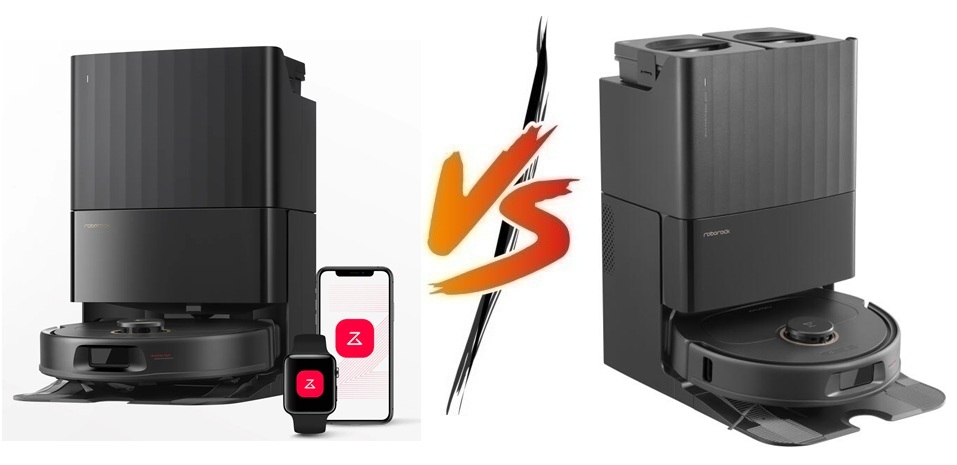
Roborock has become one of the most respected names in the robot vacuum market. Over the past few years, the company has consistently released machines that blur the line between convenience gadget and fully autonomous cleaning system. The Qrevo series sits right in the middle of Roborock’s lineup: more advanced than entry-level models but still far cheaper than the flagship S-series.
Two models often compared are the Roborock Qrevo S5V and the Roborock Qrevo Pro. On paper they share many similarities. Both are robot vacuum-mop hybrids with automatic docking stations that empty the dustbin and wash the mop pads. But once you start using them, the differences begin to appear.
In this comprehensive comparison, I’ll analyze both machines across multiple categories, trying to help you figure out which of these two is the right choice for you. Let’s dive in.
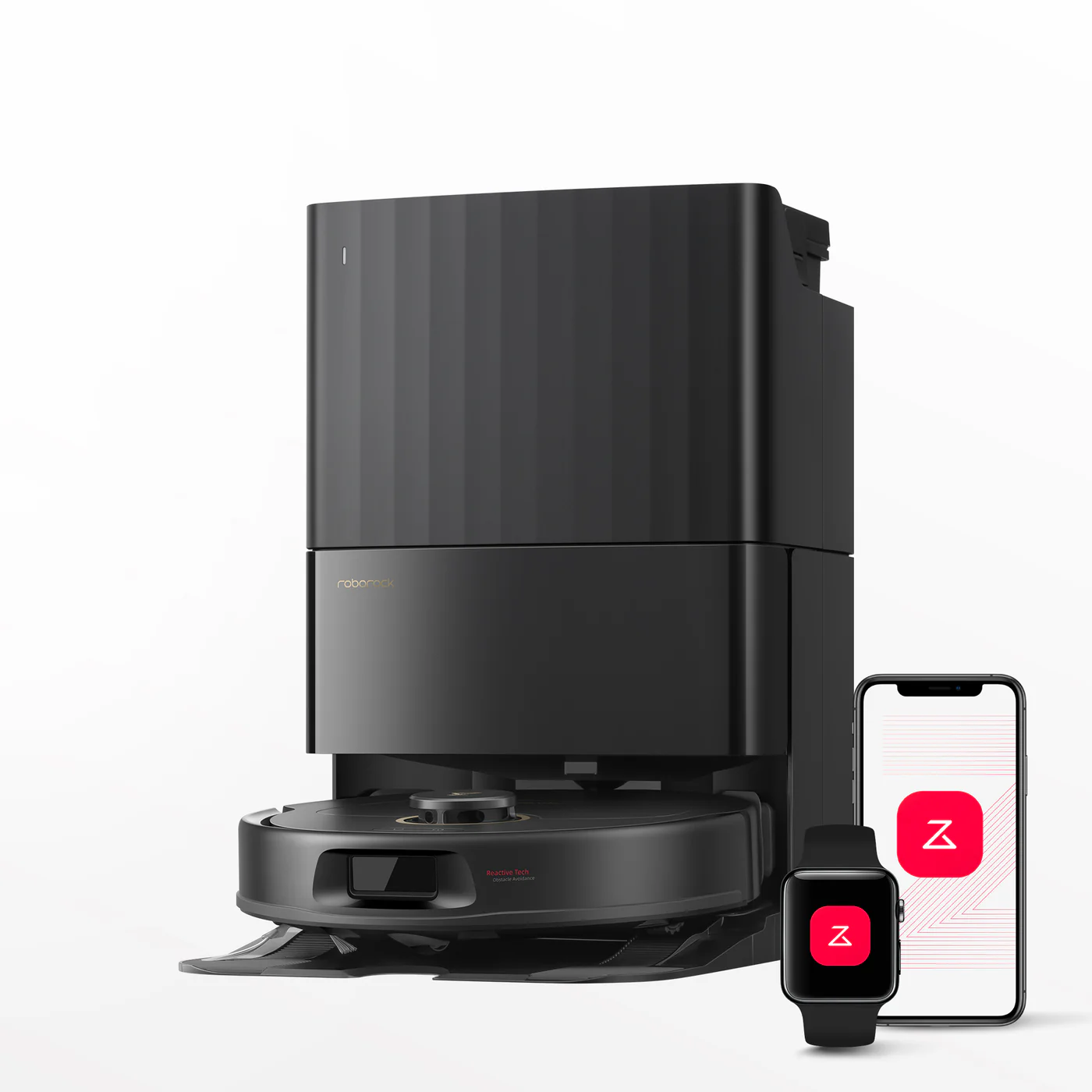
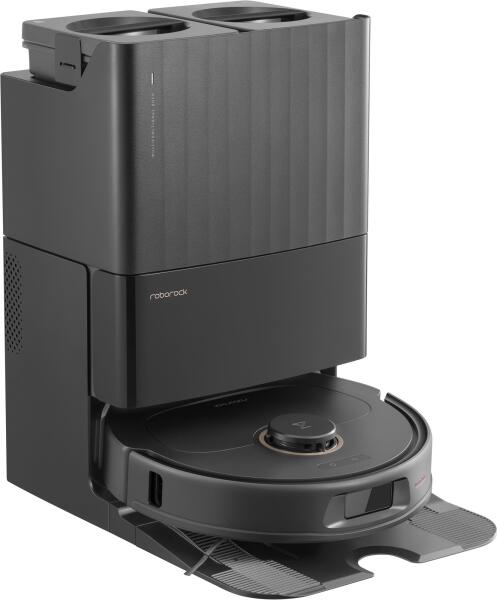
Roborock Qrevo S5V vs Roborock Qrevo Pro Comparison Chart
If you click the links below, under the product images, you will be redirected to Amazon.com. In case you then decide to buy anything, Amazon.com will pay me a commission. This doesn’t affect the honesty of this review in any way though.
| Category | Roborock Qrevo S5V | Roborock Qrevo Pro |
|---|---|---|
 |  | |
| Check the best price on Amazon | Check the best price on Amazon | |
| Product Type | Robot Vacuum & Mop Combo | Robot Vacuum & Mop Combo |
| Navigation System | PreciSense LiDAR Navigation | PreciSense LiDAR Navigation |
| Mapping Technology | 3D Mapping with Multi-Floor Support | 3D Mapping with Multi-Floor Support |
| Maximum Suction Power | Up to 12,000 Pa | Up to 7,000 Pa |
| Cleaning Modes | Vacuum, Mop, Vacuum + Mop | Vacuum, Mop, Vacuum + Mop |
| Main Brush | Anti-tangle rubber roller | Rubber roller brush |
| Side Brush | Single rotating edge brush | Single rotating edge brush |
| Mop Type | Dual spinning mop pads | Dual spinning mop pads |
| Mop Rotation | High-speed rotating mop pads | High-speed rotating mop pads |
| Mop Lift | Automatic mop lifting on carpets | Automatic mop lifting on carpets |
| Edge Mopping | Standard fixed mop pads | Extendable mop arm (FlexiArm edge cleaning) |
| Dock Type | Multifunction Auto-Empty Dock | Multifunction Auto-Empty Dock |
| Dustbin Emptying | Automatic | Automatic |
| Mop Washing | Automatic | Automatic with heated water |
| Mop Drying | Warm air drying | Warm air drying |
| Clean Water Tank | Yes | Yes |
| Dirty Water Tank | Yes | Yes |
| Dust Bag Capacity | Approx. 2.7 L | Approx. 2.7 L |
| Internal Dustbin | Approx. 350 ml | Approx. 350 ml |
| Water Tank (Robot) | Internal controlled system | Internal controlled system |
| Battery Capacity | ~5200 mAh | ~5200 mAh |
| Maximum Runtime | Up to 180 minutes | Up to 180 minutes |
| Automatic Recharge | Yes | Yes |
| Recharge & Resume | Yes | Yes |
| Maximum Cleaning Area | Up to ~300 m² per charge | Up to ~300 m² per charge |
| Carpet Detection | Yes | Yes |
| Carpet Boost | Automatic suction increase | Automatic suction increase |
| Cliff Sensors | Yes | Yes |
| Obstacle Detection | LiDAR + bumper sensors | LiDAR + bumper sensors |
| App Control | Roborock App | Roborock App |
| Room-Specific Cleaning | Yes | Yes |
| No-Go Zones | Yes | Yes |
| Cleaning Schedules | Yes | Yes |
| Voice Assistant Support | Alexa, Google Assistant | Alexa, Google Assistant |
| Noise Level (Vacuum) | ~55 dB (varies by mode) | ~55 dB (varies by mode) |
| Dock Emptying Noise | ~65–67 dB | ~65–67 dB |
| Height | ~9.6 cm (3.8 in) | ~9.6 cm (3.8 in) |
| Diameter | ~35 cm | ~35 cm |
| Weight | ~4 kg | ~4 kg |
| Best Strength | Strong suction & anti-tangle design | Advanced mopping & edge cleaning |
| My individual reviews | Roborock Qrevo S5V review |
Quick Summary
Roborock Qrevo S5V advantages
- Stronger suction (better for carpets)
- Anti-tangle brush design
- Slightly better for pet hair
Roborock Qrevo Pro advantages
- Extendable edge mop (FlexiArm)
- Heated mop washing
- Better overall mopping system
✔ Simplified takeaway:
- Choose S5V if vacuuming power matters most.
- Choose Pro if you want the best automated mopping system.
Design & Build Quality
When comparing two robot vacuums in the same product family, design and build quality are often overlooked because the machines appear similar at first glance. However, once you start living with a robot vacuum day after day, small design choices become extremely important. The materials used, the way the moving parts are engineered, and the layout of internal components can all affect long-term durability, ease of maintenance, and overall user satisfaction.
Both the Roborock Qrevo S5V and the Roborock Qrevo Pro follow Roborock’s recognizable design language. They share the classic circular robot vacuum shape with a LiDAR navigation turret positioned on top. This design has become an industry standard because it allows the robot to rotate easily and move efficiently through tight spaces while maintaining full 360-degree navigation awareness.
Even though the two models look similar from a distance, closer inspection reveals some meaningful differences in build philosophy and engineering priorities.
Overall Chassis Design
The main body of both robots is made from durable high-density plastic that feels sturdy and resistant to scratches. The surface finish is matte rather than glossy, which helps hide fingerprints and minor scuffs that can occur during everyday use. Robot vacuums inevitably bump into furniture and walls occasionally, so a finish that conceals cosmetic wear is actually an important detail.
The circular chassis design measures roughly the same diameter across both models, allowing them to navigate narrow hallways and pass between chair legs with relative ease. The slightly raised LiDAR turret adds some height to the robot, which means extremely low furniture may still block access, but the overall profile remains slim enough to clean under most beds, couches, and cabinets.
The Roborock Qrevo S5V feels particularly solid when you pick it up. The chassis does not flex, and the seams between the plastic panels are tight and well aligned. This suggests that Roborock focused on structural durability, which is important because robot vacuums operate autonomously and experience repeated minor impacts during navigation.
The Qrevo Pro also feels well constructed, but it emphasizes a slightly more refined aesthetic. The contours are smoother and the finish appears a bit more polished. In practical terms, both robots are sturdy and built to withstand years of regular cleaning cycles, but the Pro has a slightly more premium visual presentation.
Bumper System and Impact Protection
Robot vacuums rely on a combination of sensors and physical bumpers to detect obstacles. Even with advanced navigation systems, occasional contact with furniture is unavoidable.
Both the Qrevo S5V and Qrevo Pro feature a spring-loaded bumper system that wraps around the front half of the robot. The bumper compresses when the robot touches an object and then signals the navigation system to redirect the cleaning path.
The bumper mechanism on both models is well engineered. It moves smoothly and absorbs impacts without producing loud clicks or rattles. This type of damped bumper movement prevents unnecessary stress on internal components and also protects furniture from scratches.
One detail that stands out on the S5V is how firm the bumper feels during compression. It provides a reassuring sense that the robot is designed to withstand repeated collisions without loosening over time. The Pro uses a similarly effective system, though the bumper has a slightly softer feel when pressed.
Wheel Assembly and Mobility
Mobility plays a significant role in the physical design of a robot vacuum. The ability to climb thresholds, transition between surfaces, and maintain traction on carpets depends heavily on wheel design.
Both models feature large rubberized drive wheels positioned on either side of the chassis. These wheels are spring-mounted, allowing the robot to adjust its height slightly when climbing over small obstacles such as door thresholds or area rugs.
The rubber treads provide excellent grip on both hard floors and carpets. During testing, both robots handled common floor transitions smoothly, including hardwood-to-rug edges and tile-to-carpet changes.
The front of the robot includes a smaller omnidirectional caster wheel that helps stabilize movement and allows the robot to rotate in place. This wheel is recessed slightly into the chassis to prevent debris buildup.
Overall, mobility hardware is nearly identical between the two models, and both demonstrate the level of engineering expected from a premium robot vacuum manufacturer.
Brush and Cleaning Hardware
One of the most important parts of any vacuum cleaner is the brush system. The brush must collect debris effectively while minimizing hair tangles that could interfere with performance.
The Roborock Qrevo S5V includes an anti-tangle main roller brush designed specifically to reduce hair wrap. This design uses rubber fins and carefully spaced bristles that help guide hair toward the suction inlet instead of allowing it to wrap around the roller.
This feature becomes particularly valuable in homes with long hair or pets that shed frequently. Hair tangles are one of the most common maintenance issues with robot vacuums, so a brush that reduces this problem can significantly improve the ownership experience.
The Qrevo Pro uses a similar main brush design, though it focuses slightly more on balanced performance across different floor types rather than specifically targeting hair tangling. In everyday cleaning, both brushes perform well, but the S5V’s anti-tangle approach gives it a small advantage in hair-heavy environments.
Both robots also include a side brush mounted near the front edge of the chassis. This brush spins outward to sweep debris away from walls and corners and toward the main suction path. The side brush is flexible and durable, allowing it to maintain contact with the floor without damaging delicate surfaces.
Dustbin and Internal Layout
Inside the robot, both models house a removable dustbin beneath the top cover. Accessing the dustbin is straightforward. The top panel lifts easily, revealing the bin and the filter assembly.
The internal layout is clean and efficient, with clearly labeled components and simple release mechanisms. Even though these robots are designed to empty themselves automatically at the docking station, occasional manual cleaning is still necessary, so ease of access is important.
The dustbin capacity is adequate for typical cleaning sessions, and the filter system captures fine dust effectively. Roborock also designed the filter compartment in a way that allows easy removal for washing or replacement.
From a design standpoint, both models emphasize practical usability rather than unnecessary complexity. The components that users interact with regularly are easy to reach and clearly designed for quick maintenance.
Water Tank and Mop Hardware
Since both robots include mopping functionality, their design also incorporates water management systems. Instead of using a simple drag-style mop cloth, both models rely on dual spinning mop pads mounted on the underside of the robot.
The mop pads attach using a simple twist-lock mechanism that makes removal and replacement easy. The microfiber material is thick and durable, allowing it to withstand repeated washing cycles.
The water tank is integrated into the robot’s internal structure and automatically refills when the robot returns to the docking station. This eliminates the need for frequent manual refilling and helps maintain consistent mopping performance.
The Qrevo Pro introduces an additional design element in the form of an extendable mop arm. This arm allows one of the spinning mop pads to swing outward slightly, enabling the robot to clean closer to walls and baseboards. The mechanism is well integrated and does not add noticeable bulk to the robot’s footprint.
Docking Station Design
While the robot itself receives most of the attention, the docking station is equally important in modern robot vacuum systems. Both the Qrevo S5V and Qrevo Pro include multifunction docking stations that handle dustbin emptying, mop washing, and water refilling.
The dock for the Qrevo S5V is practical and functional. It houses separate compartments for clean water, dirty water, and dust collection. The design focuses on efficiency and reliability rather than visual flair.
The Qrevo Pro’s dock, on the other hand, feels more refined. The lines are smoother and the housing appears slightly more compact and elegant. The station also incorporates additional mop-cleaning capabilities that require more sophisticated internal engineering.
Despite these differences, both docking stations are well built and designed for long-term use. The materials feel sturdy, and the water tanks slide in and out easily for refilling and cleaning.
Overall Design Impression
Both the Roborock Qrevo S5V and Qrevo Pro demonstrate thoughtful engineering and high build quality. The materials are durable, the mechanical components operate smoothly, and the overall construction reflects Roborock’s experience in designing autonomous cleaning systems.
The S5V leans slightly toward practical durability and performance-oriented hardware, particularly with its anti-tangle brush design. The Pro places a bit more emphasis on premium aesthetics and enhanced mopping hardware.
In everyday use, however, both robots feel like well-built machines designed to handle the demands of regular household cleaning. Neither model feels fragile or cheaply constructed, and both should withstand years of continuous operation with proper maintenance.
Ultimately, the design differences between the two models are subtle but meaningful. The S5V emphasizes robustness and cleaning efficiency, while the Pro blends solid construction with a more refined appearance and slightly more sophisticated hardware integration.
Navigation Intelligence & Mapping
Navigation is one of the most important aspects of a robot vacuum. Even the most powerful suction system cannot compensate for poor movement or inefficient cleaning patterns. A robot that struggles to navigate will miss areas, waste battery power, and require constant human intervention. Because of this, manufacturers invest heavily in navigation technology, combining sensors, mapping software, and machine learning algorithms to help robots move intelligently through a home.
Both the Roborock Qrevo S5V and the Roborock Qrevo Pro rely on the same core navigation system developed by Roborock. This system combines LiDAR scanning with advanced mapping software to create an accurate digital representation of the home. In practice, this allows the robot to move methodically instead of wandering randomly, which is how many early robot vacuums operated.
Although the underlying navigation technology is similar in both models, the way the system works in real life is worth examining in detail.
LiDAR-Based Navigation System
At the heart of both robots is a rotating LiDAR sensor located in the small turret on top of the vacuum. LiDAR stands for Light Detection and Ranging. The sensor continuously emits laser pulses that bounce off nearby objects and return to the sensor. By measuring how long it takes for the light to return, the robot can calculate the distance to surrounding objects.
As the turret rotates, the robot collects thousands of measurements per second, building a real-time map of the room. This allows the vacuum to determine where walls, furniture, and open spaces are located.
One of the major advantages of LiDAR navigation is that it works well in both bright and dark environments. Unlike camera-based systems that rely on visible light, LiDAR sensors function effectively even in completely dark rooms. This makes nighttime cleaning possible without reducing navigation accuracy.
The LiDAR system also enables precise positioning within the map. The robot always knows its location relative to the environment, which allows it to plan efficient cleaning routes and avoid repeatedly cleaning the same area.
Initial Mapping Process
When first setting up either the Qrevo S5V or the Qrevo Pro, the robot performs an initial mapping run. During this run, the vacuum moves throughout the home without performing a full cleaning cycle. Instead, it focuses on scanning the layout and building the first version of the digital map.
This process usually takes less than fifteen minutes for an average-sized apartment or house floor. As the robot moves through each room, the LiDAR sensor continuously collects data, gradually forming a detailed floor plan within the mobile app.
One impressive aspect of Roborock’s mapping system is how quickly it becomes usable. After a single mapping run, the robot can already recognize individual rooms and allow the user to assign names such as kitchen, bedroom, or hallway.
The system can also automatically divide large areas into logical rooms, though users can manually adjust these boundaries if needed. This flexibility helps create a more accurate representation of the home.
Multi-Floor Mapping
Many modern homes contain more than one floor, which creates a challenge for robot vacuums. A robot must be able to recognize when it is operating in a different environment and avoid mixing multiple maps together.
Both the Qrevo S5V and the Qrevo Pro support multi-floor mapping. The system can store several floor plans and automatically detect which map to use when the robot begins cleaning.
This feature is particularly useful for homes with multiple levels where the robot may occasionally be moved between floors. Once each floor has been mapped, the robot can clean those spaces without needing to repeat the mapping process.
Switching between maps happens automatically. The robot simply scans the environment and matches the current layout with the stored maps.
Cleaning Path Strategy
One of the defining characteristics of Roborock’s navigation system is its methodical cleaning pattern. Instead of moving randomly, the robot cleans in structured rows that resemble the pattern used by a person vacuuming manually.
The cleaning process typically follows three steps:
- The robot first traces the perimeter of the room.
- It then cleans the interior in straight parallel lines.
- Finally, it performs minor adjustments to reach any missed spots.
This strategy ensures complete coverage while minimizing wasted movement. It also allows the robot to finish cleaning rooms more quickly than robots that rely on random navigation.
Both the Qrevo S5V and Qrevo Pro perform extremely well in this area. Watching the robot move across the floor reveals just how precise the navigation system is. The vacuum maintains straight lines and rarely overlaps previous paths unnecessarily.
Obstacle Detection and Avoidance
Obstacle avoidance is another key component of navigation intelligence. While LiDAR provides excellent information about walls and large furniture, smaller objects can still present challenges.
Both robots rely on a combination of LiDAR scanning, front sensors, and the physical bumper system to detect obstacles.
When the robot approaches an object, the sensors help determine whether it should go around the obstacle or gently bump into it to confirm its position. This layered detection method works well for most household furniture such as table legs, chairs, and cabinets.
However, very small items on the floor can still cause issues. Objects like charging cables, socks, or small toys may not always be recognized before contact occurs. In those cases, the robot may push the item slightly before redirecting its path.
While the system is generally reliable, it still benefits from a reasonably tidy floor. Clearing away small clutter before starting a cleaning cycle helps ensure smoother operation.
Cliff Sensors and Drop Detection
Another important safety feature in robot vacuum navigation is cliff detection. Robots must avoid falling down stairs or off elevated surfaces.
Both the Qrevo S5V and Qrevo Pro include downward-facing infrared sensors located on the underside of the chassis. These sensors detect sudden drops in floor height.
When the robot approaches a staircase, the sensors recognize the change in distance between the robot and the floor. The robot immediately stops and turns away from the edge.
This system works reliably on most staircases and raised platforms. It allows the robot to clean near edges safely without requiring physical barriers.
Virtual Boundaries and No-Go Zones
Modern robot vacuums offer a high degree of control through their mobile apps. Both models allow users to define virtual boundaries directly on the digital map.
These boundaries come in several forms:
No-go zones prevent the robot from entering specific areas.
Invisible walls create straight barriers across doorways or openings.
No-mop zones restrict the robot from mopping certain rooms or carpets.
These controls are extremely useful in real homes. For example, you might want to prevent the robot from entering a room filled with cables or avoid mopping near delicate rugs.
Setting up these boundaries takes only a few seconds in the app. Once configured, the robot automatically respects them during every cleaning cycle.
Room-Based Cleaning
One of the most convenient navigation features is room-based cleaning. Instead of cleaning the entire home, the robot can be instructed to clean only specific rooms.
This allows targeted cleaning when necessary. For instance, you can send the robot to clean the kitchen after cooking or quickly vacuum the living room before guests arrive.
The app interface displays the floor map clearly, and selecting individual rooms is simple. Users can also adjust suction levels or mopping intensity for each room separately.
This level of control makes the robot far more flexible than traditional vacuum cleaners.
Navigation Efficiency
Efficiency is where Roborock’s navigation system truly shines. Because the robot understands the layout of the home, it rarely wastes time wandering aimlessly.
The robot plans its route intelligently, minimizing unnecessary movement and ensuring that each area is cleaned once with minimal overlap.
This efficiency has several practical benefits. Cleaning sessions finish faster, battery power lasts longer, and the robot experiences less mechanical wear over time.
Even in complex floor plans with multiple rooms and obstacles, both the Qrevo S5V and Qrevo Pro maintain smooth and predictable navigation.
Overall Navigation Experience
From a user perspective, the navigation experience feels impressively refined. The robots move confidently through rooms, adjust their path around obstacles, and return to the dock without confusion.
The mapping interface in the app provides clear visual feedback, allowing users to see exactly where the robot has cleaned and which areas remain.
Because both robots share the same core navigation technology, their performance in this category is nearly identical. Each model benefits from Roborock’s years of development in LiDAR-based navigation systems.
In daily use, both the Qrevo S5V and Qrevo Pro demonstrate reliable mapping, intelligent movement, and efficient cleaning coverage. While no robot vacuum can perfectly avoid every small obstacle, these models come very close to delivering a truly autonomous cleaning experience.
Vacuuming Performance
Vacuuming performance is the core function of any robot vacuum, and it remains one of the most important factors when comparing models. Features such as mopping, smart navigation, and self-cleaning docks are valuable additions, but the primary job of the robot is still to remove dirt, dust, and debris from floors. When evaluating the Roborock Qrevo S5V and the Roborock Qrevo Pro, vacuuming performance depends on several elements working together. These include suction power, airflow efficiency, brush design, debris pickup capability, and the robot’s ability to adapt to different floor surfaces.
While both models are capable cleaners, there are some noticeable differences in how they perform under certain conditions.
Suction Power and Airflow
One of the most straightforward indicators of vacuuming strength is suction power, which is typically measured in Pascals (Pa). Higher suction levels allow the vacuum to pull debris from deeper within carpet fibers and capture heavier particles that might otherwise remain on the floor.
The Roborock Qrevo S5V delivers significantly stronger suction than the Qrevo Pro. This additional power becomes especially noticeable when the robot is operating on carpets or dealing with heavier debris such as sand, pet food, or small gravel particles that often accumulate near entryways.
Stronger suction also improves performance when cleaning cracks between floorboards or the grout lines of tiled floors. These areas can trap fine dust and dirt that weaker vacuums sometimes struggle to extract.
The Qrevo Pro still provides respectable suction power and performs well in everyday cleaning situations. For normal household dust, crumbs, and light debris, the difference between the two models may not be dramatic. However, when the cleaning task becomes more demanding, the S5V’s extra power allows it to maintain better pickup efficiency.
Another factor related to suction performance is airflow design. Both robots are engineered to channel debris through the main brush area and into the internal dustbin using a carefully shaped airflow path. This helps maintain consistent suction while preventing clogging.
Cleaning on Hard Floors
Hard surfaces such as hardwood, laminate, tile, and vinyl are the easiest surfaces for robot vacuums to clean. On these floors, most debris rests on the surface rather than becoming embedded within fibers.
Both the Qrevo S5V and Qrevo Pro perform very well on hard floors. The spinning side brush sweeps debris away from walls and corners, guiding it toward the center of the robot where the main brush and suction inlet collect it.
Fine particles like dust and flour are easily captured, and the robots also handle larger items such as cereal pieces or small food crumbs without difficulty. The suction system pulls debris directly into the dustbin, preventing particles from being pushed around the floor.
Because hard floors require less suction to clean effectively, both robots deliver very similar results in this environment. In most homes with predominantly hard flooring, users will likely find the cleaning performance equally satisfying.
Carpet Cleaning Performance
Carpets present a much greater challenge for robot vacuums. Dirt can become embedded within the fibers, making it harder to remove without strong suction and effective brush agitation.
The Qrevo S5V performs particularly well in this area. Its stronger suction allows it to pull debris from deeper within carpet fibers, which improves overall cleaning results. During repeated cleaning cycles, the robot gradually removes dust that might otherwise accumulate within the carpet.
The Qrevo Pro also cleans carpets effectively, but it may require additional passes in areas where debris is deeply embedded. In practical terms, this difference becomes noticeable in homes with thicker carpets or high foot traffic.
Both robots include automatic carpet detection. When the robot senses that it has moved from a hard floor onto a carpeted surface, it automatically increases suction power to provide more thorough cleaning.
This feature helps maintain consistent results without requiring manual adjustments from the user.
Brush System and Debris Agitation
The brush system plays a crucial role in vacuuming performance. The main roller brush sits underneath the robot and rotates rapidly, agitating the floor surface and lifting debris into the airflow path.
The Roborock Qrevo S5V includes a brush design that focuses on reducing hair tangling while still providing effective agitation. The brush combines rubber fins with strategically placed bristles that help guide debris toward the suction channel.
This design works particularly well in homes with long hair or pets that shed frequently. Hair tends to slide along the rubber surfaces rather than wrapping tightly around the brush.
The Qrevo Pro uses a similar brush system, although it places slightly more emphasis on balanced cleaning across different floor types rather than specifically targeting hair reduction. In practice, both brushes perform well, but the S5V may require slightly less manual cleaning over time.
Edge Cleaning and Corners
Robot vacuums often struggle to clean tight corners because their circular shape prevents them from reaching directly into sharp angles where walls meet.
To compensate for this limitation, both the Qrevo S5V and Qrevo Pro include a rotating side brush that extends slightly beyond the robot’s body. As the robot moves along walls, the side brush spins rapidly, sweeping debris inward toward the main brush.
This system works effectively for most edges and baseboards. Dust and small debris are usually pulled into the robot’s cleaning path rather than left behind.
However, extremely tight corners may still require occasional manual cleaning with a traditional vacuum or handheld device. This limitation is common among nearly all robot vacuums currently on the market.
Debris Handling and Dustbin Capacity
The internal dustbin collects all debris gathered during a cleaning cycle. Both robots include a dustbin that is designed to work seamlessly with the self-emptying docking station.
When the robot returns to the dock, the collected debris is automatically suctioned into a larger dust bag located inside the station. This allows the robot to maintain strong airflow during cleaning sessions without requiring frequent manual emptying.
The dustbin itself is compact but efficient. Its shape helps guide debris toward the suction outlet during the emptying process, ensuring that most of the contents are transferred into the dock’s collection bag.
For typical homes, the robot can complete multiple cleaning sessions before the dock’s dust bag needs replacement.
Adaptability Across Floor Types
Modern homes often contain a mix of surfaces including hardwood floors, rugs, carpets, and tile. A robot vacuum must adapt quickly when transitioning between these different materials.
Both the Qrevo S5V and Qrevo Pro handle these transitions smoothly. The large drive wheels help the robot climb onto rugs without getting stuck, and the automatic suction adjustment ensures that the cleaning intensity matches the surface.
This adaptability allows the robots to clean mixed flooring layouts efficiently without requiring manual intervention.
Consistency Over Multiple Cleaning Cycles
Another important aspect of vacuuming performance is consistency. Robot vacuums rarely replace deep cleaning with traditional vacuums, but they excel at maintaining cleanliness through frequent, automated cleaning sessions.
By running daily or several times per week, both the Qrevo S5V and Qrevo Pro gradually reduce the amount of dust and debris that accumulates in the home.
Over time, floors remain consistently clean with minimal effort from the user. This maintenance-style cleaning is one of the biggest advantages of robot vacuums.
Overall Vacuuming Performance
When comparing the two models directly, both provide strong cleaning performance suitable for most homes. They remove everyday dirt effectively, handle common debris types, and maintain consistent results across different surfaces.
However, the Roborock Qrevo S5V has a noticeable advantage when it comes to raw suction power and deep carpet cleaning. Its stronger airflow and anti-tangle brush design make it particularly effective in homes with carpets, pets, or heavier debris.
The Qrevo Pro still performs well and remains more than capable for typical household cleaning tasks. In homes with mostly hard floors or lighter debris loads, the difference between the two models may be minimal.
Overall, both robots deliver the reliable vacuuming performance that Roborock is known for, with the S5V standing out as the slightly stronger option for demanding cleaning environments.
Mopping Capability
Mopping has become one of the defining features of modern robot vacuum systems. A few years ago, most robot vacuums included only basic mopping functionality that involved dragging a damp cloth behind the machine. While this approach could remove light dust, it was rarely effective against dried spills, sticky residues, or kitchen grime. Newer models, including the Roborock Qrevo S5V and Roborock Qrevo Pro, use far more advanced mopping systems designed to actively scrub floors rather than simply wipe them.
Both models feature dual rotating mop pads combined with automated water management and self-cleaning docking stations. These systems allow the robots to mop large floor areas with minimal user intervention. However, despite the similarities in their overall approach, the two models differ in several key aspects of their mopping performance and technology.
Dual Spinning Mop System
The foundation of the mopping capability in both robots is a pair of circular microfiber mop pads mounted on the underside of the vacuum. These pads rotate while the robot moves, creating a scrubbing motion that helps loosen dirt from the floor surface.
This approach is significantly more effective than passive mopping systems. The rotation creates friction that breaks up dried residue and helps lift stains that would otherwise require manual scrubbing. Because the pads rotate continuously, the robot can maintain consistent cleaning pressure across the entire floor.
The mop pads themselves are made from thick microfiber material that absorbs water while also capturing dirt particles. Microfiber is particularly effective because its tiny fibers trap debris rather than simply pushing it across the floor.
Both the Qrevo S5V and the Qrevo Pro use nearly identical spinning mop mechanisms, and in general operation the scrubbing action feels quite similar. Floors are left noticeably cleaner than with traditional drag-style robot mops.
Water Distribution and Moisture Control
Proper water management is essential for effective mopping. Too little water will reduce cleaning performance, while too much water can leave floors excessively wet or potentially damage sensitive surfaces.
Both robots include electronically controlled water systems that regulate how much moisture reaches the mop pads. The water is distributed evenly across the pads to ensure consistent dampness during the cleaning process.
Within the mobile app, users can select different water flow levels depending on the floor type and cleaning needs. For example, a low water setting may be appropriate for delicate hardwood floors, while a higher setting may work better for tile surfaces that require stronger scrubbing.
This level of control helps prevent over-wetting while still allowing the robot to tackle stubborn dirt when necessary. During testing, both robots maintained stable moisture levels and did not leave puddles behind them.
Mop Lift and Carpet Protection
One of the biggest challenges for hybrid vacuum-mop robots is handling carpets while mopping. Without proper protection, wet mop pads could drag across carpets and leave them damp or stained.
Both the Qrevo S5V and Qrevo Pro include automatic mop lifting mechanisms. When the robot detects a carpeted surface, it raises the mop pads several millimeters above the floor. This prevents the wet pads from touching the carpet fibers.
The system works seamlessly during cleaning sessions. As the robot moves from a hard floor area to a rug, the mop pads lift automatically and suction power increases for carpet cleaning. When the robot returns to a hard floor, the mop pads lower again and mopping resumes.
This feature allows the robot to clean mixed flooring layouts without requiring manual intervention or complicated scheduling rules.
Edge Cleaning Performance
Cleaning near walls and baseboards is often one of the most difficult tasks for robot mops. Because the mop pads are located underneath the robot, they sometimes fail to reach the very edges of a room.
The Roborock Qrevo Pro addresses this issue with an extendable mop mechanism. One of the mop pads can swing outward slightly during cleaning, allowing it to reach closer to walls and corners.
This small movement makes a noticeable difference in edge cleaning performance. The robot is able to scrub areas that would normally remain untouched by a standard mop pad layout.
The Qrevo S5V uses a fixed mop pad system, which means its cleaning coverage remains slightly further from walls. While it still performs well across the majority of the floor, the edges may occasionally require additional attention.
For users who prioritize complete edge coverage, the Pro’s extendable mop arm is a meaningful improvement.
Dock-Based Mop Washing
Another major advancement in modern robot mopping systems is automatic mop washing. Instead of leaving the mop pads dirty after each cleaning cycle, the robot returns to the docking station where the pads are washed and rinsed.
Both the Qrevo S5V and Qrevo Pro include docking stations that perform this cleaning process automatically. When the robot returns to the dock, the mop pads are positioned over a wash tray where water is sprayed onto the pads while they spin.
This process removes collected dirt and prevents the mop pads from spreading grime across the floor during future cleaning cycles. The dock then collects the dirty water in a separate tank, keeping the system hygienic.
Automatic mop washing greatly reduces the amount of manual maintenance required by the user. Instead of washing mop pads by hand after each cleaning session, the dock handles the majority of the work.
Heated Mop Washing
One of the most notable differences between the two models is the mop cleaning technology inside the docking station.
The Qrevo Pro includes a heated mop washing system. Warm water helps dissolve grease, oils, and stubborn residues that may accumulate on the mop pads during cleaning.
This heated washing process has several advantages. It improves the effectiveness of the cleaning cycle, helps sanitize the mop pads, and reduces the chance of unpleasant odors developing over time.
The Qrevo S5V uses standard room-temperature water for mop washing. While this still cleans the pads effectively, it may not break down greasy residue as thoroughly as heated water.
For homes where the robot frequently cleans kitchens or dining areas, the heated mop washing system of the Pro can make a noticeable difference.
Mop Drying System
After washing the mop pads, both robots use a drying process to prevent moisture buildup. Damp mop pads left sitting for long periods can develop odors or even mold.
The docking station circulates warm air around the pads to speed up the drying process. This keeps the pads fresh and ready for the next cleaning cycle.
The drying system works quietly in the background and typically finishes within a few hours depending on humidity levels.
Handling Stubborn Dirt
While robot mops are not a complete replacement for manual floor scrubbing, the spinning mop pads on both robots handle light stains and everyday dirt surprisingly well.
Sticky spots, dried beverage spills, and kitchen splatters can often be removed after a few passes. For heavily soiled areas, users can instruct the robot to perform multiple cleaning passes within the same room.
This repeated scrubbing action increases the effectiveness of the mopping system and helps remove more stubborn residues.
Overall Mopping Performance
When evaluating mopping performance overall, both robots deliver strong results that surpass many earlier robot mop designs. The spinning mop pads, controlled water distribution, and automatic washing system create a cleaning process that is both convenient and effective.
However, the Roborock Qrevo Pro stands out as the more advanced mopping machine. Its extendable mop arm improves edge cleaning, and the heated mop washing system keeps the pads cleaner and more hygienic over time.
The Qrevo S5V still provides very capable mopping performance and will handle most everyday cleaning needs without difficulty. For many homes, especially those with moderate mopping requirements, it may perform more than adequately.
For households that place a strong emphasis on mopping, particularly in kitchens or large hard-floor areas, the Qrevo Pro offers a slightly more refined and powerful mopping experience.
Maintenance & Cleaning
One of the main reasons people invest in robot vacuums is convenience. The promise is simple: less manual cleaning and less time spent maintaining household floors. However, even the most advanced robot vacuum still requires some level of maintenance. Dustbins must be emptied, brushes eventually collect hair, filters need cleaning, and mopping systems require occasional attention. The goal of a well-designed robot vacuum is not to eliminate maintenance entirely, but to reduce it as much as possible and make the remaining tasks quick and simple.
Both the Roborock Qrevo S5V and the Roborock Qrevo Pro are designed with this philosophy in mind. Their systems combine automated cleaning processes with thoughtful hardware design to minimize the amount of work required from the user. At the same time, there are some differences in how each model handles maintenance tasks.
Self-Emptying Dust System
One of the most important features affecting maintenance is the self-emptying dust system. Instead of requiring the user to empty the robot’s dustbin after every cleaning session, both models return to a docking station that automatically removes the collected debris.
When the robot docks after finishing a cleaning cycle, the station activates a powerful suction mechanism that pulls the contents of the internal dustbin into a sealed dust bag located inside the dock. This process takes only a few seconds but significantly reduces how often the user needs to interact with the robot.
The dust bags inside the docking stations are relatively large, typically capable of holding several weeks’ worth of dirt depending on the size of the home and the frequency of cleaning. In an average household, users may only need to replace the bag once every one to two months.
Replacing the dust bag is simple. The compartment opens easily, and the bag can be removed without spilling its contents. A built-in sealing mechanism closes the bag automatically when it is lifted out, helping to prevent dust from escaping back into the air.
Both the Qrevo S5V and Qrevo Pro use nearly identical dust collection systems, so the maintenance experience in this area is very similar.
Dustbin and Internal Cleaning
Although the robot empties itself automatically, the internal dustbin still benefits from occasional cleaning. Over time, fine dust particles can accumulate along the walls of the bin or around the filter housing.
Fortunately, accessing the dustbin is straightforward. The top panel of the robot lifts off easily, revealing the bin and filter assembly. The dustbin can be removed with a single motion and rinsed if necessary.
Because the automatic emptying system removes most debris after each cleaning session, the dustbin rarely becomes heavily clogged. This reduces the frequency of manual cleaning compared to older robot vacuums that required daily emptying.
The filter located inside the dustbin is also easy to remove. It can be tapped gently to remove dust or washed periodically depending on the manufacturer’s recommendations. Clean filters help maintain strong suction performance over time.
Brush Maintenance and Hair Removal
One of the most common maintenance tasks for robot vacuums involves removing hair that becomes wrapped around the main brush. Long hair, pet fur, and fibers from carpets can gradually build up on the brush roller, reducing its effectiveness.
The Roborock Qrevo S5V includes an anti-tangle brush design that helps reduce this problem. The combination of rubber fins and carefully spaced bristles guides hair toward the suction path rather than allowing it to wrap tightly around the brush.
This design does not eliminate hair tangling completely, but it does reduce the amount that accumulates. As a result, the brush typically requires less frequent cleaning.
The Qrevo Pro uses a similar brush system, although it focuses more on balanced debris pickup rather than specifically targeting hair reduction. In homes with pets or long hair, the brush may require slightly more attention compared to the S5V.
Cleaning the brush itself is a simple process. The bottom cover of the robot opens easily, allowing the roller brush to be lifted out. Any hair wrapped around the brush can be removed by hand or cut away with a small cleaning tool.
Because the brush assembly is designed for quick removal, this task usually takes only a few minutes.
Side Brush Replacement
Both robots also include a rotating side brush used to sweep debris away from walls and corners. Over time, the flexible bristles of the side brush may become bent or worn.
Fortunately, replacing the side brush is extremely simple. It typically attaches with a single screw or snap mechanism, allowing it to be removed and replaced within seconds.
Most households only need to replace the side brush a few times per year depending on usage.
Mop Pad Maintenance
Since both robots include mopping functionality, maintaining the mop pads becomes an important part of the overall cleaning system.
The docking stations for both the Qrevo S5V and Qrevo Pro automatically wash the mop pads after each cleaning session. When the robot returns to the dock, the pads are positioned over a wash tray where water sprays onto them while they spin.
This process removes dirt and prevents the pads from spreading grime during the next cleaning cycle.
The docking station also collects the dirty water in a separate tank. Users simply empty this tank periodically and refill the clean water tank when needed. The tanks are designed to slide in and out easily, making this process quick and straightforward.
Although the automatic washing system handles most of the work, the mop pads still benefit from occasional manual washing. After several weeks of use, they can be removed and cleaned more thoroughly using a washing machine or by hand.
The mop pads attach using a simple twist-lock or Velcro-style mechanism, making them easy to remove and reinstall.
Dock Cleaning and Water Tank Maintenance
The docking station itself also requires occasional cleaning. Because it handles both dust collection and mop washing, small amounts of debris and residue can accumulate inside the wash tray over time.
Most docking stations include removable trays that can be rinsed under running water. Cleaning the tray every couple of weeks helps keep the system hygienic and prevents buildup that could affect washing performance.
The clean water tank and dirty water tank also need regular attention. The clean water tank must be refilled periodically depending on how often the robot mops the floor. The dirty water tank should be emptied after several cleaning cycles to prevent odors.
Both the Qrevo S5V and Qrevo Pro use similar tank systems, and the containers are designed with sturdy handles and wide openings for easy cleaning.
Software Maintenance and Notifications
Modern robot vacuums also assist with maintenance through software reminders. The mobile app tracks the usage time of key components such as filters, brushes, and mop pads.
When a component approaches the end of its recommended lifespan, the app sends a notification reminding the user to clean or replace it. This system helps ensure that the robot continues operating at peak performance.
The app also alerts the user when maintenance tasks are required, such as emptying the dirty water tank or refilling the clean water supply.
These reminders reduce the chance that users will forget routine maintenance tasks that could affect cleaning efficiency.
Long-Term Maintenance Considerations
Over the long term, both robots are designed with replaceable parts that extend the lifespan of the machine. Brushes, filters, mop pads, and dust bags can all be replaced easily.
Roborock also provides spare parts kits that include the most commonly replaced components. This allows users to maintain the robot without needing to replace the entire unit.
Because the robots are designed for frequent operation, most components are engineered to withstand hundreds of cleaning cycles before requiring replacement.
Overall Maintenance Experience
From a maintenance perspective, both the Roborock Qrevo S5V and Qrevo Pro offer a highly automated experience. The combination of self-emptying dustbins, automatic mop washing, and app-based maintenance reminders significantly reduces the amount of manual work required.
Between the two models, the S5V has a slight advantage when it comes to brush maintenance due to its anti-tangle design, which reduces hair buildup. However, both robots remain relatively easy to maintain compared to older robot vacuum designs.
In everyday use, maintenance tasks typically involve replacing dust bags, refilling water tanks, and occasionally cleaning brushes or mop pads. Most of these tasks take only a few minutes and are required far less frequently than traditional vacuum maintenance.
Overall, both models succeed in delivering a low-maintenance cleaning system that allows users to enjoy the benefits of automated floor care without constantly managing the machine.
Ergonomics & Usability
Ergonomics and usability are often overlooked when people first compare robot vacuums. Buyers usually focus on specifications such as suction power, battery life, or navigation technology. However, the everyday experience of living with a robot vacuum depends heavily on how easy it is to interact with the device, how intuitive the controls are, and how smoothly the system fits into daily routines.
A robot vacuum is meant to simplify cleaning, not introduce new frustrations. Features such as a well-designed mobile app, simple maintenance access, clear status indicators, and predictable behavior all contribute to a positive ownership experience. Both the Roborock Qrevo S5V and the Roborock Qrevo Pro perform very well in this area, benefiting from Roborock’s mature software platform and thoughtful hardware design.
While their core usability features are similar, examining the details reveals how each model handles everyday interaction with the user.
Initial Setup Experience
The first usability test for any robot vacuum is the setup process. Ideally, the device should be ready to start cleaning within minutes without requiring complicated configuration.
Both the Qrevo S5V and the Qrevo Pro offer a straightforward setup process. After unboxing the robot and placing the docking station in a suitable location, the user simply installs the Roborock mobile app and follows the guided setup instructions.
The app walks users through connecting the robot to the home Wi-Fi network, pairing the device, and performing the first mapping run. The instructions are clear and written in plain language, making them accessible even for people who are not particularly comfortable with technology.
Within about fifteen minutes, most users can complete the entire setup and begin the first cleaning cycle. This smooth onboarding process plays an important role in making the robot feel approachable rather than intimidating.
Physical Controls on the Robot
Although the mobile app handles most functions, both robots also include basic physical controls on the top of the unit. These controls allow the user to start or stop cleaning without needing to open the app.
Typically, the robot includes a small set of buttons that handle common tasks such as starting a full cleaning cycle, sending the robot back to the dock, or pausing an ongoing job.
These buttons are clearly labeled and easy to press. They provide quick access to essential commands, which can be helpful when the user simply wants the robot to clean immediately without navigating through the app interface.
The placement of the buttons on the top panel also makes them accessible when the robot is sitting on the floor or in the dock.
Mobile App Interface
The Roborock mobile app is the central control hub for both the Qrevo S5V and the Qrevo Pro. Over the years, Roborock has refined the app significantly, and it now offers one of the most polished user experiences in the robot vacuum industry.
The main screen displays a clear map of the home, showing each room that the robot has mapped. From this interface, users can easily start a full cleaning cycle, select specific rooms, or create custom cleaning zones.
The map view also provides real-time updates as the robot moves through the home. Users can see which areas have already been cleaned and track the robot’s current location.
The app organizes settings logically, making it easy to adjust suction levels, water flow for mopping, or cleaning schedules. Even users who are new to robot vacuums usually find the interface easy to understand after a short period of exploration.
Another useful feature is the ability to save multiple cleaning configurations. For example, users might create one routine for daily light cleaning and another for deeper weekend cleaning.
Room Management and Customization
One of the most practical features of the Roborock app is room-based cleaning control. Once the robot has mapped the home, each room can be labeled and customized individually.
Users can assign specific cleaning preferences for each room. For example, the kitchen might receive higher suction and stronger mopping settings, while bedrooms may use quieter, lower-power modes.
This flexibility allows the robot to adapt to the specific needs of different areas within the home. Instead of applying a single cleaning setting everywhere, the robot can optimize its behavior based on the environment.
Room management tools also allow users to merge or divide rooms within the map if the automatic mapping process creates boundaries that do not match the actual layout.
Scheduling and Automation
Another key aspect of usability is scheduling. A robot vacuum becomes far more valuable when it operates automatically without constant user input.
Both the Qrevo S5V and Qrevo Pro support advanced scheduling through the mobile app. Users can program the robot to clean at specific times of the day or on certain days of the week.
Schedules can also include customized settings. For example, the robot might run a quiet cleaning cycle early in the morning and a stronger cleaning cycle later in the day.
Because the robot automatically returns to the docking station after finishing a cleaning cycle, scheduled operation requires little supervision. Many users simply allow the robot to clean while they are at work or asleep.
This level of automation helps transform the robot from a gadget into a routine part of household maintenance.
Dock Interaction and Everyday Use
The docking station plays a major role in usability because it handles many of the robot’s automated maintenance tasks.
Both models include large docking stations that manage dust collection, mop washing, and water refilling. The stations are designed with clearly labeled compartments for dust bags and water tanks.
Removing and replacing these components is simple. The tanks slide out smoothly, and the dust bag compartment opens with minimal effort. This reduces the frustration that can sometimes occur with appliances that require frequent interaction.
The robot also aligns itself accurately when returning to the dock. Docking rarely fails, which contributes to the overall sense of reliability.
Voice Control and Smart Home Integration
For users who prefer hands-free control, both robots support integration with popular smart home platforms. This allows the robot to be controlled using voice assistants.
Simple voice commands can start or stop cleaning sessions, send the robot back to the dock, or instruct it to clean specific rooms.
Voice control is particularly useful in situations where opening the mobile app would be inconvenient. For example, a user might ask the robot to clean the kitchen while cooking or start a quick cleaning cycle before guests arrive.
Although voice commands typically provide fewer options than the full app interface, they add another layer of convenience to the overall system.
Status Feedback and Notifications
Clear feedback is another important aspect of usability. Users should always know what the robot is doing and whether any issues need attention.
Both robots provide status updates through the mobile app. Notifications alert the user when cleaning cycles are complete, when maintenance is required, or when the robot encounters a problem.
The robot itself also uses voice prompts to communicate important information. These messages may indicate that the robot is starting a cleaning cycle, returning to the dock, or encountering an obstacle.
This combination of app notifications and voice feedback helps keep the user informed without requiring constant monitoring.
Daily Interaction and Long-Term Convenience
After the initial excitement of purchasing a robot vacuum fades, the true test of usability is how the device fits into everyday life. A well-designed robot should require minimal attention while still delivering consistent cleaning performance.
Both the Roborock Qrevo S5V and the Qrevo Pro perform well in this regard. Once the system is configured and scheduled, the robot can operate independently for extended periods.
Users typically interact with the robot only occasionally to empty the dirty water tank, replace dust bags, or adjust cleaning schedules. These interactions are brief and easy to perform.
Because the robot handles most tasks automatically, it quickly becomes a background appliance rather than something that demands constant attention.
Overall Ergonomics and User Experience
From an ergonomics and usability standpoint, both the Qrevo S5V and the Qrevo Pro offer a highly refined user experience. The hardware is easy to handle, the docking stations are thoughtfully designed, and the mobile app provides powerful but intuitive control over the cleaning process.
The combination of automated maintenance features, customizable cleaning routines, and reliable navigation creates a system that requires very little effort to manage.
In everyday use, the robots feel predictable and dependable. Users can trust them to perform scheduled cleaning tasks without constant supervision, which is ultimately the goal of a well-designed robot vacuum.
Overall, both models demonstrate a strong balance between advanced functionality and ease of use, making them accessible to a wide range of households regardless of technical experience.
Pet-Friendliness
For households with pets, choosing the right vacuum cleaner can make a noticeable difference in daily cleanliness. Pet hair, dander, scattered litter, food crumbs, and occasional messes create cleaning challenges that standard vacuum systems do not always handle well. Robot vacuums are particularly appealing for pet owners because they can clean frequently and automatically, helping to prevent hair and dust from accumulating across the home.
When evaluating the Roborock Qrevo S5V and the Roborock Qrevo Pro from a pet-owner perspective, several factors become especially important. These include hair pickup performance, brush design, resistance to tangles, odor management, obstacle detection, noise levels around animals, and the ability to maintain a clean environment through regular automated cleaning cycles.
Both robots offer features that make them suitable for homes with pets, though they approach some of these challenges slightly differently.
Pet Hair Pickup
Pet hair is one of the most persistent cleaning problems in homes with animals. Dogs and cats shed continuously, and the hair tends to spread quickly across floors, carpets, furniture, and corners. Over time, hair can form visible clumps along walls or collect in carpet fibers.
Both the Qrevo S5V and the Qrevo Pro perform well when it comes to picking up loose pet hair from hard floors. The spinning side brush helps gather hair from edges and baseboards, guiding it toward the center of the robot where the main brush and suction inlet capture it.
On smooth surfaces such as tile or hardwood, pet hair is usually removed easily in a single pass. Because the robots clean in systematic patterns, they gradually collect hair across the entire room without leaving noticeable patches behind.
Carpets present a slightly greater challenge because pet hair can become embedded within the fibers. In these situations, stronger suction and effective brush agitation become more important.
The Qrevo S5V has an advantage here because of its higher suction power. The stronger airflow helps pull hair from deeper within carpet fibers, which improves overall pickup performance during routine cleaning cycles.
The Qrevo Pro still performs well on carpets, but in homes with heavy shedding pets or thicker rugs, it may take additional cleaning passes to remove all embedded hair.
Anti-Tangle Brush Design
Hair tangling around the main brush is a common issue with vacuum cleaners, especially in homes with long-haired pets. When hair wraps tightly around the brush roller, it can reduce cleaning efficiency and require frequent manual removal.
The Roborock Qrevo S5V includes a brush design that specifically focuses on reducing hair tangles. Instead of relying entirely on bristles, the brush combines rubber fins with a structure that guides hair toward the suction path.
This design allows hair to slide along the brush surface rather than wrapping tightly around it. As a result, pet hair is more likely to be pulled into the dustbin rather than accumulating around the roller.
The Qrevo Pro uses a similar brush layout, though it is slightly less focused on anti-tangle performance. In homes with short-haired pets, this difference may not be noticeable. However, households with long-haired dogs or cats may find that the S5V requires less frequent brush cleaning.
Even with anti-tangle features, occasional manual removal of hair from the brush is still necessary. Fortunately, both robots make the brush easy to access and clean.
Pet Dander and Fine Dust
Pet hair is only one part of the cleaning challenge. Animals also produce fine particles such as dander, which can accumulate in the air and on surfaces. Pet dander is particularly important for households where someone suffers from allergies.
Both the Qrevo S5V and Qrevo Pro use high-quality filter systems that capture fine dust particles before air is released back into the room. These filters help trap pet dander along with other airborne debris.
Because the robots operate frequently and automatically, they help reduce the overall buildup of dander over time. Running the robot daily or several times per week can significantly improve indoor cleanliness compared to occasional manual vacuuming.
The self-emptying dock also helps minimize dust exposure. Instead of opening the robot’s dustbin and releasing particles back into the air, the debris is transferred directly into a sealed dust bag inside the docking station.
This sealed system is particularly helpful for people who are sensitive to pet allergens.
Cleaning Around Pet Areas
Homes with pets often contain specific areas that accumulate more dirt than others. For example, the area around a food bowl may collect crumbs, while litter boxes can scatter small particles onto nearby floors.
The room-based cleaning controls available in the Roborock app make it easy to target these high-traffic areas. Users can schedule more frequent cleaning sessions for rooms where pets spend most of their time.
For example, the robot could be programmed to clean the kitchen twice per day to collect spilled pet food, while other rooms might only require cleaning once every few days.
This flexibility allows the robot to adapt to the daily routines of both the household and the pets.
Noise and Pet Reactions
Another consideration for pet owners is how animals react to the robot vacuum. Some pets are curious about robots, while others may feel nervous or startled by unfamiliar sounds and movements.
Both the Qrevo S5V and Qrevo Pro operate relatively quietly compared to traditional upright vacuums. During normal cleaning modes, the noise level is low enough that many pets quickly become accustomed to the robot’s presence.
In many cases, animals simply ignore the robot after the first few cleaning sessions. Some pets even appear curious and may follow the robot around the house.
The loudest moment typically occurs when the robot empties its dustbin into the docking station. This process creates a short burst of louder suction noise. Fortunately, it only lasts a few seconds and happens infrequently.
If pets are sensitive to noise, users can schedule cleaning sessions when animals are in another room or outside.
Obstacle Detection and Pet Toys
Pet households often contain objects scattered across the floor, such as toys, chew bones, or small fabric items. These objects can interfere with robot vacuum navigation if they are not detected properly.
Both robots rely primarily on LiDAR navigation combined with bumper sensors to detect obstacles. While this system works well for larger furniture, very small items can sometimes be pushed or moved by the robot.
Pet toys left on the floor may occasionally be bumped or dragged slightly during cleaning. To avoid this, it is helpful to keep smaller toys in designated baskets or areas where the robot does not operate.
Some users also create virtual no-go zones around pet feeding stations or toy storage areas to prevent the robot from entering those spaces.
Handling Pet Accidents
One concern that some pet owners have involves the possibility of the robot encountering pet waste. Unfortunately, neither the Qrevo S5V nor the Qrevo Pro includes advanced object recognition systems specifically designed to detect and avoid pet waste.
Because of this limitation, it is still important to ensure that floors are free of such hazards before starting a cleaning cycle. While accidents are relatively rare in most households, this remains an area where human supervision is still necessary.
Maintaining a Clean Pet Environment
Despite these limitations, robot vacuums provide a major advantage for pet owners by enabling frequent automated cleaning. Instead of allowing pet hair and dust to accumulate over several days, the robot can remove debris daily.
This constant maintenance helps keep floors visibly cleaner and reduces the amount of hair that spreads throughout the home. Over time, the entire environment feels fresher and requires less intensive manual cleaning.
Regular vacuuming also helps reduce odors associated with pet hair and dirt, especially in carpeted areas where particles can otherwise become trapped.
Overall Pet-Friendliness
Both the Roborock Qrevo S5V and the Qrevo Pro are well suited for households with pets. Their strong suction, systematic navigation, and automated cleaning routines make them effective tools for controlling pet hair and everyday messes.
The Qrevo S5V has a slight advantage in homes with heavy shedding because of its stronger suction and anti-tangle brush design. These features help it handle large amounts of pet hair more efficiently.
The Qrevo Pro still performs very well and offers excellent overall cleaning capabilities, particularly when combined with its advanced mopping system.
For most pet owners, either robot can significantly reduce the amount of time spent vacuuming while helping maintain a consistently clean home environment.
Conclusion
After examining the Roborock Qrevo S5V and the Roborock Qrevo Pro across design, navigation, vacuuming performance, mopping capability, maintenance, usability, and pet-friendliness, it becomes clear that both machines represent a high level of engineering within the robot vacuum category. They share many core technologies, including LiDAR-based navigation, automated docking systems, dual spinning mop pads, and a mature mobile app ecosystem. Because of these shared foundations, both robots deliver a dependable and highly automated cleaning experience that can significantly reduce the amount of manual floor cleaning required in most homes.
Where the two models begin to diverge is in their priorities. The Qrevo S5V leans more toward vacuuming strength and mechanical practicality. Its higher suction power allows it to perform particularly well on carpets and in environments where debris tends to be heavier or more deeply embedded in floor fibers. The anti-tangle brush design also gives it an advantage in homes with pets or long hair, since it reduces the amount of maintenance required to keep the brush roller clear. For users who primarily want a powerful robot vacuum that also includes solid mopping capabilities, the S5V is a compelling choice.
The Qrevo Pro, on the other hand, focuses more on refining the mopping experience and overall floor care automation. Its extendable mop pad improves edge cleaning along walls and baseboards, while the heated mop washing system inside the docking station helps keep the mop pads cleaner and more hygienic over time. These improvements may not dramatically affect vacuuming performance, but they enhance the robot’s ability to maintain spotless hard floors, particularly in kitchens, dining areas, and other spaces where spills and sticky residue are more common.
Ultimately, choosing between the two models depends largely on the layout and needs of the home. Households with more carpeting, pets, or heavier debris may benefit from the stronger suction of the Qrevo S5V. Homes with mostly hard floors and a greater emphasis on mopping performance may find the Qrevo Pro to be the more appealing option. Either way, both robots demonstrate how far automated home cleaning technology has progressed, offering convenience, reliability, and impressive daily cleaning performance.