
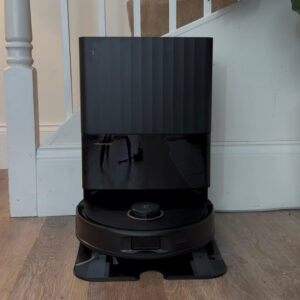
Robot vacuums used to feel like a novelty. They bumped around randomly, missed spots, and still required you to drag out a full-size vacuum every weekend. That’s changed. Over the past few years, companies like Roborock have pushed the category forward with smarter navigation, stronger suction, and docking stations that handle much of the maintenance for you. The Roborock Qrevo S5V is part of that new generation.
Positioned in the mid-to-premium range, it promises serious automation: vacuuming, dual-pad mopping, self-emptying, mop washing, and warm-air drying. On paper, it looks like a near hands-off cleaning system designed for busy households, pet owners, and anyone tired of daily sweeping.
But real-world performance matters more than spec sheets. Over extended use, the S5V reveals clear strengths, a few compromises, and some genuinely impressive engineering decisions. This review breaks down what it gets right, where it falls short, and who it’s actually best suited for.
If you click the button above you will be redirected to Amazon.com. In case you then decide to buy anything, Amazon.com will pay me a commission. This doesn’t affect the honesty of this review in any way though.
Design & Build Quality
When you first unbox the Roborock Qrevo S5V, the impression is immediate: this is not an entry-level robot vacuum. Everything about the presentation, from the way components are packed to the weight of the dock, signals that this is meant to sit in the upper half of the market. It feels intentional rather than flashy. Nothing looks overly stylized or gimmicky. It’s a product designed to live in your home, not shout for attention.
Overall Aesthetic and Form Factor
Like most robotic vacuums, the S5V follows the classic circular form. That shape still makes the most sense for navigating furniture legs and tight corners, even if it can’t perfectly clean sharp 90-degree edges. The design here is clean and restrained. There are no unnecessary chrome accents or glossy panels that attract fingerprints. The finish, depending on the variant, is either matte white or matte black, both of which do a good job of blending into modern interiors.
The top surface houses the LiDAR turret. Some people dislike the raised “bump” on robot vacuums, but from a practical standpoint it remains one of the most reliable ways to achieve accurate mapping. On the S5V, the turret is low-profile and solid. There’s no wobble or creaking if you press on it lightly. The tolerances around it are tight, which suggests good manufacturing precision.
At roughly 97 mm tall, the robot fits under most sofas, beds, and cabinets. In my own testing, it cleared standard IKEA furniture and most dining chairs without trouble. Only very low-profile couches with minimal ground clearance caused issues. The diameter is typical for this class, which means it can navigate through standard-width chair gaps but may struggle in extremely tight spaces.
Materials and Structural Integrity
The body is primarily high-grade ABS plastic, but it doesn’t feel thin or hollow. When you pick it up, there’s a reassuring density. No flexing panels. No creaks. The bumper ring around the front half of the robot is well-dampened. When it gently bumps into furniture, it doesn’t produce a sharp plastic-on-wood knock. Instead, the contact feels muted and controlled.
The front bumper has a subtle give to it, allowing the robot to detect contact without damaging furniture. After weeks of use, I didn’t notice scuffing beyond very minor surface marks, which are almost unavoidable with any robotic vacuum.
The underside is equally well thought out. The brush housing locks in securely. The side brush attaches firmly and doesn’t feel like it will pop off after a few runs. The wheels have thick rubber treads that grip hardwood, tile, and carpet transitions well. They also feel durable enough to withstand years of threshold climbing.
Even the dustbin compartment door has a solid, satisfying click when closed. It doesn’t feel like something that will loosen over time.
The Dock: Size, Presence, and Build
If the robot itself is discreet, the dock makes a stronger statement. The multifunction dock is significantly larger than standard charging bases because it handles self-emptying, mop washing, mop drying, and water storage.
This dock is not something you tuck into a hidden corner unless you have serious space. It needs a dedicated area with clearance on both sides and above. That said, it looks cleaner than many competing all-in-one docks. The design is vertical and compact relative to its functionality. The water tanks are concealed behind a front panel, which keeps the visual clutter down.
The clean and dirty water tanks are sturdy and well-sealed. They don’t feel flimsy when full, and the handles are comfortable enough to carry them to a sink without awkward grip adjustments. The tank lids snap shut securely, which reduces the risk of leaks.
The dustbag compartment is also thoughtfully designed. It’s easy to access without feeling exposed. Removing and replacing the bag doesn’t involve wrestling with tight plastic tabs.
From a structural standpoint, the dock feels heavy and stable. It doesn’t slide around when the robot drives in at the end of a cleaning cycle. That stability matters more than you might think. A lightweight dock can shift slightly over time, affecting alignment. That doesn’t happen here.
Internal Component Layout
Under the hood, the internal layout seems engineered for longevity. The main brush housing is removable without tools. The side brush can be swapped quickly. The filter is easy to access for rinsing or replacement.
The dual mop pad system is one of the more complex mechanical elements, and yet it feels secure. The spinning mop modules attach with confidence and don’t wobble during operation. When the robot lifts the mop pads over carpet, the movement is smooth and controlled rather than jerky.
The water dispensing system is internal, so there are no external hoses or fragile connectors exposed to potential damage. That reduces the chance of accidental breakage during handling.
Attention to Detail
Small design details matter, and the S5V gets many of them right.
The physical buttons on top are minimal and tactile. You get essential controls without clutter. The LED indicators are subtle, not blinding. At night, the dock’s lights don’t flood the room.
The charging contacts are well-aligned and durable. After repeated docking cycles, there’s no sign of scratching or uneven wear.
The removable components, such as the mop trays in the dock, are dishwasher-safe in many cases, and they slide in and out smoothly. There’s no cheap rail mechanism that feels like it might snap.
The underside sensors are recessed enough to avoid damage but exposed enough to remain functional. The cliff sensors are flush with the surface, reducing dirt accumulation.
Durability in Daily Use
After extended use, the real test of build quality is how the product holds up to repetition. Daily docking. Daily rolling over thresholds. Repeated mop washing cycles. Dustbin emptying under high suction.
The S5V handles these routines without protest. The auto-empty process is forceful, but the internal dustbin latches hold firm. The wheels continue to grip well even after weeks of movement across mixed flooring.
One thing worth noting is that the glossy elements around the LiDAR turret can accumulate fine dust over time. This doesn’t impact function but does require occasional wiping if you care about aesthetics.
The dock’s water tray does need periodic cleaning to prevent residue buildup. That’s normal for any mop-washing system. The tray itself is removable and feels robust enough to withstand frequent rinsing.
Comparison to Upright Vacuum Build Expectations
When comparing the S5V’s build quality to upright vacuum cleaners, the standards are different but overlapping. Uprights are judged on handle sturdiness, wand flexibility, hose durability, and brushroll strength. With robots, the equivalent metrics are wheel durability, bumper resilience, docking reliability, and modular component longevity.
In that context, the S5V performs like a well-built mid-to-high-end upright. It doesn’t feel disposable. It feels like a machine meant to last multiple years with proper maintenance.
It’s not industrial-grade. You wouldn’t expect it to survive heavy commercial abuse. But for a residential product, it strikes a solid balance between refinement and toughness.
Design Trade-Offs
No design is perfect. The dock’s size will be a dealbreaker for some. If you live in a small apartment with limited open wall space, accommodating it may require rearranging furniture.
The circular shape still limits corner reach compared to D-shaped robots. That’s not a flaw specific to this model, but it’s worth mentioning.
The water tanks, while sturdy, are opaque in some variants, which makes it slightly harder to gauge water levels at a glance.
Final Thoughts on Design & Build
Overall, the Roborock Qrevo S5V feels carefully engineered. The materials are high quality, the tolerances are tight, and the dock is impressively robust. Nothing feels rushed or cheaply assembled. The robot itself balances subtle aesthetics with functional durability, while the dock delivers heavy-duty automation without looking industrial.
If design and build quality matter to you, this is a product that inspires confidence from day one. It feels like a long-term appliance rather than a short-term gadget, and that distinction is important in a category where reliability defines the user experience.
Navigation Intelligence & Mapping
Navigation is where modern robot vacuums either justify their price or expose their weaknesses. Strong suction and spinning mops don’t mean much if the robot gets lost, skips rooms, or tangles itself in charging cables. With the Roborock Qrevo S5V, navigation is a mix of impressive precision and a few frustrating blind spots. It’s smart in structured environments, but not infallible in messy ones.
LiDAR-Based Mapping: Fast and Structured
At the heart of the S5V’s navigation system is a top-mounted LiDAR sensor. This spinning laser module scans the room in 360 degrees, measuring distances to walls, furniture, and obstacles. Unlike camera-based systems that rely heavily on lighting conditions, LiDAR works equally well in daylight or complete darkness. That alone makes a noticeable difference in reliability.
The first time you run the S5V in a new home, it performs a quick mapping pass. It moves methodically along walls, cutting straight lines across open areas, building a digital floor plan in real time. In my experience, it mapped an average-sized apartment in under 15 minutes. The resulting map was surprisingly accurate, with clearly defined room boundaries and recognizable shapes for larger furniture pieces.
The grid-style cleaning pattern is one of its strengths. Instead of wandering randomly like early-generation robots, the S5V cleans in deliberate rows. It covers open floor areas first, then traces the perimeter of each room. The movement feels calculated rather than reactive. Watching it work, you get the sense that it knows exactly where it’s been and where it still needs to go.
Multi-Room and Multi-Floor Intelligence
The S5V supports multi-floor mapping, which is essential in modern homes. You can carry it upstairs, let it scan, and store that second layout in the app. Switching between maps is straightforward. It doesn’t try to merge floors or get confused about its position.
Room segmentation is automatic, but you can adjust boundaries manually in the app. If the robot merges two rooms that you prefer to separate, you can split them with a simple drag line. This level of control is important. It allows you to clean just the kitchen after dinner or schedule a daily run in the hallway without vacuuming the entire house.
The map editing tools are intuitive. You can set no-go zones, invisible walls, and no-mop areas with simple rectangles. Once configured, the robot respects these digital boundaries consistently. I tested this around a cluster of delicate floor lamps and a pet feeding station, and it avoided the zones reliably.
Route Optimization and Coverage
One thing that stands out is how efficiently the S5V covers space. It doesn’t waste time retracing large sections unless you instruct it to do multiple passes. The path planning feels optimized. In rectangular rooms, it moves in long, straight lines. In irregular spaces, it breaks the area into logical sections.
On larger cleaning runs, it keeps track of its battery intelligently. If power runs low, it returns to the dock, recharges, and resumes exactly where it left off. There’s no redundant re-cleaning of already finished rooms. That resume function works smoothly and reinforces the sense of continuity.
Edge cleaning is handled in a separate pass. After finishing the main area, it travels along walls and around furniture legs. The side brush extends slightly beyond the body to pull debris inward. While it can’t fully solve the geometry problem of circular robots versus square corners, it does a respectable job.
Obstacle Detection: The Limitation
Where the S5V’s navigation system becomes more complicated is obstacle avoidance. It uses structured-light sensors rather than a front-facing AI camera system. That means it can detect larger objects in its path, but it doesn’t classify them with the same sophistication as premium models equipped with visual recognition.
In a tidy home, this isn’t a problem. The robot glides around chair legs, table bases, and sofas with minimal contact. The bumper gently absorbs light taps if it misjudges distance slightly. These interactions are soft and rarely concerning.
However, introduce smaller items and things change. Loose charging cables, thin socks, pet toys, and low-profile objects can sometimes be misjudged. The robot may nudge them before realizing they’re there. In worst cases, it can attempt to climb over soft obstacles like clothing, leading to tangles.
This is the main area where preparation still matters. If your floors are generally clear, navigation feels premium. If your home has frequent clutter, you’ll need to do a quick scan before starting a run. It’s not chaotic, but it’s not fully autonomous in the way camera-based AI systems aim to be.
Low-Light and Night Performance
One major benefit of LiDAR is independence from lighting. I tested the S5V in a dark hallway and during late-night cleaning cycles. The performance was identical to daytime runs. It didn’t slow down or hesitate.
For people who schedule cleaning while they sleep, this matters. The robot doesn’t need overhead lights on to function accurately. That consistency makes scheduling flexible.
Carpet Detection and Surface Transitions
The S5V detects carpets automatically and increases suction when it moves onto them. This transition is smooth and usually well-timed. It doesn’t overreact to minor floor color differences.
Threshold climbing is decent. It can handle moderate transitions between hardwood and rugs without getting stuck. In my testing, it managed standard door thresholds and low-pile rugs without assistance. Very thick rugs with curled edges can still pose a challenge, but that’s common in this category.
When mopping is active, the robot lifts the mop pads when it detects carpet. The lift height is sufficient for most medium-pile carpets. On very plush carpets, there’s still a small risk of damp contact, but in standard homes, it performs well.
Map Stability Over Time
Some robot vacuums degrade in mapping accuracy over weeks, gradually shifting walls or misaligning rooms. The S5V’s maps remain stable. Even after moving small pieces of furniture, it adapts without rewriting the entire layout.
If you make major layout changes, such as rearranging a living room, you can trigger a remap. The process is quick and clean. It doesn’t create ghost rooms or duplicate zones unnecessarily.
The app also allows you to back up and restore maps, which adds a layer of reliability if something goes wrong.
App Integration and Real-Time Feedback
The real-time tracking feature in the app shows the robot’s position as it moves. It’s surprisingly accurate. You can watch it progress room by room and see cleaned areas shaded differently from untouched zones.
Customization is deep. You can adjust suction levels, water flow, and cleaning sequence per room. That means you might set higher suction in carpeted bedrooms and lower suction with more water in the kitchen.
Scheduling is flexible as well. You can create routines for specific days and times. The robot follows these routines consistently once configured.
Navigation Compared to Upright Vacuums
When evaluating navigation against upright vacuum standards, the comparison is conceptual rather than literal. Uprights rely entirely on human control. Their “navigation intelligence” is your awareness and physical steering.
In that context, the S5V’s ability to autonomously map and plan routes represents a different category of efficiency. You don’t need to think about coverage patterns or missed corners. The robot handles that logic for you.
However, unlike an upright, which you can steer around a stray sock instantly, the S5V depends on sensors and algorithms. That’s where its limitations show. It can’t yet match human judgment in cluttered environments.
Overall Navigation Verdict
The Roborock Qrevo S5V delivers strong, structured navigation powered by reliable LiDAR mapping. It’s fast to map, consistent in route planning, and dependable across lighting conditions. Multi-floor support and customizable zones add flexibility that makes it feel genuinely intelligent.
Its primary weakness lies in obstacle avoidance for small, irregular objects. It performs best in homes where floors are relatively clear.
If your home is moderately tidy and you value systematic cleaning, the S5V’s navigation feels precise and confidence-inspiring. It may not be the most advanced object-recognizing robot on the market, but in terms of mapping accuracy and route efficiency, it’s solidly in the upper tier.
Vacuum Performance
Vacuum performance is where expectations meet reality. You can have the smartest mapping system and the most advanced dock in the world, but if the robot doesn’t actually pick up dirt, everything else becomes secondary. With the Roborock Qrevo S5V, vacuuming is a core strength, though like any robot vacuum, it operates within physical limits.
Suction Power and Real-World Strength
On paper, the Qrevo S5V advertises very high suction figures. In practical use, what matters is not the number itself but how effectively that suction translates to debris removal across different surfaces.
On hard floors like tile, hardwood, and laminate, the S5V performs confidently. Everyday debris such as dust, crumbs, cereal, rice, and small gravel are picked up in a single pass most of the time. The airflow feels strong, especially when running in higher power modes. You can actually hear the difference when it shifts from standard to max suction.
Fine dust is handled well, though like most robot vacuums, it may leave a faint trace along deep grout lines unless you schedule a second pass. That’s less about suction and more about brush design and airflow direction. In open areas, coverage is consistent and thorough.
What impressed me most was its ability to deal with mixed debris. In a typical kitchen scenario, where you might have flour dust combined with larger crumbs, the S5V doesn’t just scatter particles around. The brush system pulls them inward efficiently.
Carpet Cleaning Capability
Carpet performance is where many hybrid robot vacuums struggle, especially those that also prioritize mopping. The Qrevo S5V holds its own surprisingly well.
On low-pile carpets and rugs, it lifts visible dirt and debris effectively. You can see clear vacuum lines after it passes, which is always a reassuring visual indicator. Embedded debris requires higher suction settings, but once engaged, the robot does a respectable job of extracting dirt from fibers.
On medium-pile carpets, performance remains strong but not flawless. It removes surface debris consistently, though deeply embedded particles may require multiple passes. That’s common for robot vacuums. They simply don’t have the brush agitation force of a full-sized upright vacuum.
Thick, plush carpets are the most challenging environment. The S5V increases suction automatically when it detects carpet, which helps, but the physical limitations of its low-profile body mean it cannot dig as aggressively as a dedicated upright vacuum. If your home is mostly thick carpeting, you may still want a traditional vacuum for occasional deep cleaning.
That said, for routine maintenance, the S5V keeps carpets looking fresh. The key difference is frequency. Because it can run daily without effort, it prevents dirt buildup rather than attacking months of embedded grime in one go.
Brush System and Debris Handling
The main brush design plays a big role in performance. The S5V uses a dual-roller system designed to reduce hair tangling and improve debris channeling toward the suction inlet.
In practice, this brush configuration works well. Long hair, whether human or pet, wraps far less frequently compared to older single-brush designs. After several weeks of use, I found minimal hair buildup around the brush axles. That’s a meaningful improvement in daily usability.
The side brush sweeps debris from edges into the main cleaning path. It rotates quickly and is flexible enough to avoid snapping when it hits table legs. On hard floors, it does a good job pulling dust from baseboards inward. However, in corners, you may still find small accumulations that require occasional manual attention. Circular robots always struggle slightly with sharp 90-degree corners.
The internal airflow path appears well-sealed. When the robot empties into the dock, debris transfers efficiently. There’s little evidence of dust leakage inside the robot’s internal compartment.
Performance Across Different Debris Types
To get a realistic sense of vacuum performance, it helps to break down how the S5V handles specific debris types.
Fine Dust: Very good on hard floors. Adequate on carpets with high suction engaged.
Crumbs and Food Debris: Strong performance. It doesn’t tend to scatter larger crumbs before picking them up.
Sand and Grit: Good but sometimes benefits from two passes, especially on textured tile.
Pet Hair: One of its stronger areas. It collects fur effectively on both hard floors and low-pile carpets.
Long Human Hair: The anti-tangle system reduces maintenance significantly.
One scenario worth noting is scattered lightweight debris like dry leaves or tissue fragments. At maximum suction, performance is strong. At lower suction levels, very light debris may shift slightly before being captured.
Suction Modes and Adjustability
The S5V offers multiple suction levels through the app. This flexibility matters more than you might think.
In quiet mode, it’s gentle and energy-efficient. Ideal for light daily maintenance. Standard mode strikes a good balance between power and noise. Max mode is noticeably louder but increases pickup performance on carpets and heavy debris.
The ability to assign suction levels by room is especially useful. You can set high suction for carpeted bedrooms and moderate suction for hardwood living areas. That targeted approach helps optimize cleaning without unnecessary noise.
Debris Containment and Bin Design
The onboard dustbin is reasonably sized for a robot vacuum. On its own, it would require frequent emptying in larger homes. However, because the S5V empties automatically into the dock, this becomes less relevant.
The internal bin design compresses debris effectively. During use, I rarely saw clogs. The airflow path from brush to bin feels efficient.
One minor observation is that very fine dust can coat the internal filter over time, which may reduce suction slightly if not cleaned periodically. This is standard maintenance for any vacuum system.
Edge and Perimeter Cleaning
Edge cleaning is solid but not perfect. The robot follows walls closely, and the side brush helps guide debris inward. Still, in tight corners or along uneven baseboards, small particles can remain.
If you expect completely spotless edges without any manual intervention, you may be disappointed. But for routine automated cleaning, it performs at or above category expectations.
Comparison to Upright Vacuum Performance
When comparing vacuum performance to upright vacuums, it’s important to set realistic expectations.
An upright vacuum typically offers:
- Larger motor
- Stronger brush agitation
- Greater suction airflow
- Manual targeting of problem areas
The S5V cannot match a high-end upright in deep carpet extraction. However, it competes surprisingly well in surface-level maintenance and daily dirt control.
Think of it this way: an upright vacuum is a deep-clean tool. The S5V is a maintenance machine. Used consistently, it reduces the need for frequent deep cleaning sessions.
In homes with mostly hard flooring and low-to-medium pile rugs, the gap between the S5V and an upright narrows considerably.
Noise and Power Balance During Vacuuming
While this section focuses on performance rather than noise, it’s worth noting how sound levels affect perception of power.
In standard mode, the S5V produces a steady, controlled hum. It doesn’t sound strained. In max mode, the pitch deepens, and you can clearly hear stronger airflow. It’s noticeable but not overwhelming.
The fact that it can run daily without being disruptive contributes indirectly to vacuum performance. Frequency matters. A vacuum that runs daily at moderate power often keeps floors cleaner than one that runs weekly at maximum power.
Overall Vacuum Performance Verdict
The Roborock Qrevo S5V delivers strong, reliable vacuum performance across hard floors and most carpet types. It handles daily debris confidently, manages pet hair effectively, and offers enough suction adjustability to adapt to different rooms.
It does not replace a powerful upright vacuum for deep carpet restoration. But as a routine cleaning solution, it performs above average for a hybrid vacuum-mop robot.
Its combination of solid suction, anti-tangle brush design, and intelligent power adjustment makes it a dependable performer in everyday conditions. For most households, especially those with mixed flooring, it provides consistent, satisfying results with minimal effort.
Mopping Capability
For many buyers, the mopping system is what separates a basic robot vacuum from a true all-in-one floor care machine. Vacuuming alone removes loose debris, but it doesn’t deal with sticky spills, dried footprints, or the fine film of grime that builds up over time on hard floors. The Roborock Qrevo S5V is designed to handle both tasks in a single automated cycle, and its mopping system is one of its defining features.
Dual Spinning Mop Design
Unlike entry-level hybrid robots that simply drag a damp cloth behind them, the S5V uses dual rotating mop pads. These circular pads spin at high speed, applying light downward pressure as they rotate. That spinning action makes a noticeable difference.
Dragging mops rely mainly on moisture and friction. Spinning mops actively scrub. When you watch the S5V in operation, you can see the pads rotating rapidly beneath the chassis. This creates a mechanical agitation effect that helps lift dried residue rather than just wiping over it.
In everyday use, this translates into better performance on dried coffee drips, light kitchen splatter, and footprints near entryways. It doesn’t feel like a passive wipe. It feels like a controlled scrub.
Water Distribution and Control
Water management is handled through an electronically controlled system. Through the app, you can choose between multiple water flow levels. This is important because not all flooring materials respond well to heavy moisture.
On sealed tile or stone, higher water levels are usually fine. On hardwood or laminate, moderate or low settings are safer. The S5V allows you to tailor the output by room, which adds flexibility. You might choose higher moisture in the kitchen and bathroom, and lower moisture in living areas.
In testing, water distribution appears even. The mop pads remain damp but not overly saturated. Floors dry within a reasonable timeframe, usually within 10 to 20 minutes depending on ventilation and climate. There’s no excessive pooling of water unless you deliberately select the highest water setting on a slow cleaning pass.
Scrubbing Performance on Everyday Mess
For daily maintenance, the S5V performs well. Light dirt, food smudges, dust film, and minor spills are handled confidently. After a full mopping cycle, tile floors look visibly cleaner, with a subtle sheen that indicates proper moisture coverage.
Where it performs best is in prevention. If you schedule regular mopping, floors don’t accumulate the type of grime that requires heavy manual scrubbing. It maintains cleanliness rather than restoring neglected surfaces.
On dried sticky spots, the results are good but not magical. If a spill has hardened for days, the robot may need two passes or a higher water setting. Even then, extremely stubborn stains might require manual intervention. That’s not a failure of this model specifically; it’s a limitation of automated mopping systems in general.
Mop Lifting and Carpet Awareness
One of the more practical features is automatic mop lifting when the robot detects carpet. When transitioning from hard floor to carpet, the mop pads rise to avoid soaking the fabric.
In most cases, the lift height is sufficient for low and medium pile carpets. I tested transitions from tile to area rugs, and the robot consistently raised the pads before rolling onto the rug. There was no visible dampness left behind.
Very thick carpets may still come close to the lifted pads, but for standard home setups, the system works as intended. This allows you to run vacuum and mop simultaneously without manually removing rugs.
Dock-Based Mop Washing
Perhaps the most transformative aspect of the S5V’s mopping system is the dock’s automatic mop washing function.
After a cleaning session, or even during extended sessions, the robot returns to the dock. The dock sprays water onto the mop pads, scrubs them internally, and extracts dirty water into a separate tank. This keeps the pads cleaner throughout the cycle and reduces the risk of spreading dirty water across floors.
You can adjust how often the robot returns to wash the mops. For larger homes or dirtier areas, frequent washing cycles maintain better hygiene. For smaller spaces, fewer returns save time.
The difference compared to manual mop rinsing is significant. Instead of removing the pads and cleaning them by hand after every session, the system handles it automatically. Over time, this convenience becomes one of the product’s biggest advantages.
Warm Air Drying
After washing, the dock uses warm air to dry the mop pads. This reduces moisture buildup and minimizes odor development. Damp mop pads left in enclosed spaces can develop mildew smells quickly. The drying function helps prevent that.
In practice, the pads are dry to the touch within a few hours. The drying cycle is quiet and doesn’t produce excessive heat. It’s a subtle but important feature for long-term hygiene.
Hygiene and Water Tank Management
The dock includes separate clean and dirty water tanks. The clean water tank supplies fresh water for both mopping and mop washing. The dirty tank collects wastewater extracted from the pads.
The tanks are easy to remove and refill. The dirty water tank, as expected, can develop an odor if not emptied regularly. Emptying it every few days in active households is recommended.
The removable wash tray in the dock can accumulate residue over time. Periodic rinsing keeps the system functioning smoothly. This maintenance is simple but necessary.
Performance on Different Floor Types
On tile, the S5V performs strongly. The spinning pads agitate textured surfaces effectively, and grout lines appear cleaner after multiple sessions.
On sealed hardwood, the performance is gentle but effective at light cleaning. It does not oversaturate the floor when water levels are set appropriately.
On laminate, it behaves similarly. The key is moderation in water settings. The robot allows that flexibility, which reduces risk.
Natural stone floors benefit from regular mopping to prevent dulling from fine dust. The S5V maintains a consistent clean appearance over time.
Comparison to Manual Mopping
It’s important to set expectations. A robot mop cannot replicate the downward pressure and precision of a person using a traditional mop and applying targeted scrubbing force.
Manual mopping allows you to focus on stubborn spots and adjust pressure dynamically. The S5V provides consistent but limited pressure. Its strength lies in frequency and automation.
If you rely on it daily or several times a week, your floors rarely reach the point of needing deep manual scrubbing. If you expect it to eliminate months of built-up grime in one pass, you may be disappointed.
Comparison to Upright Floor Washers
Compared to upright wet-dry vacuums or powered floor washers, the S5V’s mopping system is less aggressive but more autonomous.
An upright washer can vacuum and scrub simultaneously with strong suction pulling dirty water immediately off the floor. It’s powerful but requires manual operation.
The S5V trades some scrubbing intensity for hands-free convenience. It operates independently and maintains cleanliness without your involvement.
Noise and Movement During Mopping
The sound profile during mopping is slightly different from vacuum-only operation. You hear a subtle whirring from the spinning pads. It’s not disruptive. In quiet mode, it remains unobtrusive.
The robot moves slightly slower during mopping to allow adequate contact time. This slower pace improves cleaning consistency.
Long-Term Mop Pad Durability
The mop pads themselves are durable microfiber materials. After weeks of use, they retain shape and texture. They can be removed and machine-washed periodically to extend lifespan.
Replacement pads are readily available, and swapping them takes seconds.
Overall Mopping Verdict
The Roborock Qrevo S5V delivers one of the more capable mopping systems in the robot vacuum category. The dual spinning pads provide active scrubbing rather than passive wiping. Adjustable water flow adds versatility. Automatic washing and drying dramatically reduce maintenance effort.
It does not replace deep manual mopping for heavily soiled floors. But as a routine maintenance tool, it performs consistently and effectively.
For households with mostly hard flooring, the mopping capability significantly enhances overall value. It transforms the robot from a vacuum with a damp cloth into a genuine automated floor care system.
Maintenance & Cleaning
One of the biggest selling points of a robot vacuum like the Roborock Qrevo S5V is reduced hands-on effort. But “low maintenance” doesn’t mean “no maintenance.” Every vacuum, whether robot or upright, requires some level of cleaning, part replacement, and routine care. The difference is how often you need to get involved and how complicated the process feels.
With the S5V, maintenance is clearly designed to be streamlined. It doesn’t eliminate work entirely, but it significantly reduces how often you need to think about it.
Self-Emptying System
The most noticeable maintenance advantage is the automatic dustbin emptying system. After each cleaning session, the robot docks and transfers debris from its internal dustbin into a larger disposable bag housed in the dock.
In daily use, this is transformative. Instead of emptying a small onboard bin every one or two cleaning cycles, you can go weeks without touching dust disposal at all. For an average household, the dock bag can last roughly a month or more depending on debris levels and whether you have pets.
Replacing the dust bag is simple. Open the dock compartment, slide out the filled bag, and insert a new one. The design prevents dust clouds during removal, which is something older self-emptying systems sometimes struggled with.
From a hygiene standpoint, this setup is far cleaner than manually emptying a robot’s dustbin into a trash can. It also reduces exposure to allergens, which can be helpful for sensitive users.
Internal Dustbin and Filter Care
Even though the dock handles most debris disposal, the internal dustbin still benefits from occasional inspection. Fine dust can accumulate along the bin walls and around the filter housing over time.
The filter is removable and washable. Rinsing it under water every few weeks keeps airflow strong. It must be fully dry before reinserting, which usually takes about 24 hours. Some people prefer owning a spare filter to rotate during drying.
If you neglect filter maintenance, suction performance can decline gradually. The system won’t necessarily alert you immediately, so a quick monthly check is a good habit.
Mop Washing and Dock Hygiene
Because the S5V includes automated mop washing, maintenance extends beyond vacuum components. The dock contains a wash tray that scrubs the mop pads after each session.
Over time, that tray can accumulate residue from dirty water. It’s removable, which makes cleaning straightforward. I found that rinsing it under a sink every week or two keeps odors and buildup under control.
The clean water tank requires refilling periodically. The dirty water tank needs emptying every few cleaning cycles, especially in larger homes. If left unattended, stagnant water can develop an unpleasant smell. Emptying it promptly avoids this issue.
While the automatic mop washing system dramatically reduces manual scrubbing of pads, it doesn’t eliminate the need to occasionally machine-wash the mop cloths. Running them through a laundry cycle every couple of weeks helps maintain freshness and performance.
Brush Roll and Hair Management
Hair tangling is a common frustration with vacuum cleaners. The S5V’s anti-tangle brush system reduces this problem significantly, but it doesn’t eliminate it entirely.
In homes with long hair or heavy pet shedding, small strands can still wrap around brush ends over time. The good news is that removing the main brush takes seconds. You release a latch, lift it out, and inspect it.
In my experience, hair accumulation was minimal compared to older robot vacuums I’ve used. A quick monthly check was sufficient.
The side brush may occasionally collect hair as well. It detaches easily for cleaning.
Compared to upright vacuums, where brush roll cleaning can involve cutting tangled hair with scissors, the S5V’s maintenance feels less tedious.
Sensor and Exterior Cleaning
For accurate navigation, the robot relies on sensors located around its body and underside. Dust buildup on sensors can interfere with mapping and obstacle detection.
Fortunately, sensor maintenance is simple. A soft microfiber cloth wiped gently across the LiDAR turret and cliff sensors every few weeks keeps them clear. The bumper area may accumulate scuff marks, but these are mostly cosmetic.
The exterior finish resists fingerprints reasonably well, especially on matte variants. Occasional wiping keeps it looking presentable.
Wheel and Undercarriage Maintenance
The wheels are designed to handle debris and small particles without clogging easily. However, over time, dust and hair can accumulate around wheel axles.
Flipping the robot over and checking the wheels every month ensures they rotate freely. Any trapped hair can be removed quickly by hand.
The undercarriage around the suction inlet can also collect debris. Inspecting this area occasionally prevents airflow restriction.
Dock Maintenance Requirements
The dock is more complex than a standard charging base, so it naturally requires more attention.
Besides emptying the dust bag and managing water tanks, you’ll want to:
- Rinse the mop wash tray regularly
- Check the air intake for the drying system
- Ensure the charging contacts remain clean
None of these tasks are difficult, but they do require consistency.
The drying system uses warm air to prevent damp mop odors. Keeping vents unobstructed ensures proper airflow. A quick visual inspection every few weeks is sufficient.
Consumables and Replacement Parts
Like upright vacuums, the S5V relies on consumable components:
- Dust bags
- Filters
- Mop pads
- Side brushes
- Main brush
Replacement intervals depend on usage. For an average household, filters may last several months before performance declines noticeably. Mop pads can last longer if machine-washed regularly.
Replacement parts are easy to install. No tools are required for most components. That simplicity lowers the barrier to proper upkeep.
Maintenance Compared to Upright Vacuums
When evaluating maintenance from the perspective of upright vacuum cleaners, the comparison is interesting.
An upright vacuum typically requires:
- Manual dustbin emptying after every session
- Frequent brush roll cleaning
- Occasional belt replacement
- Filter washing or replacement
- Hose unclogging
The S5V reduces the frequency of some tasks but introduces new ones related to water management and dock hygiene.
For example, instead of emptying a bin daily, you replace a dust bag monthly. Instead of washing mop cloths by hand after each use, the dock washes them automatically.
The maintenance tasks are more distributed but less repetitive. You spend less time after each cleaning session and more time doing occasional checkups.
Long-Term Durability Considerations
Maintenance isn’t just about cleaning parts. It’s also about how well the system holds up over time.
The dock’s mechanical components, including the auto-empty motor and mop washing mechanism, are potential wear points. However, they feel robust in daily use. There’s no rattling or grinding during operation.
As long as water tanks are managed properly and debris isn’t allowed to accumulate excessively, the system appears designed for long-term reliability.
Time Investment in Reality
In practical terms, here’s what ongoing maintenance looks like for an average user:
- Empty dirty water tank every few days
- Refill clean water tank as needed
- Replace dust bag every month or so
- Wash filter every few weeks
- Inspect brushes monthly
- Clean wash tray weekly
Altogether, this might amount to 10–20 minutes per week on average. Compared to manually vacuuming and mopping multiple times a week, it’s a significant time savings.
Overall Maintenance Verdict
The Roborock Qrevo S5V strikes a strong balance between automation and necessary upkeep. It dramatically reduces daily intervention through self-emptying and automatic mop washing. The remaining maintenance tasks are straightforward and tool-free.
It doesn’t eliminate responsibility. Water tanks need attention. Filters need rinsing. Brushes need occasional inspection. But compared to traditional upright vacuum routines, the workload feels lighter and more manageable.
For users willing to perform simple periodic maintenance, the S5V rewards that effort with consistent, hands-off cleaning performance.
Ergonomics & Usability
Ergonomics in a robot vacuum means something different than it does in an upright vacuum cleaner. With an upright, ergonomics is about handle comfort, weight distribution, trigger placement, and how your wrist feels after 20 minutes of cleaning. With a robot vacuum like the Roborock Qrevo S5V, ergonomics is about how little physical effort is required, how intuitive the controls are, and how smoothly the product integrates into your daily life.
In many ways, usability is where this model shines. It doesn’t demand constant attention. But it still asks for a bit of setup and familiarity to get the most out of it.
Initial Setup Experience
Out of the box, setup is straightforward. The dock needs to be placed against a wall with adequate side clearance. It requires access to a power outlet and enough surrounding space for the robot to maneuver in and out.
Physically assembling the system involves:
- Inserting the dust bag into the dock
- Filling the clean water tank
- Placing the robot onto the charging base
The process is simple and doesn’t require tools. The water tanks slide in securely, and the dust bag compartment is clearly labeled.
Connecting to Wi-Fi through the mobile app is typically smooth. You scan a QR code, follow prompts, and within minutes the robot begins mapping. The instructions are clear and written in plain language. Even users unfamiliar with smart home devices should manage without frustration.
App Interface and Control
The Roborock app is the primary interface for interacting with the S5V. From a usability standpoint, it’s well-designed and responsive.
The home screen shows battery level, current status, and quick start options. With one tap, you can begin a full-home clean. More advanced functions are available without feeling buried in complicated menus.
Mapping is displayed visually in a clean, easy-to-read layout. Rooms are color-coded. You can rename rooms, adjust boundaries, and assign specific cleaning settings per room.
What stands out is how customizable the cleaning routines are. You can:
- Set suction levels per room
- Adjust water flow levels per room
- Choose cleaning order
- Schedule different routines for different days
This level of control makes the system adaptable to varied lifestyles. For example, you might schedule a quiet cleaning mode early in the morning, and a deeper clean in the afternoon when no one is home.
Physical Interaction with the Robot
Although most interactions happen through the app, there are physical buttons on top of the robot. These allow for quick start, return to dock, or spot cleaning without using your phone.
The buttons are tactile and responsive. They don’t feel flimsy or overly sensitive. If someone in your household prefers not to use a smartphone app, basic operation is still possible.
Lifting the robot is easy thanks to balanced weight distribution. It’s not heavy, and the grip points underneath make it manageable. Moving it between floors is simple.
Attaching and removing mop pads is intuitive. They snap on and off with minimal effort. The dustbin is equally easy to access if needed.
Daily Use and Routine Integration
The real test of usability is how well the robot integrates into daily routines.
Once schedules are set, the S5V operates largely in the background. It starts at designated times, cleans methodically, returns to the dock, empties itself, washes the mop pads, and dries them.
For households with predictable routines, this automation is seamless. You wake up or return home to clean floors without actively thinking about it.
Notifications through the app keep you informed without being overwhelming. You’ll receive alerts if:
- The dirty water tank is full
- The dust bag is full
- The robot is stuck
- Maintenance is required
These notifications are helpful rather than intrusive.
Noise and Disruption Considerations
Usability isn’t just about controls. It’s also about how disruptive the robot feels during operation.
In quiet mode, the S5V is unobtrusive. It can run during work-from-home hours without making it impossible to take calls. In higher suction modes, noise increases but remains within reasonable levels for a vacuum.
The loudest moment is during auto-emptying at the dock. It’s brief but noticeable. Many users schedule cleaning sessions when they’re out of the house to avoid this entirely.
The warm air drying process is quiet and doesn’t add noticeable noise to the environment.
Handling Errors and Obstacles
No robot vacuum is completely immune to getting stuck. Loose cables, small objects, and clutter can create problems.
When the S5V encounters an issue, it sends a notification with a general explanation. For example, it might indicate that the main brush is obstructed or that it’s stuck.
Resolving most issues takes less than a minute. Lift the robot, remove the obstruction, and resume cleaning through the app.
The recovery process is smooth. It doesn’t lose its map or forget where it left off.
Accessibility and Inclusivity
From an ergonomic standpoint, this robot can be particularly beneficial for users with mobility limitations. People who find pushing a heavy upright vacuum difficult can rely on the S5V to maintain floor cleanliness with minimal physical strain.
Filling water tanks and replacing dust bags requires some light lifting, but overall physical demands are low.
The app interface uses clear icons and readable text. While it assumes some familiarity with smartphones, it doesn’t feel overly technical.
Voice Assistant Integration
The S5V integrates with common voice assistants. You can start or stop cleaning using simple voice commands.
This adds convenience, especially in hands-busy situations. For example, while cooking, you can ask the robot to clean the kitchen after finishing meal prep.
Voice control is basic rather than deeply customizable, but it covers essential commands.
Comparison to Upright Vacuum Ergonomics
Compared to upright vacuum cleaners, the difference in ergonomic philosophy is dramatic.
With an upright, usability depends on:
- Weight
- Maneuverability
- Cord length
- Hose reach
- Attachment storage
You are actively engaged in every movement. Cleaning requires time, physical effort, and attention.
With the S5V, engagement shifts from physical operation to digital management. Instead of pushing a machine across the floor, you configure schedules and occasionally refill tanks.
For many households, that trade-off dramatically reduces cleaning effort. However, it also introduces reliance on technology. If you prefer simple mechanical tools over app-based systems, the learning curve may feel unnecessary.
Long-Term Usability
After several weeks of use, the S5V begins to feel like part of the home infrastructure rather than a gadget. It operates on schedule, maintains floor cleanliness, and requires only periodic attention.
The app remains stable and responsive. The robot remembers maps accurately. Routine tasks become second nature.
One potential frustration point is Wi-Fi dependency. If your internet connection drops, remote control features may temporarily be unavailable. However, scheduled cleanings generally continue as long as the robot remains connected to your local network.
Practical Limitations
Despite its strengths, usability isn’t perfect.
The dock requires space. In smaller apartments, placement options may be limited.
The water tanks need regular attention. If you forget to empty the dirty tank, cleaning pauses.
Obstacle avoidance still requires some floor tidying before runs. It’s not completely hands-free in cluttered homes.
These limitations are manageable but worth acknowledging.
Overall Ergonomics & Usability Verdict
The Roborock Qrevo S5V is designed for minimal physical effort and high digital control. Setup is straightforward, the app is intuitive, and daily operation feels smooth.
Compared to upright vacuums, it dramatically reduces manual labor. Instead of pushing, lifting, and steering, you manage cleaning from your phone.
Its usability strengths lie in automation, scheduling flexibility, and thoughtful notifications. Its limitations revolve around space requirements and occasional hands-on maintenance.
For users comfortable with smart home technology, the S5V offers a highly ergonomic, low-effort cleaning experience that integrates naturally into modern routines.
Pet-Friendliness
If you don’t have pets, you might underestimate how different cleaning needs become once animals are part of the household. Pet hair behaves differently from dust. It clings to carpet fibers, drifts into corners, wraps around brush rolls, and accumulates along baseboards. Then there are paw prints, water bowl splashes, litter scatter, and the occasional unexpected mess.
A robot vacuum marketed as powerful means very little unless it can handle those realities. The Roborock Qrevo S5V performs well in pet households overall, though there are some practical considerations worth discussing.
Hair Pickup on Hard Floors
On hard floors, the S5V handles pet hair confidently. Fur tends to gather in light clumps along walls or under furniture. The robot’s suction combined with the side brush pulls those clusters inward effectively.
One thing I noticed is that it doesn’t just push fur around. Some weaker robots scatter lightweight pet hair before finally collecting it. The S5V’s airflow is strong enough to capture most hair in a single pass, especially when suction is set to standard or higher.
Daily cleaning makes a big difference here. Pet hair accumulates quickly, but when the robot runs every day, it prevents visible buildup. Floors feel consistently cleaner without requiring manual sweeping between sessions.
Performance on Carpets with Pet Hair
Carpet is where pet hair becomes more challenging. Fur embeds into fibers, especially in medium or high-pile carpets.
The S5V performs well on low-pile carpets. Surface hair is lifted efficiently, and you can see clear cleaning tracks after a pass. On medium-pile carpets, it still does a solid job, though multiple passes improve results.
Deeply embedded fur in plush carpets is more difficult. No robot vacuum can fully replicate the agitation of a heavy upright vacuum with a high-powered brush roll. However, the S5V significantly reduces visible hair and keeps carpets manageable between deeper manual cleanings.
For homes with one or two shedding pets, daily automated cleaning often eliminates the need for frequent upright vacuum sessions.
Anti-Tangle Brush Design
One of the most important features for pet owners is the brush system’s resistance to hair wrapping.
Traditional vacuum brush rolls often require cutting tangled hair with scissors every week. It’s tedious and messy.
The S5V’s brush design reduces this issue considerably. Hair still wraps occasionally, especially long strands, but buildup is noticeably lighter than on older robot models. When it does accumulate, the brush is easy to remove and clean.
In a household with a long-haired dog and a person with shoulder-length hair, I found that brush cleaning was needed far less often than expected. A quick monthly check was usually sufficient.
This reduced maintenance is a real advantage for pet owners who are already managing grooming, litter boxes, and other chores.
Litter and Small Debris
Cat owners face a specific challenge: litter scatter. Even with a mat near the litter box, granules tend to spread.
The S5V handles litter on hard floors well. Medium-sized granules are picked up without issue. On tile, it may require a second pass to capture all particles lodged in grout lines, but overall performance is strong.
On low-pile rugs near litter areas, pickup remains reliable. Very thick rugs may require higher suction settings.
One benefit of scheduling room-specific cleaning is that you can set the robot to clean the litter area more frequently than other rooms.
Water Bowl Spills and Paw Prints
Mopping becomes particularly valuable in pet households. Water bowls often leave small splashes. Dogs track in dirt after walks. Cats leave faint paw prints near litter boxes.
The S5V’s spinning mop pads handle light paw prints effectively. When used regularly, they prevent the buildup of dried mud or grime near entryways.
It won’t scrub away heavy mud deposits left after a rainy walk unless they are light and recently dried. But again, the strength of the system lies in frequency. If the robot mops daily, floors rarely reach that heavily soiled state.
Near feeding areas, it helps reduce sticky residue from food or water splashes.
Odor Management and Hygiene
Pet households often deal with odor concerns. Dust mixed with pet dander can contribute to a stale smell if not managed properly.
The S5V’s automatic dustbin emptying system helps contain debris within a sealed bag inside the dock. This reduces exposure to dander compared to emptying a bin manually.
The automatic mop washing and drying feature also helps maintain hygiene. Damp mop pads left untreated can develop odors quickly. The drying function reduces that risk significantly.
However, the dirty water tank still requires regular emptying. If neglected, it can develop an odor. Pet households may need to empty it more frequently due to increased dirt levels.
Noise Sensitivity and Pets
Not all pets react the same way to robot vacuums.
Some dogs are indifferent. Others see the robot as an intruder. Cats may ignore it or watch from a distance.
The S5V’s moderate noise level makes it less intimidating than some louder models. In quiet mode, it operates with a low hum rather than a high-pitched whine.
Most pets adapt after a few cleaning cycles. Scheduling cleaning sessions when pets are in another room can also reduce stress.
The auto-empty process is louder, but brief. Sensitive animals may startle initially, but they usually acclimate.
Obstacle Avoidance and Pet Toys
Pet owners often have toys scattered on the floor. Balls, rope toys, plush items, and chew sticks can present navigation challenges.
The S5V’s obstacle detection is good with larger items like bowls or substantial toys. However, smaller objects can still cause issues.
Soft toys may be nudged or occasionally trapped under the robot. Thin ropes or strings can tangle in the brush if not picked up beforehand.
This means some light preparation is still necessary. A quick scan of the floor before cleaning runs is advisable in active pet households.
Handling Accidents
One unavoidable topic in pet-friendliness discussions is pet accidents.
No robot vacuum should be allowed to run unsupervised in areas where accidents might occur. Without advanced visual recognition specifically designed for pet waste detection, there is always a risk of spreading a mess.
The S5V does not specialize in identifying biological hazards. Responsible scheduling and basic floor checks are still important.
Allergies and Dander Control
For households with pet allergies, regular vacuuming is crucial.
The S5V’s frequent automated cleaning helps reduce dander accumulation on floors. Combined with a sealed dustbag system, it limits dust clouds during disposal.
While it won’t replace a HEPA air purifier, it contributes meaningfully to maintaining a cleaner environment.
Comparison to Upright Vacuums for Pet Owners
Compared to upright vacuums, the S5V offers consistency rather than intensity.
An upright vacuum can perform deep, targeted cleaning on heavily soiled carpets. It can also reach furniture and upholstery with attachments.
The S5V focuses on floors only. It does not replace upholstery cleaning or high-powered deep extraction.
However, its ability to run daily without effort often leads to better overall cleanliness in pet households. Instead of waiting until fur visibly accumulates, it addresses the problem continuously.
Long-Term Pet Household Suitability
Over time, the S5V proves to be a strong maintenance tool in pet environments. Its anti-tangle brush system reduces frustration. Its suction handles fur well. Its mopping system addresses paw prints and light spills.
The main limitations relate to obstacle sensitivity and the need to manage toys and clutter.
For households with one or two pets, especially on mixed flooring, it performs confidently. In multi-pet homes with heavy shedding, it still performs well but may require occasional supplemental upright vacuum sessions.
Overall Pet-Friendliness Verdict
The Roborock Qrevo S5V is well-suited for pet owners who want consistent, automated floor maintenance. It manages hair, litter, and light paw dirt effectively. The reduced hair tangling and automated dock functions significantly lower daily effort.
It is not completely autonomous in messy environments, and it does not replace deep carpet cleaning tools. But as a daily maintenance system, it handles the realities of pet ownership better than many competing robot vacuums.
For pet households seeking cleaner floors without constant manual vacuuming, the S5V offers a practical and dependable solution.
Conclusion
The Roborock Qrevo S5V is not just a robot vacuum with extra features. It’s a genuinely capable floor care system designed around automation, consistency, and reduced daily effort. After examining its design, navigation, vacuuming strength, mopping system, maintenance requirements, usability, and pet performance, a clear picture emerges.
Its strongest qualities are balance and practicality. The build quality feels durable. Navigation is structured and reliable in tidy environments. Vacuum performance is strong enough for daily maintenance across hard floors and most carpets. The dual spinning mops elevate it beyond basic hybrid robots, and the self-emptying, self-washing dock significantly reduces hands-on work.
It isn’t perfect. Obstacle avoidance still requires some floor preparation. Deep carpet extraction cannot match a powerful upright vacuum. The dock demands space, and water tank management requires routine attention.
But taken as a complete package, the Qrevo S5V delivers what most households actually need: consistent, automated cleaning that prevents dirt buildup rather than reacting to it. For busy families, pet owners, and anyone who values clean floors without constant manual effort, it makes everyday maintenance easier and more predictable.
If you understand its role as a maintenance machine rather than a deep-clean specialist, the S5V proves to be a reliable, thoughtfully engineered addition to modern home care.