
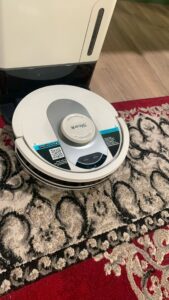
Robot vacuums have come a long way from the early days of noisy discs bumping blindly into furniture and missing half the room. Today, models like the Shark AI Ultra are designed to be quiet helpers that work in the background, keeping floors consistently clean without demanding much attention. The promise is simple: less time pushing a vacuum and more time living in a clean home. Whether that promise holds depends on how well the robot can navigate, how reliably it cleans, and how little effort it requires from the owner.
The Shark AI Ultra positions itself as a practical, feature-rich option rather than a luxury gadget. It focuses on strong vacuuming performance, smart LiDAR-based navigation, and a self-emptying base that removes one of the biggest annoyances of robot ownership. This review looks at how well it delivers on those claims in real-world use, where pets shed daily, furniture layouts aren’t perfect, and cleaning needs to happen automatically, not just in ideal conditions.
If you click the button above you will be redirected to Amazon.com. In case you then decide to buy anything, Amazon.com will pay me a commission. This doesn’t affect the honesty of this review in any way though.
PROS & CONS
Pros
- Excellent navigation and mapping via LiDAR.
- Self-empty base reduces maintenance significantly.
- Strong suction and debris pickup across floors.
- Pet hair handling is very good.
- Long runtime and smart resume.
Cons
- No mopping on the standard self-empty version.
- App software could be more polished.
- Noise levels are on the higher side.
- Support & reliability reports are mixed.
Design & Build Quality
Design is often overlooked when it comes to robot vacuums, but it matters more than people think. This is a device that lives on your floor, usually in plain sight, and moves through your home every day. The Shark AI Ultra takes a very practical approach to design. It does not try to look futuristic or decorative. Instead, it focuses on durability, function, and staying out of the way.
At first glance, the robot itself has a familiar round profile with a low, flat body. The top housing is understated, finished in a dark gray tone that blends easily into most interiors. It does not attract fingerprints easily, and dust buildup is not very noticeable, which is a small but appreciated detail. The top-mounted LiDAR turret sits slightly raised at the center. While this adds a bit of height, it is still low enough to fit under most sofas, beds, and cabinets. In everyday use, the height rarely becomes an issue unless your furniture is unusually low to the ground.
The plastics used across the robot feel sturdy and well-fitted. This is not a premium metal-bodied device, but it does not feel cheap either. Panels do not creak when pressed, and there are no sharp edges or poorly aligned seams. The bumper around the front edge is slightly rubberized, helping soften accidental bumps against furniture and walls. Over time, minor scuff marks are inevitable, but the materials hold up well to repeated contact with baseboards, chair legs, and table corners.
Flipping the robot over reveals a layout that is clearly designed with maintenance and performance in mind. The main brush roll is wide and easy to access, secured with a simple latch system that does not require tools. Shark’s self-cleaning brush design is central here, with fins and bristles arranged to reduce hair wrap. Side brushes are flexible and well-mounted, able to flick debris out from edges without feeling flimsy. The wheels are large and rubberized, providing decent traction on both hard floors and carpets while also helping the robot climb over small thresholds.
One of the standout physical elements of the Shark AI Ultra is the self-emptying base. This dock is noticeably larger than a standard charging station, but that size serves a purpose. It houses a large internal dust container that allows the robot to empty itself for weeks at a time. Visually, the base is tall and boxy, with a clean, minimalist look that avoids unnecessary styling. It is not something you hide behind a sofa, but it does not look out of place in a corner or against a wall either.
The base is made from the same durable plastic as the robot, and it feels solid when handled. The lid opens smoothly to access the dust bin, and the sealing around the internal chamber feels tight and well-designed. This is important because any weakness here would result in dust escaping during emptying cycles. In normal use, the system feels secure, and there is little evidence of debris leaking or lingering around the dock.
Another design choice worth mentioning is the bagless nature of the self-empty system. Unlike some competitors that rely on disposable bags, Shark opts for a reusable container. From a build quality standpoint, this means the bin needs to be strong enough to handle repeated emptying and washing. The plastic used here is thick, and the handle feels reinforced. There is no sense that it will crack or wear out quickly under normal use.
The buttons on the robot are minimal and clearly labeled. There is no clutter of controls, which keeps the design clean and intuitive. Physical buttons respond well and do not feel mushy or loose. While most interaction happens through the app, having reliable physical controls is still important for quick starts or troubleshooting, and Shark does a good job here.
Sensor placement is another area where thoughtful design shows through. Cliff sensors are recessed slightly, protecting them from scratches, and the front-facing sensors are positioned to minimize direct impacts. This helps maintain navigation accuracy over time and reduces the chance of sensor damage from everyday use. The LiDAR housing itself feels robust, with no wobble or looseness, which is important since this component is critical for navigation.
From a long-term durability perspective, the Shark AI Ultra seems built to handle daily operation without constant babying. It can handle light knocks, small drops over thresholds, and regular dockings without feeling fragile. The dock alignment is forgiving enough that the robot does not need perfect positioning to connect, reducing wear on charging contacts and connectors.
There are, however, a few design compromises. The robot is not as slim as some camera-based models, which means extremely low-clearance furniture may remain out of reach. The self-empty base, while functional, does take up a noticeable amount of space and requires a dedicated area with enough clearance around it. This may be an issue in smaller apartments or rooms with limited open wall space.
Overall, the design and build quality of the Shark AI Ultra reflect a focus on reliability rather than visual flair. It feels like a machine designed to work every day, not a gadget meant to impress on first unboxing. The materials are durable, the layout is practical, and the construction inspires confidence. While it may not win awards for elegance, it succeeds in what matters more for a robot vacuum: surviving constant use while quietly doing its job in the background.
Navigation Intelligence & Mapping
Navigation is the make-or-break feature of any robot vacuum. Strong suction means very little if the robot cannot figure out where it has been, where it still needs to go, or how to get there efficiently. This is the area where the Shark AI Ultra clearly shows how far robot vacuums have evolved from the early, chaotic models that bounced randomly around a room. In day-to-day use, its navigation system feels deliberate, measured, and generally dependable.
At the heart of the Shark AI Ultra’s navigation system is LiDAR-based mapping. Instead of relying solely on cameras or physical bump sensors, the robot uses a spinning laser sensor to scan the environment and build a detailed map of your home. This allows it to understand room boundaries, wall locations, and obstacles with much greater accuracy. One of the immediate benefits of this approach is that the robot does not depend on ambient lighting. It navigates just as confidently at night as it does during the day, making it suitable for scheduled cleaning while you sleep or when the house is empty.
During the initial mapping run, the robot moves more slowly and cautiously than it does during normal cleaning sessions. This behavior is intentional. It takes time to scan walls, corners, and furniture edges in order to build a reliable floor plan. The process is not instant, and on larger homes it may require more than one pass to fully understand the layout. However, once the map is established, it tends to remain stable, and the robot becomes noticeably more efficient in subsequent cleanings.
One of the most noticeable differences between the Shark AI Ultra and simpler robots is the way it moves through a room. Instead of wandering aimlessly, it follows clean, straight paths, working in a grid-like pattern that ensures consistent coverage. It cleans in one direction, then shifts slightly and returns along a parallel line. This methodical approach reduces missed spots and gives the impression that the robot actually understands the space rather than reacting to it moment by moment.
Room recognition is another key part of the navigation experience. Once the map is saved, the Shark AI Ultra can divide the home into distinct rooms. This allows for targeted cleaning, such as sending the robot only to the kitchen after dinner or skipping certain areas entirely. The room boundaries are usually accurate, though they sometimes require minor manual adjustments in the app. Walls are typically detected correctly, but open floor plans can occasionally confuse the system into merging spaces that feel separate to a human.
Obstacle avoidance is handled reasonably well, though it is not perfect. Larger, static objects like sofas, beds, and tables are identified quickly and navigated around smoothly. The robot slows slightly as it approaches obstacles, gently tapping them if needed before adjusting its path. This controlled behavior helps reduce wear on furniture and keeps the robot from getting stuck as often as older models.
Smaller or temporary obstacles are more challenging. Items like cables, socks, or lightweight toys can sometimes be pushed around or partially climbed over. While the robot is smart enough to avoid most obvious hazards, it is still best used in a reasonably tidy environment. This is not unique to Shark, but it is worth keeping in mind if your floors often have clutter.
Another strong point is the robot’s ability to remember where it has already cleaned. If the battery runs low mid-session, the Shark AI Ultra returns to its base, recharges, and then resumes cleaning from where it left off. This resume function works well and prevents the robot from starting over or missing areas. For larger homes, this feature is essential, and it is implemented reliably here.
The mapping system also allows for the creation of no-go zones. Through the app, you can draw virtual boundaries that the robot will not cross. This is useful for areas with delicate items, pet feeding stations, or spaces where the robot tends to struggle. Once set, these zones are generally respected, and the robot does not repeatedly test the boundary, which helps reduce frustration.
There are moments, however, where the system shows its limitations. In homes with frequent layout changes, such as moved furniture or temporary obstacles, the map can become slightly out of sync with reality. The robot usually adapts on the fly, but major changes may require a remap to restore optimal performance. This is not difficult, but it is an extra step that some users may find inconvenient.
Another area where navigation can feel less refined is edge handling. While the robot does a good job along walls, it sometimes leaves a thin strip of debris in very tight corners. This is partly a physical limitation of round robot vacuums, but more advanced models sometimes compensate with more aggressive edge passes. The Shark AI Ultra does a decent job, but not a perfect one.
Despite these minor issues, the overall navigation experience feels confident and mature. The robot rarely appears lost, and it does not repeatedly clean the same area unless instructed to do so. Its movements feel intentional rather than reactive, which is a strong indicator of a well-implemented mapping system.
Over time, the navigation becomes more efficient as the robot “learns” the space. Cleaning sessions feel faster, and the robot spends less time repositioning itself or correcting its path. This improvement is subtle but noticeable after several weeks of regular use.
In everyday living, this intelligence translates to less babysitting. You do not need to rescue the robot often, and you do not feel the need to watch it work. You can trust it to cover the space, avoid most problems, and return home on its own. That sense of trust is ultimately the biggest compliment you can give a robot vacuum’s navigation system.
In summary, the Shark AI Ultra’s navigation and mapping capabilities are one of its strongest features. While it is not flawless, it delivers consistent, logical movement and reliable room coverage. For most households, it strikes a very good balance between intelligence, reliability, and ease of use, making it feel like a capable autonomous cleaner rather than a novelty device roaming the floor.
Cleaning Performance
Cleaning performance is ultimately what determines whether a robot vacuum earns a permanent place in your home or ends up stored in a closet. Fancy navigation and smart features mean very little if the floors still feel gritty underfoot. The Shark AI Ultra focuses heavily on vacuuming performance, and in everyday use, it shows. This is a robot designed to handle regular messes reliably rather than promise miracles it cannot deliver.
On hard floors, the Shark AI Ultra performs particularly well. Dust, crumbs, pet hair, and everyday debris are picked up efficiently in a single pass most of the time. The combination of strong suction and a well-designed brush system allows it to pull debris inward rather than scatter it. Unlike weaker robots that push particles around before finally collecting them, this one feels decisive. You can watch it move across a hardwood or tile floor and see the clean path left behind, which is always reassuring.
Edge performance on hard floors is solid, though not flawless. The side brush does a good job of sweeping debris away from baseboards and into the suction path, but very tight corners can still retain a small amount of dust. This is a common limitation of round robot vacuums, and while the Shark AI Ultra handles edges better than many entry-level models, it does not completely eliminate the need for occasional manual touch-ups.
Carpet performance depends heavily on carpet type. On low-pile carpets and rugs, the Shark AI Ultra performs confidently. It lifts visible dirt and hair well and does not struggle to maintain contact with the surface. The robot adjusts suction automatically, increasing power when it detects carpeted areas. This transition is smooth and happens without hesitation, which helps maintain consistent cleaning results across mixed flooring.
Medium-pile carpets are handled reasonably well, though this is where the limitations of a robot vacuum become more noticeable. The Shark AI Ultra can remove surface-level debris and a fair amount of embedded dust, but it does not replace the deep agitation of a full-size upright vacuum. After a run, carpets look visibly cleaner, but if you were to follow up with a traditional vacuum, you would likely still pick up additional dirt. This is not a failure so much as a reminder of what robot vacuums are designed to do: maintain cleanliness, not perform deep seasonal cleans.
One area where the Shark AI Ultra stands out is pet hair handling. Homes with shedding pets quickly reveal a vacuum’s weaknesses, and this model holds up well. The self-cleaning brush roll significantly reduces hair wrapping, which keeps suction consistent over time. Long hair and pet fur are guided toward the intake rather than twisted tightly around the brush. This means less frequent manual cleaning and more reliable performance across multiple sessions.
The suction power itself feels well-balanced. It is strong enough to lift heavier debris like dry kibble or tracked-in dirt, but not so aggressive that it becomes inefficient or drains the battery excessively. On standard settings, the robot maintains a good balance between cleaning strength and runtime. Higher suction modes are available and can improve pickup on carpets, but they also increase noise and reduce battery life. Most users will find the default settings sufficient for daily cleaning.
Another important aspect of cleaning performance is consistency. The Shark AI Ultra benefits from its systematic navigation, which ensures that areas are not skipped or cleaned unevenly. Instead of repeatedly passing over the same spot while missing others, it distributes its effort evenly across the floor. This leads to more predictable results and fewer surprise patches of dirt left behind.
Debris bin management also plays a role in cleaning performance. Because the robot empties itself regularly into the base, suction does not drop off as quickly as it can with non-self-emptying models. A full onboard bin can drastically reduce a robot’s effectiveness, but this is rarely an issue here. As long as the base is maintained, the robot continues to perform at a consistent level even with frequent use.
Fine dust pickup is another area where the Shark AI Ultra performs well. Floors feel cleaner, not just visually but also underfoot. This is especially noticeable on hard surfaces where fine particles tend to linger. The filtration system helps ensure that dust is captured rather than redistributed into the air, which is particularly important for allergy-sensitive households.
That said, there are limits to what this robot can handle. Very large debris, tangled cords, or damp messes are outside its comfort zone. It is also not designed to handle thick rugs with long fibers, where the brush can struggle to agitate effectively. In these cases, performance drops and the robot may even avoid the area altogether.
Cleaning along transitions between floor types is handled well. The Shark AI Ultra navigates smoothly from tile to carpet and over small thresholds without losing suction or getting stuck. This contributes to an overall feeling of competence and reduces the need to supervise its runs.
Another subtle but important factor is how often the robot needs to re-clean areas. Because it follows a logical pattern, it rarely feels like it is wasting time. When it finishes a room, it generally moves on rather than circling aimlessly. This efficiency translates into shorter cleaning times and less wear on components over the long term.
In daily life, the Shark AI Ultra excels as a maintenance cleaner. Run it regularly, and your floors stay consistently clean with minimal effort. It does not replace a powerful upright vacuum for deep cleaning days, but it significantly reduces how often you need to do that deeper work.
In summary, the cleaning performance of the Shark AI Ultra is strong, reliable, and well-suited to its intended role. It handles hard floors and low to medium-pile carpets with confidence, manages pet hair better than many competitors, and delivers consistent results thanks to its intelligent navigation and self-emptying system. While it cannot match the raw power of a full-size vacuum, it does exactly what a good robot vacuum should do: keep your floors clean without demanding constant attention.
Mopping Capability
Mopping is one of the most misunderstood features in the robot vacuum world, and it is important to be very clear about what the Shark AI Ultra does and does not offer in this area. Unlike some competing models that combine vacuuming and mopping into a single unit, the standard Shark AI Ultra with the self-emptying base is primarily a vacuum-only robot. This design choice has a significant impact on how it fits into a cleaning routine, especially for homes with a lot of hard flooring.
For users expecting a built-in wet mopping system, this can be a disappointment. There is no onboard water tank, no mop pad, and no ability to scrub or wipe floors with moisture. The Shark AI Ultra focuses entirely on dry debris removal. That said, this limitation is also a deliberate trade-off. By excluding mopping hardware, Shark is able to dedicate more internal space and power to suction, dust handling, and filtration. The result is a robot that excels at vacuuming but leaves wet cleaning to other tools.
It is worth acknowledging that Shark does offer other models under the AI Ultra name that include mopping functionality. These variants typically use a separate water reservoir and a detachable mop pad, sometimes paired with vibrating or sonic scrubbing action. However, these features are not present on the vacuum-only version being reviewed here. As a result, this section is less about how well the Shark AI Ultra mops and more about how its lack of mopping affects real-world cleaning.
In homes with mostly carpeted floors, the absence of mopping is unlikely to matter. The Shark AI Ultra does exactly what is needed: it keeps carpets and rugs free of dust, hair, and everyday debris. In mixed-floor homes, however, hard surfaces like tile, laminate, or hardwood often benefit from regular wet cleaning. Vacuuming alone removes loose dirt, but it cannot address dried spills, sticky residues, or fine grime that builds up over time.
From a practical standpoint, this means the Shark AI Ultra works best as part of a two-step system. It handles the daily vacuuming, keeping floors free of dust and crumbs, while mopping is done manually or with a separate dedicated mop robot. Some users prefer this separation. Vacuum-only robots tend to be more reliable, easier to maintain, and less prone to leaks or pad issues. There is also no risk of wet pads dragging dirt across floors or accidentally soaking carpets.
Another advantage of skipping mopping hardware is simplicity. There is no water tank to fill, no mop pad to wash, and no concern about stagnant water or mineral buildup. For people who want a truly hands-off vacuuming experience, this can actually be a benefit. The robot is always ready to run, and maintenance routines are simpler and more predictable.
That said, the lack of even basic damp wiping does limit the Shark AI Ultra’s versatility. Competing hybrid robots can at least provide light mopping that helps maintain hard floors between deeper cleanings. Even though these systems rarely replace manual mopping, they can reduce how often you need to break out a traditional mop. With the Shark AI Ultra, that responsibility remains entirely on the user.
For households with pets or children, this distinction becomes more important. Muddy paw prints, spilled drinks, or food smears require moisture to remove effectively. The Shark AI Ultra will vacuum around these messes but cannot clean them. In these situations, you either clean manually or supplement with another device. This does not make the Shark AI Ultra ineffective, but it does mean expectations need to be set correctly.
Floor safety is another angle to consider. Because the robot does not use water, there is no risk of moisture damage to sensitive flooring like unsealed hardwood or delicate laminate. Some homeowners are understandably cautious about introducing water-based robots into their space, and for them, a vacuum-only design can offer peace of mind.
There is also an argument to be made that current robot mopping technology still has limitations. Most robot mops provide light wiping rather than true scrubbing. They are best at maintaining cleanliness, not tackling stubborn stains. By avoiding half-measures, Shark positions the AI Ultra as a specialist rather than a jack-of-all-trades. Whether this is a positive or a negative depends on how you clean your home and what you expect from automation.
In terms of workflow, the Shark AI Ultra pairs well with occasional manual mopping. Because the robot keeps floors free of dust and debris, manual mopping becomes easier and more effective. You are not pushing dirt around with a wet mop, and floors tend to dry cleaner. In that sense, the robot indirectly supports better mopping results, even if it does not perform the task itself.
Some users choose to combine the Shark AI Ultra with a separate robot mop or hybrid device dedicated primarily to wet cleaning. While this adds cost, it also allows each device to focus on what it does best. Others simply accept that manual mopping is part of home care and prefer a robot vacuum that does not complicate things.
In summary, the mopping capability of the Shark AI Ultra is defined by its absence. It does not mop, scrub, or wipe floors, and it makes no attempt to do so. For some users, this will be a deal-breaker. For others, it is a reasonable compromise that results in stronger vacuuming performance, simpler maintenance, and fewer points of failure. As long as you understand this limitation and plan your cleaning routine accordingly, the Shark AI Ultra remains a strong vacuuming solution, even if it leaves the wet work to something else.
Maintenance & Cleaning
Maintenance is one of the areas where robot vacuums either feel like a convenience or a burden. A device that is meant to save time should not require constant attention, frequent disassembly, or complicated routines. The Shark AI Ultra generally performs well in this category, striking a balance between automation and the unavoidable upkeep that comes with any cleaning machine.
The most significant maintenance-related feature is the self-emptying base. This dock allows the robot to automatically transfer collected debris from its onboard dust bin into a much larger container after each cleaning session. In daily use, this dramatically reduces how often you need to interact with the robot at all. Instead of emptying a small bin every day or two, you may go weeks before needing to deal with the base station.
The self-emptying process itself is straightforward. When the robot docks, the base activates a powerful suction motor that pulls debris out of the robot’s bin and into the base’s internal container. The process takes only a few seconds. While it is loud, it is brief, and it happens infrequently enough that it rarely becomes annoying. Importantly, the system is reliable. The robot consistently empties itself fully, which helps maintain suction performance over time.
The base uses a bagless design, which simplifies ongoing maintenance. There are no disposable bags to replace, which reduces long-term costs and waste. When the base container fills up, it can be removed, emptied, and cleaned. The container is well-sealed, and dust does not tend to escape during normal handling. For allergy-sensitive users, this design is generally manageable, though care should still be taken when emptying to avoid stirring up fine dust.
On the robot itself, the onboard dust bin is small but rarely needs attention thanks to the self-emptying system. In normal operation, you may only open it occasionally to check for blockages or clean internal surfaces. The bin is easy to remove and reinstall, and its latch mechanism feels durable rather than fragile.
The brush system is another major maintenance consideration. The Shark AI Ultra uses a self-cleaning brush roll designed to reduce hair wrap. In practice, this feature works well. Hair, especially long human hair and pet fur, is guided toward the suction path instead of wrapping tightly around the brush. This significantly reduces how often you need to cut or pull hair off the roller.
That said, “self-cleaning” does not mean “maintenance-free.” Over time, some hair and fibers still accumulate, particularly near the ends of the brush roll. Periodic inspection and cleaning are still necessary, but the frequency is much lower than with traditional brush designs. Accessing the brush is easy and does not require tools, which makes quick maintenance less of a chore.
The side brush also requires occasional attention. It tends to collect hair and fine threads, especially in pet households. Removing and cleaning it is simple, and replacement parts are readily available when needed. The side brush is flexible enough to withstand repeated contact with furniture and walls without breaking easily.
Filters are an unavoidable part of vacuum maintenance, and the Shark AI Ultra is no exception. The robot uses a high-efficiency filter to trap fine dust and allergens. Over time, this filter needs to be cleaned or replaced to maintain airflow and suction. Cleaning is typically done by tapping out dust or rinsing, depending on the filter type. Replacement intervals vary based on usage and home environment, but regular attention here makes a noticeable difference in performance.
Sensor cleaning is another small but important task. The robot relies on multiple sensors to navigate and avoid falls. Dust buildup on these sensors can lead to navigation errors or reduced performance. Fortunately, cleaning them is as simple as wiping with a soft cloth. Doing this occasionally helps ensure reliable operation and reduces the chances of the robot getting confused or stuck.
The wheels also benefit from periodic inspection. Hair and debris can become lodged around the axles, especially in homes with pets. While this is not a frequent issue, addressing it early prevents strain on the motors and helps maintain smooth movement. Accessing the wheels is not difficult, and most debris can be removed without disassembling the robot.
From a software maintenance perspective, the Shark AI Ultra requires minimal involvement. Firmware updates are handled through the app and generally install automatically. These updates can improve navigation, performance, or stability, and they do not require technical expertise from the user. Occasional app glitches may require restarting the robot or re-establishing a connection, but these situations are relatively rare.
One of the less obvious maintenance benefits of the Shark AI Ultra is how its navigation system reduces wear and tear. Because the robot moves methodically rather than randomly, it avoids excessive bumping and unnecessary movement. This reduces stress on the bumper, wheels, and internal components over time, potentially extending the lifespan of the machine.
The self-empty base itself also requires occasional cleaning. Dust can accumulate around the intake port, and wiping it down periodically helps maintain efficient debris transfer. The exterior of the base is easy to clean with a cloth, and its smooth surfaces do not trap dirt easily.
In terms of long-term ownership, the Shark AI Ultra feels designed for realistic use. It does not demand constant attention, but it also does not pretend that maintenance can be eliminated entirely. Instead, it minimizes the most annoying tasks and makes the remaining ones simple and quick.
For most users, maintenance becomes a light routine rather than a chore. Empty the base every few weeks, clean the brush and filter occasionally, and wipe sensors when needed. These tasks take only a few minutes and do not require special tools or technical knowledge.
In summary, the maintenance and cleaning experience of the Shark AI Ultra is one of its strong points. The self-emptying system significantly reduces daily involvement, the brush design minimizes hair-related issues, and all essential components are easy to access and maintain. While no robot vacuum is truly hands-off forever, this model comes close enough that it genuinely feels like a time-saving appliance rather than another thing to manage.
Ergonomics & Usability
Ergonomics and usability are often treated as secondary concerns with robot vacuums, but in reality, they play a huge role in how much value you get from the device over time. A robot vacuum can have excellent cleaning performance, but if it is frustrating to set up, confusing to control, or difficult to interact with, it quickly becomes more trouble than it is worth. The Shark AI Ultra generally delivers a user-friendly experience, though not without a few rough edges.
The setup process is straightforward and designed to be approachable even for users who are not particularly tech-savvy. Out of the box, the robot and its base require minimal assembly. The app guides you through connecting the robot to your home network, pairing it with your phone, and starting the initial mapping run. The instructions are clear, and most users can complete the process in under 15 minutes. There is little guesswork involved, which helps reduce the intimidation factor often associated with smart home devices.
Physical interaction with the robot is minimal, but when it is required, the design supports easy handling. The robot is not excessively heavy, and it is easy to lift using one hand when needed. This matters when you need to move it between floors or free it from an unusual situation. The grip points are intuitive, and the smooth surfaces make it comfortable to handle without sharp edges or awkward protrusions.
The physical buttons on the robot are well-placed and easy to understand. There are only a few, and each has a clear purpose. This simplicity is important, as it allows basic control even without using the app. You can start or stop a cleaning session or send the robot back to its dock with a single press. The buttons respond reliably, and there is no lag or ambiguity when they are pressed.
Most day-to-day interaction happens through the mobile app, which is central to the Shark AI Ultra’s usability. The app provides access to maps, schedules, cleaning modes, and maintenance alerts. The layout is generally logical, and essential features are easy to find. Creating schedules, for example, is a simple process that can be customized by time, day, and cleaning area.
The mapping interface allows you to view your home’s layout and see where the robot has cleaned. This visual feedback is helpful, especially when troubleshooting or adjusting cleaning preferences. You can select individual rooms for cleaning or instruct the robot to clean the entire home. The ability to target specific areas makes the robot feel more responsive to your needs rather than a one-size-fits-all solution.
That said, the app is not flawless. Navigation within the interface can occasionally feel slightly sluggish, and some menus are less intuitive than they could be. Editing room boundaries or no-go zones works, but it sometimes takes a bit of patience to get things exactly right. These issues are not deal-breakers, but they do remind you that the software experience is functional rather than polished.
Voice control integration adds another layer of usability. The Shark AI Ultra can respond to simple voice commands through compatible smart assistants. This allows you to start or stop cleaning without opening the app or touching the robot. In practice, voice commands work best for basic actions. More detailed control, such as selecting specific rooms, is still better handled through the app.
From an ergonomic perspective, the self-emptying base is designed to minimize physical effort. Removing and emptying the base’s dust container is straightforward and does not require awkward twisting or force. The container handle is well-shaped, and the lid opens smoothly. This reduces strain and makes the task feel less messy and unpleasant.
Accessibility is another important consideration. For users with limited mobility, the Shark AI Ultra offers clear advantages over traditional vacuums. There is no need to push, pull, or bend repeatedly during daily cleaning. Once set up, the robot can be scheduled to run automatically, requiring only occasional maintenance. This makes it a particularly good option for users who find traditional vacuuming physically demanding.
The robot’s behavior during cleaning also contributes to usability. It moves predictably and does not dart around unpredictably, which helps users feel comfortable letting it operate unattended. It rarely gets stuck in ways that require immediate intervention. When it does encounter a problem, the app typically provides a notification, making it easy to address the issue without searching for the robot.
Noise levels during operation are noticeable but not overwhelming. The robot can be heard working, especially on higher suction settings, but the sound is consistent and not jarring. This makes it easier to tolerate during normal activities like watching TV or working in another room. The self-emptying process is loud but brief, which is an acceptable trade-off for reduced manual effort.
Another usability factor is how well the robot integrates into daily routines. Scheduling cleaning sessions for times when the house is empty or quiet is easy. The robot does not demand attention once started, and it returns to its dock automatically when finished. Over time, it fades into the background, which is arguably the best compliment you can give an automated appliance.
Multi-floor usability is decent, though not perfect. The robot can store multiple maps, allowing it to be used on different levels of a home. However, moving it between floors still requires manual carrying. While this is expected, it does mean that true hands-free multi-level cleaning is not fully achieved.
In summary, the Shark AI Ultra offers a generally ergonomic and user-friendly experience. It is easy to set up, simple to interact with, and designed to minimize physical effort. The app provides useful control without being overly complicated, though it could benefit from smoother performance and refinement. Overall, usability is one of the model’s strengths, making it accessible to a wide range of users and well-suited for everyday, low-effort cleaning.
Pet-Friendliness
Pet-friendliness is not a bonus feature in many households. It is a requirement. Homes with dogs, cats, or other shedding animals place very specific demands on a vacuum cleaner, and robot vacuums in particular are often pushed to their limits by fur, dander, litter, and the general mess that comes with animals. The Shark AI Ultra is clearly designed with pet owners in mind, and in many ways, this is where it performs at its best.
One of the biggest challenges in pet homes is hair wrap. Long fur and human hair tend to coil tightly around traditional brush rolls, reducing suction and requiring frequent manual cleaning. The Shark AI Ultra’s self-cleaning brush design addresses this problem effectively. Hair is guided toward the suction path rather than being trapped around the brush. In everyday use, this results in far less buildup than you would expect from a standard robot vacuum. While no system completely eliminates hair wrap, the reduction here is noticeable and meaningful.
Shedding is another constant issue. Pet hair accumulates quickly, especially on hard floors, rugs, and along baseboards. The Shark AI Ultra handles this well through consistent suction and methodical cleaning patterns. Because it moves in structured paths, it is less likely to miss hair-heavy areas. Running the robot daily or every other day keeps shedding under control and prevents hair from forming visible clumps or drifting into corners.
Hard floors are where pet hair is most obvious, and the Shark AI Ultra performs confidently on these surfaces. It picks up loose fur without scattering it across the room, which is a common problem with weaker robots. The side brush helps pull hair away from edges and furniture legs, while the main suction captures it efficiently. Floors feel cleaner underfoot, and the visual improvement is immediate after a run.
Carpets and rugs present a tougher challenge. Pet hair tends to embed itself into fibers, especially on medium-pile carpets. The Shark AI Ultra does a good job with surface-level hair and lighter shedding. It removes visible fur and leaves carpets looking tidier. However, deeply embedded hair still benefits from occasional deep cleaning with a traditional vacuum. The robot’s strength lies in maintenance rather than heavy-duty extraction.
Pet dander and fine particles are another important consideration, especially for allergy sufferers. The Shark AI Ultra’s filtration system helps capture fine dust and allergens rather than redistributing them into the air. While it is not a medical device, regular use can contribute to a noticeable reduction in airborne dust and pet-related debris. For many households, this translates into fewer sneezing fits and a generally cleaner-feeling environment.
The self-emptying base plays a major role in pet-friendliness as well. Pet hair fills bins quickly, and manually emptying a robot vacuum every day can become tiresome. With the Shark AI Ultra, hair and debris are transferred automatically into the base’s larger container. This reduces how often you need to interact with collected pet waste and minimizes exposure to allergens. For anyone sensitive to dust or fur, this is a significant quality-of-life improvement.
Another often-overlooked aspect of pet-friendliness is reliability. Pets tend to move things around. Toys, food bowls, and bedding can all become obstacles. The Shark AI Ultra navigates around larger pet items reasonably well, though smaller toys and loose objects can still pose challenges. It is generally best to do a quick sweep of the floor before a cleaning run, especially in active pet households.
Noise is also a factor when pets are involved. Some animals are sensitive to loud or unpredictable sounds. The Shark AI Ultra produces a consistent, steady noise during operation, which many pets tolerate better than sudden bursts or erratic movement. While the self-emptying process can startle some animals, it is brief and predictable. Over time, many pets simply learn to ignore it.
Scheduling is another benefit for pet owners. You can program the robot to clean during times when pets are less active or out of the house. This reduces stress for animals and allows the robot to work more efficiently without dodging moving targets. The ability to target specific rooms is also useful for focusing on areas where pets spend the most time.
Litter tracking is a common issue in cat households. Fine granules tend to spread beyond litter boxes and into surrounding rooms. The Shark AI Ultra handles this reasonably well on hard floors and low-pile rugs. Regular cleaning prevents litter from being ground into surfaces or tracked further through the house. However, very large or heavy granules may still require occasional manual attention.
Accidents are an unfortunate reality with pets, particularly young or elderly ones. It is important to note that the Shark AI Ultra does not have advanced object recognition for liquid or solid pet messes. Running the robot over such accidents can create a much bigger problem. Pet owners need to remain cautious and avoid scheduling cleanings when accidents are likely to occur. This is a limitation shared by many robot vacuums and one that requires responsible use.
Durability is another pet-related concern. Pets may bump into the robot, paw at it, or even ride it out of curiosity. The Shark AI Ultra is solid enough to handle minor interactions without damage. Its bumpers absorb light impacts, and its sensors prevent it from repeatedly ramming into obstacles. Over time, it holds up well in lively households.
In summary, the Shark AI Ultra is well-suited for pet owners who want consistent, low-effort cleaning. It excels at managing hair, dander, and everyday pet messes, particularly on hard floors and low-pile carpets. While it does not replace deep cleaning or eliminate the need for pet-related vigilance, it significantly reduces the day-to-day workload. For homes with shedding pets, this robot vacuum feels less like a luxury and more like a practical necessity.
Energy Efficiency & Noise Levels
Energy efficiency and noise levels are two aspects that tend to fade into the background when people shop for a robot vacuum, yet they have a real impact on long-term satisfaction. A robot that drains power inefficiently or disrupts the household with excessive noise quickly becomes less convenient than advertised. The Shark AI Ultra sits somewhere in the middle of the spectrum here, offering respectable efficiency and acceptable noise control, with a few trade-offs that are worth understanding.
Starting with energy efficiency, the Shark AI Ultra is designed to run frequent, relatively short cleaning sessions rather than infrequent deep cleans. This philosophy aligns well with how robot vacuums are typically used. Instead of drawing large amounts of power for extended periods, the robot spreads its energy use across regular maintenance runs. In practical terms, this keeps overall electricity consumption modest, even if the robot runs daily.
Battery capacity is sufficient for medium to large homes. On standard power settings, the Shark AI Ultra can clean for a long stretch before needing to recharge. This means fewer charging cycles over time, which is beneficial for battery health. The robot also manages its power intelligently, reducing suction on hard floors and increasing it only when needed on carpets. This adaptive behavior helps avoid unnecessary energy drain.
One of the more important efficiency features is the robot’s ability to return to its dock, recharge, and resume cleaning if needed. This prevents wasted energy from incomplete sessions or repeated attempts to clean the same space. Instead of restarting from the beginning, the robot continues where it left off, using power more effectively and reducing total runtime.
The self-emptying base does add a small energy cost. Each time the robot empties its bin, the base activates a powerful suction motor for a short burst. While this spike in power draw is noticeable, it is brief and infrequent. When averaged over weeks of use, the additional energy consumption is relatively minor compared to the convenience gained.
From a long-term perspective, the Shark AI Ultra is unlikely to significantly impact household energy bills. Its power usage is comparable to other mid-range robot vacuums, and far lower than running a traditional upright vacuum several times a week. For users concerned about sustainability, the bagless self-emptying system also reduces waste, which indirectly supports a more eco-conscious cleaning routine.
Noise levels are a more noticeable part of the user experience. During standard vacuuming, the Shark AI Ultra produces a consistent, mechanical hum. It is not whisper-quiet, but it is also not harsh or erratic. The sound is steady, which makes it easier to tune out over time. In a closed room, it is clearly audible, but in an adjacent room, it becomes background noise.
On higher suction settings, noise levels increase noticeably. This is expected, as stronger airflow naturally generates more sound. On carpets, especially when using maximum power, the robot can be loud enough to discourage use during phone calls or focused work. That said, most users will not need to use the highest setting regularly, especially if the robot runs frequently.
The loudest moment by far is the self-emptying process. When the robot docks and transfers debris into the base, the noise level spikes sharply. This can be startling if you are not expecting it, and it may disturb pets or light sleepers. Fortunately, the process lasts only a few seconds. Many users choose to schedule cleanings for times when this brief noise burst is less disruptive.
Compared to traditional vacuums, even the loudest moments of the Shark AI Ultra are short-lived. Upright vacuums tend to produce sustained noise for much longer periods, while the robot’s noise is distributed in shorter bursts. This makes the overall experience feel less intrusive, even if peak noise levels are similar.
Another factor influencing perceived noise is movement. Because the Shark AI Ultra navigates smoothly and methodically, it avoids the sudden direction changes and collisions that can create jarring sounds. Older or less intelligent robots often produce unpredictable noises when bumping into furniture or getting stuck. The Shark’s controlled movement contributes to a calmer acoustic presence.
Floor type also affects noise perception. On hard floors, the robot tends to sound louder because vibrations travel more easily. On carpets, the sound is slightly muffled, though suction noise becomes more prominent. In either case, the sound profile remains consistent, which helps users acclimate quickly.
For households with pets or children, noise sensitivity can be a concern. Some pets may be wary of the robot at first, particularly during self-emptying. Over time, most animals adjust, especially if the robot operates on a predictable schedule. Children are generally less bothered by the sound, though nap times may require thoughtful scheduling.
Energy efficiency and noise also intersect when it comes to scheduling. Running the robot during off-peak hours or when the house is empty maximizes convenience and minimizes disruption. The Shark AI Ultra supports flexible scheduling, allowing users to align cleaning sessions with their daily routines.
Over months of use, the robot’s energy consumption remains stable. There is no noticeable increase in power draw as long as maintenance is kept up, such as cleaning filters and brushes. This consistency is important, as clogged components can force motors to work harder, increasing both noise and energy usage.
In summary, the Shark AI Ultra offers balanced performance in terms of energy efficiency and noise levels. It is efficient enough to run frequently without concern and quiet enough to coexist with daily life, though it is not the quietest robot on the market. The brief but loud self-emptying process is the most noticeable drawback, but for many users, this is an acceptable trade-off for reduced manual maintenance. Overall, the robot fits comfortably into a modern household without becoming an energy drain or a constant source of noise.