
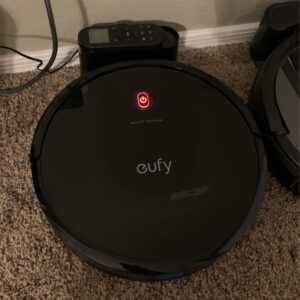
The Eufy RoboVac 11S MAX sits in an interesting place in the robot vacuum market. It’s not trying to be the smartest, most connected, or most feature-packed device on your floor. Instead, it focuses on doing one core job well: keeping your floors consistently clean with as little effort from you as possible. This model has become popular largely because of that mindset. It strips away app dependence, complex setup, and advanced mapping in favor of strong suction, quiet operation, and a slim design that fits easily into everyday homes.
For many people, especially those new to robot vacuums, the 11S MAX represents a low-friction entry point. You take it out of the box, charge it, press a button, and it goes to work. There’s no learning curve and no digital ecosystem to manage. This review looks at the RoboVac 11S MAX as a real household appliance, judging it not by what it promises on paper, but by how it actually performs when you live with it day after day.
If you click the button above you will be redirected to Amazon.com. In case you then decide to buy anything, Amazon.com will pay me a commission. This doesn’t affect the honesty of this review in any way though.
Design & Build Quality
When you first take the Eufy RoboVac 11S MAX out of the box, it’s clear that this is a product designed with restraint and practicality in mind. It doesn’t try to look futuristic or flashy, and that’s very much intentional. The overall design is understated, clean, and almost minimalist. In a market where many robot vacuums lean heavily into tech aesthetics, the 11S MAX instead aims to blend into a home without drawing attention to itself.
Overall Form Factor and Profile
One of the defining characteristics of the RoboVac 11S MAX is its ultra-slim profile. At just under three inches tall, it’s noticeably thinner than many competing robot vacuums. This is not just a cosmetic choice; it has real, everyday benefits. In use, the low height allows the vacuum to slide under beds, sofas, TV stands, and other low-clearance furniture that taller robots simply can’t access. Over time, this becomes one of the most appreciated aspects of the design, because these under-furniture areas are where dust and pet hair quietly accumulate.
The circular shape is standard for robot vacuums, but Eufy has done a good job optimizing proportions. The diameter is compact enough to navigate tighter spaces while still allowing room for a reasonably sized dustbin and battery. The vacuum feels balanced, not top-heavy, and it maintains good stability even when transitioning between hard floors and rugs.
Materials and Exterior Finish
The top surface of the 11S MAX features a glossy, tempered-glass-style finish. While it’s technically plastic, it mimics the look and feel of glass quite convincingly. This gives the vacuum a more premium appearance than you might expect at its price point. It reflects light nicely and looks sleek when clean, though it does have a downside: it attracts fingerprints and dust fairly easily. If you care about appearances, you’ll likely find yourself wiping it down occasionally.
The rest of the body is made from matte plastic, which contrasts nicely with the glossy top. This matte finish is practical. It hides scuffs better and doesn’t show wear as quickly, especially around the bumper area where contact with furniture is inevitable. The plastics used don’t feel brittle or thin. When you pick up the unit, there’s a reassuring sense of density that suggests durability rather than cost-cutting.
Bumper and Impact Protection
The front bumper wraps around a significant portion of the vacuum’s perimeter. It’s spring-loaded and slightly cushioned, designed to absorb minor impacts as the robot navigates by touch rather than by sight. In daily use, this bumper does its job well. The vacuum gently taps into furniture legs, cabinets, and walls without leaving marks or causing damage.
That said, the bumper system is fairly basic. It lacks the refined, near-contact avoidance behavior seen in higher-end models. Instead of slowing gracefully as it approaches obstacles, the 11S MAX often makes light contact before redirecting itself. Over time, this isn’t a problem for most furniture, but very delicate items or lightweight décor may need to be moved out of the way.
Button Placement and Physical Controls
On top of the unit, you’ll find a single physical button used to start or pause cleaning. The simplicity here is deliberate. There’s no cluster of buttons, no confusing labels, and no touch-sensitive panels. The button has a satisfying click and feels solid, not mushy or cheap.
This minimal approach works well for users who prefer straightforward operation. You don’t need to remember combinations of presses or modes. If the robot is docked, pressing the button sends it out to clean. If it’s already running, pressing the button stops it. It’s intuitive and hard to mess up.
Charging Dock Design
The charging dock is functional rather than elegant. It’s lightweight, compact, and made from basic plastic. Visually, it doesn’t match the robot’s more polished look, and it can feel a bit underwhelming when compared side-by-side with premium docks that have weighted bases or integrated cable management.
However, the dock does its job reliably. The infrared sensors on the RoboVac align with the dock consistently, and docking failures are rare when the base is placed correctly against a wall with adequate clearance on both sides. The dock’s low weight means it can slide slightly if nudged, so positioning it on a non-slip surface or against a firm wall helps.
Dustbin Design and Access
The dustbin is accessed from the top of the vacuum, which is a practical choice. You don’t need to flip the unit over or wrestle with awkward latches. Pressing a release button allows the bin to lift out smoothly.
In terms of build quality, the dustbin feels sturdy and well-sealed. The transparent plastic makes it easy to see when it’s full, which encourages timely emptying. The latch mechanism is secure and doesn’t feel like it will loosen over time. This is important because dustbin seals play a big role in maintaining suction performance.
The bin size itself is generous for a robot vacuum in this class. While not massive, it’s large enough to handle multiple cleaning sessions in smaller homes without needing constant emptying.
Wheels and Undercarriage Construction
Flip the RoboVac 11S MAX over, and the underside reveals a clean, functional layout. The main wheels are rubberized and spring-loaded, allowing them to adjust to uneven surfaces and small thresholds. They feel robust and provide good traction on both hard floors and carpets.
The swivel caster wheel at the front rotates freely and feels solid, not flimsy. It’s also easy to remove and clean if hair or debris gets wrapped around it, which is a small but important detail for long-term usability.
The brush housing and side brush mounts are well-integrated into the base. Screws are neatly recessed, and nothing feels exposed or fragile. This gives confidence that the vacuum can withstand regular use without parts loosening or breaking prematurely.
Overall Build Impression
Taken as a whole, the design and build quality of the Eufy RoboVac 11S MAX reflect a clear philosophy: prioritize function, durability, and simplicity over flashy extras. It doesn’t try to impress with futuristic shapes or high-tech visual cues. Instead, it focuses on being slim, sturdy, and easy to live with.
After extended use, this approach pays off. The vacuum holds up well to daily operation, minor collisions, and frequent handling. It feels like a product designed to last several years rather than something meant to be replaced quickly. While it may not turn heads, its design choices make sense in real homes, where reliability and practicality matter far more than visual drama.
Navigation Intelligence & Mapping
Navigation is where the Eufy RoboVac 11S MAX most clearly shows its philosophy and its limitations. This is not a robot designed to “understand” your home in the modern, data-driven sense. Instead, it relies on a more traditional, reactive approach to movement. Whether that’s a weakness or a strength depends heavily on your expectations, your home layout, and how you plan to use the robot day to day.
Navigation Philosophy and System Overview
The RoboVac 11S MAX uses a random navigation system supported by a set of basic sensors. There is no laser turret, no camera-based visual mapping, and no stored floor plan. The robot does not know where it has been, where it is going, or how large your space is. It reacts in real time to its surroundings, adjusting direction when it encounters obstacles or edges.
At first glance, this can sound outdated, especially compared to robots that methodically trace neat rows across a room. However, this approach has been around for a long time and, when paired with strong suction and repeated runs, it can still produce acceptable results. The key trade-off is efficiency versus simplicity.
Movement Patterns and Coverage Behavior
In practice, the RoboVac moves in a series of straight lines, gentle arcs, and direction changes triggered by contact or sensor input. You’ll see it travel forward until it hits an obstacle, then pivot and move off in another direction. Occasionally, it follows walls or baseboards for a short stretch before veering back into open space.
This randomness means coverage is uneven in a single session. Some areas may be passed over multiple times, while others might be missed entirely. Over repeated cleaning cycles, though, the robot tends to cover most of the floor, especially in smaller or more open homes. In larger spaces or rooms with complex layouts, the inefficiencies become more noticeable.
Unlike smarter robots, the 11S MAX does not clean in tidy, parallel lines. Watching it work can feel chaotic, and if you’re the type of user who enjoys visual confirmation that every inch has been addressed, this may be frustrating.
Obstacle Detection and Avoidance
Obstacle handling is handled through a combination of infrared sensors and the physical bumper. When the robot approaches an object, it typically makes light contact before changing direction. This is not a flaw so much as a design choice. The bumper is meant to absorb these gentle bumps without causing damage.
For large, solid objects like walls, sofas, and cabinets, this system works fine. The robot adjusts quickly and moves on. With smaller or lighter items, such as thin chair legs, pet bowls, or loosely placed décor, the robot may struggle more. It can push objects around or, in some cases, wedge itself into tight spaces.
There is no advanced obstacle recognition. Cables, shoelaces, and low-hanging fabrics are potential trouble spots. Users quickly learn that a bit of floor prep goes a long way. Tidying up before a cleaning run significantly reduces the chances of the robot getting stuck.
Cliff Sensors and Drop Protection
The RoboVac 11S MAX includes cliff sensors designed to detect drops such as stairs or ledges. These sensors are located on the underside of the unit and generally perform reliably. When approaching a staircase, the robot slows, detects the drop, and turns away.
In normal conditions, the cliff detection works well. However, certain flooring types can cause confusion. Very dark or glossy surfaces sometimes reflect light in ways that mimic a drop-off, causing the robot to hesitate or avoid an area entirely. This is not unique to this model, but it’s worth noting if you have dark rugs or shiny black tile.
Room Transitions and Thresholds
The robot handles small thresholds reasonably well. It can move between rooms separated by low transitions without much trouble. However, higher thresholds or thick rug edges can stop it in its tracks. When it encounters resistance, the robot may attempt multiple angles before giving up and changing direction.
Because it lacks spatial awareness, it doesn’t know whether a threshold leads to a new room or is just an obstacle. This can result in inconsistent room-to-room coverage. In some runs, it might clean a bedroom thoroughly; in others, it may barely enter it at all.
Docking and Return-to-Base Behavior
When the battery runs low, the RoboVac 11S MAX initiates a search for its charging dock. Unlike mapped robots that calculate a direct route, this robot relies on signal detection and trial-and-error movement. It will wander until it detects the infrared signal from the dock, then home in on it.
This process works reliably in most setups but can take time. The robot may circle the room or pass near the dock multiple times before aligning correctly. Proper dock placement is crucial. Clear space on either side of the dock and a clear path in front dramatically improve docking success.
Lack of Mapping and Memory
One of the most important things to understand is that the RoboVac 11S MAX has no memory of your home. Each cleaning session starts from zero. It does not remember which rooms exist, how they connect, or which areas need more attention.
There is no room selection, no no-go zones, and no virtual boundaries. Physical barriers, such as magnetic strips or closed doors, are the only way to control where the robot goes. For some users, this simplicity is refreshing. For others, it feels limiting, especially in homes with fragile areas or complex layouts.
Scheduling and Navigation Consistency
Scheduling is handled through the remote, allowing the robot to start cleaning at set times. While convenient, scheduled runs don’t improve navigation intelligence. The robot doesn’t learn from past sessions or optimize its routes over time.
That said, running the robot frequently can compensate for its lack of intelligence. Daily or near-daily cleaning increases the likelihood that all areas get attention over time, even if individual sessions are imperfect.
Real-World Usability and Expectations
Living with the RoboVac 11S MAX requires a mindset adjustment. This is not a robot that delivers perfectly mapped, methodical cleaning. Instead, it offers a more organic, persistent approach. It cleans a bit everywhere, all the time, without much planning.
For small apartments, studios, or open-plan spaces, this can be enough. The robot’s random navigation combined with strong suction keeps floors acceptably clean with minimal user intervention. In larger or more complex homes, the navigation limitations become more obvious, and missed areas may require manual touch-ups.
Overall Assessment of Navigation
The navigation system of the Eufy RoboVac 11S MAX is best described as functional but basic. It gets the job done, but not efficiently or elegantly. There’s no intelligence in the modern sense, only consistent effort and simple logic.
For users who value simplicity, reliability, and low cost over advanced features, this approach can be perfectly acceptable. For those who want precision, control, and predictability, it may feel like a step backward. Understanding this distinction before buying is crucial, because navigation behavior shapes the entire ownership experience of this robot.
Performance
Performance is where the Eufy RoboVac 11S MAX earns most of its reputation. While it lacks the intelligence and polish of higher-end robot vacuums, its raw cleaning ability is surprisingly strong for its size and price. Living with this robot day to day makes it clear that Eufy prioritized suction power and consistency over clever movement or advanced automation. The result is a vacuum that doesn’t always clean efficiently, but often cleans effectively.
Suction Power and Cleaning Strength
The defining feature of the 11S MAX is its suction. For a robot vacuum in this category, it pulls in dirt with real authority. On hard floors, it has no trouble picking up fine dust, crumbs, grit, and pet hair. You can hear the difference when it ramps up power, especially when transitioning from smooth flooring to carpet. It feels purposeful rather than weak or hesitant.
On low-pile carpets, performance remains strong. The vacuum agitates surface debris well and lifts a surprising amount of embedded dirt for a robot without a motorized brush head comparable to uprights. It won’t deep-clean carpets the way a full-size vacuum can, but for maintenance cleaning, it does more than enough to keep floors looking fresh between manual vacuuming sessions.
Medium-pile carpets are where performance starts to taper off. The RoboVac can still clean them, but results vary depending on carpet density and how often the robot runs. Hair and surface debris are removed fairly well, but heavier particles can remain. This is less a flaw and more a reminder of the physical limits of slim robot vacuums.
BoostIQ Behavior and Power Management
The 11S MAX uses an automatic suction adjustment system that increases power when it detects heavier resistance, such as when climbing onto carpet. In practice, this works reliably. You’ll notice a subtle increase in noise as the robot senses the need for more power.
This feature helps balance cleaning strength with battery life. On hard floors, the robot conserves energy by using lower suction, which is usually sufficient. When more power is needed, it responds quickly. The transition isn’t instant, but it’s fast enough that cleaning effectiveness isn’t noticeably compromised.
The downside is that the robot doesn’t always recognize borderline surfaces perfectly. Some rugs may not trigger the boost, while others cause repeated power fluctuations. This inconsistency isn’t a major issue, but it does contribute to uneven performance in mixed-floor homes.
Edge Cleaning and Baseboard Reach
Edge cleaning is an area where many budget robots struggle, but the 11S MAX performs better than expected. Its dual side brushes help sweep debris inward from walls and corners, allowing the central suction path to pick it up. Along baseboards, the robot does a competent job of collecting dust and hair that tends to accumulate in those areas.
Corners are more hit-or-miss. Rounded robot designs inherently struggle with sharp 90-degree corners, and the 11S MAX is no exception. It will collect loose debris near corners but may leave behind small clusters that require manual attention. Over multiple runs, these areas improve, but they are rarely spotless.
Handling of Pet Hair
For pet owners, performance with hair is critical. The RoboVac 11S MAX handles pet hair well on hard floors and low-pile carpets. It picks up loose fur efficiently and doesn’t immediately clog, even in homes with shedding animals.
Hair does tend to wrap around the main brush over time, which is unavoidable with this type of design. Regular maintenance keeps this under control. The important point is that the robot doesn’t simply push hair around; it actively collects it, reducing visible buildup between deeper cleans.
Another advantage is the robot’s quiet operation, which makes it more tolerable for pets. Many animals adjust to its presence quickly, allowing it to clean regularly without causing stress or disruption.
Debris Types and Real-World Messes
In everyday use, the 11S MAX handles common household debris reliably. Dust, crumbs, sand, and dry dirt are all well within its capabilities. It’s especially effective in kitchens and entryways, where fine debris tends to accumulate daily.
Larger debris, such as cereal pieces or tracked-in gravel, can be hit or miss. The robot will often pick these up, but sometimes it pushes them ahead before finally capturing them. On very smooth floors, heavier particles may scatter slightly before being collected.
Sticky or damp messes are outside its scope. Since this is a vacuum-only robot, it cannot deal with spills or dried-on grime. Those still require manual cleaning.
Consistency Over Time
One of the strengths of the 11S MAX is consistency. While a single cleaning run may not deliver perfect coverage, repeated use keeps floors in good overall condition. This robot is best viewed as a maintenance tool rather than a deep-cleaning solution.
Homes that run the robot daily or every other day tend to see the best results. Dust levels stay low, pet hair doesn’t accumulate, and manual vacuuming becomes less frequent. In this role, the RoboVac performs reliably and predictably.
Performance in Different Home Layouts
In small apartments or open-plan spaces, the 11S MAX performs well. Its random navigation eventually covers most areas, and strong suction compensates for inefficiencies. In larger homes with many rooms, performance becomes more uneven. Some areas may receive frequent attention, while others are cleaned less often.
Furniture density also affects performance. Rooms with many obstacles slow the robot down and increase the chance of missed spots. Open spaces allow it to move freely and clean more effectively.
Runtime and Cleaning Completion
With a full battery, the RoboVac 11S MAX can clean for around an hour and a half under ideal conditions. In practice, runtime varies depending on suction level, floor type, and how often it gets redirected by obstacles.
The robot does not track which areas it has cleaned, so it doesn’t prioritize unfinished spaces as the battery drains. This means it may spend its last minutes re-cleaning areas it already covered. When the battery runs low, it returns to the dock without completing a structured finish to the job.
Overall Performance Assessment
The performance of the Eufy RoboVac 11S MAX is best described as strong but unsophisticated. It delivers impressive suction for its class and handles everyday messes with confidence. Its weaknesses lie not in cleaning power, but in efficiency and precision.
For users who expect a robot vacuum to maintain cleanliness rather than replace manual vacuuming entirely, the 11S MAX performs its role well. It keeps floors presentable, reduces dust and pet hair, and lowers the overall cleaning burden. As long as expectations are aligned with what a simple, budget-focused robot can realistically do, its performance is genuinely satisfying.
Maintenance & Cleaning
Maintenance is an area where the Eufy RoboVac 11S MAX shows both its simplicity and its limitations. Because the robot avoids advanced features like self-emptying docks or complex filtration systems, nearly all upkeep is manual. The upside is that maintenance tasks are straightforward, easy to understand, and inexpensive. The downside is that they require consistency from the user to keep performance from declining over time.
Dustbin Design and Emptying Routine
The dustbin is accessed from the top of the robot, which makes daily or weekly emptying quick and painless. There’s no need to flip the vacuum over or struggle with awkward clips. A single release button allows the bin to slide out smoothly, and it clicks back into place securely.
In real-world use, how often you need to empty the dustbin depends on your home and cleaning schedule. In small apartments or homes without pets, the bin can last several cleaning cycles before filling up. In homes with pets, children, or heavy foot traffic, it’s often best to empty it after every one or two runs. Letting the bin overfill reduces suction and increases the chance of debris getting trapped in the airflow channels.
The transparent bin is a practical touch. You can tell at a glance whether it’s nearing capacity, which helps prevent performance issues caused by neglect.
Filter Care and Airflow Maintenance
Inside the dustbin sits the filter system, which plays a critical role in maintaining suction. Over time, fine dust clogs the filter and restricts airflow, leading to weaker cleaning performance. This doesn’t happen suddenly; instead, suction gradually drops, which can make it easy to miss unless you’re paying attention.
Regular filter maintenance is essential. Light tapping to dislodge dust after each emptying helps, but periodic rinsing or deeper cleaning is necessary to keep airflow optimal. Filters must be fully dry before being reinstalled, which means planning ahead. Having a spare filter on hand makes this process much more convenient, allowing you to swap filters without downtime.
Filters are consumable items. Even with careful cleaning, they wear out and lose efficiency over time. Replacing them periodically is part of owning this robot and should be factored into long-term costs.
Main Brush Cleaning and Hair Removal
The main roller brush is where most debris collection happens, and it’s also where maintenance demands are highest. Hair, especially from pets or long human hair, wraps around the brush over time. If left unchecked, this reduces the brush’s ability to agitate dirt and can strain the motor.
Removing the brush is easy. A latch opens the brush housing, allowing the roller to lift out. Cleaning it takes a few minutes, typically involving pulling hair away by hand or cutting it free with scissors. While this isn’t difficult, it does need to be done regularly in hair-heavy households.
The ends of the brush, where it connects to the drive mechanism, also need attention. Hair can work its way into these areas and cause resistance. Periodic inspection prevents long-term wear and keeps the brush spinning freely.
Side Brush Wear and Replacement
The side brushes are relatively simple components, but they take a surprising amount of abuse. Constant contact with walls, furniture legs, and baseboards causes them to bend and wear down over time. This is normal and expected.
As side brushes lose their shape, their ability to sweep debris toward the center decreases. Replacing them restores edge-cleaning performance and helps maintain overall effectiveness. Fortunately, side brushes are inexpensive and easy to replace with a small screwdriver.
A good rule of thumb is to check side brushes monthly and replace them when they appear permanently bent or frayed.
Wheel and Caster Maintenance
The drive wheels and front caster wheel rarely get much attention, but they play a big role in navigation and reliability. Hair and thread can wrap around the caster wheel, causing it to stick or drag. When this happens, the robot may move erratically or struggle to turn.
Removing the caster wheel for cleaning is simple, and doing so every few months can prevent problems. The drive wheels also benefit from occasional inspection. While they don’t trap debris as easily, buildup can still occur in dusty environments.
Keeping these components clean ensures smooth movement and reduces strain on the motors.
Sensor Cleaning and Reliability
The RoboVac 11S MAX relies heavily on its sensors for navigation and safety. These sensors are exposed to dust and debris, especially on the underside of the robot. If they become dirty, navigation accuracy suffers.
Cleaning the sensors is one of the easiest maintenance tasks. A soft cloth or cotton swab is usually enough. Regular sensor cleaning helps prevent issues like the robot avoiding certain areas unnecessarily or misjudging edges and obstacles.
Neglecting sensor care can lead to confusing behavior that might be mistaken for mechanical failure, when the solution is often just a simple wipe-down.
Battery Care and Longevity
The battery doesn’t require day-to-day maintenance, but long-term care affects its lifespan. Leaving the robot permanently on the dock is normal and safe, but extended periods of non-use can degrade battery health.
If the robot won’t be used for weeks or months, storing it partially charged in a cool, dry place helps preserve battery life. Over time, battery capacity will decline, reducing runtime. Replacement batteries are available, and swapping them restores much of the robot’s original performance.
Battery replacement is more involved than cleaning brushes or filters, but it’s still manageable and far cheaper than replacing the entire robot.
Cleaning the Exterior
The exterior of the RoboVac 11S MAX doesn’t require much attention, but occasional cleaning keeps it looking good and functioning properly. Dust accumulates on the top surface and around vents over time. Wiping these areas prevents dust from being pulled back into the system.
The glossy top panel shows smudges and fingerprints easily, especially if you handle the robot often. A microfiber cloth works well to restore its clean appearance.
Long-Term Maintenance Perspective
Overall, maintaining the Eufy RoboVac 11S MAX is not difficult, but it is hands-on. This robot rewards consistency. Small, regular maintenance tasks prevent larger performance drops and extend the life of the unit.
For users who prefer automation and minimal involvement, the lack of self-cleaning features may feel like a drawback. For others, the simplicity is refreshing. There are no complex mechanisms to fail, and replacement parts are affordable and widely available.
If you’re willing to spend a few minutes every week or two on basic upkeep, the RoboVac 11S MAX remains reliable, effective, and cost-efficient for years of everyday use.
Energy Efficiency & Noise Levels
Energy efficiency and noise are often overlooked when shopping for a robot vacuum, but they have a big impact on how pleasant the device is to live with long term. The Eufy RoboVac 11S MAX performs well in both areas, largely because of its simple design and lack of power-hungry smart features. It’s not the most efficient robot in absolute terms, but its balance of runtime, charging behavior, and sound output makes it easy to integrate into everyday life.
Battery Capacity and Runtime Behavior
The RoboVac 11S MAX is powered by a lithium-ion battery that provides enough energy for extended cleaning sessions in small to medium-sized homes. In real-world use, the robot can run for well over an hour on a single charge under normal conditions. On hard floors or mixed surfaces, it tends to last longer because it doesn’t need to maintain maximum suction at all times.
When the robot encounters carpets and boosts suction, battery drain increases noticeably. This is expected and consistent with how most robot vacuums behave. The important thing is that the battery depletion feels predictable. You get a sense of how much area the robot can cover before it needs to return to the dock, and that makes planning cleaning schedules easier.
The robot does not aggressively drain its battery to the last percentage point. Instead, it leaves itself a buffer to ensure it can find its way back to the charging base, even if that process involves wandering rather than direct navigation.
Charging Efficiency and Docking Cycle
Charging is a passive, hands-off process. Once docked, the RoboVac charges slowly and steadily rather than rapidly. This slower charging rate is actually beneficial for battery longevity, even though it means the robot may need several hours to fully recharge.
The charging dock itself does not consume excessive power when idle. Because there’s no self-emptying system or always-on wireless communication, energy draw while docked is minimal. This makes the 11S MAX relatively economical to leave plugged in at all times.
One limitation is the lack of charge-and-resume functionality. If the robot runs out of battery mid-clean, it will return to the dock and stop. After recharging, it does not resume where it left off. From an energy perspective, this isn’t wasteful, but from a coverage standpoint, it can mean running multiple full cycles to clean larger homes.
Energy Consumption Over Time
In terms of overall electricity use, the RoboVac 11S MAX is quite efficient compared to traditional upright or canister vacuums. A full cleaning cycle consumes only a small fraction of the energy required for manual vacuuming. When used regularly, the cumulative energy cost remains low.
Because the robot is designed for frequent maintenance cleaning rather than infrequent deep cleaning, its energy use is spread out in small, manageable increments. This makes it easier to justify running it daily or every other day without worrying about noticeable increases in electricity bills.
The lack of advanced sensors, cameras, and continuous Wi-Fi connectivity also contributes to lower energy consumption. The robot isn’t constantly processing data or transmitting information, which keeps its power requirements modest.
Noise Profile and Sound Character
One of the standout qualities of the RoboVac 11S MAX is how quiet it is. Compared to upright vacuums and even many other robot models, it produces a low, steady hum rather than a harsh, high-pitched whine. This makes a big difference in perceived loudness.
The sound is consistent and predictable. There are no sudden spikes or jarring changes, aside from the slight increase in volume when suction boosts on carpet. Even then, the increase is modest and brief.
This low noise profile allows the robot to clean while you’re home without dominating the space. Conversations can continue, televisions remain audible, and working from home is still feasible during cleaning sessions.
Noise During Different Cleaning Scenarios
On hard floors, the RoboVac operates at its quietest. The sound blends into background noise, especially in homes with ambient sounds like air conditioning or outside traffic. On carpet, the noise increases slightly, but it never reaches the disruptive levels associated with manual vacuuming.
Edge cleaning and wall-following modes do not produce additional noise beyond normal operation. The robot does not rattle or vibrate excessively, even when transitioning between surfaces or bumping lightly into furniture.
One area where noise becomes more noticeable is when the dustbin is nearly full or the filter is clogged. Airflow restriction causes the motor to work harder, increasing sound output. This serves as a subtle reminder that maintenance is due.
Suitability for Nighttime or Early Morning Use
Thanks to its quiet operation, the RoboVac 11S MAX is suitable for use during early mornings or evenings in many households. While it’s not completely silent, it’s unlikely to wake sleeping adults in nearby rooms. However, in very quiet environments or small apartments, the sound may still be noticeable at night.
For households with light sleepers, scheduling daytime cleaning is still the safest option. But for many users, the ability to run the robot without planning their day around it is a major convenience.
Impact on Pets and Household Comfort
The low noise level also benefits pets. Animals that are sensitive to loud sounds tend to tolerate the RoboVac 11S MAX better than louder vacuums. Over time, many pets become accustomed to its presence and ignore it entirely.
From a comfort perspective, this makes frequent cleaning more acceptable. You’re less likely to postpone runs because of noise annoyance, which in turn keeps floors cleaner with less effort.
Heat Management and Motor Efficiency
During operation, the robot manages heat well. The body never becomes excessively warm, even during long cleaning sessions. This indicates efficient motor performance and good internal airflow.
Heat buildup is minimal while charging as well. The dock and battery remain cool to the touch, which contributes to long-term reliability and energy efficiency.
Overall Assessment of Energy and Noise Performance
The Eufy RoboVac 11S MAX strikes a strong balance between energy use and sound output. It doesn’t try to maximize power at the expense of efficiency, nor does it sacrifice cleaning strength to achieve silence.
For users who want a robot vacuum that can run often without being intrusive or expensive to operate, this model performs admirably. Its quiet nature encourages regular use, and its modest energy demands make it practical to keep as part of a daily cleaning routine. In this respect, the RoboVac 11S MAX feels well-tuned for real homes rather than optimized purely for technical specifications.
Ergonomics & Usability
Ergonomics and usability are where the Eufy RoboVac 11S MAX quietly excels. This is a robot vacuum designed for people who want their floors cleaned with minimal thought, setup, or ongoing interaction. While it lacks the smart features that dominate newer models, that absence actually simplifies the experience in ways that many users appreciate over time.
Out-of-the-Box Experience
The initial setup process is refreshingly simple. After unboxing, there’s no app to download, no Wi-Fi password to enter, and no account to create. You place the charging dock against a wall, plug it in, and set the robot on it to charge. That’s it. Within minutes, the vacuum is ready to clean.
This low-friction setup makes the RoboVac especially appealing to users who are uncomfortable with smart home technology or simply don’t want another device tied to their phone. There’s no onboarding process and no troubleshooting network connections. The simplicity feels intentional and well thought out.
Controls and Input Methods
The RoboVac 11S MAX offers two primary ways to control it: a physical button on the unit and an included remote control. The top-mounted button allows you to start or stop a cleaning session instantly. It’s easy to reach, responsive, and intuitive. There’s no ambiguity about what it does.
The remote control expands functionality slightly, offering directional control, spot cleaning, edge cleaning, and scheduling options. The remote is lightweight, clearly labeled, and easy to use even without referencing the manual. Buttons are logically arranged, and their functions are straightforward.
While some users may see the remote as outdated, it serves a practical purpose. You can guide the robot out of trouble, send it to a specific area, or pause it from across the room without bending down or opening an app.
Learning Curve and Accessibility
There is virtually no learning curve with this robot. Most users can operate it confidently within minutes. This makes it accessible to a wide range of people, including older users, children, and anyone who prefers tactile controls over touchscreen interfaces.
The lack of advanced customization means there’s less to learn and less to misconfigure. You don’t need to understand mapping, zones, or automation routines. The robot does what it does, and it does it consistently.
Scheduling and Routine Use
Scheduling is handled through the remote control, allowing you to set regular cleaning times. While the scheduling options are basic, they cover the most common needs. Once scheduled, the robot will start cleaning automatically at the designated time, provided it’s docked and charged.
There’s no visual confirmation or app-based reminder, so scheduling requires a bit of trust. But once set, it tends to work reliably. This is particularly useful for users who want the robot to clean while they’re away or asleep.
Physical Interaction and Handling
When you need to move or inspect the RoboVac, it’s easy to handle. The unit is light enough to lift with one hand, yet substantial enough to feel durable. The edges are smooth, with no sharp corners, making it comfortable to pick up.
Accessing components like the dustbin, brushes, and filters doesn’t require tools or excessive force. Everything clicks into place clearly, reducing the risk of incorrect assembly. This thoughtful physical design contributes significantly to usability.
Feedback and Communication
One area where the RoboVac 11S MAX feels basic is feedback. Without an app or display, the robot communicates through simple indicator lights and sounds. These signals are limited but generally sufficient to convey status, such as charging, cleaning, or encountering an error.
The downside is that error information is not always specific. If the robot gets stuck or encounters a problem, it may stop and emit a sound, but diagnosing the issue sometimes requires inspection. For users accustomed to detailed notifications, this can feel lacking.
Adaptability to Different Users
The simplicity of the RoboVac makes it adaptable to a wide variety of households. It works just as well for someone who wants a daily cleaning routine as it does for someone who runs it occasionally. There’s no dependence on cloud services or software updates, which reduces long-term complexity.
For households with multiple users, the robot doesn’t require individual profiles or permissions. Anyone can press the button or use the remote. This makes it a shared appliance rather than a personalized gadget.
Integration Into Daily Life
Over time, the RoboVac 11S MAX fades into the background. You stop thinking about it as a device you manage and start seeing it as a utility that quietly does its job. Its low noise level and simple operation encourage frequent use without disruption.
You’re less likely to delay cleaning because there’s no setup effort involved. Press a button, and it goes. This ease of use is arguably one of the robot’s greatest strengths.
Limitations in Usability
The same simplicity that makes the RoboVac easy to use also limits it. There’s no way to target specific rooms, set no-go zones, or adjust behavior based on floor type. If you want more control, you’ll need to physically modify the environment or intervene manually.
For tech-savvy users, this lack of control can feel restrictive. There’s no way to check cleaning history, battery health, or maintenance reminders digitally. Everything relies on observation and habit.
Overall Ergonomic and Usability Assessment
The Eufy RoboVac 11S MAX prioritizes ease of use over flexibility. It’s designed to reduce friction, not to offer endless options. For many users, especially those who value reliability and simplicity, this makes it an excellent everyday appliance.
It may not satisfy users who want granular control or smart home integration, but it succeeds in making robot vacuum ownership approachable and stress-free. From setup to daily operation, the ergonomics and usability of the RoboVac 11S MAX feel carefully considered, grounded in real-world use rather than technical novelty.
Pet-Friendliness
Pet-friendliness is one of the areas where the Eufy RoboVac 11S MAX quietly proves its value. While it isn’t marketed specifically as a pet-focused robot vacuum, many of its design choices align well with the realities of living with animals. From daily hair accumulation to noise sensitivity and obstacle behavior, the RoboVac 11S MAX handles most pet-related challenges with reasonable competence and few unpleasant surprises.
Handling Pet Hair on Different Surfaces
Pet hair is one of the most persistent household messes, and the RoboVac 11S MAX deals with it effectively on most common floor types. On hard floors, hair pickup is strong and consistent. Loose fur is pulled in rather than scattered, which is especially noticeable with lighter hair types that tend to drift rather than clump.
On low-pile carpets and rugs, the robot performs well enough to significantly reduce visible hair between manual cleanings. It won’t extract deeply embedded fur the way a powerful upright vacuum can, but it does remove surface buildup reliably. For homes that run the robot daily, this results in floors that look noticeably cleaner and feel less gritty underfoot.
Medium-pile carpets are more challenging. Hair pickup remains decent, but some fur can remain embedded. In pet-heavy households, this reinforces the idea that the RoboVac works best as a maintenance cleaner rather than a total replacement for manual vacuuming.
Hair Wrapping and Maintenance Considerations
Long pet hair inevitably wraps around the main brush over time. This is true for nearly all robot vacuums, and the 11S MAX is no exception. The good news is that hair removal is straightforward. The brush is easy to access, and clearing wrapped hair only takes a few minutes.
Side brushes also collect hair, especially in homes with shedding pets. Over time, these brushes can lose their shape, reducing effectiveness. Regular inspection and occasional replacement keep performance consistent.
While this maintenance requirement is unavoidable, it’s manageable. Pet owners who build brush cleaning into a weekly routine rarely experience performance drops related to hair buildup.
Noise Levels and Pet Reactions
One of the most important aspects of pet-friendliness is noise. Many pets, particularly dogs, are sensitive to loud or high-pitched sounds. The RoboVac 11S MAX operates at a relatively low volume, producing a steady hum rather than a sharp, aggressive noise.
This makes it easier for pets to tolerate. In many homes, animals quickly acclimate to the robot and either ignore it or cautiously observe it from a distance. Cats may view it with mild curiosity, while dogs tend to adapt once they realize it isn’t a threat.
The lack of sudden loud bursts or erratic motor sounds helps reduce stress, making the robot suitable for regular use without upsetting pets.
Movement Behavior Around Pets
The RoboVac 11S MAX navigates using simple bump-and-turn logic, which can actually be an advantage around animals. It moves predictably, without sudden changes in direction or speed. This makes its behavior easier for pets to understand and avoid.
When it encounters a pet lying on the floor, it typically bumps gently and changes direction. This is usually enough to prompt the animal to move without causing fear or distress. However, pets that are very small or particularly curious should be supervised during initial runs to ensure safe interactions.
Because the robot lacks advanced object recognition, it does not intentionally avoid pets. It treats them like any other obstacle. This works fine in most cases but requires some common-sense supervision.
Food Bowls, Toys, and Pet Accessories
Homes with pets often have extra obstacles on the floor: bowls, toys, beds, and scratching posts. The RoboVac 11S MAX can struggle with these items, especially lightweight toys and dangling fabrics.
Pet toys left on the floor can be pushed around or become entangled in the brush. Soft beds with loose edges may catch the robot’s attention and cause it to get stuck. Food and water bowls are usually heavy enough to avoid being moved, but the robot may bump into them repeatedly.
For best results, a bit of floor preparation is helpful. Picking up toys and lifting pet beds before running the robot improves efficiency and reduces the risk of interruptions.
Litter, Sand, and Fine Debris
For cat owners, litter tracking is a constant issue. The RoboVac 11S MAX handles fine debris like litter and sand well on hard floors. Its suction is strong enough to pick up scattered granules without spreading them further.
Near litter boxes, the robot does a decent job of reducing daily mess, though it won’t eliminate the need for occasional manual cleanup. Running the robot frequently helps prevent buildup and keeps tracked litter from migrating throughout the home.
Safety and Hygiene Considerations
One important consideration in pet homes is the possibility of accidents. The RoboVac 11S MAX has no ability to recognize or avoid pet waste. This is a critical limitation. If an accident occurs on the floor, the robot may attempt to vacuum it, creating a much larger mess.
For this reason, pet owners should ensure floors are clear before running the robot, especially during house-training phases or with elderly pets. While this issue affects most basic robot vacuums, it’s particularly relevant for models without camera-based detection.
Allergens and Air Quality
By removing pet hair and dander regularly, the RoboVac 11S MAX helps improve overall cleanliness in pet households. Frequent vacuuming reduces airborne allergens and keeps floors from becoming reservoirs of fur and dust.
However, the filtration system is relatively basic. While it captures most visible debris, it may not trap the finest allergens as effectively as high-end systems. Regular filter maintenance is essential to maintain airflow and reduce dust recirculation.
Integration Into Pet Households
Over time, the RoboVac 11S MAX tends to blend into daily life in pet households. Pets learn its routine, and owners learn how to prepare the environment for smooth operation. The robot’s reliability and low noise make it easier to run often, which is key to managing pet hair effectively.
It’s especially useful for households with shedding pets, where daily accumulation can quickly overwhelm manual cleaning schedules. By handling the bulk of routine cleanup, the RoboVac reduces the overall cleaning burden.
Overall Pet-Friendliness Assessment
The Eufy RoboVac 11S MAX is well-suited for pet owners who understand its limitations. It handles hair, dander, and tracked debris effectively and does so quietly enough to avoid disturbing animals. Its simple navigation and predictable behavior make it easy for pets to coexist with it.
While it lacks advanced pet-specific features like waste detection or object avoidance, its affordability, ease of maintenance, and strong suction make it a practical choice for many pet households. With a bit of preparation and regular upkeep, it can significantly improve cleanliness and comfort in homes shared with animals.
Conclusion
The Eufy RoboVac 11S MAX is best understood as a practical household tool rather than a technological showcase. It doesn’t try to impress with advanced mapping, smartphone apps, or smart home integration, and that restraint is exactly what defines its appeal. Instead, it focuses on the fundamentals: solid suction, quiet operation, a slim profile, and dependable day-to-day cleaning. When judged on those terms, it succeeds.
Living with the 11S MAX makes it clear that this robot is designed for maintenance rather than perfection. It won’t clean your home in neat, methodical lines, and it won’t always cover every corner in a single run. What it does offer is consistency. Run it often, and floors stay visibly cleaner with far less manual effort. Dust, crumbs, and pet hair are kept under control, and the need for frequent full vacuuming is noticeably reduced.
Its simplicity is both a strength and a limitation. For users who want detailed control, room mapping, and automation, this model will feel basic. But for those who value ease of use, reliability, and freedom from apps and constant tinkering, the experience is refreshing. Setup is fast, maintenance is manageable, and long-term ownership costs remain reasonable.
The RoboVac 11S MAX is especially well suited to small and medium-sized homes, apartments, and pet households that need regular cleaning without complexity. It doesn’t promise more than it can deliver, and it delivers what it promises consistently. As a no-nonsense robot vacuum that quietly handles the daily mess, it earns its place as a dependable and sensible choice rather than a flashy one.