
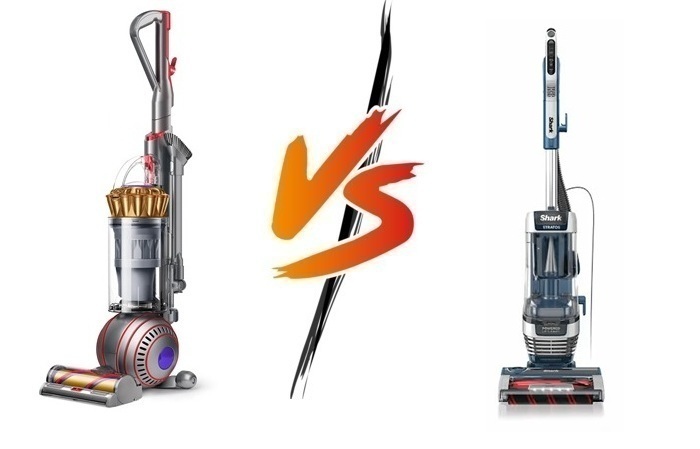
Choosing an upright vacuum cleaner isn’t just about suction numbers or brand loyalty anymore. For most households, it’s about finding a machine that can handle everyday messes, pet hair, different floor types, and long cleaning sessions without becoming a chore to use or maintain. The Dyson Ball Animal 3 and the Shark Stratos AZ3002 sit near the top of the corded upright market and are often recommended for homes with pets, heavy foot traffic, or a mix of carpets and hard floors.
At a glance, these two vacuums seem evenly matched. Both are bagless, powerful, and marketed as premium solutions for deep cleaning. But once you start using them day after day, their differences become clearer. Dyson focuses on raw suction power and traditional engineering, while Shark leans into versatility, convenience, and modern brushroll technology. This comparison looks beyond marketing claims and digs into how each vacuum performs in real-world use, helping you decide which one actually fits your home and cleaning habits better.
Here’s a clear, side-by-side comparison table focusing on the key specifications and core features people usually care about when comparing these two upright vacuums. The specs are presented in practical terms rather than marketing fluff.
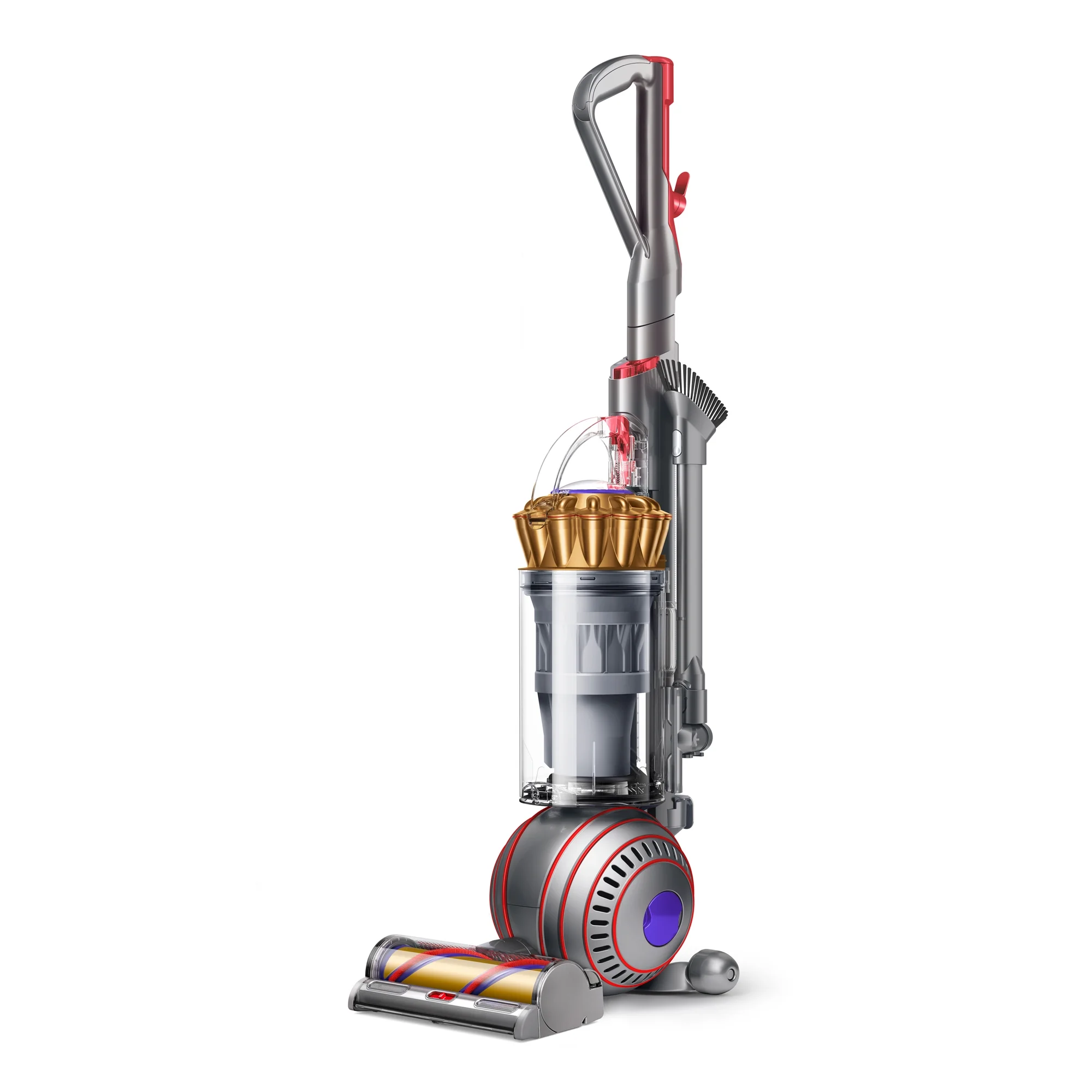
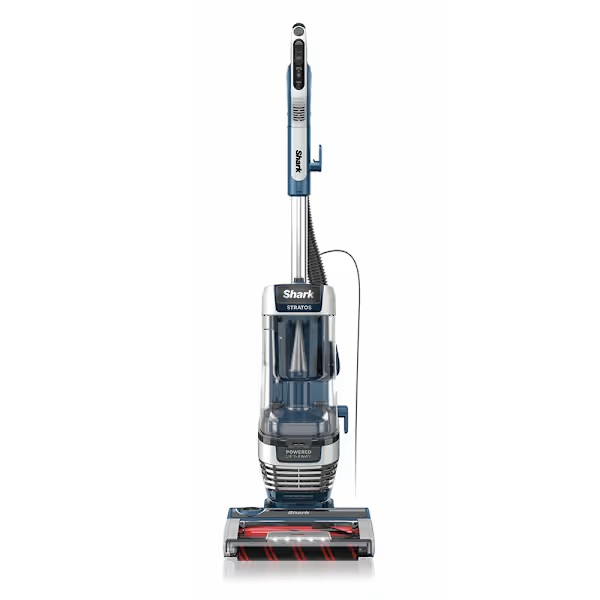
Dyson Ball Animal 3 vs Shark Stratos AZ3002 Comparison Chart
If you click the links below, under the product images, you will be redirected to Amazon.com. In case you then decide to buy anything, Amazon.com will pay me a commission. This doesn’t affect the honesty of this review in any way though.
| Feature / Specification | Dyson Ball Animal 3 | Shark Stratos AZ3002 |
|---|---|---|
 |  | |
| Check the best price on Amazon | Check the best price on Amazon | |
| Vacuum Type | Corded upright | Corded upright |
| Weight (approx.) | ~17.3 lbs | ~16.7 lbs |
| Dimensions (approx.) | Tall, bulky upright profile | Slightly lower-profile upright |
| Power Source | Corded electric | Corded electric |
| Motor Power | Very high (focused on suction) | High (balanced with brush design) |
| Suction Strength | Extremely strong | Very strong |
| Cleaning Head Type | Single motorized brushroll | DuoClean dual brushroll system |
| Brushroll Technology | Hair-removal vanes | Self-cleaning PowerFins + soft roller |
| Hair Wrap Resistance | Good | Excellent |
| Floor Type Compatibility | Carpet, rugs, hard floors | Carpet, rugs, hard floors |
| Carpet Height Adjustment | Manual adjustment | Automatic adjustment |
| Hard Floor Performance | Very good | Excellent |
| Edge Cleaning | Good | Very good |
| Above-Floor Cleaning | Hose and wand | Powered Lift-Away system |
| Lift-Away / Detachable Pod | No | Yes (powered) |
| Hose Reach | Moderate | Long, flexible |
| Dust Bin Capacity | Large | Large |
| Dust Bin Type | Bagless, bottom-release | Bagless, bottom-release |
| Filtration Type | Sealed system with HEPA-level filtration | Sealed system with HEPA-level filtration |
| Odor Control | No | Yes (odor neutralizer) |
| Filter Type | Washable, long-life | Washable, replaceable |
| Noise Level | Loud, higher-pitched | Loud, lower-pitched |
| Swivel Steering | Ball steering | Swivel steering |
| LED Headlights | No | Yes |
| Pet-Focused Design | Yes | Yes |
| Best For | Deep carpet cleaning, heavy pet hair | Versatility, mixed flooring, stairs |
| Storage Footprint | Larger, taller | Slightly more flexible storage |
| Maintenance Effort | Moderate | Low to moderate |
| My individual reviews | Dyson Ball Animal 3 review | Shark Stratos AZ3002 review |
Design & Build Quality
Design and build quality are often overlooked when people shop for a vacuum cleaner, but they matter more than you might think. These machines get dragged across floors, bumped into furniture, pulled around corners, and stored in closets where space is rarely generous. A well-designed vacuum should feel solid without being awkward, durable without being bulky, and intuitive enough that you don’t need to think about how to use it every time you clean. The Dyson Ball Animal 3 and the Shark Stratos AZ3002 approach these goals in very different ways, and those differences show up almost immediately once you start handling them.
Dyson Ball Animal 3: Industrial Design with a Purpose
The Dyson Ball Animal 3 looks unmistakably like a Dyson. Its design is bold, almost industrial, with exposed cyclones, a large transparent dust bin, and the signature ball mechanism at the base. This isn’t a vacuum that tries to blend into the background. It’s meant to look like a high-performance machine, and for many people, that’s part of the appeal.
From a build standpoint, the Dyson feels dense and well-engineered. The plastic components are thick and rigid, with very little flex when you apply pressure. Nothing rattles when the machine is running, and the internal seals feel tight, which helps explain why Dyson vacuums tend to maintain suction well over time. The joints where the hose connects to the body are firm and secure, and while they can feel a bit stiff when new, that stiffness also gives confidence that the parts won’t loosen prematurely.
The ball steering system is the centerpiece of Dyson’s design. Instead of relying on traditional wheels, the vacuum pivots on a rounded base that houses key components. This lowers the center of gravity and gives the machine a planted feel. When you turn the handle, the vacuum follows smoothly without the rear end swinging wide or catching on furniture. It’s a clever design that still feels distinctive years after its introduction.
That said, the Dyson’s design isn’t especially compact. The body is tall, the cleaning head is relatively bulky, and the vacuum takes up a noticeable amount of closet space. If storage is tight, this is something to consider. The weight is also concentrated low to the ground, which helps with stability but doesn’t make the vacuum any easier to lift.
Shark Stratos AZ3002: Modular and Practical
The Shark Stratos AZ3002 takes a more practical, modular approach. It doesn’t have the visual flair of the Dyson, but it feels purpose-built for real-world use. The design is busier, with more buttons, more moving parts, and a slightly more complex structure overall. However, that complexity serves a function.
The standout feature here is the Powered Lift-Away system. The central body of the vacuum can detach from the floor head, allowing you to carry the motor and dust bin separately while still powering the brushroll. This influences the entire design of the machine. The frame is built to support frequent detaching and reattaching, and the locking mechanisms feel sturdy enough to handle repeated use.
In terms of materials, the Shark uses durable plastics that can take a beating, but they don’t feel quite as refined as Dyson’s. There’s a bit more flex in certain panels, especially around the dust bin and accessory storage areas. This doesn’t necessarily indicate poor durability, but it does give the vacuum a slightly less premium feel when you first handle it.
The Stratos has a lower-profile cleaning head than the Dyson, which helps it slide under furniture more easily. This design choice affects the overall shape of the vacuum, making it feel less top-heavy and more evenly balanced front to back. The swivel steering isn’t as dramatic as Dyson’s ball system, but it’s smooth and predictable, especially on hard floors.
Weight, Balance, and Durability
Neither of these vacuums is lightweight. They’re both solid, full-sized uprights designed for power rather than portability. The difference lies in how that weight is managed.
The Dyson Ball Animal 3 feels heavier on paper, but because much of its mass sits low in the ball, it doesn’t feel unwieldy during normal floor cleaning. Pushing and pulling the vacuum feels controlled, and it rarely tips or feels unstable. However, the moment you need to lift it—onto stairs, into a car, or over a threshold—the weight becomes more noticeable.
The Shark Stratos spreads its weight more evenly across the body. In upright mode, it feels slightly easier to maneuver over thresholds and transitions. When you use the Lift-Away feature, you’re carrying only part of the vacuum, which makes above-floor cleaning far more manageable. From a design perspective, this flexibility adds real value, especially in multi-level homes.
In terms of durability, both machines feel capable of lasting several years with regular use. Dyson’s simpler, more rigid construction may appeal to people who prefer fewer moving parts. Shark’s design introduces more hinges, locks, and detachable sections, which adds convenience but also creates more potential wear points over time. That doesn’t mean Shark is fragile, but it does mean long-term durability depends more heavily on how carefully the vacuum is handled.
Controls, Assembly, and Fit and Finish
The Dyson keeps things relatively simple. Controls are minimal and clearly labeled. Assembly out of the box is straightforward, with most parts clicking into place without tools. The fit between components is tight, and once assembled, the vacuum feels like a single cohesive unit rather than a collection of parts.
The Shark, by contrast, has more controls and settings. There are separate buttons for different cleaning modes, Lift-Away operation, and brushroll engagement. For first-time users, this can feel a bit overwhelming, but most people adapt quickly. The benefit is that the vacuum offers more control over how it behaves on different surfaces.
Fit and finish slightly favor Dyson. Edges are smoother, seams are tighter, and the overall presentation feels more polished. Shark’s finish is more utilitarian, but not sloppy. Everything fits where it should, even if it doesn’t feel quite as refined.
Design Philosophy Compared
What really separates these two vacuums is their underlying design philosophy. The Dyson Ball Animal 3 is built around the idea of maximizing suction and control with as few compromises as possible. Its design is focused, purposeful, and somewhat uncompromising. You get a powerful, stable machine that does one main job extremely well.
The Shark Stratos AZ3002 is built around flexibility and user convenience. Its design acknowledges that most people don’t just vacuum wide open floors. They clean stairs, furniture, corners, and tight spaces. The modular structure, lower-profile head, and Lift-Away feature all reflect that reality.
Neither approach is inherently better. If you value simplicity, solidity, and a machine that feels like it was engineered first and styled second, the Dyson will likely appeal more. If you prefer adaptability, easier handling in awkward spaces, and a vacuum that adjusts to different cleaning tasks without much effort, the Shark’s design may feel more thoughtful.
From a pure design and build quality perspective, both vacuums are well-made and clearly intended for demanding use. The choice comes down to whether you prioritize engineering purity or everyday practicality.
Performance
Performance is where these two upright vacuums really start to separate themselves. On paper, both the Dyson Ball Animal 3 and the Shark Stratos AZ3002 promise strong suction, effective brushrolls, and the ability to clean everything from hard floors to thick carpet. In practice, they go about delivering that performance in very different ways. Living with each vacuum for a while reveals strengths that don’t always show up in specs or marketing claims.
Raw Suction and Dirt Extraction
The Dyson Ball Animal 3 is unapologetically built around suction. From the moment you turn it on, it’s clear that this machine is designed to pull dirt out of surfaces rather than just sweep over them. On medium and high-pile carpet, the Dyson digs deep. You can feel the resistance as it grips the carpet fibers, and while that can make it slightly harder to push, it also translates into impressive dirt extraction.
In real-world use, this means the Dyson often removes fine dust and grit that other vacuums leave behind, even when the carpet looks clean. If you vacuum regularly and then run the Dyson over the same area, it’s not uncommon to see the dust bin fill faster than expected. That’s a strong indicator of how effective the suction and agitation combination really is.
The Shark Stratos AZ3002 doesn’t quite match that level of raw suction, but it compensates with smart brushroll design and airflow management. Rather than relying purely on suction force, Shark uses a dual brushroll system that actively lifts debris into the airflow path. On many surfaces, especially low-pile carpet and hard floors, this approach is just as effective and sometimes more efficient.
Carpet Performance
On carpet, both vacuums perform very well, but they shine in different scenarios.
The Dyson excels on thicker carpets and rugs where dirt and pet hair get pushed down into the fibers. Its aggressive agitation and strong suction pull debris up from deep within the pile. For homes with plush carpets or older rugs that trap dust easily, this can make a noticeable difference in how clean the floors feel after vacuuming.
The downside is that the Dyson can feel heavy on dense carpet. Pushing it forward requires a bit of effort, especially if you’re cleaning a large area. Some users may find this tiring during longer sessions, even though the results are excellent.
The Shark Stratos feels easier to push across most carpets. The brushroll system glides more smoothly, and the vacuum doesn’t cling to the carpet in the same way. On low- and medium-pile carpets, the cleaning results are very close to Dyson’s, often within a margin that most people wouldn’t notice without side-by-side testing.
On very thick carpet, the Shark may require an extra pass to match Dyson’s level of dirt removal. It still cleans well, but it doesn’t dig quite as deeply. For many homes, this difference is minor, but for those with heavily trafficked carpeted areas, it’s worth noting.
Hard Floor Performance
Hard floors are an area where the Shark Stratos often feels more immediately impressive. Its dual brushroll setup includes a softer front roller designed to pick up fine dust and larger debris without scattering it. This makes it particularly effective on tile, hardwood, laminate, and vinyl.
In practice, the Shark handles a mix of debris very well. Cereal, pet kibble, dust, and hair all get picked up in a single pass more often than not. The wider cleaning head also means you cover more area quickly, which makes cleaning hard floors feel faster and more efficient.
The Dyson also performs well on hard floors, but it relies more on suction than brush design. Fine dust and pet hair are no problem, but larger debris sometimes gets pushed ahead of the head unless you approach it at the right angle. This isn’t a deal-breaker, but it does mean you may need to be a bit more deliberate with your movements.
Edge and Corner Cleaning
Edge cleaning is one of those performance details that only becomes obvious after repeated use. The Dyson Ball Animal 3 has strong suction at the edges of its cleaning head, which helps pull debris away from baseboards and corners. However, the narrower head means you need to guide it carefully along edges to get the best results.
The Shark Stratos benefits from its wider head and brushroll coverage. It tends to pick up debris along edges more naturally, even if you’re not perfectly aligned. The addition of LED headlights also makes it easier to see dust and hair near walls, which indirectly improves edge cleaning performance.
Pet Hair Performance
Both vacuums are clearly designed with pet owners in mind, but again, they take different approaches.
The Dyson Ball Animal 3 relies on suction strength and brush agitation to pull pet hair out of carpets and upholstery. It’s particularly good at removing hair that’s embedded deep in fibers. After vacuuming, carpets often look fluffed and refreshed, which is a sign that hair and debris have been lifted rather than just skimmed off the surface.
The Shark Stratos focuses more on managing pet hair efficiently. Its self-cleaning brushroll resists hair wrap, which makes a big difference during long cleaning sessions. Hair doesn’t accumulate on the roller, so performance stays consistent without frequent stops to clear tangles.
In terms of sheer pickup, the Dyson has a slight edge on deeply embedded hair, while the Shark shines when dealing with large amounts of surface hair across mixed flooring. For homes with multiple shedding pets, the Shark’s approach can feel more convenient over time.
Above-Floor and Versatility Performance
This is where the Shark Stratos really pulls ahead. The Powered Lift-Away feature allows you to detach the main body and clean stairs, upholstery, and high areas with the powered brushroll still active. This makes a huge difference when cleaning carpeted stairs or pet hair on furniture.
The Dyson does offer hose and wand cleaning, but it’s more traditional. The suction is strong, but the brushroll isn’t powered in the same way during above-floor use. This makes it effective for dust and loose debris, but slightly less capable when dealing with stubborn pet hair on upholstery.
Consistency Over Time
One important aspect of performance is how well it holds up as the dust bin fills. Dyson’s cyclonic system is very good at maintaining suction even as debris accumulates. Cleaning performance stays consistent until the bin is nearly full.
The Shark also performs well in this area, though its performance is a bit more dependent on keeping filters clean. Regular maintenance keeps it operating at its best, but neglecting filter care can lead to gradual performance drops.
Performance Summary
If your priority is maximum suction and deep cleaning on carpet, the Dyson Ball Animal 3 stands out. It feels like a machine designed to extract every last bit of dirt, even if that means a bit more effort on your part.
If you value smooth cleaning across different surfaces, easier handling, and better versatility for above-floor tasks, the Shark Stratos AZ3002 delivers a more balanced performance. It may not match Dyson’s raw power in every scenario, but it often feels more efficient and easier to live with day to day.
In the end, both vacuums perform at a high level. The better choice depends less on which one cleans “better” and more on how you clean your home.
Maintenance & Cleaning
Maintenance is the unglamorous side of owning a vacuum cleaner, but it plays a huge role in how satisfied you’ll be over the long term. A vacuum can have great suction and smart features, but if it’s frustrating to empty, difficult to clean, or loses performance because of neglected filters, those strengths fade quickly. The Dyson Ball Animal 3 and the Shark Stratos AZ3002 both aim to reduce maintenance headaches, but they approach the problem in different ways. Living with each vacuum over time highlights how those design choices affect everyday use.
Emptying the Dust Bin
Emptying the dust bin is the most frequent maintenance task, and it’s something you’ll do often if you vacuum regularly or have pets.
The Dyson Ball Animal 3 uses a large, transparent bin that makes it easy to see when it’s full. The release mechanism is simple: you pull a lever, and the bottom door opens to drop debris into the trash. Most of the time, this works cleanly and efficiently. However, fine dust can sometimes cling to the inside of the bin, especially if you vacuum very dry debris or pet dander. A quick shake usually solves this, but it’s not always a perfectly clean drop.
The Shark Stratos AZ3002 also has a transparent bin, but its emptying mechanism feels slightly more controlled. The bottom door opens wide, allowing debris to fall out quickly. Shark’s bin shape seems to discourage dust from sticking as much, which reduces the need to tap or shake the bin over the trash. For people who are sensitive to dust clouds, this can make a noticeable difference.
Neither vacuum uses bags, so you’ll always be exposed to some dust during emptying. That’s the nature of bagless designs. Still, Shark’s system tends to feel a bit less messy in practice.
Filter Cleaning and Replacement
Filters are critical to maintaining suction and air quality, and how easy they are to access and clean matters more than most people expect.
The Dyson Ball Animal 3 uses washable filters that are designed to last the life of the machine if maintained properly. Accessing them is straightforward, and Dyson’s design encourages regular cleaning. Washing the filters is simple, but it does require planning. After washing, they need to dry completely before being reinstalled, which can take up to 24 hours. If you forget to plan ahead, you may find yourself without a functioning vacuum for a day.
The Shark Stratos AZ3002 also uses washable filters, but it typically includes more than one filtration stage. Access is easy, and the filters are clearly marked. One practical advantage of the Shark is that replacement filters are widely available and relatively inexpensive, making it easier to keep a spare set on hand. This allows you to swap filters immediately and clean the dirty ones later, minimizing downtime.
Both vacuums rely on you to maintain the filters. If you neglect this step, performance will suffer over time. Dyson’s suction tends to hold up better between cleanings, but both machines benefit greatly from consistent filter care.
Brushroll Maintenance
Brushroll maintenance is where the biggest difference between these two vacuums becomes apparent.
The Dyson Ball Animal 3 uses a brushroll with built-in hair removal features designed to reduce tangling. In everyday use, this system works well. Short hair and pet fur are largely redirected into the airflow rather than wrapping tightly around the brush. That said, long hair can still accumulate over time, especially if you have multiple people or long-haired pets in the home.
Cleaning the Dyson’s brushroll is possible without special tools, but it does require some effort. You’ll need to remove the head cover to access the brushroll fully, which is not something you’ll want to do frequently. It’s manageable, but not particularly convenient.
The Shark Stratos AZ3002 stands out here thanks to its self-cleaning brushroll. Hair simply doesn’t wrap around it in the same way. During extended cleaning sessions, the brushroll remains mostly clear, even when dealing with long hair. This dramatically reduces the need for manual cleaning and helps maintain consistent performance.
For many people, especially those with pets, this single feature can make the Shark feel far easier to live with over time.
Hose and Airway Maintenance
Clogs are an unfortunate reality with powerful upright vacuums, particularly when cleaning large debris or long hair.
The Dyson Ball Animal 3 has a relatively straightforward internal airflow path, which makes diagnosing clogs easier. If suction drops suddenly, it’s usually clear where the blockage might be. The hose can be detached and inspected, and most access points are user-friendly.
The Shark Stratos has a more complex airflow system due to its Lift-Away design. While this doesn’t mean it clogs more often, it can make troubleshooting a bit more involved. There are more joints and pathways to check, which may be frustrating if you’re dealing with a stubborn blockage.
That said, Shark’s design does a good job of preventing debris from getting stuck in the first place. The wide head and brushroll tend to funnel debris efficiently, reducing the likelihood of clogs during normal use.
Odor Management
Odors are an often-overlooked aspect of maintenance, especially in homes with pets.
The Dyson Ball Animal 3 doesn’t include any specific odor control features beyond its filtration system. If pet hair or food particles sit in the bin for too long, odors can develop. Regular emptying and filter cleaning help, but there’s no built-in solution for odor management.
The Shark Stratos AZ3002 includes an odor neutralization component that helps reduce smells from pet hair and debris. While it’s not a miracle solution, it does make a noticeable difference in keeping the vacuum smelling fresher between cleanings. This feature adds a small ongoing maintenance cost, but many pet owners find it worthwhile.
Long-Term Wear and Upkeep
Over months and years of use, small maintenance differences become more significant.
The Dyson’s simpler construction means fewer parts that need attention. If you’re diligent about filter washing and occasional brushroll checks, it tends to run consistently for a long time. Replacement parts are available, but they can be expensive.
The Shark requires less frequent brushroll cleaning but introduces more components that may need replacement over time. Filters and odor cartridges are easier to find and less costly, but some internal parts are not designed for user replacement.
Maintenance Experience Compared
Living with the Dyson Ball Animal 3 feels like owning a high-performance machine that expects some responsibility from its owner. Regular maintenance is rewarded with consistent, powerful performance, but skipping steps can lead to noticeable drops in effectiveness.
The Shark Stratos AZ3002 feels more forgiving. It’s designed to minimize the most common maintenance tasks, especially when it comes to hair and everyday debris. For people who want a vacuum that works well even if they’re not meticulous about upkeep, this can be a big advantage.
Maintenance Summary
If you don’t mind washing filters, occasionally clearing brushrolls, and staying on top of upkeep, the Dyson Ball Animal 3 will serve you well and maintain strong performance over time.
If you prefer a vacuum that requires less hands-on maintenance and handles pet hair with minimal intervention, the Shark Stratos AZ3002 offers a more user-friendly ownership experience.
Both machines demand some level of care, but how much effort you’re willing to put in should play a major role in deciding which one is right for you.
Energy Efficiency & Noise Levels
Energy efficiency and noise levels aren’t always the first things people think about when buying a vacuum cleaner, but they quickly become important once the novelty wears off. A vacuum that cleans well but sounds like a jet engine or feels wasteful to run for long sessions can become something you avoid using. Both the Dyson Ball Animal 3 and the Shark Stratos AZ3002 are powerful corded uprights, which means neither is designed to sip electricity quietly in the background. Still, how they use power and how they sound while doing it are worth examining closely.
Power Consumption and Efficiency in Real Use
As corded upright vacuums, both models draw a substantial amount of power when running at full capacity. This is expected. High suction and powered brushrolls require strong motors, and there’s no getting around that. On paper, both vacuums sit within the typical range for high-performance uprights, drawing roughly similar wattage under load.
What matters more than raw power draw is how efficiently that power is translated into cleaning results. In everyday use, the Dyson Ball Animal 3 tends to rely on brute force. Its motor runs at high intensity to generate strong suction, especially on carpet. This can make cleaning feel more demanding from both a physical and energy perspective, but it also means fewer repeat passes are often needed in problem areas. You may spend less time re-vacuuming heavily soiled carpet, which indirectly improves efficiency.
The Shark Stratos AZ3002 takes a slightly different approach. Its cleaning head design and brushroll system help maximize debris pickup without requiring quite the same level of constant suction intensity. As a result, it often feels more efficient when cleaning large areas of mixed flooring. You can move quickly, cover more ground, and still get solid results. While the motor still draws significant power, the overall cleaning process can feel more streamlined.
In practical terms, the difference in energy cost between the two is negligible for most households. Vacuums are typically used in short bursts rather than continuously, and the cost per cleaning session is low. However, the Shark’s ability to clean efficiently with smoother passes may appeal to those who vacuum frequently or clean large spaces.
Heat Management and Motor Behavior
Energy efficiency isn’t just about electricity usage. It’s also about how well the vacuum manages heat during operation.
The Dyson Ball Animal 3 runs hot, particularly during long carpet-cleaning sessions. This isn’t necessarily a problem, as Dyson designs its machines to handle sustained use, but it does contribute to the overall intensity of the experience. You can feel the motor working hard, and the sound reflects that effort.
The Shark Stratos generally feels a bit calmer during extended use. The motor still produces heat, but the machine doesn’t feel like it’s straining as much. This may be partly due to how airflow and brushroll engagement are balanced. Over long cleaning sessions, the Shark tends to feel more relaxed, which can be reassuring if you regularly vacuum large areas.
Noise Levels: Volume and Tone
Noise is where these two vacuums differ more noticeably. Neither is quiet, but the quality of the sound matters just as much as the volume.
The Dyson Ball Animal 3 is loud. The sound is sharp and high-pitched, with a distinctive whine that cuts through walls and closed doors. It’s the kind of noise that makes conversations difficult and may prompt you to plan vacuuming around sleeping children or pets. While the sound doesn’t fluctuate much once the vacuum is running, its intensity can feel fatiguing during longer sessions.
The Shark Stratos AZ3002 is still noisy, but the sound profile is different. It produces a lower-pitched, more even hum that many people find easier to tolerate. It’s still obvious that the vacuum is running, but the noise feels less aggressive. This makes it slightly more comfortable to use for extended periods, especially in open-plan homes.
It’s also worth noting that the Shark’s sound seems better dampened. Vibrations are less pronounced, and the vacuum feels less harsh in hand when running at full power.
Noise in Different Cleaning Modes
Both vacuums behave a bit differently depending on the surface being cleaned.
On carpet, the Dyson maintains its high-pitched tone consistently, regardless of pile height. The sound doesn’t change much, which can be reassuring in terms of performance but also means there’s no quiet mode to fall back on.
The Shark’s noise level can vary slightly depending on the cleaning mode and surface. On hard floors, it often sounds marginally quieter, as the brushroll doesn’t need to work as aggressively. This subtle difference can make hard floor cleaning feel less intrusive, especially if you’re vacuuming early in the morning or late at night.
Impact on Pets and Household Comfort
If you live with pets, noise becomes more than just a personal comfort issue. Many animals are sensitive to high-pitched or sudden sounds.
The Dyson’s sharper noise profile tends to be more unsettling for pets. Dogs and cats may retreat or show signs of stress more quickly when it’s in use. While this won’t matter to everyone, it’s something pet owners often notice.
The Shark, while still loud, tends to be better tolerated by animals due to its lower tone and steadier sound. Pets may still avoid it, but the reaction is often less dramatic.
From a household comfort perspective, both vacuums demand attention when they’re running. You won’t be listening to music or having a conversation easily with either one on. However, the Shark’s sound is generally easier to live with, particularly during longer cleaning sessions.
Efficiency Over Time
Long-term efficiency also depends on how well the vacuum maintains performance without requiring longer run times.
The Dyson’s suction remains strong even as the dust bin fills, which helps maintain consistent cleaning efficiency. You’re less likely to notice a drop in performance mid-session, which means you don’t need to compensate with extra passes.
The Shark performs well too, but its efficiency depends more on keeping filters clean. If filters are neglected, airflow can decrease, which may lead to longer cleaning times and slightly higher energy use over time. With regular maintenance, this isn’t an issue, but it does place more responsibility on the user.
Noise Fatigue and User Experience
Noise fatigue is a real thing, especially if you vacuum frequently.
Using the Dyson Ball Animal 3 for short, intense cleaning sessions feels manageable. Using it for extended whole-house cleaning can be tiring due to the constant high-pitched sound.
The Shark Stratos AZ3002 is easier to tolerate over longer periods. While still loud, its sound profile causes less fatigue, which can make a big difference if you clean large homes or vacuum multiple times per week.
Energy and Noise Summary
Neither vacuum is designed to be quiet or exceptionally energy-efficient in the traditional sense. They are powerful tools built to clean thoroughly, and that comes with trade-offs.
The Dyson Ball Animal 3 prioritizes maximum performance, even if that means higher noise levels and a more intense energy profile. It’s efficient in terms of cleaning power per pass but demands more from both the motor and the user.
The Shark Stratos AZ3002 balances power with usability. It feels slightly more efficient in everyday use and is noticeably easier on the ears. For households where comfort and frequent cleaning matter, that balance can make a meaningful difference.
Ultimately, your tolerance for noise and your cleaning habits will determine which approach feels more efficient and enjoyable in the long run.
Ergonomics & Usability
Ergonomics and usability are often the difference between a vacuum you use regularly and one that feels like a chore to drag out of the closet. Power and features matter, but if a vacuum is awkward to maneuver, uncomfortable to hold, or frustrating to switch between tasks, those strengths lose their impact. The Dyson Ball Animal 3 and the Shark Stratos AZ3002 both aim to make cleaning easier, but they prioritize different aspects of user comfort and control.
Maneuverability and Steering
The Dyson Ball Animal 3 is built around its ball steering system, and this has a noticeable effect on how it moves across the floor. Instead of pivoting on fixed rear wheels, the vacuum turns smoothly around the ball at its base. This makes it surprisingly agile for a full-size upright. Navigating around table legs, chairs, and tight corners feels intuitive, and you can change direction with minimal effort from the wrist rather than your entire arm.
This steering system also helps keep the vacuum stable. It doesn’t feel like it’s fighting you or tipping when you make quick turns. However, the same design can feel slightly less predictable on very thick carpet, where the vacuum’s strong suction already creates resistance. In those situations, maneuverability is still good, but it requires a bit more physical input.
The Shark Stratos AZ3002 uses a more traditional swivel steering design. It’s not as dramatic as Dyson’s ball, but it’s effective and easy to adapt to. The vacuum tracks well in straight lines and turns smoothly when guided around obstacles. On hard floors and low-pile carpet, it feels especially fluid, almost gliding as you push it forward.
Where the Shark really shines is consistency. It doesn’t suddenly feel heavier or lighter depending on the surface. The steering remains predictable across different floor types, which can make it feel easier to control during longer cleaning sessions.
Weight and Physical Effort
Both vacuums are heavy, but how that weight is experienced differs.
The Dyson Ball Animal 3 feels dense and grounded. Most of its weight sits low, which makes pushing it across the floor feel controlled rather than top-heavy. This helps reduce wrist strain, but it doesn’t eliminate the effort required, especially on thick carpet. If you have limited upper-body strength, you may notice fatigue during extended carpet cleaning.
Lifting the Dyson is where its weight becomes more noticeable. Carrying it up or down stairs or lifting it into storage requires a solid grip and some effort. The handle is comfortable, but there’s no getting around the fact that this is a substantial machine.
The Shark Stratos AZ3002 distributes its weight more evenly. In upright mode, it feels slightly easier to push over transitions and thresholds. More importantly, the Lift-Away feature allows you to separate the heaviest components. When cleaning stairs or above-floor areas, you’re only carrying part of the vacuum, which significantly reduces physical strain.
This design makes the Shark more accessible for users who may struggle with lifting or holding a heavy appliance for extended periods.
Handle Design and Comfort
Handle comfort is something you only really appreciate after using a vacuum for more than a few minutes.
The Dyson’s handle is well-shaped and solid, with a grip that feels secure even when your hands are slightly sweaty. The angle of the handle encourages a natural wrist position during forward and backward motions. Over long sessions, this helps reduce strain, though the resistance from strong suction can still be tiring.
The Shark’s handle is slightly bulkier, but it offers good grip and balance. When using the vacuum in Lift-Away mode, the handle feels particularly well-positioned, allowing you to carry the pod comfortably at your side or in front of you. This makes a noticeable difference when cleaning stairs or furniture.
Controls and Ease of Use
The Dyson Ball Animal 3 keeps controls to a minimum. Switching between floor types is straightforward, and there are no complicated modes to remember. This simplicity is appealing if you prefer a vacuum that just works without much thought. You turn it on, choose the appropriate setting, and start cleaning.
The downside of this simplicity is reduced flexibility. There’s less fine control over how the vacuum behaves on different surfaces, which may matter if your home has a wide variety of flooring types.
The Shark Stratos AZ3002 offers more control options. There are separate settings for different cleaning modes, and the Lift-Away mechanism adds another layer of functionality. For some users, this is empowering. You can tailor the vacuum’s behavior to the task at hand.
For others, it can feel like overkill. There’s a short learning curve as you get used to which buttons do what, but once you’re familiar, operation becomes second nature.
Transitioning Between Cleaning Tasks
Switching from floor cleaning to above-floor tasks is a common source of frustration with upright vacuums.
With the Dyson, transitioning involves using the hose and wand. This works well for spot cleaning, upholstery, and corners, but it can feel awkward for larger areas like stairs. The hose has good suction, but its reach and flexibility have limits. You may find yourself repositioning the vacuum frequently to reach certain spots.
The Shark’s Lift-Away feature transforms this experience. Detaching the pod takes seconds, and suddenly the vacuum feels more like a compact canister. You can carry it up stairs, place it on furniture, or move it around without dragging the full upright behind you. This dramatically improves usability in multi-level homes or spaces with lots of above-floor cleaning needs.
Storage and Everyday Handling
Storage is another usability factor that often gets overlooked.
The Dyson Ball Animal 3 has a tall, fixed design that requires a decent amount of vertical storage space. It stands securely on its own, but it’s not especially compact. If you have a narrow closet, it may feel bulky.
The Shark Stratos AZ3002 also isn’t small, but its detachable design can make storage more flexible. You can separate components to fit into tighter spaces if needed. On-board accessory storage is also more accessible, making it easier to grab tools without digging through a drawer.
Accessibility and User Range
When considering ergonomics, it’s important to think about who will be using the vacuum.
The Dyson Ball Animal 3 feels best suited to users who are comfortable handling a powerful, somewhat demanding machine. If you enjoy a feeling of control and don’t mind exerting a bit of effort for deep cleaning, its ergonomics make sense.
The Shark Stratos AZ3002 feels more accommodating to a wider range of users. Its lighter handling in Lift-Away mode, smoother transitions, and versatile controls make it easier for people of different heights, strengths, and mobility levels to use comfortably.
Ergonomics and Usability Summary
The Dyson Ball Animal 3 excels in maneuverability and stability, offering precise control and a solid, planted feel. Its ergonomics favor users who prioritize floor cleaning and don’t mind a bit of physical effort in exchange for strong performance.
The Shark Stratos AZ3002 focuses on flexibility and comfort. Its Lift-Away system, smoother handling, and adaptable design make it easier to use across a wider range of cleaning tasks and user needs.
Both vacuums are usable and well-designed, but they cater to different expectations. One feels like a powerful tool that demands engagement, while the other feels like a cooperative partner designed to make cleaning less physically demanding.
Filtration & Allergen Control
Filtration and allergen control are critical considerations for many households, especially those with pets, children, or anyone sensitive to dust and airborne particles. A vacuum cleaner doesn’t just remove visible dirt from floors; it also plays a role in how much fine dust, pollen, and dander gets released back into the air while cleaning. A powerful vacuum with poor filtration can actually make indoor air quality worse. Both the Dyson Ball Animal 3 and the Shark Stratos AZ3002 are designed with sealed systems and high-level filtration, but the way they handle allergens and fine particles differs in subtle but important ways.
Understanding Sealed Systems
A sealed system means that air entering the vacuum passes through the filtration system before being expelled, rather than leaking out through gaps in the housing. This is essential for allergen control. If a vacuum isn’t well sealed, fine dust can escape through seams and vents, undermining the effectiveness of even the best filters.
The Dyson Ball Animal 3 uses a tightly sealed airflow path that channels air through multiple cyclonic stages before it reaches the final filter. This design reduces the load on the filter by separating larger particles earlier in the process. As a result, the filter is primarily responsible for capturing fine dust and microscopic allergens.
The Shark Stratos AZ3002 also uses a sealed system, but its approach is slightly different. Air is directed through a series of filtration stages that include pre-filters, a main filter, and a final exhaust filter. This layered approach ensures that particles are trapped at multiple points, reducing the chance of allergen escape.
In everyday use, both systems are effective at preventing dust from leaking back into the room, but the experience can feel different depending on maintenance habits.
HEPA-Level Filtration and Particle Capture
Both vacuums use high-efficiency filtration capable of capturing very fine particles. This includes common allergens such as pollen, dust mites, and pet dander.
The Dyson’s filtration relies heavily on its cyclonic separation combined with a high-grade post-motor filter. The cyclones spin air at high speed, flinging heavier particles into the bin while allowing finer particles to continue through the system. By the time air reaches the final filter, much of the debris has already been removed. This helps maintain airflow and filtration efficiency over time.
The Shark uses a more traditional HEPA-style filter system, where air is physically forced through dense filter media designed to trap microscopic particles. This can be very effective, but it also means filters play a larger role in overall performance. If filters become clogged or neglected, airflow and filtration efficiency can drop.
In terms of allergen capture, both vacuums perform at a level that will satisfy most allergy sufferers. Fine dust remains contained within the machine rather than being blown back into the room.
Impact on Indoor Air Quality
One of the easiest ways to judge filtration performance is by how the air feels after vacuuming.
With the Dyson Ball Animal 3, the air tends to feel clean and neutral after a session. There’s little to no dusty smell, even after cleaning heavily soiled areas. This suggests that fine particles are being effectively captured and retained within the system.
The Shark Stratos AZ3002 also performs well in this regard, but it adds an extra layer of comfort through its odor management features. By neutralizing smells from pet hair and debris, the Shark helps prevent the musty or dusty odor that can linger after vacuuming. While this doesn’t directly affect allergen capture, it does improve the overall perception of air cleanliness.
For households with pets, this can be a meaningful benefit. Pet odors often accompany dander, and addressing both at once makes the cleaning process feel more complete.
Dust Bin Design and Allergen Exposure
Filtration performance doesn’t stop when the vacuum is turned off. Emptying the dust bin is often when allergen exposure is highest.
The Dyson’s bin is large and clear, which makes it easy to see what you’ve collected. However, when you empty it, fine dust can sometimes become airborne, especially if the debris is very dry. This doesn’t negate the effectiveness of the filtration system, but it does mean allergy sufferers may want to empty the bin slowly and carefully.
The Shark’s bin design tends to release debris more cleanly. The bottom door opens wide, allowing dust and hair to fall out quickly with less clinging. This can reduce the amount of fine dust that escapes during emptying. For people with allergies, this small difference can have a noticeable impact on comfort.
Filter Maintenance and Allergen Control
Proper filter maintenance is essential for maintaining allergen control.
The Dyson’s filters are washable and designed to last a long time if cared for correctly. Regular washing removes trapped dust and allergens, restoring airflow and filtration efficiency. The downside is that filters need time to dry fully before reuse, which requires planning or a backup filter.
The Shark’s filters are also washable, but they are easier to replace if needed. Keeping spare filters on hand allows you to maintain peak allergen control without waiting for filters to dry. This can be especially useful during allergy season or in homes with heavy pet shedding.
Neglecting filter maintenance on either vacuum will reduce its ability to trap allergens. However, the Dyson’s cyclonic system tends to mask minor neglect longer, while the Shark’s performance is more immediately affected by dirty filters.
Pet Dander and Hair Control
Pet dander is one of the most common indoor allergens, and both vacuums are designed with this in mind.
The Dyson’s strong suction and agitation lift pet dander from deep within carpets and upholstery. By removing dander at the source, it helps reduce the amount that becomes airborne later. Combined with its sealed filtration system, this makes it very effective for homes with shedding pets.
The Shark’s approach focuses on continuous removal and containment. Its brushroll resists hair buildup, preventing clogs that could reduce airflow and filtration efficiency. This helps ensure that allergen capture remains consistent throughout a cleaning session.
Sensitivity and User Comfort
People with allergies often notice how a vacuum makes them feel during and after cleaning.
Using the Dyson Ball Animal 3, most users report minimal irritation during vacuuming, provided filters are clean. The machine doesn’t emit noticeable dust, and the sealed system does its job well.
The Shark Stratos AZ3002 tends to feel slightly gentler in this regard, especially for those sensitive to smells. The odor neutralization component helps keep the air from feeling stale or dusty, which can be comforting for allergy-prone users.
Long-Term Filtration Performance
Over time, filtration performance depends on durability and consistency.
The Dyson’s cyclonic design reduces the load on its filters, which helps maintain performance over years of use. As long as seals remain intact and filters are cleaned regularly, allergen control remains strong.
The Shark relies more heavily on filter media, which means regular replacement or cleaning is key. The advantage is flexibility and ease of replacement, but it does require ongoing attention.
Filtration and Allergen Control Summary
Both the Dyson Ball Animal 3 and the Shark Stratos AZ3002 offer excellent filtration and allergen control suitable for allergy sufferers and pet owners.
The Dyson excels in long-term consistency, using cyclonic separation and a sealed system to keep fine particles contained with minimal leakage.
The Shark adds comfort-focused features like odor management and easier filter replacement, making it feel more user-friendly for those sensitive to dust and smells.
If allergen control is a top priority, either vacuum will serve you well. The decision comes down to whether you value Dyson’s engineering-driven consistency or Shark’s layered, comfort-oriented approach to air quality.
Conclusion
Choosing between the Dyson Ball Animal 3 and the Shark Stratos AZ3002 ultimately comes down to how you clean your home and what you value most in a vacuum cleaner. Both machines are clearly designed for demanding households, especially those with pets, heavy foot traffic, or a mix of carpet and hard flooring. Neither is a poor choice, but they deliver their strengths in very different ways.
The Dyson Ball Animal 3 feels like a purpose-built cleaning tool. Its standout trait is raw performance, particularly on carpet. If your priority is deep extraction, lifting embedded dirt, and removing stubborn pet hair from thick flooring, the Dyson delivers a sense of power that’s hard to ignore. It feels engineered to do one job extremely well, even if that means accepting higher noise levels, more physical effort, and a slightly less forgiving learning curve. For users who vacuum less frequently but want maximum results when they do, Dyson’s approach makes a lot of sense.
The Shark Stratos AZ3002, on the other hand, is about balance and usability. It may not match Dyson’s absolute suction in every scenario, but it makes up for it with versatility, smoother handling, and features that reduce everyday frustration. The Lift-Away system, self-cleaning brushroll, easier maintenance, and more tolerable noise profile make it feel like a vacuum designed for regular, whole-home cleaning. It adapts well to stairs, furniture, and mixed surfaces without demanding much from the user.
In the end, the “better” vacuum isn’t about which one is more powerful on paper. It’s about which one fits your habits. If you want uncompromising performance and don’t mind a more intense machine, the Dyson Ball Animal 3 will likely impress you every time you use it. If you want a vacuum that’s easier to live with, more flexible, and still very effective, the Shark Stratos AZ3002 is the more practical choice for most homes.